4A and Brain Regions and Historical Approaches in Psychology
 Call Kai
 Learn
Learn Practice Test
 Spaced Repetition
 Match
Match Flashcards
 Knowt Play
1/88

There's no tags or description
Looks like no tags are added yet.
Name | Mastery | Learn | Test | Matching | Spaced | Call with Kai |
|---|
No analytics yet
Send a link to your students to track their progress
89 Terms
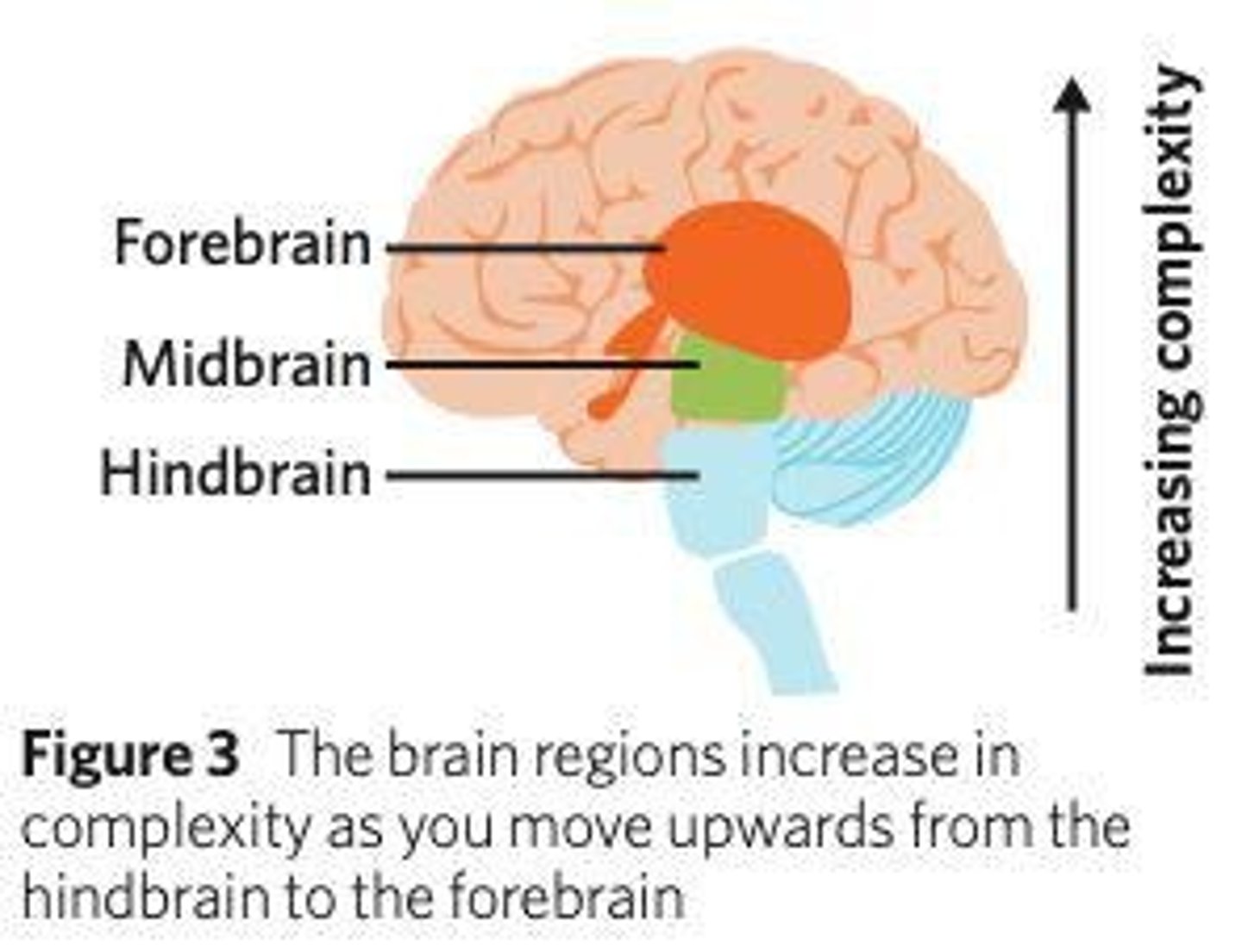
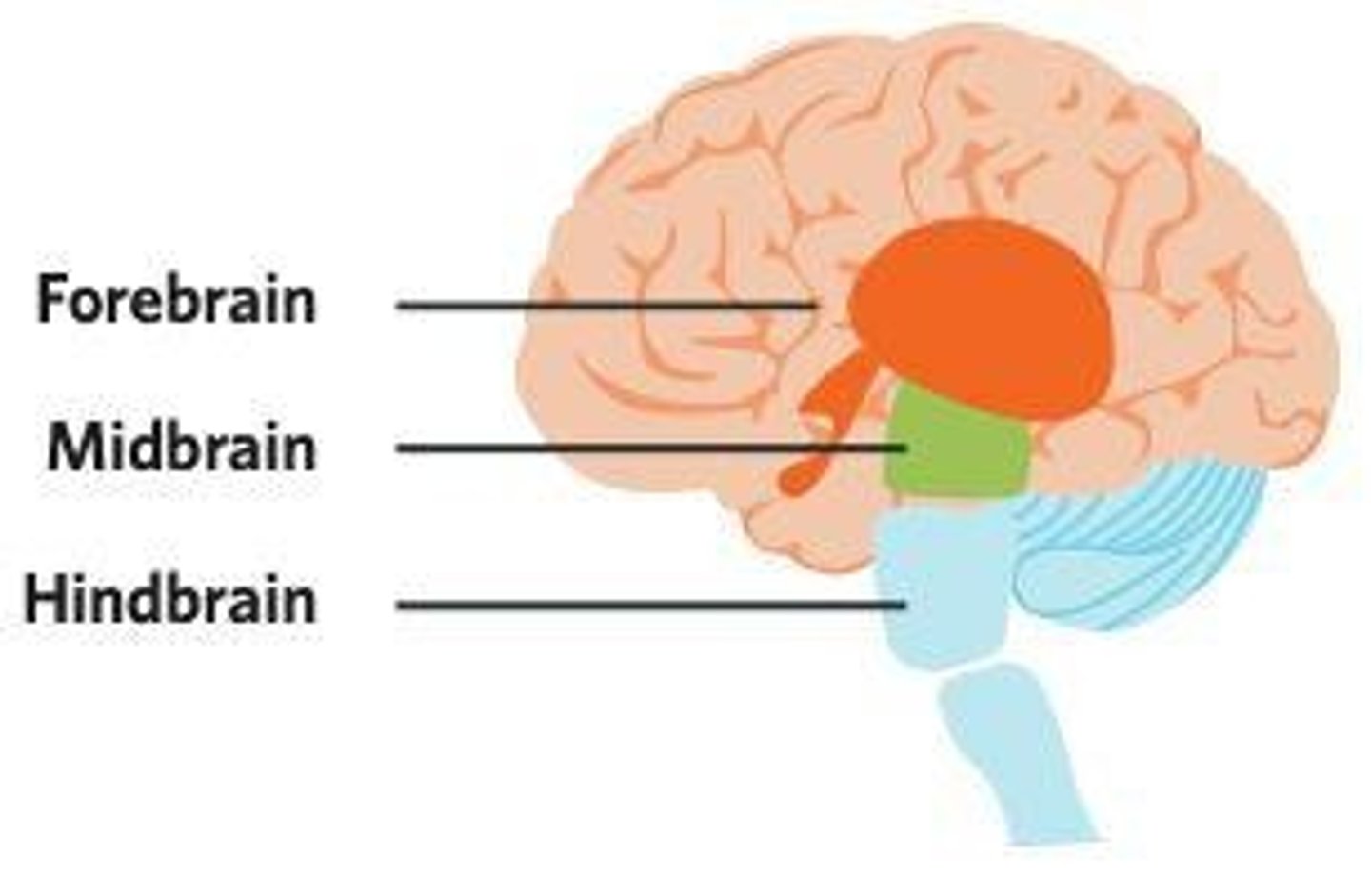
What are the three main regions of the brain?
Hindbrain, midbrain, and forebrain
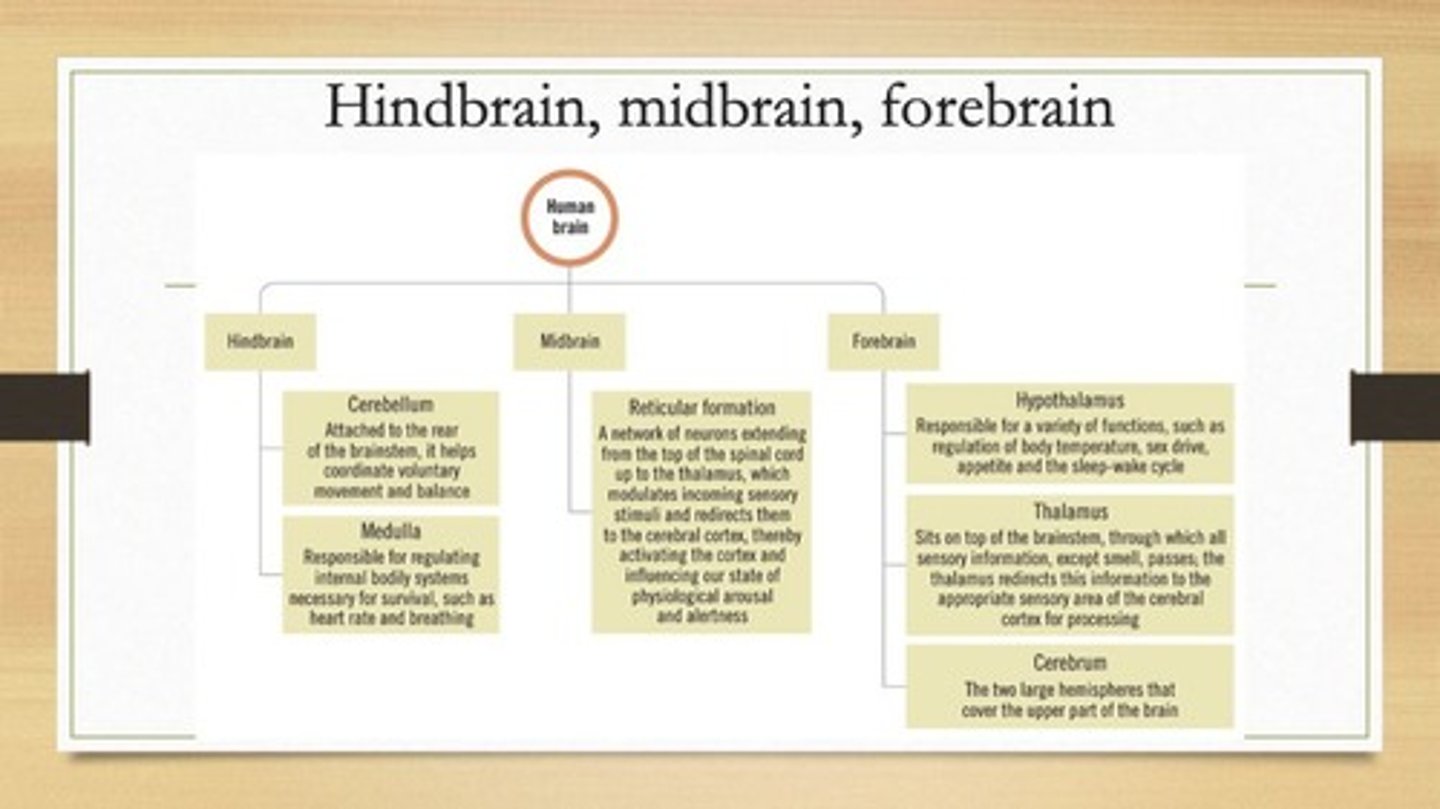
Which part of the brain is responsible for basic, instinctive functions?
Hindbrain
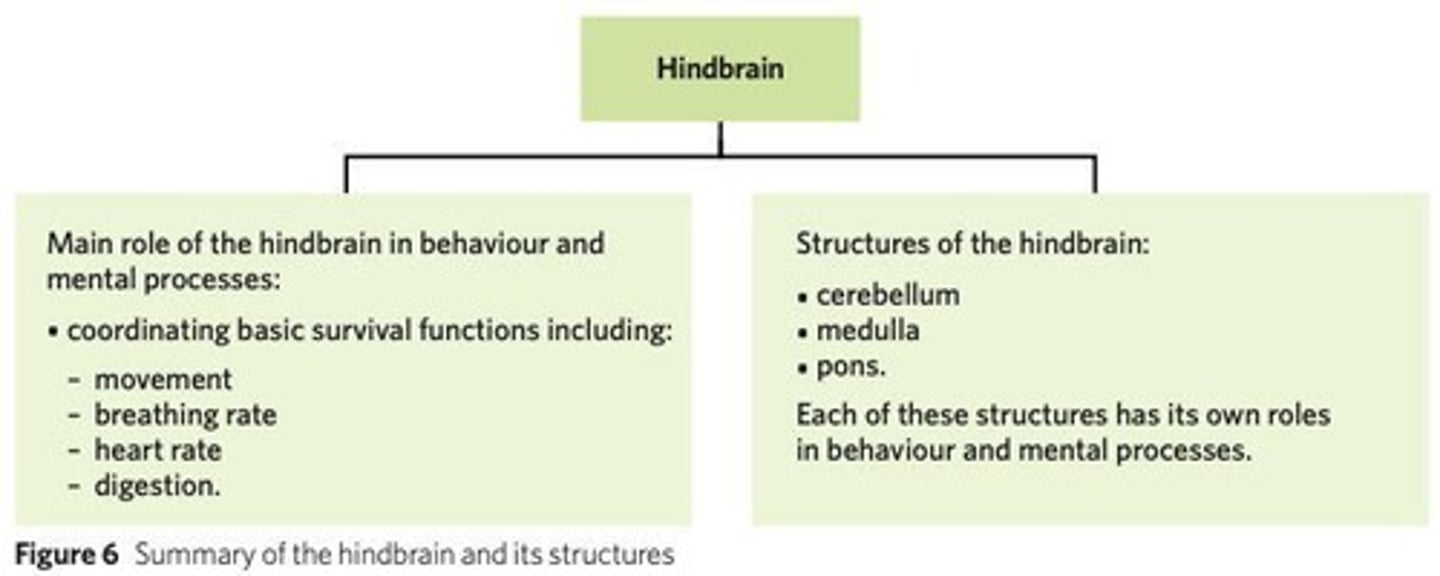
What structures are included in the hindbrain?
Cerebellum and medulla
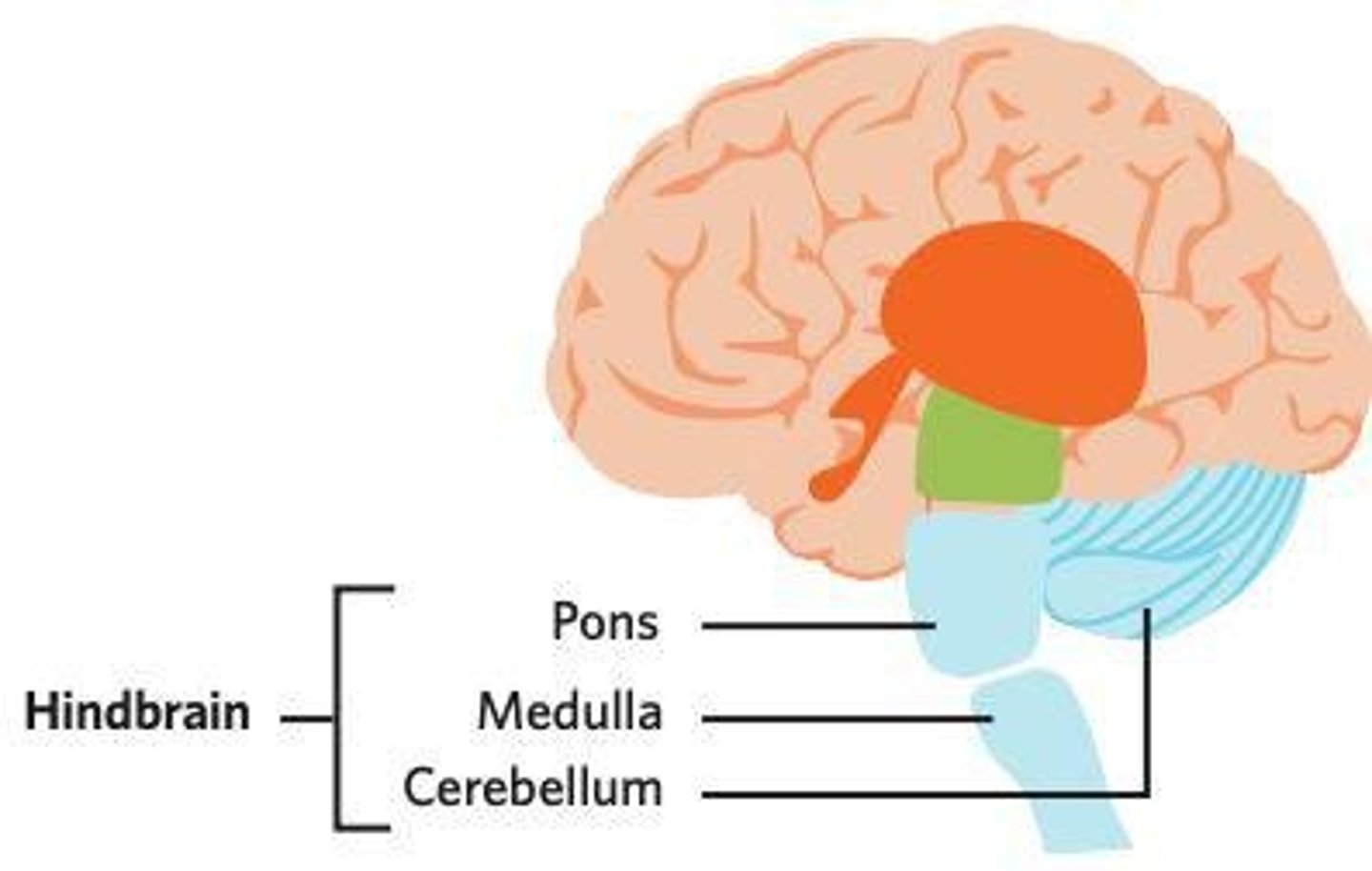
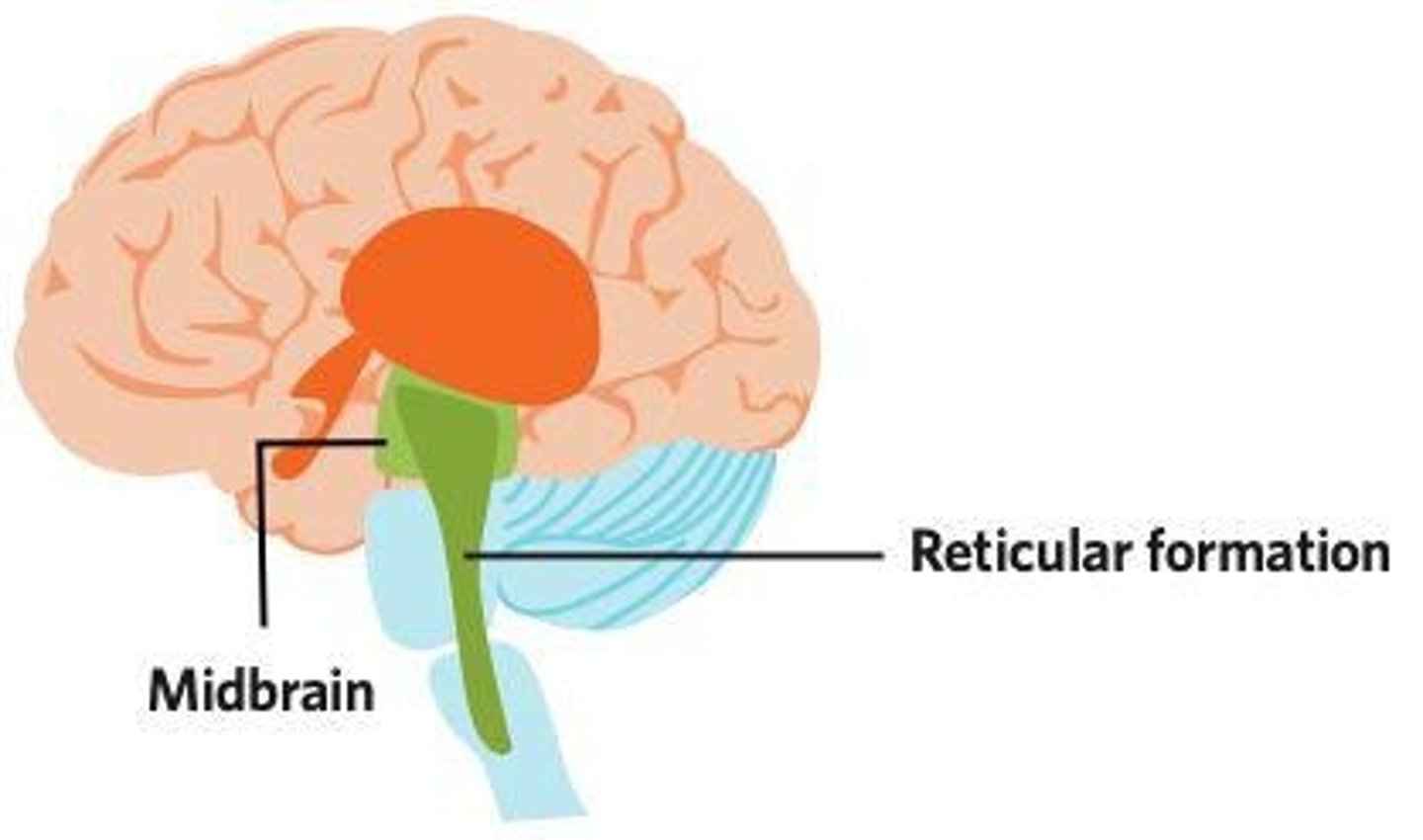
What structure in the midbrain is involved in regulating arousal and attention?
Reticular formation
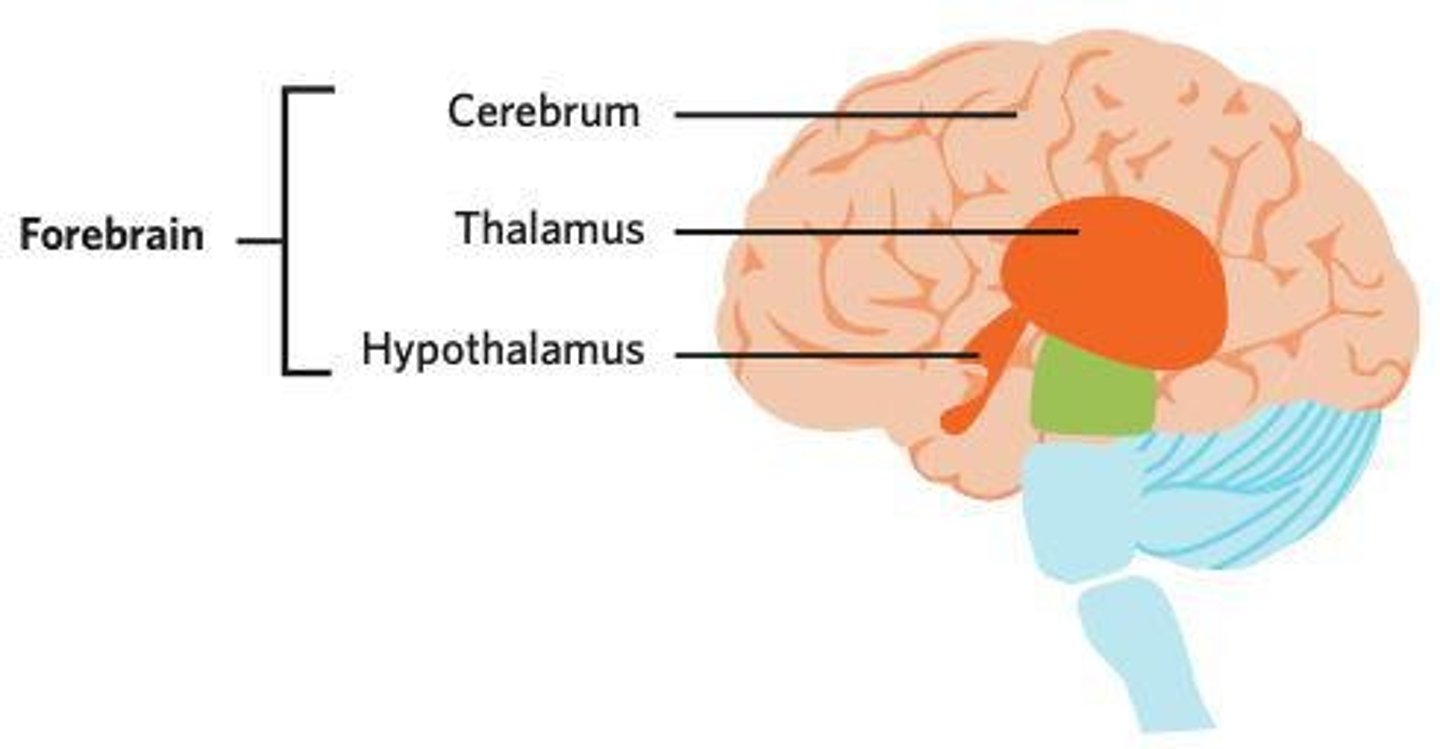
Which structures are part of the forebrain?
Hypothalamus, thalamus, and cerebrum
What is consciousness as a psychological construct?
A state that varies along a continuum, including normal waking consciousness and altered states
What are the two types of long-term memories stored in the brain?
Implicit and explicit memories
Which regions of the brain are involved in the storage of long-term memories?
Cerebral cortex, hippocampus, amygdala, and cerebellum
What is the primary role of the brain?
To control physiological and psychological processes
How does the brain enable interaction with the external world?
By allowing perception, interaction, and response to stimuli
What distinguishes the human brain from the brains of other animals?
The highly developed and intricate structures of the forebrain
What is the composition of the central nervous system (CNS)?
The spinal cord and brain
What is the role of the cerebellum?
To coordinate voluntary movements and maintain balance
What does the medulla control?
Involuntary functions such as breathing and heart rate
What is the function of the hypothalamus?
To regulate homeostasis and control the endocrine system
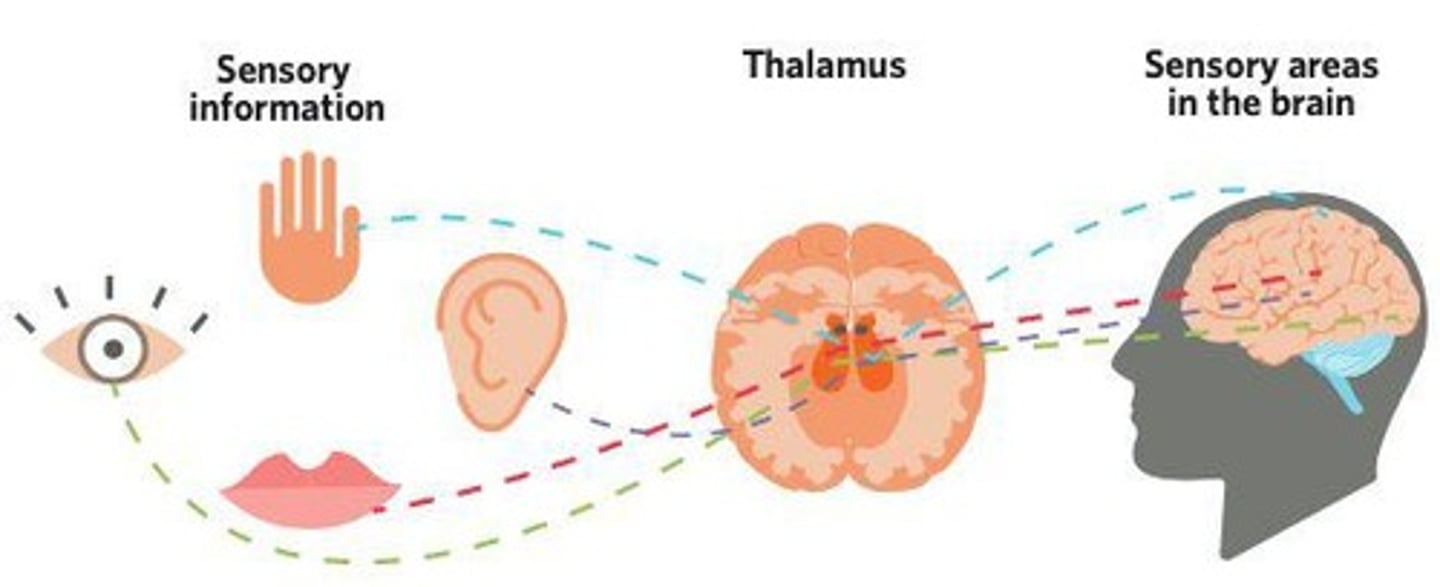
What is the function of the thalamus?
To relay sensory information to the cerebral cortex
What is the significance of the cerebral cortex?
It is involved in higher-level functions such as thought, reasoning, and decision-making
How do different regions of the brain interact?
They work together to process information and coordinate activity
What is the evolutionary perspective on the development of brain regions?
Hindbrain structures developed earlier for basic functions, while forebrain structures developed later for complex cognitions
What is the role of the amygdala in memory?
It is involved in the emotional aspects of memories
What is the role of the hippocampus in memory?
It is critical for the formation of new explicit memories
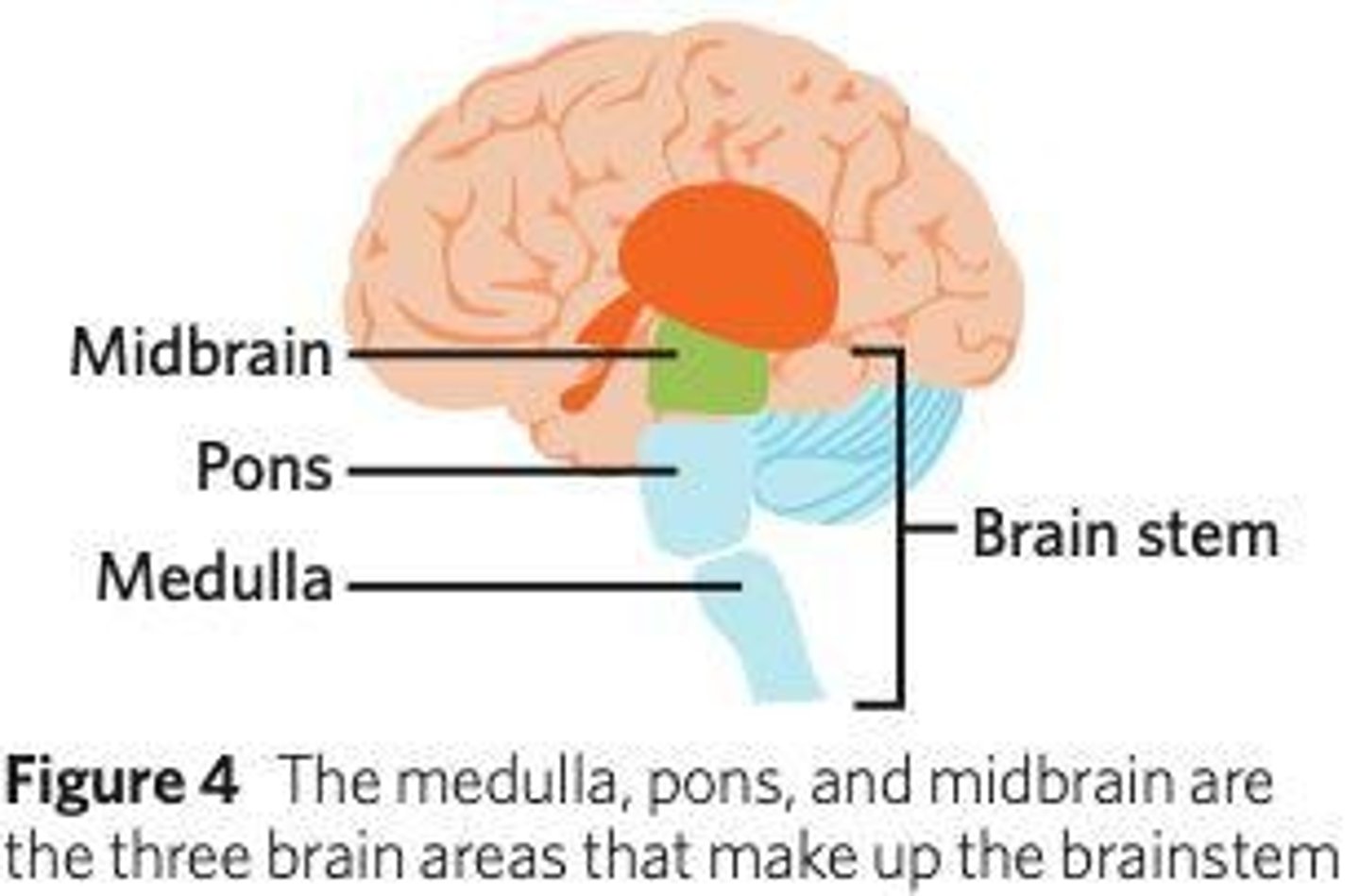
What is the brainstem?
An extension of the spinal cord.
What is the hindbrain responsible for?
Basic, instinctive survival functions such as movement, breathing rate, heart rate, and digestion.
What three structures make up the hindbrain?
Medulla, pons, and cerebellum.
What is the primary function of the cerebellum?
To monitor and coordinate skeletal muscle movement.
How does the cerebellum contribute to movement?
It calculates how to move fluidly and smoothly and communicates this information to skeletal muscles.
What role does the cerebellum play in balance?
It helps maintain balance and posture and controls voluntary movements involving sequences.
What autonomic processes does the medulla regulate?
Respiration, heart rate, blood pressure, and digestion.
What reflexive actions does the medulla initiate?
Coughing, sneezing, and vomiting.
What is the function of the pons?
To act as a bridge transmitting information between different brain areas and regulating the respiratory system.
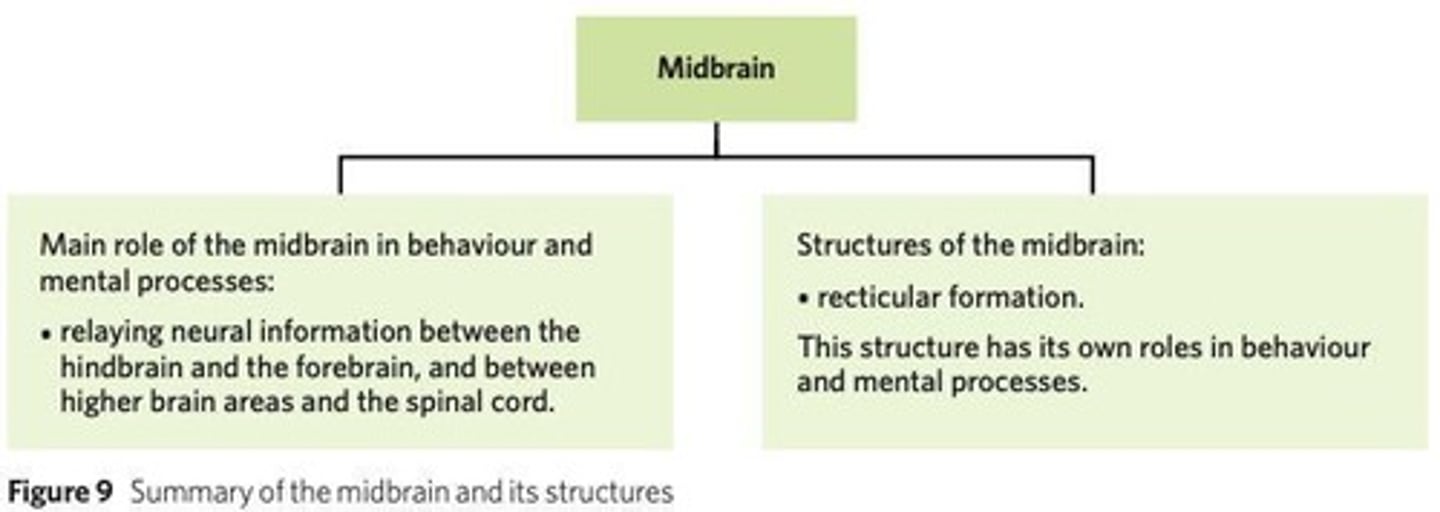
What is the midbrain known as?
The 'Relay Station' for neural information between brain regions and the spinal cord.
What functions are associated with the midbrain?
Processing sensory information, coordinating motor movement, and regulating sleep and arousal.
What is the reticular formation?
A network of neurons in the midbrain that filters and directs neural information.
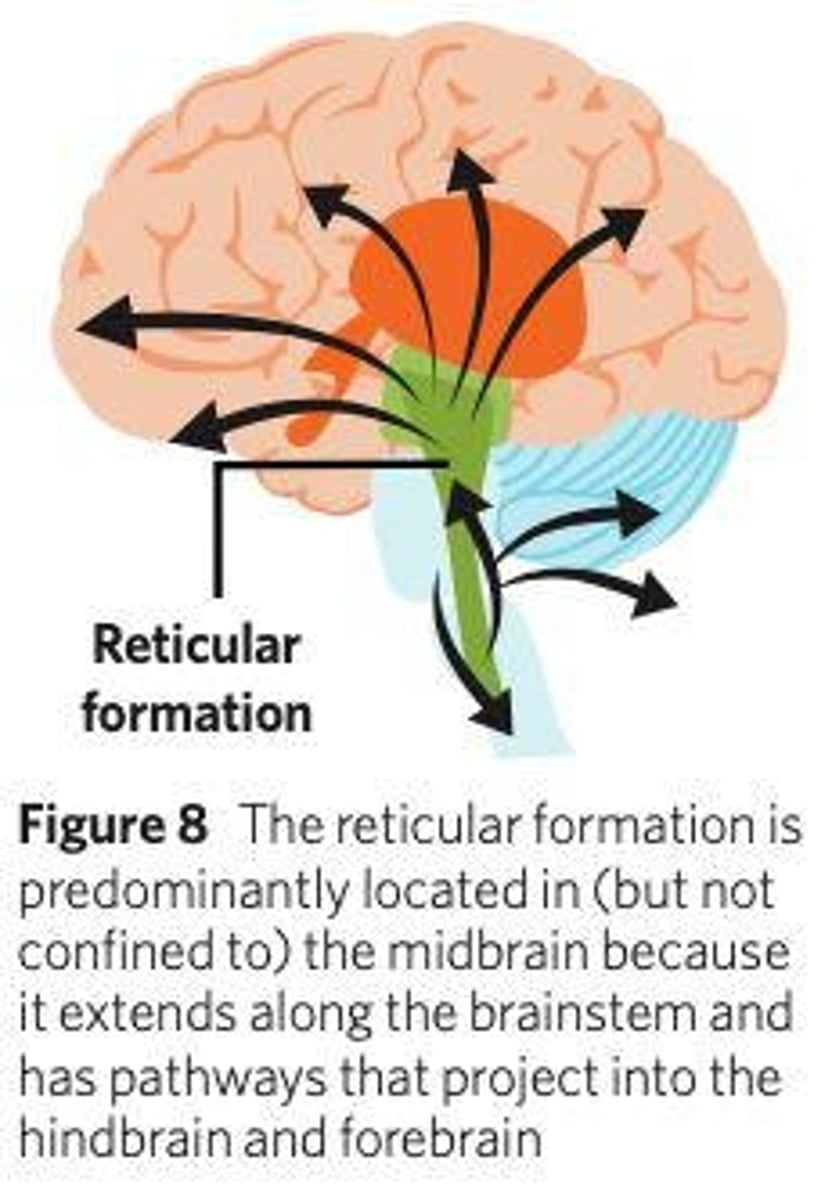
What are the functions of the reticular formation?
Regulating sleep, wakefulness, consciousness, and physiological arousal.
Where is the forebrain located?
At the top and front of the brain.
What functions does the forebrain oversee?
Complex cognitions, perception, learning, language, and memory.
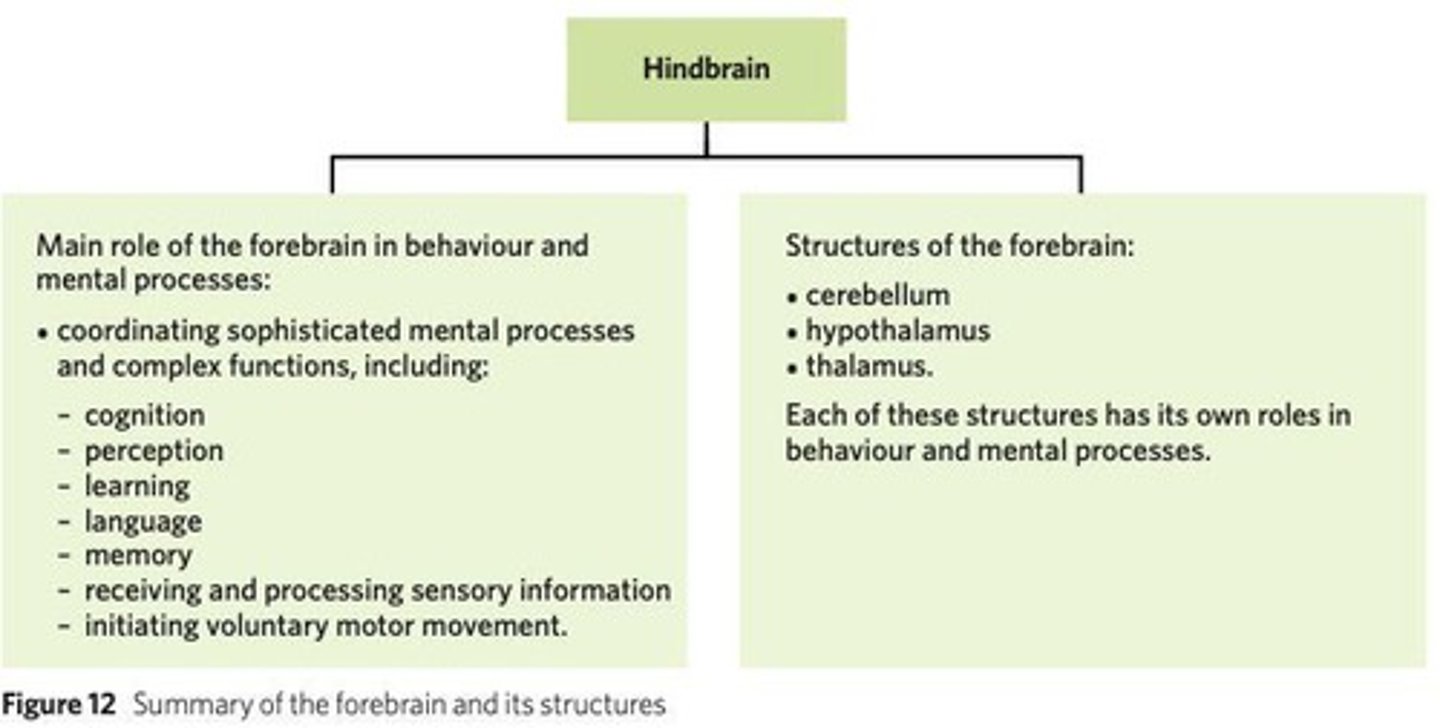
What structures are contained within the forebrain?
Cerebrum, thalamus, and hypothalamus.
What is the largest structure in the human brain?
The cerebrum.
What is the role of the cerebral cortex?
To coordinate sophisticated mental processes and perform complex functions.
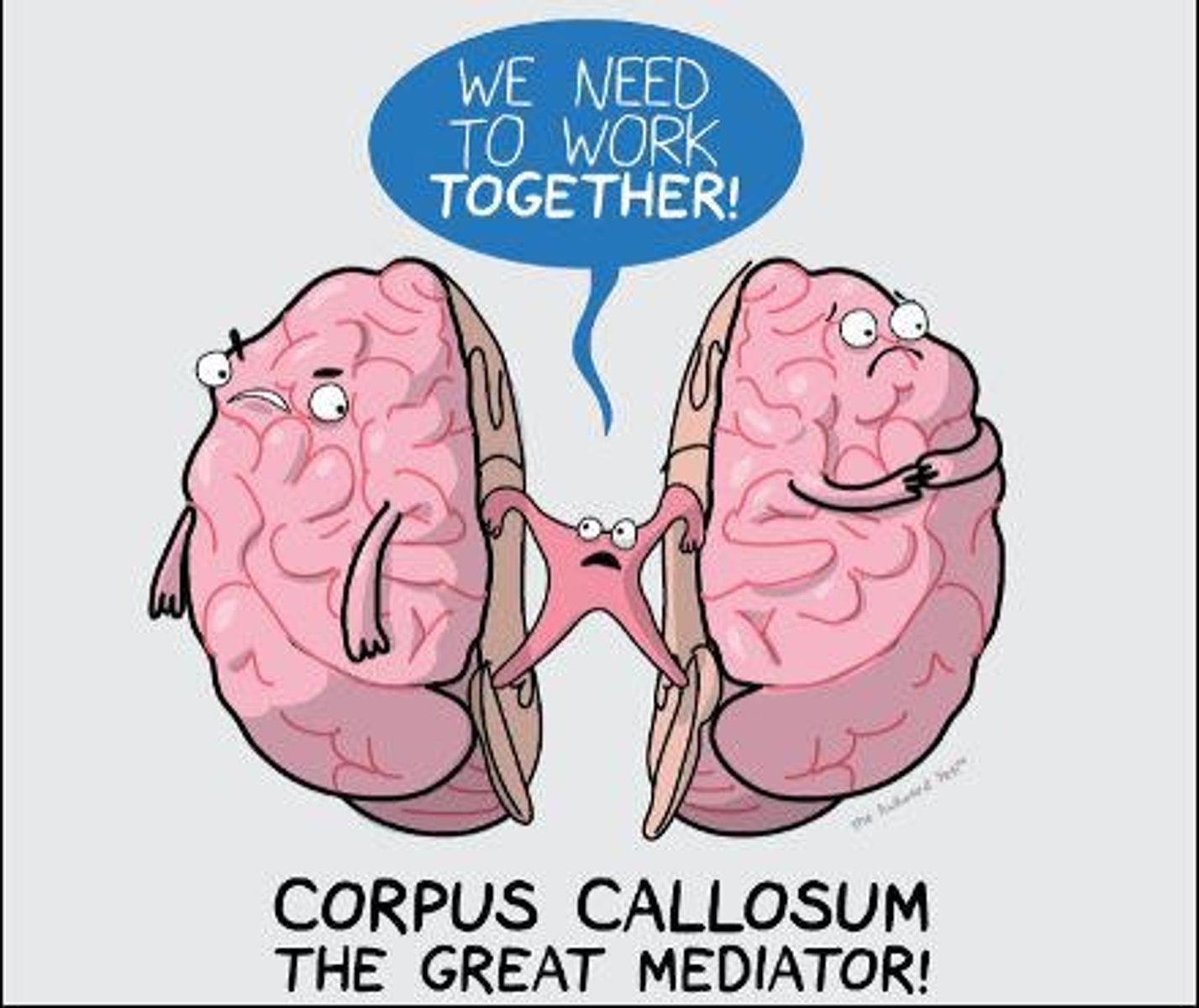
What is the corpus callosum?
A bundle of nerve fibers connecting the two cerebral hemispheres.
What impact does split-brain surgery have on the cerebrum?
It disconnects the two hemispheres, preventing communication between them.
What is the role of the thalamus?
To relay sensory and motor signals to the cerebral cortex.
What is the hypothalamus responsible for?
Regulating autonomic functions such as hunger, thirst, and temperature control.
How does the forebrain integrate information?
By receiving and processing sensory information and initiating voluntary motor movement.
What is the primary role of the hypothalamus?
To maintain optimal biological functioning by regulating internal processes such as hormone levels, hunger, thirst, body temperature, and blood pressure.
How does the hypothalamus contribute to homeostasis?
It helps maintain a balanced state that the body experiences when at rest.
What emotional behaviors is the hypothalamus involved in?
It plays an important role in emotional and motivated behaviors related to fulfilling needs, such as sex and feeding.
What types of emotions does the hypothalamus activate?
It is active during emotions such as fear and anger in response to environmental stimuli.
Where is the thalamus located?
It consists of two oval structures located deep beneath the cerebrum and above the midbrain.
What is the function of the thalamus as a relay center?
It filters and relays sensory information (excluding olfactory information) to higher brain areas.
Which sensory modalities does the thalamus relay?
It relays information related to vision, hearing, taste, and touch.
How does the thalamus contribute to attention?
It ensures that the most relevant sensory information is received by higher brain areas.
What role does the thalamus play in motor control?
It relays motor signals between higher and lower brain areas involved in motor control.
How does the thalamus regulate arousal and alertness?
Through connections with the reticular formation, it is involved in regulating arousal, activity, and alertness.
What is the function of the hypothalamus in relation to the autonomic nervous system?
It directs the autonomic nervous system, stimulating bodily organs, such as enabling digestion.
What is the hypothalamus's role in hormone release?
It directs the pituitary gland to release hormones.
What is the hypothalamus's contribution to circadian rhythms?
It acts as the brain's internal 'body clock' to regulate circadian rhythms.
What enables smooth and coordinated movements?
The cerebellum enables smooth, coordinated movements, posture, and balance.
What allows for holistic information processing?
The brain's ability to process information holistically allows for tasks like putting a puzzle together.
What is the significance of the thalamus in visual processing?
It relays visual information received from the eyes to the appropriate area of the cerebral cortex (visual cortex).
What is the thalamus's role in sensory information?
It acts as a filtering system for sensory information before it reaches higher brain areas.
What behaviors are associated with the hypothalamus?
Pleasure-seeking or pain-avoiding behaviors related to fulfilling needs.
What is the relationship between the hypothalamus and the limbic system?
The hypothalamus is involved in functions relating to emotional and motivated behaviors within the limbic system.
What is the Brain vs Heart Debate?
A historical debate about whether the heart or brain is responsible for mental processes.
What did the Ancient Egyptians believe about the heart?
They believed the heart was the primary source of human psychology and wisdom.
What was the Ancient Greek philosophers' belief regarding the brain?
They believed the brain was solely responsible for mental functions.
What is the Mind-Body Problem?
A philosophical question about whether the mind is separate from the body or if they are one integrated entity.
Define Dualism.
The belief that the human mind and body are separate and distinguishable.
Define Monism.
The belief that the human mind and body are a singular, complete entity.
What is Phrenology?
The study of the shape and size of the skull to determine personality and mental functioning.
What did Phrenology propose about 'mind organs'?
It suggested there were 27 'mind organs', each with a specific location in the brain.
Who was the first to practice brain ablation?
Pierre Flourens, a French physiologist, in the 1820s.
What is brain ablation?
The surgical removal, destruction, or cutting of a region of brain tissue.
What is brain lesioning?
The practice of inducing and studying the effects of damage to an area of the brain.
How can brain lesions occur?
They can be surgically created or result from illness or injury, such as a stroke.
What is 'Split Brain' syndrome?
A condition where the corpus callosum connecting the two hemispheres of the brain is severed.
Who conducted significant split-brain research?
Roger Sperry and his student Michael Gazzaniga in the 1960s.
What was the purpose of split-brain surgery?
To prevent severe and uncontrollable epileptic seizures.
What happens when an image is presented to the right visual field of a split-brain patient?
The patient can verbally state what they saw, as it is processed in the left hemisphere.
What happens when an image is presented to the left visual field of a split-brain patient?
The patient cannot verbally state what they saw but can indicate it non-verbally.
What are neuroimaging techniques?
Techniques used to capture images of the brain's structure, function, and activities.
What are the two main types of neuroimaging?
Structural and Functional neuroimaging.
What does a Computerised Tomography (CT) scan do?
It provides detailed images of the brain's structure.
What does Magnetic Resonance Imaging (MRI) do?
It captures high-resolution images of brain structures.
What is Positron Emission Tomography (PET) used for?
To observe metabolic processes in the brain.
What does Functional Magnetic Resonance Imaging (fMRI) measure?
It measures brain activity by detecting changes in blood flow.
What is the primary use of neuroimaging techniques?
For medical reasons, such as disease detection, and for research.
What is a key benefit of neuroimaging techniques?
They are less invasive and more precise compared to earlier methods.
What is a limitation of neuroimaging techniques?
They can be expensive and require specialized equipment.