Mechanics Edexcel A-level Maths
 Call Kai
 Learn
Learn Practice Test
 Spaced Repetition
 Match
Match Flashcards
 Knowt Play
1/64

Earn XP
Description and Tags
Name | Mastery | Learn | Test | Matching | Spaced | Call with Kai | Chat |
|---|
No analytics yet
Send a link to your students to track their progress
65 Terms
Particle
Dimensions of the objects are negligible (Ignore rotational forces and air resistance)
Rod
All dimensions but one are negligible, like a pole or a beam and is rigid
Lamina
Object with area but negligible thickness, like a sheet of paper
Uniform body
Mass is distributed evenly
Light object
Mass of the object is small compared to other masses, like a string or a pulley (light string - tension is the same throughout)
Inextensible string
A string that does not stretch under load (acceleration of connected particles is the same)
Rough surface
If a surface is not smooth, it is rough
Wire
Rigid thin length of metal
Smooth and light pulley
All pulleys you consider will be smooth and light
Bead
Particle with a hole in it for threading on a wire or string
Peg
A support from which a body can be suspended or rested
Air resistance
Resistance experienced as an object moves through the air
Gravity
Force of attraction between all objects. Acceleration due to gravity is denoted by g
What is assumed when modelling a particle?
Mass of the object is concentrated at a single point
Rotational forces and air resistance can be ignored
What is assumed when modelling a rod?
Mass is concentrated along a line
No thickness
Rigid (does not bend or buckle)
What is assumed when modelling a lamina?
Mass is distributed across a flat surface
What is assumed when modelling a uniform body?
Mass of the object is concentrated at a single point at the geometrical centre of the body - the centre of mass
What is assumed when modelling a light object?
Treat object as having zero mass
Tension the same at both ends of a light string
What is assumed when modelling inextensible string?
Acceleration is the same in objects connected by a taught inextensible string?
What is assumed when modelling a smooth surface?
Assume that there is no friction between the surface and any object on it
What is assumed when modelling a rough surface?
Objects in contact with the surface experience a frictional force if they are moving or are acted on by a force
What is assumed when modelling a wire?
Treated as one-dimensional
What is assumed when modelling a smooth and light pulley?
Pulley has no mass
Tension is the same on either side of the pulley
What is assumed when modelling a bead?
Moves freely along a wire or string
Tension is the same on either side of the bead
What is assumed when modelling a peg?
Dimensionless and fixed
Can be rough or smooth as specified in question
What is assumed when modelling a air resistance?
Usually modelled as being negligible
What is assumed when modelling a gravity?
Assume that all objects with mass are attracted towards the Earth
Earth's gravity is uniform and acts vertically downwards
g is constant and is taken as 9.8ms^-2, unless otherwise stated in the question
SI unit for mass
kilogram (kg)
SI unit for length/displacement
metre (m)
SI unit for time
second (s)
SI unit for speed/velocity
meters per second (m/s)
SI unit for acceleration
meters per second per second (m/s^2)
SI unit for weight/force
newton (N (= kg m/s^2))
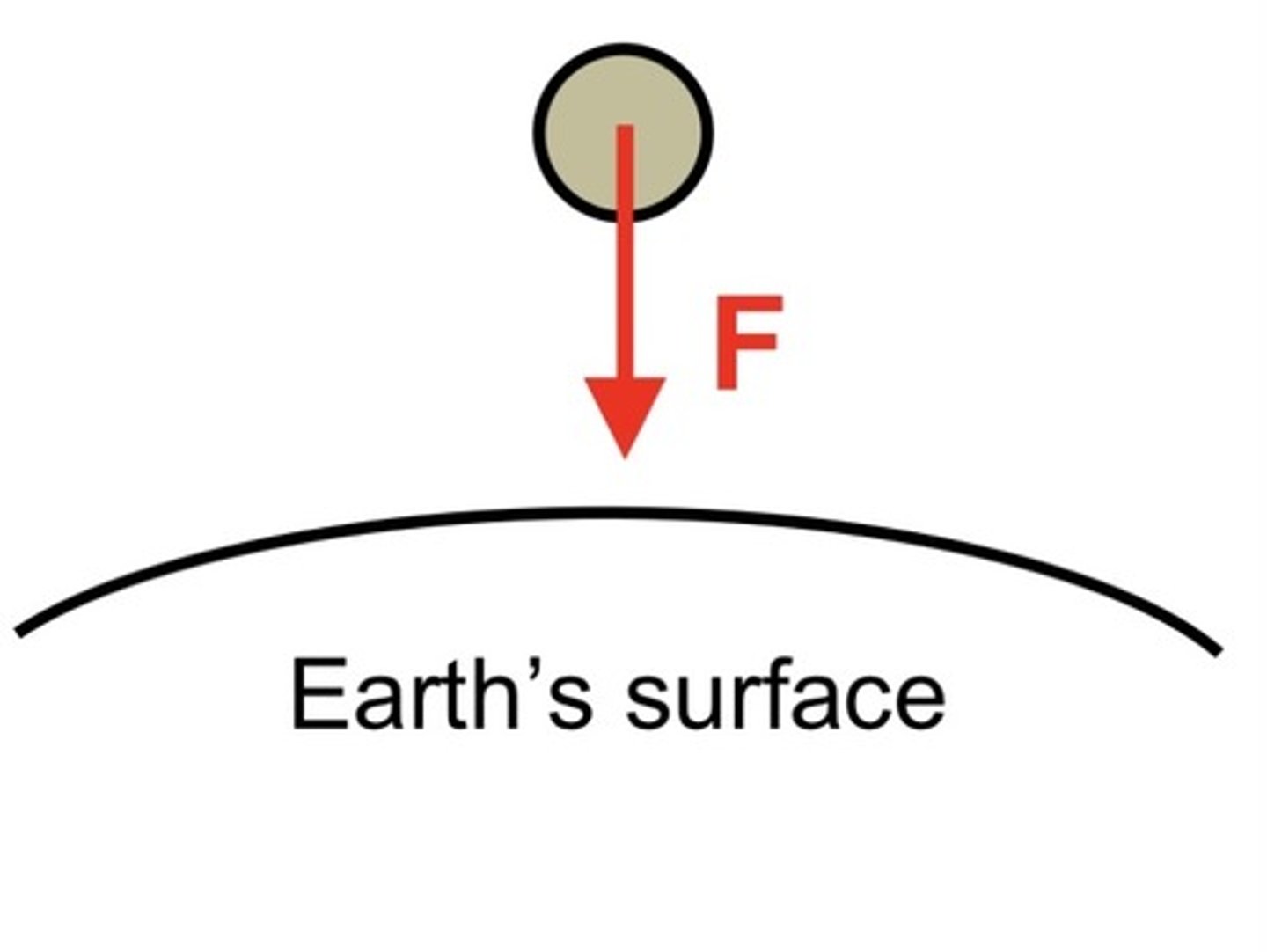
Weight
Force that acts vertically downward on an object
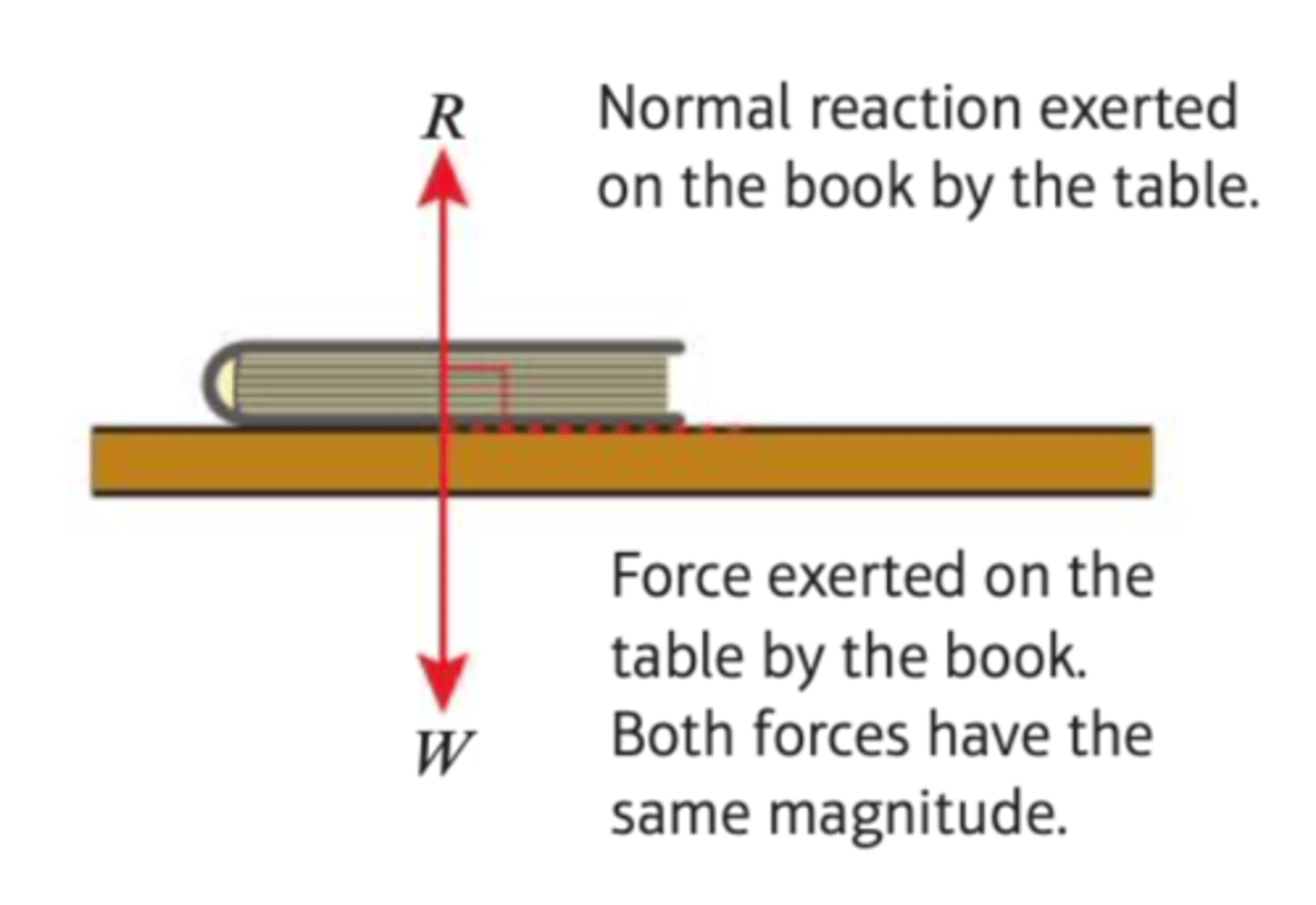
Normal reaction
Force which acts perpendicular to a surface when an object is in contact with the surface
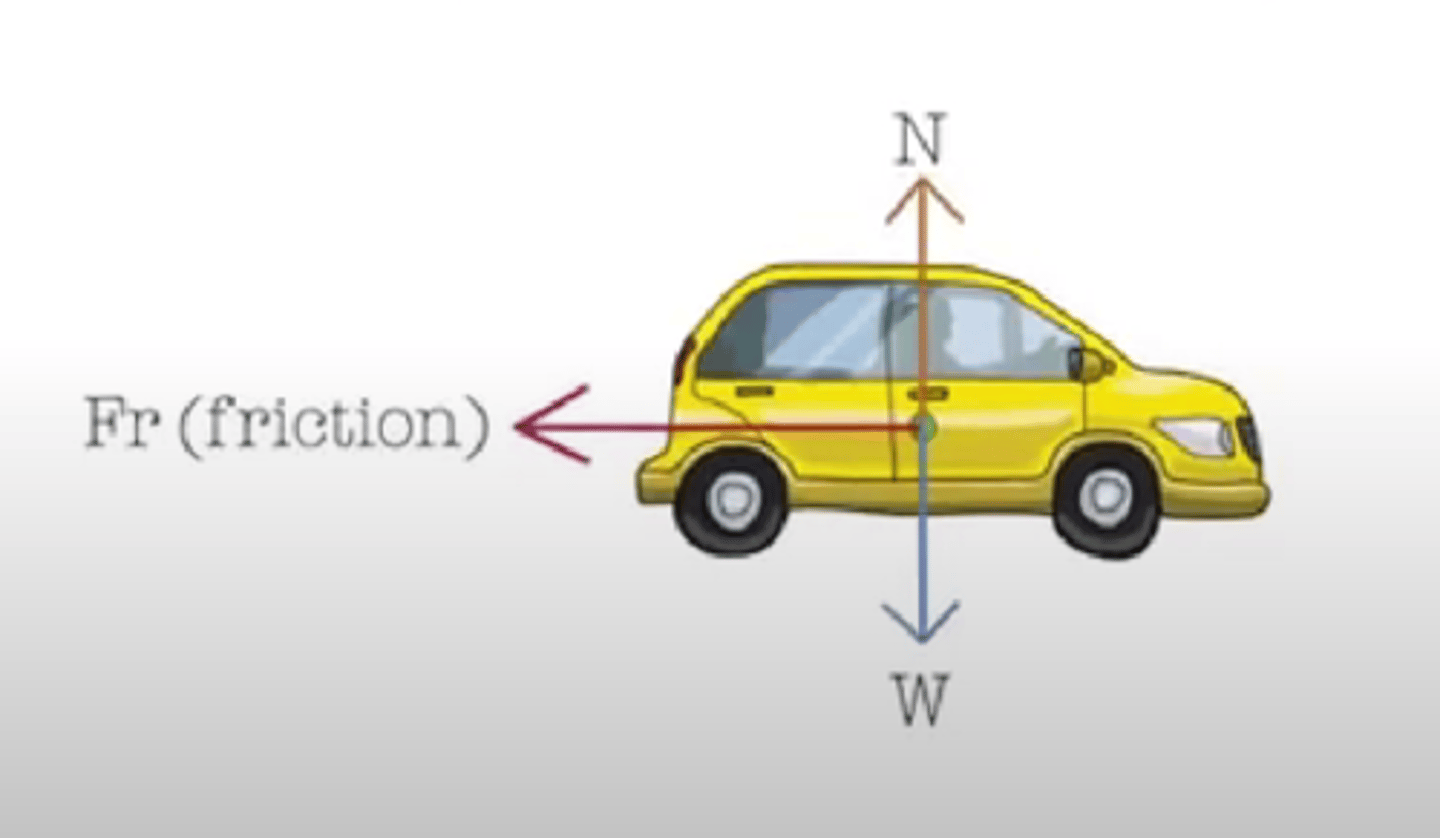
Friction
Force which opposes the motion between two rough surfaces
Tension in the string
Force acting on an object if being pulled along by a string
Thrust or compression in rod
The force acting on an object being pushed along using a light rod
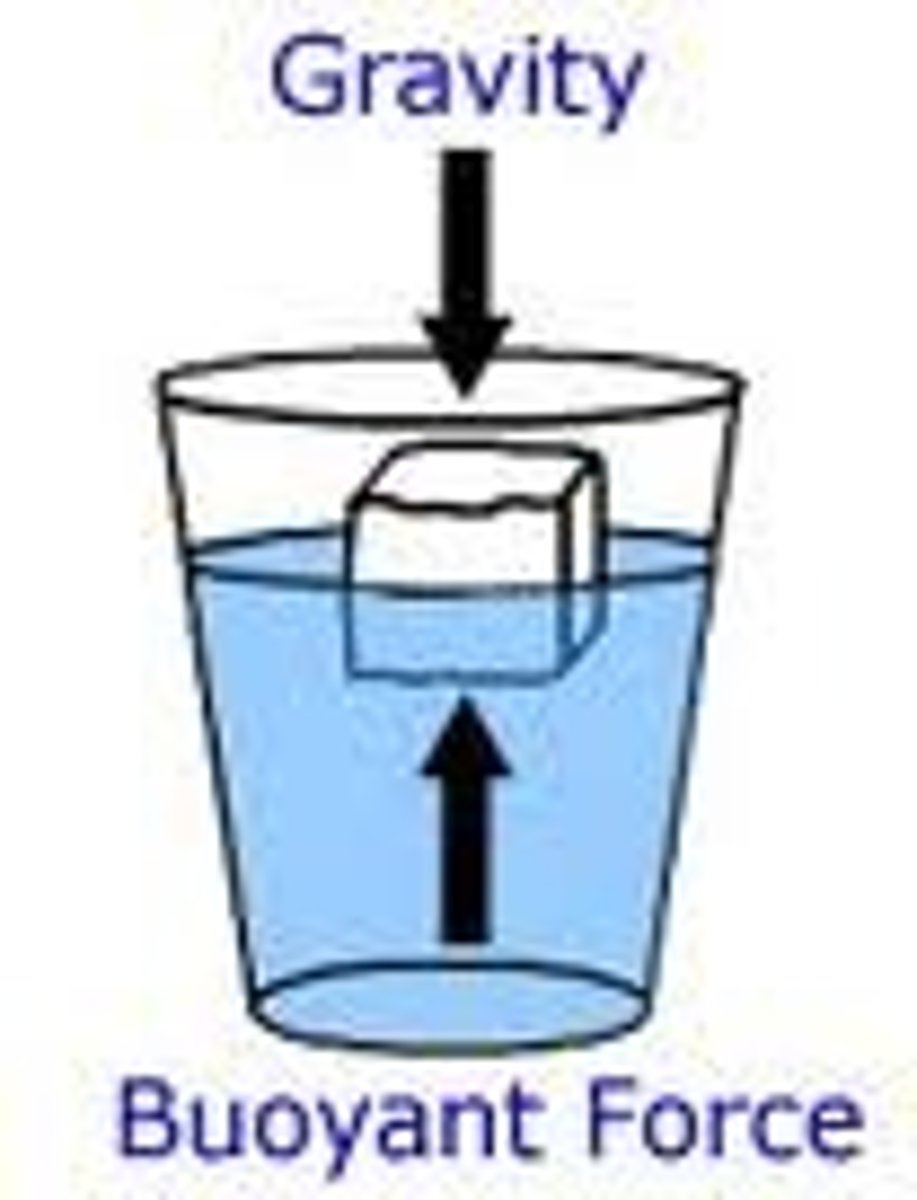
Buoyancy
Upward force on a body that allows it to float or rise when submerged in a liquid
Vector quantity
A quantity that has both magnitude and direction
Displacement
Distance in in a particular direction
Velocity
Rate of change of displacement
Acceleration
Rate of change of velocity
Force/weight
Described by magnitude, direction and point of application
Scalar quantity
A quantity that only has magnitude
Distance
Measure of length
Speed
Measure of how quickly a body moves
Time
Measure of ongoing events taking place
Mass
Measure of the quantity of matter contained in an object
i
x direction
j
y direction
SUVAT equations
s = ut + 1/2at^2
s = vt - 1/2at^2
s = (u+v)/2*t
v = u + at
v^2 = u^2 + 2as
What is the downward acceleration of an object moving vertically downward due to gravity?
9.8ms^-2
Newton's first law of motion
An object at rest stays at rest and an object in motion stays in motion with the same speed and in the same direction unless acted upon by an unbalanced force.
Newton's Second Law of Motion
The force needed to accelerate a particle is equal to the prodcut of the mass of the particle and the acceleration produced
Smooth pulley
The tension is the same on both sides of the pulley
Newton's third law
For every action there is an equal and opposite reaction
Rigid body
a body that maintains a constant shape
Moment
F x dsinθ
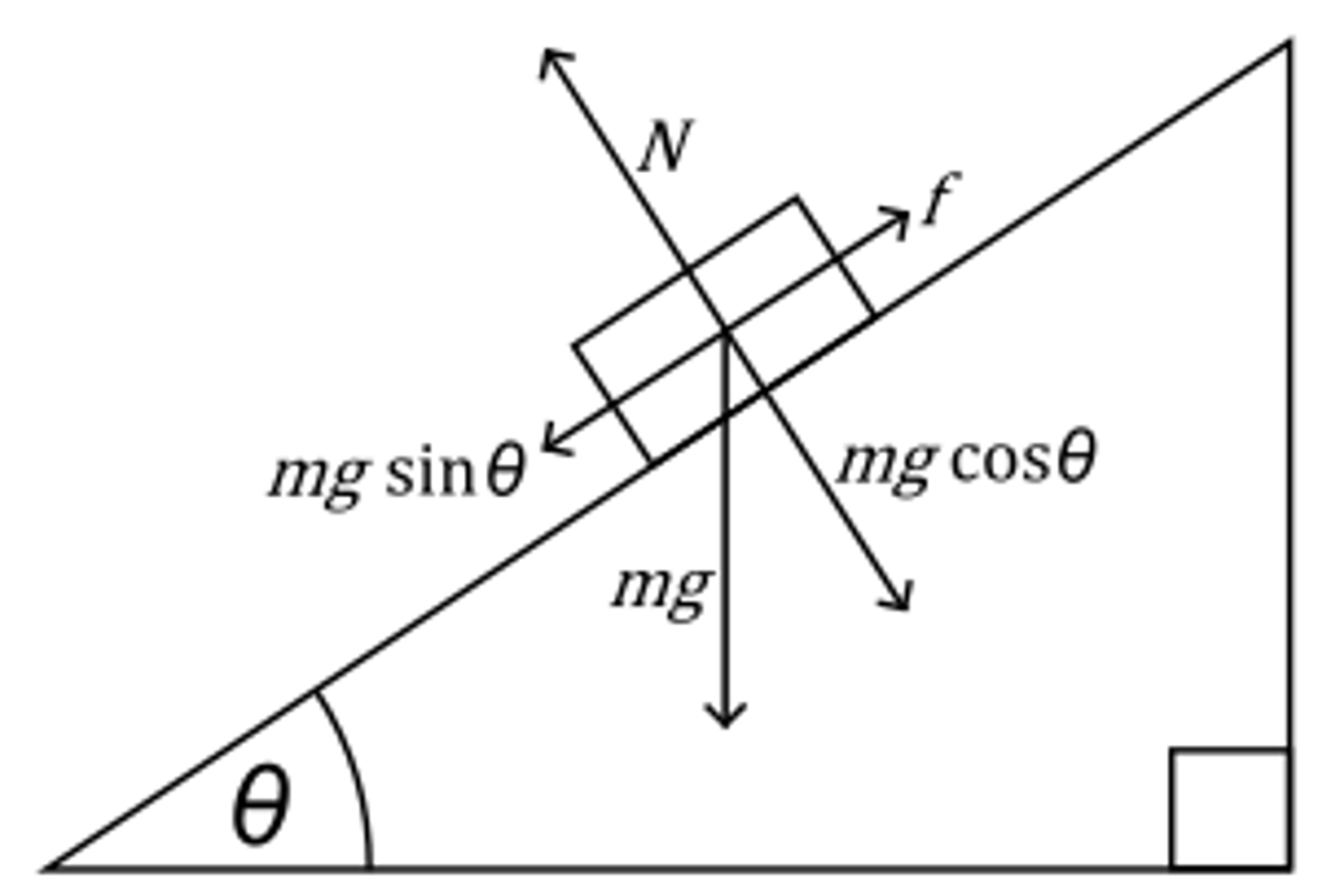
Inclined plane
Limiting value of friction
μR
Horizontal motion of a projectile
constant velocity
Vertical motion of a projectile
constant acceleration due to gravity
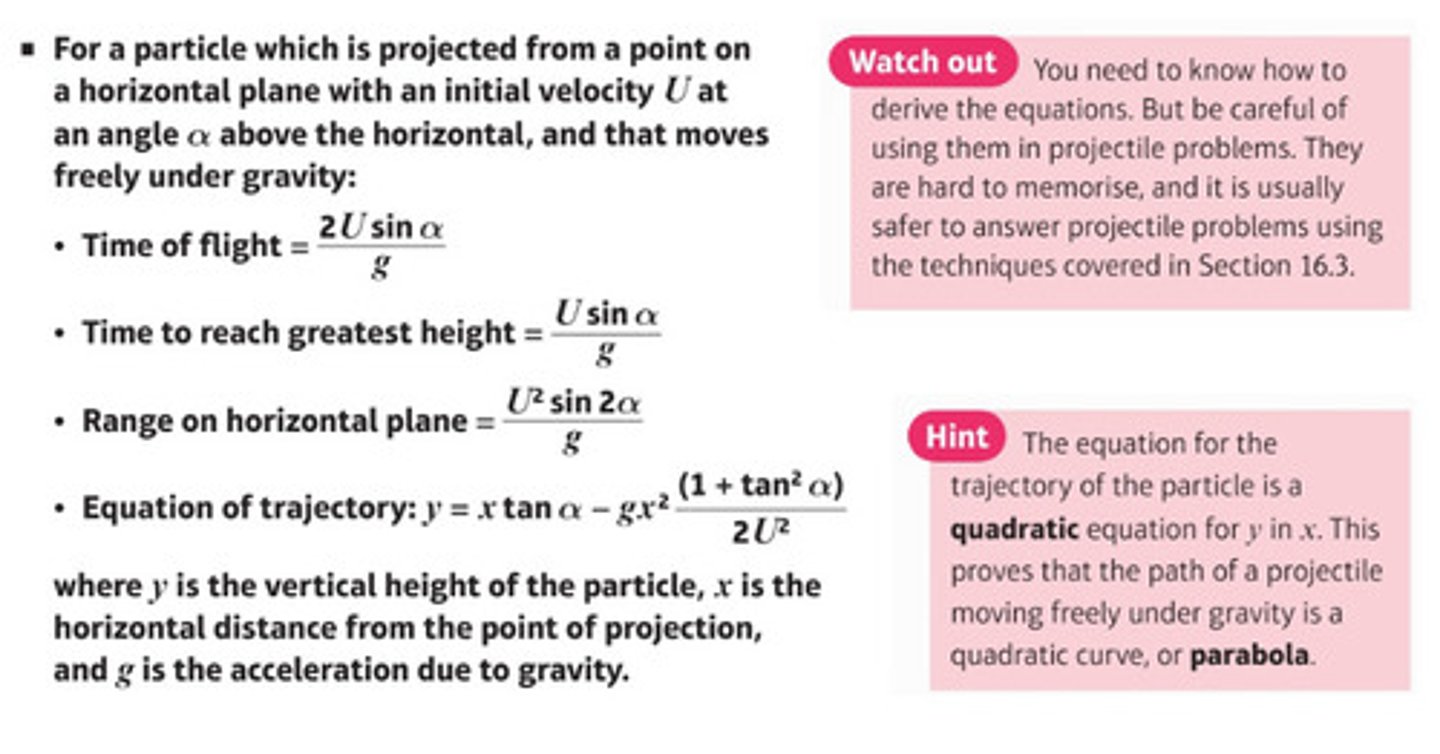
Projection motion formula
Force on a pulley
2Tcos(θ/2)