Digital Ecosystems and Connectivity in Business and Society
 Call Kai
 Learn
Learn Practice Test
 Spaced Repetition
 Match
Match Flashcards
 Knowt Play
1/354

There's no tags or description
Looks like no tags are added yet.
Name | Mastery | Learn | Test | Matching | Spaced | Call with Kai |
|---|
No analytics yet
Send a link to your students to track their progress
355 Terms
Digital ecosystem
A complex network of interconnected entities, including organizations, individuals, digital platforms, technologies, and data, that interact and collaborate within a digital environment.
Digital life
The ability to connect with others across the globe using social media platforms, messaging apps, and video conferencing tools.
Participants
Individuals, organizations, or entities that are involved in the digital ecosystem.
Digital business platform
An infrastructure that enables the exchange of goods, services, or information between participants.
Key characteristics of a digital ecosystem
Data-driven, interconnectivity, interdependence, scalability, and flexibility.
Data-driven
Data plays a crucial role in a digital ecosystem, as entities generate, share, and analyze data to derive insights.
Interconnectivity
Entities within the ecosystem are connected through digital networks and communication channels.
Interdependence
Entities rely on each other's contributions and services to create value and achieve mutual goals.
Scalability and flexibility
Digital ecosystems can scale and adapt to changing needs and technologies.
Network
A communication system linking two or more devices and establishing a standard methodology in which they can communicate.
Hardware
Physical devices associated with a computer system.
Software
The set of instructions the hardware executes to carry out specific tasks.
Applications (apps)
Software programs designed to perform specific tasks on devices.
Protocol
A set of rules and standards that govern how data is transmitted and received over networks.
IP (Internet Protocol) address
A unique number that identifies where computers are located on the network.
Application programming interface (API)
A set of routines, protocols, and tools for building software applications.
Local area network (LAN)
Connects a group of computers in close proximity, such as in an office building, school, or home.
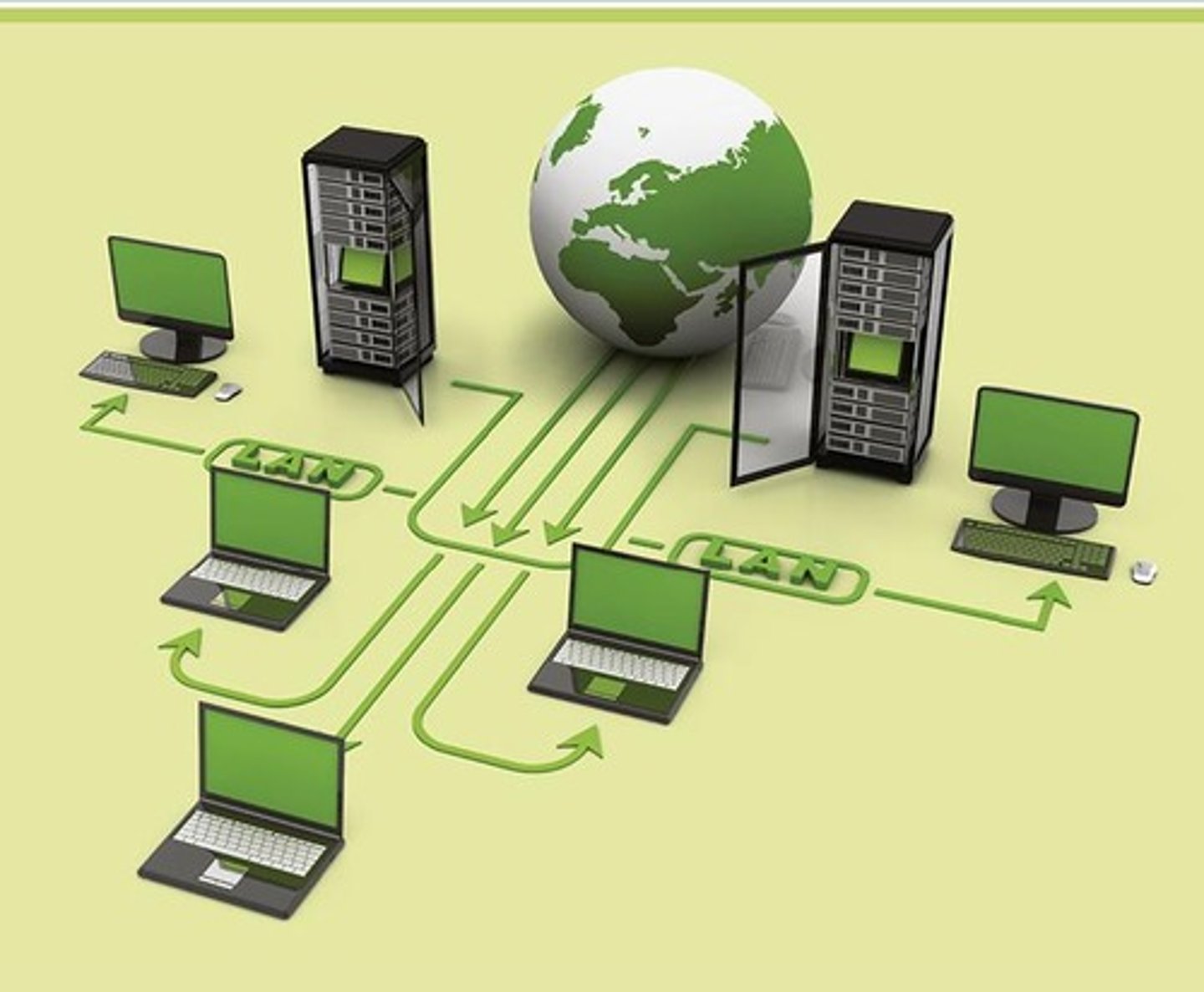
Wide area network (WAN)
Spans a large geographic area such as a state, province, or country.
Metropolitan area network (MAN)
A large computer network usually spanning a city.
Bandwidth
The maximum amount of data that can pass from one point to another in a unit of time.
Bit
The smallest element of data and has a value of either 0 or 1.
Bit rate
The number of bits transferred or received per unit of time.
5G+ bandwidth speed
3.0 Gbps.
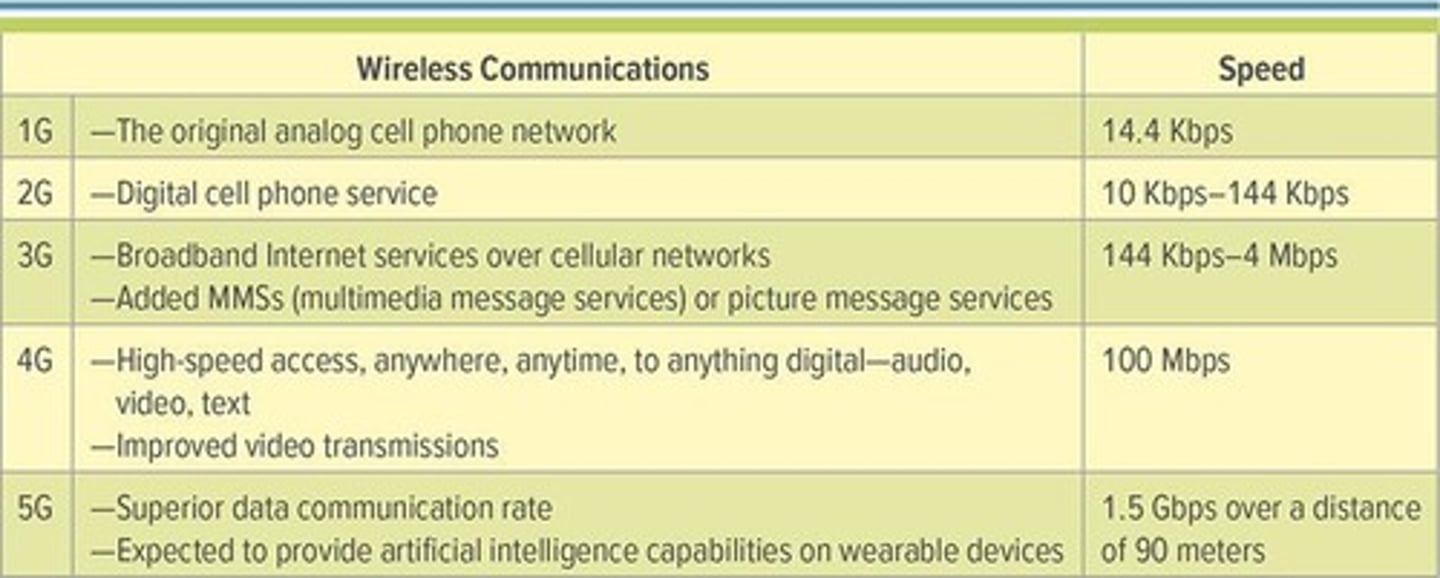
5G bandwidth speed
1.7 Gbps.
4G LTE-A bandwidth speed
220 Mbps (0.22 Gbps).
4G LTE bandwidth speed
40 Mbps (0.04 Gbps).
4G HSPA+ bandwidth speed
14 Mbps (0.01 Gbps).
Network performance metrics
Bandwidth, latency, packet loss, network availability, and throughput.
Latency
Lower latency indicates faster response time and better network performance.
Packet loss
Occurs when data packets traveling across a network failed to reach their intended destination.
Network availability
Higher network availability indicates better reliability and performance.
Throughput
Reflects the data transfer rate achieved on the network.
Wired networks
Use physical connections with copper wire or glass fiber.
Wireless networks
Use the radio frequency of the magnetic spectrum.
Mobile technology
Means the technology can travel with the user.
Wireless
Refers to any type of operation accomplished without the use of a hard-wired connection.
Mobile entertainment
Downloads for music, videos, games, voting, and ring tones, as well as text-based messaging services.
Mobile sales/marketing
Advertisements, campaigns, discounts, promotions, and coupons.
Mobile banking
Manage accounts, pay bills, receive alerts, and transfer funds.
Mobile ticketing
Purchase tickets for entertainment, transportation, and parking; includes the ability to feed parking meters automatically.
Mobile payments
Pay for goods and services, including in-store purchases, home delivery, vending machines, taxis, gas, and so on.
Connectivity
Refers to the ability of devices to connect and communicate with each other or with networks.
Wireless fidelity (Wi-Fi)
A means by which portable devices can connect wirelessly to a local area network, using access points that send and receive data via radio waves.
Wi-Fi infrastructure
Includes the inner workings of a Wi-Fi service or utility, including the signal transmitters, towers, or poles and additional equipment required to send out a Wi-Fi signal.
Router
An intelligent connecting device that examines each packet of data it receives and then decides which way to send it toward its destination.
Wireless Access Points (WAP)
Enables devices to connect to a wireless network to communicate with each other.
Radio Signals
A form of electromagnetic radiation used for wireless communication.
Wi-Fi Standards
Wi-Fi operates based on specific Institute of Electrical and Electronics Engineers (IEEE) standards.
Service Set Identifier (SSID)
A unique identifier or name that is assigned to a wireless network to distinguish it from other nearby wireless networks.
Data Transmission
Connected devices can exchange data wirelessly within the network.
Wireless broadband
Refers to high-speed Internet access provided through wireless communication technologies, allowing users to connect to the Internet without needing physical wired connections.
Wi-Fi network identification
The SSID serves as the name of a wireless network and is broadcasted by the wireless access point (WAP) or router to let devices in the vicinity know that the network is available for connection.
Wi-Fi Bands
A Wi-Fi band refers to a specific frequency range that is used for wireless communication in Wi-Fi networks.
Gigahertz (GHz)
The number of billions of CPU cycles per second.
Bluetooth
Wireless technology that transmits signals over short distances between cell phones, computers, and other devices.
Hotspots
Designated locations where Wi-Fi access points are publicly available.
Smartphones
Offer more advanced computing ability and connectivity than basic cell phones.
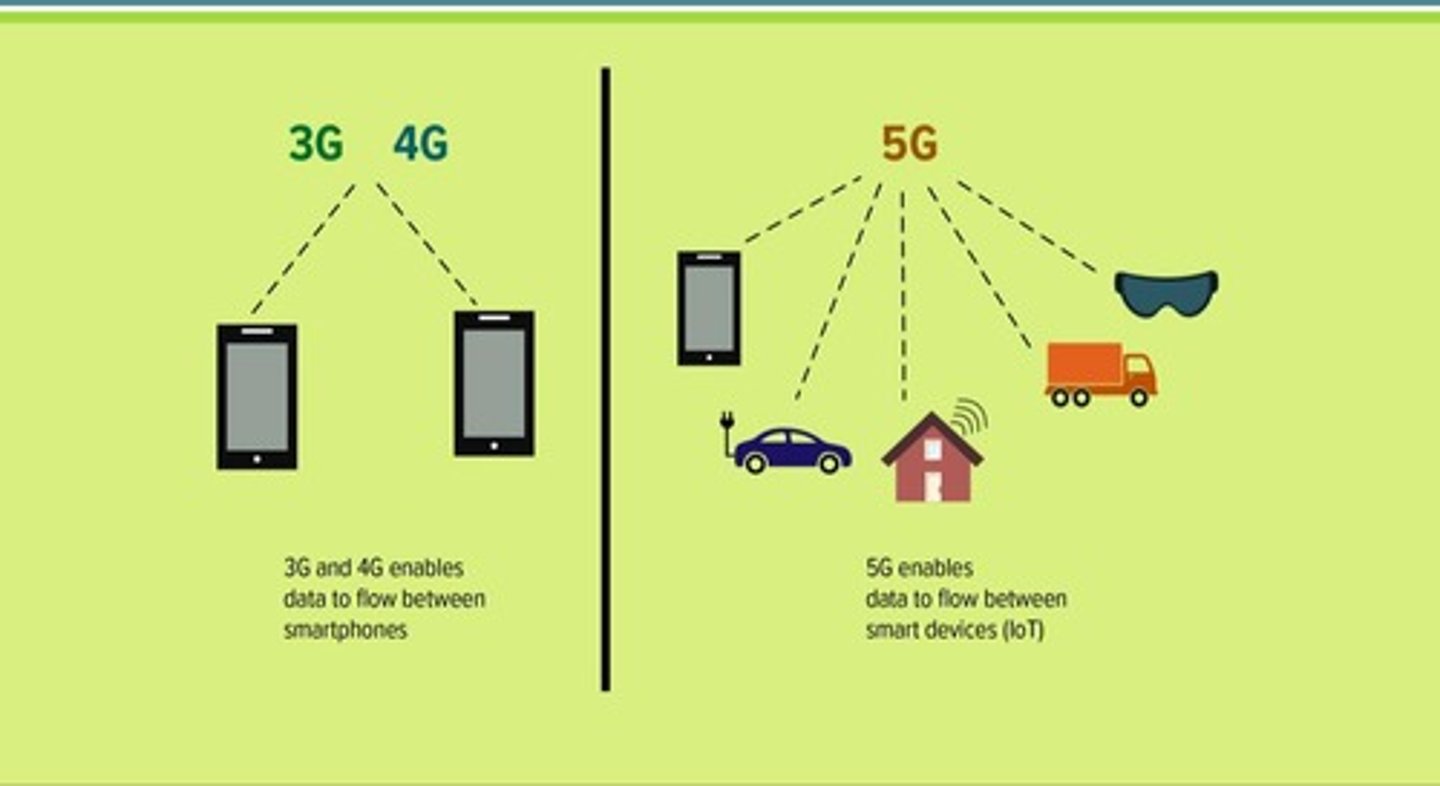
5G
The fifth-generation wireless broadband technology that has greatly increased the speed and responsiveness of wireless networks.
Low latency
Small packets of data will be exchanged instantly.
Fast connection speeds
Will boost data transfer capacity by four times the current speeds by leveraging wider bandwidths and advanced antenna technologies.
Device connections
Will connect millions of IoT devices together.
Wi-Fi 6
The next generation of Wi-Fi expected to operate at 9.6 Gbps.
Streaming
A method of sending audio and video files over the Internet in such a way that the user can view the file while it is being transferred.
Streaming data
Data that is generated continuously by thousands of data sources, which typically send in the data records simultaneously, and in small sizes (order of kilobytes).
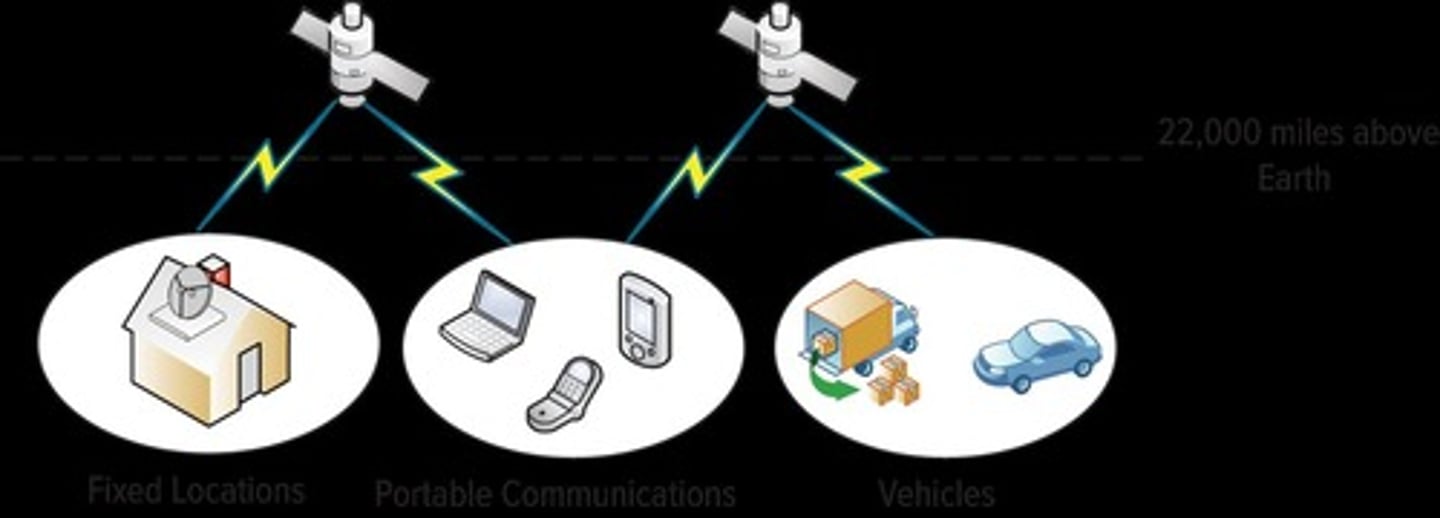
Satellite
A space station that orbits the Earth receiving and transmitting signals from Earth-based stations over a wide area.
Identity and Access Management (IAM)
IAM components ensure secure access and management of user identities within the digital ecosystem.
Wired equivalent privacy (WEP)
An encryption algorithm designed to protect wireless transmission data.
Wi-Fi protected access (WPA)
A wireless security protocol to protect Wi-Fi networks.
Secure sockets layer (SSL)
A standard security technology for establishing an encrypted link between a web server and a browser.
SSL Certificate
An electronic document that confirms the identity of a website or server and verifies that a public key belongs to a trustworthy individual or company.
Secure hypertext transfer protocol (SHTTP or HTTPS)
A combination of HTTP and SSL to provide encryption and secure identification of an Internet server.
Value creation
Refers to increasing or enhancing the worth, utility, or desirability of a product, service, or business entity.
Augmented Reality (AR)
Allows businesses to overlay digital content, such as 3D models, information, or interactive interfaces, onto the physical world, providing employees and customers with real-time, context-aware information and interactions.
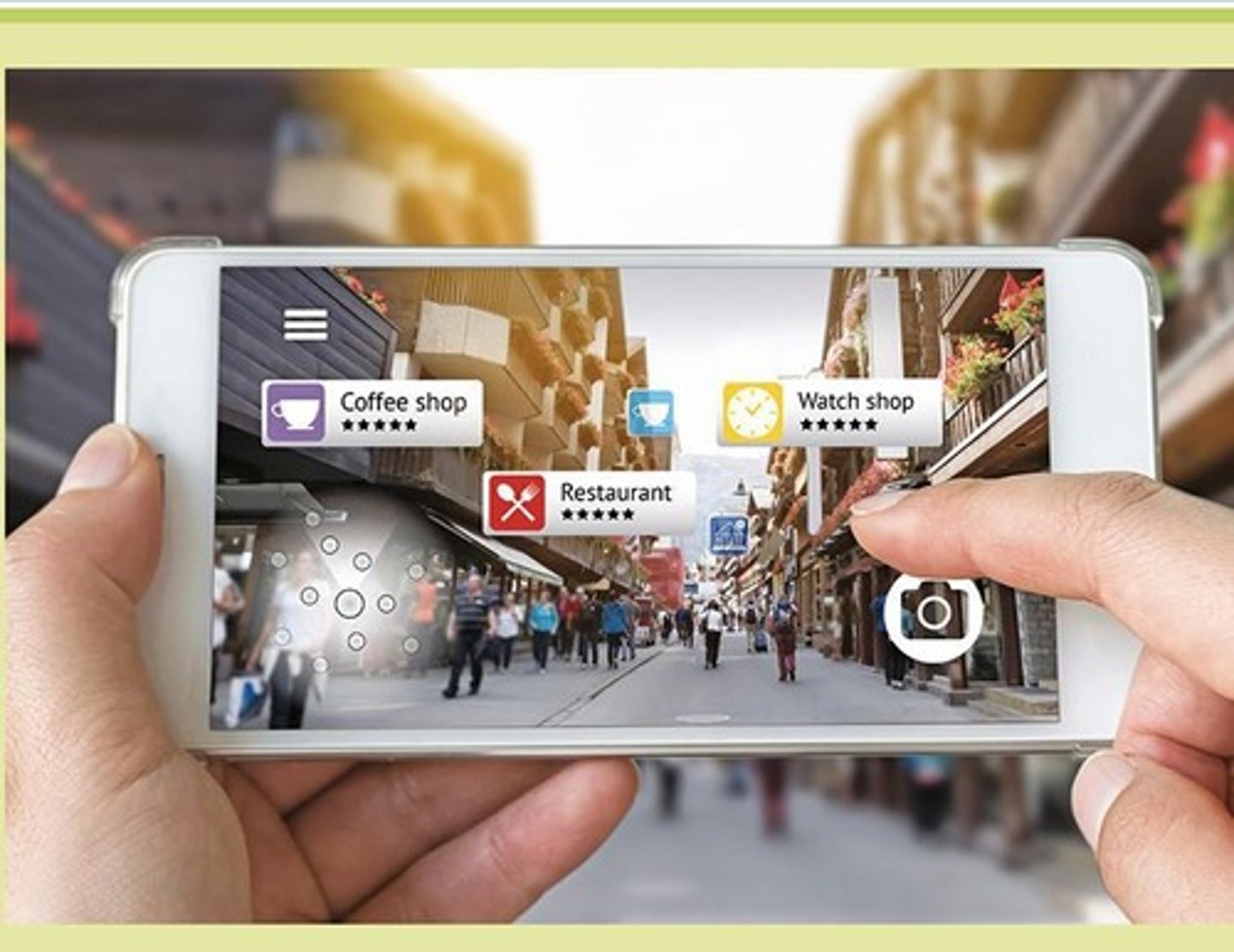
Smart Glasses
Wearable devices that feature integrated displays, sensors, and computing capabilities.
Virtual Reality (VR)
A computer-generated simulation that immerses users in a three-dimensional, interactive environment.
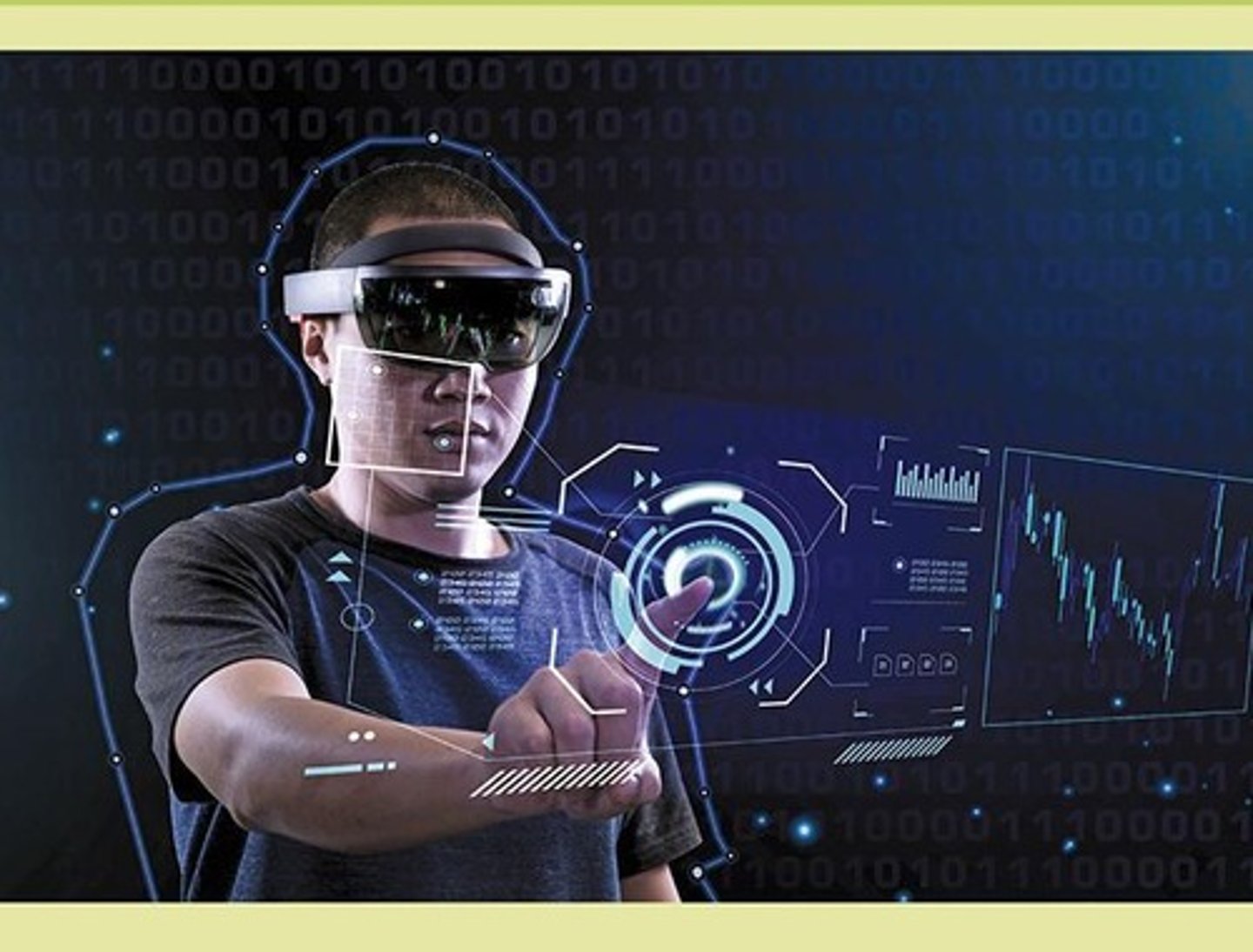
Head-Mounted Display
Consists of two small screens for each eye that displays separate images to create a stereoscopic 3D effect.
VR Motion Tracking
VR systems use various sensors and tracking technologies to monitor the user's movements and translate them into the virtual environment.
Mixed Reality (MR)
Combines elements of both VR and AR, allowing users to interact with virtual objects while maintaining awareness and interaction with the real world.
MR Technology
Integrates virtual content into the user's environment in a way that appears anchored or integrated with the physical surroundings.
Radio Frequency Identification (RFID)
Uses electronic tags and labels to identify objects wirelessly over short distances.
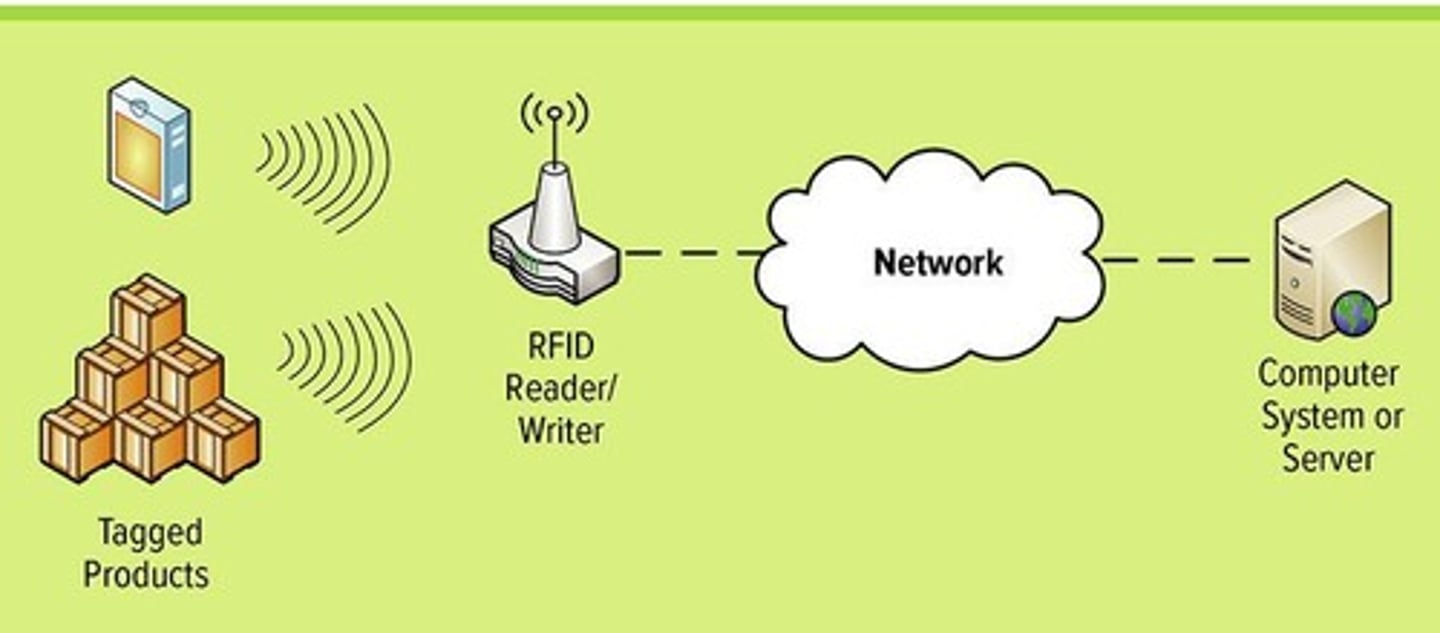
RFID Tag
An electronic identification device that is made up of a chip and antenna.
RFID Reader (RFID Interrogator)
A transmitter/receiver that reads the contents of RFID tags in the area.
Global Positioning System (GPS)
A satellite-based navigation system providing extremely accurate position, time, and speed information.
Automatic Vehicle Location (AVL)
Uses GPS tracking to track vehicles.
Geocache
A GPS technology adventure game that posts the longitude and latitude location for an item on the Internet for users to find.
Geocoin
A round coin-sized object, is uniquely numbered and hidden in geocache.
Geographic Information System (GIS)
Consists of hardware, software, and data that provide location information for display on a multidimensional map.
Cartography
The science and art of making an illustrated map or chart.
Spatial Data
Identifies the geographic location of features and boundaries on Earth, such as natural or constructed features, oceans, and more.
Location Based Services (LBS)
Applications that use location information to provide a service.
IT Consumerization
The blending of personal and business use of technology devices and applications.
Pervasive Computing
The growing trend of embedding computer capabilities into everyday objects to make them effectively communicate and perform useful tasks in a way that minimizes the end user's need to interact with computers as computers.
Enterprise Mobility Management (EMM)
An enterprisewide security strategy to enforce corporate e-policies while enabling employee use of mobile devices such as smart phones and tablets.
Mobile Device Management (MDM)
A security strategy comprised of products and services that offer remote support for mobile devices, such as smart phones, laptops, and tablets.
Mobile Application Management (MAM)
A security strategy that administers and enforces corporate e-policies for applications on mobile devices.
Mobile Information Management (MIM)
A security strategy that involves keeping sensitive data encrypted and allowing only approved applications to access or transmit it.
Fast Data
The application of big data analytics to smaller data sets in near real or real time in order to solve a problem or create business value.
Internet Accessibility
The ability for all individuals, including those with disabilities, to use the Internet effectively.
Digital Divide
A worldwide gap giving advantage to those with access to technology.
Digital Inclusion
Efforts to reduce the digital divide by providing equal opportunities and access to technology.