Financial Accounting: Key Concepts, Transactions, and Financial Statements
 Call Kai
 Learn
Learn Practice Test
 Spaced Repetition
 Match
Match Flashcards
 Knowt Play
1/278

There's no tags or description
Looks like no tags are added yet.
Name | Mastery | Learn | Test | Matching | Spaced | Call with Kai |
|---|
No analytics yet
Send a link to your students to track their progress
279 Terms
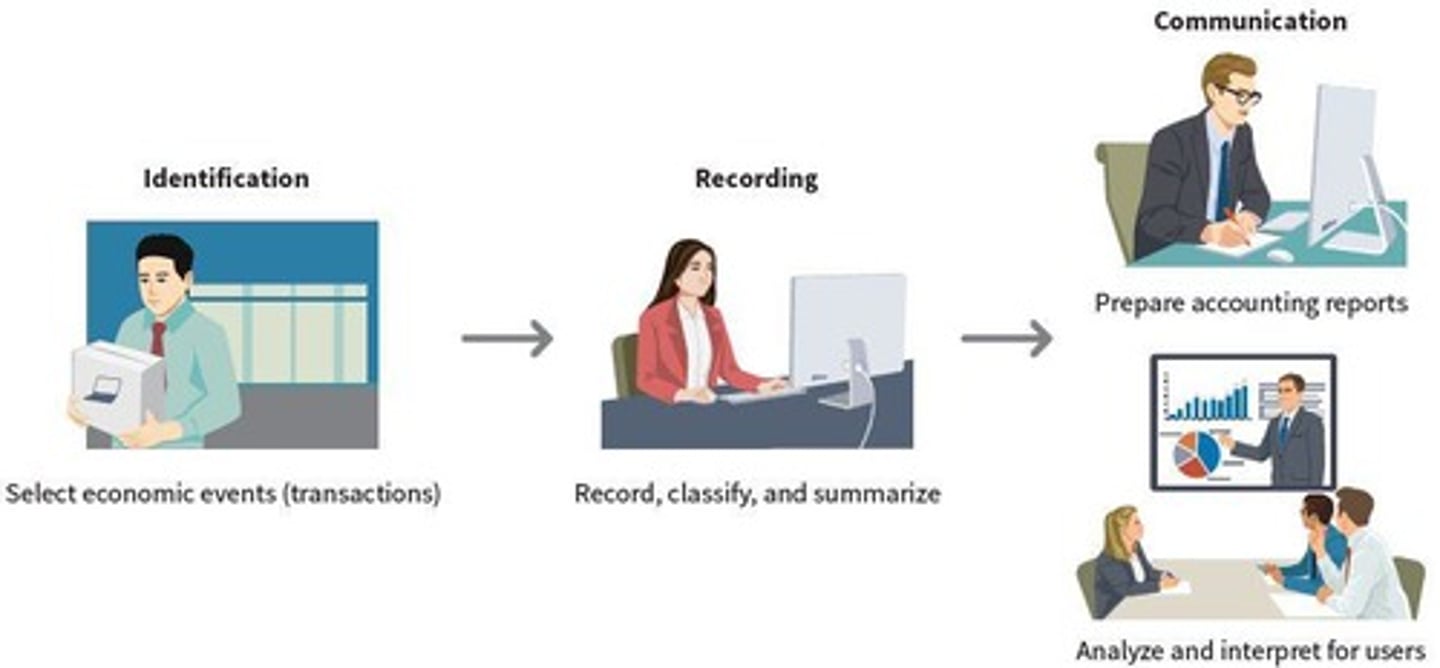
What are the three basic activities of accounting?
Identifying, recording, and communicating economic events.
What is the role of bookkeeping in accounting?
Bookkeeping encompasses the recording function within the accounting process.
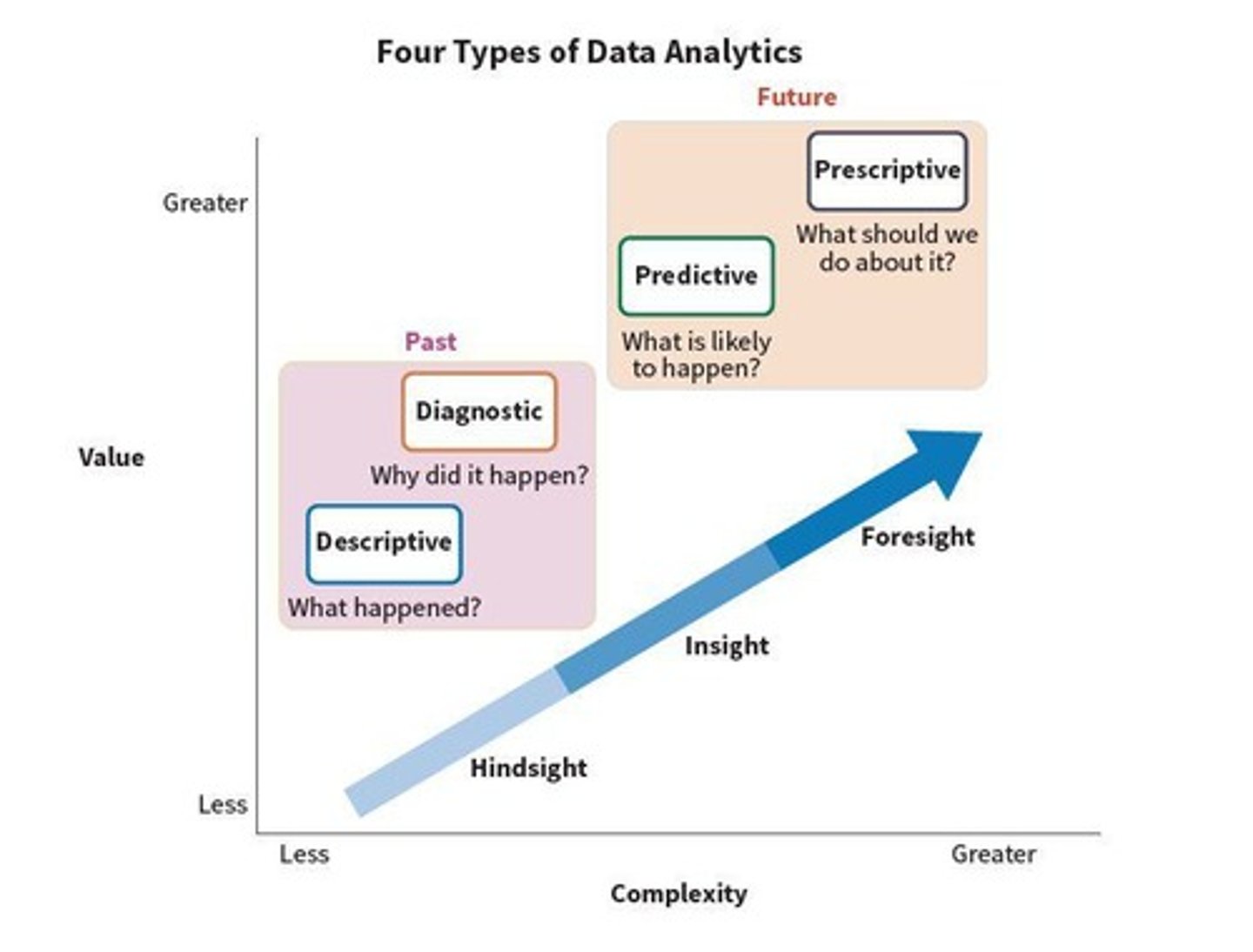
How do business decision-makers use data analytics?
They analyze data to gain insights and make informed business decisions.
Who are considered internal users of accounting data?
Individuals within a company, such as managers and employees.
Who are external users of accounting data?
Individuals and organizations outside a company, such as investors and creditors.
What is the purpose of the Sarbanes-Oxley Act (SOX)?
To enhance corporate governance and restore investor confidence in financial reporting.
What are the steps involved in ethical decision-making in accounting?
1. Recognize an ethical situation. 2. Identify and analyze the principal elements. 3. Identify alternatives and weigh their impacts.
What are Generally Accepted Accounting Principles (GAAP)?
Standards that are universally practiced for reporting economic events.
Name one standard-setting body for accounting principles.
Financial Accounting Standards Board (FASB).
What is the significance of the 'Korean discount'?
It refers to the lower share prices of South Korean companies due to a lack of investor confidence in their financial reports.
What is the primary focus of managerial accounting?
To provide reports for internal users to aid in decision-making.
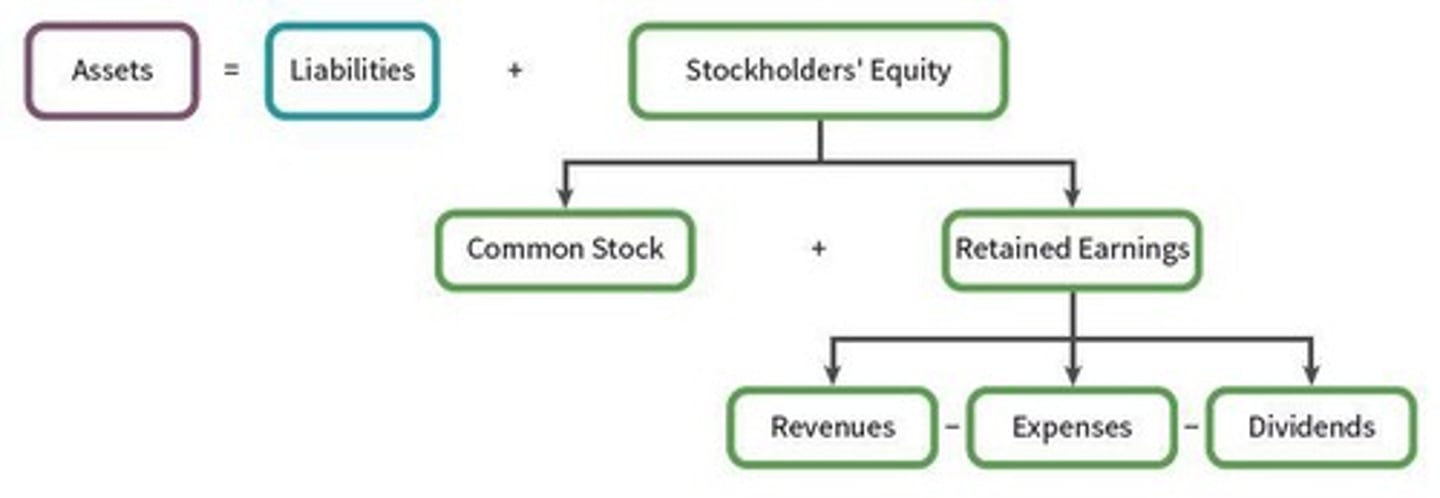
What is the accounting equation?
Assets = Liabilities + Equity.
What are the four main financial statements?
1. Income Statement 2. Balance Sheet 3. Statement of Cash Flows 4. Statement of Retained Earnings.
What is the impact of financial scandals on accounting ethics?
They lead to increased regulation and a focus on ethical behavior in financial reporting.
How does data analytics contribute to accounting?
It helps in analyzing large data sets to draw meaningful conclusions for business decisions.
What is the importance of ethical behavior in financial reporting?
It is essential for maintaining trust and integrity in financial markets.
What are the responsibilities of accountants in financial reporting?
To prepare and interpret financial reports accurately and ethically.
What is the role of the Securities and Exchange Commission (SEC)?
To regulate and oversee the securities industry and protect investors.
What is the primary goal of accounting?
To provide useful financial information to users for decision-making.
What is the difference between internal and external users of accounting data?
Internal users are within the organization, while external users are outside entities seeking financial information.
What does the term 'economic events' refer to in accounting?
Transactions and occurrences that affect the financial position of an organization.
Why is it important to analyze the effects of business transactions on the accounting equation?
To ensure that the accounting records remain balanced and accurate.
What is the significance of sound ethical behavior in accounting?
It ensures the accuracy and reliability of financial reporting.
What are the consequences of unethical practices in accounting?
Loss of investor confidence, legal penalties, and damage to reputation.
What is the purpose of financial statements?
To summarize the financial performance and position of a company.
What is the importance of stakeholder analysis in ethical decision-making?
It helps identify who may be affected by decisions and their respective interests.
What does transparency in business refer to?
The extent to which outsiders have knowledge regarding a company's financial performance and position.
How does increased transparency affect economic growth?
It makes investors more willing to supply financial capital, which spurs economic growth.
What are the two primary measurement principles in GAAP?
Historical cost principle and fair value principle.
What does the historical cost principle dictate?
Companies must record assets at their cost.
What does the fair value principle state?
Assets and liabilities should be reported at fair value, the price received to sell an asset or settle a liability.
What is the relevance of financial information?
It is capable of making a difference in a decision.
What does faithful representation mean in accounting?
Numbers and descriptions match what really existed or happened—they are factual.
What does the monetary unit assumption require?
Companies include only transaction data that can be expressed in money terms.
What is the economic entity assumption?
Activities of the entity must be kept separate from the activities of its owner and all other economic entities.
What is a corporation?
A business organized as a separate legal entity under state law, with ownership divided into shares of stock.
What is a partnership?
A business owned by two or more persons, where owners often have unlimited personal liability.
What is a proprietorship?
A business owned by one person, who receives all profits and is personally liable for all debts.
What is the significance of the cost principle?
It ensures that assets are recorded at their actual cost, providing a factual basis for financial reporting.
What is the basic accounting equation?
Assets = Liabilities + Stockholders' Equity.
What do assets represent in accounting?
Resources a business owns that provide future services or benefits.
What must happen to claims of creditors in the event of liquidation?
Claims of creditors (liabilities) must be paid before ownership claims (stockholders' equity).
What is the role of accounting in general management?
Managers need to understand accounting data to make wise business decisions.
How does accounting assist marketing specialists?
It helps quantify and understand costs and benefits, ensuring sales are profitable.
Why is accounting knowledge important in finance?
It is essential for analyzing financial statements and is often required for finance jobs.
What is the purpose of the Sarbanes-Oxley Act?
To reduce unethical behavior and decrease the likelihood of future corporate scandals.
What is the primary accounting standard-setting body in the United States?
The Financial Accounting Standards Board (FASB).
What does the economic entity assumption ensure?
It ensures that a business owner's personal expenses are separated from business expenses.
What happens if a business does not adhere to the economic entity assumption?
It could lead to inaccurate financial reporting and misrepresentation of the business's financial position.
What is the difference between historical cost and fair value?
Historical cost is the original cost of an asset, while fair value is the current market price.
What is the significance of the fair value principle for actively traded assets?
It is applied extensively for assets like investment securities that are actively traded.
What is the relationship between relevance and faithful representation?
Relevance ensures information is useful for decision-making, while faithful representation ensures it is factual.
Why is it important for businesses to maintain accurate accounting records?
To provide stakeholders with reliable financial information for decision-making.
What is the impact of combining activities of different entities on the economic entity assumption?
It violates the economic entity assumption by failing to keep activities separate.
What do liabilities represent?
Claims against assets (debts and obligations).
What are common examples of liabilities?
Accounts payable, notes payable, salaries and wages payable, sales and real estate taxes payable.
What does stockholders' equity represent?
Ownership claim on total assets, also referred to as residual equity.
What are the components of stockholders' equity?
Common stock and retained earnings.
What are revenues?
Incomes resulting from business activities aimed at earning income.
What are common sources of revenue?
Sales, fees, services, commissions, interest, dividends, royalties, and rent.
What are expenses?
Costs of assets consumed or services used in generating revenue.
What are common examples of expenses?
Salaries expense, rent expense, utilities expense, tax expense.
What are dividends?
Distributions of cash or other assets to stockholders that reduce retained earnings.
What is a transaction in accounting?
A business's economic event recorded by accountants.
What is the effect of a cash investment by stockholders?
Increases both assets and stockholders' equity.
What happens when equipment is purchased for cash?
Assets increase (equipment) and decrease (cash) but total assets remain unchanged.
What is the effect of purchasing supplies on credit?
Increases assets (supplies) and liabilities (accounts payable).
What occurs when services are performed for cash?
Increases assets (cash) and increases revenues.
What is the effect of paying expenses?
Decreases assets (cash) and decreases stockholders' equity.
What happens when dividends are paid?
Decreases cash (asset) and decreases retained earnings (equity).
What is the purpose of the income statement?
To present revenues and expenses and resulting net income or loss for a specific period.
What does the retained earnings statement summarize?
Changes in retained earnings for a specific period.
What information does the balance sheet report?
Assets, liabilities, and stockholders' equity at a specific date.
What does the statement of cash flows summarize?
Cash inflows and outflows for a specific period.
How is net income related to retained earnings?
Net income is needed to determine the ending balance in retained earnings.
What is the relationship between the retained earnings statement and the balance sheet?
The ending balance in retained earnings is needed in preparing the balance sheet.
What is the purpose of an income statement?
To report the profitability of the company's operations over a specific period of time.
What does an income statement list first?
Revenues, followed by expenses.
What is net income?
The difference between total revenues and total expenses.
What is another name for the income statement?
Statement of operations, earnings statement, or profit and loss statement.
What does the retained earnings statement report?
Changes in retained earnings for a specific period of time.
What must total assets equal on a balance sheet?
Total liabilities and stockholders' equity.
What is the balance sheet a snapshot of?
The company's financial condition at a specific moment in time.
What does the statement of cash flows provide information about?
Cash receipts and cash payments for a specific period of time.
What are the three main questions answered by the statement of cash flows?
Where did cash come from? What was cash used for? What was the change in the cash balance?
Which financial statement is prepared as of a specific date?
The balance sheet.
What is ESG reporting?
Reporting that accounts for environmental, social, and governance performance.
Why is ESG reporting important?
It reflects a company's responsibility to those influenced by its actions.
What did the FASB request during its agenda consultation?
Input on accounting issues to prioritize, including sustainability.
What is a challenge in measuring ESG factors?
Measurement is difficult, but efforts are underway to improve it.
What is the significance of sustainability issues for companies?
They can have significant implications for current and future earnings.
What does the accounting equation state?
Assets = Liabilities + Stockholders' Equity.
How are total assets calculated?
By summing cash, accounts receivable, and equipment.
What is the formula for calculating net income?
Net income = Revenues - Expenses.
What is the ending stockholders' equity formula?
Stockholders' equity = Total assets - Total liabilities.
What types of careers are available in public accounting?
Auditing, taxation, and management consulting.
What types of careers are available in private accounting?
Cost accounting, budgeting, accounting information systems, and taxation.
What is forensic accounting?
Using accounting skills to investigate theft and fraud.
What does the term 'dividends' refer to?
Payments made to stockholders from a corporation's earnings.
What is the role of the SEC regarding ESG disclosures?
To draft rules requiring disclosures about climate-related risks in financial statements.