Physics Test 2026
 Call Kai
 Learn
Learn Practice Test
 Spaced Repetition
 Match
Match Flashcards
 Knowt Play
1/53

Earn XP
Description and Tags
king
Name | Mastery | Learn | Test | Matching | Spaced | Call with Kai |
|---|
No analytics yet
Send a link to your students to track their progress
54 Terms
What is a wave
a repeating disturbance that transfers energy from one place to another without transferring matter
What is a transverse wave?
which the medium moves at right angles to the direction of the wave
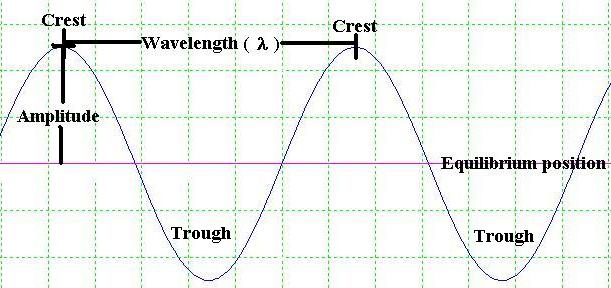
What is a crest
the highest point of transverse wave
what is a trough
the lowest point of transverse wave
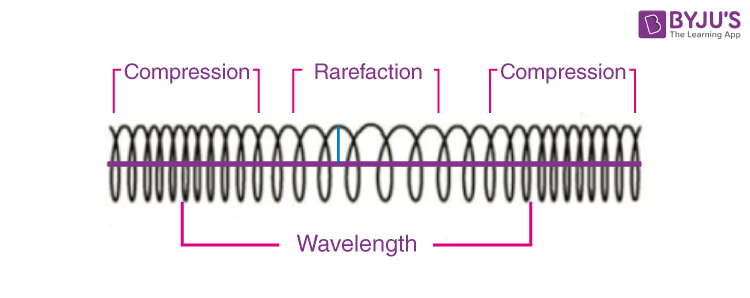
what is a compressional/longitudinal wave
waves in which the medium moves back and forth in the same direction as the wave
what is compression?
part of longitudinal wave where the particles are close together
what is rarefaction?
part of a longitudinal wave where the particles are spread apart
what is the 3 properties that all waves have?
wavelength
amplitude
frequency
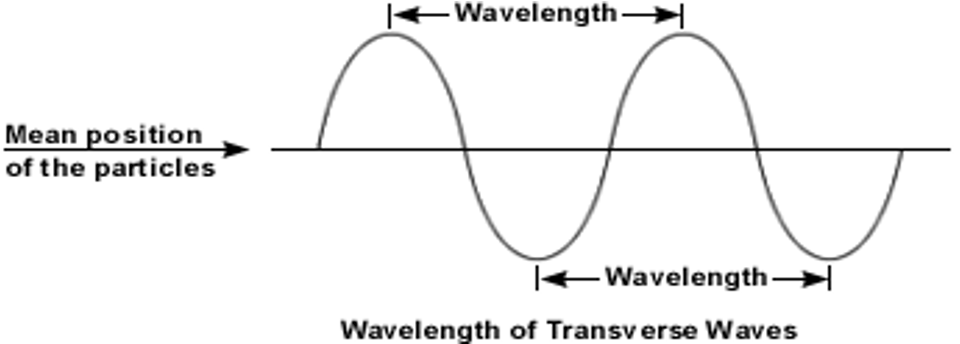
what is wavelength
the distance between one point on a wave and the exact same place on the next wave
measured in metres
what is frequency?
how many waves go past a point per second
measured in hertz Hz
higher the frequency, the more energy
related to pitch on how loud or squeaky it is
what is amplitude
how far the medium moves from the resting position (the volume)
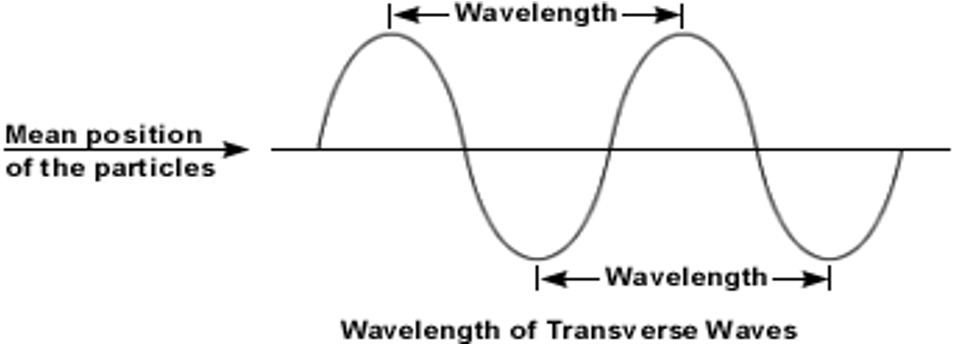
Draw a transverse wave
Pic
draw a longitudinal wave
picccc
formula for velocity
v = f λ
what is sound wave
Sound waves are compressional waves that travel through the air through a series of compressions and rarefactions of vibrations
Cannot travel in vaccum
what is sound intensity
the energy that the sound wave possesses
The greater the intensity of sound, the farther the sound will travel and the louder the sound will appear
unit for loudness
decibels dB
what is resonance
occurs whenever a sound wave has the same frequency as the natural frequency
the sound will cause the object with the same natural frequency to vibrate
how is frequency related to pitch?
a high pitch sound has a high frequency
for e.g. a girl screaming has a high pitch but a fog horn has a low pitch
why can’t sound travel in space?
since sound is a mechanical wave requiring a medium to virbate on but space is a vacuum
what is doppler effect
apparent change in frequency detected when the sound is moving relative to the hearer
what is echolocation?
biological sonar system that some animals have
emit sound waves to navigate and hunt and listen to the returning echos
can help reveal size and shape of objects as well as distance, speed, and direction
what is infrasound
refers to frequencies below our hearing range
what is ultrasound
refers to sound waves above our hearing range
why does sound travel the fastest in solids?
fastest in solids and slowest in gas
because in soolids the particles are packed together (higer density) allowing vibrations to pass on from one molecule to another quickly
what is sonar
used in oceanography to map the seafloor timing how long a sound pulse takes to bounce back
what is tinnitus
the perception of ears ringing without an external sounds
symptoms of tinnitus
ringing, buzzing, hissing in the ear without external sounds
technological scientific use
ultrasound- used for safe medical imaging without using dangerous x-ray radiation
sonar- need for safe ship navigation and mapping ocean floor for resources or research
what are the classes of electromagnetic radiation?
radio, infrared, visible light, ultraviolet, xrays and gamma rays
ordered from longest (radio) to shortest (gamma rays)
how does light behave like a wave
when it bends around corners (diffraction)
how does light behave as a particle
like a particle (photon) when it hits a solar panel to create electricity
what is transparent
when all lights go through the material
glass, clear water
what is translucent
when some of the light passes through and casts a light shadow
vegetable oil, eyelid, thin tissue
what is opaque
light is blocked and casts a dark shadow
mirrors, rock, cardboard
what is the law of reflection
states thtat the angle at which light hits a surface (incidence) equals the angle it bounces off
what is the normal line
dotted line drawn at 90 degrees to the mirror surface to measure these angles
characteristics of a virtual image
upright and appears to be “behind” the mirror, but it cannot be projected onto a piece of paper.
eg own reflection in a standard bathroom mirror
how do convex and concave mirrors differ
convex- mirrors curve outward and are used as security mirrors in shops to see a wide area
concave mirrors curve inward like a bowl and are used in makeup mirror to magnify your face
what is refraction and how does desnity affect it
refraction is the bending of light as it moves between materials of different densities
when light moves into a denser medium (like moving from air into glass), it slows down and bends towards the normal line
when light moves into a less dense medium (like moving from glass to air), it speeds up and bends away from the normal.
eg. straw looking broken/ bent in water
what is the difference between convex and concave lenses
convex- thicker in the middle and converges light to a single focus point
concave- lenses are thinner in the middle and cause light rays to diverge/ spread out
what is total internal reflection (TIR)
happens when light hits a boundary at a very steep angle (greater than the critical angle_ and reflects entirely back into the material
this is how high-speed internet data travels through fibre optic cables
what is visible spectrum
small part of the electromagnetic spectrum that human eyes can see
red, orange, yellow, green, blue, indigo, and violet.
red has the longest wavelength, while violet has the shortest.
they look white when all combined
what is normal line
imaginary line drawn perpendicular to the surface of the mirror at the point where the light hits
all angles are measured between the light ray and this normal line.
what is a medium
any substance or material through which light or sound can travel in
refracive index
a value that describes how much a medium slows down light;
a higher refractive index =material is more optically dense and light will bend more when entering it
refractive ray
the ray of light that has entered a new meium and changed direction
angle of refraction
angle between refracted ray and the normal line
lens
transparent piece of glass or plastic with at least one curved surface that refracts light rays to form an image
converge
when light rays move towards each other and meet at a single point, usually caused by a convex lens
focus (focal point)
the specific point where light rays that were travelling parallel to each other meet (converge) after pssing through a lens
focal length
distance between the center of the lens and the focus point
diverge
light rays move away from each other and spread out usually caused by a concave lens
virtual focus
point from which diverging light rays appear to originate when they are spread out by concave lens