history of performance
 Call Kai
 Learn
Learn Practice Test
 Spaced Repetition
 Match
Match Flashcards
 Knowt Play
1/76

There's no tags or description
Looks like no tags are added yet.
Name | Mastery | Learn | Test | Matching | Spaced | Call with Kai |
|---|
No analytics yet
Send a link to your students to track their progress
77 Terms
What is performance?
A live embodied action happening in time and context.
What is performativity?
Repeated actions that create identity and social reality.
Difference: performance and performativity?
Performance is a live event; performativity is identity formed through repetition.
Who developed gender performativity?
Judith Butler
What does Butler say about gender?
Gender is something we do repeatedly, not something we naturally are.
Who described performance as restored behavior?
Richard Schechner
What is restored behavior?
Repeated behavior based on social patterns, rituals, or traditions.
What is “twice-behaved behavior”?
Behavior that is rehearsed or repeated rather than spontaneous
What are examples of restored behavior?
Weddings, protests, rituals, professional behavior.
Who used front stage/back stage theory?
Erving Goffman
What is front stage?
The public version of ourselves
What is back stage?
The private version of ourselves
According to Goffman, do we have one fixed identity?
No, identity changes depending on context and audience.
What is embodiment?
Meaning experienced through the body.
What is corporeality?
The body as material, vulnerable, gendered, and racialized.
What is presence in performance?
Being physically there in front of others.
Why is the body important in performance art?
The body can become the artwork and communicate meaning
What is body art?
Performance art using the body as the main medium.
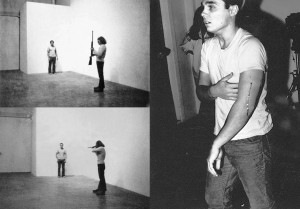
Which artist focused on risk and pain in performance?
Chris Burden
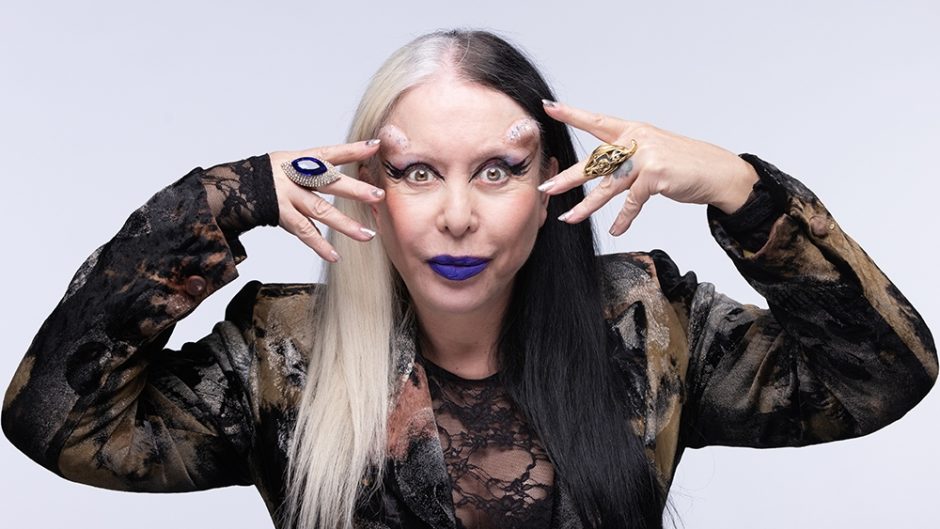
Which artist explored body transformation through surgery?
ORLAN
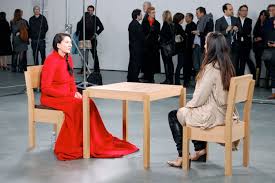
Which artist focused on presence and endurance?
Marina Abramović
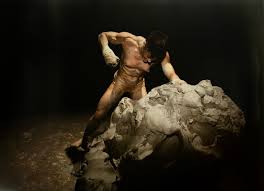
Which artist explored queer rage and visibility?
Cassils

What are the four conditions of performance?
Live, embodied, time-based, contextual.
What does Schechner mean by “performance broad spectrum”?
Performance includes rituals, sports, politics, theatre and social behavior.
What are the 7 functions of performance according to Schechner?
Entertain, Create beauty, change identity, build community, heal, teach, deal with sacred/ demonic.
What is postmodern performance?
Performance rejecting spectacle and using everyday movement and repetition.
Characteristics of postmodern performance?
Everyday movement, repetition, task-based actions, anti-spectacle
Which movement influenced postmodern dance in the 1960s?
Judson Dance Theater.
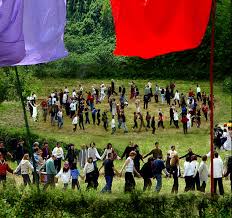
Which choreographer focused on community rituals and healing?
Anna Halprin
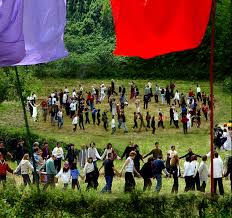
What was a famous work from Anna Halprin, still carried out today?
The planetary Dance
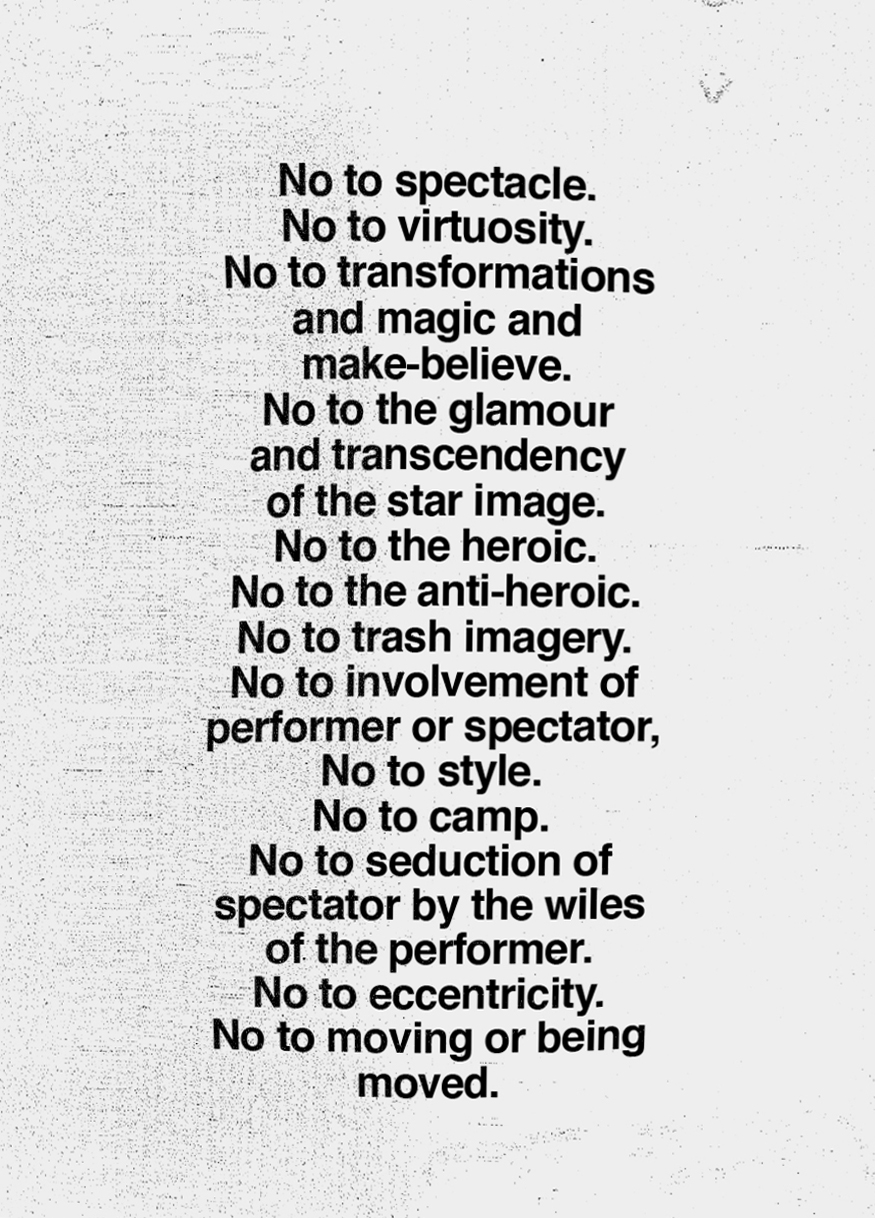
Which choreographer said “No to spectacle”?
Yvonne Rainer
Which choreographer used simple repetitive actions?
Simone Forti
When does repetition become ritual?
When repeated actions gain symbolic or collective meaning
What is ritual in performance?
Organized repeated actions structuring bodies in time and space.
What is archive?
Documents, recordings, and photographs preserving memory.
What is repertoire?
Embodied memory transmitted through actions and performance.
Who created archive vs repertoire theory?
Diana Taylor
What does Diana Taylor say about memory?
Memory is transmitted through bodies and repeated actions.
Who said performance disappears?
Peggy Phelan
What is “performance’s ontology is disappearance”?
Performance exists temporarily and cannot fully remain.
Who argued that liveness and media are connected?
Philip Auslander
What is documentation in performance?
Recording or preserving performance through media.
Which artist refused documentation in performances?
Tino Sehgal
What is liveness?
The experience of witnessing something live.
Which artist explored body traces and memory?
Ana Mendieta
What is a living archive?
Memory carried through bodies and actions.
Which artist explored fabricated archives?
Art without a physical object.
Why was early performance anti-market?
Because it rejected collectible art objects.
What is reperformance?
Performing an artwork again in another context or time.
What changed in the 1980s–1990s regarding performance?
Museums started collecting and preserving performance.
What is the performance economy?
Festivals, fairs, and markets turning performance into a global art system.
Name performance festivals from the course (give two)
Performa, Kunstenfestivaldesarts
What is public space?
Shared spaces such as streets and squares.
Why is public space important in performance?
It creates visibility and unpredictability.
What is protest performance?
Using performance to communicate political resistance.
What does protest performance use?
Repetition, symbols, gestures, collective action.
When does the body become political?
When it becomes publicly visible in resistance or protest.
What is collective action?
A group acting together publicly.
Which feminist collective created “The R$pist Is You”?
Las Tesis
Which protest movement used “Women, Life, Freedom”?
Women Life Freedom movement
Why is repetition important in protest?
It strengthens visibility, memory, and collective identity.
What is intervention in performance?
Temporary actions interrupting everyday life.
What is decolonial practice?
Challenging colonial power structures and dominant knowledge systems.
What is listening as a decolonial practice?
Paying attention to voices ignored or silenced by colonial systems.
Who connected listening with decoloniality?
Rolando Vázquez
What makes listening difficult?
Power structures, prejudice, and dominant narratives.
What is monstruosity in performance?
Challenging norms through difference and unpredictability.
Which artist explored monsters and ecology?
Amanda Piña
What is relational practice in decolonial performance?
Focusing on relationships, responsibility, and connection.
Which collective uses rest as resistance?
The Nap Ministry
What does decolonial performance question?
Whose knowledge is visible and whose is excluded.
Can performance change power relations?
Yes, by changing visibility, listening, and collective experience.
What is context in performance?
The social, political, or institutional environment of the work.
What is audience participation?
The audience becoming involved in the performance.
What is endurance in performance?
Long-lasting physical or mental effort in a performance.
Can performance exist without documentation?
Yes, but documentation changes how it survives and is remembered.