pet food quality control and safety
 Call Kai
 Learn
Learn Practice Test
 Spaced Repetition
 Match
Match Flashcards
 Knowt Play
1/86

There's no tags or description
Looks like no tags are added yet.
Name | Mastery | Learn | Test | Matching | Spaced | Call with Kai |
|---|
No analytics yet
Send a link to your students to track their progress
87 Terms
Conforming to requirements or specifications
What is quality control?
Nutrition, safety, consumer
What are some possible quality control specifications?
Does it meet the nutritional needs of the intended species and life stage?
What question do we ask ourselves when considering nutrition as a quality control?
Is the product free of any foreign material?
What question do we ask ourselves when considering safety as a quality control?
Does it meet the visual expectations of pet owners?
What question do we ask ourselves when considering the consumers as a quality control?
Ensures we know what hazards are likely and then what preventive controls we are applying to address these hazards
What does the SQF Management System do?
Every incoming lot from the supplier must come with an official lab report (CoA) that lists test results for key specs: nutrient levels, contaminants, mycotoxins, heavy metals, etc. The plant reviews this before unloading the truck. It's a supply-chain preventive control — if the certificate of analysis is missing or not up to code, the load is rejected or held.
What does it mean when a company obtains a certificate of analysis at receiving of raw materials?
Pet food ingredients (grains like corn/wheat, rendered meats/fats, vitamins/minerals, etc.) are the #1 entry point for hazards — mycotoxins, Salmonella, foreign material, melamine, pesticides, etc. Under SQF and FSMA Preventive Controls for Animal Food (PCAF), every facility must have documented receiving procedures as part of their Hazard Analysis and Preventive Controls. A failure here can lead to massive recalls later
Why is the receiving of raw materials an important part of the process?
Collect samples to analyze for mycotoxins, run product through a screen tp remove foreign materials, metal detectors
What are some protocols companies may follow after receiving a certificate of analysis when receiving raw materials?
For example, if the incoming corn is lower in protein or higher in moisture than the formula calls for, the batch recipe can be adjusted before mixing begins. Vitamins are more expensive to test for so certificate of analysis is relied on
When companies receive ingredients, why is it important to check ingredients for proximate components (Proteins, fat, moisture, ash, minerals, vitamins)?
Produced by molds that grow on grains and oilseeds. They are not a concern in meat products. They can survive extrusion.
What are mycotoxins?
Mycotoxins
What biochemical hazard is of most concern in grains?
Vitamin D
What biochemical hazard is of most concern in fish ingredients?
Too much vitamin D can be toxic
Why is vitamin D a challenge when formulating pet food for cats?
Vitamin D, copper
What are some vitamins of concern?
Near-Infrared Spectroscopy (NIR)
How are ingredients checked for proximate components (Proteins, fat, moisture, ash, minerals, vitamins) routinely checked during manufacturing?
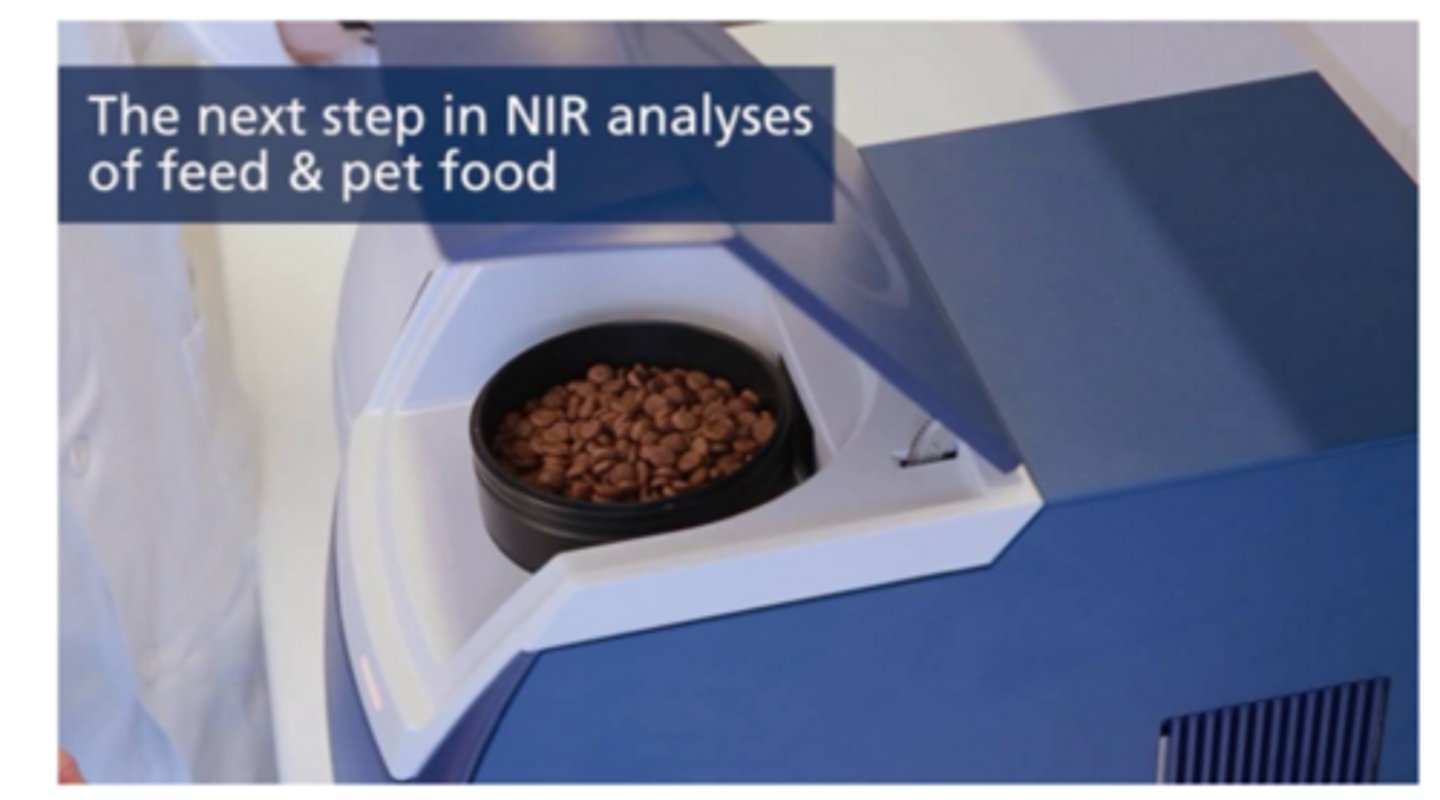
Fast, non-destructive workhorse tool used on the production floor. It shines near-infrared light on a sample and measures how the light is absorbed at different wavelengths. Each nutrient (protein, fat, moisture, fiber, etc.) has a unique "fingerprint," so the machine instantly predicts the levels. It does not need to be calibrated
What is a near-infrared spectroscopy (NIR)?
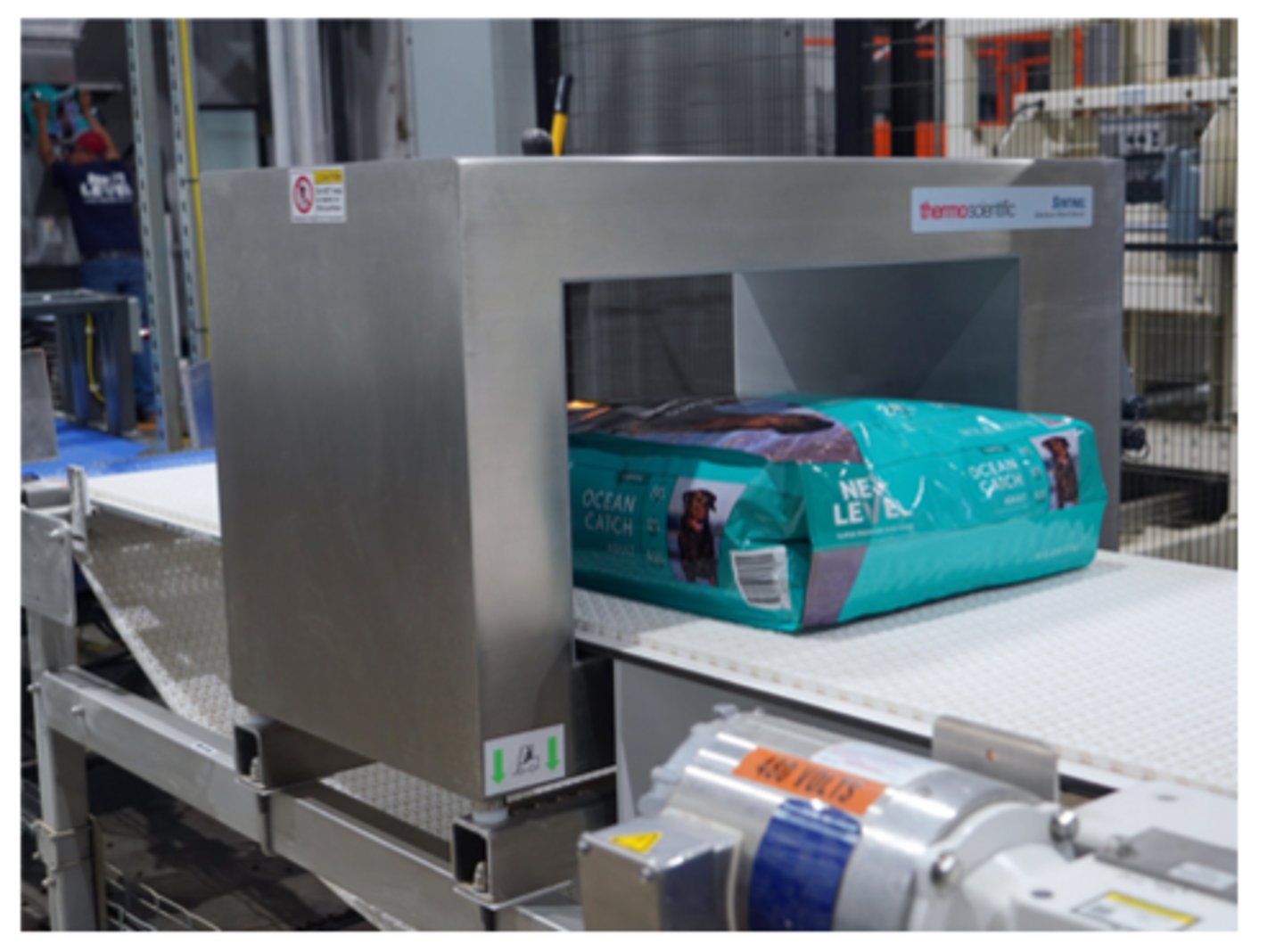
They catch any metal fragments, glass, stones, or dense foreign objects that made it past receiving screens. X-ray is especially good at finding non-metallic contaminants (plastic, bone fragments, etc.)
Why are X-rays or metal detectors used during manufacturing?
Moisture is the water content in the whole product while water activity is the water available to microorganisms
What is the difference between moisture and water activity in a product?
As bulk density increases, less product can fit in the package. As bulk density decreases more product can fit in the package
What is the relationship between the product and its bulk density?
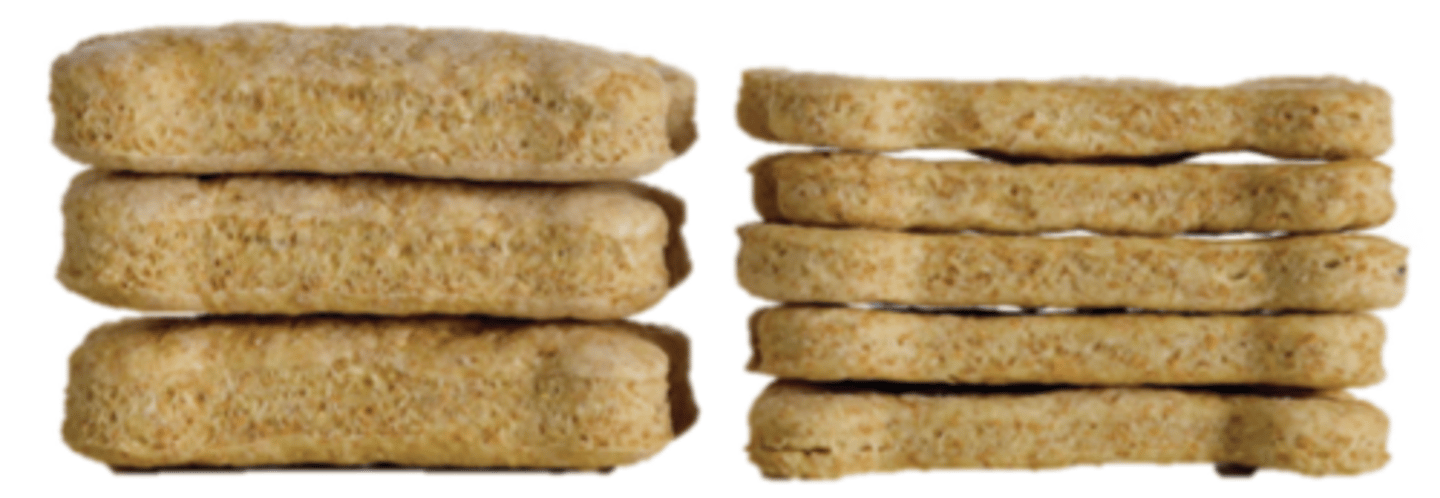
Low
Freeze dried products have ______ bulk density
It affects how much food fits in a bag, how it flows in the packaging line, and how much an animal eats per cup. If the kibble is too light or too dense, the extrusion parameters (temperature, moisture, screw speed) are adjusted immediately.
Why is bulk density checked during manufacturing?
Checks include proper fill weight, seal integrity, label accuracy, lot coding, and expiration dates. Any defect here can trigger a hold or rework
Why is packaging checked during manufacturing?
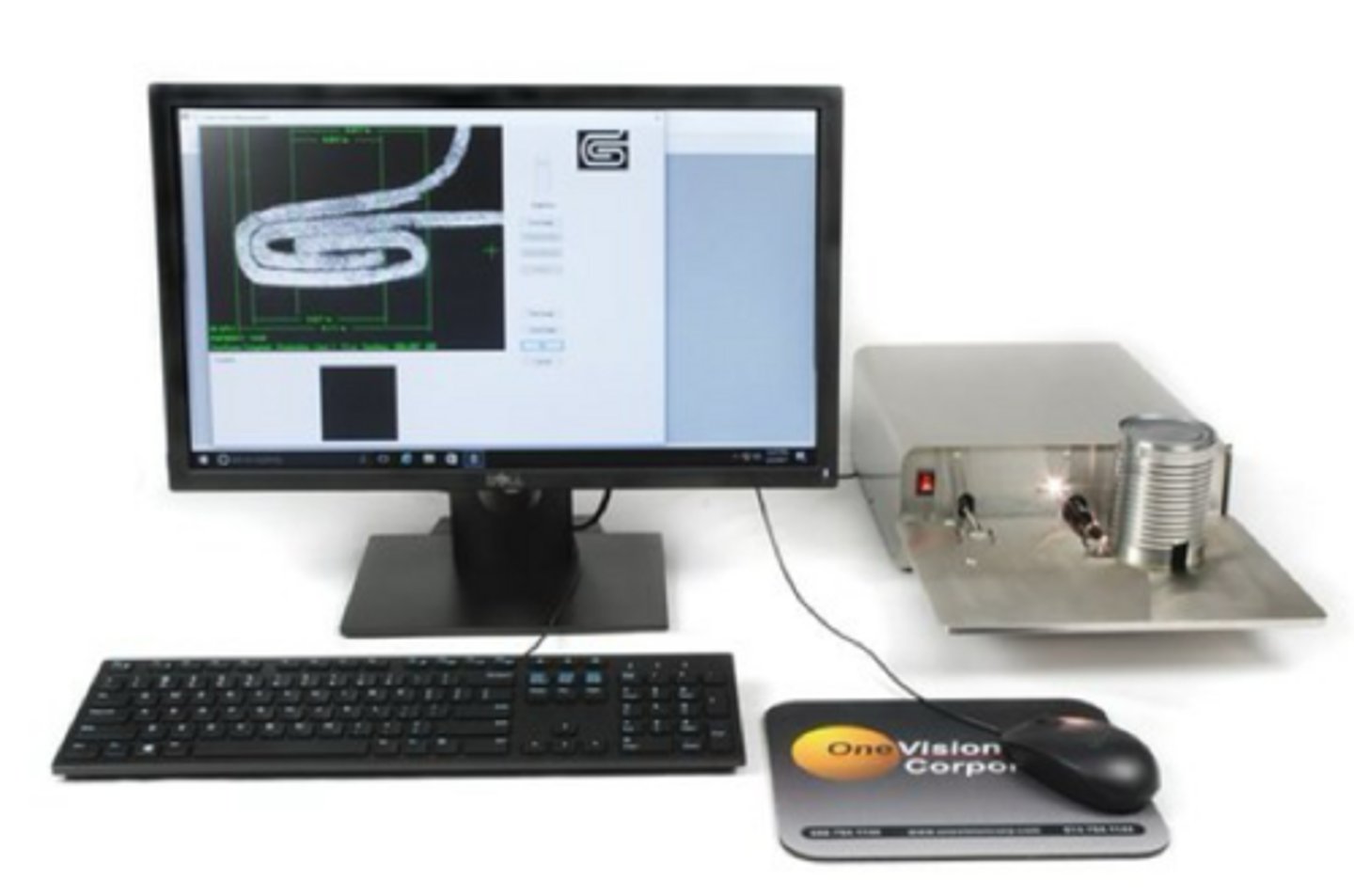
Double-seam cans are inspected for perfect seam integrity — no leaks, no dents, no micro-gaps. A bad seam can let bacteria in, leading to spoilage or botulism
When making a canned product, why is it important to check seams during manufacturing?
Visual inspection, incubation to ensure no bacteria growth, measure water activity, conduct a sensory analysis
Companies collect small product samples at regular intervals during manufacturing. What do they do to check the product post production?
Accelerates growth to ensure there is no bacteria
What role does incubation play when testing a product sample post production?
Bacteria growth is present, releases CO2 gasses causing can to expand
What does it mean when a can starts to "bulge" after a few weeks?
Protein (LECO), moisture, fat(acid hydrolysis), minerals (ICP)
When companies collect samples of product for post production testing, what are they required to analyze?
Burns sample at very high temperature and measures the nitrogen released
How does a LECO analyzer analyze protein in a collected product sample post production?
Treated with acid to break down any bound fats, then extracted and weighed
How does acid hydrolysis analyze fat in a collected product sample post production?
They are more likely to purchase it from a consumer standpoint
Why is it important for humans to like the smell of your product?
Hairnets, beardnets, no jewelry, no buttons or necklaces on clothing
What are some sanitary practices workers can practice in a facility?
Melamine pet food recall, cuts and gravy formula
What was the largest pet food recall that happened in 2007 and what were the products contaminated?
Nestle, Purina, Del Monte, Hill's Pet Nutrition
What are some brands affected by the melamine recall in 2007?
8,500
How many pet deaths occurred from the melamine recall in 2007?
Wheat gluten and rice protein were contaminated with melamine and cyanotic acid (by-product of melamine)
What ingredients imported from China were discovered to be the cause of the melamine recall in 2007?
Wheat gluten is heavily used as a binder in cuts and gravy formulas
Why could wheat gluten have been the cause of the melamine recall in 2007?
(100 x 90(melamine has 6 nitrogens 6 x 15) / 127(molecular weight)
How to calculate nitrogen % in melamine?
nitrogen % x 6.25
How to calculate crude protein % of melamine?
Melamine
What is this wheat gluten contaminated with?
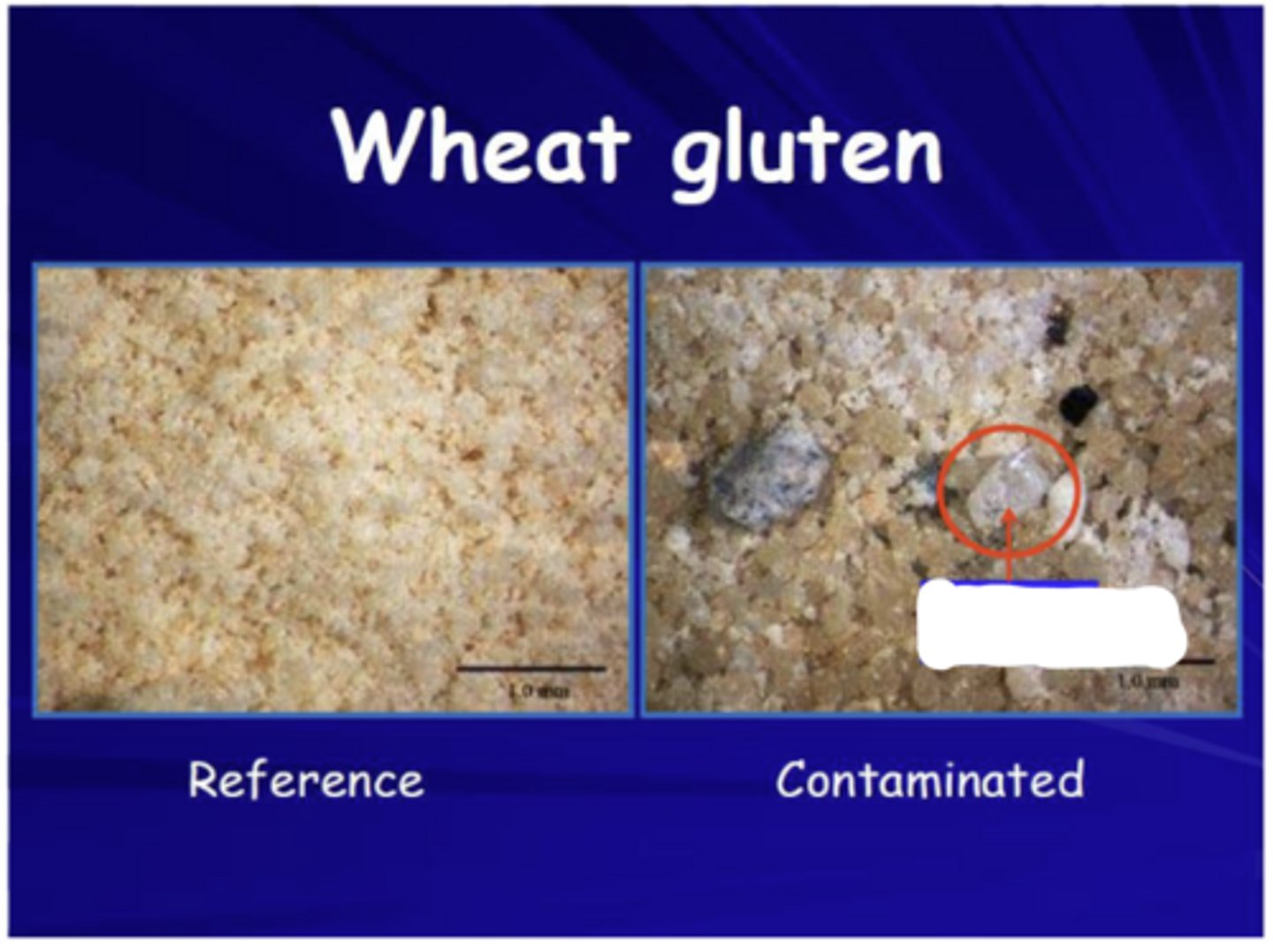
Mandate recalls, Mandate product holding, Ensure hazard monitoring and minimization, Control safety of imported goods, Shut down bad facilities
Prior to FSMA, the government had no authority to
Evaluate what the hazards are and really focus on preventive controls to prevent recalls from occurring
What is the Food Safety Modernization Act that was signed in January 4th, 2011?
An analysis of hazards an risk-based preventive controls to minimize identified hazards
FSMA requires animal food facilities to have a food safety plan in place that includes
Plan that identifies possible biological, chemical, and physical hazards
What is a hazard analysis?
Address identified hazards identified by hazard analysis (must be written and implemented)
What are preventive controls?
Cooking, refrigerating, acidifying
What are some potential process controls that could be implemented?
To ensure facility is maintained in sanity conditions to minimize hazards, including pathogen exposure and handling contamination
Why must sanitation controls be implemented?
Effectiveness of controls through monitoring, corrections, corrective
action and verification
Preventive controls oversight and management ensure
Activities must be documented
When monitoring/correcting preventive controls, what must companies do?
Verification activites
Product testing and environmental monitoring are possible
Recall plan
Any facility producing animal food with identified hazard(s) requiring preventive control must have a
Metal, glass, wood, plastic
Types of physical food safety hazards
Pesticides, PCBs, fertilizers, drug carryover, nutrient toxicities or deficiencies
Types of chemical food safety hazards
Salmonella, Listeria, E. coli, Clostridium, Campylobacter, Mycotoxins
Types of microbiological for safety hazards
Ingredients, environment, people (accidental oversight, negligence, intentional adulteration)
Sources of food safety hazards
Salmonella
What is the biggest micoorganisim of concern with majority of pet food recalls?
Zero tolerance for Salmonella, Listeria monocytogenes, E. coli
Microbiological hazard regulations
5.0 log reduction (kill 99.999%)
The FDA regulations mandate that a successful pasteurization process should achieve at least a
Freeze drying
A kill step must be validated in the process. What is not considered a kill step?
Raw pet food because there is no heat treatment
Which type of pet food presents the greatest risk of transmitting illness to human and pets?
Pig ears, raw dog food and treats
What were most of the Salmonella contaminations in 2018-2019?
Raw dog food
What were most of the Listeria contaminations in 2018-2019?
Fresh meat and raw dog food
What were most of the E. coli contaminations in 2018-2019?
HPP, probiotics (goof bacteria fight bad bacteria), antimicrobial intervention, multi-hurdle intervention
What are some potential kill steps for raw pet food?
Adding specific antimicrobial compounds directly to the raw pet food formulation or as a surface treatment to actively kill or inhibit the growth of harmful bacteria
What does antimicrobial intervention mean when using it as a kill step in raw pet food?
pH
Sodium bisulfate, organic acids, medium chain fatty acids can be used for antimicrobial intervention and all lower
Most common and effective modern approach, Combining several mild antimicrobial strategies at once so that each one is a "hurdle" the bacteria must overcome. Individually, each hurdle might only reduce bacteria a little; together they create a synergistic effect that dramatically lowers pathogen levels
What does multi-hurdle intervention mean when using it as a kill step in raw pet food?
Dry pet food
___________ is most common pet food type and most common source of pet food recalls
Salmonella
What is the most common pathogen involved with dry pet food?
Salmonella
______ is exhibiting increased tolerance to heat and ability to survive for months in dry foods and ingredients and many strains are multi-drug resistant
Dogs and cats are very resistant to Salmonella, so contamination of food can spread it to owners
Salmonella infection is a zoonotic disease. Why is this a concern for humans?
Extruded pet food because there is more volume produced
Most Salmonella recalls are in what kind of dry pet food and why?
Mycotoxins
Extrusion doesn't eliminate
Spore-forming organisms
___________ are not heat sensitive and can survive the extrusion process
Produce by Aspergillus flavus that can grow on corn, peanuts, etc. It can cause illness (aflatoxicosis), liver damage, and death in pets at high levels. Toxins can be present even if there is no visible mold on the pet food. No risk for humans
What is aflatoxin?
No kill-step after process control
What could be potential cause for a dry pet food recall that is process-related?
Packing, transport, air, water, pests
What could be a potential cause for a dry pet food recall that is facility related?
Pre-conditioner, extruder by using high temperature, pressure and moisture
What are the kill steps in an extrusion process?
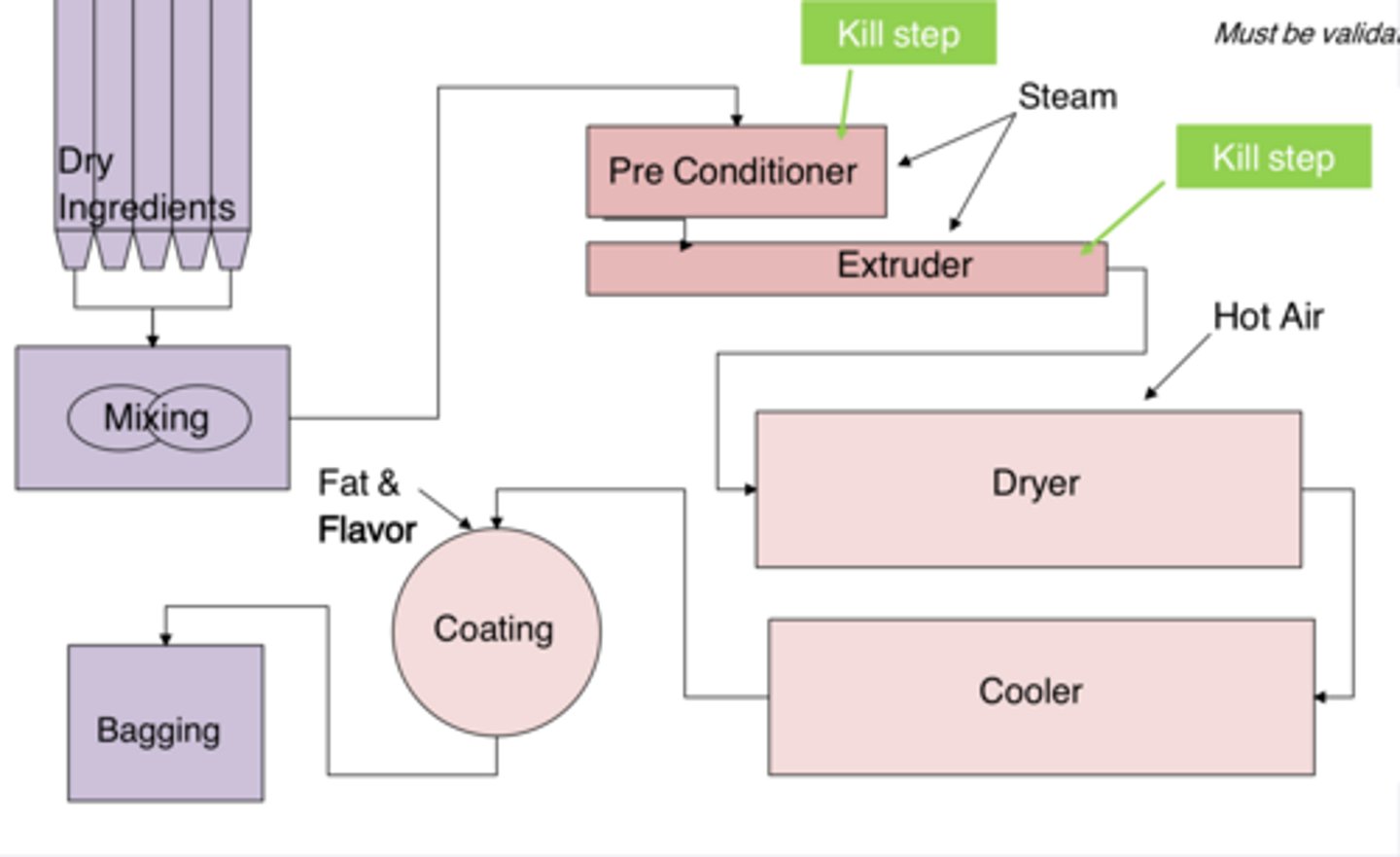
Coating, liver could be used as a fat/flavor source and could contain Salmonella
What step of this extrusion process could introduce recontamination and why?
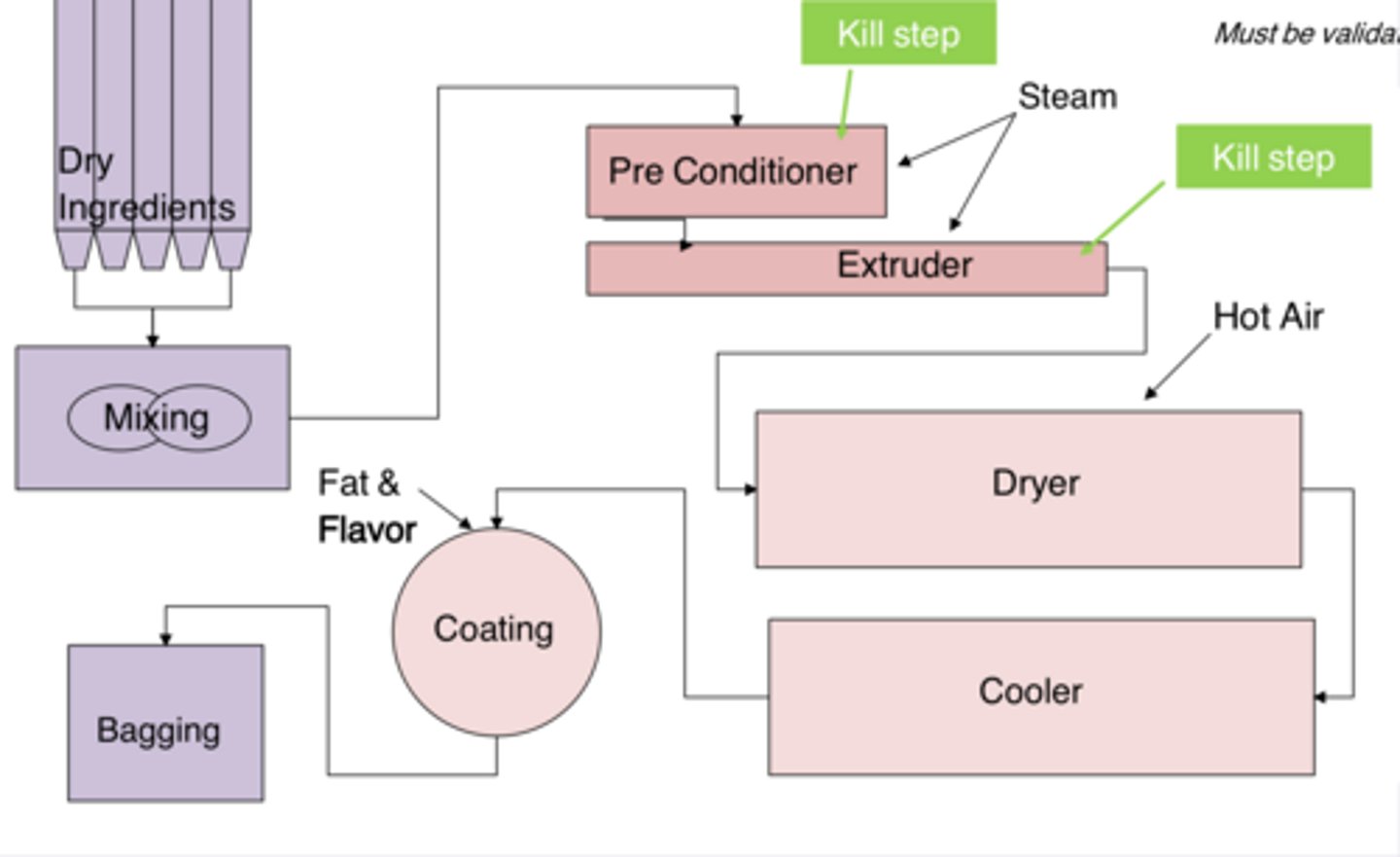
Fats and flavors
___________ are commonly coated on dry pet food to increase energy density and to enhance palatability. This occurs after the established kill step
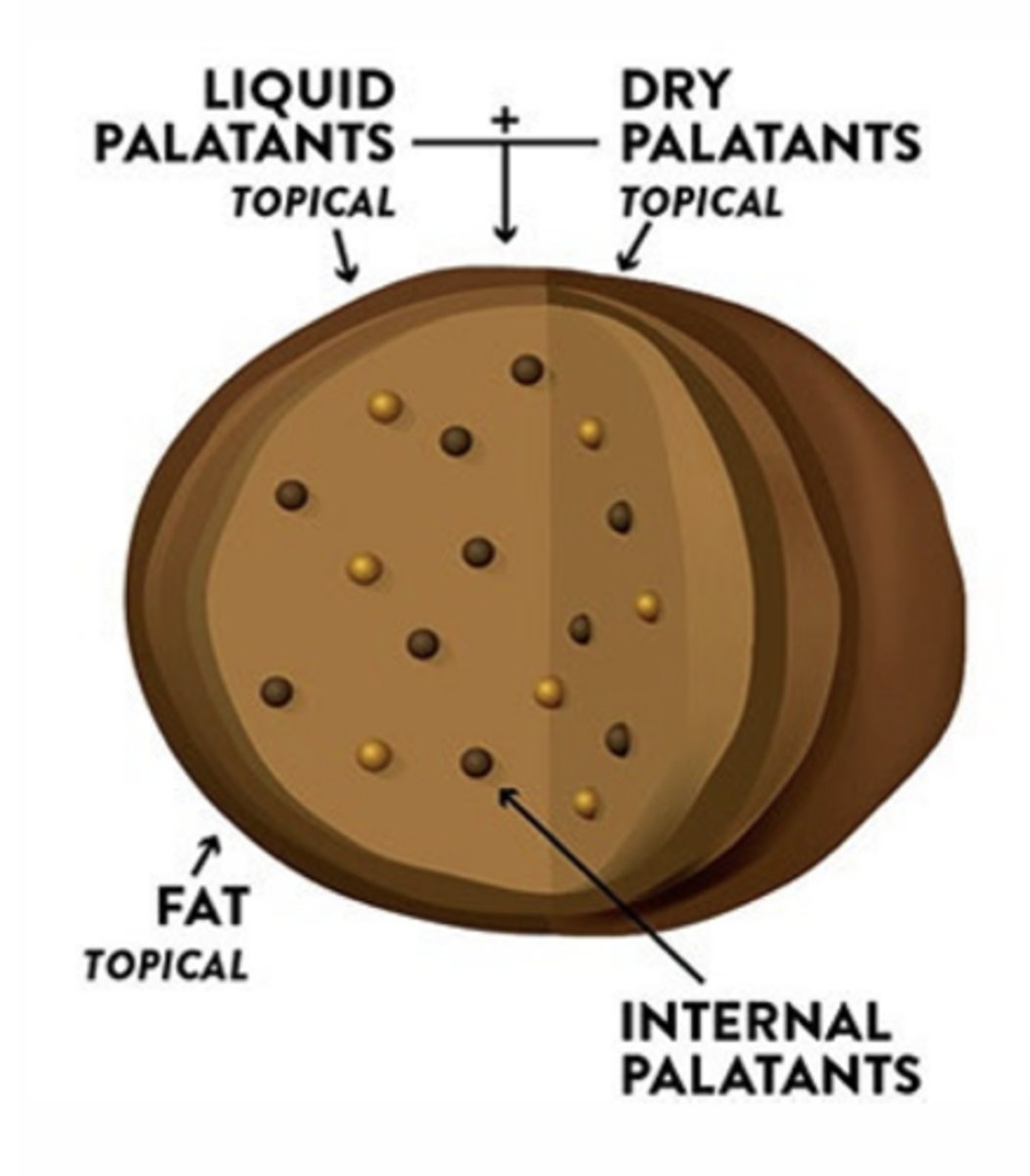
___________ in bulk fat could be a source of Salmonella contamination of pet food
Residual water
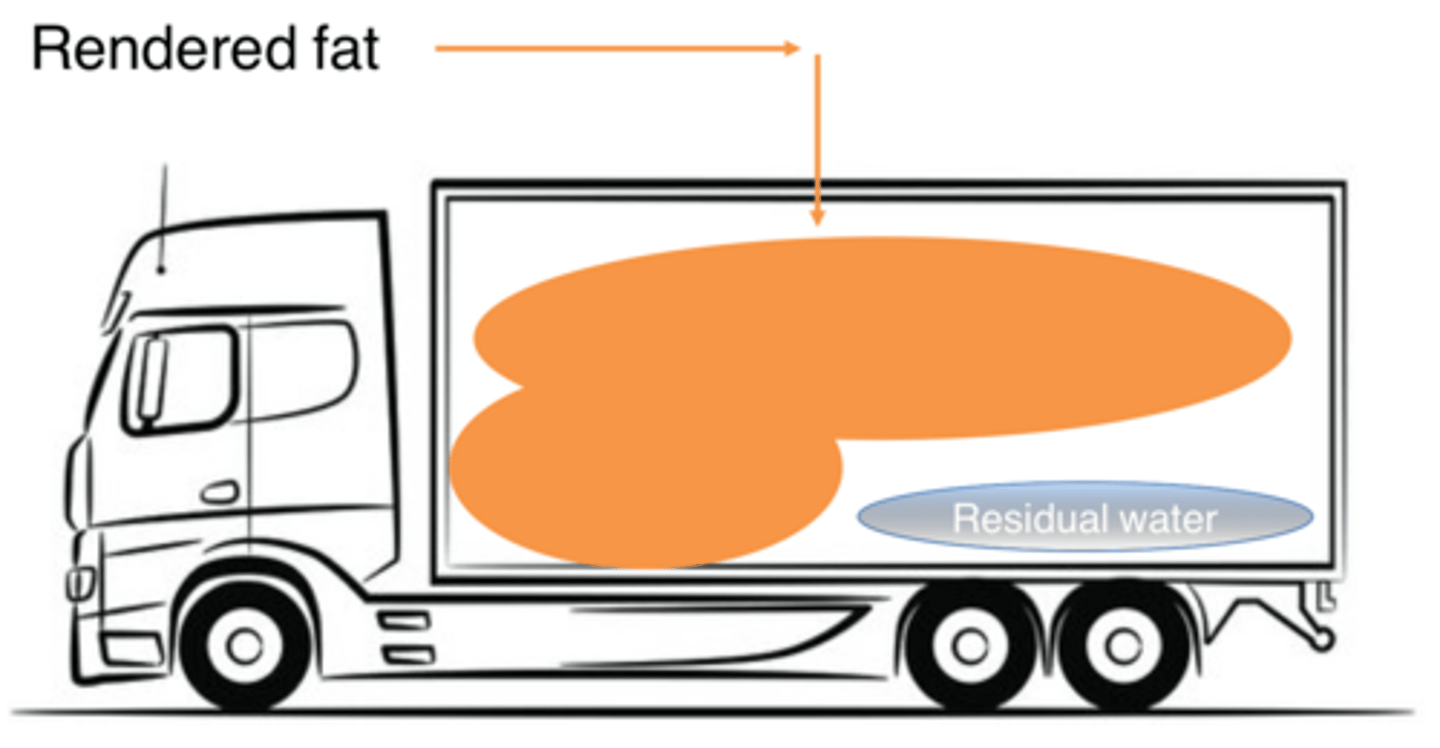
Salmonella, Listeria
What are the microorganisms of concern with raw pet food?
Salmonella, Mycotoxins
What are the microorganisms of concern with dry pet food?
Mold
What are the microorganisms of concern with semi-moist pet food?
Pet owners judge pet food heavily by how it looks when they open the bag or can. Uniform product looks fresh and high quality. Discolored product looks old
Why is it important to consider appearance (color) of a pet food product?
The smell when the bag is first opened is a huge purchase driver. Pleasant smell makes owners feel good about feeding it to their pets. Off odors push consumers away.
Why is it important to consider the aroma of a pet food product?
If the food doesn't taste good to the pets, they may refuse it, leading to owner dissatisfaction and lost sales.
Why is it important to consider the taste of a pet food product?