L49- glucose homeostasis and the pancreas
 Call Kai
 Learn
Learn Practice Test
 Spaced Repetition
 Match
Match Flashcards
 Knowt Play
1/21

There's no tags or description
Looks like no tags are added yet.
Name | Mastery | Learn | Test | Matching | Spaced | Call with Kai |
|---|
No analytics yet
Send a link to your students to track their progress
22 Terms
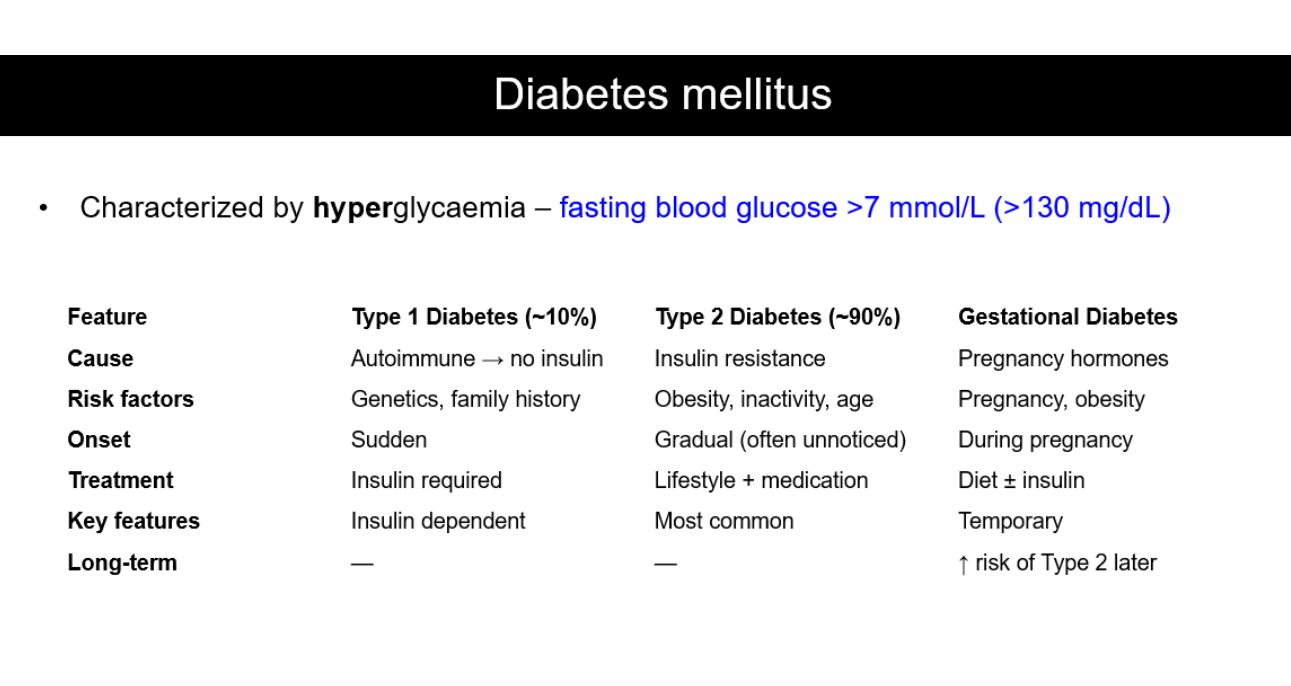
what is the absorptive state and the fasted state
also known as the fed state
this is when we eat and have food
we gain nutrients’’ which are stored in the cells
the fasted state is when we haven’t eaten for a long time
e.g. when we are asleep
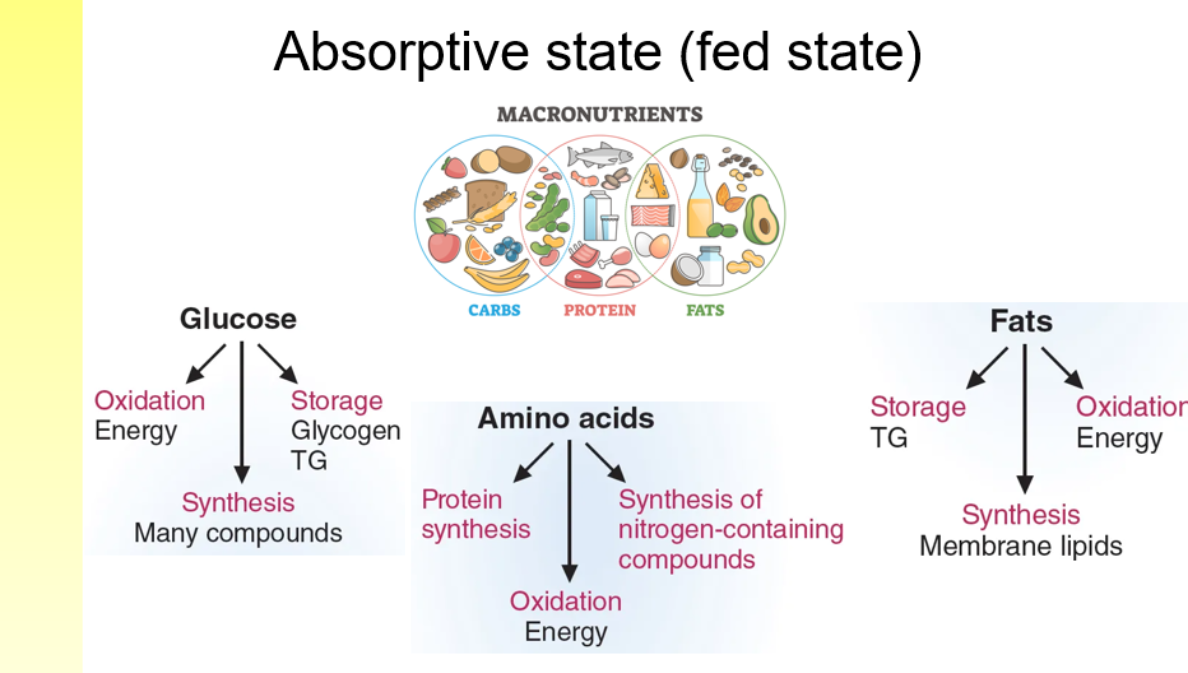
explain the link between the food we eat and insulin
when we have food we gain nutrients such as glucose, amino acids and fats
insulin affects each of these
it uses them for synthesis, and energy
what is the exocrine and the endocrine functions of the pancreas
exocrine-releases digestive enzymes into ducts
endocrine- it releases hormones into the blood
what is the cell and its cell type that is responsible for the secretion of different hormones in the pancreas
islets of Langerhans
alpha cells- secrete glucagon
beta cells secrete insulin ( the majority )
delta cells-secrete somatostatin
describe glucose balance
when we have glucose in the blood after eating insulin is produced
the insulin will stimulate the muscles and the adipose tissue to take up the glucose (anabolic state/effect )
when the glucose concentration is low, like during the fasted state the glucagon acts as the counter to insulin and increases the plasma glucose
by breaking down glycogen → glucose and stimulating the production of ketones in the liver ( catabolic effect )
what is the function of insulin
it decreases plasma glucose, amino acids and fat free fatty acids
how does glucose enter the cells
through transporters
how is the liver involved in the production of glucose
glucagon will produce free fatty acids that are transported into the liver to produce ketone
the ketones made by the liver will then produce glucose from alternative substrates
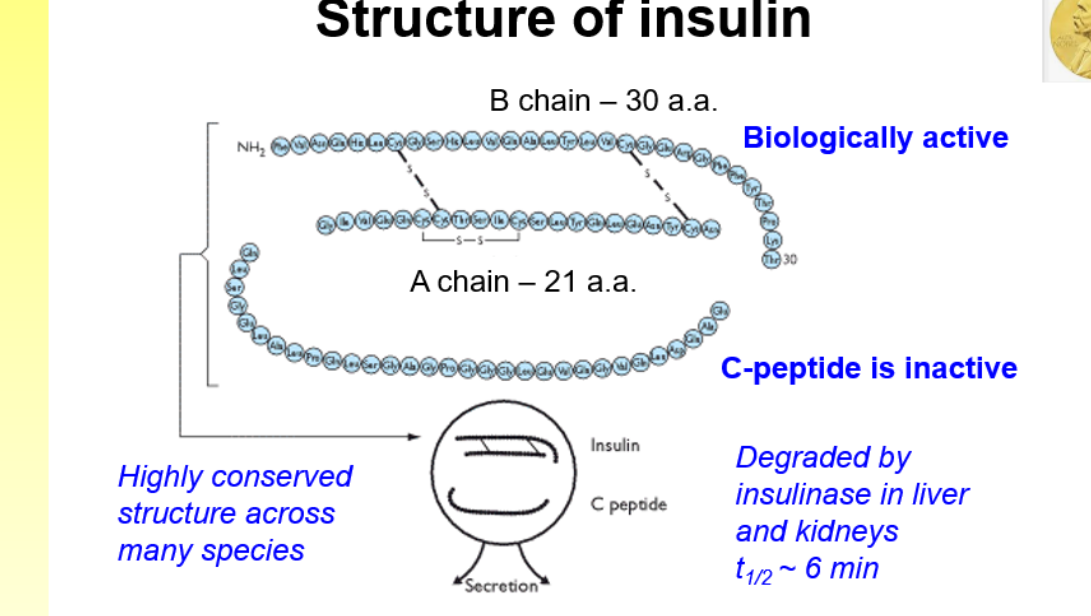
what is the ‘process’ of forming active insulin
preprohormone→ prohormone→ active insulin
what enzyme degrades insulin
insulinase in the liver and the kideneys
half life of 6 minuets
describe what happens when high glucose concentration in the blood
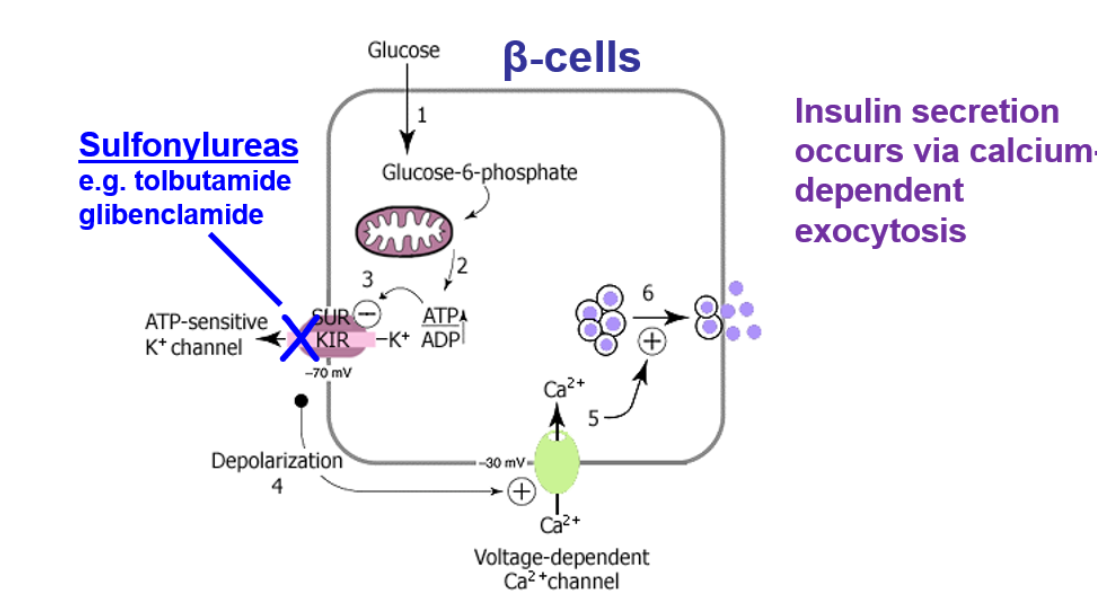
the blood passes through the middle of the Langerhans cells next to the beta cells
the glucose from the plasma enters inside the beta cells through the glucose transporter 2
the glucose is then converted into glucose- 6- phosphate by glucokinase ( this stops the glucose from leaving the cell )
glucose 6 phosphate is then metabolized inside the mitochondria producing ATP
the ATP closes k+ channels inside the cells
this causes a depolarisation of the cell which opens calcium voltage gated channels allowing calcium to enter
this calcium is able to release insulin vesicles inside the cells which secrete the insulin via exocytosis
how does insulin induce its effects
insulin must bind onto specific receptors on the plasma membrane of target cells
this receptor is a tyrosine kinase receptor and its a dimer
when insulin binds to the tyrosine receptor it causes the dimerization
this causes autophosphorylation which is activation of the receptor
it then has intracellular effects on kinases and phosphatases
and have effects on key enzymes
describe how insulin makes carbohydrate metabolism happen
insulin facilitates glucose entry into muscle and adipose tissue
it also stimulates the liver to store glucose as glycogen
this leads to a decrease in plasma glucose concentration
describe how insulin makes lipid metabolism happen
insulin promotes synthesis of fatty acids in the liver
once glucose is inside the liver insulin converts it into glycogen but if there’s excess then it’ll convert it into fatty acids in the liver as triglycerides
the liver then send the triglycerides ( using lipoproteins carriers ) into the adipose tissue for storage through the blood
insulin also inhibits the breakdown of fats in the adipose tissue
and it promotes glycerol synthesis from glucose and increases triglyceride synthesis
explain why the muscles and adipose cells tissue need/ depend on the insulin for glucose whilst liver doesn’t
in the muscles and adipocytes the transporters are inside the cell
when there’s a rise in extracellular glucose insulin is released and binds to the receptors to activate them and extracellular enzymes
this causes the translocation of the transporters from the inside of the cell → to the outside of the cell allowing glucose inside the cells
without insulin this isnt possible
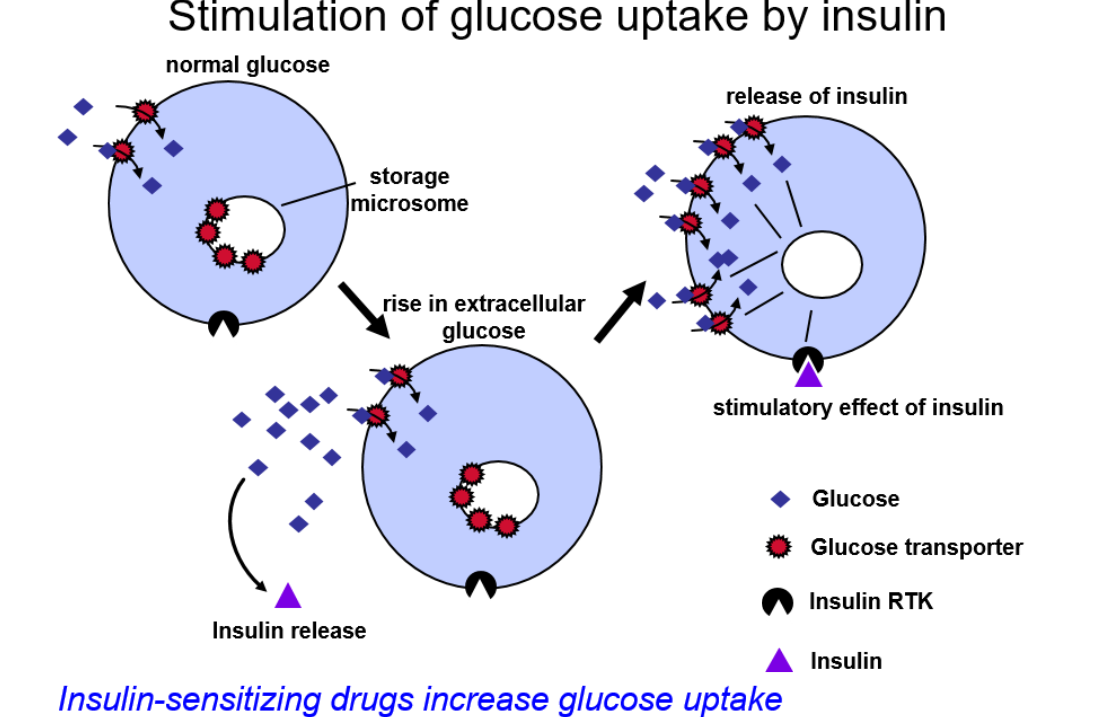
describe the entry of glucose into the muscles
when the glucose enters its converted into glucose-6-phosphate trapping it inside
the glucose can either be stored as glycogen or used for energy or converted into lactic acid that’s transported into the liver
the glycogen in the muscles when broken down into glucose can only be used inside the muscle
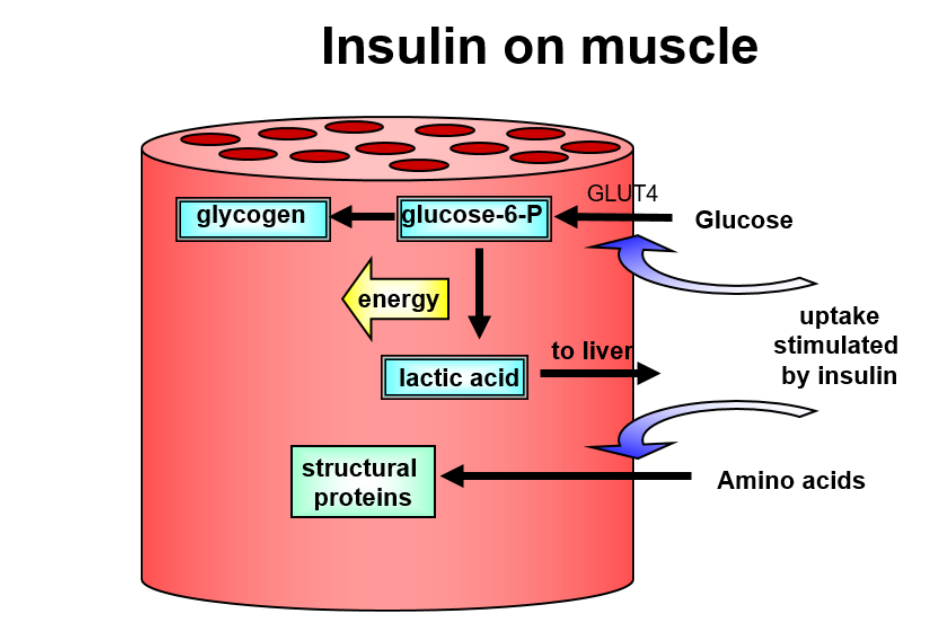
describe the entry of the glucose in the liver and insulins effect
when the glucose enters its converted into glucose6-phosphate stopping it from leaving
this doesn’t need input from insulin to happen
insulin stimulates glucokinase ( the enzyme which converts glucose → glucose-6-phosphate) and it inhibits glucose-6-phosphotase which is an enzyme that makes glucose-6-phosphotase into glucose
the glycogen inside the liver is able to be broken down into glucose and is able to regulate glucose in the blood
the glucose can also undergo glycolysis where the glucose-6-phosphate can convert into fatty acids which are stored in lipoproteins and transported into the adipose tissue
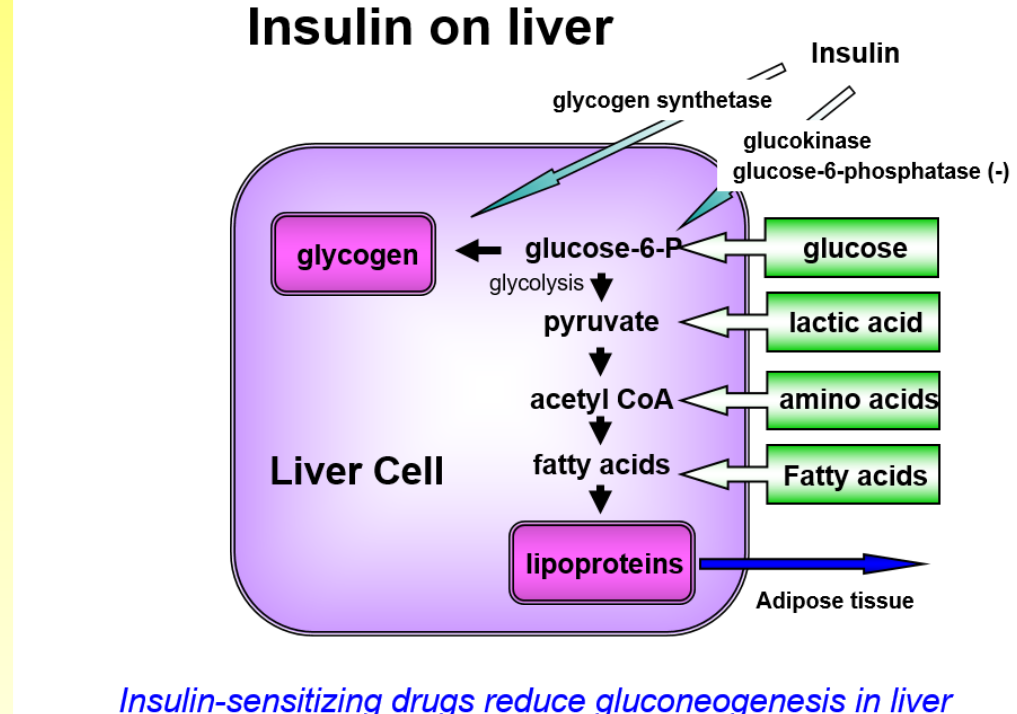
describe glucose entry inside the adipose tissue
the glucose enters through transported and is converted by glucokinase into glucose-6-phoshosphate
this is then converted into triglycerides using glycerol phosphate
the lipoproteins containing the fatty acids from the liver arrive at the adipose tissue and the liver stimulates the lipoprotein lipase to free the fatty acids and allow them to enter the cell
insulin also stimulates the uptake of amino acids in side the adipose
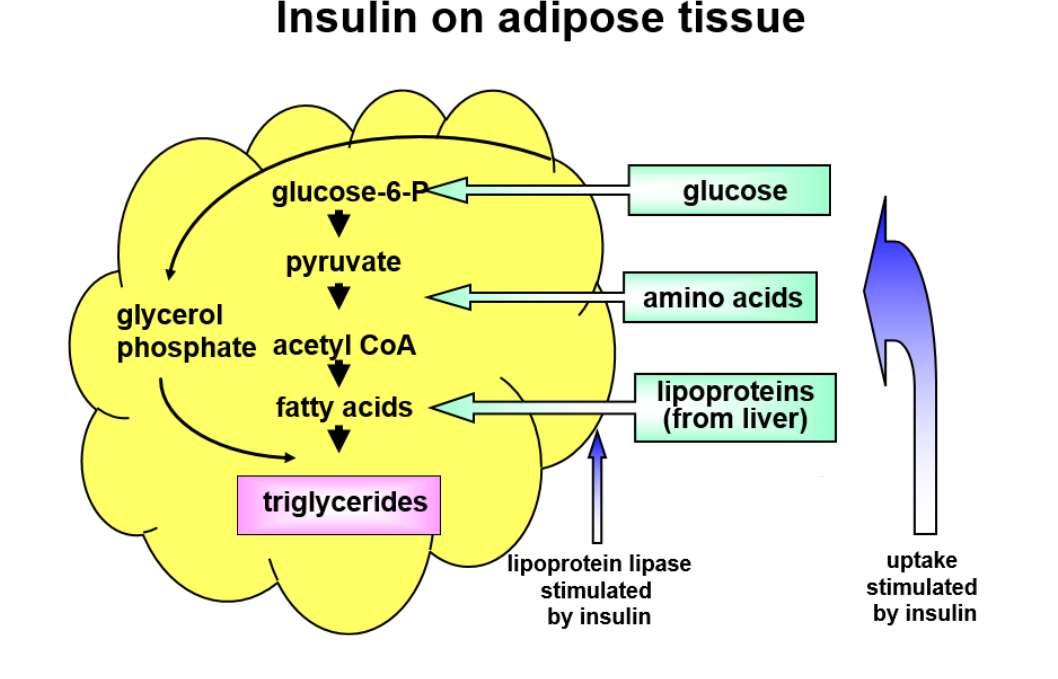
what is glucagon and what does it do
it is the counter- regulatory hormone of insulin
its synthesised and released by the alpha cells of islets
it is released when glucose levels fall
it stimulates glycogenolysis ( breaks down glycogen into glucose )
promotes gluconeogenesis ( production of glucose, through alternative substrates )
increases breakdown of fats
explain the effects of glucagon on the blood glucose
alpha cells will release glucagon
the glucagon will act on the liver by increasing glycogenolysis in the liver
and it has an effect on the muscles by increasing the protein breakdown
and increasing fats into fatty acids int eh adipose tissue
this causes blood glucose to rise
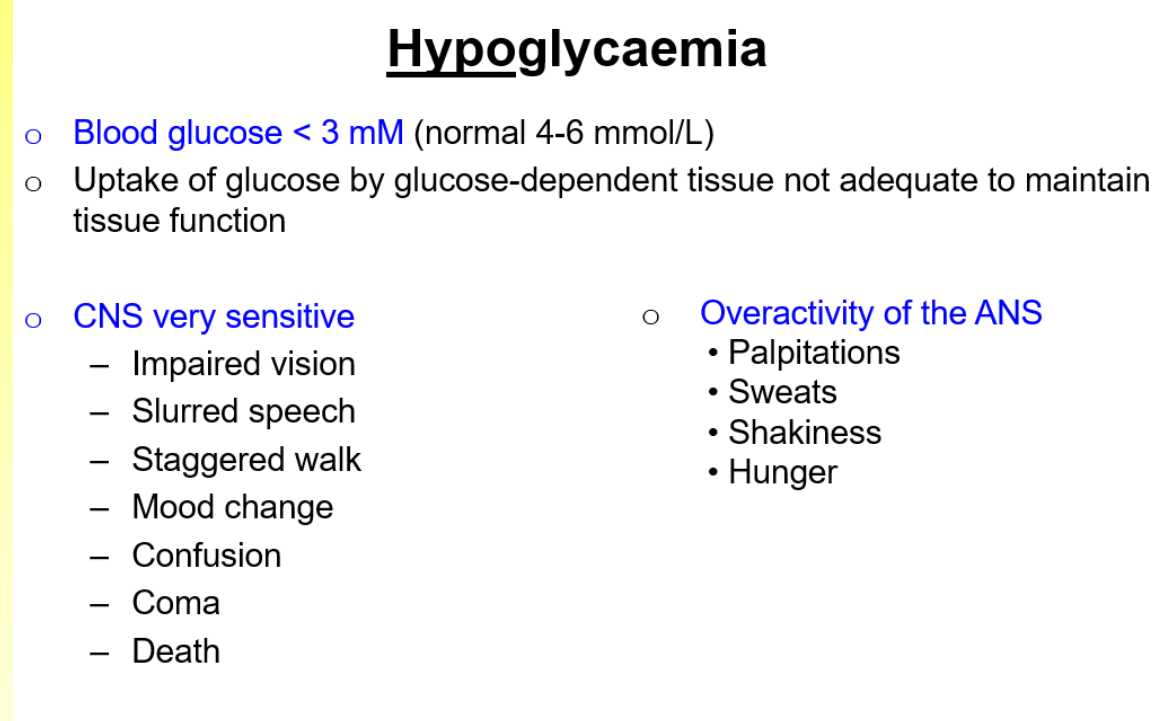
what is hypoglycaemia
what is hyperglycaemia