Forces, Movement, Shape and Momentum (1c)
 Call Kai
 Learn
Learn Practice Test
 Spaced Repetition
 Match
Match Flashcards
 Knowt Play
1/54

Earn XP
Description and Tags
55 Terms
Force
Push or pull that arises from the interaction between objects
Different Types of Forces
gravitational
reaction
friction
drag
air resistance
thrust
upthrust
electrostatic
magnetic
tension
Gravitational Force
gravitational force of attraction between all objects with mass
more mass = bigger gravitational force
ex: football is kicked → gravitational force pulls it toward the earth’s center
Reaction Force
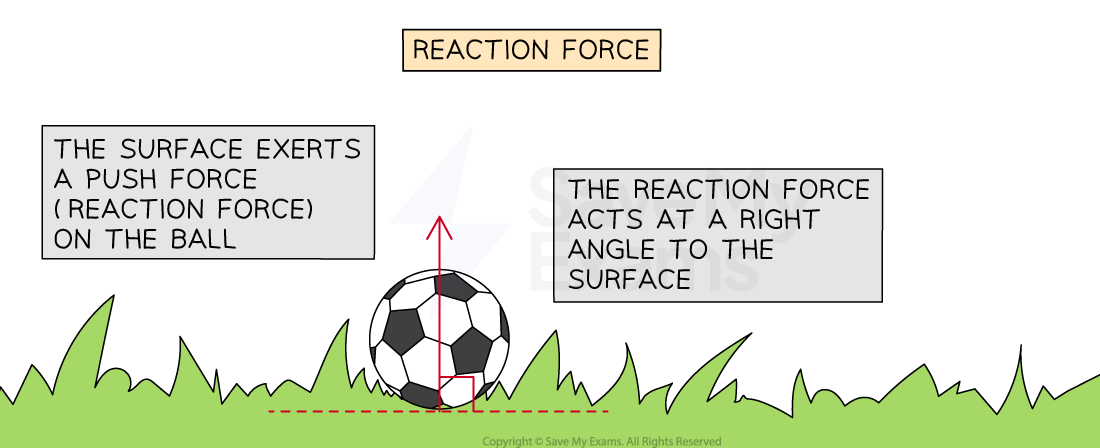
when an object rests on a surface, surface exerts a push on the object
acts perpendicular to surface
ex: football rests on the grass’ horizontal surface → grass exerts a reaction force vertically upwards on the ball
Friction
friction opposes motion of an object, slows it down
occurs when 2 surfaces move over each other
ex: box pushed across carpet → carpet exerts frictional force, slows box’s motion
Drag Force
type of frictional force occurring when an object moves through a fluid
particles in fluid collide with object moving through and slow the motion
ex: pebble thrown into water → water molecules flow against solid surface, slows it down
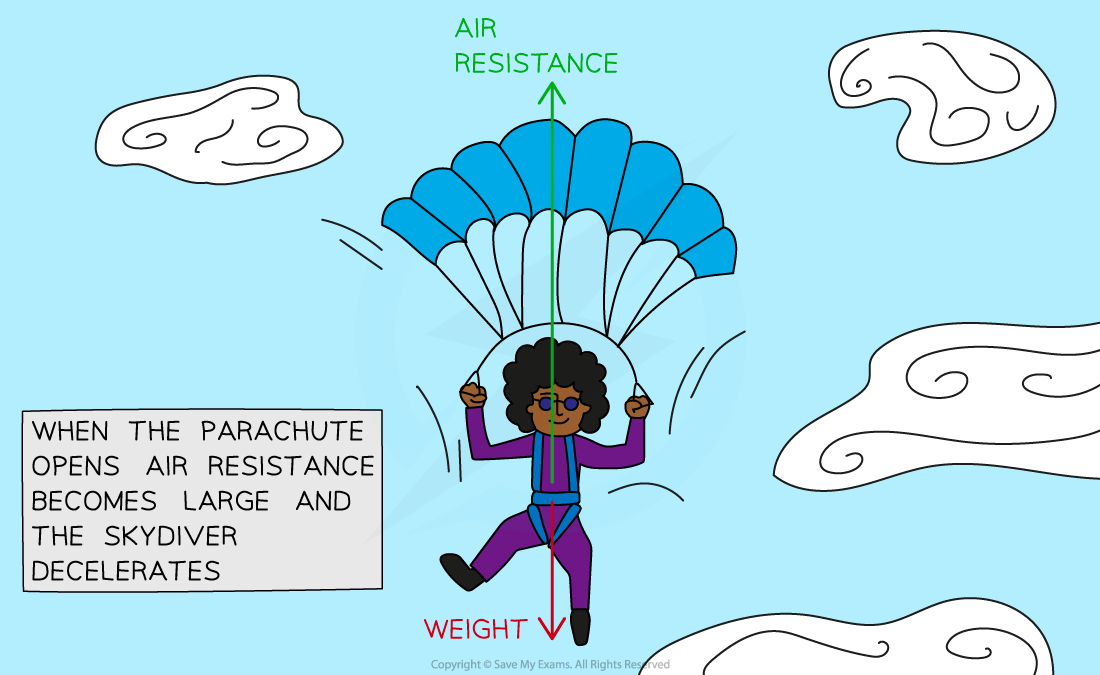
Air Resistance
type of drag, also a frictional force
occurs when air particles collide with an object moving through it and slow it down
ex: skydiver opens parachute → air resistance opposes motion, reduces speed to make landing safe
Thrust
force produced by engine that speeds up motion
ex: engine of a car exerts thrust and increases speed
Upthrust
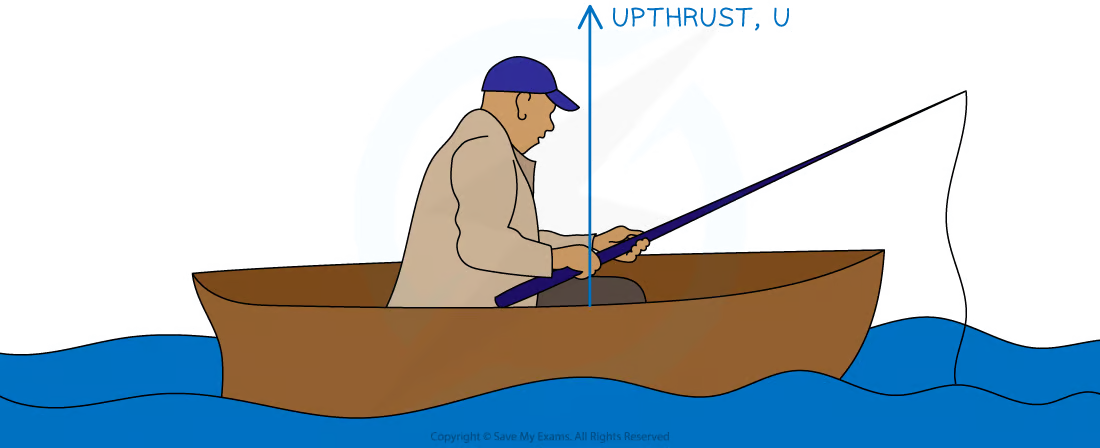
when an object is fully/partially submerged in a fluid, the fluid exerts upward acting push force on the object
ex: ball held underwater shoots upwards when released due to upthrust exerted by water pushing it back to the surface
Electrostatic Force
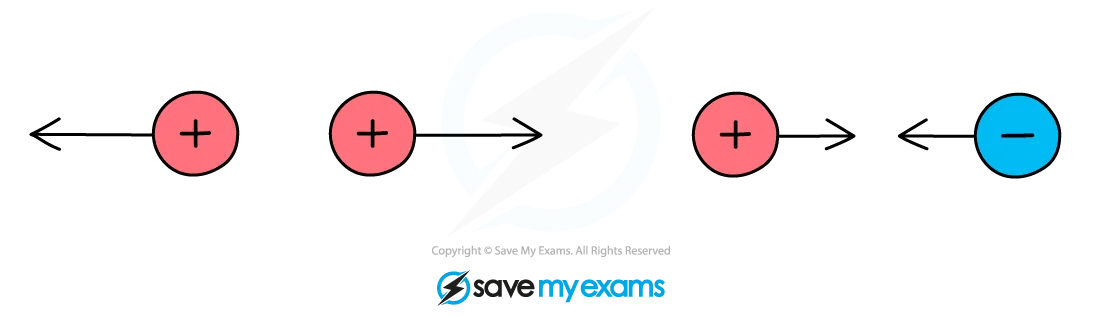
there’s an electrostatic force between two charged objects
like charges repel, opposite charges attract
electron gets close to cation → cation pulls (attracts)
electron gets close to electron → electron pushes (repels)
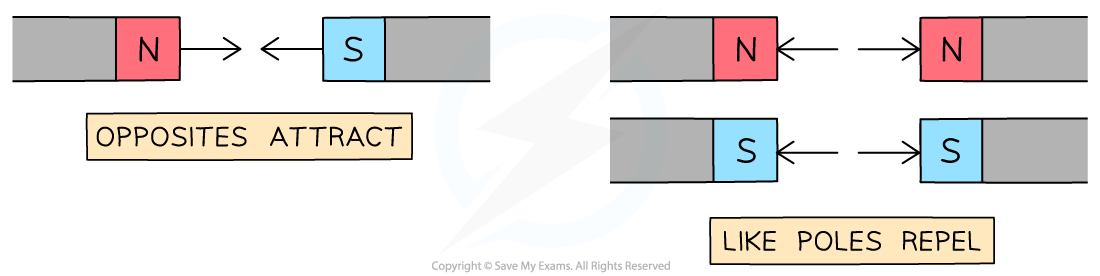
Magnetic Force
there is magnetic force between two objects with magnetic poles
like poles repel, opposite poles attract
north pole gets close to south pole → pull (attract)
north pole gets close to north pole → push (repel)
Tension
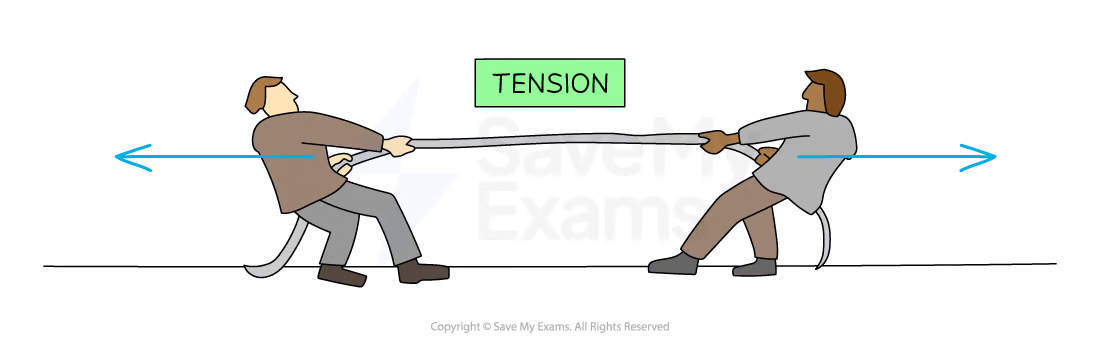
tension occurs in a stretched object (rope or spring)
when pull force exerted on each end, tension acts across the length of the object
ex: two people pull a rope in opposite directions → tension acts along rope, pulls back on each person
Effect of Force on an Object
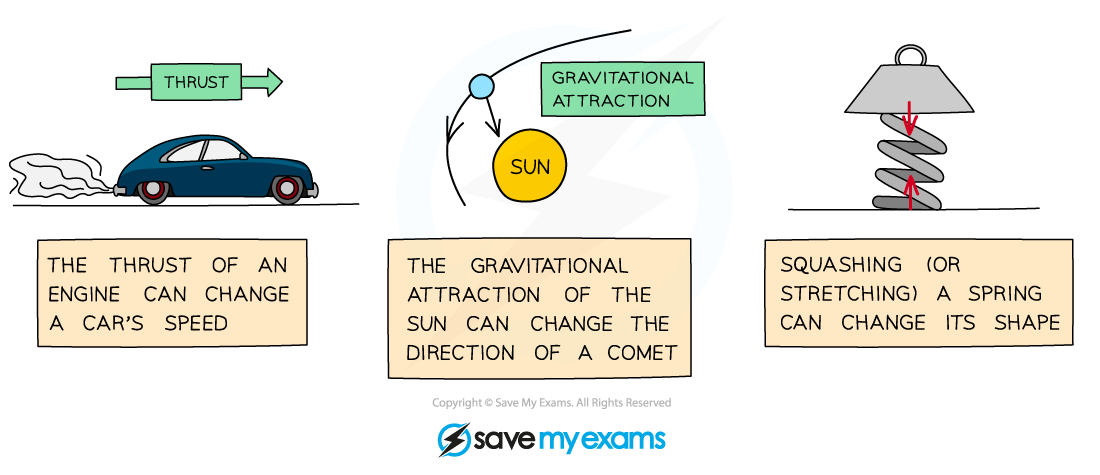
force causes objects to:
change speed
change direction
change shape
Effects of Specific Forces
thrust of an engine speeds up a car
friction of brakes slows car down
gravitational force of sun on a comet changes its direction
when two opposing forces push on each end of a spring, it changes shape (compresses)
Scalar Quantity
have magnitude but not direction
ex: mass
Vector Quantities
magnitude and direction
ex: weight
Distance
how far an object has travelled regardless of direction
total length of path takes
has magnitude, no direction
scalar quantity
Displacement
how far it is between two points in space, including direction
length and direction of a straight line from starting to finishing point
has magnitude and direction
vector quantity
Common Scalar Quantities
distance
speed
mass
energy
volume
density
temperature
power
Vector
displacement
velocity
weight
force
acceleration
momentum
Using Arrows to Represent Forces
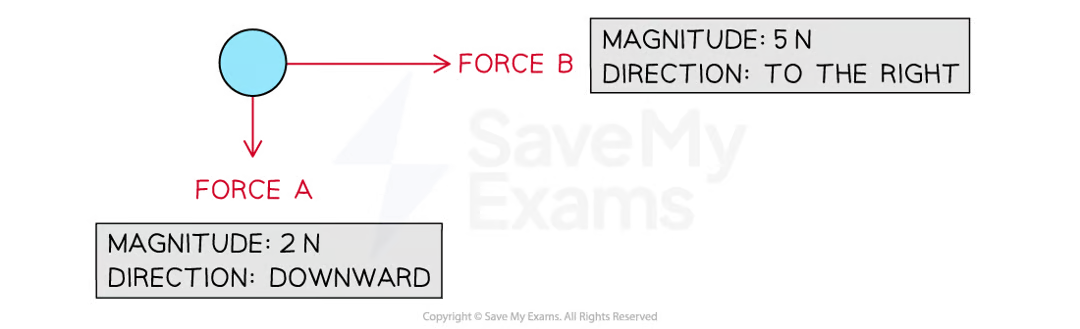
length: magnitude
direction: direction
scale: proportional to relative magnitudes of forces
labelled with force name/description
describe angle with respect to vertical or horizontal
Resultant Force
single force describing all of the forces acting on the body
when multiple forces act, they can be combined to produce on net force describing the combined action of all the forces
this force determines
direction of object
magnitude of net force
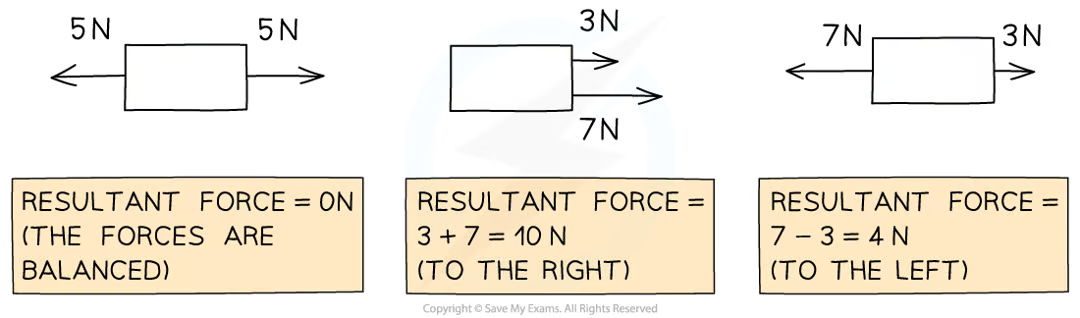
Calculating Resultant Force
opposite directions: subtract
same direction: add
force in opposite direction are equal: no resultant force (forces are balanced)
Friction Cause
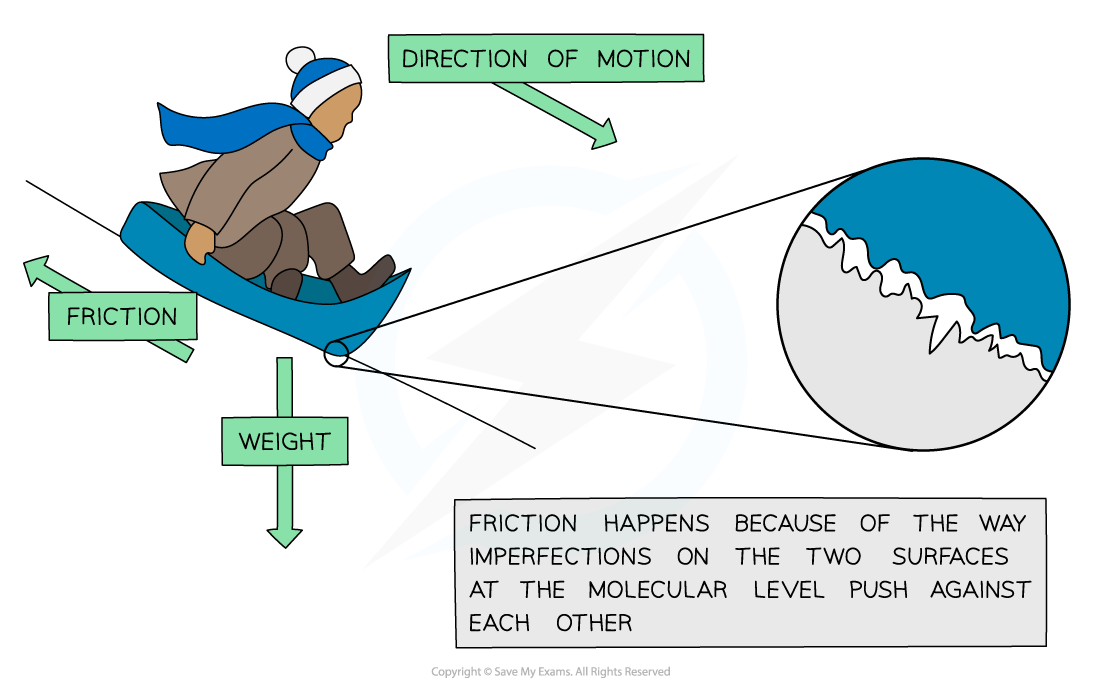
when 2 or more surfaces rub against each other
at a molecular level, both surfaces contain imperfections (not perfectly smooth)
these imperfections push against each other
Unbalanced Forces
when forces acting on an object don’t cancel out
forces are unbalanced
there’s a resultant force
Unbalanced force, mass and acceleration
F = m x a
F: resultant force in N
m: mass in kg
a: acceleration in m/s2
Weight
force experienced by an object with mass when placed in a gravitational field
Weight vs Mass
Mass is a measure of how much matter is in an object
magnitude, no direction
scalar quantity
Weight is a force
magnitude and direction
vector quantity
Gravitational Field Strength
plants have strong gravitational field strengths
attract nearby masses with strong gravitational force
different planets have different gravitational field strengths
depends on mass
more massive planet = stronger gravitational field
Impacts of Weight
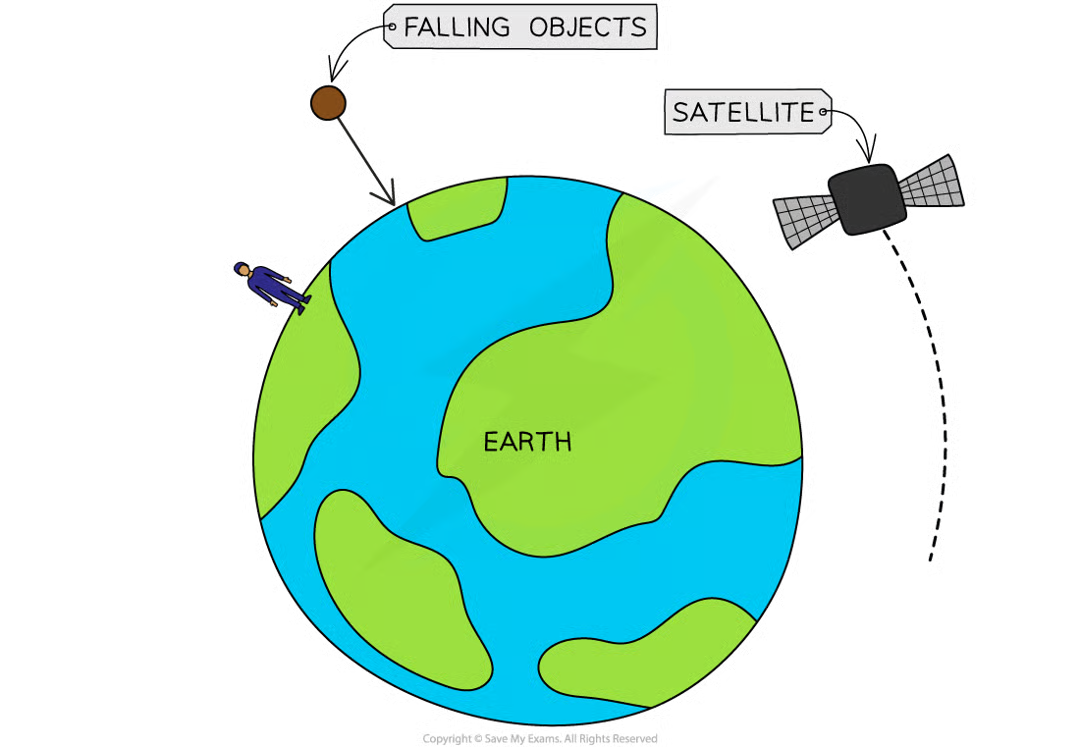
objects stay firmly on the ground
objects fall firmly to the ground
satellites kept in orbit
Weight Equation
W = m x g
W: weight in N
m: mass in kg
g: gravitational field strength in N/kg
g on Earth
10 N/kg
also acceleration of freefall on Earth in m/s2
Weight Depends On:
mass of object
mass of attracting planet
mass and weight are __________ proportional
directly
___________ of weight depends on gravitational field strength
magnitude
Stopping Distance
total distance travelled by a car during the time it takes to stop in an emergency
Stopping Distance Formula
stopping distance = thinking distance + braking distance
Thinking Distance
distance travelled in the time it takes to react to an emergency and prepare to stop
factors:
speed of car
driver’s reaction time
Reaction Time
measure of how much time passes between seeing something and reacting to it
average: 0.25s
increased by:
tiredness
distractions (ex: phone)
intoxication (alcohol or drugs)
Braking Distance
distance travelled under braking force in metres
for given braking force, greater speed = greater stopping distance
Factors affecting Stopping Distance
vehicle speed
greater speed = greater braking distance
vehicle mass
more mass = more distance
road conditions
ice
rain
brakes are less effective = vehicle travels further
driver reaction time
thinking distance increased if driver is distracted (phone, satnav, radio, person)
thinking distance increased if driver is tired, on medication, under influence of alcohol/ drugs
Terminal Velocity
terminal velocity is reached when fastest speed an object can reach while falling
reached when upward and downward forces are balanced
resultant force reaches zero
object no longer accelerates, constant terminal velocity reached
Falling Object Forces
weight
air resistance
Change in Air Resistance in a Falling Object
increases as speed increases
because object collides with air particles as it moves through air
faster object = more collisions with air particles
Change in Weight in a Falling Object
no change in weight
because W = mg
m doesn’t change
acceleration of free fall (g) doesn’t change
Skydiver in Freefall Reaching Terminal Velocity
skydiver steps out of plane → no support force of plane, only force exerted = Weight
downward resultant force acting on skydiver
resultant force = weight
skydiver accelerates downward at max. acceleration
skydiver starts falling, speed is very small → air resistance is very small
downward resultant force
resultant force = weight - air resistance
skydiver accelerates downward but acceleration decreases
as skydiver accelerates, speed increases → air resistance increases
downward resultant force on skydiver
resultant force = weight - air resistance
skydiver accelerates downward but acceleration decreases
as skydiver’s acceleration decreases, speed increases a slower rate
eventually skydiver reaches a speed where air resistance = weight
forces are balanced, resultant force is zero
skydiver no longer accelerates, constant velocity reached → terminal velocity