BIOLOGY
 Call Kai
 Learn
Learn Practice Test
 Spaced Repetition
 Match
Match Flashcards
 Knowt Play
1/50

Earn XP
Description and Tags
99 PLEEASEEEEE LASSSTTTT NAA CUTTIEEE
Name | Mastery | Learn | Test | Matching | Spaced | Call with Kai |
|---|
No analytics yet
Send a link to your students to track their progress
51 Terms
During the Pre-20th Century
Ø Heredity was thought to occur only within species.
Ø Traits were believed to transmit directly from parents to offspring.
species.
Heredity was thought to occur only within
directly
ØTraits were believed to transmit ______ from parents to offspring.
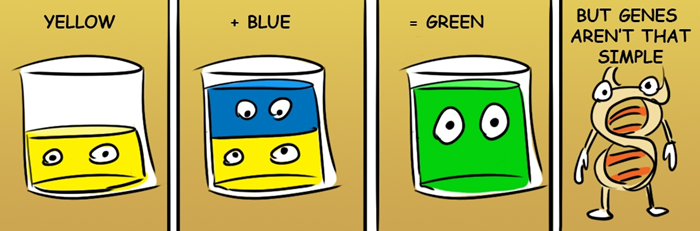
The "Blending" Theory
Ø Traits were thought to be carried by fluids (like blood) and "blend" in offspring.
Ø If traits always blended, variation should disappear, and all individuals should eventually look the same.
Variation persists
and individuals differ in transmitted characteristics
Josef Kölreuter (1760)
ØFirst to document successful experimental hybridizations (Tobacco plants).
ØResults: Hybrids looked different from parents; their offspring were highly variable.
ØContradicted the theory of direct transmission.
T.A. Knight (1823)
ØCrossed true-breeding Garden Peas (Pisum sativum).
ØExperiment: Green seeds x Yellow seeds.
ØObservation: All F1 offspring were yellow, but green seeds reappeared in the next generation.
ØKey Finding: Alternative forms of traits (segregation) were observed but not fully understood.
Gregor Mendel
Father of Genetics
ØBorn 1822, Austria; educated in science and mathematics at the University of Vienna.
ØConducted experiments in a monastery garden.
ØMendel was the first to quantify his results.
ØUnlike predecessors who noted qualitative differences, Mendel counted offspring and used mathematical analysis.
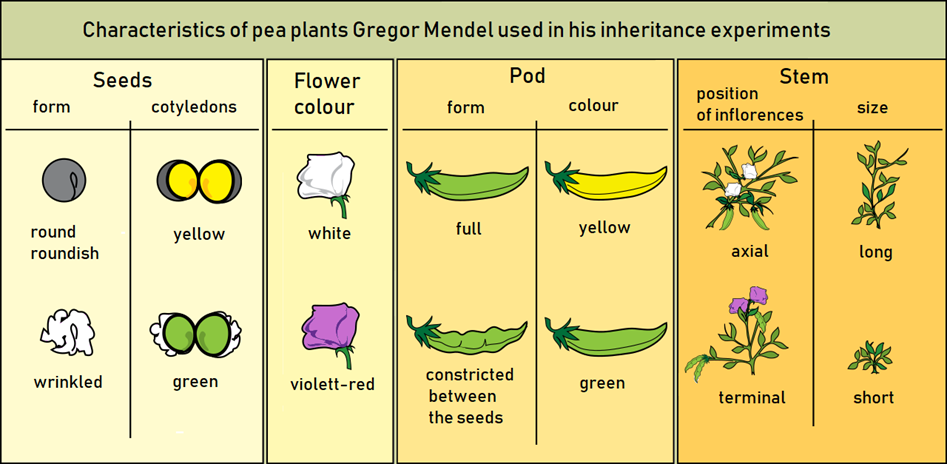
Garden Pea (Pisum sativum)
1.Earlier hybrids existed, promising segregation of traits.
2.Large number of pure varieties available (Mendel selected 7 distinct traits).
3.Small, easy to grow, and short generation time (multiple generations per year).
4.Reproductive Control:
Self-fertilization
– Male/female organs enclosed in the same flower (automatic process).
Cross-fertilization
– Can remove male parts (emasculation) and introduce pollen from another plant. – Can remove male parts (emasculation) and introduce pollen from another plant.
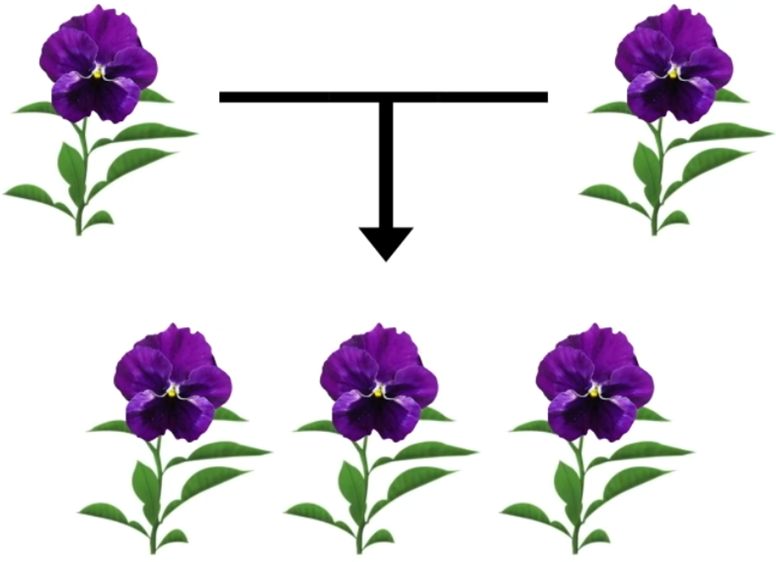
True-breeding (Pure bred)
A true-breeding organism is one that, when self-fertilized, produces offspring that are identical to itself trait-wise, generation after generation.
Hybridization
A hybrid is the offspring resulting from the cross of two different true-breeding varieties.
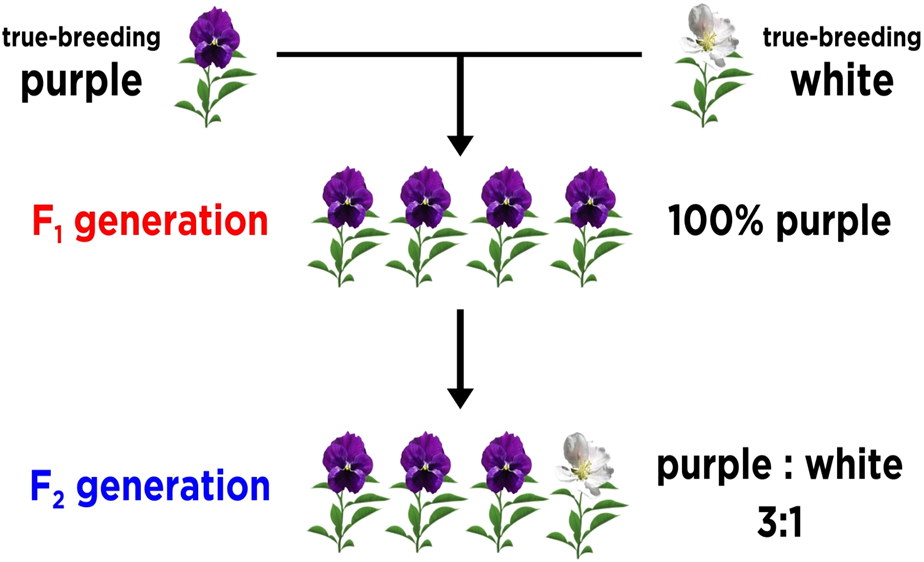
P Generation (Parental)
oThese are the individuals used in the initial cross.
F1 Generation (First Filial)
oThese are the offspring resulting from the cross of the P generation.
F2 Generation (Second Filial)
oThese are produced by allowing the F2 individuals to self-fertilize.
Dominant trait
The trait that is expressed (visible).
Recessive trait
The alternative form of a trait that is not expressed (hidden).
Alleles
is an alternative form of a single gene. Not all copies of a gene are identical, and these variations are what cause different traits (like purple vs. white flowers)
Homozygous
An individual is homozygous when the two haploid gametes that fused during fertilization contained the same allele.
Heterozygous
An individual is heterozygous when the two haploid gametes that fused contained different alleles.
Genotype
refers to the total set of alleles that an individual contains. It represents the underlying genetic information or "blueprint" of the organism.
Ex. PP (Homozygous dominant); Pp (Heterozygous); pp (Homozygous recessive)
Phenotype
is the physical appearance or other observable characteristics of an individual. It is the visible result of the allele's expression.
Ex. Purple flowers (PP & Pp); White flowers (pp)
Law of Dominance
When two true-breeding parents with different traits are crossed, the offspring (F1 generation) will express only one of the traits.
Law of Dominance
The Mechanism:
ØThe trait that appears in the F1 hybrid is called dominant.
Ø
ØThe trait that is hidden or masked in the F1 is called recessive.
Ø
ØIn a heterozygous individual (carrying different alleles, e.g., Pp), the dominant allele (P) prevents the expression of the recessive allele (p).
Law of Segregation
During the formation of gametes (eggs or sperm), the two alleles for a gene separate (segregate) from each other so that each gamete carries only one allele for each gene.
Law of Independent Assortment
the segregation of different allele pairs is independent. Inheriting a specific allele for one trait (like seed shape) does not affect which allele is inherited for a completely different trait (like seed color).
Incomplete Dominance
neither allele for a trait is fully dominant, resulting in a blended or intermediate phenotype in the heterozygote
Codominance
both alleles of a gene are expressed equally in a heterozygote
Pleiotropy
genetic phenomenon where a single gene influences multiple, often seemingly unrelated, phenotypic traits
Epistasis
the expression of one gene (the epistatic gene) modifies or masks the expression of another gene (the hypostatic gene)
Polygenic Inheritance
traits determined by the combined effects of multiple genes, rather than a single gene, resulting in a wide range of phenotypes.
Multifactorial Characteristics
characteristics or conditions influenced by multiple factors, including genes and environmental influences, rather than a single gene
acidity of the soil
Flowers can display different coloring depending on the
Carl Correns
In 1900, German geneticist ________ suggested chromosomes play a central role in heredity.
Chromosomal Theory of Inheritance.
In 1902, American Walter Sutton formulated the
Mendel's laws
This theory was based on the observation that chromosomes pair up during meiosis, mirroring
(Drosophila melanogaster).
In 1910, Morgan studied the fruit fly
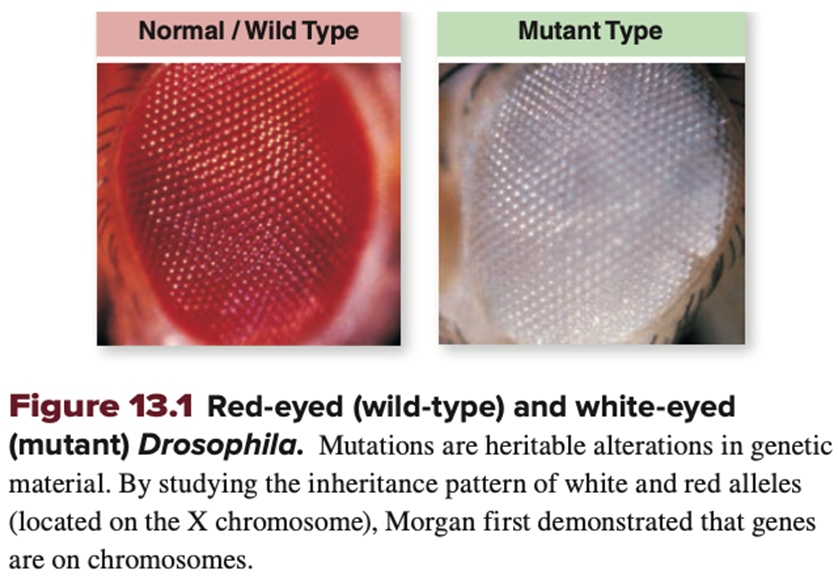
Fruit fly
sex is determined by the X chromosome (Females = XX, Males = XY).
Not All Species are XX/XY
Sex chromosome structures and numbers vary widely in nature
Mammals & Fruit Flies
females are XX, and males are XY.
ZZ & ZW
Male birds have two Z chromosomes (__), and female birds have __.
Some Insects (e.g., Grasshoppers)
lack a Y chromosome entirely. Females are XX, and males are XO (the "O" indicates a missing chromosome).
Humans have 46 chromosomes
(23 pairs): 22 pairs of autosomes and 1 pair of sex chromosomes.
The SRY Gene
– This specific active gene on the Y chromosome triggers the masculinization of genitalia and secondary sex organs
Hemophilia
: An X-linked recessive disorder preventing blood clots.
ØWomen (XX) can be asymptomatic carriers.
ØMen (XY) who inherit the recessive allele will exhibit the disease.
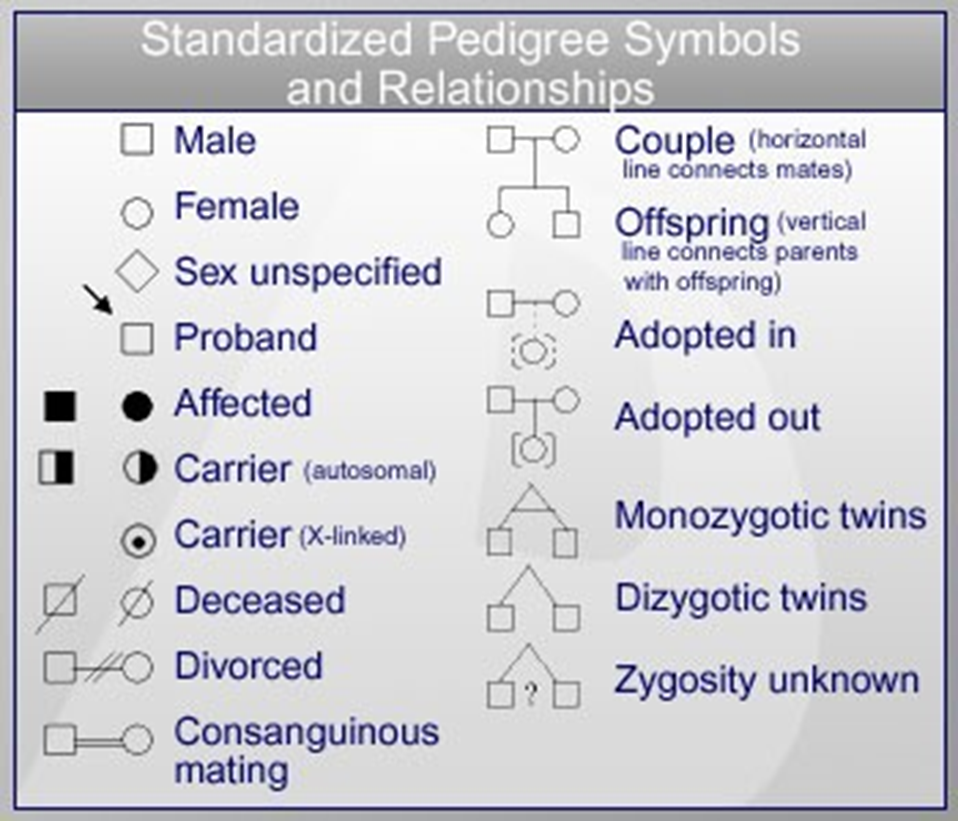
Pedigree
is a visual chart that depicts a family tree and traces the inheritance of a specific trait or disease through multiple generations. It allows geneticists to deduce the genotypes of individuals and determine how a trait is passed down
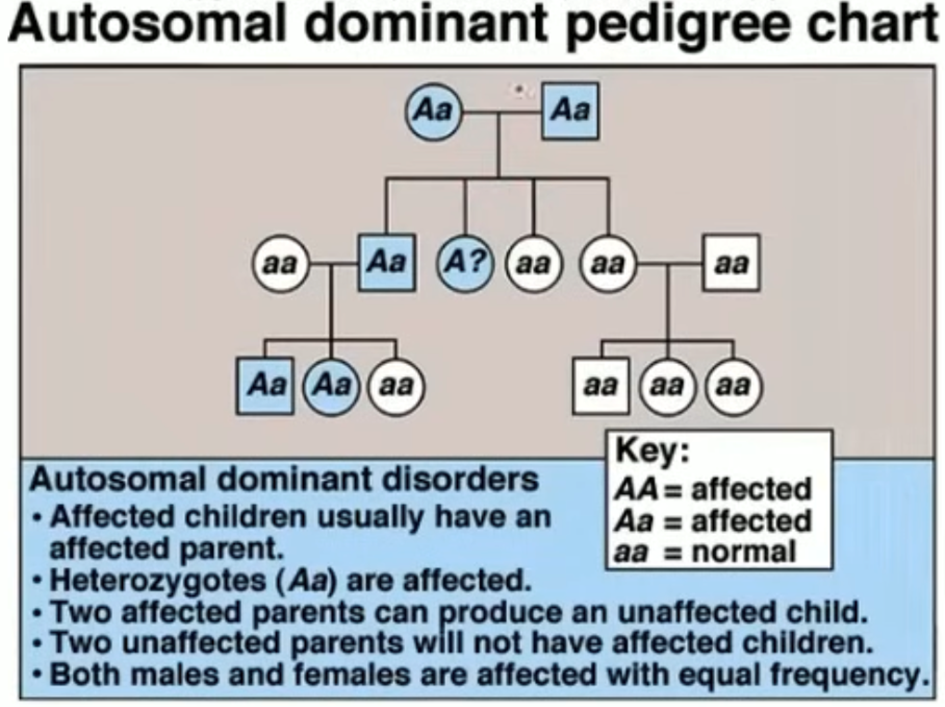
Autosomal Dominant
ØIn this mode, the gene responsible for the trait or disorder is located on an autosome (one of the 22 non-sex chromosomes). You only need one copy of the dominant allele to express the trait.
ØKey Characteristics:
ØThe trait usually appears in every generation (it does not skip generations).
ØEvery affected individual must have at least one affected parent.
ØUnaffected parents (who must be homozygous recessive) will only have unaffected children.
Males and females are affected in roughly equal proportions
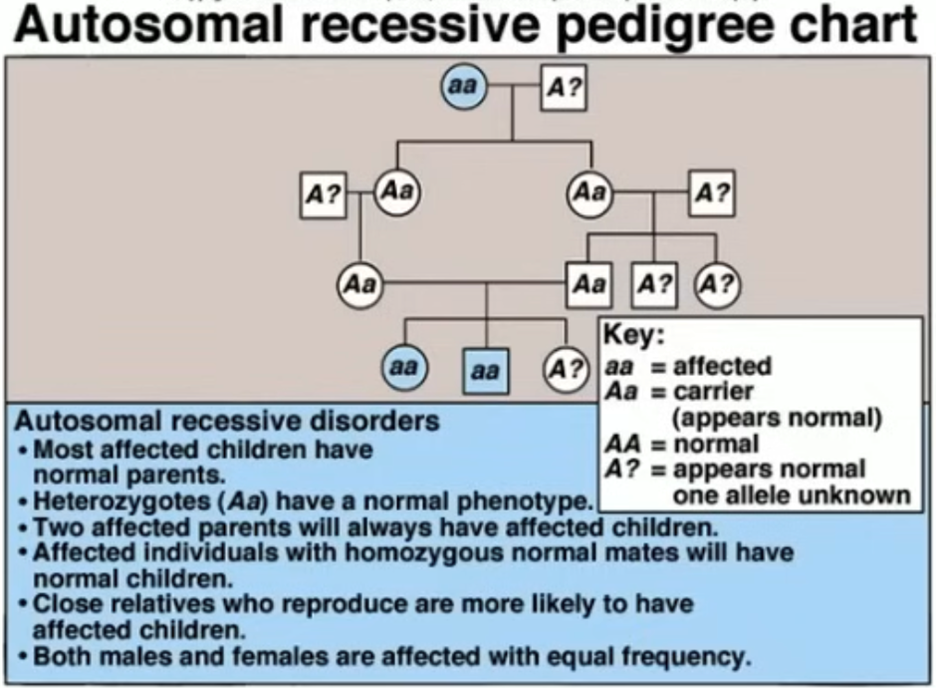
Autosomal Recessive
Øthe gene is also on an autosome, but the trait is recessive. An individual must inherit two copies of the recessive allele (one from each parent) to express the trait.
Ø
ØKey Characteristics:
ØThe trait frequently skips generations.
ØAffected individuals often have two unaffected parents (who are heterozygous "carriers").
ØIf both parents are affected, 100% of their children will be affected.
ØMales and females are affected in roughly equal proportions.
X-linked Recessive
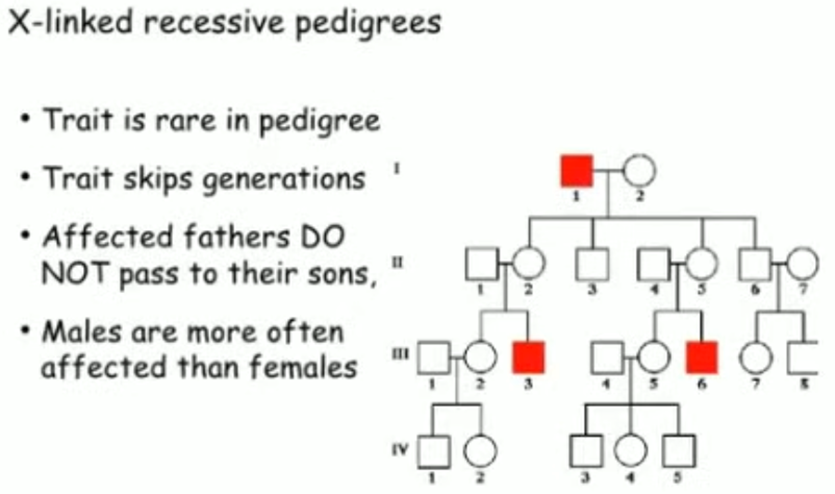
ØThe gene responsible is located on the X chromosome. Because males have only one X chromosome (XY), a single recessive allele will cause them to express the trait. Females (XX) must inherit two copies to express it.
ØKey Characteristics:
ØSignificantly more males are affected than females.
ØThe trait is never passed directly from father to son (fathers give their Y chromosome to sons).
ØAn affected father passes the carrier allele to 100% of his daughters.
ØAn affected mother will pass the trait to 100% of her sons.
ØThe trait often skips generations, passing from an affected grandfather through a carrier daughter to an affected grandson.
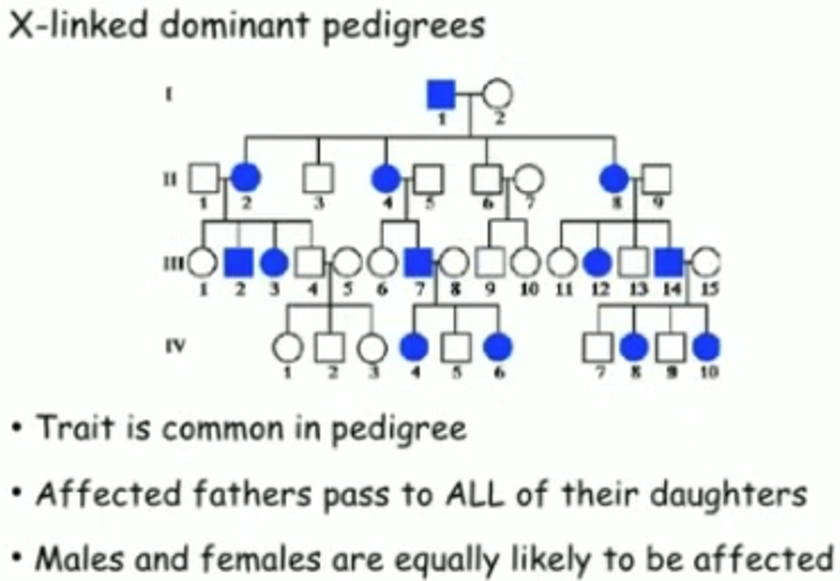
X-linked dominant
ØThis is less common. The gene is on the X chromosome, and only one copy of the dominant allele is needed to express the trait, regardless of sex.
ØKey Characteristics:
ØThe trait does not skip generations.
ØAn affected male will pass the trait to all of his daughters and none of his sons.
ØAn affected female (heterozygous) has a 50% chance of passing the trait to any child, male or female.
ØOften, more females are affected than males.