World Art III
 Call Kai
 Learn
Learn Practice Test
 Spaced Repetition
 Match
Match Flashcards
 Knowt Play
1/113

There's no tags or description
Looks like no tags are added yet.
Name | Mastery | Learn | Test | Matching | Spaced | Call with Kai |
|---|
No analytics yet
Send a link to your students to track their progress
114 Terms
Rococo
(ca 1715 onward)
style that became fashionable in parts of Europe in the 18th century. It developed in Paris around 1715.
The term derives from the Italian word barocco, an irregularly shaped pearl,
and the French rocaille, a popular form of garden or interior ornamentation
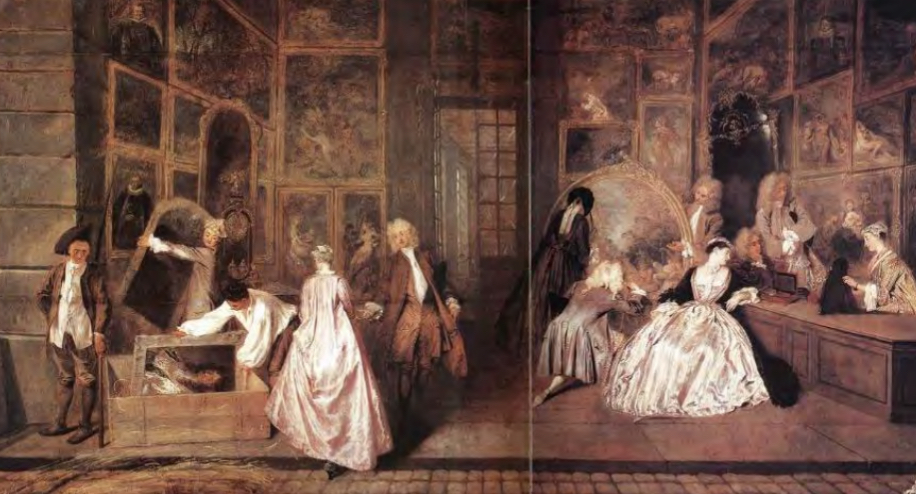
Watteau, The Shop Signboard of Gersaint, ca 1721
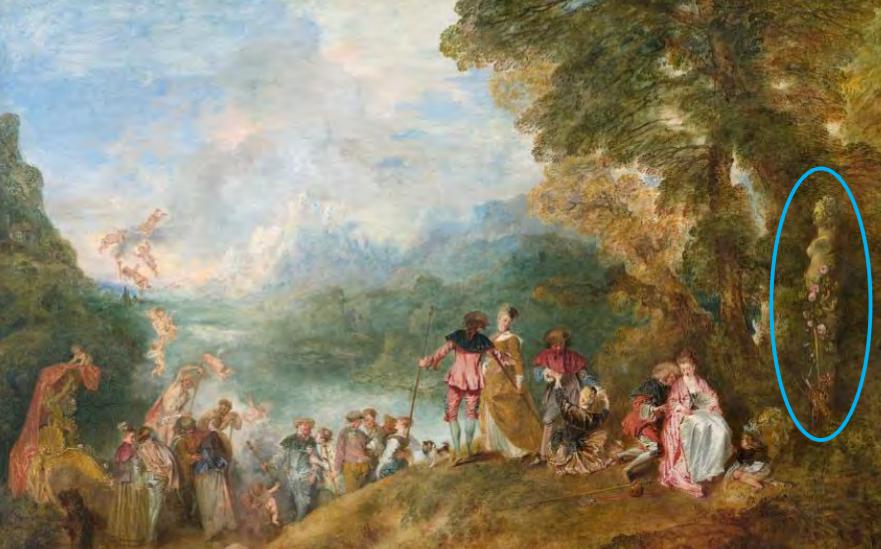
Watteau, Pilgrimage to the Island of Cythera, 1717
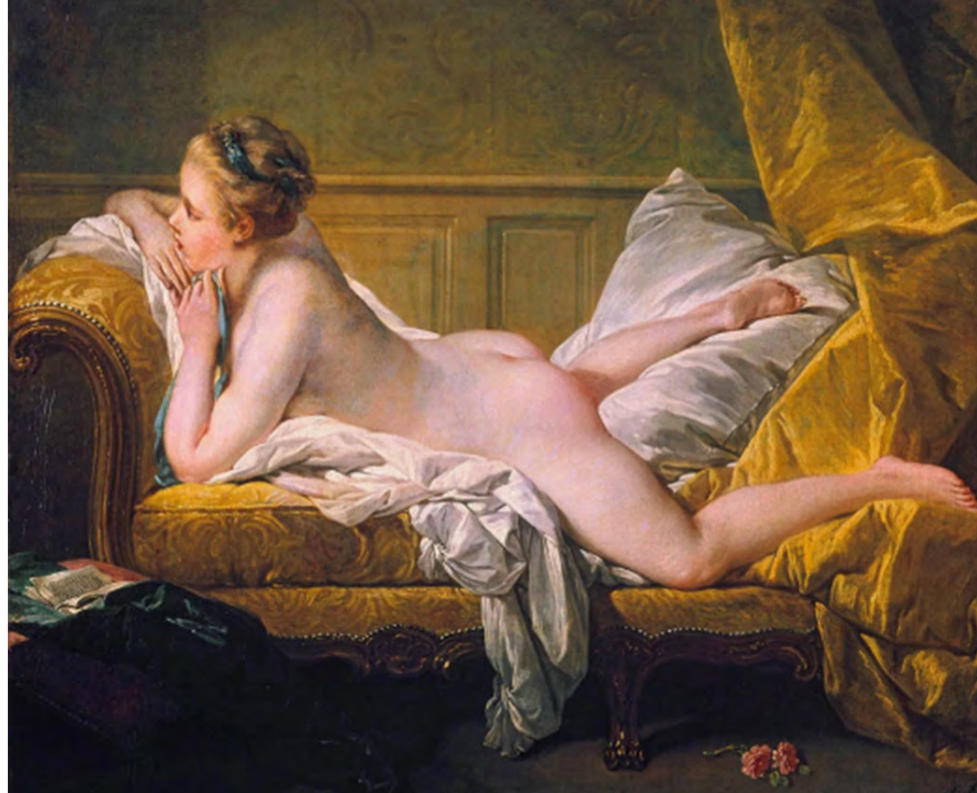
Boucher, Girl Reclining: Louise O’’Murphy, 1751
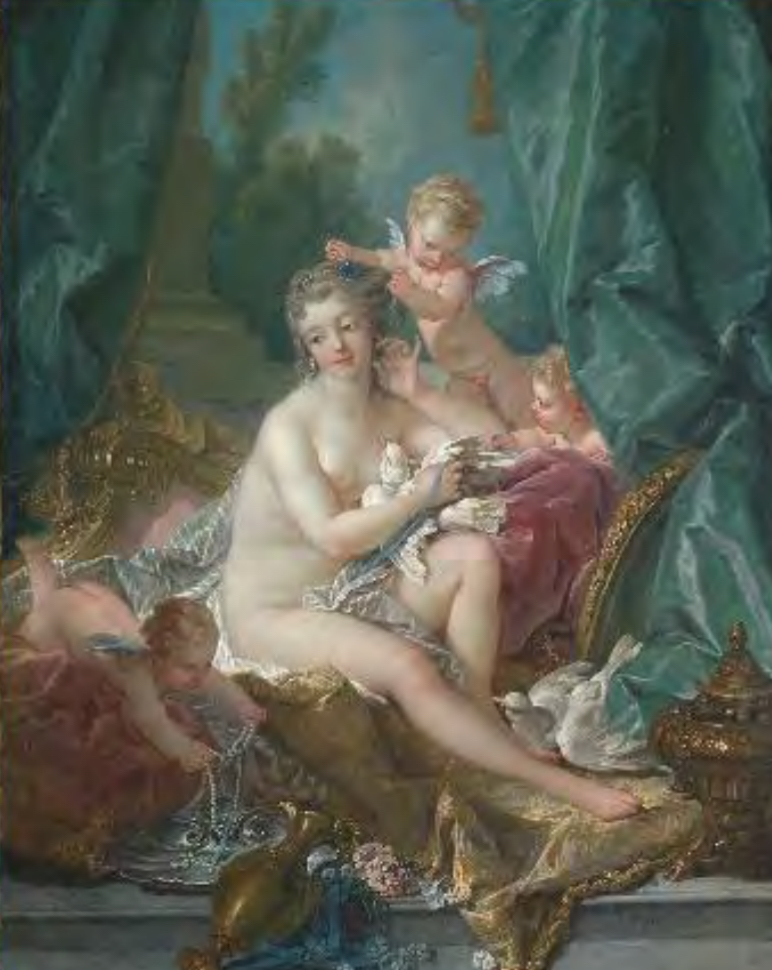
Boucher, The Toilette of Venus, 1751
François Boucher
First painter to the king, painted portraits of louis XV, daily life, mythological themes, and erotic work, often venus
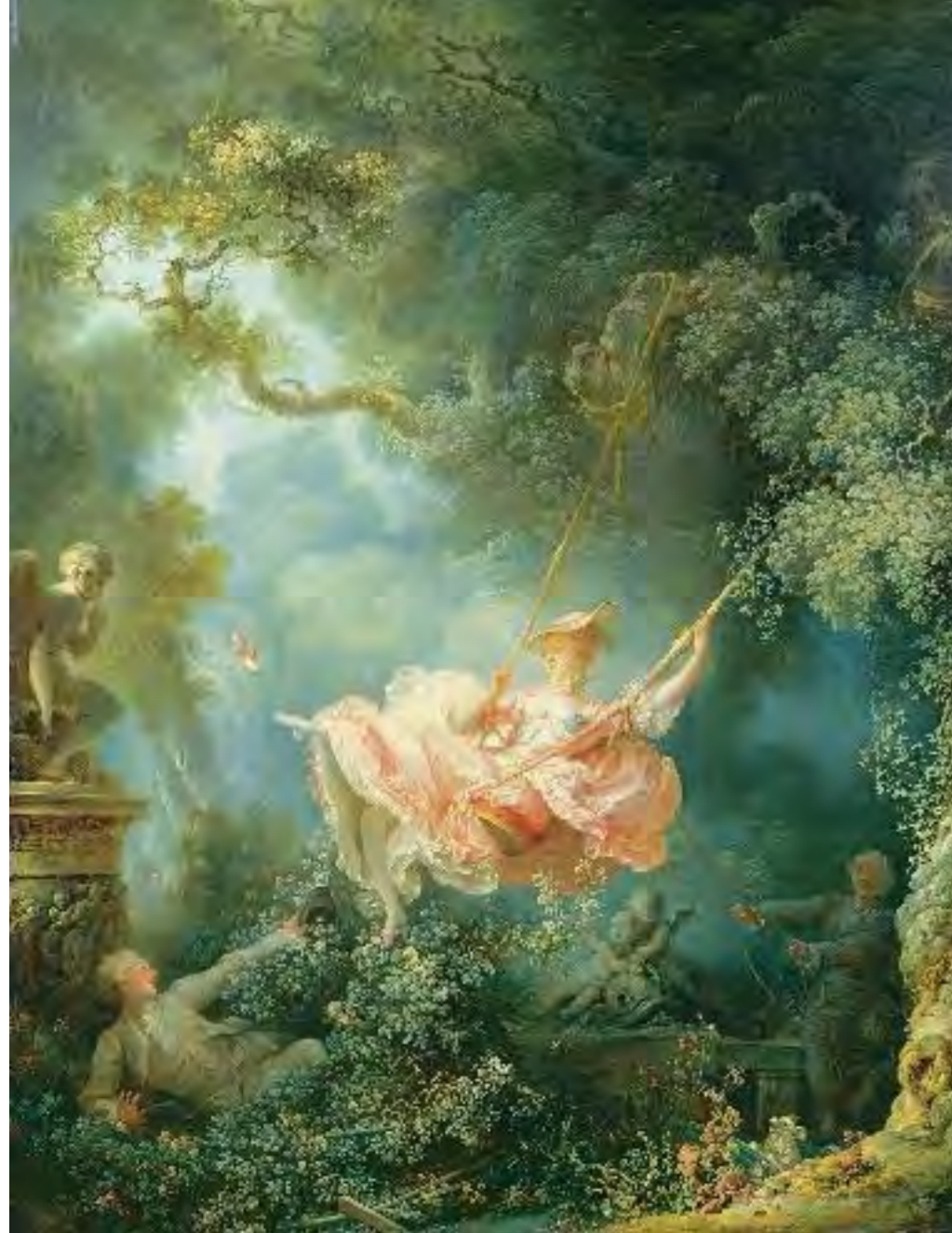
Fragonard, The Swing, 1767
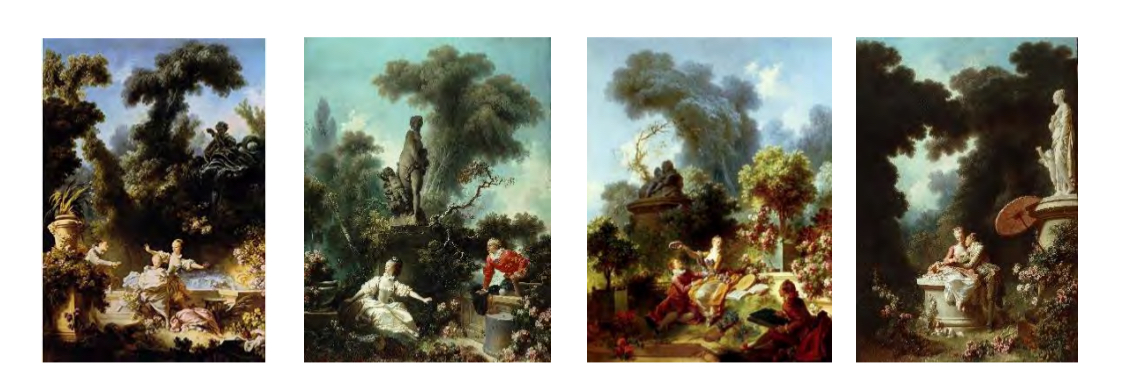
Fragonard, The Progress of Love, 1771-73 (pursuit, meeting, the crown, love letters)
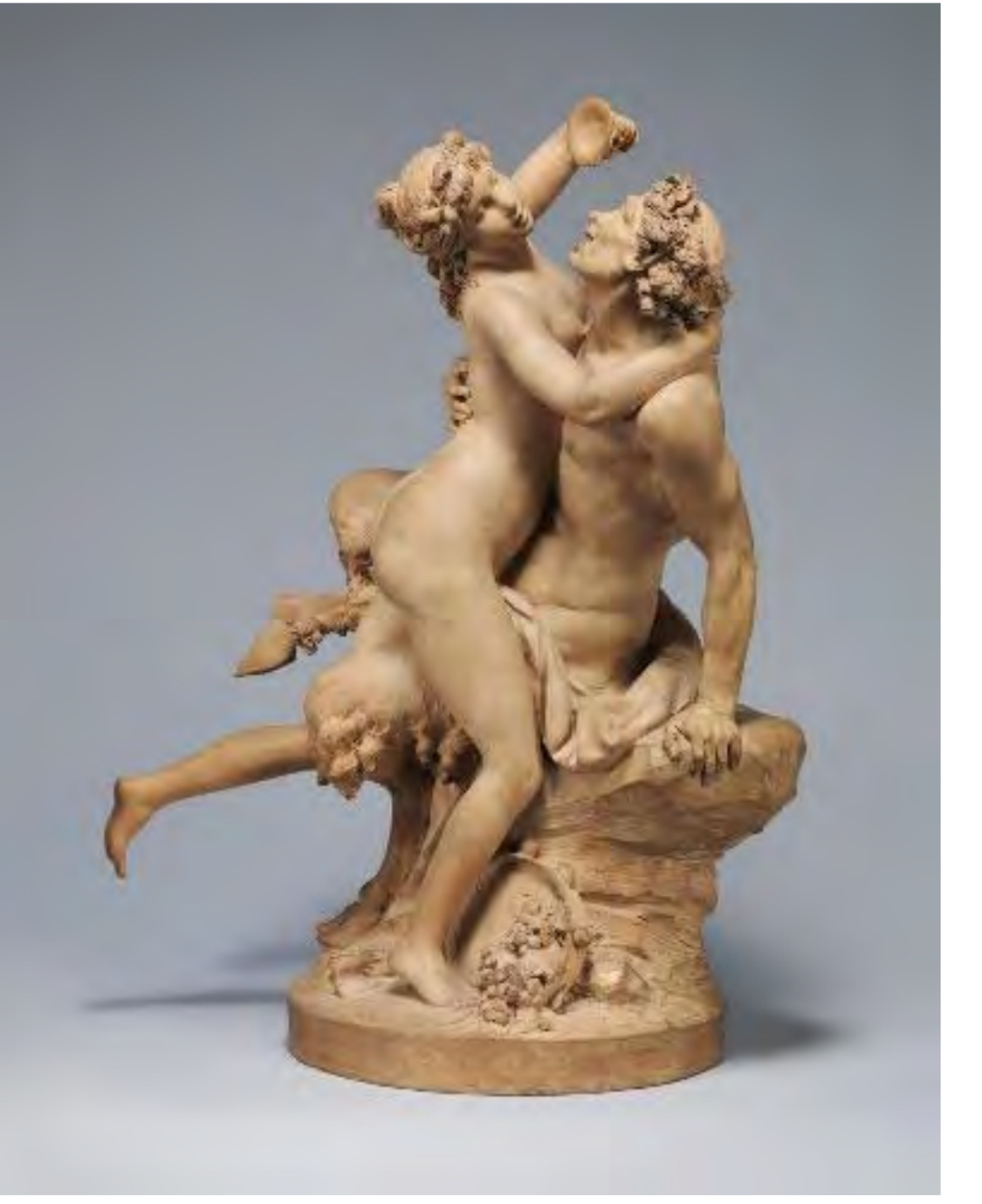
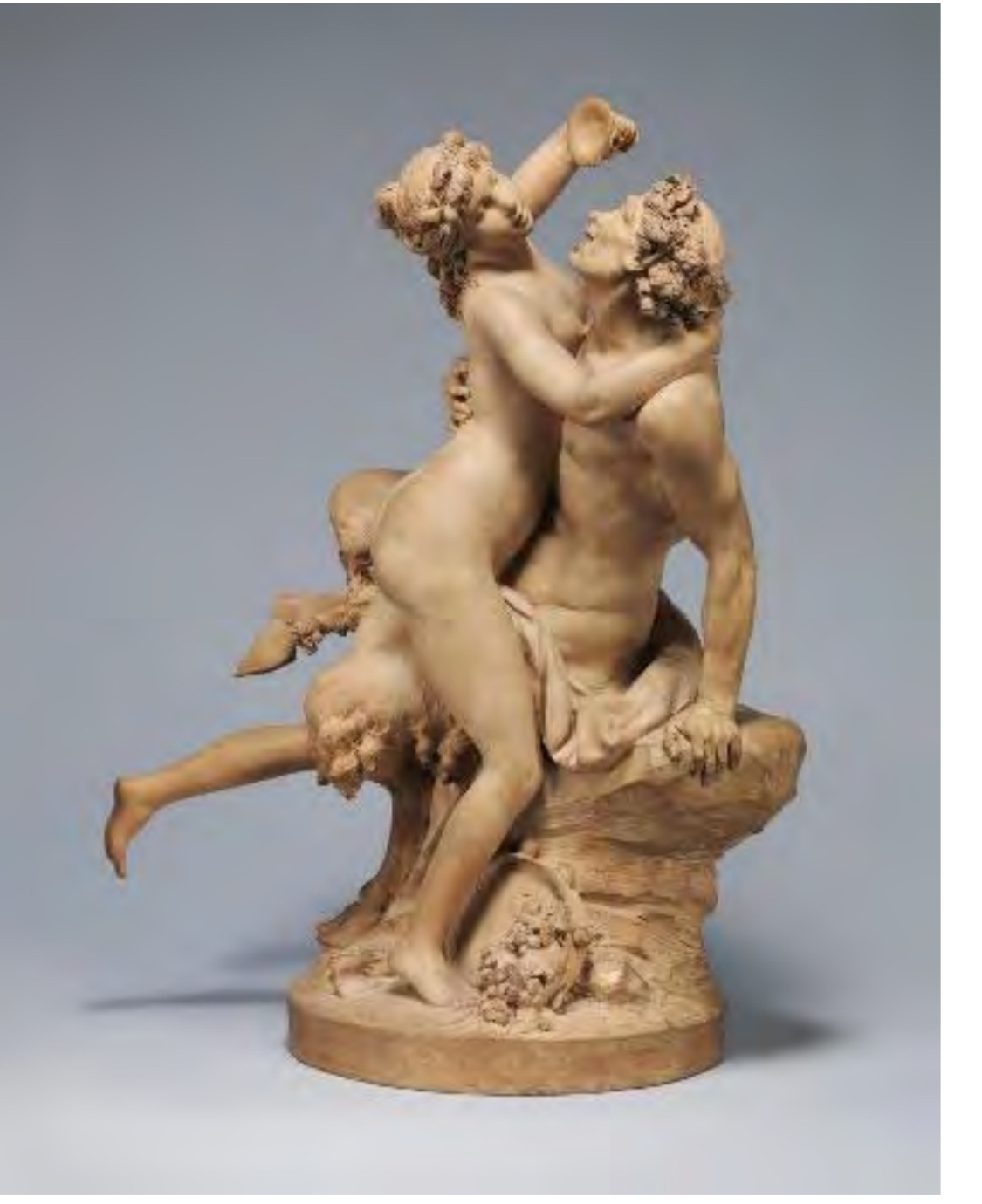
Clodion, The Intoxication of Wine, ca 1780-90, terracotta
Clodion, The Invention of the Balloon, ca 1784, terracotta
Neoclassicism
Presents classical ideals and subjects in a style derived from classical greek and roman sources. Neoclassicism was popular in britain, america, and france as a visual expression of the state and political stability
Capriccio
An imaginary landscape or cityscape in which the artist mixed actual structures and ruins with imaginary ones
Veduta
A more naturalistic painting of famous views and buildings, tourist attractions, and tiny figures of venetian people and tourists
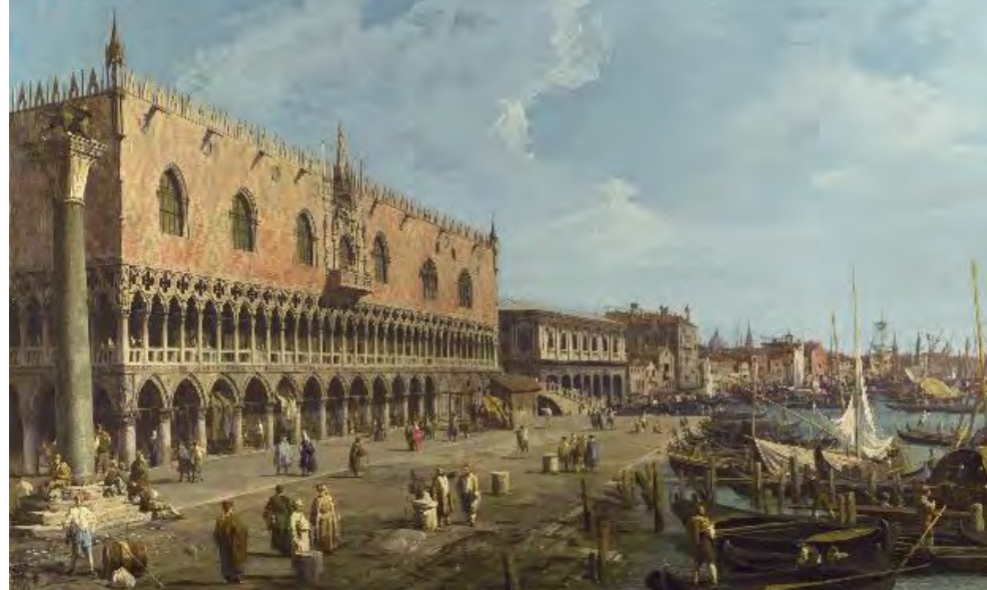
Canaletto, The Doges Palace and the Riva delgi Schiavoni, 1730s
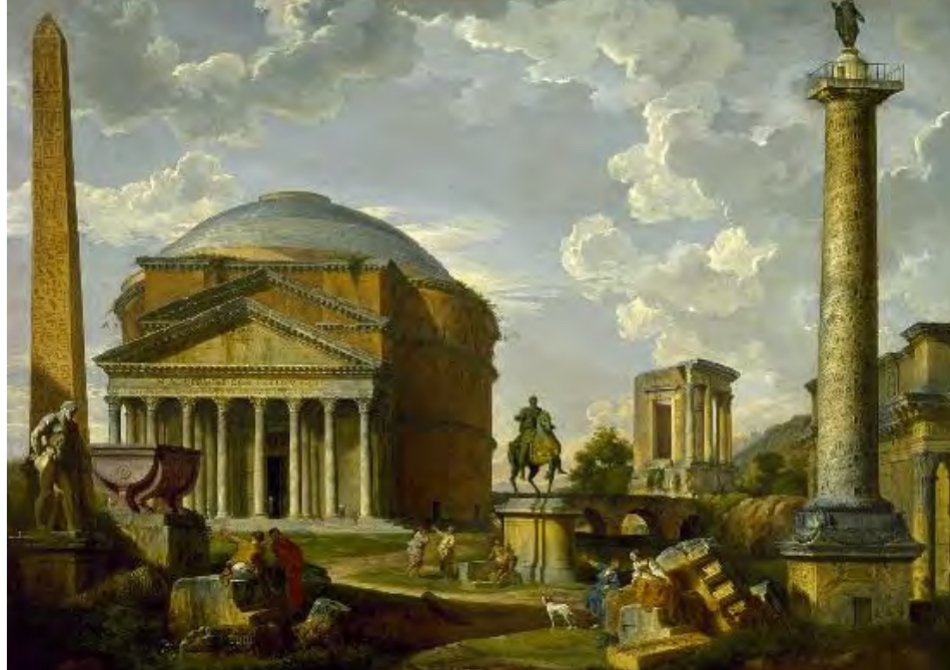
Panini, Fantasy view with the pantheon and other monuments of ancient rome, 1737
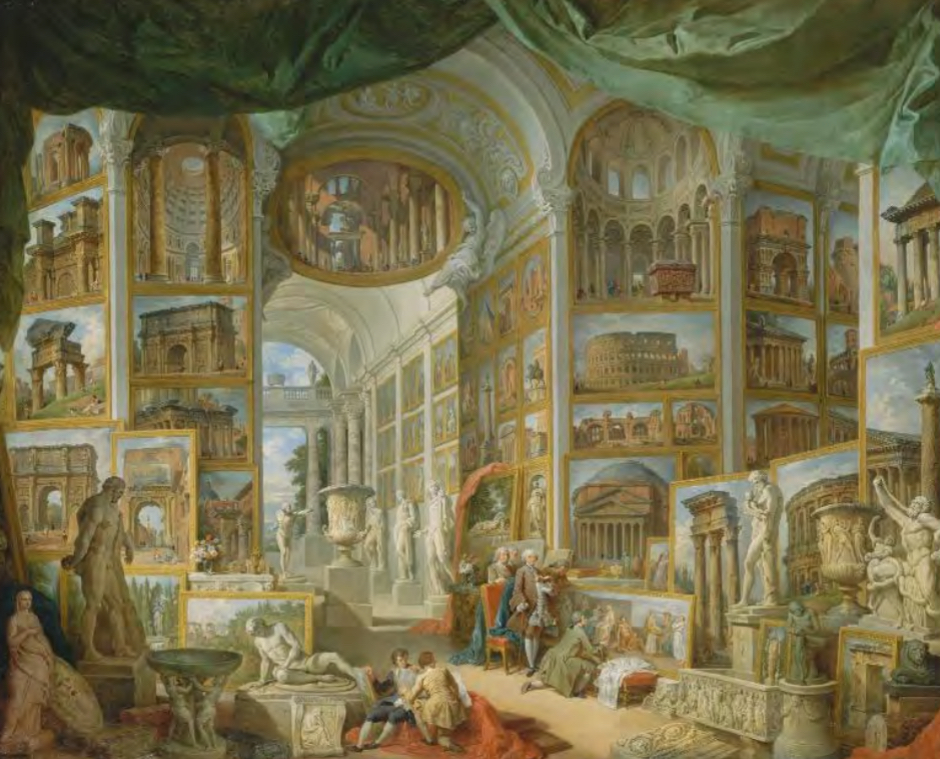
Panini, Ancient Rome, 1757
Shows most famous antique monuments in the city of rome (pantheon, colosseum, etc)
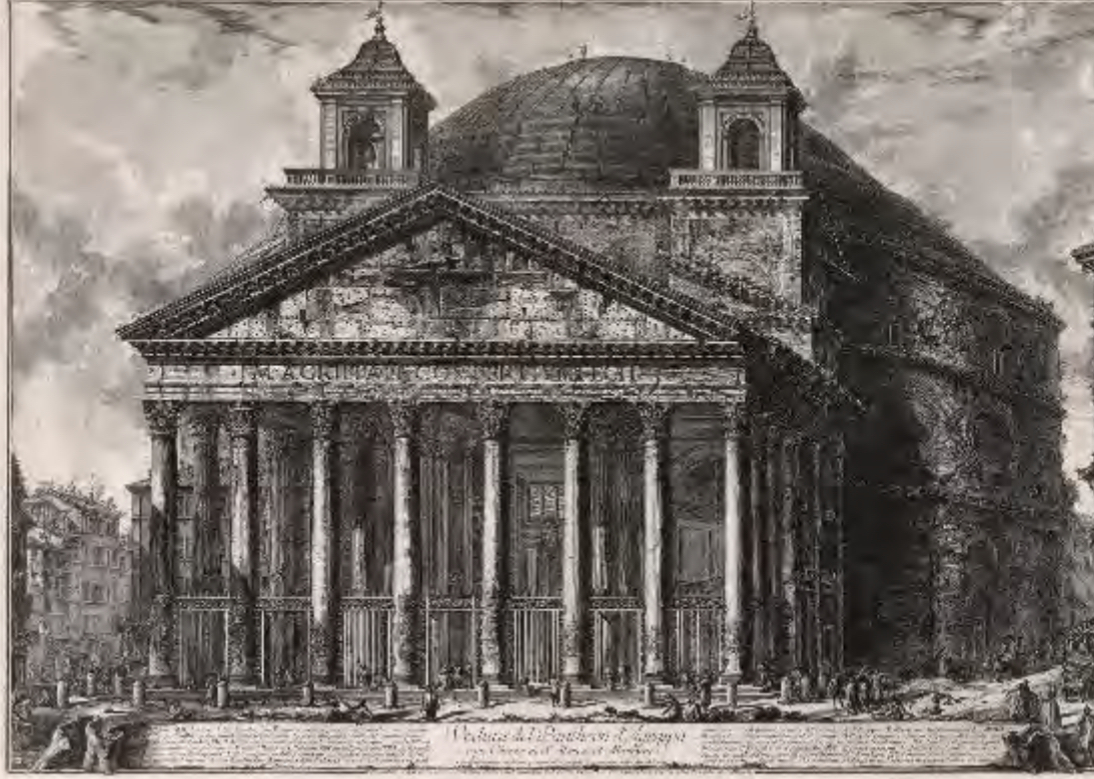
Piranesi, View of the Pantheon, Rome, 1756 first printed
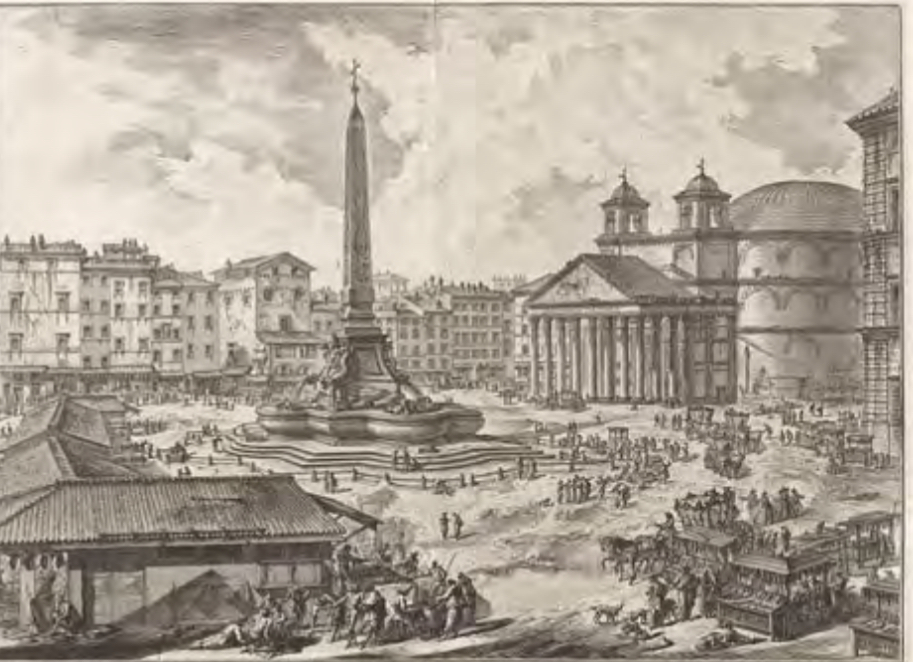
Piranesi, View of the Piazza della Rotonda, with the pantheon in the background, 1756
18th Century
Illustrations of newly discovered archeological ruins in athens, naples, pompeii, palmyra, and lebanon were disseminated in europe in texts and travel logs with descriptions, landscape views, drawings of temples, mausolea, and sculptures
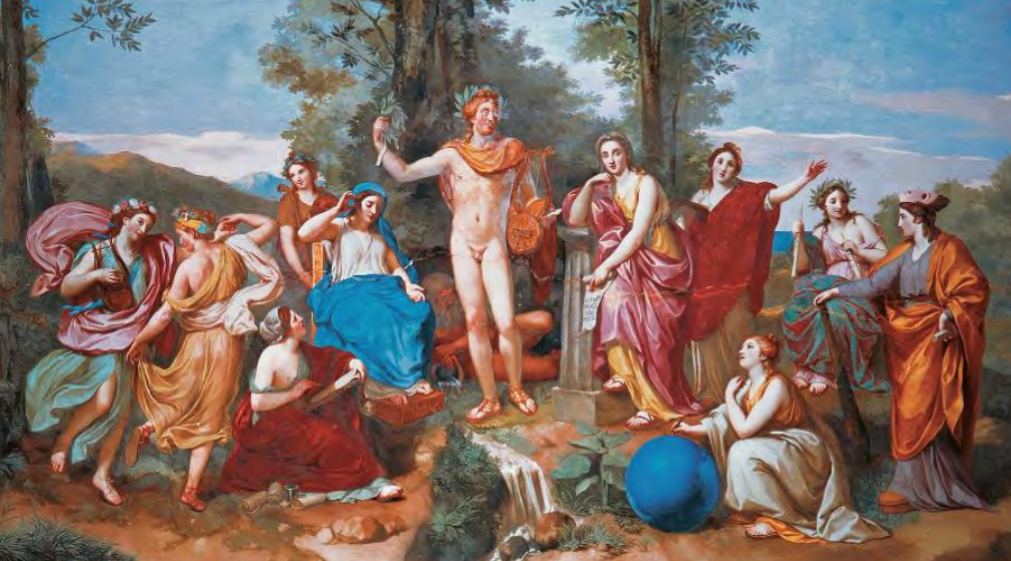
Mengs, Paranasus, 1761
Modeled after mt paranasus in greece, place of apollo and muses
Apollo figure modeled after apollo belvedere- greek statue in vatican collection
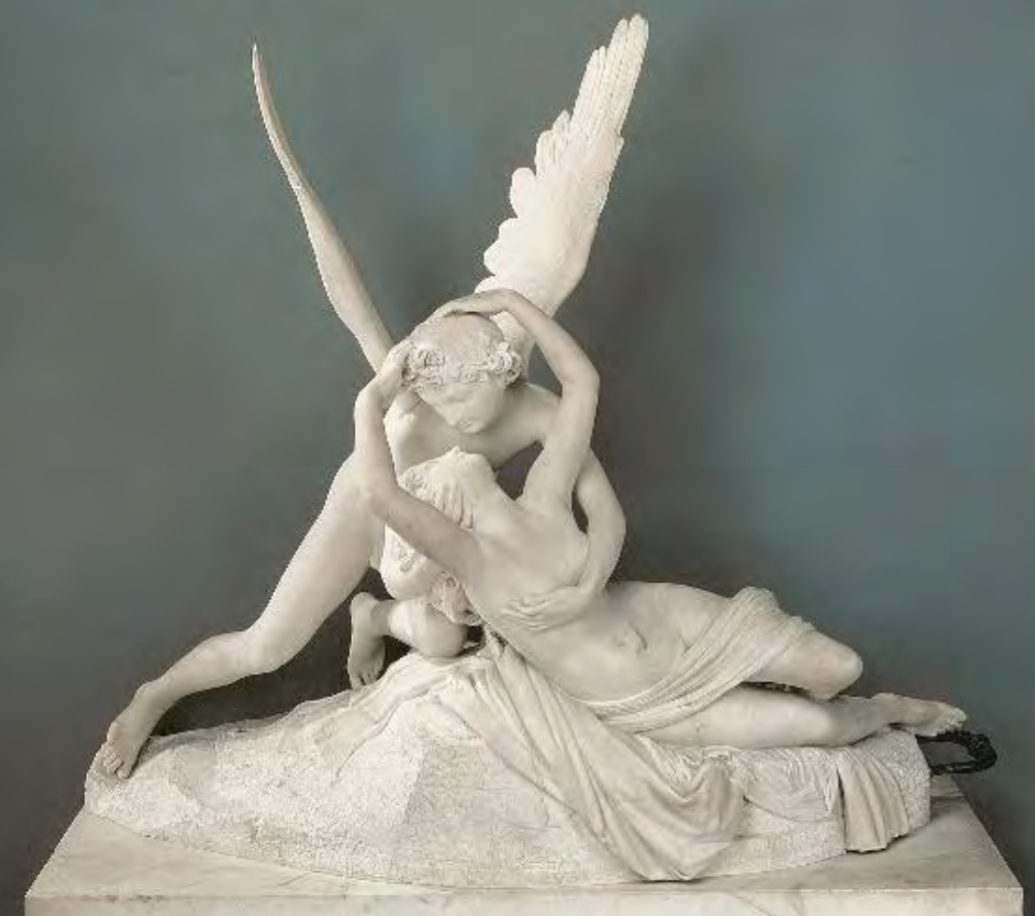
Canova, Cupid and Psyche, 1787-1793
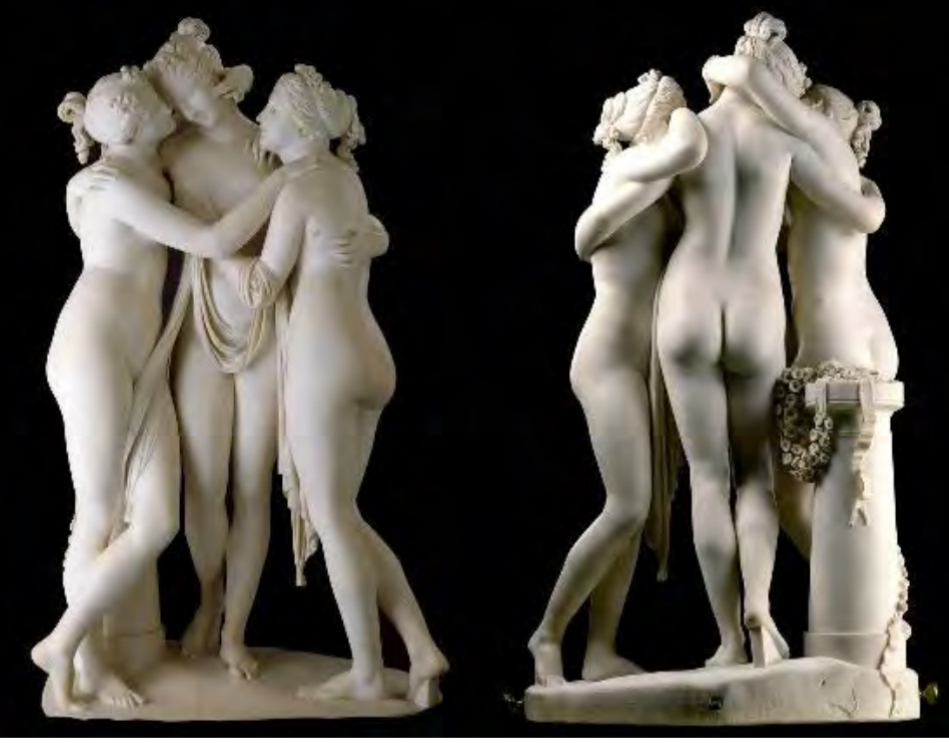
Canova, The Three Graces, 1814-17
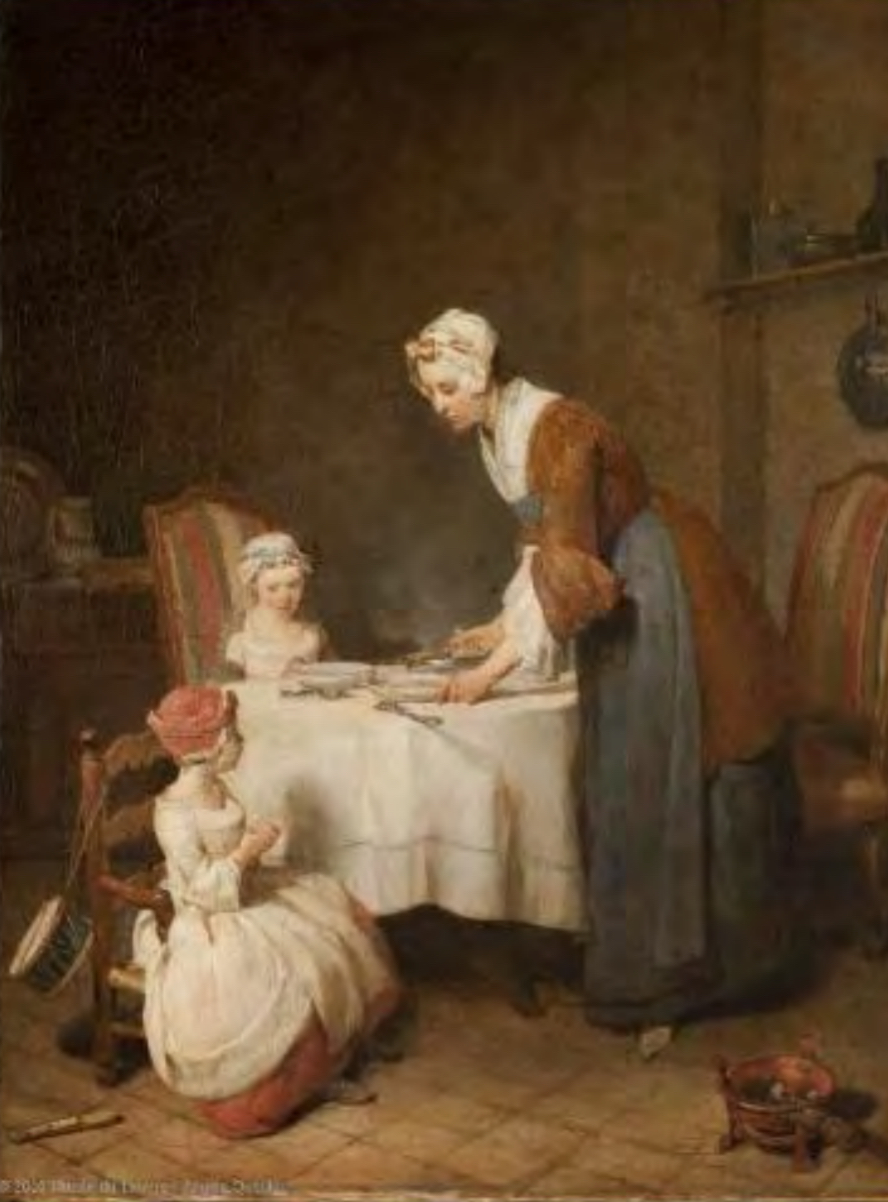
Chardin, Saying Grace, ca 1740
Emphasis on moralizing every day families
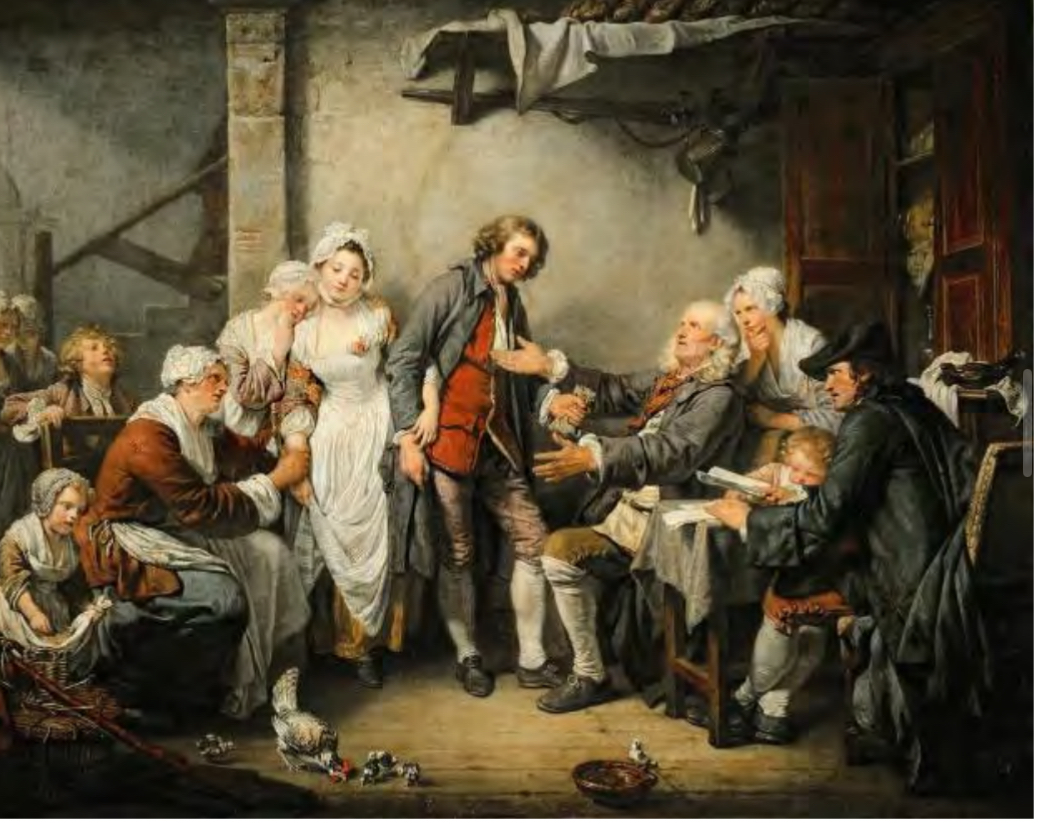
Greuze, The Village Bridge, or, the Marriage, the Moment when a father gives his son in law a dowry, 1761
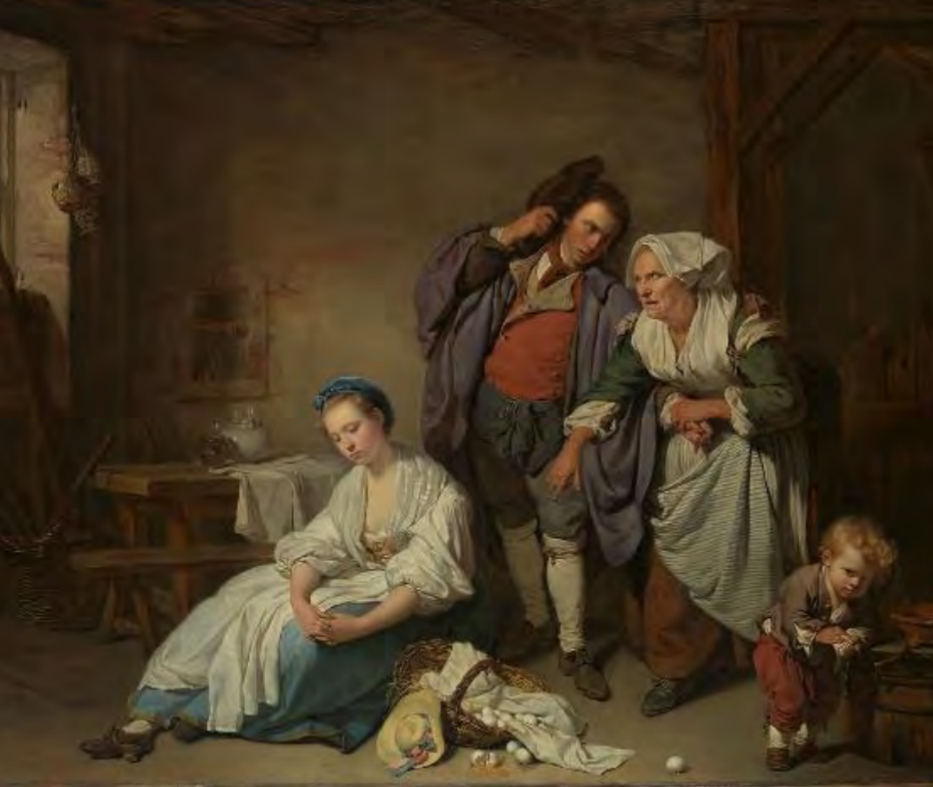
Greuze, Broken Eggs, 1756
understood that the girls youth was violated
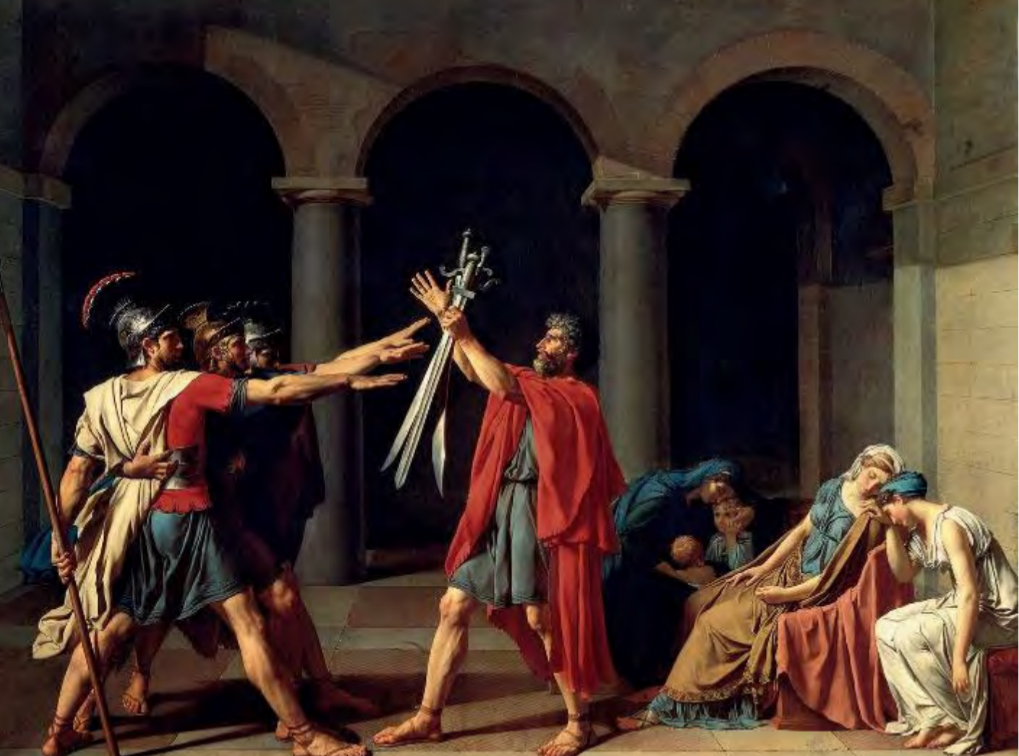
David, Oath of the Horatii, 1784-5
inspired by grave stele of hegeso
also inspired by achilles fighting menmon bowl
Romanticism
In the 19th century- An emphasis on emotional expressiveness and the unique experiences of the individual. The paintings were meant to stimulate the viewers emotions. Romantic paintings presented dramatic subject matter taken from literature, current events, the natural world, or the artists own imagination.
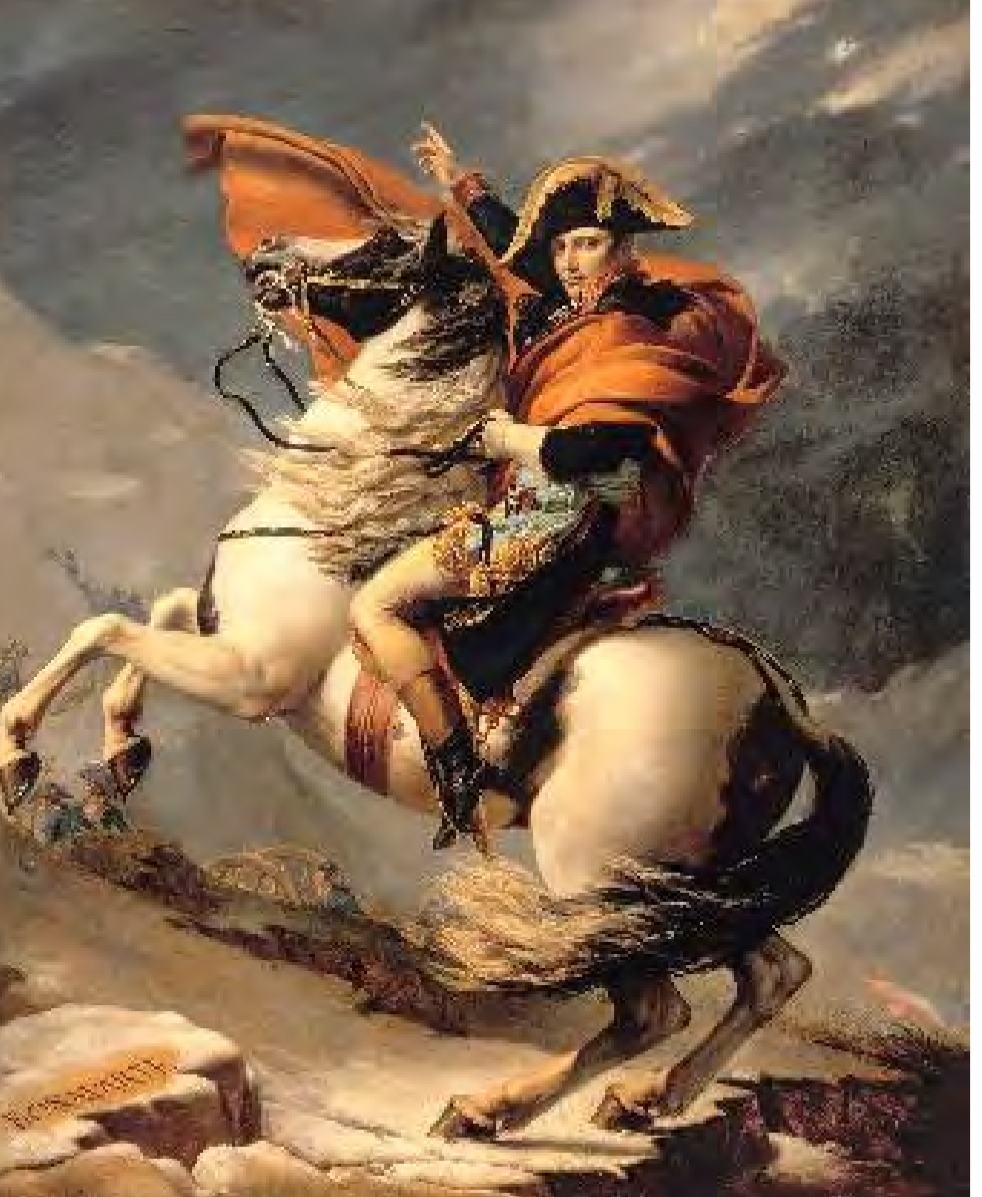
David, Napoleon Crossing the Saint Bernard, 1800-01
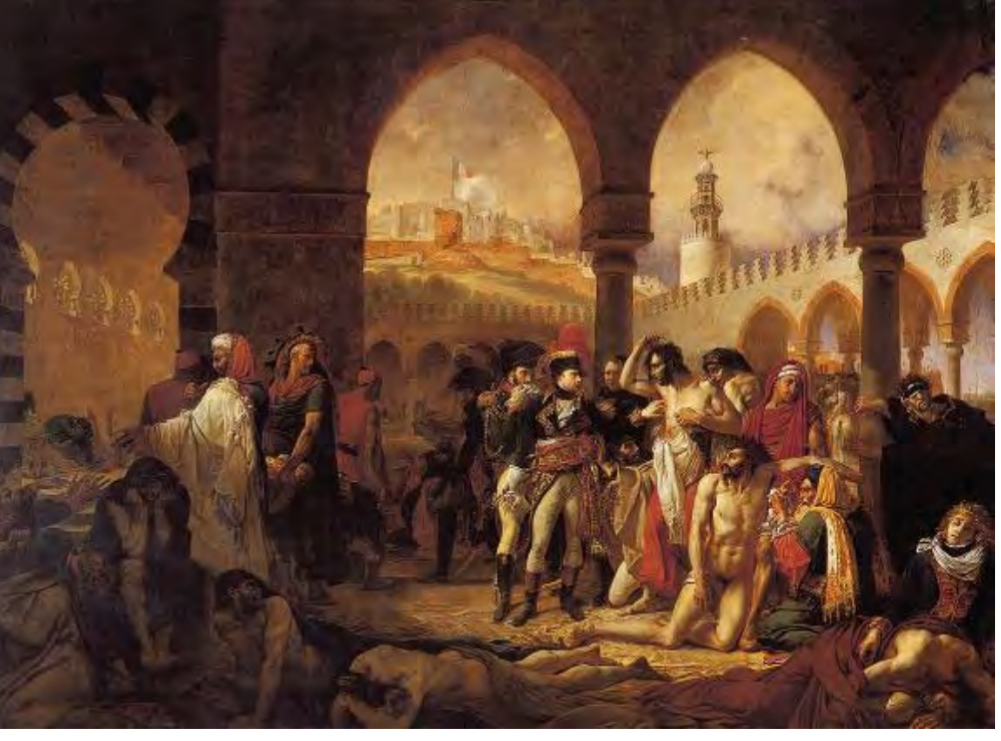
Gros, Napoleon in the Plague House at Jaffa, 1804
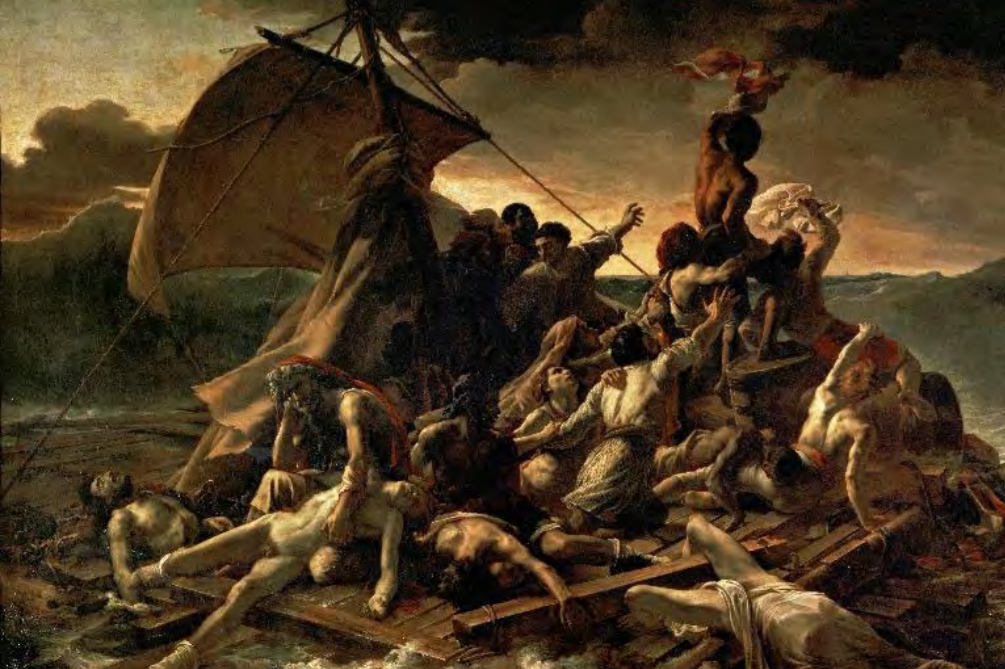
Gericault, The Raft of the Medusa, 1818-19
based off of a french ship that ran aground- 152 passengers set adrift on raft
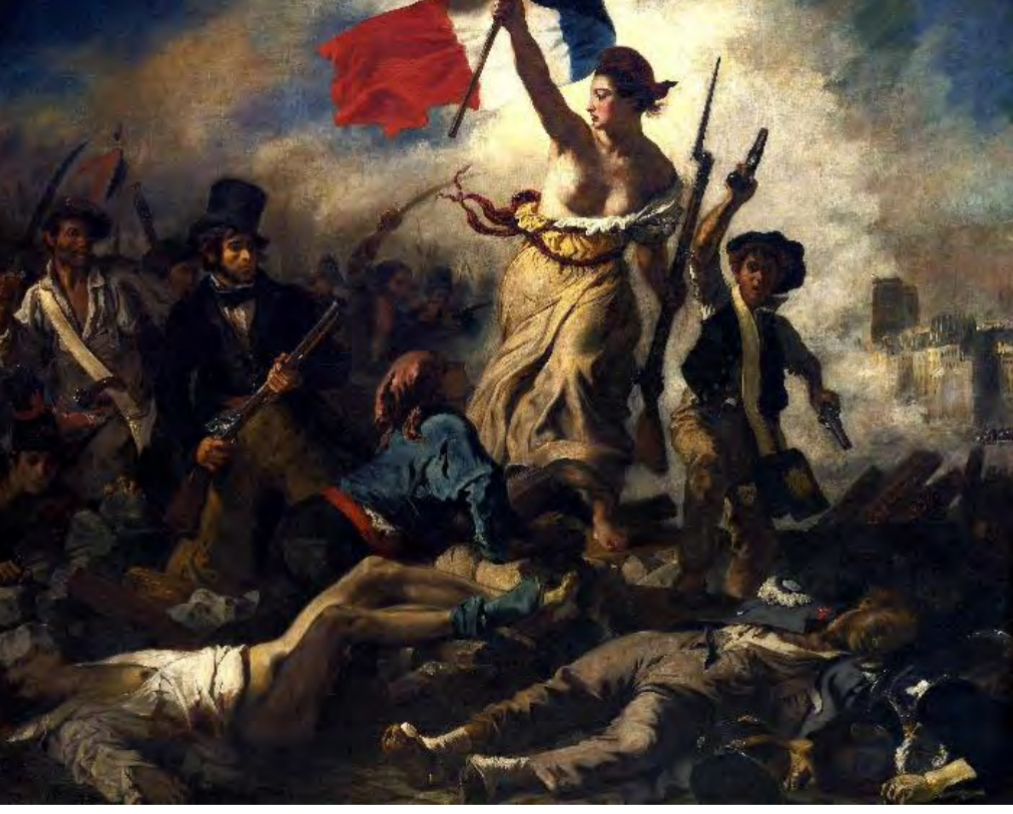
Delacroix, Liberty Leading the People, July 28, 1830
History of france after the fall of napoleon
Odalisque
An exoticized version of a female slave or harem concubine
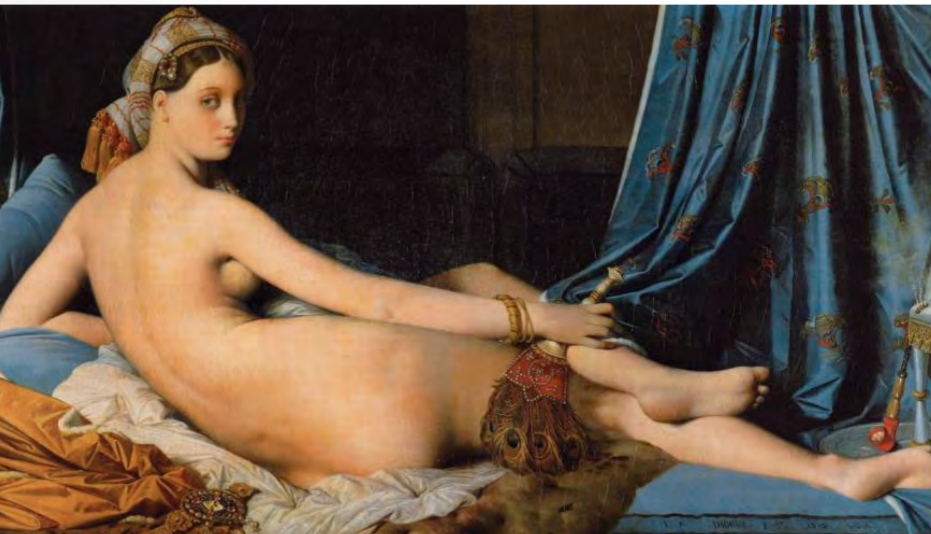
Ingres, Large Odalisque, 1814, 1830
Inspired by titians venus, velazquez venus at her mirror
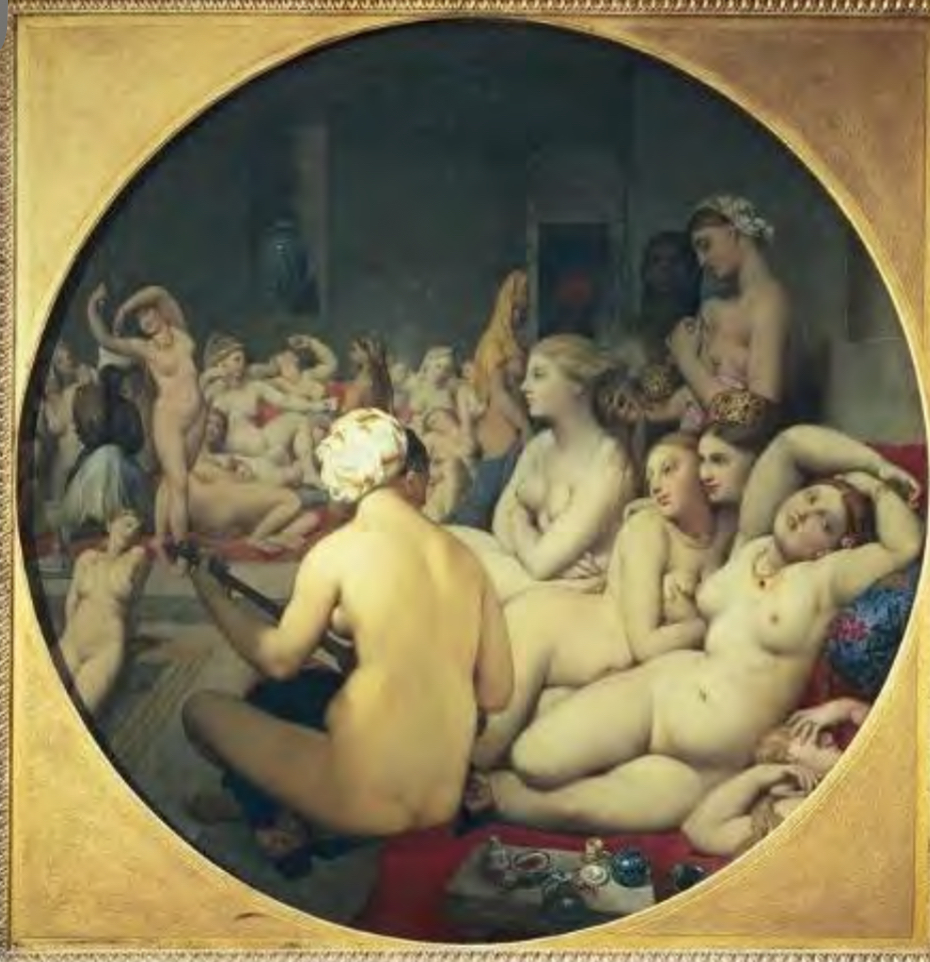
Ingres, The Turkish Bath, 1852
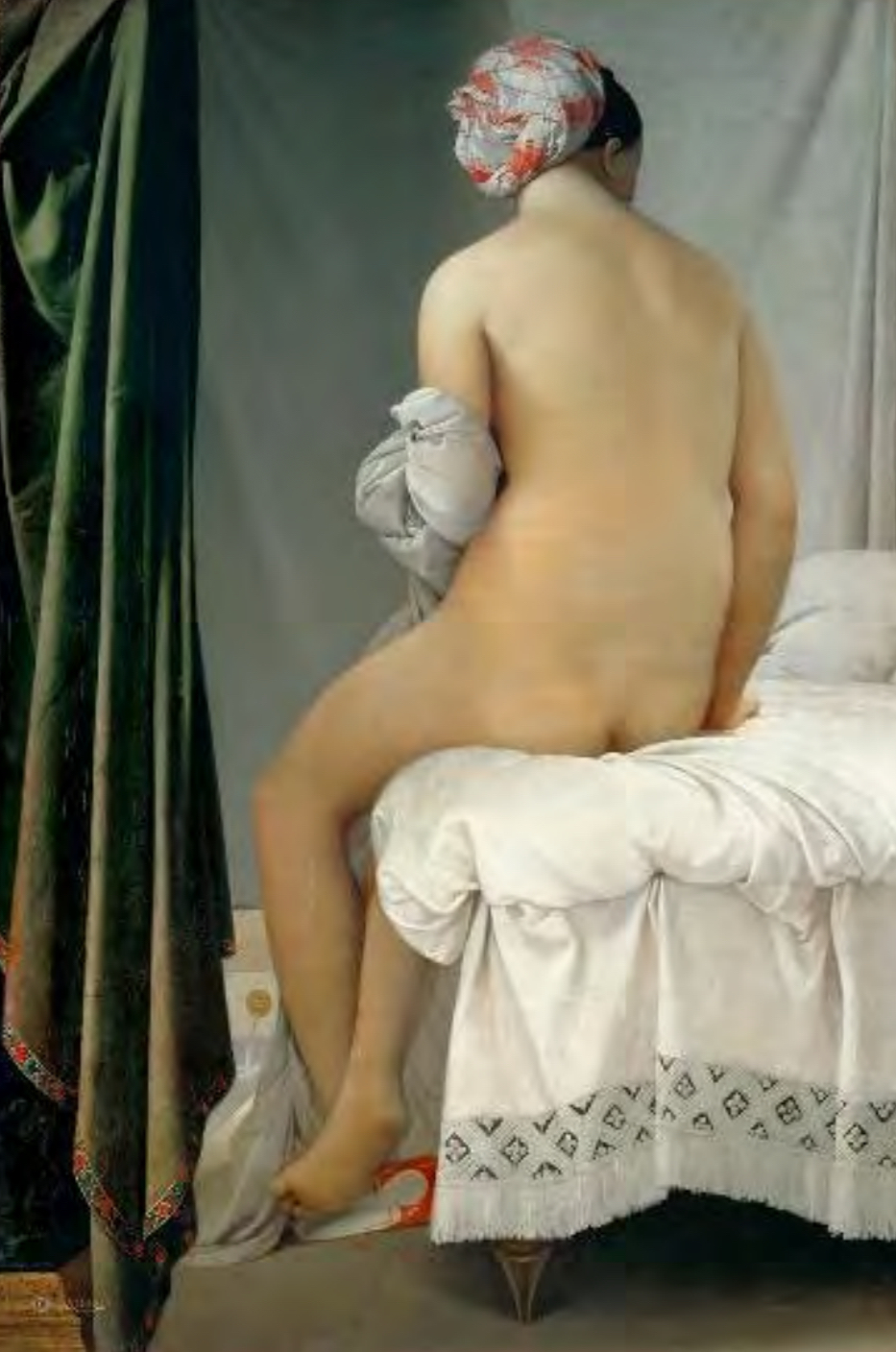
Ingres, The Bather, 1808
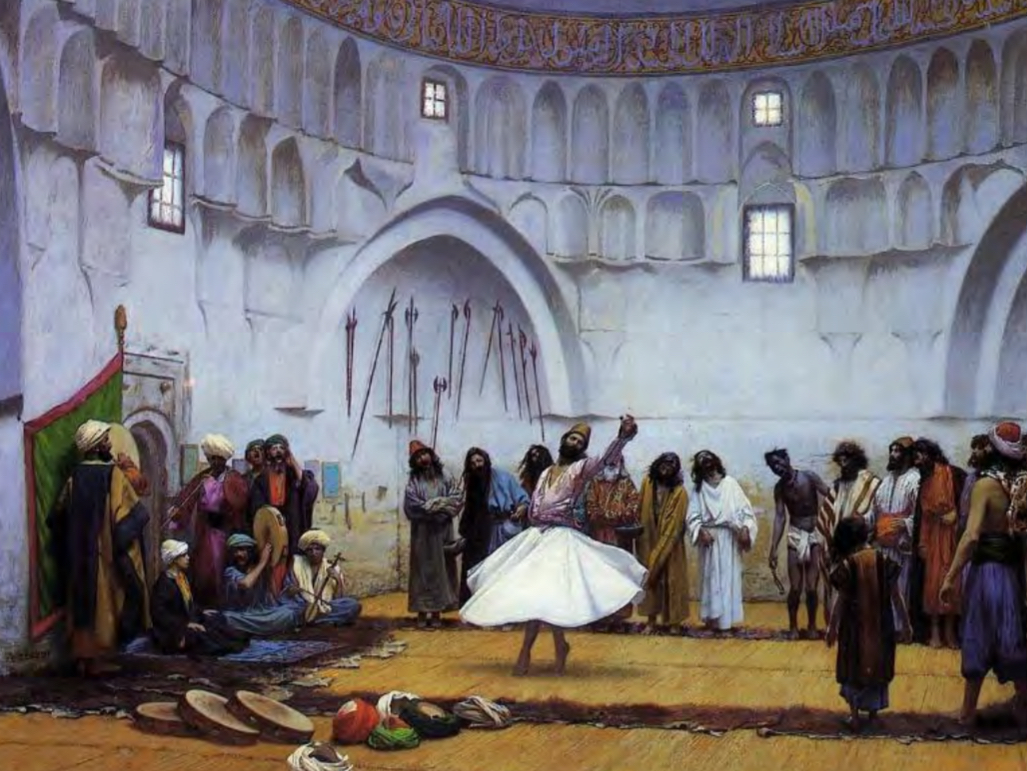
Gerome, Whirling Dervish, 1895
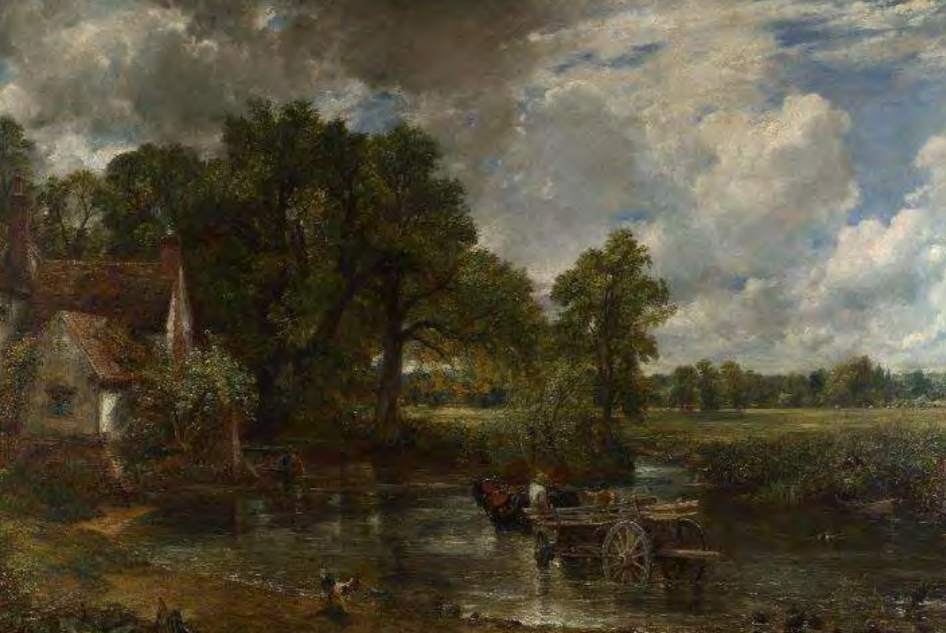
Constable, The Hay Wain, 1821
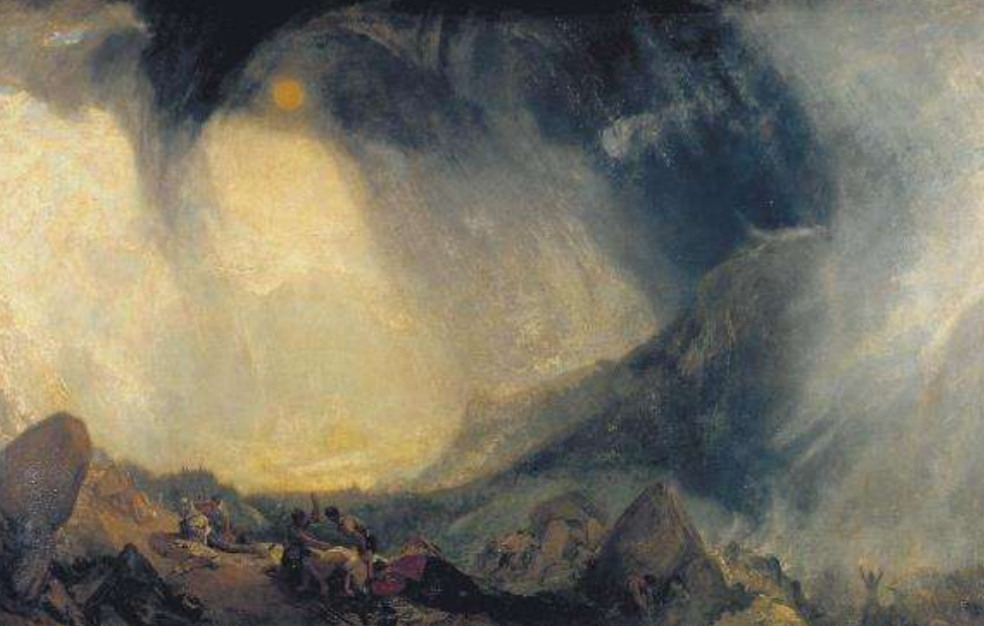
Turner, Snowstorm: Hannibal and his Army crossing the alps, 1812
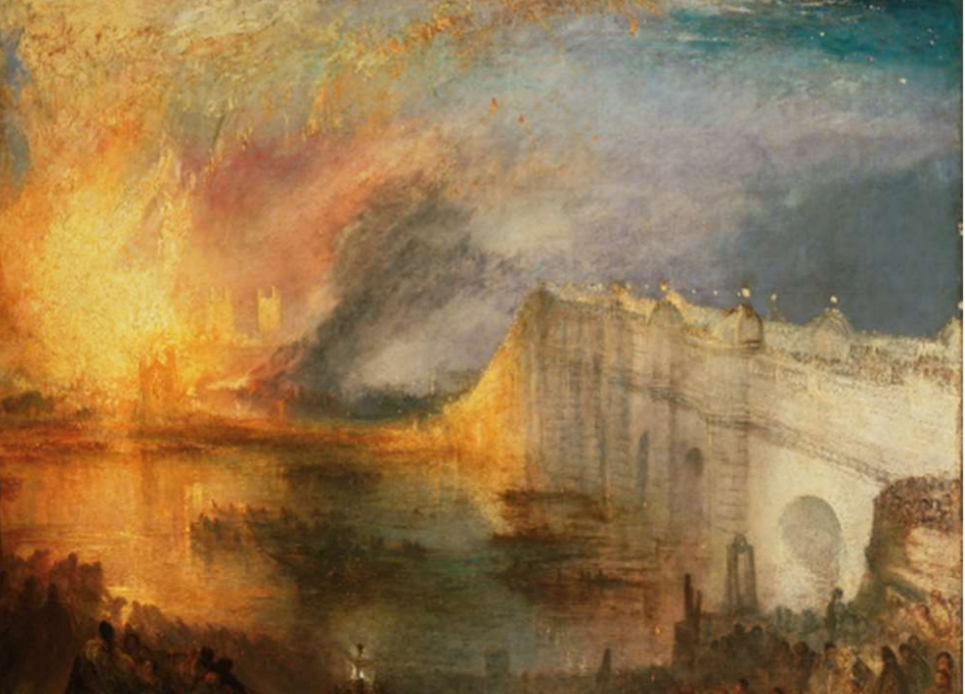
Turner, The Burning of the Houses of Lords and Commons, October 1834
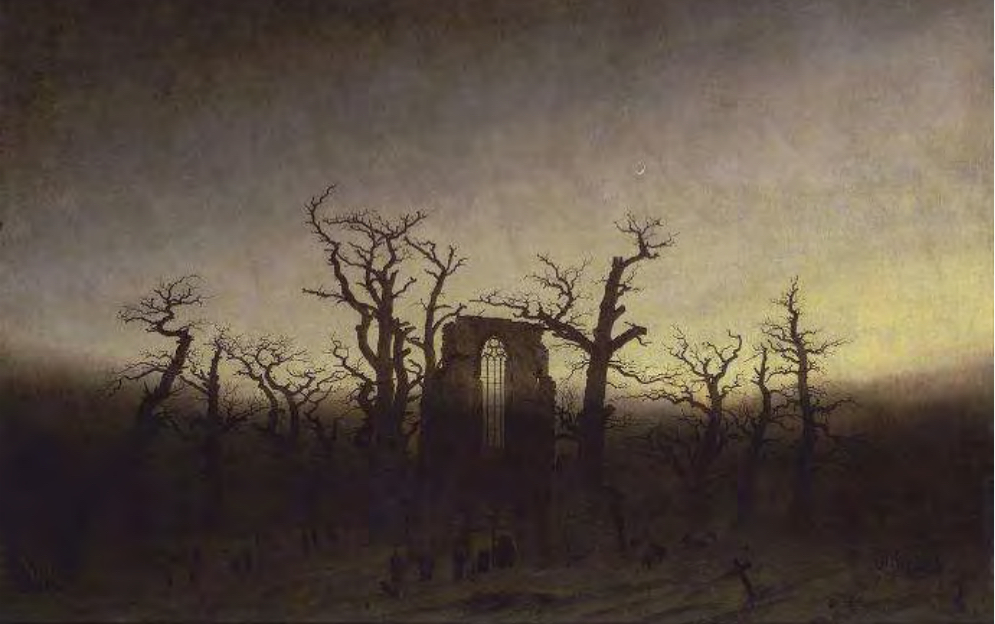
Friedrich, Abbey in an Oak Forest, 1809
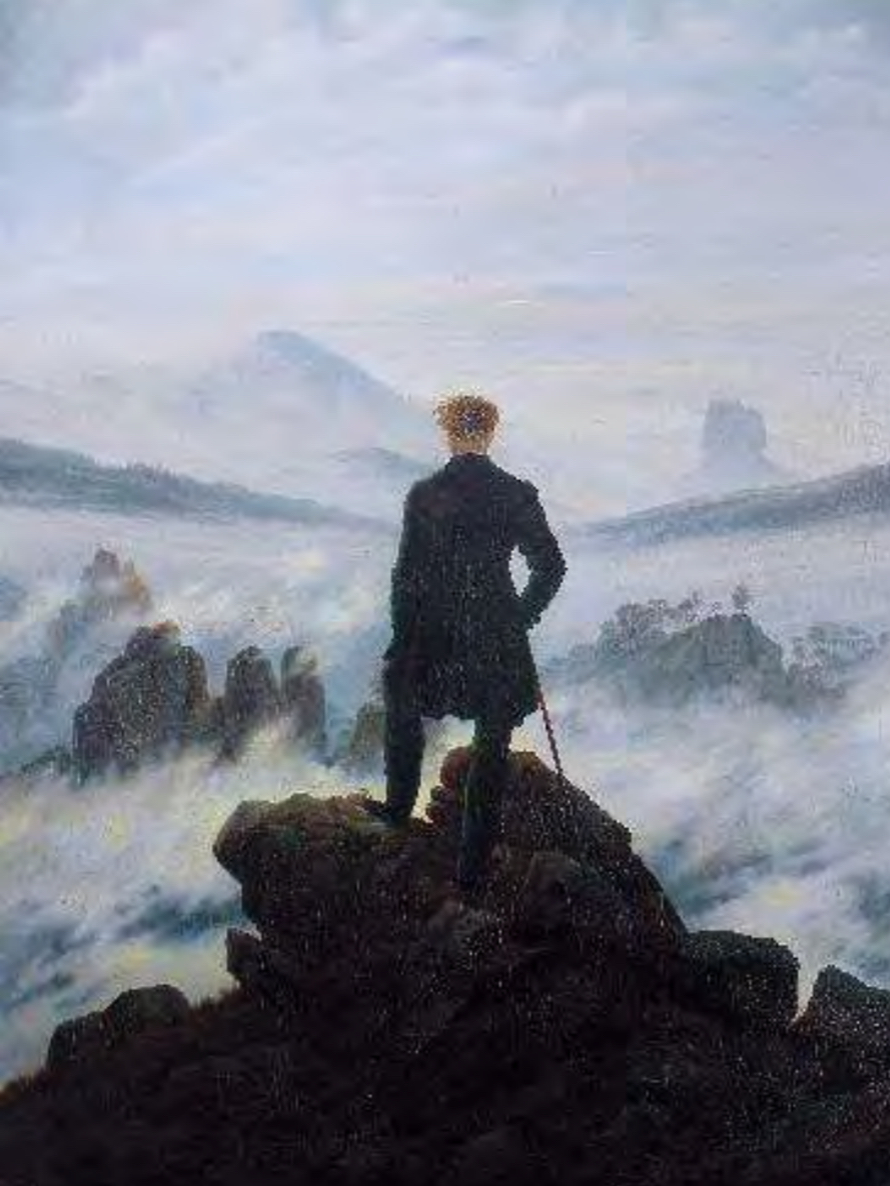
Friedrich, Wanderer Above the Sea of Fog, 1818
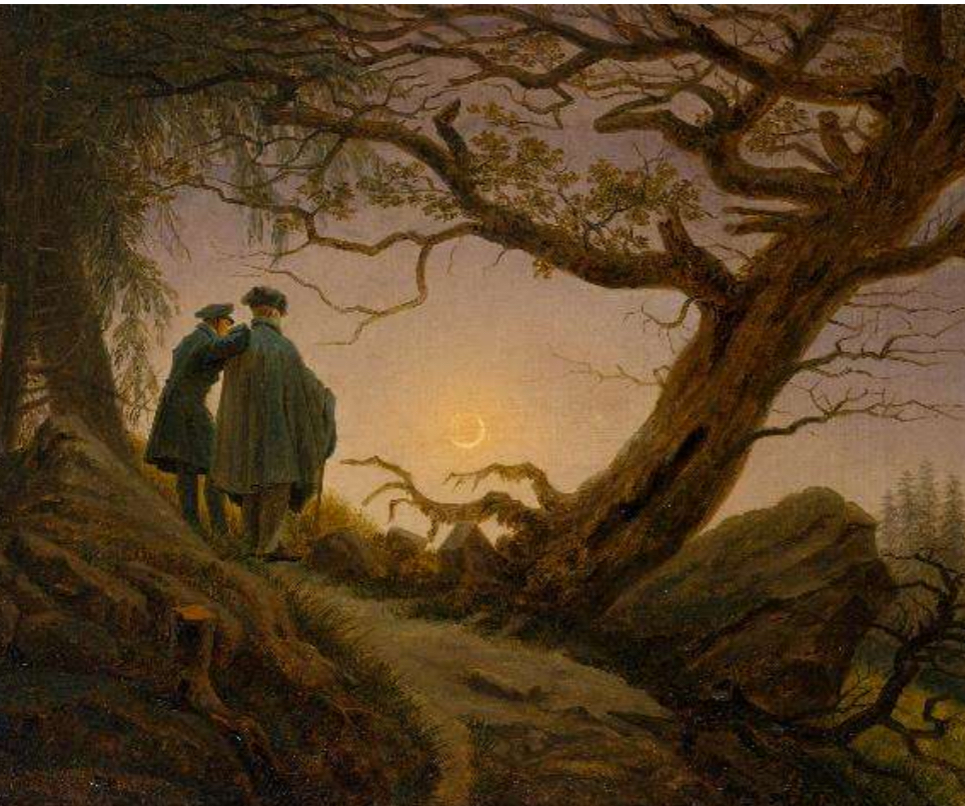
Friedrich, Men contemplating the moon, c 1824
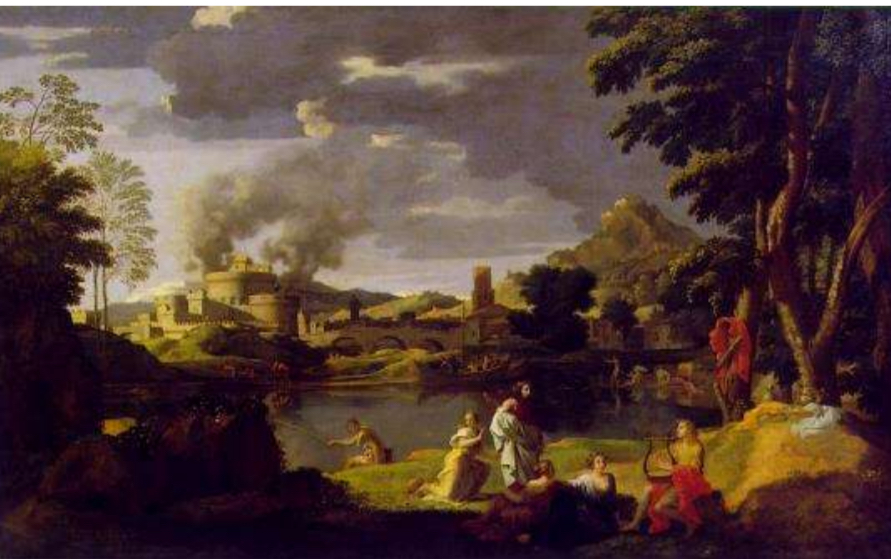
Poussin, Landscape with Orpheus and Eurydice, 1650
Pre-Raphaelite Brotherhood
Formed by 7 london artists in 1848. Looked back to the middle ages and the early Renaissance for a beauty and spirituality they found lacking in their own time. Their art is characterized by descriptions of details and a palette of bright colors that recalls the tempera paint used by medieval artists
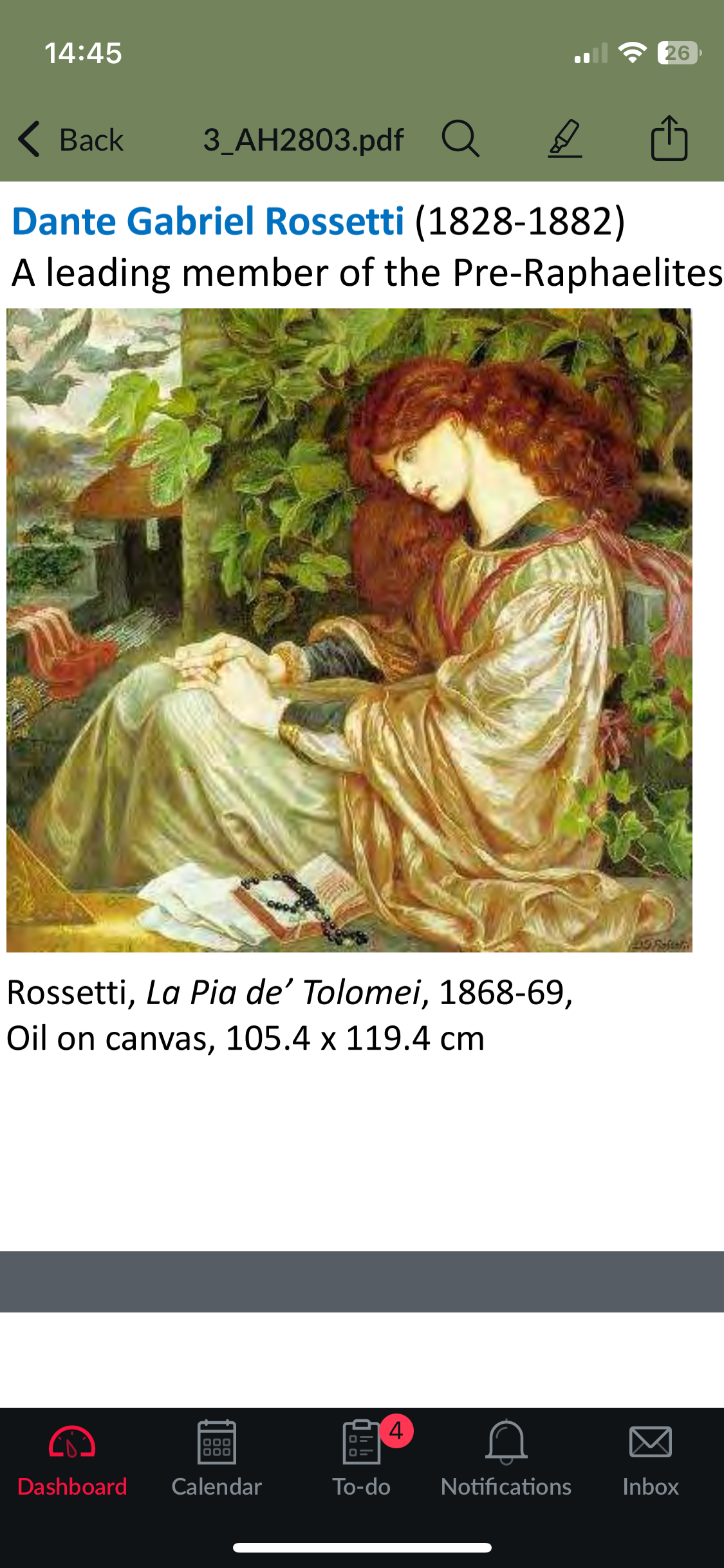
Rossetti, La Pia de Tolomei, 1868
inspired by second part of dante’s divine comedy, purgatory
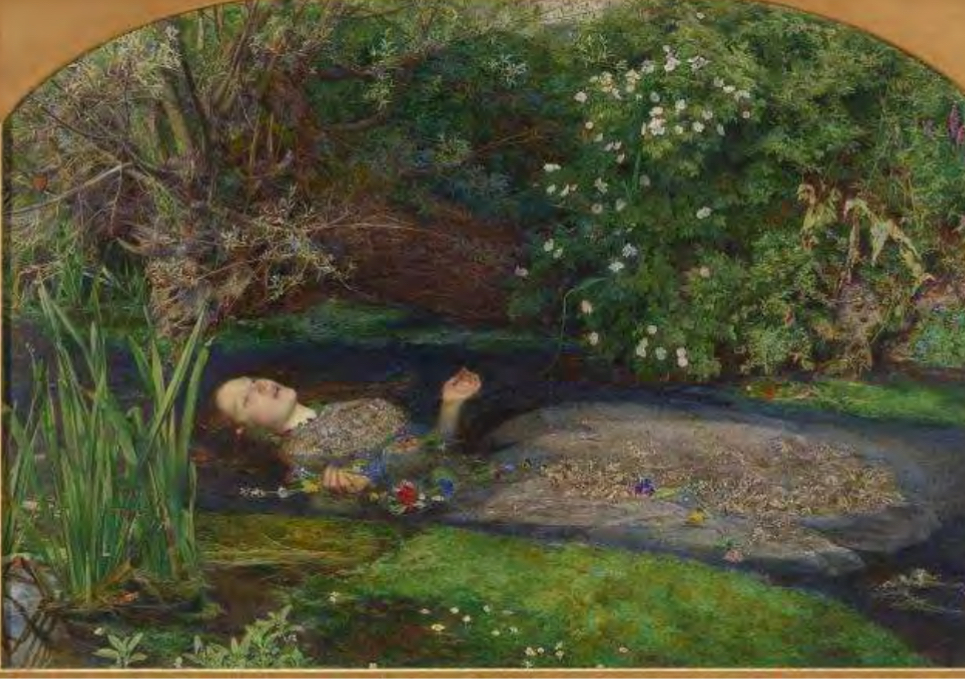
Millais, Ophelia, 1851
inspired by shakespheres hamlet
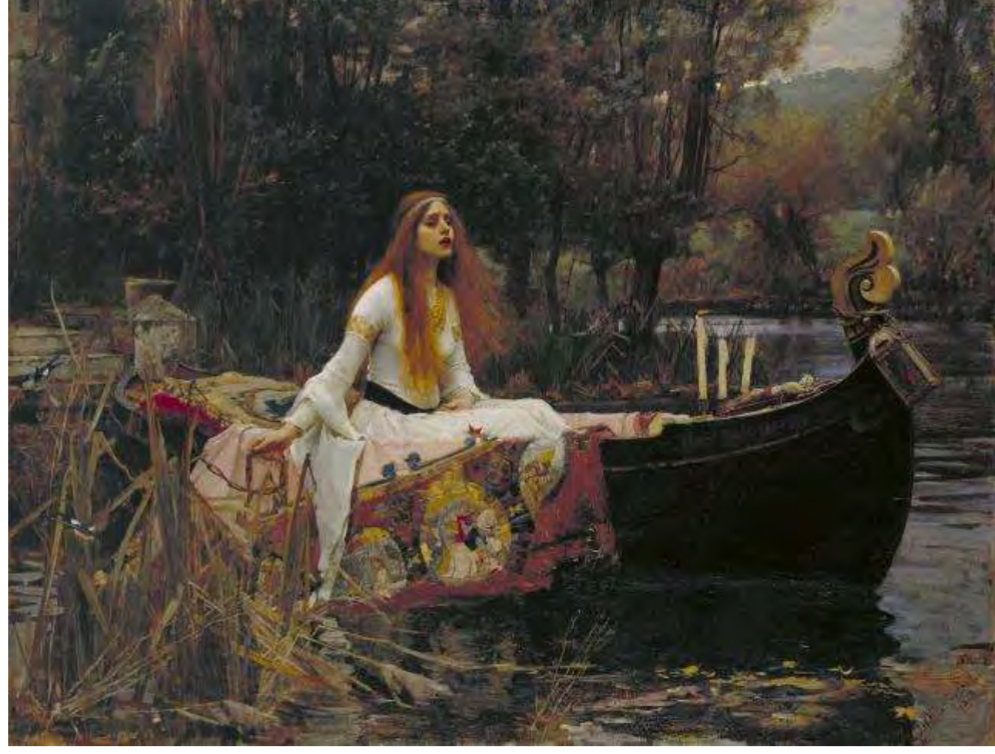
Waterhouse, The lady of shalott, 1888
Realism
Mid 19th century, an intellectual movement originated in the novels of Emile zola, charles dickens, and balzac, who wrote about the real lives of the urban lower classes. In art, it is the painting of the modern world honestly, the life of all people, poor and privileged
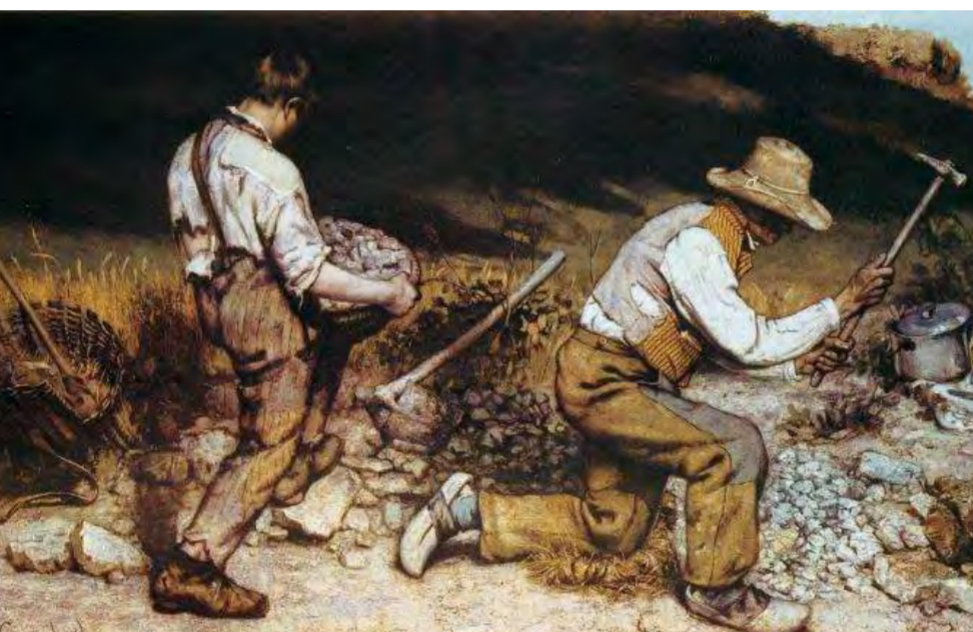
Courbet, The Stone Breakers, 1849
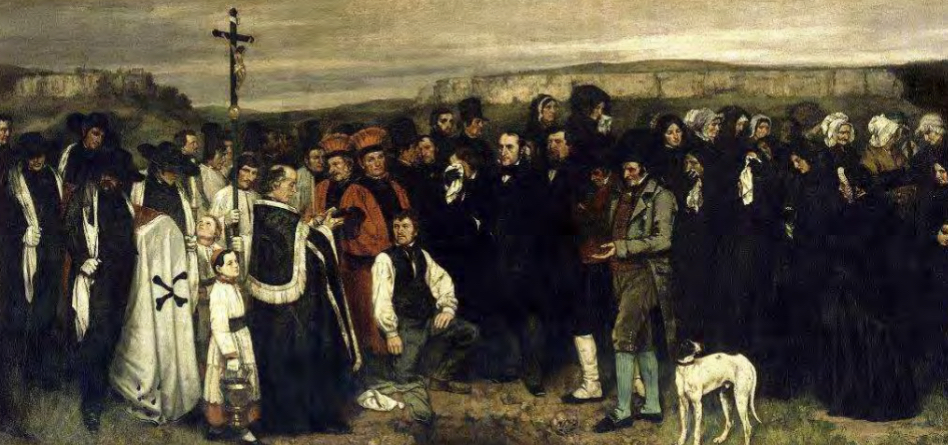
Courbet, A burial at ornans, 1849
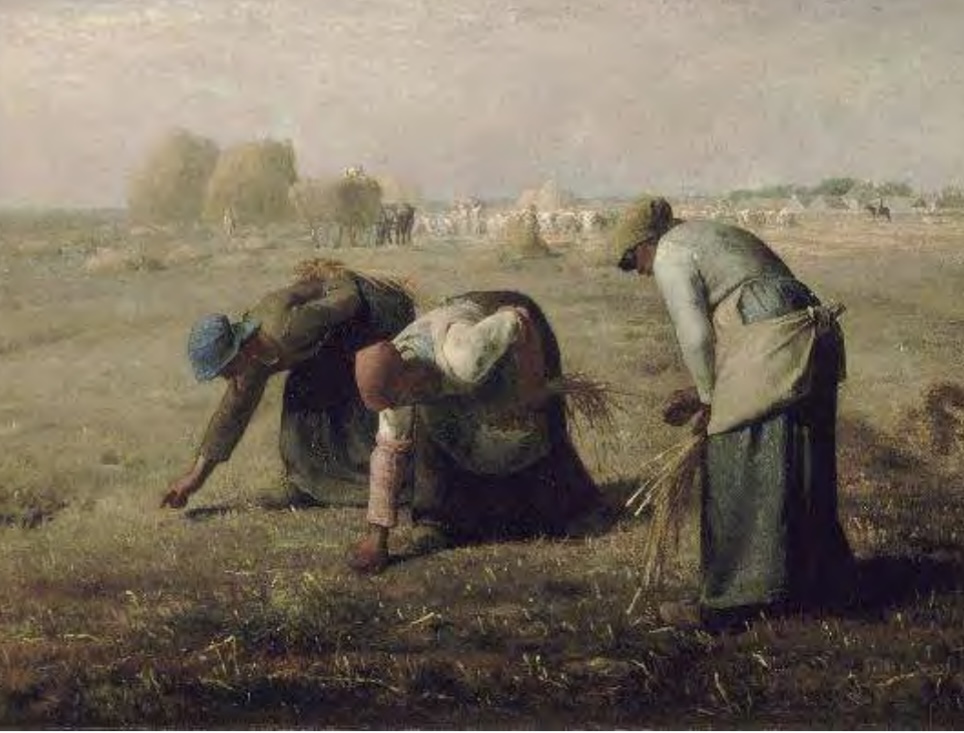
Millet, The gleaners, 1857
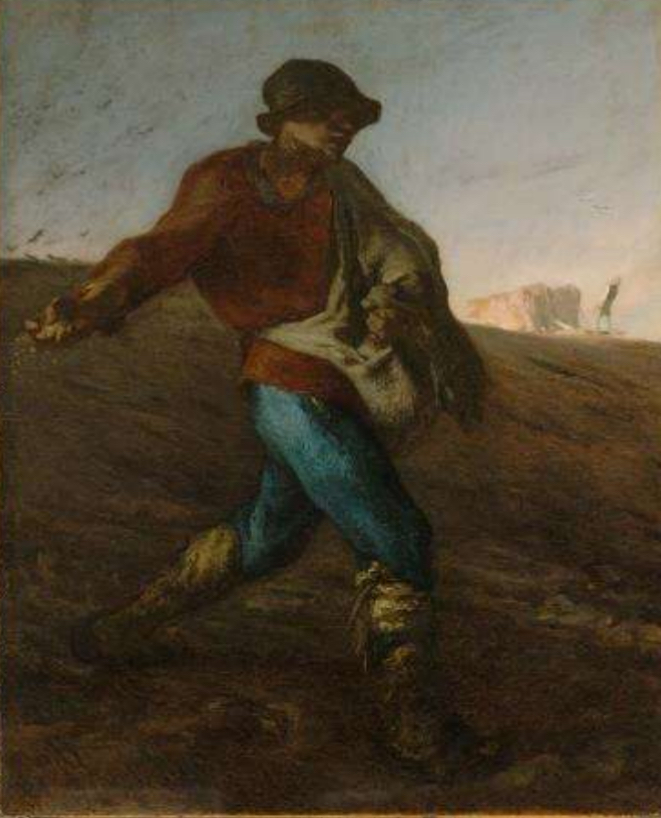
Millet, The Sower, 1850
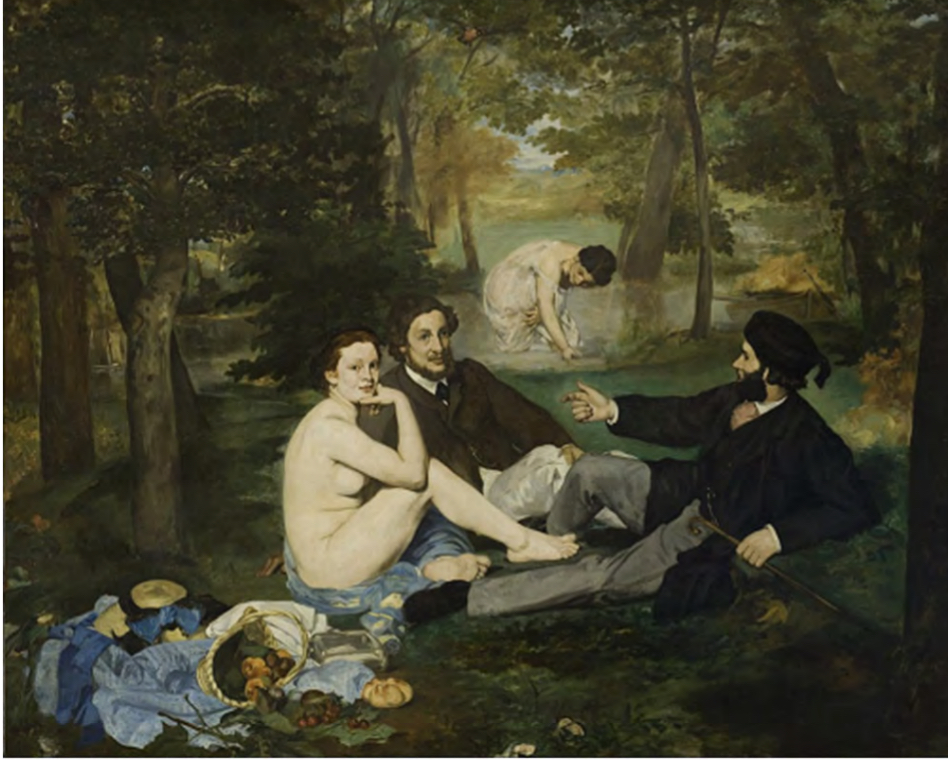
Manet, Luncheon on the grass, 1863
Went to the salon of the rejected
modeled after classical reliefs of river gods and nymphs “the trial of paris”
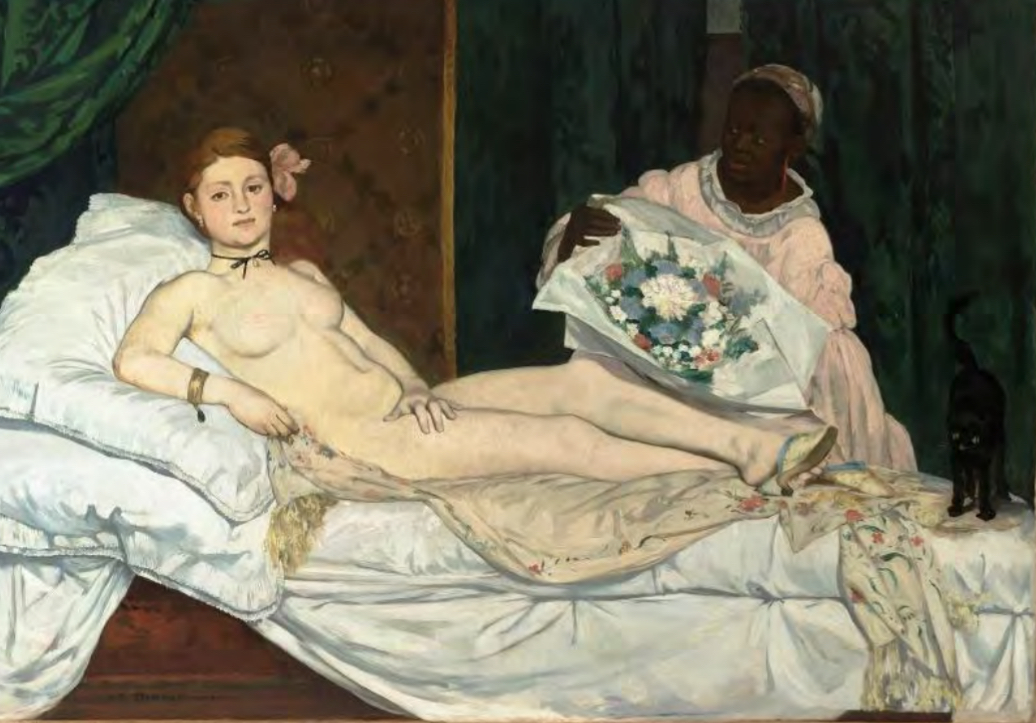
Manet, Olympia, 1863
gaze is direct, confrontational, not seductive or flirty
The Hudson River School
The dominant school of american landscape painting throughout the second half of the 19th century. The american terrain as an alternative to european culture and history, the land as a picturesque, inspirational, and patriotic theme
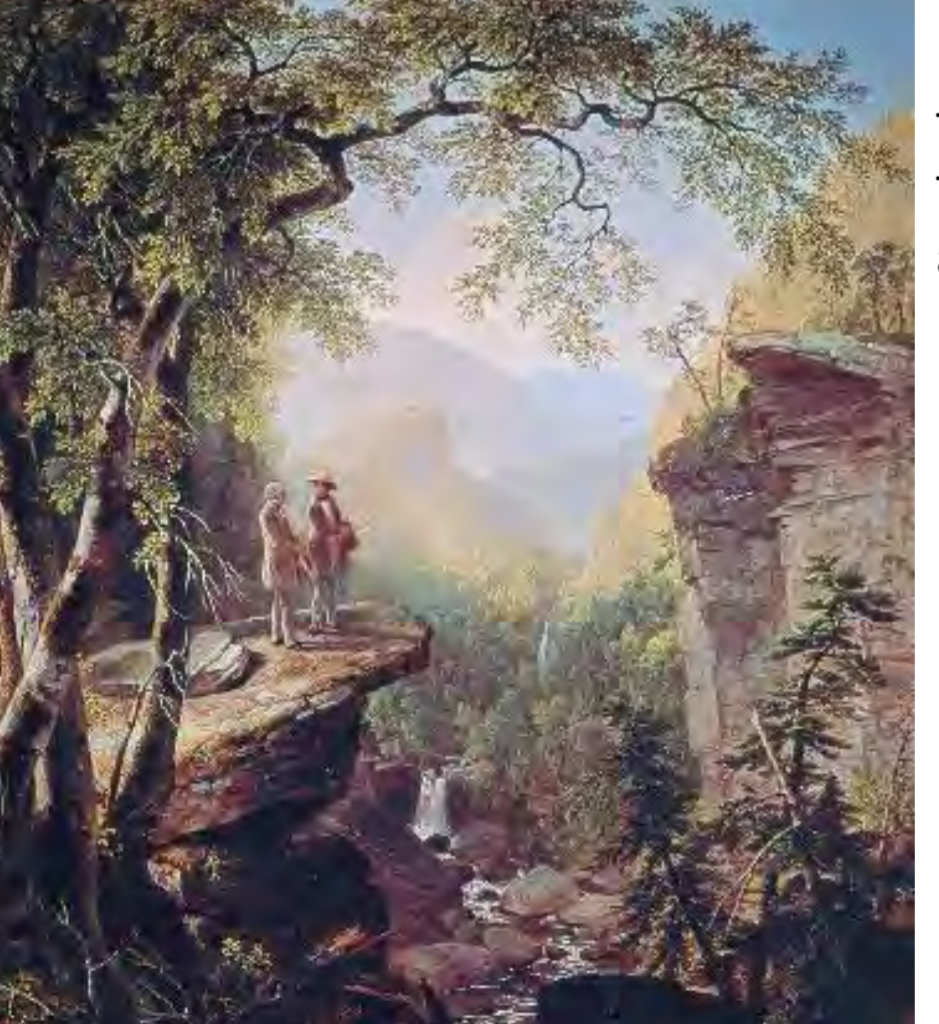
Durand, Kindred spirits, 1849
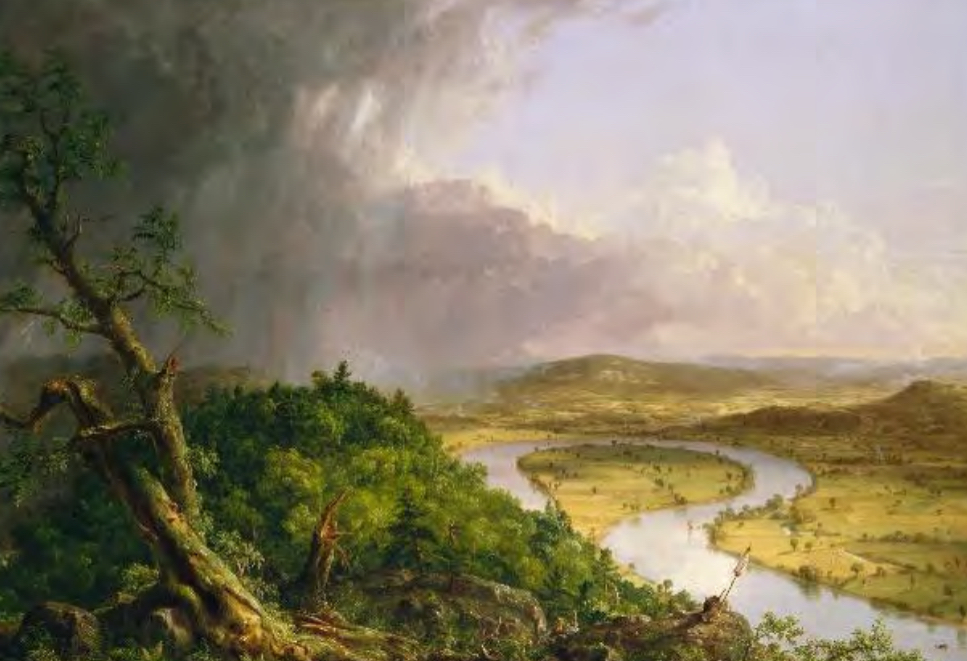
Cole, The Oxbow, 1836
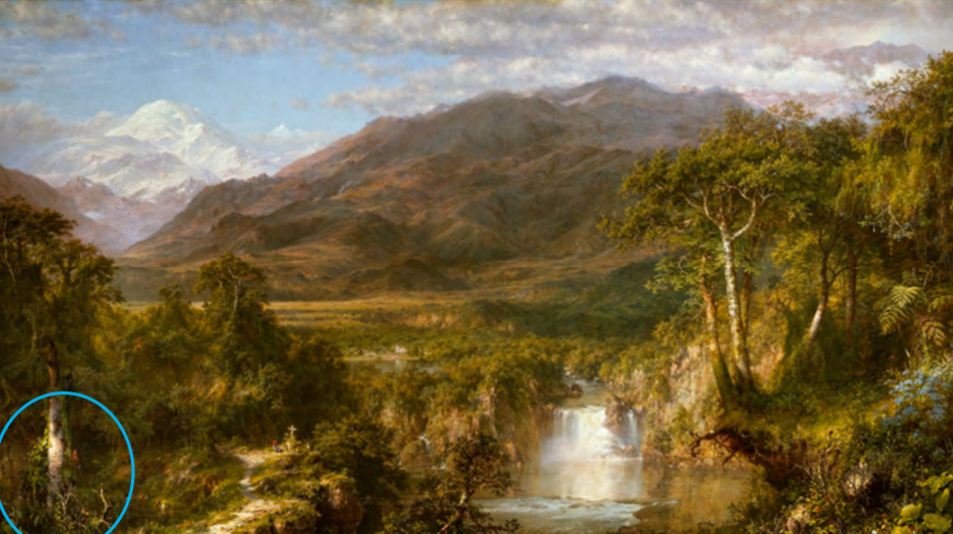
Church, Heart of the andes, 1859
Humboldt, a german naturalist told artists to travel and paint south america
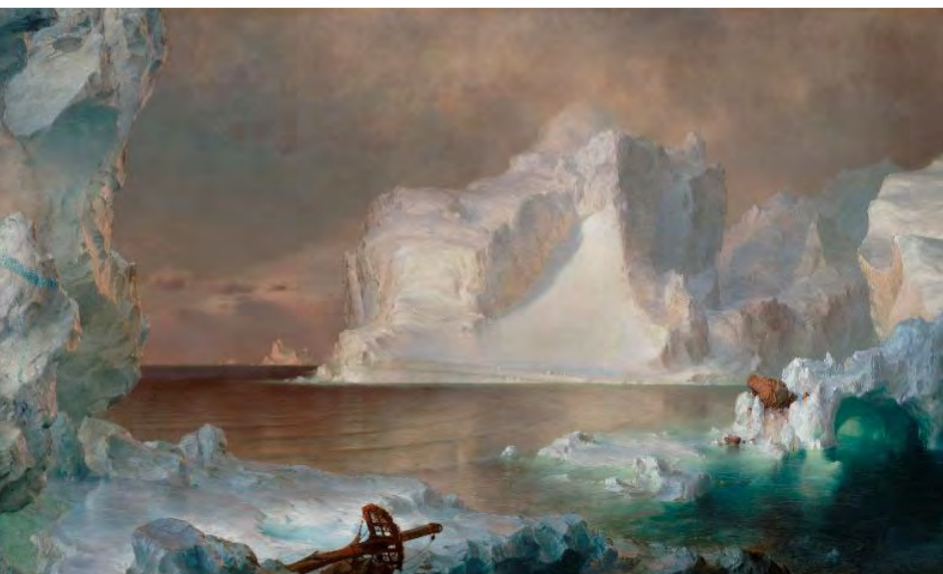
Church, The Icebergs, 1861
Impressionism
A group of independent artists, later known as the impressionists. Painting techniques- short, broken brushstrokes, unfinished forms, pure unblended colors, emphasis on the effects of light
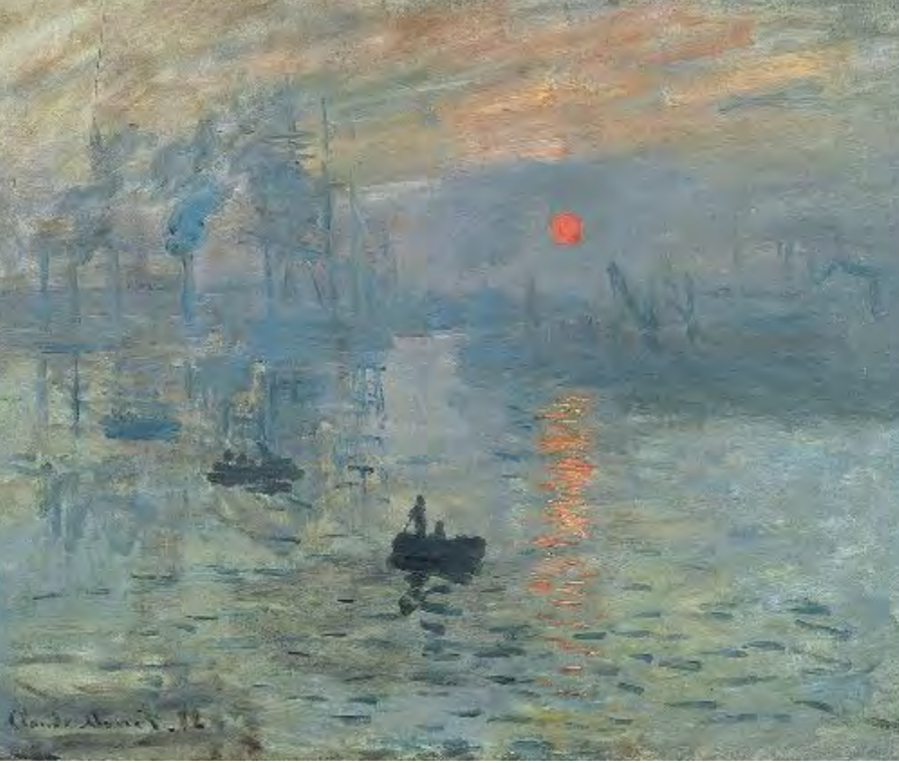
Claude Monet, Impression Sunrise, 1872
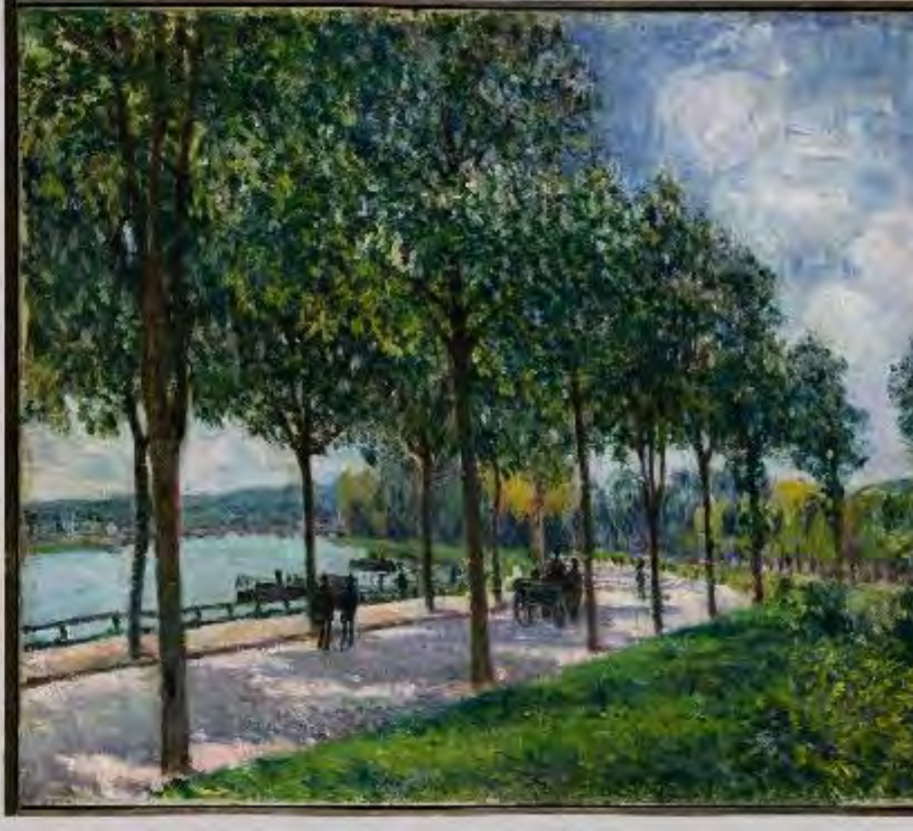
Sisley, Allee of Chestnut Trees, 1878
Painted outdoors- “en plein air”
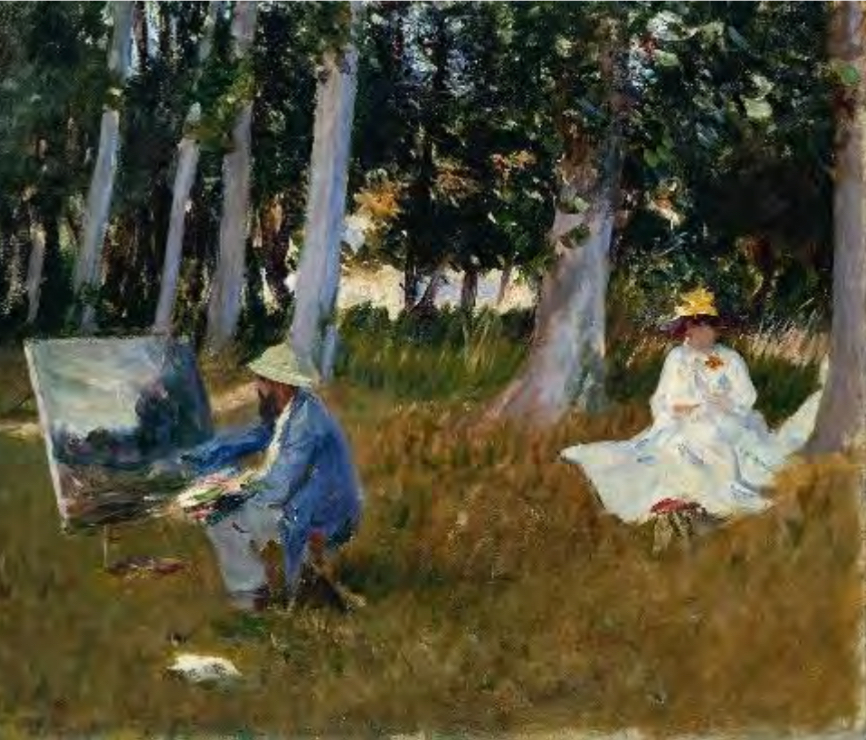
Sargent, Monet Painting by the Edge of a Wood, 1885
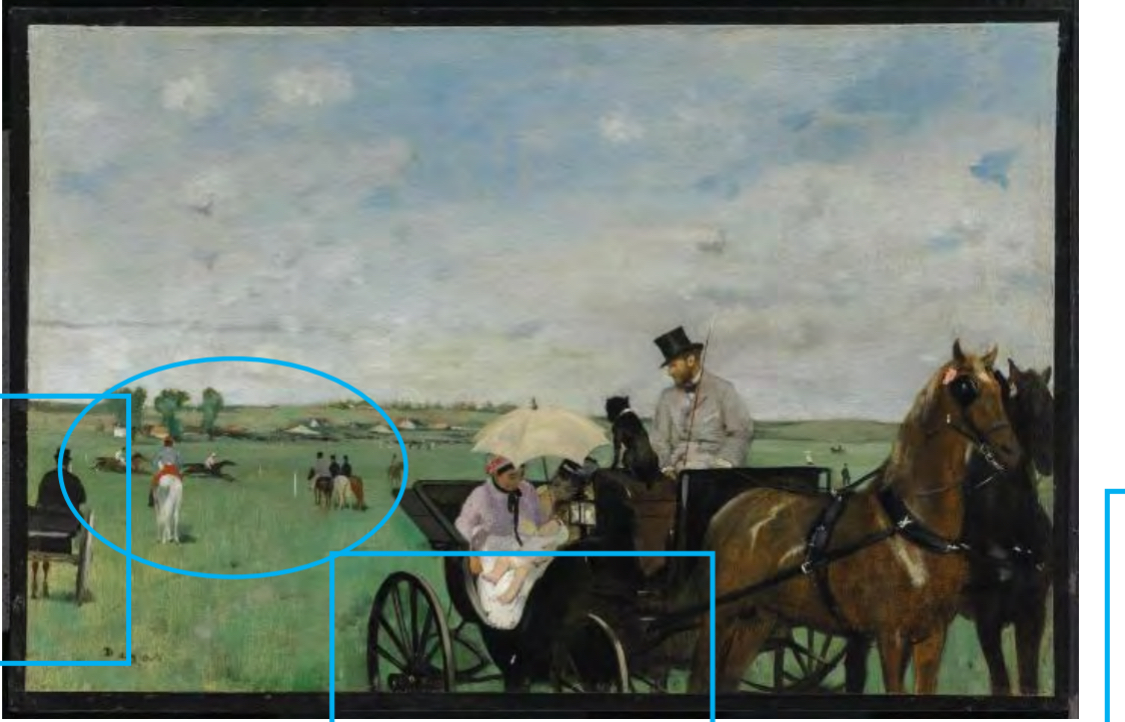
Degas, At the Races in the Countryside, 1869.
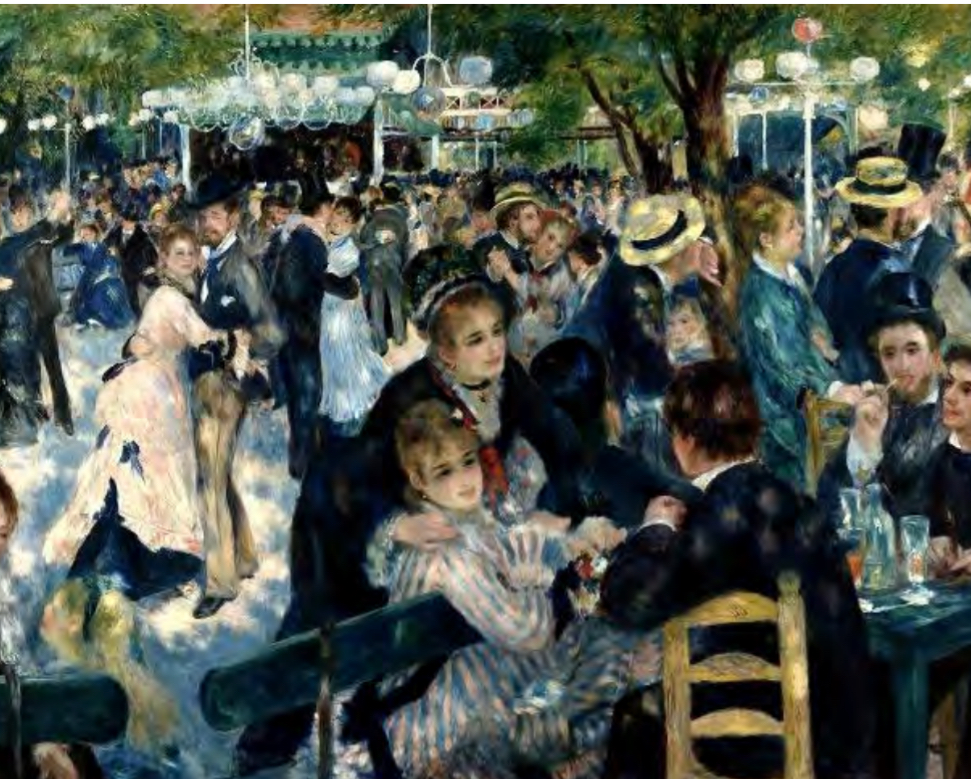
Renoir, Moulin de la Galette,1876
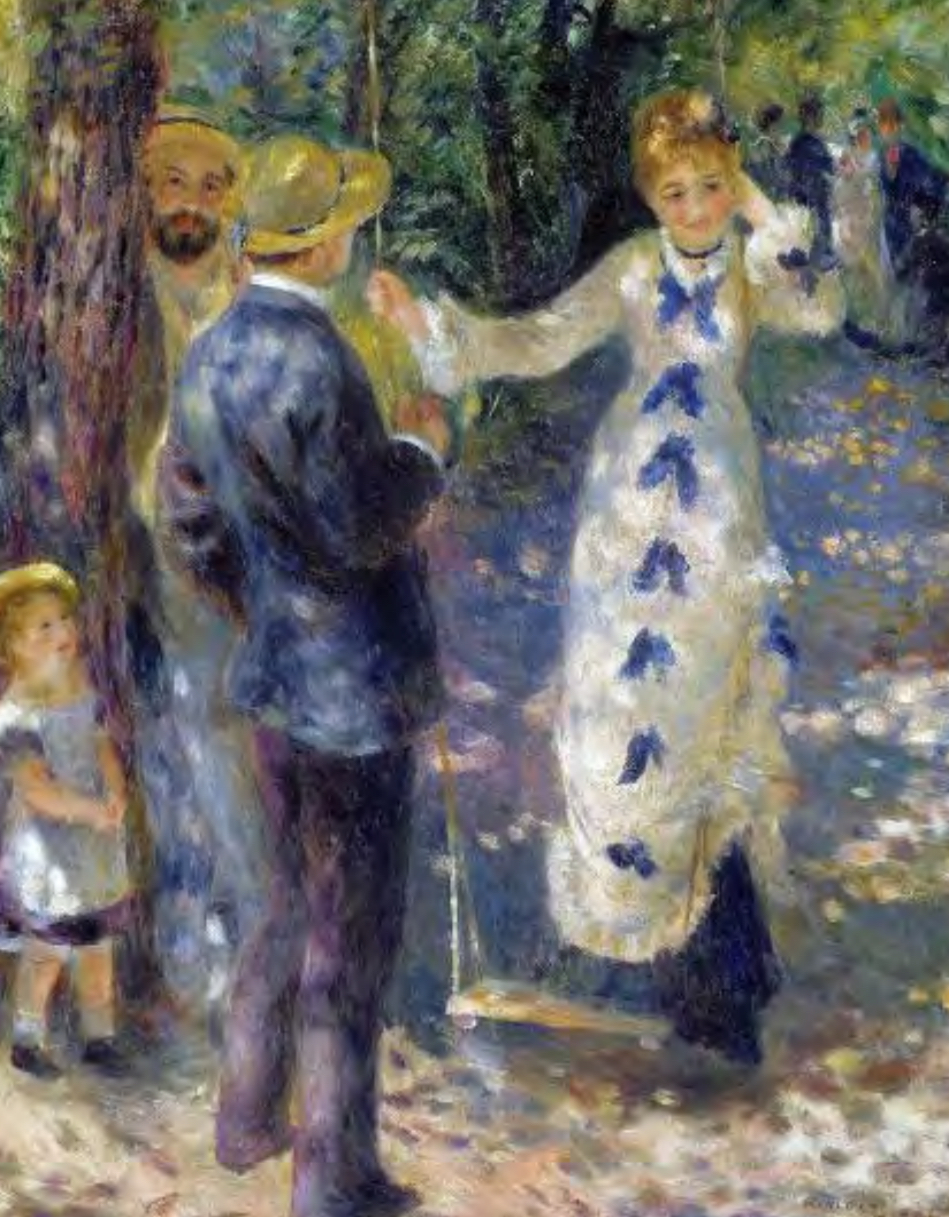
Renoir, The Swing, 1876
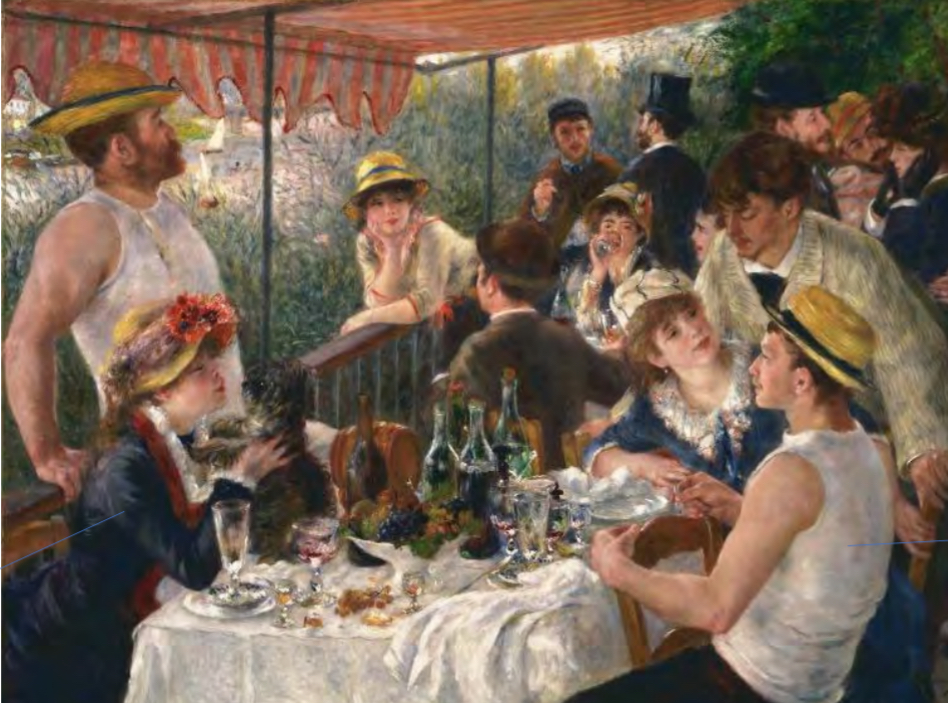
Auguste Renoir, The Luncheon of the Boating Party, 1881
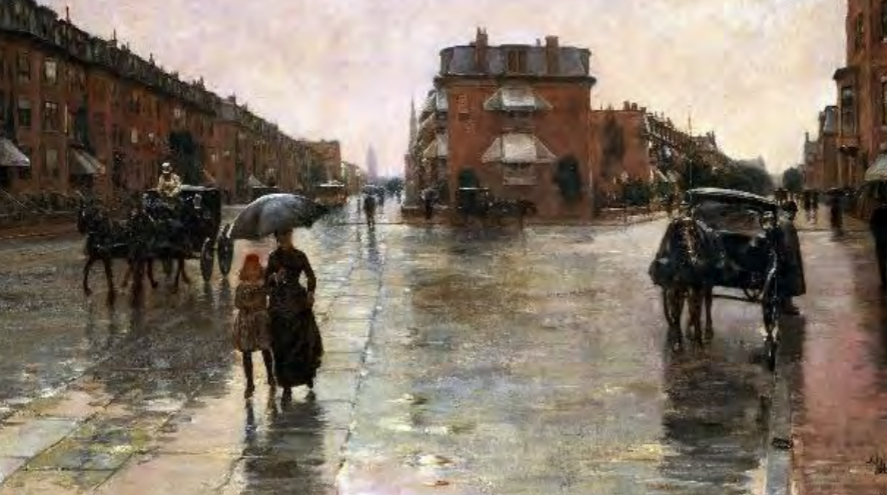
Hassam, Rainy Day, Boston, 1885
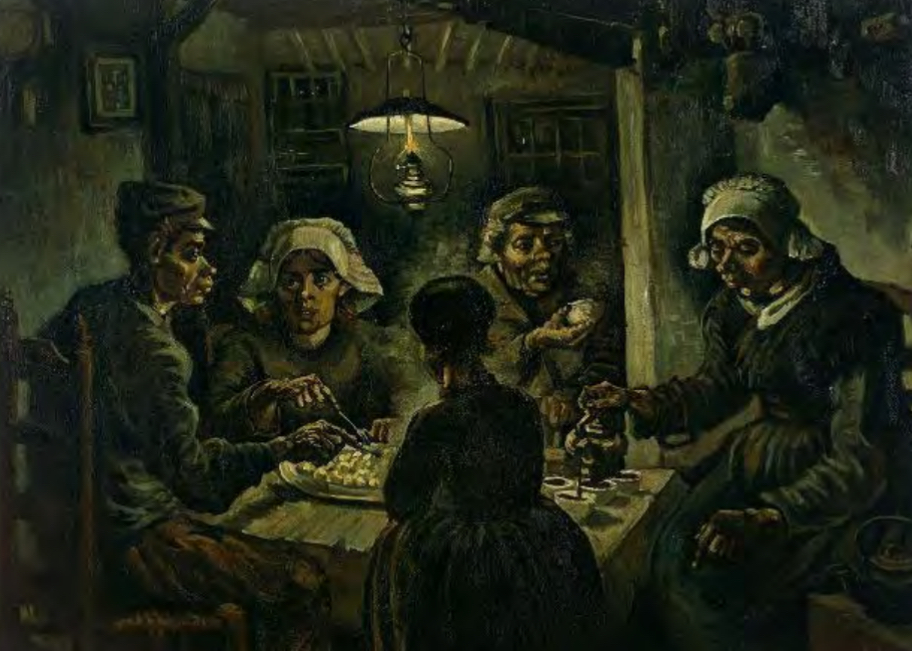
Vincent van Gogh, The Potato Eaters. 1885
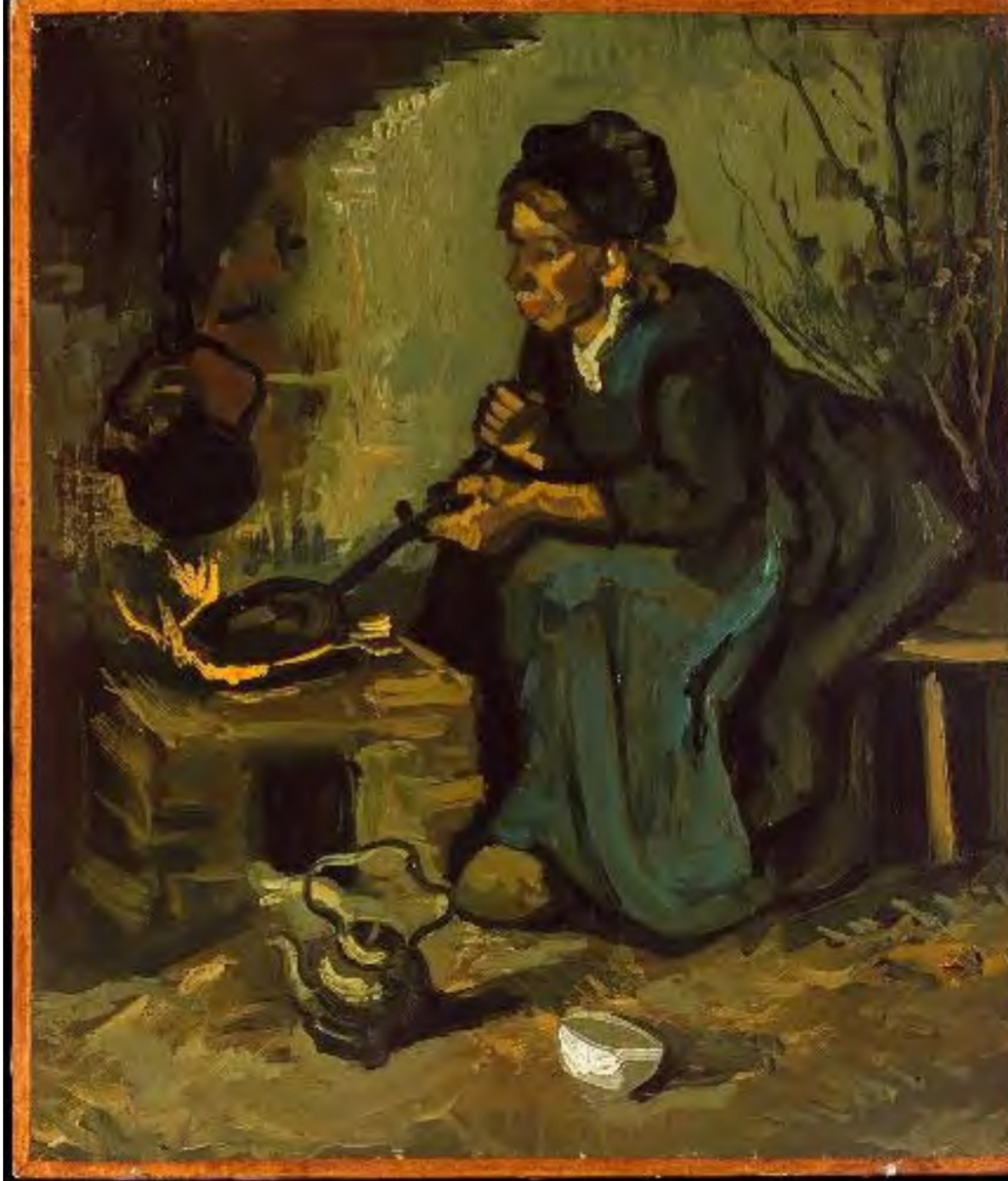
van Gogh, Peasant Woman Cooking by a Fireplace. 1885
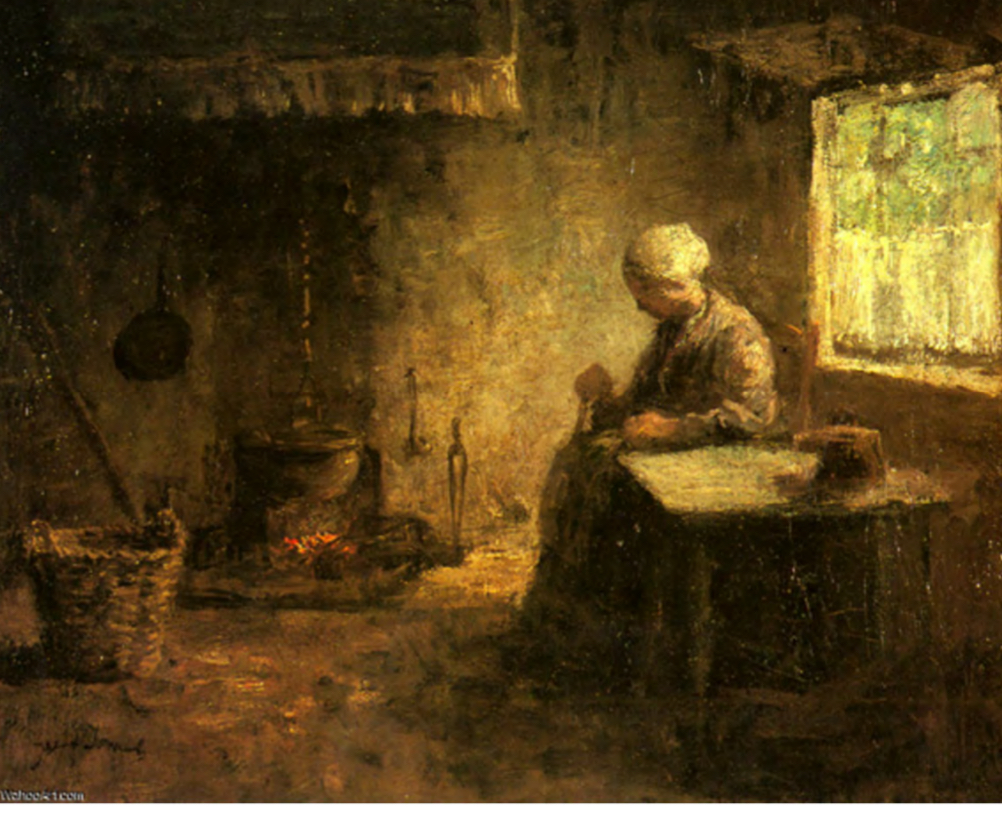
Jozef Israëls, Peasant Woman by a Hearth, 1882
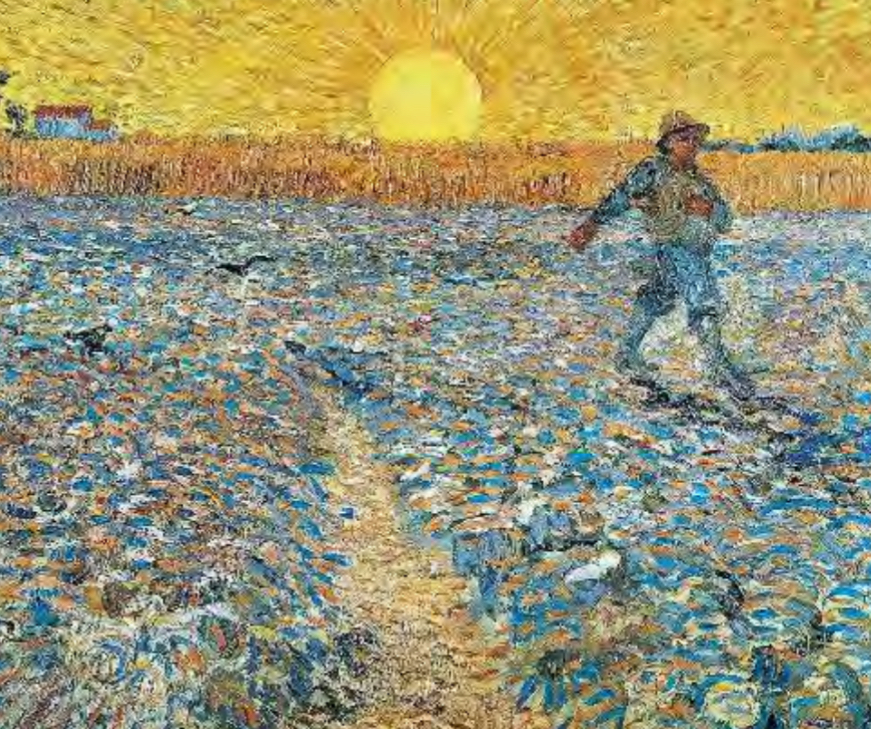
Vincent van Gogh, The Sower, 1888
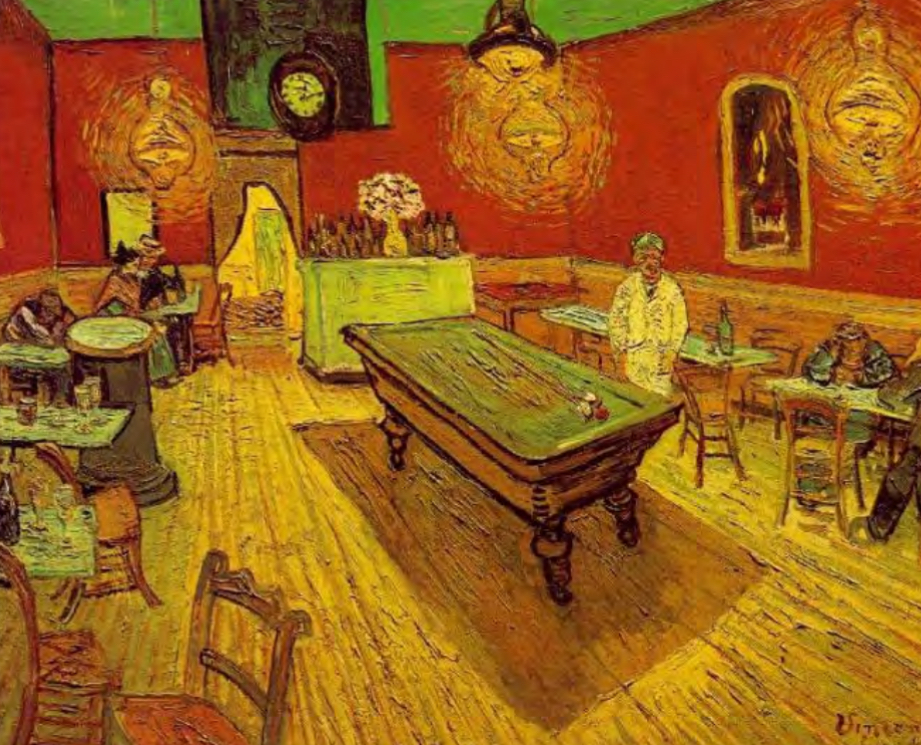
Vincent van Gogh, The Night Café, 1888
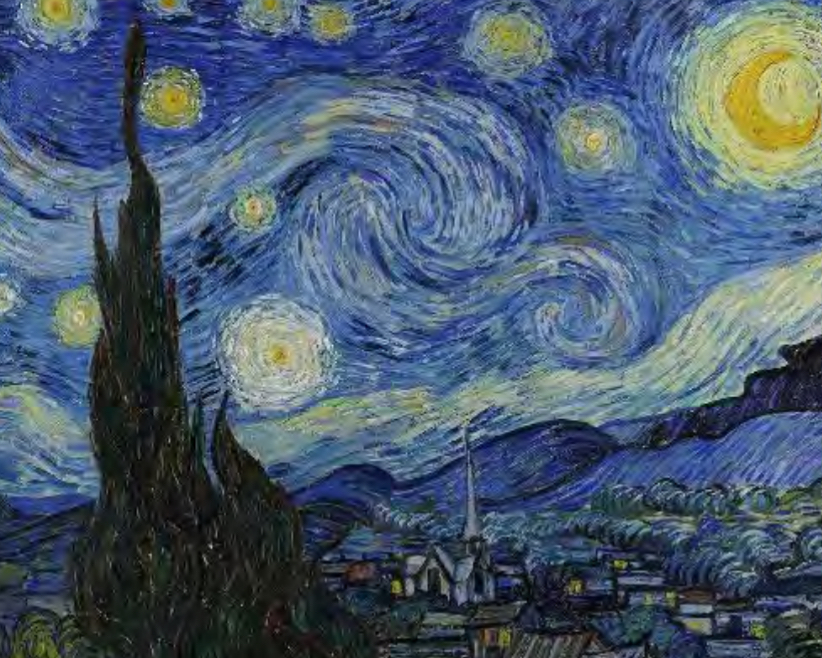
van Gogh, Starry Night over the Rhône. 1888
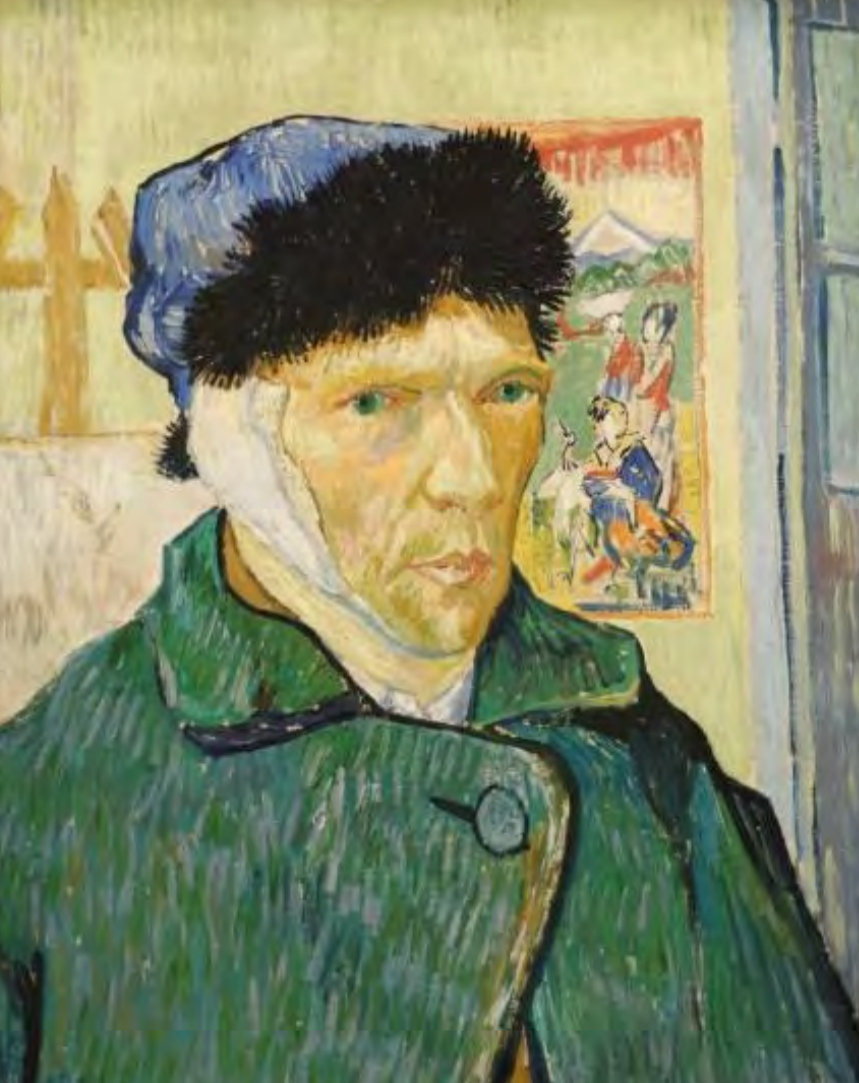
Van Gogh, Self‐Portrait with Bandaged Ear, 1889.
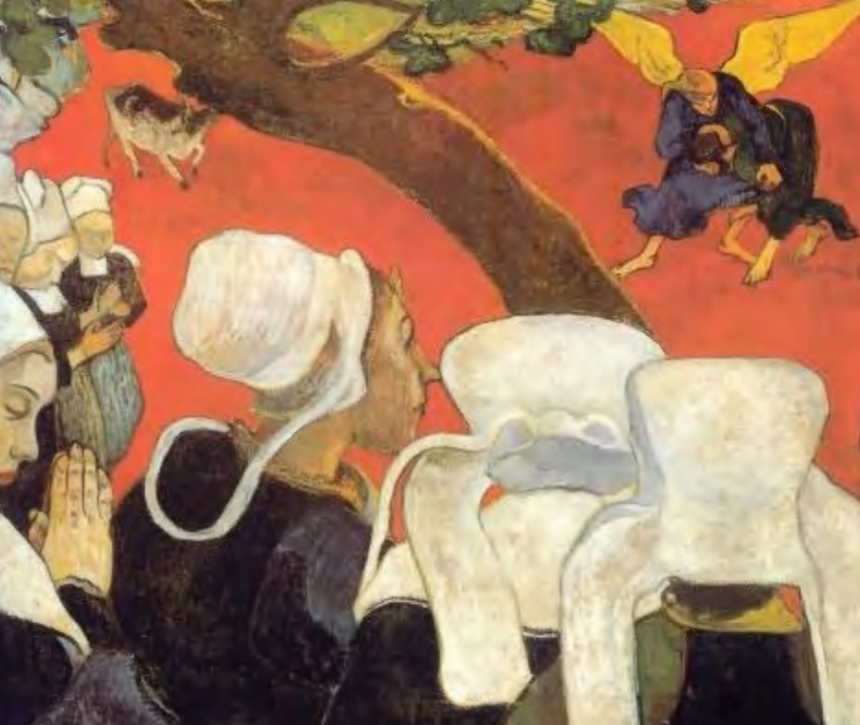
Paul Gauguin, Vision After the Sermon: Jacob Wrestling with the Angel, 1888
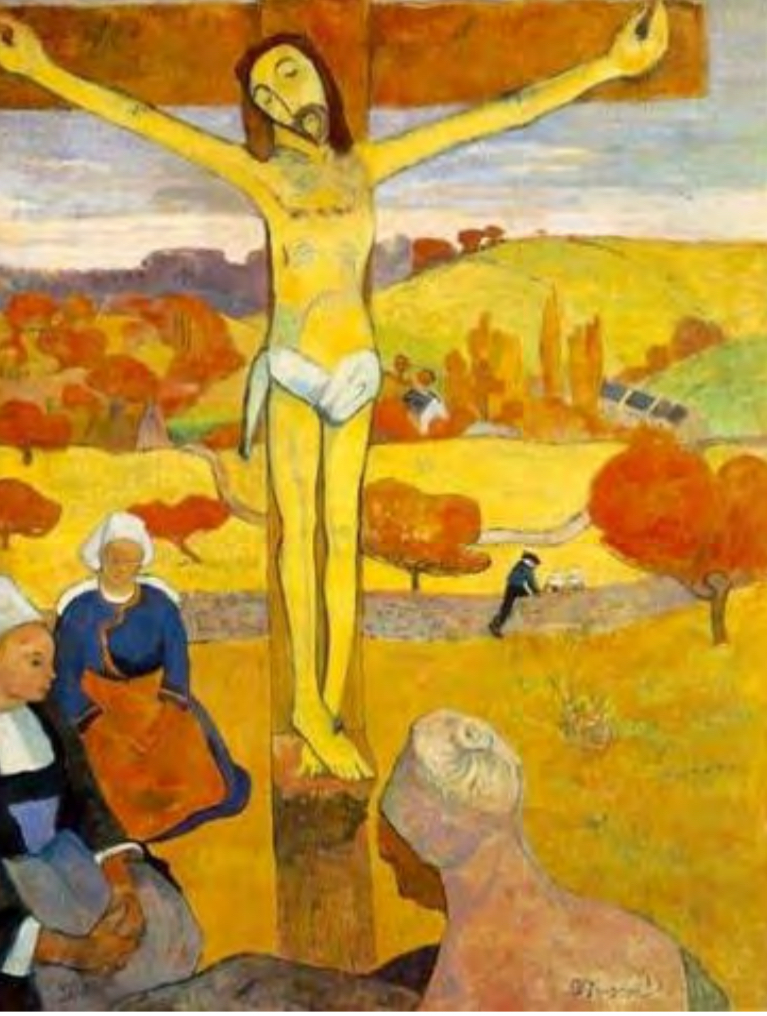
Gauguin, The Yellow Christ, 1889
Chiaroscuro
Italian term which means light-dark in paintings, tonal contrasts used to create volume and modeling of the depicted objects- da vinci used it to give three dimensionality to figures
Aerial/atmospheric perspective
Method of creating the illusion of deep, or recession, by modulating color to simulate changes effected by the atmosphere on the color of objects seen in the distance
Cloisonnism
Style of post impressionist painting where flat forms are separated by dark contours
Synthetism
Ganglion called his style that because it synthesized the subject matter with the artists feelings about the subject and application of line, color, and form
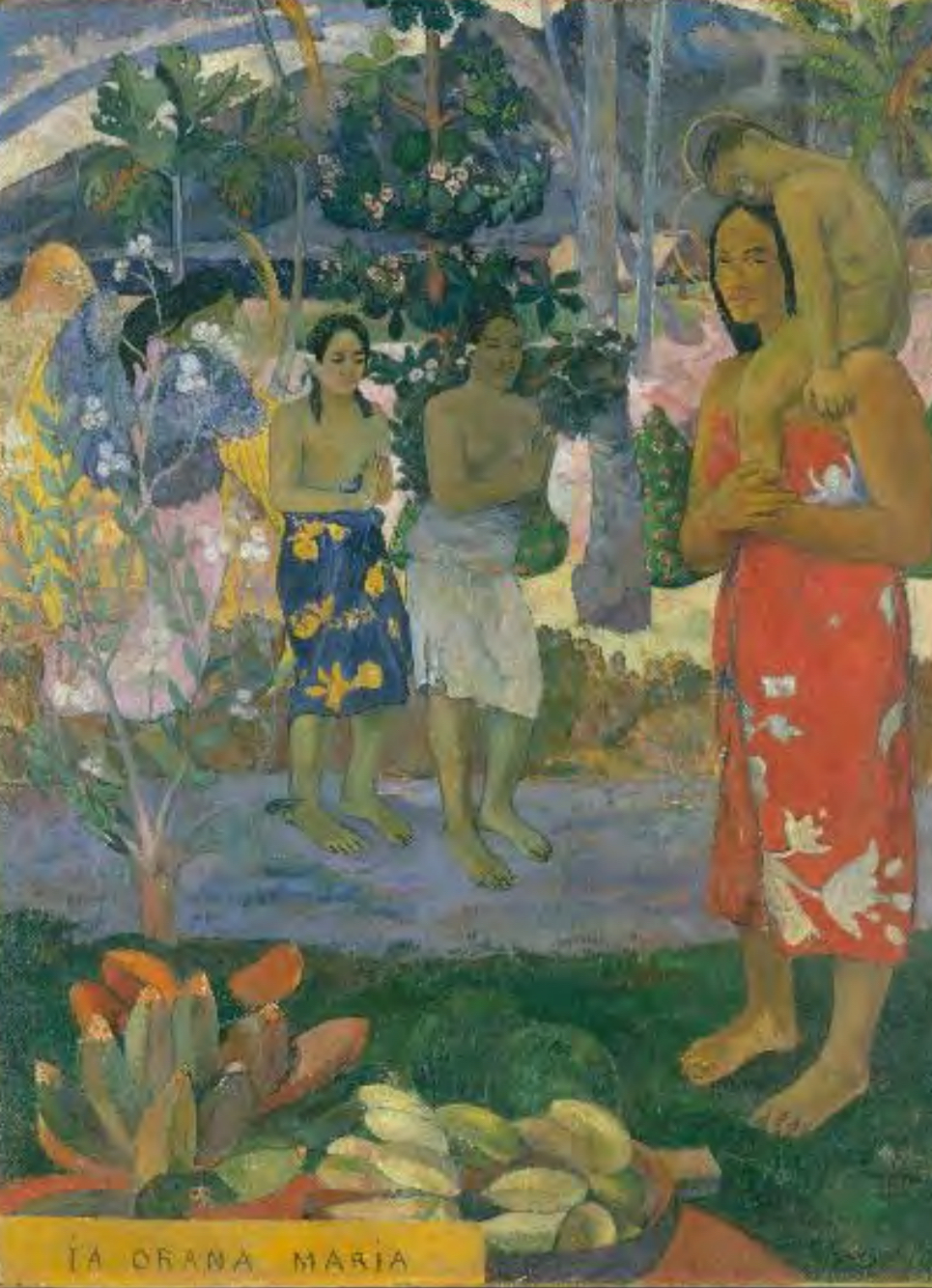
Ganguin, Hail Mary, 1891
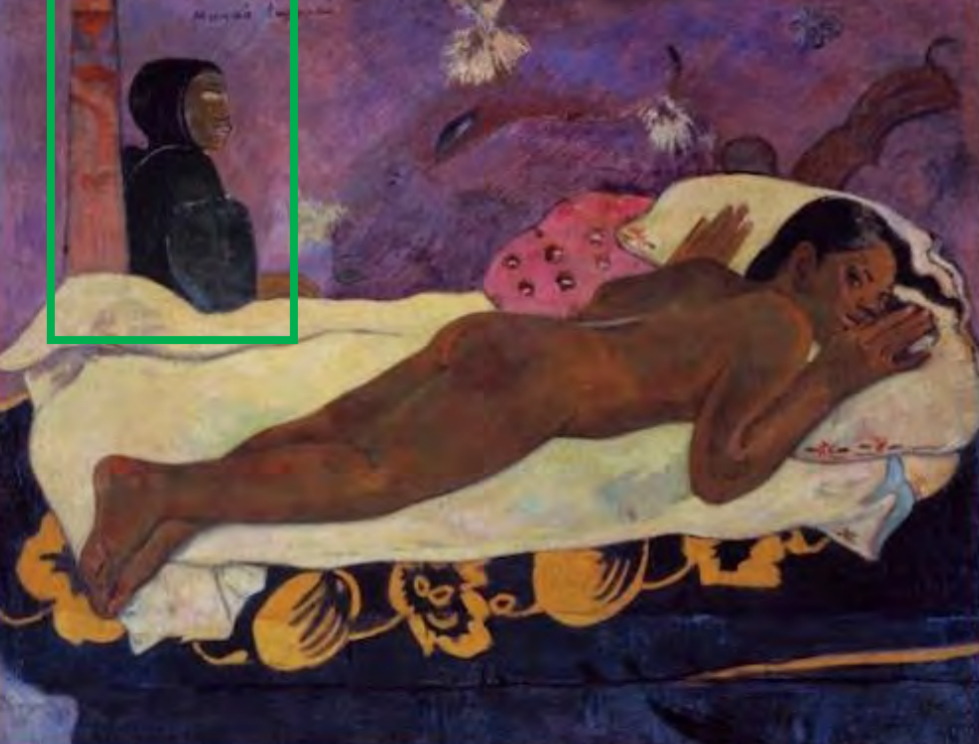
Ganguin, Spirit of the dead watching, 1891
Explored the emotional potential of color- purple creates terror, yellow arouses something unexpected
Tupapau- Spirit of the dead in tahitian mythology
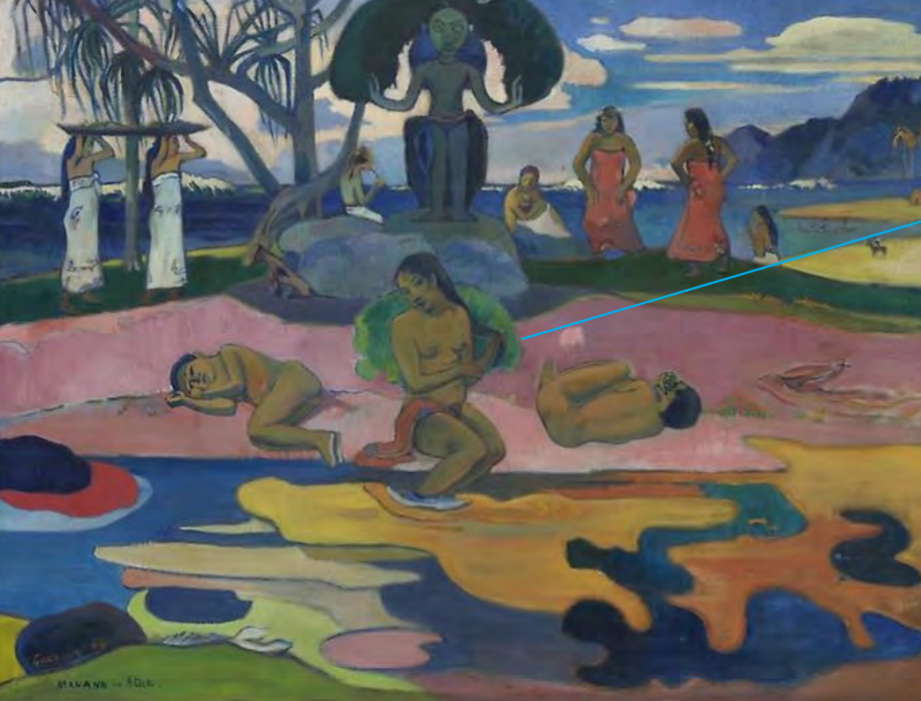
Ganguin, The day of the god, 1894
Central figures, represent birth, life, death, figuration to abstraction
inspired by buddhist temple idols
Post Impressionism (mid 1880s-1900)
The term post impressionism was coined by english critic roger fry to describe a group of individual painters, whose work he gathered for an exhibition. The post impressionists did not share a unified approach to art, but all used impressionism as a point of departure for styles.
Van gogh, gauguin, Rodin, Seurat, Cezanne
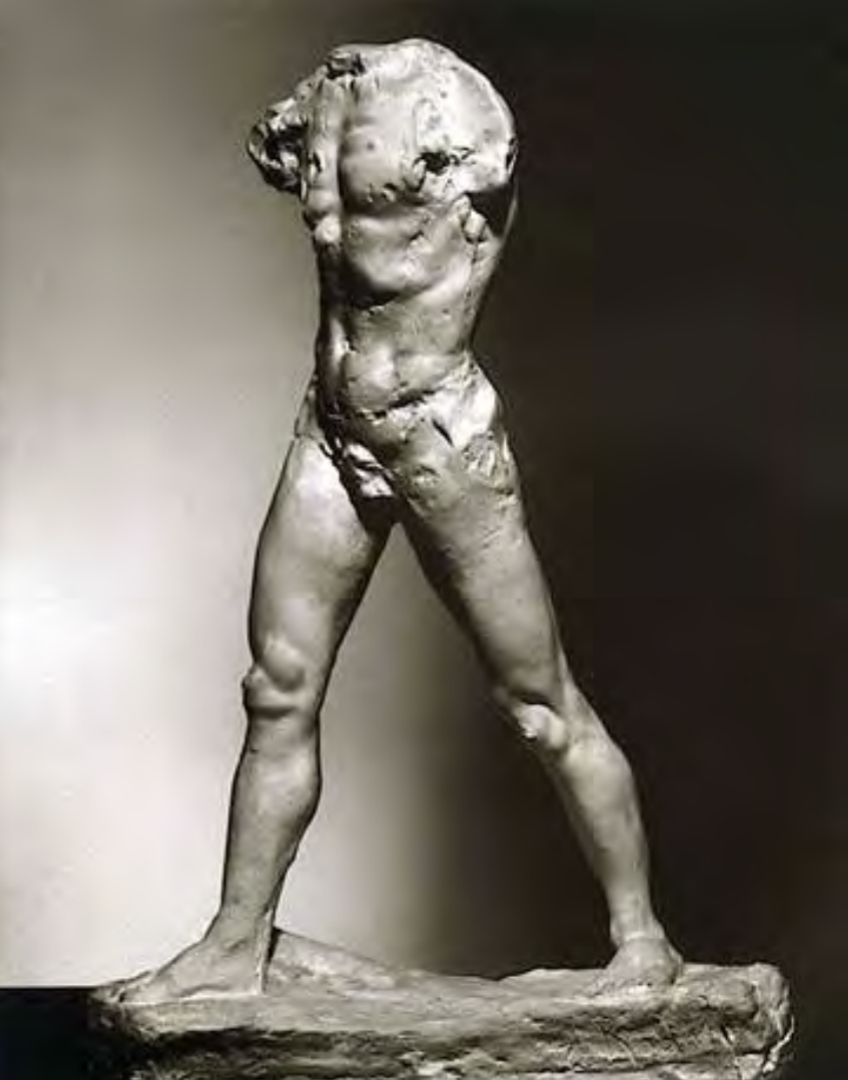
Rodin, The walking man, 1877
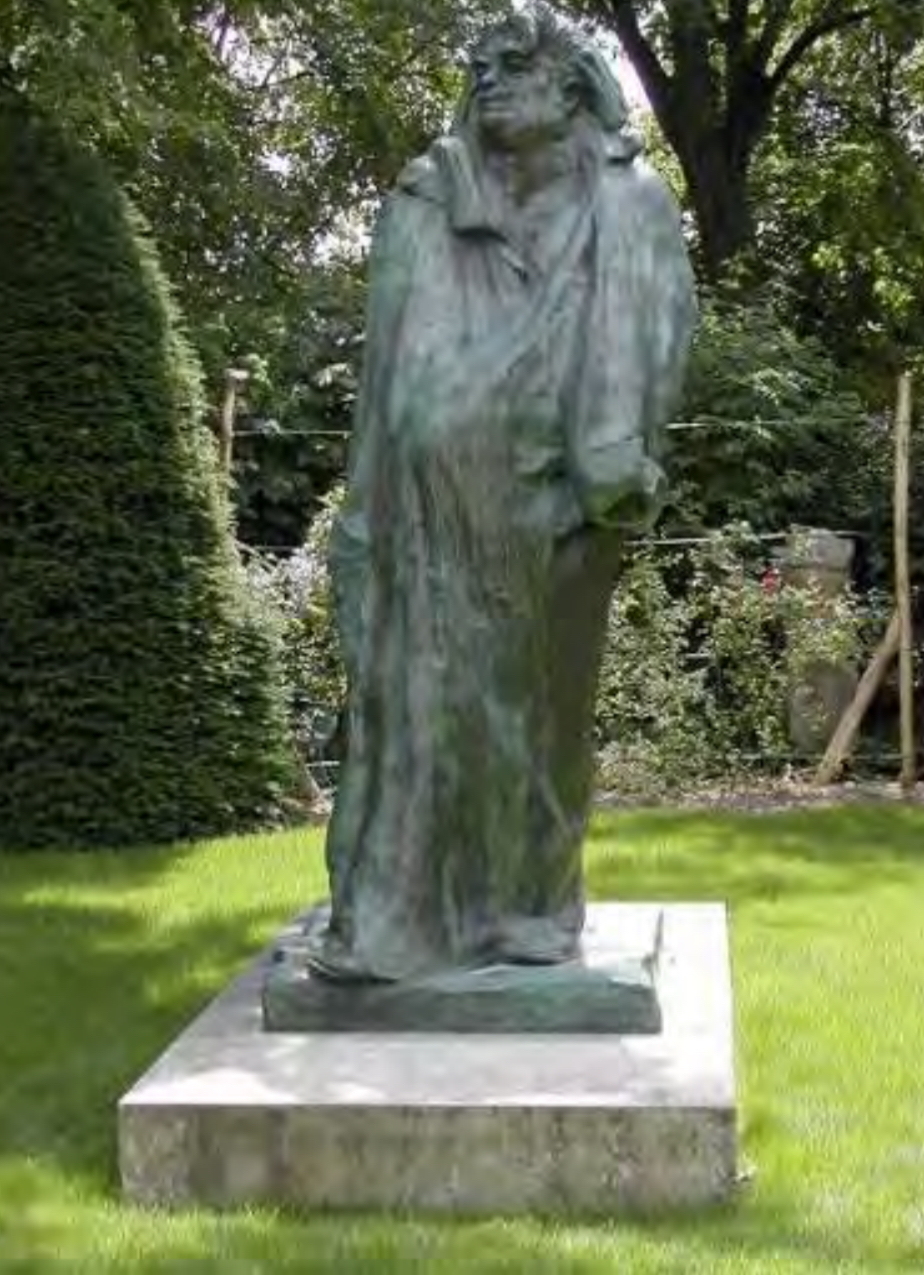
Rodin, Balzac, 1891-98
Wanted to show balzacs personality, no addition of allegorical figures. ( french literary artist - produced vast number of novels and short stories)
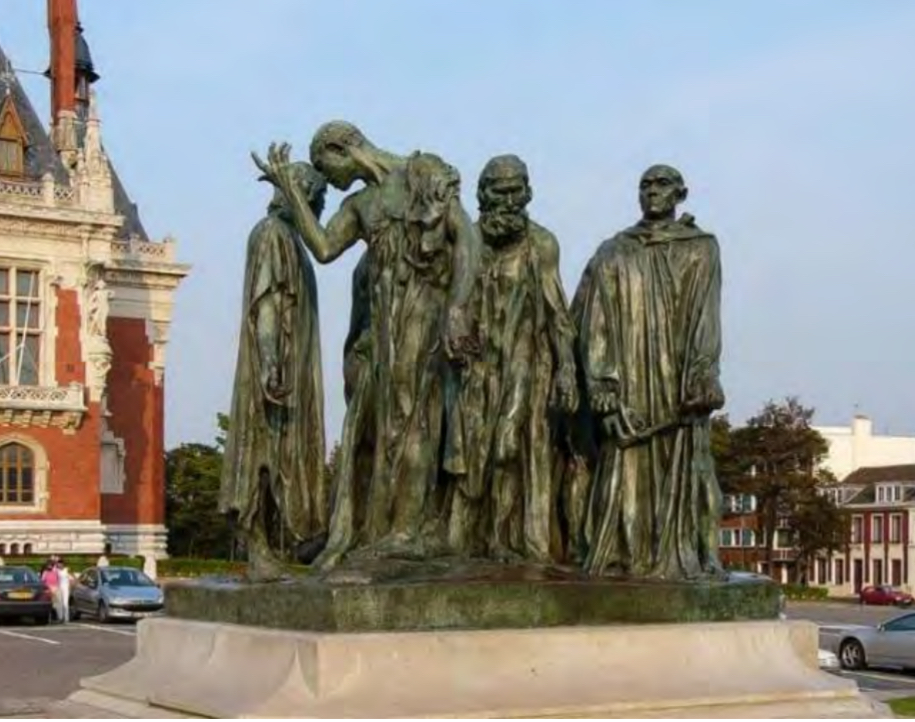
Rodin, Burghers of Calais, 1884-89
For the city of Calais, local event from hundred years’ war, king offered to spare city if six leading citizens surrendered for execution- captures moment before pardon
Almost street level, not on a pedestal
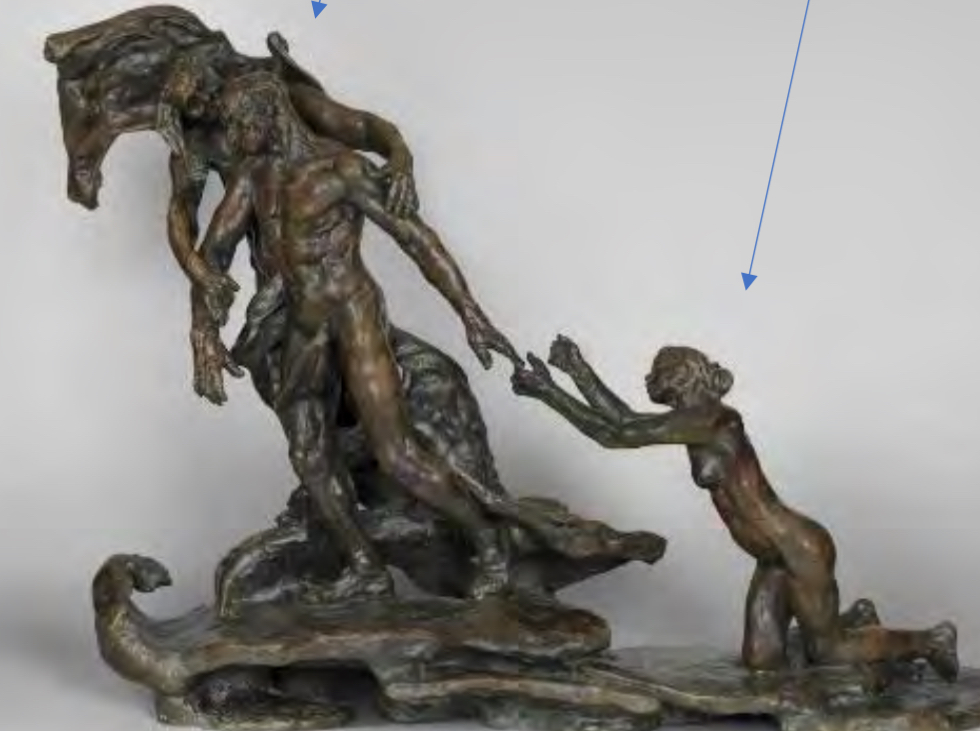
Claudel, Ripe age
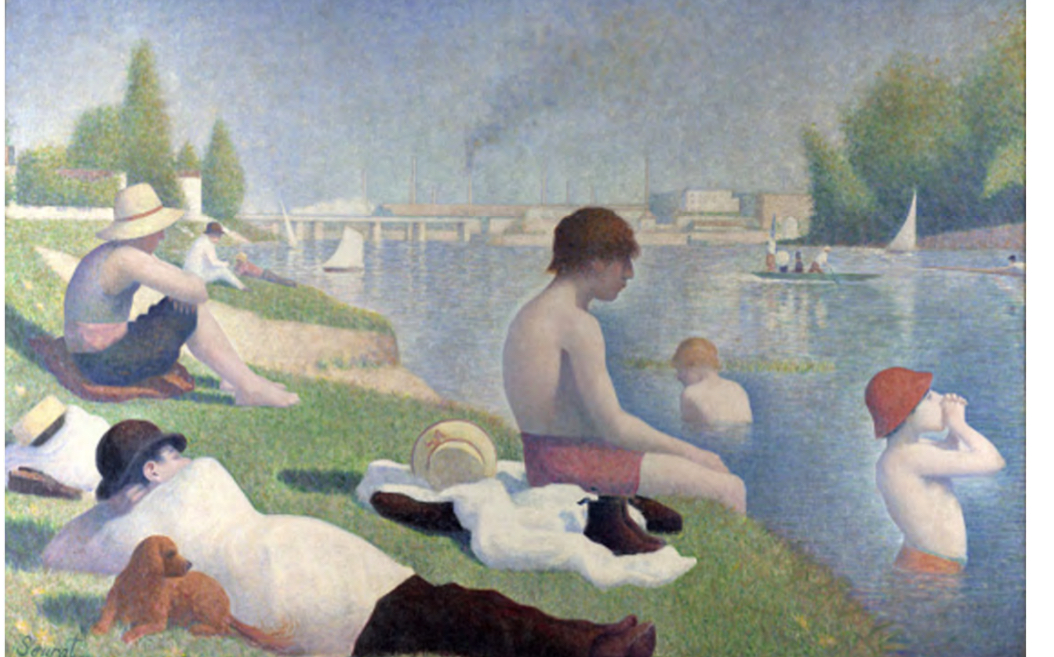
Seurat, Bathers at Asnieres, 1884
Leisure, parisians, informality, factories in background
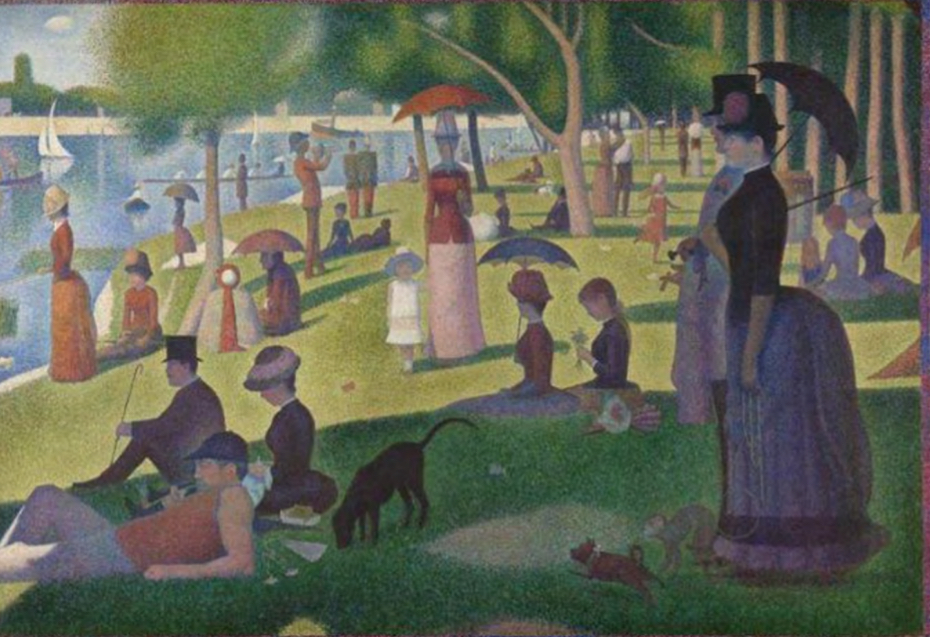
Seurat, A sunday afternoon on the island of la grande jatte, 1884-5
Pointillism
Seurat was interested in color theory, developed a way to enliven the painted surface by using short, multidirectional strokes of pure color. Juxtaposed strokes would merge in the viewers eye, creating the impression of other colors
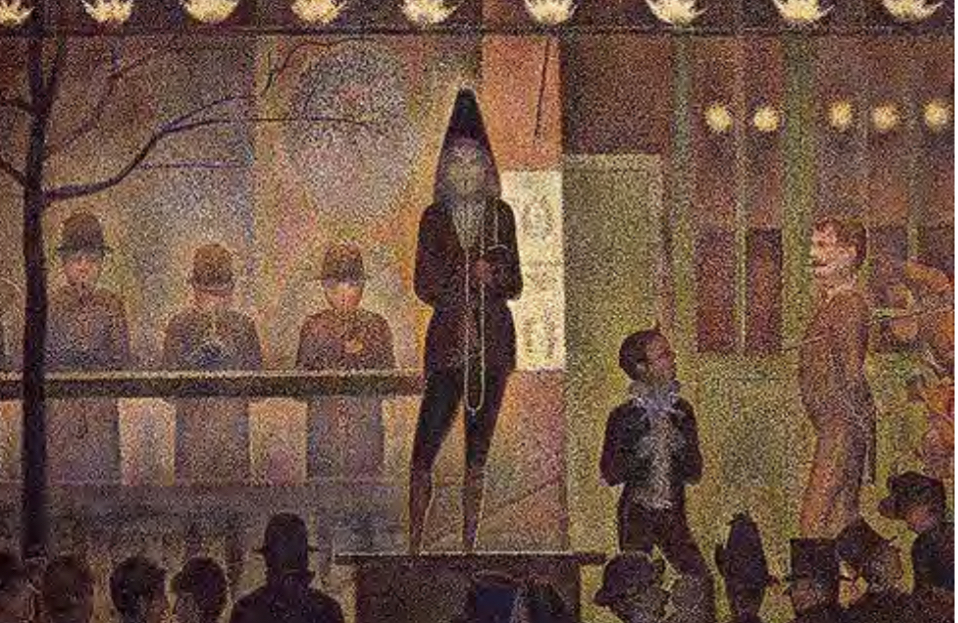
Seurat, The circus parade, 1887
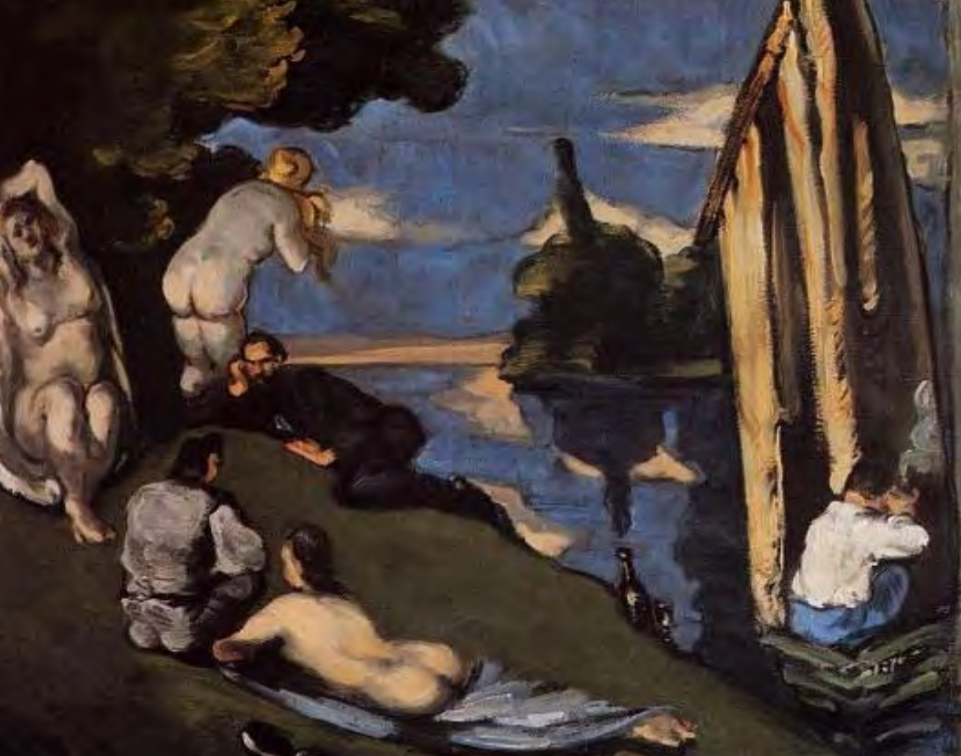
Cezanne, Pastorale, 1870
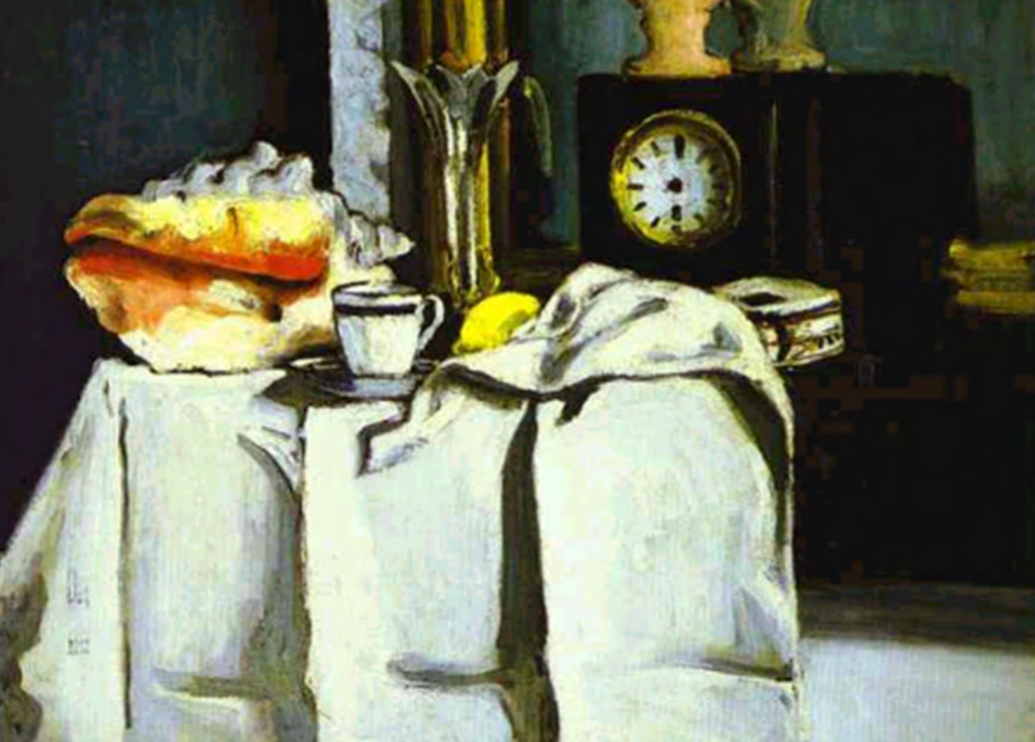
cezanne, the black clock, 1870
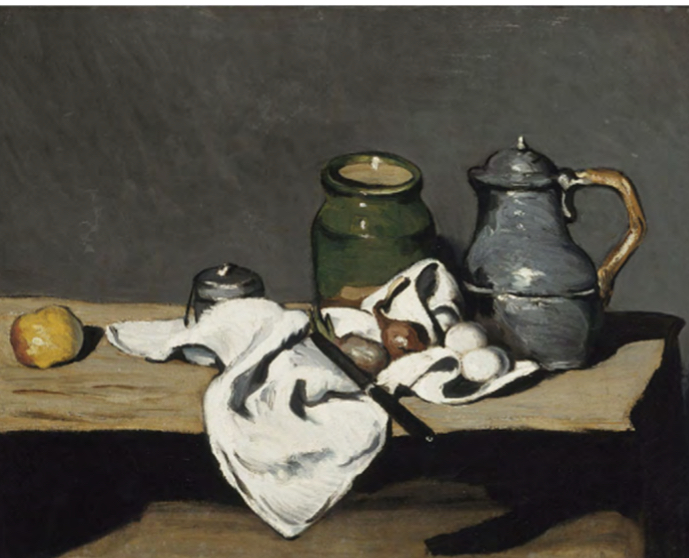
Cezanne, Still life with an open drawer, 1867
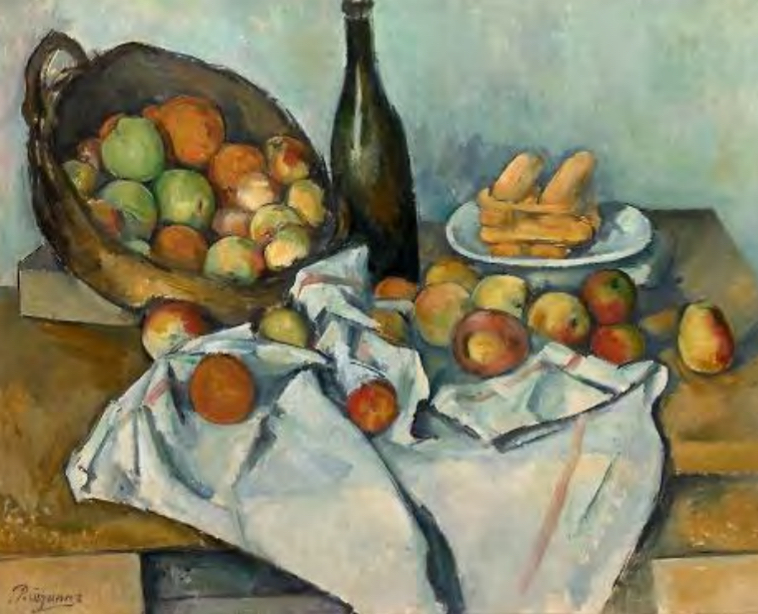
Cezanne, Still life with a basket of apples, 1890
Shifting perspectives to mimic viewing
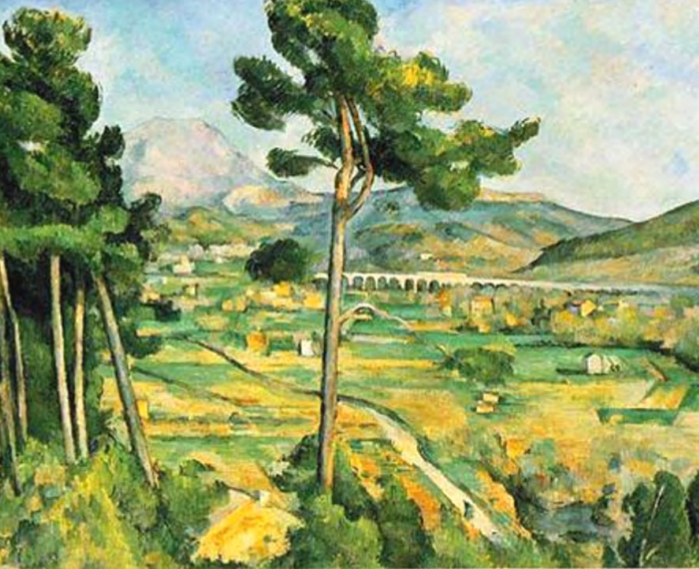
Cezanne, Mont Sainte Victorie and the Viaduct of the arc river valley, 1882
A mountain close to cezanne home in aix en provence
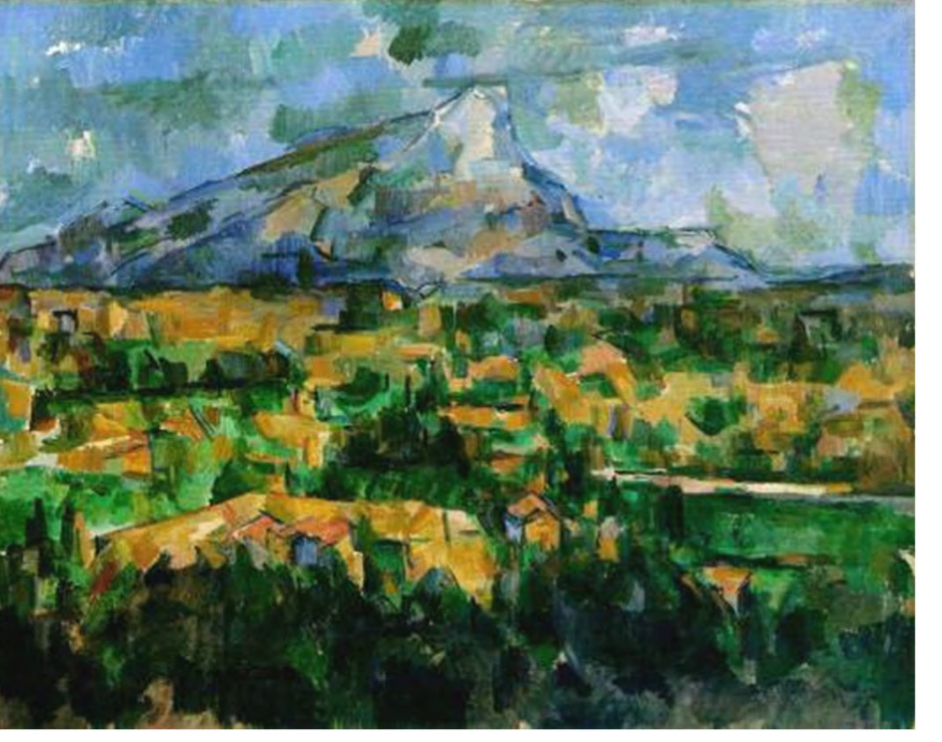
Cezanne, Mount Sainte Victorie seen from the Lauves, 1904