Pelvic Floor & Perineal Care
 Call Kai
 Learn
Learn Practice Test
 Spaced Repetition
 Match
Match Flashcards
 Knowt Play
1/21

There's no tags or description
Looks like no tags are added yet.
Name | Mastery | Learn | Test | Matching | Spaced | Call with Kai |
|---|
No analytics yet
Send a link to your students to track their progress
22 Terms
three primary functions of the pelvic floor
Supporting pelvic organs, controlling continence via sphincter muscles, and aiding sexual function.
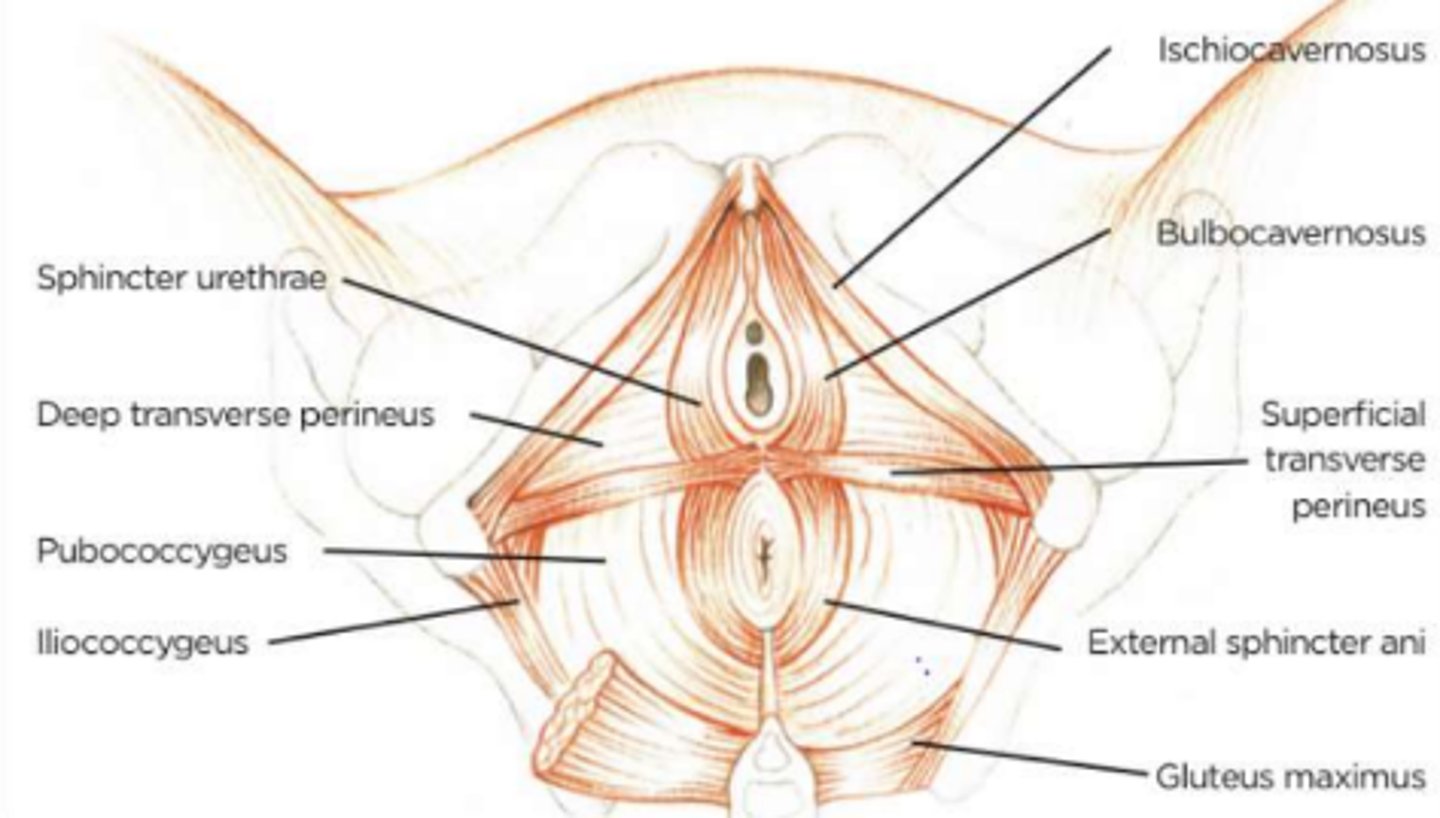
muscles forming the superficial layer of the pelvic floor
Bulbocavernosus, ischiocavernosus, and superficial transverse perineal muscles.
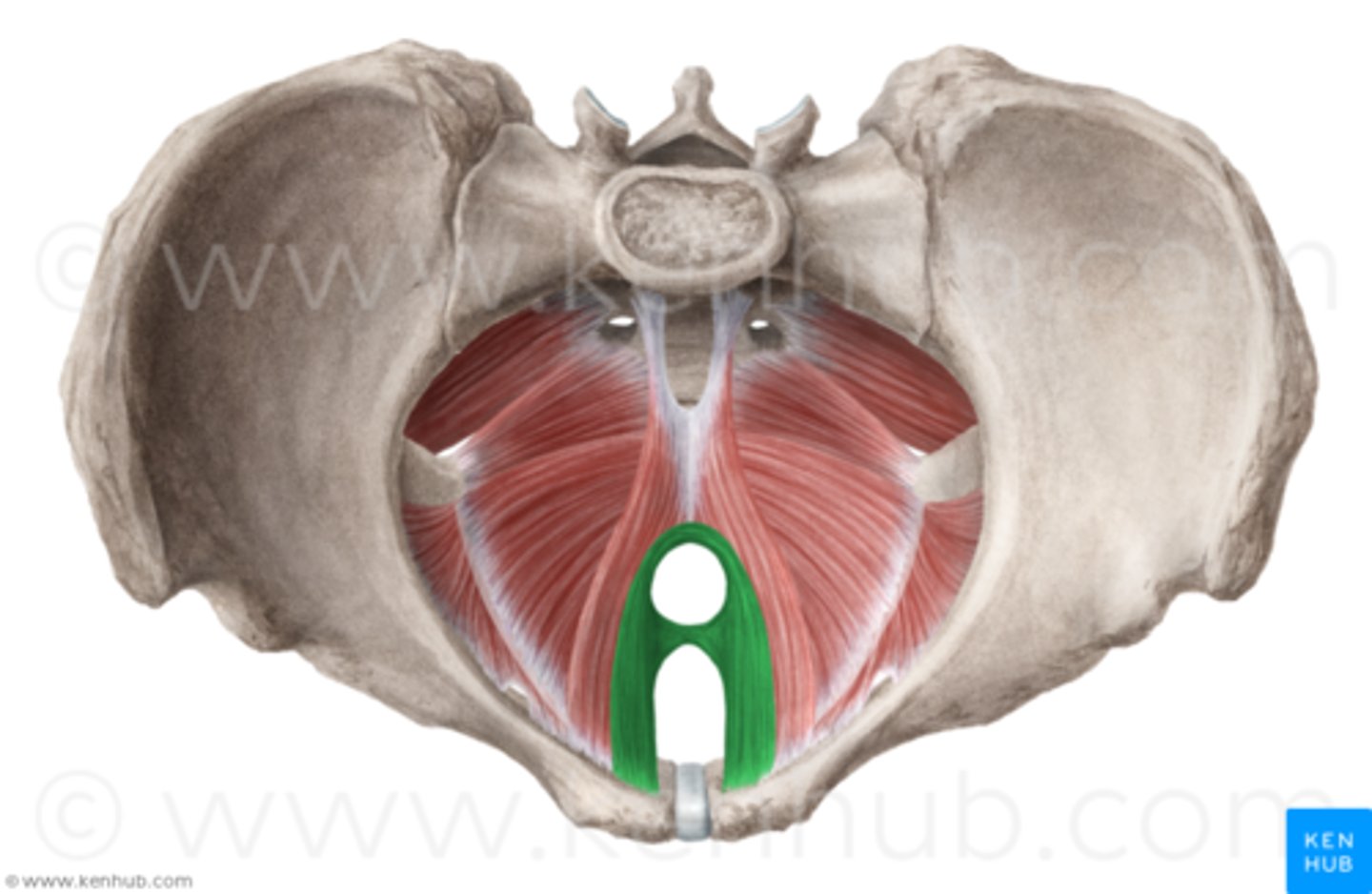
three components of the Levator Ani muscle group
Pubococcygeus, puborectalis, and iliococcygeus.
function of the perineal body
It acts as a central tendon that anchors multiple pelvic floor muscles.
how pelvic floor resistance assists in an OA labour
keeps the fetal head flexed during descent.
how the dome shape of the pelvic floor facilitate birth
It encircles the fetal head, enabling internal rotation as the baby descends.
risks of directed pushing during the second stage of labour
Increased perineal trauma, pelvic floor injury, reduced tissue oxygenation, and excessive muscle tension.
two midwifery strategies to support pelvic floor integrity during the second stage
Using warm perineal compresses and encouraging spontaneous pushing rather than directed pushing.
primary benefit of using warm compresses on the perineum
They help relax the muscles, reducing stress and the risk of perineal tearing.
1st degree perineal tear
Injury to the skin and vaginal mucosa only.
3rd degree perineal tear
Involvement of the external anal sphincter (EAS).
OASI
Obstetric anal sphincter injury, involving the anal epithelium and the EAS/IAS (severe 3rd/4th tear)
three risk factors for perineal trauma.
Instrumental birth, first baby, and birth weight over 4000g.
purpose of antenatal perineal massage
To increase tissue compliance and reduce the risk of perineal trauma during birth.
reason midwives educate women on pelvic floor anatomy postnatally
To help them identify abnormal symptoms, understand recovery, and know when to seek a referral.
red flags for postnatal pelvic floor health
Urinary retention, faecal incontinence, and severe, persistent perineal pain.
benefits of non-sutured repair for 1st/2nd degree tears
Higher breastfeeding rates and no significant difference in long-term pain or wound complications compared to suturing.
effect of relaxin on the pelvic floor during pregnancy
It increases connective tissue compliance.
maternal positions recommended to reduce perineal strain
Side-lying, all-fours, or forward-leaning positions.
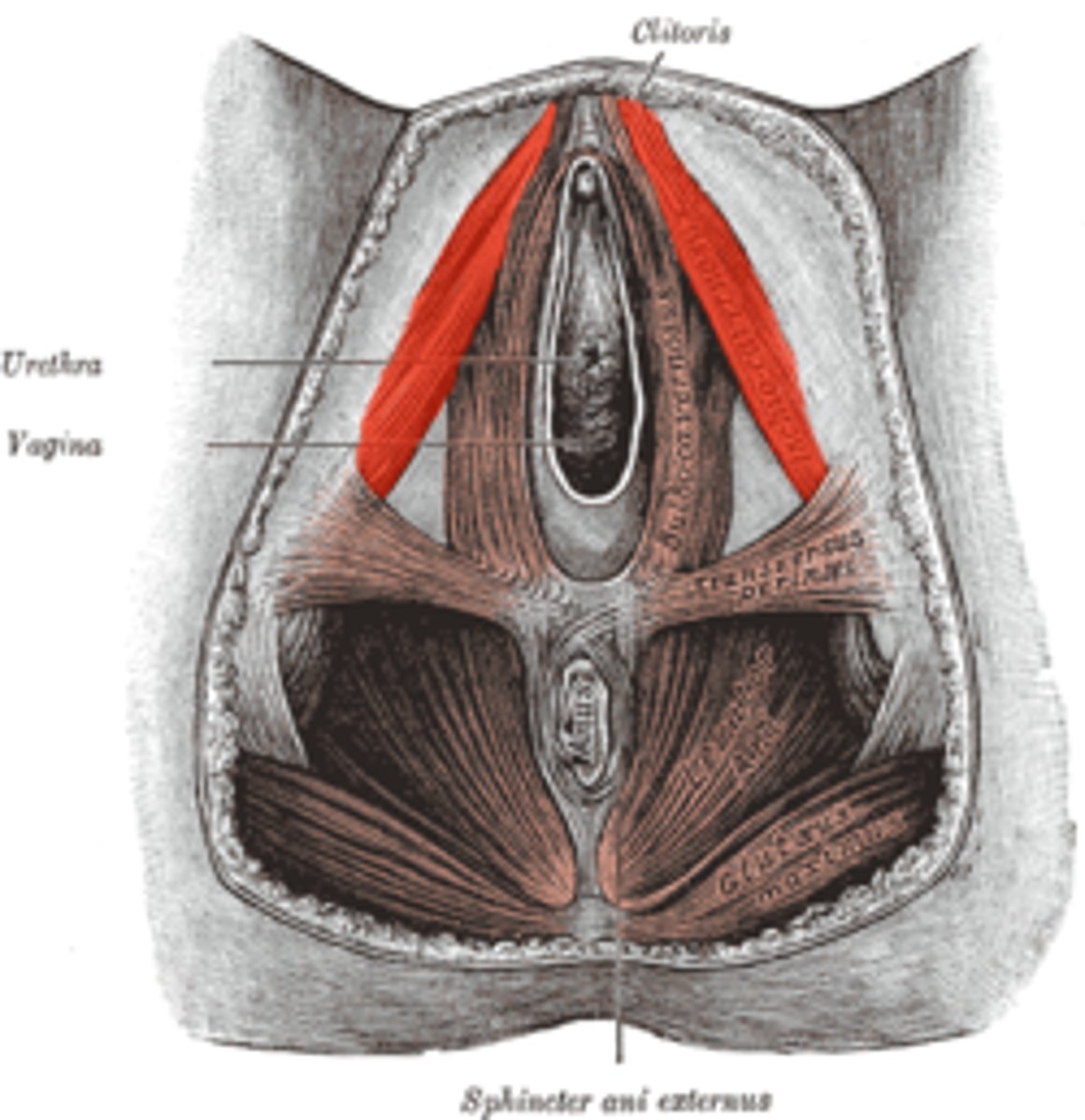
function of the Ischiocavernosus muscle
It runs from the ischial tuberosities along the pubic arch to the corpora cavernosa of the clitoris.
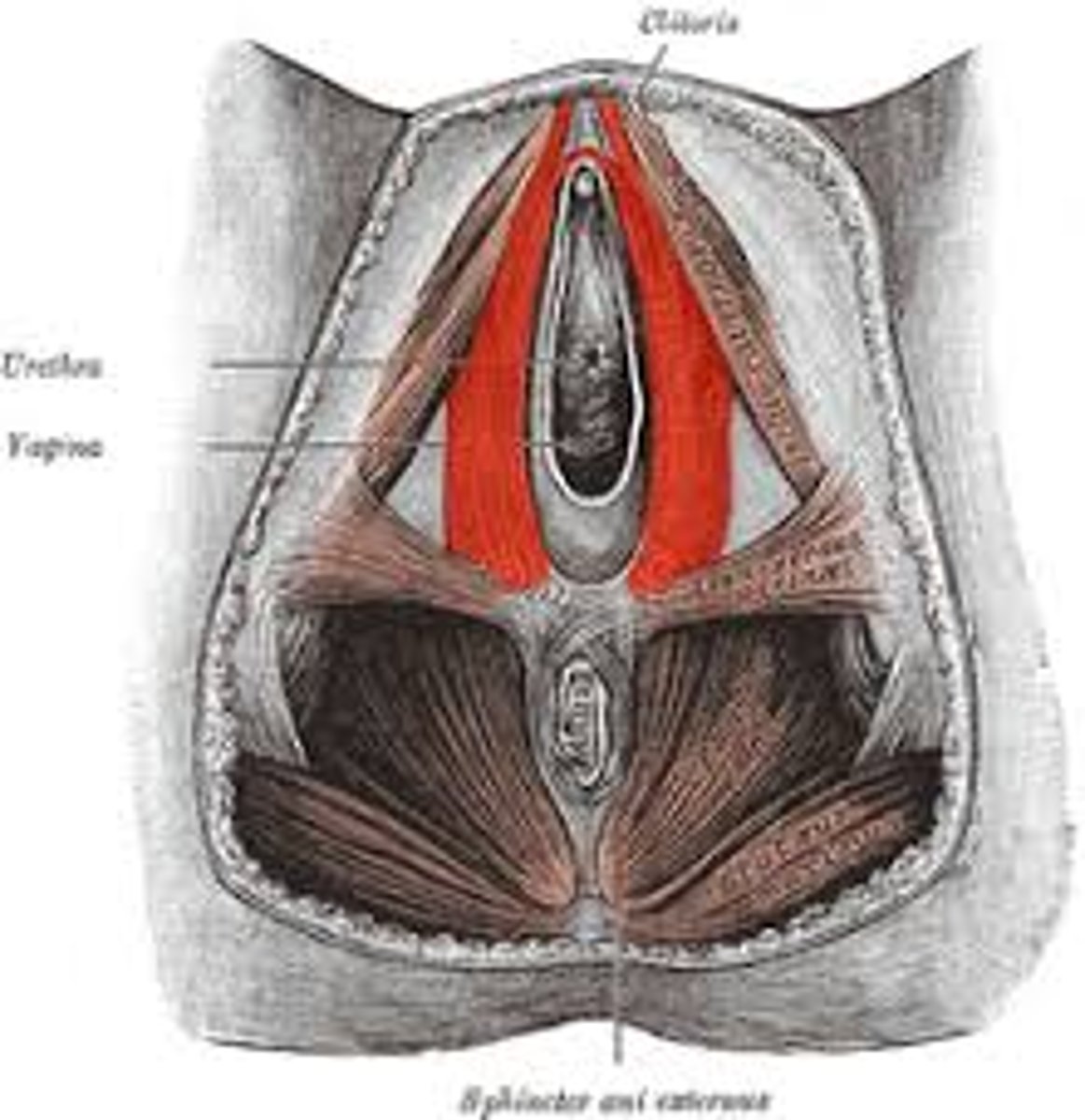
function of the Bulbocavernosus muscle
It surrounds the vaginal introitus and covers the vestibular bulb.
role of the puborectalis muscle
It acts as an anorectal sling as part of the Levator Ani complex.