ADV BIO - MUSCULAR SYSTEM
 Call Kai
 Learn
Learn Practice Test
 Spaced Repetition
 Match
Match Flashcards
 Knowt Play
1/35

Earn XP
Description and Tags
study pls
Name | Mastery | Learn | Test | Matching | Spaced | Call with Kai |
|---|
No analytics yet
Send a link to your students to track their progress
36 Terms
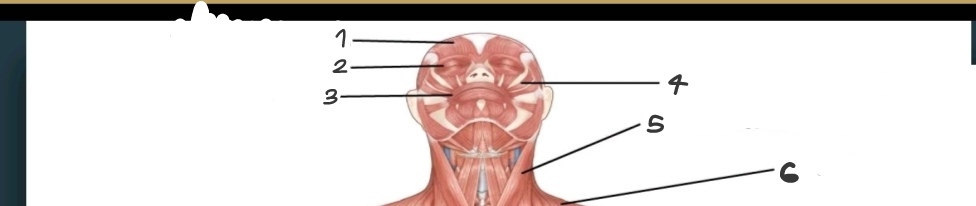
occipitofrontalis
orbicularis oculi
orbicularis oris
zygomaticus major
sternocleidomastoid
trapezius
What is No. 1 to 6?
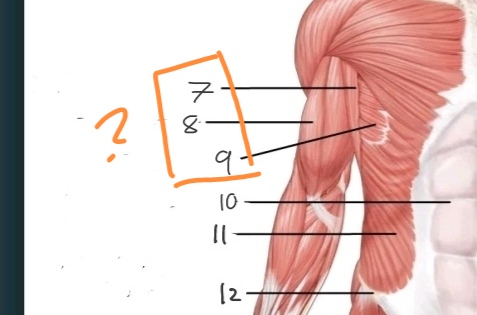
latissiumus dorsi
biceps brachii
serratus anterior
What is No. 7-9?
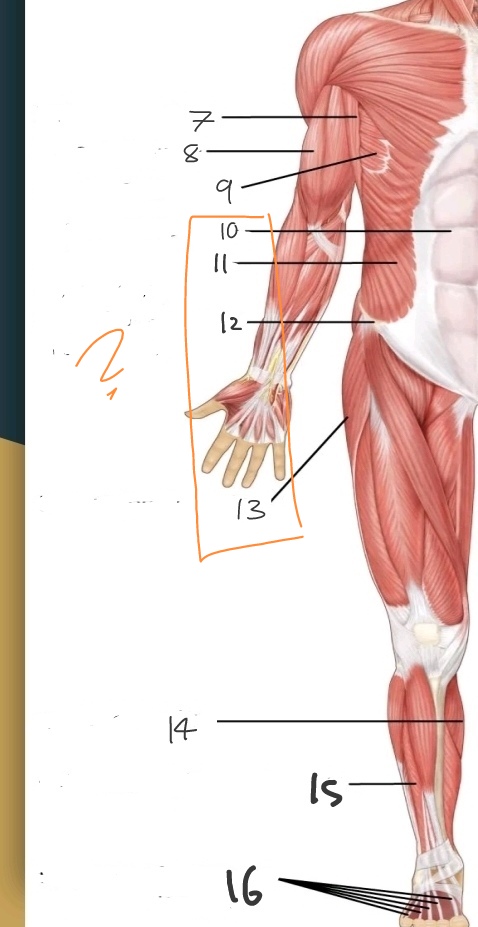
rectus abdominis
external oblique (abdomen)
anterior superior iliac spine
tensor fasciae latae
What is No. 10-13?
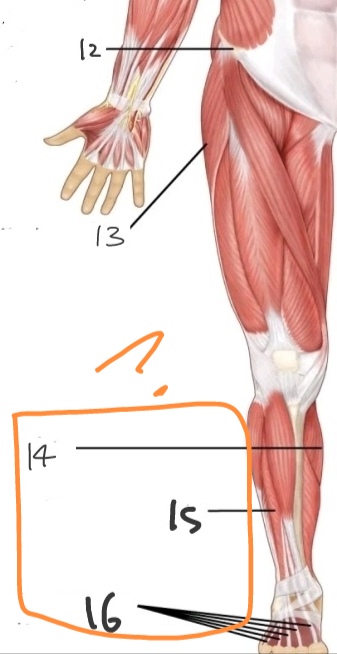
Gastrocnemius
extensor digitorum longus
tendons of EDL
What is No. 14-16?
deltoid
pectoralis major
What is No. 17-18?
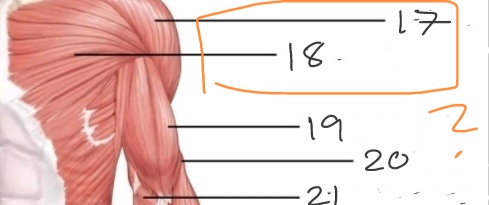
biceps brachii
brachialis
pronator teres
brachioradialis
extensor carpi radialis longus and brevis
What is No. 19-23?
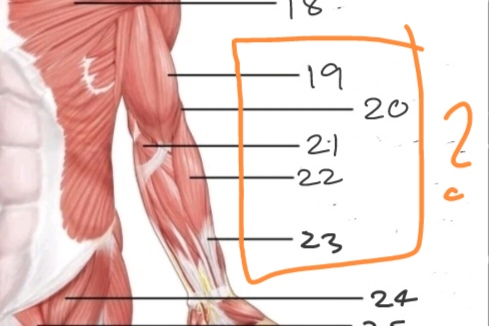
iliopsoas
pectineus
adductor longus
satorious
What is No. 24-27?
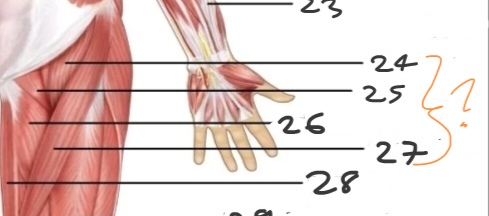
gracilis
rectus femoris
vastus lateralis
vastus medialis
What is No. 28-31?
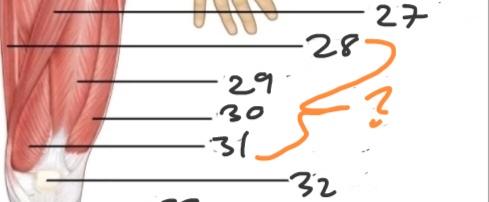
patella
ligamentum patellae
peroneus longus
tibialis anterior
tibia / shin
soleus
What is No. 32-37?
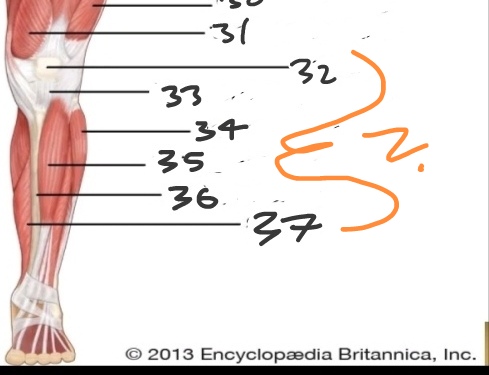
Aponeurosis
A.) occipitalis
splenius capitis
What is No. 38, A, and 39?
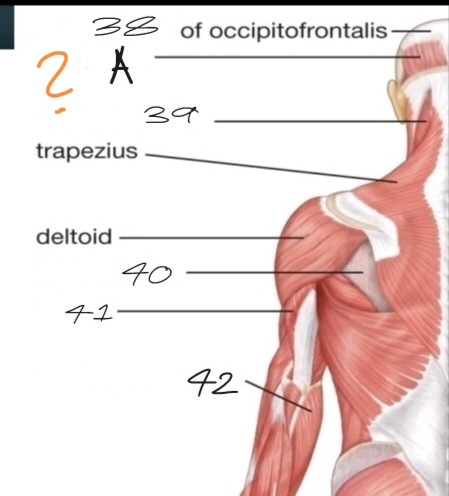
infraspinatus
triceps
flexor carpi ulnaris
What is No. 40-42?
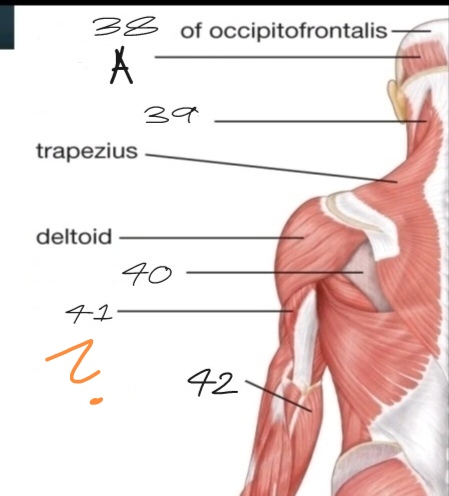
teres minor
teres major
latissimus dorsi
external oblique (abdomen)
erector spinae
Gluteus maximus
What is No. 43-48?
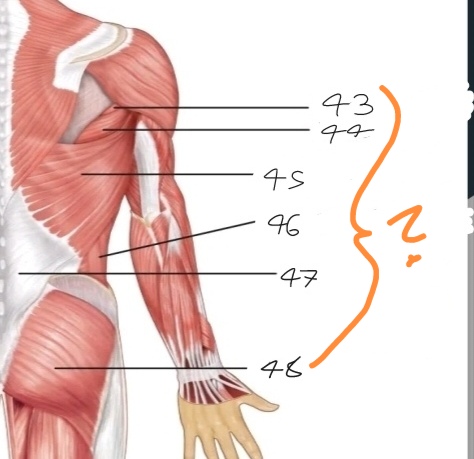
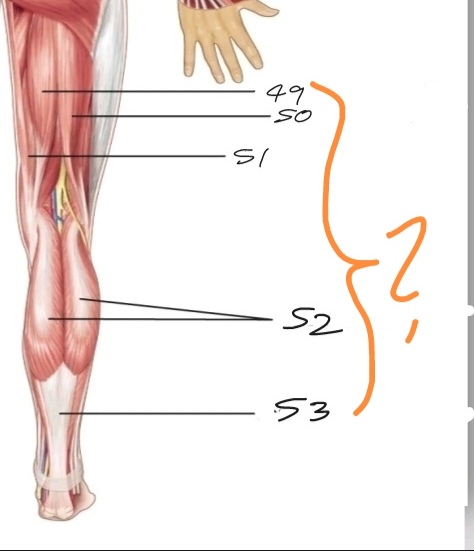
Semitendinosus
biceps femoris
semimembranosus
gastrocnemius
tendo calcaneus
What is No. 49-53?
ANATOMICAL POSITIONS
standard body orientations used in anatomy.
to describe the location of structures
reference position, used in anatomy
Body standing upright
Head facing foward
Arms at the sides
Palms facing foward
Feet flat on the floor, facing foward
Characteristics of anatomical positions
ANATOMICAL DIRECTIONS
used to decribe the location of body parts relative to each other
when the body is in anatomical position
Anterior and Posterior
Superior and Inferior
Medial and Lateral
Proximal and Distal
All anatomical directions of the human body
SUPINE POSITION
PRONE POSITION
LATERAL POSITION
All anatomical positions of the body
Diminutive
The term muscle is the 1.________ form of the latin word.
mus or “little mouse”
Muscle came from the latin word:
this describes how the skin ripples when the muscle contracts.
Like a little mouse running.
400
50%
Human body has more than ____ skeletal muscles, which account for almost ___ of the body's weights
Voluntary muscles
a person can consciously choose to contract a muscle, and for how long and hard to contract them.
arms and legs are an example
Involuntary muscles
muscles under the control of subconscious regions of the brain.
Found in internal organs and cardiac muscles.
SKELETAL
CARDIAC
SMOOTH
three types of muscles:
Skeletal Muscle
directly or indirectly attached to the bone
produces VOLUNTARY movement
Striated muscle. (because its striped)
Fascia
a fibrous connective tissue that wraps each muscle.
helps form a very strong tendon
Motor neurons
makes skeletal muscles stimulated, coming from the nervous system.
Myoneural Junction
When a motor nerve contacts a muscle fiber, this happens.
Smooth muscles
found in associaton with internal organs
referred to as Visceral muscle
has a microscopic appearance, and lacks striations
Found in walls of hollow organs, and responsible for involuntary muscle action
Visceral muscle
another name for smooth muscle
Cardiac muscle
or myocardium
makes up the wall of the HEART
each involuntary contraction makes the heart squeeze, to pump out blood