Chapter 10 test
 Call Kai
 Learn
Learn Practice Test
 Spaced Repetition
 Match
Match Flashcards
 Knowt Play
1/130

There's no tags or description
Looks like no tags are added yet.
Name | Mastery | Learn | Test | Matching | Spaced | Call with Kai |
|---|
No analytics yet
Send a link to your students to track their progress
131 Terms
What is the endocrine system
the endocrine system helps maintain homeostasis by releasing chemical hormones from various tissues of glands into the bloodstream, where they produce a specific effect on target cells
What is the endocrine gland
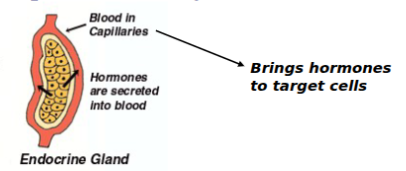
ductless gland that secretes hormones into the bloodstream
What are hormones
chemical messenger released by a tissue or gland in one part of the body that affects target cells in another part of the body
What are exocrine glands
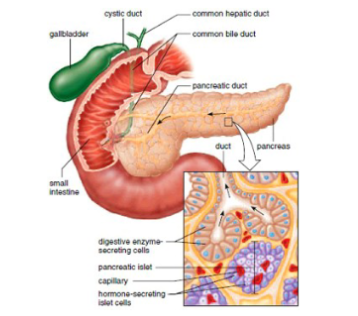
glands that release secretions into ducts that lead outside the body or into cavities
in other words They pump fluids through tubes onto body surfaces or into body spaces.
ex: sweat glands, salivary glands, glands of the pancreas
What are the differences between the endocrine vs nervous system
endocrine:
primarily chemical in nature
slower and longer acting effects
affects a broader range of cell types
Nervous:
electrochemical in nature
rapid and short-lived effects (ex: heart rate)
specific cell types affected per pathway
What are some similarities between the endocrine and nervous system
aid in cellular communication and control
help regulate homeostasis for multiple variables
some overlaps in structure (I.e. cells in hypothalamus are nervous system structures that secrete hormones too)
several chemicals can function as both hormones and neurotransmitters (I.e. epinephrine)
both are regulated by feedback loops
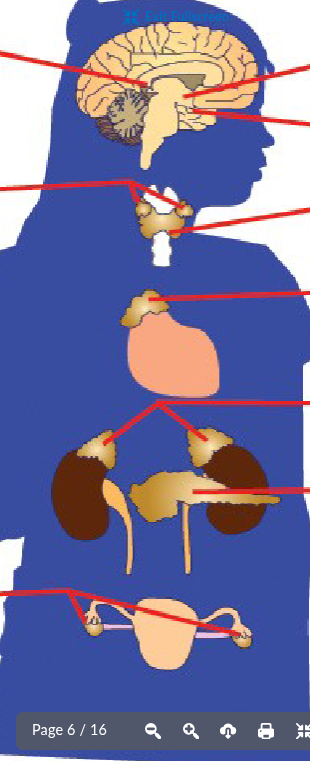
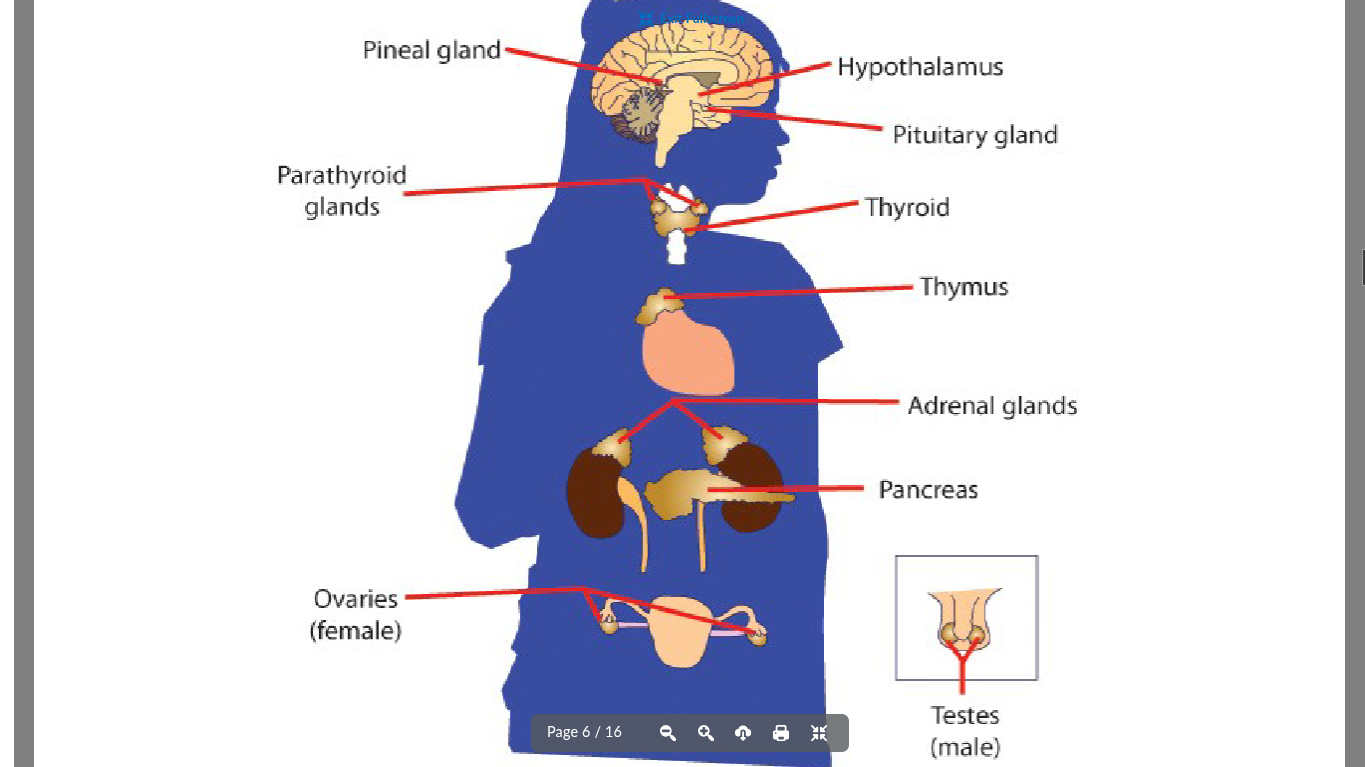
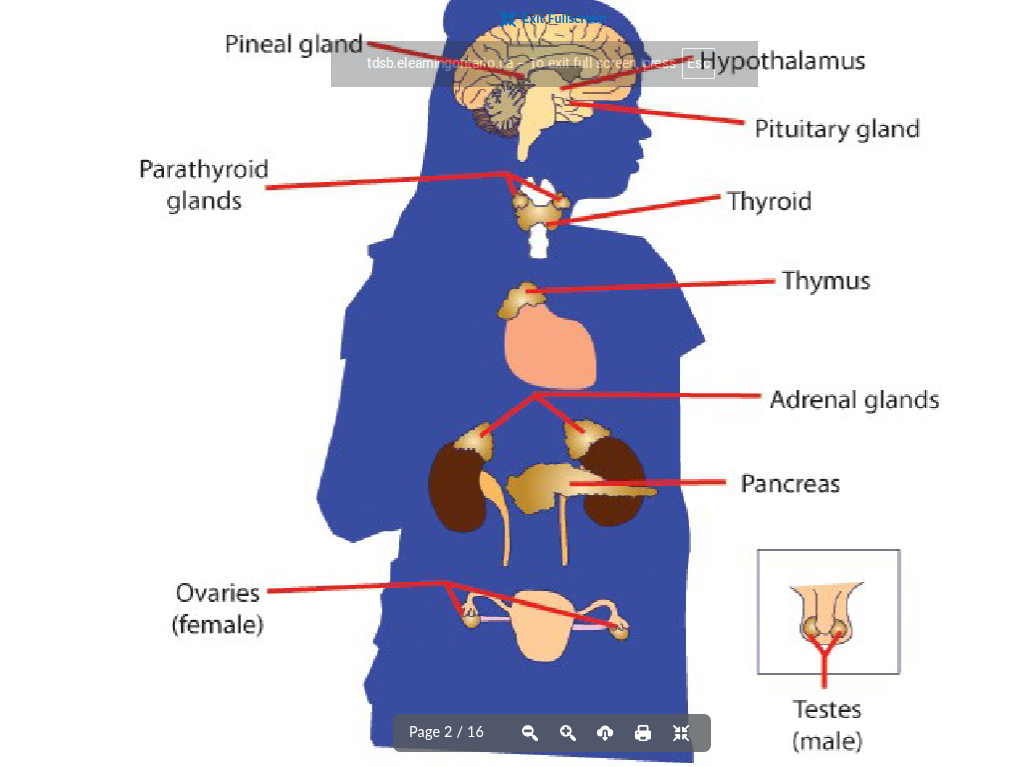
name endocrine glands
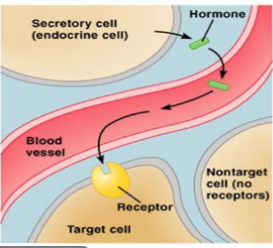
Describe the steps in hormone action on target cells
Hormones released from tissue/gland into bloodstream
hormones exit bloodstream and attach to specific receptor proteins on or within target cells
(like a lock and key); non-target cells will not possess receptor proteins for the hormone
target cells respond to the chemical message sent by the hormone
ex: human growth hormone is secreted by the anterior pituitary and interacts with muscle and bone cells for growth and cell division
What are the two types of hormones? how do they differ
Steroid / lipid-soluble hormones
Protein/ water-soluble hormones
these different types of hormones differ in how they bind their receptor proteins and how they affect their target cells
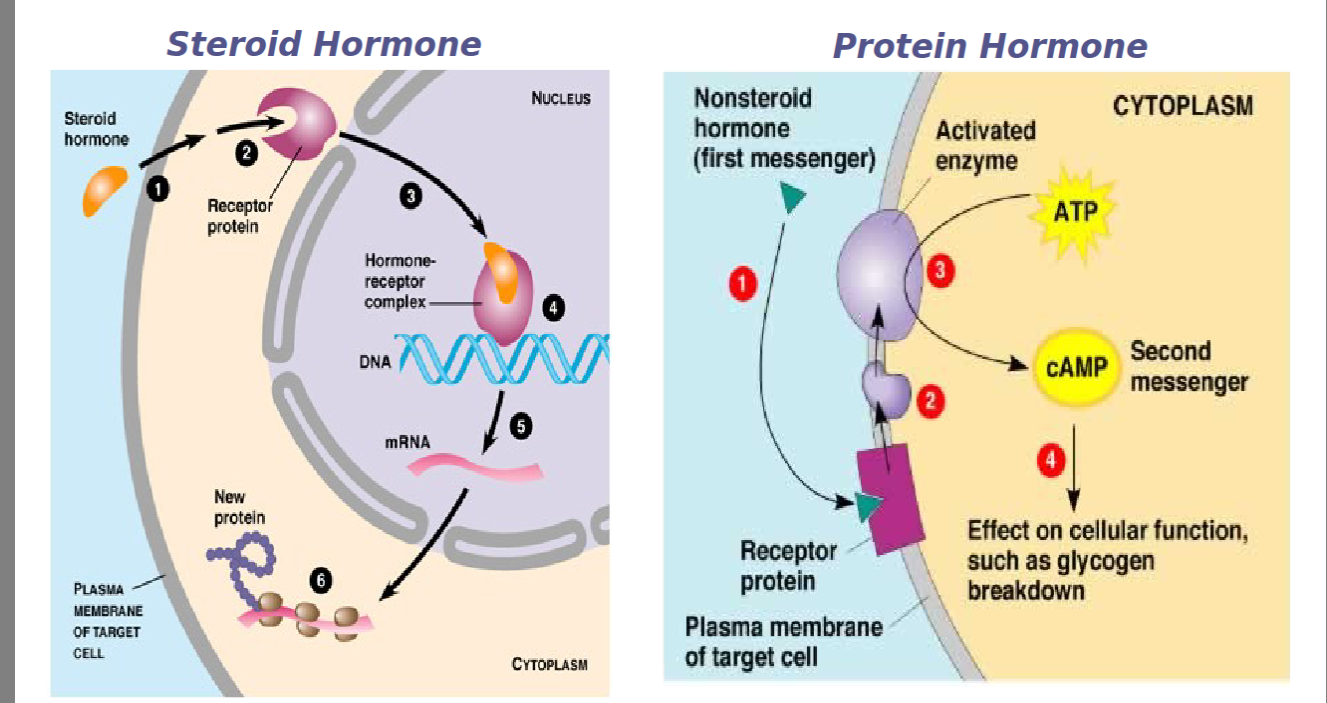
Describe the way steroid hormones do their hormone action on target cells
Easily diffuse through lipid-bilayer of cell membranes
bind to receptor proteins inside nucleus of cell
hormone-receptor complex activates (or deactivates) a specific gene and the synthesis (or cessation) of a specific RNA molecule
RNA transported out of nucleus to ribosomes where protein synthesis occurs
common ex:testosterone, estrogen, aldosterone
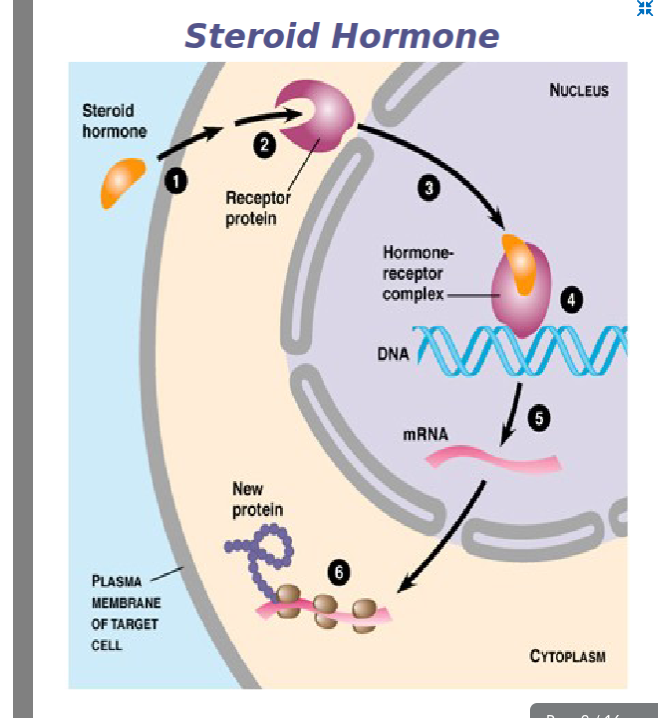
name a few examples of steroid hormones
testosterone
estrogen
aldosterone
Describe the way protein hormones do their hormone action on target cells
bind to a receptor protein on the surface of the target cell
leads to activation of a special enzyme that changes ATP to cAMP, which is often referred to as a second messenger
cAMP activates a cascade of reactions, whereby each reaction that occurs, triggers many more reactions
thus, the impact of the hormone is amplified
(I.e. one molecule of epinephrine can trigger the breakdown of many glycogen molecules to glucose
ex: epinephrine, hGH, thydroxide (T4) , insulin
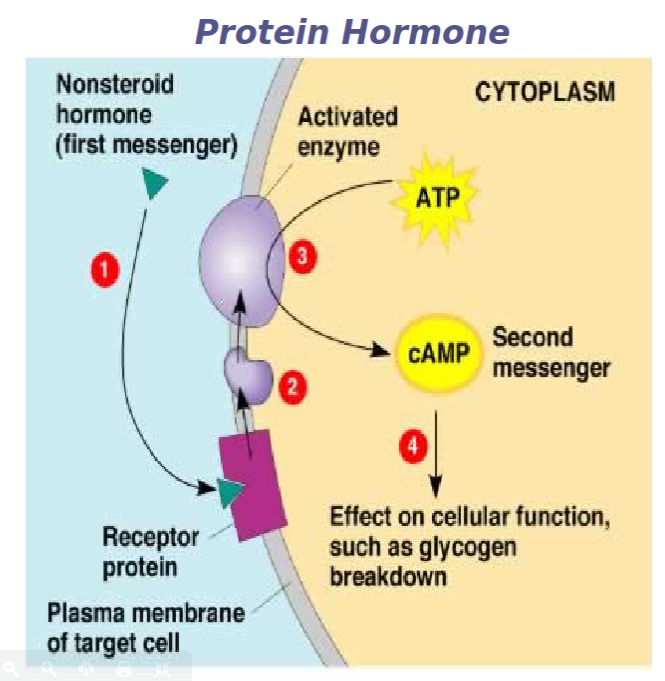
name a few examples of protein hormones
epinephrine
human growth hormone (hGH)
thyroxine (T4)
insulin
What are the 5 major features of hormones
only cells that contain surface or internal receptors for the hormones will respond to those hormones
once bound to their receptors, hormones produce a response by turning cellular processes on or off; this is done by altering the function or production of proteins in the cell
hormones are effective in very small concentrations because of their amplifying effects
the response to a hormone differs based on the target organ and even among species
hormones are cleared from the body by enzymatic breakdown when they are finished; the broken down products can be reused or excreted
Instead of directly affecting a target cell, what else do some hormones do instead?
instead of directly affecting a target cell, some hormones stimulate endocrine glands to release other hormones
these are called tropic hormones
many of the hormones released from the hypothalamus and anterior pituitary are tropic hormones
WHat are tropic hormones?
hormones that stimulate endocrine glands to release other hormones instead of directly affecting a target cell
many of the hormones released from the hypothalamus and anterior pituitary are tropic hormones
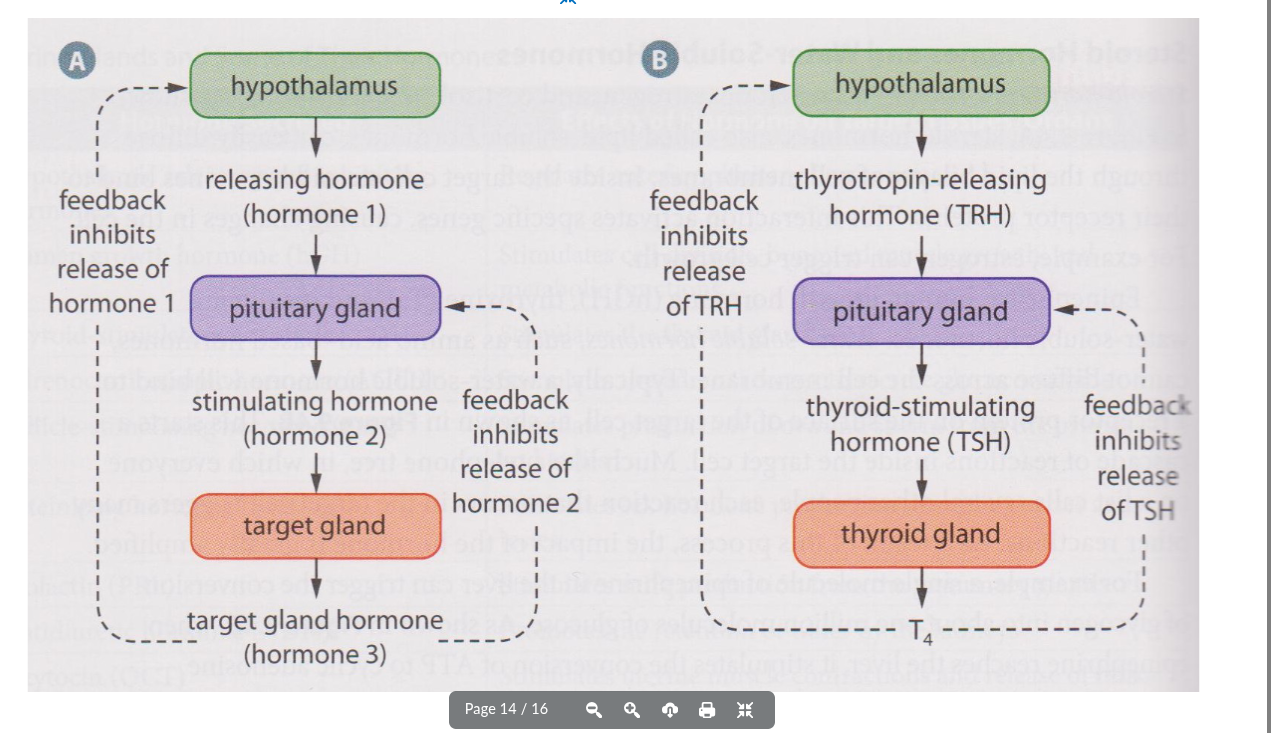
WHat are the 4 typical mechanisms of tropic hormones
hypothalamus secrets the first tropic hormone, called a releasing hormone, into the anterior pituitary
the anterior pituitary releases the second tropic hormone, called a stimulating hormone, into the target gland
the target gland is stimulated to produce the third hormone that will finally produce and effect on a target tissue
the third hormone can operate via negative feedback loops, by preventing the release of either the first or second tropic hormones

chemical messenger released by a tissue or gland in one part of the body that affects target cells in another part of the body
certain hormones can only attach to specific receptor proteins on or within their target cells
non-target cells will not possess receptor proteins for that hormone
Differences:
Endocrine system is primarily in chemical nature while nervous system is electrochemical in nature
endocrine is slower and has longer acting effects while nervous system is rapid and short-lived effects
endocrine system affects a broader range of cell types while nervous system only affects specific cell types per pathway
Similarities
aid in cellular communication and control
help regulate homeostasis for multiple variables
some overlaps in structure (i.e. cells in hypothalamus are nervous system structures that secrete hormones too)
several chemicals can function as both hormones and neurotransmitters (I.e. epinephrine)
both are regulated by feedback loops

testosterone is a steroid hormone so the following steps would occur:
testosterone would easily diffuse through lipid-bilayer of cell membranes
binds to receptor proteins inside nucleus of cell
hormone-receptor complex activates or deactivates a specific gene and the synthesis oor cessation of a specific RNA molecule
RNA transported out of the nucleus to ribosomes where protein synthesis can occur
Hormones act as the body’s master chemical messengers. Because they travel through the bloodstream to regulate virtually every tissue, organ, and cellular process, an imbalance can trigger widespread, seemingly unrelated symptoms across your entire body
hormones are very effective even in very small concentrations because of their amplifying effects

Steroid hormones can easily diffuse through the cell's plasma membrane because they are lipid-soluble (lipophilic) and non-polar.
Protein hormones are water-soluble (hydrophilic) and therefore cannot pass through the membrane's core, requiring them to bind to receptors on the outside of the cell.
a) steroid hormones easily diffuse through lipid-bilayer if cell membranes
while protein hormones bind to the receptor protein on the surface of the cell membrane
b) steroid hormone Enters the cell personally and binds to receptor proteins in the nucleus.
while protein hormones remains outside of the cell membrane and binds to a receptor protein on the surface of the target cell
leading to an activation if a special enzyme that changes ATP to cAMP (second messenger)
c) steroid hormones: The hormone-receptor complex activates or deactivates a specific gene and the synthesis or cessation of a specific RNA molecule
while protein hormones: cAMP activates a cascade of reactions, whereby each reaction that occurs, triggers many more reactions
d) Steroid hormones: RNA gets transported out of nucleus to ribosomes where protein synthesis occurs
protein hormones: when cAMP activates the cascade of reactions, whereby each reaction that occurs triggers many more reactions, the impact of the hormones is amplified
(i.e. one molecule of epinephrine can trigger the breakdown of many glycogen molecules to glucose
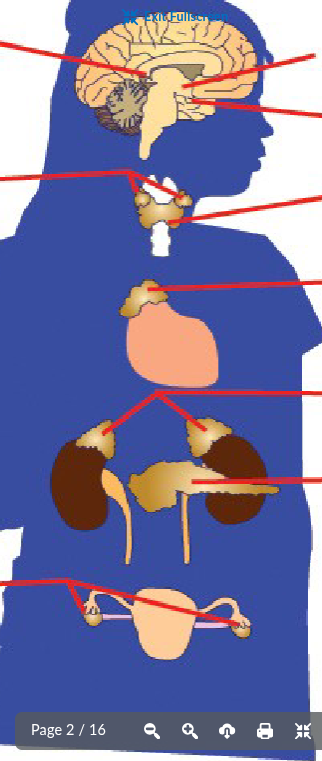
label endocrine glands
How many hormones or hormone-like chemicals are in the human body? what are hormones functions in the human body?
over 200 hormones or hormone-like chemicals in the human body
functions include:
regulating growth and development,
speeding up or slowing down metabolism
regulating blood pressure and blood glucose
regulating the body’s immune response
What are the glands that function exclusively as endocrine glands
pituitary
pineal
thyroid
parathyroid
adrenal
WHat are the tissues and organs that can secrete hormones but do not function exclusively as endocrine glands
hypothalamus
thymus
pancreas
testes/ovaries
What does the pituitary gland and the thyroid gland regulate
your body’s growth, development and rate of metabolism are controlled by hormones released by the pituitary gland and thyroid gland
the hypothalamus is important as well, as it controls the pituitary gland via releasing (tropic) hormones
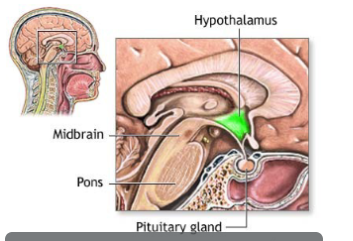
WHat are the two lobes of the pituitary gland
posterior pituitary
anterior pituitary
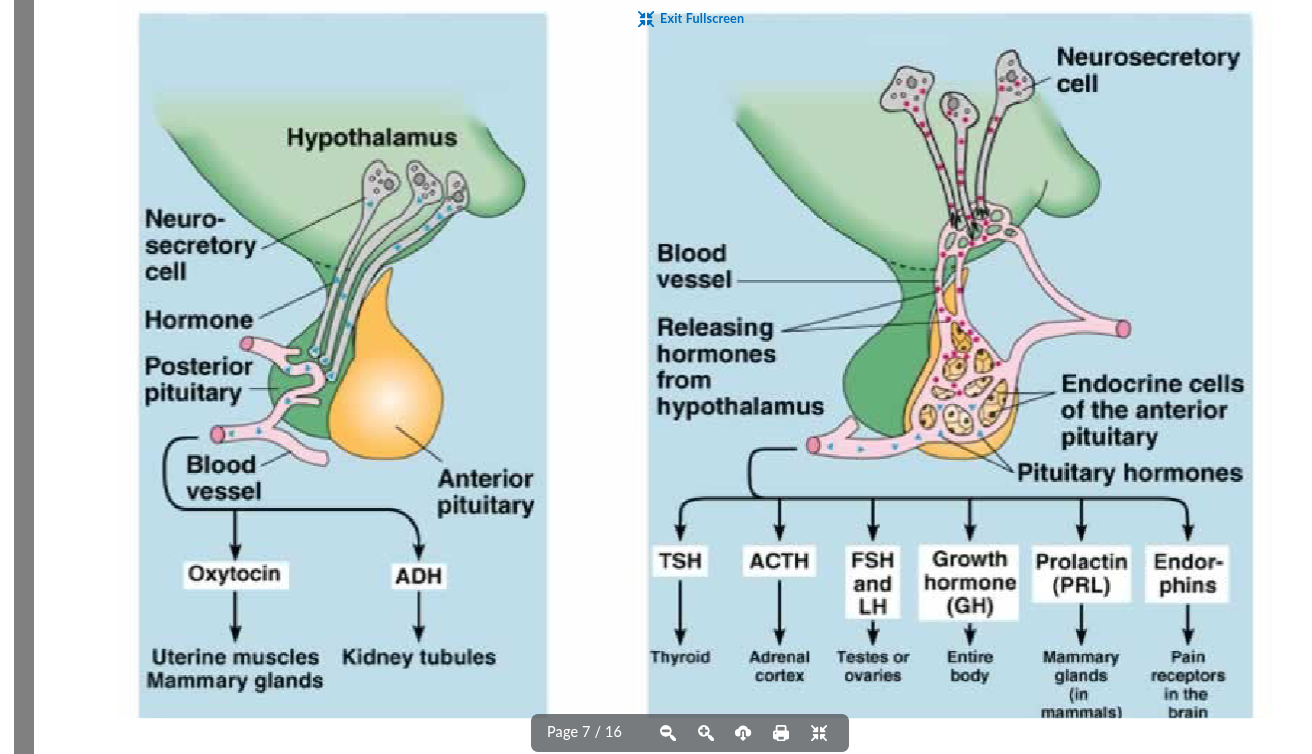
Describe the posterior pituitary lobe of the pituitary gland
technically part of the nervous system
does not produce hormones, only stores and releases (ADH) and oxytocin
the above hormones are produced by the hypothalamus and transferred to the posterior pituitary via special hormone carrying neurons called neurosecretory cells
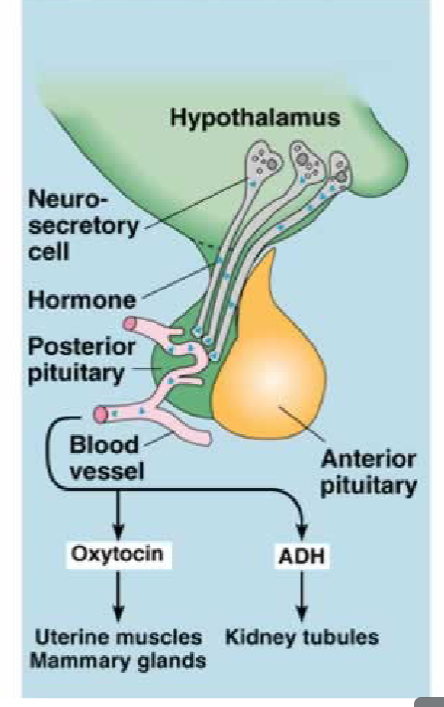
Describe the anterior pituitary lobe of the pituitary gland
true hormone synthesizing gland
produces six major hormones:
TSH
ACTH
PRL
hGH
FSH
LH
releasing (tropic) hormones from the hypothalamus can both stimulate or inhibit the release of the above hormones
many of the hormones from the anterior pituitary are themselves, tropic hormones
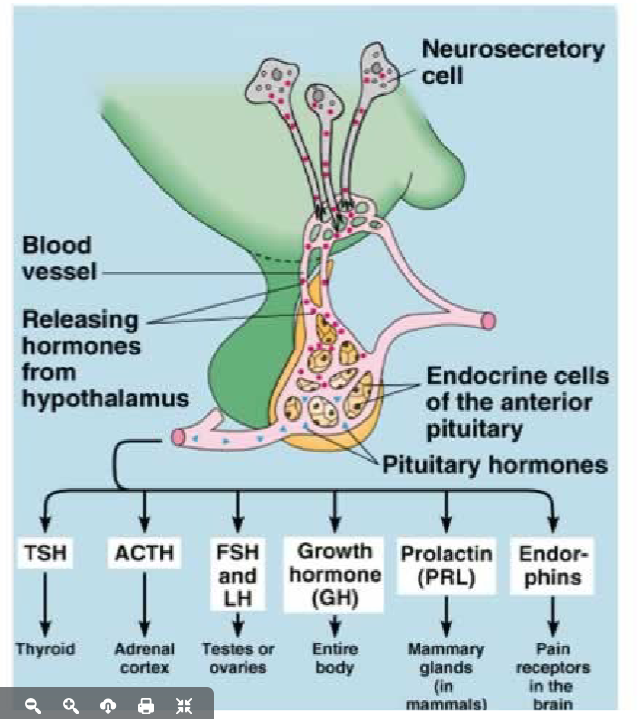
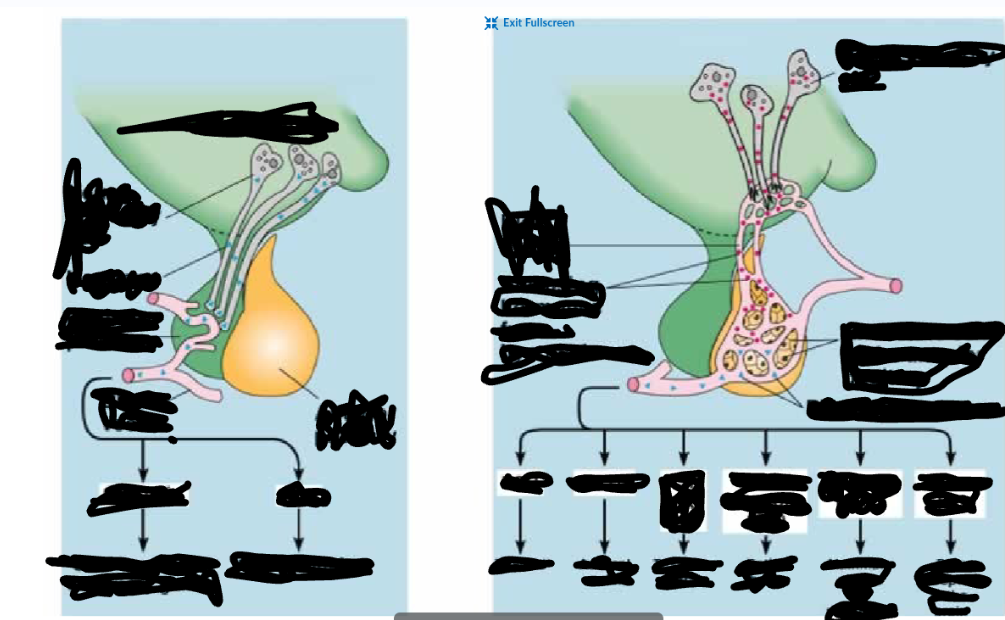
Label posterior and anterior pituitary gland
Describe the human growth hormone (hGH)
the hormone produced by the anterior pituitary that regulates growth, development and metabolism
affects almost every tissue in the body
some tissues affected directly
majority of effects are tropic, especially on the liver, which is stimulated by hGH to produce insulin-like growth factor-1 (IGF-1) that affects many other cells in the body
What are the major physiological processes affected by hGH and its associated growth factors?
protein synthesis
cell division and growth
especially growth of muscle, bone and cartilage
metabolic breakdown and release of fats’ stores in adipose (fat) tissue
What are some causes of hGH-related disorders?
genetic mutation of hGH gene
lesions in hypothalamus or anterior pituitary
problems with receptor proteins on target cells
benign tumors in the pituitary gland
Describe how hGH can cause a disorder in pituitary dwarfism
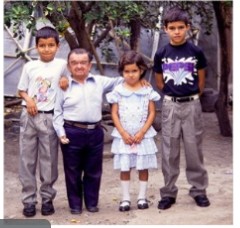
insufficient hGH production during childhood results in pituitary dwarfism
individual will be extremely small stature, but with typical body proportions
hGH can stimulate the growth plates at the end of long bones, like arms and legs, causing elongation
Describe gigantism and how its caused
excessive hGH production during childhood can lead to a condition called gigantism
extremely rare disorder
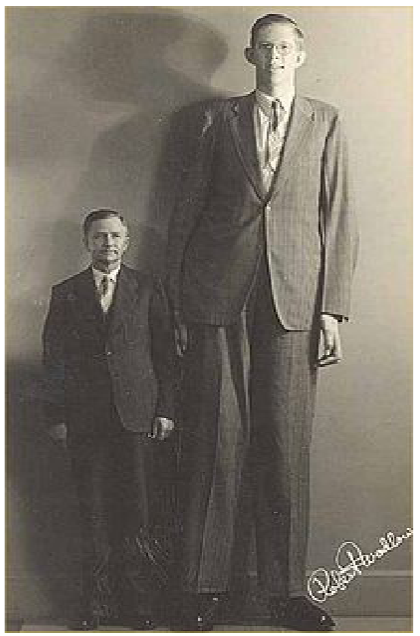
famous case: Robert Wadlow weighed 490 pounds and was 8’11 at 22 years old
Describe acromegaly and how its caused
excessive hGH during adulthood (after skeletal growth is complete)
since skeletal growth is complete, excess hGH cannot lead to further increase in height, so bones and soft tissues widen
visible symptoms include:
widening of the face,
thickening of ribs,
enlargement of extremities
other clinical symptoms inlude:
enlarged organs (heart, liver, kidneys)
debilitating headaches
fatigue
breathing difficulties
cardiovascular disease
diabetes onset (hyperglycemia)
muscle weakness

What 2 hormones does the posterior pituitary store and release?
Antidiuretic hormone (ADH)
Oxytocin
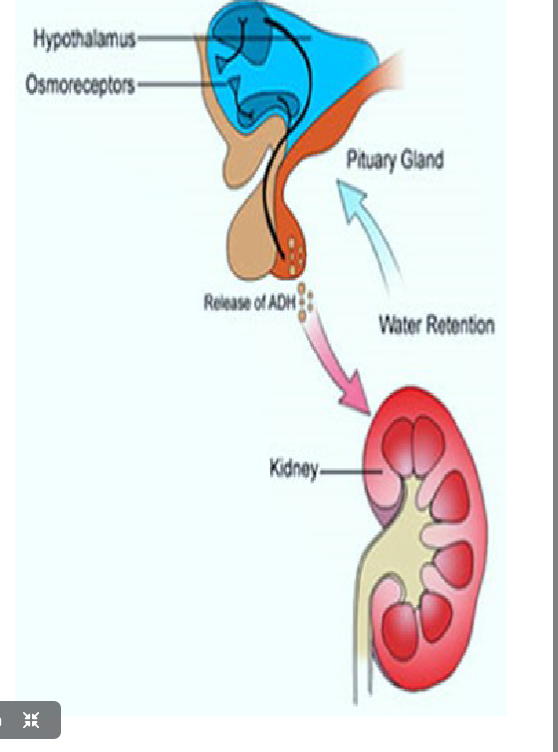
Describe ADH hormone
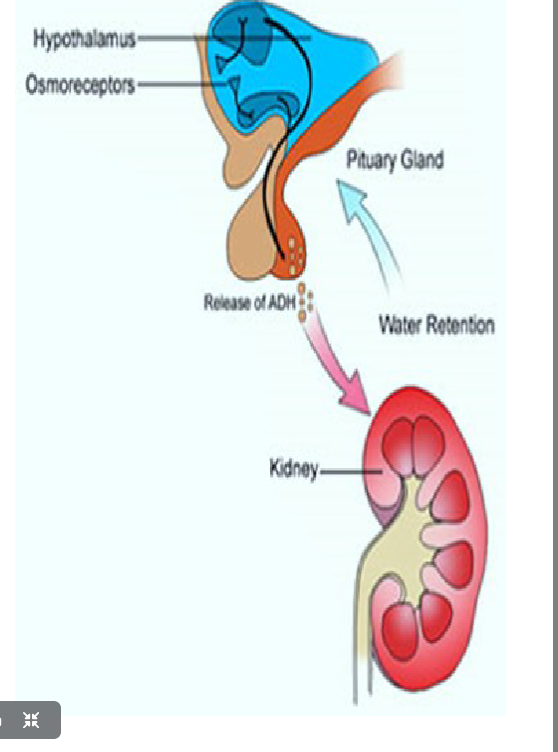
released by posterior pituitary when receptor cells in the hypothalamus detect increase in sodium concentration in the blood or when the body is dehydrated
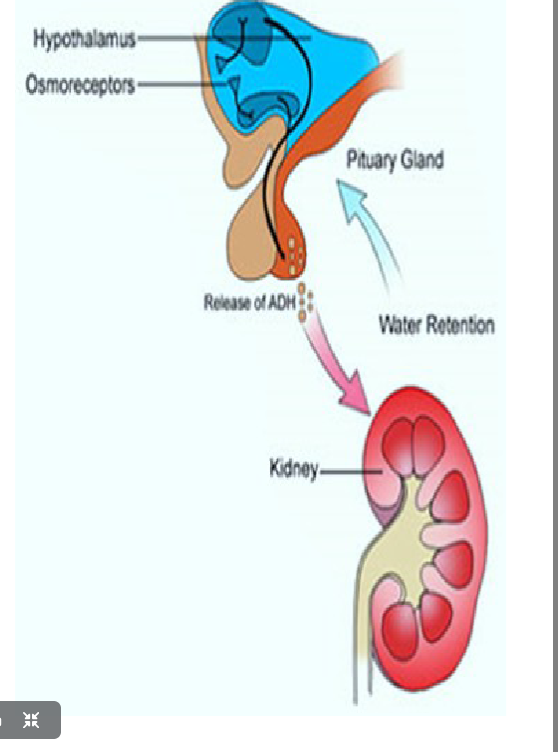
target: distal tubule and collecting duct in nephrons
result: more permeable to water, so water can get reabsorbed via osmosis
also results in blood vessel constriction
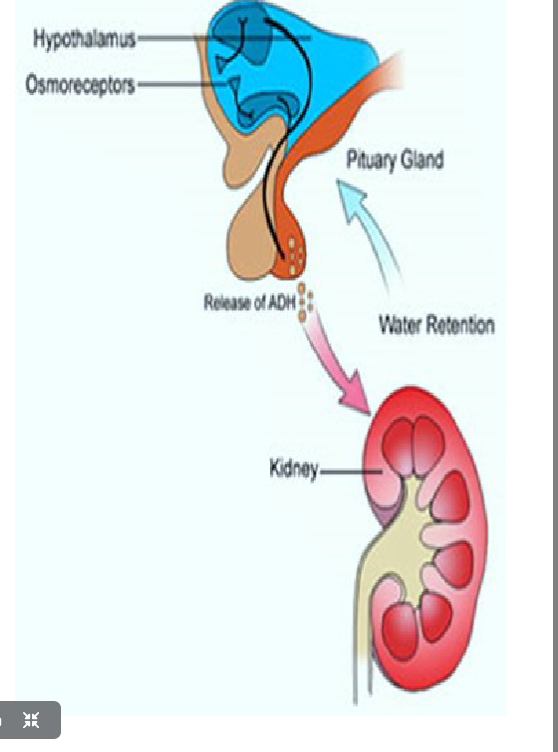
ADH production inhibited by caffeine and ethanol
ADH production increased by nicotine, stress and any event leading to a severe drop in blood pressure
When is ADH hormone released from the posterior pituitary?
when receptor cells in the hypothalamus detect increase in sodium concentration in the blood or when the body is dehydrated
WHat is the target of ADH hormones from the posterior pituitary? what does it result in?
target is distal tubule and collecting duct in nephrons
results:
more permeable to water, so water can get reabsorbed via osmosis
also results in blood vessel constriction
What stuff inhibit ADH production and increase ADH production?
ADH production inhibited by caffeine and ethanol
ADH production increased by nicotine, stress, and any event leading to a severe drop in blood pressure
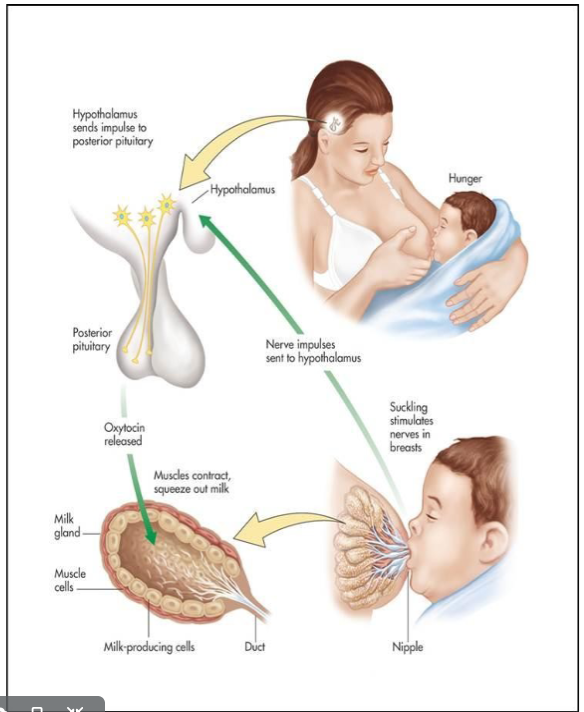
Describe oxytocin hormone
released from posterior pituitary when receptor cells in the female nipples stimulated or when uterus is contracting, which sends signals to the hypothalamus
target : mammary glands or uterus
result: mammary glands produce more milk and uterine contractions increase
governed by a positive feedback mechanism
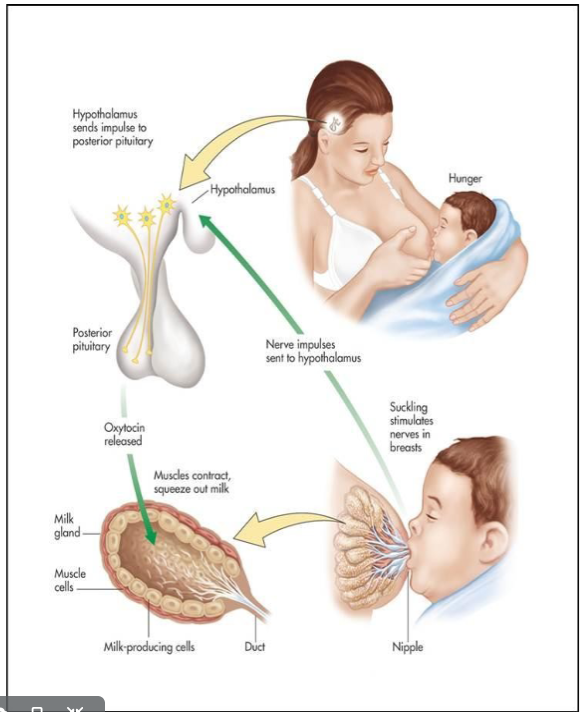
When is oxytocin released from the posterior pituitary
when receptor cells in the female nipples stimulated
or when uterus is contracting
which sends signals to the hypothalamus
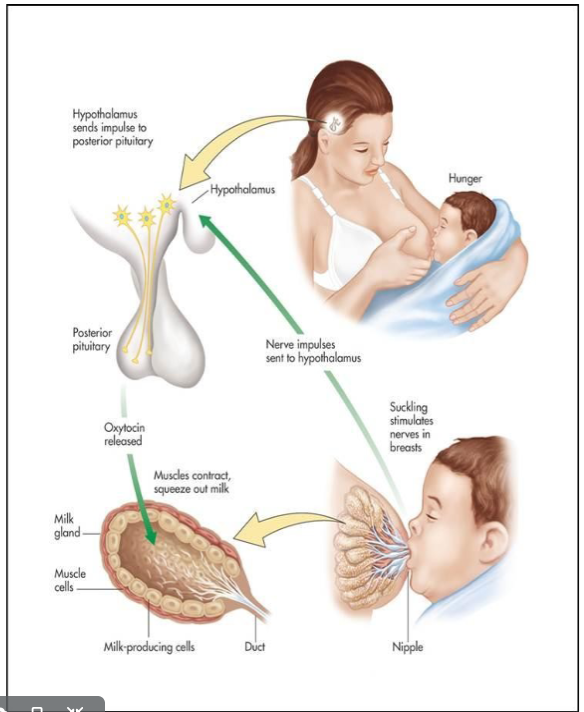
What is the target and results of oxytocin when released from the posterior pituitary
Target is mammary glands or uterus
results:
mammary glands produce more milk
and uterine contractions increase
governed by a positive feedback mechanism
Describe the thyroid gland
primary gland responsible for regulating metabolism in the body
butterfly-shaped gland (two lobes, one on either side of the trachea) located directly below the larynx (voice box)
two hormones produced:
thyroxine (T4)
calcitonin
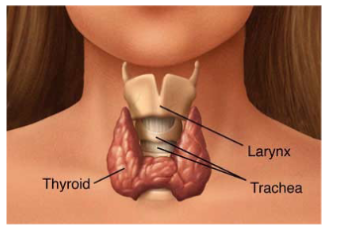
WHat are the 2 hormones produced by the thyroid gland
thyroxine (T4)
calcitonin
Describe the parathyroid gland
primary gland responsible for raising calcium levels in the blood
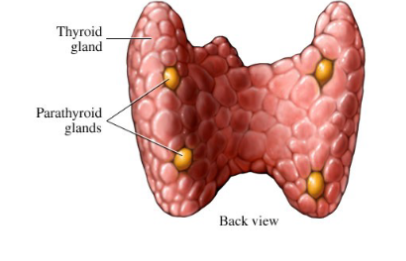
four small glands attached to the posterior side of the thyroid
hormone produced:
parathyroid hormone (PTH)
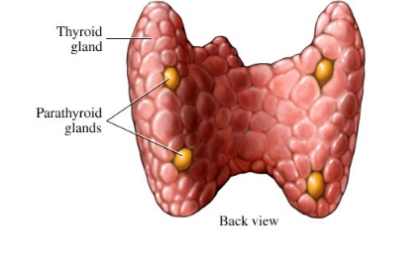
What hormone is produced by the parathyroid gland
the parathyroid hormone (PTH)
Describe thyroxine (T4)
hormone secreted by the thyroid gland that regulates metabolism
does so by increasing the rate at which the body metabolizes fats’, proteins, and carbs for energy
no specific target organs; stimulates cells of
the heart,
skeletal muscles,
liver
and kidneys
to increase the rate of cellular respiration
Thyroxine also plays an important role in the growth and development of children by influencing the proper organization and differentiation of various cells into tissues and organs
How does thyroxine (T4) ,secreted by the thyroid gland, regulate metabolism?
by increasing the rate at which the body metabolizes fats’, proteins, and carbs for energy
What are the targets for thyroxine (T4)
no specific target organs
stimulates cells of:
the heart
skeletal muscles
liver
and kidneys
to increase the rate of cellular respiration
Does thyroxine produce a negative or positive feedback loop?
negative
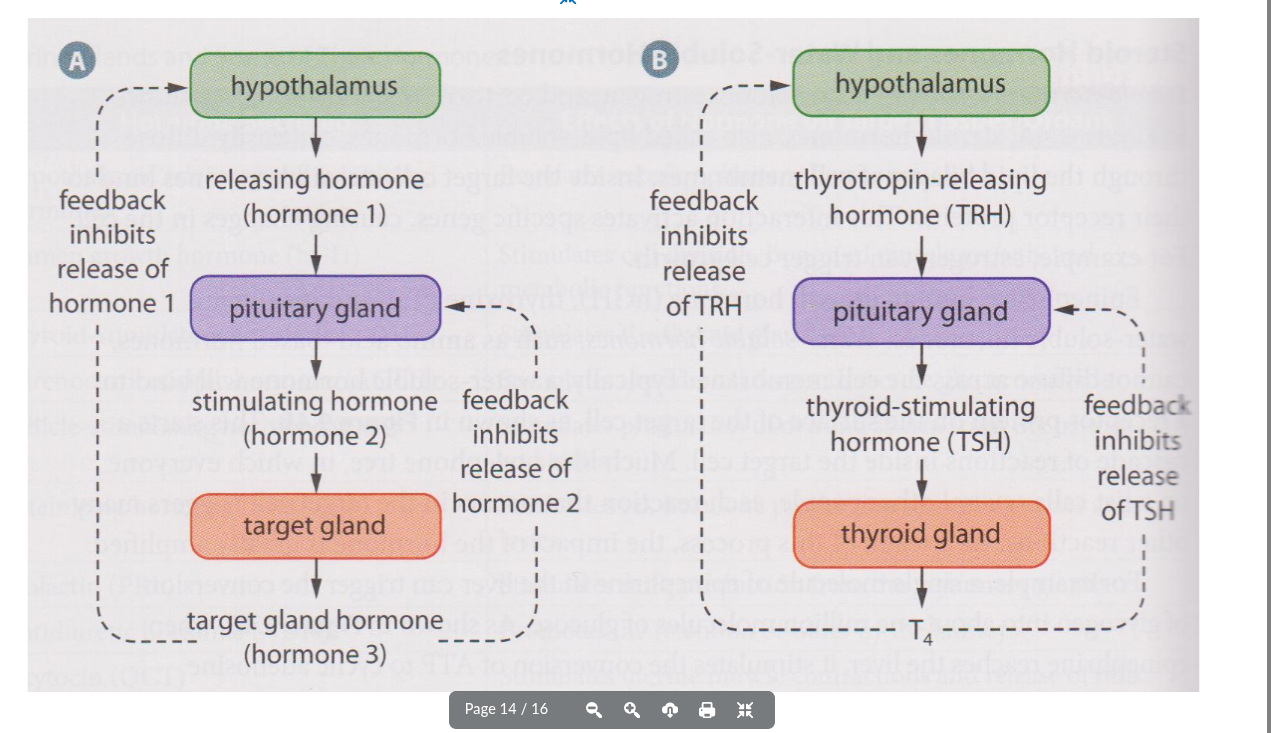
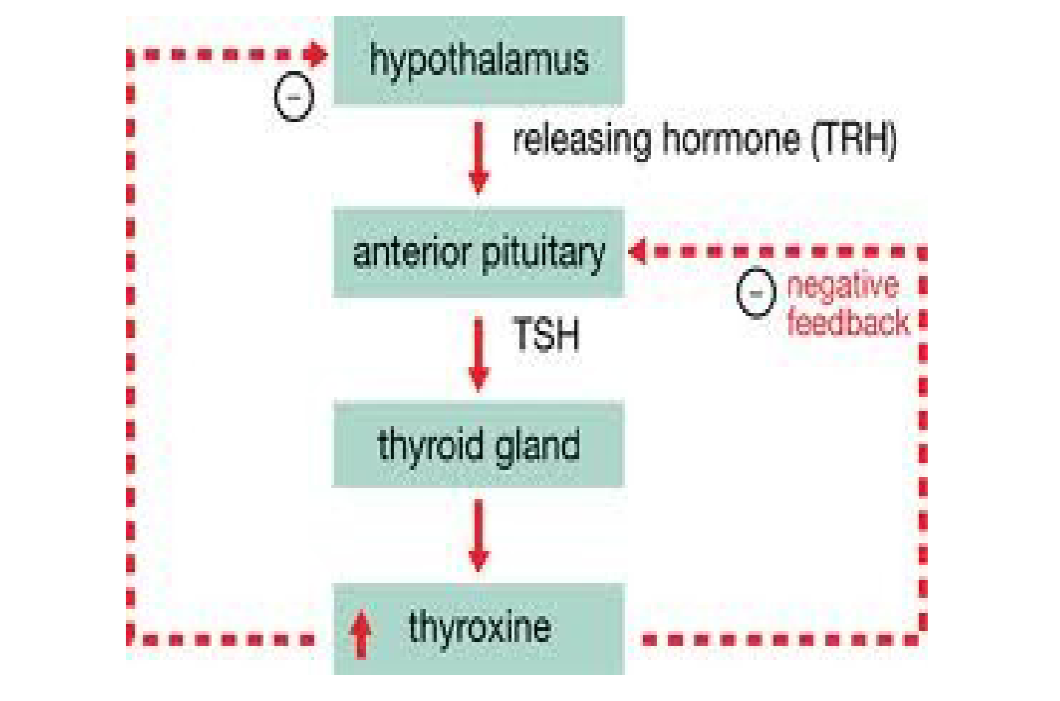
Describe thyroxine’s (T4) negative feedback loop
Hypothalamus secretes the first tropic hormone, called thyroxine releasing hormone (TRH), into the anterior pituitary
the anterior pituitary releases the second tropic hormone, called thyroid stimulating hormone (TSH), into the thyroid gland
the thyroid gland is stimulated to produce thyroxine
high levels of thyroxine cause negative feedback by preventing the release of either TRH (at the hypothalamus) or TSH (at the anterior pituitary)
What is hypothyroidism
having low quantities of thyroxine
Describe cretinism and how its caused
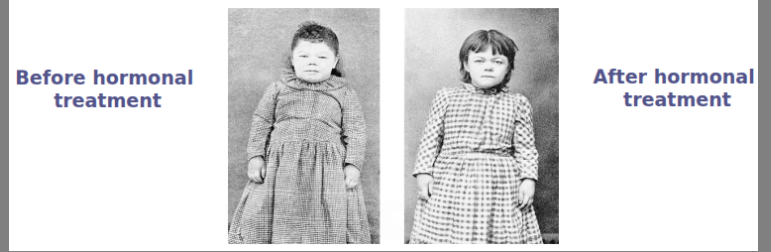
low quantities of thyroxine produced during childhood (hypothyroidism) results in a condition called cretinism
due to improper development of the thyroid gland
physical symptoms include:
stocky and shorter than average stature
enlarged facial features
mental development delays\
sufferers must receive regular hormonal injections early on in life
What happens when you have hypothyroidism during adulthood?
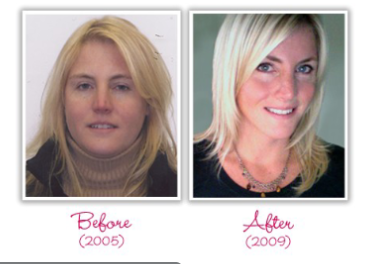
hypothyroidism during adulthood results in multiple symptoms including:
constant fatigue
slow pulse rate
puffy skin
hair loss
easy weight gain
joint or muscle pain
increased sensitivity to cold
FOr thyroxine, what does the 4 mean in T4
the synthesis of thyroxine requires iodine (The ‘4’ in T4 refers to the four iodine molecules in the hormones)
Relating to thyroxine (T4) what happens when you don’t consume enough iodine?
insufficient dietary iodine means that thyroxine cannot be made
this means that there can be no feedback signal on the anterior pituitary to stop the synthesis of TSH
thus TSH will be constantly synthesized and continually stimulate the thyroid gland (even though no thyroxine made)
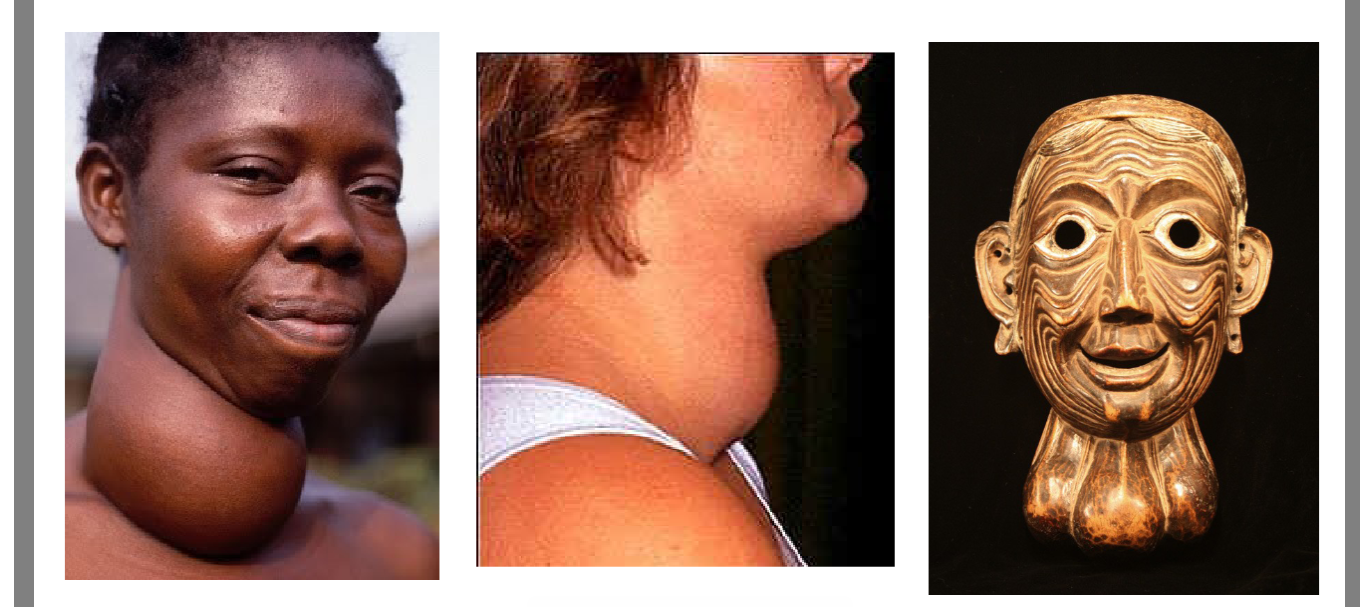
this causes an enlargement of the thyroid gland called goitre
other than large swelling in the throat, additional symptoms may include:
difficulty breathing
difficulty swallowing
constant coughing
remission is possible with iodine supplements
What is hyperthyroidism
overproduction of thyroxine is called hyperthyroidism
What happens when you get hyperthyroidism
overproduction of thyroxine is called hyperthyroidism
because metabolism is increased, symptoms may include:
anxiety
insomnia
difficulty concentrating
heat intolerance
irregular heartbeat
high blood pressure
excessive weight loss
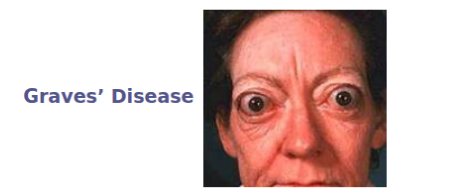
severe hyperthyroidism is a condition called graves’ disease
whereby sufferers display a characteristic protrusion of their eyes, thus interfering with vision
hyperthyroidism can be treated via medications or removal / irradiation of portions of the thyroid gland
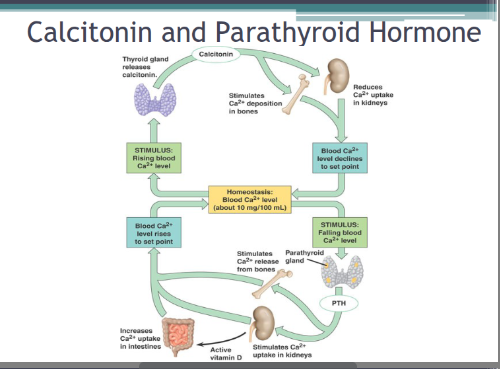
What happens when calcium is too high in the blood
when calcium in the blood is too high,
calcitonin (from the thyroid gland) stimulates the uptake of calcium into bones
and decreases kidney uptake from urine,
thus lowering its concentration in the blood
What happens when calcium levels in the blood drop too low?
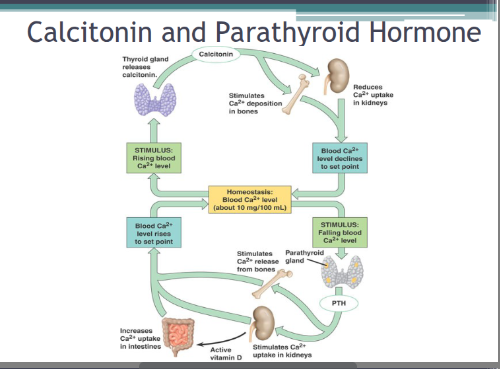
if calcium levels in the blood drop too low
parathyroid hormone (from the parathyroid glands) helps absorb calcium into the blood by:
breaking down bone
stimulating kidneys to absorb from the urine and also activating vitamin D
increasing absorption from food by the intestines (due to activated vitamin D)
Describe the adrenal glands
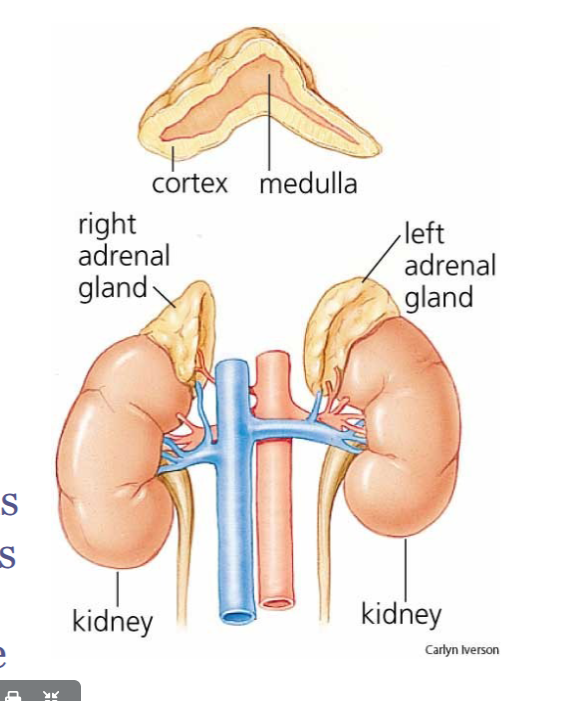
adrenal glands are located above the kidneys and have two distinct regions each:
Adrenal cortex
outer layer of adrenal glands
pure endocrine cells
secrete aldosterone and cortisol
Adrenal medulla
central region of adrenal glands
possess neurosecretory neurons
secrete epinephrine and norepinephrine
What is secreted from the adrenal medulla portion of the adrenal glands and when do they get secreted?
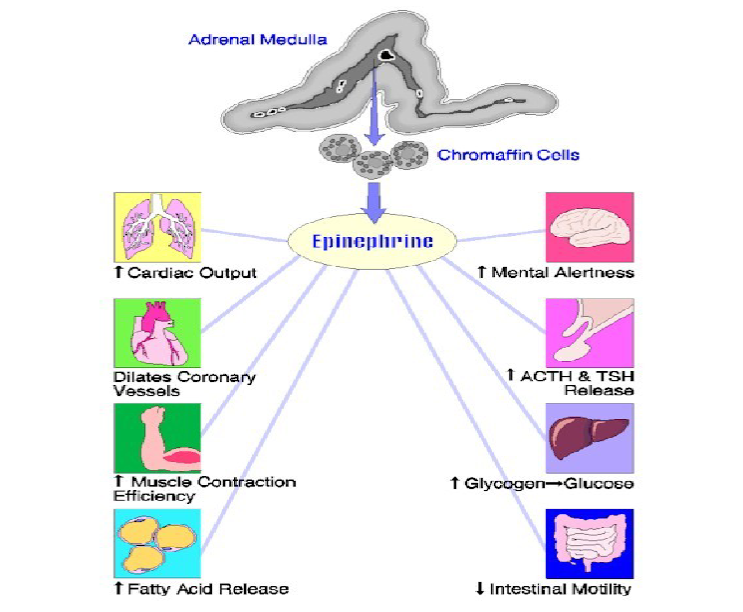
epinephrine and norepinephrine are secreted when the body encounters stresses (excitement, danger, anger, fear, injury, anxiety)
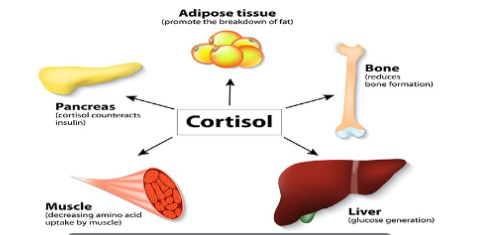
What is secreted from the adrenal cortex portion of the adrenal glands and describe that they do
aldosterone
involved in osmoregulation and control of blood pressure
increase water and sodium reabsorption in the nephron
cortisol
increases blood glucose levels when levels are low
via breakdown of proteins and fats
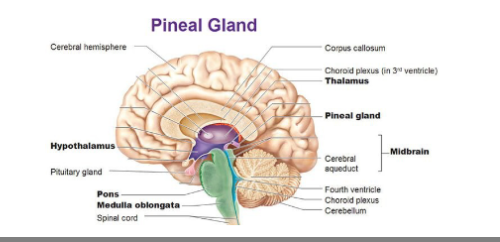
Describe the pineal gland and what is secretes
located in the centre of the brain in humans
secretes melatonin
helps regulate daily biorhythms
greater amount produced during darkness
targets hypothalamus, which helps body synchronize its biological clock (called circadian rhythm) with daily cycles of light and dark

hGH (human growth hormone)
Thyroxine (T4) mainly

epinephrine
norepinephrine

The anterior and posterior pituitary glands differ fundamentally in how they synthesize and release hormones:
the anterior lobe produces its own hormones in response to hypothalamic signals,
while the posterior lobe acts as a storage and release site for hormones manufactured directly by the hypothalamus
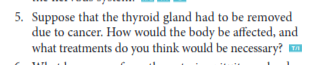
GOOD FOR TEST
since there is no thyroxine
this means that there can be no feedback signal on the anterior pituitary to stop the synthesis of TSH
thus TSH will be constantly synthesized and continually stimulate the thyroid gland
causes an enlargement of the thyroid gland called goitre
large swelling in throat
difficulty breathing
difficulty swallowing
constant coughing
remission is possible with iodine supplements
symptoms you could get:
constant fatigue
slow pulse rate
puffy skin
hair loss
easy weight gain
joint or muscle pain
increased sensitivity to cold

The anterior pituitary gland secretes two critical reproductive hormones known as gonadotropins: Follicle-Stimulating Hormone (FSH) and Luteinizing Hormone (LH), as well as Prolactin. Together, they control sexual development, gamete production, ovulation, and lactation

because caffeine and ethanol inhibit the production of ADH
This prevents your kidneys from reabsorbing water, leading to rapid bladder filling

Epinephrine is the first-line treatment for anaphylaxis because it rapidly reverses the most life-threatening symptoms.
It works by constricting blood vessels to raise dangerously low blood pressure and opening up the airways to restore normal breathing.
It also stops the immune system from releasing further allergy-triggering chemicals

early vertebrates, the pineal gland (often associated with an ancestral "third eye" or parietal eye) was directly sensitive to light.
In modern animals, it no longer detects light directly in most species.
Instead, it responds to light signals relayed from the eyes by altering the production of the hormone melatonin

The hypothalamus connects the nervous and endocrine systems by acting as a translation bridge.
It receives electrical signals from the brain and translates them into chemical messages—releasing and inhibiting hormones—which direct the pituitary gland to control the body's hormone-producing glands.
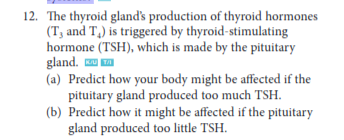
Excessive TSH overstimulates the thyroid, causing it to overproduce T3 and T4.
This leads to hyperthyroidism, which accelerates your metabolism.
Conversely, too little TSH fails to stimulate the thyroid, leading to a severe drop in T3 and T4,
which causes hypothyroidism, dangerously slowing down your metabolism.
What is the pancreas
organ the size of a hand, located behind (posterior) the stomache and consists of two glands/portions
exocrine gland
endocrine gland
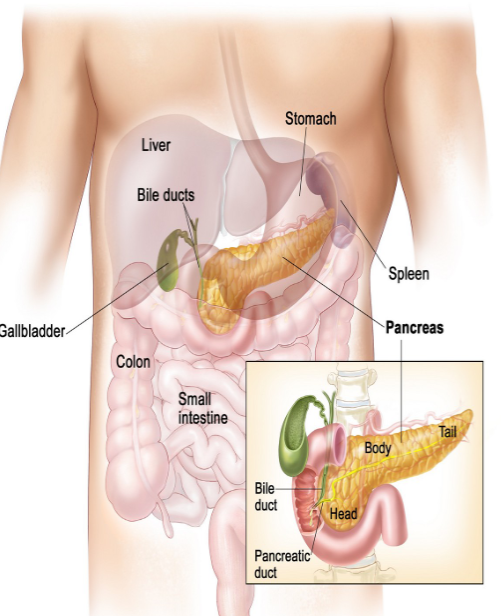
describe the two glands/portions of the pancreas
exocrine gland
secretes digestive enzymes into the small intestine
makes up the majority of the pancreas
endocrine gland
made of clusters of specialized endocrine cells called islets of langerhans
secrete insulin and glucagon
the primary hormones that regulate blood glucose levels
only 2% of the pancreas
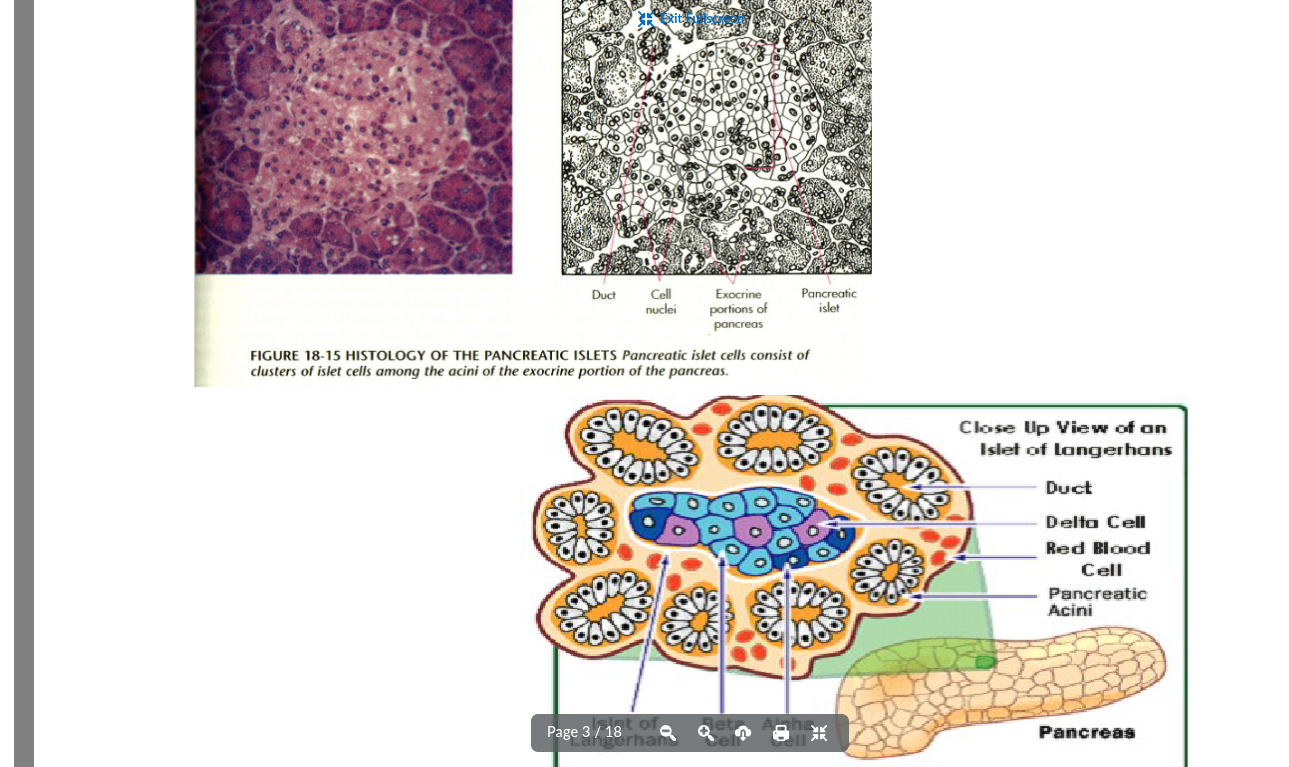
Describe insulin
secreted by beta cells in the islets of langerhans of the endocrine glands of the pancreas
rise in blood glucose levels will trigger the release of insulin, leading to lowered blood glucose via:
instructing target cells (skeletal muscles, liver cells, adipose tissue) to uptake glucose from the blood
inhibit breakdown of glycogen in the liver
other periphery effects
lowers fatty acid levels by promoting uptake and storage into the adipose tissue and inhibiting breakdown of fats’ unto fatty acids
lowers amino acid levels by promoting protein synthesis and inhibiting breakdown of proteins into amino acids
Describe glucagon
secreted by alpha cells in the islets of langerhans of the endocrine glands in the pancreas
drop in blood glucose levels will trigger the release of glucagon, leading to increased blood glucose via:
breakdown of glycogen to glucose in the liver
other periphery effects:
breakdown of fats’ into fatty acids and proteins into amino acids
allows fatty acids and amino acids to be converted to glucose via gluconeogenesis
Describe the negative feedback loop of blood glucose
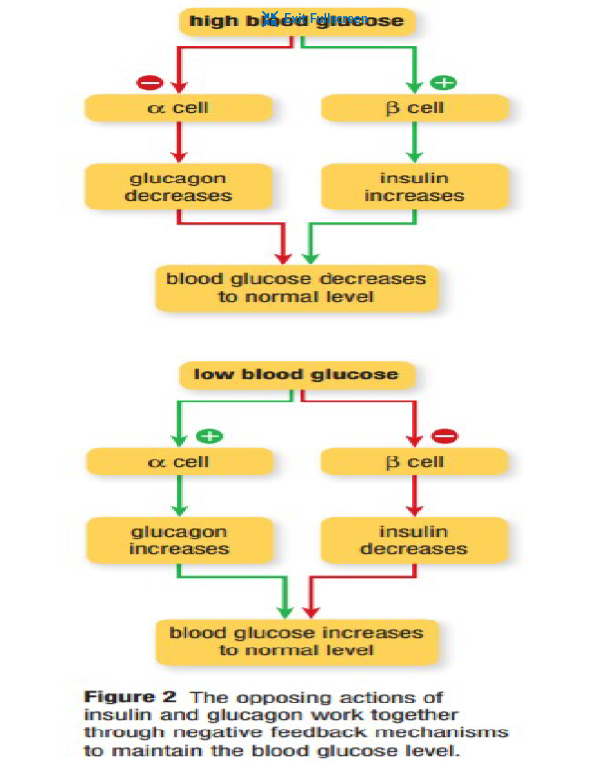
What are glucocorticoids
glucocorticoids are a class of hormones secreted by the adrenal cortex to help raise blood sugar
main glucocorticoid: Cortisol
breakdown of fats’ and proteins, into fatty acids and amino acids, respectively
synthesis of glucose from fatty acids and amino acids
reduce glucose uptake by body cells (except the cells in the central nervous system)
Describe the feedback loop that occurs when blood glucose is too low or epinephrine is secreted in response to stress
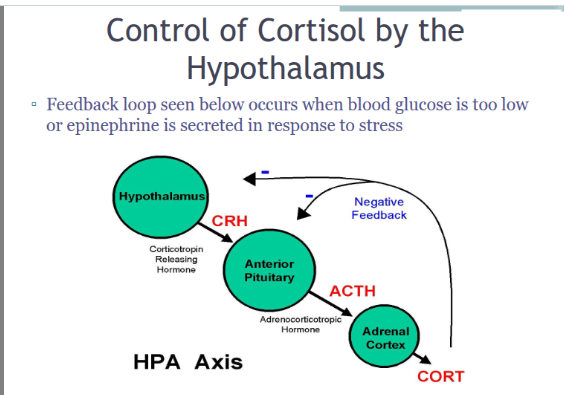
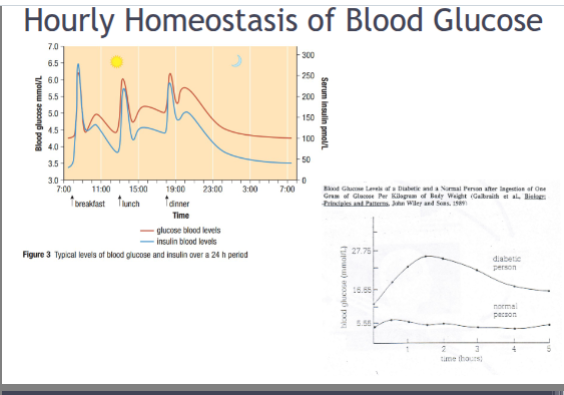
idk understand this
Describe the difference between hyperglycemia and hypoglycemia
hyperglycemia
blood glucose that is too high
symptoms:
thirst
frequent urination
sugar in urine
fatigue
vision issues
weight loss
hypoglycemia
blood glucose that is too low
symptoms:
nervousness
shaking
cold sweats
hunger
headaches
weakness
Describe diabetes mellitus
characterized by elevated glucose levels and problem with either insulin production or action
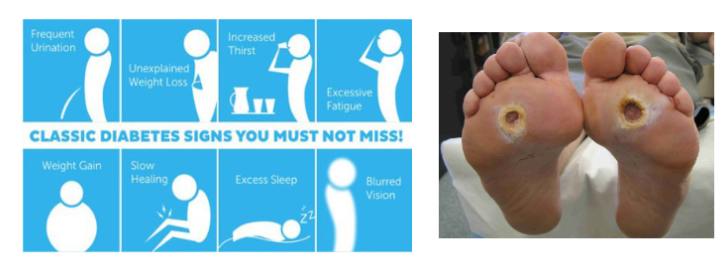
3 classic symptoms:
frequent urination
abnormally high amount of glucose in filtrate of nephron
consequently, more water is pulled via osmosis from renal capillaries into tubules
increased thirst
due to need to replace excess excreted water
leads to increased water uptake
increased apetite
inability of insulin to help with glucose uptake into cells
leads to increased need to break down proteins and fats for energy, leading to further deficiencies that increase hunger do these nutrients
end result is weight loss
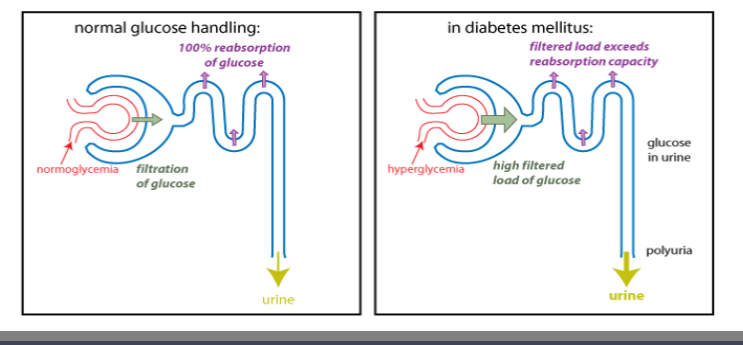
Describe the 3 classic symptoms of diabetes mellitus
Frequent urination
abnormally high amounts of glucose in filtrate if nephron
consequently, more water is pulled via osmosis from renal capillaries into tubules
Increased thirst
due to need to replace excess water excreted
leads to increased water uptake
increased appetite
inability of insulin to help with glucose uptake into cells
leads to increased need to break down proteins and fats for energy, leading to further deficiencies that increase hunger for these nutrients
end result is weight loss
What are other symptoms and long term health effects of diabetes mellitus
other symptoms
blurred vision
lethargy
nausea
vomiting
abdominal pain
Long term health effects
loss of vision
kidney failure
hypertension
cardiovascular problems
damage to extremities in the body
What are the 2 types of diabetes
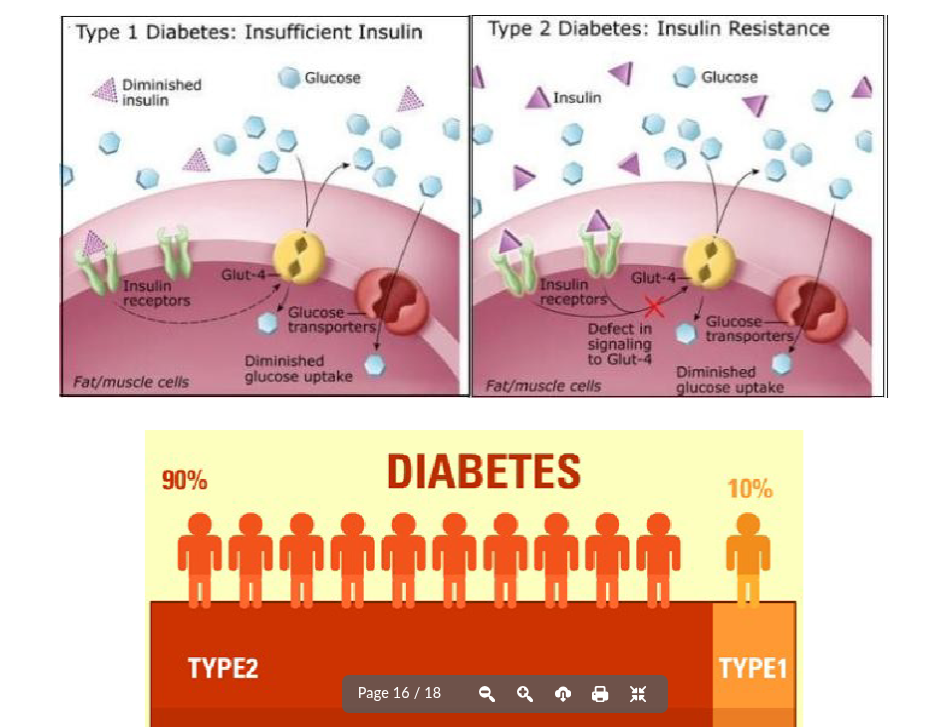
different types of diabetes based on the reason for the failure of insulin to regulate blood sugar
type 1 (aka juvenile diabetes)
type 2
gestational diabetes
Describe type 1 diabetes (aka juvenile diabetes)
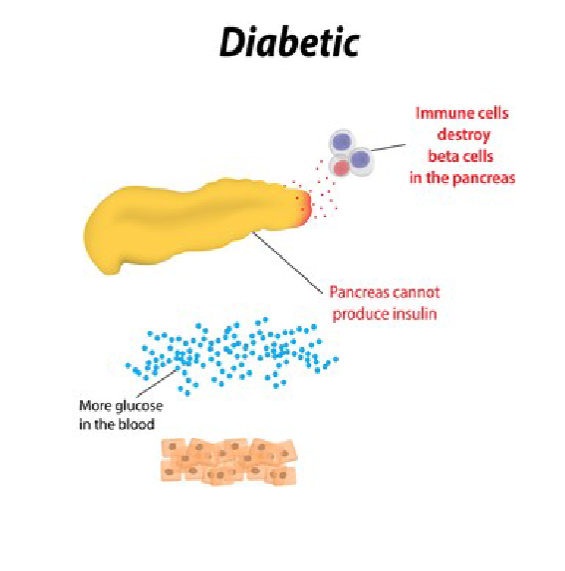
beta cells in the islets of Langerhans are destroyed and cannot produce insulin
degeneration of beta cells can begin in infancy
often diagnosed during childhood
requires close monitoring and daily treatment of insulin
Describe type 2 diabetes
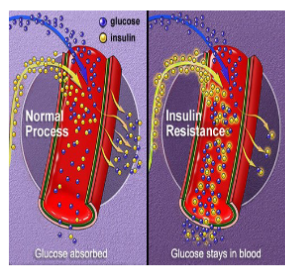
reduced production of insulin or inability of insulin to bind to its receptors (called insulin resistance)
develops during adulthood
strongly associated with obesity
controlled through diet and exercise
oral drugs can be used to increase insulin production or encourage binding to its receptors
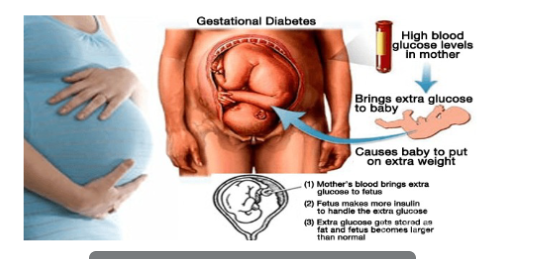
describe gestational diabetes
2-10% of pregnant women
due to high blood glucose that develops during pregnancy
temporary but can increase the risk of the mother and child developing diabetes later on in life