Love and chemical messengers
 Call Kai
 Learn
Learn Practice Test
 Spaced Repetition
 Match
Match Flashcards
 Knowt Play
1/10

There's no tags or description
Looks like no tags are added yet.
Name | Mastery | Learn | Test | Matching | Spaced | Call with Kai |
|---|
No analytics yet
Send a link to your students to track their progress
11 Terms
How does attraction begin?
Starts from sensory input (info received through senses) activates specific regions in the brain → release of hormones & neurotransmitters
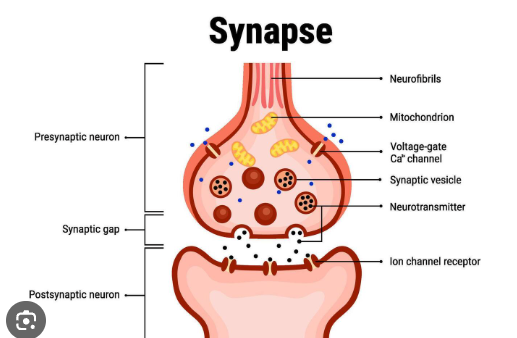
What is neurotransmission and neurotransmitters?
Neurotransmission: biological process through which Neurons communicate to each other
Neurotransmitters: Chemical messengers that carry signals between Neurons across synapse
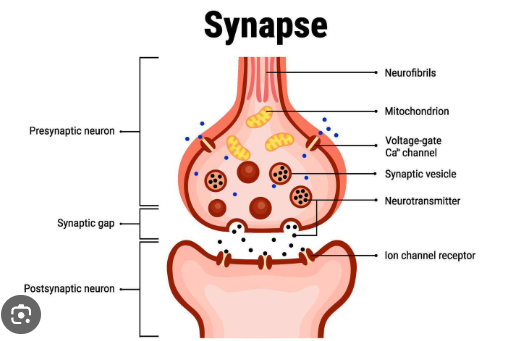
What are hormones?
Chemical messengers that are released by glands (organ that secretes chemical substance) and are released into the bloodstream.
What is the difference between hormones and neurotransmitters?
Hormones: Released by glands (organ that secretes chemical substance) and mainly present in bloodstream
Neurotransmitters: Released by Neurons (nerve cell that receives, processes, and transmits sensory inputs) and mainly present in brain/nervous system
What is dopamine (neurotransmitter focus )
Neurotransmitter linked to brains reward system → When drawn to someone dopamine rises → excitement & motivation to seek closeness and bond with person.
What is Noradrenaline/norepinephrine (neurotransmitter and hormone)
Neurotransmitter and hormone linked to physical arousal and alertness → When drawn to someone Noradrenaline rises → increases heart rate, faster breathing, e.t.c . → reinforces emotional excitement and attraction
What is Serotonin (neurotransmitter)
Neurotransmitter linked to mood and emotional regulation → When drawn to someone Serotonin drops → obsessive thinking & compulsive tendencies → Fosters intense focus & commitment to potential mate
What is Oxytocin (neurotransmitter and hormone)
Neurotransmitter and hormone that is linked with trust and closeness → released during physical touch (kissing, touching) → creates warmth and security → fosters attachment & creates long term connection in long term.
Testosterone & estrogen (hormone → Focus for hormone)
Testosterone boosts sex drive, confidence, competitiveness → motivation to pursue partner
Estrogen enhances sensitive/responsiveness to emotions and social cues (e.g. empathy) → nurturing behaviour
T& E are Sex hormones that are linked with desire, physical, social behaviour → contributing to intensity of sexual attraction → support bonding & reproduction
Both present in men & woman
Explain Fisher et al in relation to chemical messengers
Aim: Investigate specific regions of the brain associated with romantic love
Procedure: 17 volunteers that reported early extreme romantic love (using interview & passionate love questionnaire)
Using FMRI participants views romantic partners than neutral acquaintance (with filler task between photos
Conclusion: Viewing romantic partner activated brain’s reward system → increased activity in dopamine-rich areas
Suggest dopamine + reward pathways are involved in early stage romantic love
What are the strengths and limitations of chemical messengers study of love (Fisher et al)
+ Use of fMRI brain scanners: dopamine-rich reward areas of the brain found biologically →
→ objective biological data used rather than self-report
+ High reliability: same scanning process → increased replication
— Reductionist explanation: love explained through dopamine activity → culture, emotions, personality, e.t.c can play role
— FMRI measure blood flow → no direct biological link (e.g neurotransmitters) → reducing certainty of conclusions