Rome Exam Part B
 Call Kai
 Learn
Learn Practice Test
 Spaced Repetition
 Match
Match Flashcards
 Knowt Play
1/50

There's no tags or description
Looks like no tags are added yet.
Name | Mastery | Learn | Test | Matching | Spaced | Call with Kai |
|---|
No analytics yet
Send a link to your students to track their progress
51 Terms
The Flavians
Nero commits suicide in 68 CE
Year of the Four Emperors: Galba, Otho, Vitellius, Vespasian
Vespasian: 69-79
Titus (son): 79-81
Domitian (son): 81-96
Nerva (not a Flavian): 96-98
Vespasian (ruled 69-79)
Came from modest background
Gained prominence as a military commander
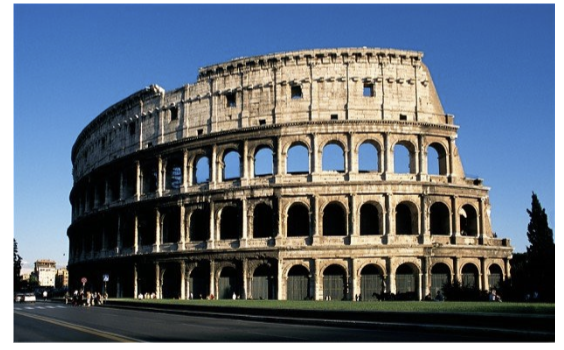
Restored Rome’s finances and launched building projects (Colosseum)
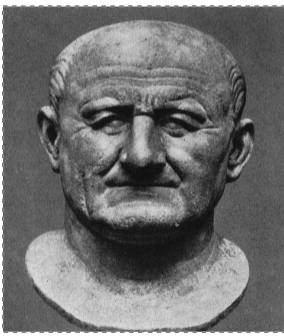
Flavian Amphitheater/Colosseum
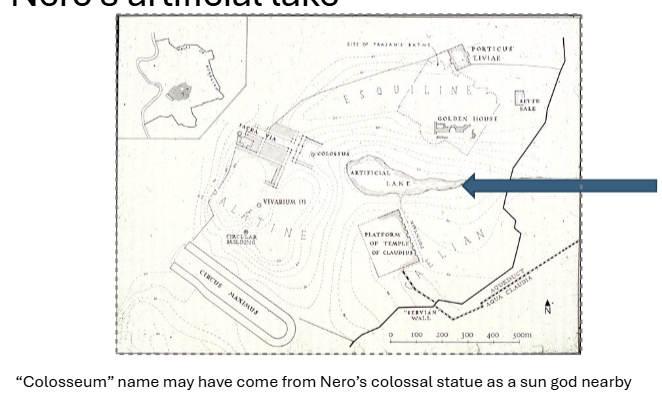
Colosseum location: area formerly occupied by Nero’s artificial lake
Materials and architectural orders
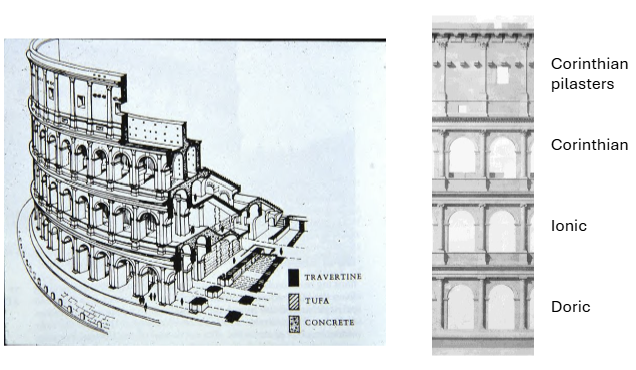
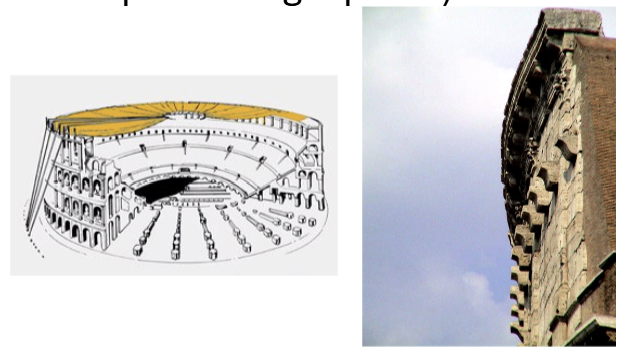
Velarium: awning (based for posts in right photo)
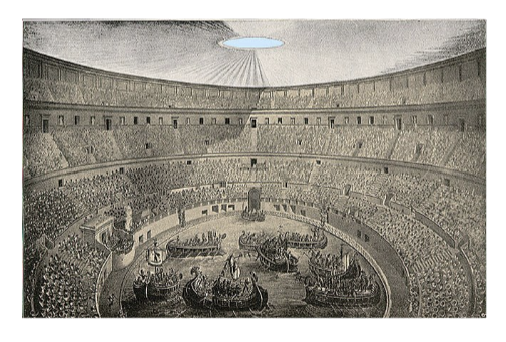
Naumachia: mock naval battles
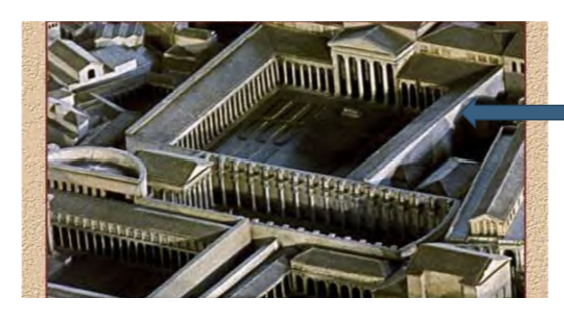
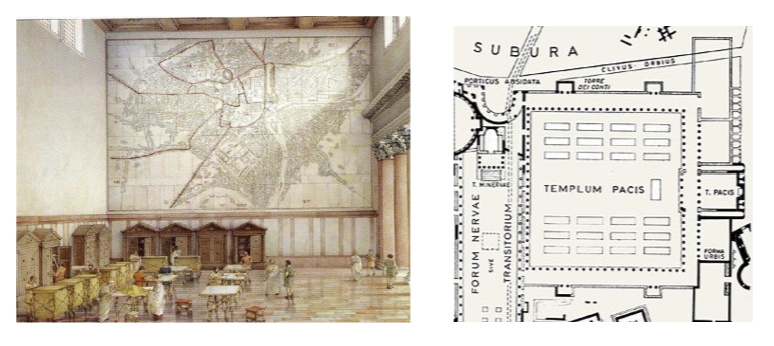
Forum/Temple of Peace
Marble Plan of Rome (Forma Urbis)
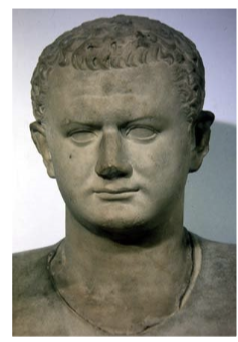
Titus (ruled 70-81)
first Roman emperor to directly succeed biological father
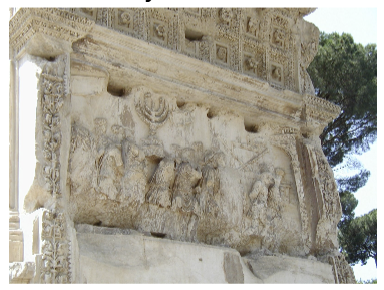
Commanded Roman forces during first Jewish-Roman war and captured Jerusalem in 70 CE
Completed Colosseum
Eruption of Vesuvius occurred during his reign (79 CE)
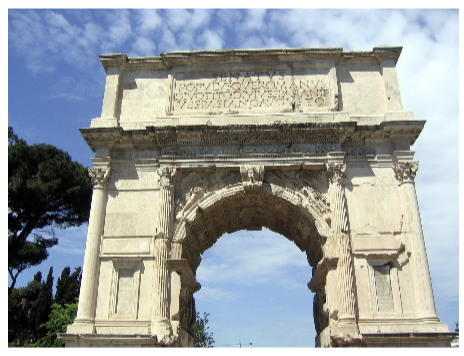
Arch of Titus
Roman Victory in Jerusalem (Arch of Titus)
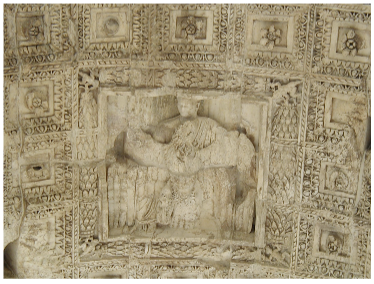
Apotheosis (deification) of Titus
Temple of Vespasian & Titus
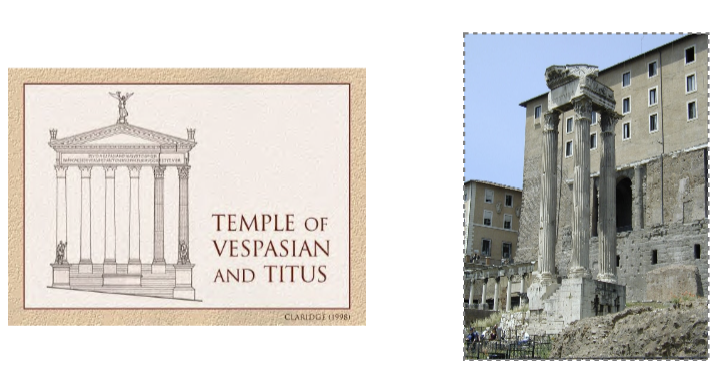
Temple of Vespasian and Titus
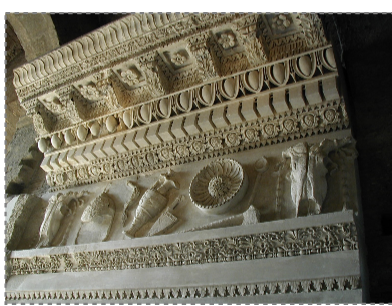
Sculptural reliefs showing items to sacrifice
Ornamentation
egg & dart
Dentils
Beed & reel
Acanthus leaves
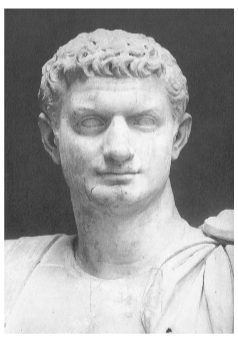
Domitian (ruled 81-96)
became emperor when brother Titus died of a fever
Strengthened Roman economy and expanded border defenses
Rule became increasingly autocratic
Assassinated in 96 CE
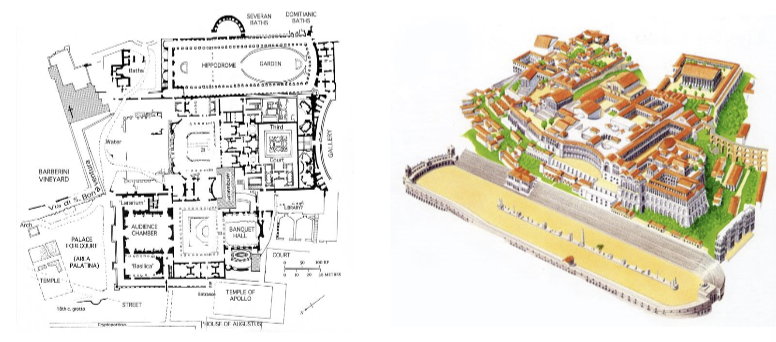
Palace of Domitian (Domus Flavia) on Palatine Hill
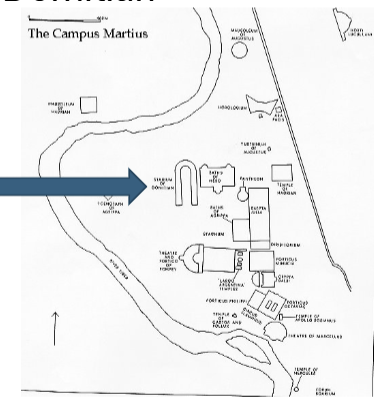
Stadium of Domitian
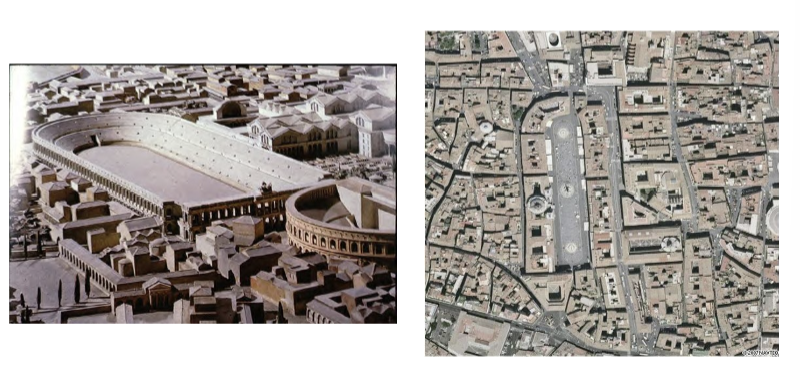
Stadium of Domitian (current Piazza Novana)
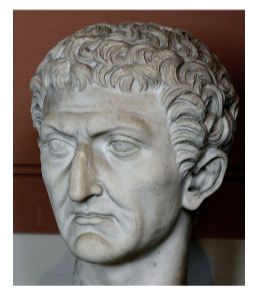
Nerva (ruled 96-98)
Senate declared him emperor following Domitian’s assassination
Praised as wise and moderate
Restored civil liberties curtailed under Domitian’s rule
Adopted Trajan as co-emperor and heir (who was a popular general)
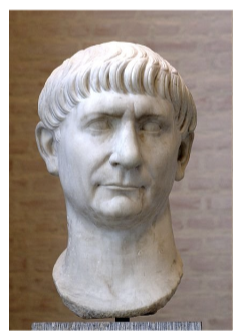
Forum of Nerva
In narrow space between forums of Augustus & Julius Caesar and the Forum of Peace
Also called Forum Transitorium (because used to pass through to the main Roman Forum)
Temple dedicated to Minerva
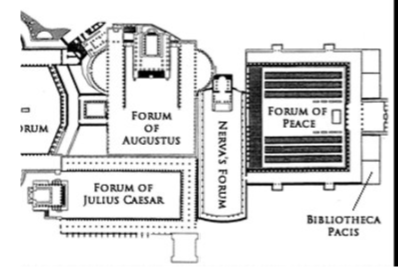
Trajan (ruled 98-117)
97 CE Nerva adopted Trajan as co-emperor
Trajan born in Italica, Spain (53 CE)
Officer in army, popular with all
Wars of conquest:
Dacia (beyond Danube River)
Achieved military glory and huge wealth
Forum of Trajan
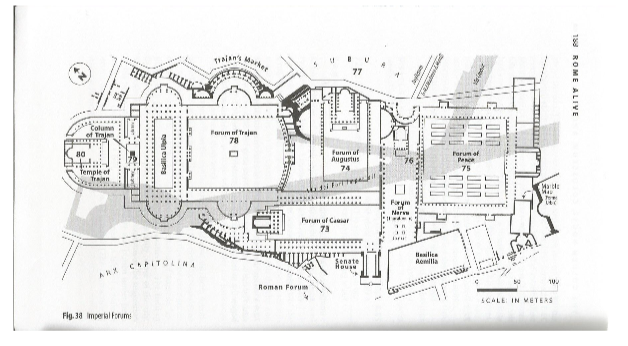
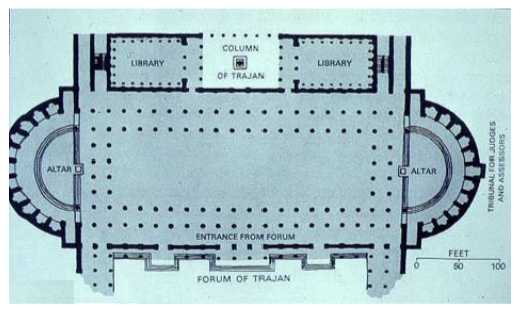
Forum of Trajan
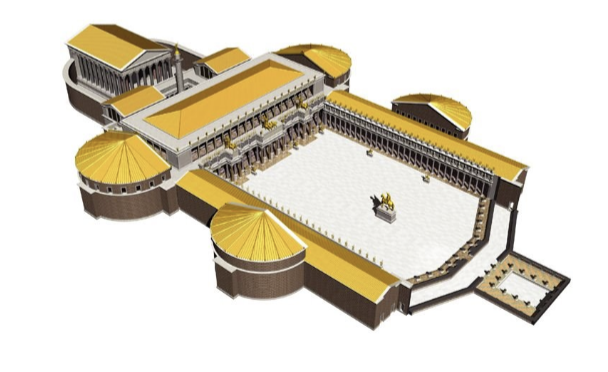
Basilica Ulpia 113 CE
600 × 200 Roman feet (largest yet)
Upper story Dacian prisoners and shields
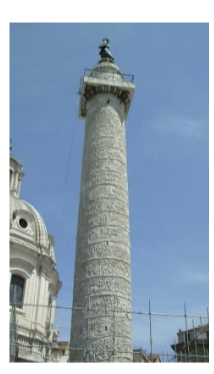
Column of Trajan 113 CE
128 Roman feet
29 blocks of white marble
Bronze statue of Trajan at top (now St. Peter)
200 meter long frieze: story of Dacian military campaigns
Spiral staircase inside
Hadrian Publius Aelius Hadrianus
Trajan died late 117 CE
Hadrian, was one of his commanders
Retracted some of Trajan’s expansions in empire and secured the frontiers
Travelled widely, fond of Greek culture (hence the beard, which became popular)
Hadrian dies in 138
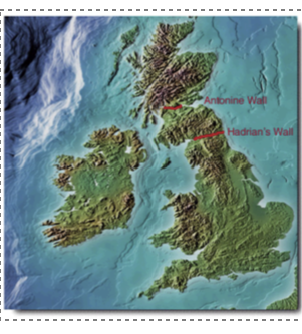
Hadrian’s Wall (122-128 CE)
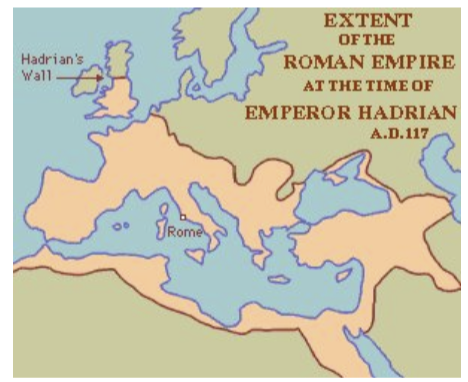
Hadrian’s Wall
73 miles long
8-10 feet wide
turrets built at intervals
made of stone and also blocks of turf
located in modern day England
wall of successor, Antoninus Pius, was 37 miles long, located in modern day Scotland
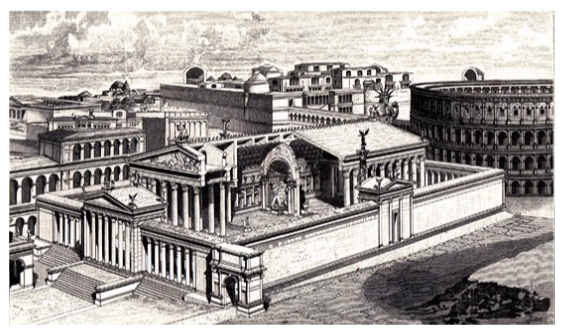
Temple of Venus and Roma (125-135)
Designed by Hadrian
Largest temple in Rome
Double temple with back to back cellas for the two deities
Greek style, low podium
Later rebuilt by Maxentius
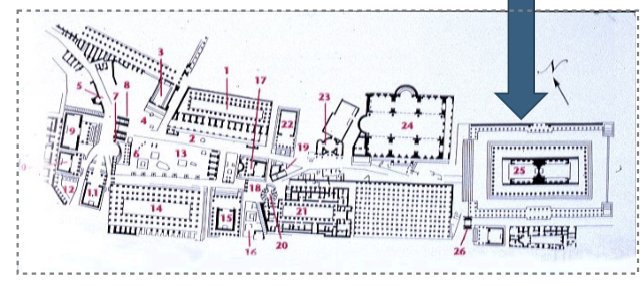
Temple of Venus and Roma
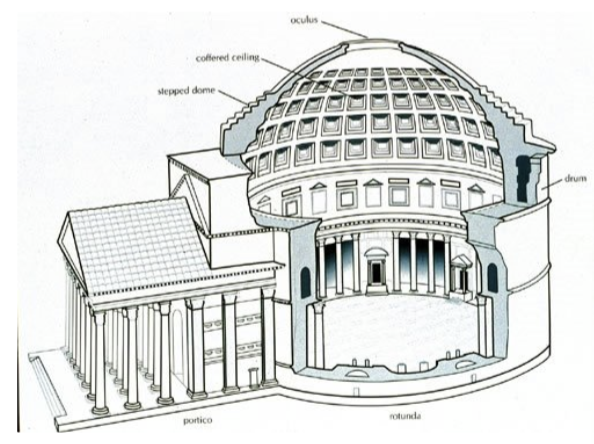
Pantheon (118-125)
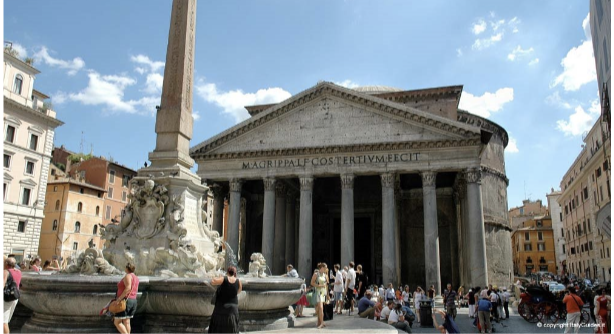
Pantheon
Temple to “all the gods”
pan= all/every, theon=god/deity
Third rebuilding
First built by Marcus Agrippa in 27-25 BCE
Survived as church to St. Mary of the Martyrs
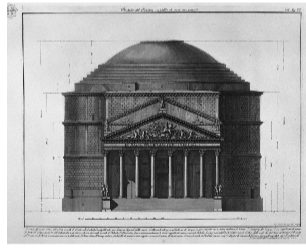
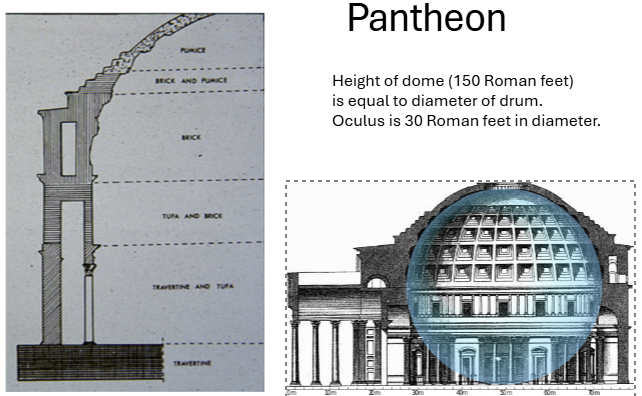
Pantheon
Pantheon
Height of dome (150 Roman feet) is equal to diameter of drum
Oculus is 30 Roman feet in diameter
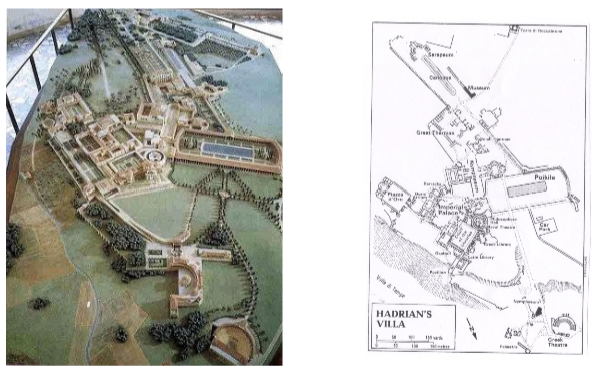
Hadrian’s Villa in Tivoli
Known for innovative architecture, as well as Greek and Egyptian elements
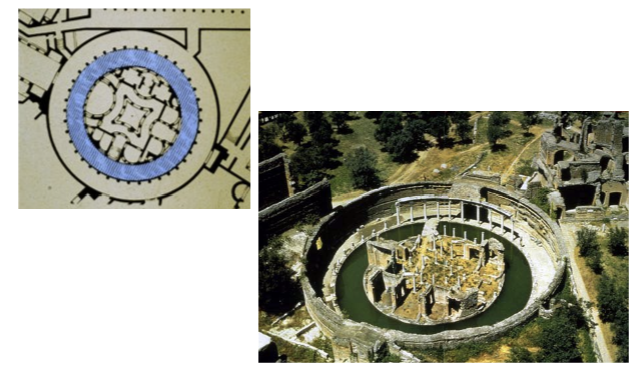
Hadrian’s Villa: Maritime Theater
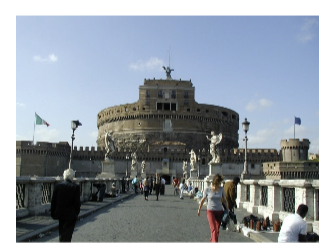
Mausoleum of Hadrian and Pons Aelius (Castel and Ponte Sant’Angelo)
Built by Hadrian for himself and family
Over 50 meters high
Contained ashes of Hadrian and Sabina, then Antonine and Severan families, last person being Caracalla (217)
Turned into a fort in the Middle Ages
Bridge rebuilt with angels designed by Bernini (1688)
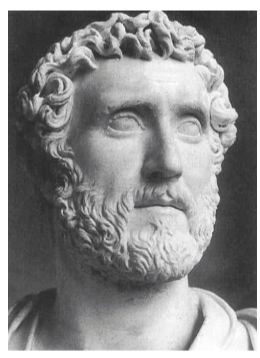
Antoninus Pius
Hadrian dies in 138, having adopted 52 year old Antoninus Pius as his successor
Reign marked by peace, prosperity, tranquility
Devoted to family, careful with wealth and resources
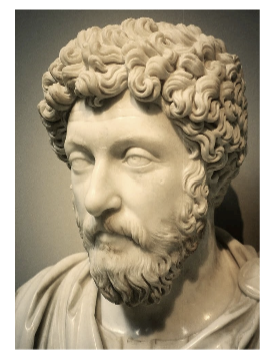
Marcus Aurelius
Had been adopted by AP as successor on Hadrian’s instructions
Reign troubled by continuous emergencies on northern western frontiers of empire
Took wife Faustina with him on military campaigns
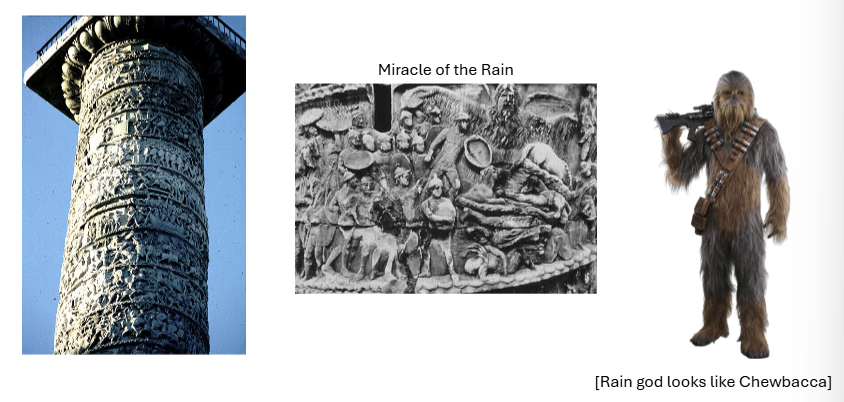
Column of Marcus Aurelius (180)
Located in Campus Martius
Frieze theme is story of MA’s wars north of Danube River
Carving is bolder
Content of scenes simplified (fewer figures)
Action is almost continuous
Conflicts more violent
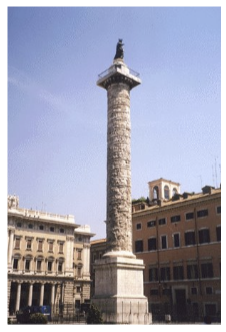
Column of Marcus Aurelius
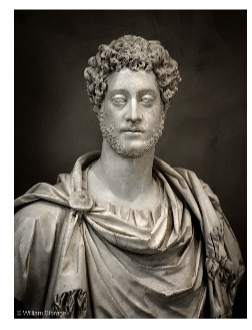
Commodus
Son of Marcus Aurelius
Age 18 when succeeded into power
Mentally unbalanced
Wanted to fight as gladiator
Bad with finances, always ordering confiscations to get $
Strangled in 192
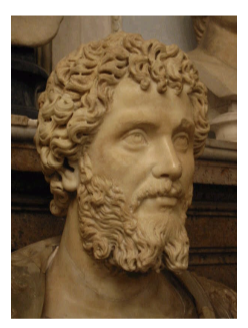
Septimius Severus
After year of fighting (192) between 5 army generals, Severus is victor
From wealthy family in Leptis Magna
Wife Julia Domna from Syria
Sons Caracalla and Geta
Military campaigns against Parthians
Died in 211, leaving sons as joint emperors
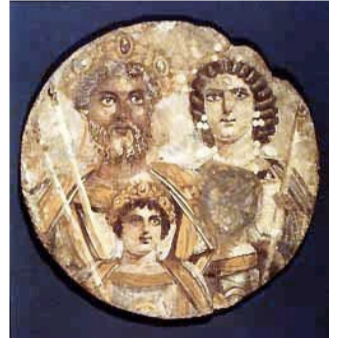
Caracalla has Geta killed
Severan family portrait with Geta removed (damnatio memoriae — condemnation of memory, erasure of inscriptions and images)
Arch of Septimius Severus
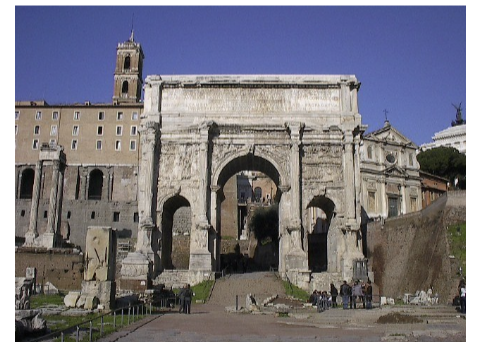
Arch of Septimius Severus
Reliefs show Parthian campaigns, battles, war councils, surrender, prisoners
Caracalla replaced “most noble Caesar Geta” in inscription wtih “excellent and strong princes” (damnatio memoriae)
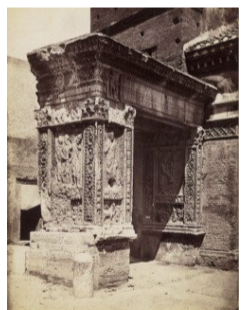
Arch of the Argentarii
Located in Forum Boarium
Dedicated to cattle merchants and bankers
Names of Geta and others erased
Sculptural reliefs of Geta and others erased
(damnatio memoriae)
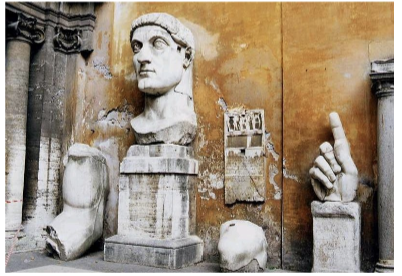
Constantine (ruled 306-337 CE)
First Roman Emperor to convert to Christianity
Issued Edict of Milan in 313, which legalized Christianity
Founded Constantinople in 330 as the new imperial capital
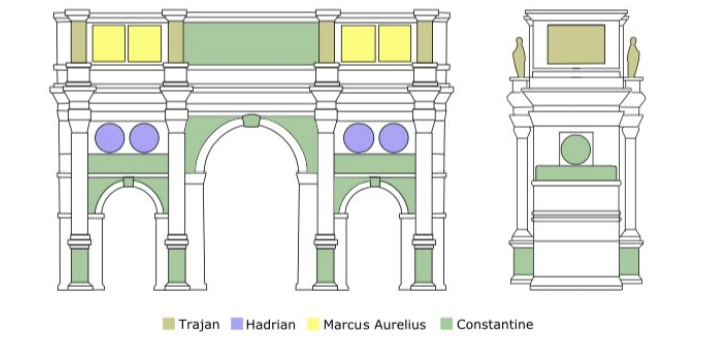
Arch of Constantine
Dedicated in 315 on 10th anniversary of Constantine’s reign
Took pieces from earlier monuments
Trajanic frieze
Hadrianic roundels
Panel-reliefs of Marcus Aurelius
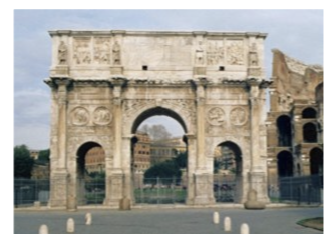
Arch of Constantine reuse of materials