Health Assessment Exam 3
 Call Kai
 Learn
Learn Practice Test
 Spaced Repetition
 Match
Match Flashcards
 Knowt Play
1/128

Earn XP
Description and Tags
Weeks 3-4
Name | Mastery | Learn | Test | Matching | Spaced | Call with Kai |
|---|
No analytics yet
Send a link to your students to track their progress
129 Terms
500 mL
How much water is lost from the skin each day in things like sweat, etc?
epidermis
Which layer of the skin is different for everyone?
cholesterol
What substance is converted to Vitamin D on the surface of the skin when reacting with UV radiation?
dermis
supportive layer of the skin
serves as a barrier for bacteria to enter
Why does the skin prevent penetration?
the nerves stemming from the subcutaneous tissue
How does the skin provide perception?
yes
is the skin waterproof?
skin
What is the largest organ?
prevents the loss of fluids and electrolytes
How does the skin balance fluids?
touch, pain, pressure, and temperature
Which of the senses can the skin detect?
sweat through sweat glands and releasing heat from storage in the subcutaneous insulation
How does the skin regulate temperature?
scars, freckles, melanin, fingerprints
How can skin help identify us?
emotion can be expressed in body language through facial expressions, blushing, and blanching
How can the skin help communicate?
wound repair
How does skin replacing itself benefit you?
metabolic wastes, electrolytes, minerals, sugars, amino acids, cholesterol, uric acid, urea
What does the body excrete out of the skin?
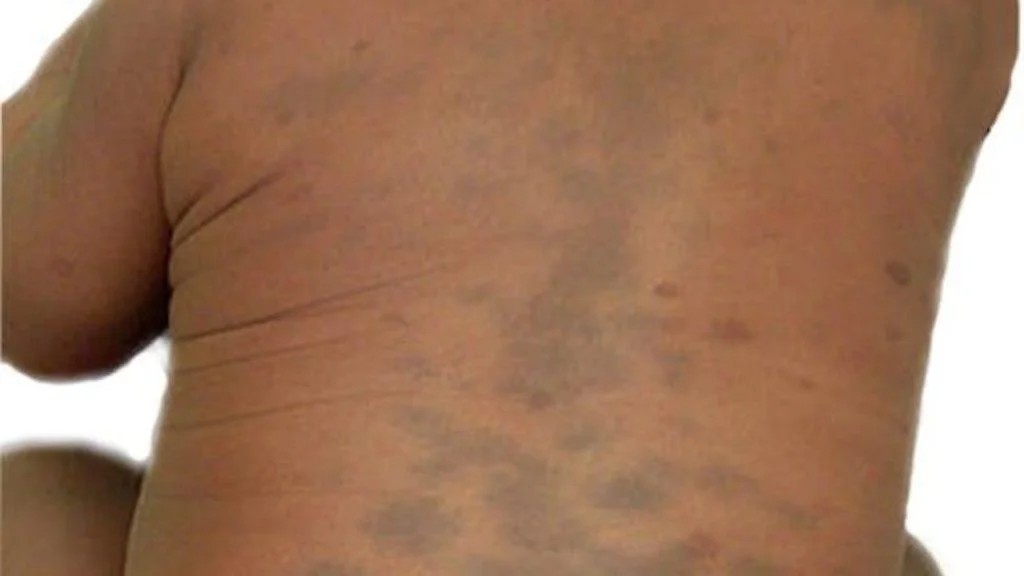
Mongolian spots
dark spots (blue, black, or purple) on an infant after birth that normally fade
caused by melanin being trapped deeper in the skin
more common in Black, Asian, Latino, and Native American babies
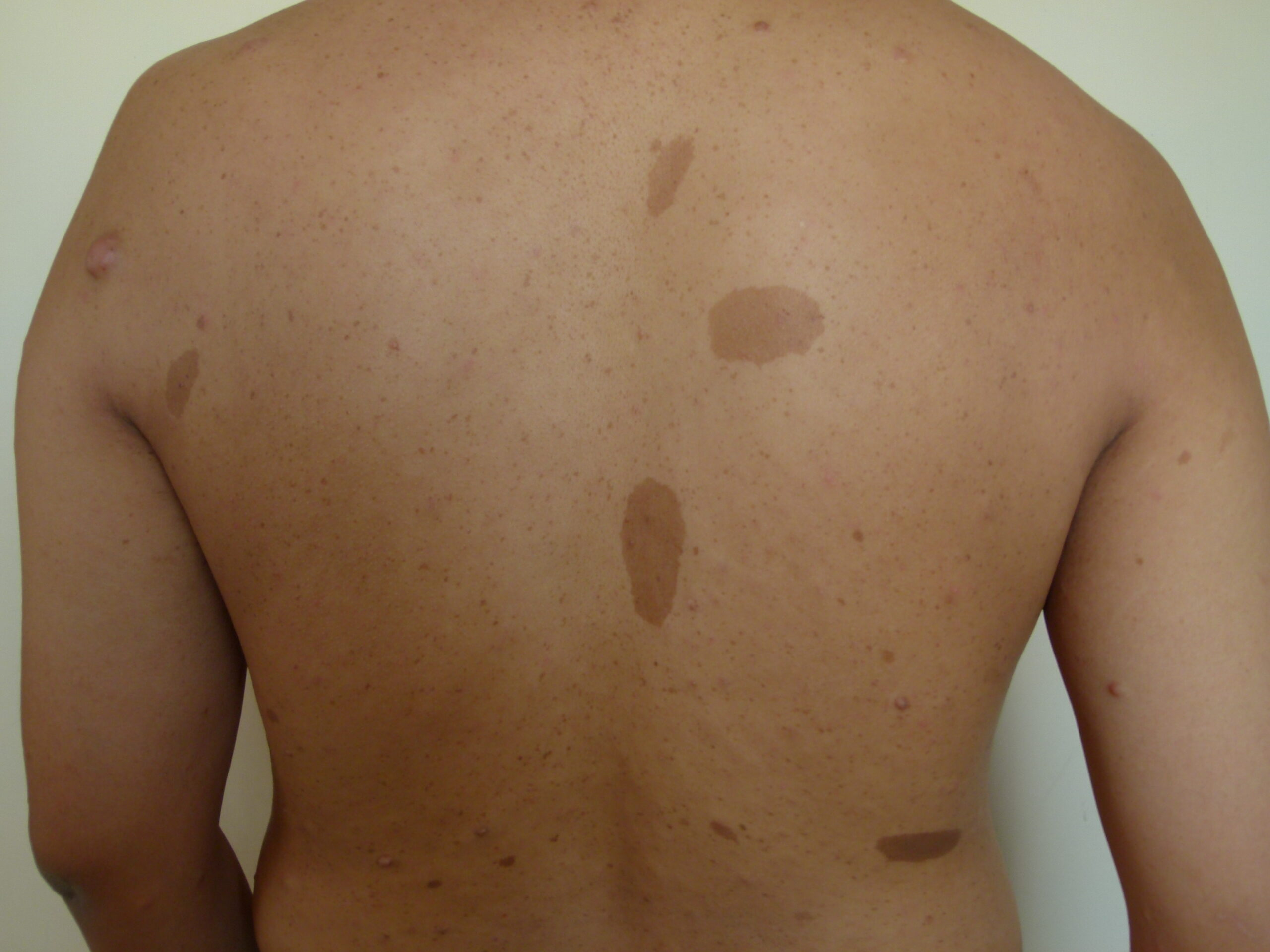
Cafe au lait spots
round or oval patch of light brown pigmentation usually present at birth
acrocyanosis
blueish color around the lips, hands, fingernails, feet and toenails in newborns due to immature circulation
usually resolves in a few days
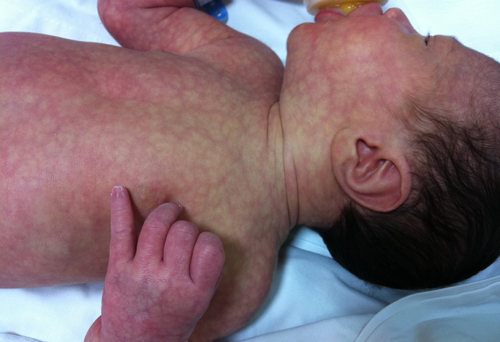
mottling
lacey look on infants
due to dilated blood vessels and immature circulation
jaundice
yellowish tone when baby is born with immature liver
occurs because body can’t remove bilirubin quick enough
may occur within 3-4 days of life
light
What breaks down bilirubin?
palms, sclera, bottom of feet
Where can jaundice be seen on patients with darker skin?
lanugo
fine hair covering the skin of an infant
more may be seen in a premature infant
dark skinned newborns may have more
milia
“baby acne” on face
resolve on own within a few months
small white papules
caused by keratin being trapped under the skin
vernix caseosa
thick white substance on baby when born
helps thermoregulate
higher quantity in premature
made up of sebum and epithelium cells
striae
“stretch marks”
silver to pink color
appear in second trimester
linea negra
brown/black line down the midline of the stomach during pregnancy
chloasma
discoloration or hyperpigmentation of skin when pregnant
most are seen on the face and look like freckles
disappears after delivery
vascular spiders
occur due to extra blood volume and estrogen during pregnancy
appear with tiny red centers with radiating branches
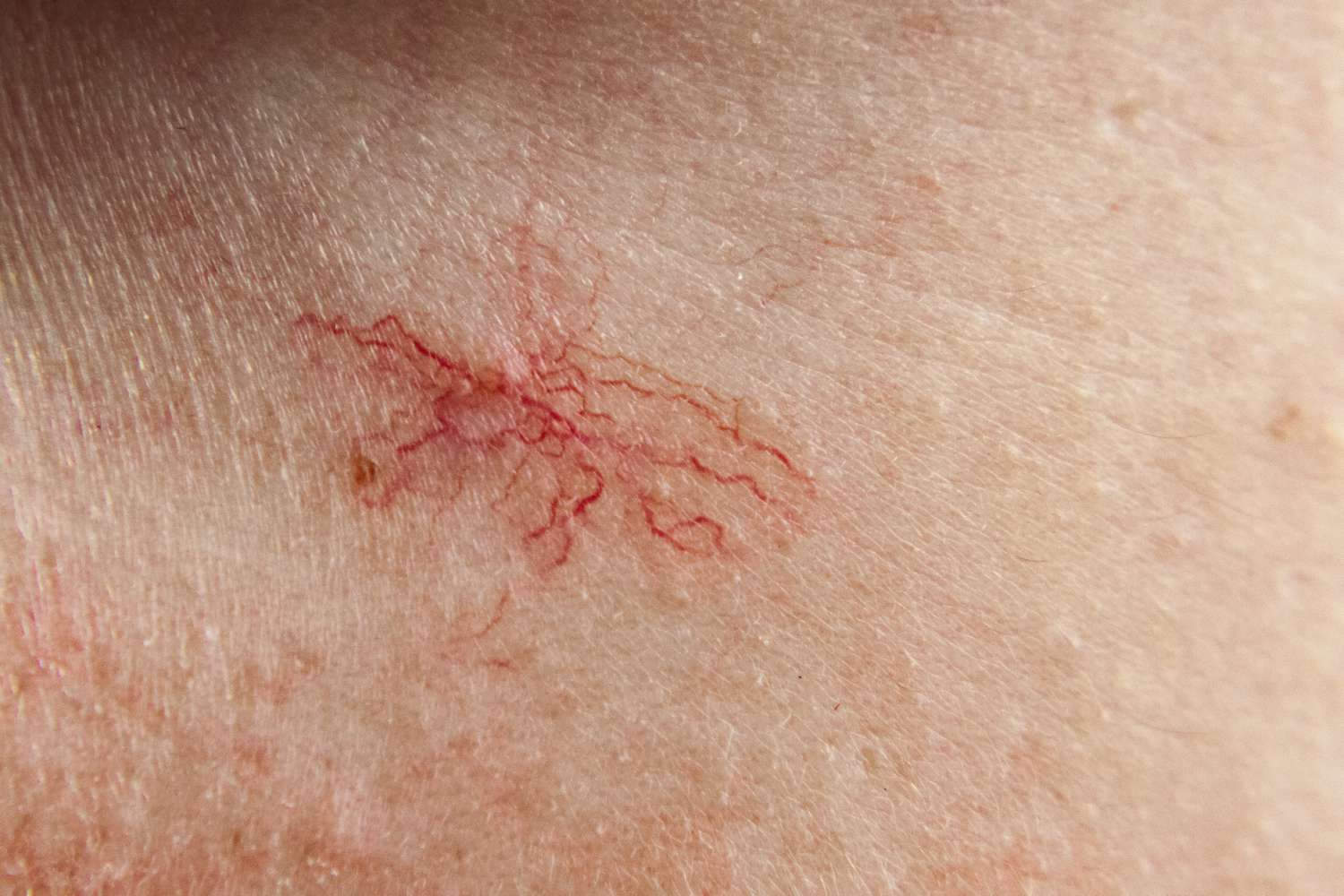
solar lentigines
also known as “liver spots” or “sun spots”
flat brown spots caused by sun exposure
seen most prominently on face and hands
xerosis
dry skin
due to decrease in sweat and sebaceous glands
acrochordons
“skin tags”
overgrowths of normal skin
commonly found on eyelids, cheeks, and neck
decreased melanocytes
Why does hair turn gray with age?
social isolation, infection, ineffective thermoregulation, injury
threats of poor skin integrity in older adults
ineffective coping and infection
threats of poor skin integrity in adolescents
ineffective thermoregulation and absorption rates differ
developmental consequences of poor skin integrity in infants
sepsis, impaired body image, and pain
What can poor skin integrity cause?
masses
What are you testing the mobility of in skin assessment?
turgor
tested by pinching the skin and seeing how fast it returns
tenting
vascular
What kind of problem is present when a patient has a white patch of hair?
divide hair into sections and inspect
How do you assess head for lesions?
pediculus
“head lice”
parasitic insects that feed on blood
only live 12 hours off the head
they can’t stick to products and heat kills them
Why is lice not as common in adults?
clubbing
nailbed is greater than 160 degrees, looks flat with no concave
congenital cyanotic heart disease, lung cancer, and pulmonary diseases
What can clubbing be a sign of?
color return in less than 3 seconds
What is normal for capillary refill?
erythema, jaundice, pallor, cyanotic
What words are used for an abnormal skin assessment relating to color?
hypothermia and hyperthermia
What words are used for abnormal skin assessment relating to temperature?
diaphoresis and dehydration
What words are used for abnormal skin assessment relating to moisture?
diaphoresis
excess sweating
smooth or rough
What words are used for skin texture in an assessment?
pitting or non pitting
What words are used to describe edema in a skin assessment?
grade +1 edema
pits < 2mm, disappears immediately
grade +2 edema
pits 2-4mm, mild edema, 10-15 seconds to disappear
grade +3 edema
4-6 mm deep, moderate edema, disappears in less than 2 minutes
grade +4 edema
6-8 mm deep, severe edema, disappears in 2-5 minutes
macule
type of lesion that is flat, 1mm or less, and is only a change in color
papule
type of lesion that is raised
is a thickening at the dermis
ex. mole
nodule
type of lesion that is solid and elevated
extends deeper into the dermis
can be hard or soft
greater than 1 cm
tumor
type of lesion that is larger than a nodule, can be firm or soft, elevated
goes deeper into the dermis
can be benign or malignant
vesicle
type of lesion, known as a blister
elevated cavity containing free fluid
up to 1 cm
bulla
larger blister
pustule
type of lesion that is elevated and contains pus
goes into dermis
wheal
superficial raised type of lesion
due to edema, hives, or a bee sting
appears to be a raised rash
cyst
type of lesion that goes into dermis
encapsulated clear and cloudy fluid
pallor
could be caused by:
high stress(anxiety or fear)
exposure to cold
cigarette smoking
edema
anemia
shock
arterial deficency
erythema
could be caused by:
fever
blushing
inflammation
carbon monoxide poisoning
cyanosis
could be caused by:
shock
cardiac arrest
heart failure
chronic bronchitis
congenital heart disease
indicates hypoxemia
jaundice
could be caused by:
liver disease
hepatitis
cirrhosis(advanced scarring of the liver)
sickle cell
transfusion reaction
ABCDEF
What is the assessment tool for melanoma detection?
asymmetry
What does the A stand for in the ABCDEF tool?
border
What does the B stand for in the ABCDEF tool?
jagged edges, scalloping, poorly defined margins
What is abnormal for the border of a mole?
color
What does the C stand for in the ABCDEF tool?
higher melanoma risk
What does it mean if a mole is more than one color?
diameter
What does the D mean in the ABCDEF tool?
greater than 6 mm or the size of a pencil eraser
What is alarming for diameter of a mole?
Evolution
What does the E stand for in the ABCDEF tool?
funny looking
What does F mean in the ABCDEF tool?
nevi
another name for skin mark or mole
risk for pressure sores
What does the Braden scale examine?
higher risk for pressure sores
What does a lower score on the Braden scale mean?
risk factors for the braden scale
sensory perception
moisture
activity
mobility
nutrition
friction and shear
<9
severe risk on the braden scale
10-12
high risk on braden scale
13-14
moderate risk on braden scale
15-18
mild risk on braden scale
no
can pressure injuries go backward in stages?
stage 1 pressure injury
non blanchable erythema
no open wound
stage 2 pressure injury
partial thickness skin loss
shallow break in the skin, pink/red
stage 3 pressure injury
full thickness skin loss
goes into subcutaneous
no muscle, bone, or tendon
stage 4 pressure injury
full thicken skin and tissue loss
down to bone, muscle, or tendon
may have tunneling or undermining
deep tissue pressure injury
no break in skin, looks like a bruise or black spot
unstageable pressure injury
pressure injury where you cannot tell how deep until eschar is removed
hard to distinguish what is what
eschar
dead tissue appearing black in or covering pressure injuries
slough
stringy matter attached to wound bed
appears yellow or white
deep tissue injury
What pressure injury does this depict?
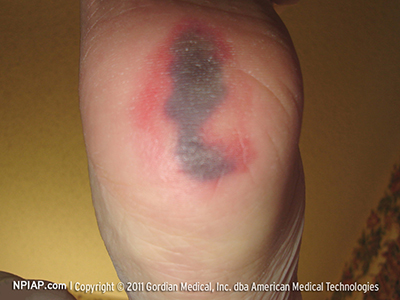
stage 1 pressure injury
What pressure sore does this depict?
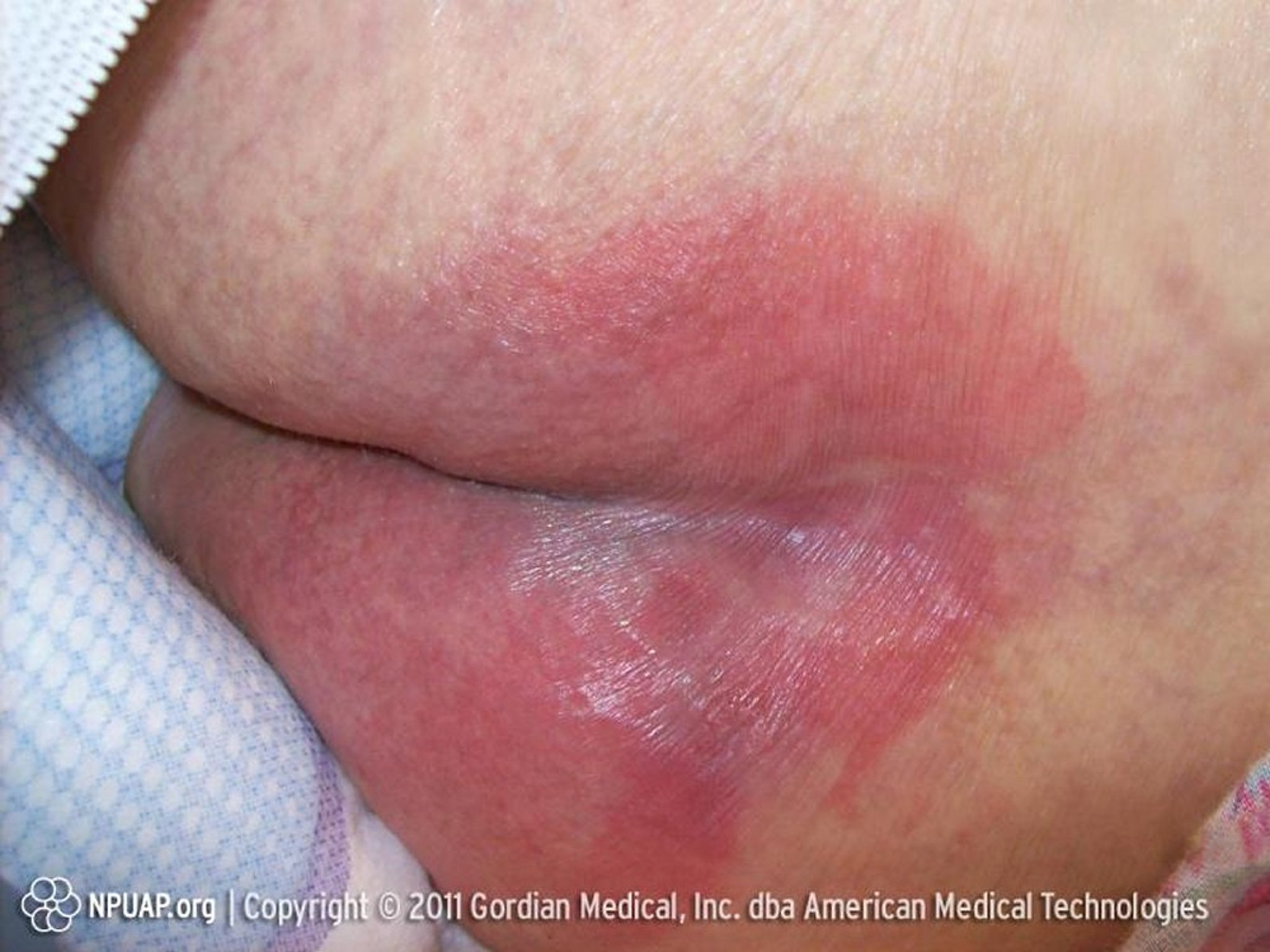
stage 2 pressure injury
What pressure sore does this depict?
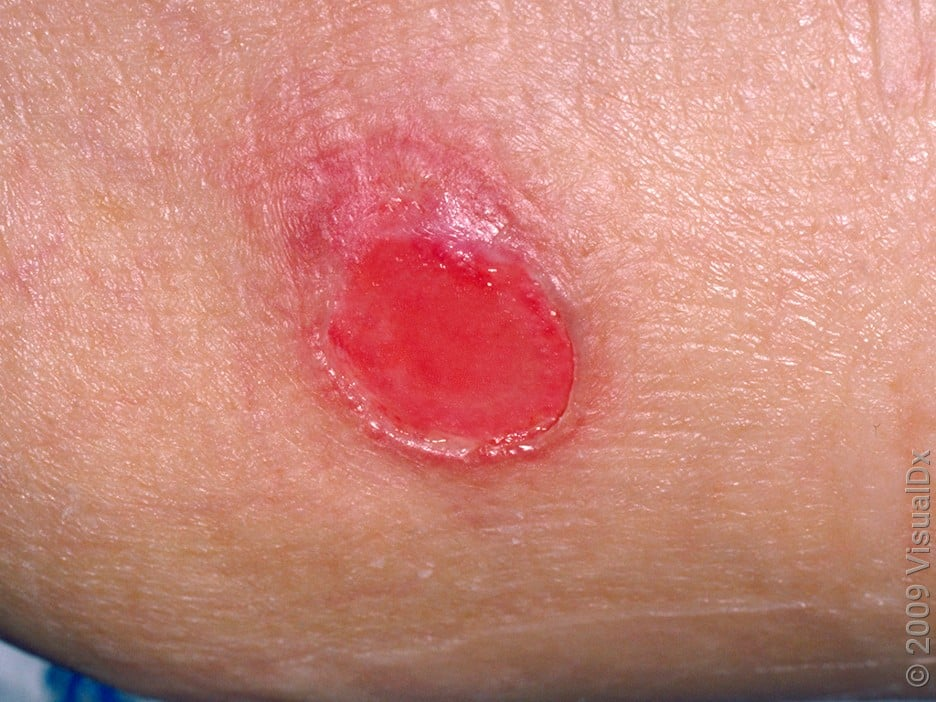
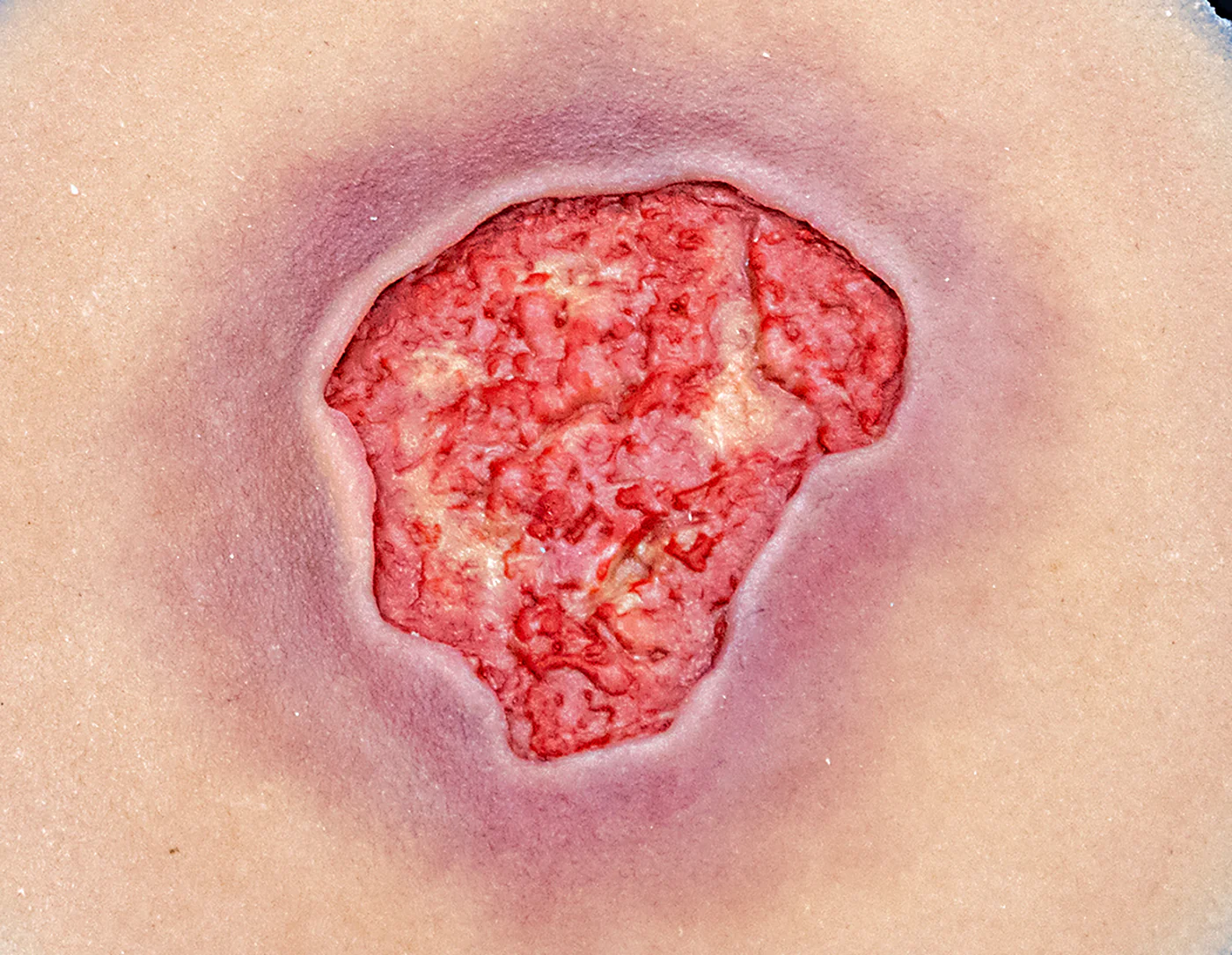
stage 3
What pressure sore does this depict?