Endocrine System (hormones)
 Call Kai
 Learn
Learn Practice Test
 Spaced Repetition
 Match
Match Flashcards
 Knowt Play
1/28

Earn XP
Description and Tags
SBI4U - Howes (still missing: label the pituitary, signal cascade, transcription factors)
Name | Mastery | Learn | Test | Matching | Spaced | Call with Kai |
|---|
No analytics yet
Send a link to your students to track their progress
29 Terms
the two major classes of hormones
water-soluble hormones & lipid-soluble hormones
water-soluble hormones are also called __________ hormones, and lipid-soluble ones are also called __________ hormones
peptide, steroid
properties of water-soluble (peptide) hormones
hydrophilic
large and polar — cannot cross plasma membrane
binds to surface receptor
properties of lipid-soluble (steroid) hormones
hydrophobic
can freely pass through plasma membrane (nonpolar)
binds to a receptor within the cell
insulin is a kind of _______ hormone released by the __________. Describe what it does.
peptide (water-soluble), pancreas
released in response to high glucose concentration in the blood, it activates the expression of GLUT4
GLUT4
activated by insulin, it’s a glucose transporter that brings glucose into cells
estradiol is a kind of ______ hormone produced primarily by the _________. It’s the ________ estrogen.
steroid (lipid-soluble), ovaries, primary
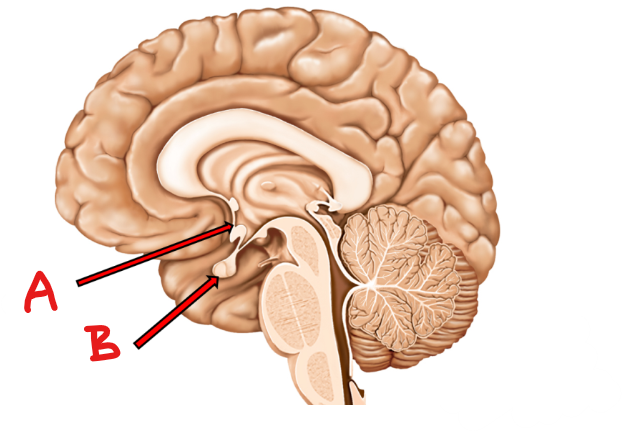
identify A and B
A: Hypothalamus
B: Pituitary Gland
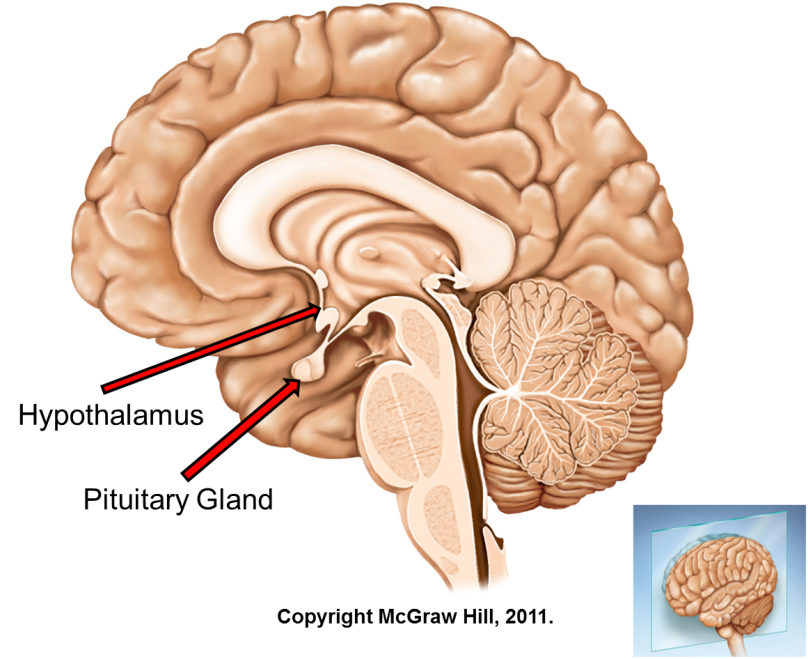
function of the hypothalamus (regarding hormones)
secretes releasing + inhibiting hormones, which act on the anterior pituitary
☆ also produces ADH and Oxytocin, which are stored in the posterior pituitary and released upon appropriate hypothalamic stimulation
Releasing and Inhibiting Hormones
hormones whose main purpose is to control the release of other hormones, either by stimulating or inhibiting their release.
The pituitary is divided into two lobes:
Anterior (master gland) and Posterior
Anterior Pituitary Gland function
mostly releases tropic hormones — hormones that control another gland elsewhere in the body
Hormones released by the Anterior Pituitary Gland
Prolactin (PRL)
Growth Hormone (GH)
Thyroid-stimulating Hormone (TSH)
Adrenocorticotropic Hormone (ACTH)
Follicle-stimulating Hormone (FSH)
Luteinizing Hormone (LH)
🎯 target tissues of the hormones released by the anterior pituitary gland
PRL → mammary glands
GH → bone and soft tissue
TSH → thyroid glands
ACTH → adrenal cortex
FSH & LH → ovaries and testes
Posterior Pituitary Gland function
stores ADH and oxytocin, both of which were produced in the hypothalamus
ADH role
🎯 in the kidneys
expresses aquaporins in collecting duct of nephron (allows for water reabsorption)
Oxytocin role
🎯 uterus, mammary glands
promotes uterine contractions (positive feedback)
stimulates milk release
Name 3 thyroid hormones
Calcitonin (targets bones)
Thyroxine and Triiodothyronine (target most cells)
What do the thydroid hormones do?
Calcitonin: ↓ [Ca2+] in the blood
Thyroxine and Triiodothyronine: ↑ metabolic rate — essential for normal body growth!
Parathyroid Hormone (PTH)
produced by the parathyroid (duh!): it ↑ [Ca2+] in blood and stimulates vitamin D activation
🎯 bones, kidneys, intestines
why is vitamin D important?
it allows the body to absorb calcium, vital in maintaining/building bones and teeth
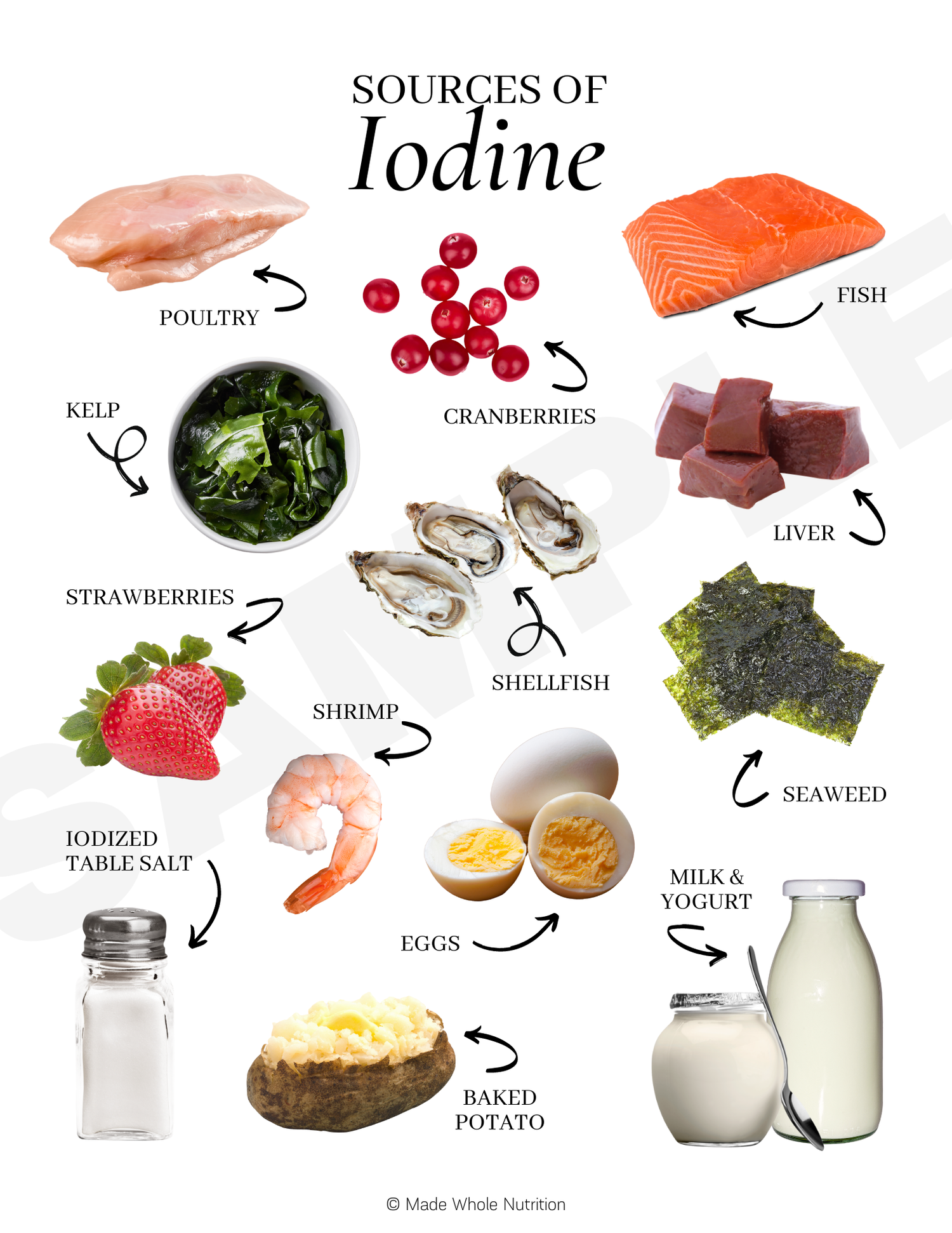
_____ deficiency occurs because our bodies don’t make the mineral naturally — this deficiency hurts ________ function, which results in:
IODINE, thryoid function, slow metabolism
The adrenal glands are composed of:
Adrenal Cortex and Adrenal Medulla
name two hormones produced by the adrenal medulla
epinephrine
norepinephrine
🎯 both target receptor sites throughout the body in response to stress
name two hormones produced by the adrenal cortex
aldosterone (targets kidney tubules, deals w salt-water balance)
cortisol (targets most body cells)
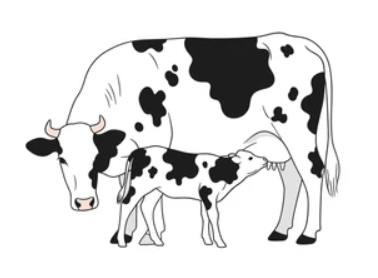
Prolactin vs Oxytocin effect on mammary glands
prolactin causes milk to be produced, oxytocin causes milk to be released
FSH and LH are what kind of hormone? What do they do?
they are peptide hormones, and they are gonadotropins (act on reproductive glands)
⇨ produce gametes, as well as other hormones
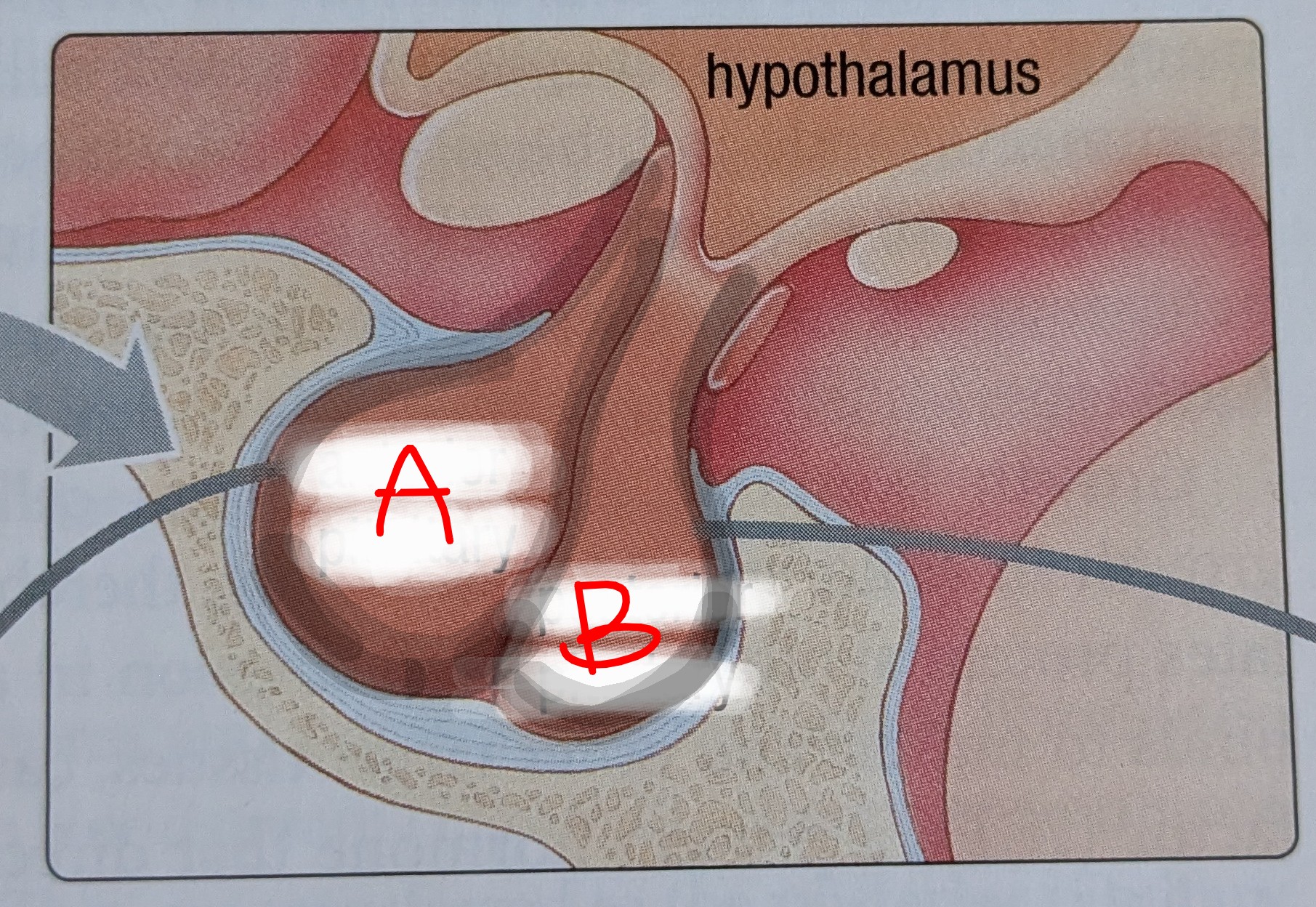
Label the pituitary gland.
A: ANTERIOR pituitary
B: POSTERIOR pituitary
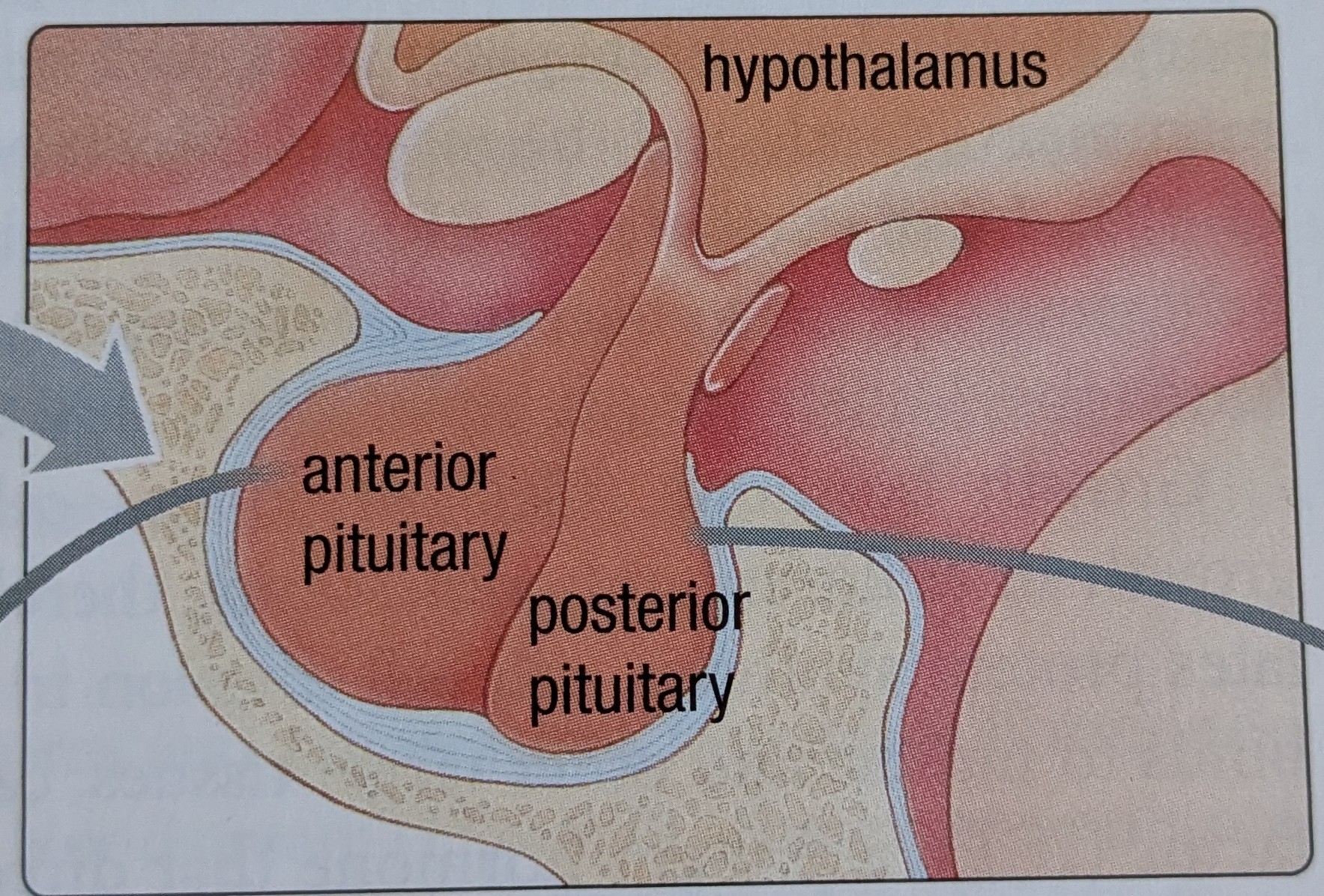
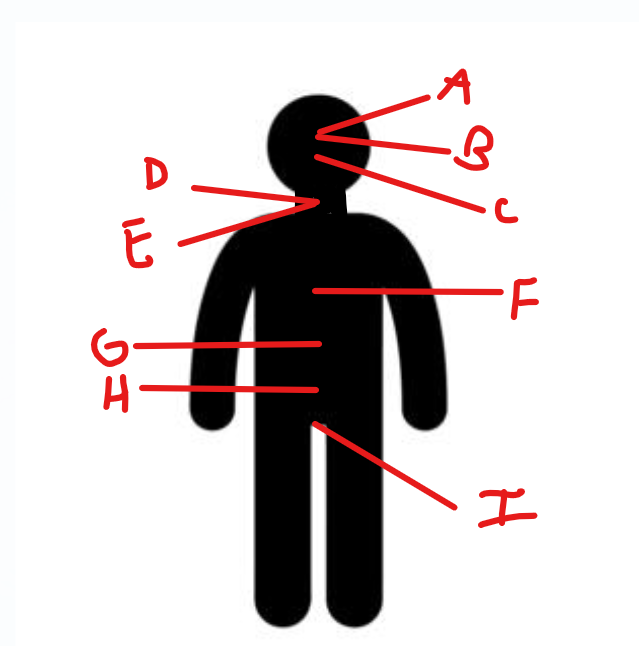
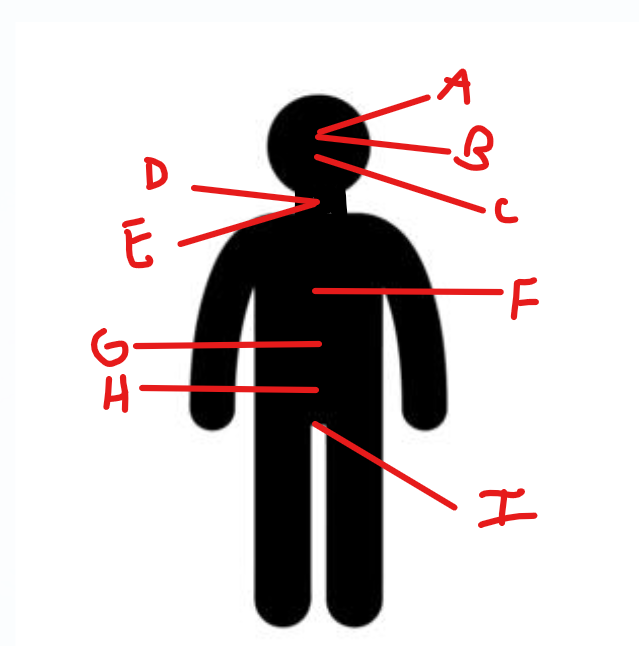
label the glands
A: Pineal Gland
B: Hypothalamus
C: Pituitary Gland
D: Thyroid Gland
E: Parathyroid Gland
F: Mammary Glands
G: Pancreas
H: Adrenal Gland
I: Ovaries/Testes