Immune Tolerance
 Call Kai
 Learn
Learn Practice Test
 Spaced Repetition
 Match
Match Flashcards
 Knowt Play
1/16

There's no tags or description
Looks like no tags are added yet.
Name | Mastery | Learn | Test | Matching | Spaced | Call with Kai |
|---|
No analytics yet
Send a link to your students to track their progress
17 Terms
Differentiate between Central and Peripheral Tolerance
Location
Mech
Central Tolerance:
Location:
Primary/generative lymphoid tissues
Mech:
T:
Negative selection in Thymus Medulla
Tregs Creation
B:
Receptor editing or deletion
Peripheral Tolerance:
Location:
Secondary/peripheral lymphoid tissues
Mech:
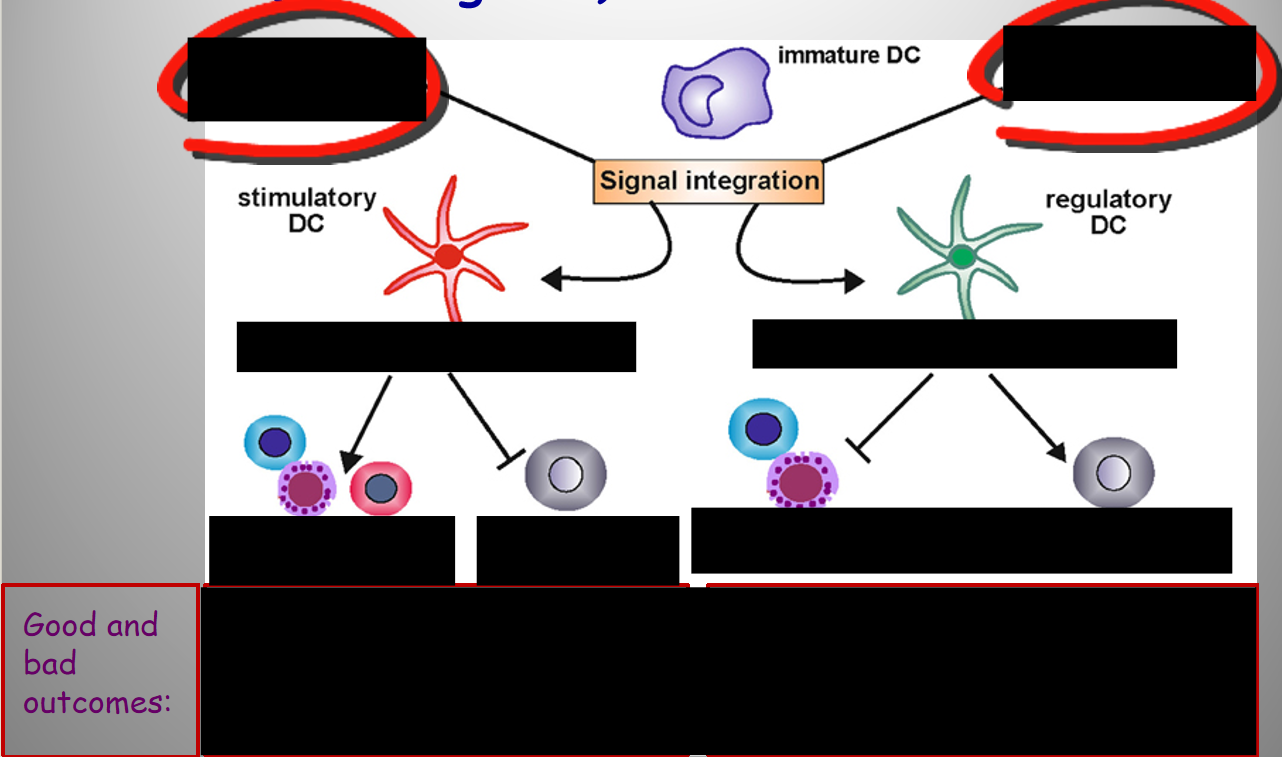
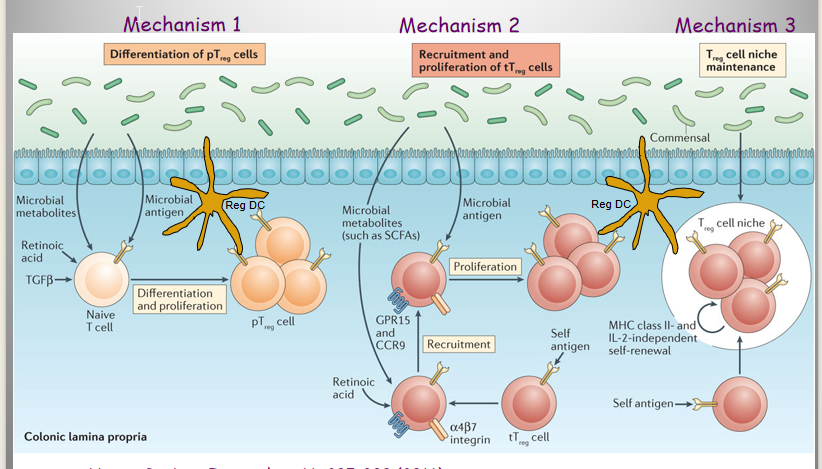
via rDCs (inhibitory rather than stimulatory)
T/B cells anergy via Treg
T Cells Anergy
via inhibitory receptors or lack of Signal 2
CTLA-4, PD-1
Via autophagy inhibition
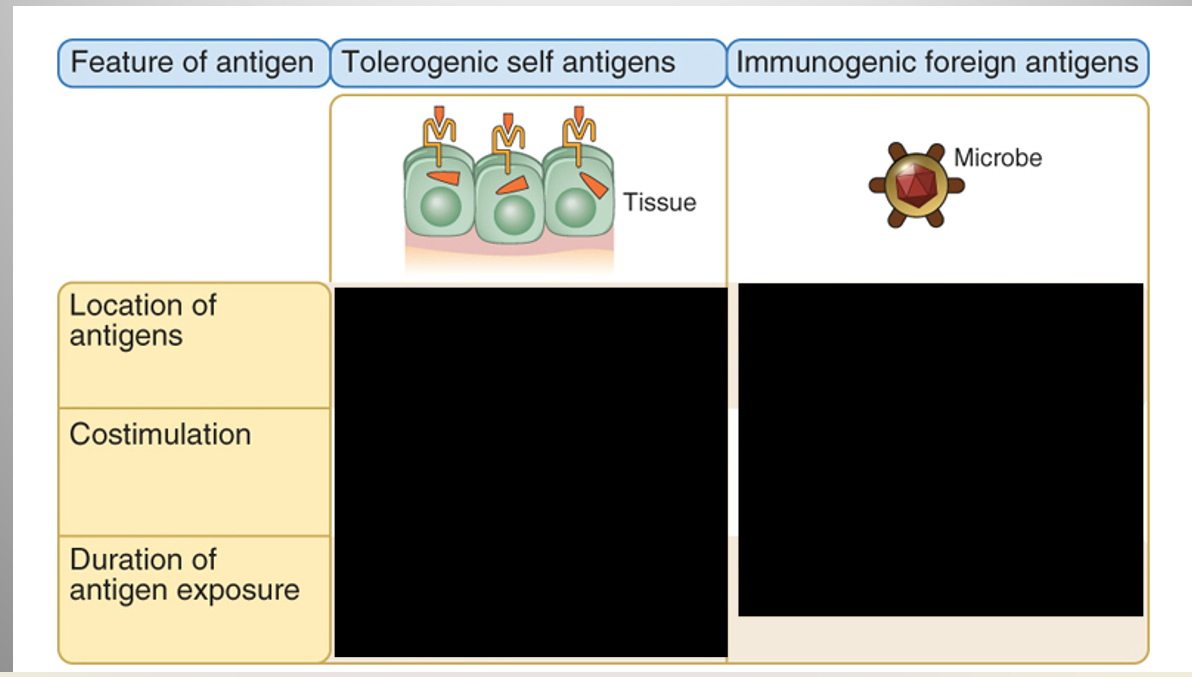
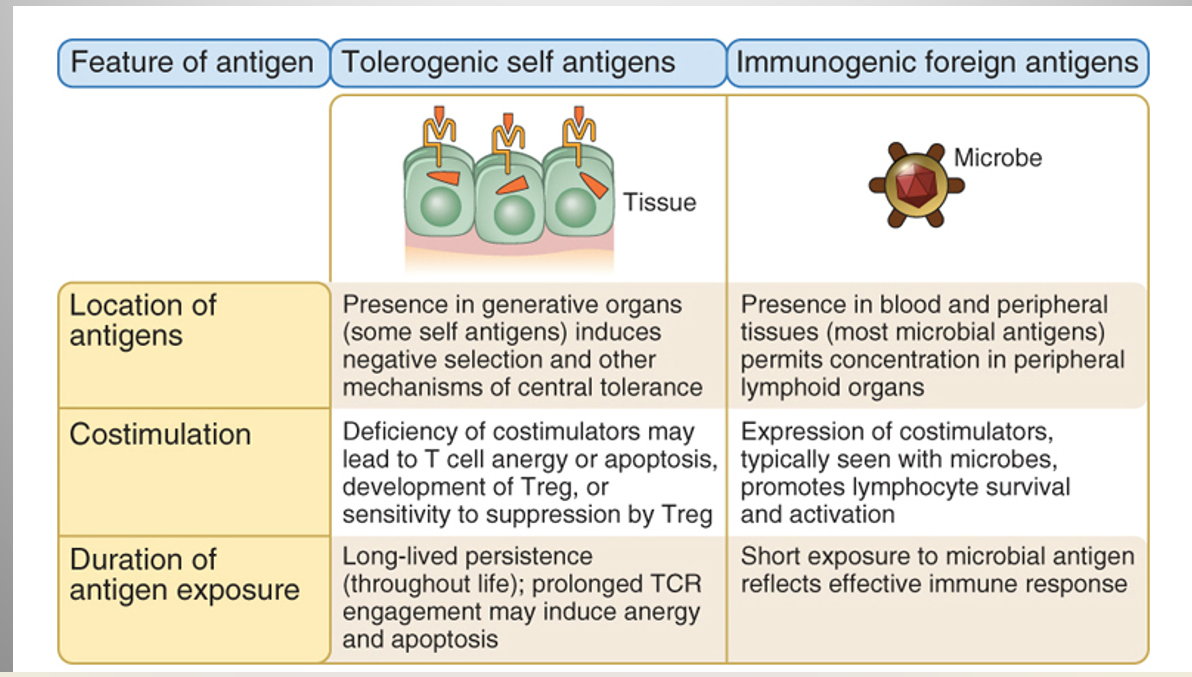
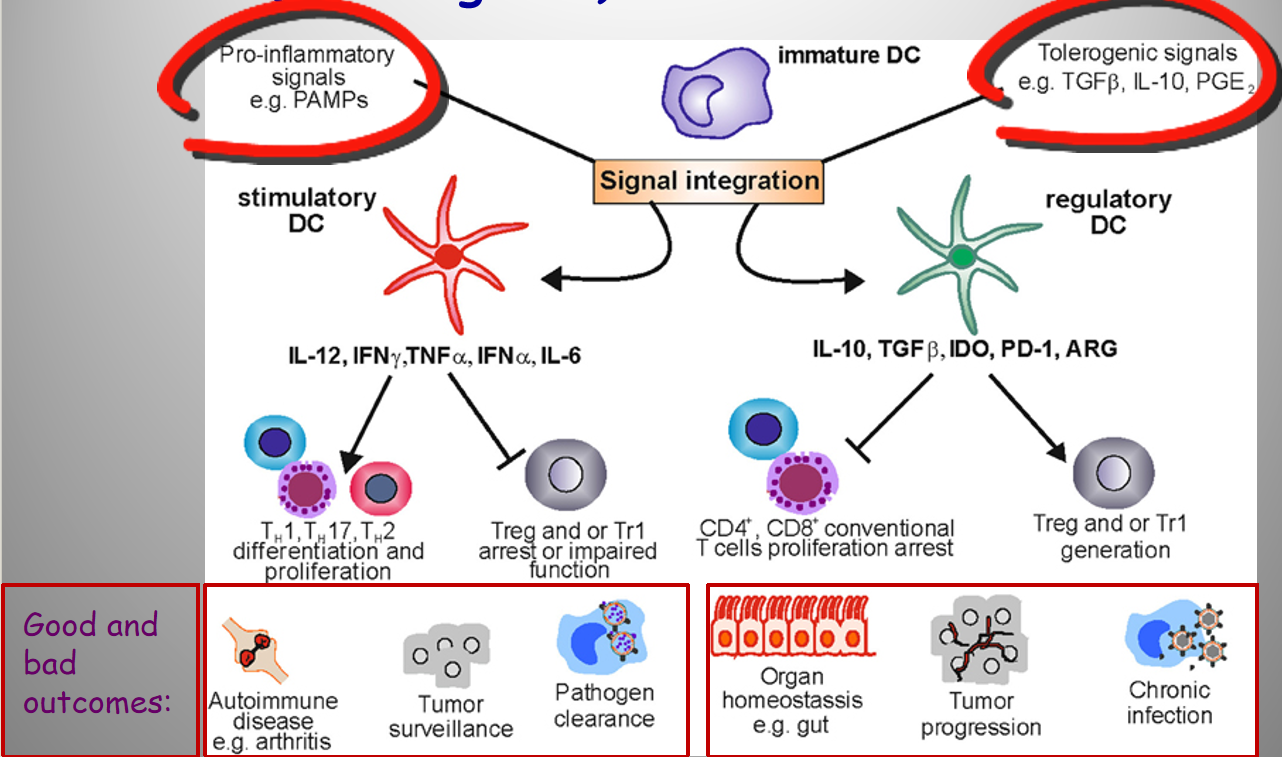
Describe the 2 mechanism of T Cell Inhibition
T cell Inhibition Mech:
CTLA-4 (T) - CD80/CD86 (AKA B7, on APC) → rips it out of APC cell membrane → endocytosis → degradation
PD1 (T) - PD1L1/2 (APC) → inhibits signal 1/2
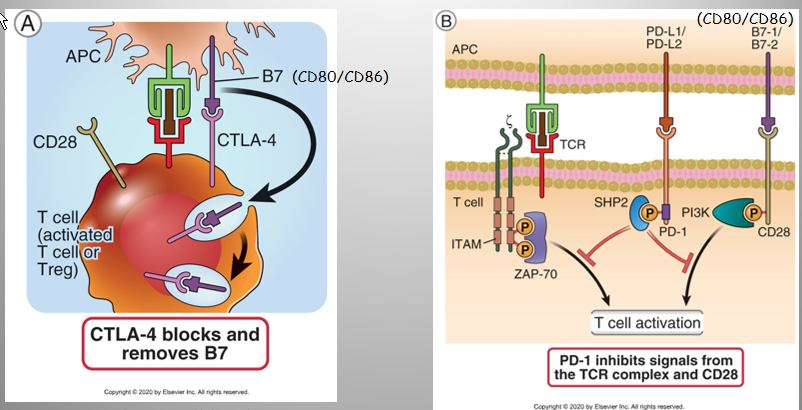
Describe the Development & Function of T Regulatory Cells
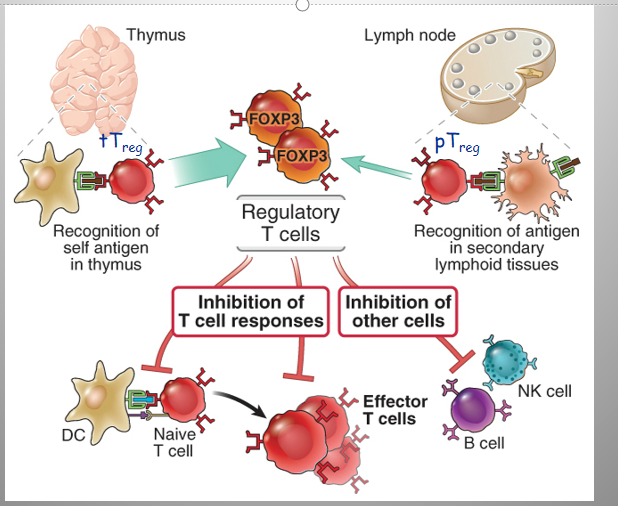
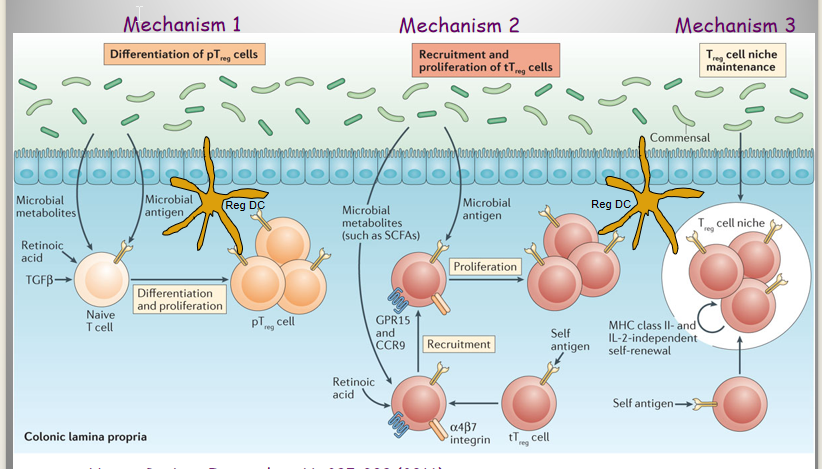
Describe the 3 proposed mechanisms for Accumulation of Colonic Treg Cells
Mech:
Differentiation of pTreg cells
Env rich in TGFβ, retinoic acid, microbial antigens/metabolites → Differentation of pTreg from naive CD4+ T cells
Recruitment and proliferation of tTreg cells
tTreg are selected by self antigens in thymus → upregulates gut-homing receptors,
α4β7 integrin
CCR9
GPR15
encounter intestinal environment →
Retinoic acid upregulates α4β7 integrin + CCR9
SCFAs induce expression of GPR15 on Treg cells.
accumulated tTreg cells recognize antigens → proliferation
Treg cell niche maintenance
microbiota stimuli → create + maintain Treg cell niche
→ tTreg cells migration + proliferation via
IL-2
MHC class II-dependent antigen presentation
Describe Autophagy
Definition
Function of Autophagy Inhibition
Mech
T-Cell Act.
T-Cell Anergy
Autophagy:
Definition:
tolerance-avoidance mechanism via Metabolism modulation + signal pathways
allows T cell effector response and avoids anergy
Inhibition of Autophagy Function:
induces tolerance and prevents autoimmunity.
Mech:
T Cell Activation
Binding to IL-2R → PTPN1 autophagolysosome → allows TCR/CD28 to induce Act. genes via Fos/Jun + NFAT
T Cell Anergy
No binding to IL-2R → PTPN1 inhibits TCR/CD28 Signaling → NFAT induces Anergy Genes
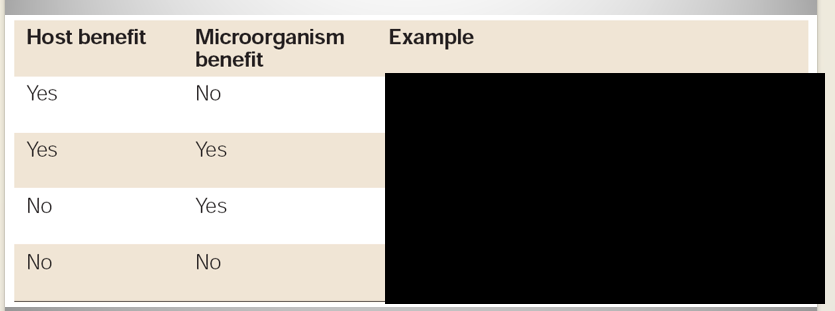
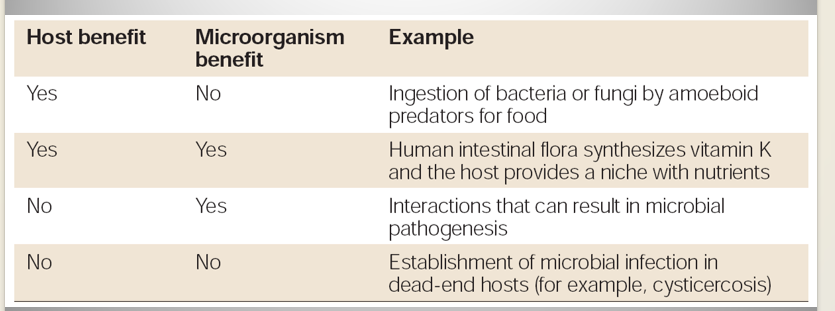
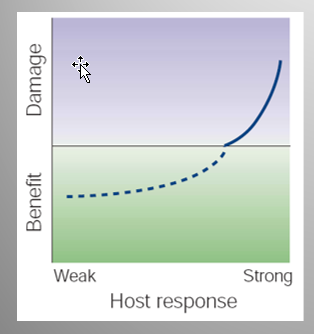
Draw out the Damage-Response Framework and list the tenants
Tenants:
Microbial pathogenesis = outcome of interaction btw host/microorganism.
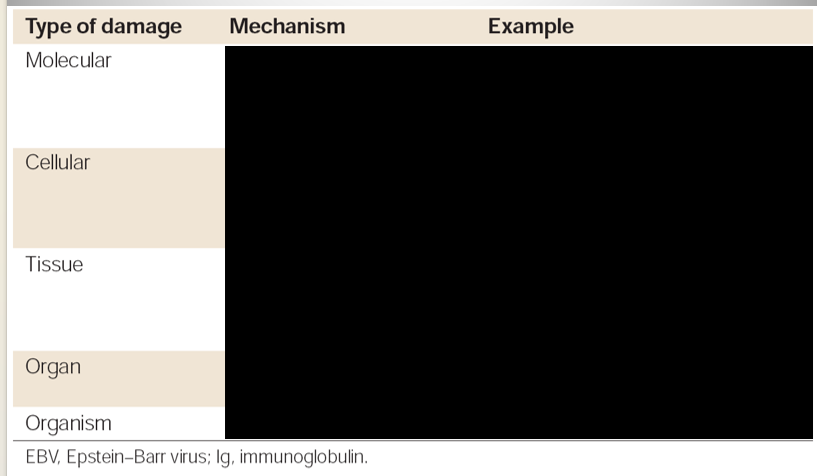
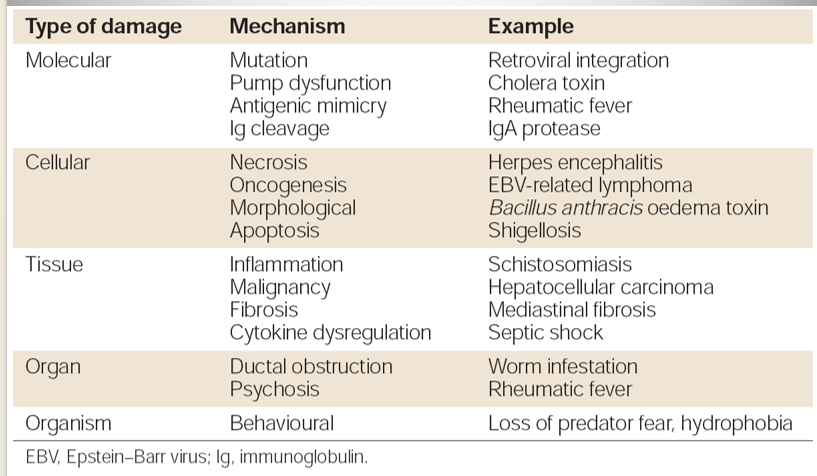
host-relevant outcome of interaction = amount of damage to the host.
Host damage = microbial factors + host immune response.
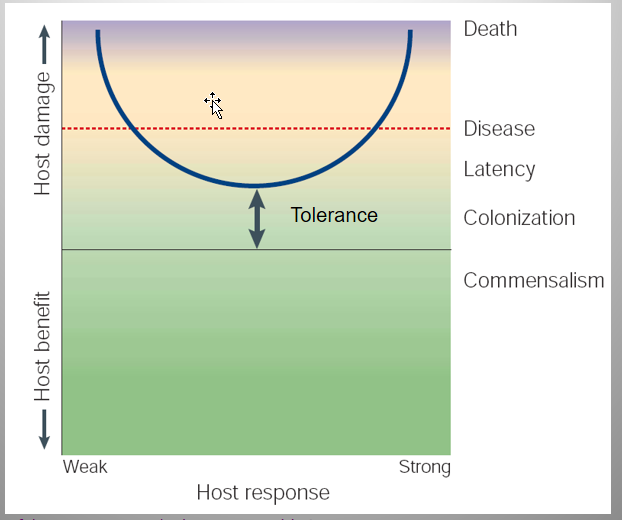
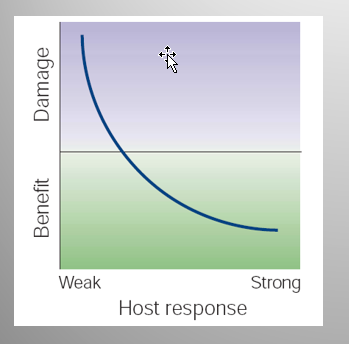
Draw out the Damage-Response Framework for Pathogens that only cause damage in the setting of weak immune responses.
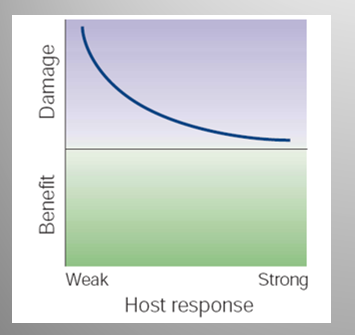
Draw out the Damage-Response Framework for Pathogens that cause damage either in hosts with weak immune responses or in the setting of normal host responses.
Draw out the Damage-Response Framework for Pathogens that cause damage during any immune response but cause the most damage at either extreme of the host response continuum.
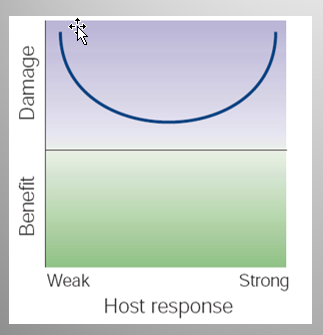
Draw out the Damage-Response Framework for Pathogens that cause the most damage at the weak and strong extremes of the response continuum.
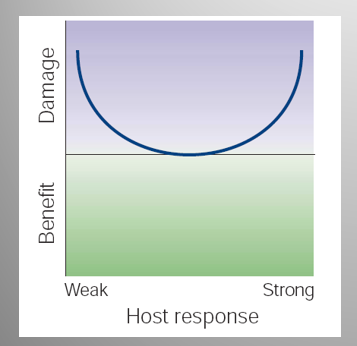
Draw out the Damage-Response Framework for Pathogens that cause damage all along the response continuum, but damage can be enhanced by strong immune responses.
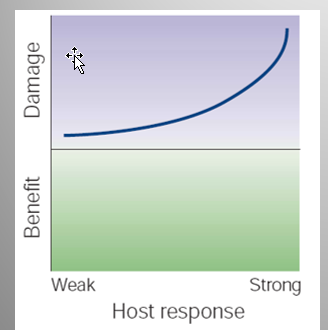
Draw out the Damage-Response Framework for Pathogens that only cause damage in the context of strong immune responses.