Structure flashcards
 Call Kai
 Learn
Learn Practice Test
 Spaced Repetition
 Match
Match Flashcards
 Knowt Play
1/30

Earn XP
Description and Tags
Name | Mastery | Learn | Test | Matching | Spaced | Call with Kai |
|---|
No analytics yet
Send a link to your students to track their progress
31 Terms
How does surface area affect diffusion
The larger the area over which diffusion can occur, the greater the rate of diffusion. This is due to there being more space for the molecules to diffuse across the membrane.
How does concentration gradient affect diffusion
The steeper the concentration gradient, the greater the rate of diffusion.
How does the thickness of the exchange surface affect diffusion
The shorter the diffusion pathway, the more molecules that can diffuse in a given time period.
How does temperature affect diffusion
The higher the temperature, the higher the kinetic energy of particles; the higher the rate of diffusion.
How does the size of molecules affect diffusion
The smaller the molecule, the faster it will diffuse.
How does lipid solubility affect diffusion
Fat-soluble molecules are non-polar (uncharged) and diffuse more rapidly across a membrane than water-soluble molecules, which are polar (charged).
How do organic solvents affect solubility
non-polar solutes dissolve in non-polar solvents. Therefore, the membrane structure may become altered and the permeability of the membrane can increase.
What type of layer do the phosphate heads and fatty acid tails form
The phospholipid bilayer.
Why do the phosphate heads face the outside of the membrane
They are hydrophilic so they interact with water in the cytoplasm and extra-cellular space.
Why do the fatty acid tails face the inside of the membrane
They are hydrophobic so they repel water and want to be protected from the fluid in the cytoplasm and extra-cellular space.
What type of protein are the channel, carrier and intrinsic proteins
Globular.
What are the roles of intrinsic proteins in the cell membrane
Transporting molecules/ions cross the membrane
What are the roles of the extrinsic proteins in the cell membrane
Add structural support, help enzymes to function, be involved in cell recognition or provide receptor sites that hormones can bind to.
What is a glycolipid calyx in a cell membrane
A calyx attached to a phospholipid.
What is a glycoprotein calyx in a cell membrane
A calyx attached to a protein.
What are the roles of glycolipids and glycoproteins
Cell-to-cell recognition or functioning as hormone receptors.
All the carbohydrates on the outer surface of a cell membrane are called the..
glycocalyx
What is the role of cholesterol in a cell membrane
Makes the cell membrane more rigid and stable.
Why is the arrangement of a cell membrane referred to as a ‘fluid mosaic’
The components are not joined or bound to each other and relatively different sizes.
How do molecules pass through the membrane
By crossing the intrinsic channels or carrier proteins.
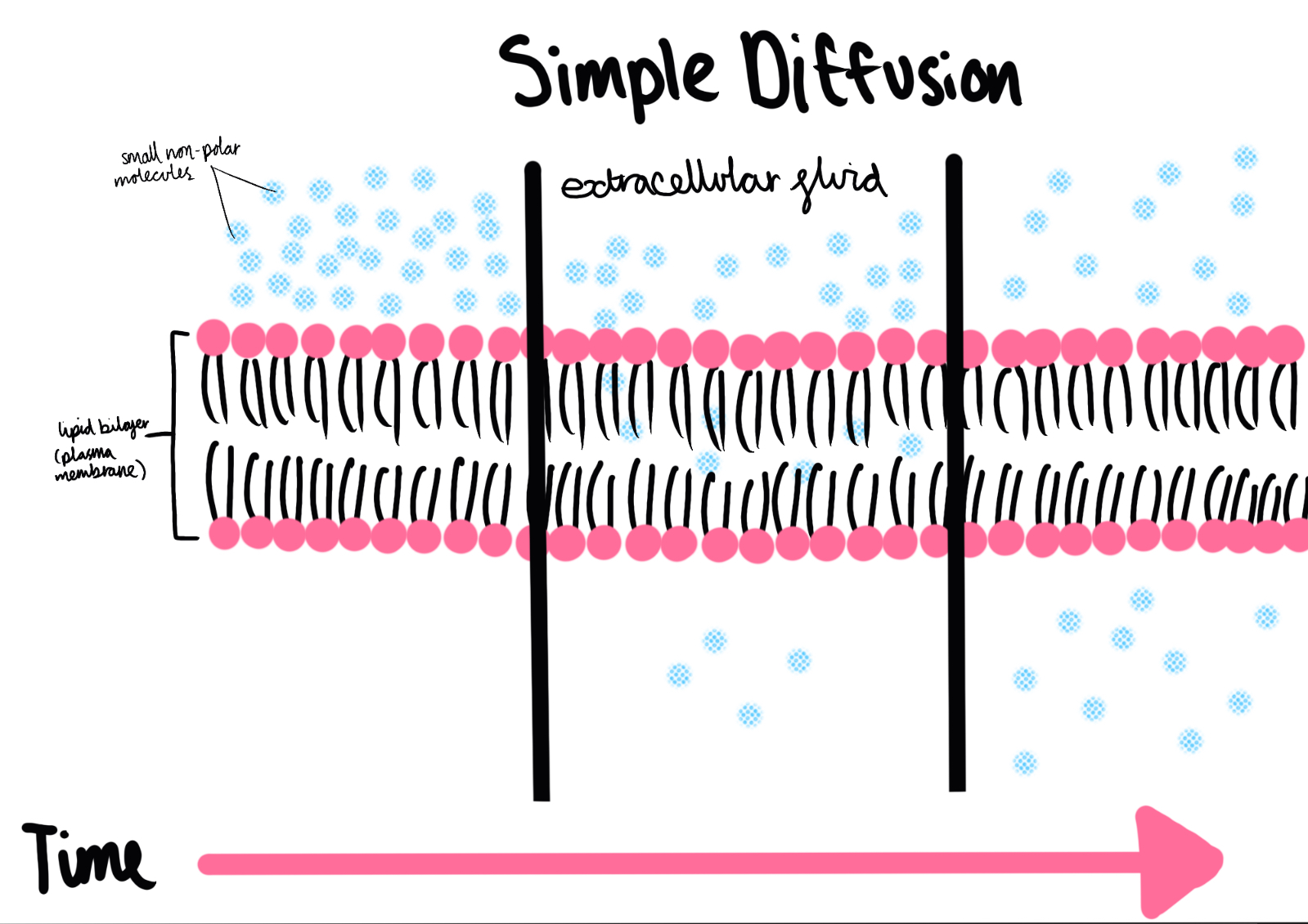
Simple diffusion
The movement of molecules or ions from a region of high concentration to a region of low concentration until they are equally distributed.
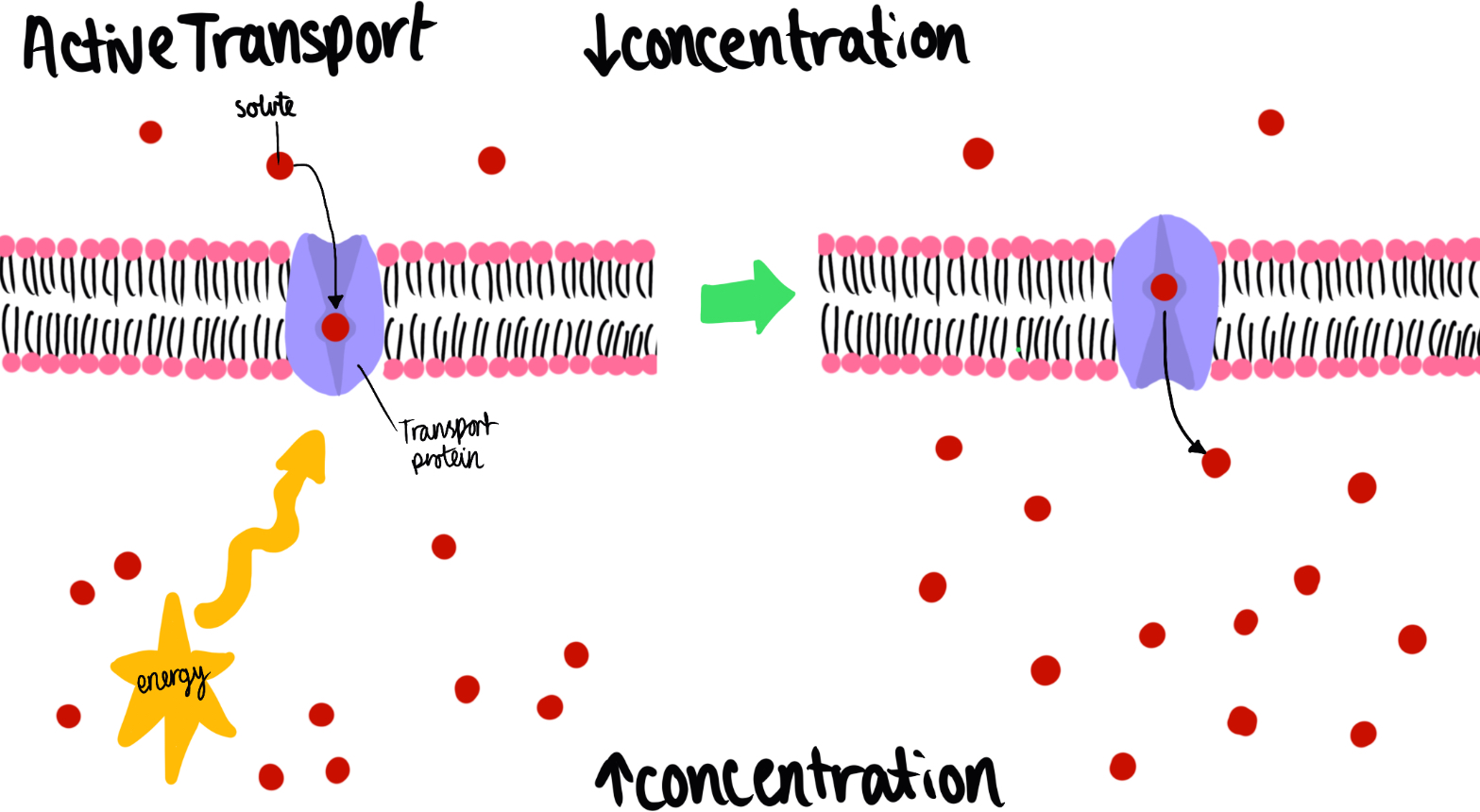
Active transport
An energy-requiring process in which ions and molecules are moved across membranes against a concentration gradient.
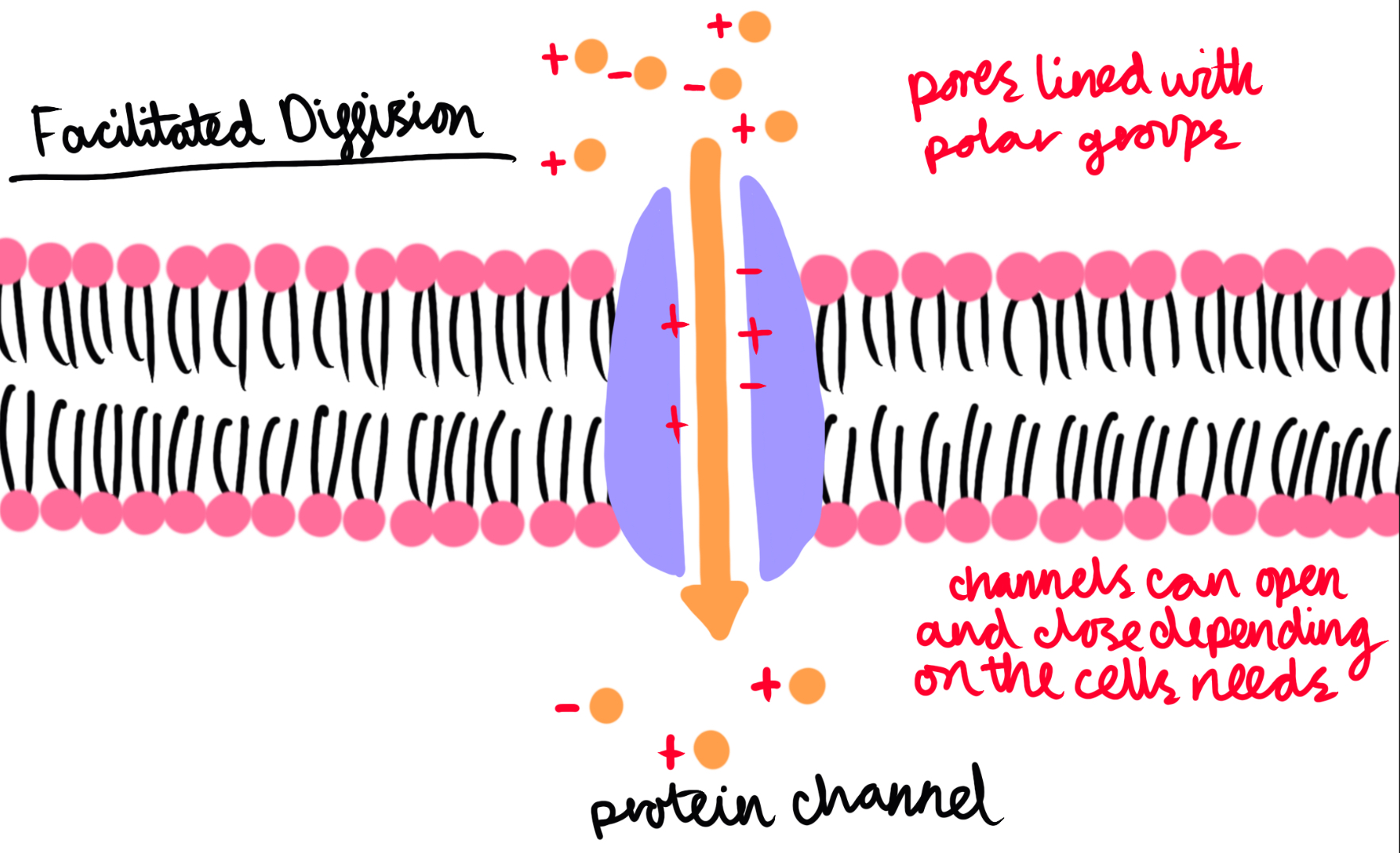
Facilitated diffusion
Movement of larger ions and molecules across a membrane. Transport proteins allow these molecules to diffuse because they open up their pores.
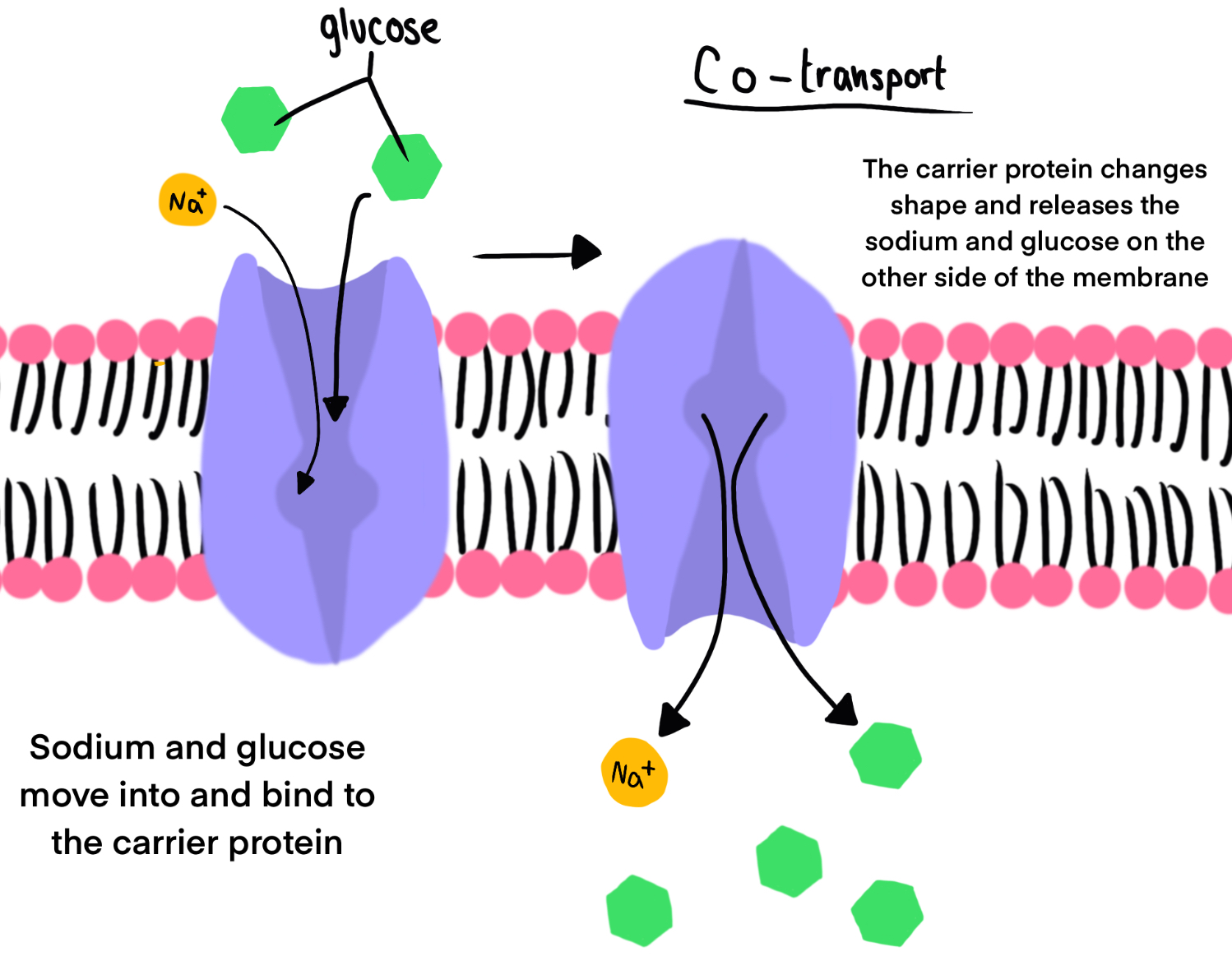
Co-transport
A type of facilitated diffusion that brings molecules and ions into cells together on the same transport protein molecule.
Endocytosis
When material is engulfed by extensions of the plasma membrane and cytoplasm, surrounding it, making a vesicle. The two types are phagocytosis and pinocytosis.
Exocytosis
The process where substances may leave the cell, having been transported through the cytoplasm in a vesicle, which fuses with the cell membrane.
Fick’s law (use this sign ∝)
Rate of diffusion ∝ surface area x (difference in concentration/thickness of gas exchange surface)
Polar
charged
Non-polar
uncharged
hydrophobic
repels water molecules
hydrophilic
attracts water molecules