Marginalized Group Research- Presentation
 Call Kai
 Learn
Learn Practice Test
 Spaced Repetition
 Match
Match Flashcards
 Knowt Play
1/17

There's no tags or description
Looks like no tags are added yet.
Name | Mastery | Learn | Test | Matching | Spaced | Call with Kai |
|---|
No analytics yet
Send a link to your students to track their progress
18 Terms
Hello everyone. My name is Maynor Zeledon, and today I'll be presenting the marginalized group of the garment workers in New York City during the 19th and early 20th centuries.
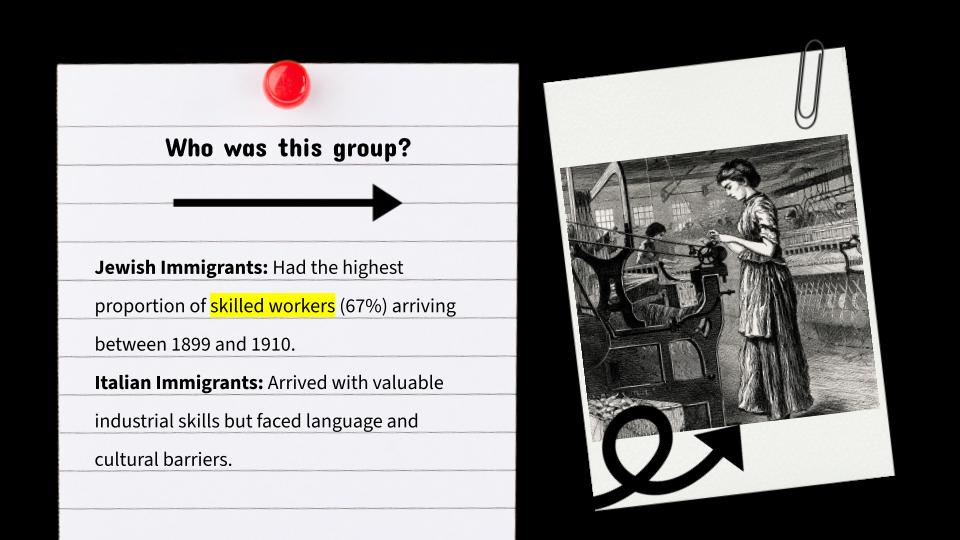
So, who was this group?
This group was primarily composed of Jewish and Italian immigrants.
Between 1899 and 1910, Jewish immigrants arrived with the highest proportion of skilled workers at 67%.
However, and despite these skills, they were often labeled as "greenhorns," meaning inexperienced newcomers who were easily exploited because they didn't know American labor laws.
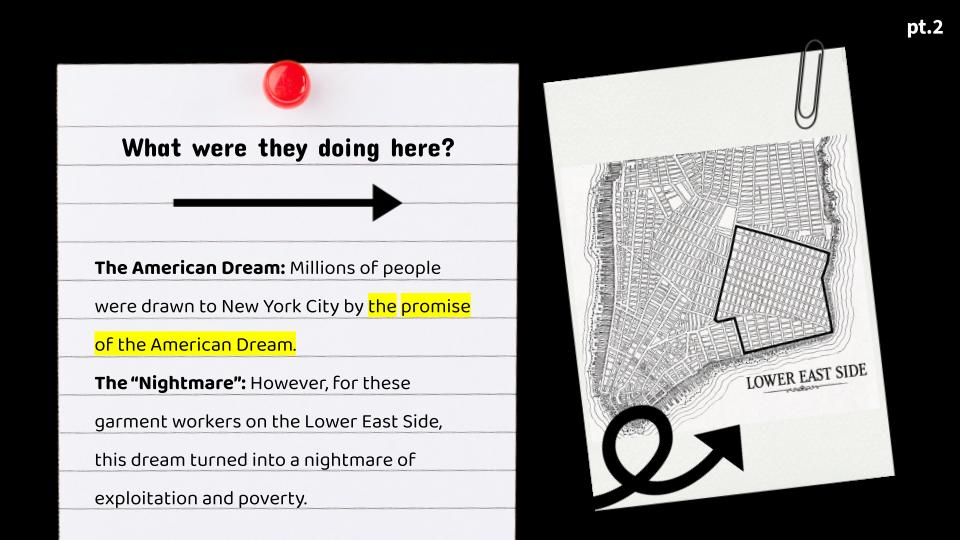
But, what were they doing here?
Like millions of others, they came seeking the "American Dream."
However, for those on the Lower East Side, that dream quickly becmame nightmare of exploitation and poverty.
They were forced into overcrowded places packed at a rate of 290,000 people per square mile.
As Cornell University describes it in this quote, these families came for a better life, but instead they faced "lives of grinding poverty and horrifying working conditions."
Now, how were they marginalized?
Their marginalization happened in three main ways: through exploitative labor systems, dangerous factory conditions, and systemic injustice.
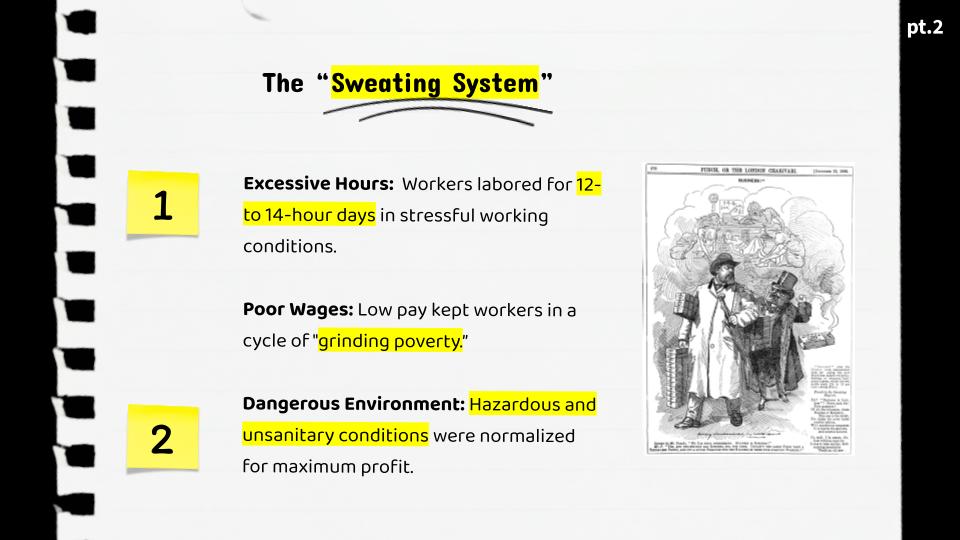
So, how exactly were these people exploited, or what were the dangerous conditions?
Well, the primary labor system was known as the "Sweating System."
In this system workers worked for 12- to 14-hour days in dangerous, unsanitary working conditions as the system focused entirely on maximizing profit, while treating workers as mere tools.
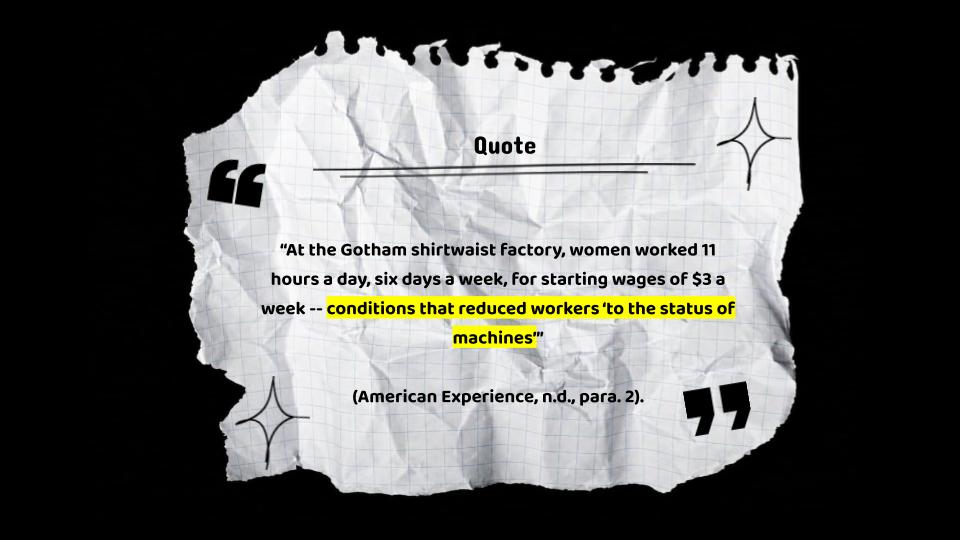
To give you a specific example, and according to this quote, "at the Gotham shirtwaist factory, women worked 66 hours a week for just $3."
Conditions that literally reduced workers to the "status of machines."
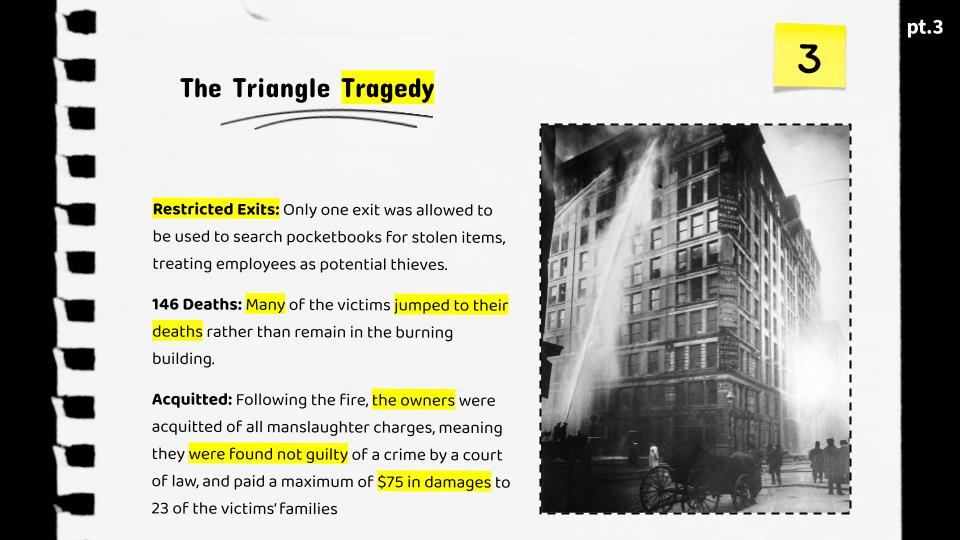
However, this exploitation reached a breaking point with the Triangle Shirtwaist Fire.
146 people died because exits were locked to prevent "theft."
Many of whom jumped to their deaths.
Even more shocking is that the owners were not found guilty of all manslaughter charges and paid only $75 in damages to only a few of the victims' families.
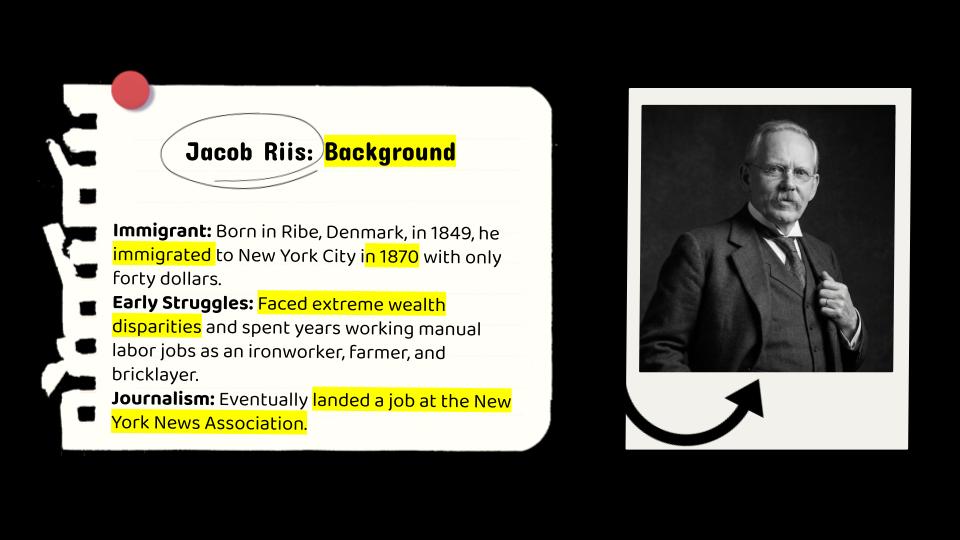
Now, let's look at who helped: Jacob Riis
Born in 1849, Jacob Riis was an immigrant from Denmark who arrived to New York City in 1870 with only $40.
He spent many years working manual labor jobs like ironworking and bricklaying before becoming a journalist.
Now, why is He qualified?
Jacob is qualified because he lived it.
His background as a manual laborer gave him an "up-close look" at urban suffering that outside observers simply didn't have.
He basically documented the life "he knew too well."
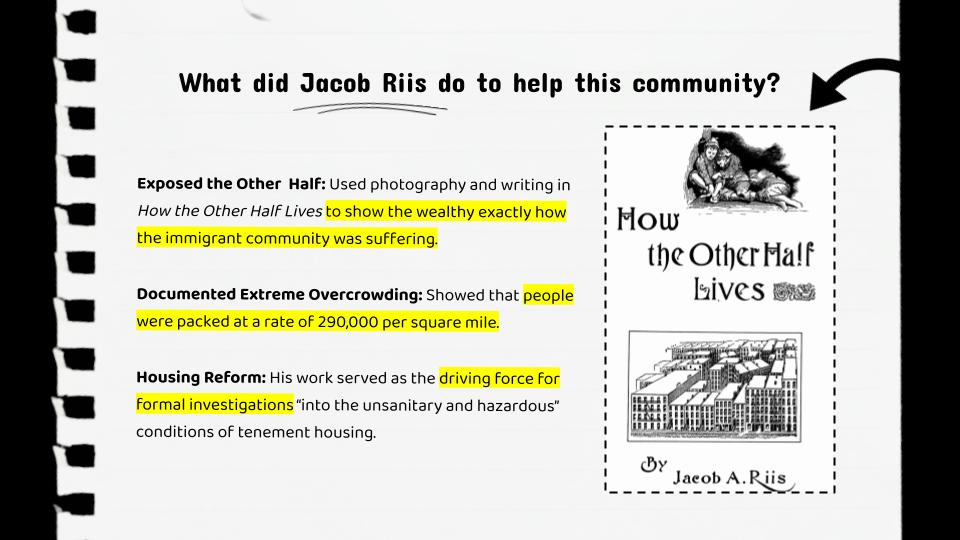
Now, what did Jacob do to help this community?
Well, he used photography and writing in his famous work, How the Other Half Lives, to show the wealthy exactly how much the garment working community was suffering.
He documented the extreme overcrowding and pushed for housing reforms.
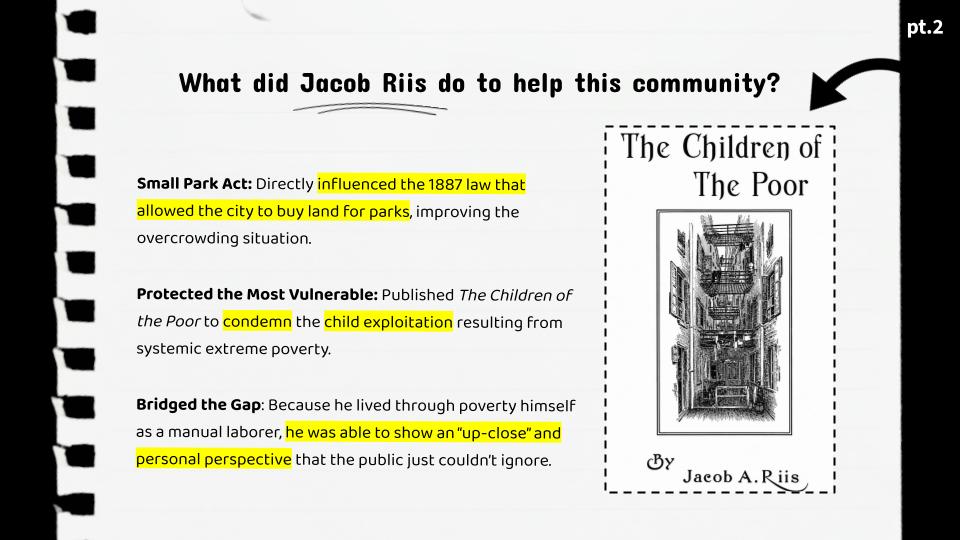
And that's not everything.
His work also directly led to the Small Park Act of 1887, which helped ease overcrowding.
He also published The Children of the Poor to fight against child exploitation.
Essentially, he bridged the gap between the slums and the privileged.
However, Jacob wasn't the only one helping.
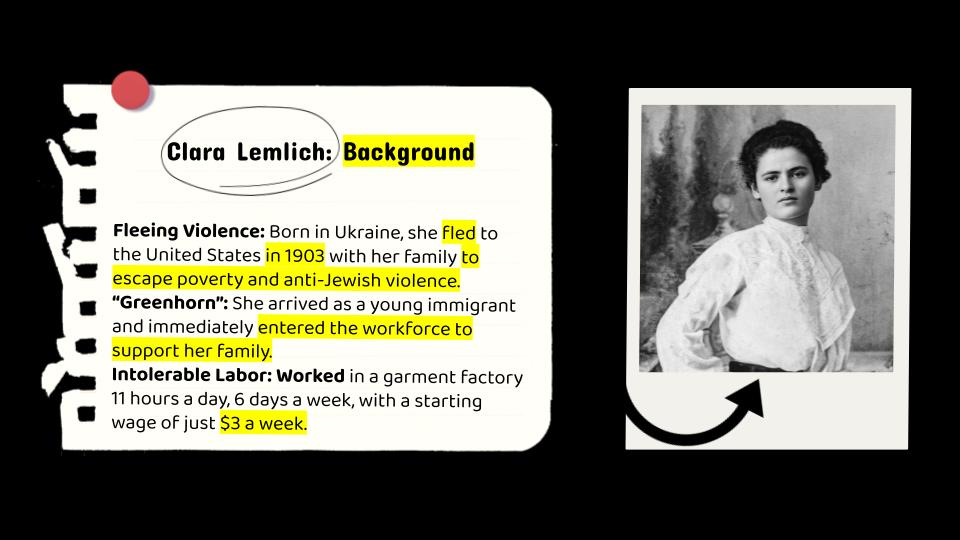
Clara Lemlich was also an immigrant who lived the struggle firsthand.
After fleeing Ukraine in 1903 to escape poverty and violence, she immediately began working 66 hours a week in a factory as a 'greenhorn,' earning just $3 to support her family.
Now, why is she qualified?
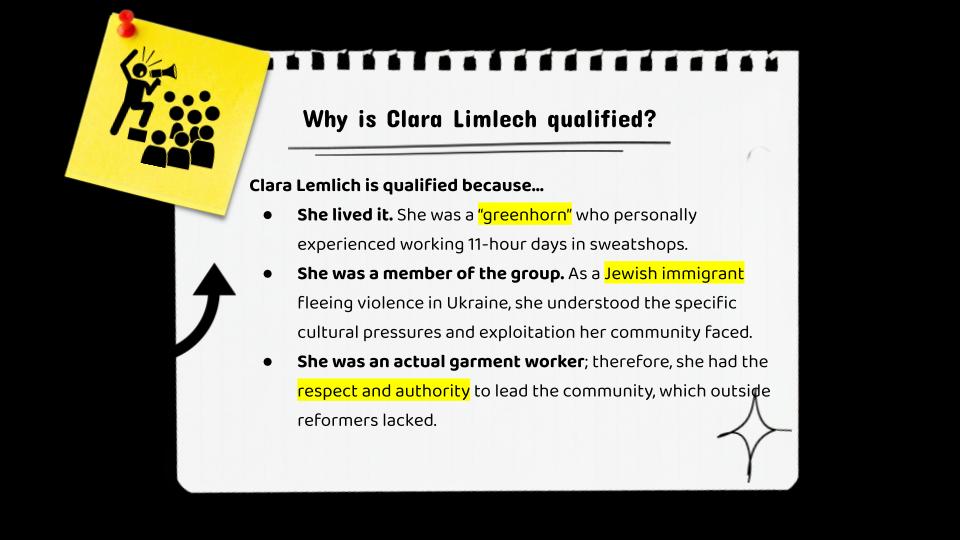
She is qualified because, like Riis, she lived the struggle.
As a Jewish immigrant and a garment worker herself, she had the respect and authority to lead her community in a way that outside reformers simply couldn't.
Now, what did Clara Lemlich do exactly to help this community?
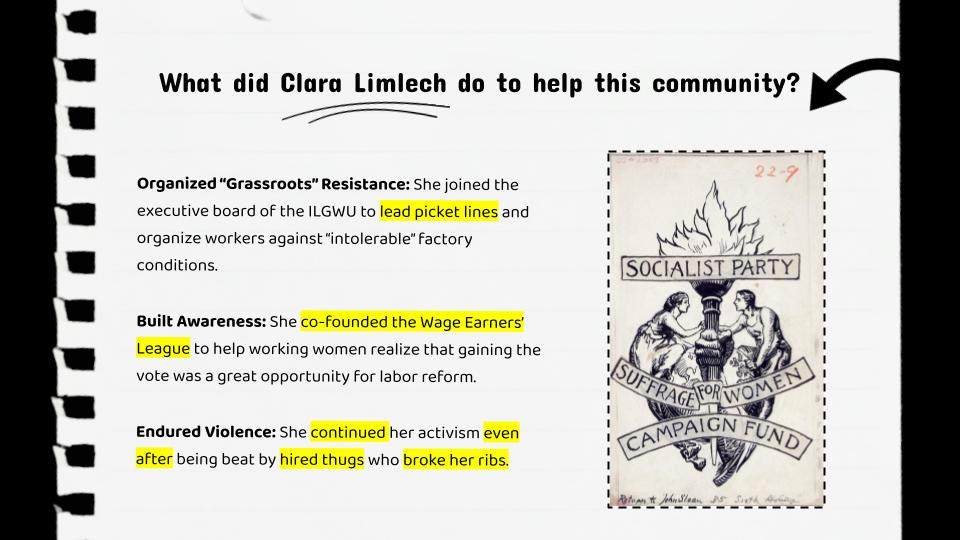
Well, in short, Lemlich organized "grassroots" resistance.
She led picket lines and even co-founded the Wage Earners' League.
And she was so incredibly brave that she even continued her activism after being beaten by thugs who broke her ribs.
What else did she do?
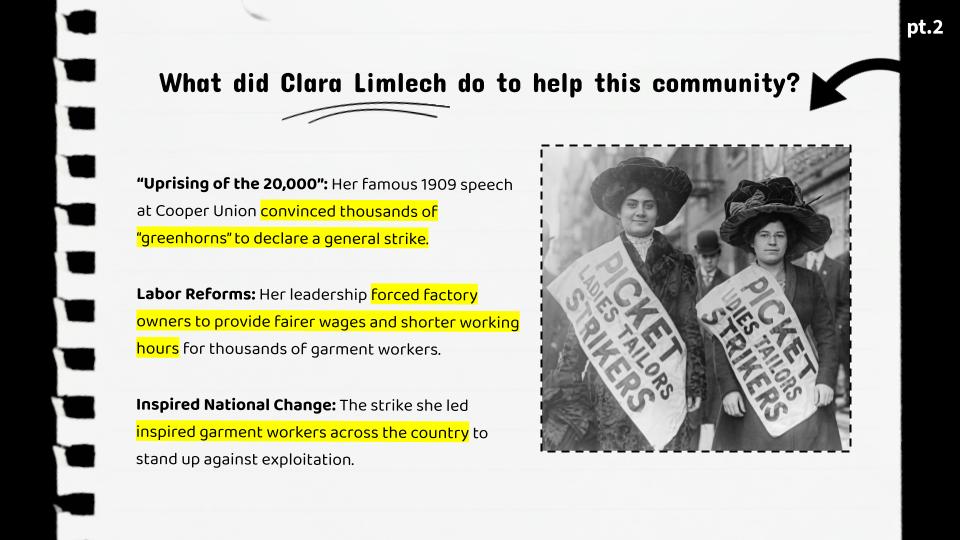
Well, she led the "Uprising of the 20,000" in 1909.
This was a massive strike where thousands of young immigrant women walked out of the factories to demand safer working conditions and better pay.
Her famous speech at Cooper Union convinced thousands to go on a general strike, which eventually forced owners to provide fairer wages and shorter hours.
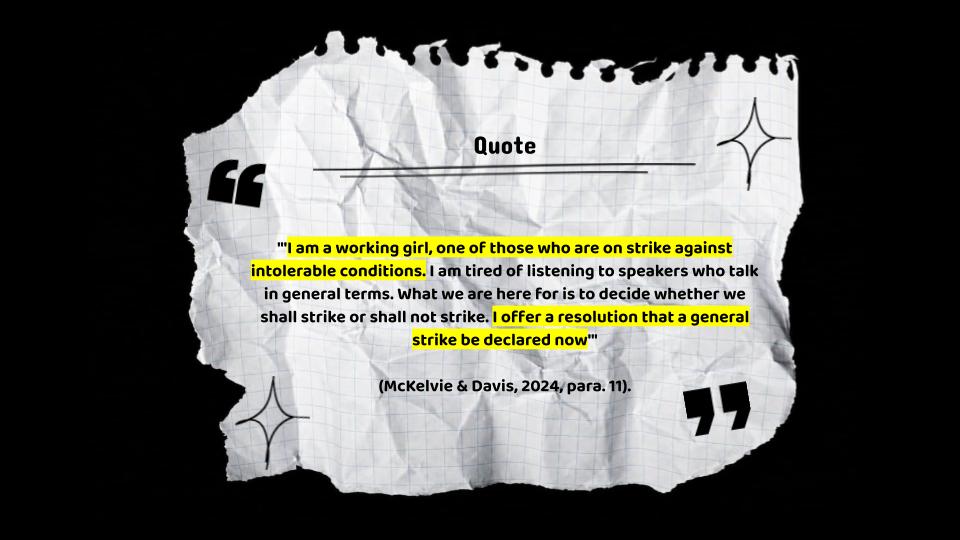
At Cooper Union, this is what she said: "I am a working girl, one of those who are on strike against intolerable conditions... I offer a resolution that a general strike be declared now."
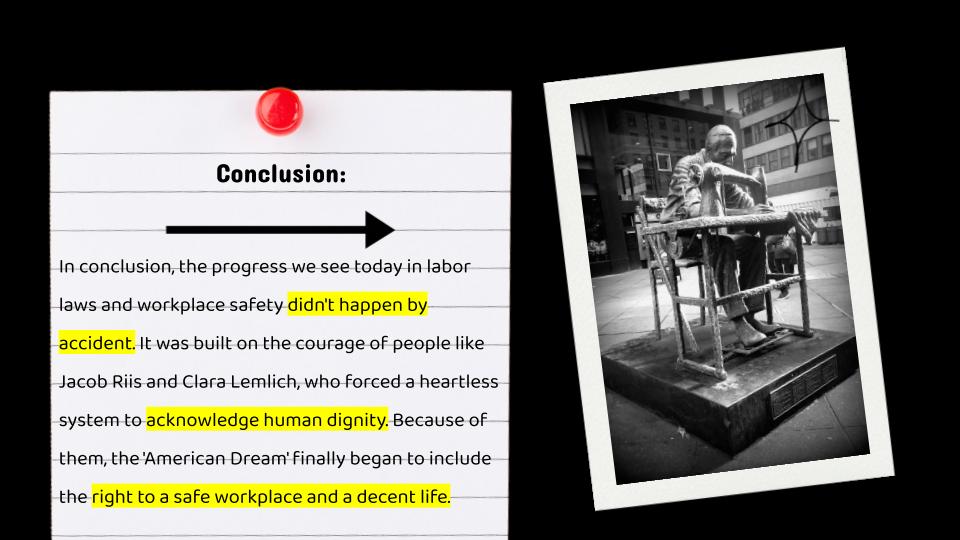
In conclusion, many of the improvements in tenement housing, garment industry labor laws, and factory safety were directly led by the efforts of Jacob Riis and Clara Lemlich.
Their activism served as the primary catalyst for significant social and political changes in New York City.
By exposing the exploitation endured by garment workers, they helped change American labor standards and pushed for workers to be treated with dignity.