BIOL 1104 Lab Exam 2 Review on Lab 11: Embryology + Reproduction
 Call Kai
 Learn
Learn Practice Test
 Spaced Repetition
 Match
Match Flashcards
 Knowt Play
1/55

Earn XP
Description and Tags
A comprehensive set of flashcards based on the lecture notes of BIOL 1104 Lab 11 focused on embryology and reproduction, covering key concepts and terminology.
Name | Mastery | Learn | Test | Matching | Spaced | Call with Kai |
|---|
No analytics yet
Send a link to your students to track their progress
56 Terms
What is embryology?
The study of growth, early development, and differentiation.
What triggers egg activation during fertilization?
The unification of sperm and egg to form a zygote.
Define cleavage in embryological development.
Rapid divisions resulting in smaller cells called blastomeres.
What is a morula?
A solid ball of 16–32 cells resembling a raspberry or soccer ball.
What is the blastocoel?
The fluid-filled cavity inside the blastula.
What happens during gastrulation?
A depression forms, creating the archenteron, a primitive gut.
What does the ectoderm become?
Skin, hair, brain, and spinal cord.
What does the mesoderm develop into?
Skeleton, muscles, heart, and kidneys.
What role does the endoderm play in development?
It becomes the gut lining, liver, and lungs.
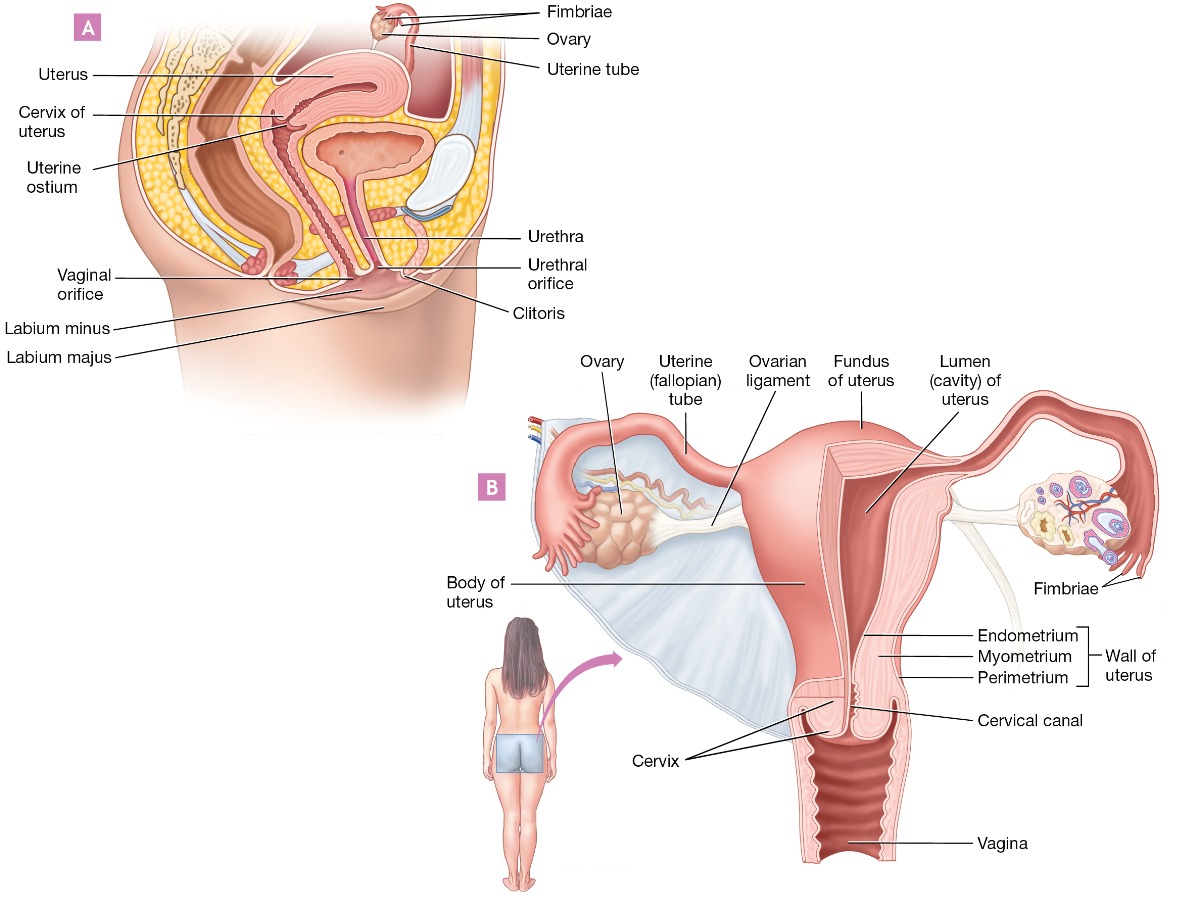
What are the primary structures of the female reproductive system?
Ovaries produce eggs and hormones.
What is the significance of homologous structures?
They show development from the same embryonic tissue.
Where does fertilization typically occur in women?
In the Fallopian tubes.
What occurs if a blastocyst implants in the Fallopian tube?
It results in an ectopic pregnancy, a medical emergency.
Define organogenesis.
The formation of organs during embryological development.
What is morphogenesis?
The shaping of the organism during development.
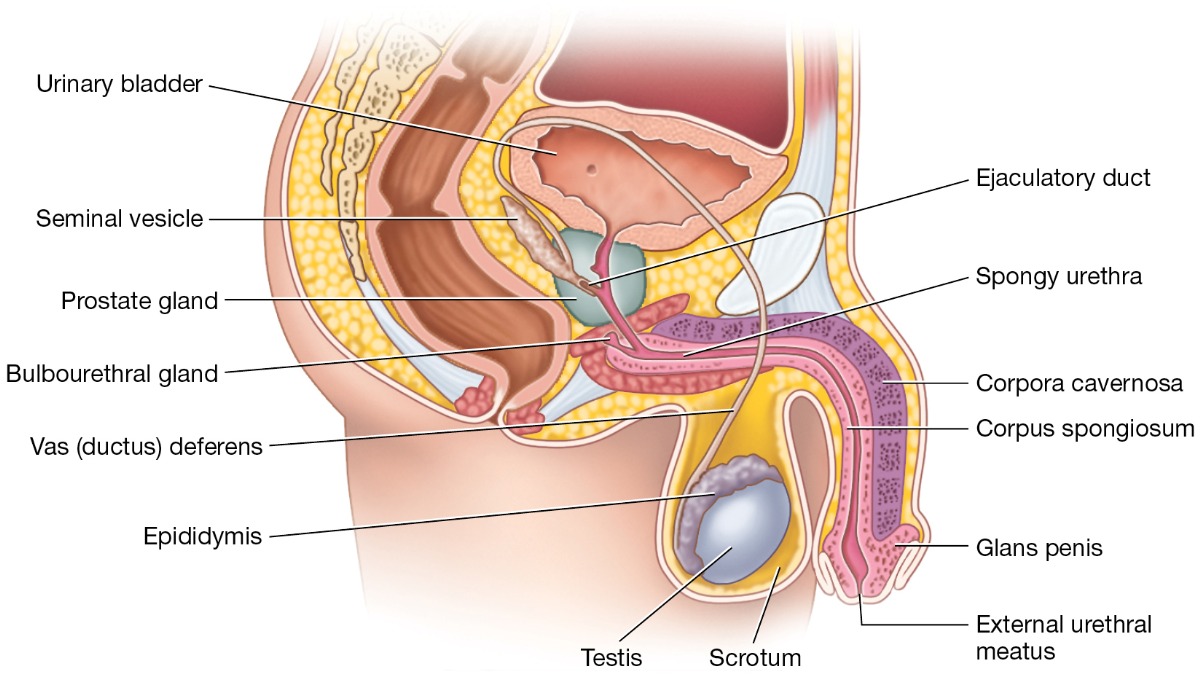
What is the main purpose of the scrotum?
To keep testes cooler than body temperature for sperm development.
What is the primary function of the epididymis?
Where sperm mature and are stored for up to 60 days.
How does semen composition differentiate from sperm?
Semen is 95% secretions and only 5% actual sperm.
What type of methods does hormonal birth control include?
Birth control pills, patches, IUDs, and injections.
What is an important distinction between male and female reproductive anatomy?
Males produce sperm in testes while females produce eggs in ovaries.
What are the secondary structures in the male reproductive system?
Vas deferens and glands ensuring gametes meet.
What anatomical part becomes the anus in humans during gastrulation?
The blastopore.
What does the Fallopian tube do?
It moves the egg and is the site of fertilization.
How is the vagina structured?
It is the muscular birth canal and external genitalia.
What is the function of the prostate gland?
To provide an alkaline buffer to survive vaginal acidity.
What anatomical part supports the developing embryo within the egg?
Yolk provides nutrition for embryos developing in eggs.
What defines the blastula stage?
A hollow sphere of around 64 cells.
What is significant about the three germ layers?
They form different body systems and structures.
What are key characteristics of the 'C' shaped stage of development?
A developing head region, primitive heart, optic cups, and segmental somites.
What is the anatomy of the human testes?
They produce sperm in seminiferous tubules and testosterone in Leydig cells.
How is the female reproductive system structured?
Includes ovaries, Fallopian tubes, uterus, and vagina.
What is a common myth regarding human reproduction?
That sperm can live indefinitely within the female tract.
What role does the clitoris play in female anatomy?
It is homologous to the male penis and is key for sexual stimulation.
Why is it important to distinguish blastocoel from archenteron?
They are distinct cavities formed during different stages of development.
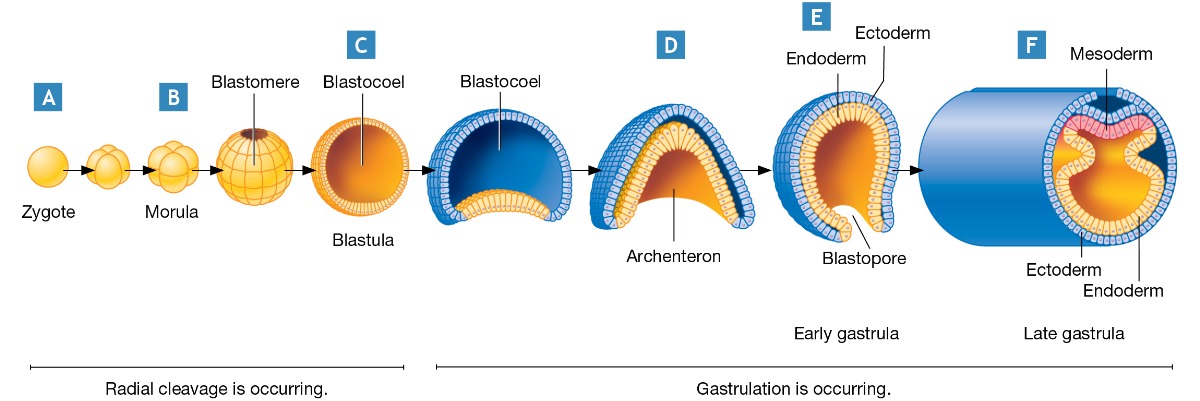
What does cleavage result in?
The formation of smaller cells known as blastomeres.
What is a blastocyst?
The mammalian version of a blastula.
What do the seminal vesicles secrete?
Fructose for energy to sperm.
Define ectopic pregnancy.
When a blastocyst implants outside the uterus, typically in the Fallopian tube.
What is the function of fimbriae?
To help transport the egg from the ovary to the Fallopian tube.
What does the vagina connect?
It connects the external genitalia to the uterus.
Define the process of fertilization.
The fusion of sperm and egg resulting in a diploid zygote.
What happens if fertilization does not occur?
The endometrial lining of the uterus sheds during menstruation.
What provides lubrication in semen?
Extra alkaline fluids from Bulbourethral Glands.
What marks the beginning of cleavage?
The zygote beginning to divide post-fertilization.
What shapes does the embryo take during development?
Embryos may exhibit similar shapes like 'C' due to common stages.
What anatomical changes occur in female anatomy due to pregnancy?
Uterus can expand from ~7.5 cm to over 30 cm.
How do embryological patterns between species relate to evolutionary biology?
Similar patterns are observed, indicating common ancestry.
What is the significance of studying embryonic development in sea stars compared to mammals?
They help illustrate common developmental processes across species.
Which organ is responsible for producing gametes in females?
Ovaries produce eggs.
Which germ layer primarily develops into skin?
The ectoderm.
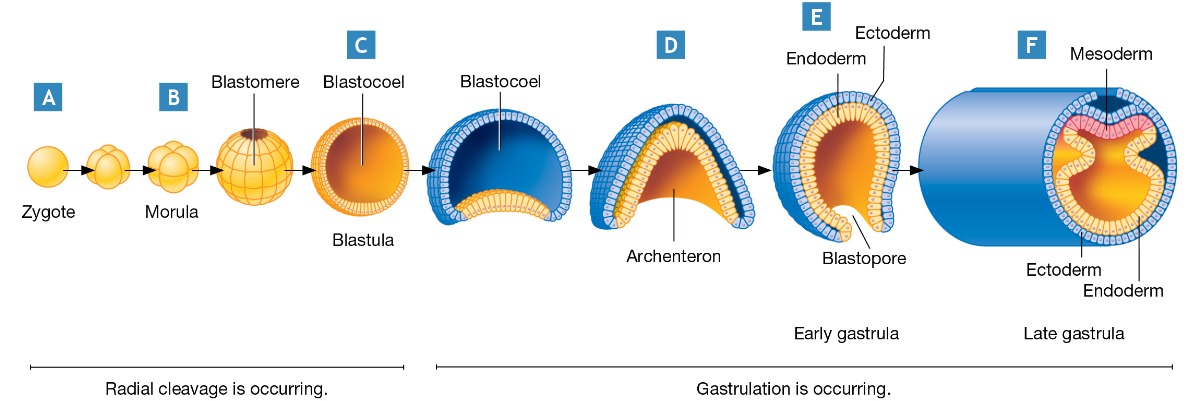
What are the phases of embryological development in order?
Morula, blastula, gastrula.
What is the role of testosterone in males?
It is crucial for the development of male sexual characteristics.
What key function does the allantois serve in chick embryos?
It collects waste within the egg.
Define the role of biology in understanding myths about sexuality.
Biology helps clarify misconceptions about reproduction and sexual health.
Where do mammalian embryos develop?
In the uterus, utilizing the placenta for nutrition.
What is the impact of hormonal methods on the reproductive system?
They help prevent ovulation and manage pregnancy.