Structure of Water and Hydrogen Bonding
0.0(0)
Studied by 10 people Call Kai
 Learn
Learn Practice Test
 Spaced Repetition
 Match
Match Flashcards
 Knowt Play
Card Sorting
1/167

Earn XP
Description and Tags
Last updated 5:25 AM on 2/27/23
Name | Mastery | Learn | Test | Matching | Spaced | Call with Kai |
|---|
No analytics yet
Send a link to your students to track their progress
168 Terms
1
New cards
Water is a __ molecule
Polar
2
New cards
Why is water a polar molecule?
__the ends have opposite partial charges (unequal distribution of charge).__
3
New cards
Hydrogen is a partial ___
positive charge
4
New cards
oxygen is a partial ____
negative charge
5
New cards
Hydrophilic Substance attracts ____
water
6
New cards
Does water has an affinity for hydrophilic substance?
Yes
7
New cards
Define Hydrophobic Substance
One that avoids water and does not have an affinity for water
8
New cards
What type of bond is Hydrogen
Chemical Intermolecular
9
New cards
When does hydrogen bonding occurs?
When a hydrogen atom bonds to a highly electronegative atom, including oxygen, nitrogen, and fluorine.
10
New cards
Which bonds is weaker? Hydrogen or Covalent
Hydrogen
11
New cards
T or F: Hydrogen bonding is responsible for many molecular properties
True
12
New cards
Give examples of hydrogen bonding responsibility or many molecular properties
The shapes and functions of proteins, the stability of many chemical compounds, and the formation of intermolecular interactions in crystalline solids.
13
New cards
What does hydrogen bonding help water with?
The properties of cohesion, adhesion, surface tension, specific heat, and evaporative cooling.
14
New cards
Define Cohesion
The attraction of water molecules.
15
New cards
__Strong cohesive forces are present because__
__they form hydrogen bonds with each other.__
16
New cards
Cohesion contributions
The transport of water and nutrients against gravity in plants.
17
New cards
Define Transpiration
__The loss of water from a plant in the form of water vapor.__
18
New cards
Define Adhesion
When one substance is attracted to another. Water adheres to other molecules and surfaces.
19
New cards
Define Surface Tension
Difficulty to break the surface of the water because of cohesive forces.
20
New cards
Example of Surface Tension
water strider insects rely on surface tension to stay afloat and walk on the surface of bodies of freshwater.
21
New cards
Define Specific Heat
The amount of heat energy it takes to raise or lower the temperature of one gram of a substance by one degree Celsius.
22
New cards
Why does water has a high specific heat?
So it can absorb or release a large amount of heat with only a slight change in its own temperature so large bodies of water take a while to evaporate.
23
New cards
Define Evaporative cooling
Water has a high heat of vaporization, so the water can absorb a lot of heat and leave the surface cooler.
24
New cards
Example of evaporative cooling
Excess body heat is used to convert beads of sweat/perspiration into vapor, which cools down the body.
25
New cards
Define Dissociation of Water
hydrogen shifts from one water molecule to another.
26
New cards
When a molecule is increasing hydronium concentration by releasing hydrogen ions into solutions, it is ______
Acid
27
New cards
When a molecule is increasing hydroxide concentration by absorbing or accepting hydrogen ions, it is a _______
Base
28
New cards
Ph scale range goes from __ to __
0-14
29
New cards
What is (
Acidic
30
New cards
What is (7)?
Neutral
31
New cards
What is (>7)?
Basic
32
New cards
What are organisms are made up of
matter
33
New cards
What does matter do?
takes up space and has mass.
34
New cards
What is matter made up of?
Atoms
35
New cards
Atoms are made up of
__protons, neutrons, and electrons.__
36
New cards
Elements
substances that cannot be broken down further by chemical reactions.
37
New cards
(O)
Oxygen
38
New cards
(C)
Carbon
39
New cards
(H)
Hydrogen
40
New cards
(N)
Nitrogen
41
New cards
(Ca)
Calcium
42
New cards
(P)
__phosphorus__
43
New cards
__(K),__
__potassium__
44
New cards
__(S)__
__sulfur__
45
New cards
__(Na)__
__sodium__
46
New cards
__(Cl)__
__chlorine__
47
New cards
__(Mg)__
__magnesium__
48
New cards
Compounds
substances that can be broken down further by chemical reactions because they are made of two or more elements that are in a fixed ratio to each other.
49
New cards
__H2O__
__made of two hydrogens and one oxygen. Because there is a fixed ratio of hydrogens and oxygen, water is a compound.__
50
New cards
Protons are ____ Charge
Positive
51
New cards
Neutrons are ____ charge
(neutral/no electrical)
52
New cards
Electrons are ____ charge
Negative
53
New cards
atomic number of an element is determined by
the number of protons in the nucleus.
54
New cards
atomic mass number is the sum of
the protons and neutrons in the nucleus.
55
New cards
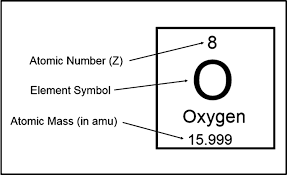
element diagram
56
New cards
Isotopes
two atoms of an element that have a different number of neutrons.
57
New cards
Radioactive isotopes are used for
processes that include fossil dating and medical imaging.
58
New cards
An electron's potential energy (location/structure) is called an
energy level or electron shell
59
New cards
When electrons absorb energy,
When electrons absorb energy,
60
New cards
When electrons release energy
they move closer to the nucleus.
61
New cards
Carbon
the unique ability to form four covalent bonds which is known as tetra-valence.
62
New cards
The goal for all atoms is to be
Stable
63
New cards
Carbon must find four more electrons to fill its
outer shell
64
New cards
Rule of octet rule
states that atoms will lose, gain or share electrons to achieve an electron configuration of eight valence electrons.
65
New cards
Nitrogen
a building block in proteins, nucleic acids, amino acids, and enzymes.
66
New cards
Nitrogen is even a component of many hormones, such as
adrenaline and insulin.
67
New cards
Nitrogen plays a role in
balance of nutrients in ecosystems.
68
New cards
Functional groups
Accessory elements that give molecules a different structure, therefore, a different function.
69
New cards
Functional groups can be classified as
hydrophobic or hydrophilic based on their charge and polarity characteristics.
70
New cards
Hydroxyl Group
Hydrogen bonded to Oxygen (OH) attached to the carbon skeleton.
71
New cards
Carbonyl Group
Double bond (sharing of two pairs of valence electrons) between carbon and oxygen.
72
New cards
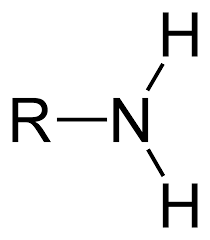
Amino Group
Nitrogen bonded to two hydrogens and one carbon atom.
73
New cards
What does R represent to
an unknown part of the molecule that the functional group is attached to.
74
New cards
__Nitrogen is used to__
__build proteins and nucleic acids.__
75
New cards
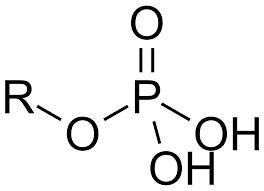
Phosphate Group
phosphate ion covalently attached to the carbon skeleton.
76
New cards
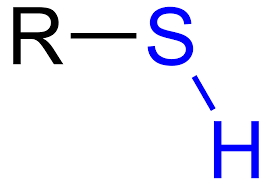
Sulfhydryl Group
Sulfur bonded to a hydrogen atom.
77
New cards
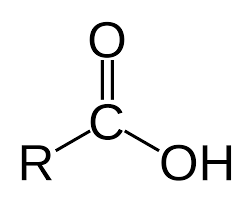
Carboxyl Group
a combination of carbonyl and hydroxyl where carbon is double-bonded to an oxygen and a hydroxyl.
78
New cards
Covalent
Sharing of electrons
79
New cards
__single bond__
__sharing one pair of electrons__
80
New cards
__double bond__
__the sharing of two pairs of electrons.__
81
New cards
Structural formula is represented by
two lines connecting two atoms.
82
New cards
Electronegativity
the atom's attraction for electrons in a covalent bond.
83
New cards
Ionic
Transfer of electrons/electrostatic attraction between a positive and negative ion.
84
New cards
Metallic bonds
formed by the attraction between metal ions and delocalized, or "free", electrons.
85
New cards
Polymer
a long molecule composed of many molecules bonded together covalently.
86
New cards
Poly means
many
87
New cards
Monomer
are small building block molecules that, when combined, make a polymer.
88
New cards
mono means
one
89
New cards
Nonpolar Covalent bond
The equal sharing of electrons and distribution of charge.
90
New cards
Polar covalent bond
Unequal sharing of electrons and distribution of charge causes partial positive or partial negative for each atom or molecule
91
New cards
InTRAmolecular bond
__within the molecule__
92
New cards
__InTERmolecular bond__
__between water molecules__
93
New cards
T or F: Hydrogen bonds are NOT covalent bonds
True
94
New cards
Dehydration Synthesis
occurs when monomers combine to form a polymer through a reaction after water is removed.
95
New cards
dehydrate means
water lost
96
New cards
__anabolic__
__small molecules bind together to form larger molecules__
97
New cards
Hydrolysis
occurs when polymers are broken down into monomers through a reaction due to the addition of water.
98
New cards
Macromolecules are large molecules composed of
two or more polymers combined together
99
New cards
100
New cards
Carbohydrates are
Sugars and polymers of sugars