Steels + aluminium
 Call Kai
 Learn
Learn Practice Test
 Spaced Repetition
 Match
Match Flashcards
 Knowt Play
1/23

There's no tags or description
Looks like no tags are added yet.
Name | Mastery | Learn | Test | Matching | Spaced | Call with Kai | Chat |
|---|
No analytics yet
Send a link to your students to track their progress
24 Terms
What are steels
alloys that contain iron and carbon
2 distinct crystallographic forms of polymorphs that iron exists in
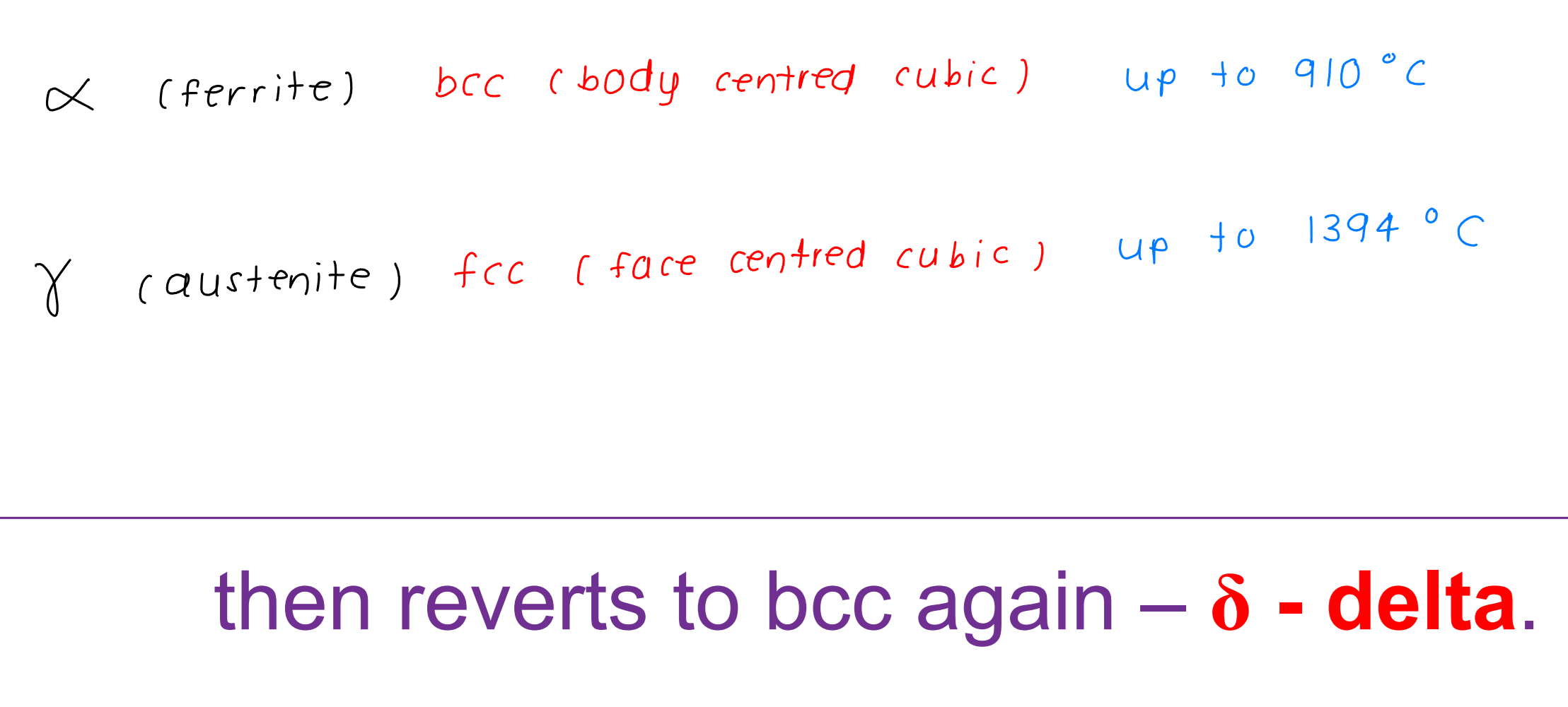
how can carbon content be determined
by the maximum amount that can be dissolved into solid iron
what are compositions
alloys that contain 0.01 - 2 wt% C
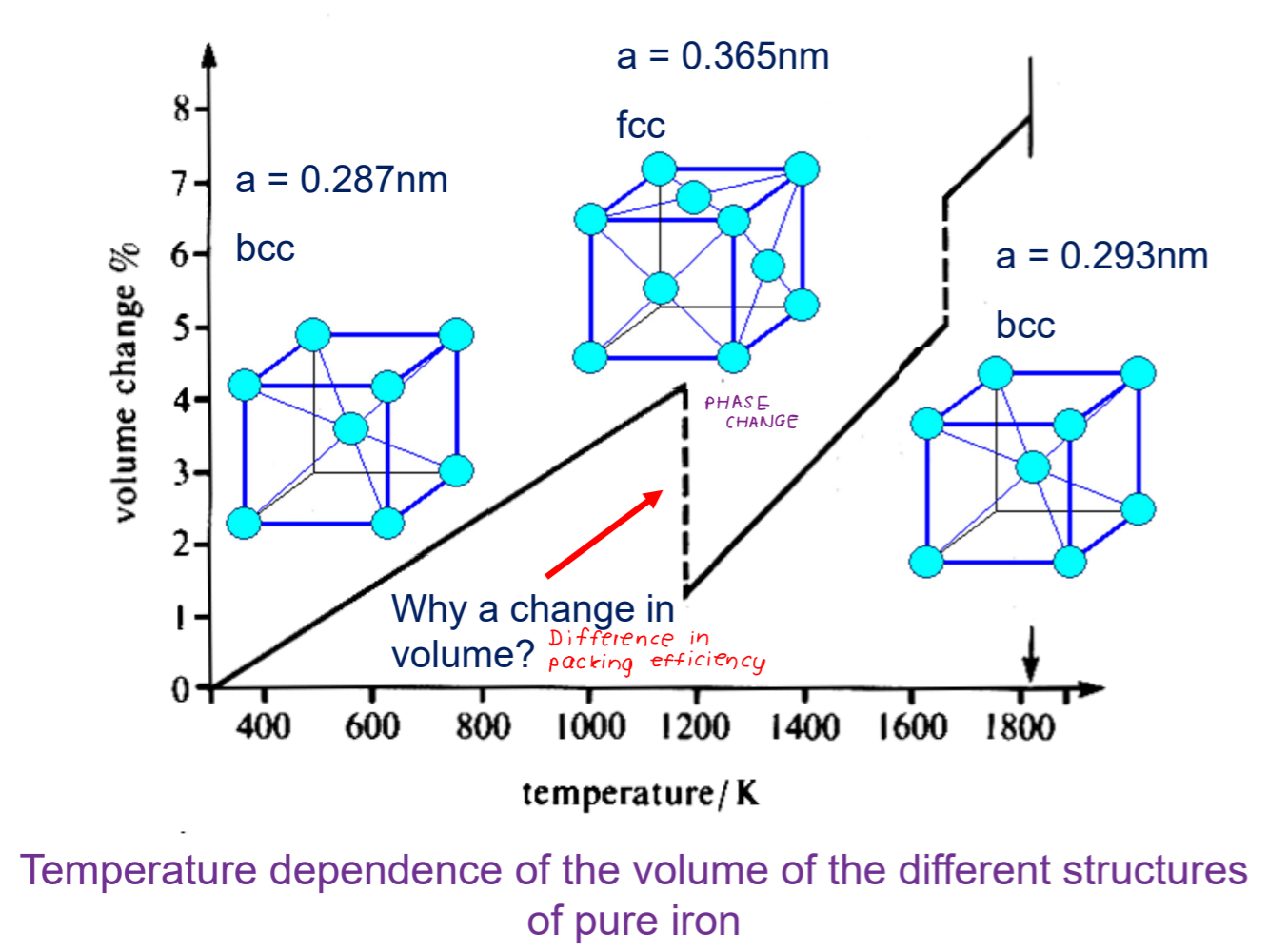
graph of volume change against temperature showing different structures
what is equilibrium
a state in which no further change is perceptible, no matter how long one waits
the state has the lowest free energy
2 words to describe a phase
homogenous
mechanically separable
how does cementite form
once C is added beyond the solubility limit, the metastable iron carbide Fe3C (cementite) forms
what are intersitials
small atoms which can sit between larger atoms
e.g. carbon in steel
interstiitial locking occurs when dislocations are trying to move
microstructure at 0.8 wt% C
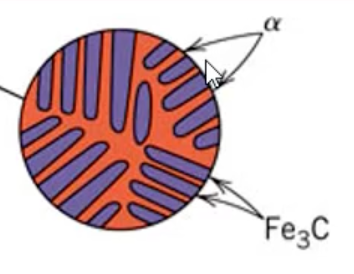
microstructure at hypoeutectoid compositions < 0.8 wt% C
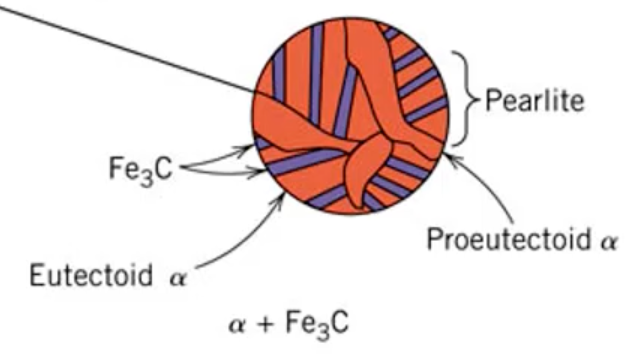
microstructure at hypereutectoid compositions > 0.8 wt% C
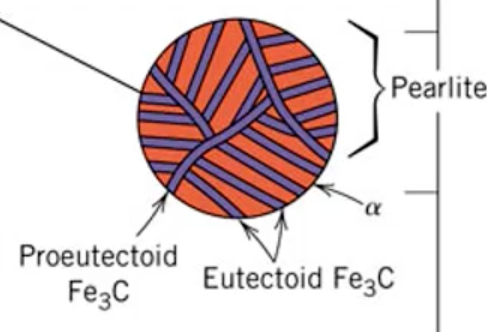
how is C rejected from a solid solution and diffuses towards plates of Fe3C
Via diffusion (thermally activated)
so if the cooling rate increases, shorter time for diffusion
as a result, the lamellae of pearlite will become finer
final composition of hyoeutectoid vs hypereutectoid
Hypoeutectoid
proeutectoid ferrite + pearlite
Hypereutectoid
Fe3C + pearlite
when is the time temperature transformation curve used
used for ISOTHERMAL heat treatments
only austenite can transform into something
what are cast irons
alloys of iron and carbon containing varying amounts of manganese, silicon, sulphur and phosporus
describe the 3 types of cast iron
WHITE CAST IRON
consists of Fe3C and pearlite
fast cooling rate
white irons have no free carbon
very hard, difficult to machine + good wear resistance
GREY CAST IRON
consists of graphite (flakes) and pearlite
have free graphite present
more readily machinable than white irons
poor tensile properties
DUCTILE CAST IRON
consists of graphite + pearlite / graphite + ferrite
pearlitic (moderate cooling) or ferritic (slow cooling)
additions of magnesium or cerium change the graphite form to spheroidal
5 properties of aluminium + examples of uses
1) Low density (1/3 of weight steel)
2) Highly resistant to most forms of corrosions
protective coating Al oxide barrier to air, temperature, moisture and chemical attack
3) Super conductor of electricity (replaces Cu where weight is also a consideration)
4) Non-magnetic and non-combusible
advanced industries such as electronics or in off-shore structures
5) Non-toxic and impervious
food packaging
Describe the 2 types of alloys
WORK-HARDENING ALLOYS
Hardened by deformation (an increase in dislocation density)
Designated
F = as fabricated
H = strain hardened
O = annealed state
HEAT-TREATABLE ALLOYS
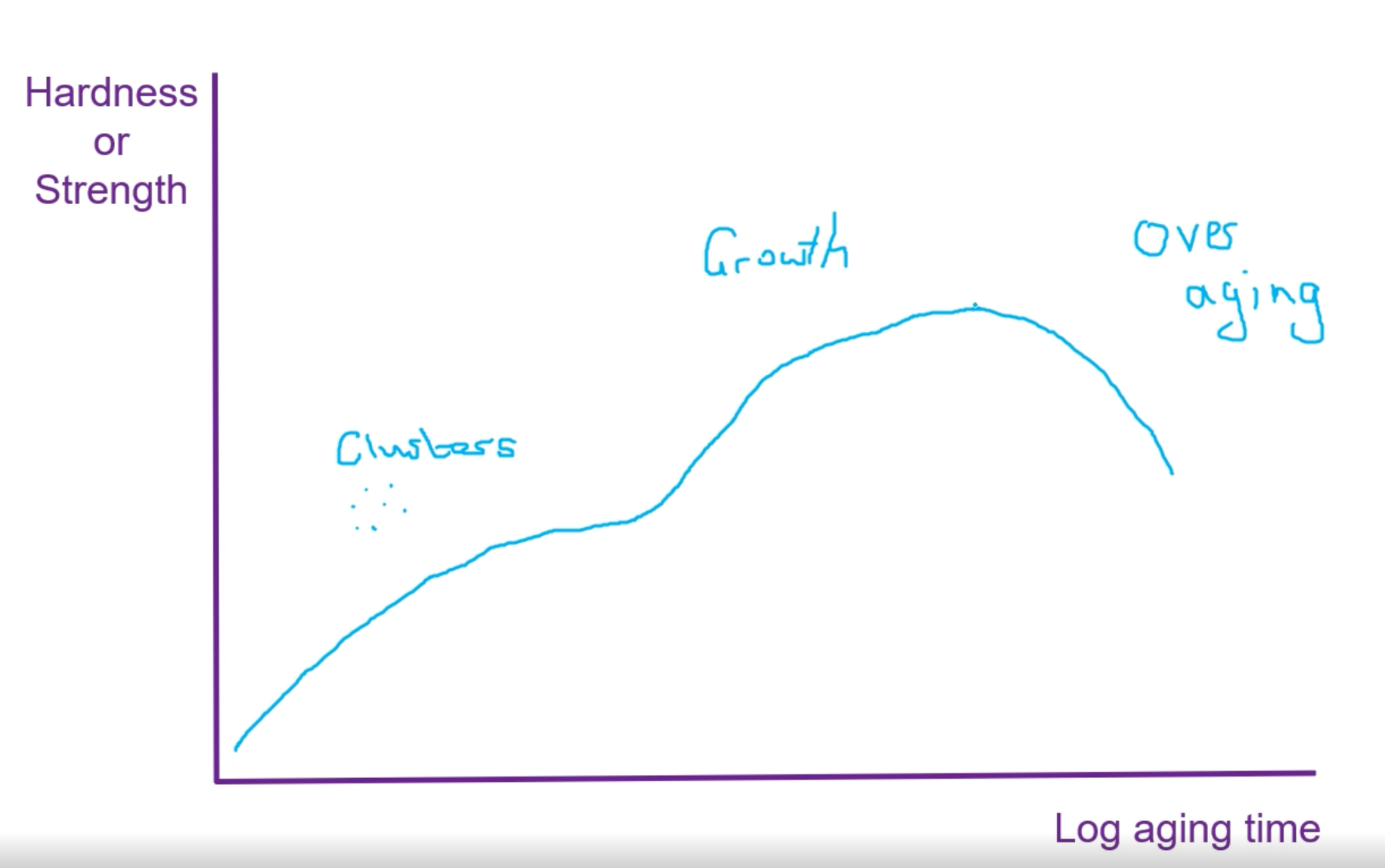
Properties controlled by heat treatment through the dissolution and controlled precipitation of second phase particles (solution treatment + aging)
Designated T (with a number to indicate the treatment)
3 diagram heat treatment of alloys and designation
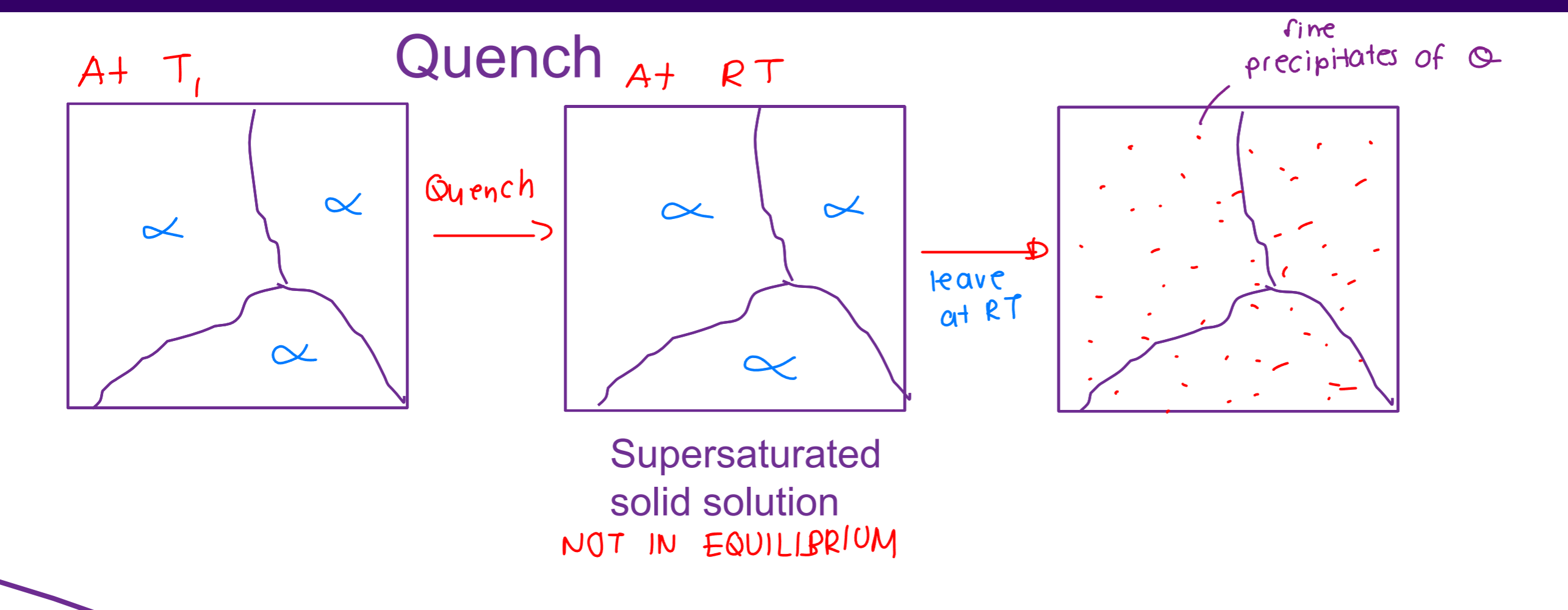
Hardness/Strength vs log aging time graph
why is the assumption that there are no further changes in the structure below the eutectic temperature incorrect for 2.5% Cu alloy
at a temperature below the eutectic temperature, θ would precipitate
for a 2.5% Cu alloy design a heat treatment that would give you refinement of the θ particles with the smallest carbon footprint
Heat to the maximum solubility of Cu in Al (547 degrees)
and QUENCH
leave to naturally age
would this work for 10% and 40% Cu
it would not work as at this temperature, liquid would start to form