dental embryology, histology, and anatomy exam 1
 Call Kai
 Learn
Learn Practice Test
 Spaced Repetition
 Match
Match Flashcards
 Knowt Play
1/444

There's no tags or description
Looks like no tags are added yet.
Name | Mastery | Learn | Test | Matching | Spaced | Call with Kai |
|---|
No analytics yet
Send a link to your students to track their progress
445 Terms
histology
is the study of the microscopic structure and function of cells and associated tissue
also known as microanatomy
millimeter
used for extremely large body cells, the gingival sulcus, and periodontal pocket depth
mm
0.1 cm
centimeter
used for pathologic lesions (measuring tissue abnormalities)
cm
~0.4 in
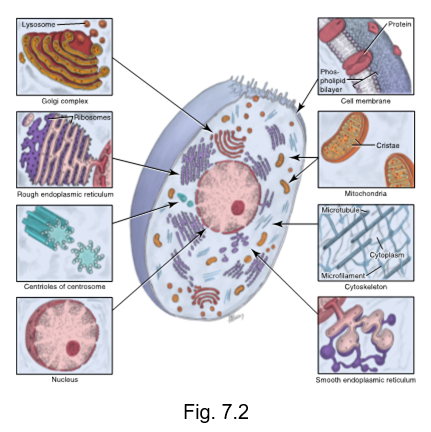
cell
the smallest living unit of organization
capable of performing any necessary functions without the aid of other cells
tissue
cells with similar characteristics of form and function are grouped together to form __
organ
various tissue types are then bonded together to form __, a somewhat independent body part that performs a specific function or functions
system
organs can function together globally as a __
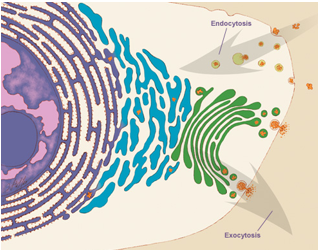
exocytosis
performed by cells
active transport of material from a vesicle within the cell out into the extracellular environment
endocytosis
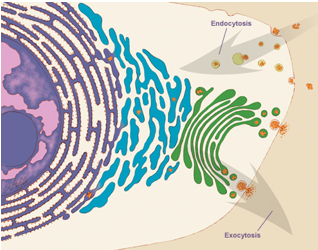
The uptake of materials from the extracellular environment into the cell
invagination of the cell membrane
take the form of phagocytosis
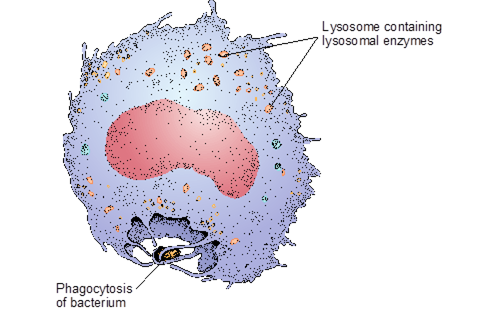
phagocytosis
The engulfing and then digesting of solid waste and foreign material by the cell through the enzymatic breakdown of the material
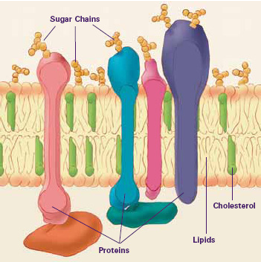
cell membrane
“gatekeeper”
surrounds cell
cytoplasm
includes the semifluid part contained within the cell membrane boundary
skeletal system of support or cytoskeleton
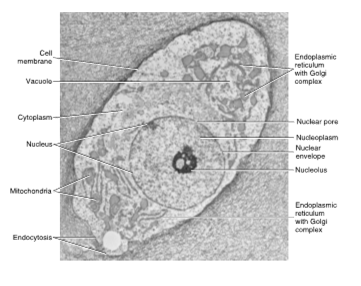
vacuoles
The cytoplasm contains not only a number of structures but also spaces or cavities referred to as __
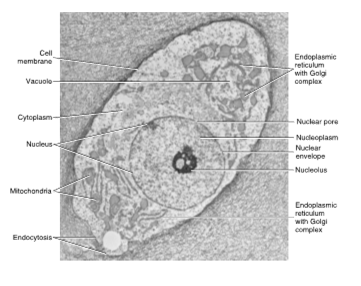
organelles
active specialized structures within cells
allow each cell to function according to its genetic code
nucleus
mitrochondria
ribosomes
endoplasmic reticulum
golgi complex
lysosomes
cytoskeleton
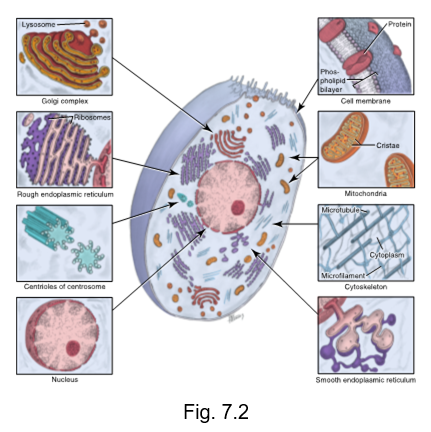
nucleus
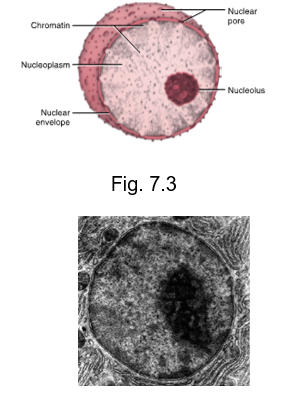
largest, densest, and most conspicuous organelle in the cell when it is viewed microscopically
stores DNA; controls cell divisions
The chief nucleic acid in the nucleoplasm is DNA in the form of chromatin (stipples)
It contains nucleoplasm and is surrounded by a nuclear envelope
chromosomes
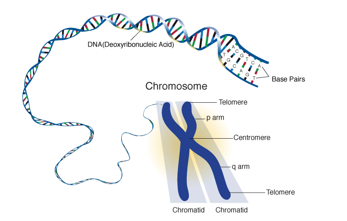
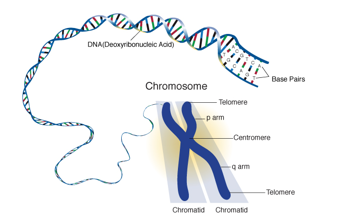
chromatin condenses into microscopically visible, discrete, rod-like __
has a centromere
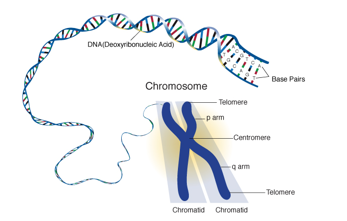
becomes two filmentous or threadlike chromatids
centromere
a clear, constricted area near the middle of the chromosome
chromatid
daughter chromosomes joined by a centromere during cell division
nuceloplasm
fluid part within the nucleus that contains important molecules used in the construction of ribosomes, nucleic acids, and other nuclear materials
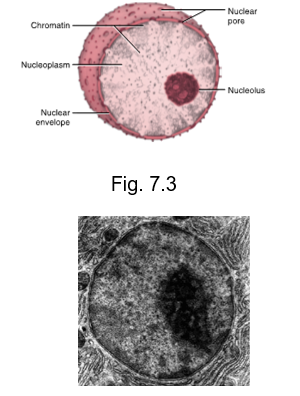
nuclear envelope
a membrane similar to the cell membrane
double layered
may be pierced by nuclear pores (avenues of communication)
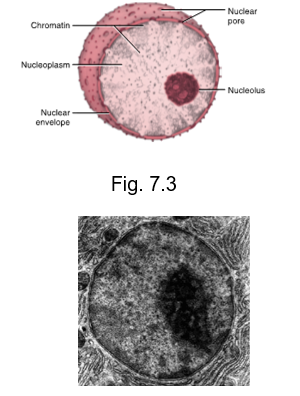
nucleolus
a prominent, rounded nuclear organelle that is centrally placed in the nuceloplasm when the cell is examined microscopically
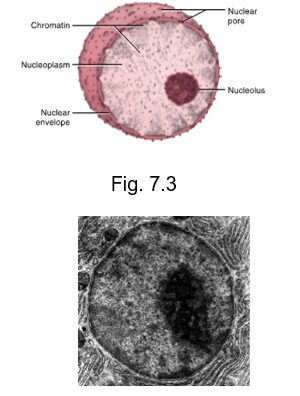
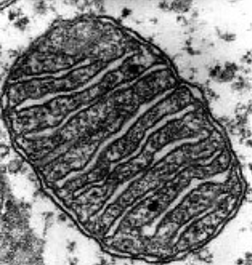
mitochondria
The most numerous organelles in the cell
associated with energy conversion and a major source of adenosine triphosphate (ATP)
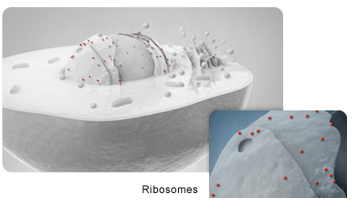
ribosomes
tiny sphere-shaped organelles
are produced in the nucleolus from rRNA and protein molecules
are assembled in the cytoplasm
mobile “protein factories”
endoplasmic reticulum
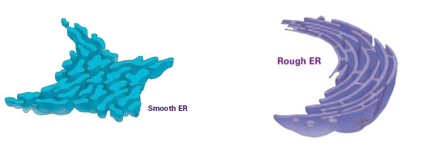
rough ER (ribosomes on surface)
smooth ER (no ribosomes)
more concentrated in cells inner region as compared to peripheral region
consists of parallel membrane-bound channels
like a “highway” system for the cell, transport system for proteins and lipids
golgi complex
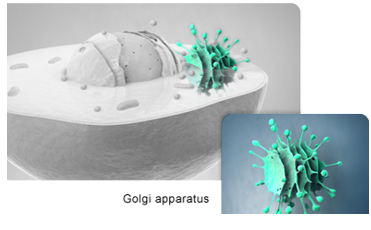
once ER has modified the new protein, it is then transferred to the __ for subsequent segregation, packaging, and transport of protein compounds
“distribution center” for the cell
modifies, packages, and transports proteins
lysosomes
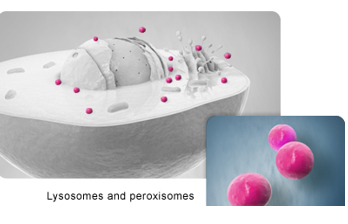
Organelles produced by the Golgi complex and function in both intracellular and extracellular digestion by the cell
perform phagocytosis
digests waste and pathogens
centrosome
is a dense, somewhat oval-shaped organelle that contains a pair of cylindrical structures known as the centrioles
plays a significant roles in forming the miotic spindle apparatus during cell division
two centrioles within a __
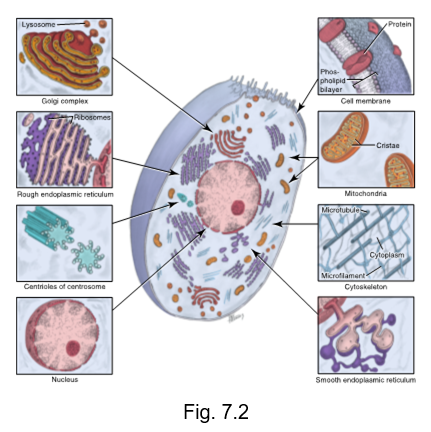
cystoskeleton
the interior of the cell is neither liquid nor gel in nature but somewhat between the two, and has a three dimensional system of support known as the __
maintains cell shape and assists in movement
intermediate filaments
various types of thicker, threadlike microscopic structures within the cell
An example is the tonofilaments, or a type of __ __ that forms keratin, which is found in calloused-type of epithelium located in the oral cavity on the attached gingiva as well as the dorsal surface of the tongue
tonofilaments
have a major role in intercellular junctions
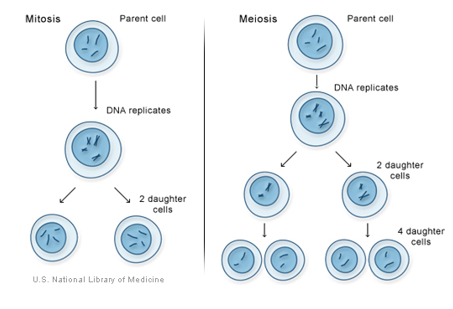
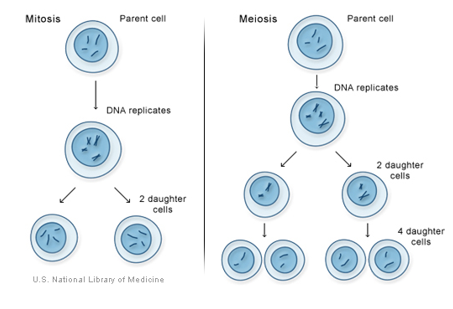
mitosis
complex process involving many of the organelles of cell
process starts from one parent cell that produces two genetically identical daughter cells
produces body cells
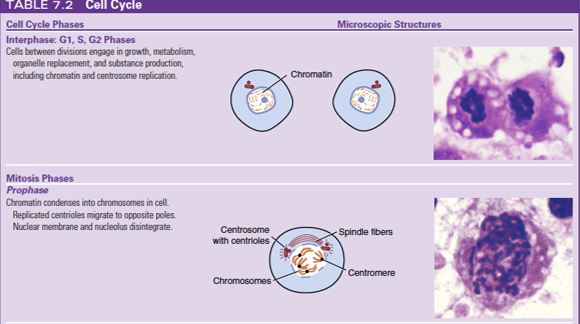
interphase
DNA is replicated during this stage of mitosis
cell’s “living” time
has three phases, G1 (initial resting phase), S (synthesis of DNA by duplication), and G2 (second resting phase)
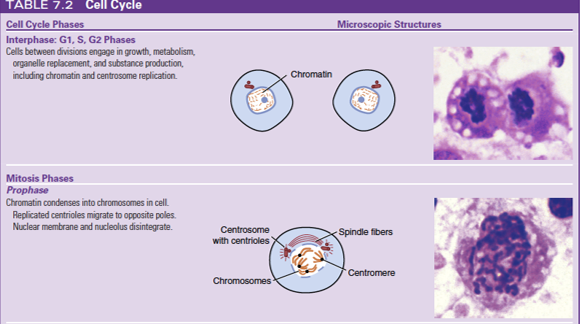
prophase
chromatin condenses into chromosomes
replicated centrioles migrate to opposite poles
nuclear membrane and nucleolus disintegrate
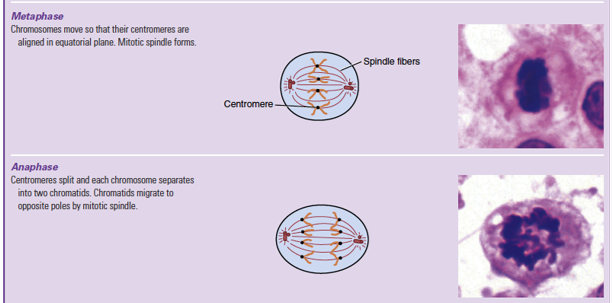
metaphase
chromosomes align in center
chromosomes move so that their centromeres are aligned in equatorial plane
miotic spindle forms
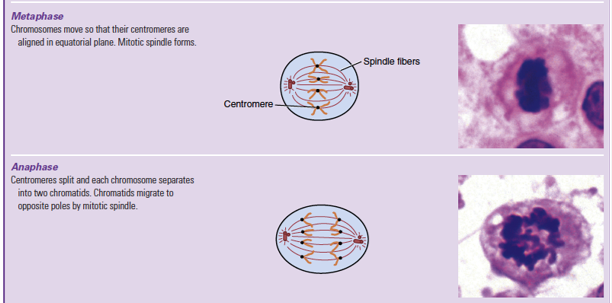
anaphase
chromosomes are pulled apart
centromeres split and each chromosome separates into two chromatids
chromatids migrate to opposite poles by miotic spindle
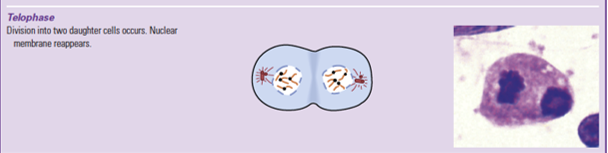
telophase
two new nuclei form
division into two daughter cells occurs
nuclear membrane reappears
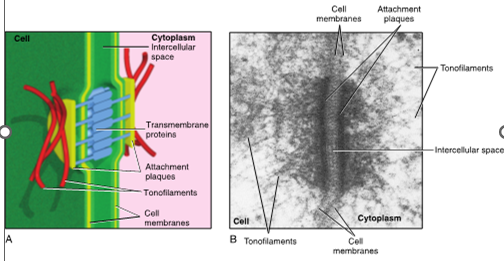
desmosome
intercellular junction between cells
cell to cell adhesion, such as tissue to tissue
seen during repair after an injury to skin or oral mucosa
disc shaped “spot weld”
connects adjacent cells
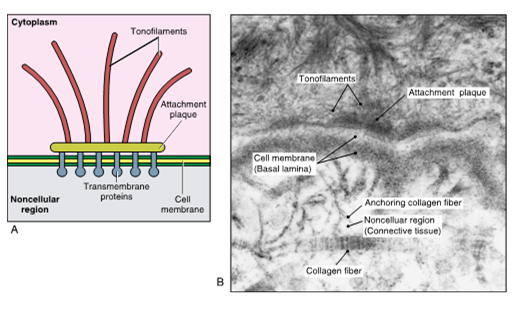
hemidesmosome
intercellular junction that involves the attachment of a cell to an adjacent noncellular surface
cell to matrix adhesion
ex: gingiva to tooth
meiosis
two cell divisions that produce four non-identical daughter cells
produces sex cells
cell
smallest living unit of organization in the body
each cell can perform any necessary functions without the aid of other cells
tissue types are categorized into __ basic histologic types
4
epithelial, connective, muscle, and nerve tissue
regeneration
it is the natural renewal of tissue and organ
produced by the growth and differentiation of new cells and intercellular substances
occurs through growth from the same type of tissue that has been destroyed or from its precursor
turnover time
time it takes for the newly divided cells to be completely replaced throughout the tissue
varies for each of the basic tissue types in the orofacial region
epithelium
tissue that covers and lines both external and internal body surfaces, including vessels and small cavities
avascular (NO BLOOD)
protection: inner structures from physical, chemical, and pathogenic attack
epithelial barrier: prevent dehydration and heat loss
tissue absorption, secretion, sensory, and other specialized functions
can be formed from any of the three embryonic cell layers
both the epithelium of the skin and the oral mucosa are ___ origin
ectodermal origin
epidermis, neurons, pigment cells (melanocytes)
lining of the respiratory and digestive tract are of __ origin
endodermal origin
ex: lung cell, thyroid cell, pancreatic cell
linings of the urinary tract are derived from __
mesoderm
cardiac muscle, red blood cells, smooth muscle, skeletal muscle, and tubule cell of kidney
epithelium histology
avascular
little or no intercellular substance or tissue fluid
highly regenerative (rapid turnover) because its deeper germinal cells are capable or reproduction by mitosis
undergoes cellular differentiation from deeper germinal layers to surface to be shed (skin shedding at top growing from bottom)
epithelium junctions
joined by intercellular junctions to one another (tissue to tissue) in the form of desmosomes
Noncellular surfaces are joined by hemidesmosomes
ex: basement membrane and junctional epithelium of the gingival sulcular region that is attached to the tooth surface
basement membrane
a __ __ is located between most epithelium and deeper connective tissue, in skin and oral mucosa
epithelium classification
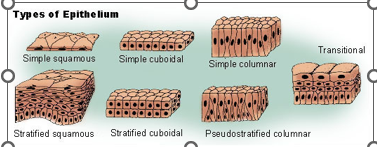
simple - one layer of epithelial cells
stratified - two layers of epithelial cells
squamous - flattened cells with cell height much less than width
cuboidal- cube-shaped cells with approximately equal cell height and cell width
columnar- rectangular cells in which cell height exceeds cell width
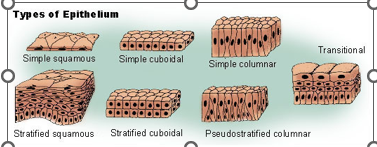
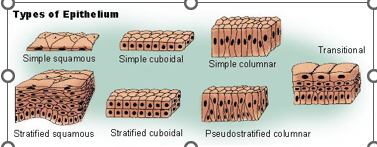
simple squamous epithelium
consists of flattened platelike epithelial cells or squames
lines blood and lymphatic vessels, heart, and serous cavities, as well as interfaces in the lungs and kidneys, referred to as endothelium
blood vessels
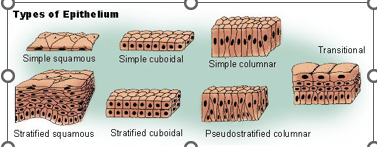
simple cuboidal epithelium
cube-shaped cells
line the ducts of various glands, salivary, kidney, etc
salivary glands
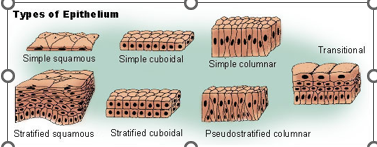
simple columnar
rectangular, column shape
lining of other salivary gland ducts as well as the inner enamel epithelium of the maturing tooth germ, whose cells become enamel-forming ameloblasts
inner enamel epithelium
psuedostratified columnar epithelium
appearance of false layers due to cells nuclei appearing at different levels
may have cilia or be non-ciliated at the tissue surface such as upper respiratory tract, nasal cavity, and paranasal sinuses
respiratory tract
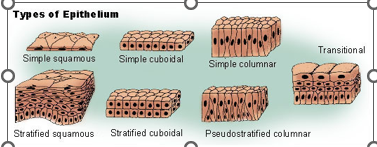
stratified epithelium
two or more layers of cells, with only the deepest level lining up to contact the basement membrane
Most epithelium in the body consists of stratified squamous epithelium
includes the superficial layer of both skin and oral mucosa
interdigitation
interlocking
interlocking of outer epithelium with the deeper connective tissue occurs with the epithelial tissue forming rete ridges or rete pegs
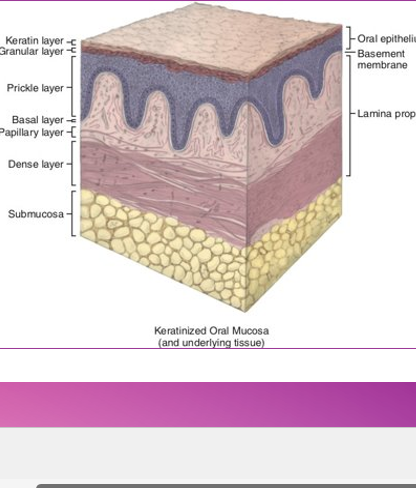
in the mouth, the epithelium of attached gingiva exhibit __ __
rete ridges or pegs
basement membrane still lies inbetween
the sulcular and junctional epithelia do not, nor does scar tissue
keratin
tough, fibrous, opaque, and waterproof protein that is impervious to pathogenic invasion and resistant to friction
produced during the maturation of the keratinocyte epithelial cells as they migrate from near the basement membrane to the surface of keratinized tissue
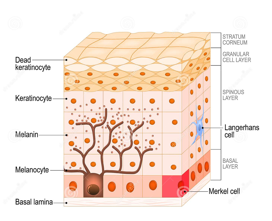
stratified squamous epithelium can be __ or __
keratinized or nonkeratinized
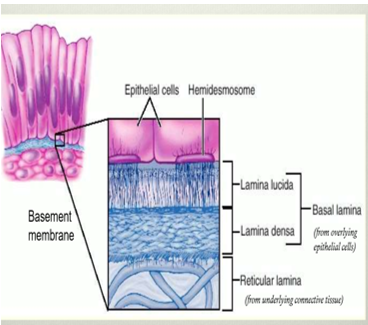
basement membrane
a thin, acellular structure always located between any form of epithelium and the underlying connective tissue of oral mucosa and has two layers
the basal lamina
consists of lamina lucida (loose in between space)
consists of lamina densa (dense layer)
reticular lamina (consists of anchoring collagen fibers and reticular fibers)
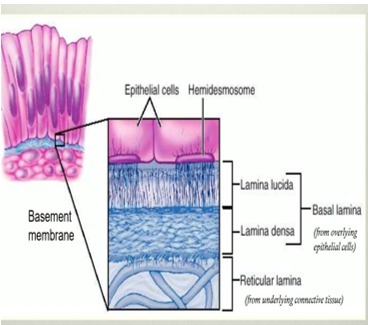
basal lamina
one of the two layers found in the basement membrane
produced by epithelium
consists of lamina lucida and lamina densa
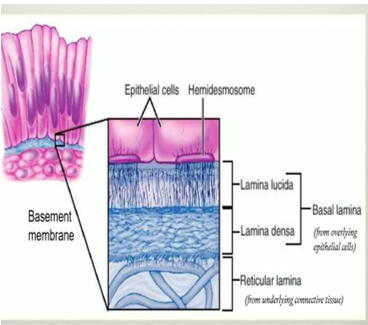
reticular lamina
the deepest layer of the basement membrane
consists of collagen fibers and reticular fibers produced and secreted by the underlying connective tissue
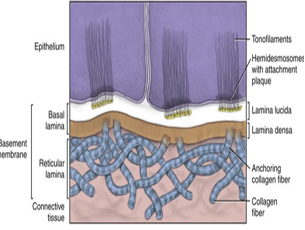
connective tissue
derived from somites during prenatal development (differentiated mesoderm)
most abundant tissue in the body
compared to epithelium, fewer cells spaced farther apart
composed of intercellular substances and fibers
support, attachment, packing, insulation, storage, transport, repair, defense
vascular (minus cartilage)
fibroblasts
most common connective tissue cell
flat and elongated spindle-shaped cells with cytoplasmic processes at each end
synthesize certain types of protein fibers and intercellular substance to sustain connective tissue
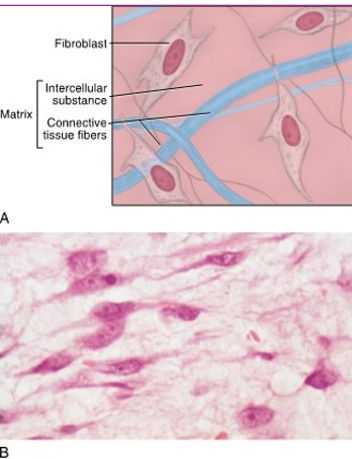
collagen fibers
main connective tissue fiber
composed of the protein collagen
provide strength for connective tissue
form collagen bundles —> collagen fiber—> collagen fibrils—> collagen microfibrils
most connective tissue (minus blood) contains some collagen fibers
Tissues containing a large amount of collagen fibers are called __ __ __
collagenous connective tissue
type 1 collagen
most common type of collagen protein and the strongest
found in teeth, lamina propria of oral mucosa, skin, dermis, bone, tendons, and virtually all other types of connective tissue
fibroblasts, osteoblasts, and odontoblasts are responsible for the synthesis of collagen 1
Be So Totally Cool, Read Big Books mnemonic for collagen fiber classifications
type 1: Bone, Skin, Tendon
type 2: Cartilage
type 3: Reticulum and Blood
type 4: Basement membrane
Type 2 Collagen fiber
in hyaline and elastic cartilage
found in cartilage and joints
type 3 collagen fiber
in granulation tissue
found in blood vessels, skin, wound healing
main component of reticular fibers but also found in artery walls, skin, intestines, uterus
type 4 collagen fiber
in basal laminae of basement membrane, eye lens, filtration system of capillaries, kidneys nephron glomeruli
basement membrane
elastic fibers
another type of connective tissue fiber
provide flexibility
composed of microfilaments so they can stretch and then return to original shape after contraction (elastic type tissue)
This tissue has the ability to stretch and then return to its original shape after contraction or extension
certain regions of oral cavity such as soft palate to allow tissue movement
reticular fibers
can be found in an evolving embryonic tissue and rarely in adult body
form a delicate network
composed of protein reticulin and are very fine hairlike fibers that branch, forming a network
soft connective tissue
tissue found in the deeper layers of both the skin and oral mucosa, such as a connective tissue proper
firm connective tissue
consists of different types of cartilage
rigid hard connective tissue
form of connective tissue consists of bone
fluid connective tissue
consists of blood with all its components and lymph
connective tissue proper location
both loose and dense types of connective tissue are found togetehr in two adjoining layers as the __ __ __
found deep to epithelium and basement membrane within the deeper layers of both the skin and oral mucosa
in the skin is dermis found deep to epidermis
loose connective tissue
fewer fibers, more ground substance
superficial layer of both dermis of skin and lamina propria of the oral mucosa is composed of __ __ __
layer of __ __ __ in both the dermis and lamina propria of oral mucosa is considered the papillary layer
forms the connective tissue papillae, which is the other part of the interdigitated tissue with the epithelial rete ridges that connects the two tissues
areolar
adipose *
reticular *
dense connective tissue
deep to loose connective tissue
more fibers, less ground substance. deep to loose connective tissue
is both the dermis and the lamina propria is also considere the dense or reticular layer
regular
irregular
elastic *
supporting connective tissue
cartilage and bone
cartilage
semisolid matrix
firm but flexible nonmineralized connective tissue in the body
avascular, heals slowly
hyaline
fibrocartilage
elastic
bone
solid matrix
highly vascularized (contains red blood cells) so repairs quickly
intramembranous ossification
endochondral ossification
spongy (cancellous)
compact
fluid connective tissue
blood
carry oxygen, nutrients, and waste
RBCS
WBCS
neutrophils
lymphocytes
epidermis
the outermost layer of skin
provides a waterproof barrier and creates skin tone (melanocytes)
consists of keratinized epithelium
high turnover rate
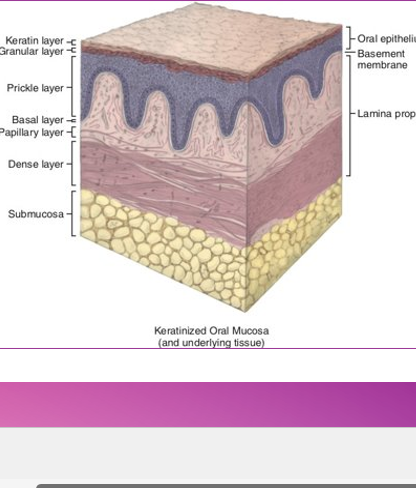
dermis
beneath the epidermis
made up of loose (papillary layer) connective tissue and dense connective tissue
contains hair follicles
sweat glands
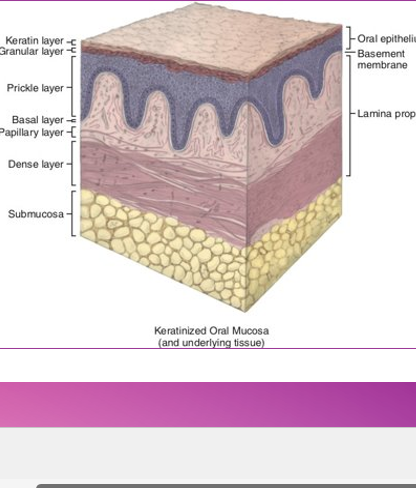
subcutaneous tissue (hypodermis)
made of fat
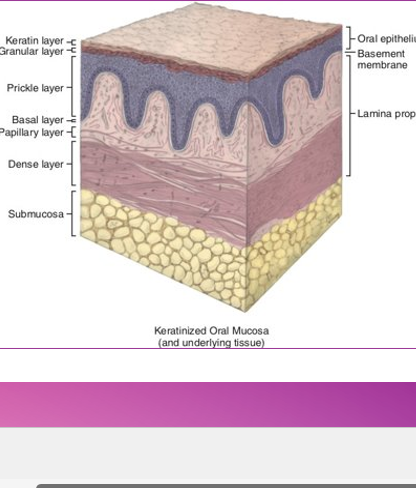
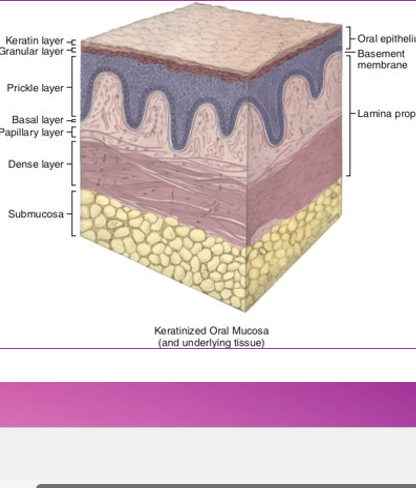
lamina propria
in oral mucosa, the deeper connective tissue proper is consider the _ __ and the even deeper connective tissue sometimes present is the submucosa, like the hypodermis in the skin
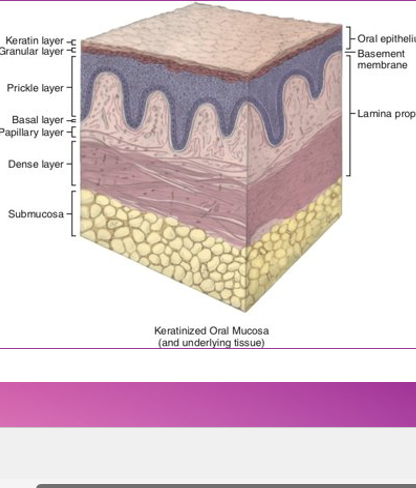
papillary layer
superficial layer
forms connective tissue papillae, which are interdigitated with the epithelial rete ridges
the “loose” connective tissue layer superficial to dense connective tissue
connective tissue proper turnover, regeneration, and repair
First formation of a hemostatic plug (stops bleeding)
inflammation to remove dead and damaged tissue
formation of granulation tissue (appears red)
migration and proliferation of fibroblasts ( appear pale and firm due to increased fiber and lower blood vessels)
tissue remodeling and wound contraction
increased scars= fibrosis
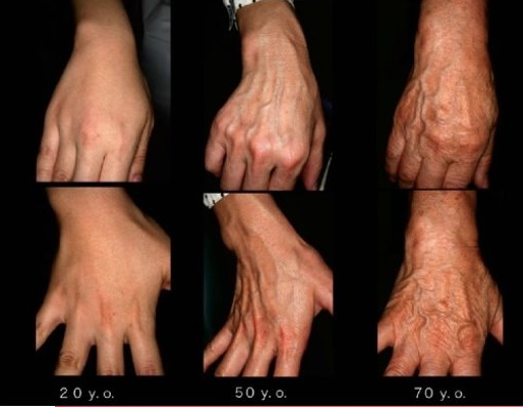
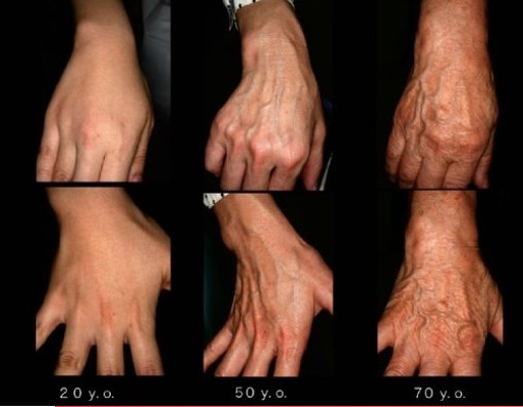
collagen fibers aging process
begin to fall apart, elastic fibers stiffen and thicken, wrinkling the skin
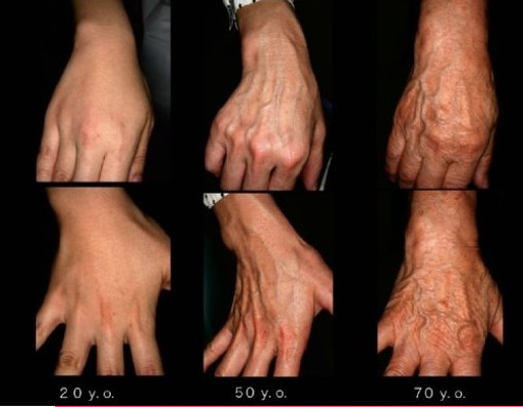
oil glands aging process
cease production
melanin aging process
production decreases, leading to a more pallid color and gray hairs
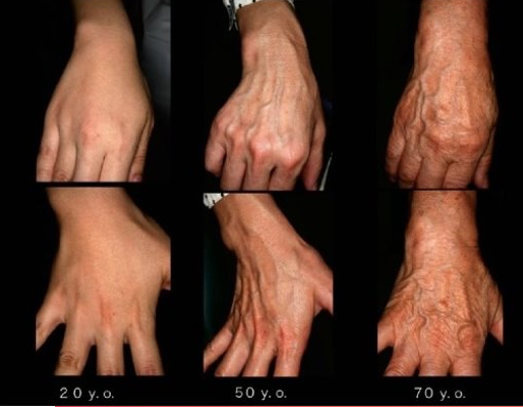
keratin cell aging process
cease production and already produced __ becomes thin and stiff
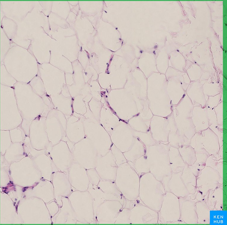
adipose connective tissue
specialized connective tissue
fatty tissue found beneath the skin, around organs, and various joints, and in regions of the oral cavity
tightly packed with little or no matrix
after fibroblasts, the predominant type of cell found in this tissue is the adipocyte which stores fat intracellularly
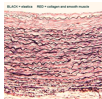
elastic connective tissue
specialized connective tissue
has many elastic fibers in its matrix, which combine strength with elasticity, such as in the tissue of vocal cords
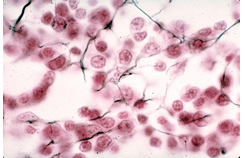
reticular connective tissue
specialized connective tissue
is a delicate network of interwoven reticular fibers forming a supportive framework for blood vessels and internal organs
cartilage
firm but flexible nonmineralized connective tissue in the body
forms most of the temporary skeleton of the embryo then structural support for soft tissue after birth
present at articular surfaces of most freely moveable joints
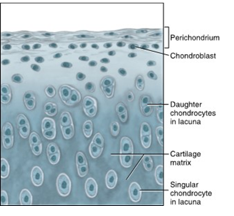
cartilage properties
composed of cells and matrix
its matrix is composed of fibers, mostly collagen, and intercellular substance
matrix is similar to soft connective tissue composition except firmer
the connective tissue surrounding most cartilage is the perichondrium in which it receieves its nutrients from