Unit 9 and Unit 10: Self-Regulation
 Call Kai
 Learn
Learn Practice Test
 Spaced Repetition
 Match
Match Flashcards
 Knowt Play
1/76

There's no tags or description
Looks like no tags are added yet.
Name | Mastery | Learn | Test | Matching | Spaced | Call with Kai |
|---|
No analytics yet
Send a link to your students to track their progress
77 Terms
What is self-regulation?
- The self’s ability to alter its own responses based on standards
- Includes regulation of:
+ Thoughts
+ Emotions
+ Impulses
+ Behaviours
- Standards: Ideas about how something should or shouldn’t be
- “Self-regulation” is often used interchangeably with “self-control”
What is a self-control dilemma?
- Conflict between:
+ An immediate urge/desire
+ A higher-order standard/goal
- Example: Temptation
- Research suggests people spend about 5–6 hours per day resisting desires and urges
- Good self-regulation often involves:
+ Successfully resolving self-control dilemmas
+ Over-riding the immediate urge in favour of the standard/goal
What was Mischel's Marshmallow Test?
- One of the first measures of self-regulation
- Specifically tested: Children’s ability to delay gratification
- Delay gratification: Ability to resist immediate reward for a longer-term preferred reward
What did Mischel's Marshmallow Test demonstrate about self-regulation?
- Delaying gratification is difficult
- Successful delay of gratification depended on self-regulation strategies:
+ Cognitive strategies
+ Imagining the marshmallow as something else instead of focusing on how yummy it is
+ Distraction
+ Not looking at the marshmallow
What did follow-up studies on the Marshmallow Test find?
- Children’s ability to delay gratification at age 4 predicted outcomes at age 14–15
- Children better at delaying gratification:
+ Did better academically
+ Had higher SAT scores
+ Showed better social skills
- Delay of gratification predicted SAT scores better than intelligence at age 4
- Suggests: Better self-regulation is associated with better adolescent outcomes
- Criticism: Small non-diverse sample
What was the New Zealand Study on self-control (Moffitt et al., 2011)?
- Longitudinal study following:
+ 1000 children
+ From birth to age 32
- Measured: Self-control at ages 5–6 using observational measures
- Assessed at age 32:
+ Physical health
+ Finances
+ Criminal records
What were the findings of the New Zealand Study regarding health and finances?
- Controlling for:
+ Intelligence
+ SES background
- Children with poorer self-control had:
+ Worse health
+ More financial problems
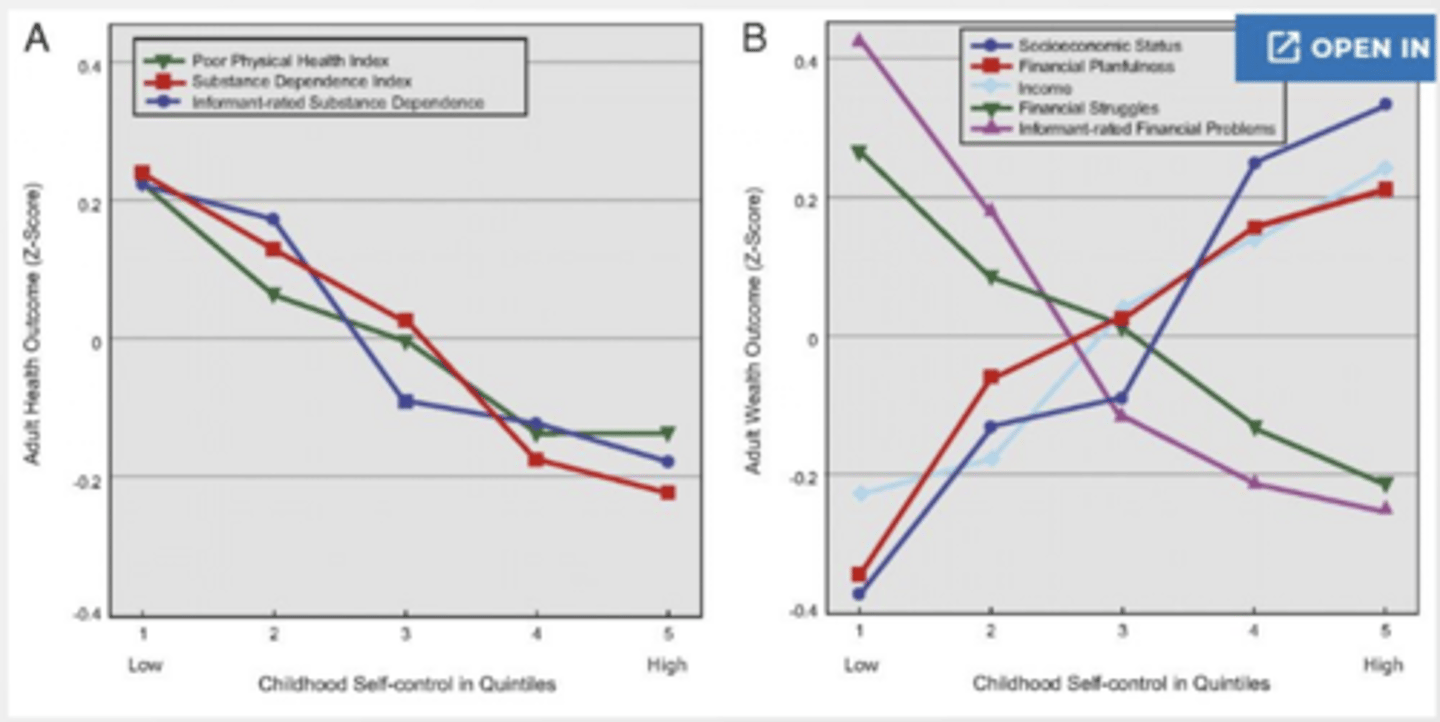
What were the findings of the New Zealand Study regarding social and criminal outcomes?
- Controlling for:
+ Intelligence
+ SES background
- Children with poorer self-control were:
+ More likely to be single parents
+ More likely to be convicted of a crime
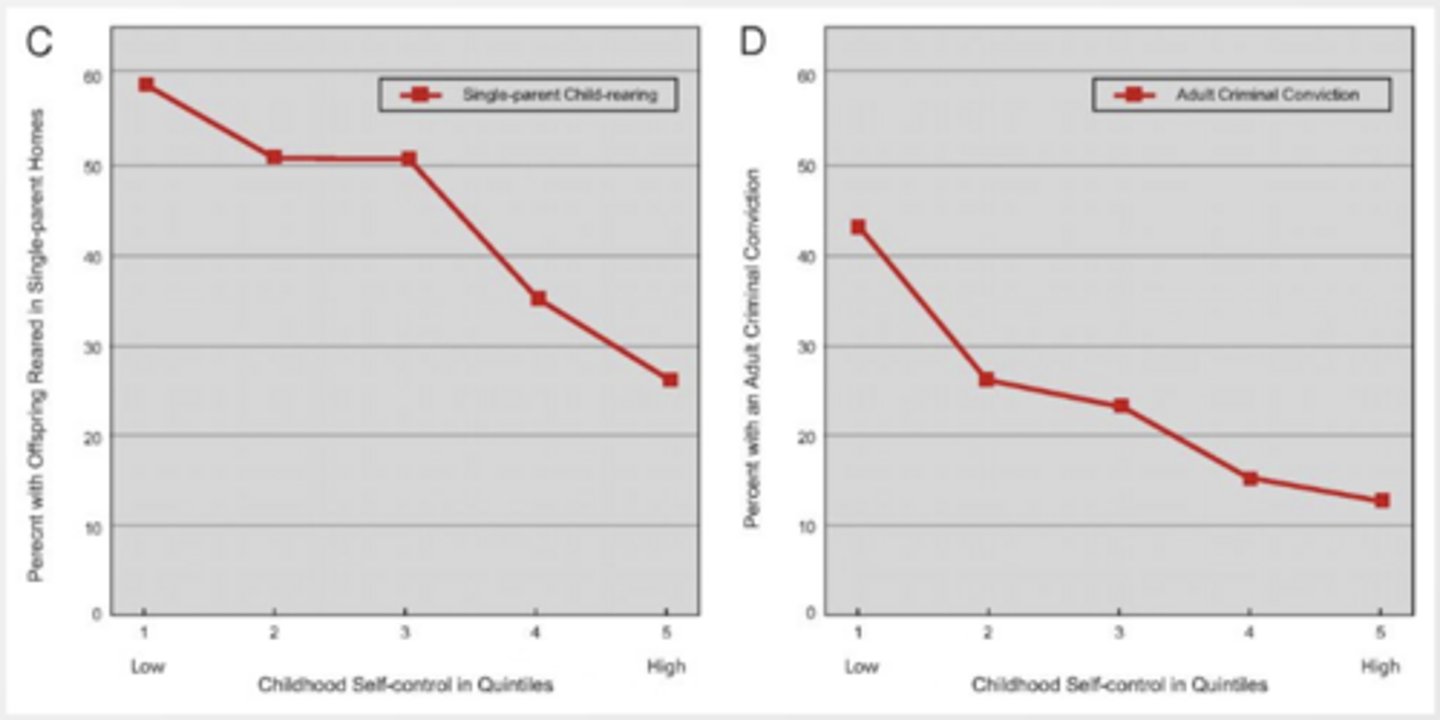
What are the overall implications of research on self-regulation?
- Self-regulation is difficult
- Research suggests it leads to many positive outcomes
- Good self-regulation may be: One of the keys to a successful life
- Possible target for: Innovative public policies
What is the TOTE model of self-regulation (Carver & Scheier, 1981)?
- Feedback loop model of self-regulation
- Steps:
1. Standard: Identify desired end state
2. Test: Monitor discrepancy between current state and standard
3. Operate: Adjust behaviour toward desired direction
4. Test: Result of "operate" becomes input for another test
5. Exit: Occurs when current state matches desired standard
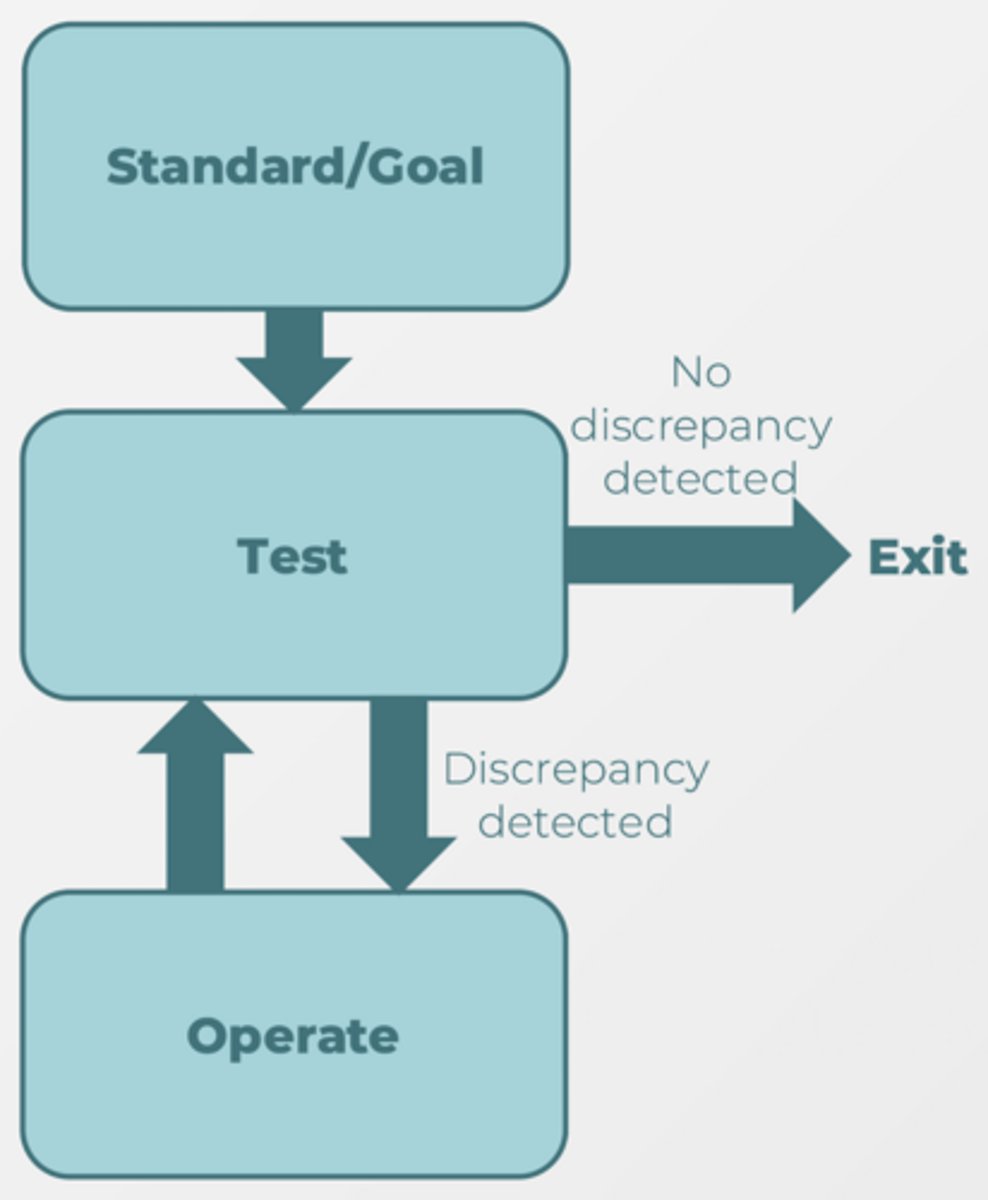
What are the 3 major components of good self-regulation according to the TOTE model?
- 3 main components:
1. Standards
2. Monitoring (test)
3. Willpower/capacity for change (operate)
- Good self-regulation requires efficient functioning of all 3
- Difficulties in any component lead to self-regulation difficulties
What is Expectancy-Value Theory?
- Achievement of goals depends on:
+ Expectancy
+ Value
- Expectancy: Belief that the goal can be accomplished if attempted
- Value: How worthwhile or important the goal feels
- Highest motivation occurs when goals are:
+ High expectancy
+ High value
What are the 4 factors influencing value?
1. Importance
2. Intrinsic value
3. Utility
4. Cost
What is expectancy in Expectancy-Value Theory?
- People are more likely to accomplish a goal if they believe it is achievable
- Highlights importance of setting realistic goals
What is the "importance" factor of value in Expectancy-Value Theory?
- Refers to: How important it is to do well on a goal
- Influenced by: How central the goal is to self-concept
- Example: Improving grades is more motivating if being a “good student” is central to identity
What is intrinsic value in Expectancy-Value Theory?
- Extent to which a person wants to pursue a goal for inherent satisfaction
- Example: Practicing an instrument because it is fun and challenging rather than out of obligation
What is utility in Expectancy-Value Theory?
- Refers to: How useful the goal is perceived to be
- Often connected to: Higher-order goals
- Example: Going to bed earlier to improve mood and productivity the next day
What is cost in Expectancy-Value Theory?
- Refers to what the goal costs:
+ Time
+ Money
+ Boredom
+ Missed alternative activities
- Procrastination often occurs because: Goals feel costly
How are expectancy and value related?
- In theory, expectancy and value are separate dimensions:
+ High value + low expectancy = hopeless goal
+ Low value + high expectancy = easy but boring goal
- In reality:
+ Highly positively correlated
+ Negatively correlated with cost
- Suggests: Expectancy and value track one another
How do expectancy and value reinforce one another?
Expect to do well --> Value task more --> Do task more --> Improve at task --> Expect to do well more in future
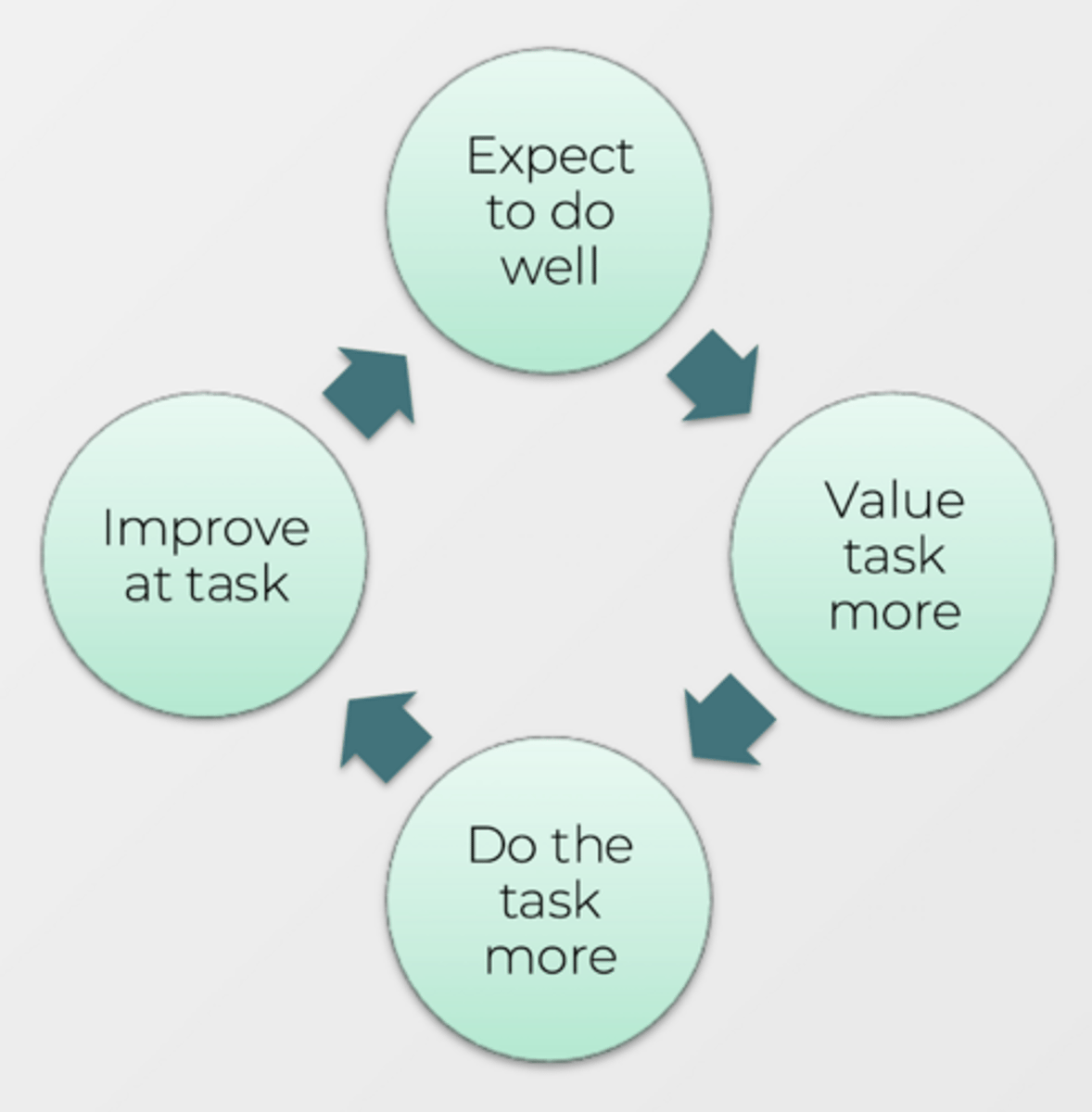
What are the implications of Expectancy-Value Theory for goal setting?
- Good goals are:
+ Achievable
+ Realistic
+ Valuable (or find a way to frame goals as valuable to yourself)
- Consider letting go of goals that are costly and don't feel valuable (important, intrinsic, or useful) to you
What factors interfere with setting good goals?
1. Lack of self-knowledge:
- Interferes with realistic standards (expectancy)
- Reduces clarity about what standards/goals are important and intrinsically motivating (value)
2. Perfectionism: Leads to unrealistic goals
3. Self-control dilemmas: Increase cost of goals (issue with value)
--> All increase likelihood of goal failure
What is self-awareness?
Capacity to direct attention toward oneself (self-focused attention) and engaging in thoughts about oneself
How does self-awareness influence behaviour?
- Unlike directing attention to other objects/people, self-awareness automatically leads to a state of comparing the self against salient standards
--> Self-awareness automatically triggers self-evaluation
- As a result, increasing self-awareness often leads to behaving in a way consistent with salient standards
How does a mirror increase self-awareness?
- Presence of a mirror stimulates self-awareness
- Evidence: People use more first-person pronouns when sitting in front of a mirror
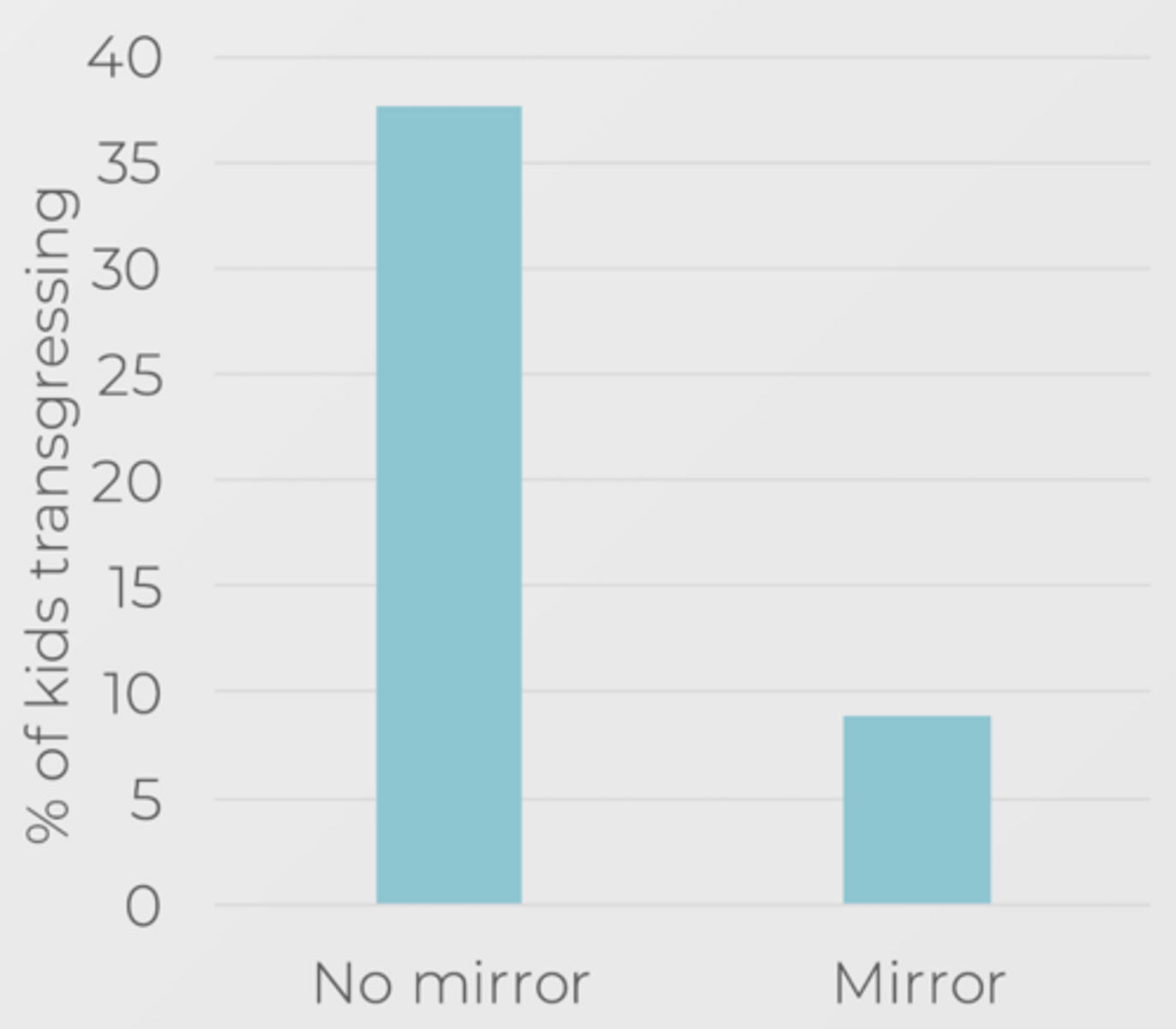
What was the Halloween Study on self-awareness (Beaman et al., 1979)?
- Question: Does self-awareness increase moral behaviour?
- Method:
+ Trick-or-treating children told to take one candy
+ Left alone with opportunity to take more
- Conditions:
+ Mirror present
+ No mirror present
- Results: Children in mirror condition obeyed instructions more often
What evidence suggests self-awareness leads to better behaviour?
- Mirrors increase self-awareness
- Presence of mirrors leads people to:
+ Behave more morally
+ Work faster and harder
+ Behave less aggressively
+ Behave more consistently with previously stated personal values
- Suggests: Failure to meet standards may result from low self-awareness
How does alcohol reduce self-awareness and behaviour regulation (Hull et al., 1981)?
- Alcohol reduces self-awareness
- Evidence: Participants given alcohol use fewer first-person pronouns
- Compared to non-alcohol conditions, alcohol leads to:
+ More reckless behaviour
+ More spending
+ Greater aggression
- Suggests: Poor behaviour may stem from lack of self-awareness
Why is self-awareness important for self-regulation?
- Comparing self against standards enables behaviour change
- Difficult to regulate behaviour without monitoring it closely
- To achieve goals:
+ Monitor progress
+ Foster self-awareness
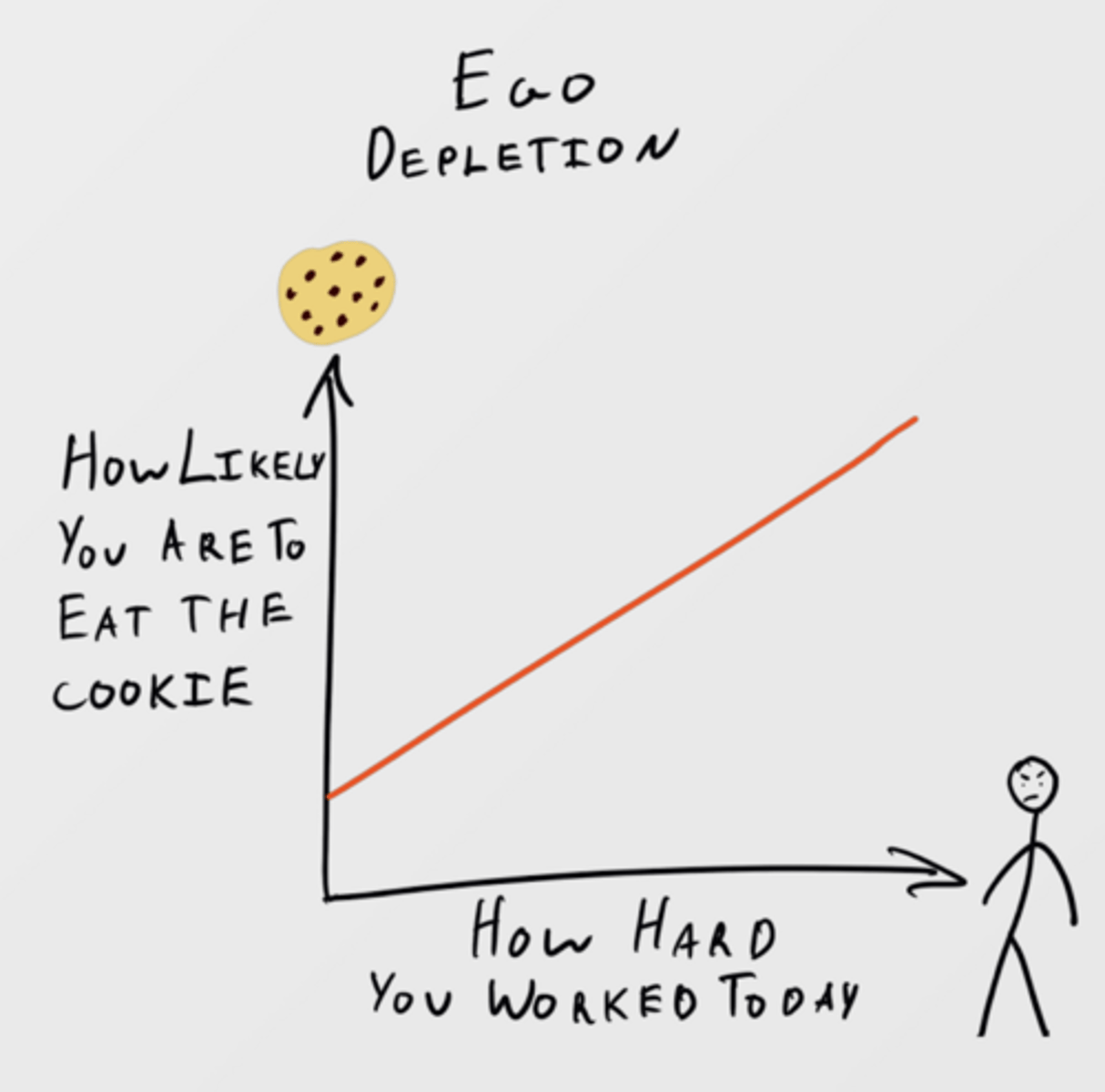
What is Ego Depletion Theory?
- Self-control/willpower is a limited and general mental resource
- Willpower is like a muscle
- After exerting self-control on one task:
+ Performance on later self-control tasks declines
+ Applies even if tasks are unrelated
What is the general methodology used in ego depletion studies?
- Participants perform two separate tasks
- Both tasks require self-control/willpower
- Tasks are completed one after another
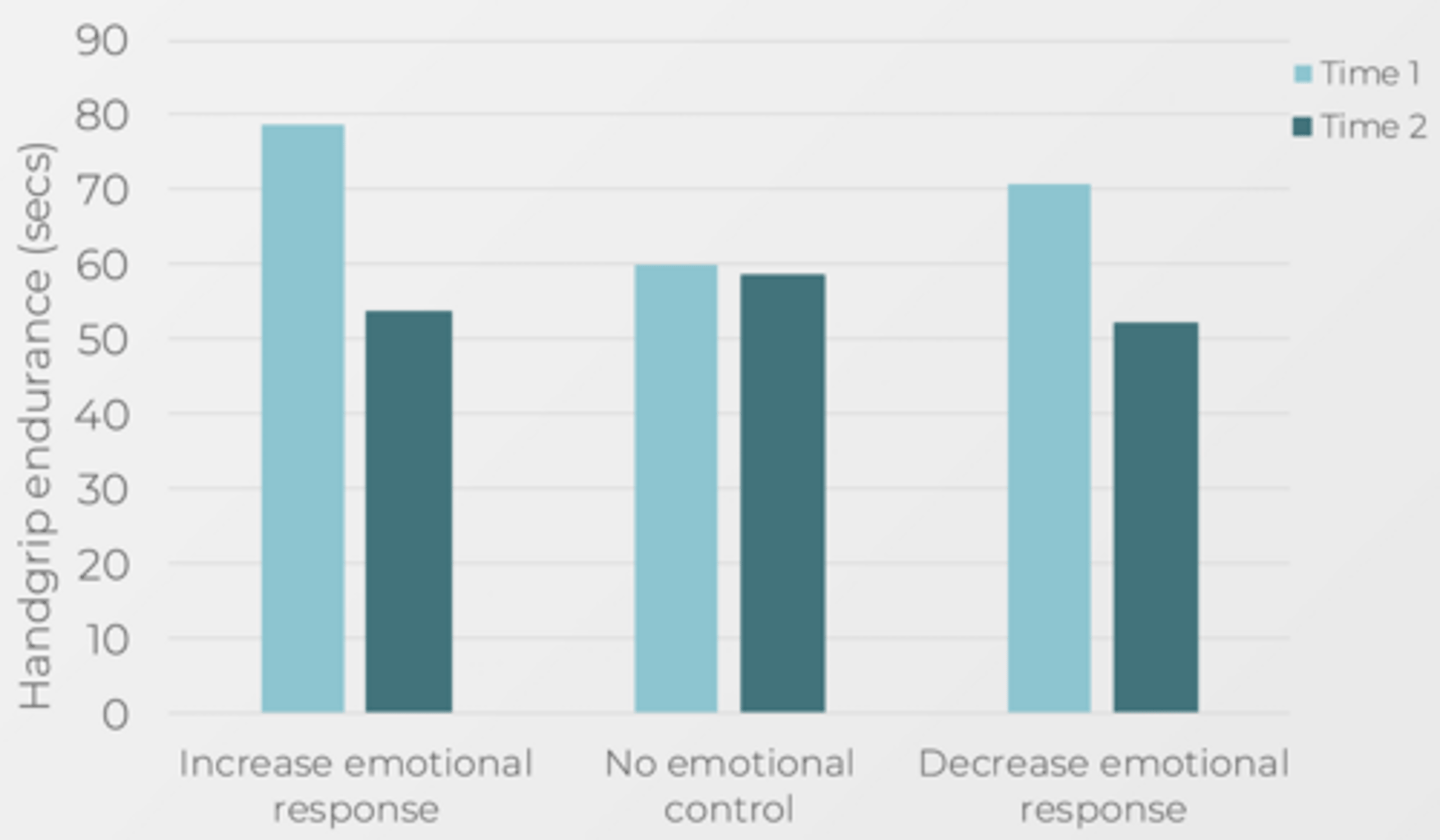
What was the emotion suppression ego depletion study (Muraven et al., 1998)?
- Question: Does altering emotional state reduce physical stamina?
- Method:
+ Participants completed handgrip endurance baseline
+ Watched a sad movie
- Conditions:
+ Increase emotion: Let me movie affect you and express your emotions on your face as much as possible
+ Decrease emotion: Avoid letting the movie affect you and express as little emotion on your face as possible
+ No emotion control
- Handgrip endurance measured again afterward

What were the results of the emotion suppression ego depletion study?
- Participants who alter their emotional state showed reduced handgrip endurance (Increase and Decrease conditions)
- Compared to: Participants with no emotional control instructions
- Supports: Ego depletion effect
What evidence supports ego depletion theory?
- Ego depletion reduces performance on second self-control task:
+ Looking for and crossing out a particular letter in a text leads to reductions in handgrip endurance
+ Writing an essay about attitudes one doesn’t believe in (cognitive dissonance) reduces persistence on a follow-up task
+ Suppressing forbidden thoughts leads to giving up more quickly on unsolvable anagrams
- Ego depletion increases impulsive, disinhibited behaviour:
+ Spend more money on impulsive purchases
+ Eating more junk food
+ Drink more alcohol
+ Fewer sexual inhibitions
+ More aggressive responses to being provoked
- Meta-analysis of 600 studies suggests that these findings are robust and well replicated
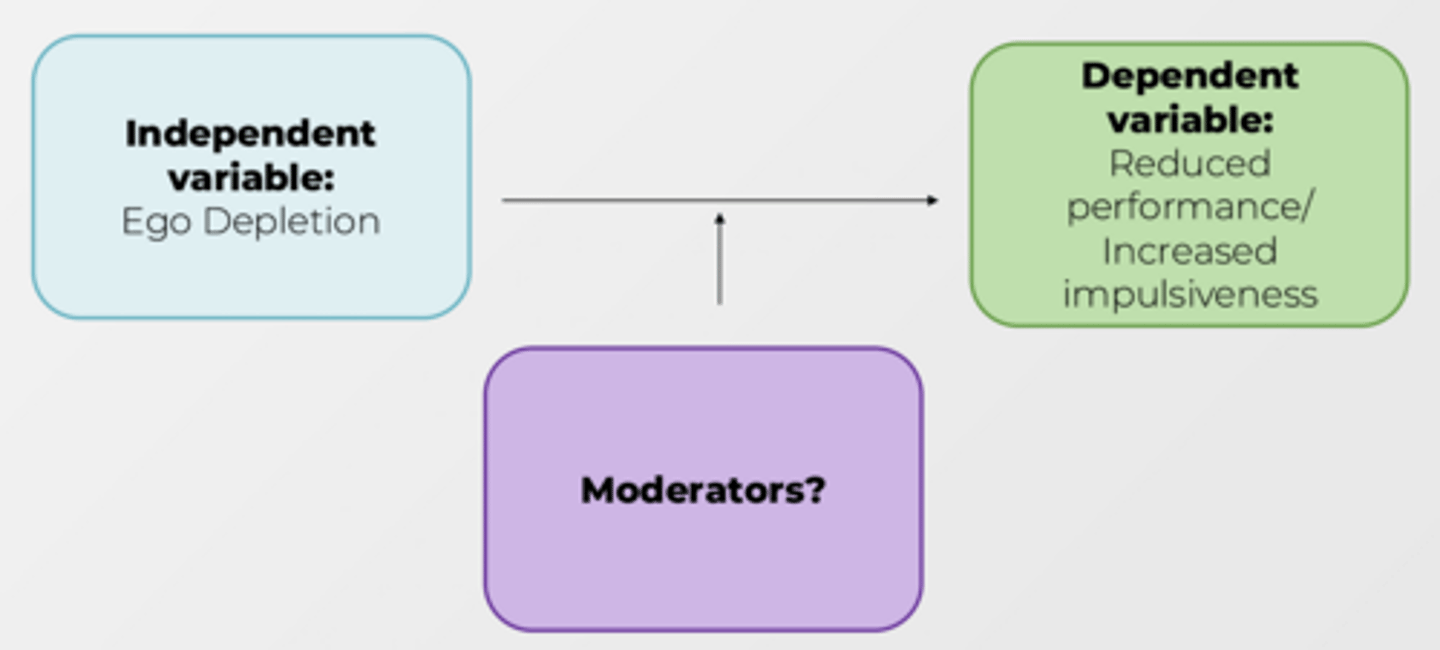
How does automaticity moderate ego depletion?
- Mental processes can be:
+ Automatic
+ Controlled
- Automatic processes:
+ Require few cognitive resources
+ Occur outside conscious awareness
+ Common in familiar/highly practiced tasks
+ Examples:
• Tying shoes
• Driving familiar routes
- Controlled processes:
+ Require conscious attention and effort
+ Common in new or complex tasks
+ Examples:
• Learning an instrument
• Solving complex math
- Ego depletion impairs controlled processes, but not automatic processes
- Example: after ego depletion
+ Logical reasoning (controlled) impaired
+ Vocabulary performance (automatic) intact
How does motivation moderate ego depletion?
- Ego depletion can be overcome if people are given a strong incentive to do well on the second task
- Examples:
+ Helping others
+ Monetary rewards
- However: Greater depletion after this second task
- Suggests:
+ Ego depletion reflects conservation of willpower
+ Not total absence of willpower
--> People are managing a limited energy supply by holding back in the present
What are the implications of ego depletion theory?
- Self-control is costly in the short term
- Willpower is a general and limited supply:
+ All forms of self-control draw from same supply
+ People conserve willpower unless highly motivated in the moment to expend it
- Ego depletion may explain why people may sometimes fail to achieve their standards/goals
What controversies exist regarding ego depletion theory?
- Some researchers argue:
+ Ego depletion effect does not exist
+ Or effect is very small
- 2014 meta-analysis:
+ 198 studies
+ Effect size small and not significantly different from 0
- 2021 multi-lab replication:
+ 3531 participants
+ No reliable effect found
- BUT, another 2021 multi-site replication:
+ 1775 participants
+ Small but significant effect found
- Over 600 studies support ego depletion
How might publication bias explain ego depletion findings?
- Publication bias: Studies with null results often not published
- Leads to:
+ Inflation of effects
+ Overrepresentation of “successful” findings
- Raises possibility: Ego depletion may not exist
What alternative explanation exists for mixed ego depletion findings?
- Ego depletion may exist only under certain circumstances
- Many studies assume both tasks require self-control
- Researchers need to determine which tasks truly rely on self-control
- Possible role of:
+ Individual differences: effect is stronger for some people
+ Situational differences: effect is stronger in some situations
How does reliance on lab studies contribute to controversy around ego depletion?
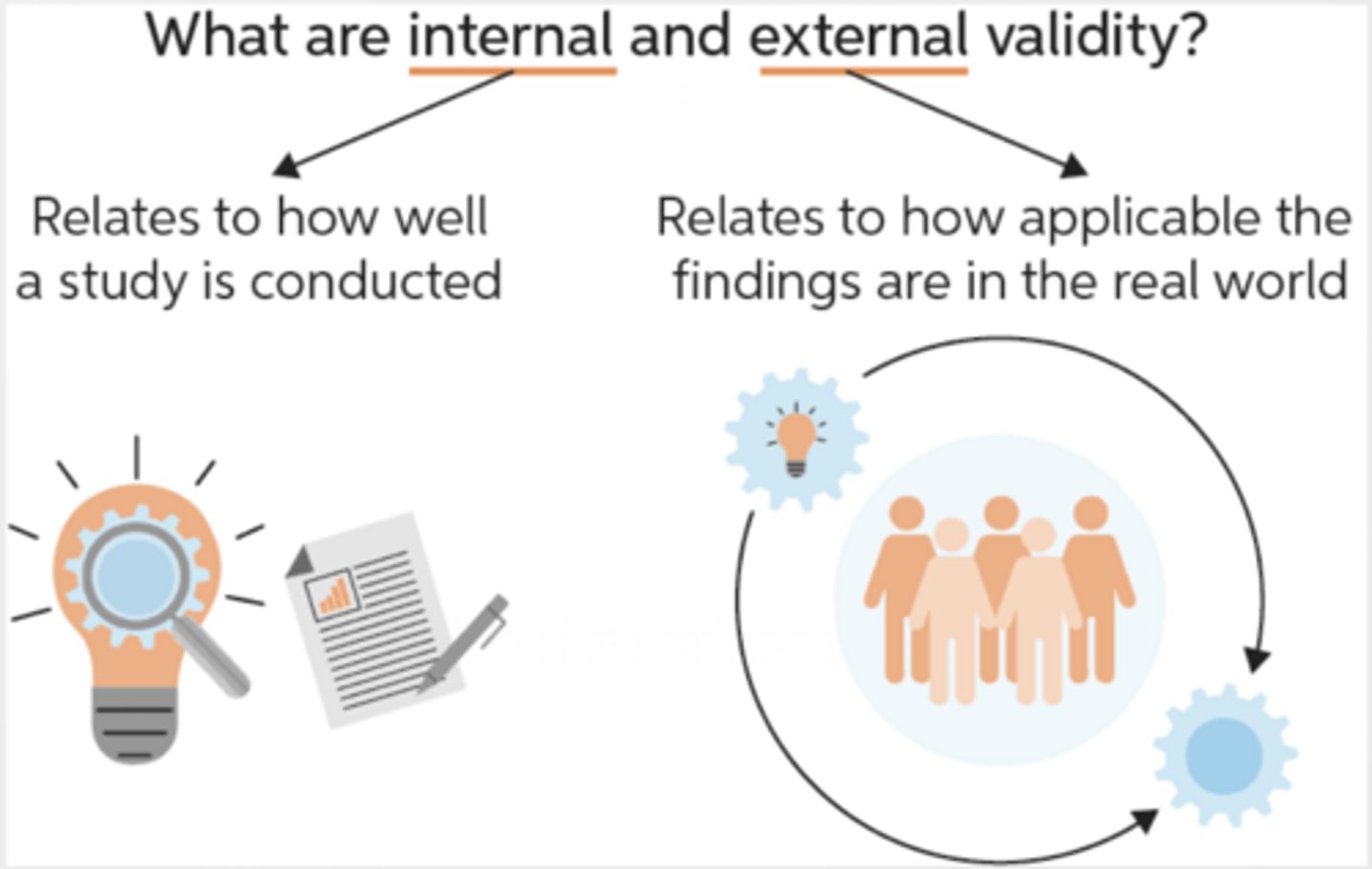
- Lab studies prioritize internal validity
- But may not reflect real-world behaviour (external validity)
- Field research may help determine under what circumstances ego depletion exists in everyday life
What was the "Sweet Delusion" controversy?
- Early theory: Self-control relies on glucose
- Findings originally suggested:
+ Self-control reduces blood glucose
+ Low glucose predicts poorer self-control
+ Sugary drinks restore self-control
- Later criticisms:
+ Findings considered “incredible”
+ Replication attempts failed: Follow-up research did not support sugary drinks counteracting ego depletion
What are the major summary points from the lecture on self-regulation?
- Good self-regulation provides many lifelong benefits
- According to the TOTE model, self-regulation involves:
+ Identifying standards
+ Monitoring discrepancies
+ Using willpower to adjust behaviour in line with standards
- Standards are more likely to be achieved when:
+ Realistic
+ Valuable
--> More valuable than costly
- Self-awareness:
+ Is inherently self-evaluative
+ Helps monitor discrepancies
- Ego depletion research suggests:
+ Willpower is a limited and general source
+ Explains why we sometimes struggle with tasks that require self-control
+ However, ego depletion findings remain controversial
What is trait self-control?
- People vary in trait self-control.
- People high in trait self-control are:
+ Consistently better able to successfully deal with self-control dilemmas.
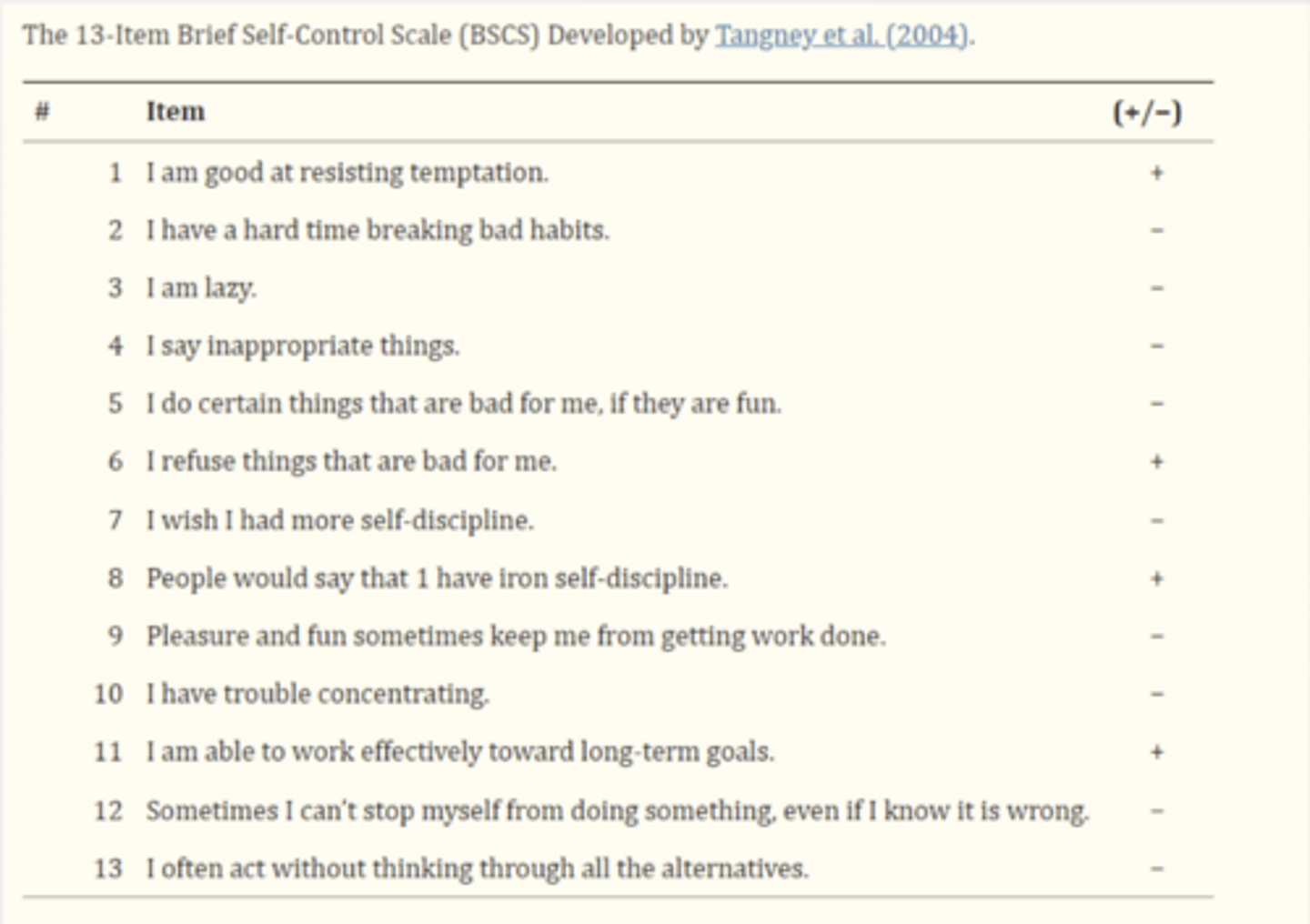
What are the positive effects of trait self-control?
Meta-analysis of 93 studies shows that higher trait self-control is associated with:
- Better performance at school and work
- Sustaining healthy relationships
- Less binge-eating
- Higher overall psychological well-being
What is the paradox of trait self-control?
- We tend to think that people high on trait self-control are good at effortfully resisting temptation/have more willpower.
--> When they encounter a self-control dilemma:
exert willpower to inhibit undesirable urge
choose to act in accordance with goal
- BUT, in everyday life, people high on trait self-control experience fewer self-control dilemmas than low trait self-control people.
+ Report fewer experiences of temptation in everyday life
+ Suggests that they’re hardly using effortful self-control
Why do people high in trait self-control experience less temptation?
1. Better at setting goals that are intrinsically rewarding
--> e.g., actually enjoy activities that many struggle with like: eating healthy, exercising. studying
2. Set-up and follow routines and habits
--> e.g., consistent exercise routine, consistent study schedule
3. Structure their lives in such a way that they don’t experience temptation
--> e.g., make a point of not walking by a bakery on the way to school
4. Identify self-control dilemmas (temptation) earlier
What was the method used in Gillebaart et al. (2016) to study self-control dilemmas?
- Participants presented with pictures of food on a computer.
- Instructed to:
+ Click “positive” when presented with healthy food
+ Click “negative” when presented with unhealthy food
- Measured:
1. Trait self-control
2. Reaction time (RT) to select an answer
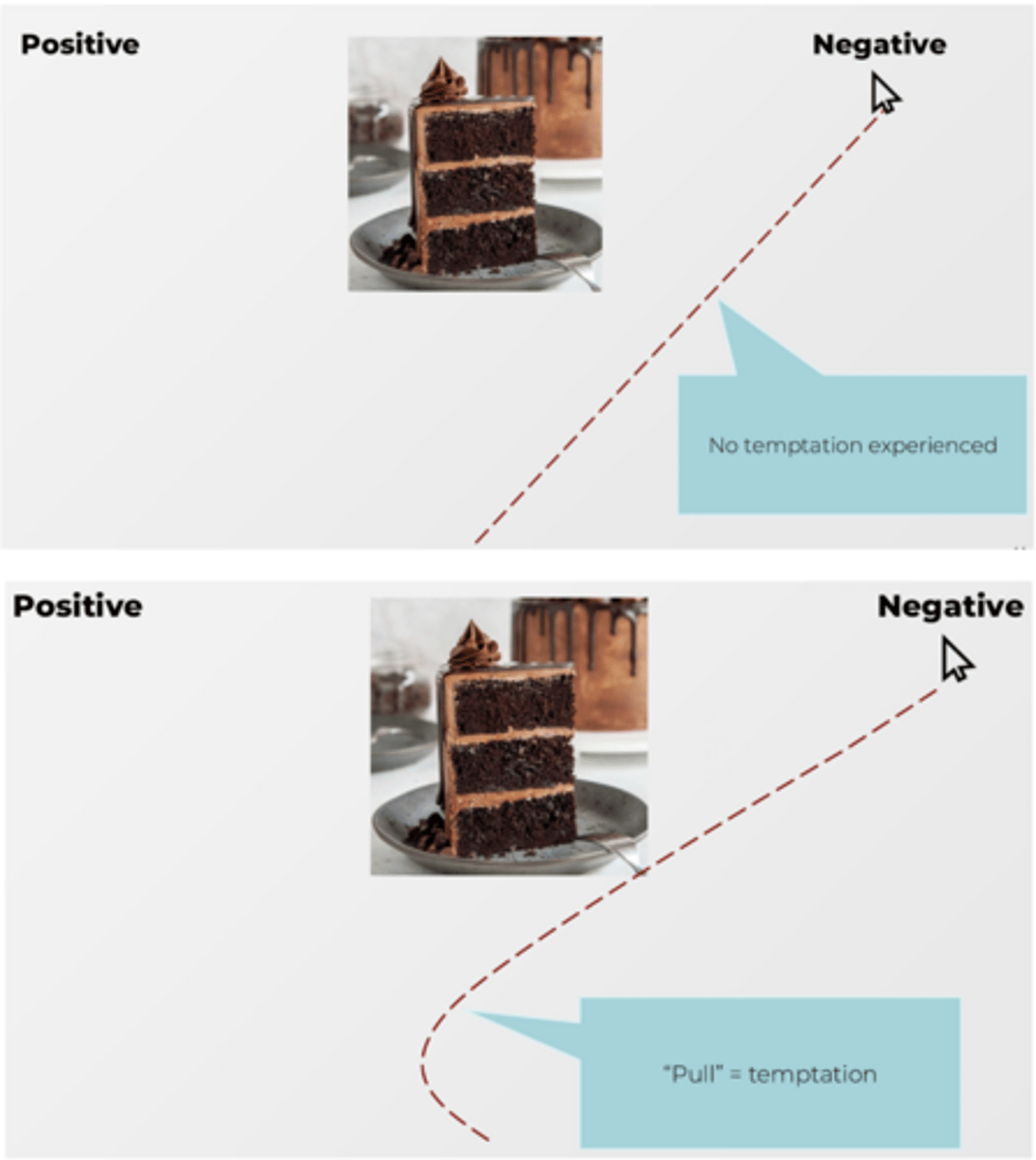
3. Implicit self-control dilemma: Mouse trajectory from the bottom of the screen to select an answer
4. Explicit self-control dilemma: “How conflicted do you feel about your answer?”
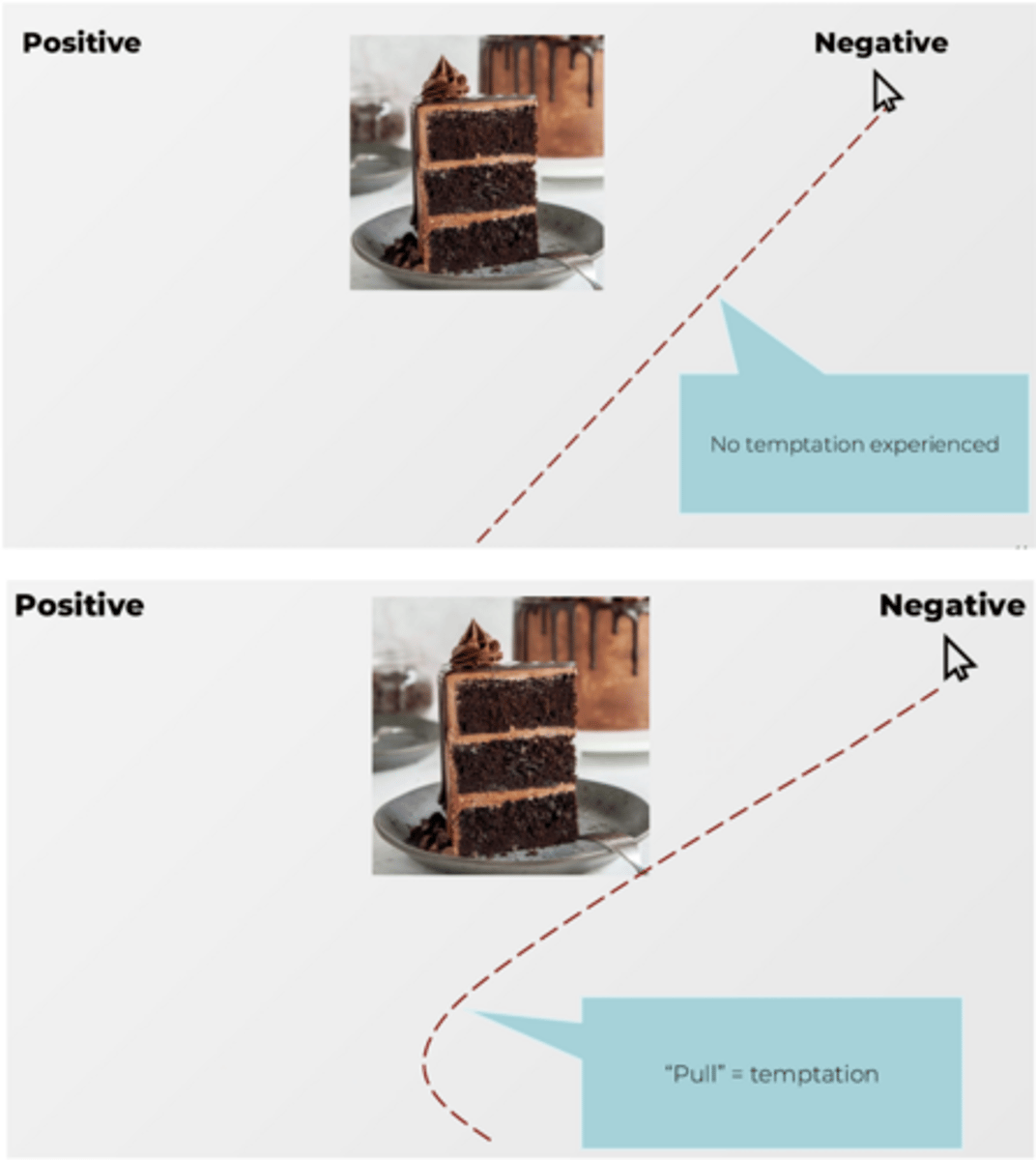
How was implicit self-control dilemma measured in Gillebaart et al. (2016)?
- Mouse trajectory from the bottom of the screen to select an answer.
- Intensity of dilemma:
degree of “pull” in direction of answer not selected
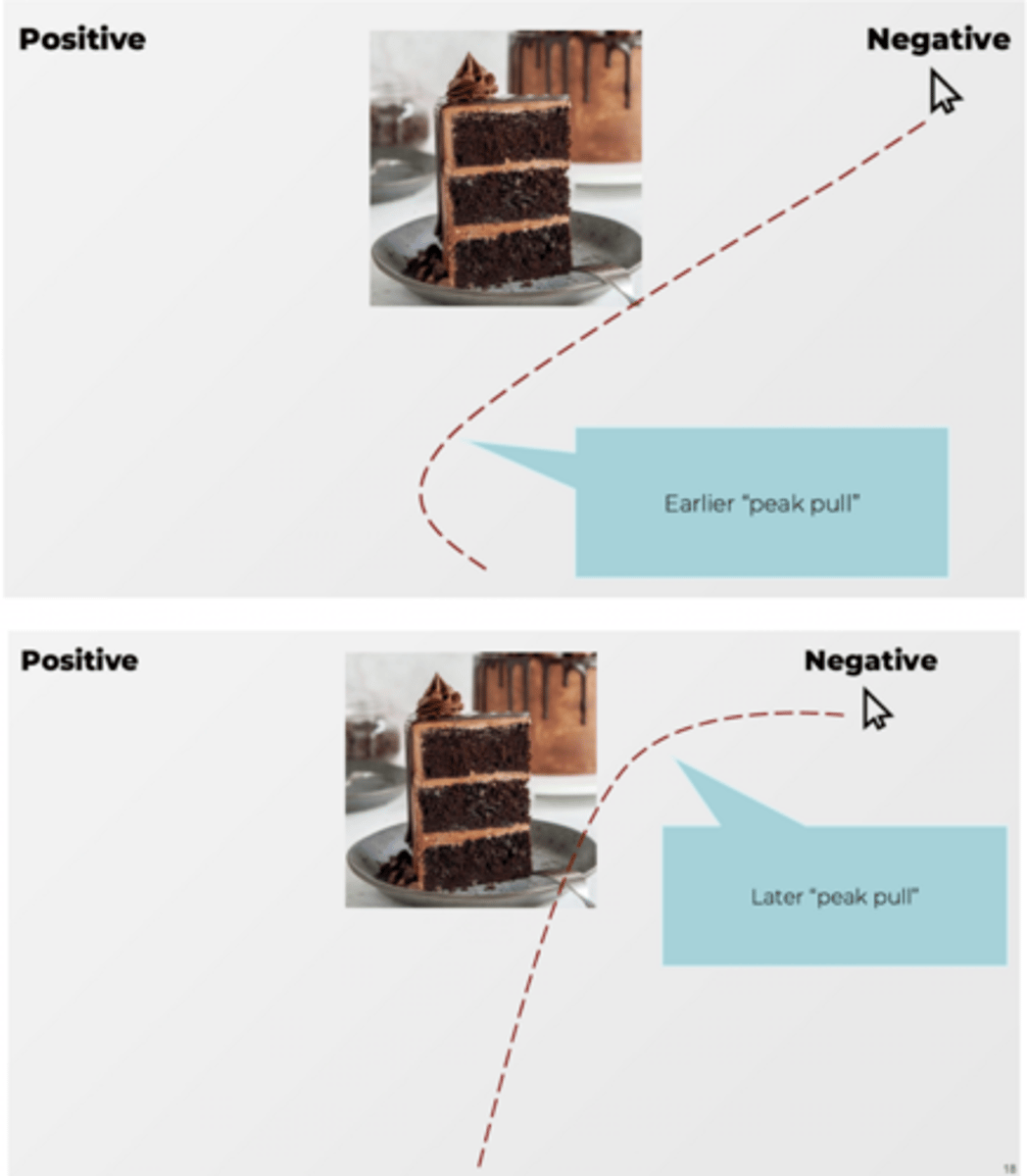
- Also assessed when the “peak pull” occurred:
+ Early "peak pull"
+ Later "peak pull"
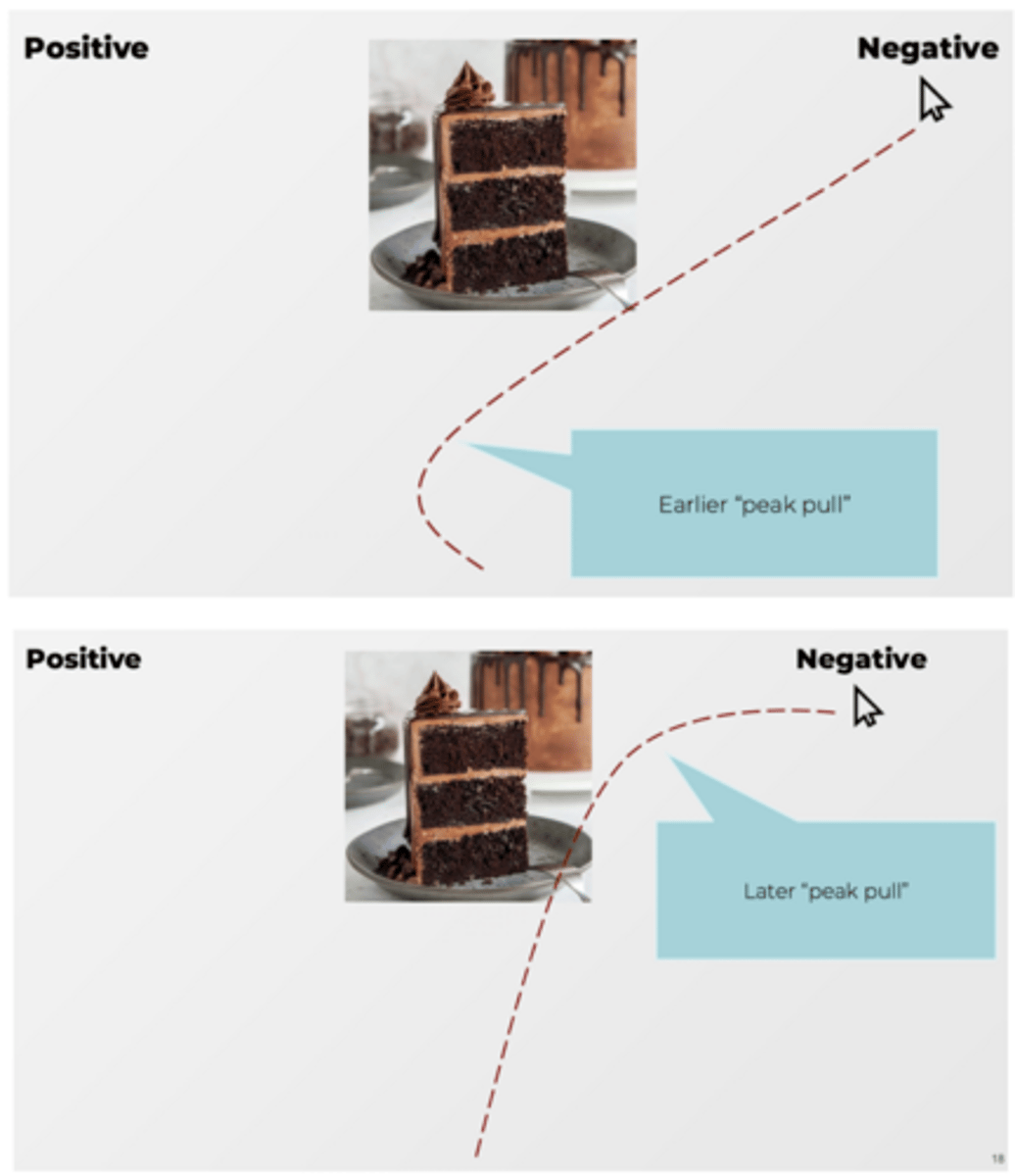
What does "pull" represent in the mouse trajectory task?
- “Pull” = temptation.
- Greater pull toward the non-selected answer reflects stronger implicit self-control dilemma.
What were the results of Gillebaart et al. (2016)?
- Higher trait self-control:
+ Predicted weaker feelings of conflict (explicit self-control dilemma)
+ BUT not related to average degree of “pull” (implicit self-control dilemma)
--> Suggests that high and low trait self-control people experience same amount of temptation on an unconscious level
- Predicted earlier “peak pull”
--> Suggests that high trait self-control people detected self-control dilemma earlier
- Predicted faster RT for correctly classifying food
+ healthy = positive
+ unhealthy = negative
--> Suggests that resolved self-control dilemma faster
What is meant by effortless self-control?
- High trait self-control people detect self-control dilemmas earlier.
- This allows them to deal with them:
+ faster
+ more efficiently
+ at an unconscious level
- They are so good at this that they don’t consciously experience the temptation.
What are the implications of trait self-control research?
- People that have good self-control are exercising this ability effortlessly by relying on automatic processes.
- Includes:
+ Habits and routines
+ Reducing exposure to temptation
+ Earlier temptation detection
--> Implies that if you want to improve your chances of completing a goal, make your behaviour as automatic as possible
What is the "intention-behavior" gap?
- People often fail to act on their goals even when they intend to achieve them.
- Implementation intentions were proposed to help bridge this gap.
What are implementation intentions?
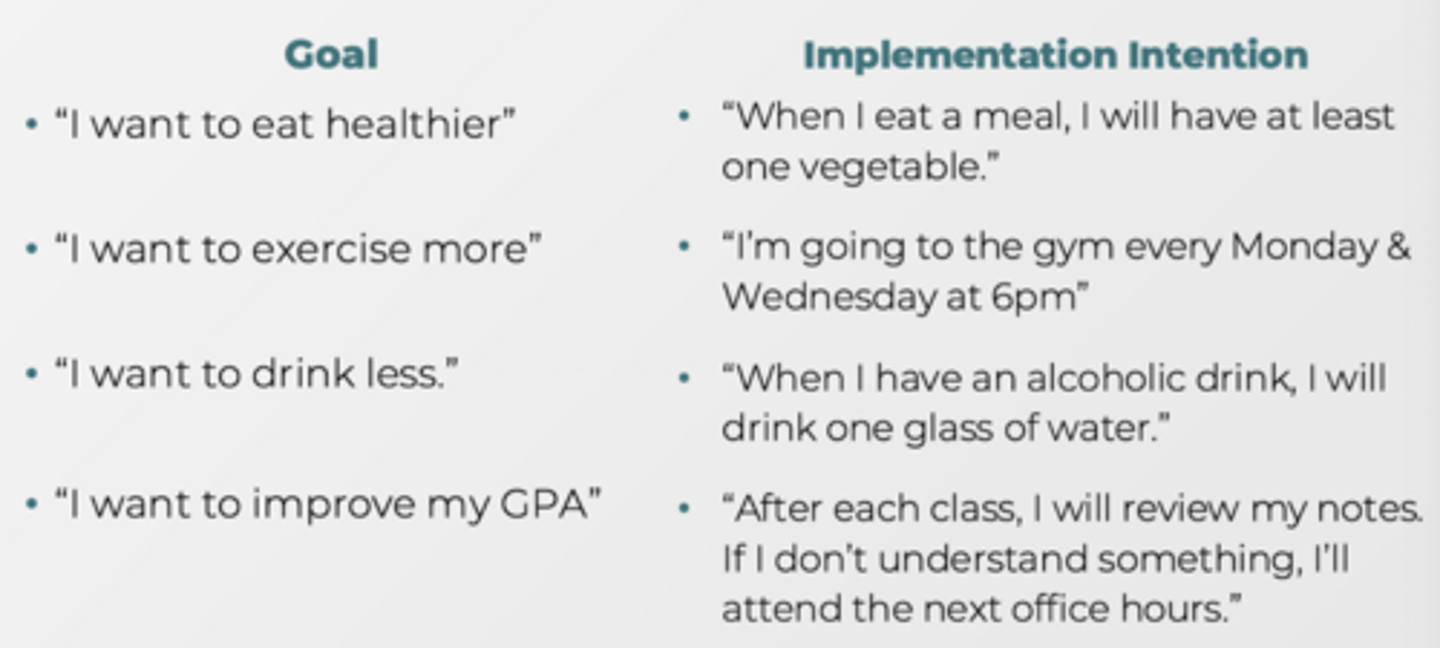
- Develop very specific plan about how you will achieve a goal in a particular situation.
- Link a situation with a specific goal-directed action.
--> “When situation X arises, I will perform response Y.”
- Help:
+ Solve problem of goals being too vague.
+ Increase commitment by focusing on one method of achieving a goal.
- Example (image): goal is vague, but have specific behaviour tied to specific situation
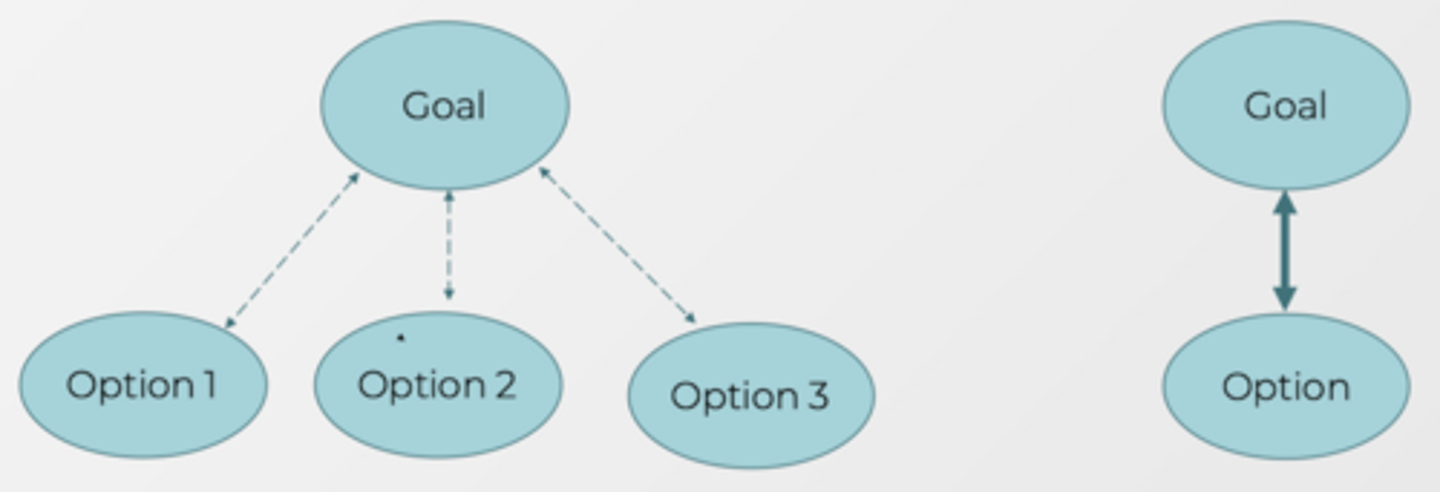
What is meant by "Don't Put Your Eggs in More than One Basket"?
Having too many ways to complete a goal:
- Reduces commitment to any one particular option
- Makes you less likely to complete the goal
How did Gollwitzer & Brandstatter (1997) examine whether implementation intentions help people achieve goals?
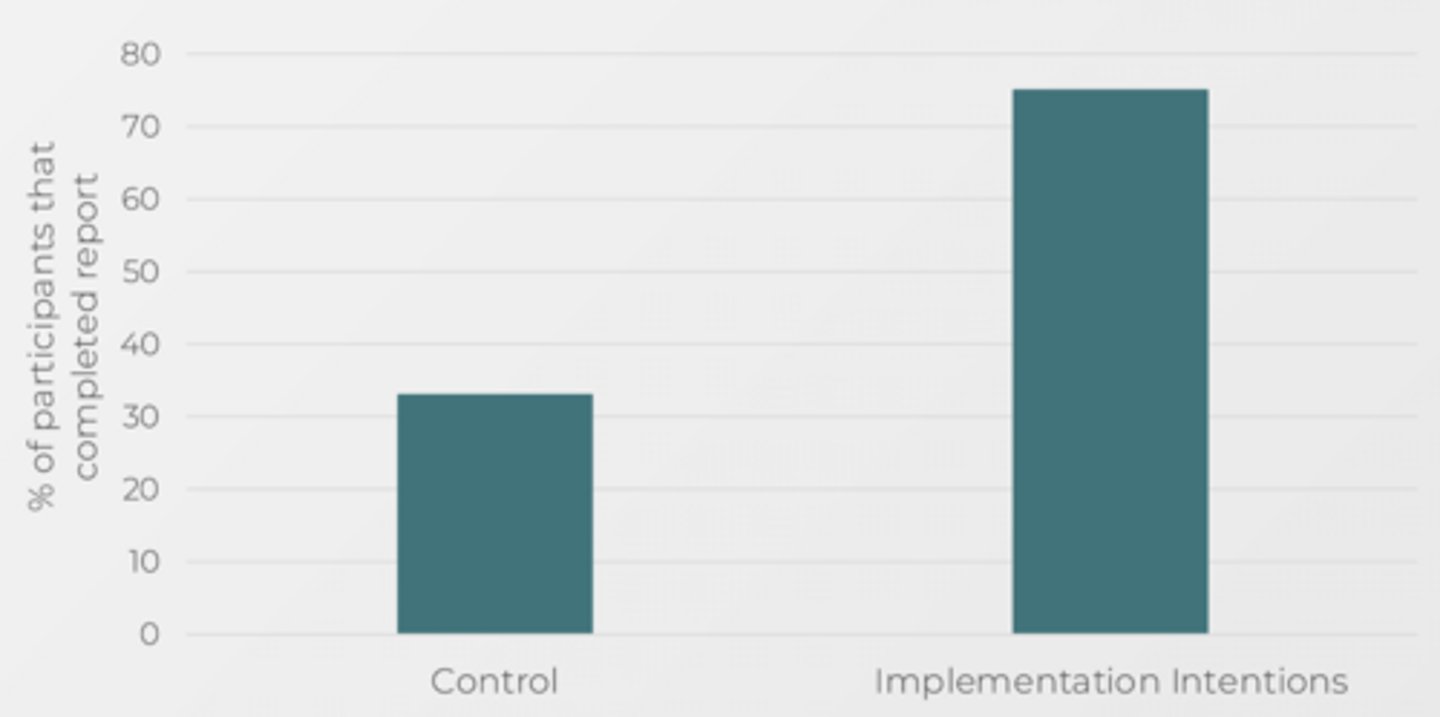
- Participants instructed to write a report about how they spent Christmas Eve.
- Report due December 26th.
- Experimental manipulation:
+ Implementation intentions: Think about when and where you will write report
+ Control: Simply asked to write report
--> Outcome: Who completed report?
- Result: Implementation intentions group was more likely to complete goal.
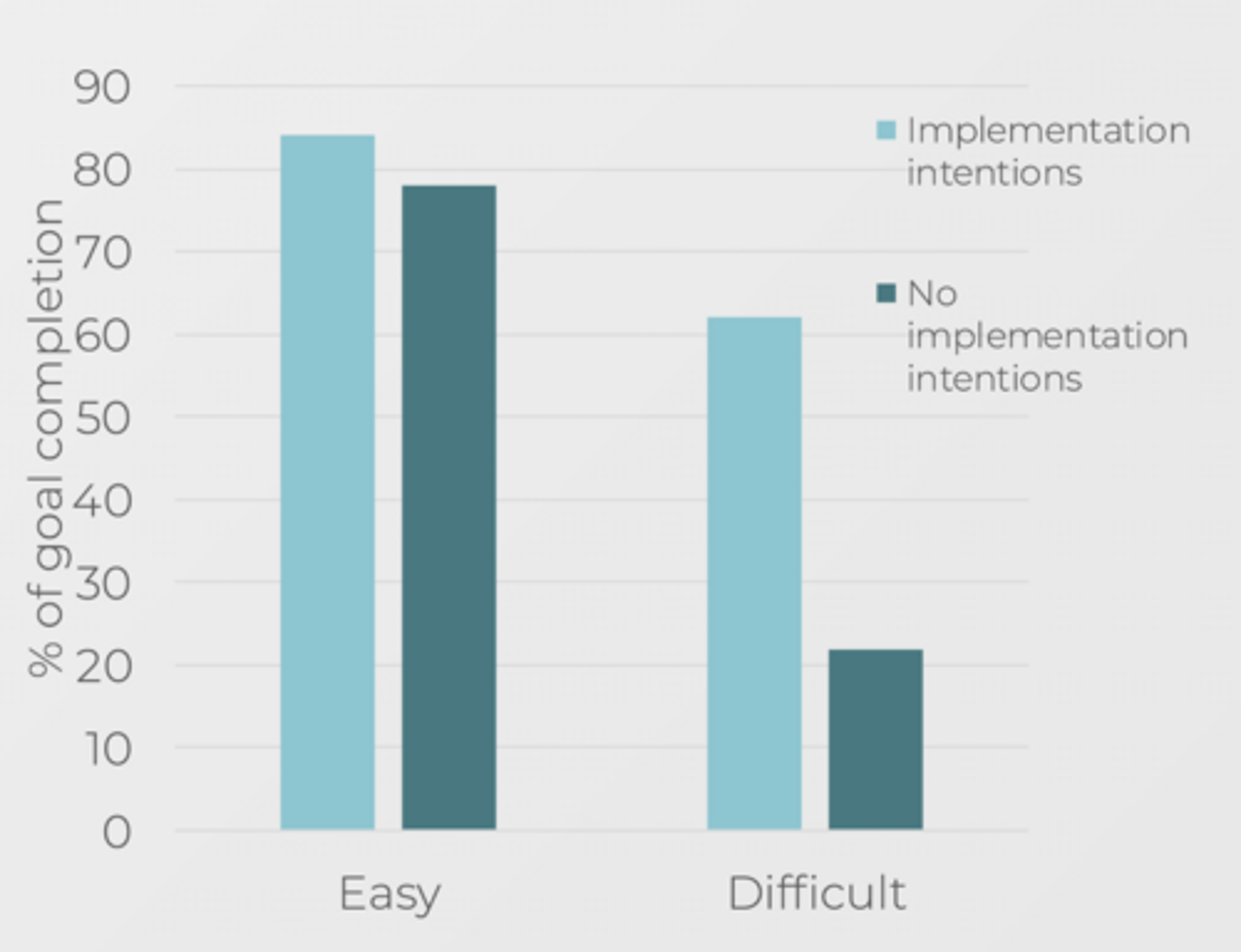
How does goal difficulty moderate the effects of implementation intentions according to Gollwitzer & Brandstatter (1997)?
- Participants identified personal projects intended to achieve during Christmas break.
- Experimental manipulation:
+ Easy goal
+ Difficult goal
- Assessed implementation intentions.
- Results:
+ Implementation intentions useful for completing difficult goals
+ Less relevant for completing easy goals
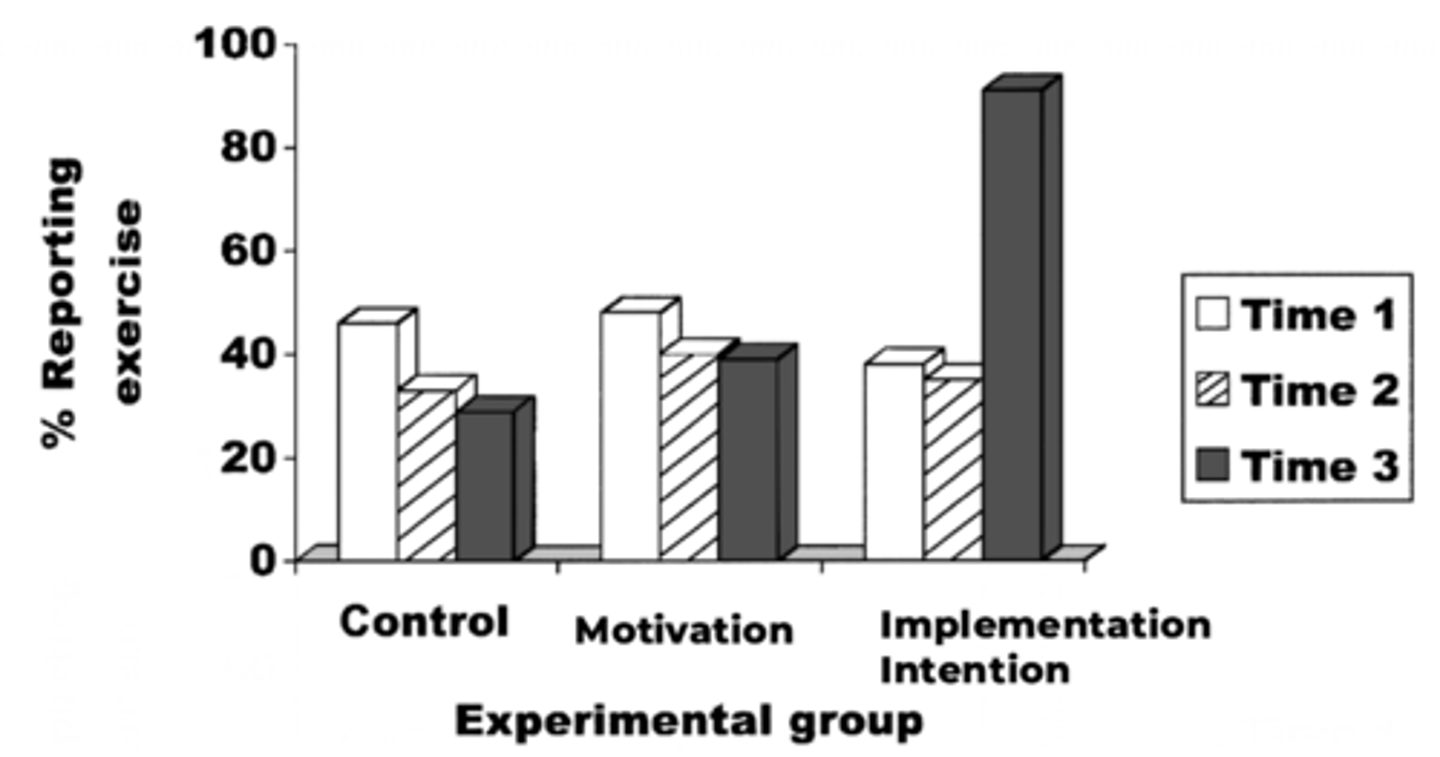
How did Milne et al. (2002) compare implementation intentions to a motivation boost?
- Participants wanted to exercise more.
- Tracked exercise for 2 weeks.
- Three experimental groups:
+ Control: Track how often you exercise
+ Motivation: Track exercise + read benefits of exercise --> Target value
+ Implementation intention: Track exercise + read benefits + set implementation intention
- Example implementation intention:
+ “During the next week, I will partake in at least 20-mins of vigorous exercise on [DAY] at [TIME] in [PLACE].”
+ Implementation intentions set at T2 after one week.
--> Outcome: Who exercised at least once per week?
What were the results of the implementation intentions vs. motivation study by Milne et al. (2002)?
- No benefit of increased motivation intervention.
--> No difference in rate of exercise between T1 and T2
- Implementation intentions doubled the rate of exercise.
- Suggests that when we don’t reach goals:
+ Not because of lack of motivation
+ Not because of lack of monitoring
+ But because lack of specific plan
What goals can implementation intentions help facilitate?
- Exercising more
- Eating a healthy diet
- Writing a CV
- Managing anger
- Increasing perspective-taking
- Increasing public transportation use
- Increasing voter turn-out
- Increasing flu shot rates
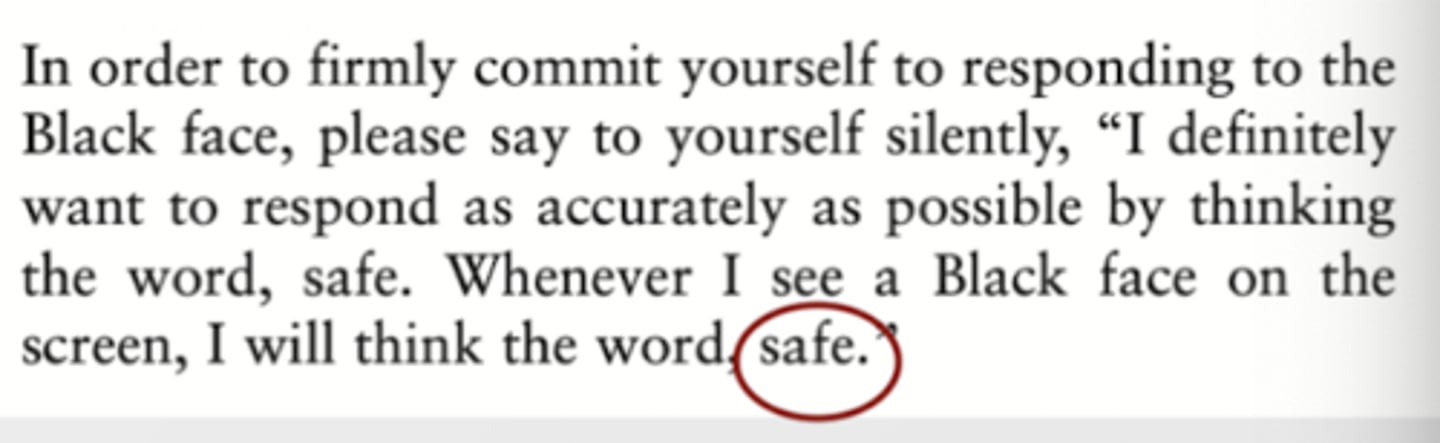
How can implementation intentions reduce implicit bias?
- Study examined whether implementation intentions help achieve goal of avoiding unwanted biases.
- Key finding:
+ Setting intention to think specific counterstereotypical thoughts whenever encountering Black individual reduced implicit racial bias.
- Follow-up: Extended to implicit weight bias.
Why are implementation intentions helpful according to theory?
1. Heightened accessibility of situational cues (“when”)
--> Improves ability to detect situational cue relevant to goal
2. Formation of a strong mental link between situation cue and planned response
--> Automates action initiation
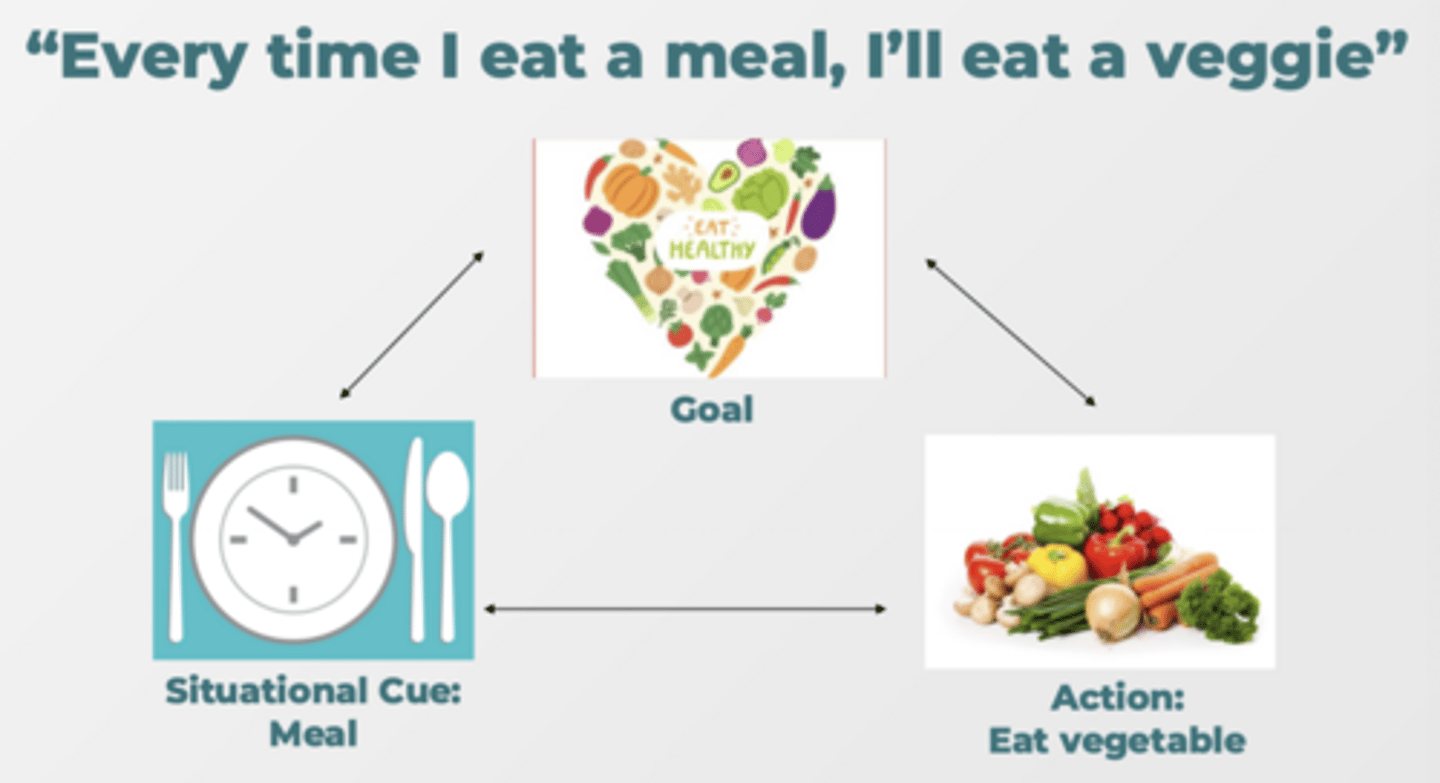
- Example:
+ Goal: Eat healthy
+ Situational cue: Meal
+ Action: Eat vegetable
--> “Every time I eat a meal, I’ll eat a veggie.”
What are the implications of implementation intentions?
- Conscious planning can make goal pursuit more automatic over time.
- Removes need for conscious decision to pursue goal at relevant time.
- Intended action executed more effortlessly rather than relying on effortful self-control.
What is the auto-motive model (Bargh, 1990)?
- Goal pursuit is not always deliberate.
- Goals can be activated and pursued automatically, without conscious awareness.
What are the two main components of the auto-motive model?
1. Learned associations:
- People form associations between:
+ situations
+ goals
+ actions
- Based on repeated past experiences
2. Automatic goal activation and pursuit:
- Encountering the situation automatically triggers the goal and associated action
--> Person pursues goal outside conscious awareness
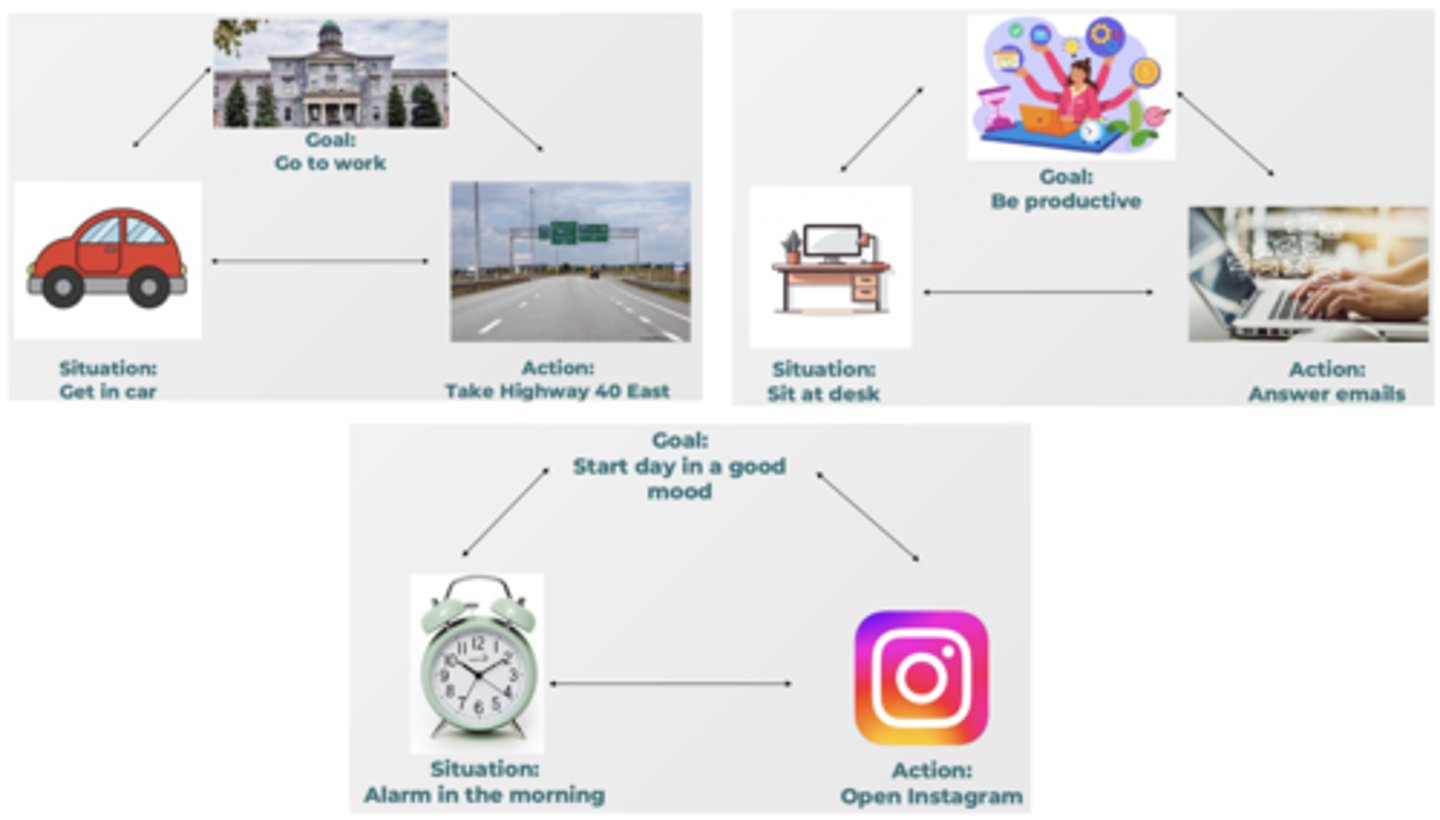
- Example involving work:
+ Situation: Get in car
+ Goal: Go to work
+ Action: Take Highway 40 East
- Example involving productivity:
+ Situation: Sit at desk
+ Goal: Be productive
+ Action: Answer emails
- Example involving bad habits (e.g., social media):
+ Situation: Alarm in the morning
+ Goal: Start day in a good mood
+ Action: Open Instagram
How does the auto-motive model differ from implementation intentions?
- Auto-Motive Model:
+ Situation-goal-action mental links created unconsciously via learned associations
+ Person not necessarily aware goal is being pursued
- Implementation Intentions:
+ Situation-goal-action mental links created consciously via forming “if-then” plans
+ Person aware they set up the goal pursuit
What are interpersonal goals?
- Goals pursued in social relationships and settings.
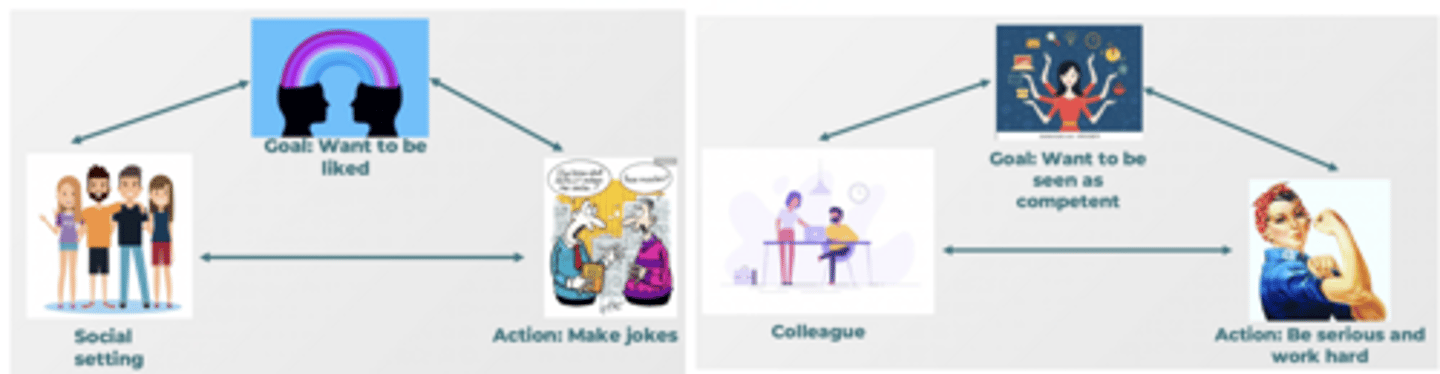
- Examples:
+ Goal: Want to be liked --> Action: Make jokes
+ Goal: Want to be seen as competent --> Action: Be serious and work hard
What did Fitzsimons & Bargh (2003) propose about unconscious interpersonal goals?
- Situations can include relationships with specific people.
- Thinking about a specific relationship may automatically trigger interpersonal goals.
- These goals may then be pursued unconsciously.
--> Hypothesis: Thinking about a particular person activates goals specific to that relationship, which then guide behaviour in a goal-congruent fashion.
What did Study 1 on unconscious interpersonal goals examine (Fitzsimons & Bargh, 2003)?
- What kinds of goals people pursue in different relationships.
- Findings:
+ Classmate: self-enhancement, but not with friend or romantic partner
+ Friend: helping friend + having fun together
+ Mother: wanting to make mom proud, but not with friend or romantic partner
What was the method of Study 2 on automatic activation of goals (Fitzsimons & Bargh, 2003)?
- Participants randomly assigned to 1 of 3 priming conditions:
+ Mother
+ Best friend
+ Bedroom (control)
- Asked to:
+ form vivid picture in mind
+ write about prime
--> Part 2: Then read about “Mark” and formed impression.
- Info on “Mark”:
+ Mark entering second year of college.
+ First year: Did very well in some classes but not others.
+ Missed some morning classes, but overall had very good attendance.
+ Parents both doctors.
+ Registered in pre-med.
+ Hasn’t decided if that is what he wants to do.
--> Participants asked:
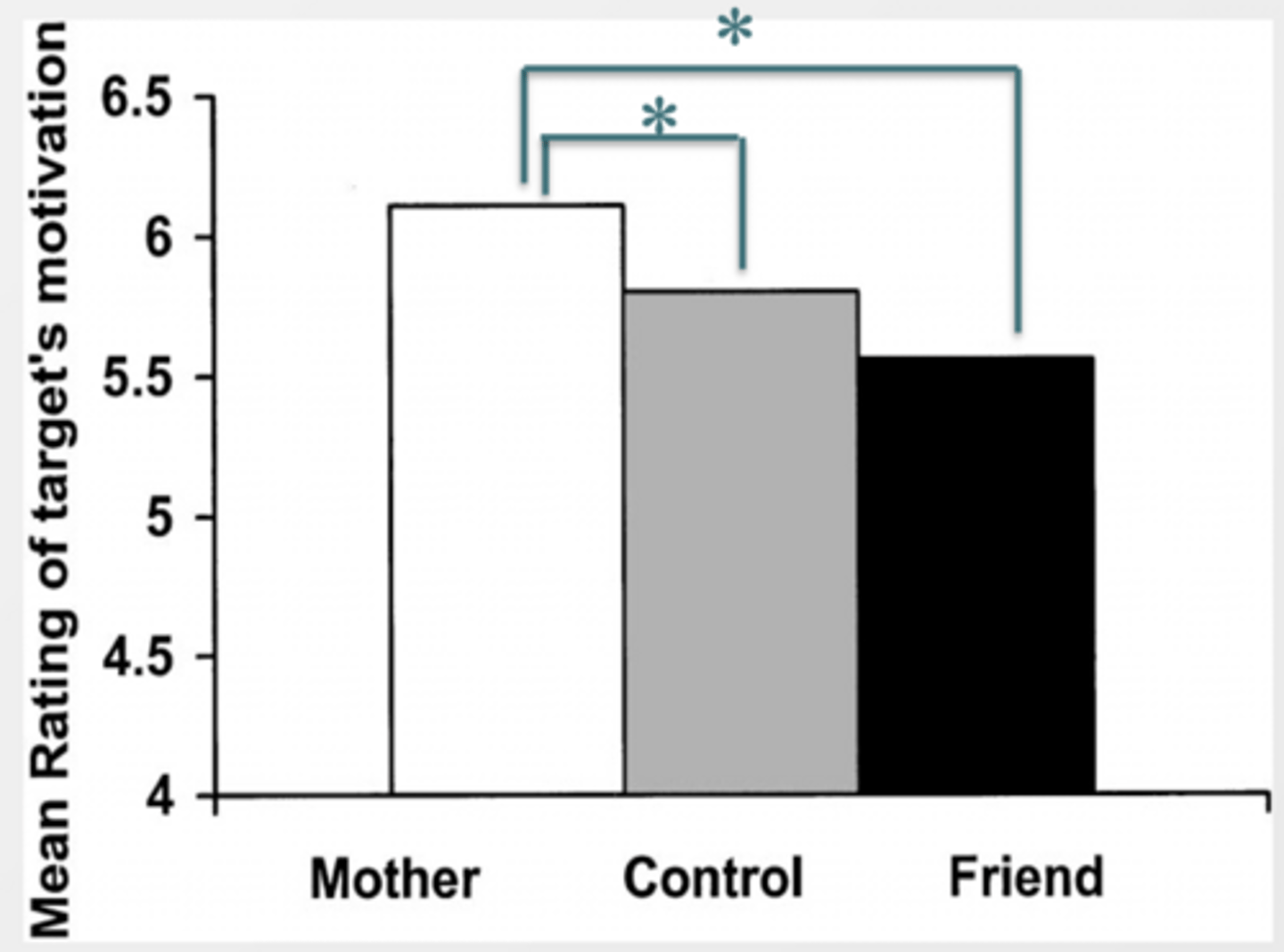
“How motivated is Mark to succeed in school?”
- Hypothesis: Mother prime would lead participants to see Mark as more motivated to succeed compared to friend prime.
--> Goal of wanting to make mom proud becomes more accessible and attributed to Mark.
What were the results of Study 2 on automatic activation of goals (Fitzsimons & Bargh, 2003)?
- Thinking about mother increased accessibility of participants’ own goal with mother (i.e., wanting to make mom proud)
- Participants projected this goal onto Mark.
--> Evidence that relationship-specific goals can be automatically activated simply by thinking about that person.
What was the method of Study 3 on moderation by goal importance (Fitzsimons & Bargh, 2003)?
- Pre-study questionnaire assessed presence of goals.
- Asked whether participant had goal of making mom proud.
+ “Yes” = Goal group
+ “No” = No goal group
- In lab:
+ Mom prime
+ Bedroom prime (control)
- Verbal test: Generate as many words as possible from string of letters
What were the results of Study 3 on moderation by goal importance (Fitzsimons & Bargh, 2003)?
People who had the goal of making their mom proud AND were in the mom-prime condition performed the best.
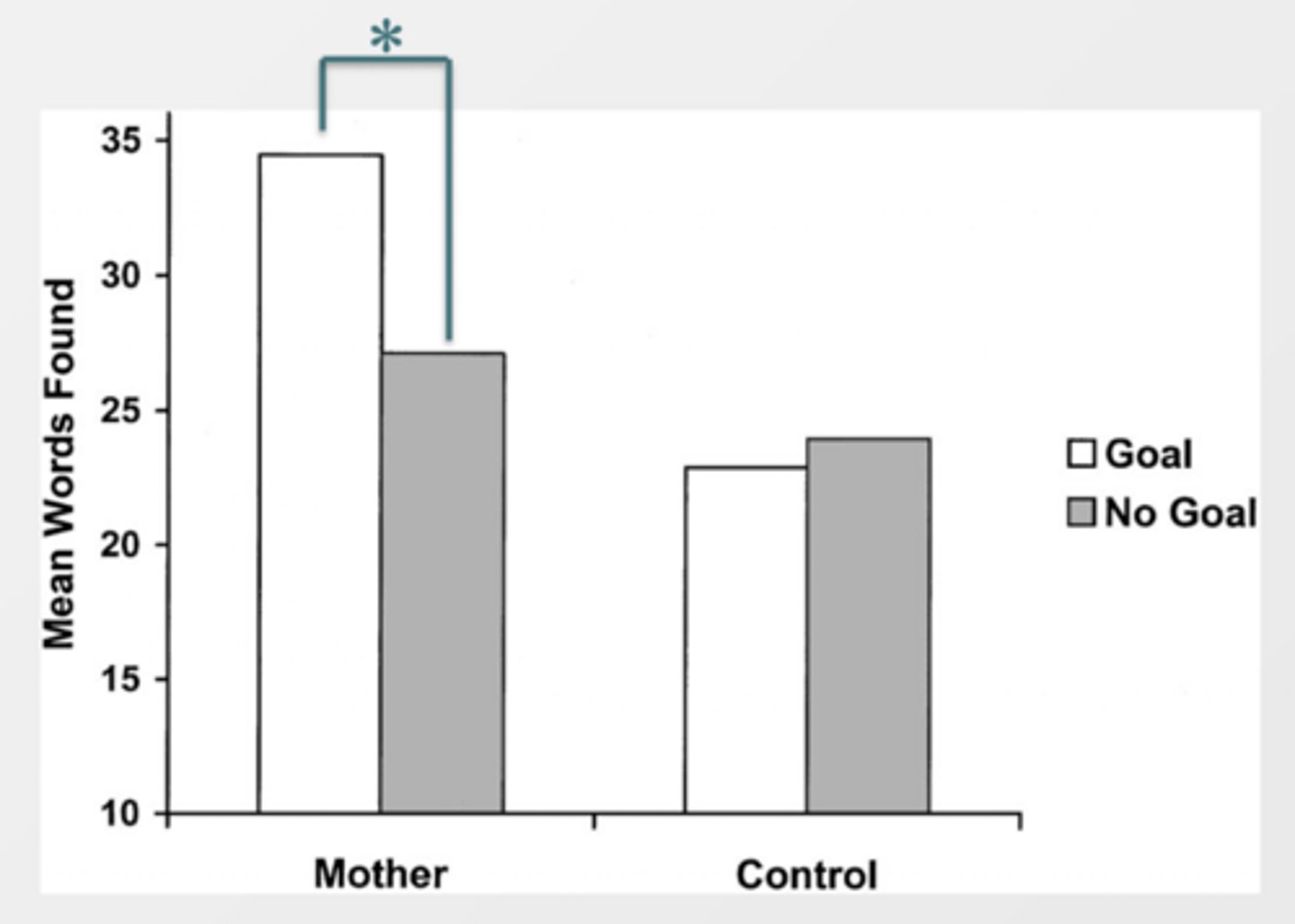
What does Study 3 suggest about goal activation (Fitzsimons & Bargh, 2003)?
- Goals need to be activated by situation to influence behaviour.
- Presence of a goal alone is not enough.
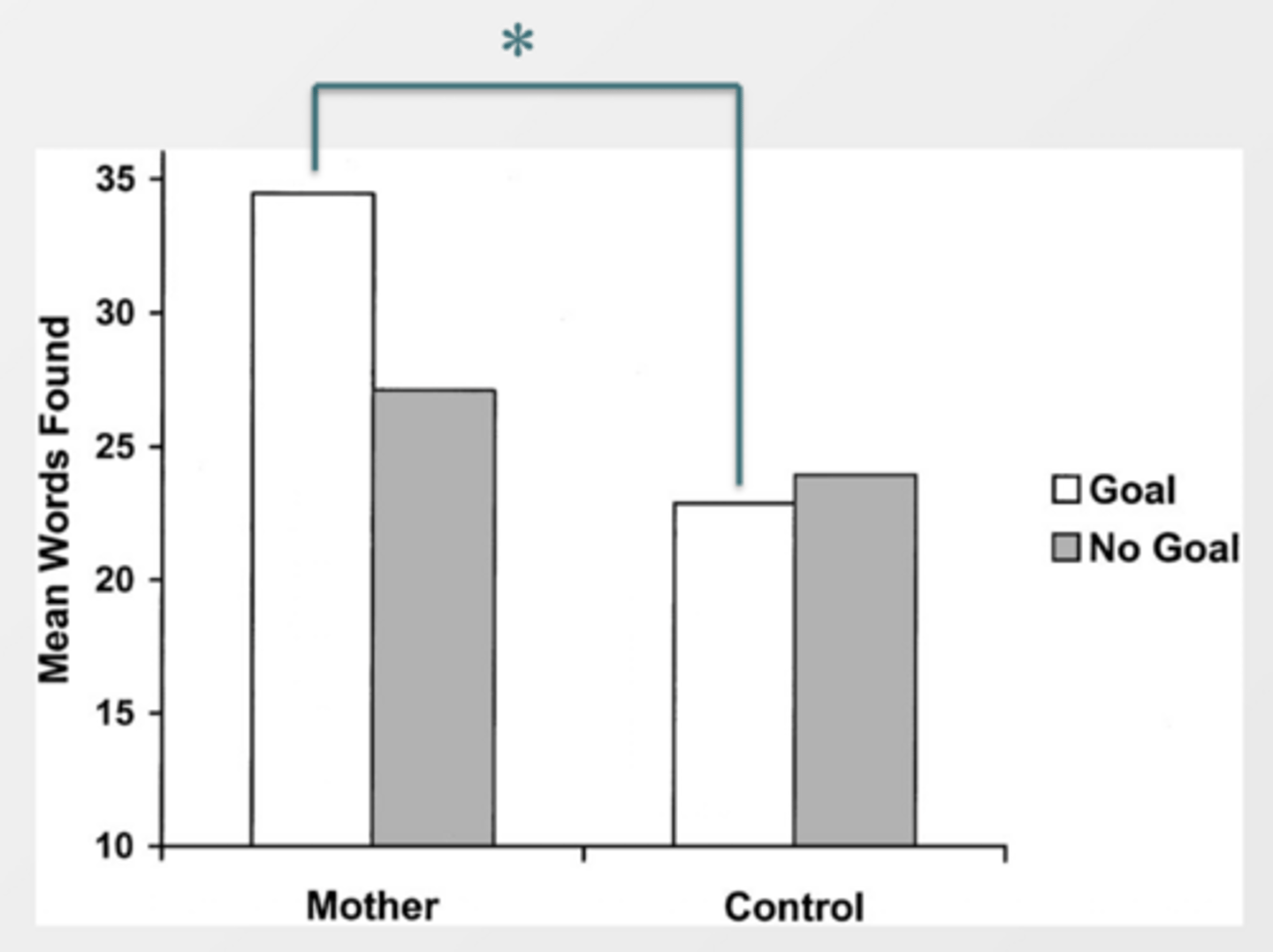
What are the implications of unconscious interpersonal goal pursuit?
- Relationship partners can unconsciously activate interpersonal goals.
- These goals are then pursued unconsciously.
- Relationships influence motivations and behaviours, even when relationship partner is not physically present
What are the major conclusions from this lecture on self-regulation?
- High trait self-control is less about lots of willpower and more about relying on automatic processes to self-regulate.
- Implementation intention:
+ Specific plan about how a goal will be achieved in a particular situation
+ Allows goals to be pursued automatically and more effortlessly
- According to auto-motive model:
+ Past experiences create learned associations between situations, goals, and actions
+ Allows goals to be activated and pursued outside conscious awareness
- Auto-motive model can be applied to relationships
--> Thinking about a specific relationship can lead pursuit of interpersonal goals outside conscious awareness