A Level Edexcel Quantum Physics
 Call Kai
 Learn
Learn Practice Test
 Spaced Repetition
 Match
Match Flashcards
 Knowt Play
1/25

There's no tags or description
Looks like no tags are added yet.
Name | Mastery | Learn | Test | Matching | Spaced | Call with Kai |
|---|
No analytics yet
Send a link to your students to track their progress
26 Terms
Huygens' Principle
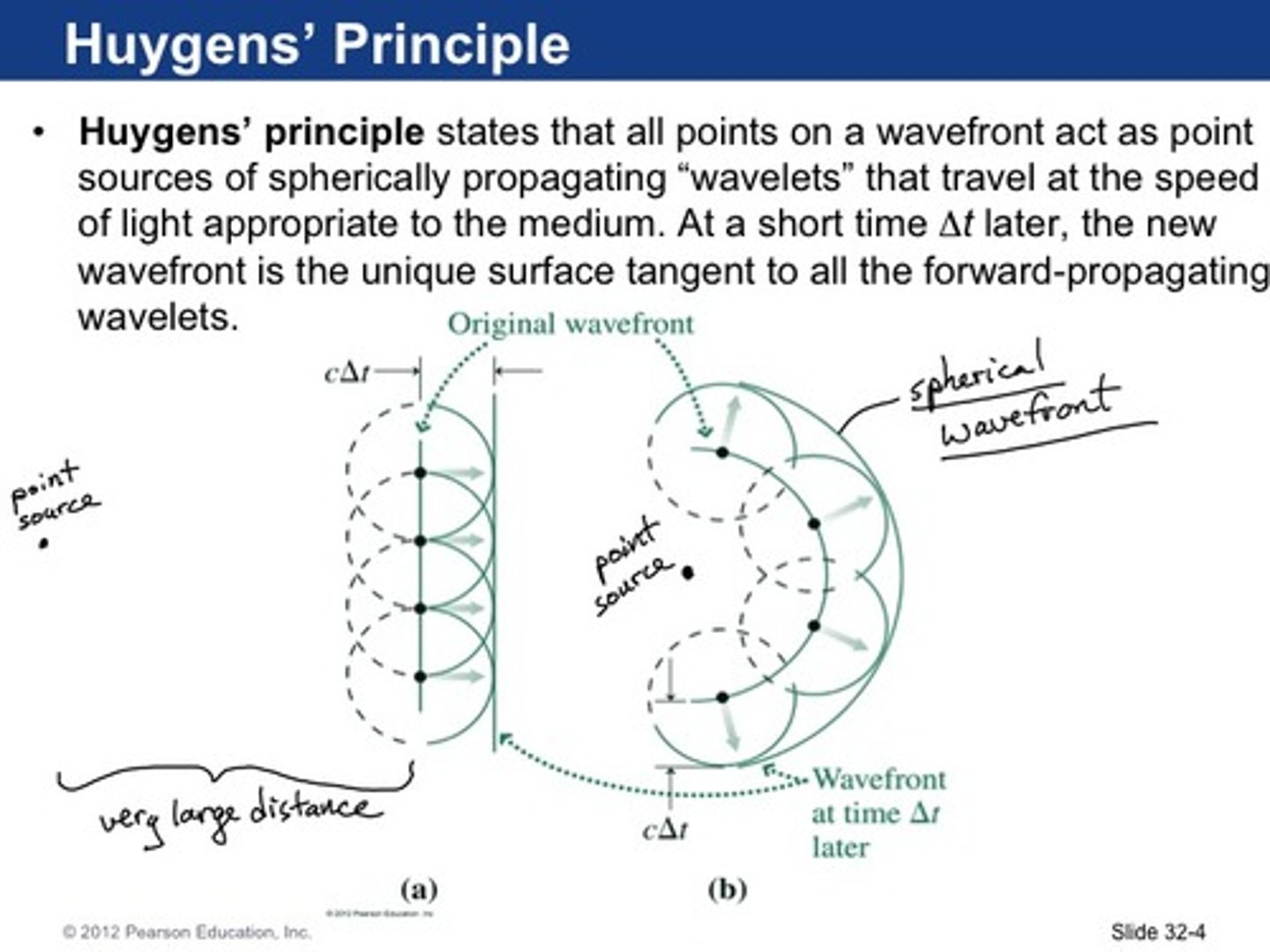
Every point on any wave front can be regarded as a new point source of secondary waves (wavelets). When the movement of the myriad circular waves is plotted, and superposition is considered, the resultant wave will be the new position of the original wavefront. The edges of the circular waves fill a shadow area with some parts left as deadzones right at the edge. The new wavefront can be viewed as the tangent to these wavelets.
This explains the basic phenomenna of light including predictions for movement in reflection, refraction, diffraction, intereference and straight line propagation of light.
Wave-Particle Duality
Both Light and Electrons can behave as a wave or as a particle
Evidence for Light as a Wave
Interference, Polarisation, Dispersion, Refraction and Diffraction
What are Lights and electrons as a Particle
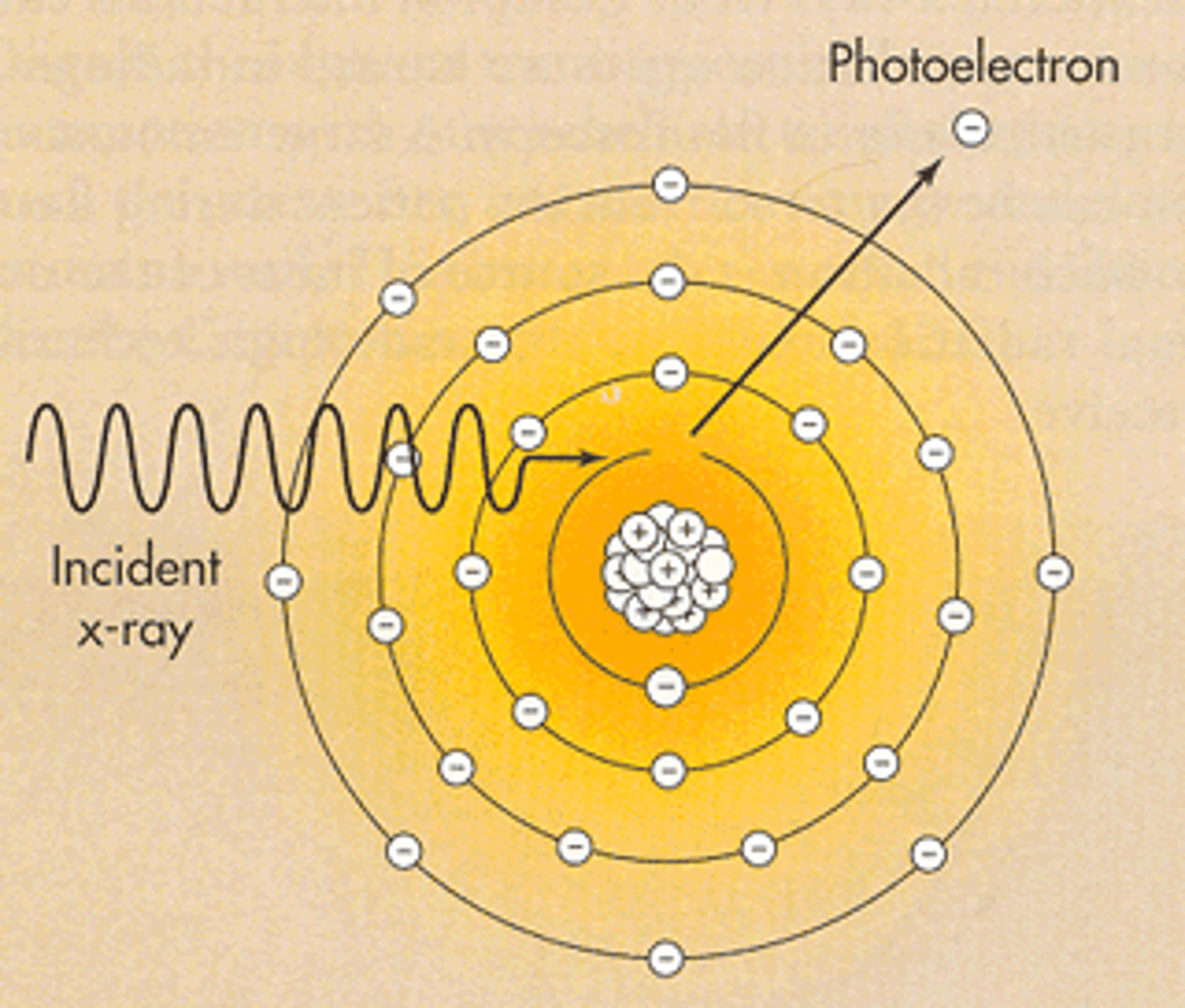
They become a photon and a photoelectron
Evidence for Light as a Particle
Photoelectric effect, emission and absorption spectra
Photoelectric Effect + Energy of Photons
Sometimes light acts as a wave or as a particle and Planck's explanationn is that radiation is emitted is small pacckets called quanta (photons) the energy of a packet is give by E = hf where E is the energy of a single photon, h is Planck's constant (6.626x10^-34) and f is the frequency of the photon. Photons interact with electrons 1 by 1 (1 PHOTON INTERACTS WITH ONE ELECTRON AND RELEASES ONE PHOTOELECTRON) and release photoelectrons which are electrons released from a metal surface as a result from absorbing energy from light, the energy not needed for emission is left as KE for the photoelectron.
This is a process which is referred to as photoelectric emission.
What does the photoelectric effect suggest? (assumptions when light is a particle)
EM radiation is quantised (exists in discrete amounts) and behaves like a particle rather than a wave.
The particle is a photon, a quantum of electromagnetic radiation.
Talk about particle theory vs wave theory.
Frequency and not intensity affects KE of photoelectron.
Emission at high frequency, not high intensity. Energy does not accumulate as per wave theory.
No time lag involved as electron absorbs all energy in an instant. Wave theory instead posits that energy is accumulated and there will be time lag.
Wave Model Asssumptions
An increase in freq means an increase in energy and we expect an increase in emissions.
Emissions occur after a period of time as photoelectrons gain energy until they have enough energy absorbed to leave.
Intensity up means energy up means photoelectrons have more KE.
intensity up means more KE as a result
Particle Model Asssumptions
Increased frequency means more energy means a higher energy emission not more emissions, therefore more energy is in the form of KE for the photoelectron as less is used to remove it from the metal.
Emissions occur instantly when photon energy is large enough
Intensity up means more photons means more emissions (Intensity not proportional to energy)
Intensity has no relationship to KE of photoelectrons
Therefore all photons and photoelectrons have the same energy unless freq changes
Threshold Frequency
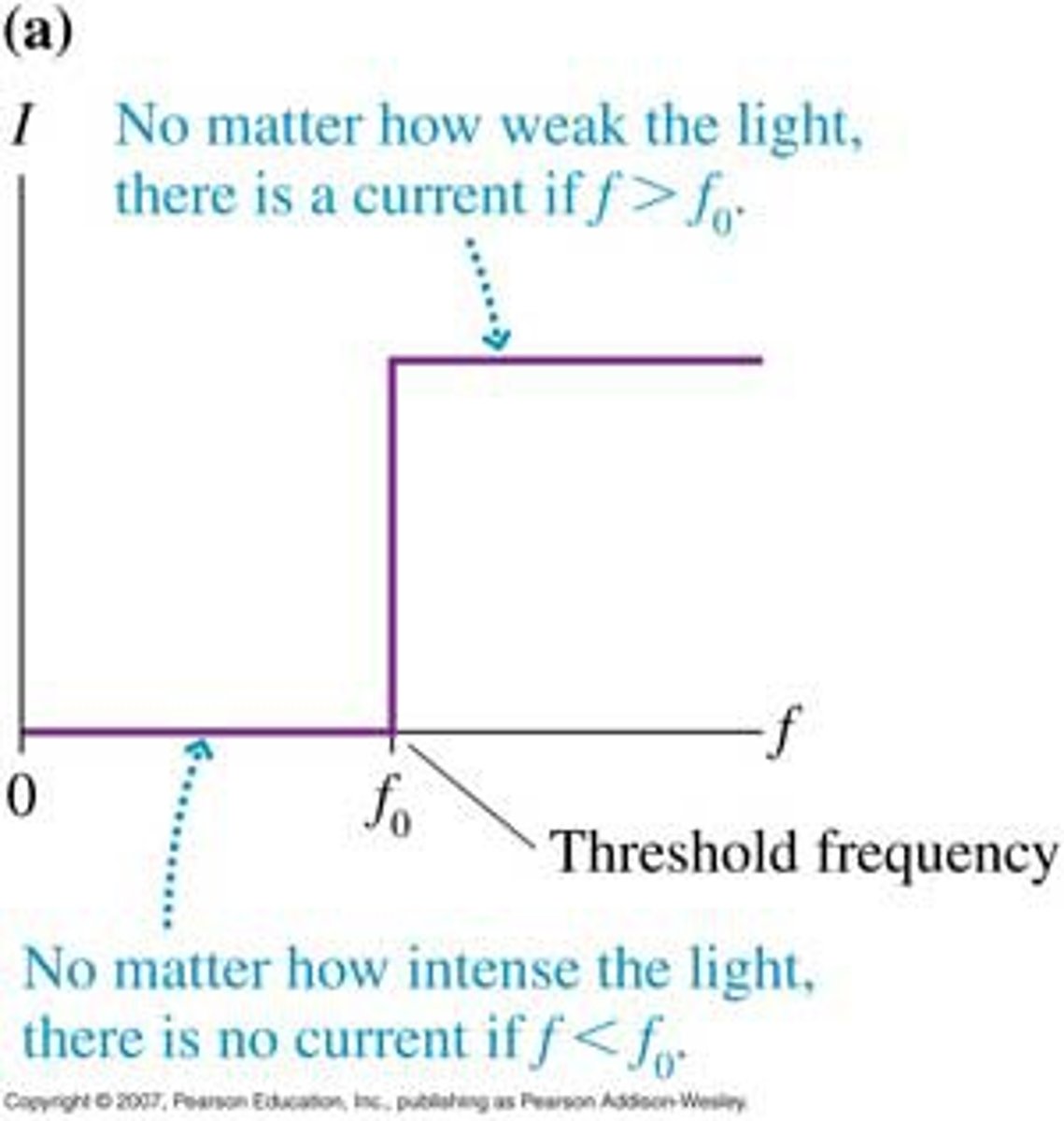
Threshold frequency ƒο is the minimum frequency of the incident radiation for instantaneous emission of a photoelectron, below which no photoelectron will be emitted regardless of the intensity of radiation therefore frequency is directly proportional to the energy of photons and KE of photoelectrons.
Work Function
Work function is the minimum amount of energy required for a surface electron to be released from the metal as a photoelectron
It is different for different materials
Equations for Photoelectric Effect
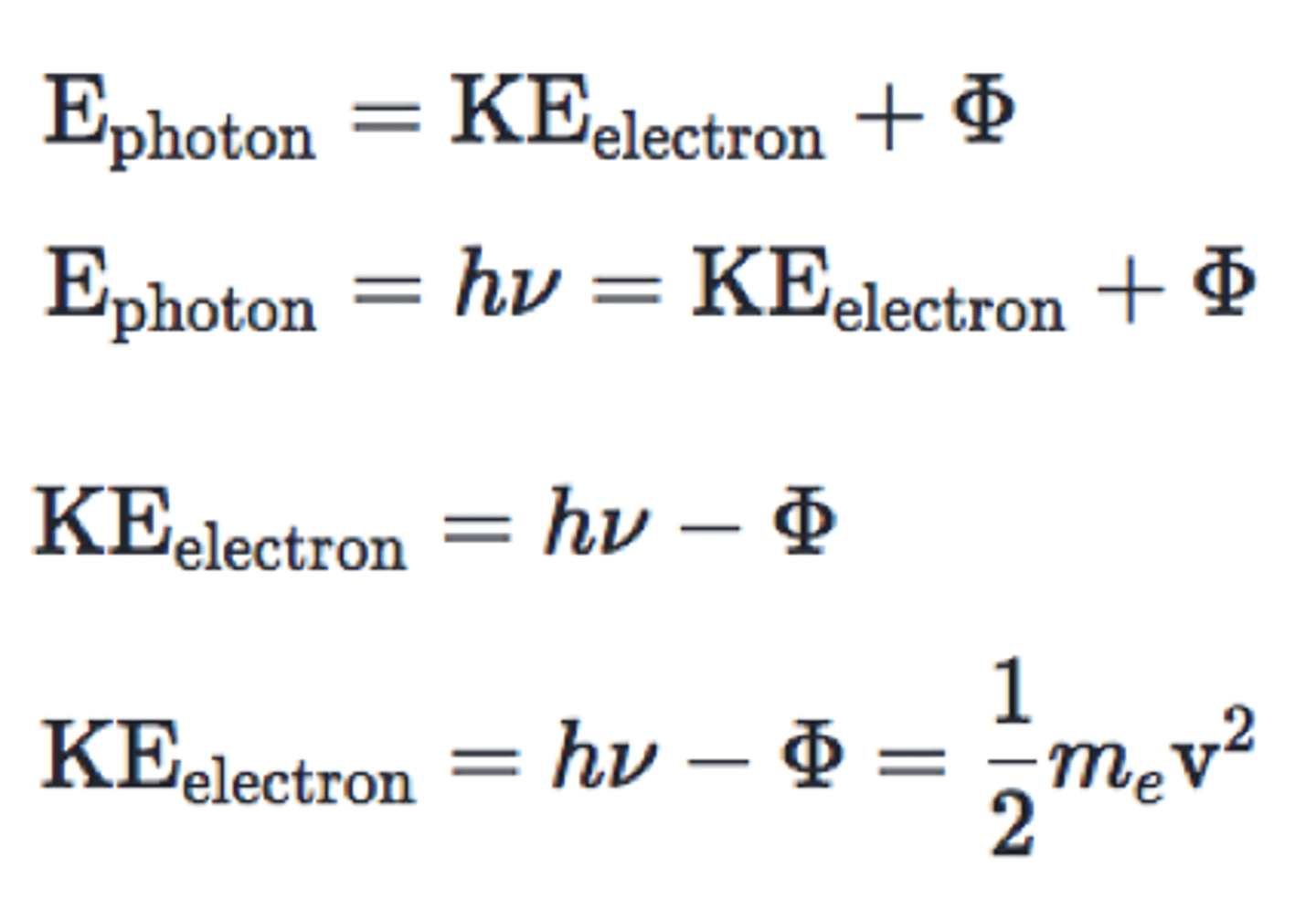
E = Work function + KE
E is the total energy of the photoelectron, work function is the minimum energy required to remove it from the surface, KE is the remaining energy that wasnt used in the work function.
This can be rewritten as:
hf = hf(threshold) + 1/2mv^2
Note on the Photoelectric Effect and the Emission of Photoelectrons
When you are calculating the KE of the photoelectrons emitted, this is referred to as the maximum KE, this is because in theory it is not really going to be this high as there will be collisions with the positive metal ions on the surface with the photoelectron meaning it will lose energy and speed.
Properties of the Light Released as Photons
When finding wavelengths of light from photons rememeber that the spectrum between 400 and 750nm is the visble light region, above that is IR and below that is UV. (When using E = hf you can find f, then use c = λf where c is the speed of light and f is freq, to find the wavelength in metres which you will then convert to nm.
Absorption Line Spectra
Cold gas absorbs photons of specific frequencies from white light source and re-emit in different directions.
Its dark lines are where emission occurs
Dark lines in continuous spectrum background observed.
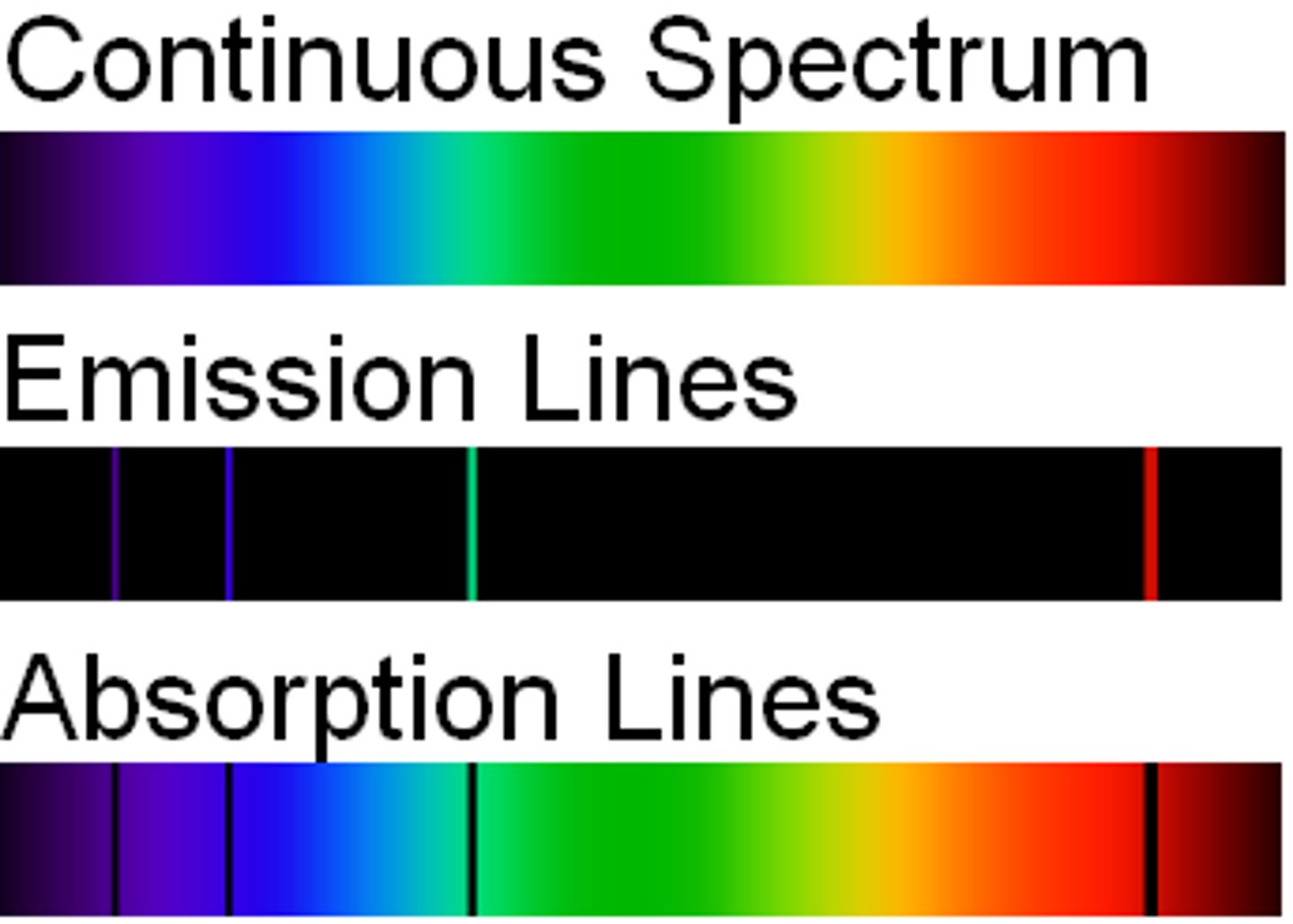
Emission Light Spectra
Gas is heated at low pressure, and hence emits photons of specific frequencies due to its unstable state.
Its dark areas are where absorption occurs
Coloured line on a dark background.
What do these experiments show?
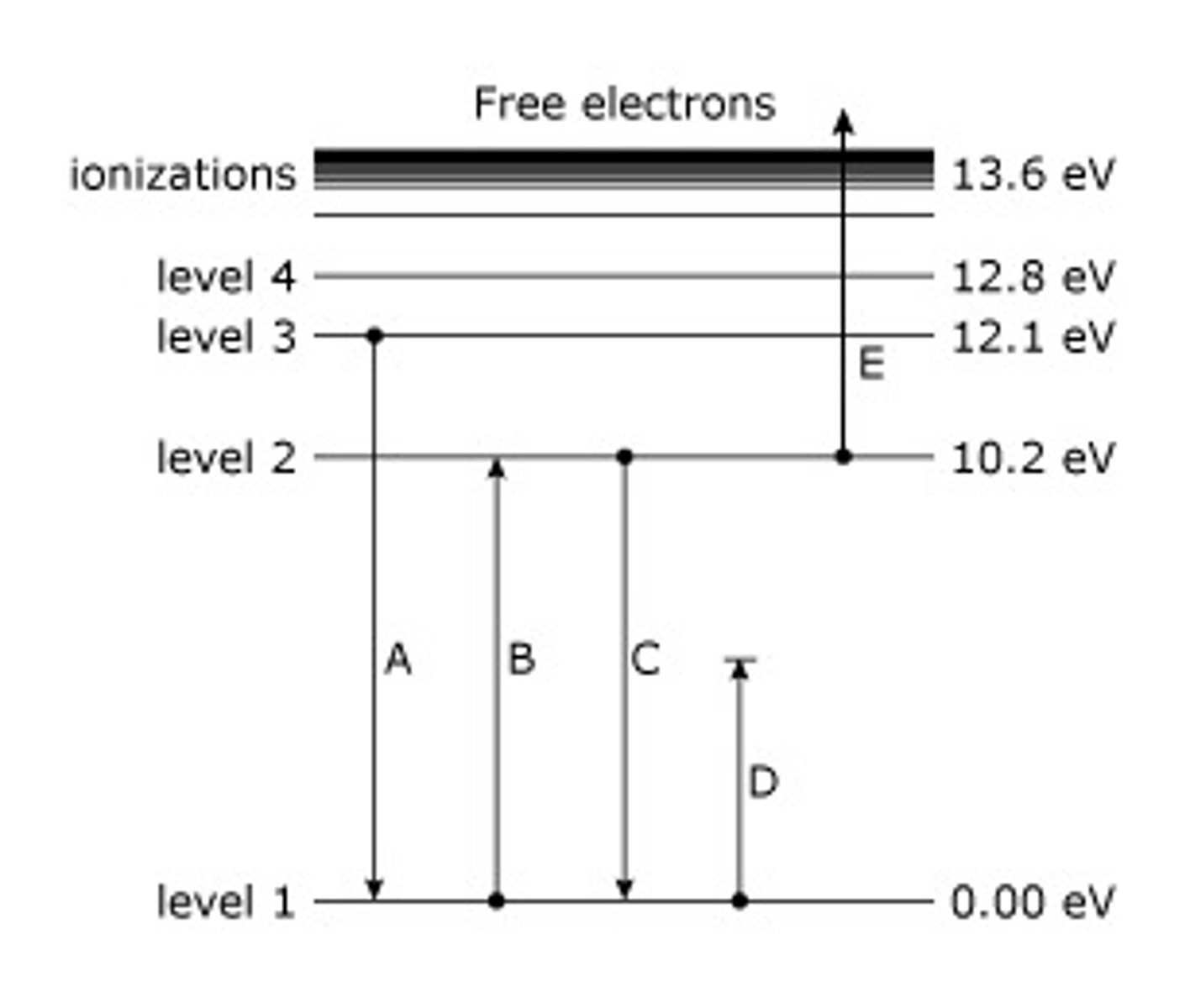
Provides evidence for the existence of discrete energy levels
This means that energy can only be absorbed at certain levels for electrons to become excited and enter a new energy level and they can only emit certain amounts of energy when they drop down energy levels.
Note (Since 1 photon interacts with 1 electron at discrete levels of energy it can only absorb certain photons and emit certain photons, however this process is random and based on availability)
Plus - for alloys the atoms behave indiviually for each element
Note on Discrete Energy levels
These discrete energy levels apply below the ionisation energy, for example if you have a 12eV photon and the ionisation energy of an electron is 10eV the electron will absorb the 10eV and be emitted plus have a KE of 2eV. However in the energy levels of the electrons lets say the photon remains at 10eV, if to jump an energy level you need 3.6eV, then 4.4 eV, and then 15eV to be ionised (purely theoretical) the photon and the electron will not interact at all.
How to test Emission and Absorption Levels
Shine white light on an element, this process is 100% efficient so any energy put in will come out.
Ionised State
An ionised state is when the atom has enough energy (ionisation energy) for its most loosely bound electron to escape from it.
De Broglie Equation
He deduced that an electron or any particle can behave as a wave in specific situations (quantum sized/tiny particles)
He deduced that a particle had a wavelength, and it is dependent on the momentum of the particle
You can observe this with diffraction
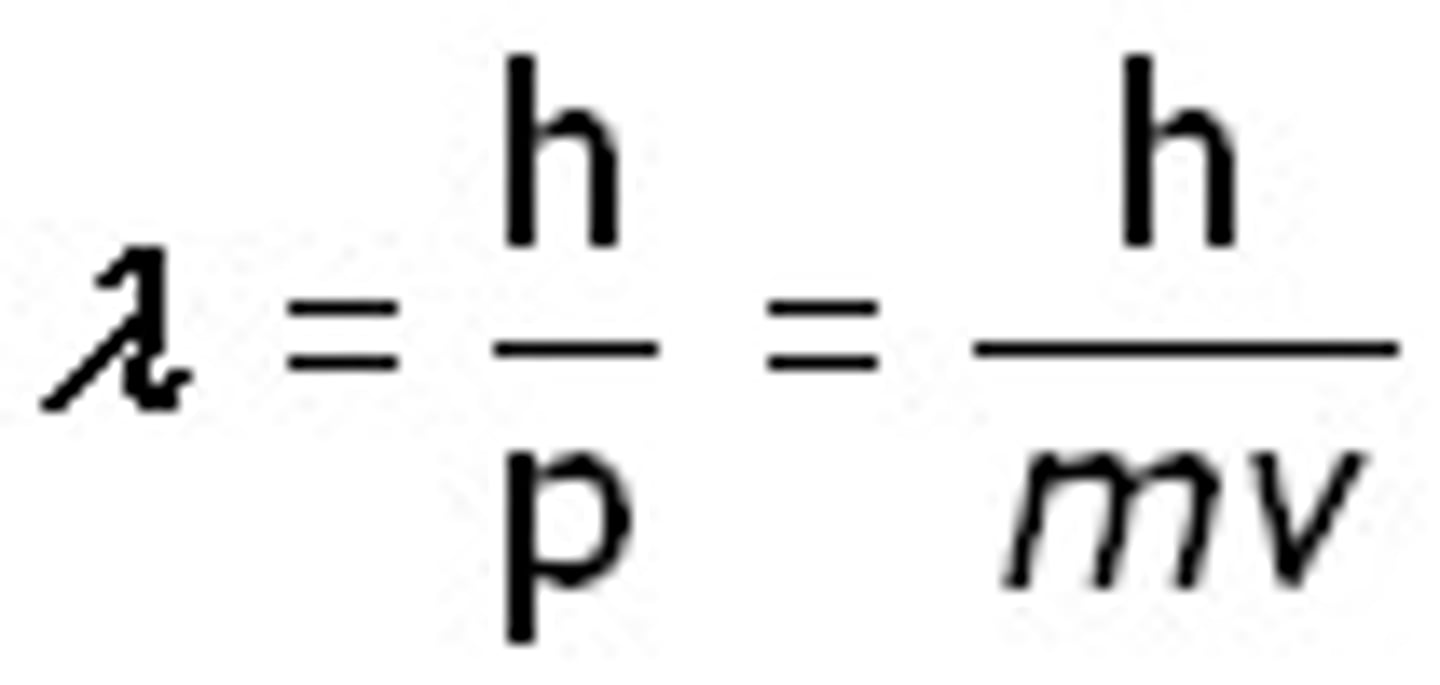
λ = h/mv h is Planck's constant and the rest are in base units
Remember P = mv
Observations of Electrons
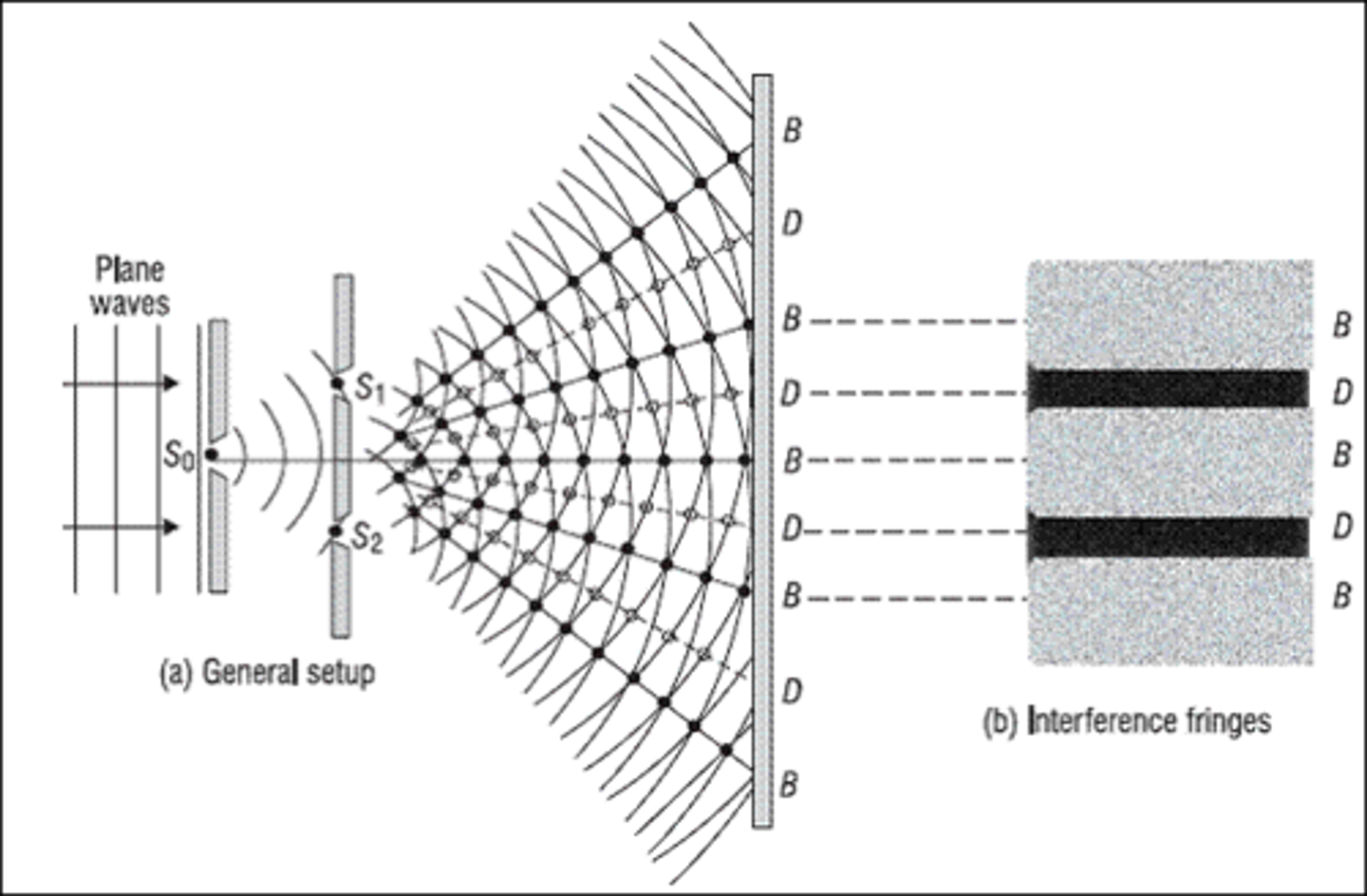
Electrons act as a particle when observed physically (so an attempt to measure anything) but as soon as you stop observing the electrons they act as a wave and create wave like diffraction patterns through double slits seen through the young double slit experiment
When electrons act as a wave they cause inteference patterns between the wavelets that are diffracted with the brightest line being the central maximum.
When electrons act as a particle they form no diffraction pattern as there is no interference meaning the particles end up in line with the slits
Position-Momentum / Time- Energy Uncertainty Principle
Neither the position nor momentum/ time or energy of a particle can be simultaneously determined with great precision.
Thermionic Emissions
Electrons can be removed from a metal (filament lamp in practice) when supplied with enough energy through heating using a p.d. which can be then be put through an induced electric field using a machine with a negative cathode where the filament lamp is and a positive anode opposite and fired through a hole. The electric field accelerates the electrons to the positive anode as positive attract
The higher the voltage of the induced electric field, the higher acceleration of the electrons, and the more voltage supplied to the filament lamp the more electrons that are given off/escape from the surface of the metal.
Electron Diffraction (not sure if needed for edexcel?)
Cathode is heated, releasing electrons that go through a graphite screen with a huge p.d.
Spaces between atoms in graphite screen comparable to wavelength of electron
Concentric circles of varying diameter are formed.
Smaller wavelength -> smaller spacing.
Transmission Coefficient (not sure if needed for edexcel?)
The transmission coefficient T is the probability that the particle penetrates the barrier. (Reflection Coefficient suggests the opposite)