20. Parental Care
 Call Kai
 Learn
Learn Practice Test
 Spaced Repetition
 Match
Match Flashcards
 Knowt Play
1/19

Earn XP
Description and Tags
20. Parental Care
Name | Mastery | Learn | Test | Matching | Spaced | Call with Kai |
|---|
No analytics yet
Send a link to your students to track their progress
20 Terms
Altricial
(naked, blind, immobile, cannot self-feed, cannot regulate body temp)
Precocial
(downy, mobile, self-feeding, better temp. regulation)
Altricial species yolk content
lay “cheap” eggs (20% yolk content) and have a short incubation period. Nestlings are still embryos when the egg hatches
Precocial species yolk content
have “expensive” eggs with 40-50% yolk content. The extra energy is needed to fuel longer embryo development period. Higher cost of egg production and longer incubation period, but chicks are relatively mature upon hatching
Altricial vs. Precocial chick growth rate
• Small songbird chicks (altricial) weigh 10% of adult mass at hatching, but attain adult mass (and fledge) at only two weeks of age
• Although precocial chicks are relatively mature at hatching, they grow more slowly than altricial chicks because they feed themselves
altricial cavity and open-cup nesters
cavity nesters slower than open-cup nesters, open-cup ground nesters the fastest
more exposed to predators and harsh weather
Lesser Black-backed Gull clutch size experiment setup
Removed 1 egg during egg laying to force female to lay a 4th egg in order to achieve a normal final clutch size (3 eggs)
Compare to control females that only laid 3 eggs
Lesser Black-backed Gull clutch size results
Females ‘induced’ into laying 4 eggs lost an extra 5% of body mass during egg-laying
4-egg females lost far more pectoral muscle (protein condition index) which was used as an energy source in egg production
Lesser Black-backed Gull carry over effects
• Experimental females reared 30% fewer chicks than control females and were 3 times as likely to fail at nesting
• Experimental females also produced smaller fledglings, which in turn are less likely to survive to adulthood
Common Eider costs of incubation
(arctic ducks) females incubate eggs alone, and do not eat during the 25 day incubation period
Females lose about 20% of their body mass during incubation
Common Eider experiment and results
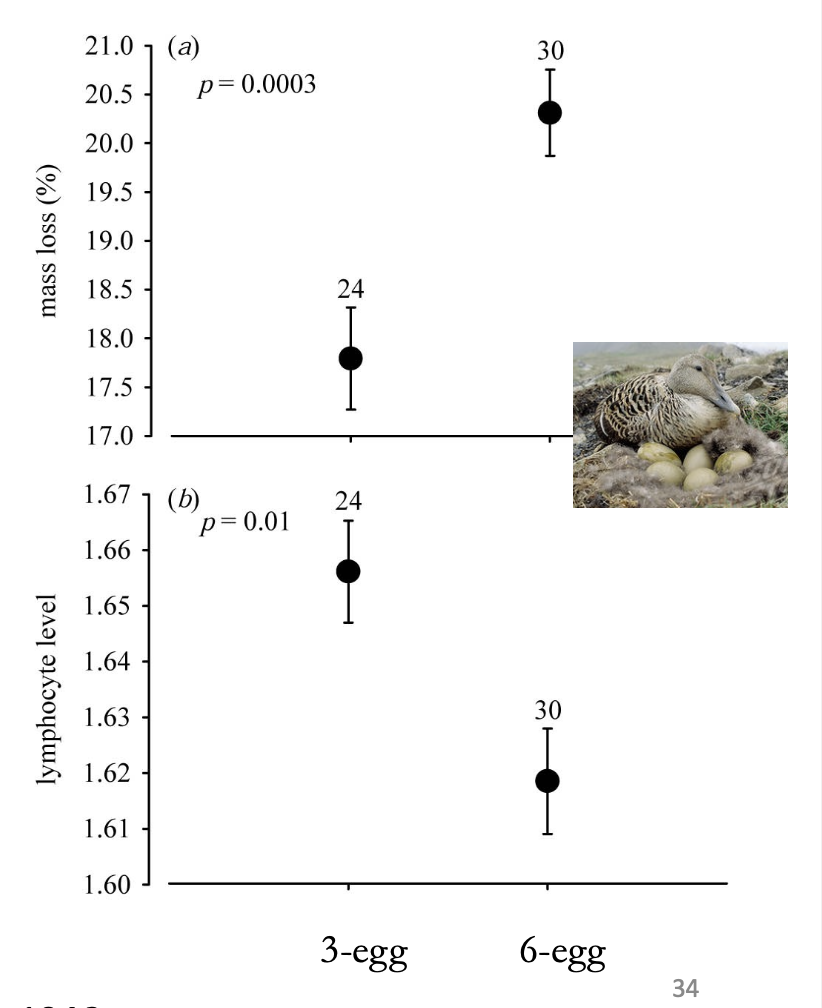
Manipulate clutch to produce 3-egg nests (low incubation demand) and 6-egg nests (high incubation demand)
Measure body mass and lymphocyte levels
Lower lymphocyte levels are indicative of immuno-suppression and increased susceptibility to infections
Incubating 6-eggs was more costly
Common Eider experiment carry-over effects
• Carry-over costs to lay date and clutch size in the following year
• High incubation demand = later lay date and smaller clutch size
Black-legged Kittiwake experiment
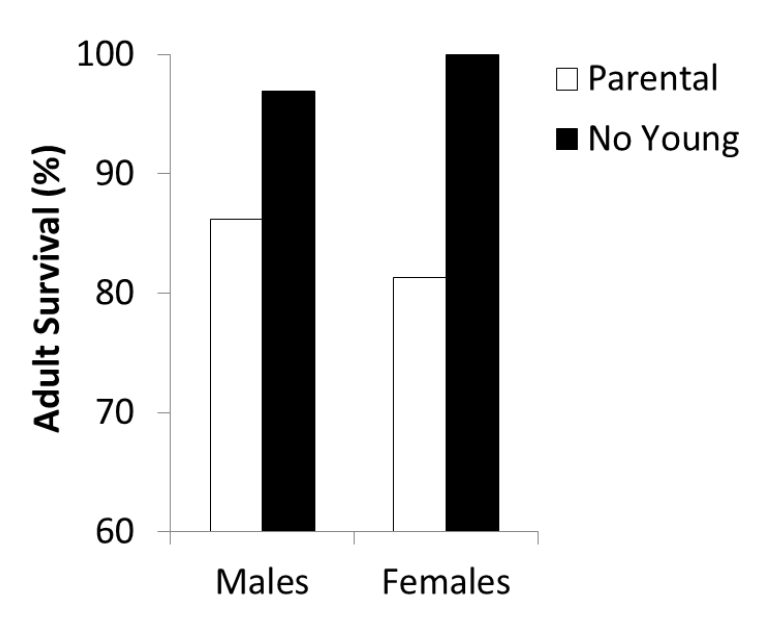
removed eggs from nests in late incubation (simulating predation) to reduce chick feeding effort to zero
Compared adult survival and future reproductive success with un-manipulated nests (where parents did have young to feed)
no young had higher survival rates
Black-legged kittiwake carry-over effects
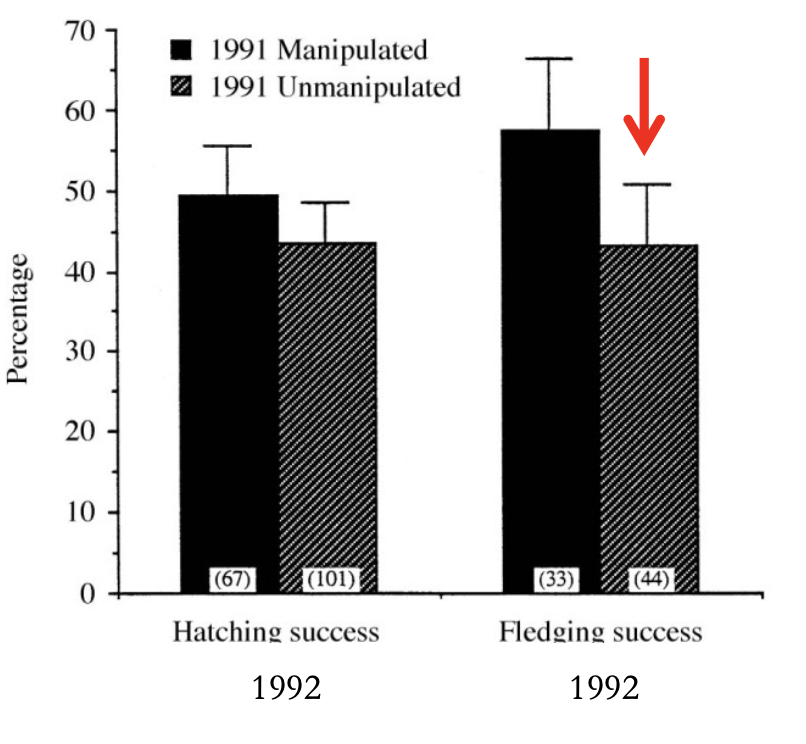
• Parents who fed young during the experiment (un-manipulated) experienced lower fledging success the next year
• The high energetic cost of parental care has long-lasting effects on fitness
Carry over effect for Collard Flycatcher from costs of feeding young
>parental effort = later fall migration departure & arrival at African overwintering sites, but, dissolves by spring
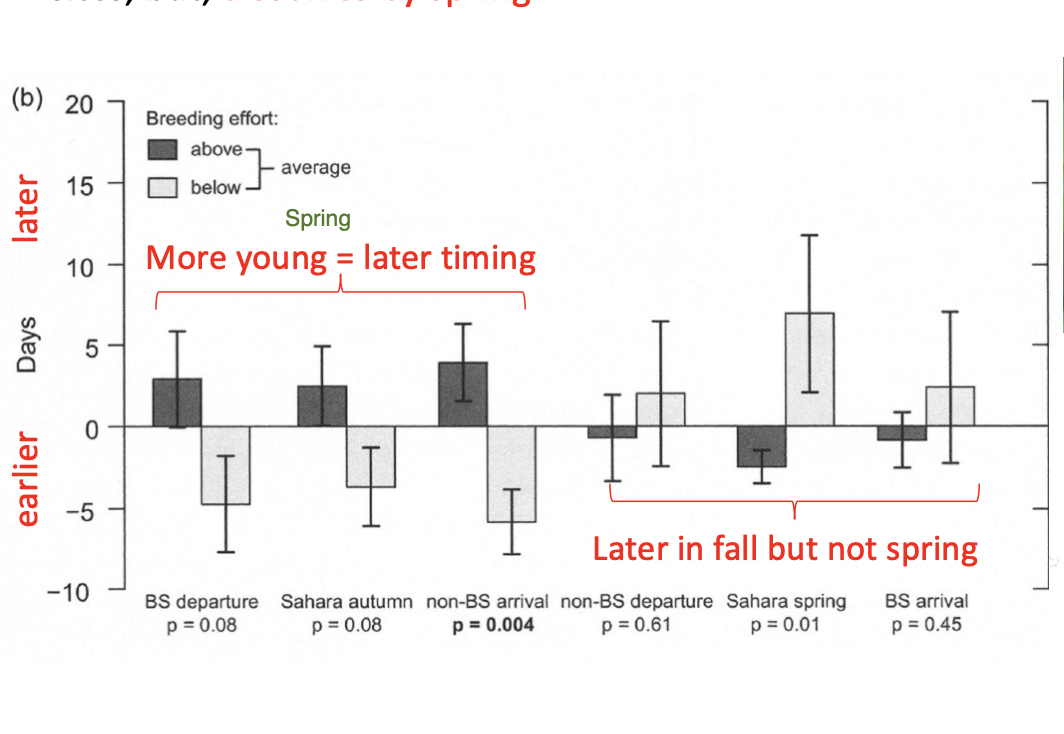
Cross-fostering chicks of different ages results
extend/reduce parental effort duration by 25%
Result: more effort = later fledge, migration, shorter winter, later breeding next year, lower RS etc.
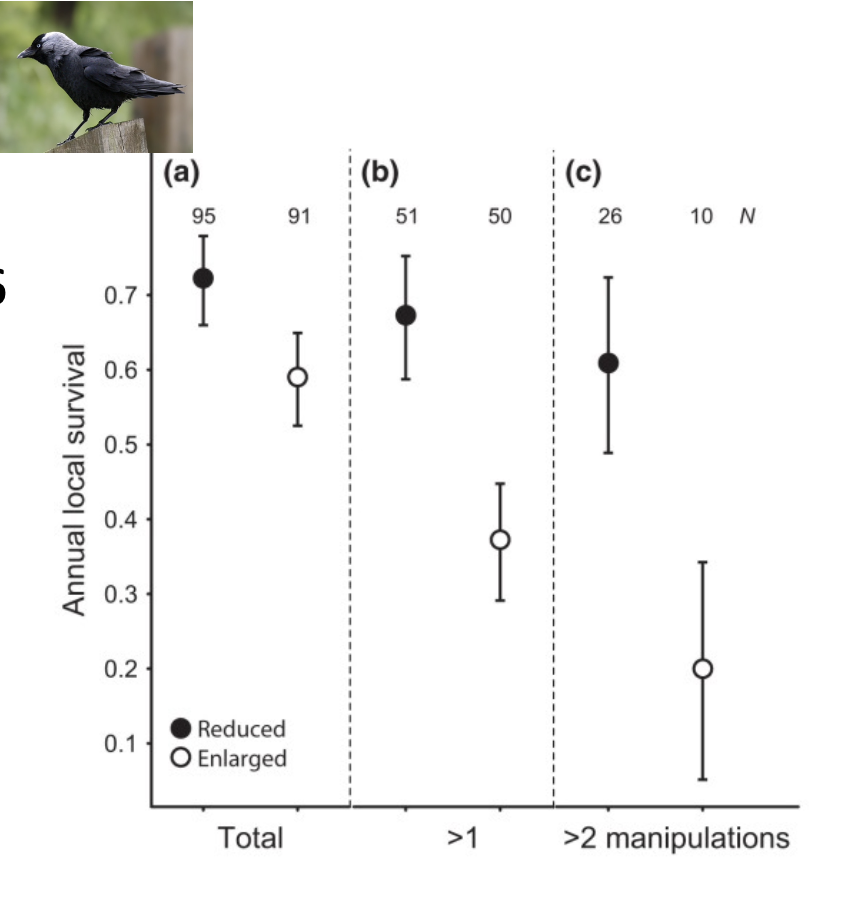
Eurasian Jackdaw experimental setup
• Studied jackdaws in nest box populations in Netherlands from 2004-2012
• Brood size was experimentally increased, or decreased by 2 nestlings
• Some parents received the same treatment for several years
Results of Eurasian Jackdaw experiment
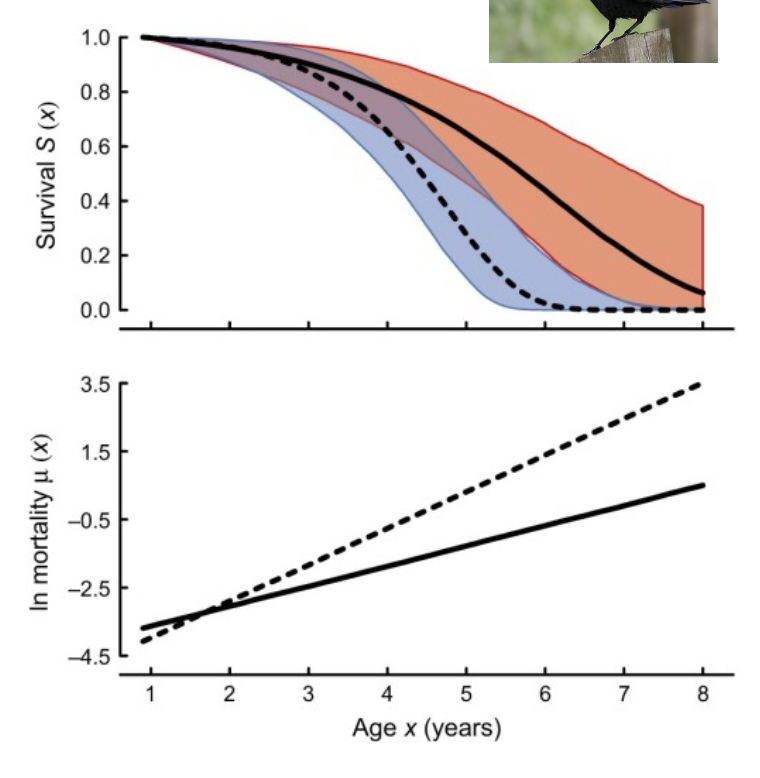
For all individuals in the study (a) parents with enlarged broods had a 0.6 annual probability of survival compared with 0.72 for parents with reduced broods
The difference was far greater for those parents who were given enlarged broods in > 2 years
Senescence
a decreased annual probability of survival with increasing age
Rearing efforts effect on senescence
increases rate of senescence
Parents with enlarged broods (blue, dashed line) had a faster rate of senescence than parents with decreased parental effort (red, solid line)