[MEDICINAL CHEMISTRY] Antipsychotics & Antidiabetic Agents
 Call Kai
 Learn
Learn Practice Test
 Spaced Repetition
 Match
Match Flashcards
 Knowt Play
1/57

There's no tags or description
Looks like no tags are added yet.
Name | Mastery | Learn | Test | Matching | Spaced | Call with Kai |
|---|
No analytics yet
Send a link to your students to track their progress
58 Terms
Phenothiazines
Aliphatic:
Chlorpromazine
Promazine
Triflupromazine
Piperidine:
Thioridazine
Mesoridazine,
Piperacetazine
Piperazine:
Fluphenazine
Perphenazine
Trifluoperazine
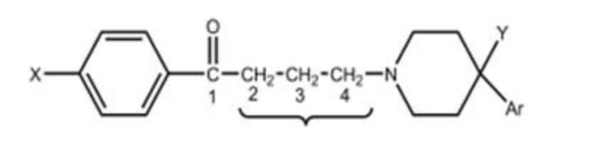
Butyrophenone:
Haloperidol
Droperidol
Tioxanthenes
Thiothixene
Chlorprothixene
Flupentixol
Typical antipsychotics include:
a. Phenothiazines and Tioxanthenes
b. Benzodiazepines and Barbiturates
c. MAOIs and TCAs
d. SSRIs and SNRIs
Chlorpromazine
Promazine
Triflupromazine
Aliphatic phenothiazines include:
a. Thioridazine, Mesoridazine, and Piperacetazine
b. Chlorpromazine, Promazine, and Triflupromazine
c. Fluphenazine, Perphenazine, and Trifluoperazine
d. Haloperidol and Droperidol
Thioridazine
Mesoridazine
Piperacetazine
Piperidine phenothiazines include:
a. Chlorpromazine, Promazine, and Triflupromazine
b. Fluphenazine, Perphenazine, and Trifluoperazine
c. Thioridazine, Mesoridazine, and Piperacetazine
d. Thiothixene, Chlorprothixene, and Flupentixol
Fluphenazine
Perphenazine
Trifluoperazine
Piperazine phenothiazines include:
a. Thioridazine, Mesoridazine, and Piperacetazine
b. Chlorpromazine, Promazine, and Triflupromazine
c. Haloperidol and Droperidol
d. Fluphenazine, Perphenazine, and Trifluoperazine
Haloperidol
Droperidol
Butyrophenones include:
a. Thiothixene, Chlorprothixene, and Flupentixol
b. Fluphenazine, Perphenazine, and Trifluoperazine
c. Haloperidol and Droperidol
d. Thioridazine, Mesoridazine, and Piperacetazine
Thiothixene
Chlorprothixene
Flupentixol
Thioxanthenes include:
a. Haloperidol and Droperidol
b. Thiothixene, Chlorprothixene, and Flupentixol
c. Chlorpromazine, Promazine, and Triflupromazine
d. Fluphenazine, Perphenazine, and Trifluoperazine
Butyrophenones = Piperazine > Piperidine ≥ Thixanthenes >>>>> Aliphatic
Potency Amon Typical Antipsychotics [most potent to least potent]
c. Phenothiazines
6-6-6 ring system where two benzenes are linked by sulfur and nitrogen.
a. Butyrophenones
b. Thioxanthenes
c. Phenothiazines
d. Benzodiazepines
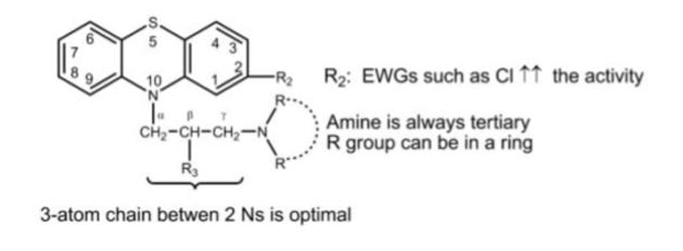
b. Sulfur and nitrogen
Phenothiazines have a 6-6-6 ring system where two benzenes are linked by _______.
a. Carbon and nitrogen
b. Sulfur and nitrogen
c. Oxygen and nitrogen
d. Sulfur and oxygen
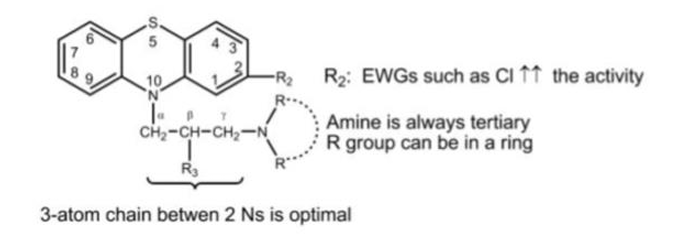
b. Increased activity
At position 2 of phenothiazines, addition of an electron-withdrawing group (EWG) results in ________
a. Decreased activity
b. Increased activity
c. No change
d. Increased toxicity only
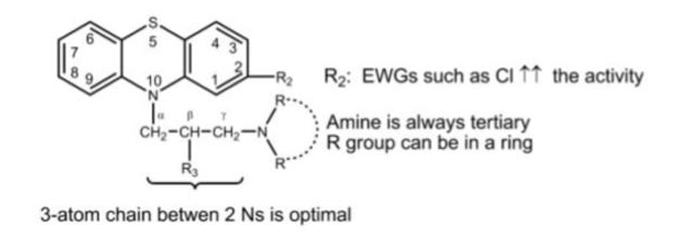
b. Electron-withdrawing group (EWG)
At position 2 of phenothiazines, addition of a(n) _______ results in increased activity.
a. Electron-donating group (EDG)
b. Electron-withdrawing group (EWG)
c. Alkyl group
d. Hydroxyl group
c. Position 10 and amino nitrogen
In phenothiazines, _______ and the _________ must be separated by a 3-carbon chain.
a. Position 1 and amino nitrogen
b. Position 5 and amino nitrogen
c. Position 10 and amino nitrogen
d. Position 2 and amino nitrogen
b. 3-carbon chain
In phenothiazines, position 10 and the amino nitrogen must be separated by _________
a. 2-carbon chain
b. 3-carbon chain
c. 4-carbon chain
d. 5-carbon chain
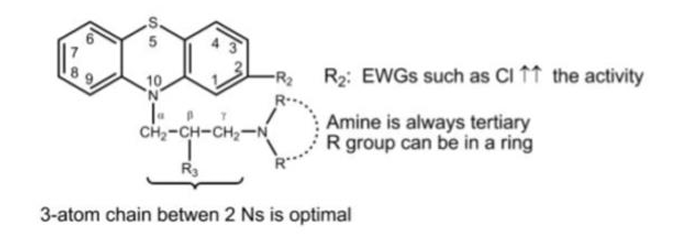
a. 2-carbon chain
A _______ separation in phenothiazines results in increased antihistamine and anticholinergic effect.
a. 2-carbon chain
b. 3-carbon chain
c. 4-carbon chain
d. 5-carbon chain
b. Antihistamine and anticholinergic effect
A 2-carbon chain separation in phenothiazines results in increased ________
a. Antipsychotic activity
b. Antihistamine and anticholinergic effect
c. Neuroleptic activity
d. Sedative effect
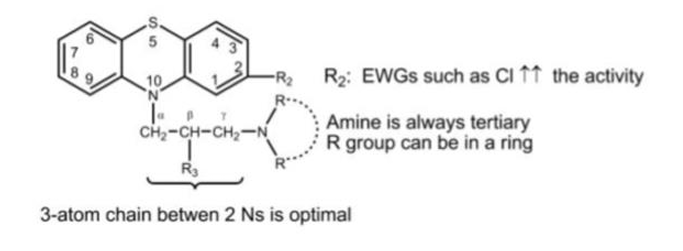
c. Promethazine
Phenothiazine with a 2-carbon chain separation; example is:
a. Chlorpromazine
b. Fluphenazine
c. Promethazine
d. Thioridazine
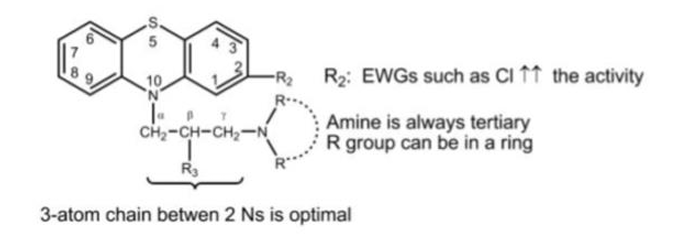
c. Tertiary
The amine in phenothiazines is always _____
a. Primary
b. Secondary
c. Tertiary
d. Quaternary
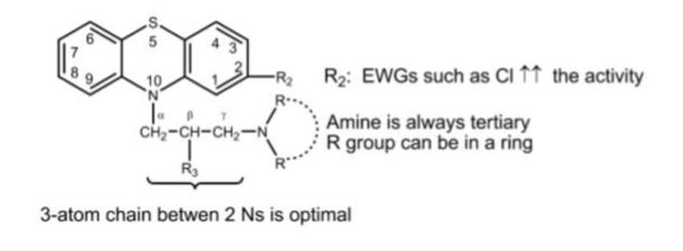
c. Tertiary amino group
At position C4 of butyrophenones, addition of a _______ is essential for neuroleptic activity.
a. Primary amino group
b. Secondary amino group
c. Tertiary amino group
d. Quaternary ammonium group
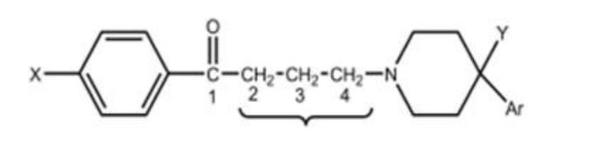
b. Neuroleptic activity
At position C4 of butyrophenones, addition of a tertiary amino group is essential for:
a. Antihistamine activity
b. Neuroleptic activity
c. Anticholinergic activity
d. Sedative activity
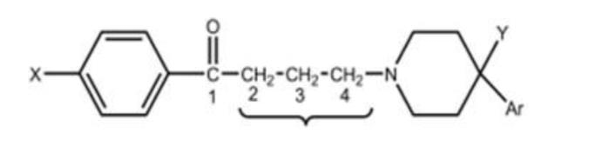
c. para-fluoro
The highest activity in butyrophenones occurs when the cyclic form is ________, resulting in fluorobutyrophenones.
a. ortho-fluoro
b. meta-fluoro
c. para-fluoro
d. ortho-chloro
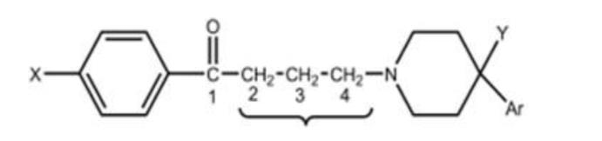
b. Fluorobutyrophenones
The highest activity in butyrophenones occurs when the cyclic form is para-fluoro, resulting in:
a. Chlorobutyrophenones
b. Fluorobutyrophenones
c. Bromobutyrophenones
d. Iodobutyrophenones
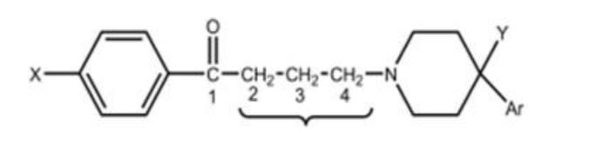
b. 3-carbon propyl
Modification of the _______ chain decreases neuroleptic potency.
a. 2-carbon ethyl
b. 3-carbon propyl
c. 4-carbon butyl
d. 5-carbon pentyl
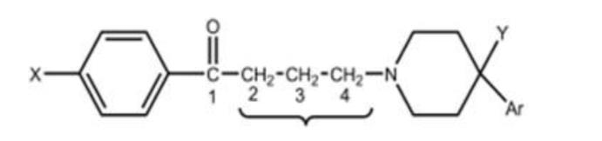
b. Decreases neuroleptic potency
Modification of the 3-carbon propyl chain in butyrophenones _______
a. Increases neuroleptic potency
b. Decreases neuroleptic potency
c. Has no effect on neuroleptic potency
d. Increases antihistamine activity
b. Dibenzoazepine
Loxapine.
a. Dibenzodiazepine
b. Dibenzoazepine
c. Dibenzothiazepine
d. Benzoxazole
c. Dibenzodiazepine
Clozapine.
a. Dibenzoazepine
b. Dibenzothiazepine
c. Dibenzodiazepine
d. Thienobenzodiazepine
d. Dibenzothiazepine
Quetiapine.
a. Dibenzodiazepine
b. Dibenzoazepine
c. Benzoxazole
d. Dibenzothiazepine
d. Dihydrocarbostyril
Risperidone.
a. Thienobenzodiazepine
b. Benzoxazole
c. Dihydroindolone
d. Dihydrocarbostyril
c. Thienobenzodiazepine
Olanzapine.
a. Benzoxazole
b. Dihydroindolone
c. Thienobenzodiazepine
d. Dibenzothiazepine
d. Dihydroindolone
Ziprasidone.
a. Thienobenzodiazepine
b. Dihydrocarbostyril
c. Benzamide
d. Dihydroindolone
b. Dihydrocarbostyril
Aripiprazole.
a. Dihydroindolone
b. Dihydrocarbostyril
c. Benzamide
d. Benzoxazole
c. Benzamide
Amisulpride.
a. Dihydrocarbostyril
b. Dihydroindolone
c. Benzamide
d. Thienobenzodiazepine
b. Insulin
Produced by beta cells of the pancreas.
a. Glucagon
b. Insulin
c. Somatostatin
d. Amylin
b. Beta cells
Insulin is produced by ______ cells of the pancreas?
a. Alpha cells
b. Beta cells
c. Delta cells
d. Gamma cells
b. Insulin
Promotes the absorption of glucose
a. Glucagon
b. Insulin
c. Somatostatin
d. Amylin
c. Glucose
Insulin promotes the absorption of ____
a. Fructose
b. Galactose
c. Glucose
d. Lactose
b. Dimer
The storage form of insulin is:
a. Monomer
b. Dimer
c. Tetramer
d. Hexamer
b. Monomer
The absorbed form of insulin that interacts with the insulin receptor is:
a. Hexamer
b. Monomer
c. Dimer
d. Tetramer
c. Insulin Lispro (Humalog®)
Has lysine and proline exchanged at positions B28 and B29.
a. Insulin Aspart (Novolog®)
b. Insulin Glulisine (Apidra®)
c. Insulin Lispro (Humalog®)
d. Regular insulin
c. Insulin Lispro (Humalog®)
_______ is stabilized into hexamers by cresol preservative into hexamers
a. Insulin Aspart (Novolog®)
b. Insulin Glulisine (Apidra®)
c. Insulin Lispro (Humalog®)
d. Regular insulin
c. Cresol
Insulin Lispro (Humalog®) is stabilized by ______ preservative into hexamers.
a. Benzyl alcohol
b. Phenol
c. Cresol
d. Paraben
a. Insulin Aspart (Novolog®)
Formed by replacement of proline at B28 with Aspartic acid
a. Insulin Aspart (Novolog®)
b. Insulin Glulisine (Apidra®)
c. Insulin Lispro (Humalog®)
d. Regular insulin
b. Insulin Glulisine (Apidra®)
Has glutamic acid replacing lysine at B29, and lysine replaces asparagine at B3
a. Insulin Aspart (Novolog®)
b. Insulin Glulisine (Apidra®)
c. Insulin Lispro (Humalog®)
d. Regular insulin
a. Insulin Lispro
Humalog®
a. Insulin Lispro
b. Insulin Aspart
c. Insulin Glulisine
b. Insulin Aspart
Novolog®
a. Insulin Lispro
b. Insulin Aspart
c. Insulin Glulisine
c. Insulin Glulisine
Apidra®
a. Insulin Lispro
b. Insulin Aspart
c. Insulin Glulisine
b. Regular Insulin
Soluble crystalline zinc insulin
a. NPH Insulin
b. Regular Insulin
c. Insulin Lispro
d. Insulin Glulisine
b. Regular Insulin
Only given intravenously.
a. NPH Insulin
b. Regular Insulin
c. Insulin Lispro
d. Insulin Glulisine
b. Isophane Insulin
Neutral Protamine Hagedorn (NPH) is also known as _______
a. Regular Insulin
b. Isophane Insulin
c. Insulin Zinc Suspension
d. Insulin Glargine
c. Intermediate Acting Insulin
Neutral Protamine Hagedorn (NPH) / Isophane Insulin is an ______
a. Rapid Acting Insulin
b. Short Acting Insulin
c. Intermediate Acting Insulin
d. Long Acting Insulin
d. NPH Insulin (Neutral Protamine Hagedorn)
_______ is a suspension of insulin in a complex with zinc and protamine in phosphate buffer (PO₄³⁻).
a. Regular Insulin
b. Insulin Lispro
c. Insulin Zinc Suspension
d. NPH Insulin (Neutral Protamine Hagedorn)
a. Insulin Zn suspension
Neutral Protamine Hagedorn (NPH) / Isophane Insulin is a(n) _________
a. Insulin Zn suspension
b. Regular insulin
c. Rapid-acting insulin
d. Long-acting insulin
d. NPH Insulin (Neutral Protamine Hagedorn)
Mixture of crystallized and amorphous form of insulin in acetate buffer
a. Regular Insulin
b. Insulin Lispro
c. Insulin Zinc Suspension
d. NPH Insulin (Neutral Protamine Hagedorn)
b. Insulin Glargine (Lantus®)
Long-acting insulin where asparagine at position A21 is replaced with glycine.
a. Insulin Detemir (Levemir®)
b. Insulin Glargine (Lantus®)
c. Insulin Degludec (Tresiba®)
d. NPH Insulin
c. Insulin Detemir (Levemir®)
Long-acting insulin where terminal threonine is dropped and myristic acid is attached to the B29 lysine.
a. Insulin Glargine (Lantus®)
b. Insulin Degludec (Tresiba®)
c. Insulin Detemir (Levemir®)
d. Regular Insulin
d. Insulin Degludec (Tresiba®)
Long-acting insulin where threonine at B30 is removed and the lysine at B29 is conjugated to hexadecenoic acid.
a. Insulin Detemir (Levemir®)
b. Insulin Glargine (Lantus®)
c. NPH Insulin
d. Insulin Degludec (Tresiba®)
a. Insulin Glargine
Lantus®
a. Insulin Glargine
b. Insulin Detemir
c. Insulin Degludec
b. Insulin Detemir
Levemir®
a. Insulin Glargine
b. Insulin Detemir
c. Insulin Degludec
c. Insulin Degludec
Tresiba®
a. Insulin Glargine
b. Insulin Detemir
c. Insulin Degludec