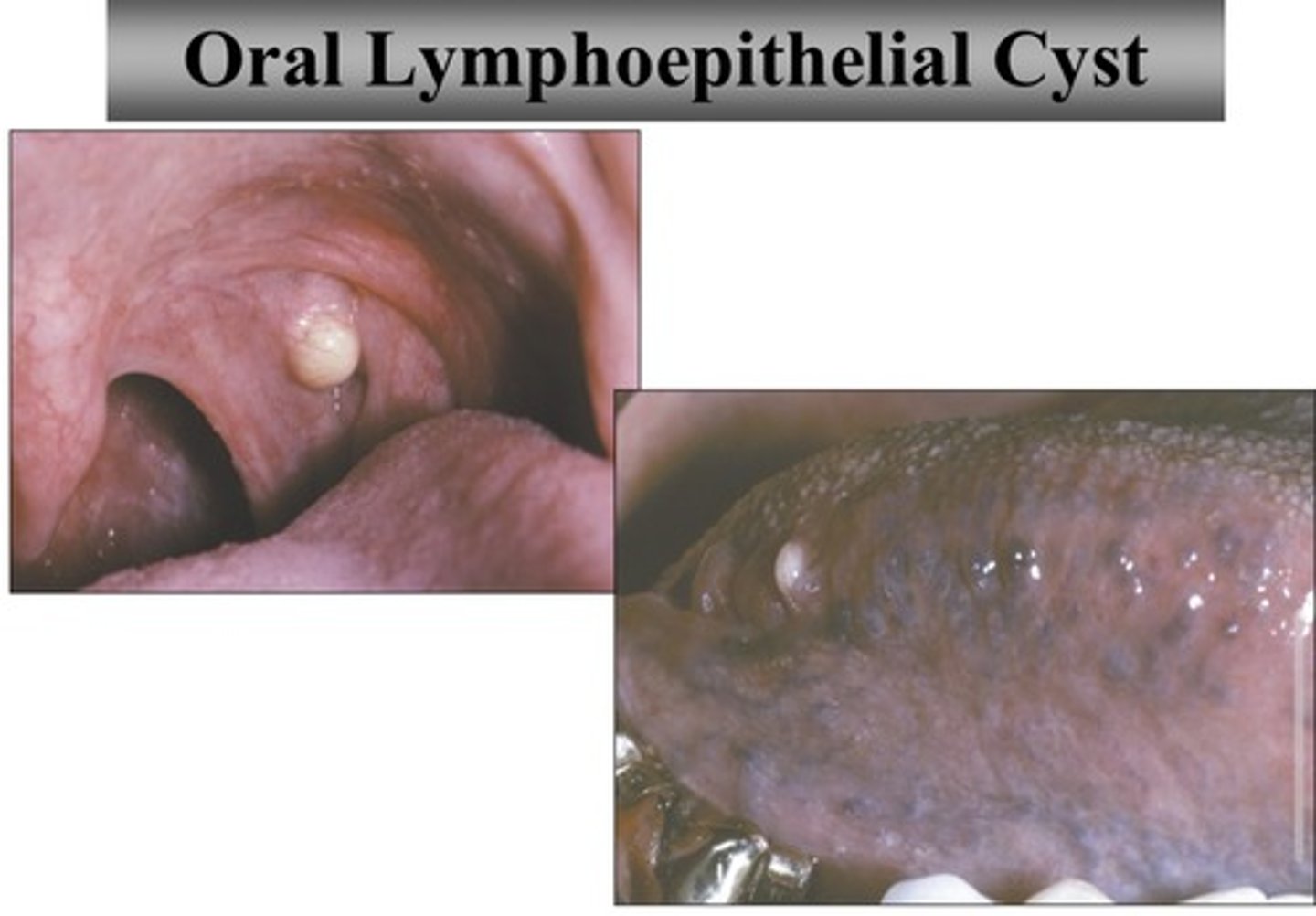
Non-odontogenic developmental cysts
 Call Kai
 Learn
Learn Practice Test
 Spaced Repetition
 Match
Match Flashcards
 Knowt Play
1/10

There's no tags or description
Looks like no tags are added yet.
Name | Mastery | Learn | Test | Matching | Spaced | Call with Kai |
|---|
No analytics yet
Send a link to your students to track their progress
11 Terms
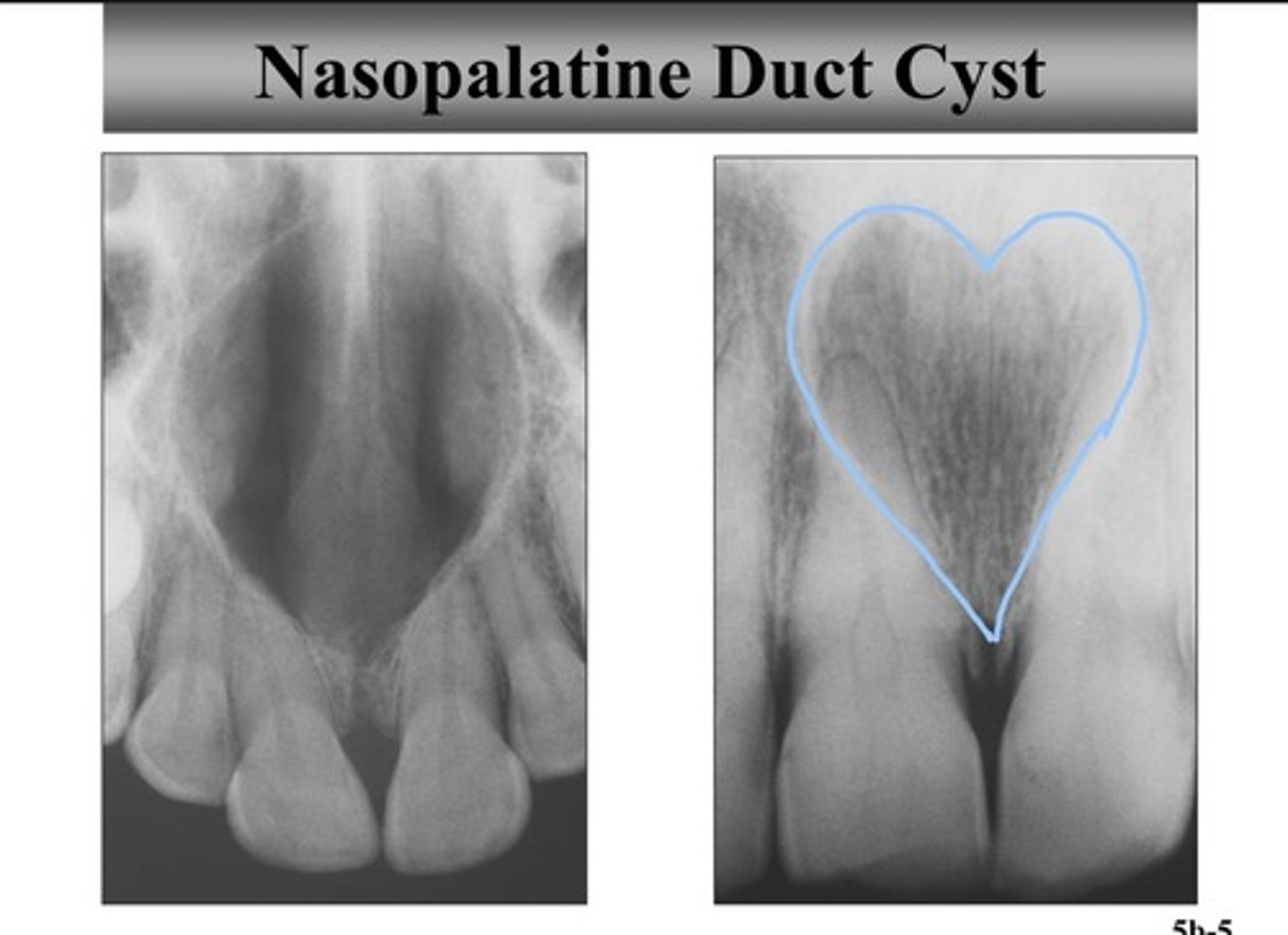
Nasopalatine duct cyst:
- cause:
- population:
- clinical features:
- radiographic features:
- cause: arises from epithelial remnants of embryonic tissue duct
- population: middle aged males (40-60)
- clinical features: pink swelling of incisive papilla area ; teeth are VITAL
- radiographic features: well-defined radio lucency between maxillary incisors - "heart shaped"
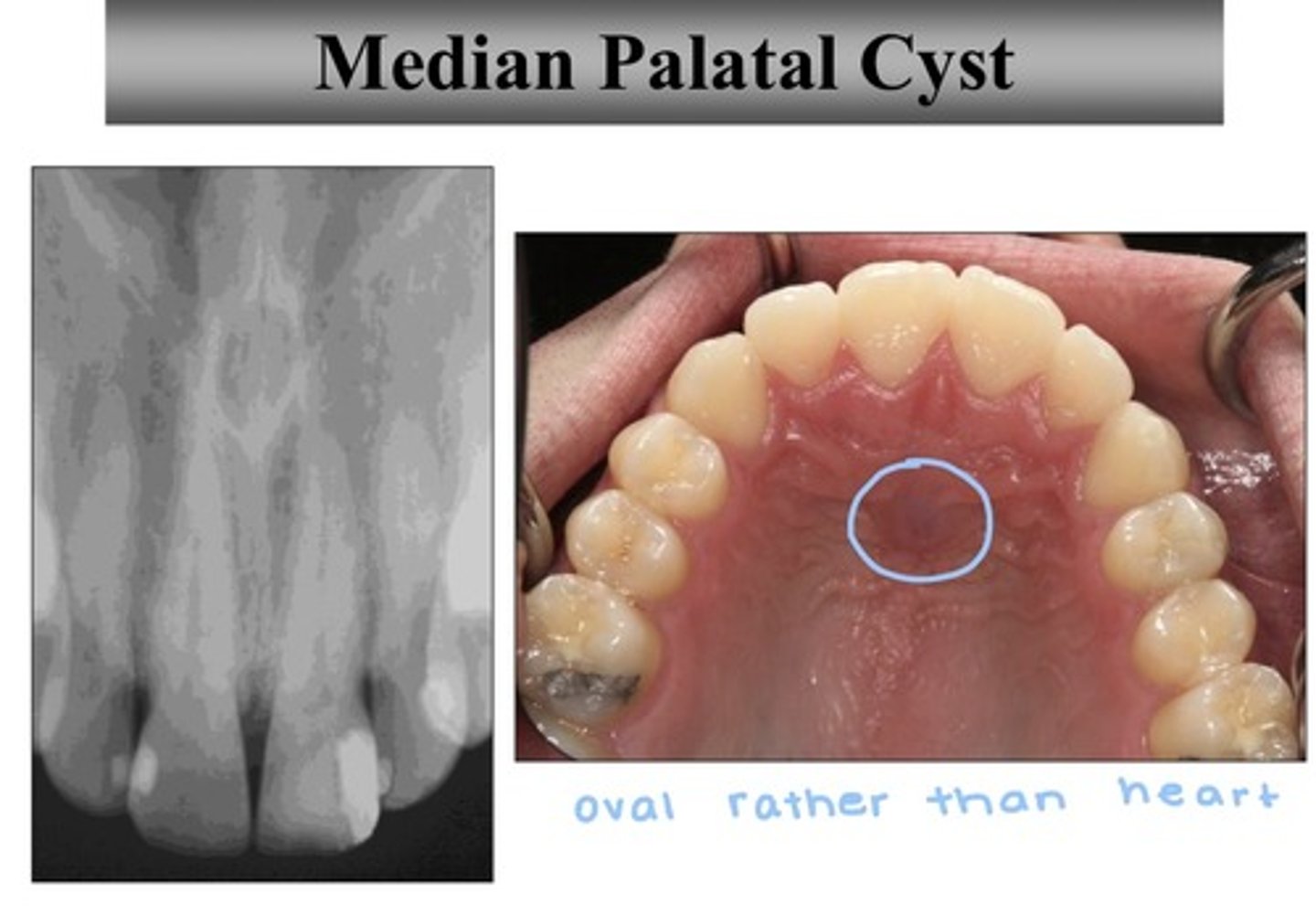
Median palatal cyst:
- cause:
- population:
- cause: arises from epithelial remains
- population: any
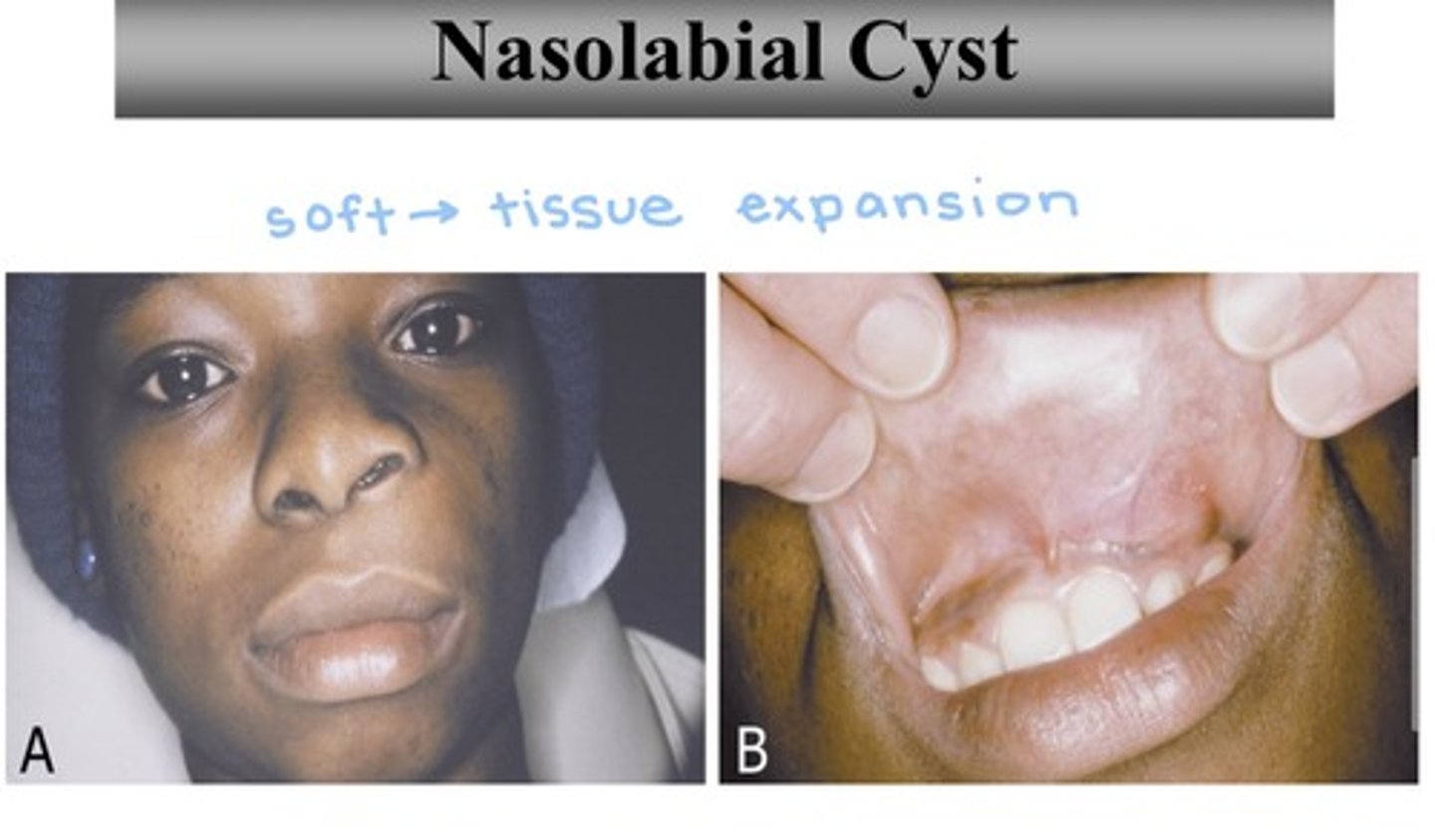
Nasolabial cyst:
- cause:
- population:
- cause: unknown
- population: middle aged females (40-50)
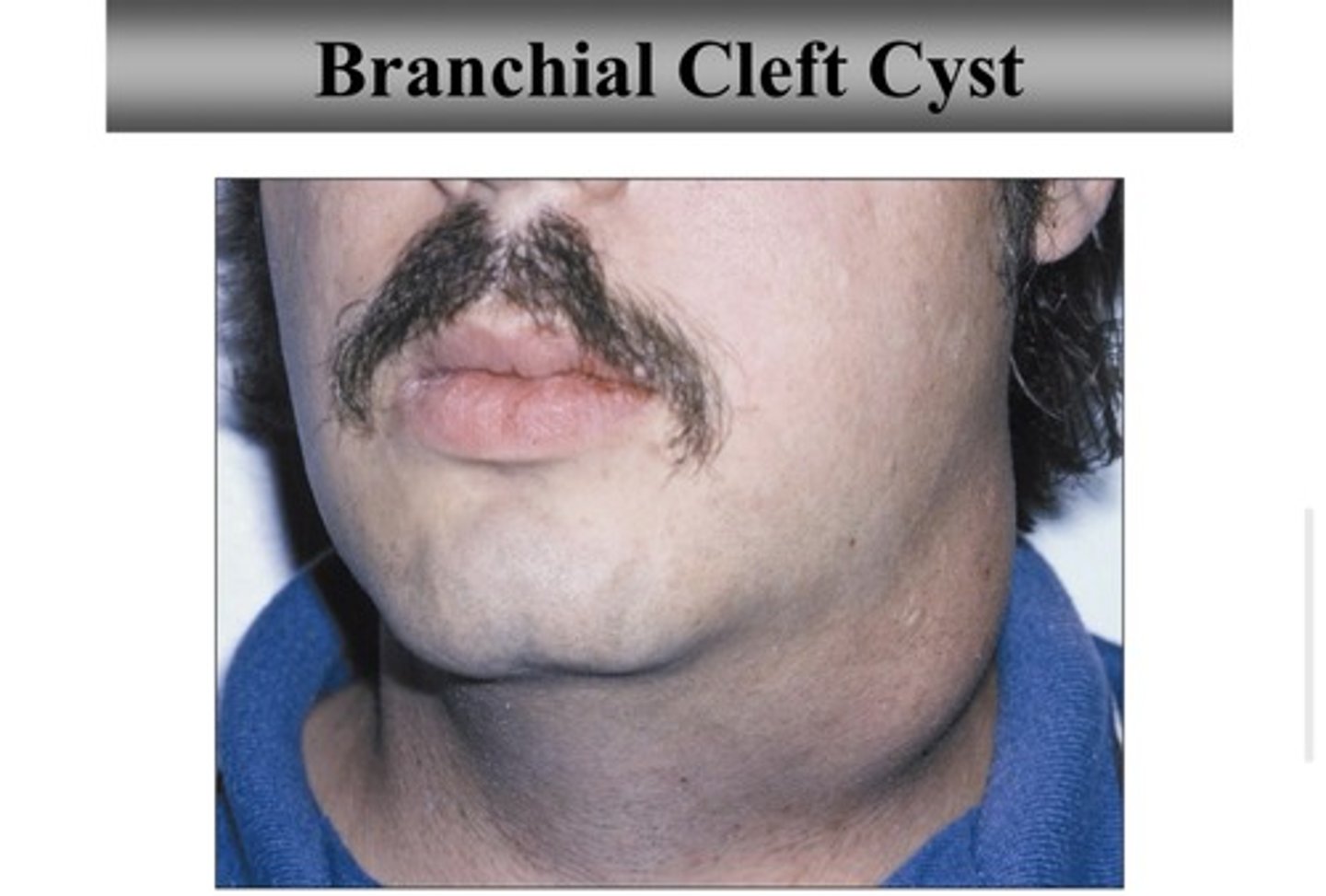
Branchial cleft cyst:
- cause:
- population:
- location:
- cause: epithelium trapped in lymph node/lymphoid tissue at development
- population: young adults
- location: lateral neck, floor of mouth or ventral/posterior tongue
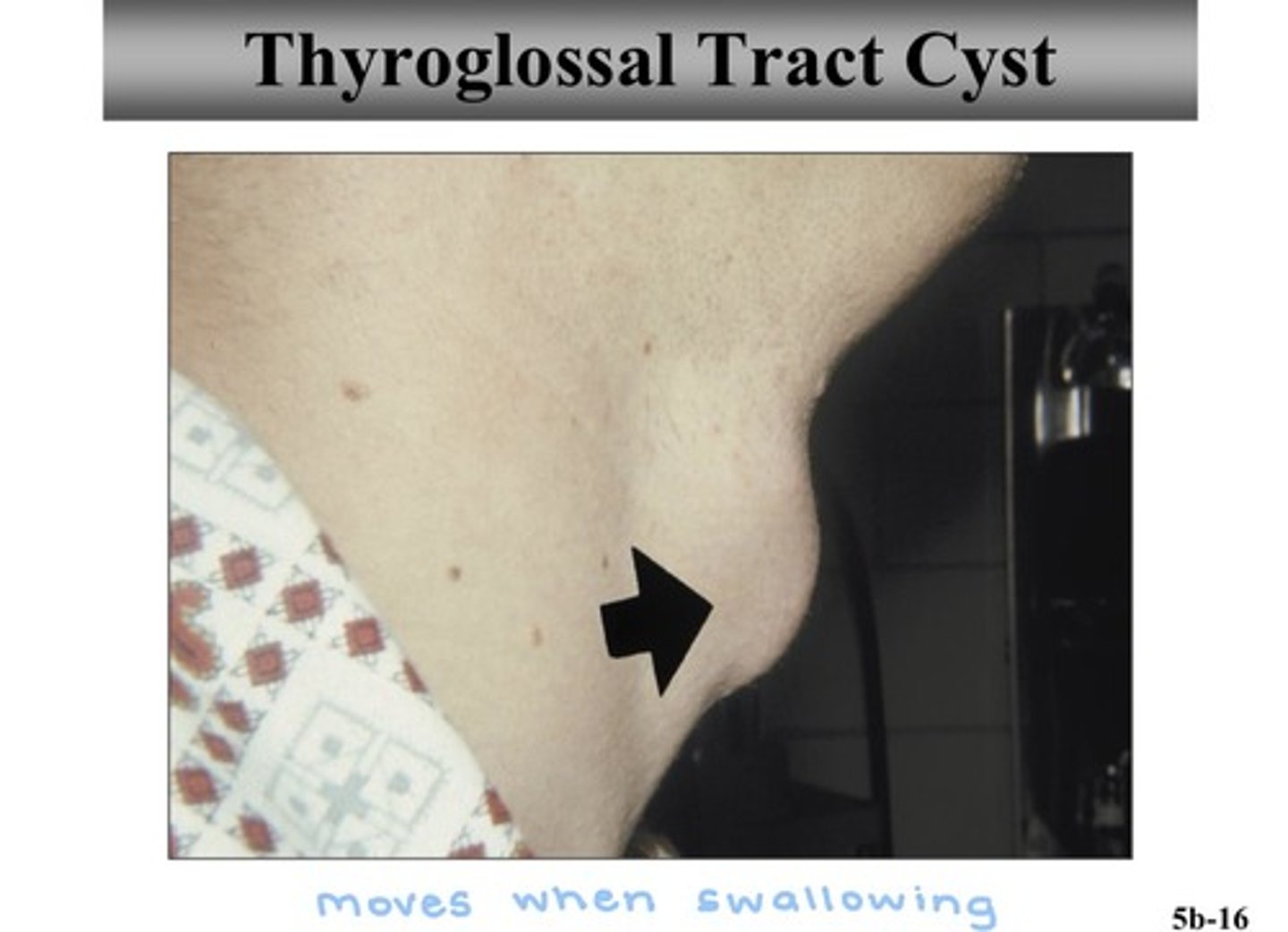
Thyroglossal Tract Cyst:
- cause:
- population:
- clinical features:
- radiographic features:
- treatment:
- cause: epithelial remains trapped during thyroid gland development
- population: young adults (under 20)
- clinical features: dysphagia or difficulty extending tongue ; firm swelling at midline of neck, moves when swallowing
- radiographic features: none
- treatment: surgical excision along entire tract (part of hyoid bone + mm)
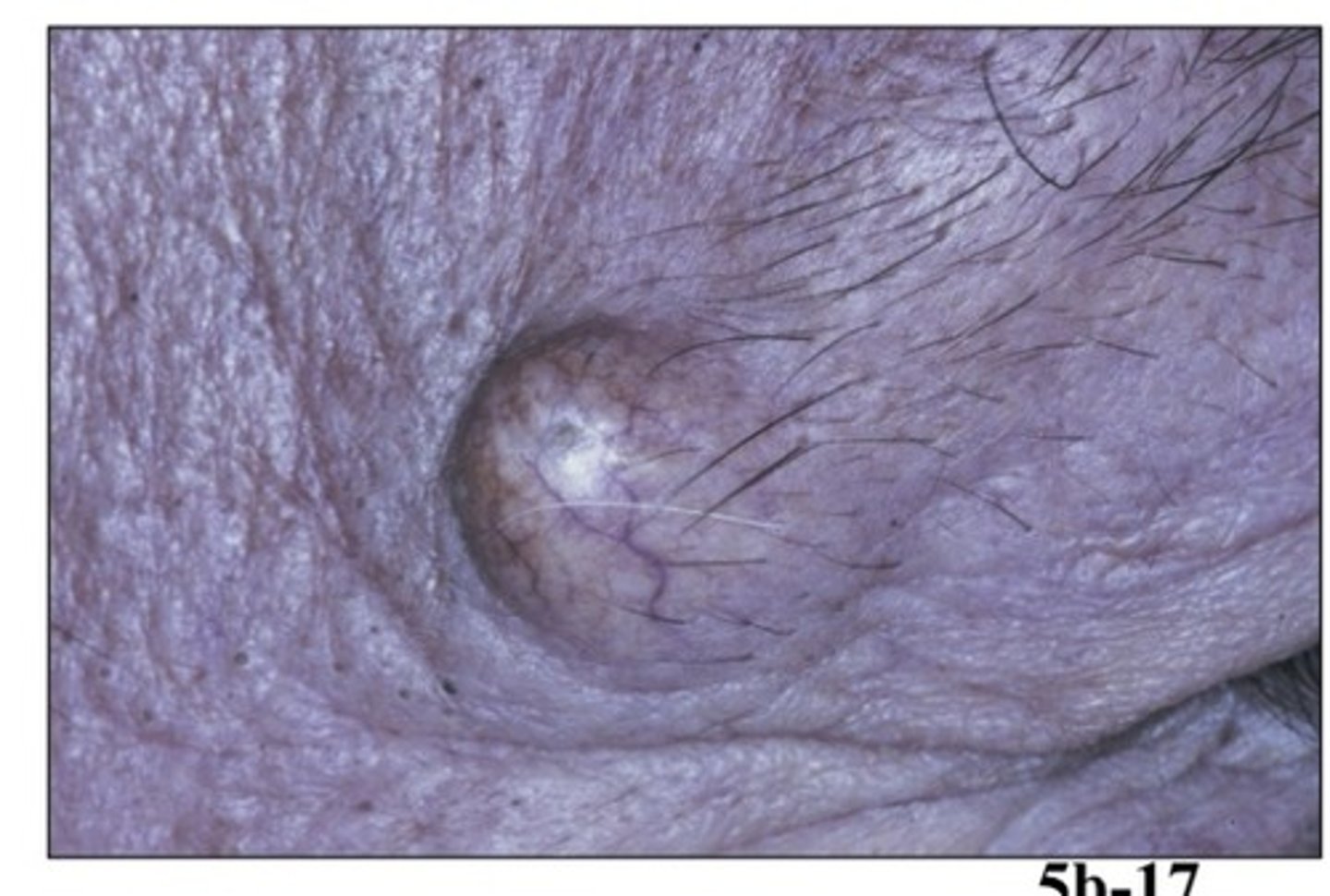
Epidermoid Cyst:
- cause:
- population:
- clinical features:
- cause: arises from epithelium of hair follicles
- population: any
- clinical features: movable fluctant nodule, yellowis/white or normal skin appearance
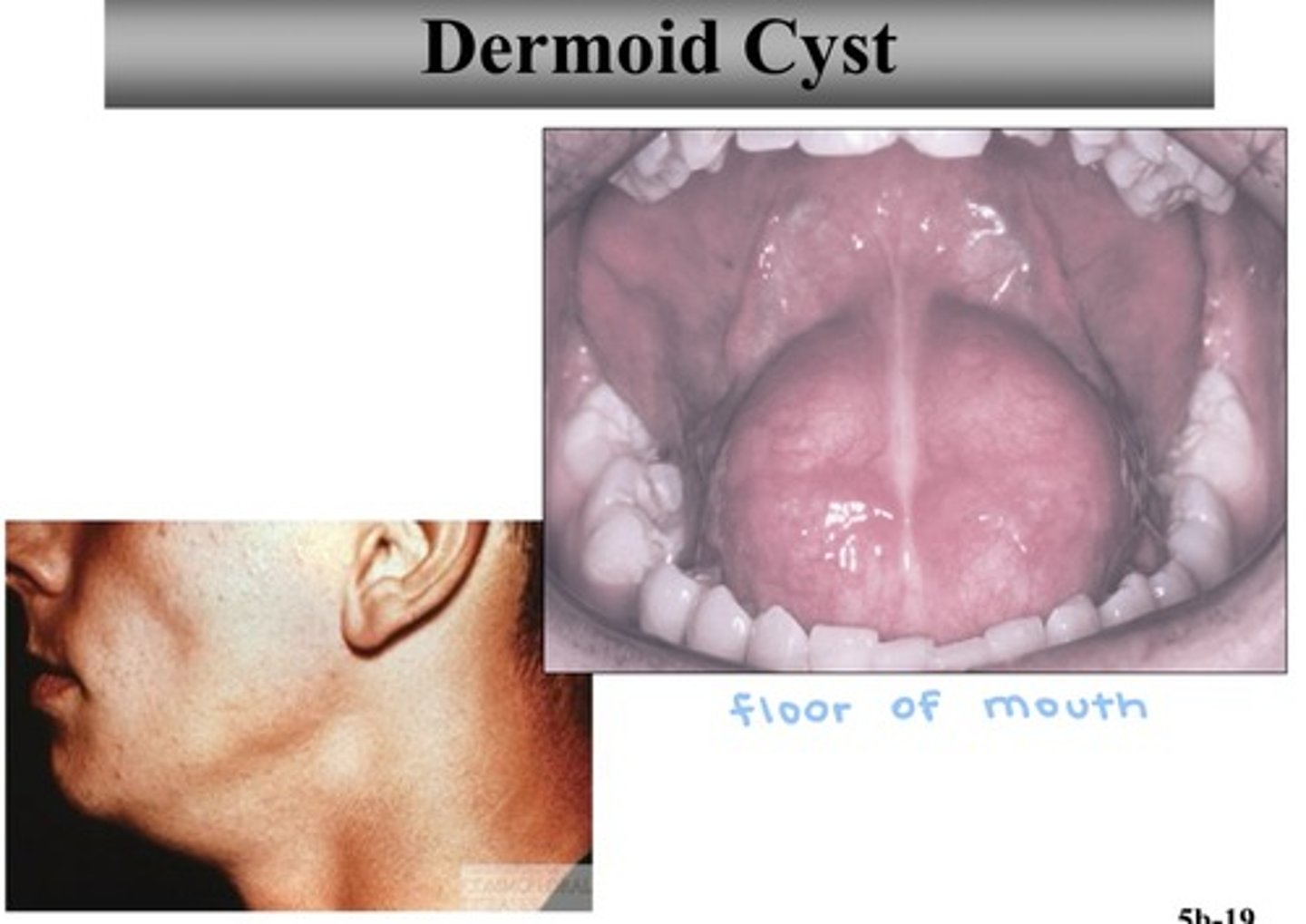
Dermoid Cyst:
- cause:
- population:
- clinical features:
- radiographic features:
- cause: epithelial remnants during development
- population: birth or young children
- clinical features: midline swelling,
dough-like consistency
- radiographic features: none
The lumen of what cyst is filled with keratin?
dermoid cyst
Which cyst is NOT a true cyst?
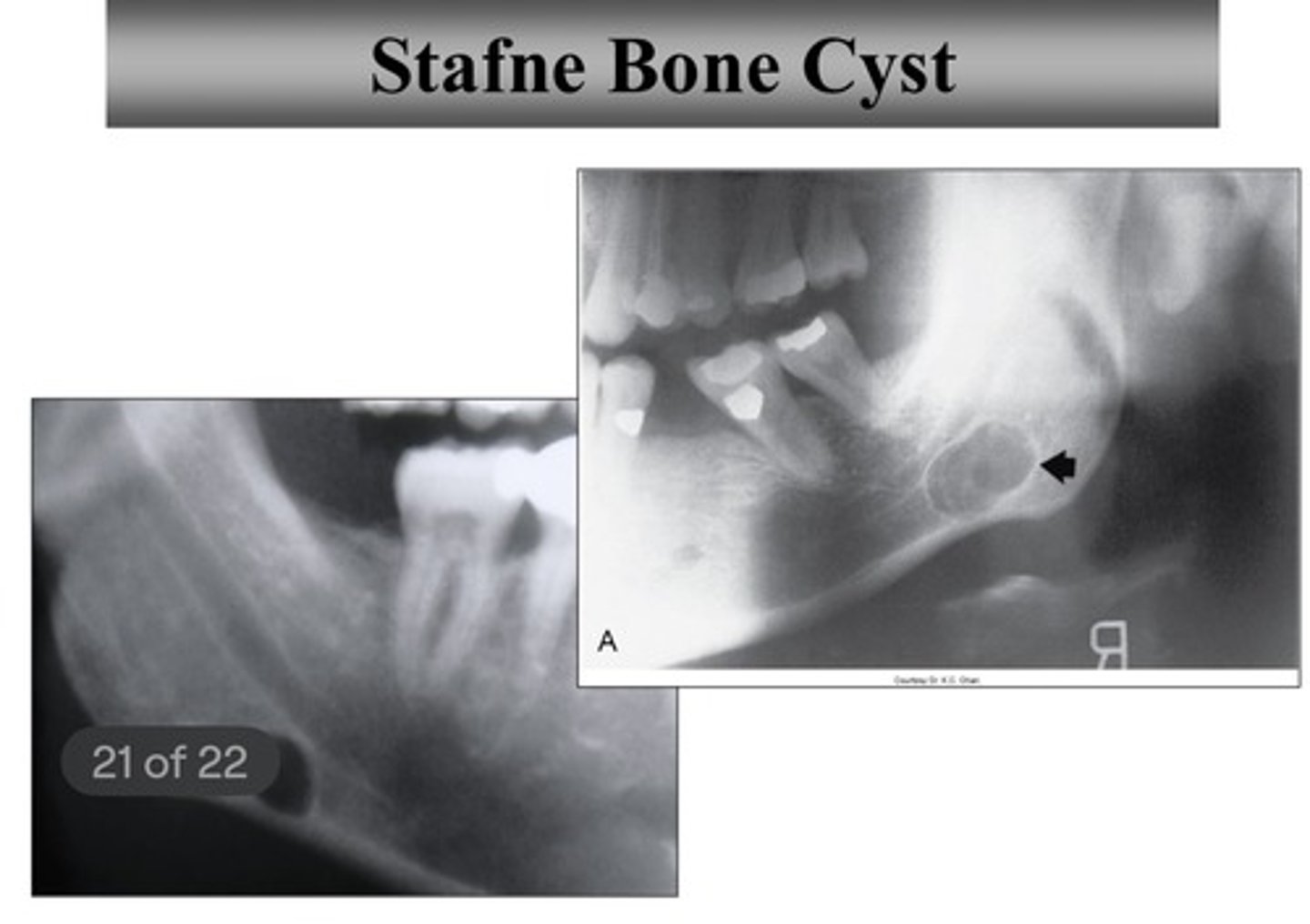
stafne bone cyst - it is not lined with epithelium and does not contain any liquids
Stafne bone cyst:
- cause:
- population:
- location:
- clinical features:
- radiographic features:
- cause: developmental concavity containing normal salivary tissue
- population: men (80-90% of the time)
- location: anterior to angle + inferior to mandibular canal (unilateral or bilateral)
- clinical features: asymptomatic
- radiographic features: well-defined cyst-like radiolucency
What is it called when a branchial cleft cyst occurs intraorally?
oral lymphoepithelial cyst