(ExRx) CHAP 6- Exercise Rx
 Call Kai
 Learn
Learn Practice Test
 Spaced Repetition
 Match
Match Flashcards
 Knowt Play
1/48

There's no tags or description
Looks like no tags are added yet.
Name | Mastery | Learn | Test | Matching | Spaced | Call with Kai |
|---|
No analytics yet
Send a link to your students to track their progress
49 Terms
Statistical process to determine those characteristics associated with an increased chance of experiencing unwanted outcomes
Heart attack or stroke
Identifies contributing factors before the occurrence
Risk factors
Same goals – protection of client
Exercise is safe for most people (caution with vigorous)
Know their medical history, know current fitness levels
Exercise is safe if you start slow
health risk appraisal
Statistical process to determine those characteristics associated with an increased chance of experiencing unwanted outcomes
Heart attack or stroke
Identifies contributing factors before the occurrence
Risk factors
health risk appraisal
Identifying and controlling CVD risk factors – important
Not used as determinant of medical clearance for exercise
Current guidelines may be too conservative
Prescreening may be a barrier to physical activity
Exercise-related CV events often have warning signs
More effective ways to prevent exercise-related CV events
Exercise prescription – employ progressive transitional phase
WHAT IS YOUR CURRENT LEVEL OF PHYSICAL ACTIVITY?
2-3 months
Warm up and cool down
Familiarize clients with warning signs/symptoms
Before: Low-mid-high heart disease/diseases
WHAT IS YOUR CURRENT LEVEL OF PHYSICAL ACTIVITY?
Can work up to vigorous workout in 2-3 months
new pre-participation Health Screening
Exercise prescription – employ progressive transitional phase
WHAT IS YOUR CURRENT LEVEL OF PHYSICAL ACTIVITY?
2-3 months
Warm up and cool down
Familiarize clients with warning signs/symptoms
Before: Low-mid-high heart disease/diseases
WHAT IS YOUR CURRENT LEVEL OF PHYSICAL ACTIVITY?
Can work up to vigorous workout in 2-3 months
effective ways to prevent exercise related cv events
major signs or symptoms of cardiovascular, metabolic, and renal disease
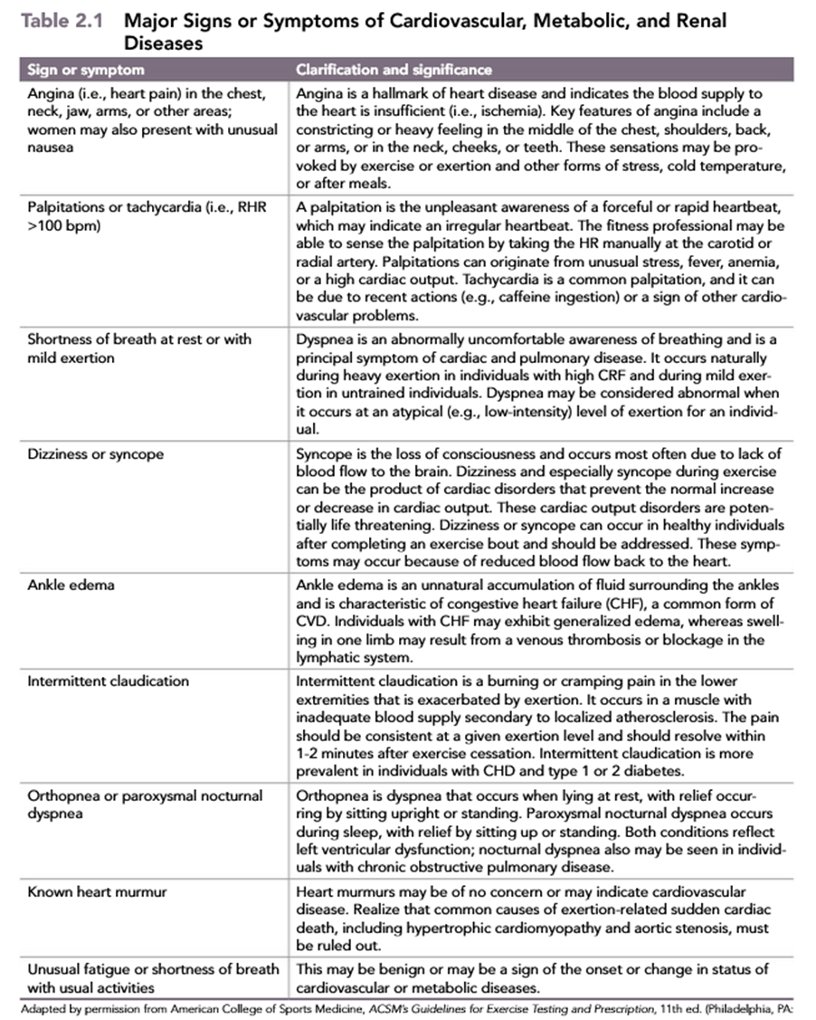
is a hallmark of heart disease and indicates the blood supply to the heart is insufficient (i.e., ischemia).
Key features include
a constricting or heavy feeling in the middle of the chest, shoulders, back, or arms, or in the neck, cheeks, or teeth.
These sensations may be provoked by exercise or exertion and other forms of stress, cold temperature, or after meals.
angina
________ is the unpleasant awareness of a forceful or rapid heartbeat, which may indicate an irregular heartbeat.
The fitness professional may be able to sense the _________ by taking the HR manually at the carotid or radial artery.
_______can originate from unusual stress, fever, anemia, or a high cardiac output. Tachycardia is a common palpitation, and it can be due to recent actions (e.g., caffeine ingestion) or a sign of other cardiovascular problems.
(i.e., RHR >100 bpm)
Palpitations, tachycardia
Shortness of breath at rest or with mild exertion
is an abnormally uncomfortable awareness of breathing and is a principal symptom of cardiac and pulmonary disease.
It occurs naturally during heavy exertion in individuals with high CRF and during mild exertion in untrained individuals.
_______may be considered abnormal when it occurs at an atypical (e.g., low-intensity) level of exertion for an individual.
dyspnea
______is the loss of consciousness and occurs most often due to lack of blood flow to the brain.
Dizziness and especially _______during exercise can be the product of cardiac disorders that prevent the normal increase or decrease in cardiac output.These cardiac output disorders are potentially life threatening.
Dizziness or ______ can occur in healthy individuals after completing an exercise bout and should be addressed.
These symptoms may occur because of reduced blood flow back to the heart.
dizziness or syncope
______ ______is an unnatural accumulation of fluid surrounding the ankles and is characteristic of congestive heart failure (CHF), a common form of CVD.
Individuals with CHF may exhibit generalized edema, whereas swelling in one limb may result from a venous thrombosis or blockage in the lymphatic system.
ankle edema
______ _________ is a burning or cramping pain in the lower extremities that is exacerbated by exertion.
It occurs in a muscle with inadequate blood supply secondary to localized atherosclerosis.
The pain should be consistent at a given exertion level and should resolve within 1-2 minutes after exercise cessation.
Intermittent claudication is more prevalent in individuals with CHD and type 1 or 2 diabetes.
Intermittent claudication
________is dyspnea that occurs when lying at rest, with relief occurring by sitting upright or standing.
_______ __________ dyspnea occurs during sleep, with relief by sitting up or standing.
Both conditions reflect left ventricular dysfunction; ______dyspnea also may be seen in individuals with chronic obstructive pulmonary disease.
orthopnea or paroxysmal nocturnal dyspnea
______ _______ may be of no concern or may indicate cardiovascular disease.
Realize that common causes of exertion-related sudden cardiac death, including hypertrophic cardiomyopathy and aortic stenosis, must be ruled out.
heart murmur
Unusual fatigue or shortness of breath with usual activities
beginning or sign of the onset or change in status of cardiovascular or metabolic
Educate your clients on these
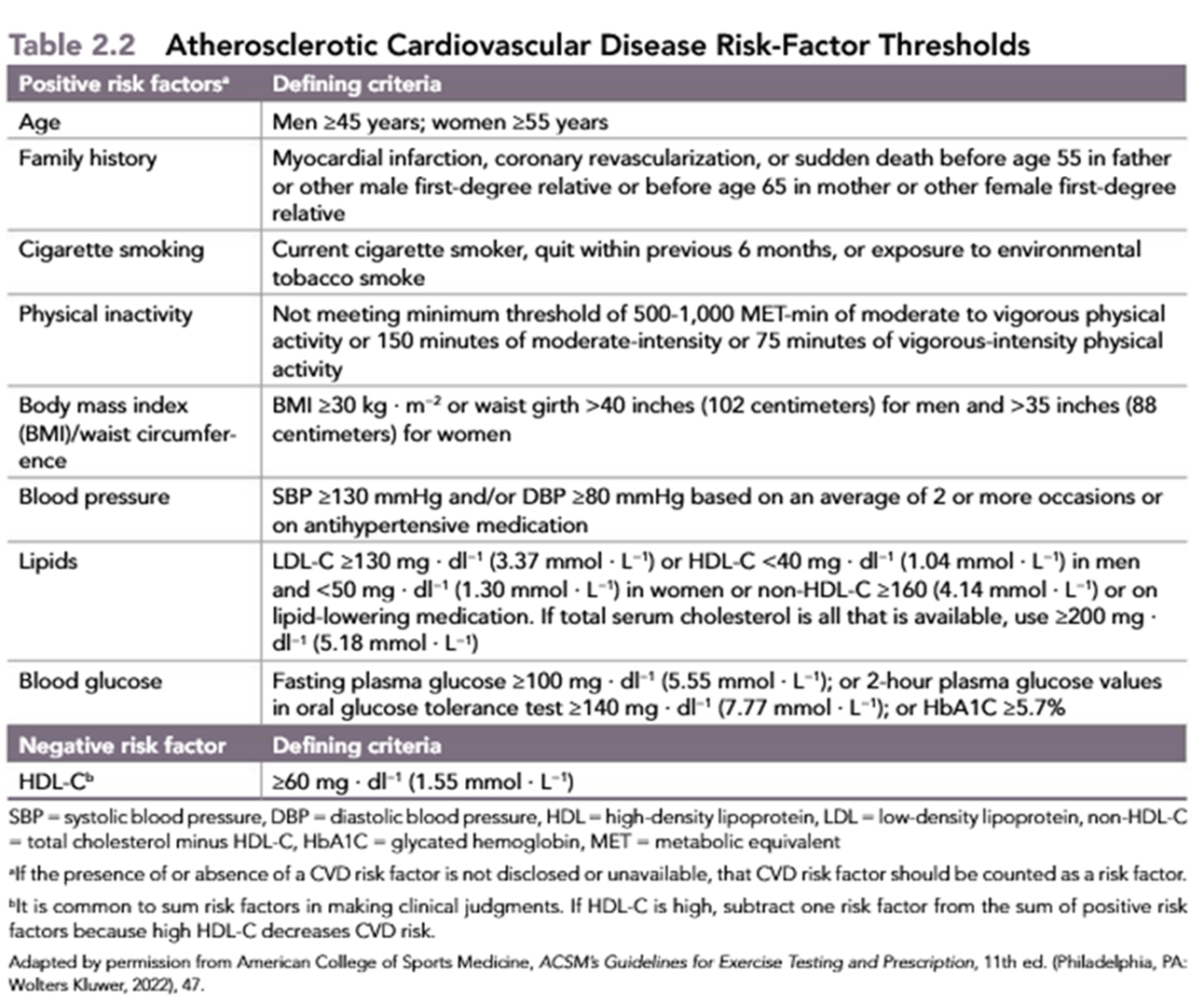
Atherosclerosis= thickening or hardening of the arteries caused by a buildup of plaque in the inner lining of an artery. Risk factors may include high cholesterol and triglyceride levels, high blood pressure, smoking, diabetes, obesity, physical activity, and eating saturated fats.
atherosclerotic cardiovascular risk factor thresholds
thickening or hardening of the arteries caused by a buildup of plaque in the inner lining of an artery. Risk factors may include high cholesterol and triglyceride levels, high blood pressure, smoking, diabetes, obesity, physical activity, and eating saturated fats.
atherosclerosis
Emotional Stress – Type A personality
Alcohol
High Triglycerides >150 mg/dl.
Alcohol – 1 drink = 12 oz beer, 1.5 oz hard liquor, 5 oz. wine
>1 drink/day women
>2 drinks/day men
Risk vs Benefit
secondary risk factor
Common exercise goals
Improving appearance
Improving quality of life
Managing weight
Preparing for competition
Improving general health
Reducing the burden of a chronic disease or condition
Current Public Health Recommendations is that adults should Obtain 8 MET hours per week of exercise.
Aerobic, long continuous activity
5-10 for warmsups, longer with people w CV
10-30% of light activity
30 mins of aerobic exercise
Cooldown, can be done naturally, longer for people with CV
stretch
Can’t sit down after working out → cause of muscles tightening and lactic acid
goal setting
Improving appearance
Improving quality of life
Managing weight
Preparing for competition
Improving general health
Reducing the burden of a chronic disease or condition
common exercise goals
recommendations is that adults should Obtain 8 MET hours per week of exercise.
Aerobic, long continuous activity
5-10 for warmsups, longer with people w CV
10-30% of light activity
30 mins of aerobic exercise
Cooldown, can be done naturally, longer for people with CV
stretch
Can’t sit down after working out → cause of muscles tightening and lactic acid
current public health recommendations
ACSM defines it as an ART
The successful integration of exercise science with behavioral techniques that result in long-term program compliance and attainment of the individual's goals.
Although the methods for prescribing exercise are based on scientific principles, the unique characteristics of each individual will impact the prescription.
exercise prescription
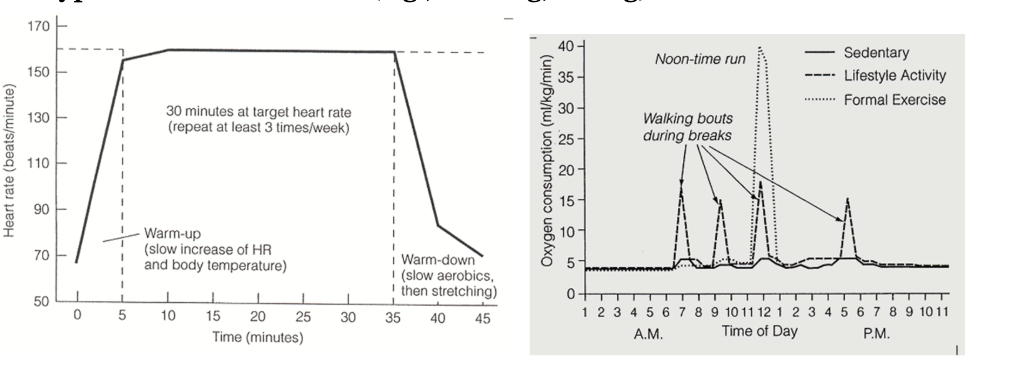
T = time or duration (e.g., 150 min/wk)
T = type or mode of exercise (e.g., walking, biking)
FITT principle for cardiorespiratory endurance
Warm-up 4 to 5 min
Aerobic session or
Resistance session
Static (no ballistic) stretching
Cool down – 5 minutes
What is the primary focus of the day’s training?
exercise training sequence
Cool down
Gradually recover = 5 minutes of diminished activity.
5 minutes of stretching
CVD is important to maintain adequate venous return and have the HR and BP decrease gradually to resting values.
Hypotension, dizziness, reduced body heat, LA removal.
Without fluids, calorie restriction body is gonna pass out
exercise prescription
Progressive overload – work done above and beyond normally done
Increase…
Frequency
Intensity
Duration
Volume
Progression
Duration→ Intensity→ Frequency increase by 10%
principles of exercise prescription
work done above and beyond normally done
progressive overload
to progress exercising you must increase…
frequency, intensity, duration, volume, progression
Physiologic adaptations are specific to the cardiorespiratory, neurologic, and muscular responses called upon to perform the exercise.
specificity of training
Reversilibility
some exercise is better than none
Loss of previously acquired exercise training adaptations because of inactivity
Training period of 8 to 12 wk
Untrained: 10%-30% improvement in function capacity
Increase Frequency and Duration first, Intensity last
25%-30% increase in muscle strength
Minimal training volume not maintained
Training effects erode
Resting HR will change and get lower with training because of increase in SV and strength in left ventricle (Athletes)
principles of exercise prescription
to increase cardiac output increase…
stroke volume or heart rate or both
Body Composition
increase of body fat
decrease of lean body mass
increase in body weight
Cardiovascular Function
Decrease in…
RBC mass
End diastolic volume
Plasma volume
Skeletal Muscle
Decrease in…
Mitochondrial density
Capillary density
Muscular strength
Pulmonary Function
Decrease in respiratory muscle strength+endurance
Other
Loss of heat acclimation
Important→ People get injured→ Laying and healing→ Atrophy occurs
detraining
F = frequency of exercise (e.g., 5 days/wk)
I = intensity of exercise
Objective: V ̇O2, heart rate, caloric expenditure, mass, watts
Heart rate–based method: use heart rate reserve (HRR) method
(HRR × desired percentages) + HRrest = target HR range
Common percentages used: 60% (0.6) and 80% (0.8)
Subjective: rating of perceived exertion (e.g., 11-14 on Borg 6-20 scale)
Talk Test – Carry on a conversation
RPE Scale
FITT principle for cardiorespiratory endurance
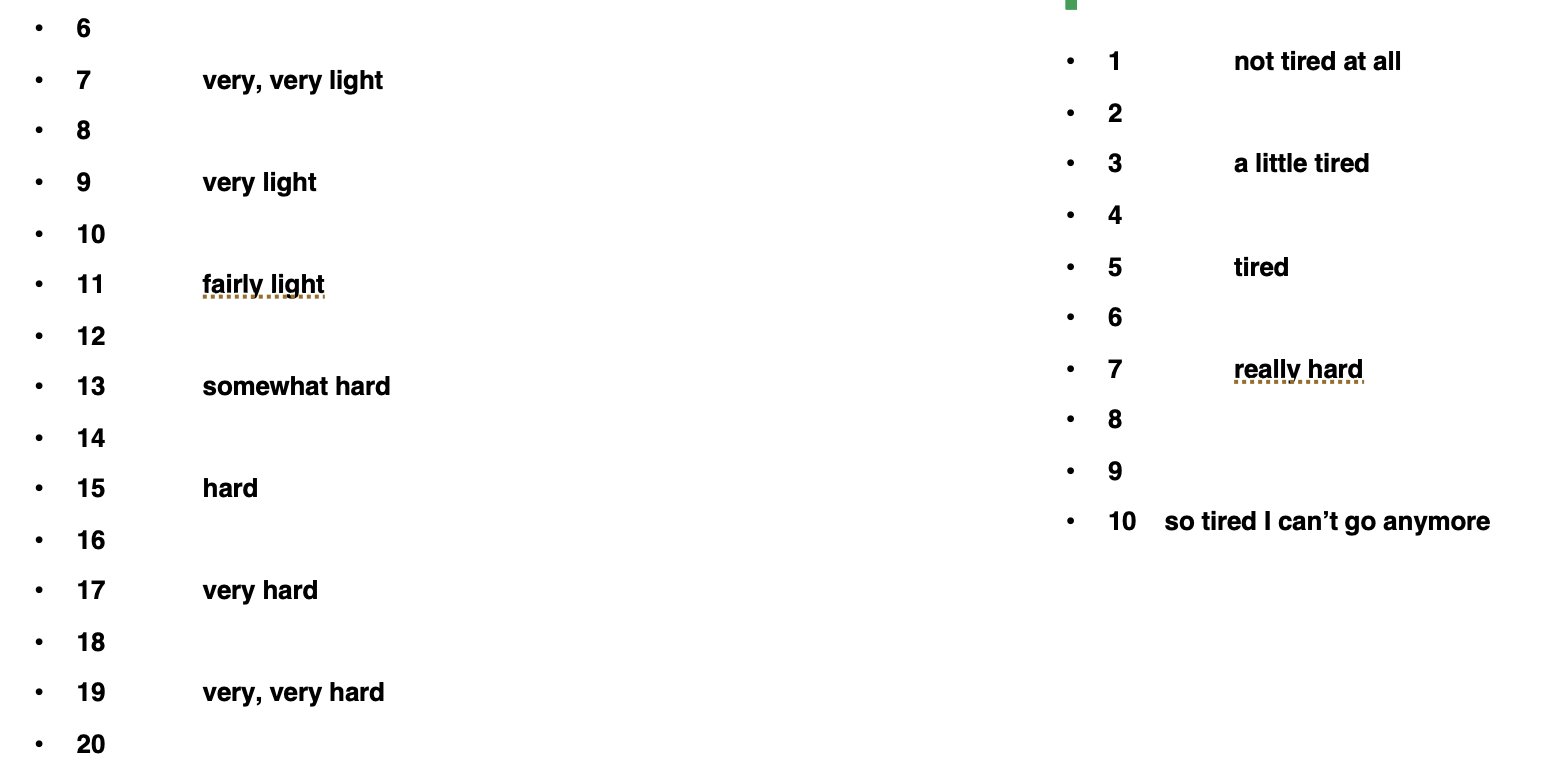
How did gunnerboard come up with a 10-20 scale
Tracked people exercising in his gym
Tracked what they were feeling and tracked with their HR
RPE Rate of perceived exertion
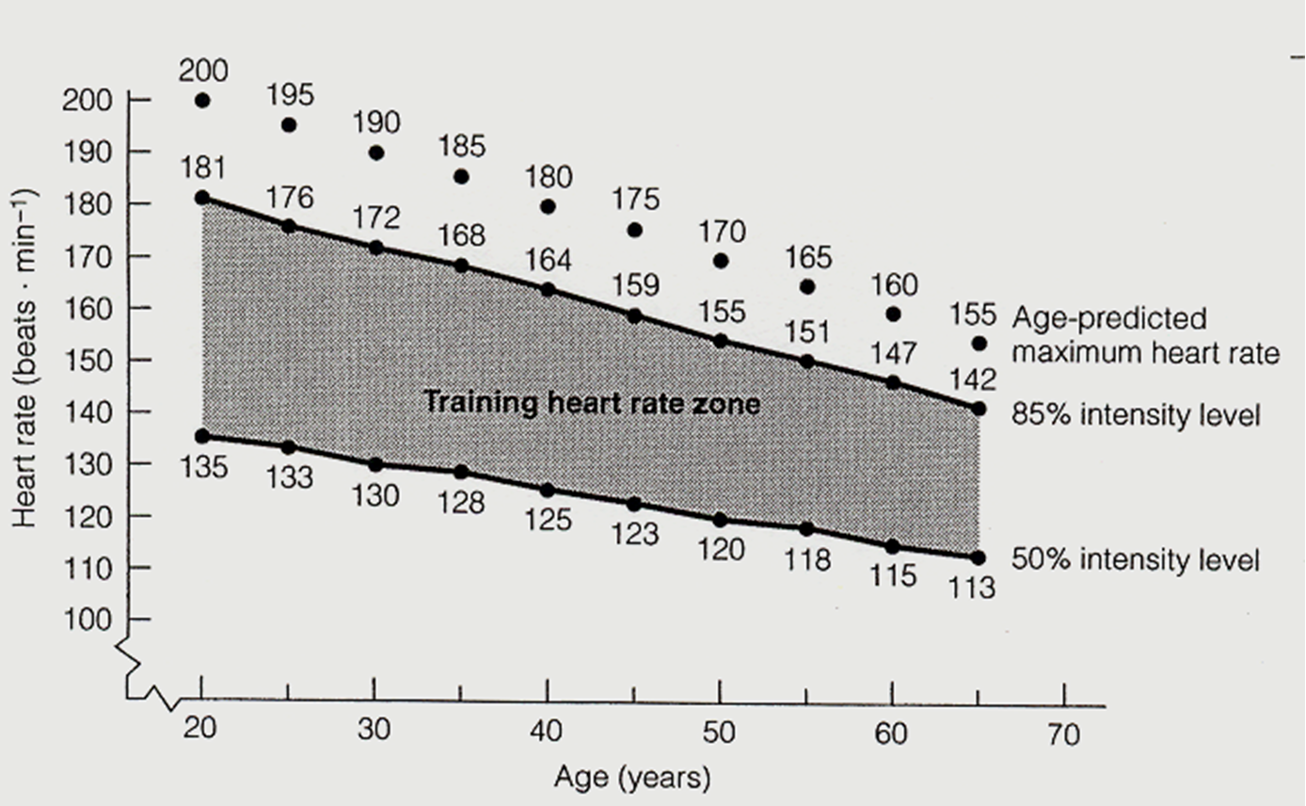
220-age not as efficient but works and used in hospitals etc
Strength of the left ventricle declines- can be steep or gradual
ExRx
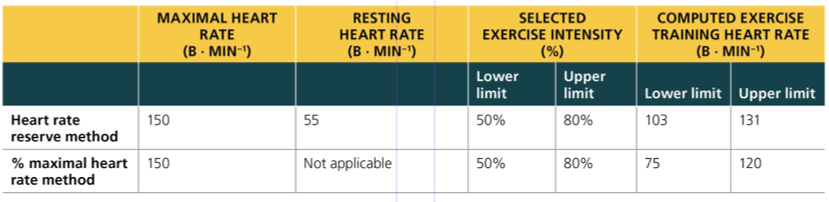
PMHR = 220 – age. Always used measured max heart rate if possible
Other methods include VO2Reserve, MET Reserve
practical application
Increase Time or Frequency first and Intensity second.
Rule of thumb: 10% per week on increases in Frequency, Intensity or Time.
Risk of injury high after 5 days/week with little improvement in VO2max.
7 days/week should be avoided.
exercise prescription
Muscular strength= Maximum ability of a muscle to develop force or tension
Muscular power= Maximal ability to apply a force or tension at a given velocity
Improved muscular strength and power
Improved muscular endurance
Improved flexibility
Improved body composition
Reduced risk of falling
Reduced effort for ADL
Reduced skeletal muscle fatigue
Improved bone mineral density and content
Improved glucose tolerance
F = frequency of exercise (e.g., 1-3 days/wk)
I = intensity of exercise
Objective: 70%-80% of 1RM, begin with 40% to 60% of 1RM. RPE 11-13
Subjective: 8RM to 12RM to near maximal exertion
T = time or duration (e.g., one to three sets of 8-12 repetitions per set, with 2 min rest between sets)
T = type or mode of exercise: concentric and eccentric muscle actions involved in multijoint exercises and single-joint exercises
skeletal muscle strength and endurance
Maximum ability of a muscle to develop force or tension
muscular strength
Maximal ability to apply a force or tension at a given velocity
muscular power
Flexibility
Ability to move a joint throughout a full ROM
Associated with good postural stability and balance
Assessment tools
Goniometer
Leighton flexometer
Sit-and-reach box
flexibility training
Ability to move a joint throughout a full ROM
Associated with good postural stability and balance
Scar tissue buildup
Issues with pain, and surgery
These get in the way of exercise and flexibility
flexibility
Goniometer
Leighton flexometer
Sit-and-reach box
assessment tools
Static= Stretch of the muscles surrounding a joint that is held without movement
Ballistic= Method of rapidly moving a muscle to stretch and relax quickly for several repetitions
Proprioceptive neuromuscular facilitation (PNF)= A muscle is isometrically contracted, relaxed, and subsequently stretched
Flexibility gains→ Flexibility and recovery
Ballistic
Done with professional→ Issues with whiplash
PNF→ Muscle contraction with no movement
modes of flexibility training
stretch of the muscles surrounding a joint that is held without movement
static
method of rapidly moving a muscle to stretch and relax quickly for several repetitions
ballistic
A muscle is isometrically contracted, relaxed, and subsequently stretched
proprioceptive neuromuscular facilitation (PNF)
Frequency: 2 or 3 days/wk
Static and PNF stretches should be held for 10 to 30 s.
Stretches should be performed to mild discomfort.
Each stretch should be performed for 3 to 5 reps.
flexibility training
Any type of exercise training routine, whether it be cardiorespiratory conditioning, resistance training, or ROM training, should follow the _____ _________ to ensure an optimal rate of improvement and safety during training.
FITT principle
is an acronym that represents, Frequency, Intensity, Time, and Type. It can be prescribed to people to improve health, similar to pharmacologic intervention.
FITT principle