A8- Haemoglobin
 Call Kai
 Learn
Learn Practice Test
 Spaced Repetition
 Match
Match Flashcards
 Knowt Play
1/15

There's no tags or description
Looks like no tags are added yet.
Name | Mastery | Learn | Test | Matching | Spaced | Call with Kai |
|---|
No analytics yet
Send a link to your students to track their progress
16 Terms
describe the role of red blood cells and haemoglobin in oxygen transport
Red blood cells contain lots of Hb
→ No nucleus & biconcave → more space for Hb, high SA:V & short diffusion distance
Hb associates with / binds / loads oxygen at gas exchange surfaces (eg. lungs) where partial pressure of oxygen (pO2) is high
This forms oxyhaemoglobin which transports oxygen
Each can carry four oxygen molecules, one at each Haem group
Hb dissociates from / unloads oxygen near cells / tissues where pO2 is low
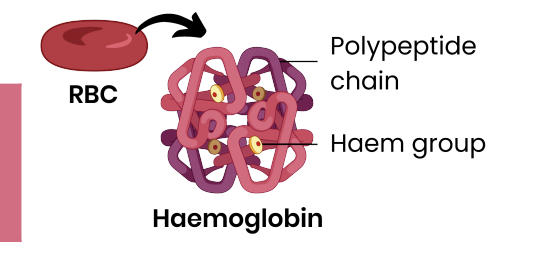
describe the structure of haemoglobin
protein with a quaternary structure
made of 4 polypeptide chains
each chain contains a Haem group contain and iron iron
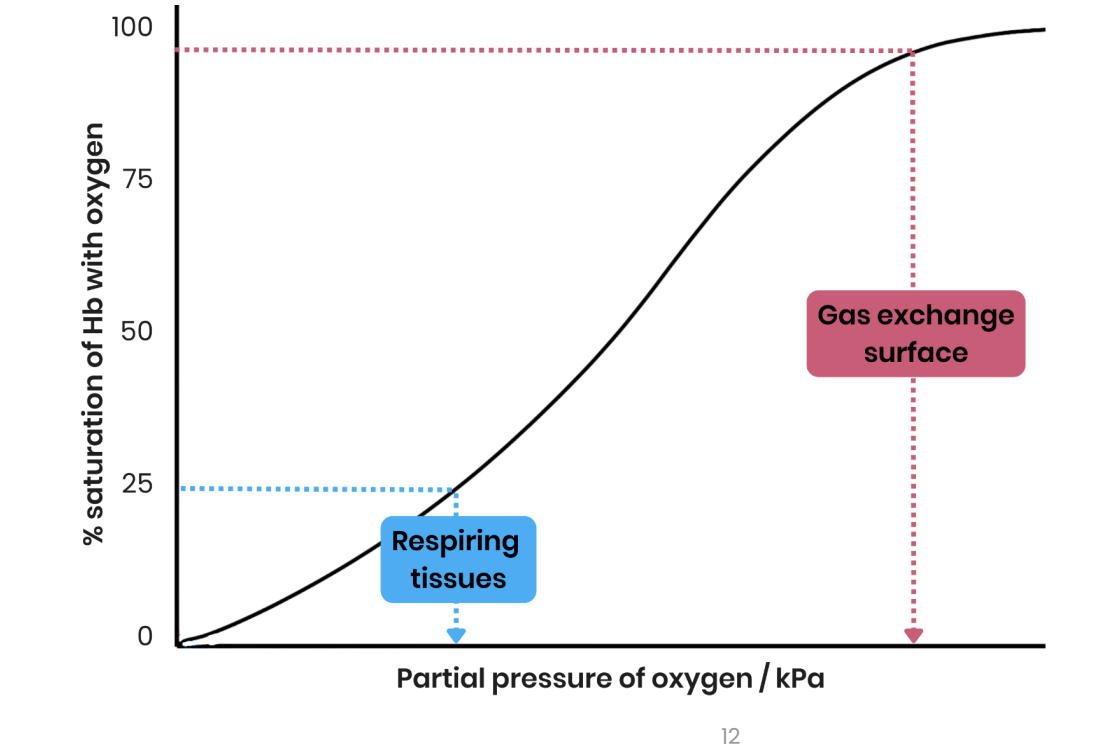
describe the loading, transport and unloading of oxygen in areas of low partial pressure of oxygen ( low pO2)
Hb has a low affinity for oxygen
SO oxygen readily dissociates
so % saturation of Hb with oxygen is low
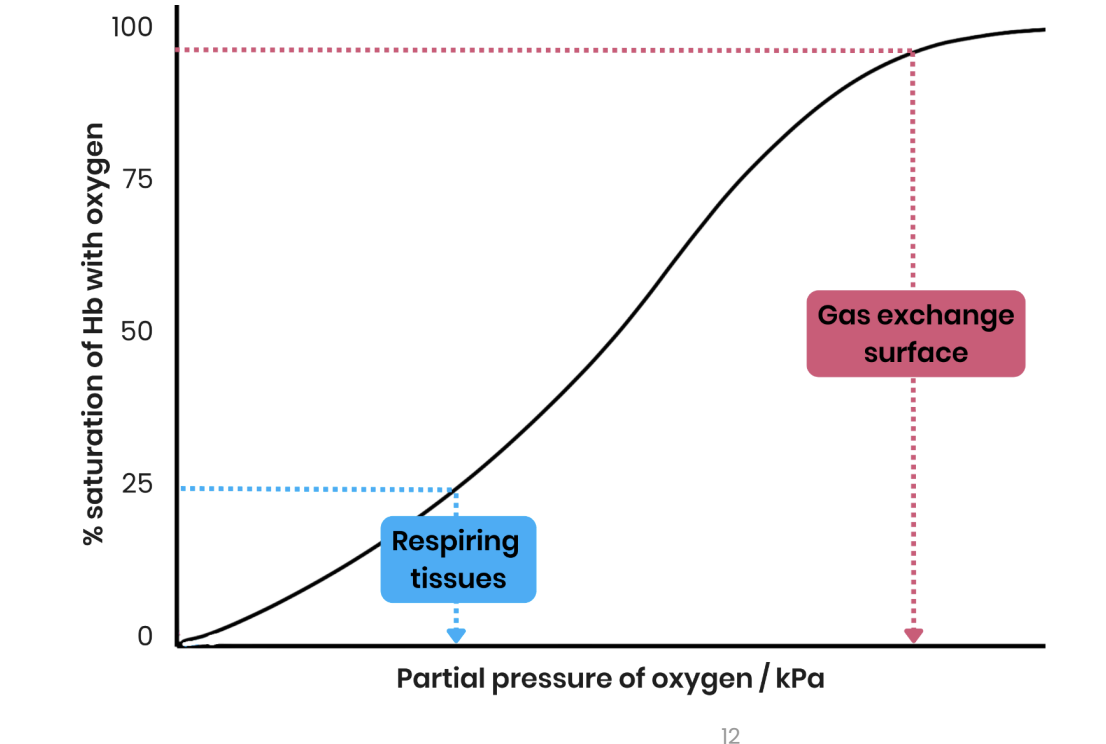
describe the loading, transport and unloading of oxygen in areas of high partial pressure of oxygen ( high pO2)
Hb has a high affinity for oxygen
so oxygen readily associates
so % saturation of Hb with oxygen is high
give an example of an area in the body with low partial pressure of oxygen
respiring tissue
give an example of an area in the body with a high partial pressure of oxygen
gas exchange surfaces
e.g. lungs
Explain how the cooperative nature of oxygen binding results in an S-shaped (sigmoid) oxyhaemoglobin dissociation curve
binding of first oxygen changes the tertiary / quaternary structure of haemoglobin
this uncovers Haem group binding sites, making further binding of oxygen easier
Describe evidence for the cooperative nature of oxygen binding
● At low pO2, as oxygen increases there is little / slow increase in % saturation of Hb with oxygen
→ When first oxygen is binding
● At higher pO2, as oxygen increases there is a big / rapid increase in % saturation of Hb with oxygen
→ Showing it has got easier for oxygen to bind
what is the Bohr effect?
Effect of CO2 concentration on dissociation of oxyhaemoglobin
Oxyhaemoglobin dissociation curve shifts right
Explain the effect of CO2 concentration on the dissociation of oxyhaemoglobin
Blood CO2 increases eg. due to increased rate of respiration
This lowers blood pH (more acidic)
Reducing Hb’s affinity for oxygen as its shape / tertiary / quaternary structure changes slightly
So more / faster unloading of oxygen to respiring cells at a given pO2
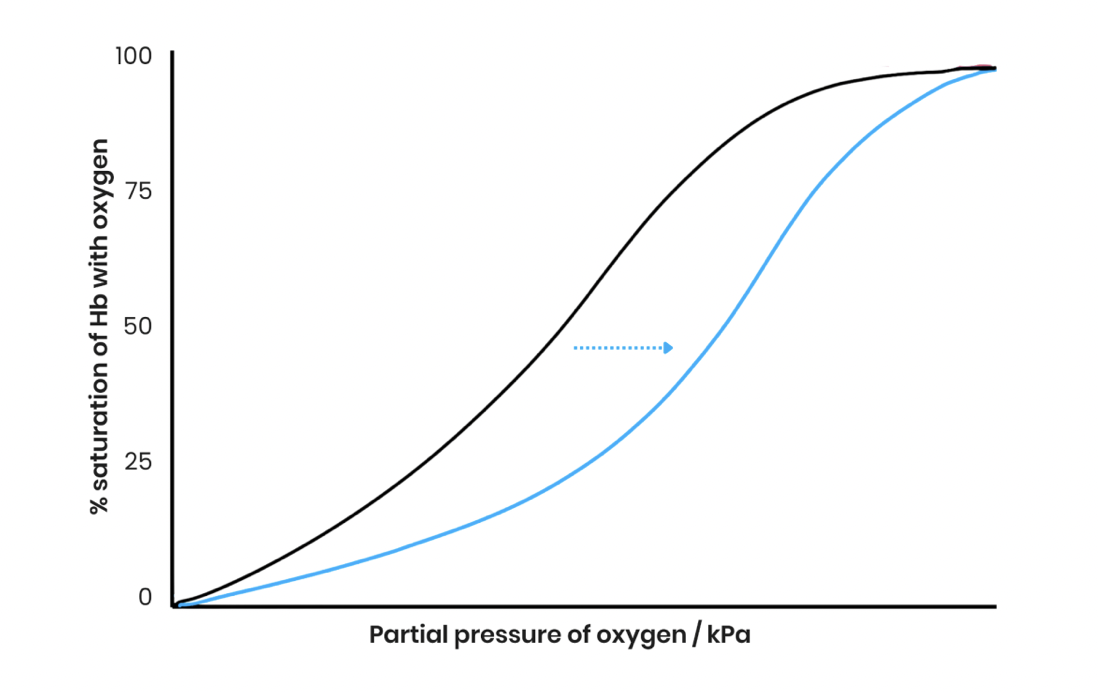
describe evidence for the Bohr effect
At a given pO2 %, the saturation of Hb with oxygen is lower - DONT GET THIS ASK ABT
Explain the advantage of the Bohr effect (eg. during exercise)
More dissociation of oxygen → faster aerobic respiration / less anaerobic respiration → more ATP produced
Explain why different types of haemoglobin can have different oxygen transport properties
Different types of Hb are made of polypeptide chains with slightly different amino acid sequences
Resulting in different tertiary / quaternary structures / shapes
So they have different affinities for oxygen
explain what an oxyhemoglobin curve looks like for an organism which lives in a low oxygen environment
e.g. high altitude
Oxyhaemoglobin dissociation curve shifts left
Hb has a higher affinity for O2
more O2 associates with Hb more readily
at gas exchange surfaces
explain what an oxyhemoglobin curve looks like for an organism which lives in a high oxygen environment
Eg. organisms with high rates of respiration /
metabolic rate (may be small or active)
oxyhameoglobin curve shifts right
Hb has a lower affinity for O2
more O2 disassociates from Hb more readily
at respiring tissues
Give the formula for calculating the percentage saturation of Hb with oxygen
Oxygenated haemoglobin / maximum saturation x100