bio2 exam 5
 Call Kai
 Learn
Learn Practice Test
 Spaced Repetition
 Match
Match Flashcards
 Knowt Play
1/111

There's no tags or description
Looks like no tags are added yet.
Name | Mastery | Learn | Test | Matching | Spaced | Call with Kai |
|---|
No analytics yet
Send a link to your students to track their progress
112 Terms
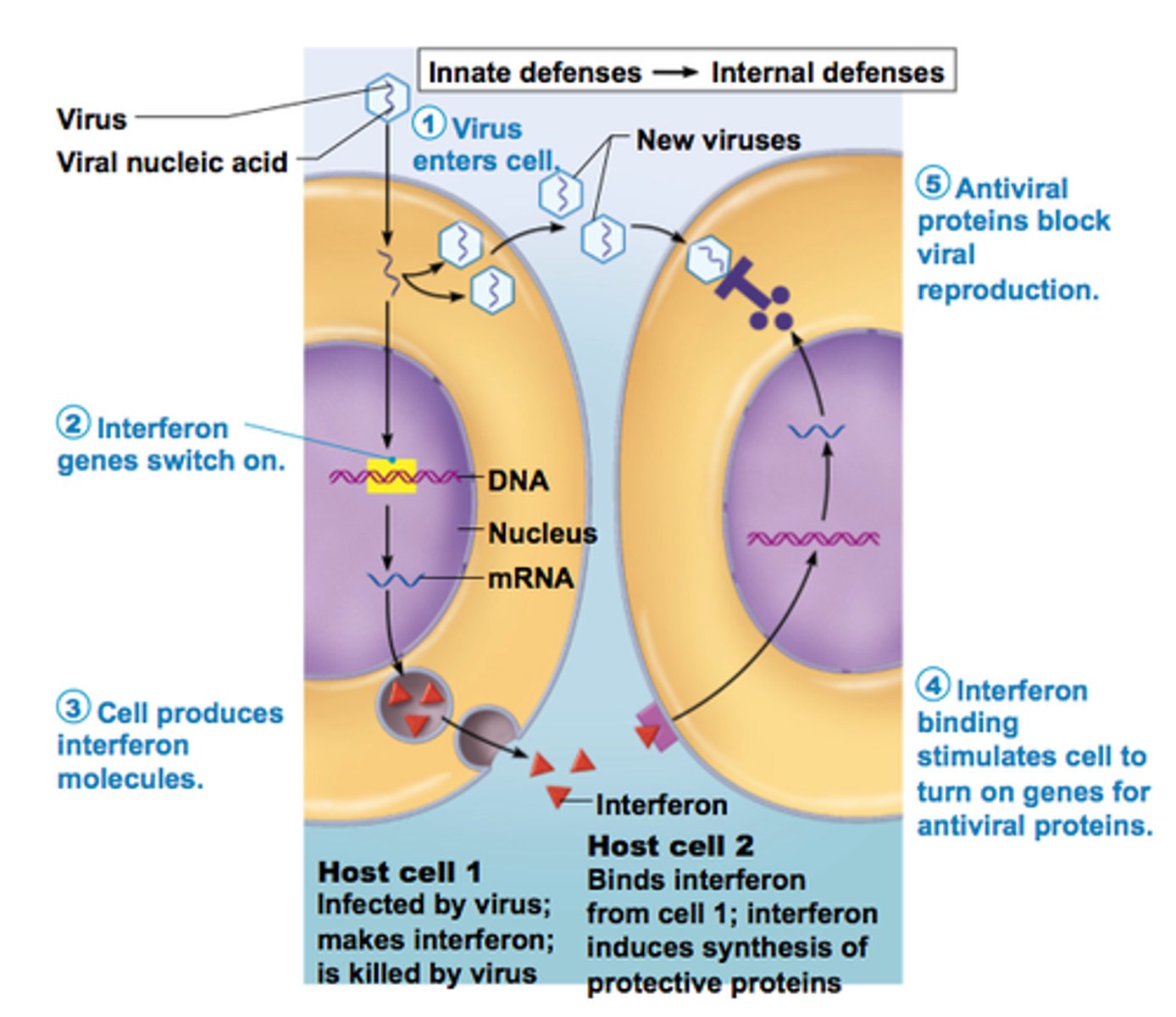
Interferons
released by viral infected cells so nearby cells aren't attacked by virus, stops production of protein so viruses can't replicate, induces viral infected cells to be attacked by T cells
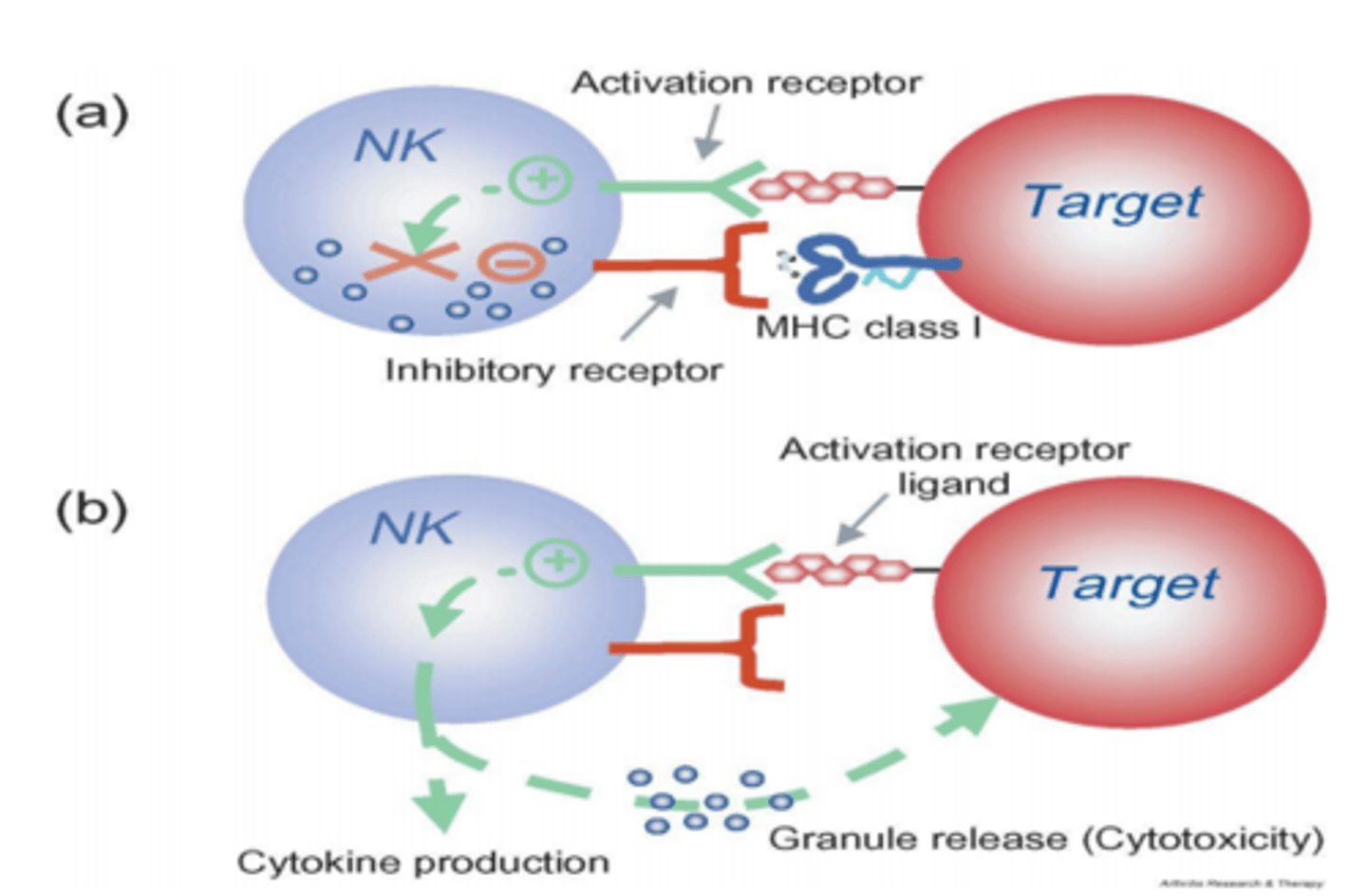
Natural Killer (NK) Cells
Cells that recognize and destroy infected or cancerous cells non specifically using granzyme and perforin
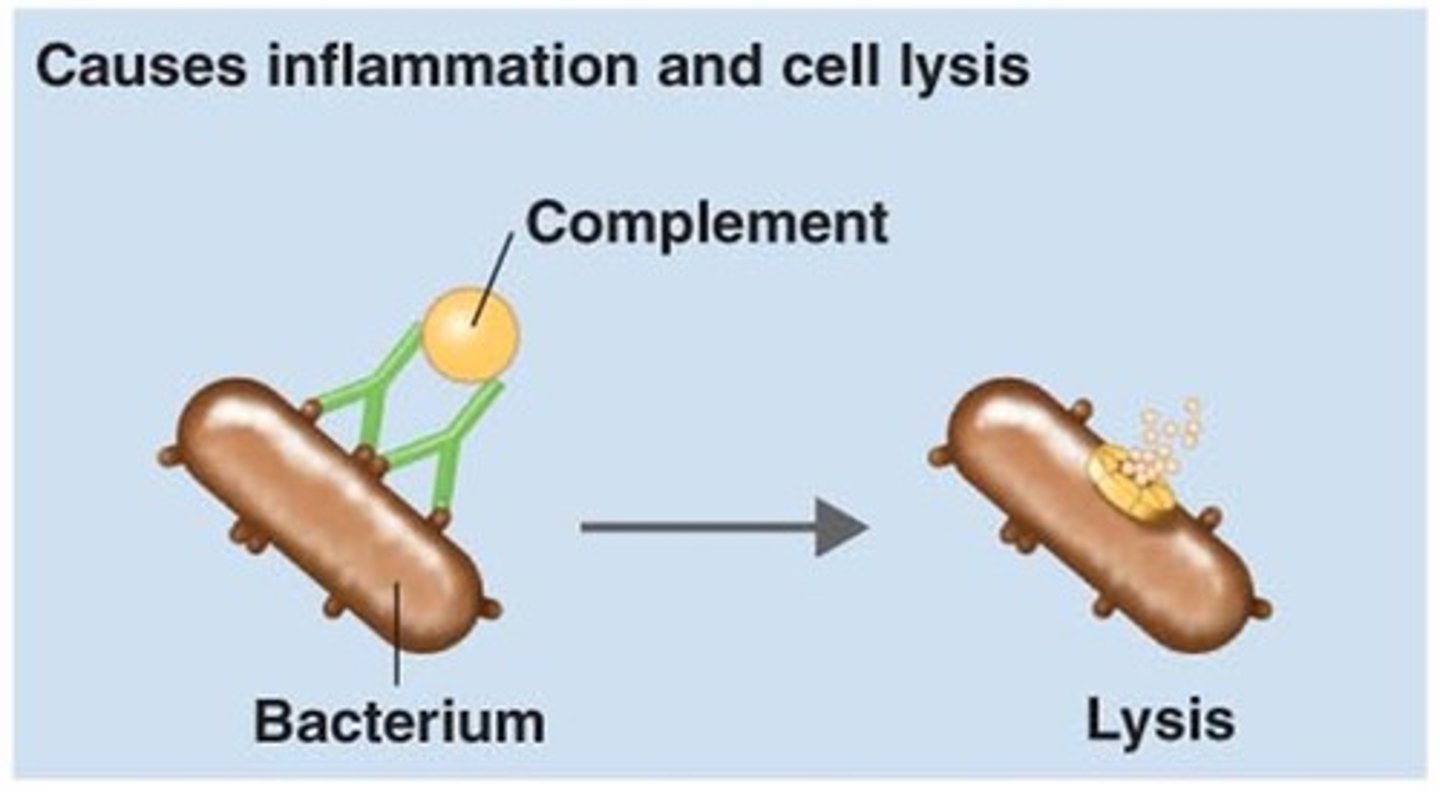
Complement system
A group of about 30 blood proteins that may amplify the inflammatory response, enhance phagocytosis, or directly lyse extracellular pathogens.
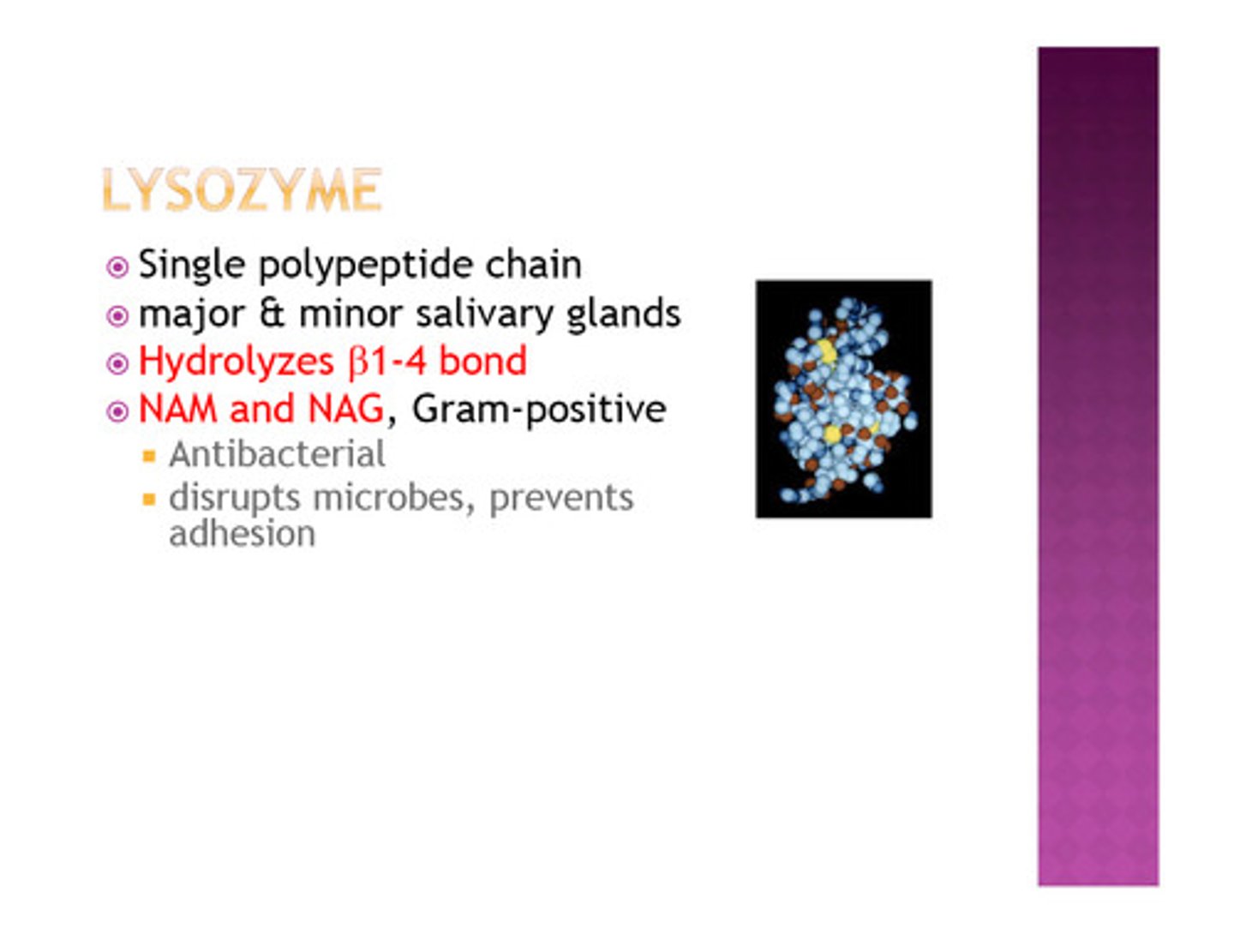
Lysozyme
Enzyme that breaks down bacterial cell walls found in body fluids like tears and saliva
How do resident microbiota help with immunity?
These microbes are competition for invading pathogens and discourage them from colonizing
Mast cells
Cells that detect damage in the tissue and release cytokines and histamine
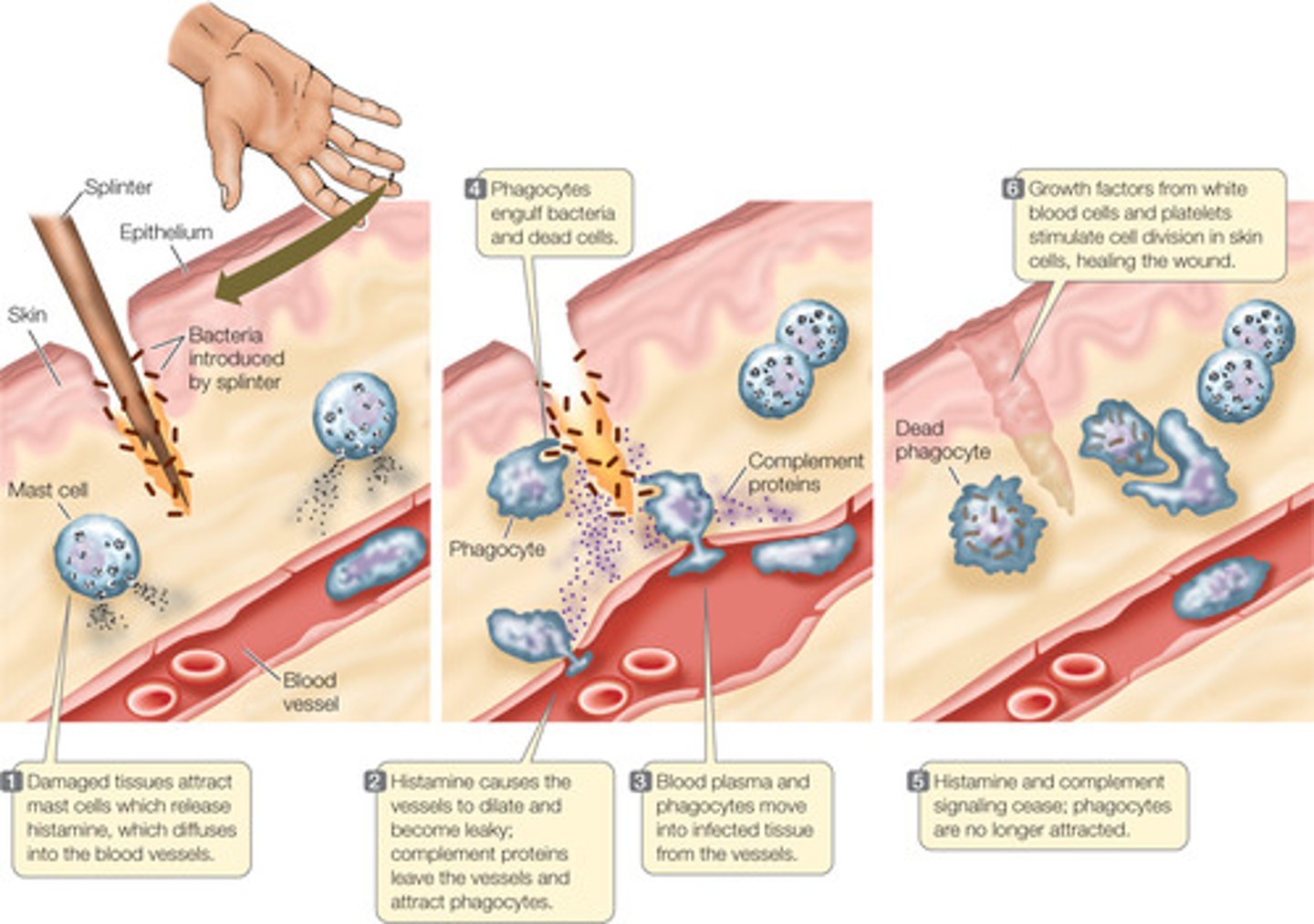
Cytokines
Signaling proteins that stimulate immune responses.
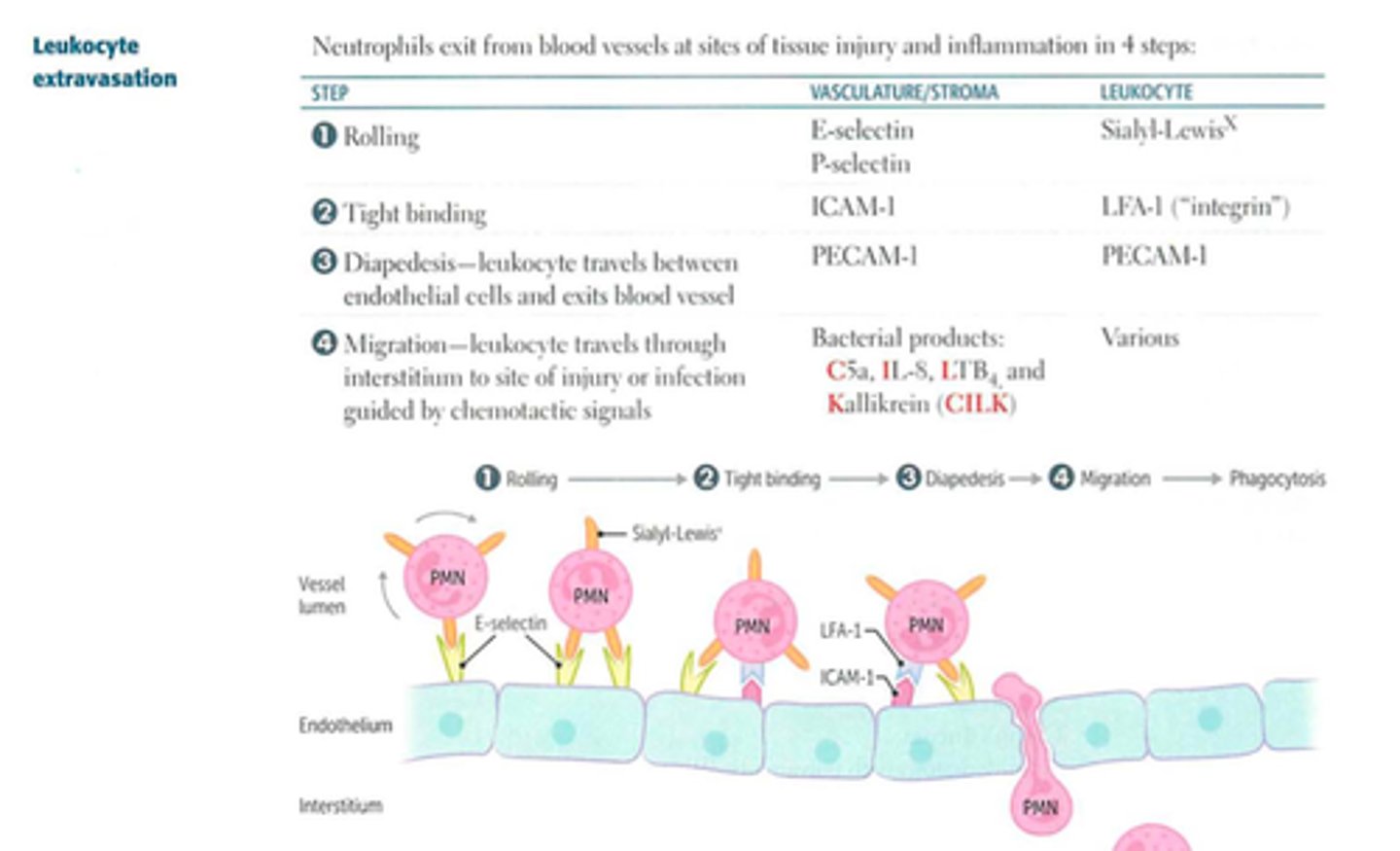
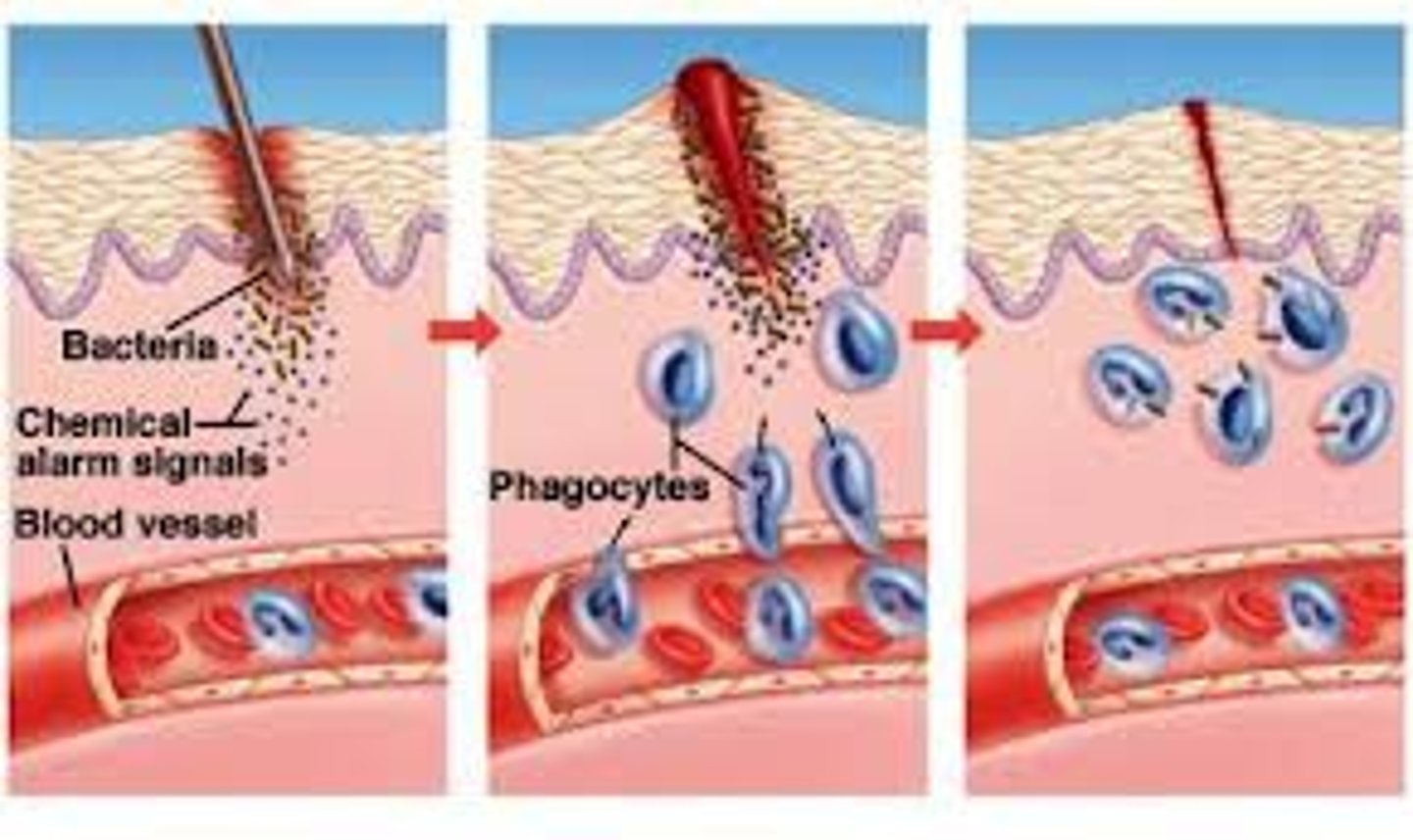
inflammation
a localized physical condition in which part of the body becomes reddened, swollen, hot, and often painful, especially as a reaction to injury or infection.
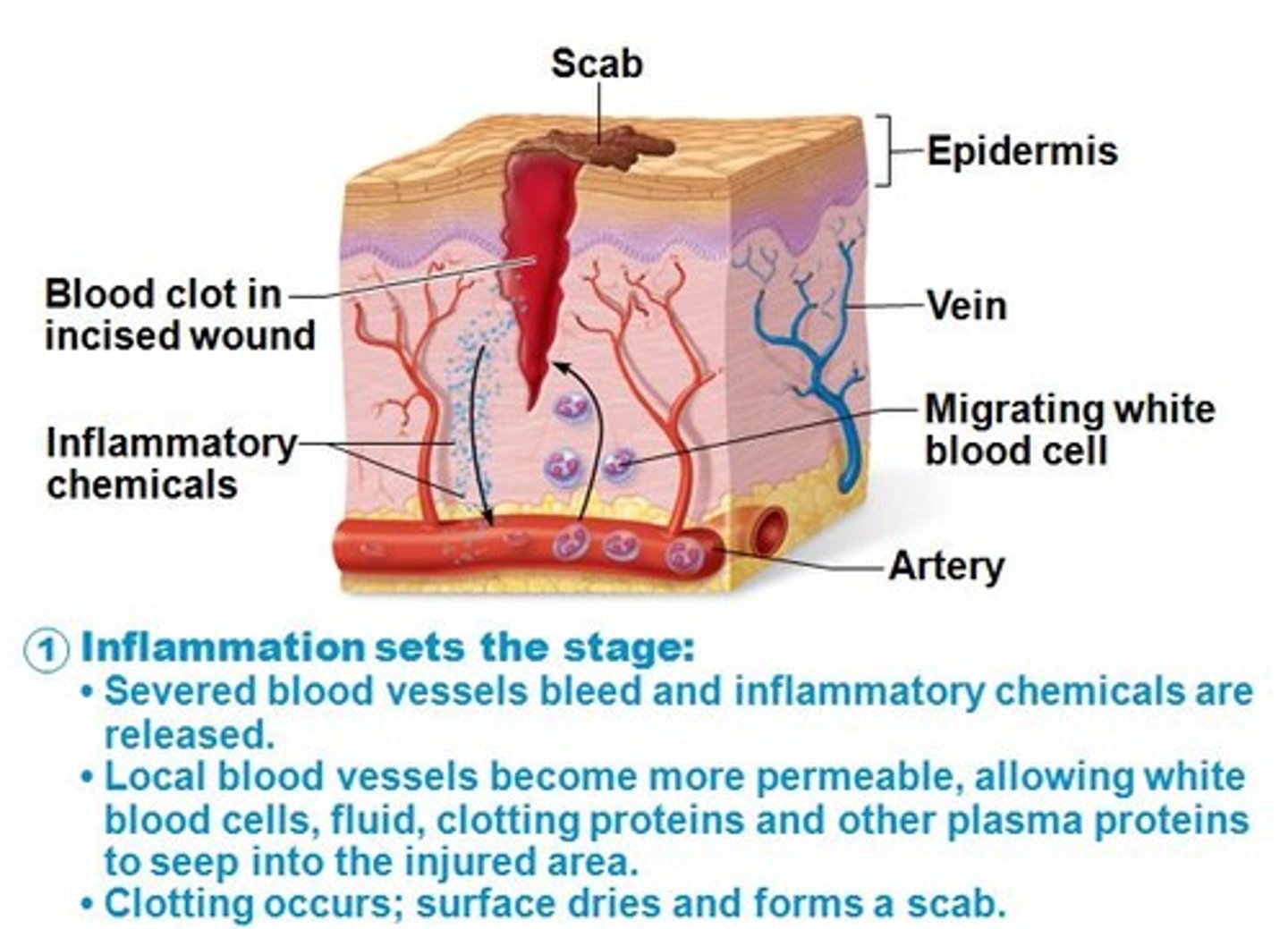
Diapedsis
The ability of white blood cells to move in and out of blood vessels into tissue.
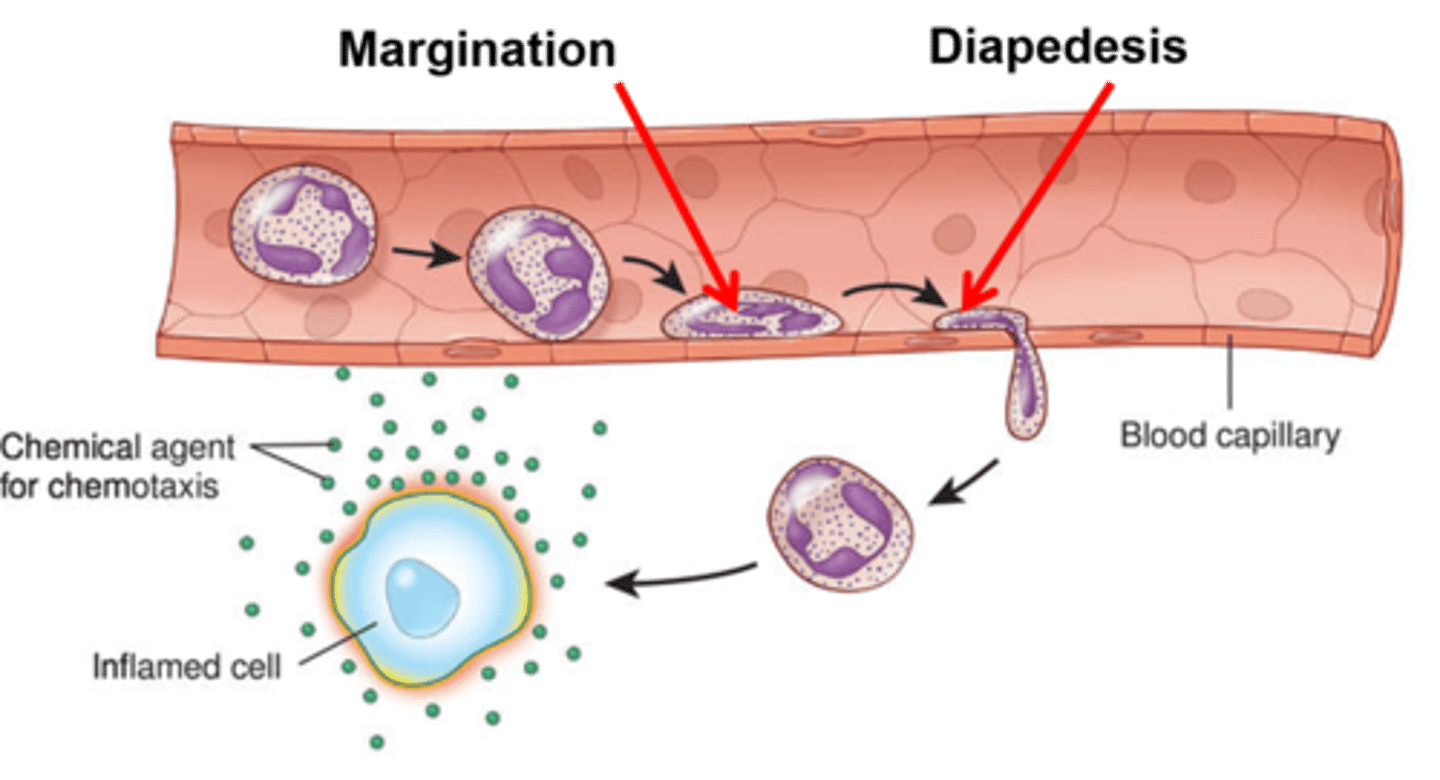
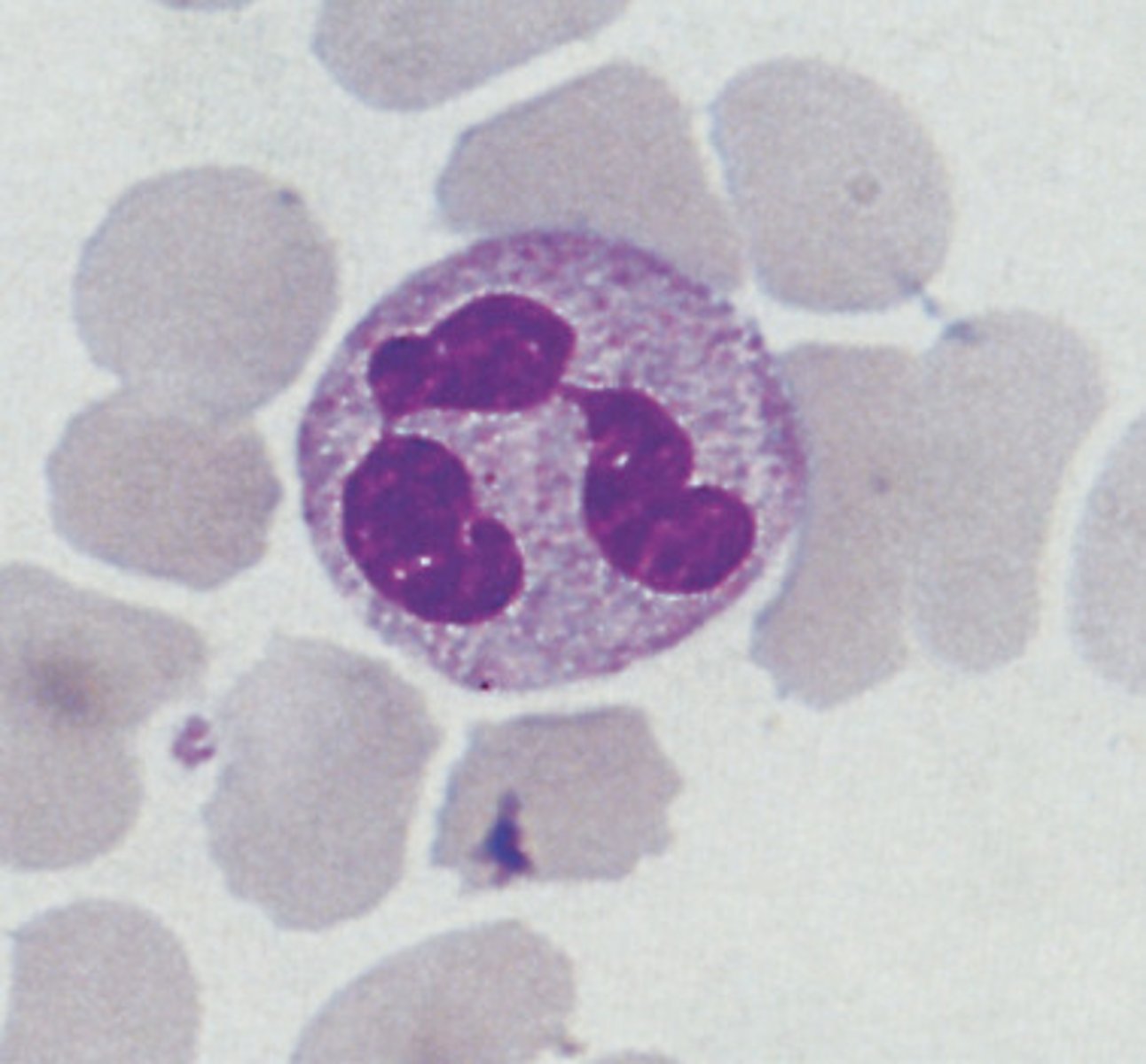
Neutrophils
A type of white blood cell that engulfs microbes by phagocytosis
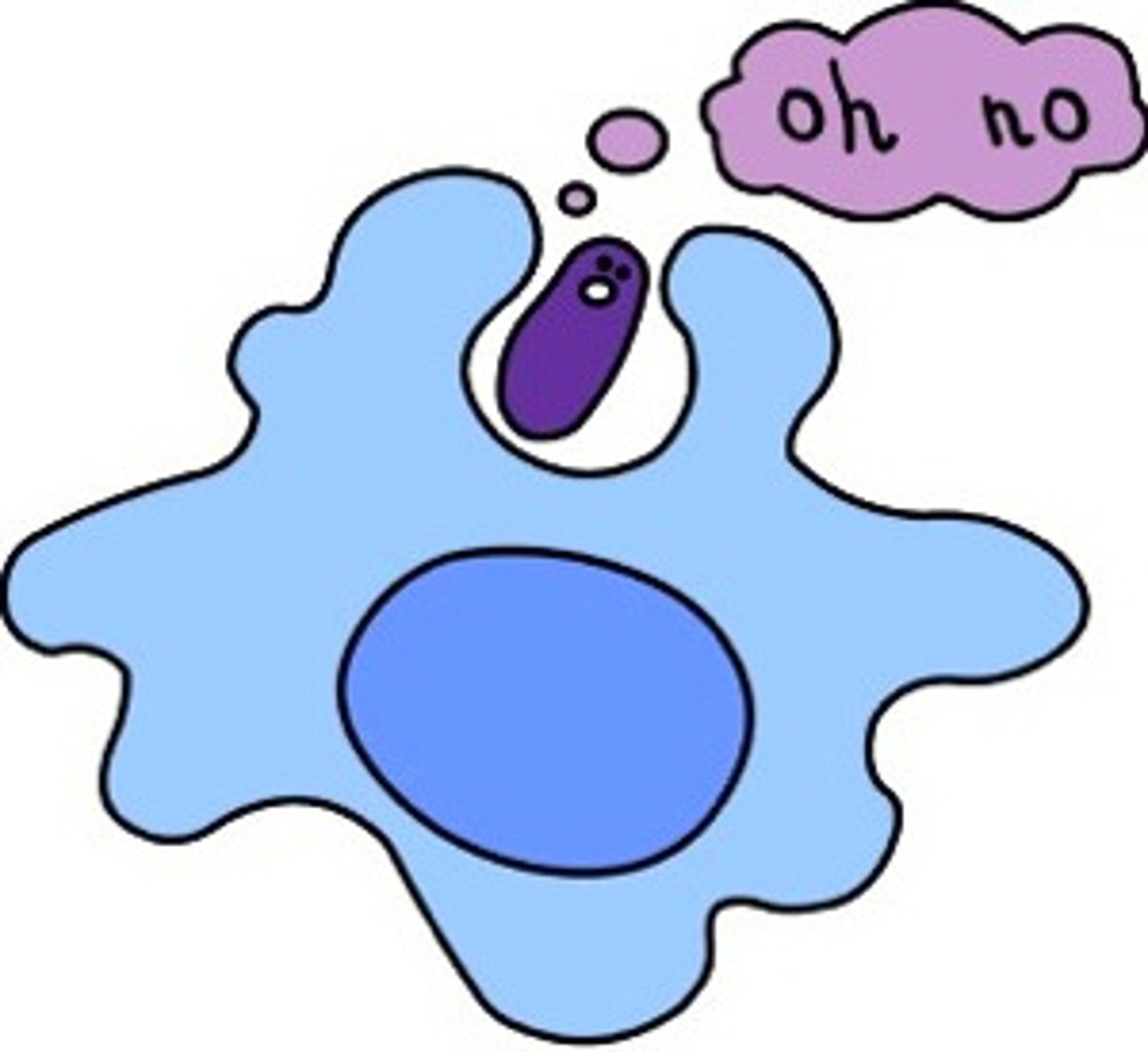
Phagocytosis
A type of endocytosis in which a cell engulfs large particles or whole cells
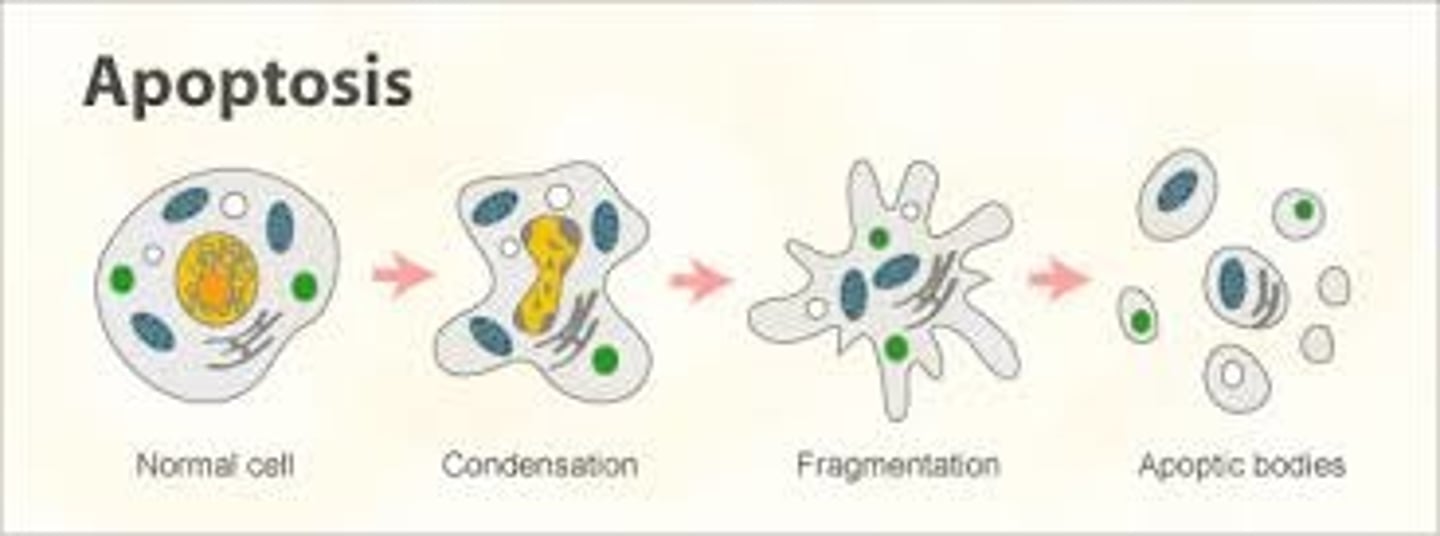
Apoptosis
process of programmed cell death
pus
A fluid created by infection made of dead white blood cells
How do cytokines communicate to the immune system?
Neutrophils follow a trail of them to the infection site (positive chemotaxis)
What makes neutrophils ideal for early defense?
They can move fast and die fast. Microbes do not have time to hijack them.
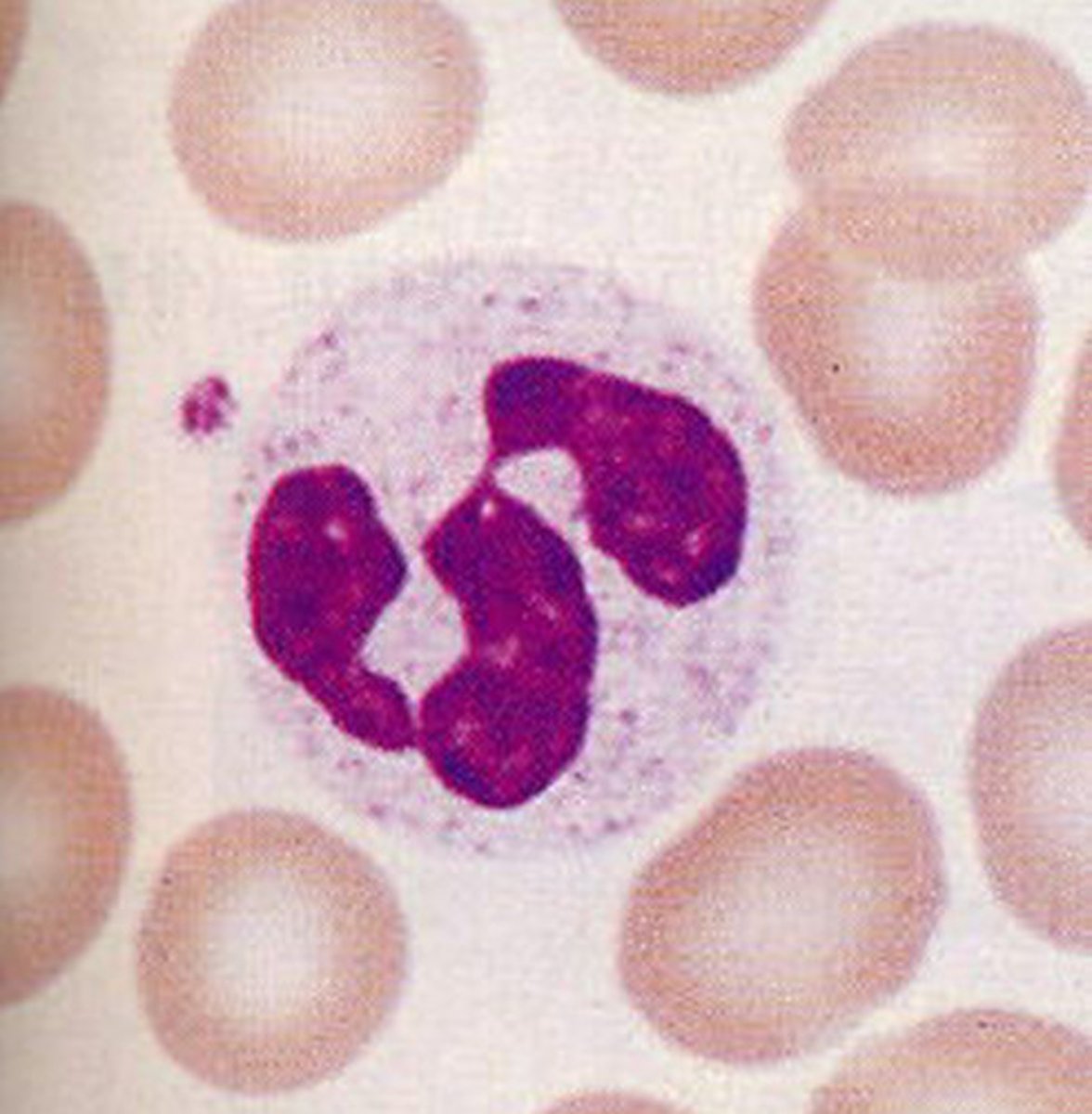
Macrophages
Amoeboid cells that roam connective tissue and engulf foreign particles and debris of dead cells.
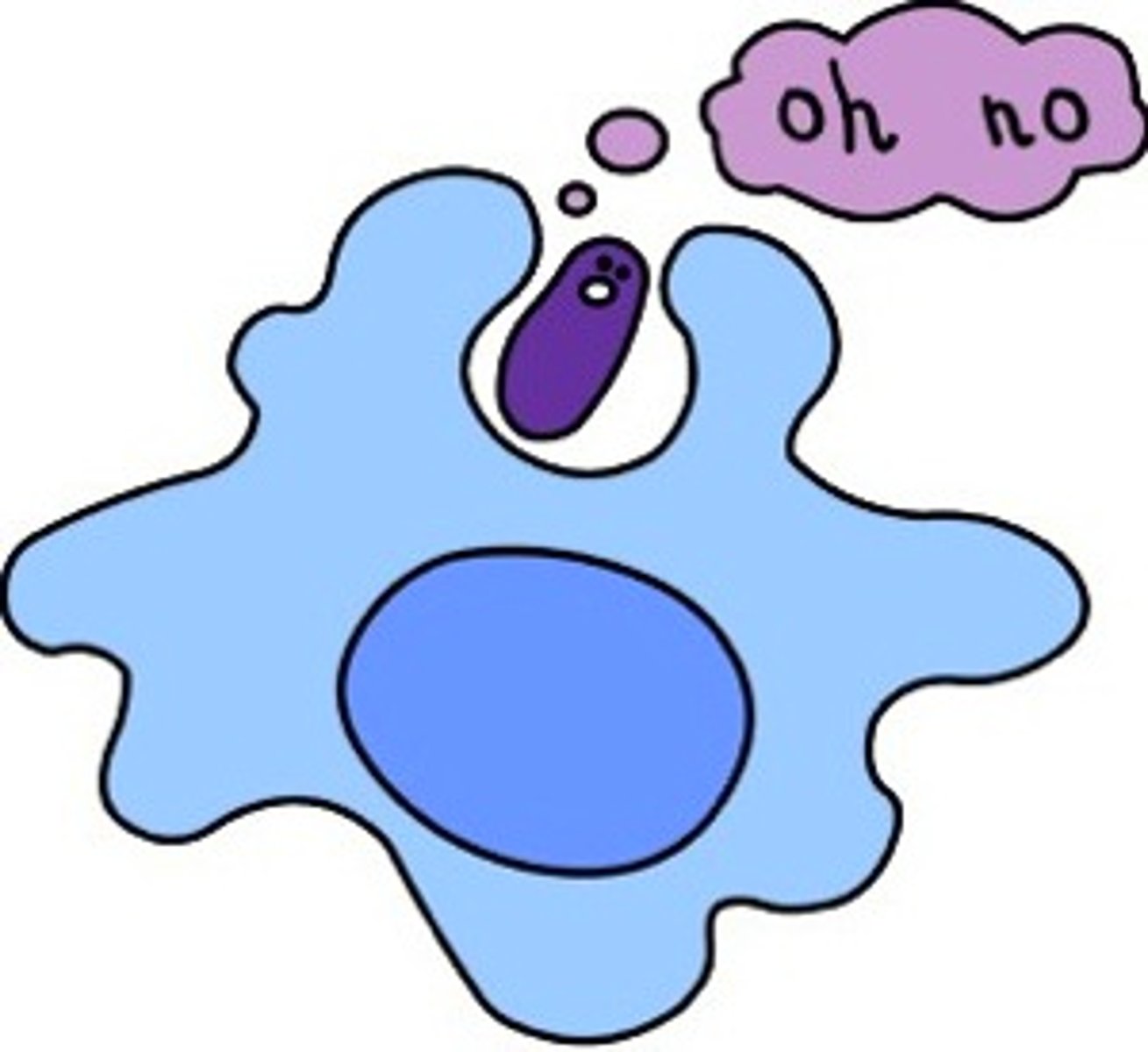
What do macrophages do with dead microbes?
They present them to T-cells in the lymph node (antigens)
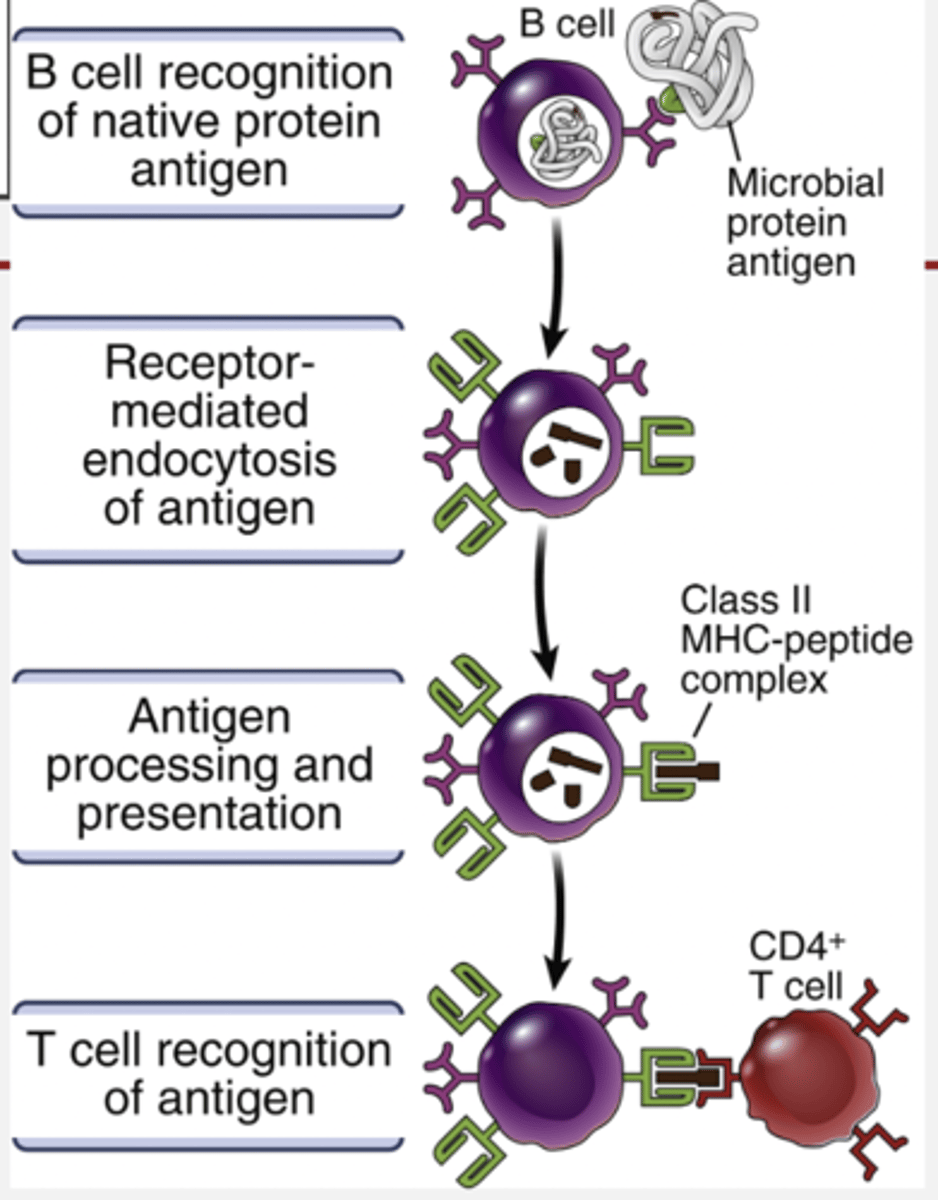
Besides macrophages, what cells can present antigens?
Dendritic cells and B-Cells.
MHC II stands for
Major Histocompatability Complex II
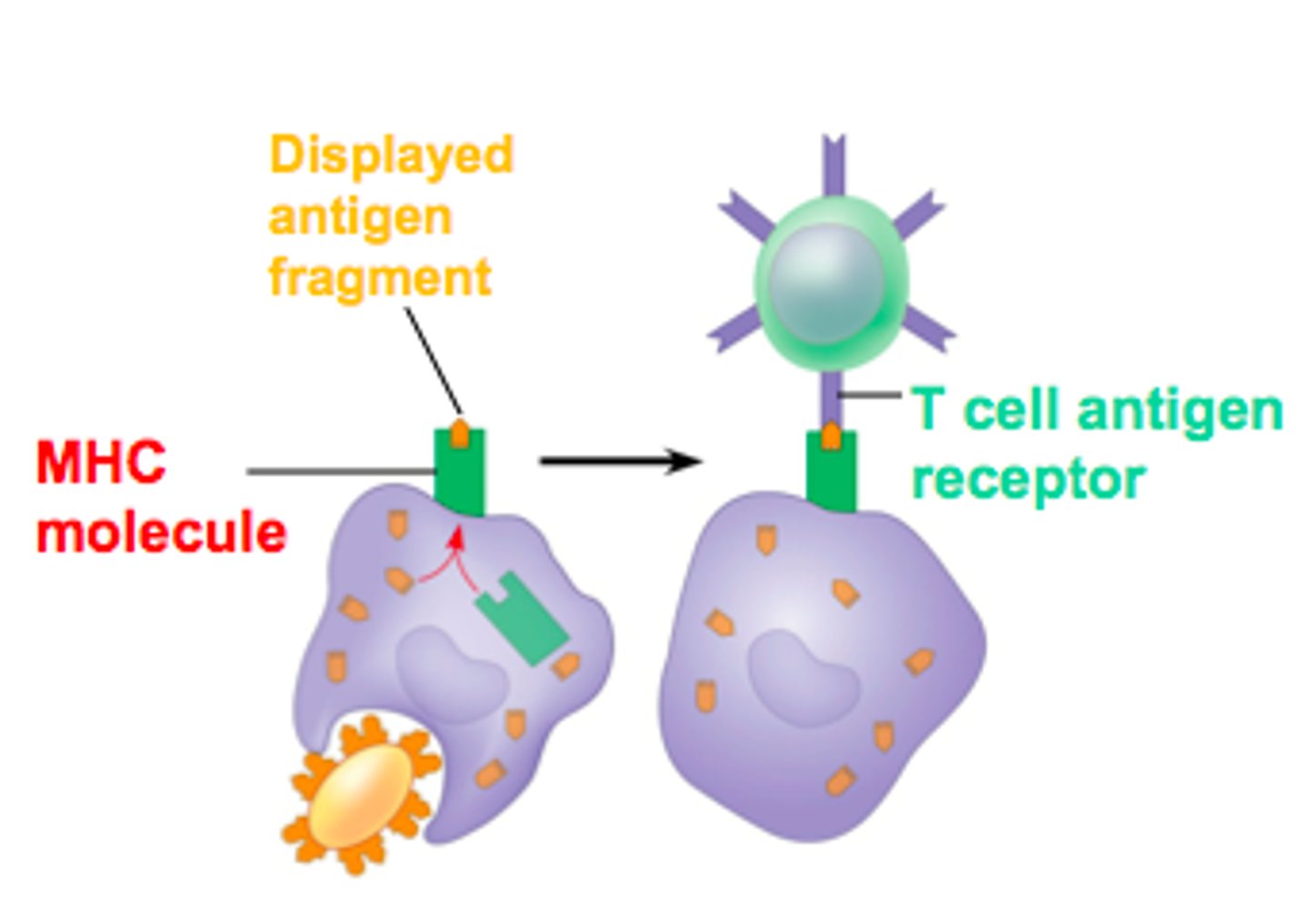
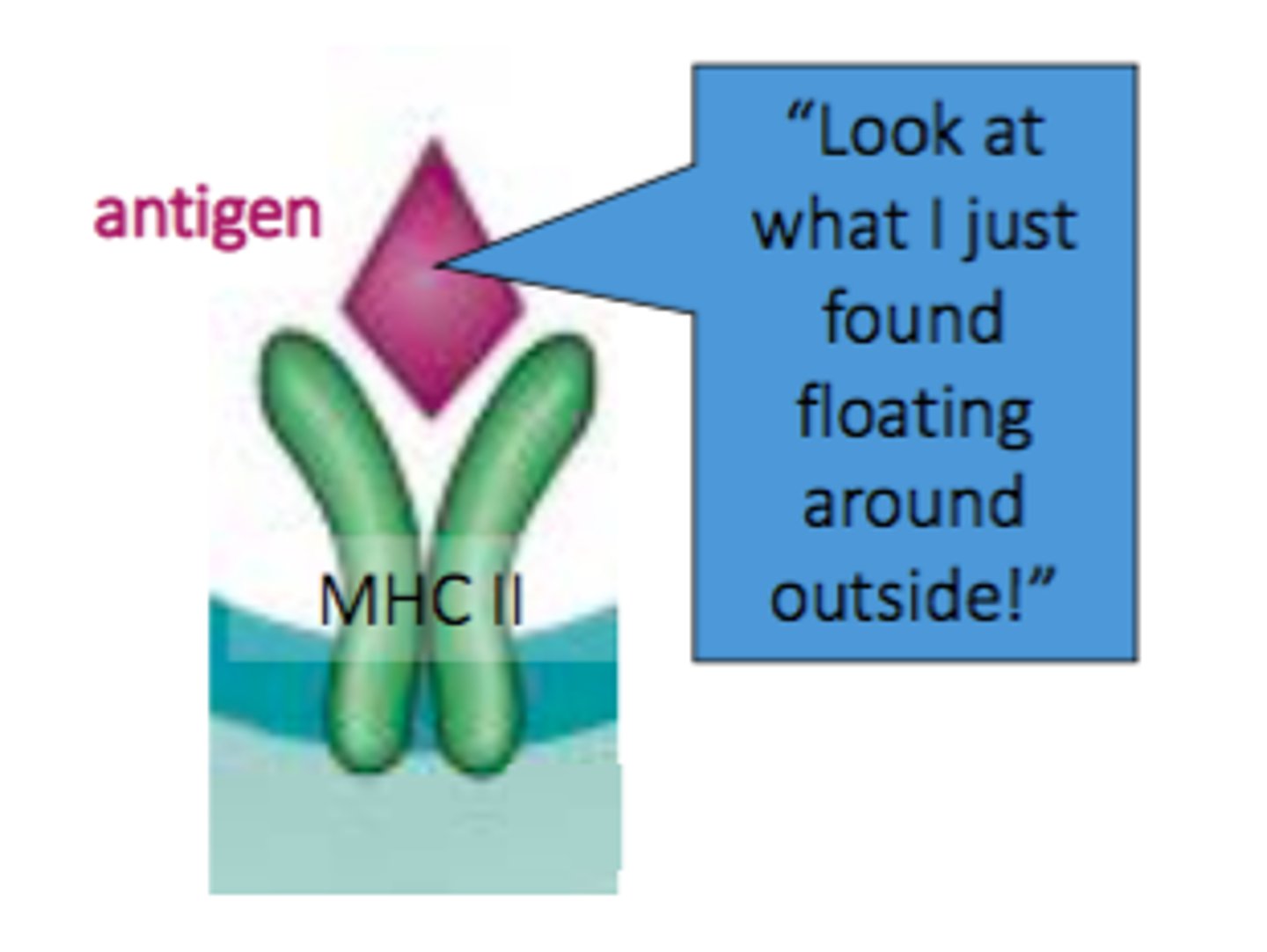
MCH II
Antigen presenting cells use this to present exogenous microbes to Helper T cells (CD4+)
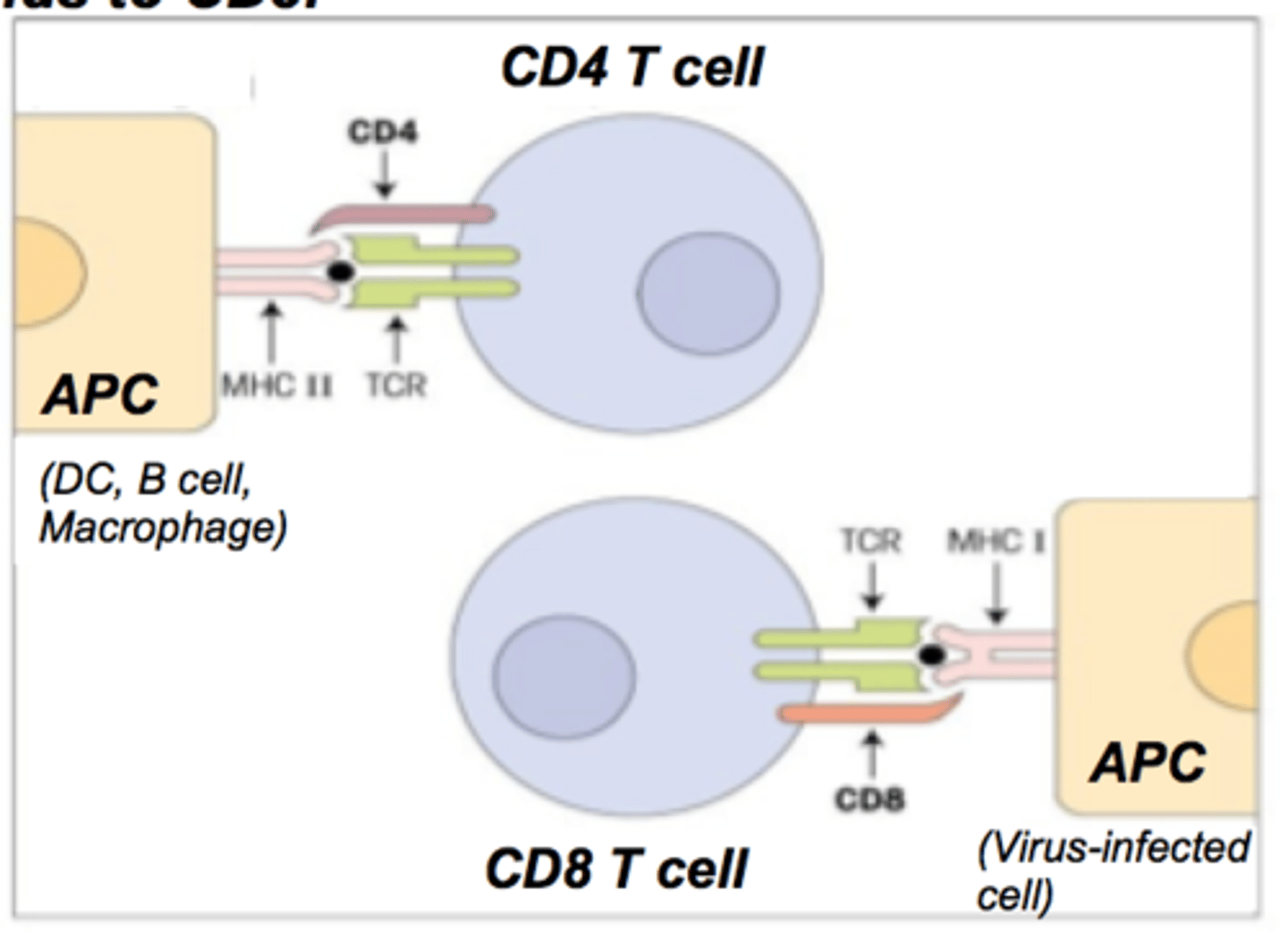
CD4
coreceptor on helper T cells that accepts antigens from MHC II
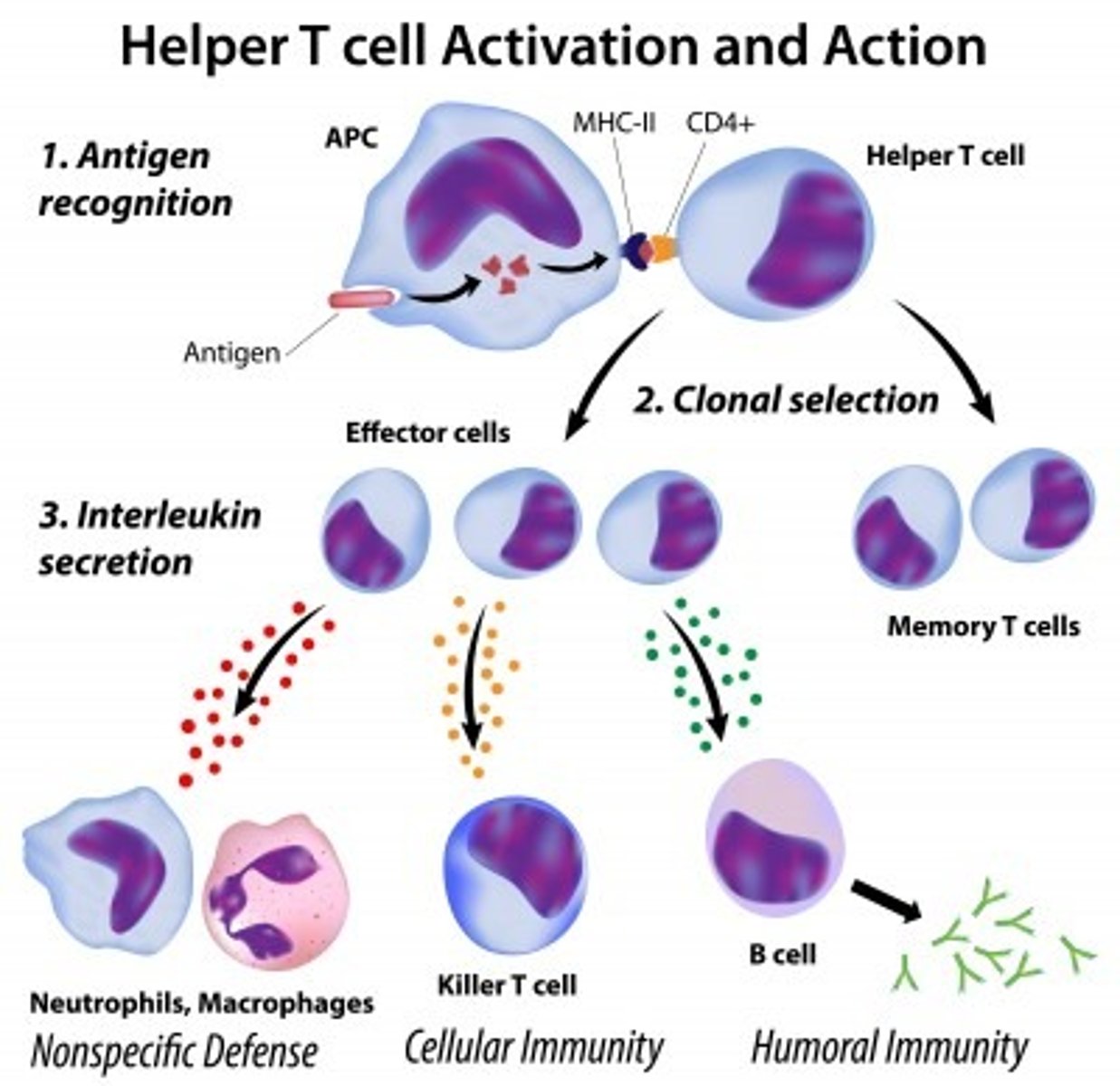
T helper cells
lymphocytes with CD4 receptors on their cell-surface membranes.
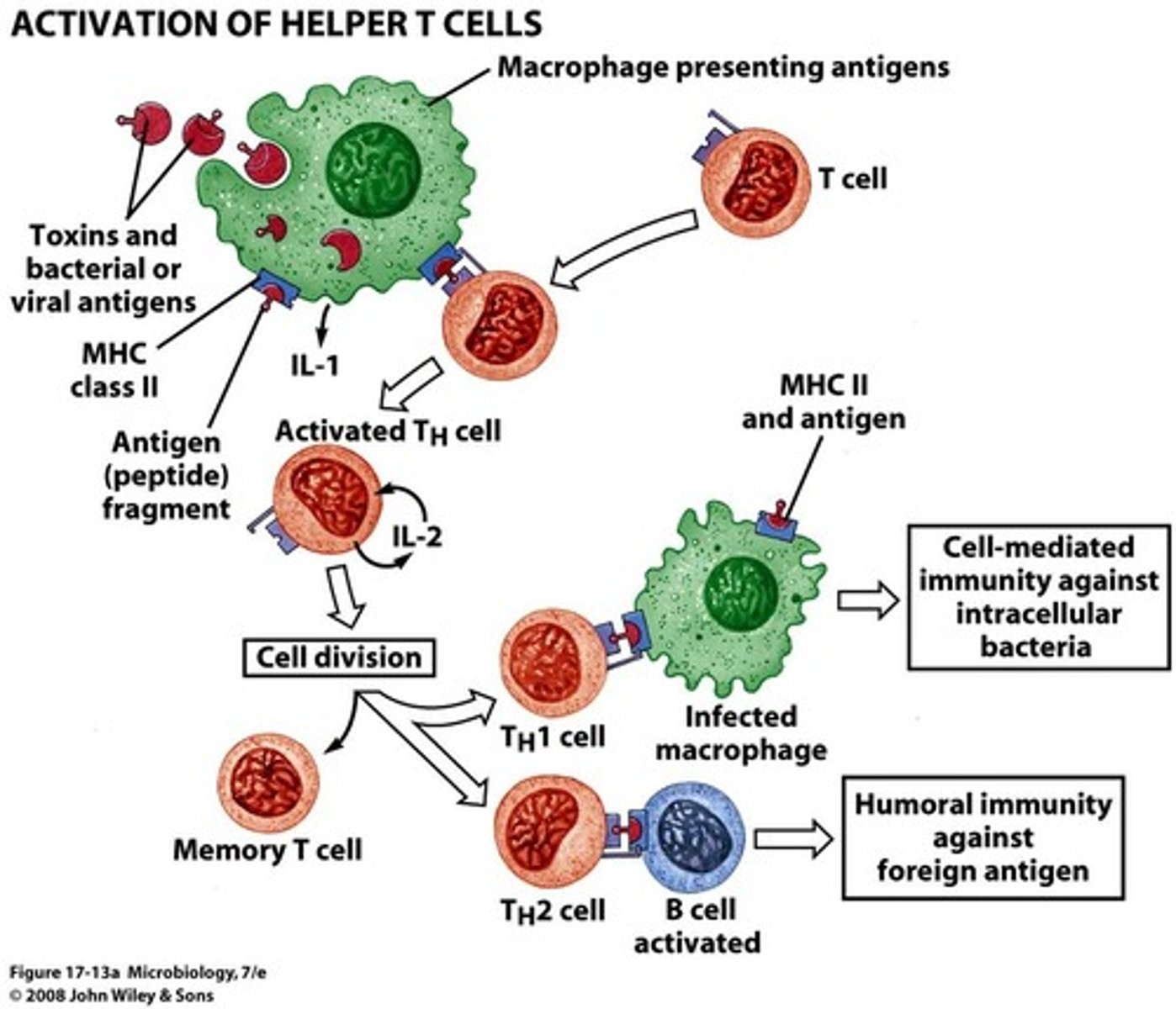
Activated T-helper cells
-Activate B cells to induce antibody production
-release cytokines to help activate cytotoxic T cells
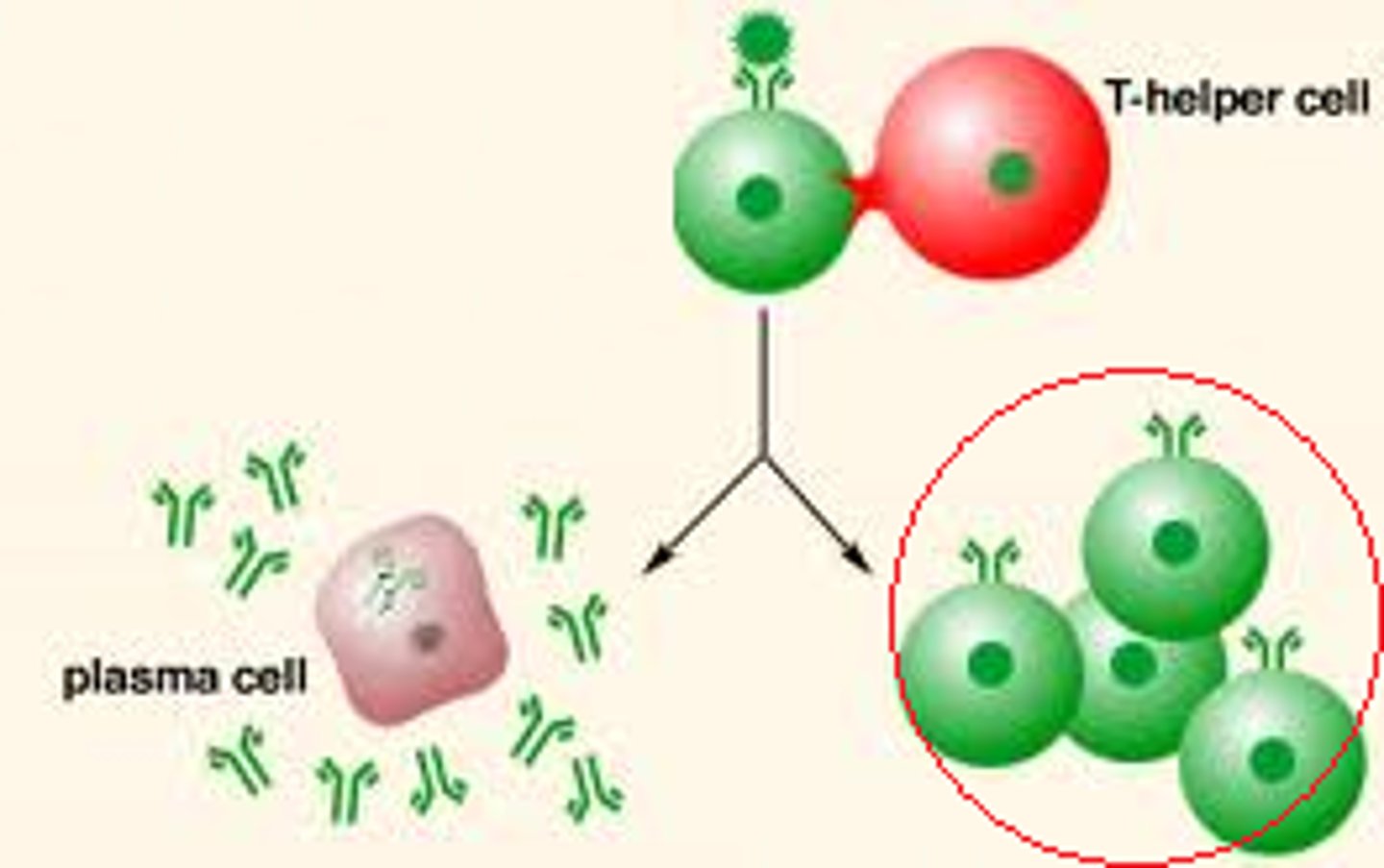
Plasma cells
Cells that develop from activated B cells and produce antibodies only against antigen they are programmed for
Adaptive Immunity
the ability to recognize and remember specific antigens and mount an attack on them
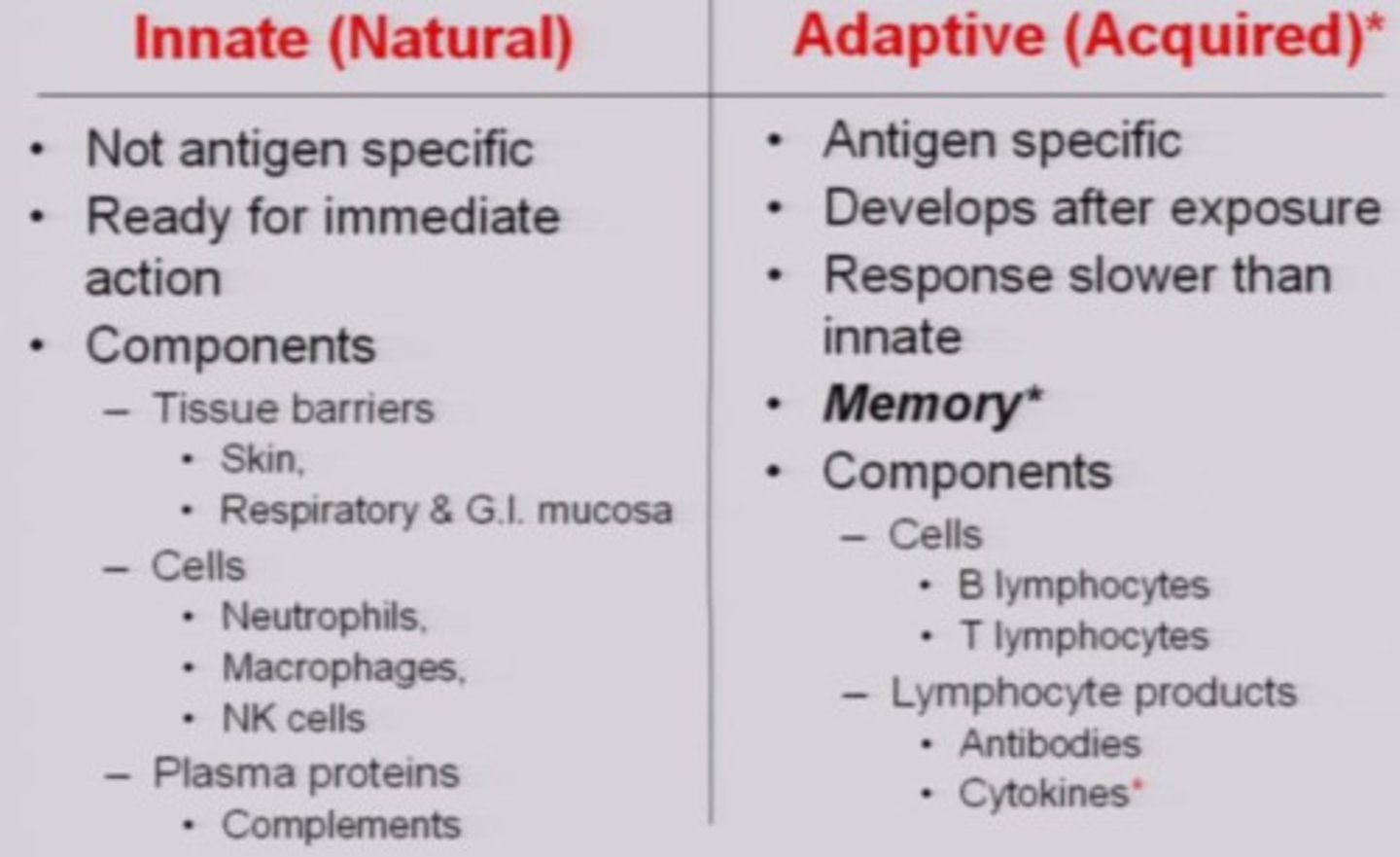
Fab region of antibody
part of the antibody that binds to the antigen
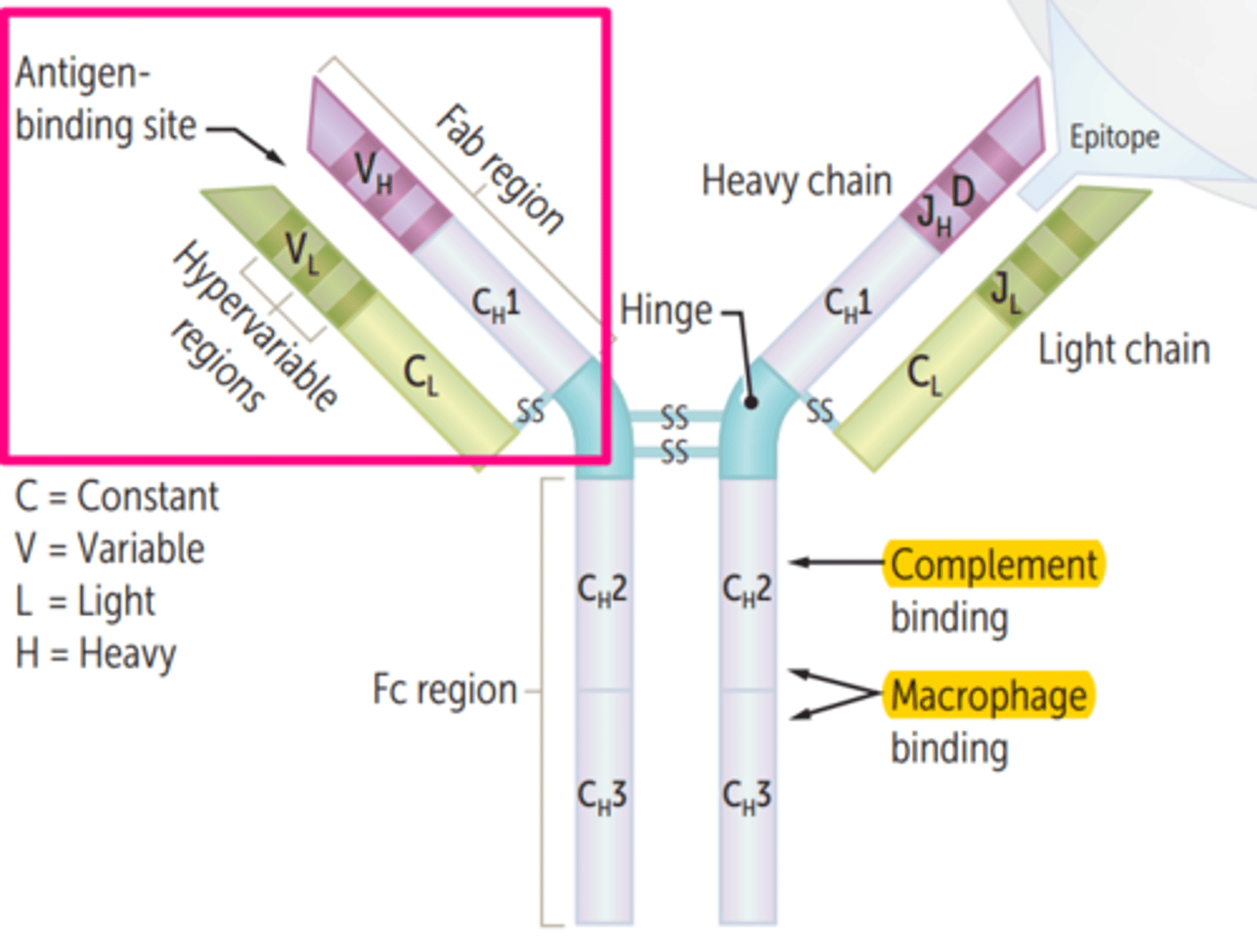
Fc region of antibody
The constant portion of the antibody that may bind to immune cell receptors on macrophages, neutrophils, and mast cells
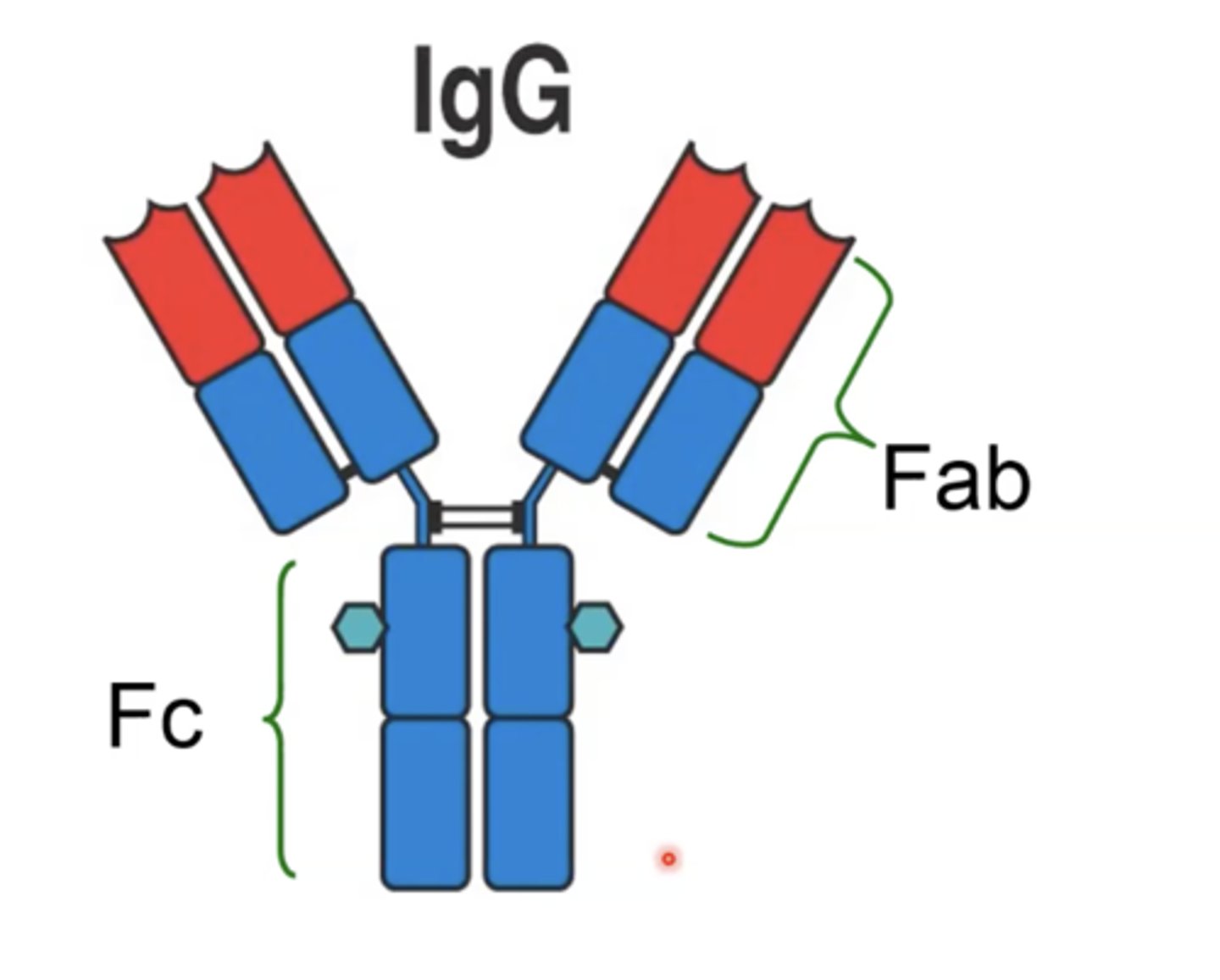
Antibody
a substance produced by the body that destroys or inactivates an antigen that has entered the body
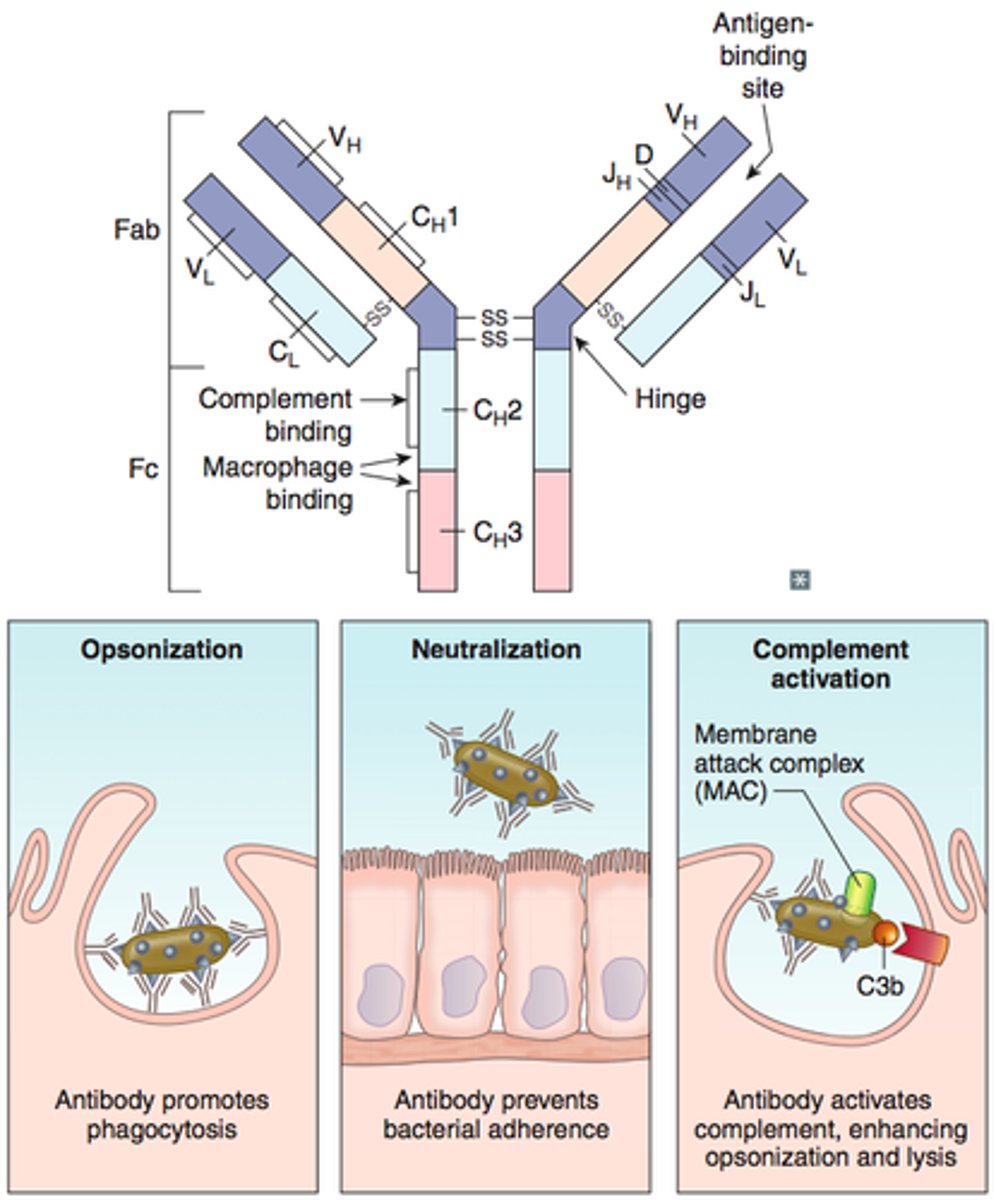
Antigen
substance that triggers an immune response
IgG
produced by plasma cells and memory cells against subsequent infections
Immunoglobulins
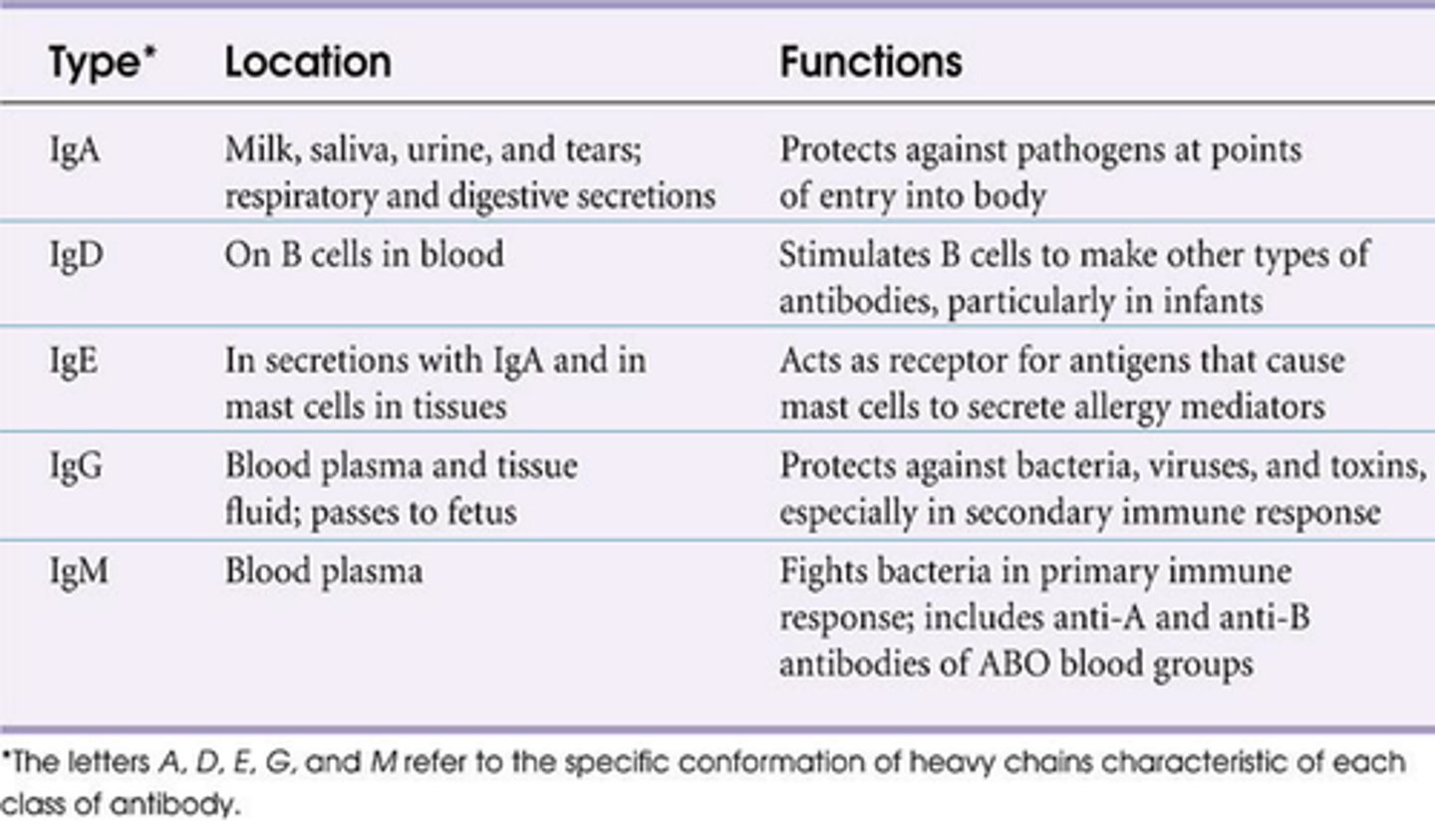
bind with specific antigens in the antigen-antibody response
IgA
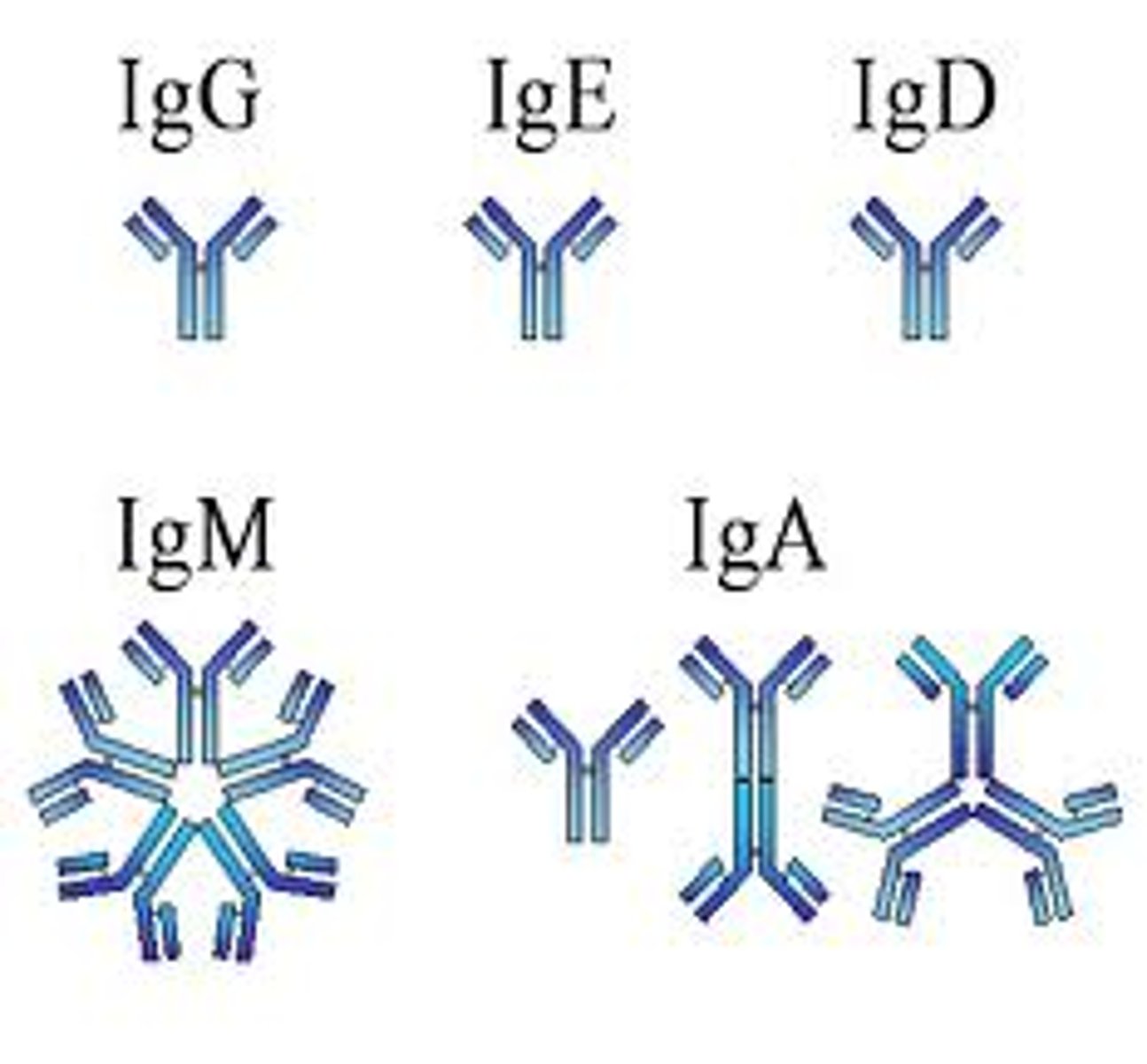
Found in mucous, saliva, tears, and breast milk. Protects against pathogens
IgE
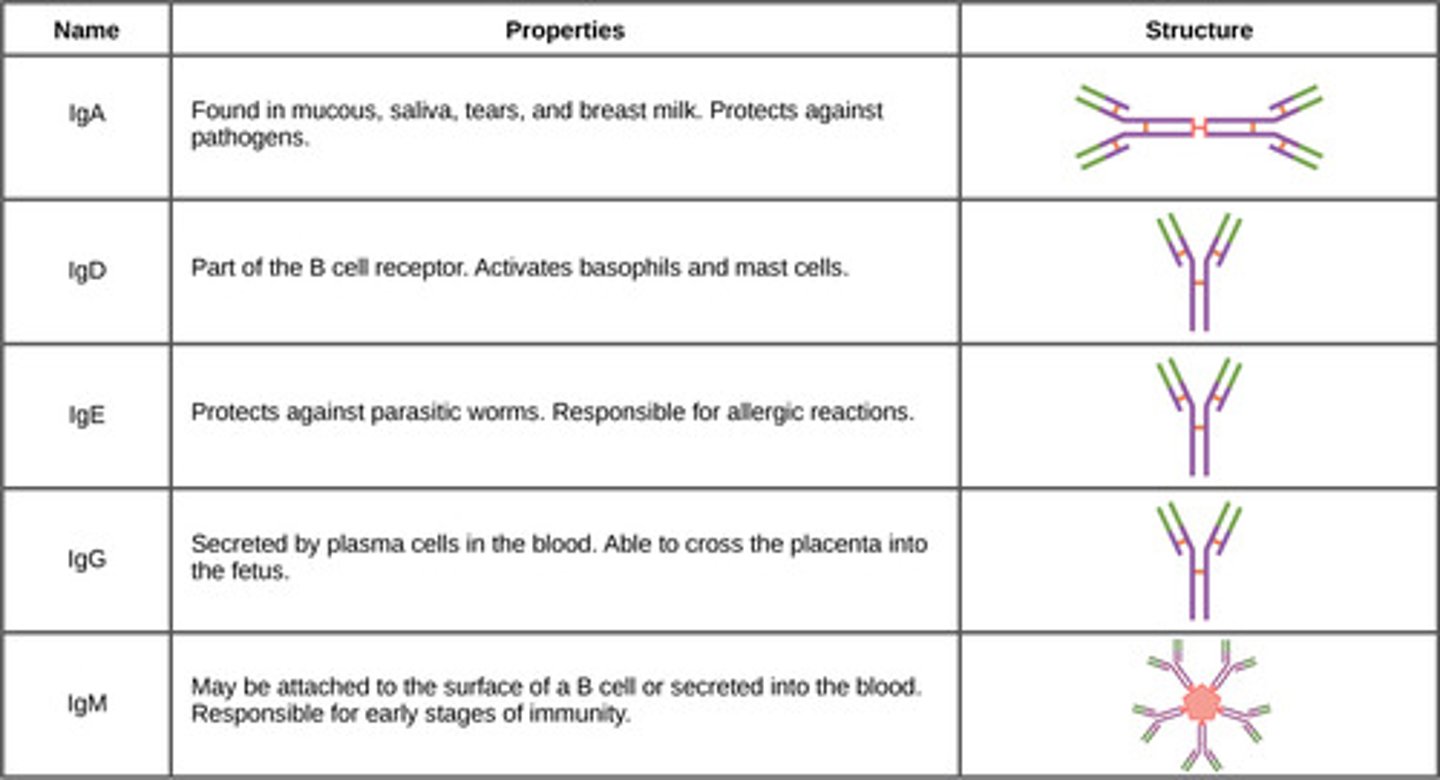
Protects against parasitic worms. Responsible for allergic reactions
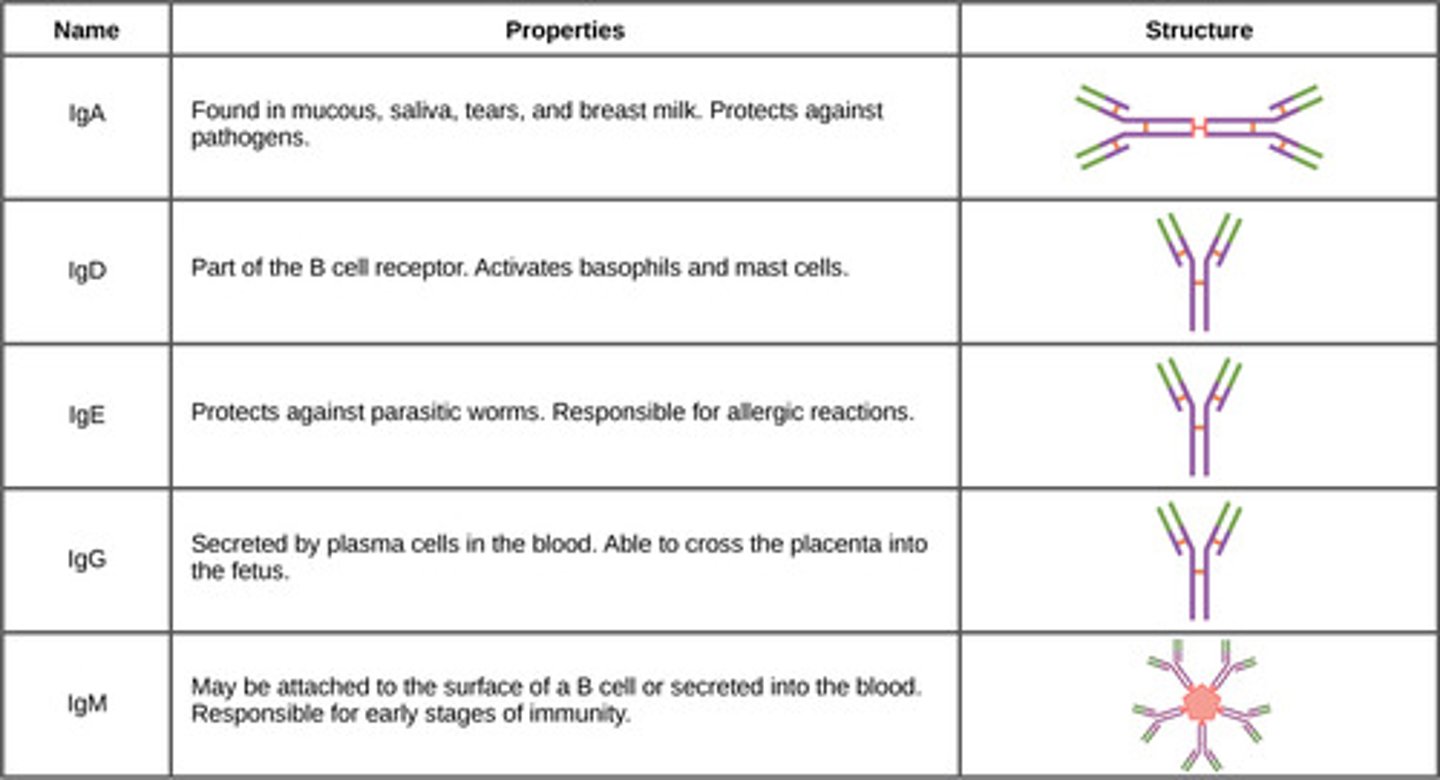
IgM
May be attached to the surface of a B cell or secreted into the blood. Responsible for early stages of immunity.
IgD
Part of the B cell receptor. Activates basophils and mast cells
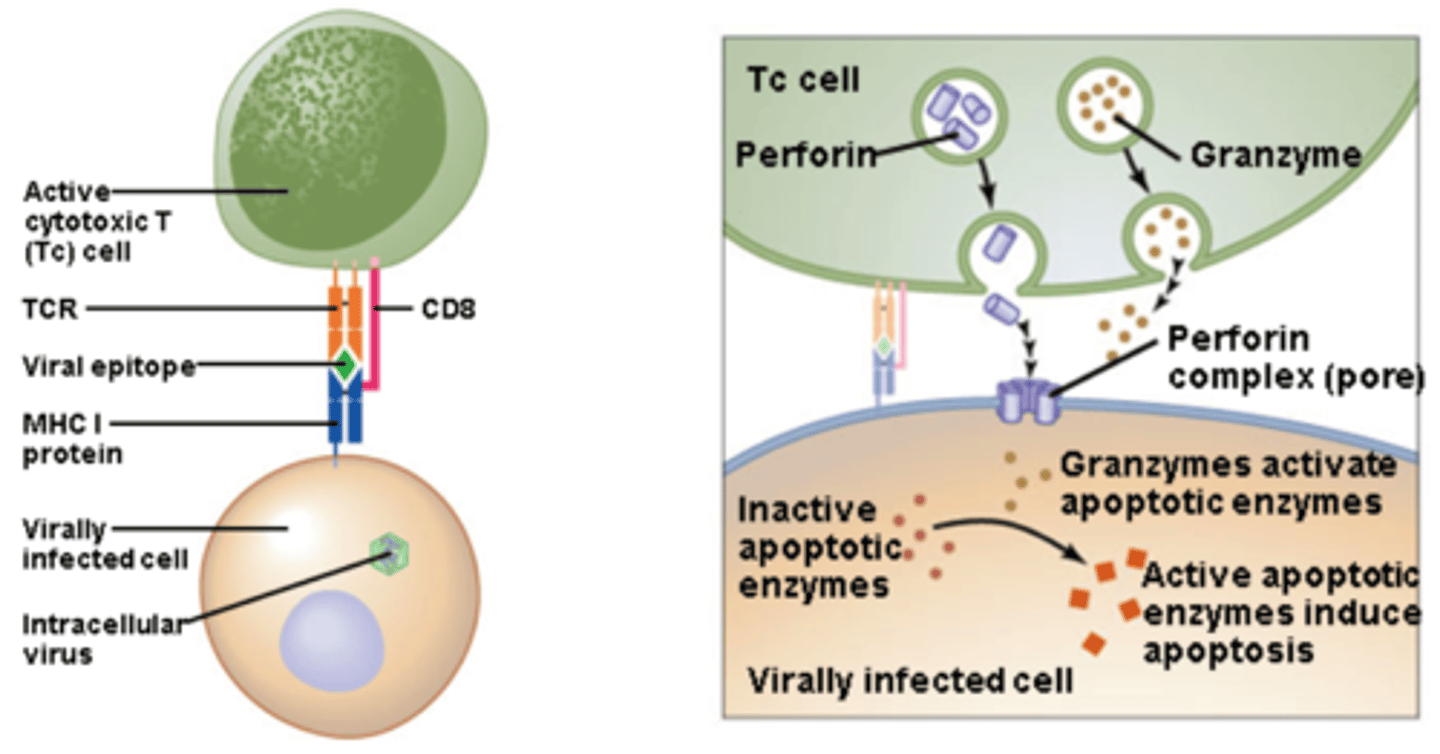
CD8+ Cytotoxic T cells
use granzyme and perforin to kill virally infected cells by forcing it to apoptosis
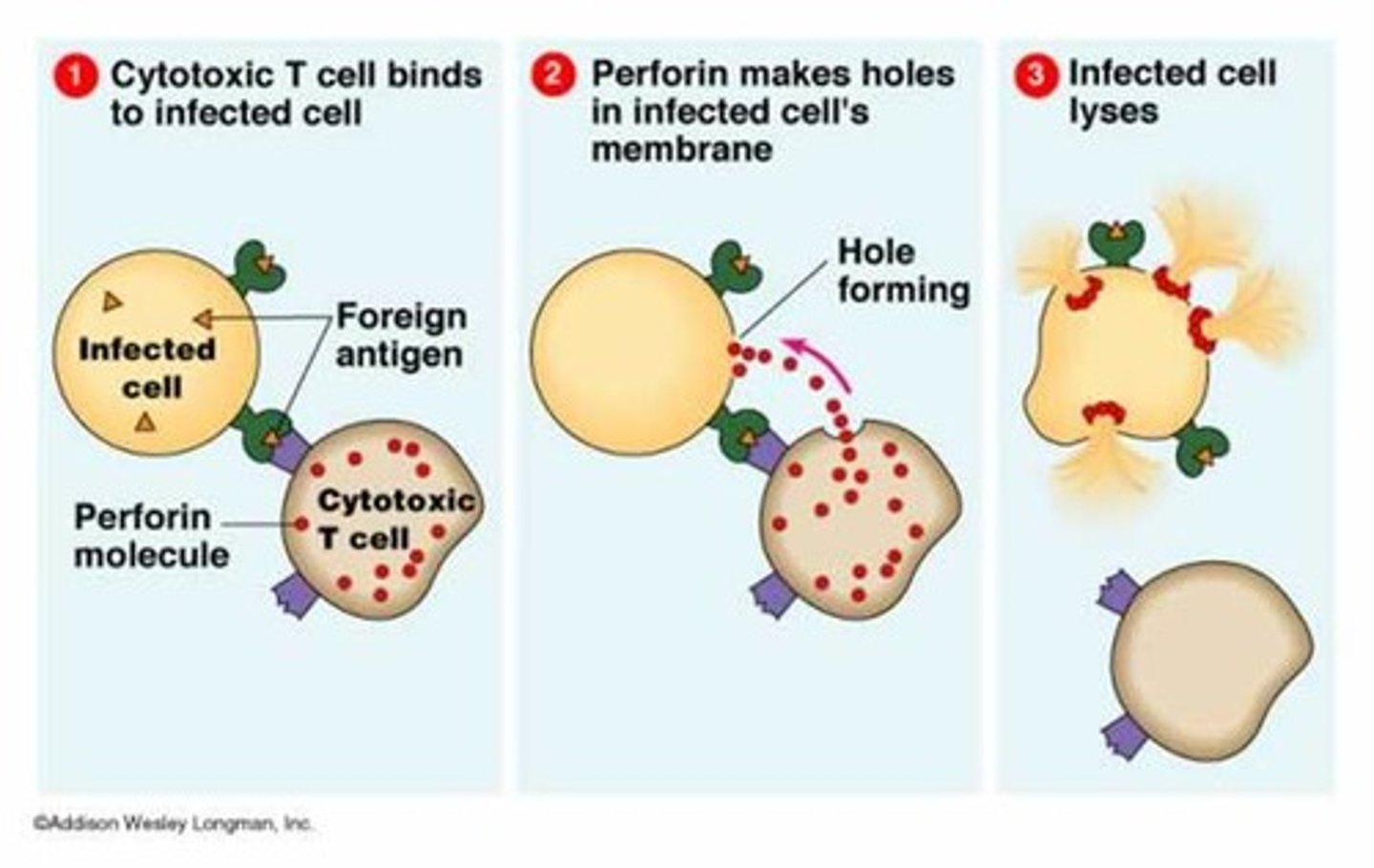
granzyme
an enzyme that induces programmed cell death (apoptosis)
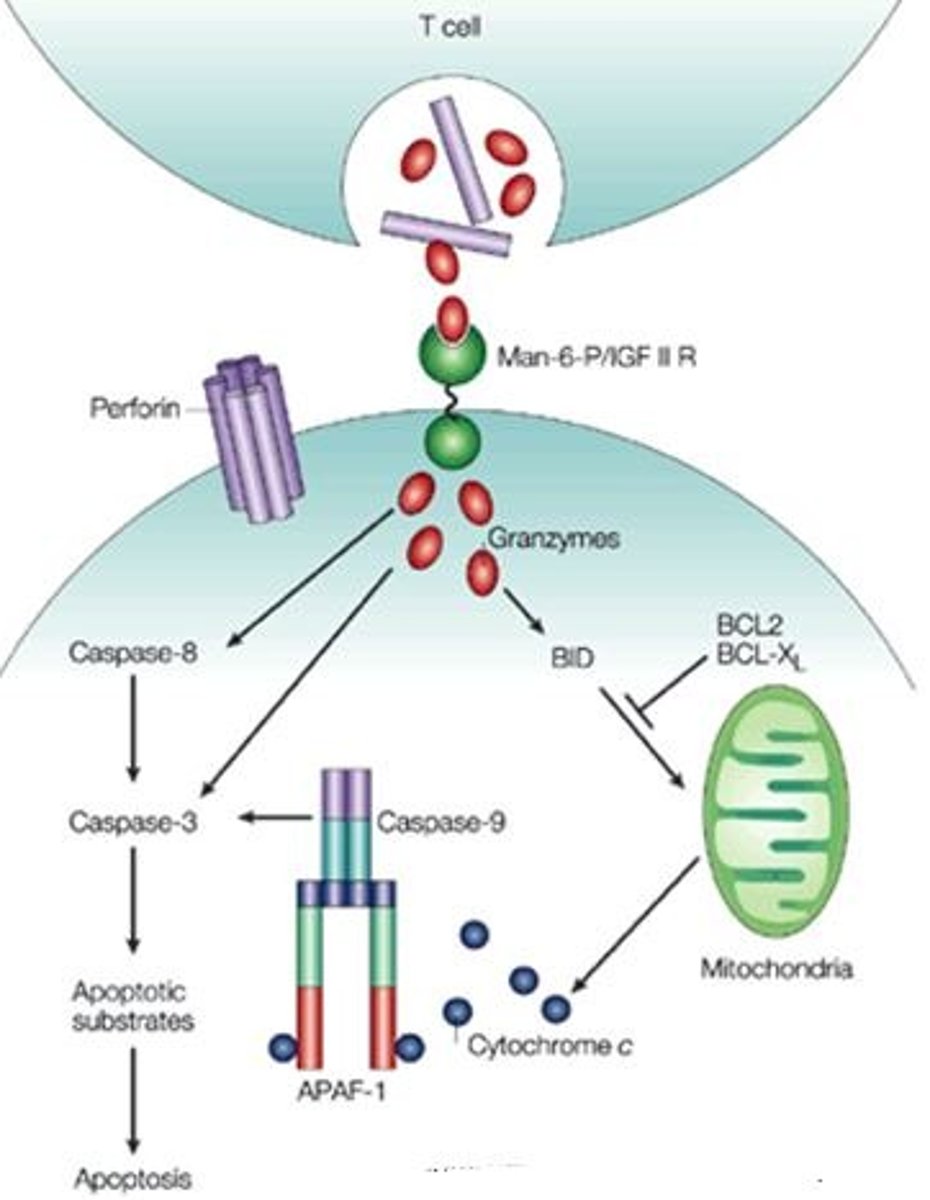
perforin
a protein, released by killer cells of the immune system, that destroys targeted cells by creating lesions like pores in their membranes.
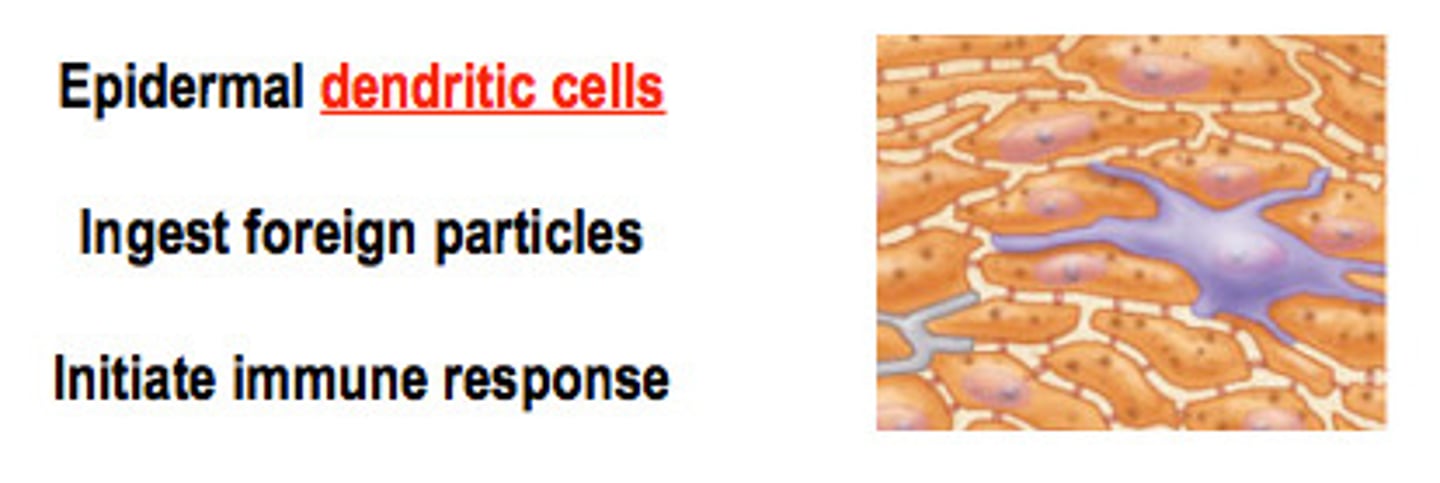
Dendritic cells
specialized white blood cells (phagocytes) that destroy microbes
B cells
Lymphocytes that produce antibodies when activated by T-cells.
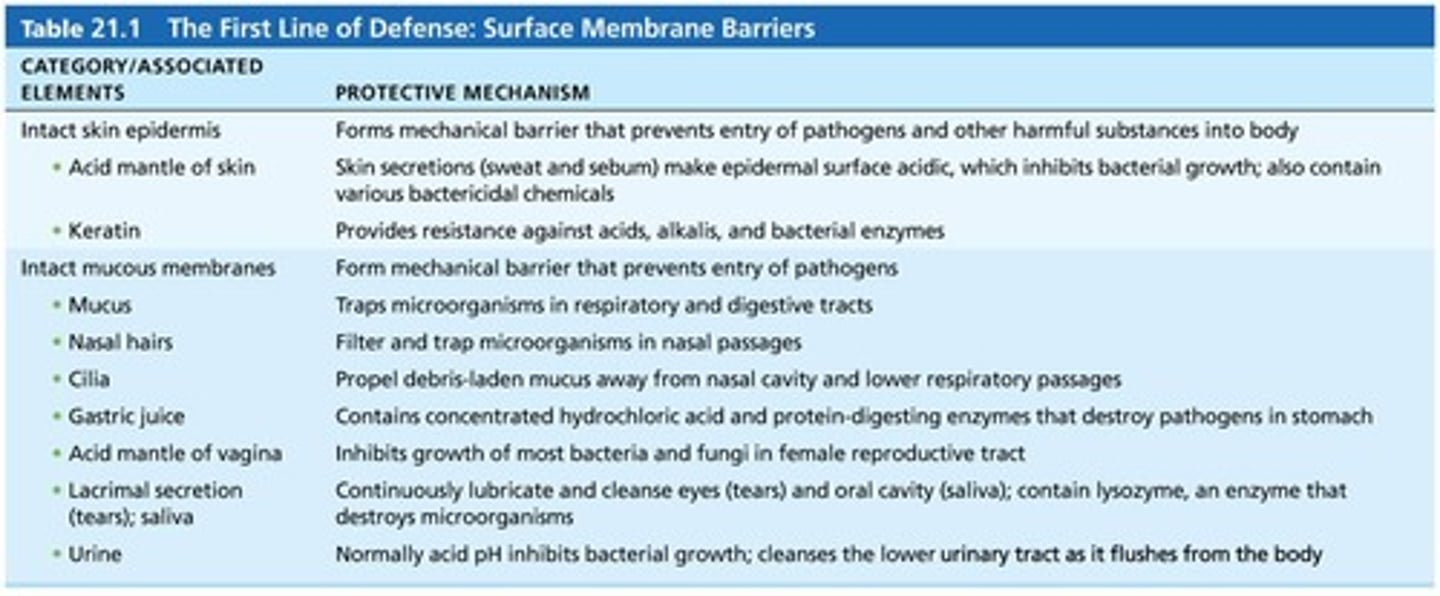
First line of defense
innate barriers to antigen like intact skin, mucous membranes and their secretions, normal microbiota
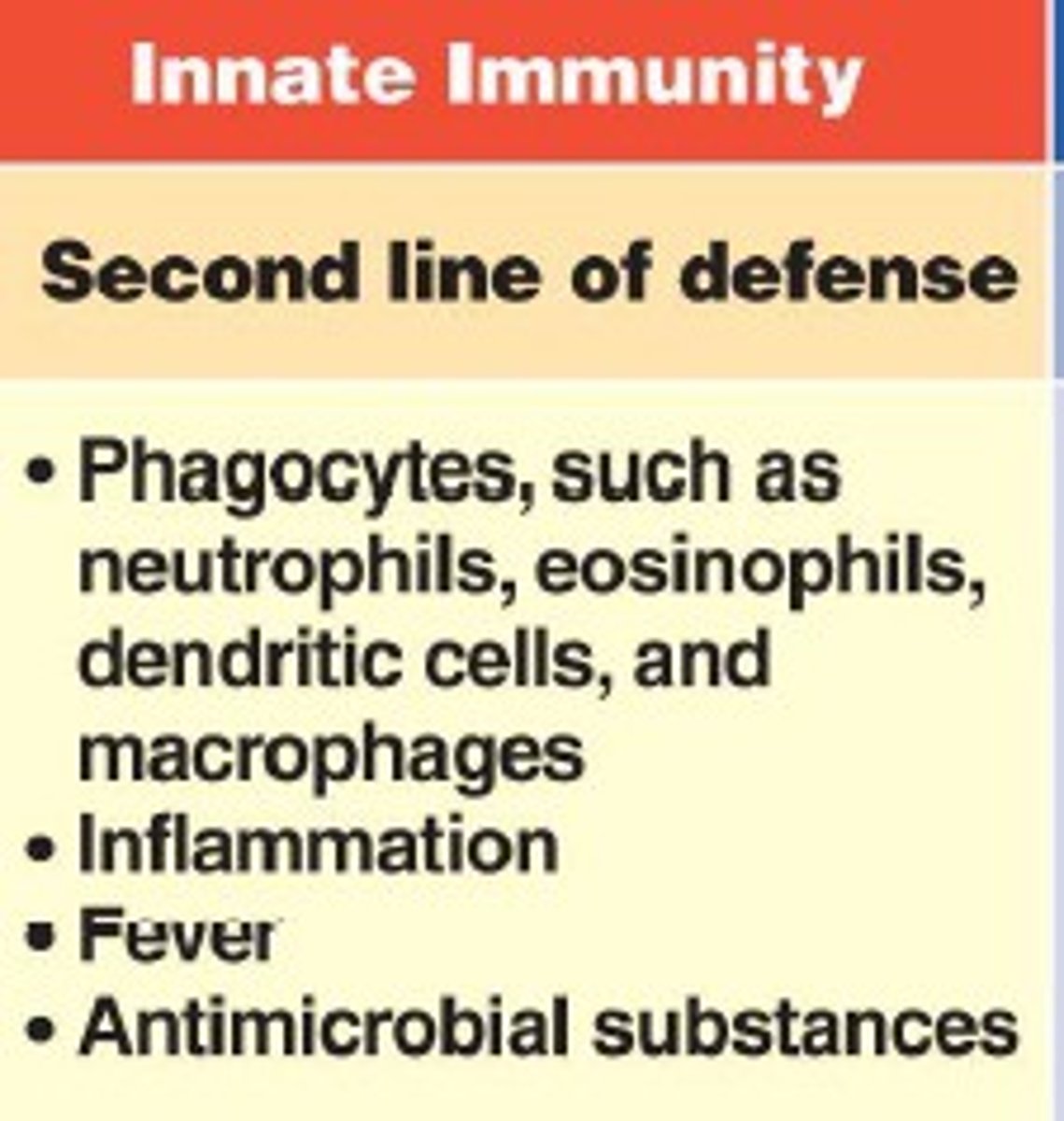
Second line of defense
nonspecific internalized system of protective cells inflammation and phagocytosis. innate immunity.
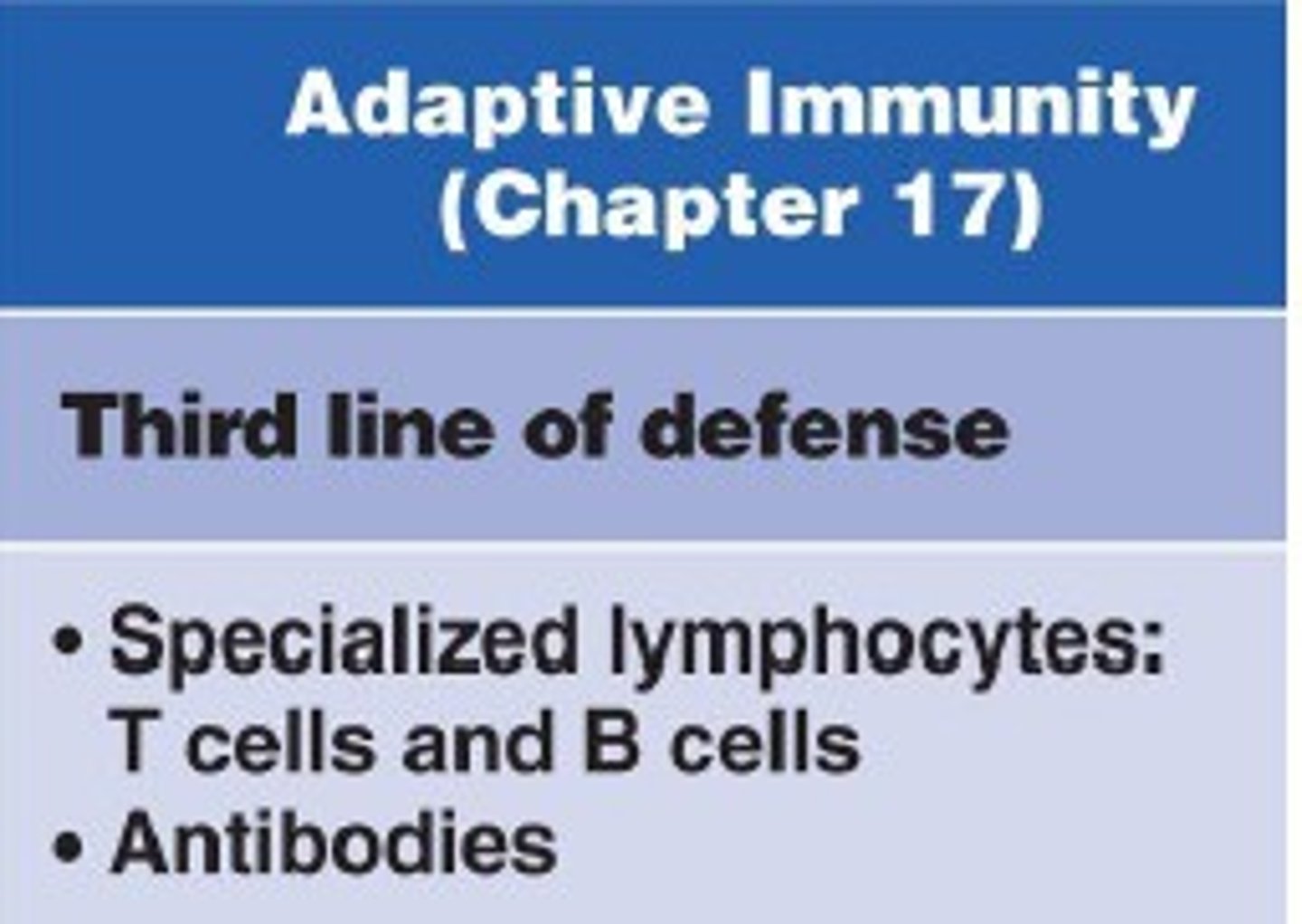
Third line of defense
adaptive response that occurs later after encountering pathogen.
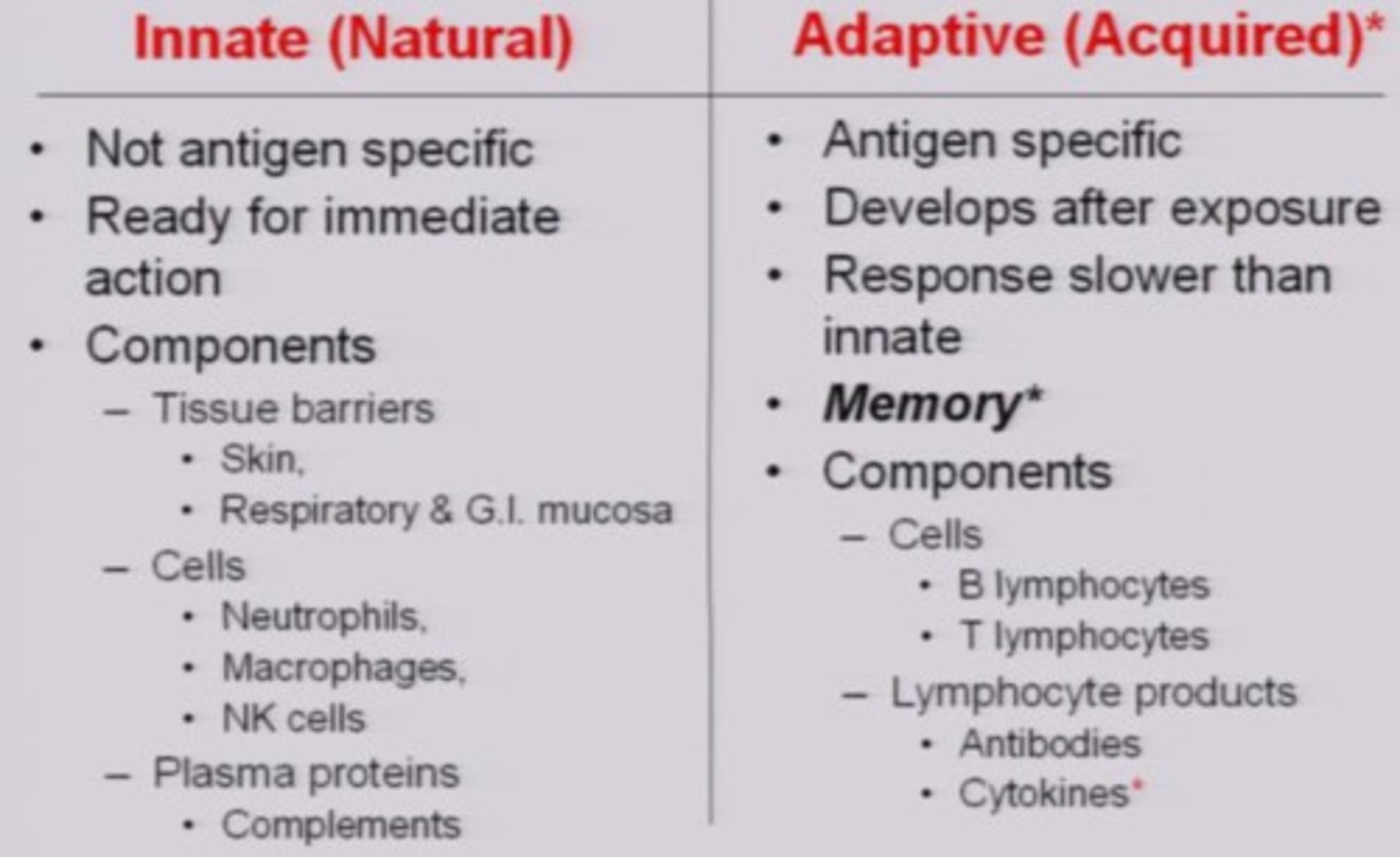
innate immunity
Immunity that is present before exposure and effective from birth. Responds to a broad range of pathogens.
lymphatic system
Composed of a network of vessels, ducts, nodes, and organs. Provides defense against infection.
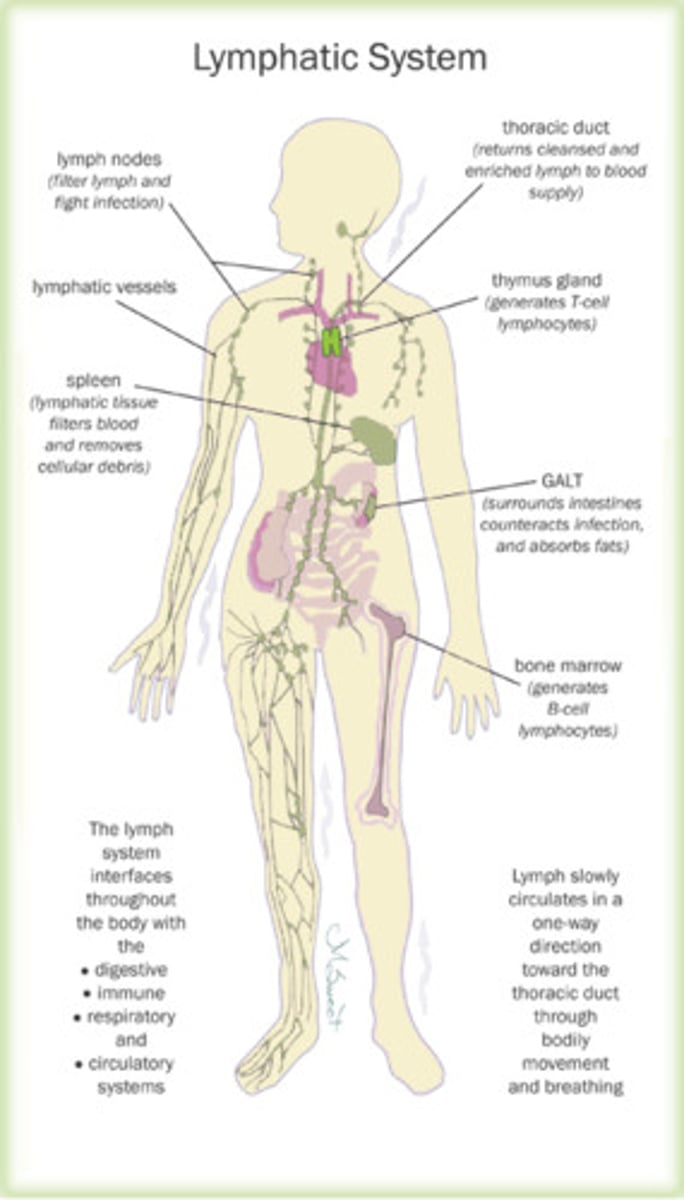
Spleen
An organ that is part of the lymphatic system; it produces lymphocytes, filters the blood, stores blood cells, and destroys old blood cells.
Thymus
Gland in the thoracic cavity above the heart. Second place T cells go after being made so they can mature.
Red Bone Marrow
produces red and white blood cells and platelets
Inflammation
a localized physical condition in which part of the body becomes reddened, swollen, hot, and often painful, especially as a reaction to injury or infection.
Skin as a defense against pathogens
cells are cemented together preventing infection, dead skin prevents microbes from attaching.
Mucus as a defence
- traps particles and bacteria entering airways
commensal bacteria as a defence
residents take up space and resources especially in portals of entry, discourage pathogen from colonizing
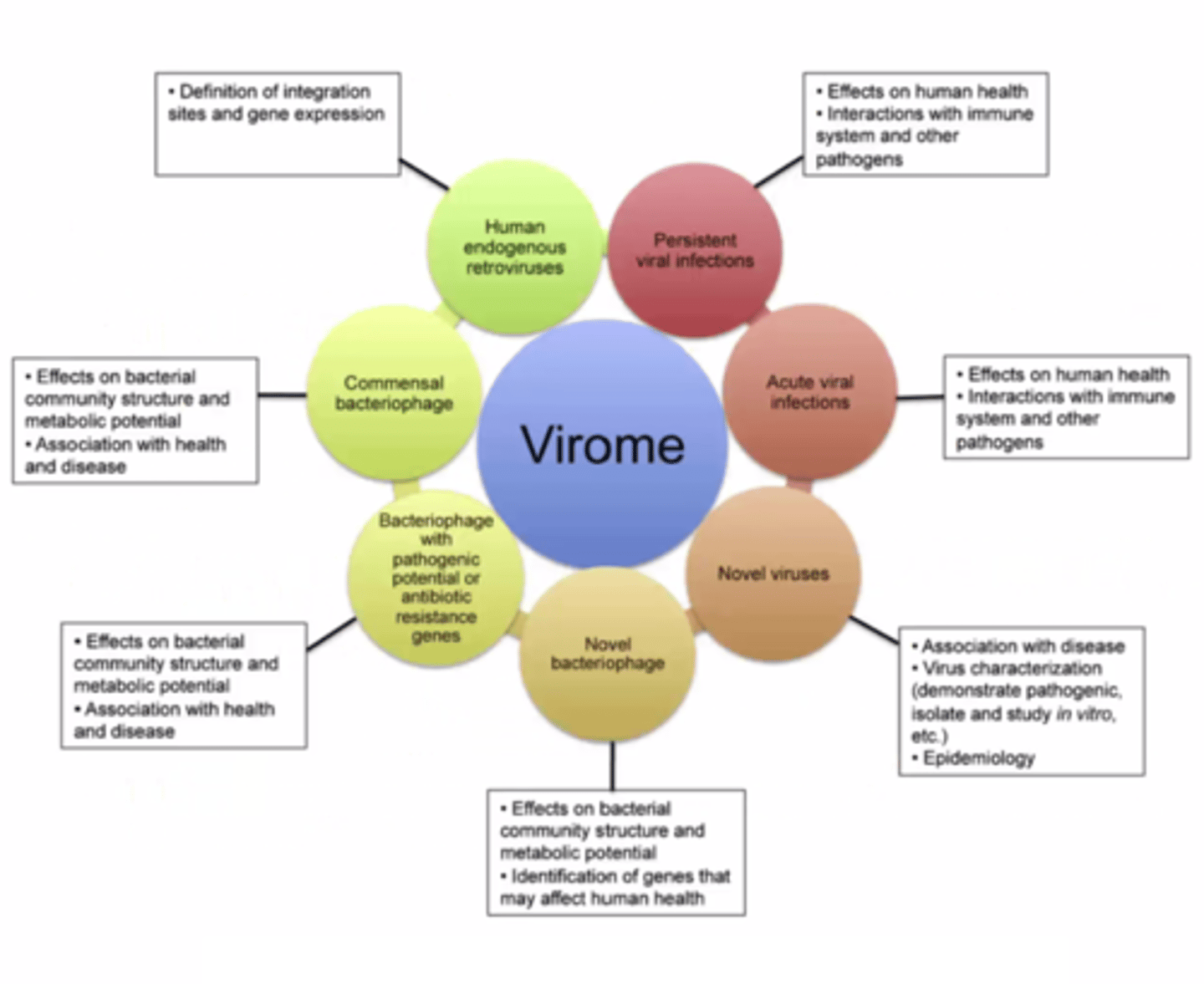
virome as a defence
bacteriophages infect bacteria including potential pathogens
Artificially Acquired Active Immunity
Antibodies are forced to be made by the body by intentionally stimulating it eg vaccine
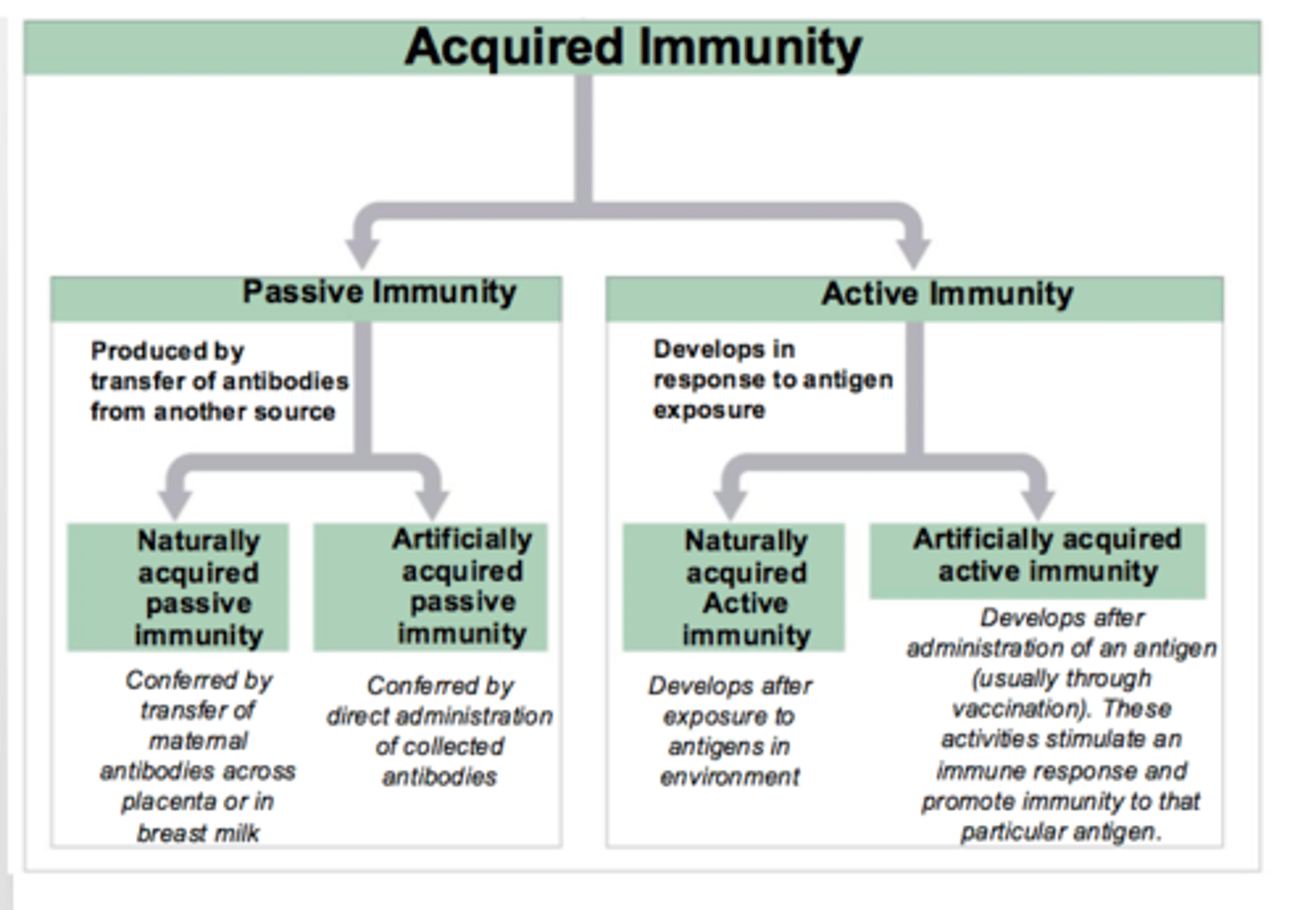
Artificially acquired passive immunity
Antibodies gathered from a human or other animal and are injected into an individual. Ex.) immune serum
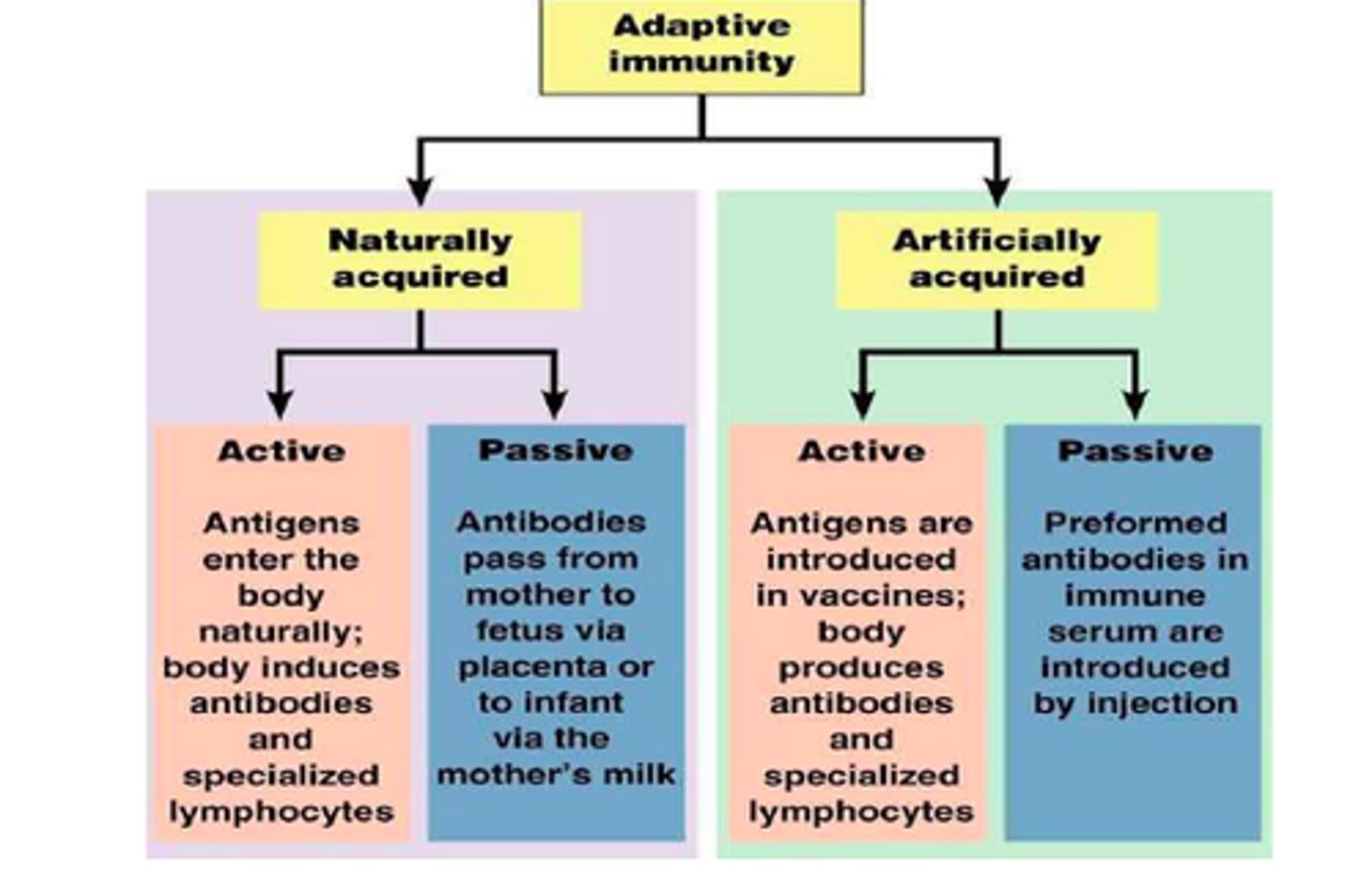
Naturally acquired passive immunity
Antibodies are passed from mother to fetus via the placenta and breast milk
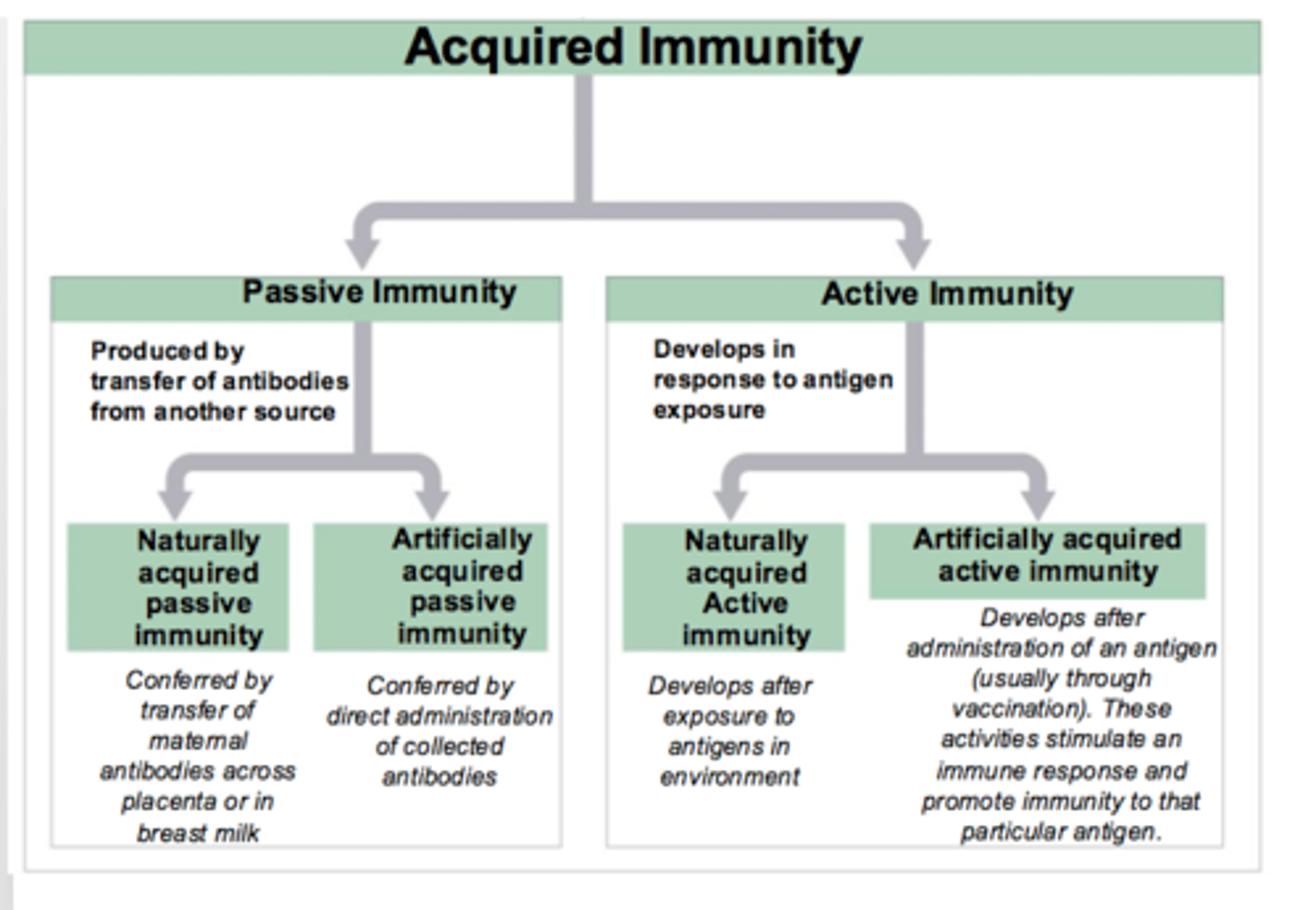
naturally acquired active immunity
antibodies made due to direct exposure to an antigen
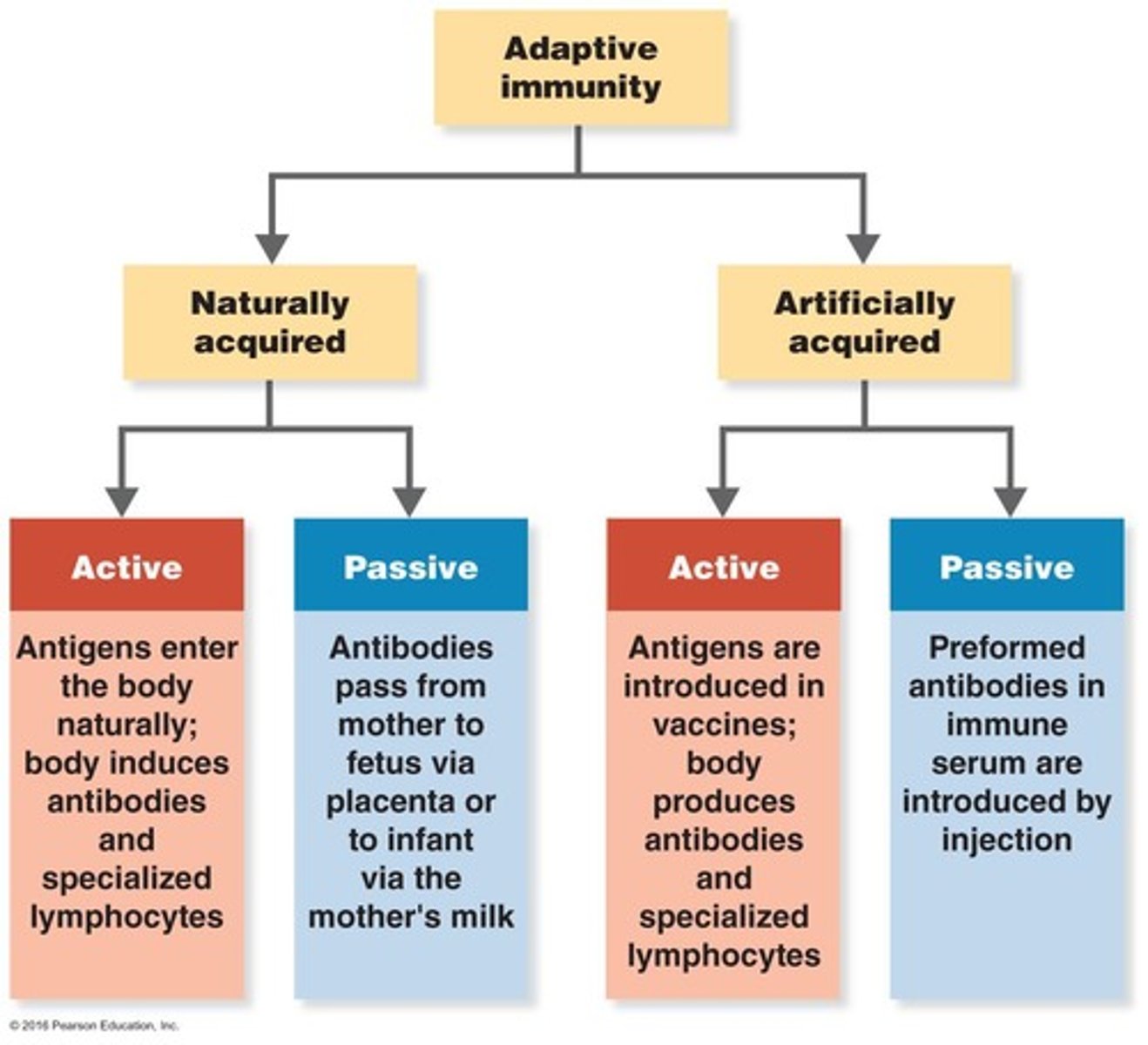
active immunity
A form of acquired immunity in which the body produces its own antibodies against disease-causing antigens.
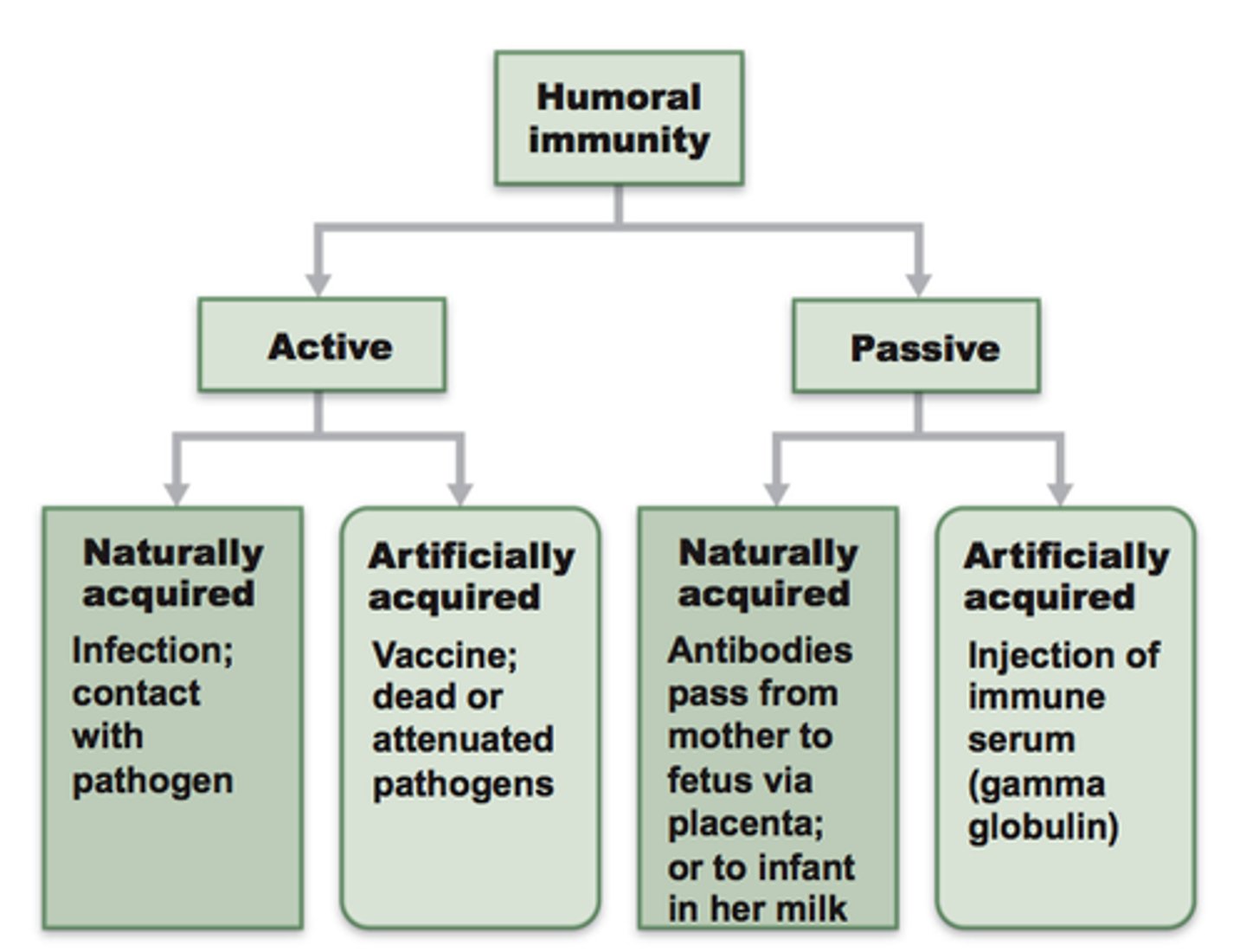
passive immunity
Immunity conferred by transferring antibodies from an individual who is immune to a pathogen to another individual.
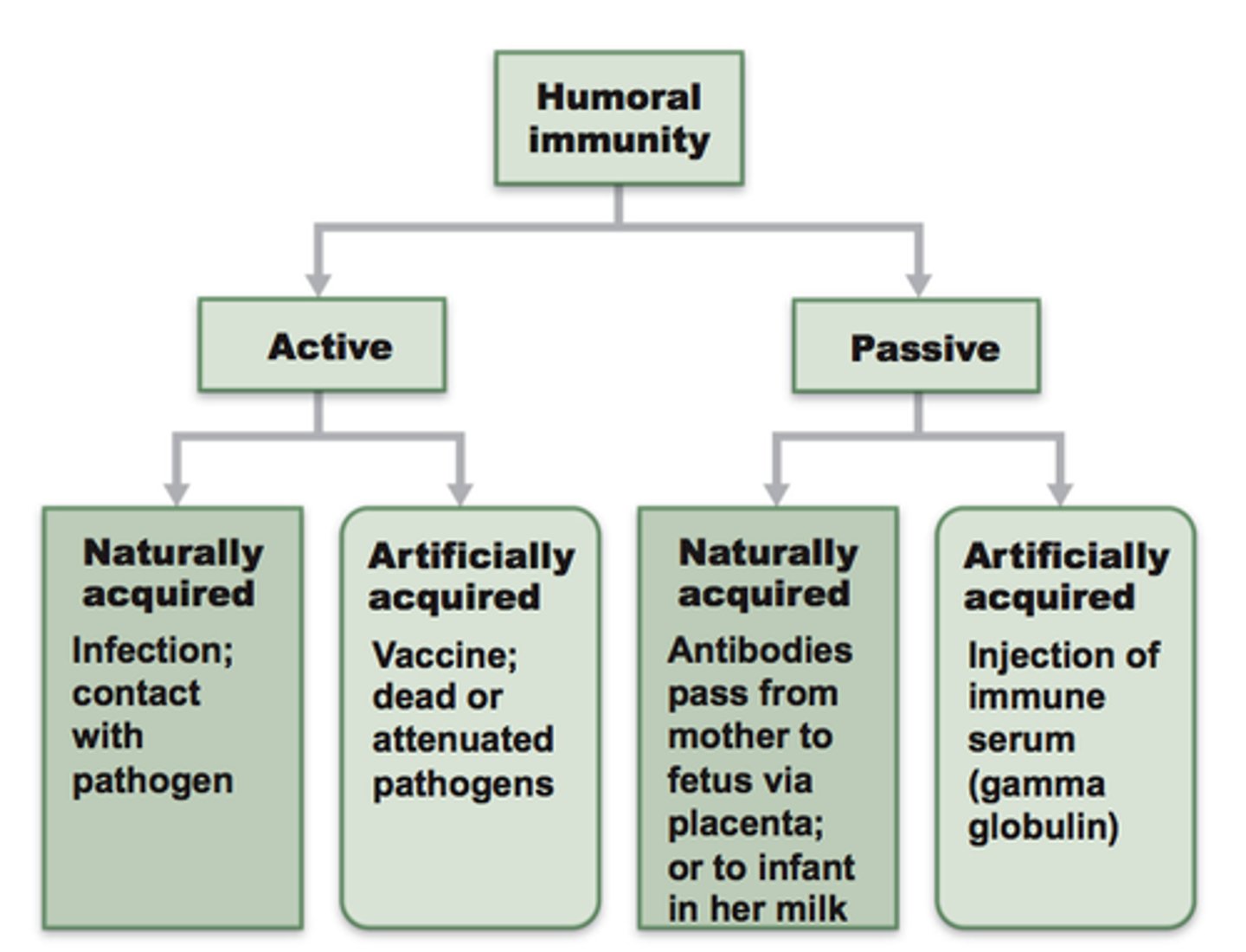
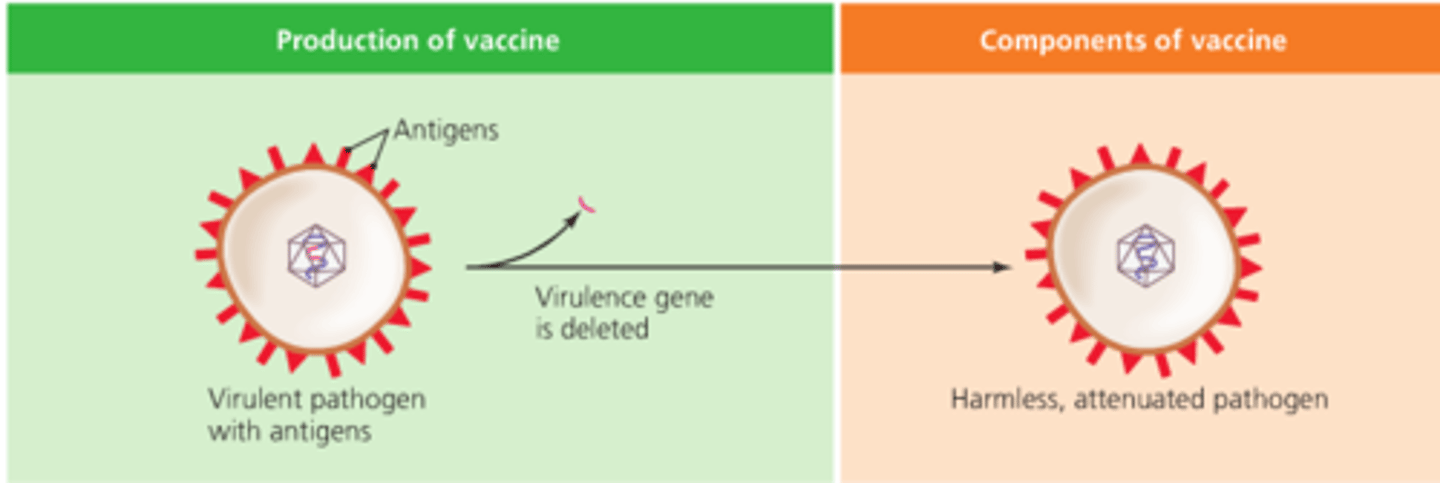
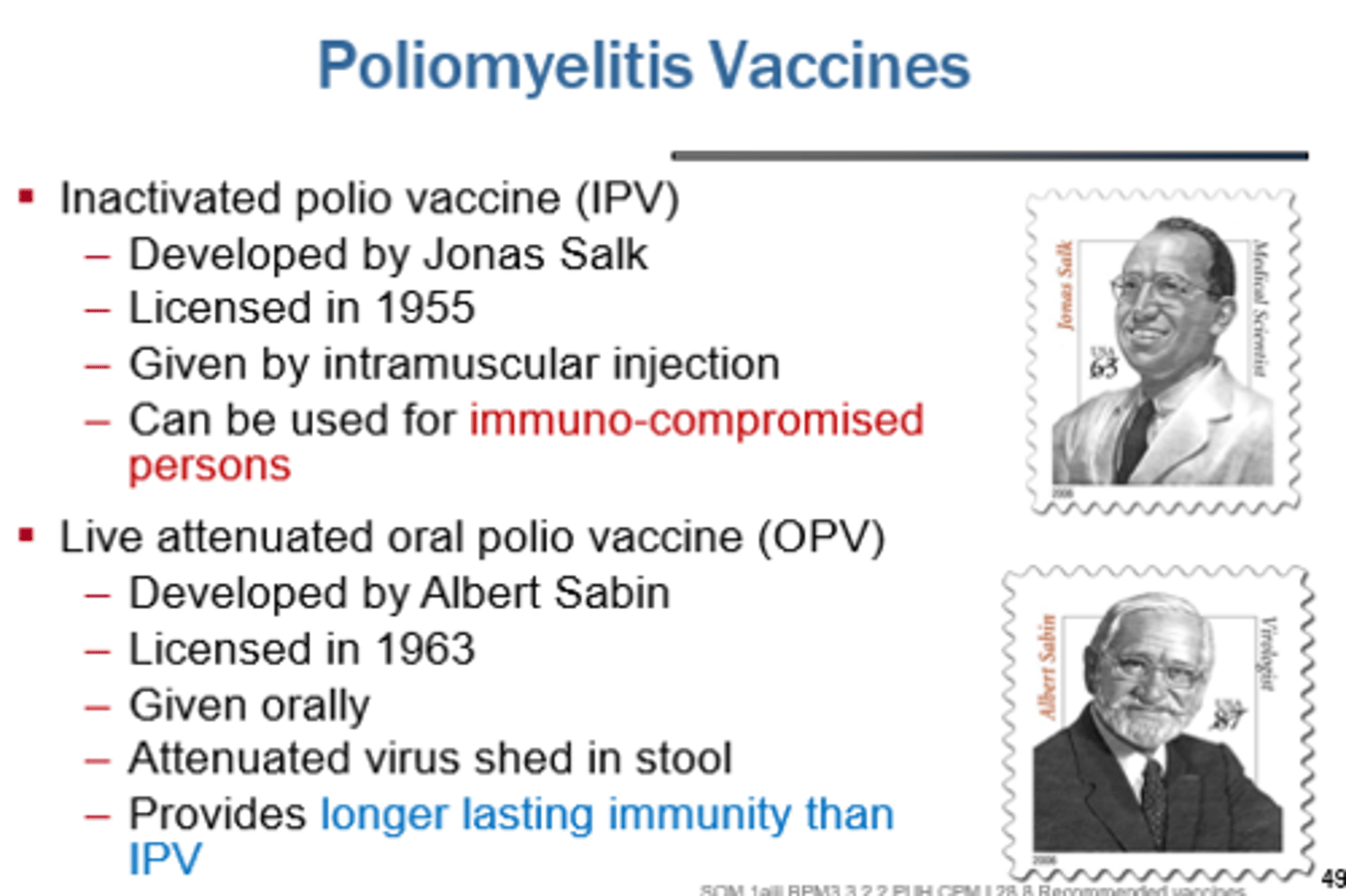
attenuated vaccine
vaccine composed of a weakened form of the pathogen that is generally unable to cause disease
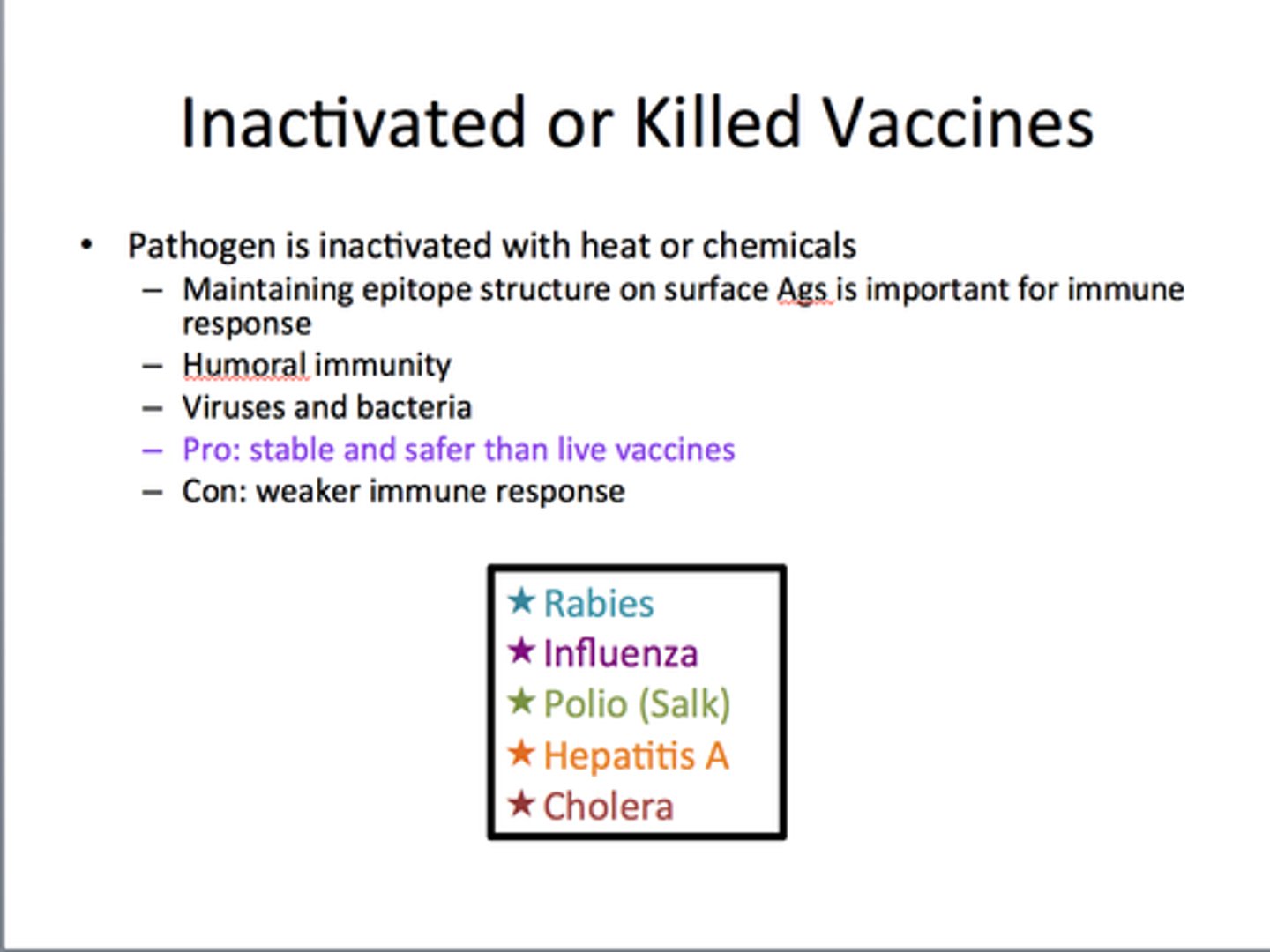
Inactivated vaccine
vaccine composed of killed bacterial cells, inactivated virus, or fractions of the pathogen
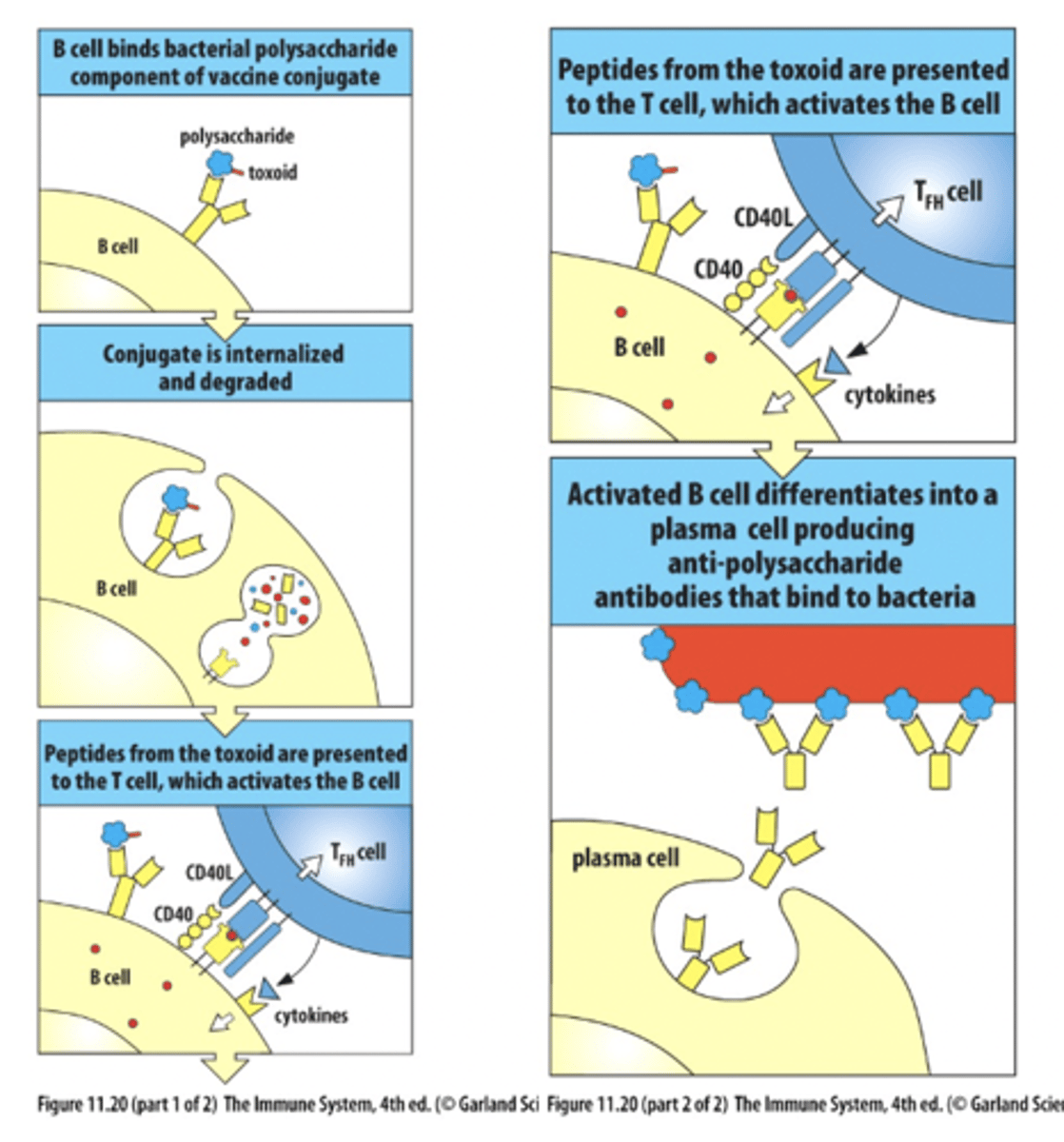
Conjugate vaccine
specialized immunizations that chemically link a weak bacterial sugar coating (polysaccharide) to a strong carrier protein to trigger antibody production
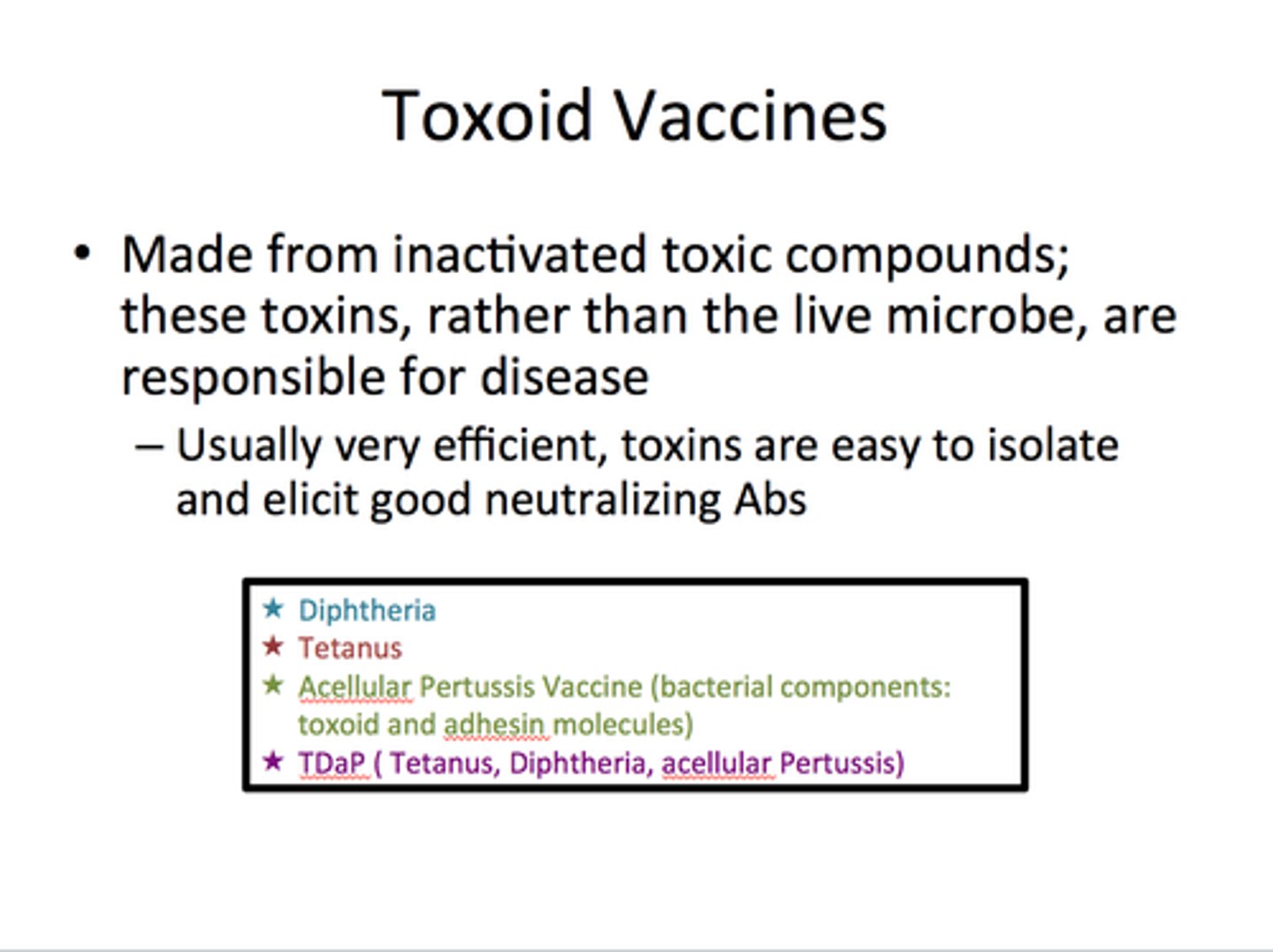
Toxoid vaccine
a modified, harmless version of a bacterial toxin used to 'train' an immune response
Why are live attenuated vaccines not recommended for people with weakened immune systems?
There is a chance the weakened virus can still infect a weakened immune system
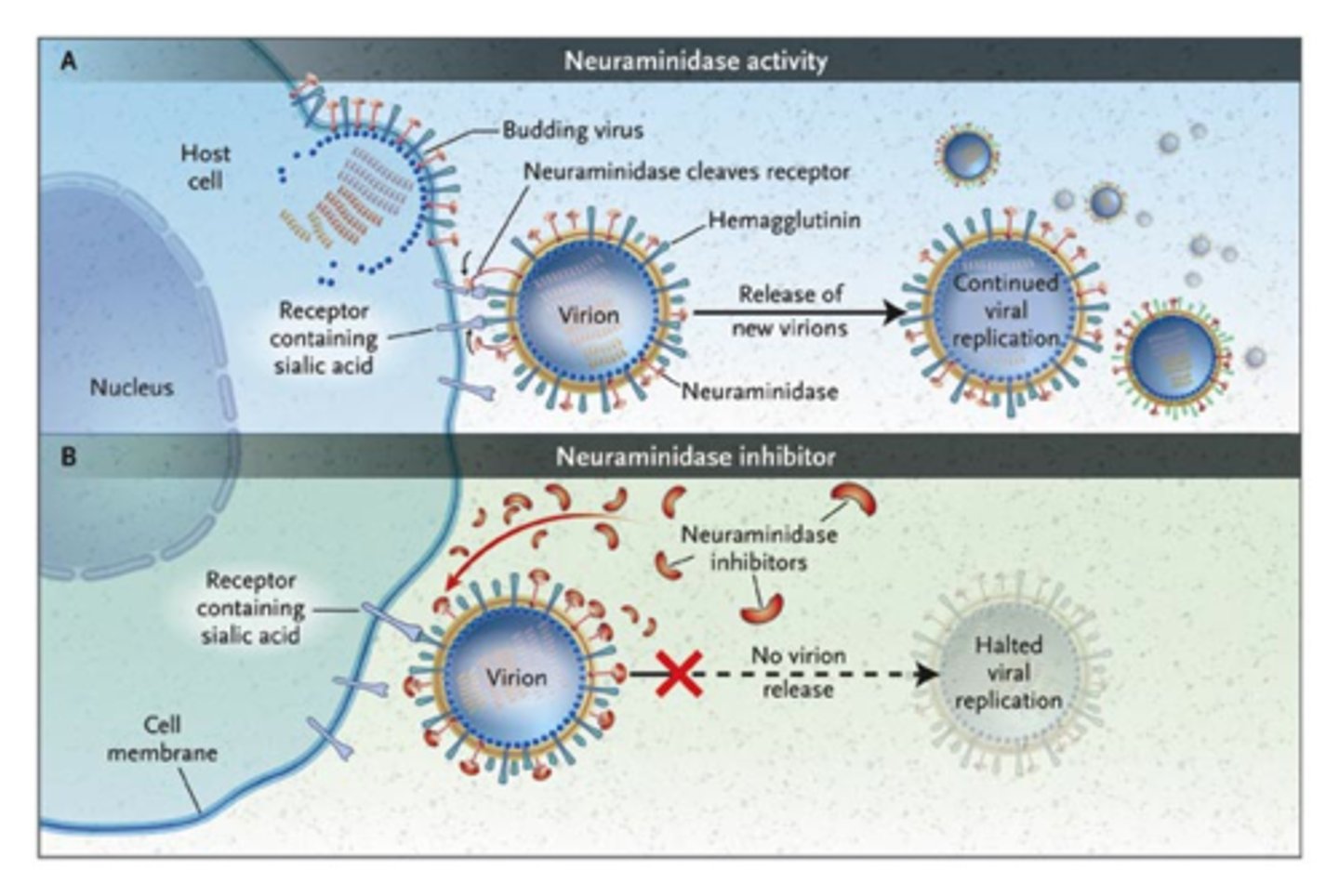
Tamiflu (oseltamivir) Mechanism of Action
Drug binds to host cell membranes and prevents flu virus from budding
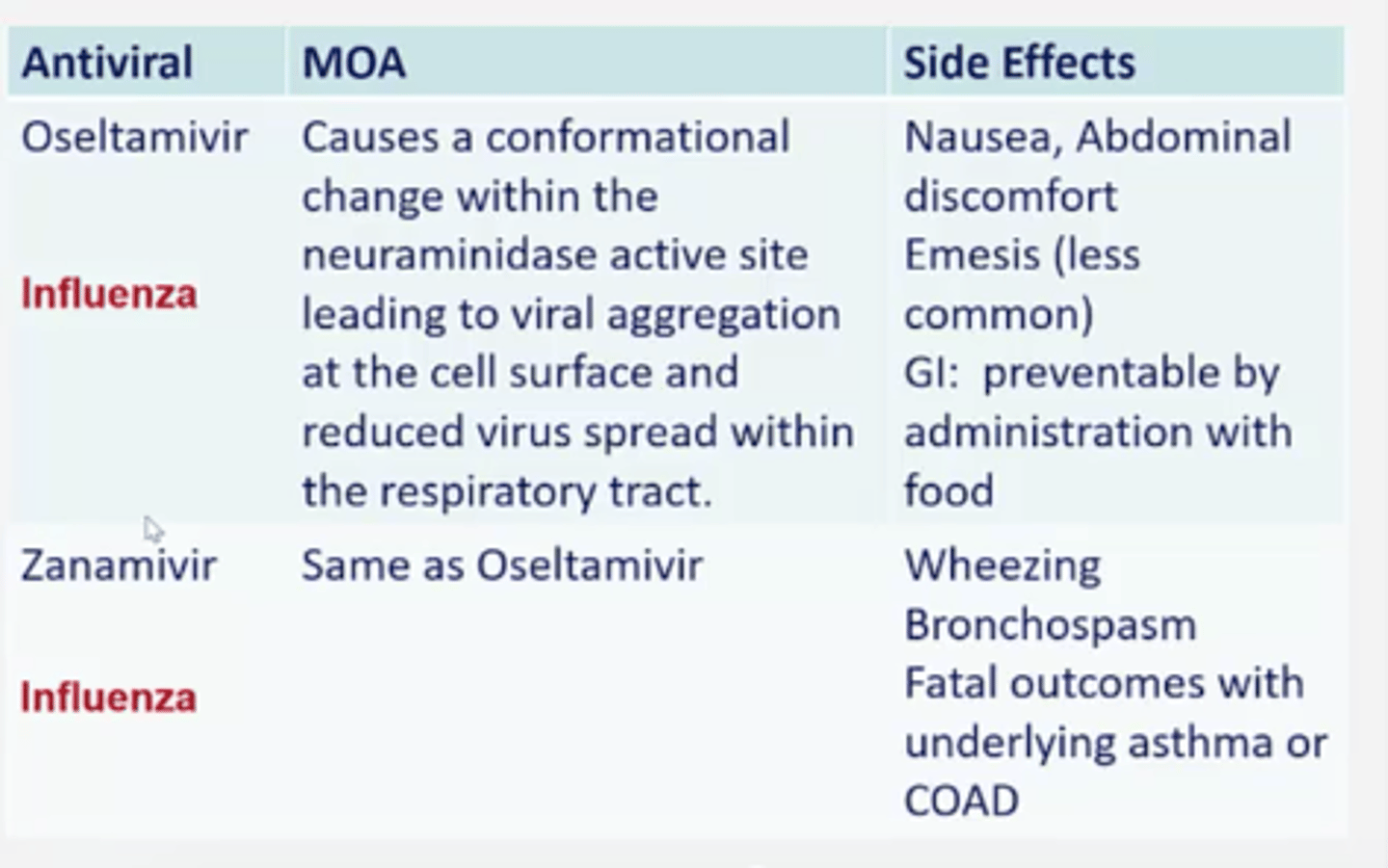
Tamiflu used for?
Influenza A and B
What is the difference between a leukocyte and lymphocyte?
All lymphocytes are leukocytes but lymphocytes specifically reside in the lymph nodes.
MHC I
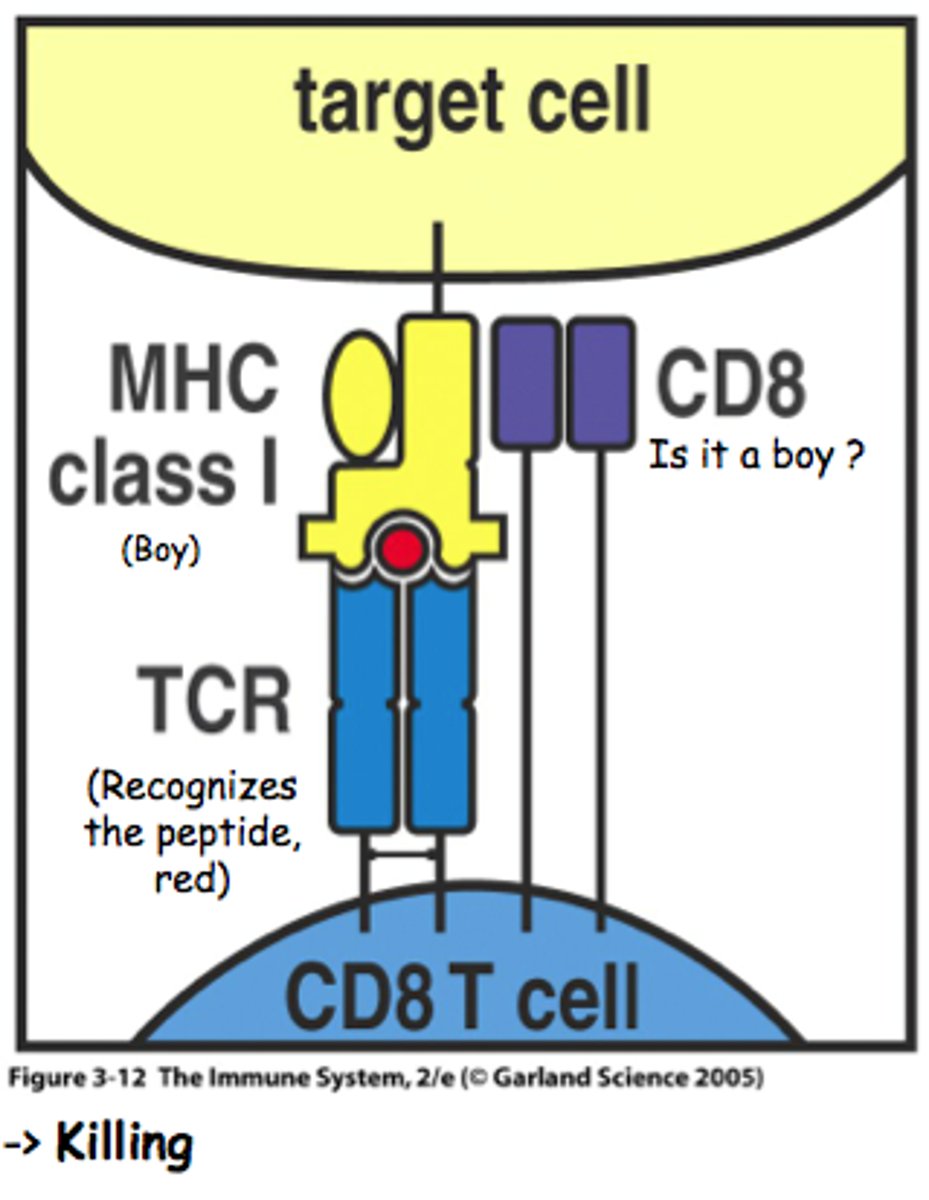
molecules found on every body cell that presents antigens from endogenic pathogens to CD8+ T cells. Healthy cells bind this to NK cells to signal they are not cancerous
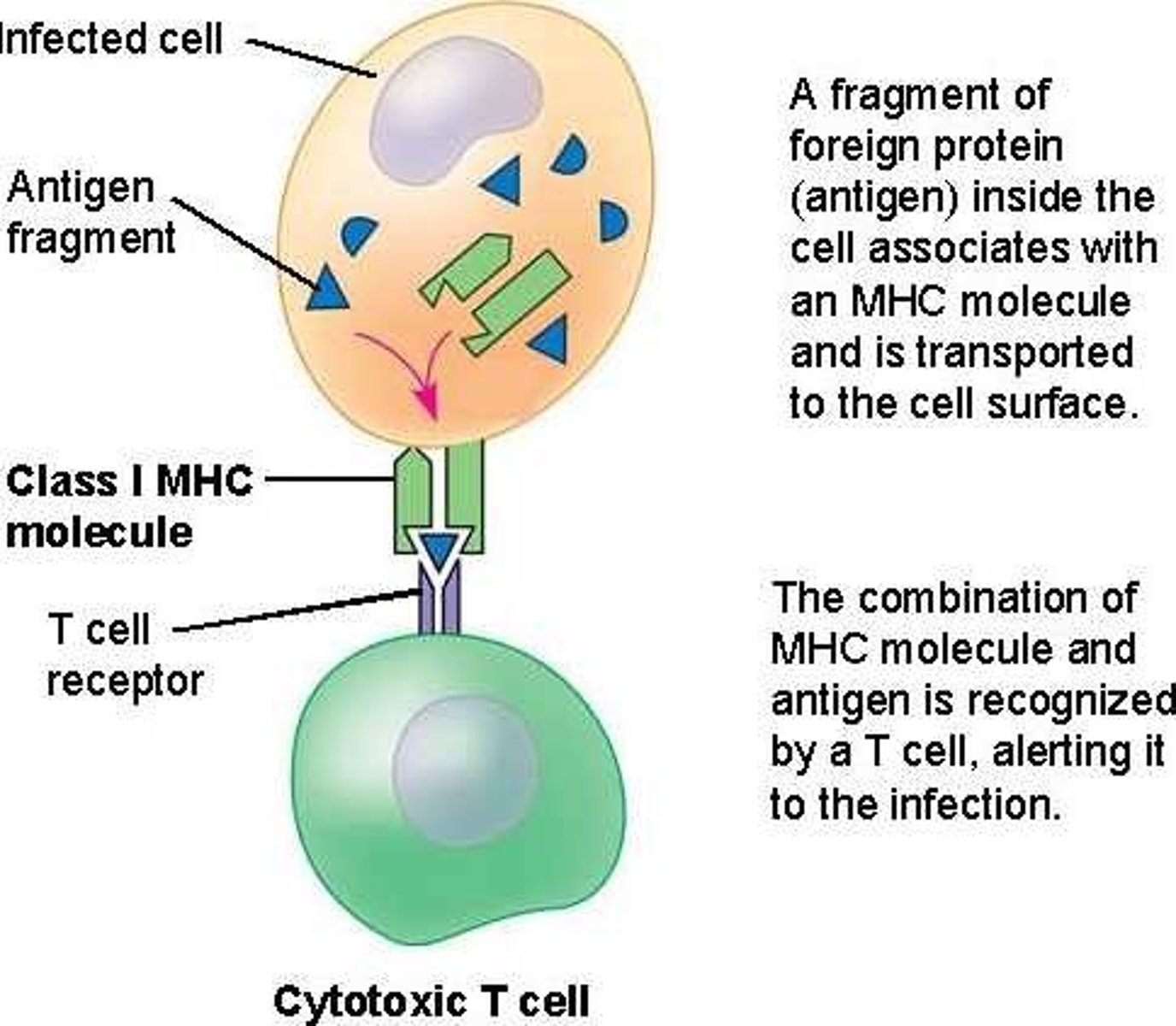
CD8
A coreceptor present on most cytotoxic T cells, that binds to class I MHC molecules, enhancing the interaction between the T cell and a target cell.
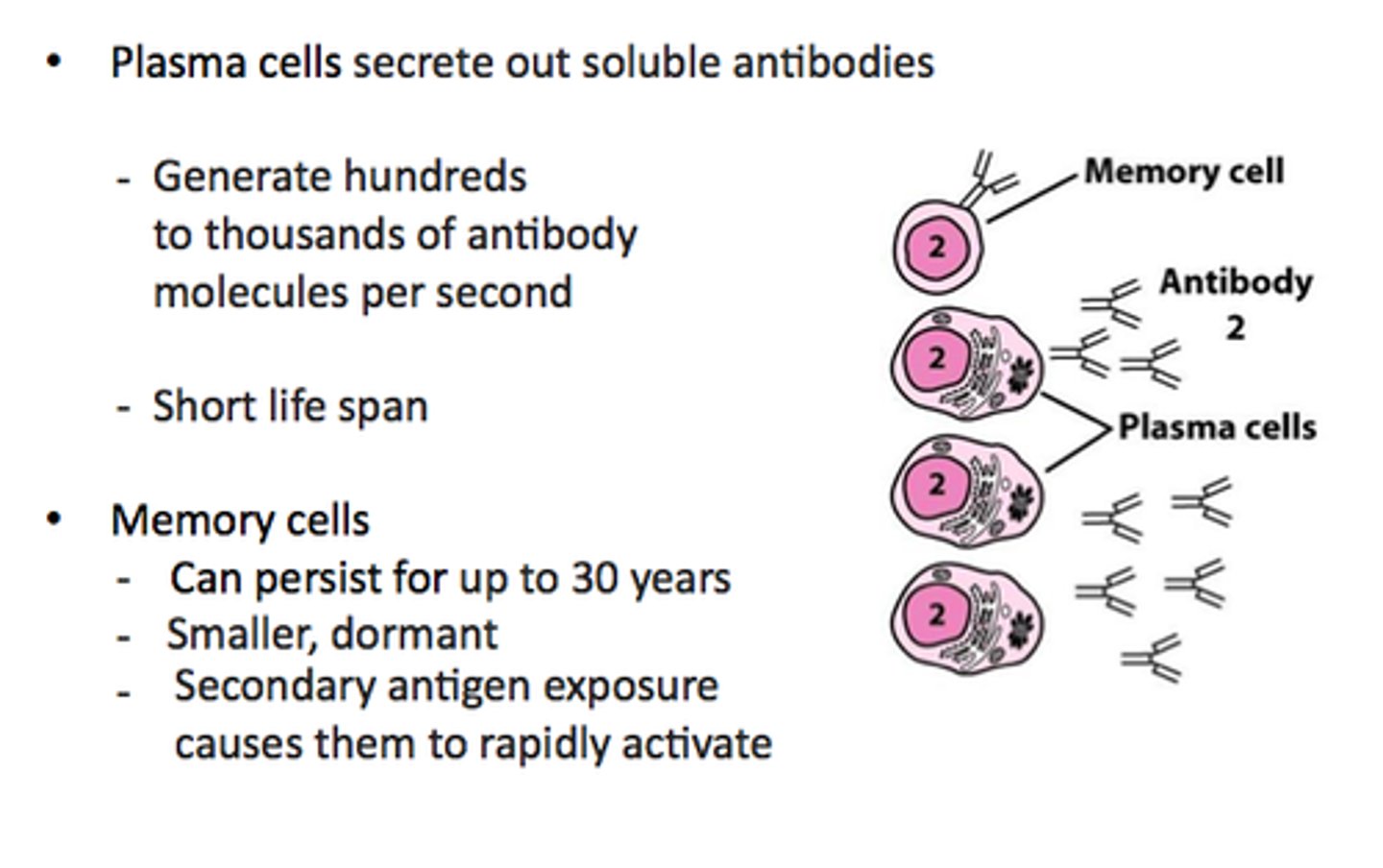
memory b cells
remembers the antigens of its mother B cell to speed up immune process by bypassing antigen presentation and activation to antibody production (and increases antibodies created)
What cells are part of the innate immune response?
Natural killer cells, neutrophils, macrophages (from monocytes) or dentritic cells
What cells are part of the adaptive immune response?
Helper T cells, Cytotoxic T cells, B lymphocytes, Plasma cells, Memory B cells
Why is it helpful for the body to have 2nd and 3rd line of defense
Innate, 2nd line, is the immediate, nonspecific defense to stop the spread of pathogens. Adaptive, 3rd line, is the long lasting, antigen targeted specific defense to prevent reinfection.
Allergen
a substance that causes an allergic reaction
Histamine
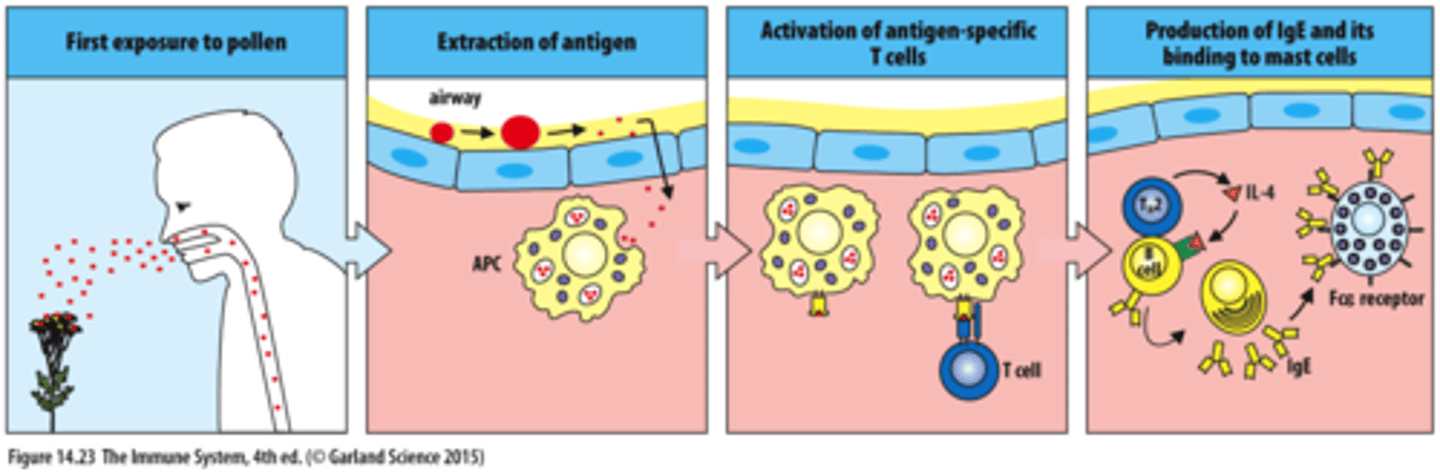
Chemical stored in mast cells that triggers dilation and increased permeability of capillaries, causes symptoms like itching and swelling.
Sensitization
period before allergy symptoms where B cells erroneously create IgE for allergen from an APC and spread it to mast cells
antigen presentation in MHC 1 process
Virus enters cell -> biosynthesis of viral proteins -> MHC 1 picks up a piece of viral protein -> presents on outside of hijacked cell
antigen presentation in MHC 2 process
Antigen killed by neutrophils -> debris of dead antigen eaten by macrophage -> macrophage presents antigen with MHC 2
Why are dendritic cells considered important "bridge" cells between innate and adaptive immunity?
They are better at activating naive T cells faster than macrophages
Why is antigen presentation so important to T-cells?
T-cells cannot act without verification of MHC
Epitope
the part of an antigen that can be identified by the immune system and antibodies bind to
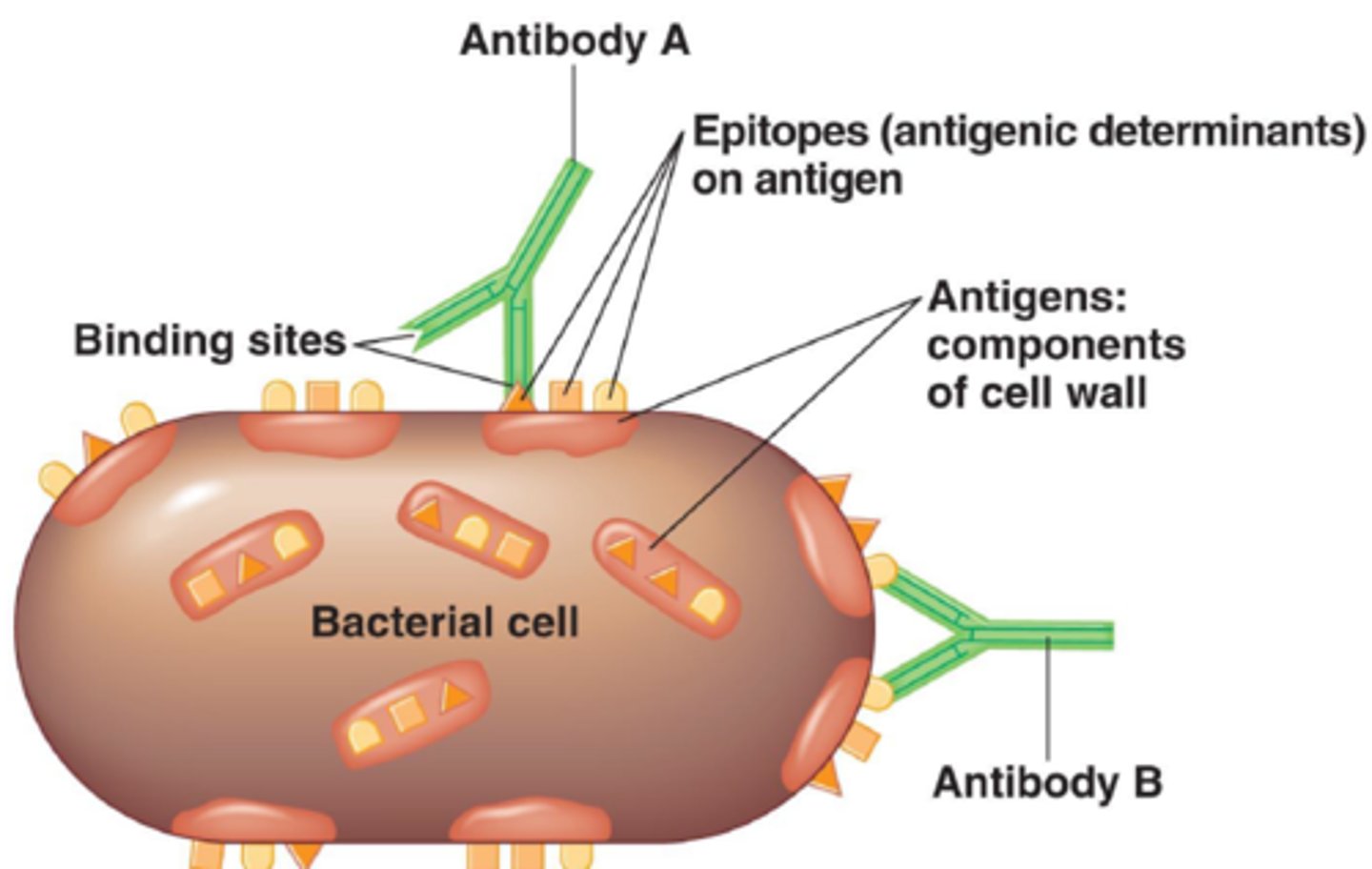
Why are memory cells important in later exposures to the same pathogen?
By recognizing the pathogen earlier and not waiting for presentation, it can release more antibodies faster than the first time
Beta-lactam antibiotic targets
targets bacterial cell wall production
Beta-lactam examples
penicillins, cephalosporins, carbapenems
Beta-lactam effective against
broad spectrum but more effective against gram +
Aminoglycosides target
targets ribosomes -> inhibits protein synthesis -> inhibits overall growth
aminoglycosides examples
Gentamicin
Tobramycin
Amikacin
Streptomycin
Aminoglycosides effective against
Broad Spectrum equally
Fluoroquinolones target
Targets DNA synthesis
Fluoroquinolones examples
Ciprofloxacin
Levofloxacin
Moxifloxacin
Fluoroquinolones effective against
Broad spectrum
Sulfa targets
Targets metabolisms
Sulfa examples
Bactrim (sulfamethoxazole - trimopethrim)
Sulfa effective against
Broad spectrum
Penicillins are isolated from
Fungi
Tetracycline
Not a true aminoglycoside by inhibits ribosomes
Cipro mechanism of action
inhibits DNA replication by destroying DNA gyrase
Bactrim, Septra, sulfamethoxazole mechanism of action
competitively inhibits folic acid metabolism
Betalactamase
Enzyme produced by bacteria to destroy beta lactam rings of beta lactam antibiotics
Explain how bacteria become resistance to antibiotics?
Develop R-plasmids that then change genes to express antibiotic resistance