Gas Laws Test
 Call Kai
 Learn
Learn Practice Test
 Spaced Repetition
 Match
Match Flashcards
 Knowt Play
1/28

There's no tags or description
Looks like no tags are added yet.
Name | Mastery | Learn | Test | Matching | Spaced | Call with Kai |
|---|
No analytics yet
Send a link to your students to track their progress
29 Terms
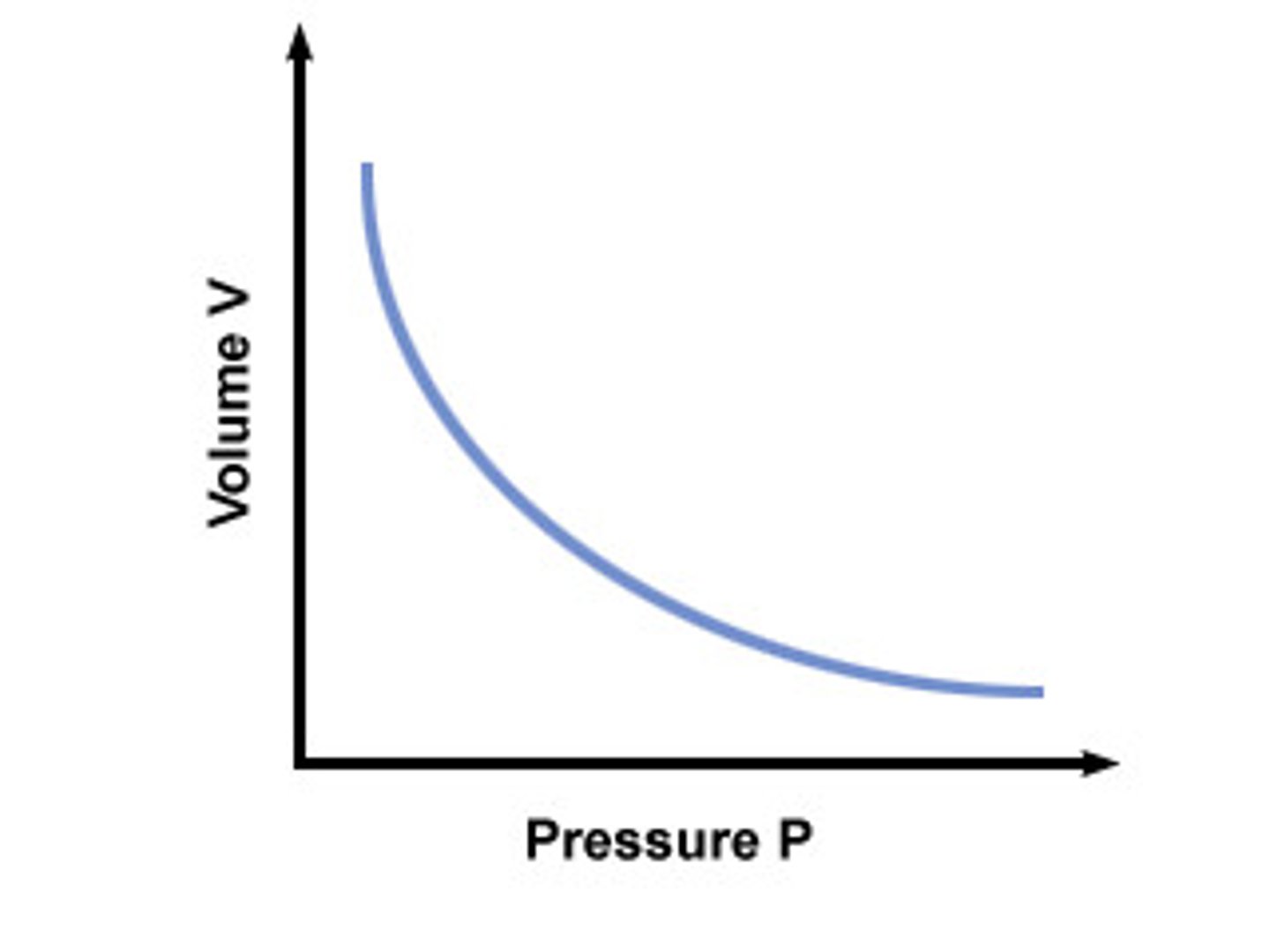
Boyle's Law
increase in pressure causes a decrease in volume of gas (vis-versa)
Charle's Law
A football inflated inside and then taken outdoors on a winter day shrinks slightly.
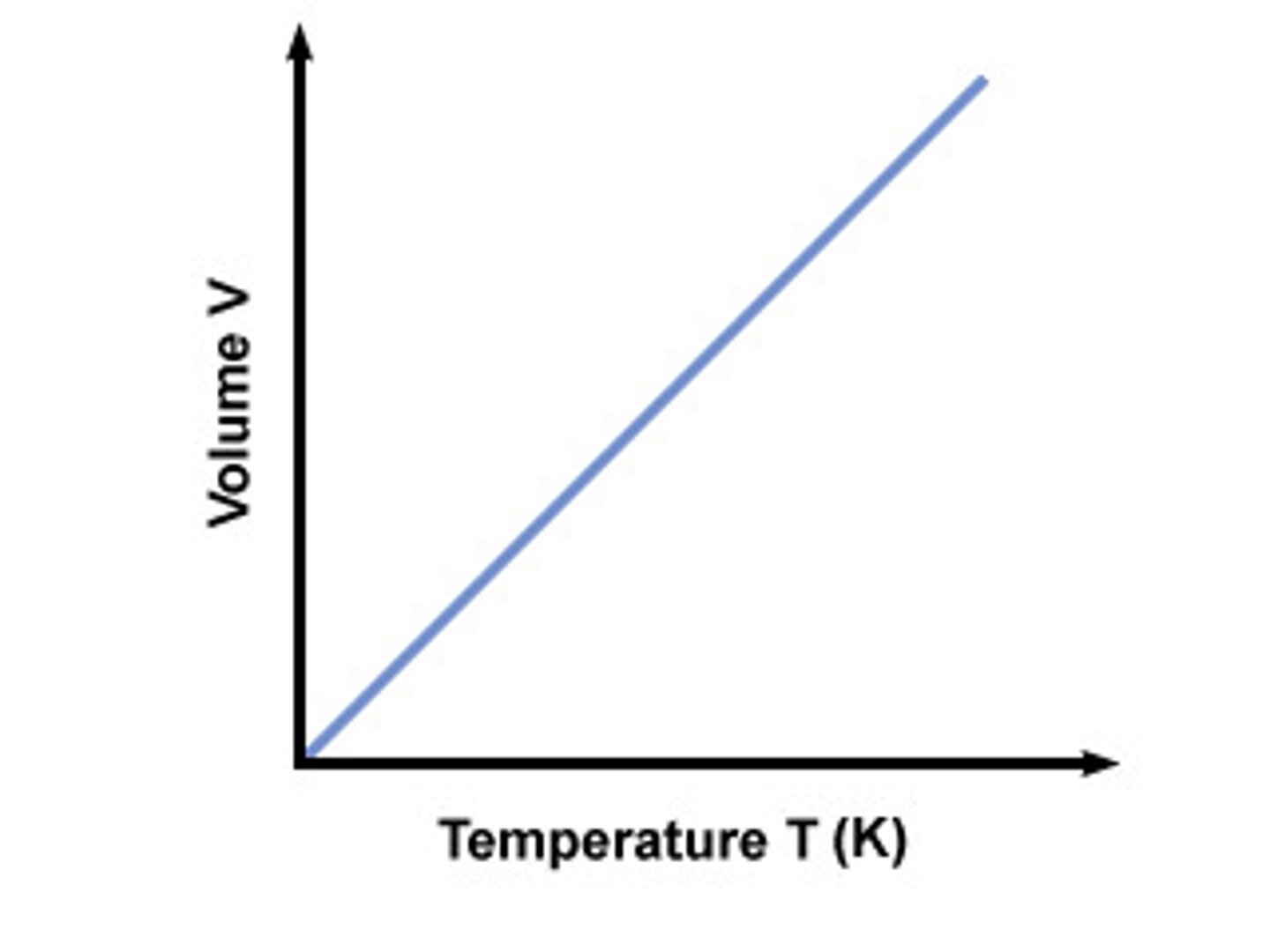
Charles' Law
A slightly underinflated rubber life raft left in bright sunlight swells up
Charles' Law
The plunger on a turkey syringe thermometer pops out when the turkey is done (The volume of air trapped under the plunger increases when the temperature inside the turkey climbs)
Charles' Law
an increase in temperature causes an increase in volume of gas (vis-versa)
Boyle's Law
The bubbles exhaled by a scuba diver grow as the approach the surface of the ocean. (The pressure exerted by the weight of the water decreases as rise to surface, so the volume of the bubbles increases as they rise.)
Boyle's Law
Deep sea fish die when brought to the surface. (The pressure decreases as the fish are brought to the surface, so the volume of gases in their bodies increases, and pops bladders, cells, and membranes).
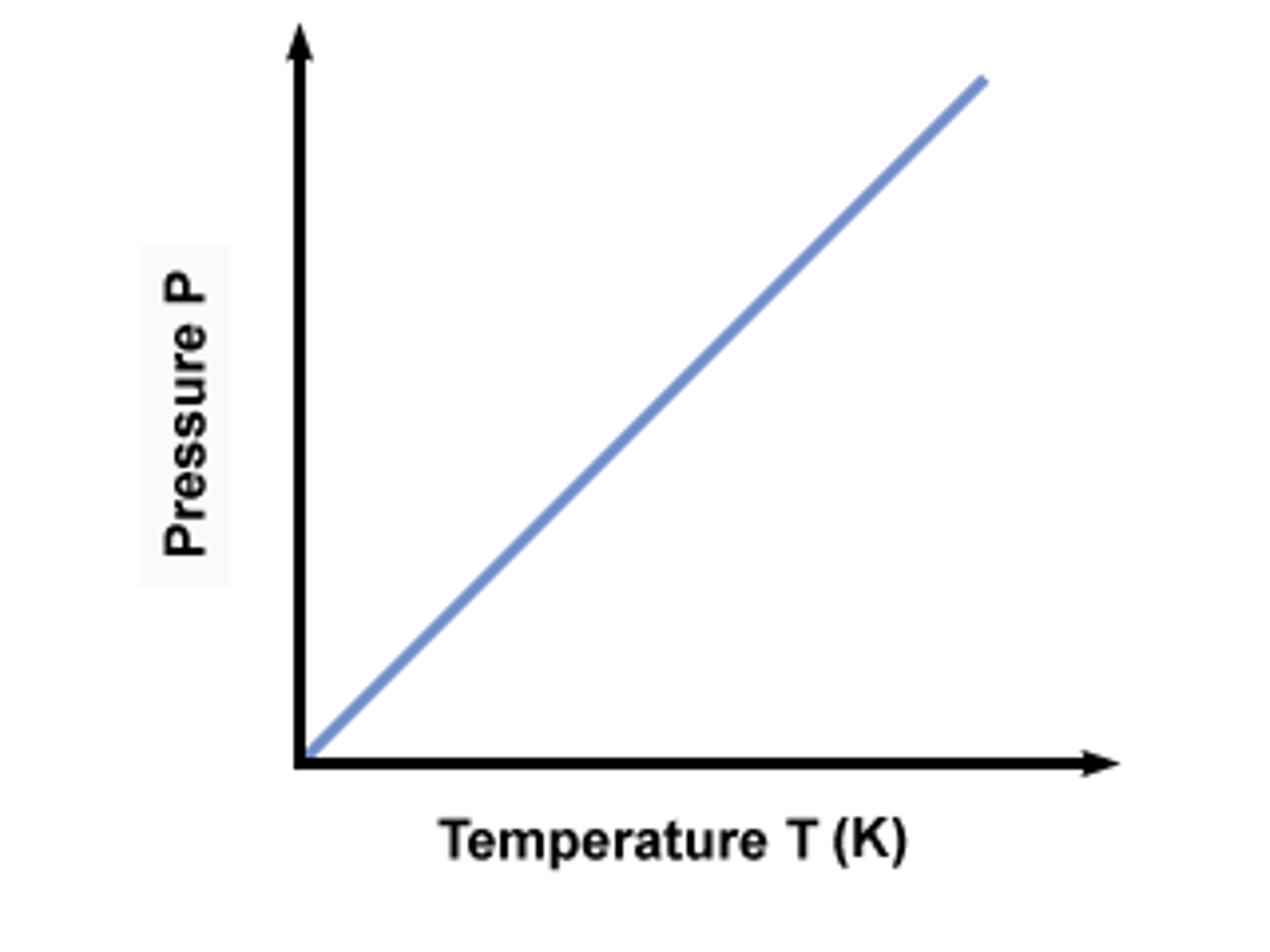
Gay-Lussac's Law
An increase in temperature causes an increase in pressure (vis-versa)
Gay-Lussac's Law
The gauge pressure in a steel-belted automobile tire will be higher when the car is traveling over hot asphalt than it was when the car was in the garage.
Gay-Lussac's Law
Throwing an aerosol can into a fire may cause it to explode.
0.61 atm
What pressure would be required to contain 0.5 mol of SO2 gas in a 25.0 L container at a temperature of 100. C
0.13 atm
What pressure is required to contain 0.023 moles of nitrogen gas in a 4.2 L container at a temperature of 20 C?
77.0 L
What is the volume of a balloon if it contains 3.2 moles of helium at a temperature of 20. C and
standard pressure?
0.41 atm
What pressure would a sample of gas have if the volume is 10.0 L the number of gas particles
is 0.10 moles, and the temperature is 500. Kelvin?
4 Liters
What volume would a sample of gas have if the pressure is 8.2 atm, the number of gas
particles is 2.0 moles, and the temperature is -73 degrees Celsius?
9.89 moles
How many moles of gas does it take to occupy 120 liters at a pressure of 2.3 atmospheres and a temperature of 340 K?
34.9 atm
If I have a 50 liter container that holds 45 moles of gas at a temperature of 2000 C, what is the pressure inside the container?
274.5 atm
It is not safe to put aerosol canisters in a campfire, because the pressure inside the canisters gets very high and they can explode. If I have a 1.0 liter canister that holds 2 moles of gas, and the campfire temperature is 1400 C, what is the pressure inside the canister?
243.7 moles
How many moles of gas are in a 30 liter scuba canister if the temperature of the canister is 300 K and the pressure is 200 atmospheres?
Boyle's Law
indirect relationship between pressure and volume
Boyle's Formula
P1 x V1 = P2 x V2
Charles's Law
direct relationship between volume and temperature
Charles's Formula
V1/T1 = V2/T2
Gay Lussac's Law
the direct relationship between pressure and temperature
Gay Lussac's formula
P1/T1 = P2/T2
Combined Gas Law
a law combines Lussac's, Charles's, and Boyles's Law, indirect
Combined Gas Formula
P1V1/T1=P2V2/T2
Ideal gas law
the ideal law with all factors at STP, including # of moles
Ideal gas formula
PV=nRT