ANFS 240 - anatomical terminology
0.0(0)
Studied by 7 people Call Kai
 Learn
 Practice Test
 Spaced Repetition
 Match
 Flashcards
 Knowt Play
Card Sorting
1/60

Earn XP
Description and Tags
61 Terms
1
New cards
anatomy
study of the form, arrangement, & structure of the tissues & organs that compose the body
2
New cards
what are 5 categories of anatomy
my dog finds socks regularly
* microscopic
* developmental
* functional
* systematic
* regional
* microscopic
* developmental
* functional
* systematic
* regional
3
New cards
define microscopic anatomy
Use light & electron microscopy to study structures that cannot be seen by the naked eye
4
New cards
define developmental anatomy
study of how an organism evolves and changes throughout life
5
New cards
define functional anatomy
Studying the relationships between anatomical structures and their function
6
New cards
define systematic anatomy
Studying groups of organs & structures that are closely related in function & create body systems
7
New cards
define regional anatomy
* Study of anatomy based solely on location and the form of anatomical structures, rather than function
8
New cards
what are the 4 methods of anatomical examination
* external observation
* palpation
* percussion
* ausculation
* palpation
* percussion
* ausculation
9
New cards
define external observation
Simple observation without touching
10
New cards
define palpation
using touch to examine internal anatomical structures
11
New cards
define percussion
* Tapping or flicking over certain organs
* requires more advanced training
* requires more advanced training
12
New cards
define Auscultation
Listening (typically with a stethoscope) to determine the location and condition of internal structures
13
New cards
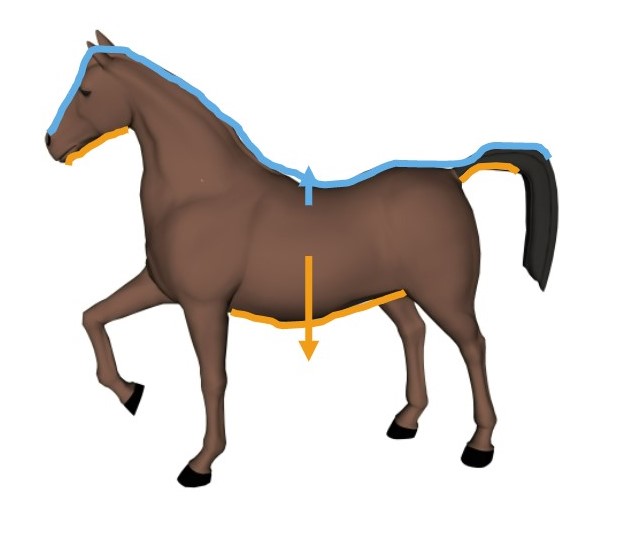
dorsal
toward the spine & corresponding surface of the head & tail
(think dorsal fins on the back)
\*does not apply to legs
(think dorsal fins on the back)
\*does not apply to legs
14
New cards
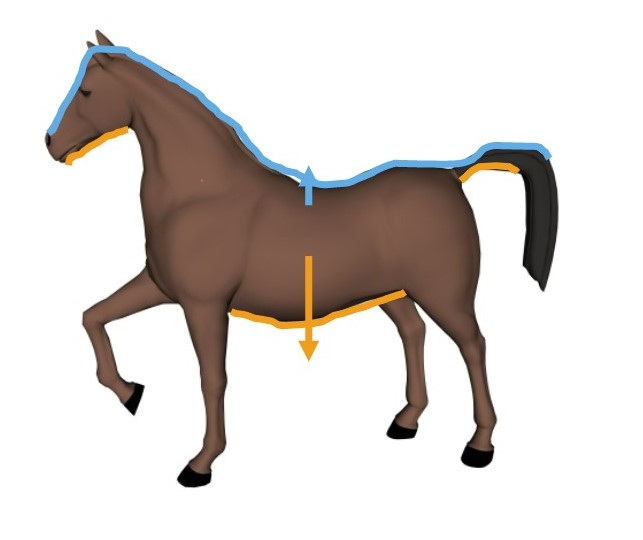
ventral
toward the belly & corresponding surface of the head & tail
\*does not apply to legs
\*does not apply to legs
15
New cards
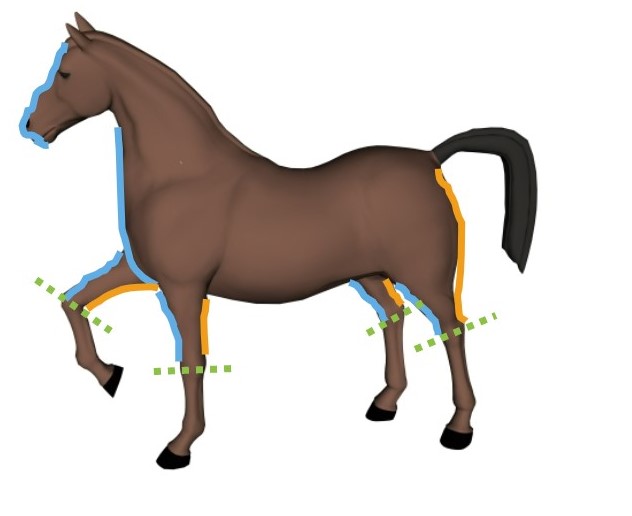
cranial
toward the head (cranium)
\*only applies above carpus/hock (knee joints)
\*only applies above carpus/hock (knee joints)
16
New cards
caudal
toward the tail
\*only applies above carpus/hock (knee joints)
\*only applies above carpus/hock (knee joints)
17
New cards
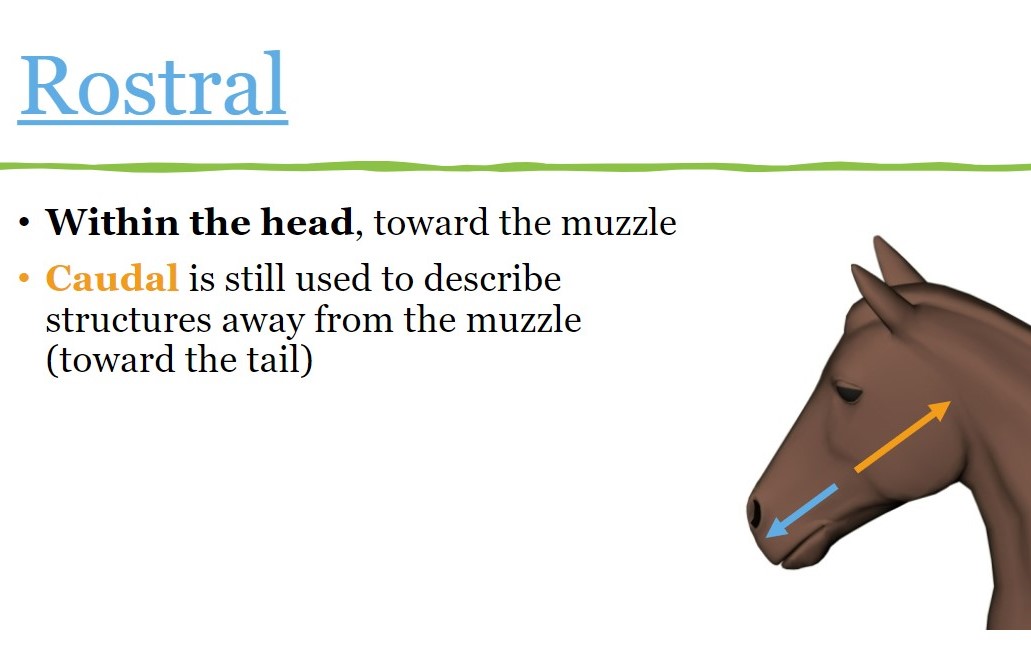
rostral
within the head, towards muzzle
\*cadual when referring to the head structures away from the muzzle
\*cadual when referring to the head structures away from the muzzle
18
New cards
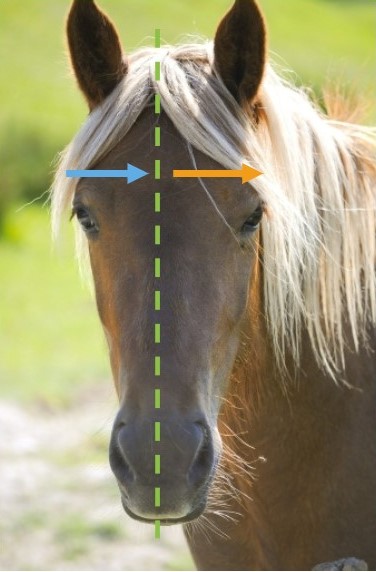
medial
toward midline, or the **median** plane
19
New cards
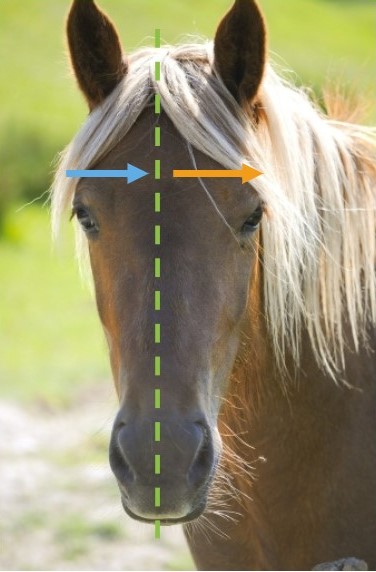
lateral
away from midline, toward the side or flank
20
New cards
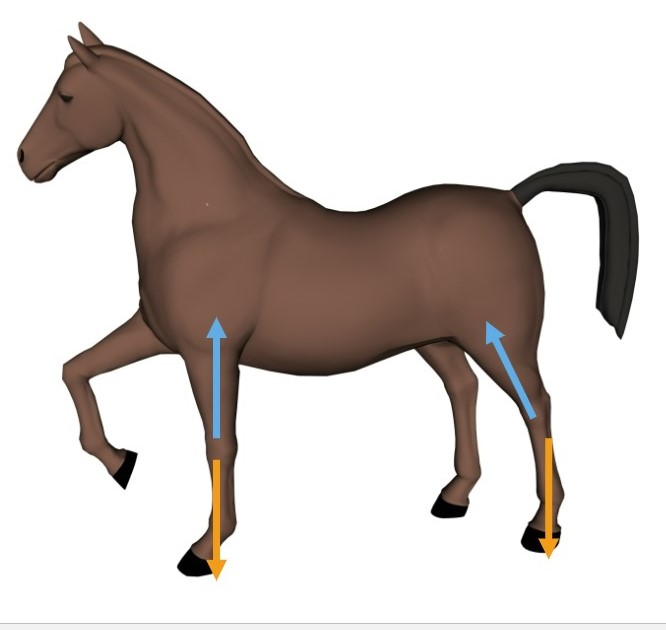
proximal
* applies mainly to limbs
* toward where limb attaches to body
* toward where limb attaches to body
21
New cards
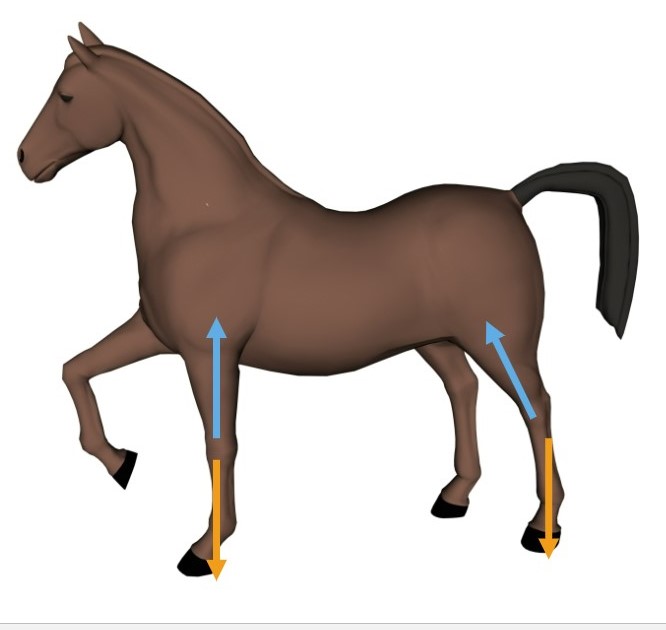
distal
* applies mainly to limbs
* away where limb attaches to body
* away where limb attaches to body
22
New cards
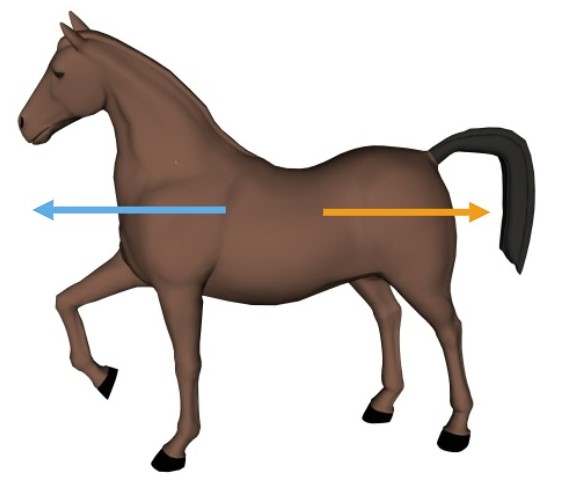
anterior (think in terms of an animal walking)
in the forward direction
23
New cards
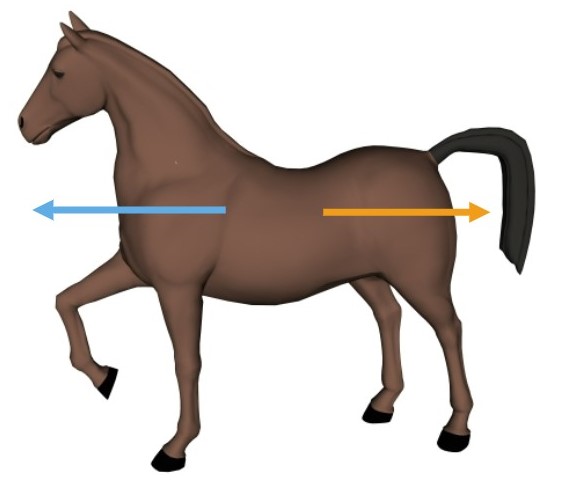
posterior (think in terms of an animal walking)
in the backward direction
24
New cards
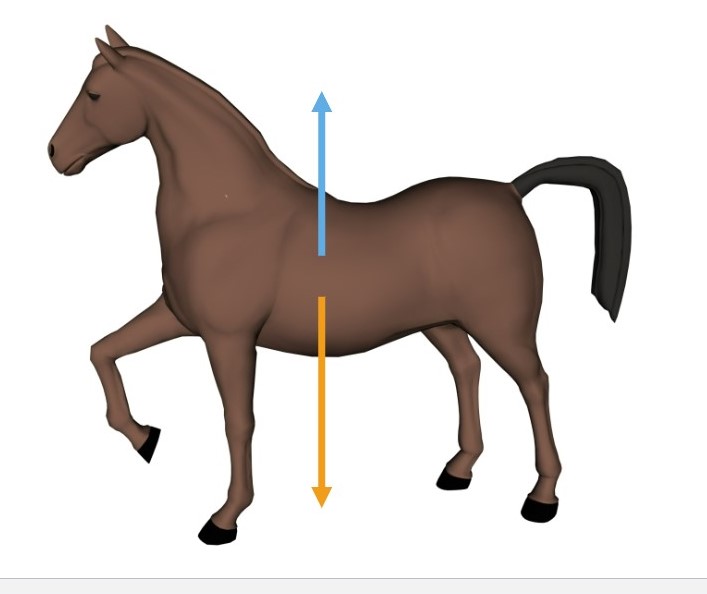
superior
toward the tallest point of the animal
25
New cards
inferior
toward the lowest point of the animal
26
New cards
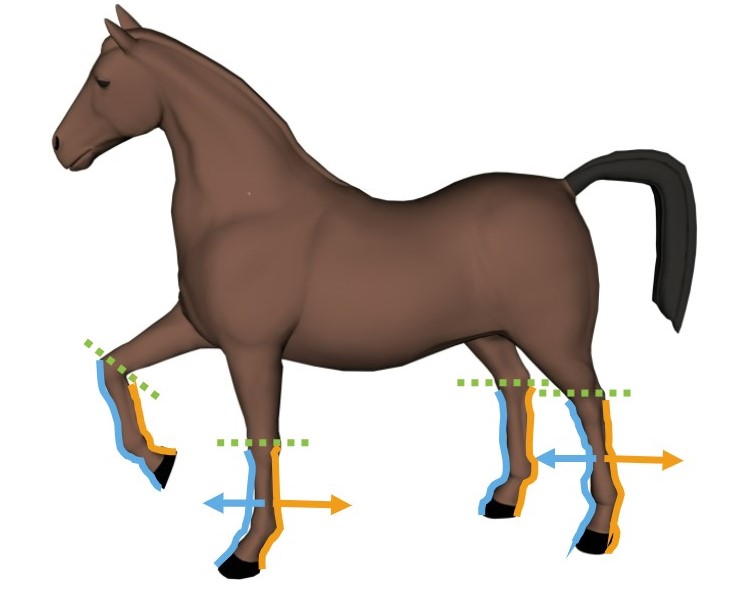
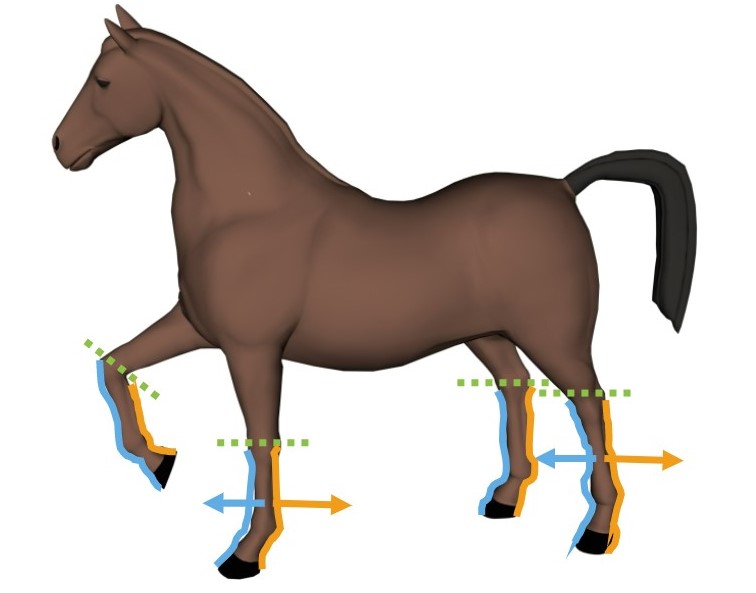
palmar
* refers to distal part of limb
* toward the “rear” of the front limb
* Think “palm”
* opposite is dorsal
* toward the “rear” of the front limb
* Think “palm”
* opposite is dorsal
27
New cards
plantar
\
* refers to distal part of limb
* toward the “rear” of the hind limb
* opposite is dorsal
* refers to distal part of limb
* toward the “rear” of the hind limb
* opposite is dorsal
28
New cards
volar
underside of the hoof
29
New cards
axial
* Used mainly to describe the anatomy of **digits (feet)**
* toward center of digit(s)
* toward center of digit(s)
30
New cards
abaxial
* Used mainly to describe the anatomy of **digits (feet)**
* away from center of digit(s)
* away from center of digit(s)
31
New cards
superficial
toward the surface
32
New cards
deep
away from the surface
33
New cards
peripheral
* Usually talking about specific structures or organs
* away from the point of origin/center
Ex: referencing nerves that branch off from central body would be described peripheral nerves
* away from the point of origin/center
Ex: referencing nerves that branch off from central body would be described peripheral nerves
34
New cards
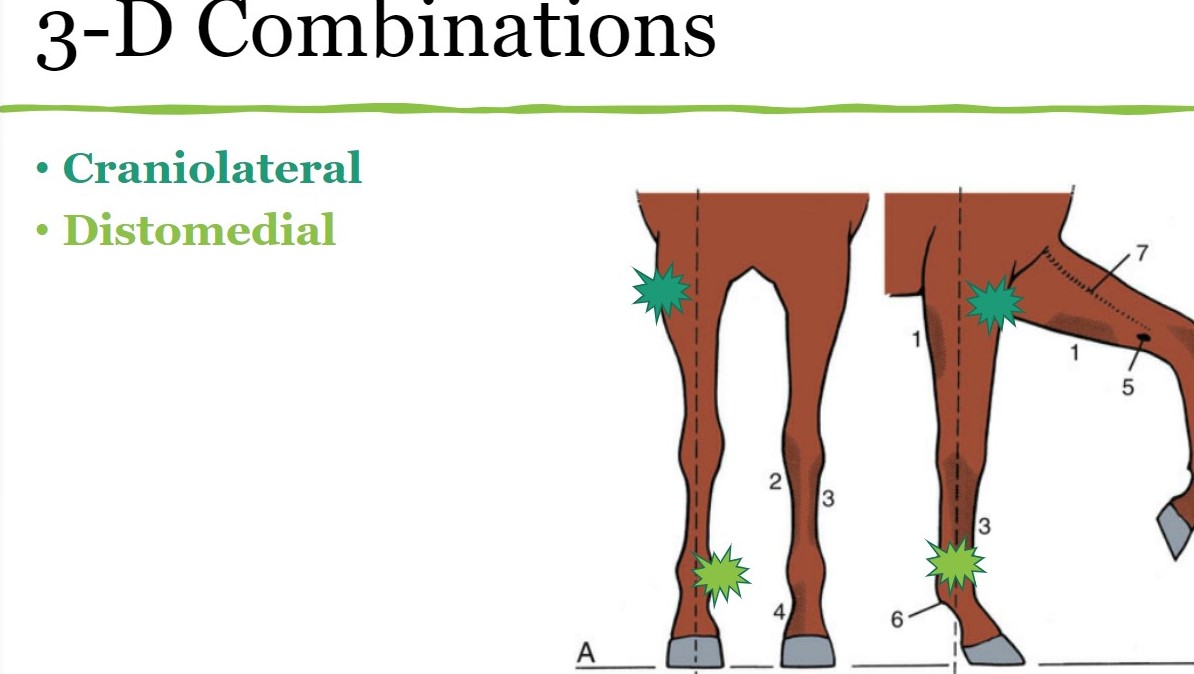
Craniolateral
* both cranial and lateral
* towards the head and away from midline
* towards the head and away from midline
35
New cards
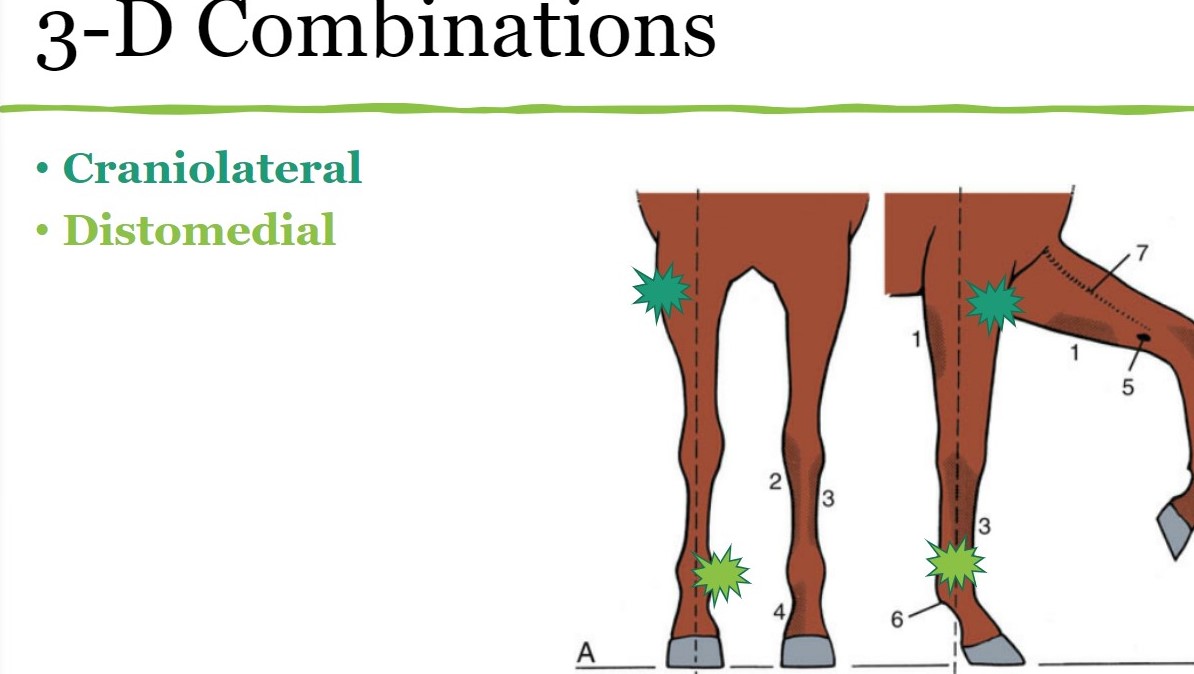
Distomedial
* both distal and medial
* away from the body and towards midline
* away from the body and towards midline
36
New cards
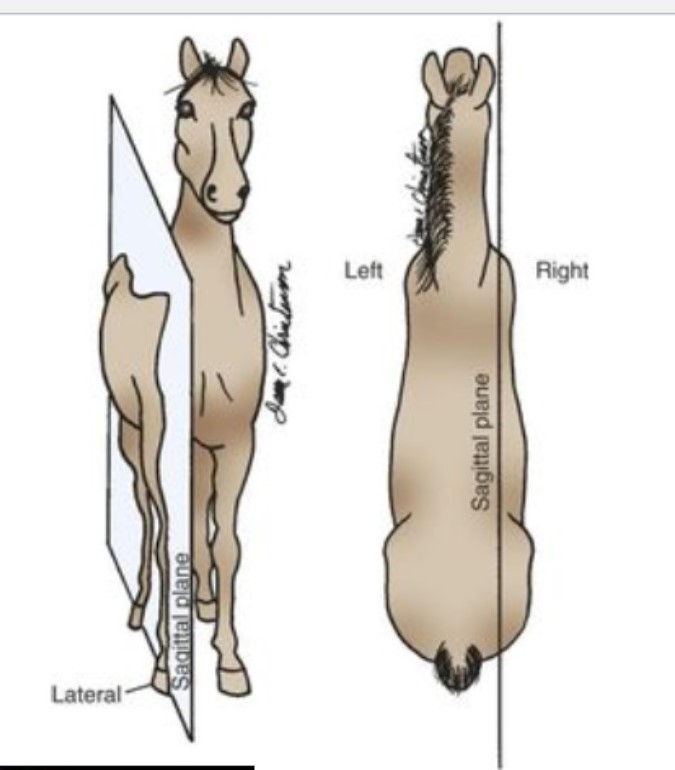
sagittal plane
* Division into left and right parts
* Not always on midline
* Not always on midline
37
New cards
paramedial/paramedian
* division into left and right
* close to midline , but %%not exactly in the middle%%
* close to midline , but %%not exactly in the middle%%
38
New cards
median plane
* Divides the body into exact left and right halves directly on midline
* %%Not symmetrical,%% because bodies are not symmetrical
* same as midsagittal
* %%Not symmetrical,%% because bodies are not symmetrical
* same as midsagittal
39
New cards
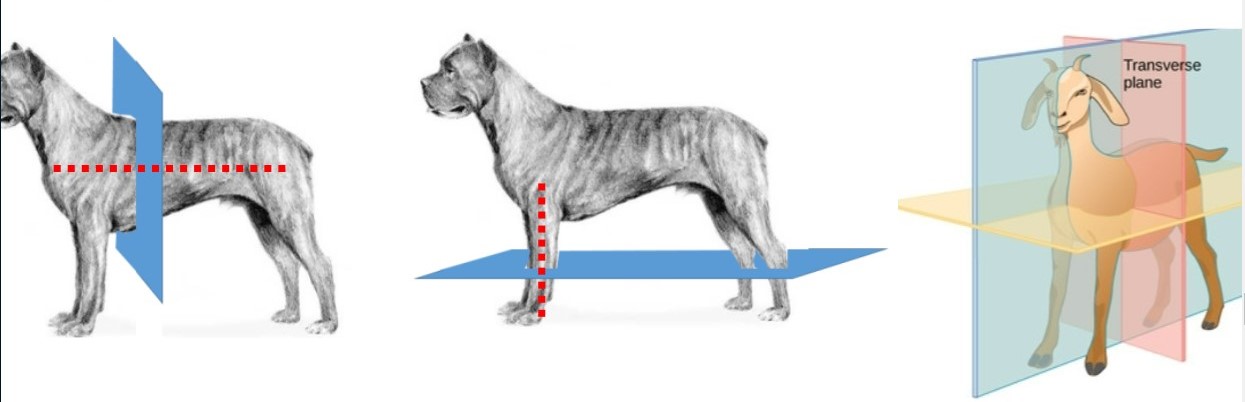
transverse plane
* separates body into cranial and caudal parts
* infinite planes, perpendicular to long axis of any lmb
* infinite planes, perpendicular to long axis of any lmb
40
New cards
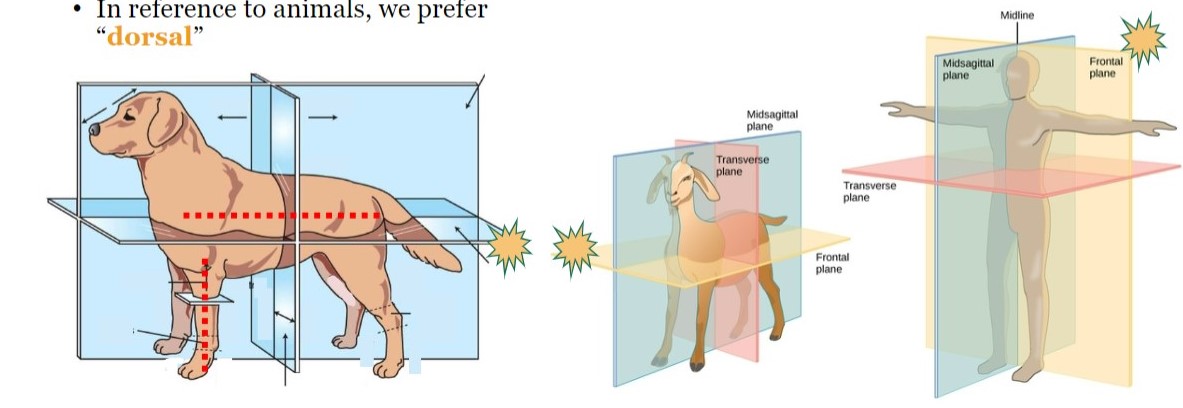
dorsal/frontal plane
separates the body into dorsal and ventral parts
41
New cards
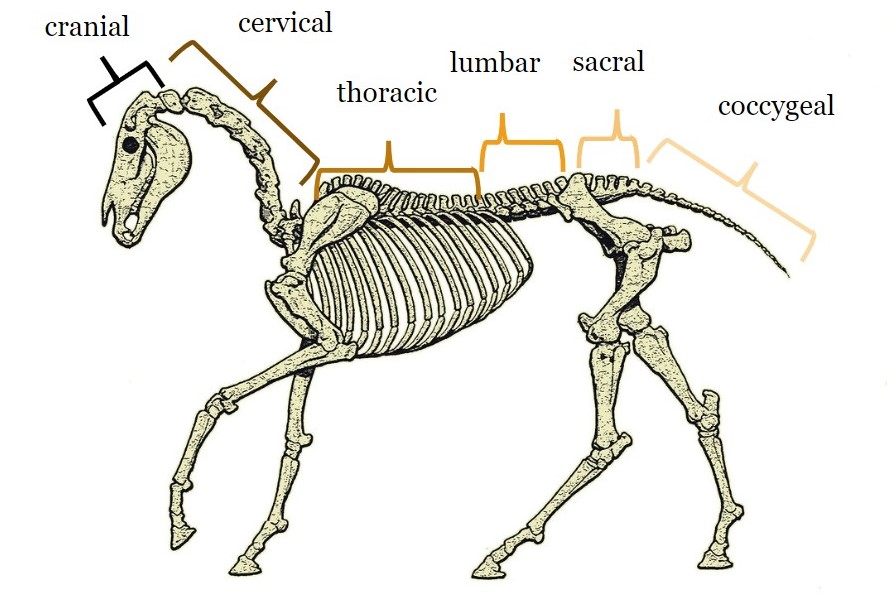
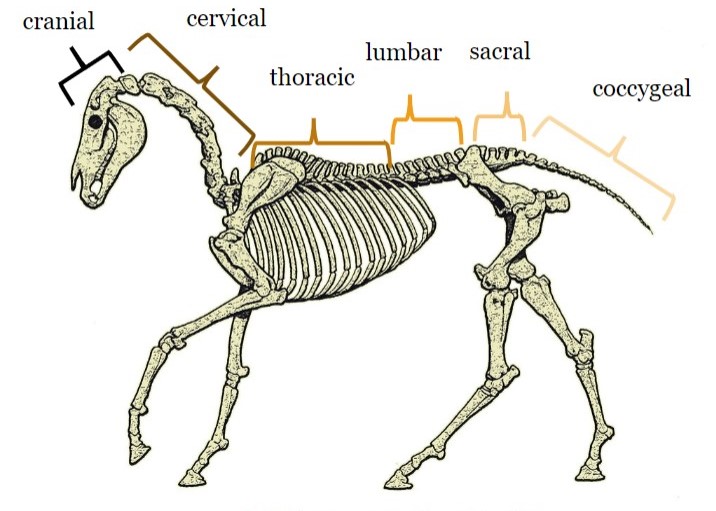
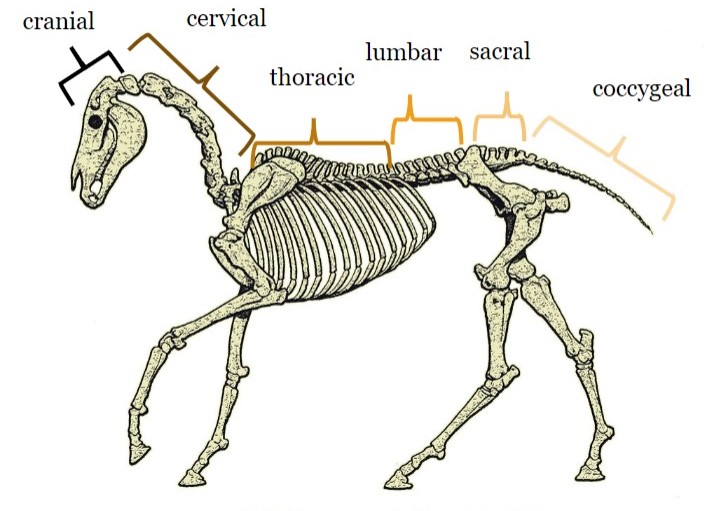
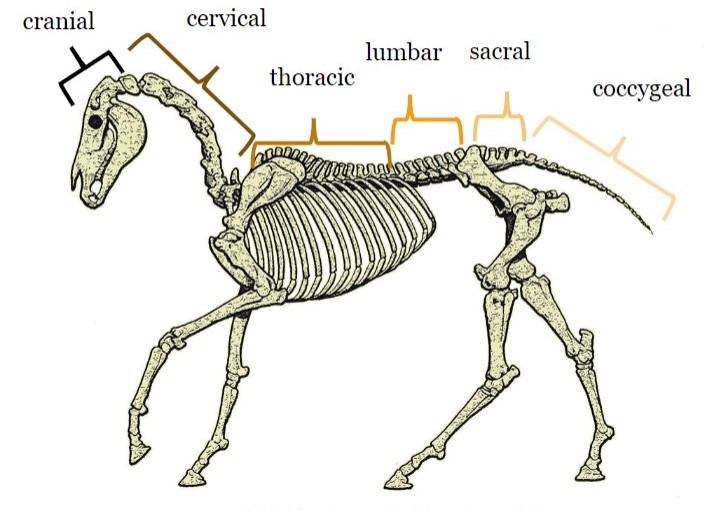
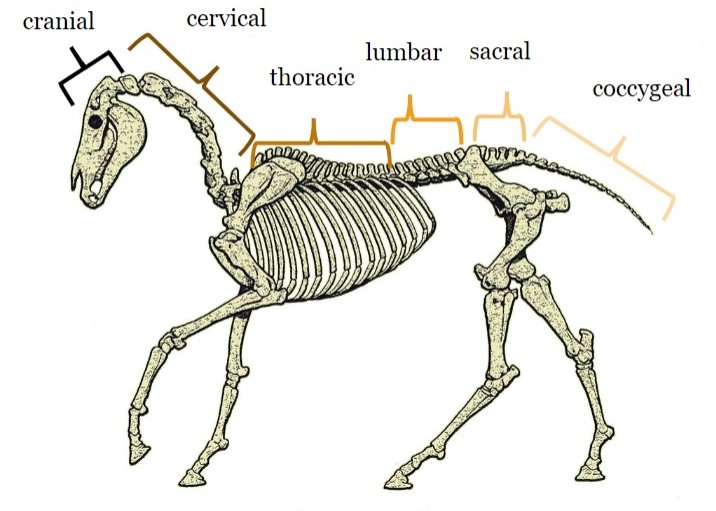
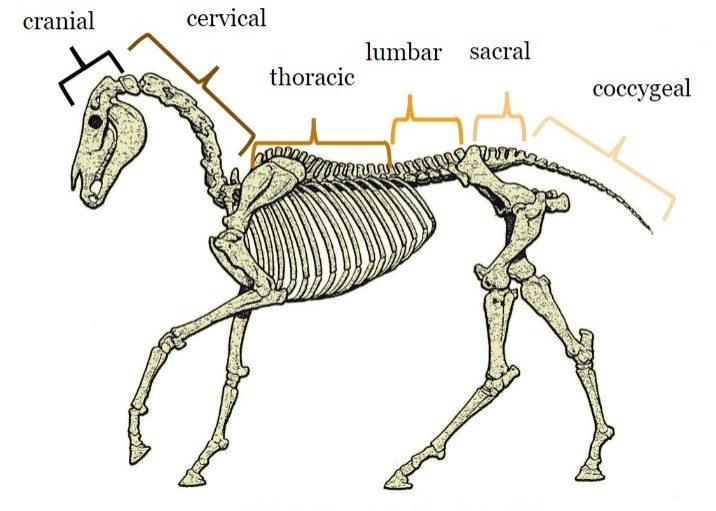
6 body segments
division of animals based on vertebrae
(come cook tacos looking so cute)
* cranial
* cervical
* thoracic
* lumbar
* sacral
* coccygeal
(come cook tacos looking so cute)
* cranial
* cervical
* thoracic
* lumbar
* sacral
* coccygeal
42
New cards
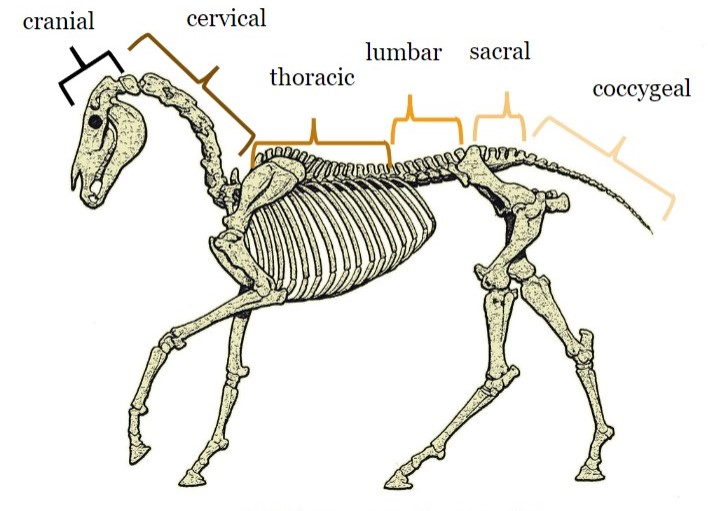
cranial
head
43
New cards
cervical
neck
44
New cards
thoracic
thorax/thoracic cage (ribs)
45
New cards
lumbar
abdominal/lower spine
46
New cards
sacral
sacrum (pelvis area)
47
New cards
coccygeal
tailbone
48
New cards
cranial cavity
Space within the skull
49
New cards
oral cavity
mouth
50
New cards
nasal cavity
* Dorsal to the oral cavity
* Houses specialized respiratory structures
* Houses specialized respiratory structures
51
New cards
thoracic cavity
* Chest cavity
* Houses the heart & lungs, & other specialized organs
* Defined by the ribs
* Houses the heart & lungs, & other specialized organs
* Defined by the ribs
52
New cards
abdominal cavity
* Caudal to the thoracic cavity
* Houses most of the internal organs
* Spans the lumbar segment
* Largest body cavity
* Houses most of the internal organs
* Spans the lumbar segment
* Largest body cavity
53
New cards
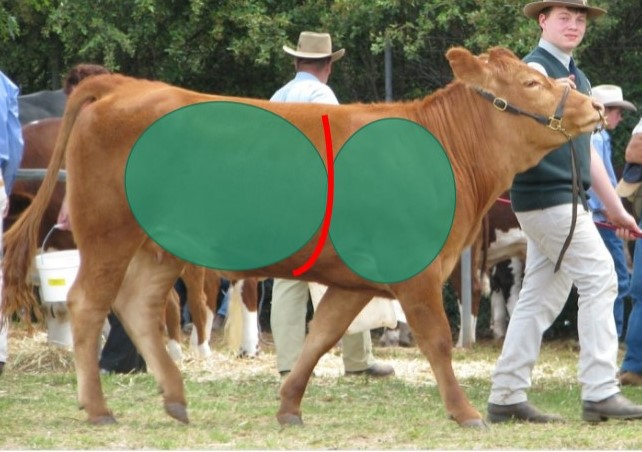
Diaphragm
* A thin muscle that separates the thoracic cavity (cranially) & the abdominal cavity (caudally)
* Functions is to allow the lungs to inflate & push air back out
* Functions is to allow the lungs to inflate & push air back out
54
New cards
pelvic cavity
* Spans the sacral segment
* Houses structures that are part of the gastrointestinal, urinary, and reproductive tracts
* Houses structures that are part of the gastrointestinal, urinary, and reproductive tracts
55
New cards
supine
* lying on their dorsum (spine)
* Also referred to as “dorsal recumbency”
* Also referred to as “dorsal recumbency”
56
New cards
prone
* lying on their ventrum (stomach)
* Also referred to as “ventral recumbency”
* Also referred to as “ventral recumbency”
57
New cards
lateral recumbancy
* Lying on one side
* Can be Right Lateral \n or Left Lateral
* Can be Right Lateral \n or Left Lateral
58
New cards
external
* refers to specific structures/organs
* towards the outside of a structure
* towards the outside of a structure
59
New cards
internal
* refers to specific structures/organs
* towards the inside of a structure
* towards the inside of a structure
60
New cards
define body cavities in relation to segments
spaces within body segments
61
New cards
7 cavity terms
close our nose to avoid dirty penises
* cranial
* oral
* nasal
* thoracic
* abdominal
* diaphragm
* pelvic
* cranial
* oral
* nasal
* thoracic
* abdominal
* diaphragm
* pelvic