Comprehensive Study of Neurological Abnormalities and Movement Disorders
 Call Kai
 Learn
Learn Practice Test
 Spaced Repetition
 Match
Match Flashcards
 Knowt Play
1/68

There's no tags or description
Looks like no tags are added yet.
Name | Mastery | Learn | Test | Matching | Spaced | Call with Kai |
|---|
No analytics yet
Send a link to your students to track their progress
69 Terms
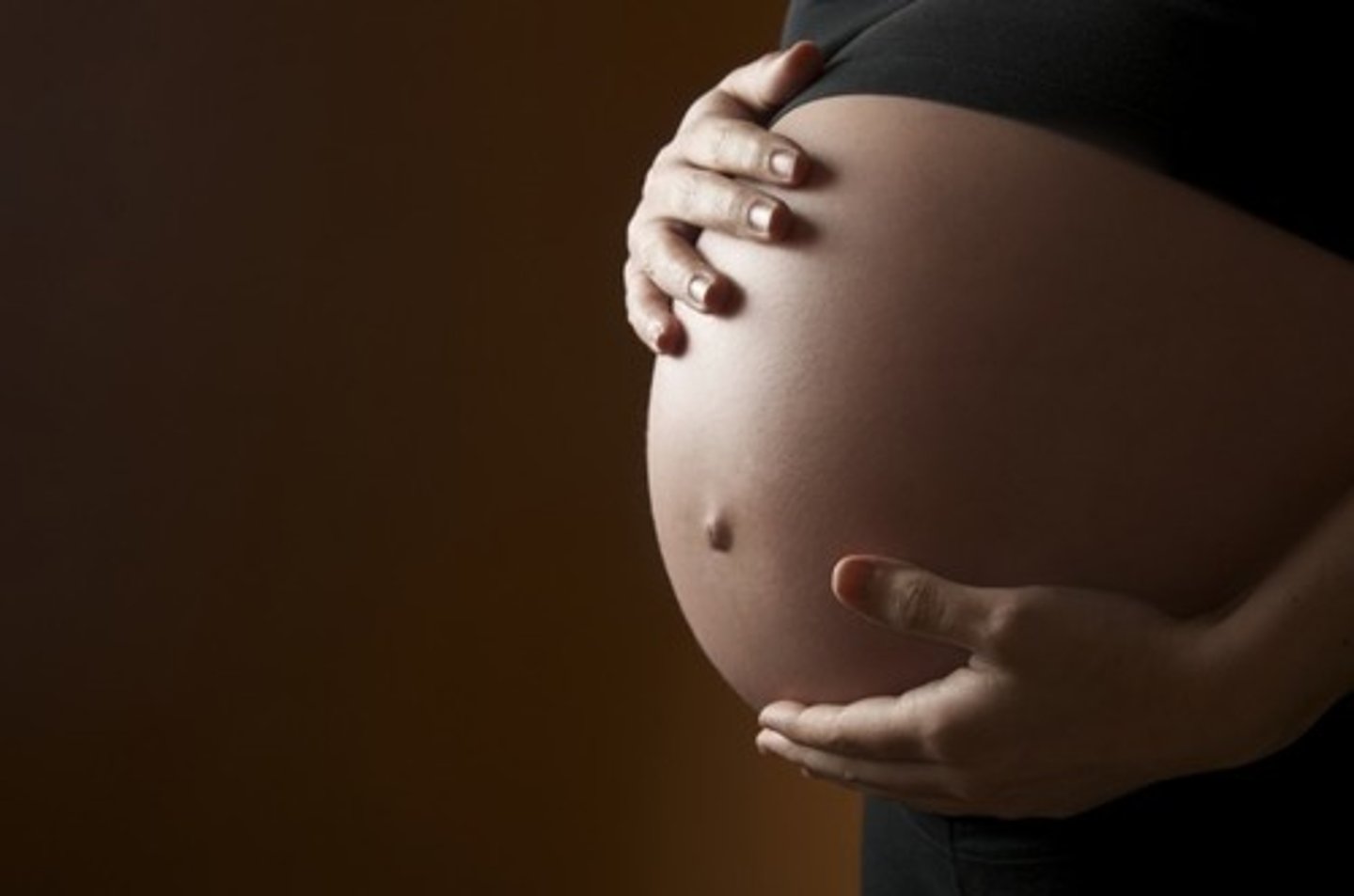
pregnancy
normal finding for someone with a distended abdomen
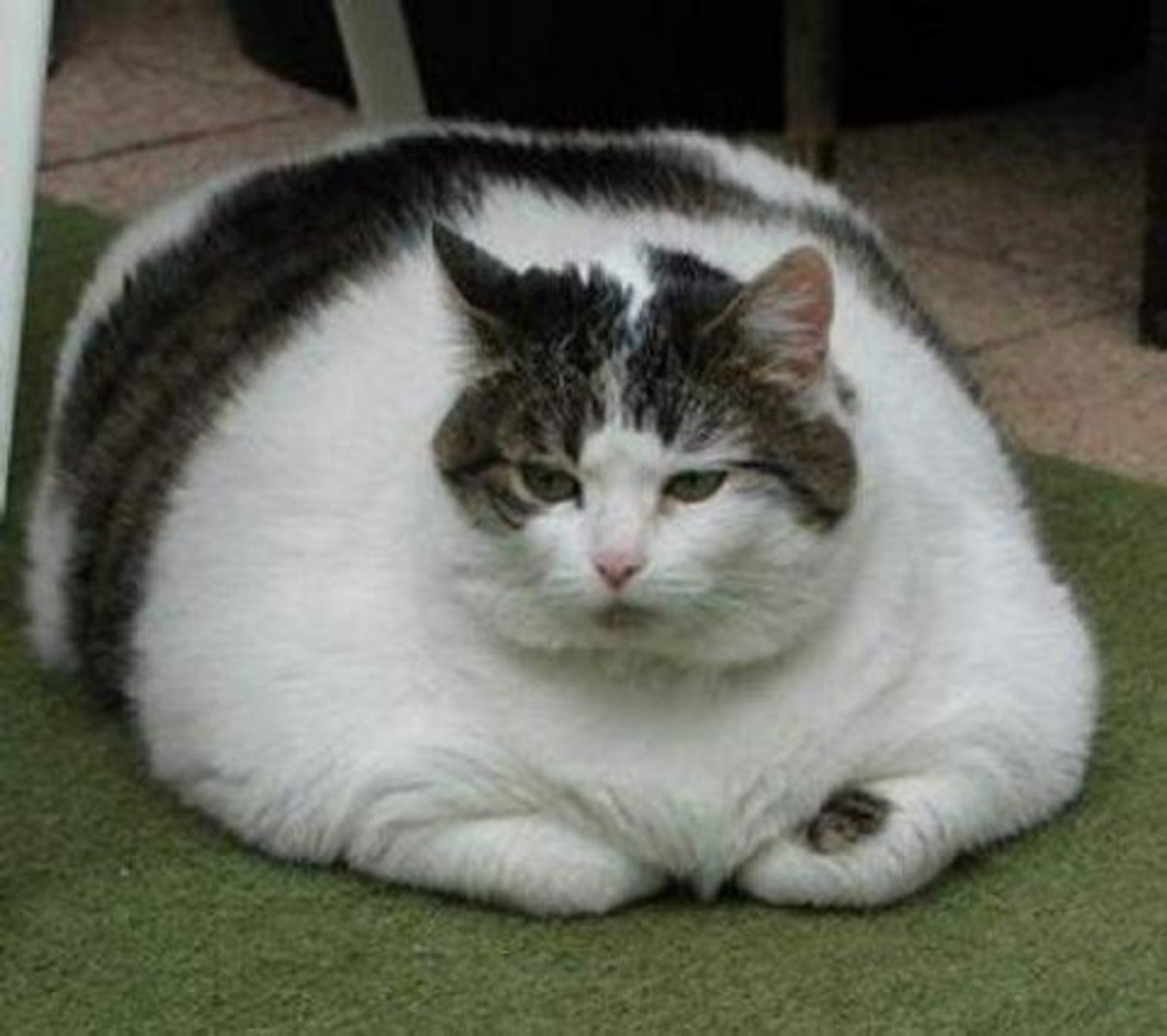
fat
obesity counts for most protuberant abdomens.
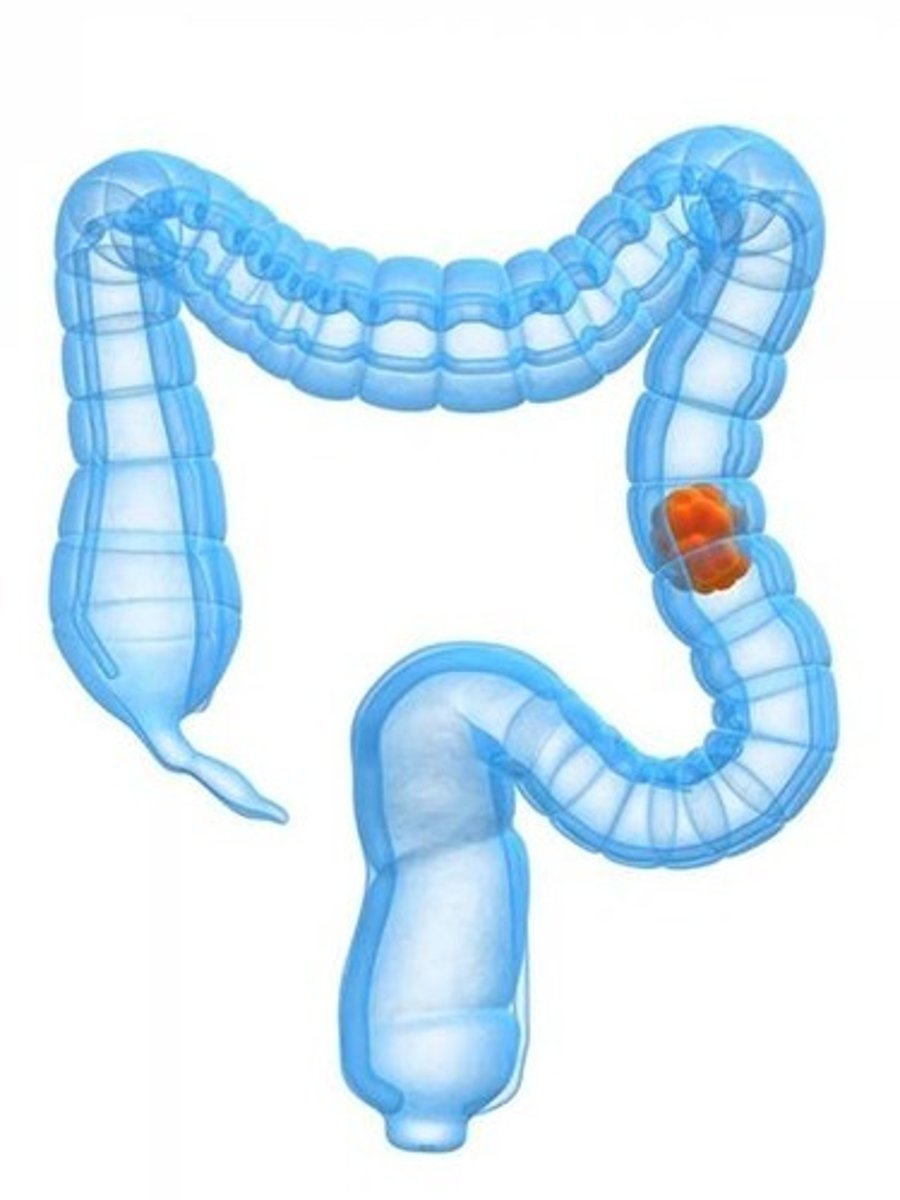
feces
hard stool in intestines are a cause for localized distention
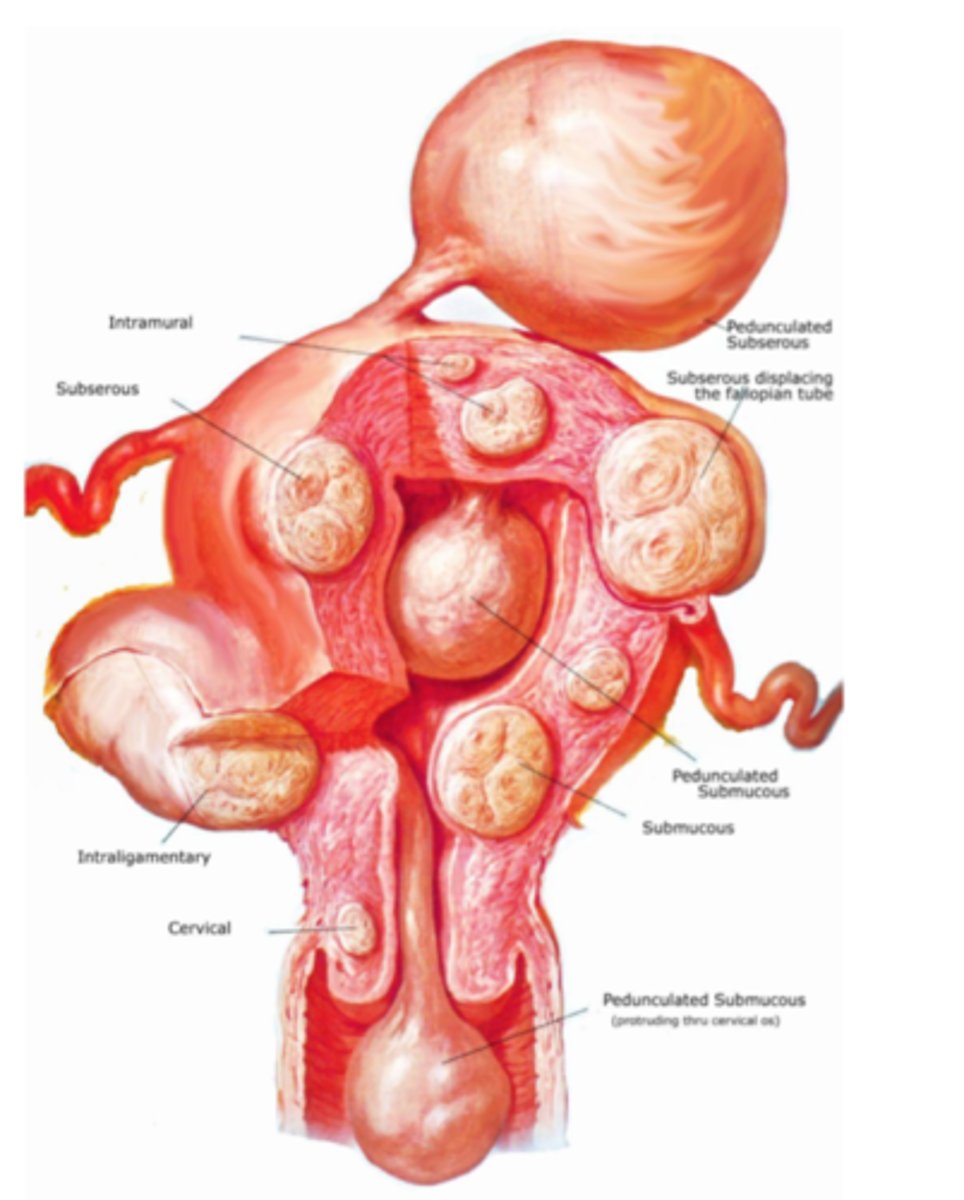
fibriods
benign tumors in the uterus; also called leiomyoma
can cause distention of lower abdomen
flatus
gas expelled through the anus
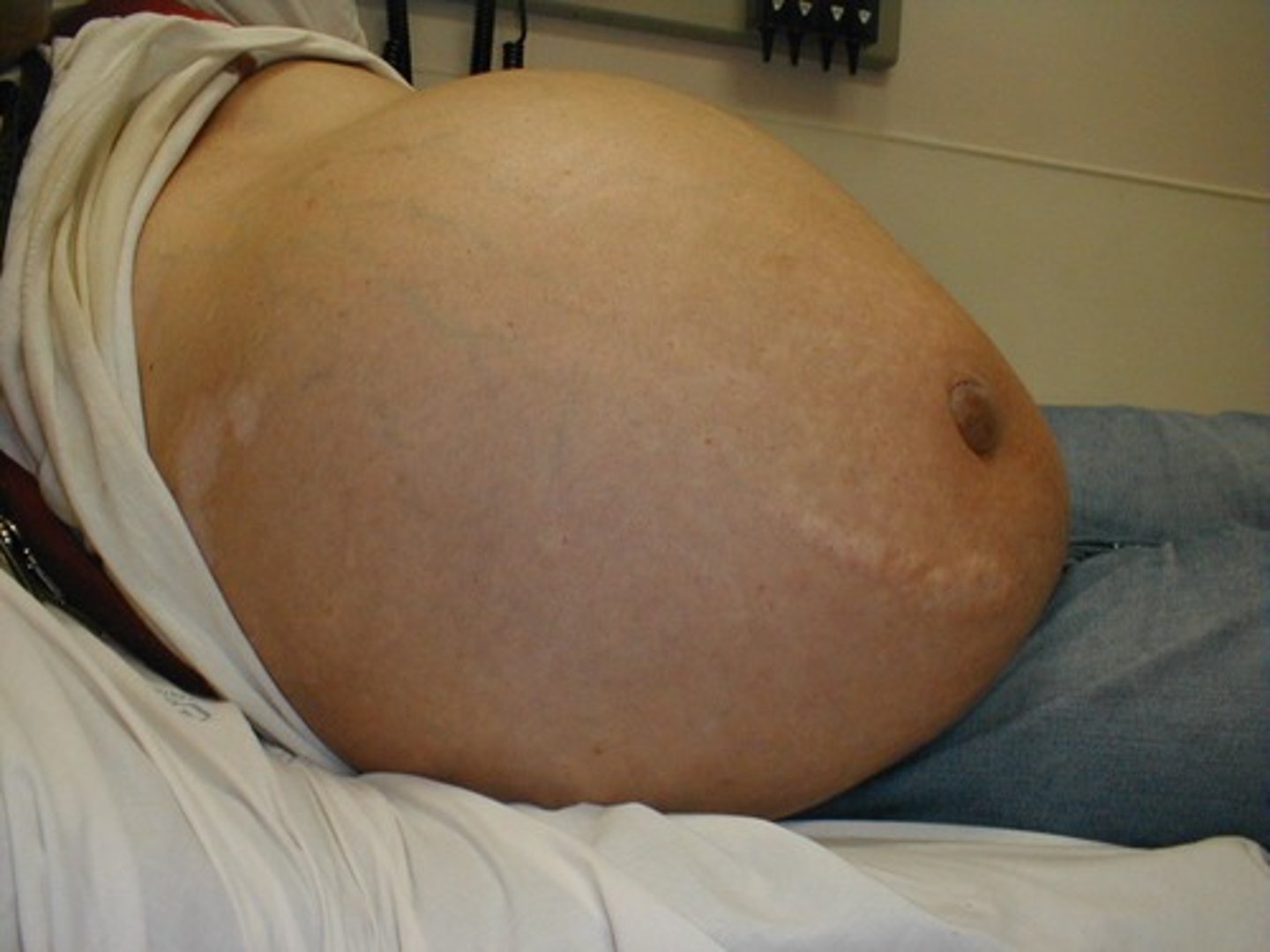
ascitic fluid
A watery fluid containing albumin, glucose, and electrolytes that accumulates in the peritoneal cavity in association with certain disease conditions (such as liver disease).
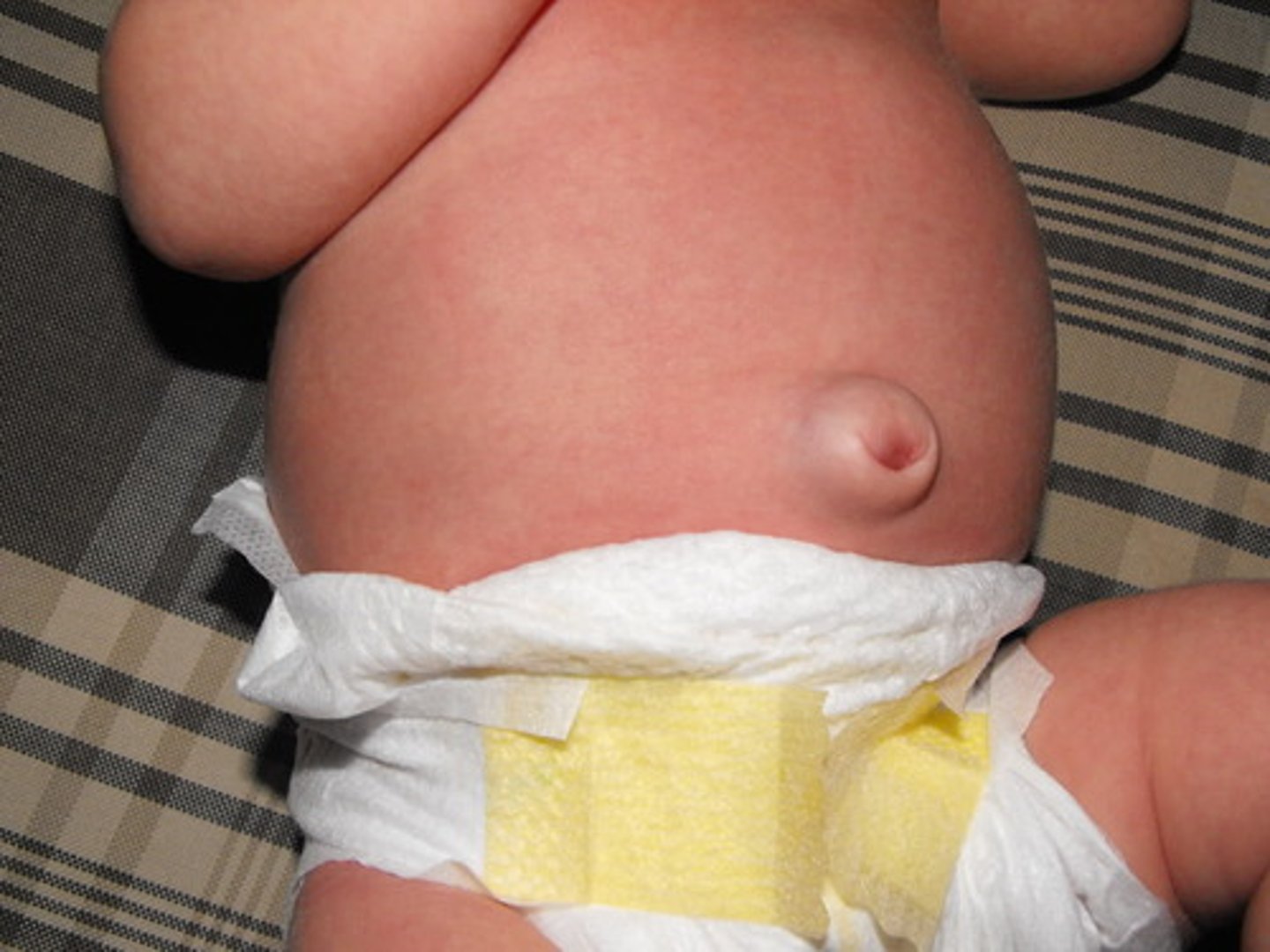
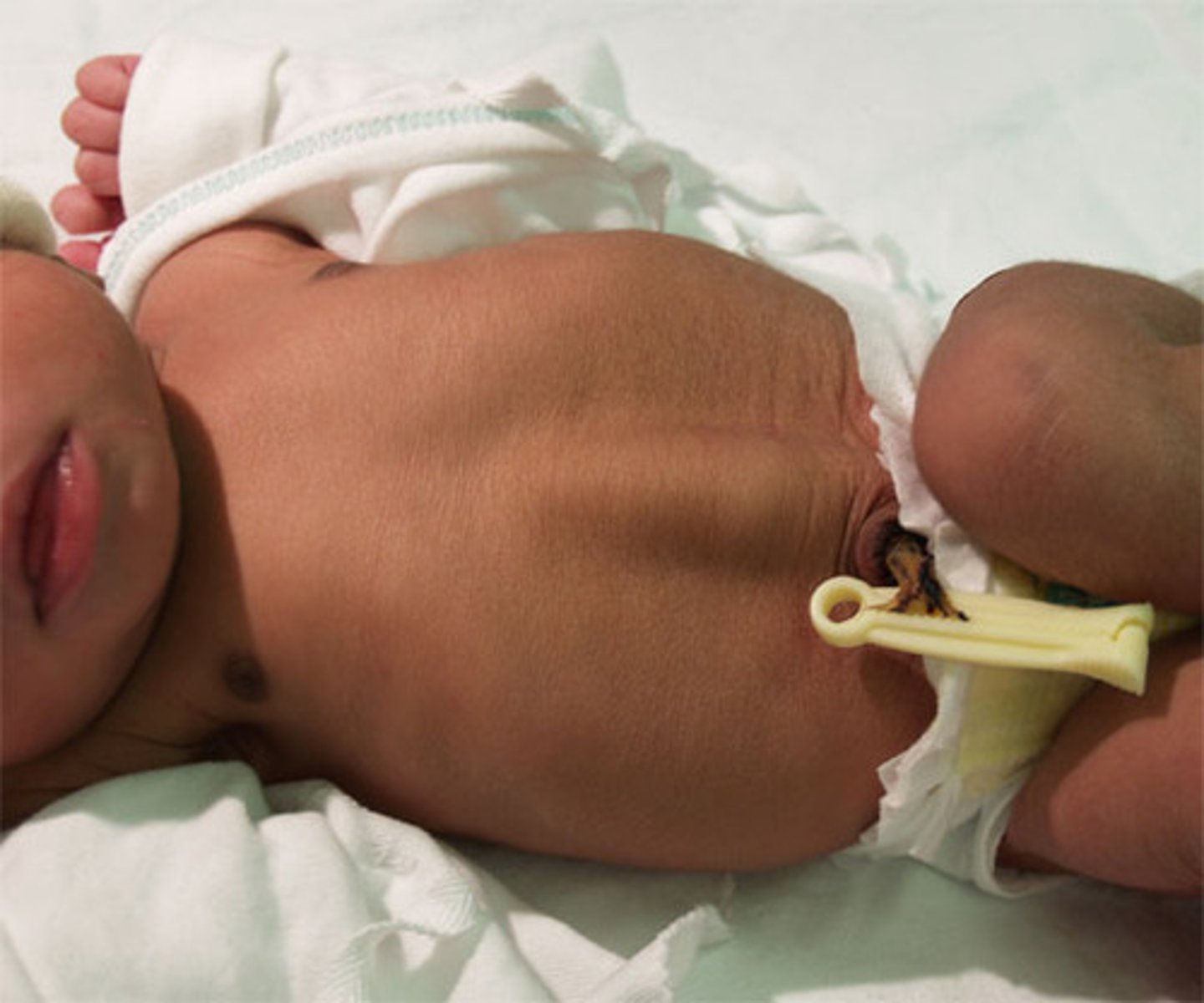
umbilical hernia
protrusion of the intestine through a weakness in the abdominal wall around the umbilicus (navel)
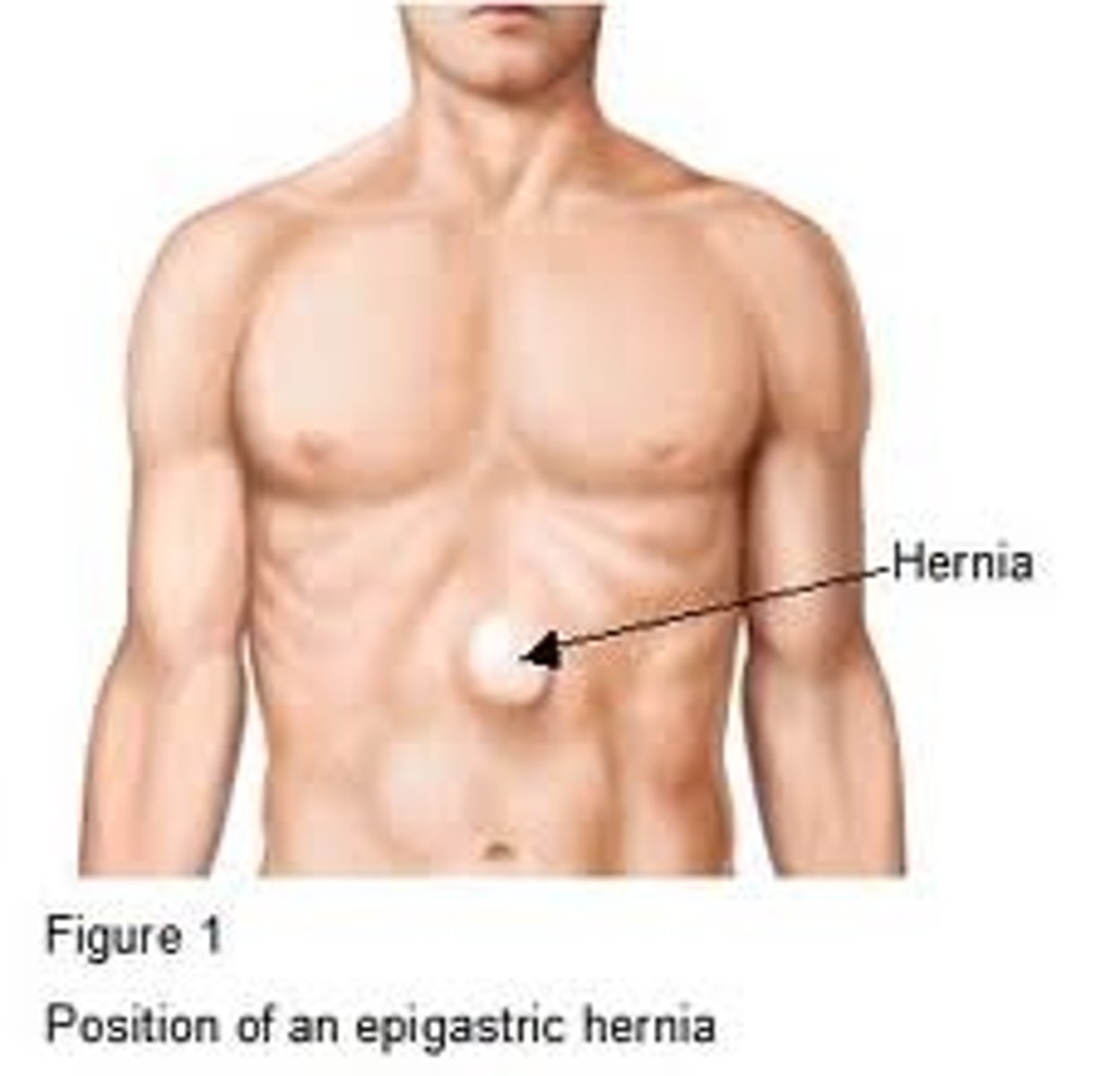
epigastric hernia
Protrusion of abdominal structures presents as a small, fatty nodule at epigastrium in midline, through the linea alba.
Usually one can feel it rather than observe it. May be palpable only when standing.
diastasis recti
midline longitudinal ridge in the abdomen, a separation of abdominal rectus muscles
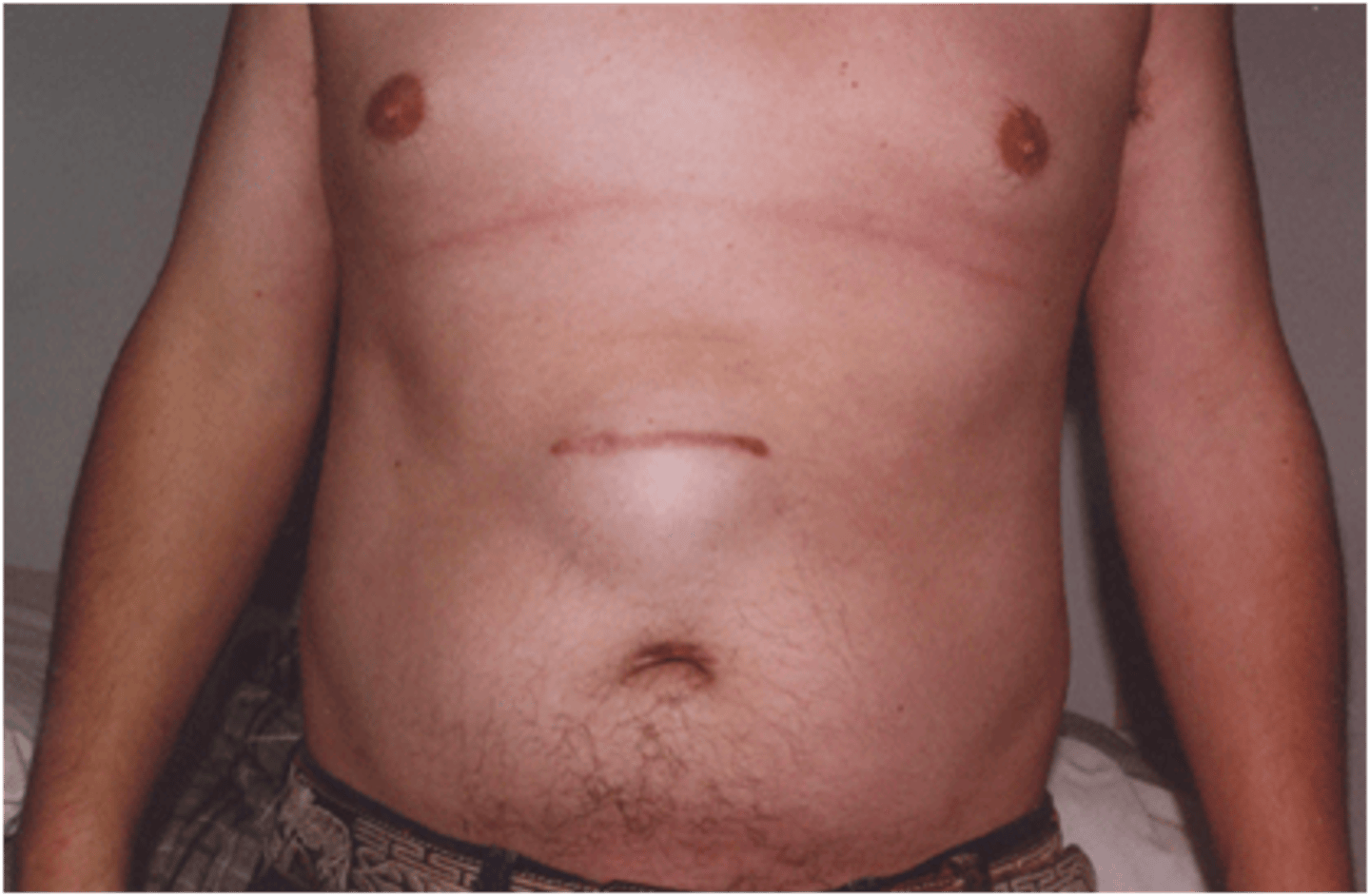
Incisional hernia
A type of hernia caused by an incompletely-healed surgical wound
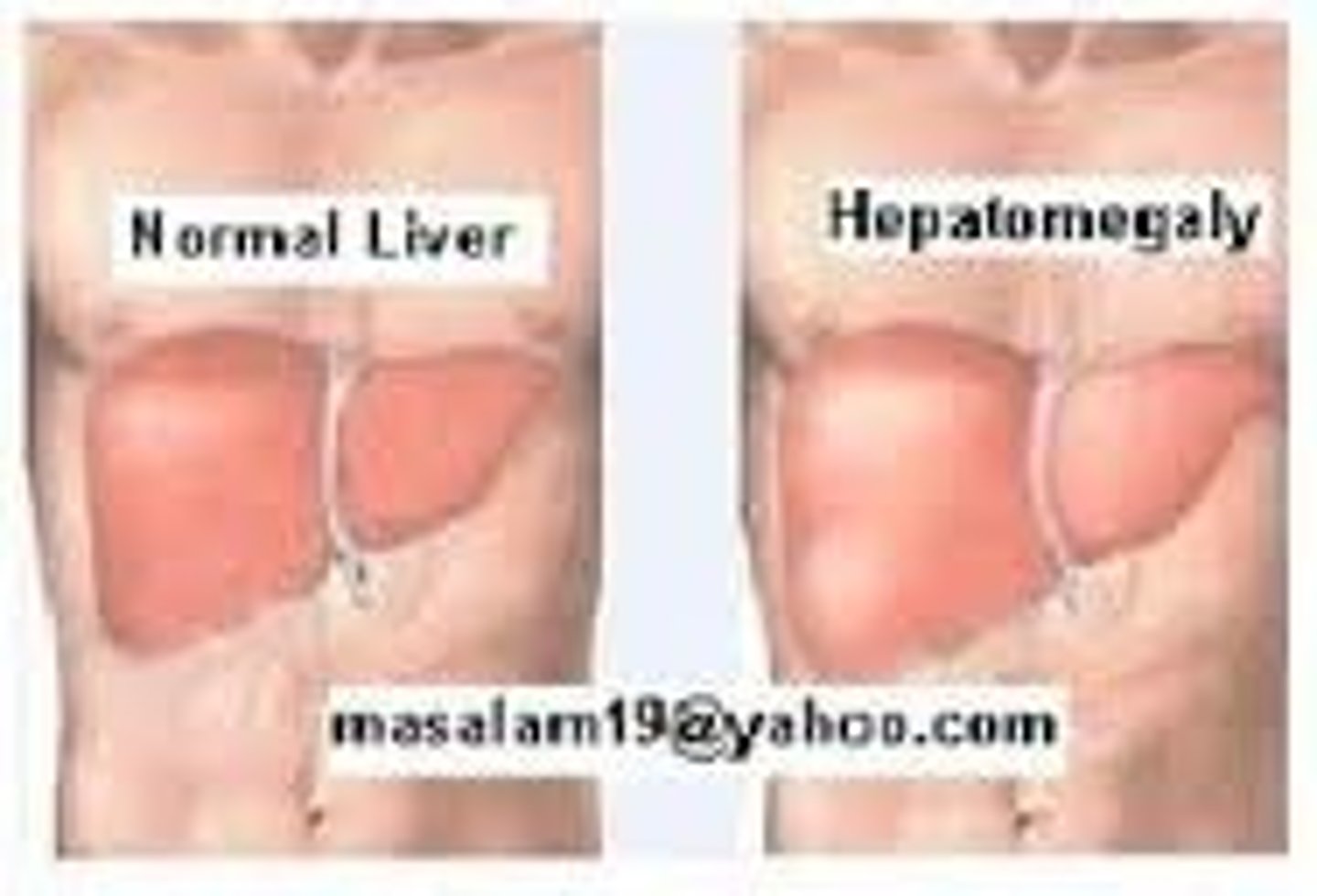
enlarged liver
a span greater then 12 cm at midclavicular line and greater then 8cm at midsternal line
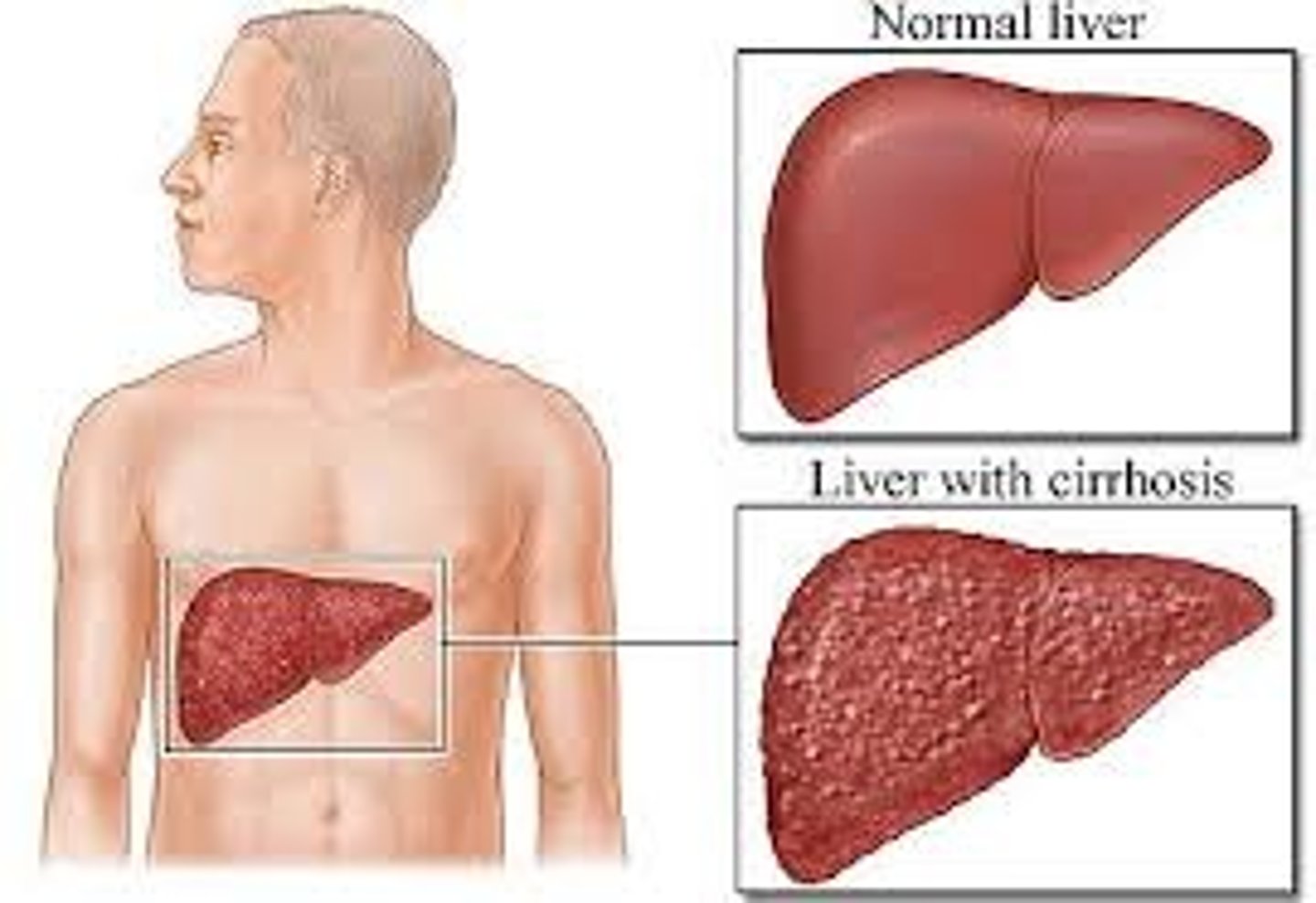
Cirrhosis
chronic degenerative disease of the liver
enlarged and nontender
congestive heart failure, acute hepatitis, and abscesses can suggest
an enlarged tender liver
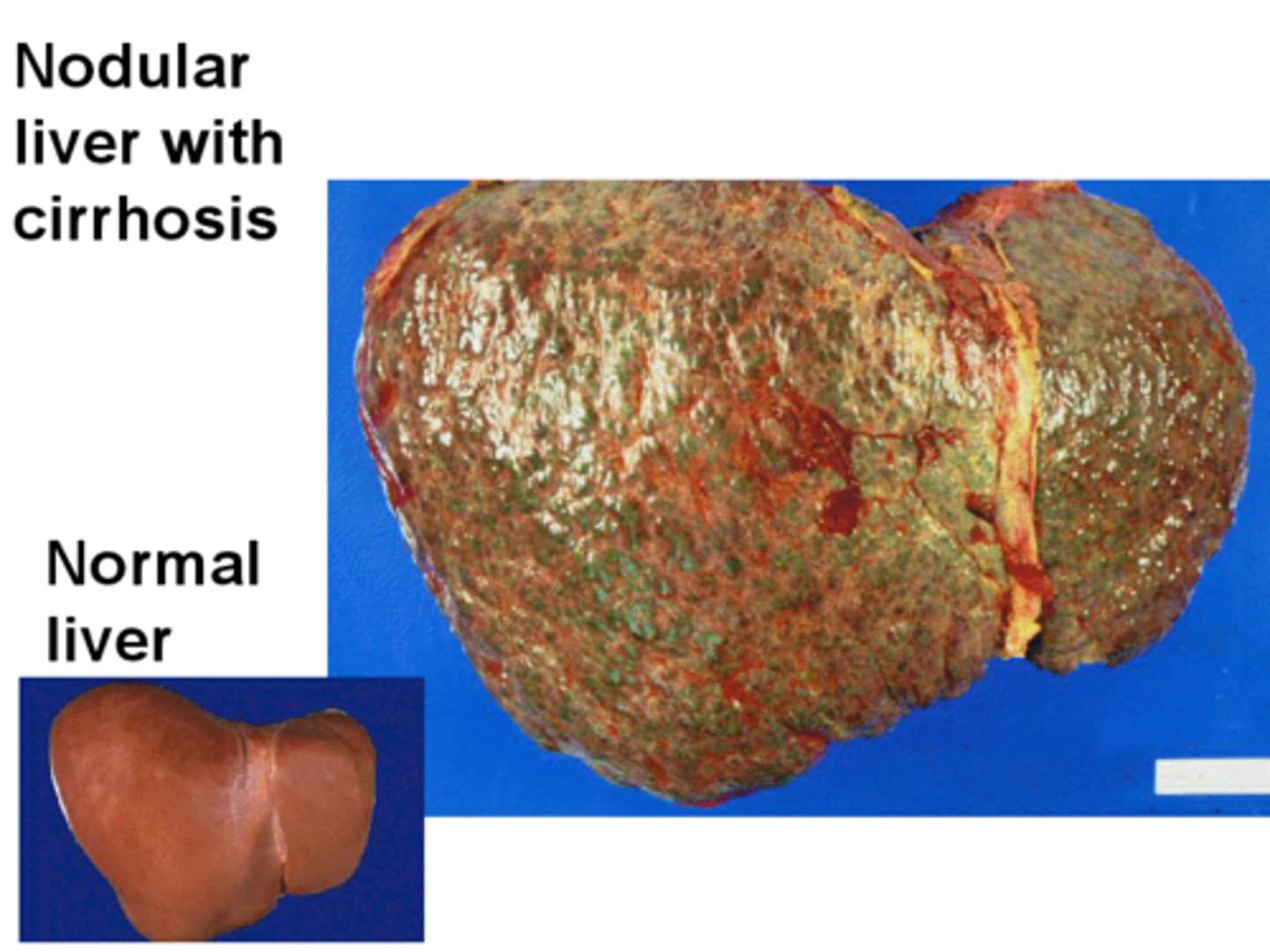
enlarged nodular liver
Enlarged firm, hard, nodular liver suggests cancer. Other causes may be late cirrhosis or syphilis.
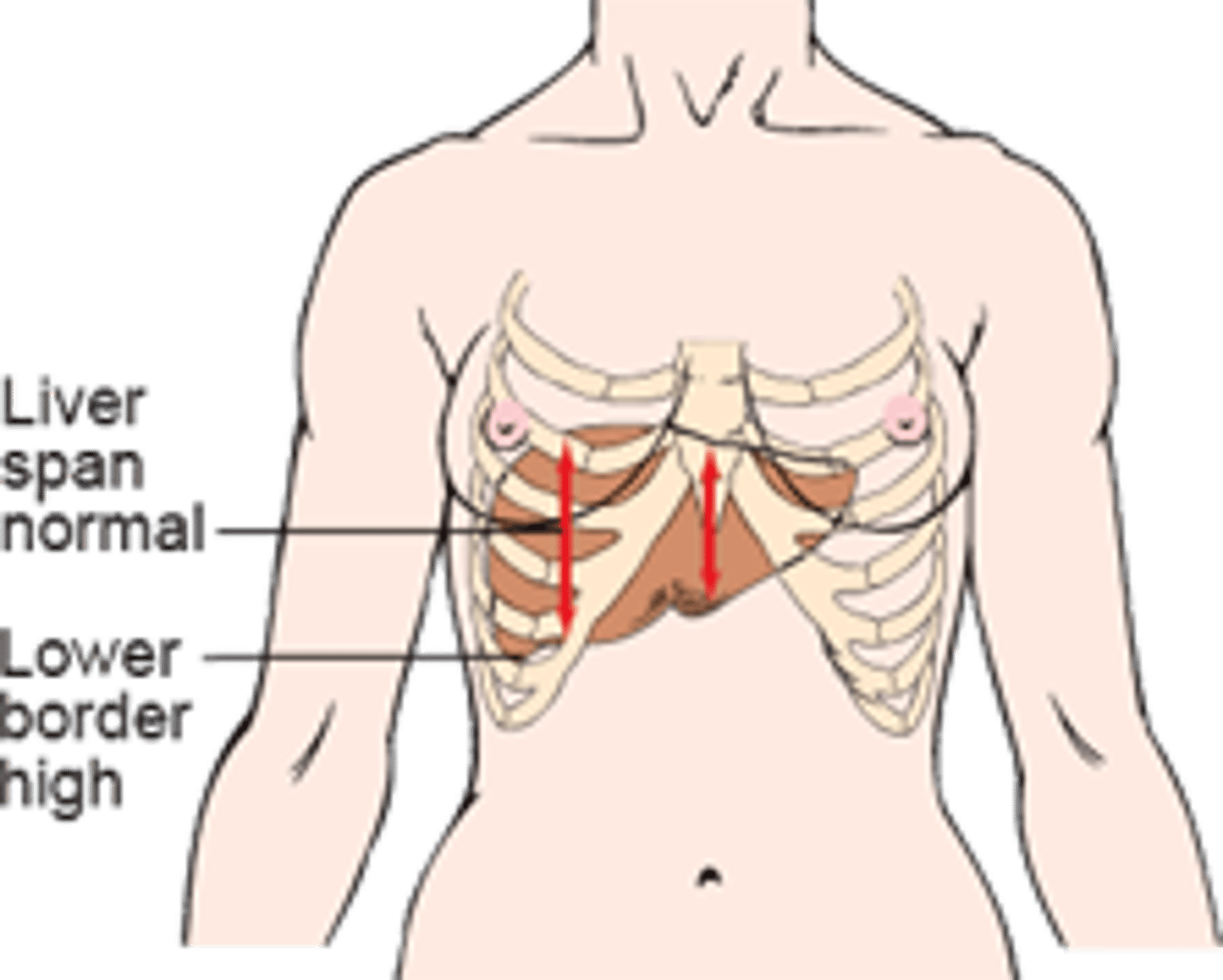
Liver higher than normal
may be caused by an abdominal mass, ascites, or a paralyzed diaphragm
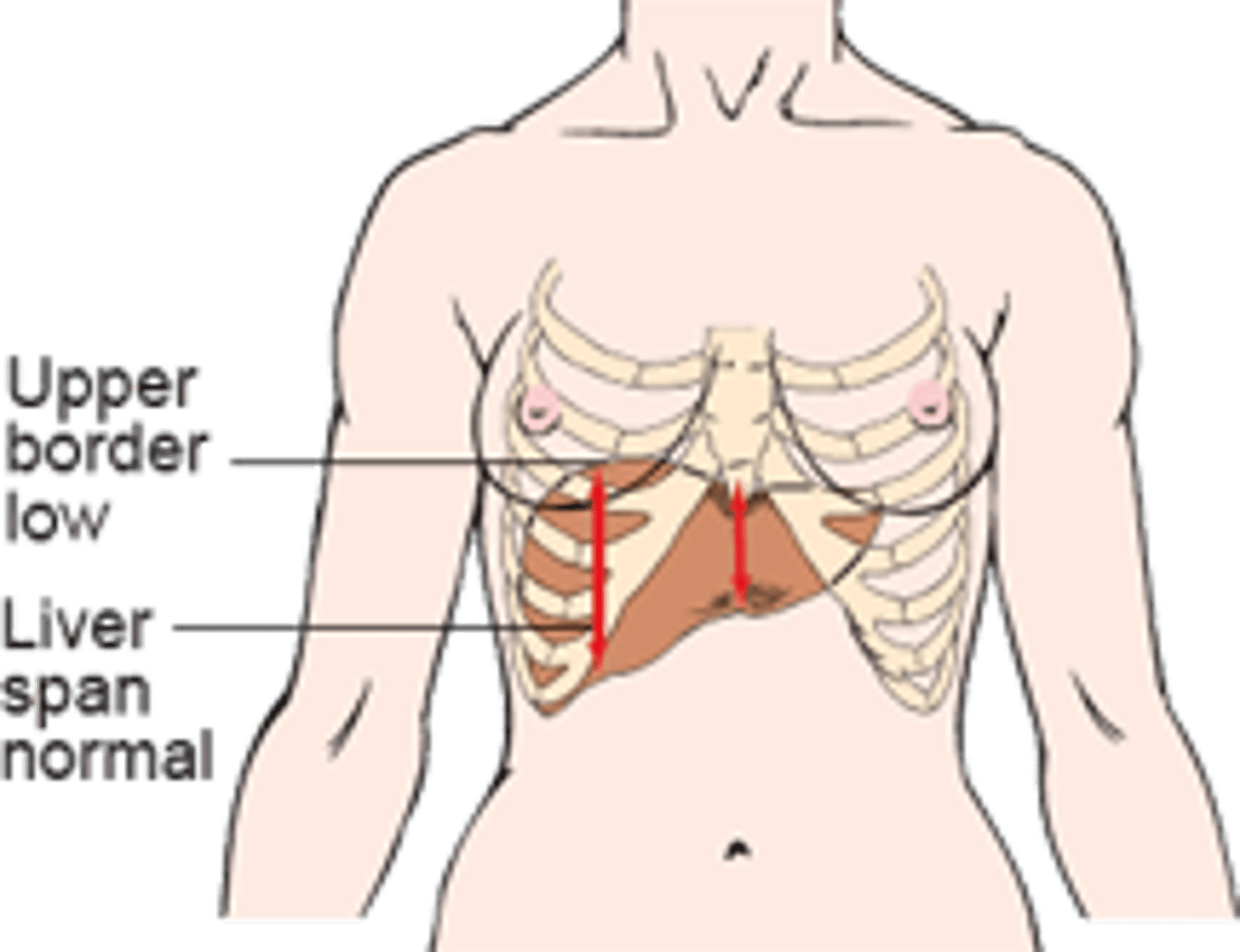
liver lower then normal
may be caused by emphysema because the diaphragm is so low
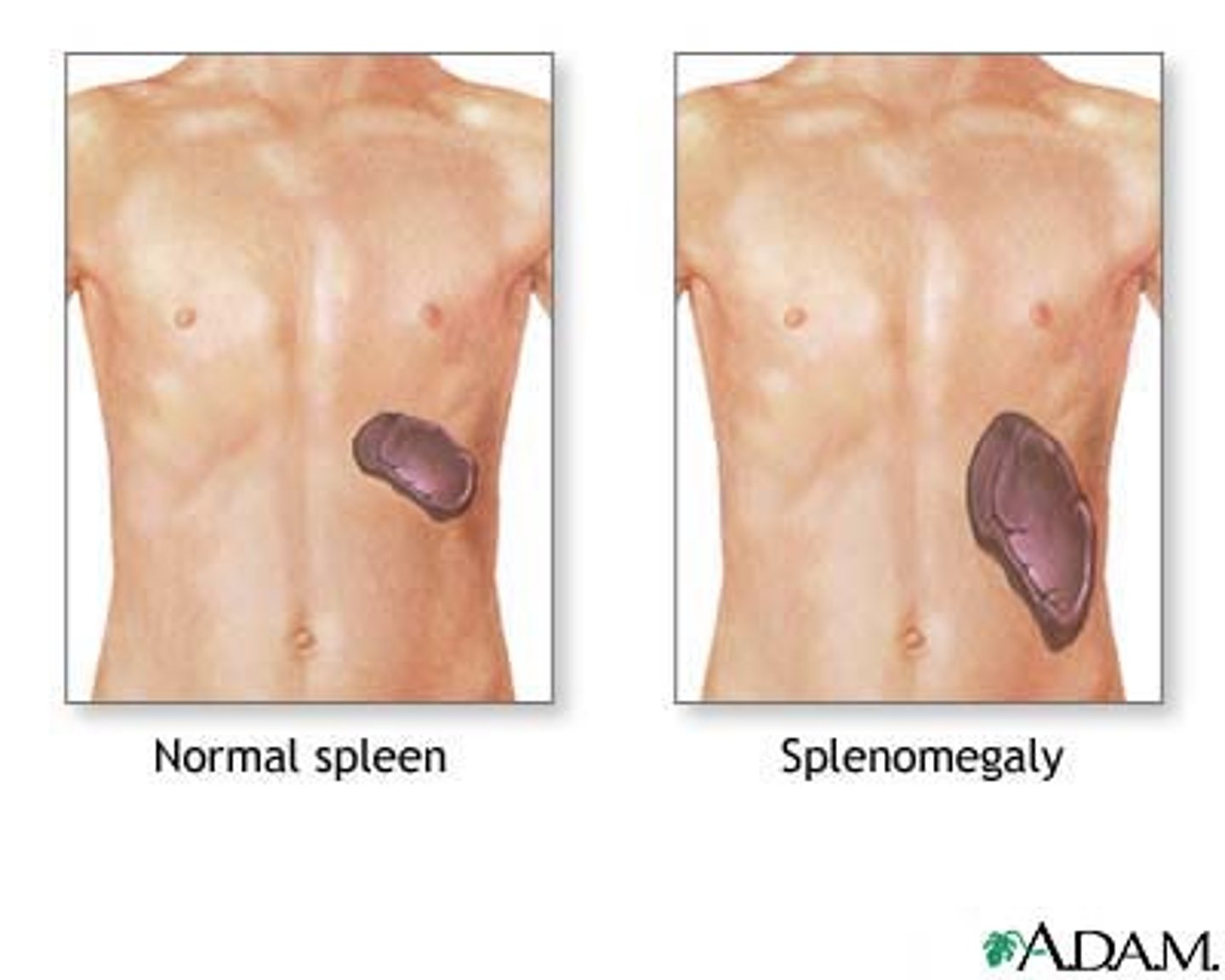
enlarged spleen
defined by an area of dullness exceeding 7 cm. When enlarged, the spleen progresses downward and toward the midline.
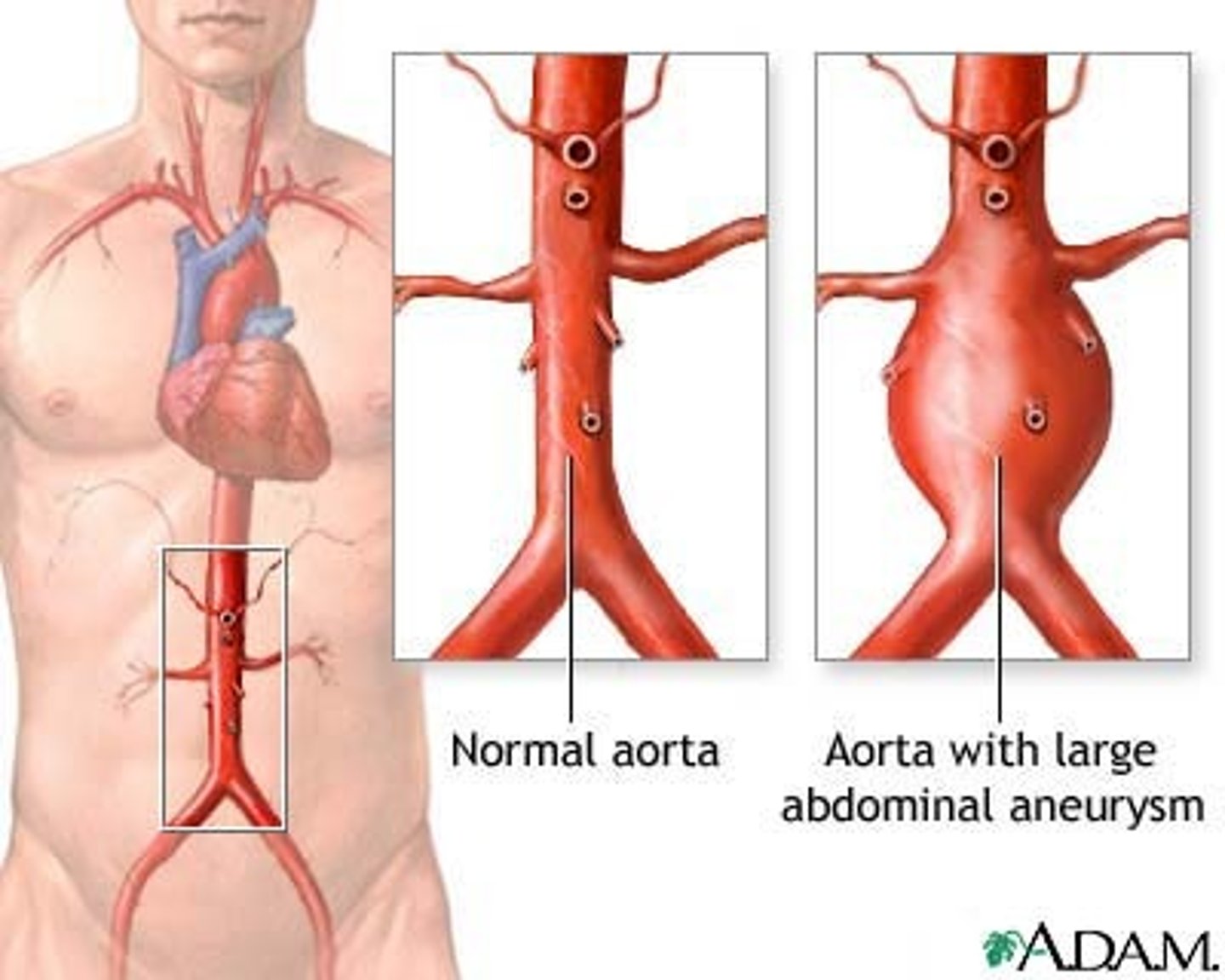
Aortic aneurysm, abdominal
a prominent, laterally pulsating mass above umbilicus suggesting an aortic aneurysm.
accompanied with a bruit and wide bounding pulse
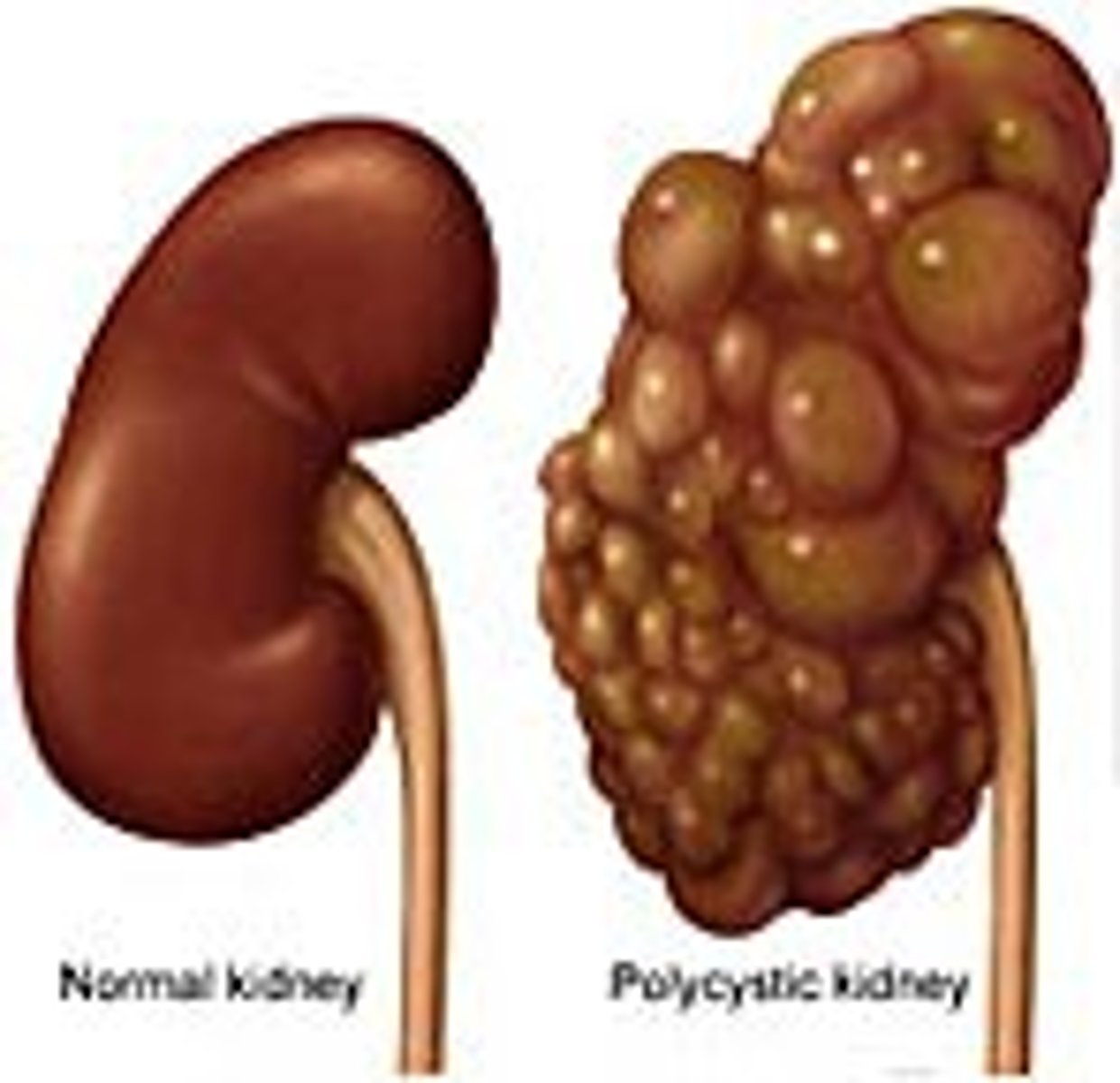
enlarged kidney
Enlarged with hydronephrosis, cyst, or neoplasm.
May be difficult to distinguish an enlarged kidney from an enlarged spleen because they have a similar shape. Both extend forward and down. However, the spleen may have a sharp edge, whereas the kidney never does. The spleen retains the splenic notch, whereas the kidney has no palpable notch. Percussion over the spleen is dull, whereas over the kidney it is tympanitic because of the overriding bowel.
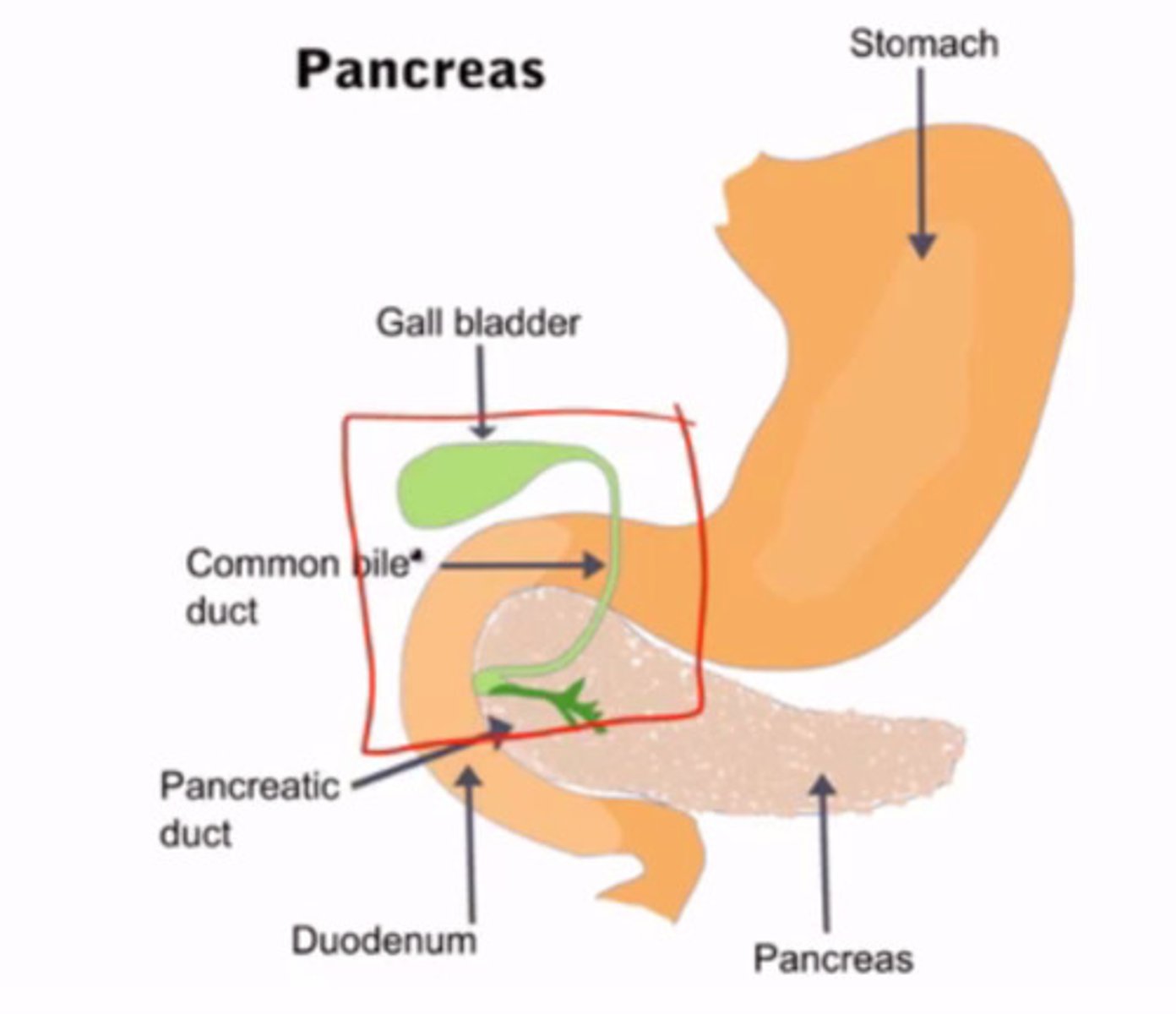
enlarged gall bladder
extremely tender
suggests cholecystitis
positive finding is murphys sign
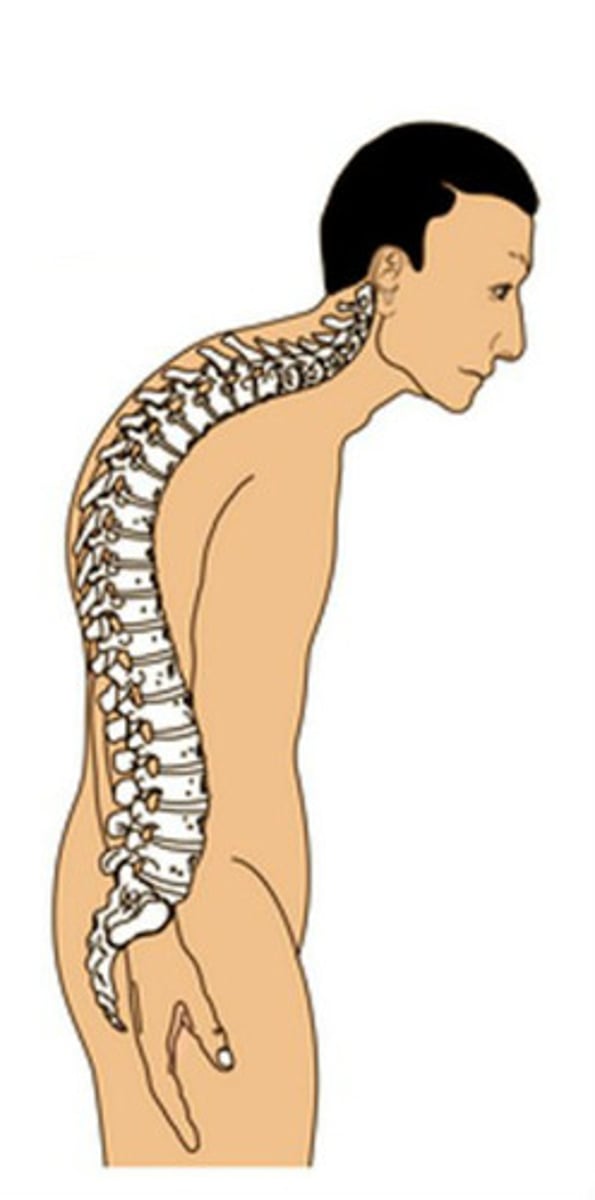
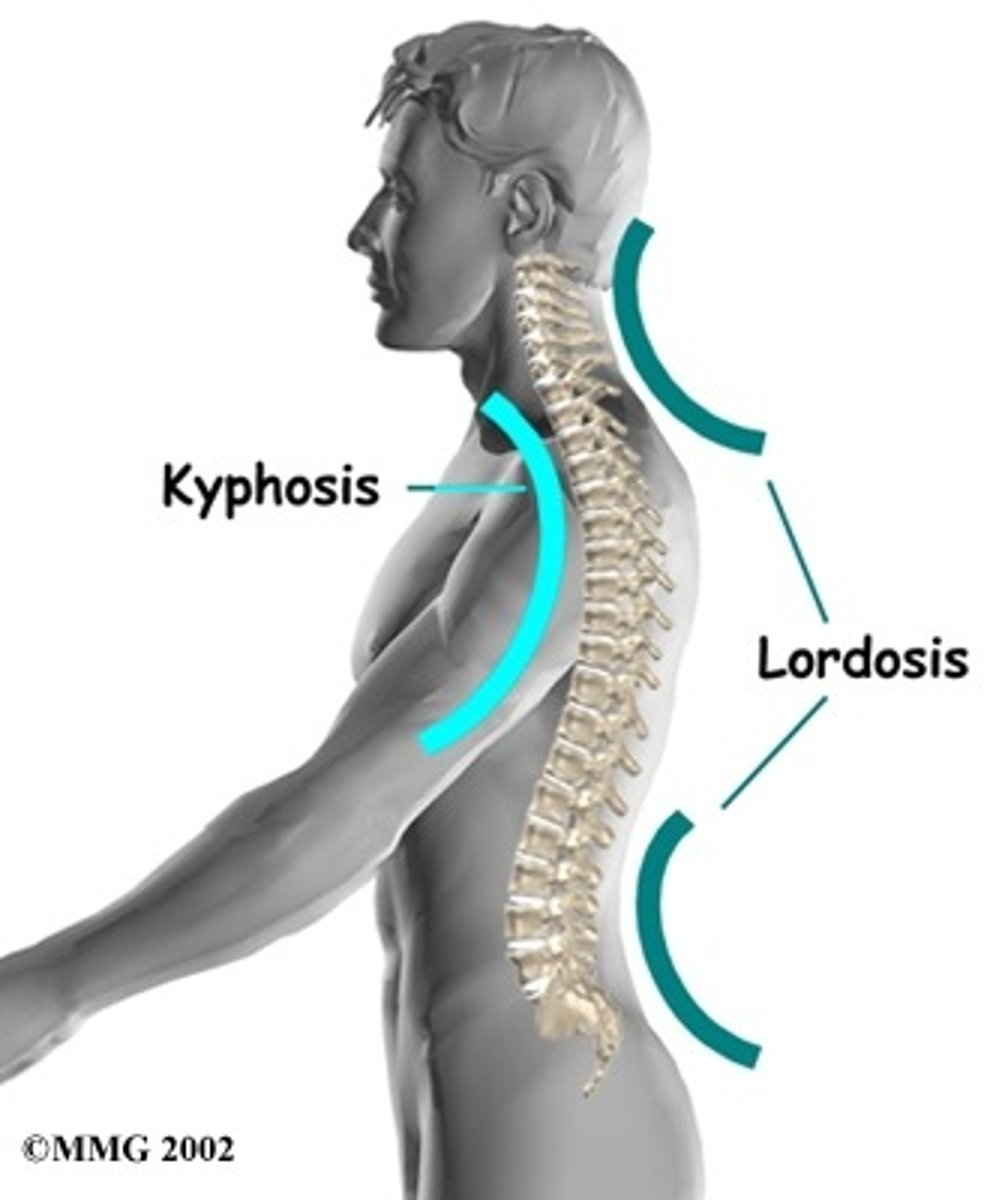
thoracic kyphosis
humpback, increased thoracic curvature, loss of height over time, dowager hump
lordosis
thoracic spine is too straight, loss of natural curve
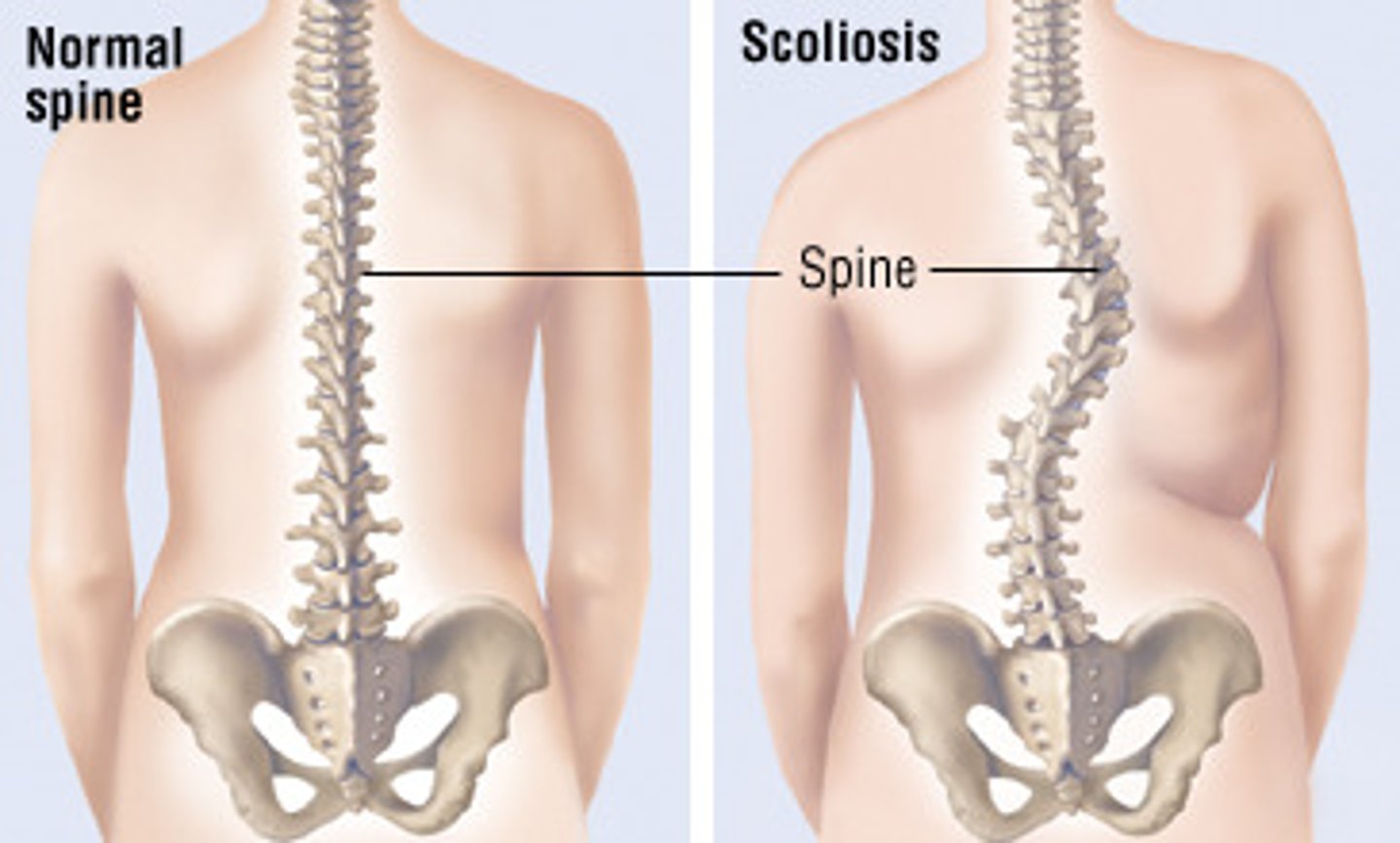
Scoliosis
abnormal lateral curvature of the spine
s curve
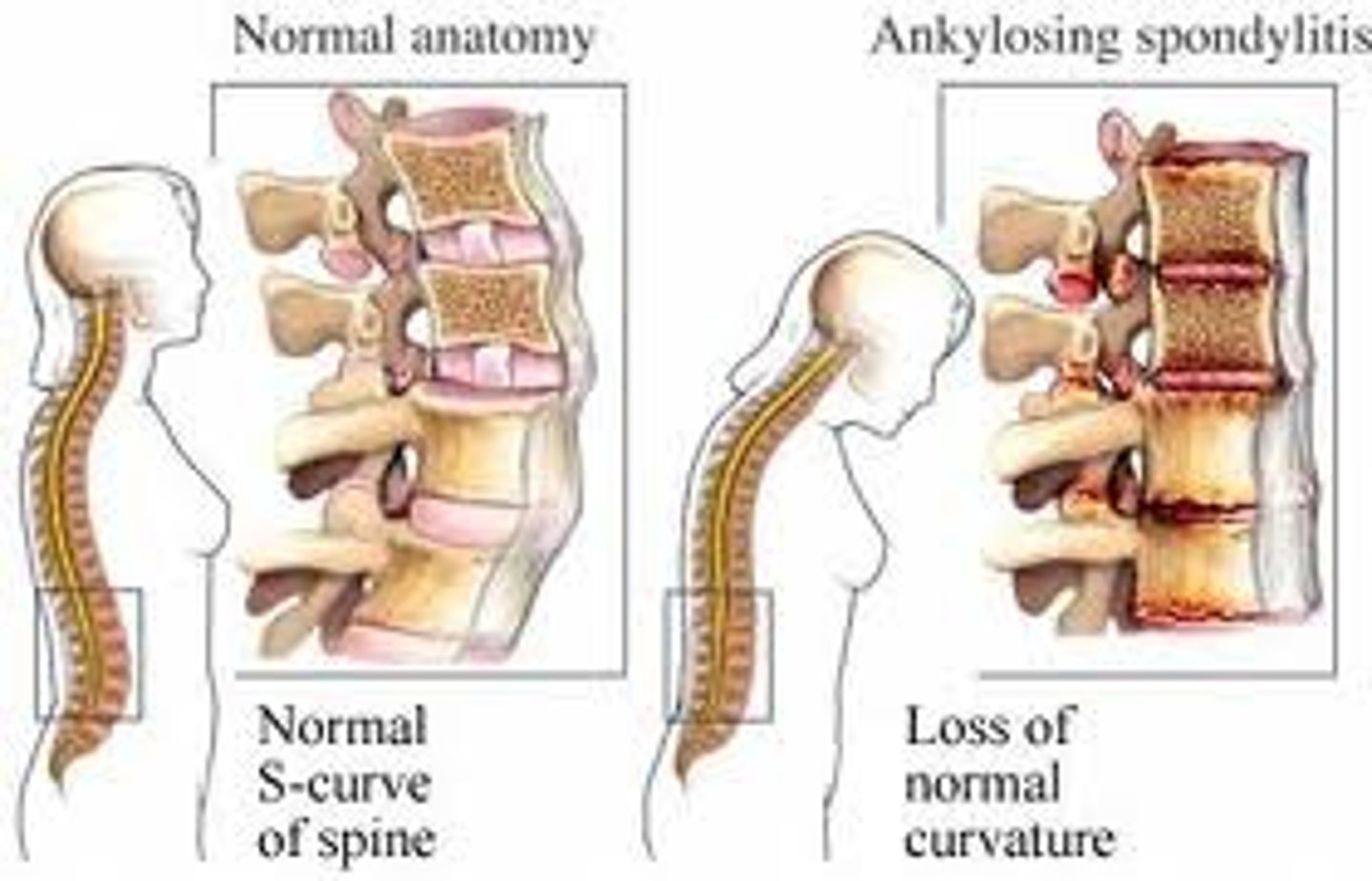
flattening of the lumbar curvature
may be seen with a herniated lumbar disc or ankylosing spondylitis
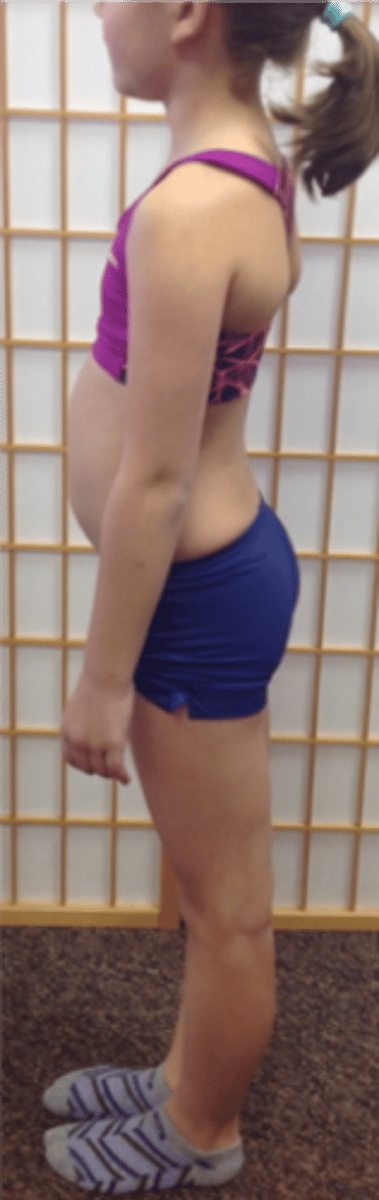
lumbar hyperlordosis
Hip flexion contracture and hip extensor weakness drive the lumbar spine into increasing lordosis to balance head over pelvis.
Note the use of the hands for stability.
kyphosis
hunchback
ankylosing spondylitis
a form of rheumatoid arthritis that primarily causes inflammation of the joints between the vertebrae
rheumatoid arthritis
A chronic systemic disease characterized by inflammation of the joints, stiffness, pain, and swelling that results in crippling deformities
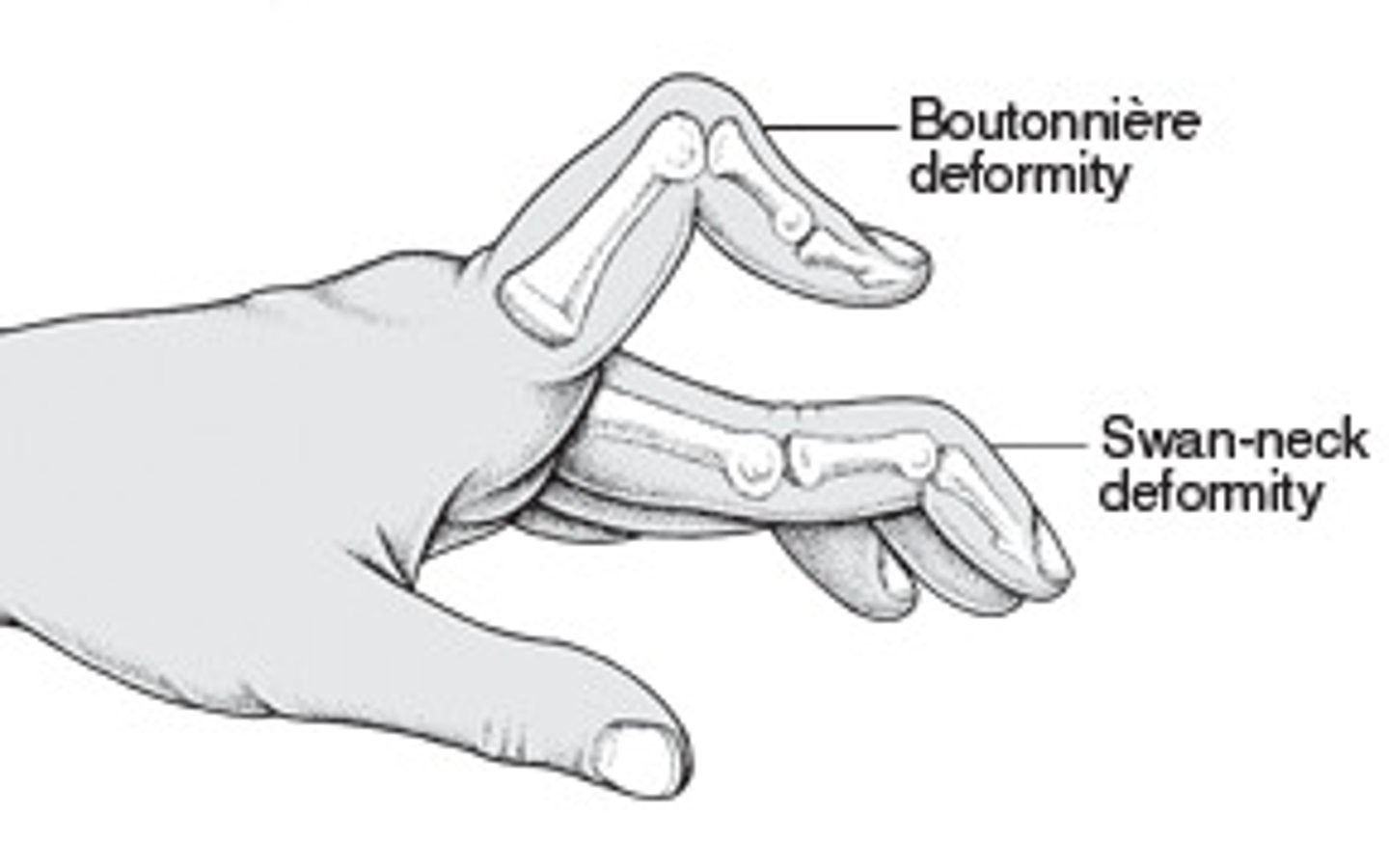
Boutonniere deformity
flexion of PIP and hyperextension of DIP
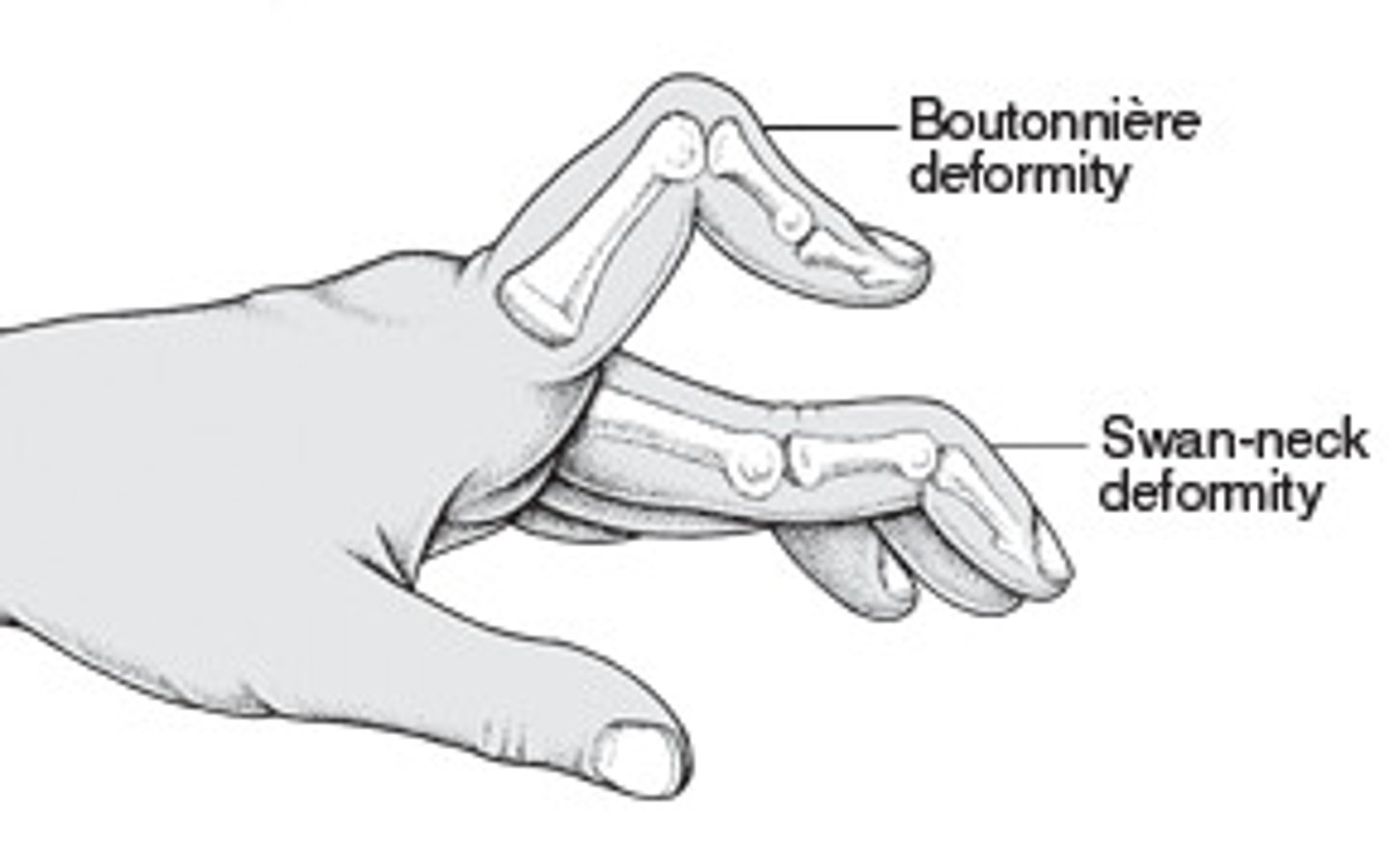
Swan neck deformity
hyperextension of PIP joint and flexion of DIP joint
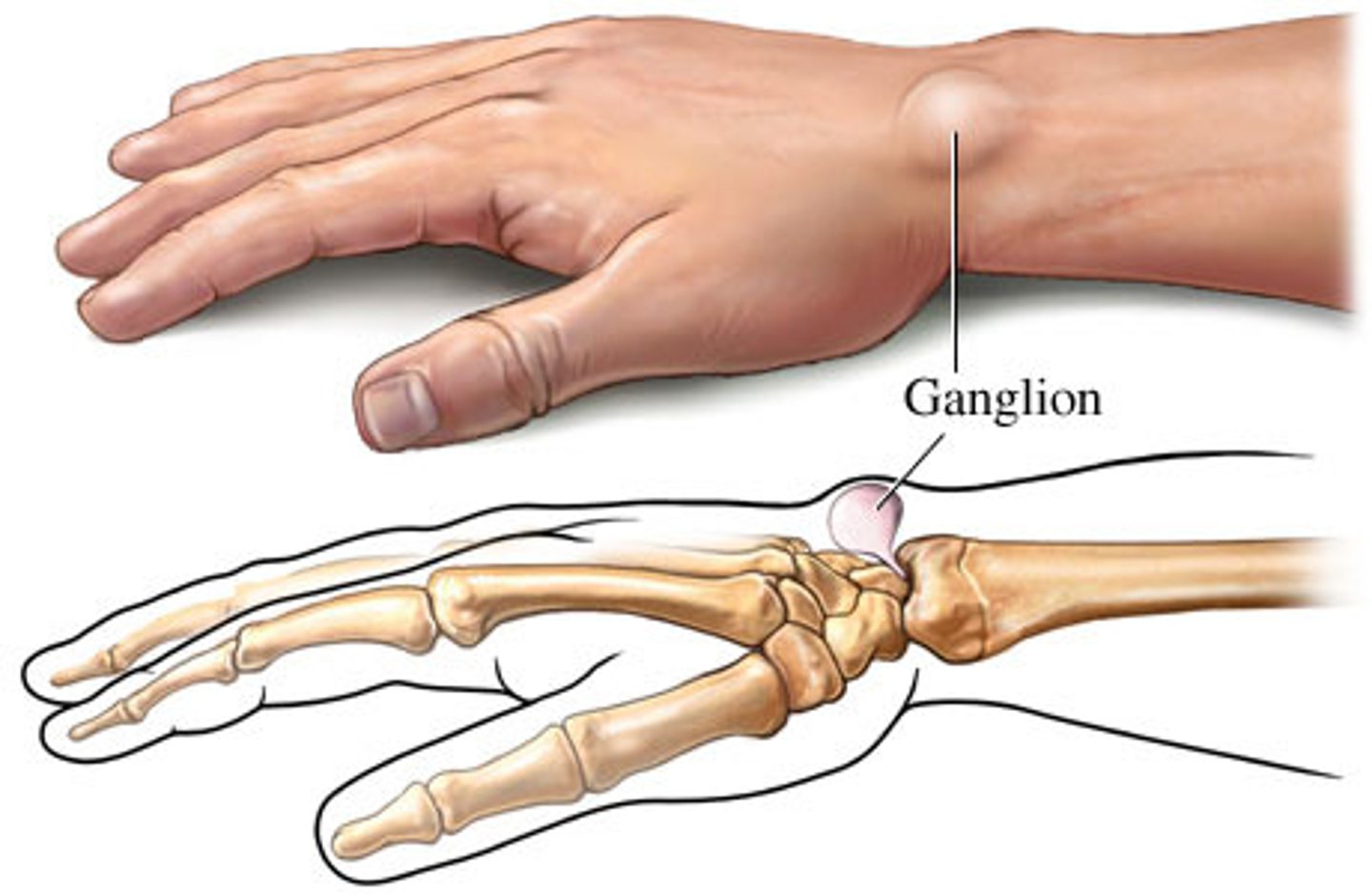
ganglion cyst
a harmless fluid-filled swelling that occurs most commonly on the outer surface of the wrist
Osteoarthritis
inflammation of the bone and joint
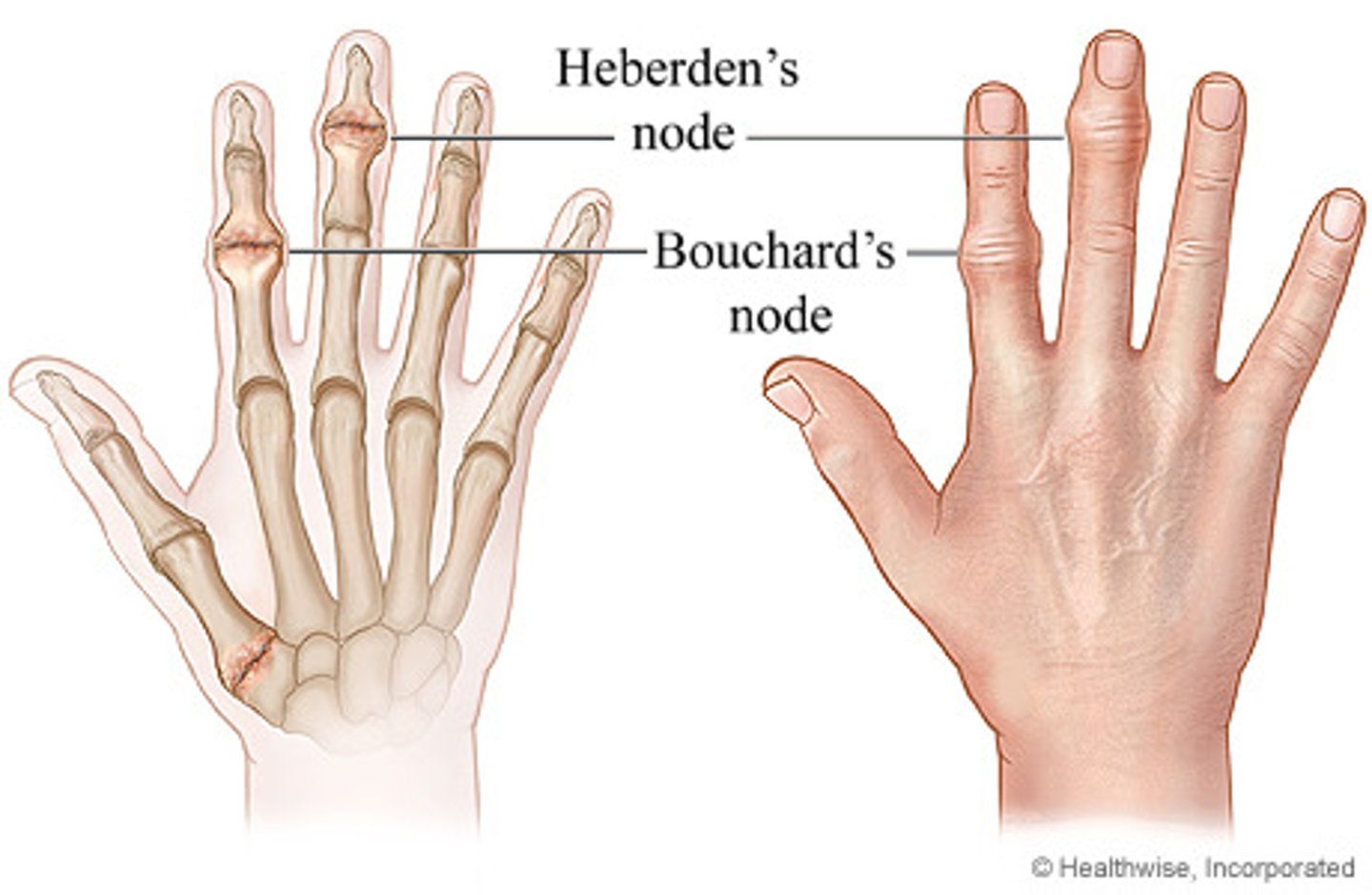
Heberden and Bouchard nodes
Heberden: DIP
Bouchard: PIP (less common)
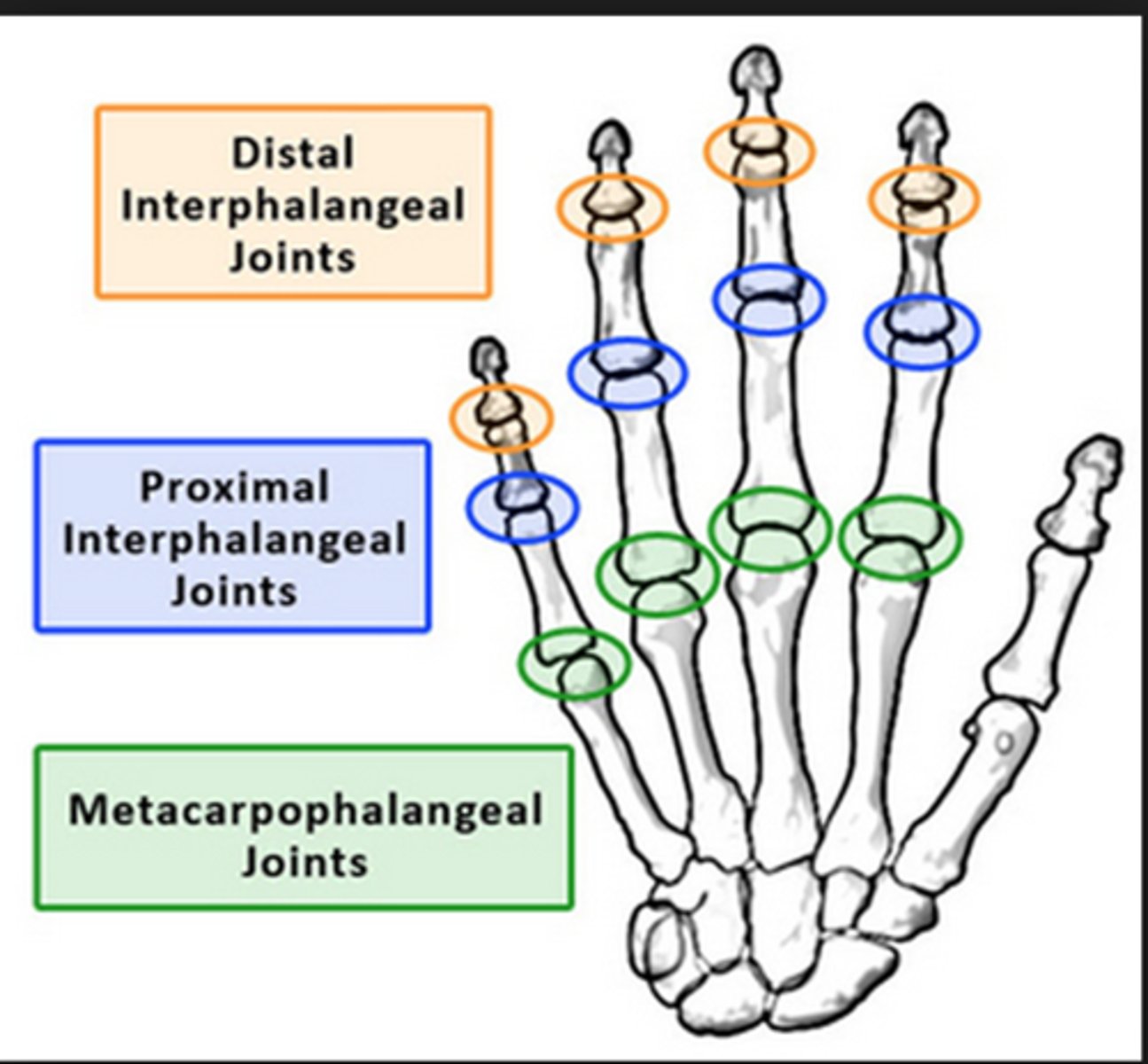
DIP joint
distal interphalangeal joint. the joint between the middle and closest phalange of a given finger
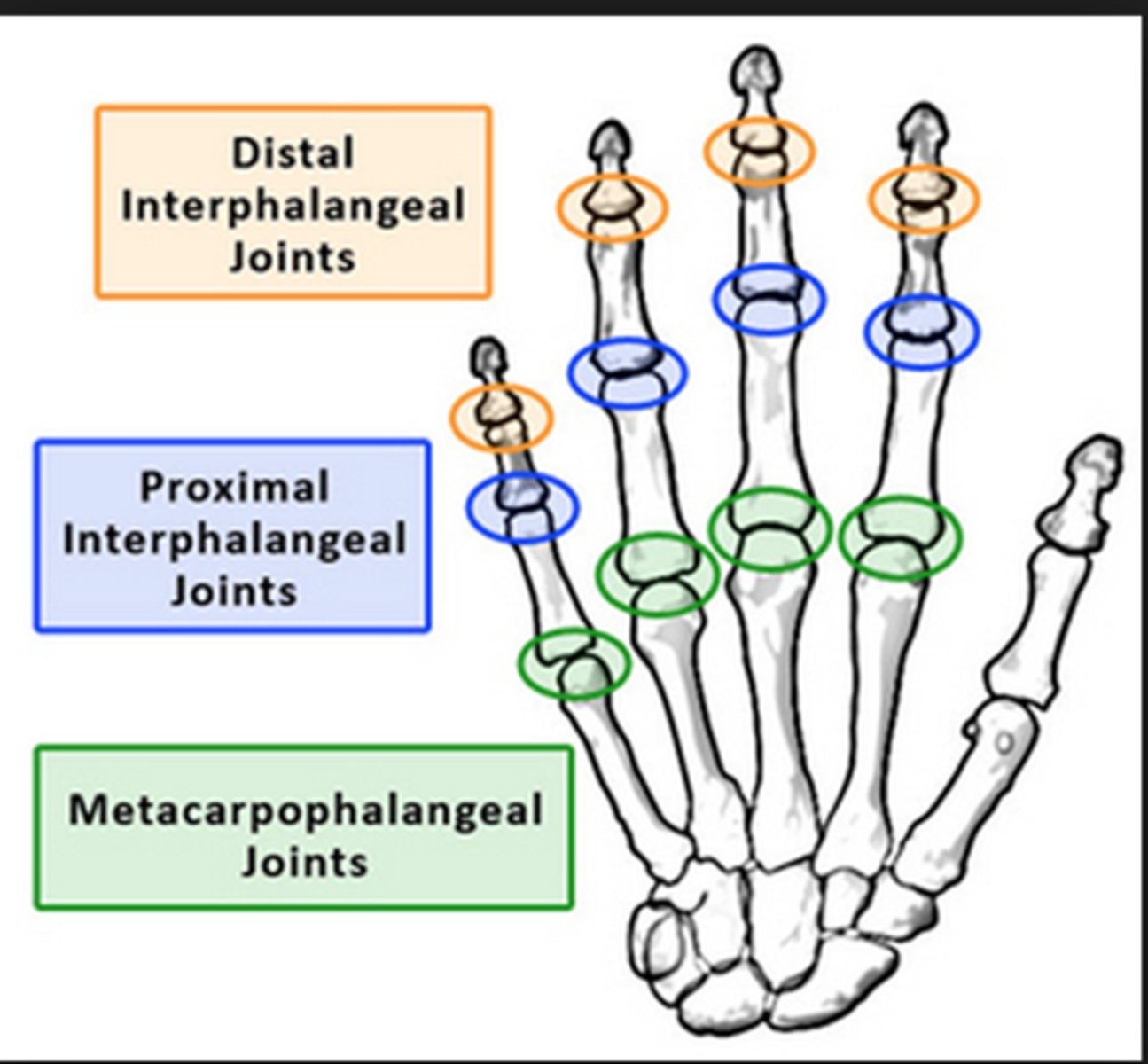
PIP joint
proximal interphalangeal joint. the joint between the middle and closest phalange of a given finger
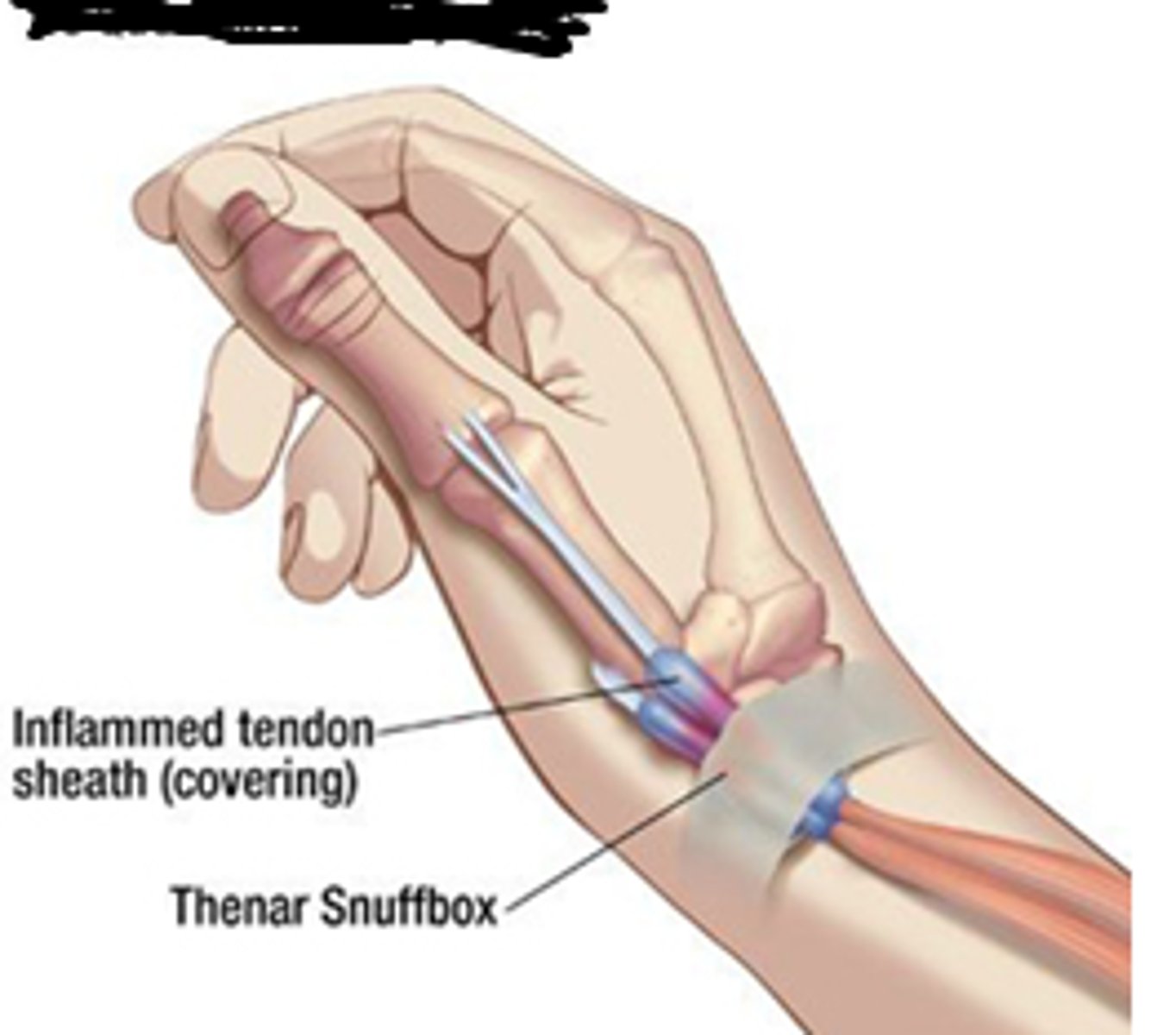
tenosynovitis
Inflammation of the tendon sheath where muscle connects to bone.
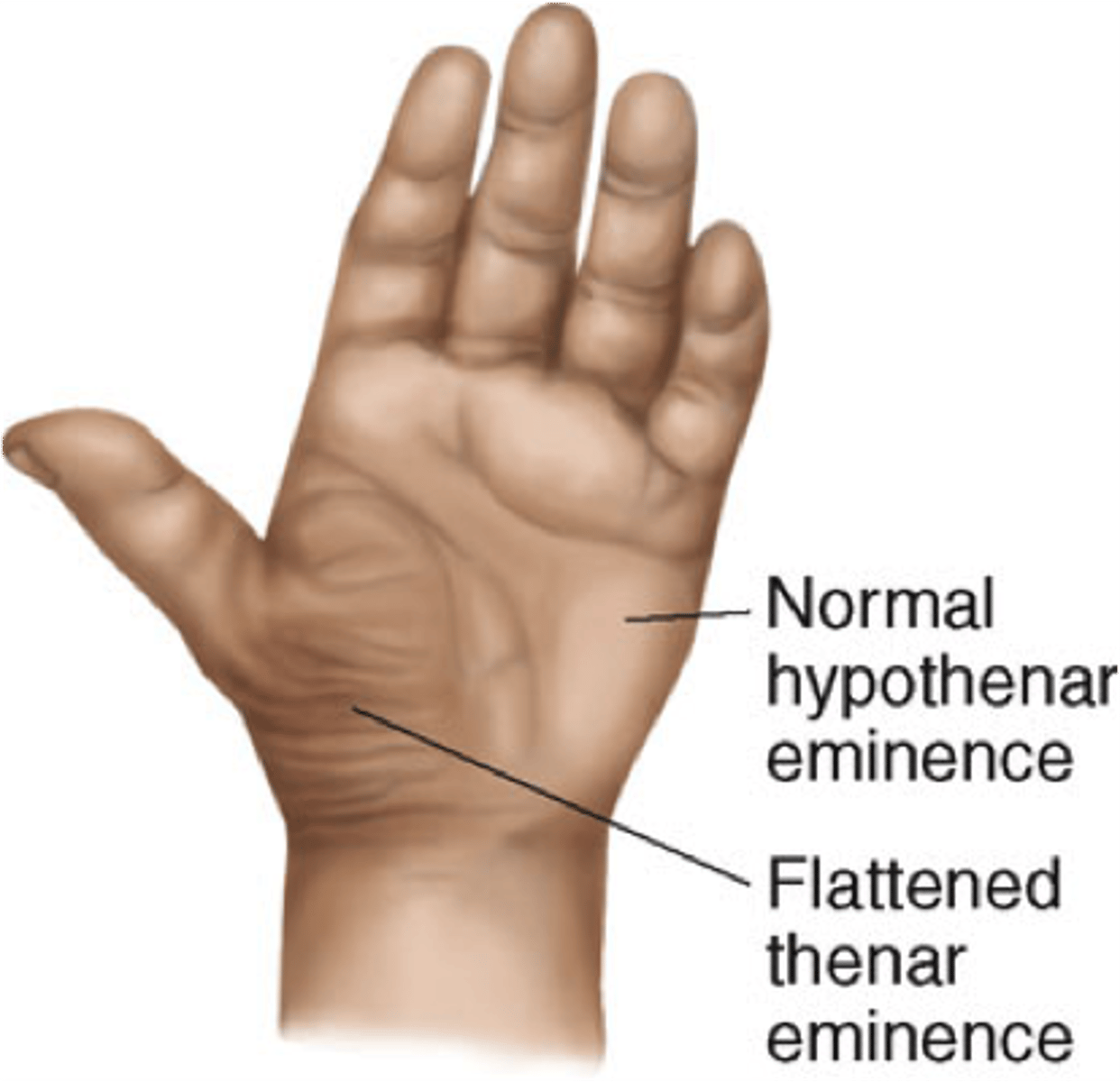
Thenar atrophy
Thenar atrophy suggests a median nerve disorder such as carpal tunnel syndrome. Hypothenar atrophy suggests an ulnar nerve disorder.
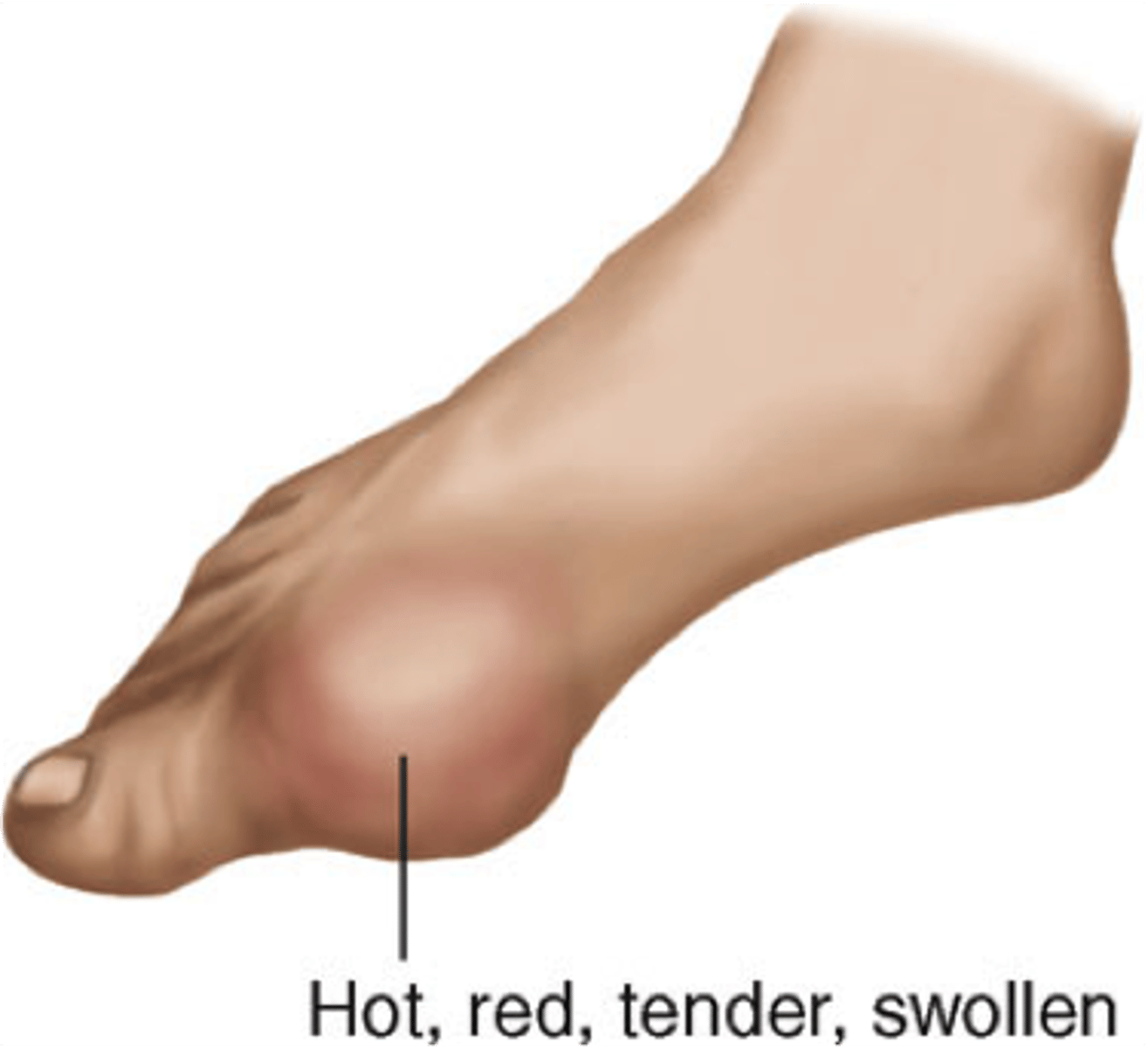
gouty arthritis
inflammation and painful swelling of joints caused by excessive uric acid in the body
found in great toe
painful red hot and swollen
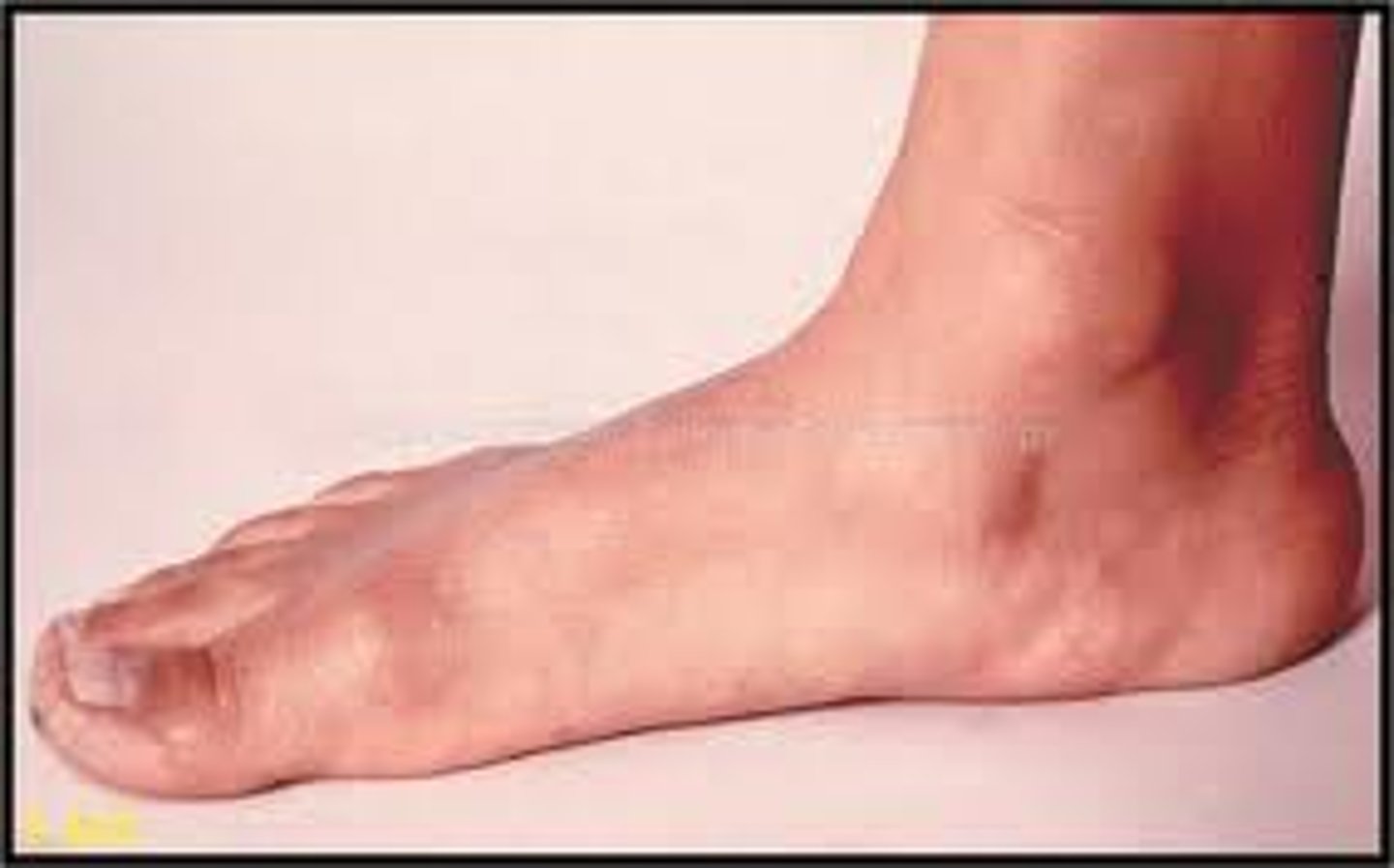
Flat feet (pes planus)
has no arch and may cause pain and swelling of the foot surface
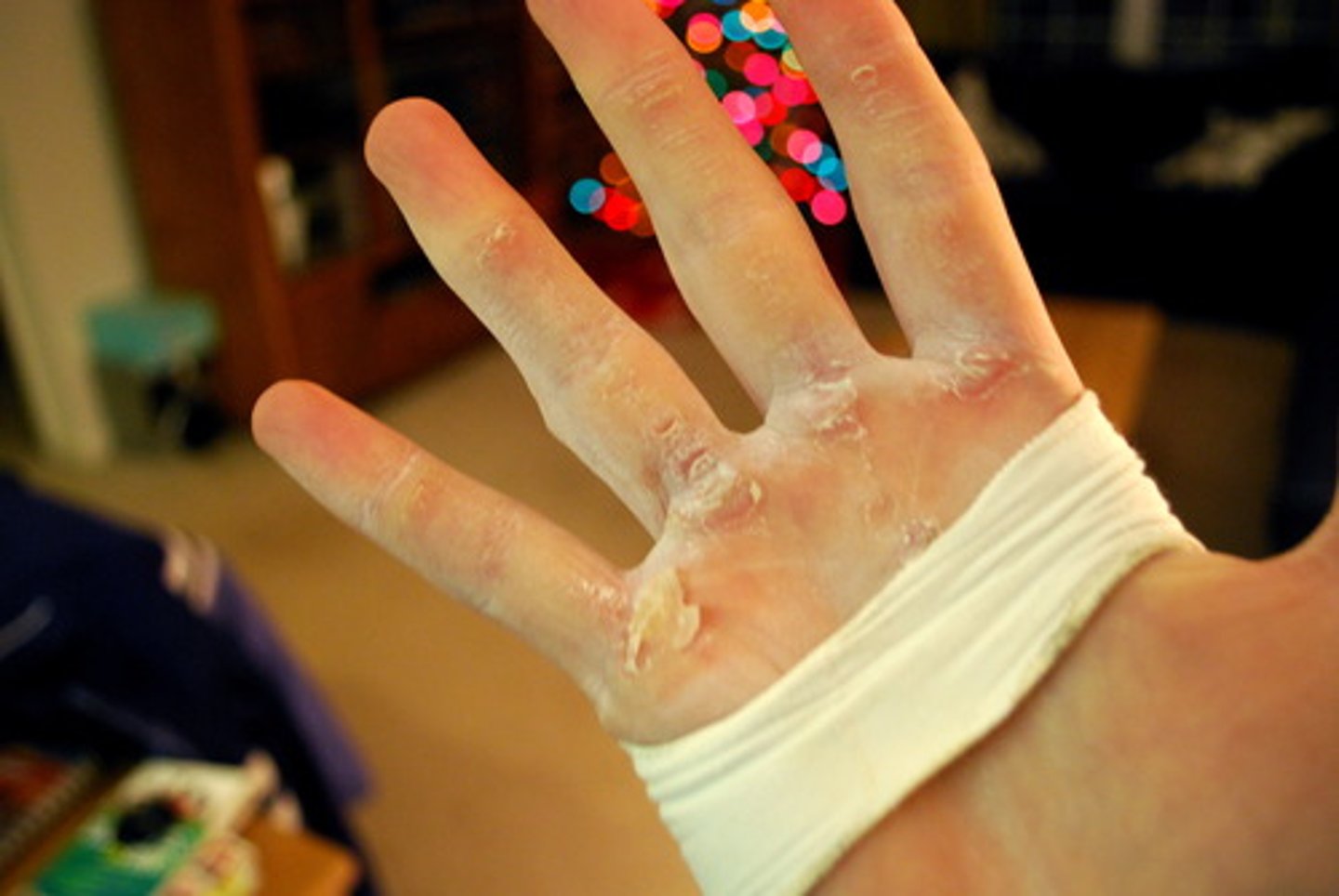
callus
area of thick hard skin at pressure points
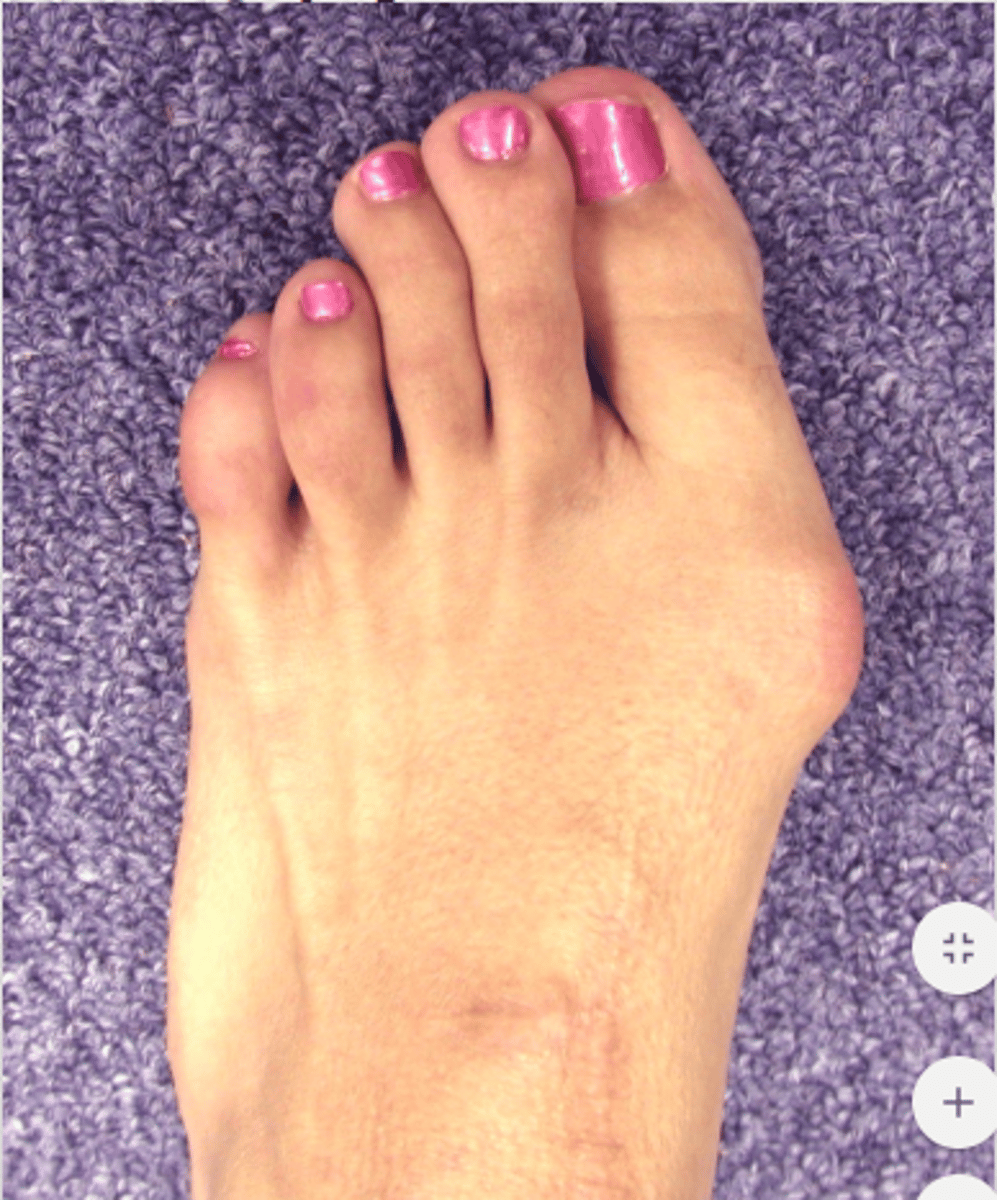
Halluz Valgus (bunion)
great toe is deviated laterally and may overlap the second toe
enlarged, painful, inflamed bursa/bunion may form on medial side
Corns
Keratinized conical masses on the toes,
thickening of soft tissue
develop on the dorsum over bony prominence from prolonged pressure from shoes
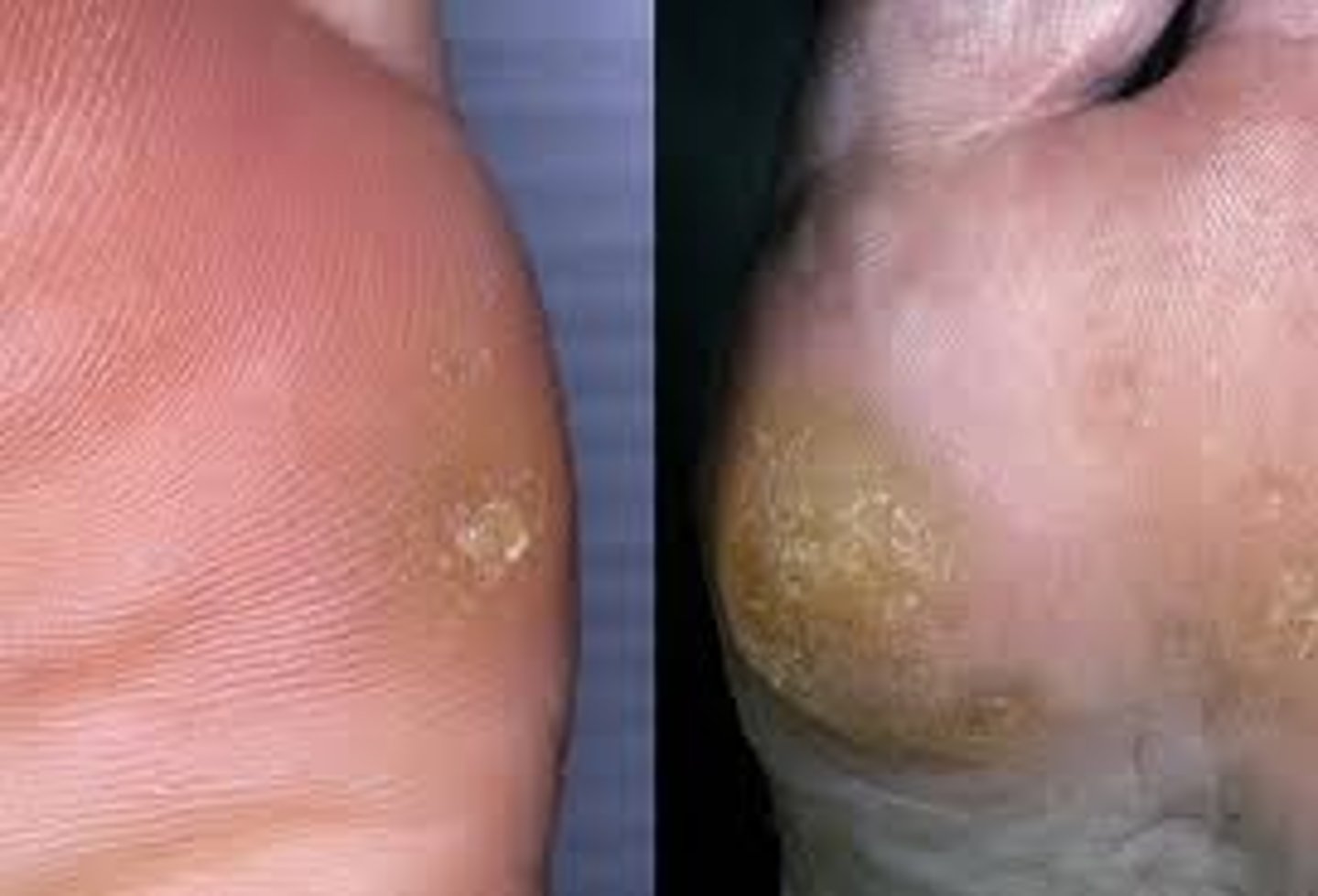
Plantar warts (verruca vulgaris)
warts that develop on the soles of the foot, grow inward, and can become painful
often found under a callus
dark tiny spots
painful warts
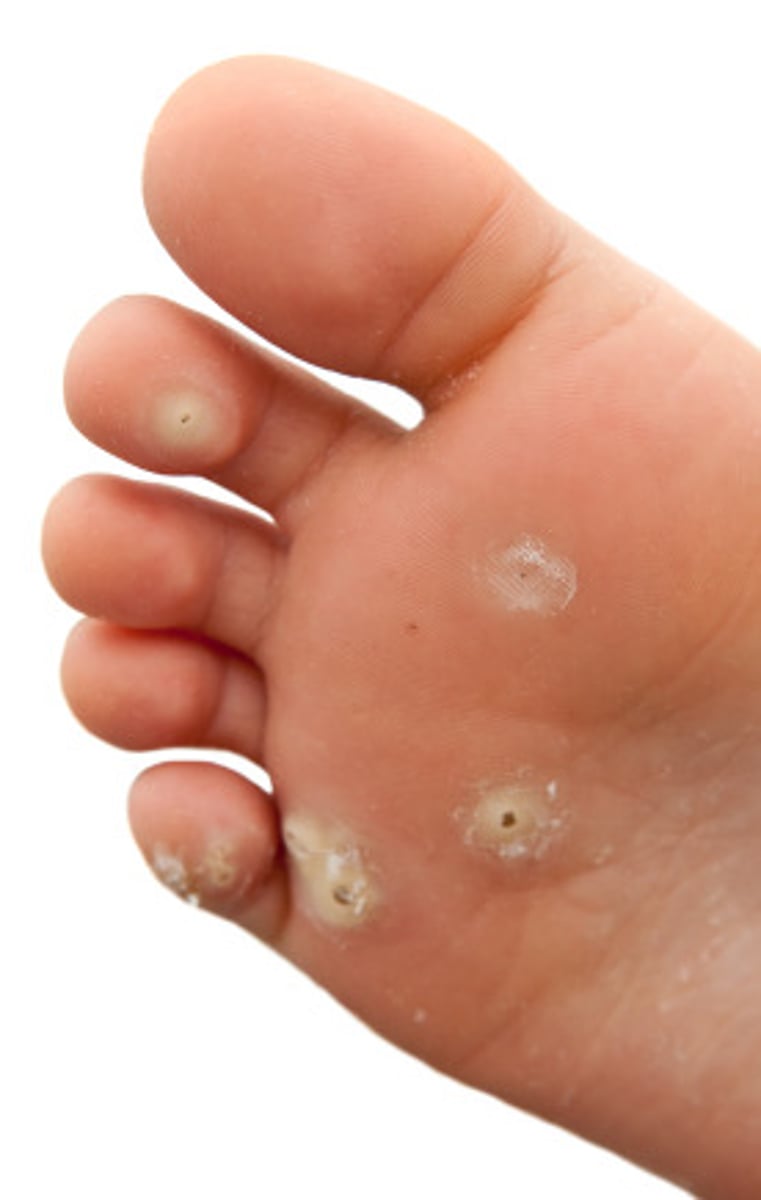
Brown-Sequard Syndrome
Hemi-section of the cord
ipsilateral (same side) spastic paralysis and loss of position sense
contralateral (opposite side) loss of pain and thermal sense
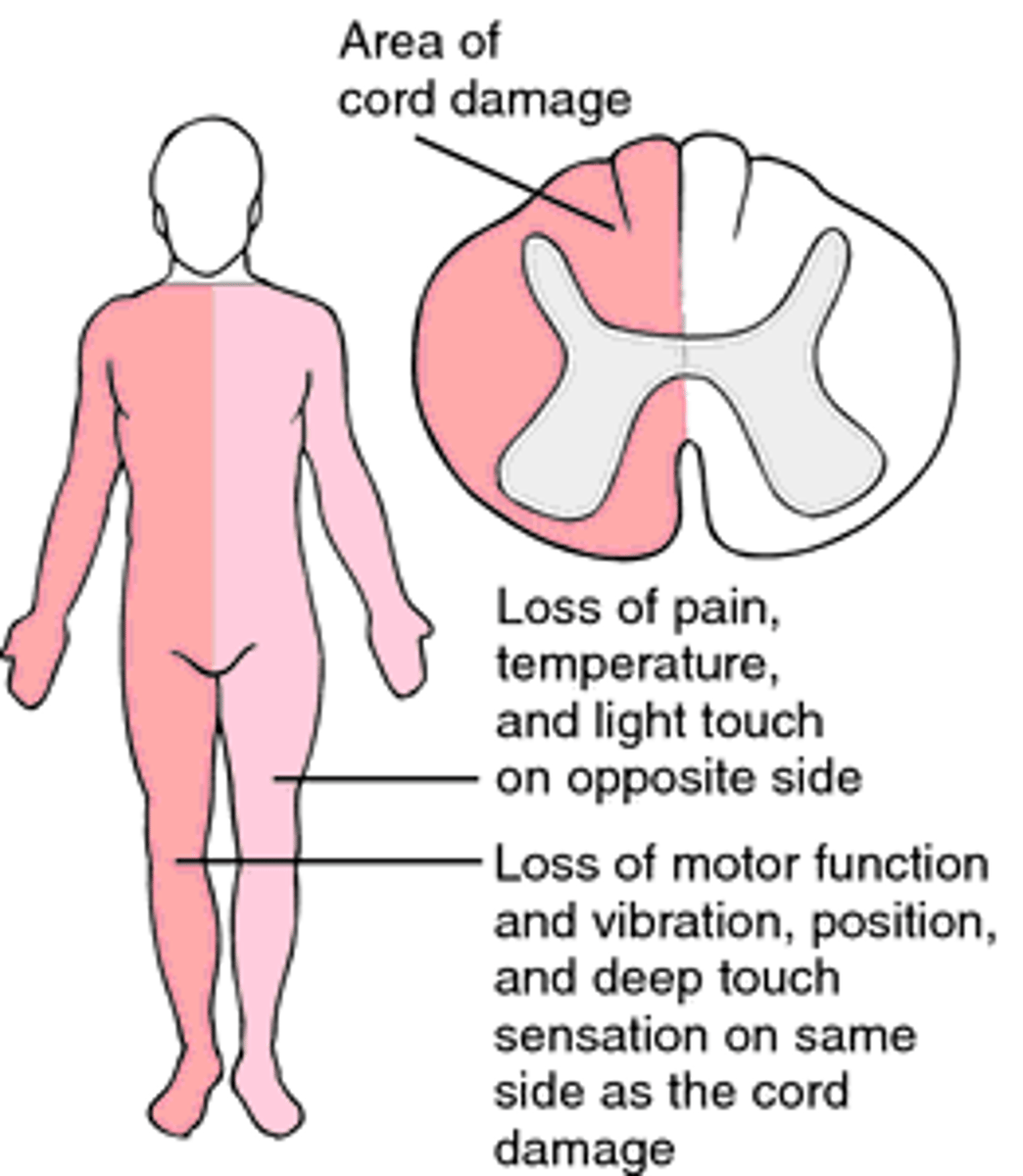
Central Cord Syndrome
Injury results in sacral sparing and preferentially upper- more than lower-extremity weakness.
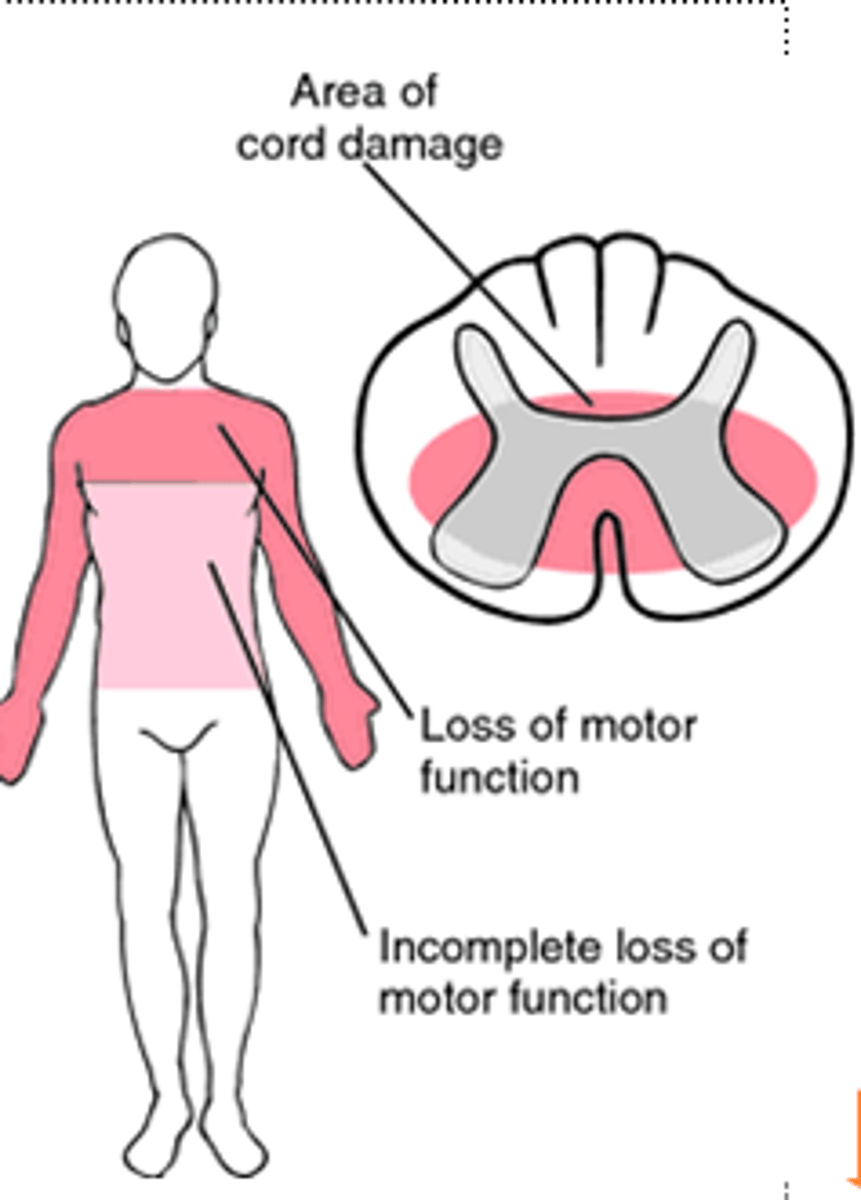
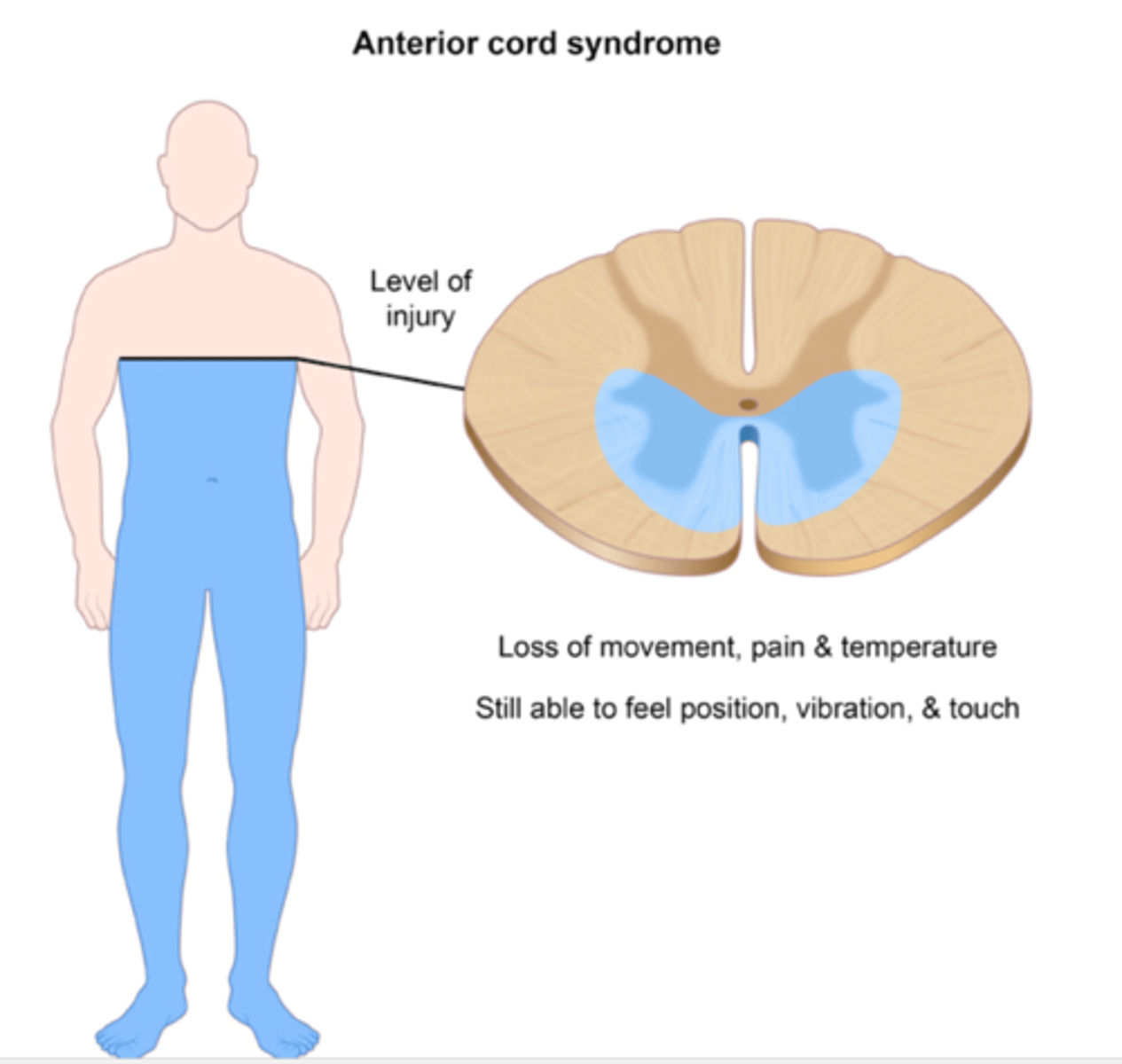
Anterior cord syndrome
Injury results in variable loss of motor function as well as pain and temperature. Proprioception is preserved.
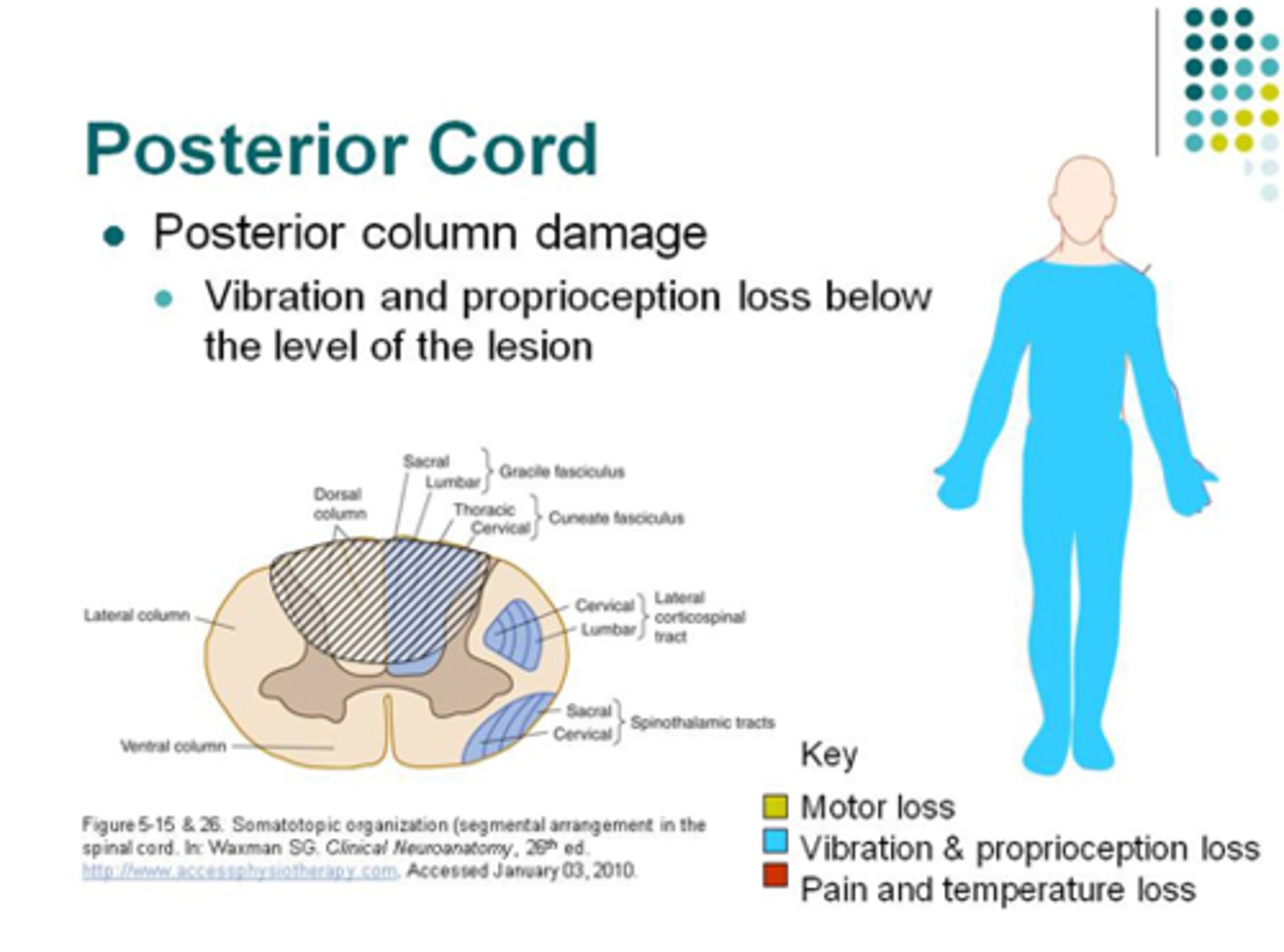
Posterior Cord Syndrome
Injury results in loss of proprioception and variable preservation of motor function and pain and temperature sensation.
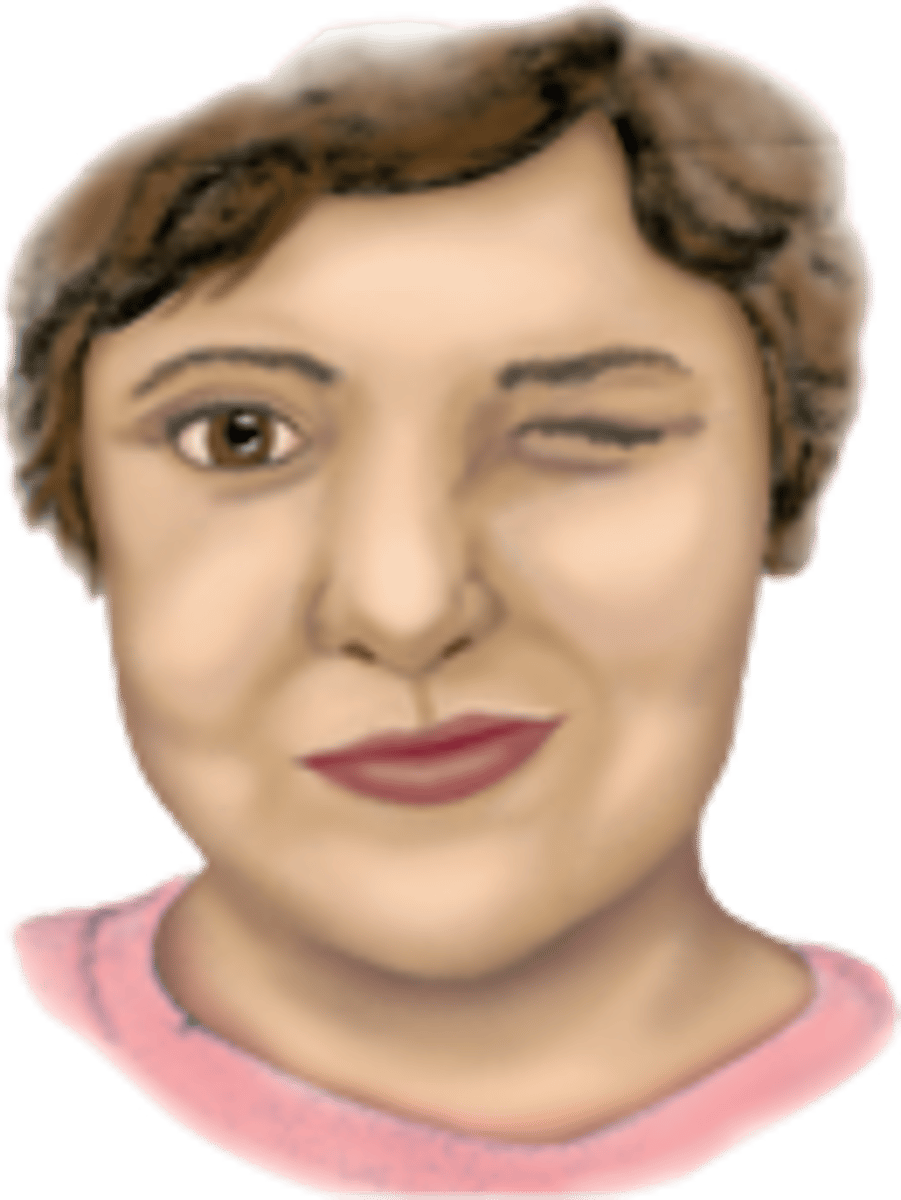
Eye tic
Tics are brief, repetitive, stereotyped, coordinated movements occurring at irregular intervals. Examples include repetitive winking, grimacing, and shoulder shrugging. Causes include Tourette's syndrome and drugs such as phenothiazines and
amphetamines.
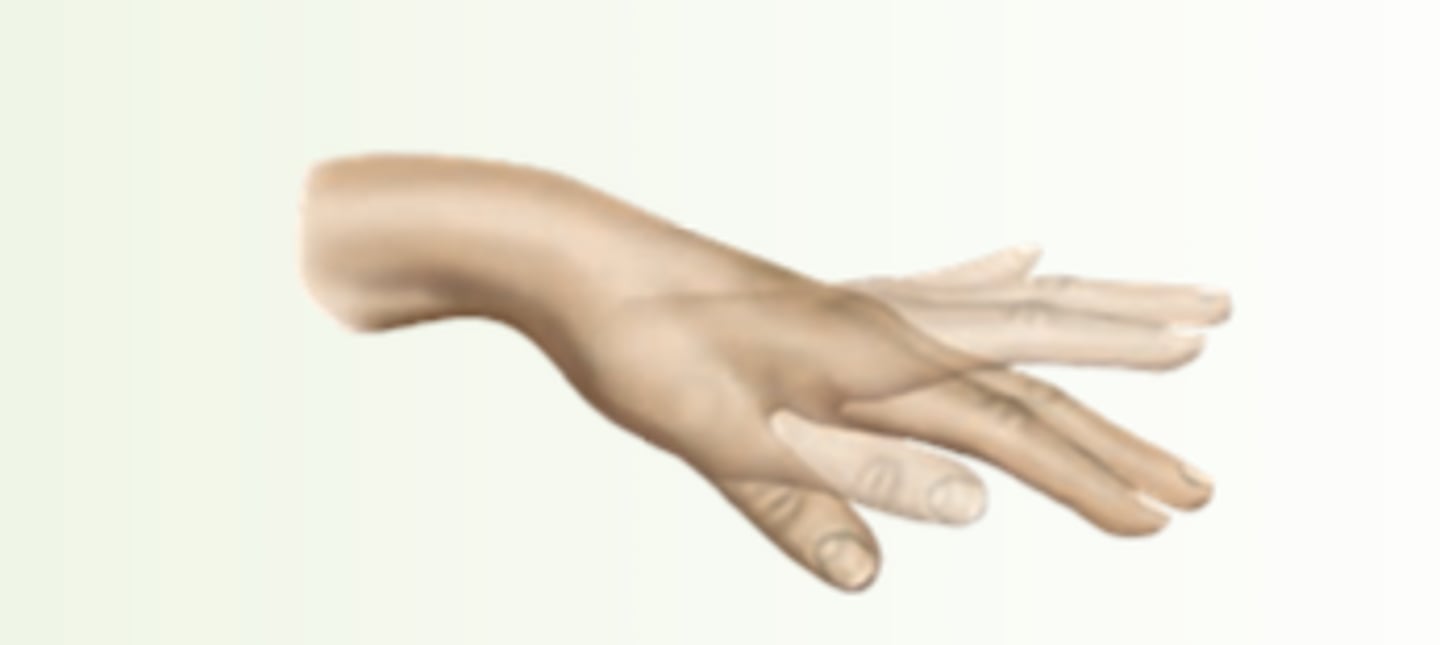
choreiform movements of the hand
are brief, rapid, jerky, irregular, and unpredictable. They occur at rest or interrupt normal coordinated movements. Unlike tics, they seldom repeat themselves. The face, head, lower arms, and hands are often involved. Causes include Sydenham chorea (with rheumatic fever) and Huntington disease.
resting tremor
a tremor that is apparent when the client is at rest and diminishes with activity
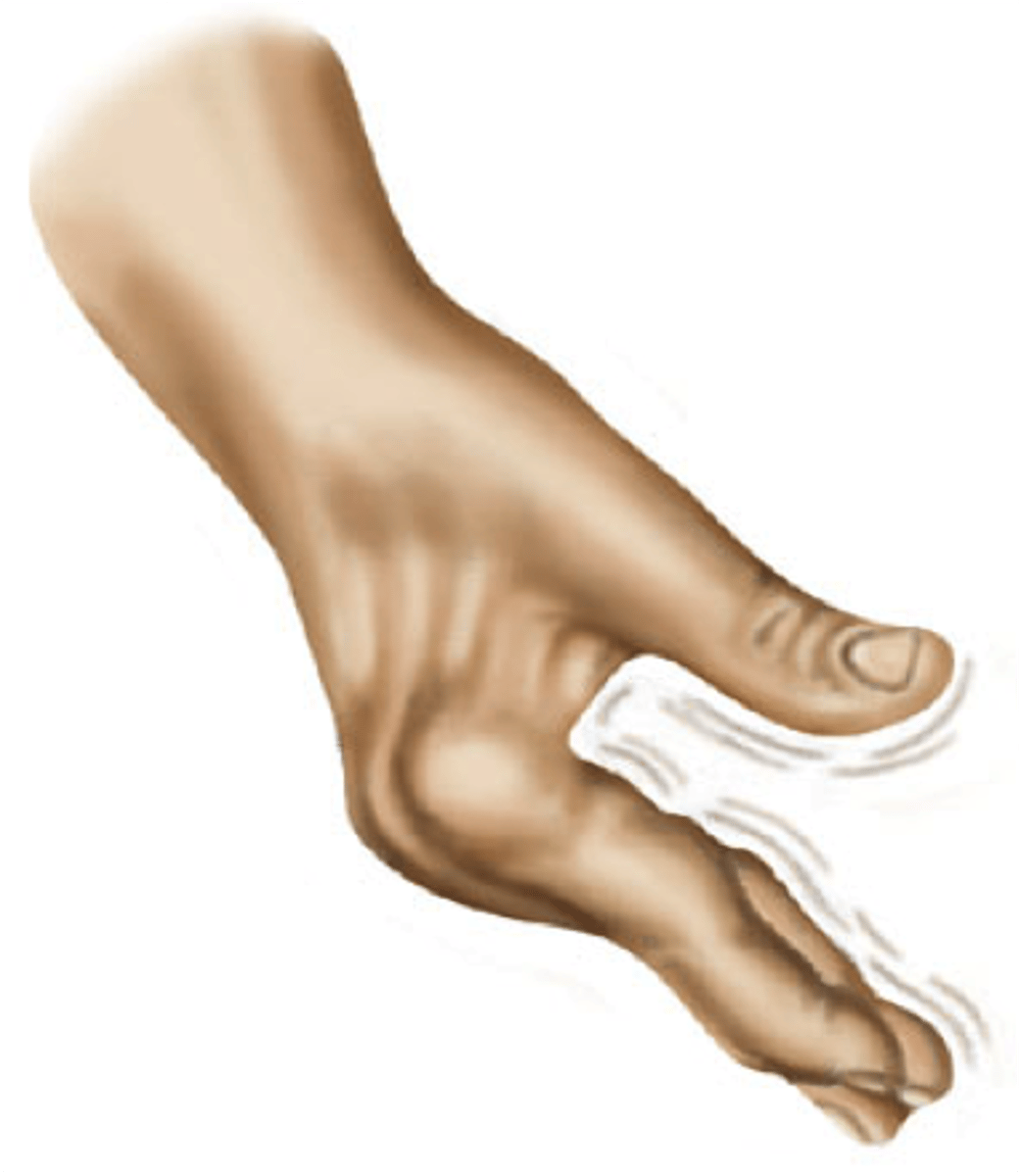
Postural tremor
A tremor that occurs as the person holds a body part still.
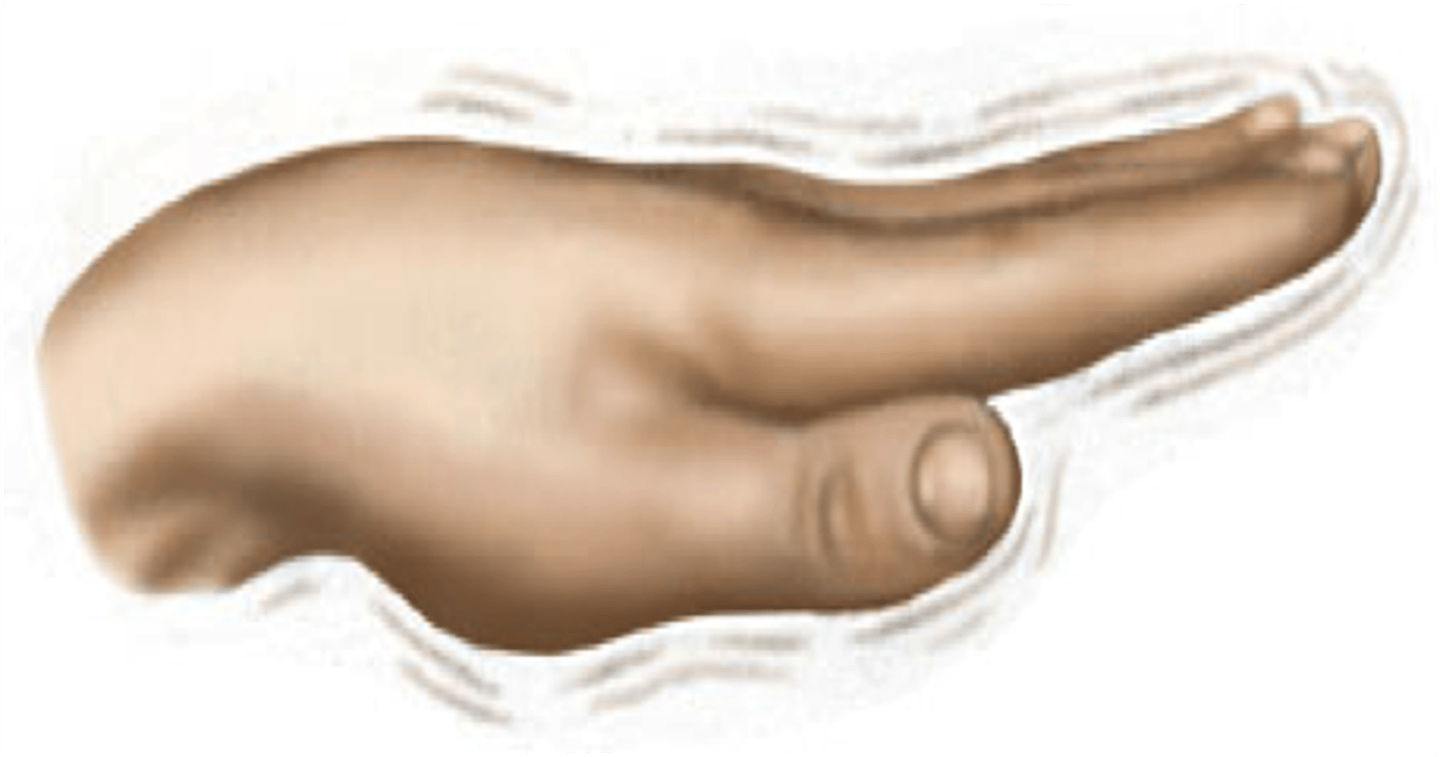
Athetosis
Type of involuntary movement of the body, face, and extremities
slower, twisting movements
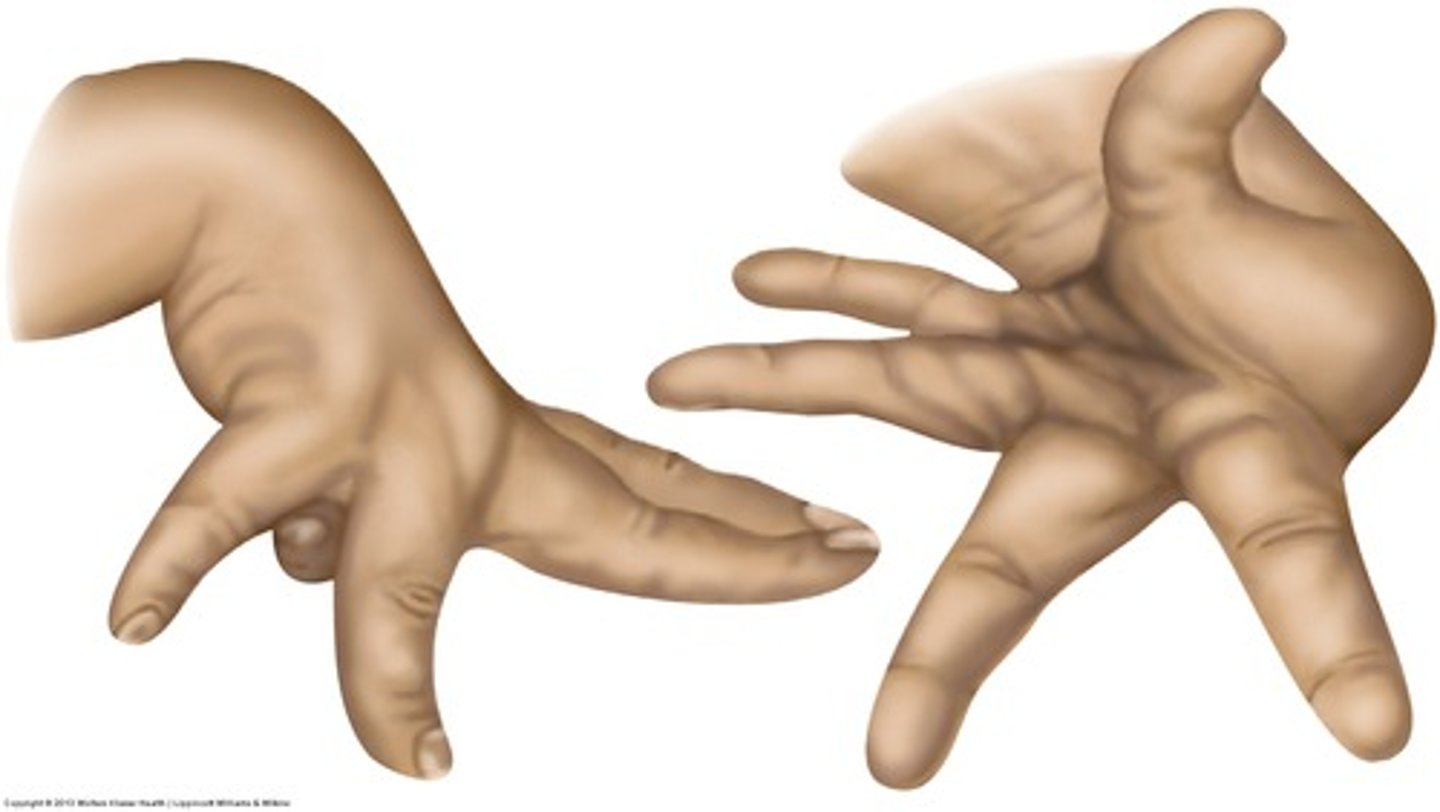
intention tremor
involuntary trembling when an individual attempts a voluntary movement
absent at rest
gets worse when target is near
cerebellar ataxia
staggering, wide-based gait; difficulty with turns; uncoordinated movement with positive Romberg sign
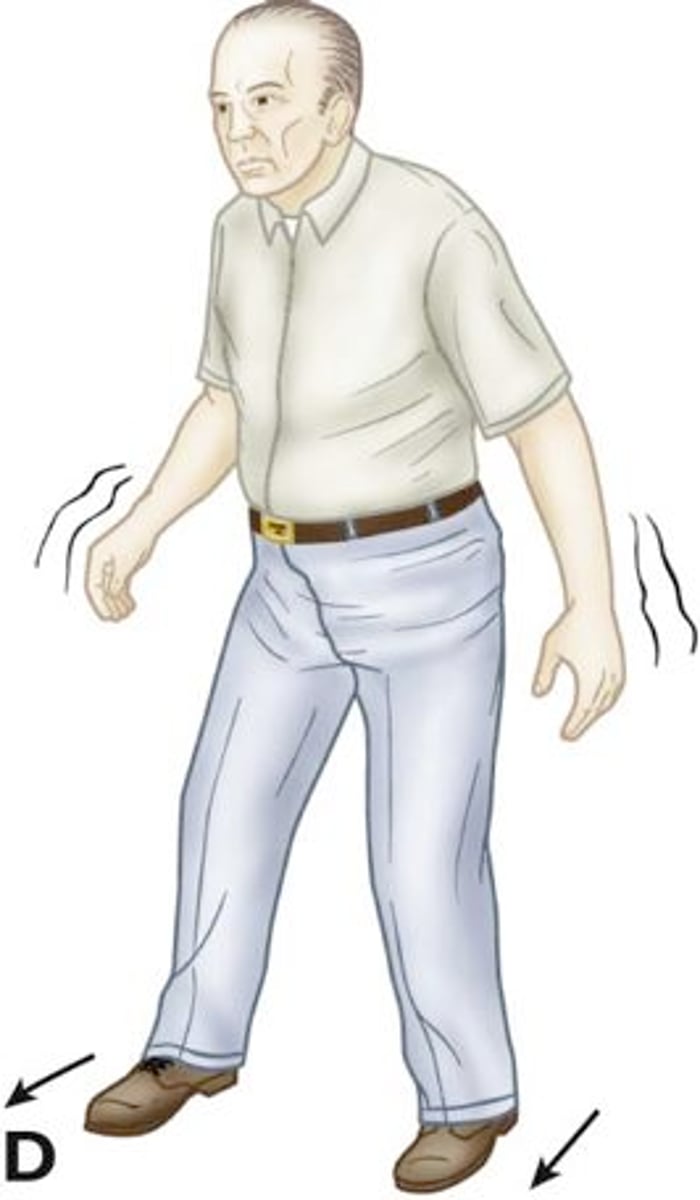
Parkinson's gait
Shuffling gait
stiff manner
stooped over
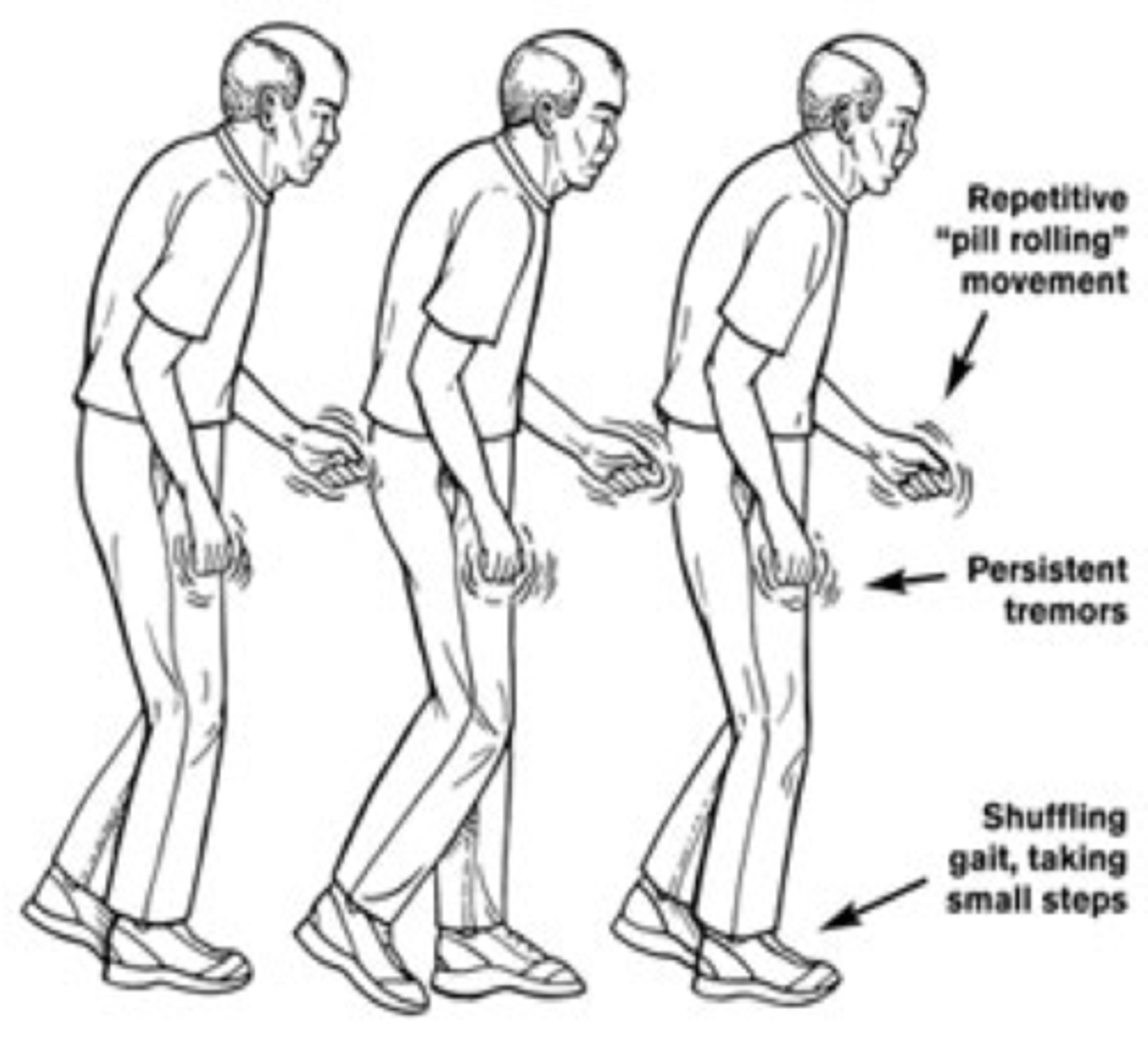
scissors gait
Stiff, short gait; thighs overlap each other with each step.
Seen with partial paralysis of the legs.
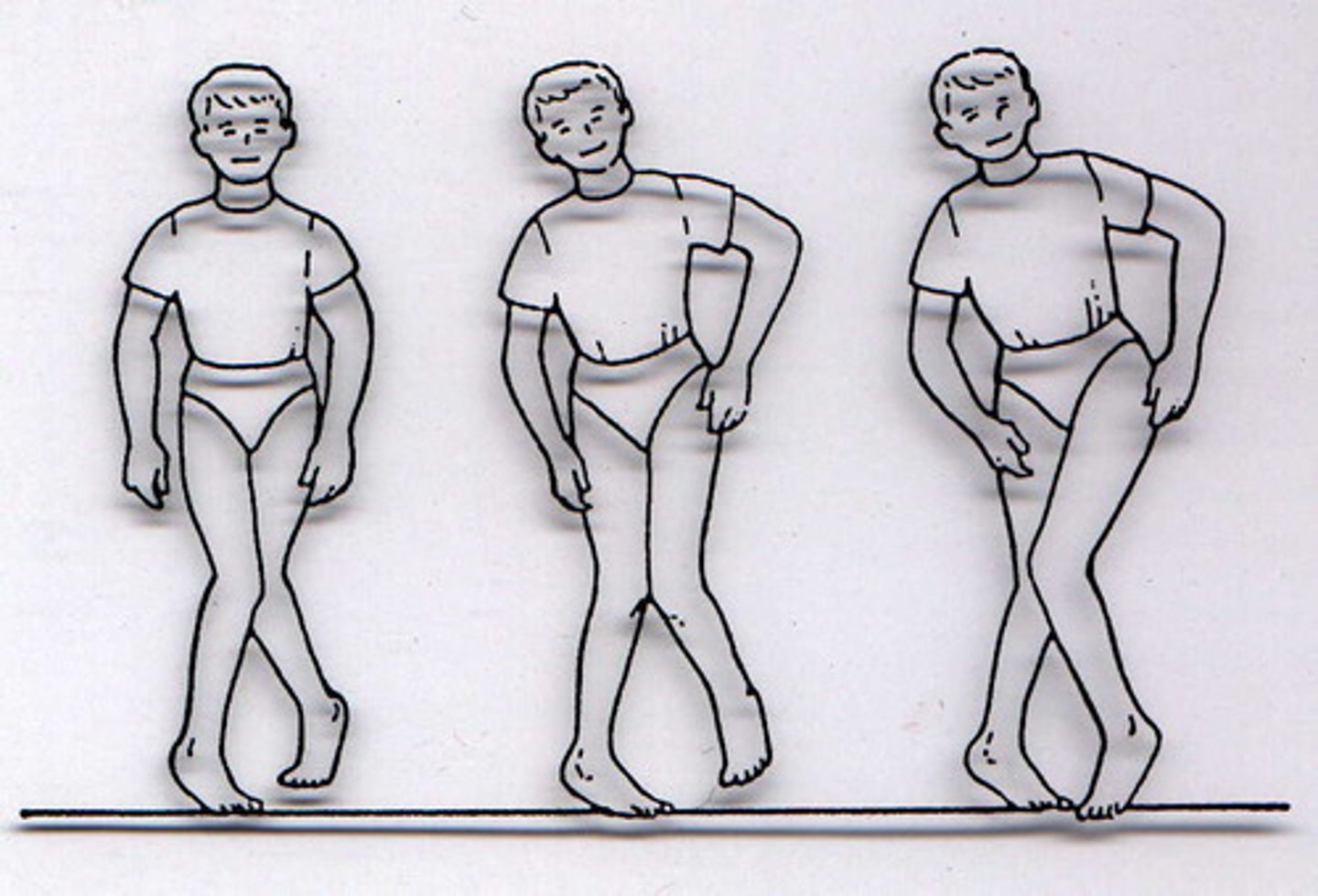
spastic hemiparesis gait
arm is held close to body while patient drags foot
seen with lesions of upper motor neurons
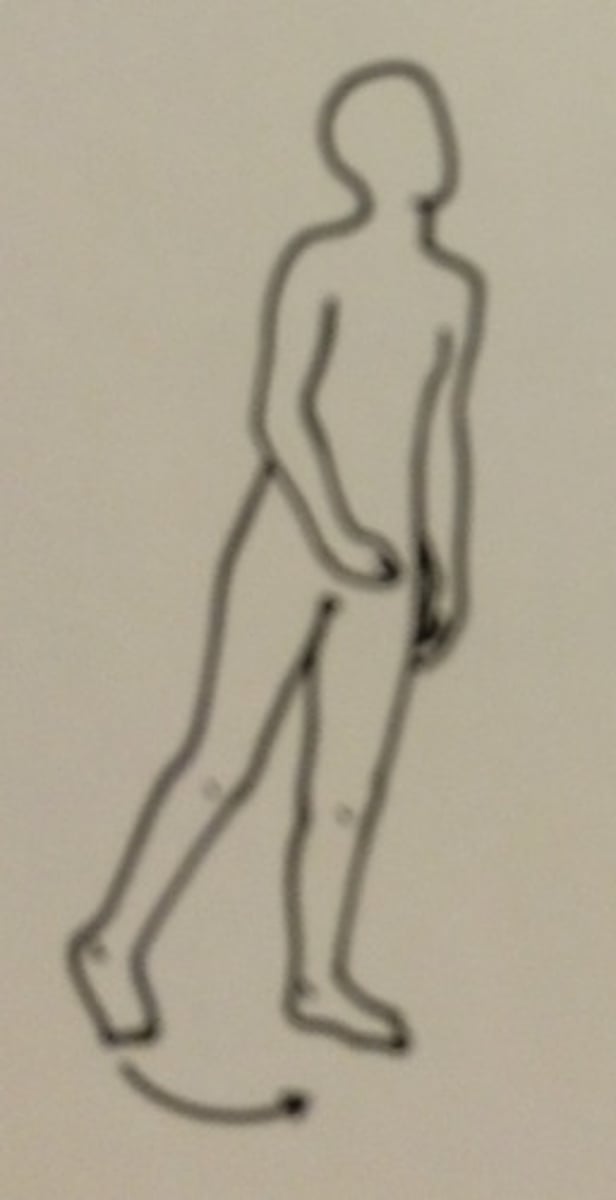
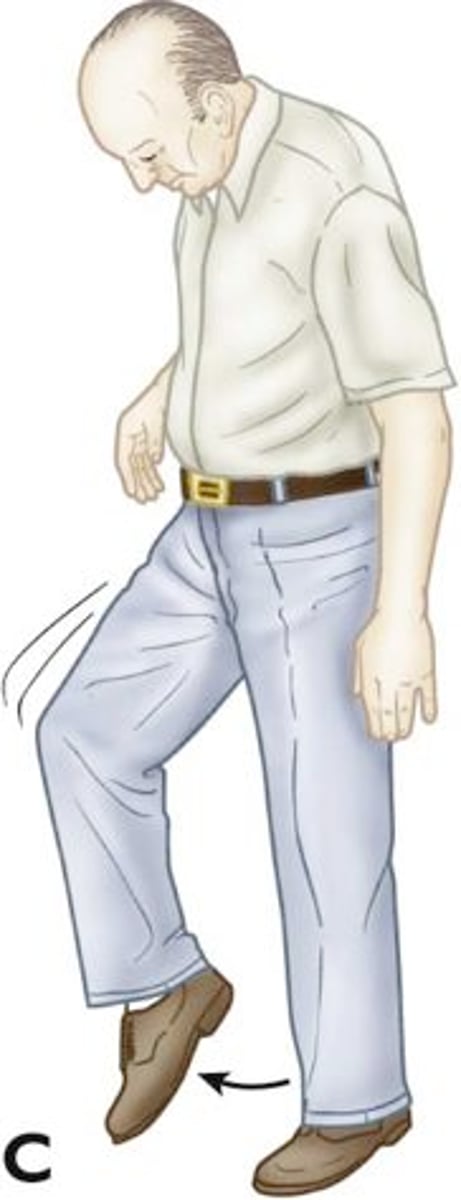
footdrop
The foot falls down at the ankle; permanent plantar flexion
the patient lifts foot then slaps it on the groud
lower motor neuron disease
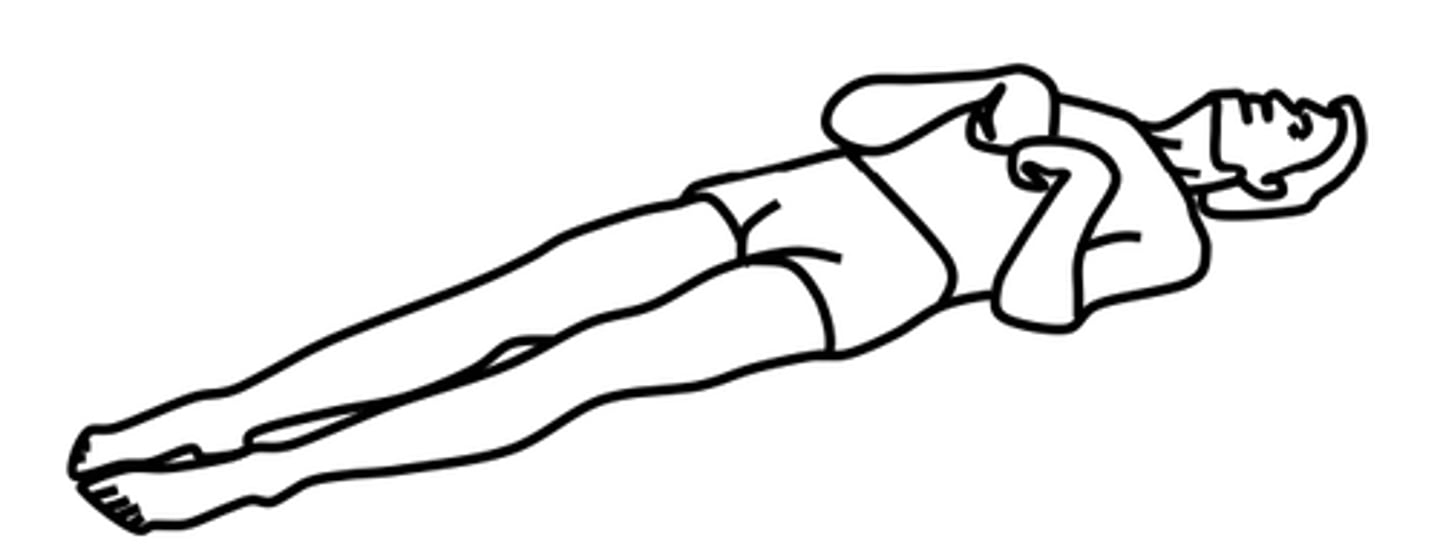
Decorticate posturing
arms flexed inward and bent in toward the body and the legs are extended
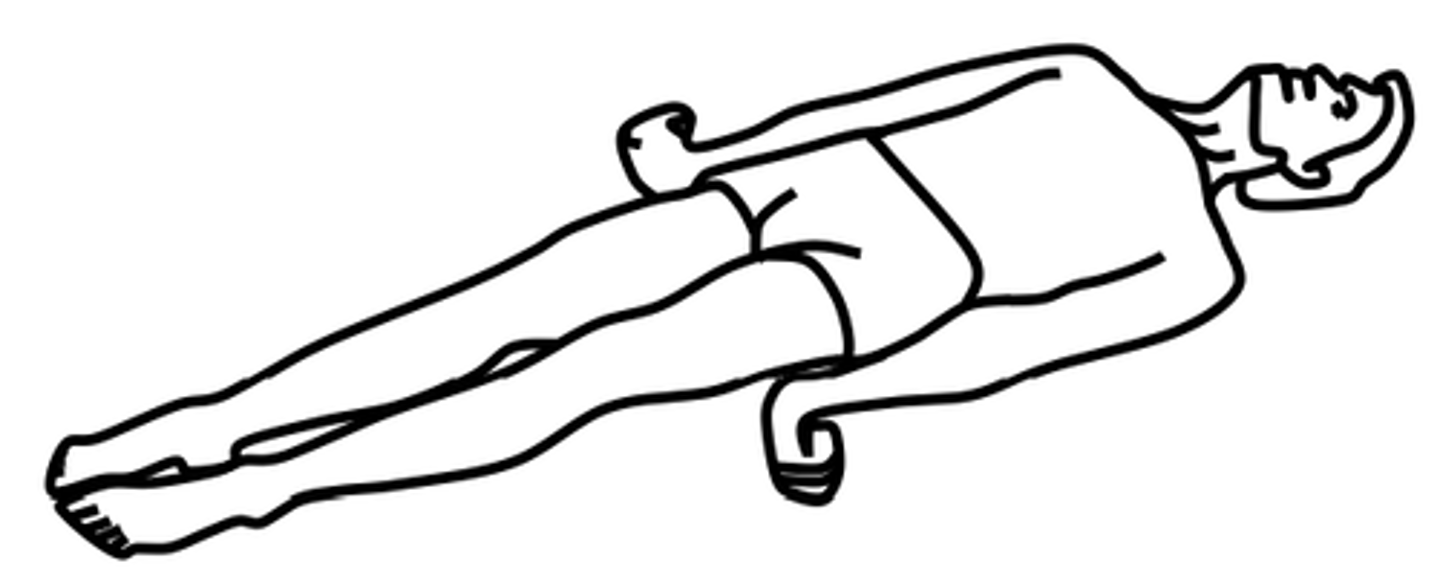
Decerebrate posturing
position of an unconscious person where the upper extremities and lower extremities are extended and the wrists are flexed
lethargy
lack of energy; sluggishness
Obtunded
Less than full alertness (altered level of consciousness), typically as a result of a medical condition or trauma.
stupor
a state of near-unconsciousness or insensibility
coma
state of profound unconsciousness
dysphonia
difficulty producing speech sounds, usually due to hoarseness
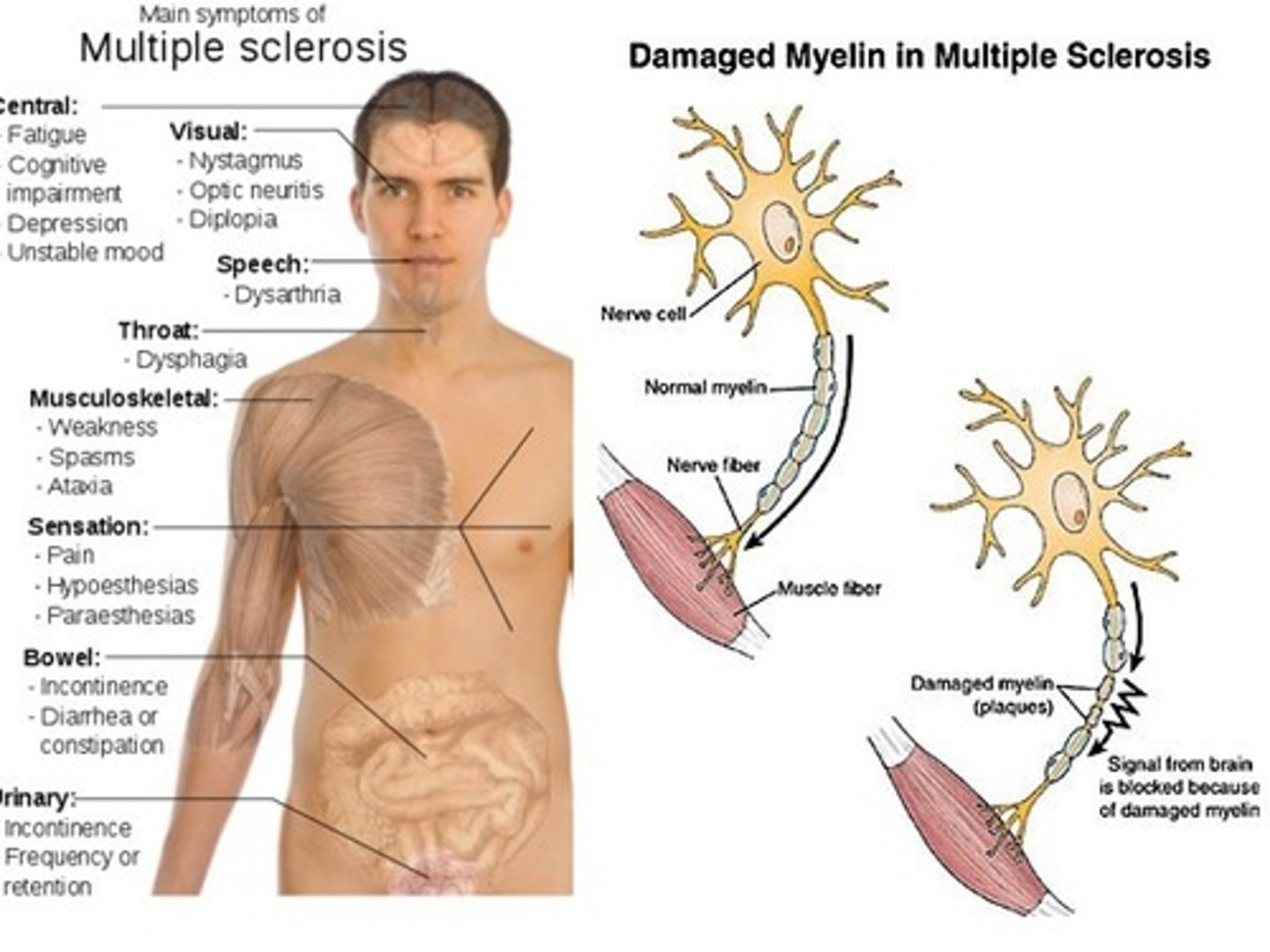
Cerebellar dysarthria
irregular, uncoordinated speech caused by multiple sclerosis
aphasia
impairment of language, usually caused by left hemisphere damage either to Broca's area (impairing speaking) or to Wernicke's area (impairing understanding).
Wernicke's aphasia
condition resulting from damage to Wernicke's area, causing the affected person to be unable to understand or produce meaningful language
broca aphasia (expressive)
nonfluent, good comprehension, poor repetition