Biology: Topic 7: Replication
 Call Kai
 Learn
Learn Practice Test
 Spaced Repetition
 Match
Match Flashcards
 Knowt Play
1/24

There's no tags or description
Looks like no tags are added yet.
Name | Mastery | Learn | Test | Matching | Spaced | Call with Kai |
|---|
No analytics yet
Send a link to your students to track their progress
25 Terms
What is mitosis?
Cell division in eukaryotic cells that results in two daughter cells with identical genetic information - diploid cells
What is meiosis?
A special type of cell division that can produce gametes (reproductive cells) - haploid products different than the parent cell
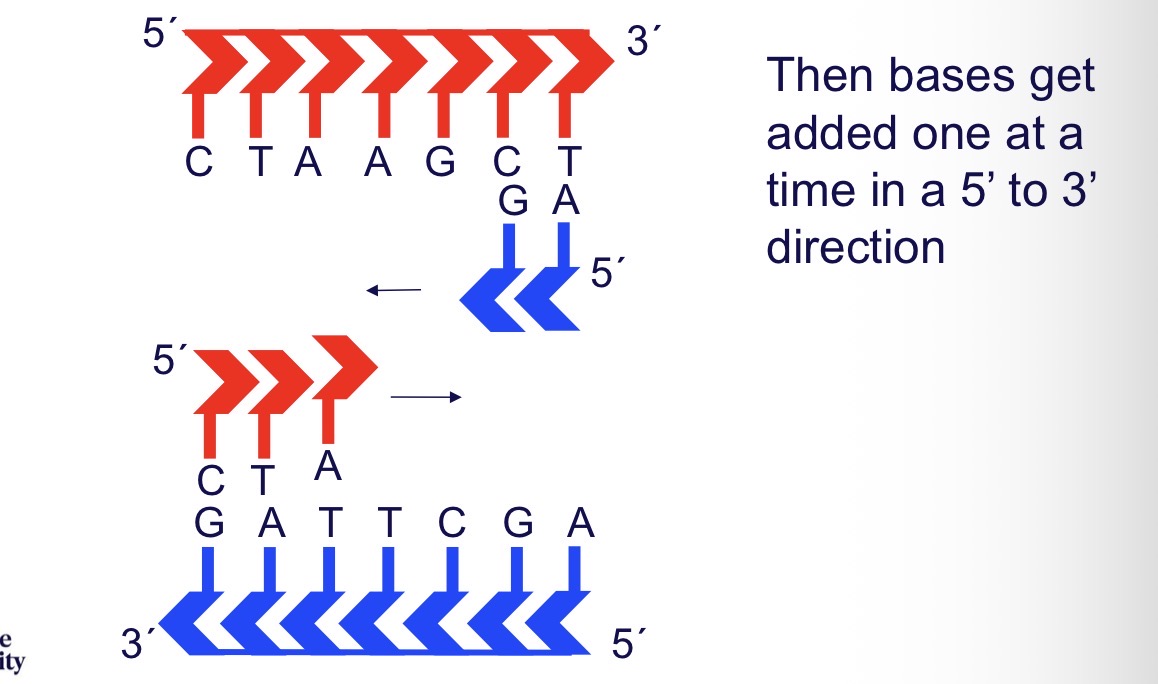
In which direction is DNA transcribed?
5’ to 3’ - bases are ADDED in a 5’ to 3’ direction
So START at the 3’ end of template strand
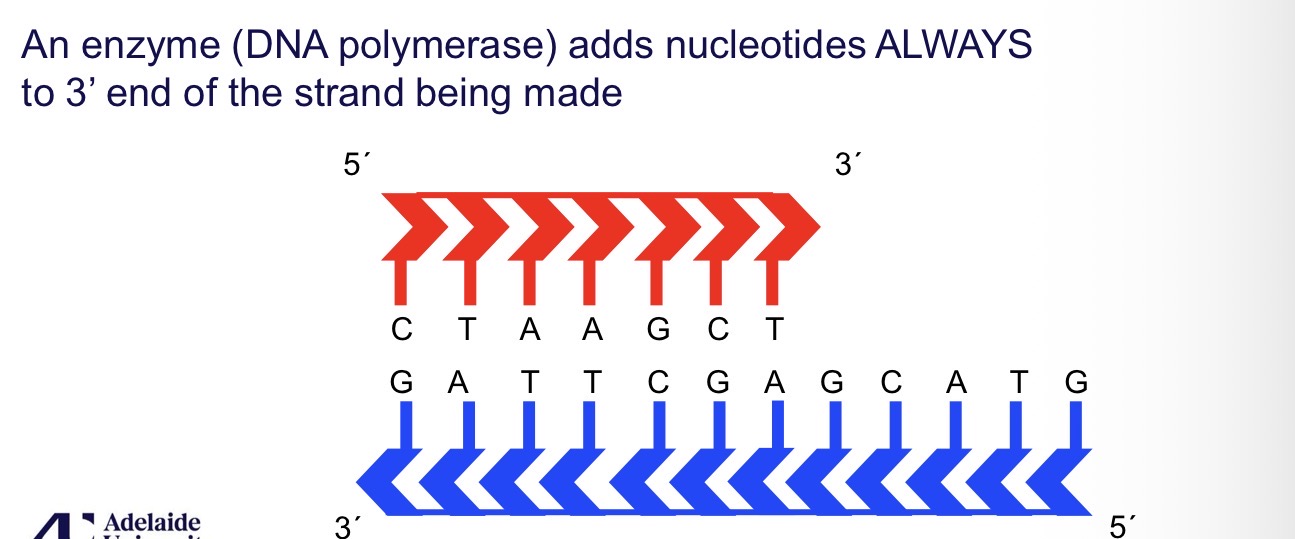
To which end does DNA polymerase add another nucleotide?
3’ end
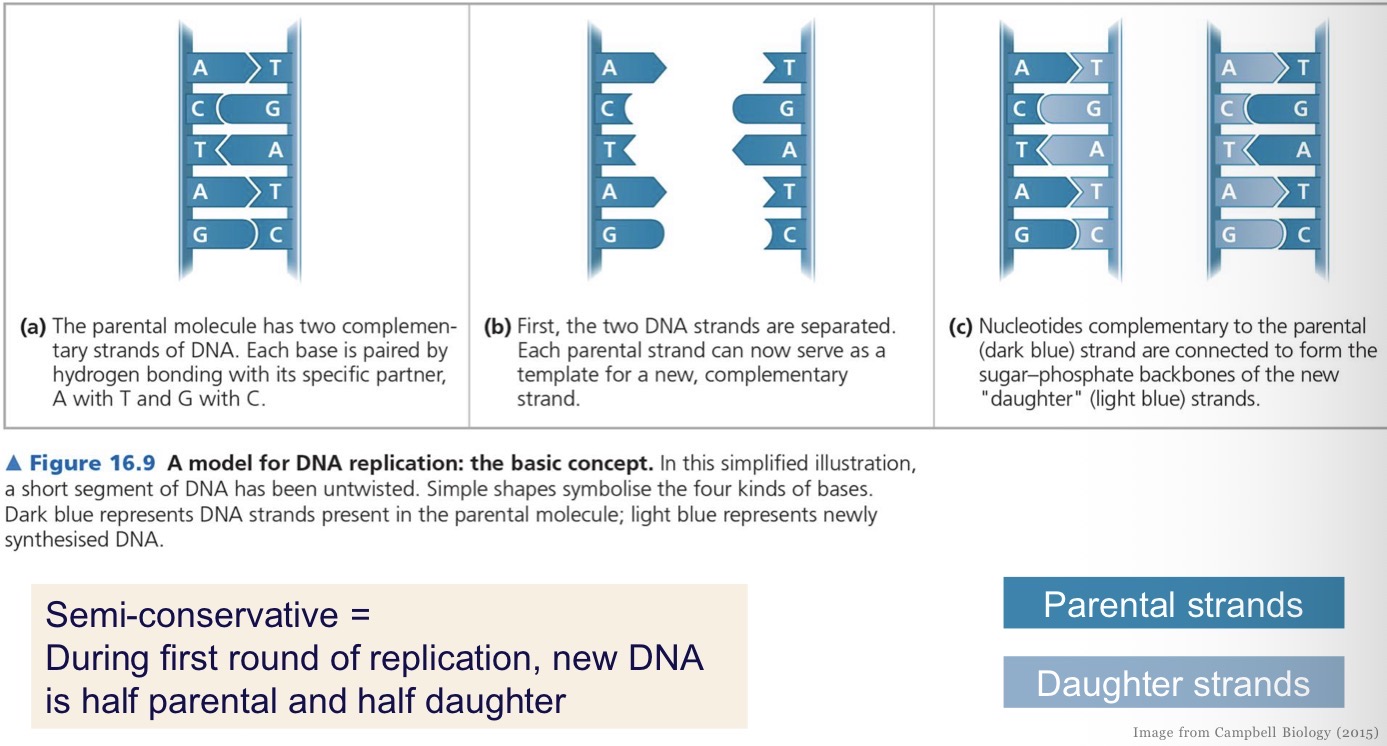
How does DNA follow the semi-conservative model?
When the double helix is unzipped, each strand acts as a template strand for a new strand of DNA to be made from nucleotides. So when replicated, each strand contains one parental strand of DNA and one new strand of DNA
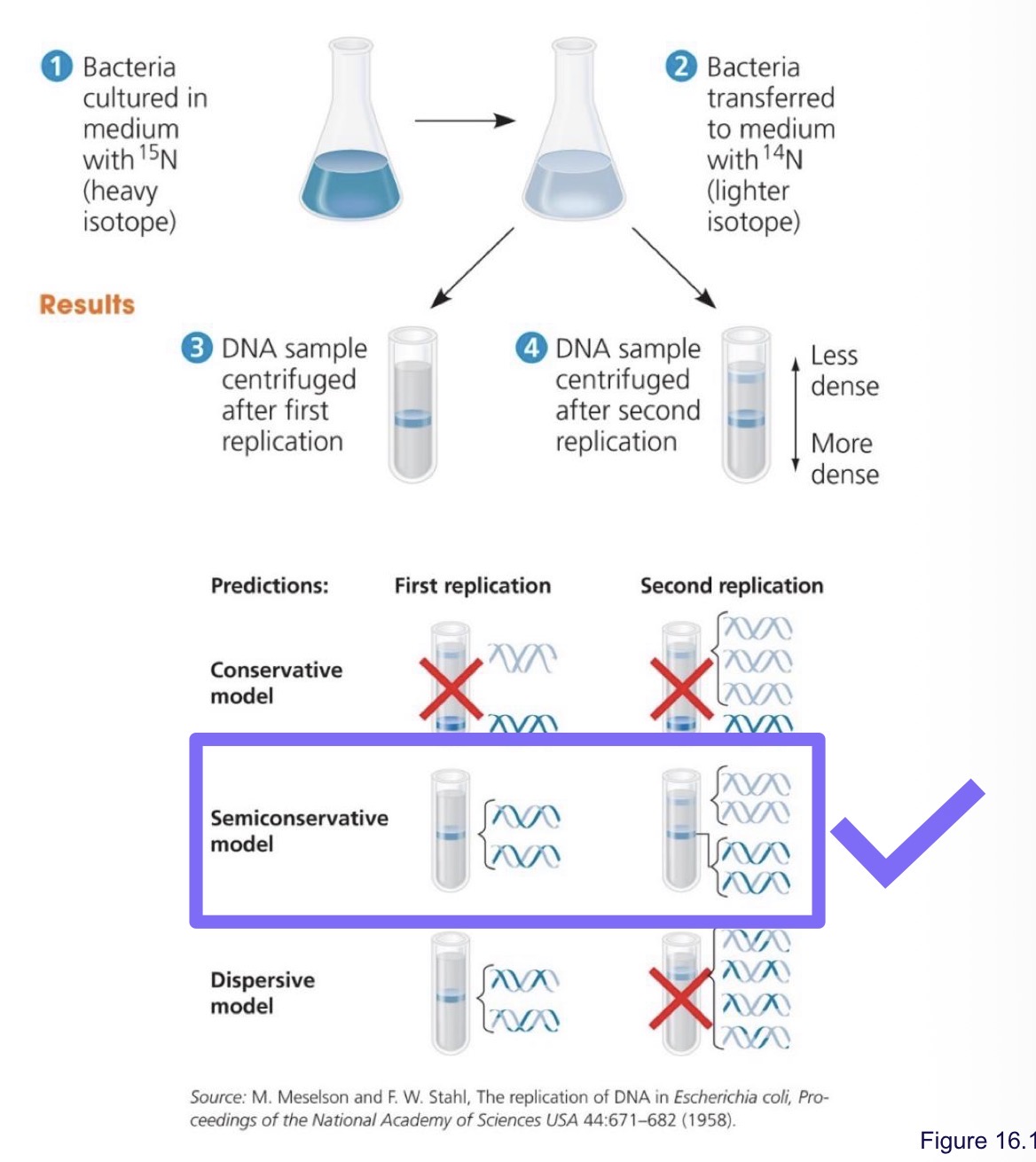
What experiment was used to prove the semi conservative model for DNA replication?
Matthew Meselson and Franklin Stuhl
Bacteria cultured in a medium with heavy 15N
Transferred to a medium with light 14N
DNA was centrifuged after first replication
DNA was centrifuged after second replication
The different weights caused them to separate differently
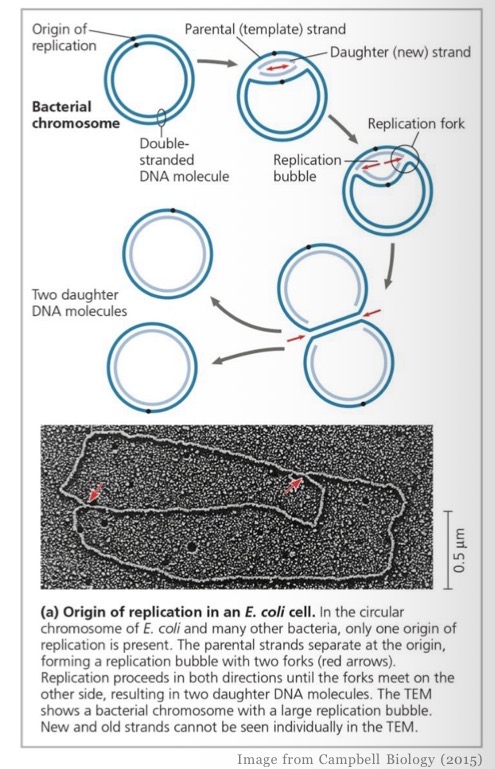
Do prokaryotes have a single or multiple origins of replication?
single origin
Circular chromosome
Replication proceeds in both directions
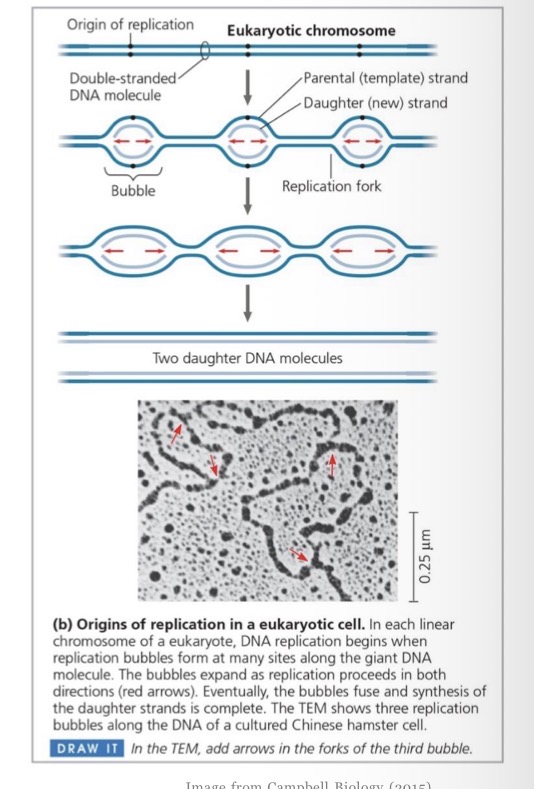
Why must eukaryotes have multiple origins of replication?
multiple linear chromosomes
Much more DNA than prokaryotes
Way too long to unwind and replicate linearly
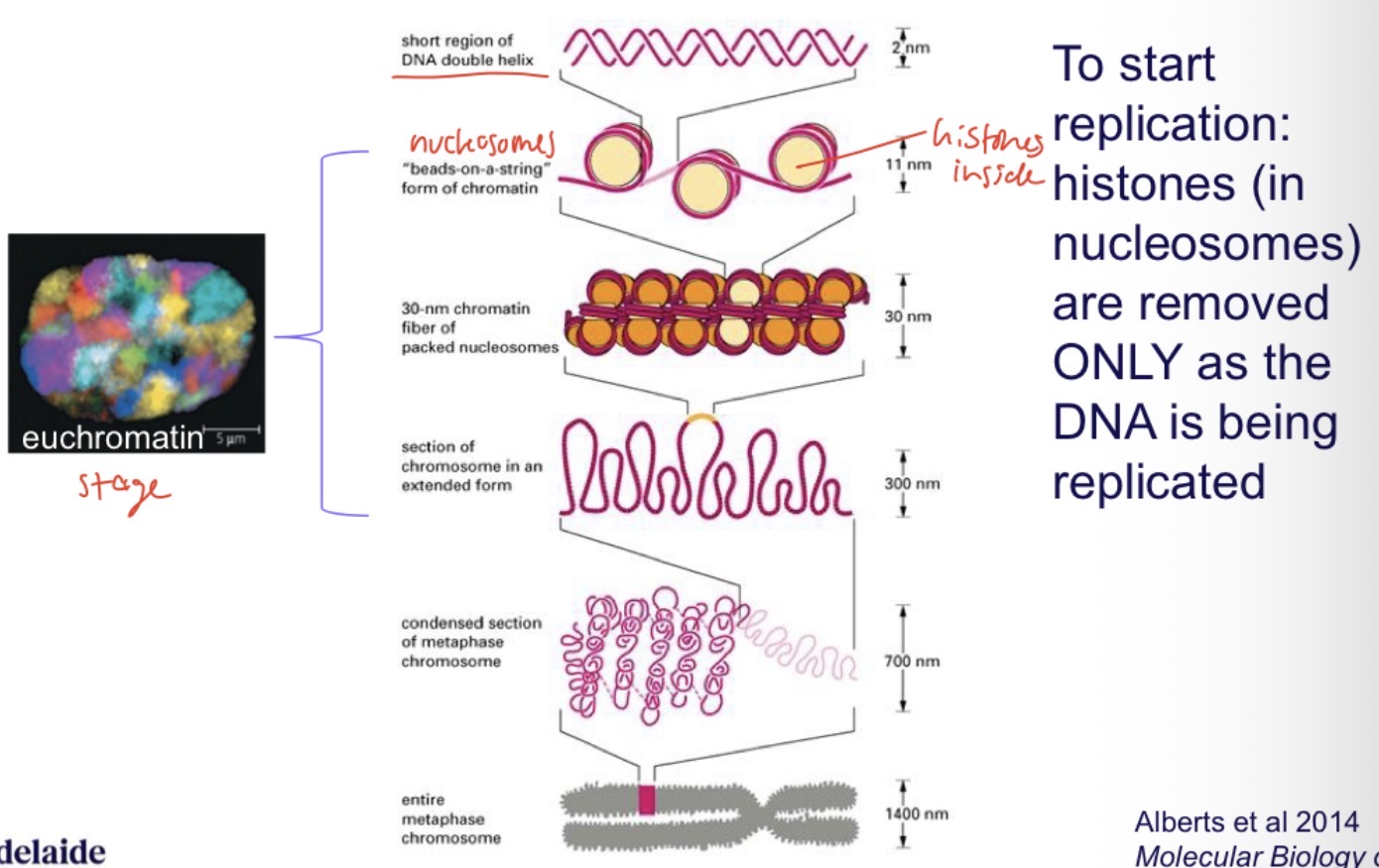
What must happen in eukaryotes before DNA replication can start?
The DNA needs to be unfolded/unpacked
The histone proteins and DNA wrapped around them are called nucleosomes
The histones must be removed before replication can occur
What’s the difference between euchromatin and heterochromatin?
heterochromatin is more condensed than euchromatin
Heterochromatin only occurs in eukaryotes - they have more DNA
The more condensed DNA is, the less accessible it is to be replicated
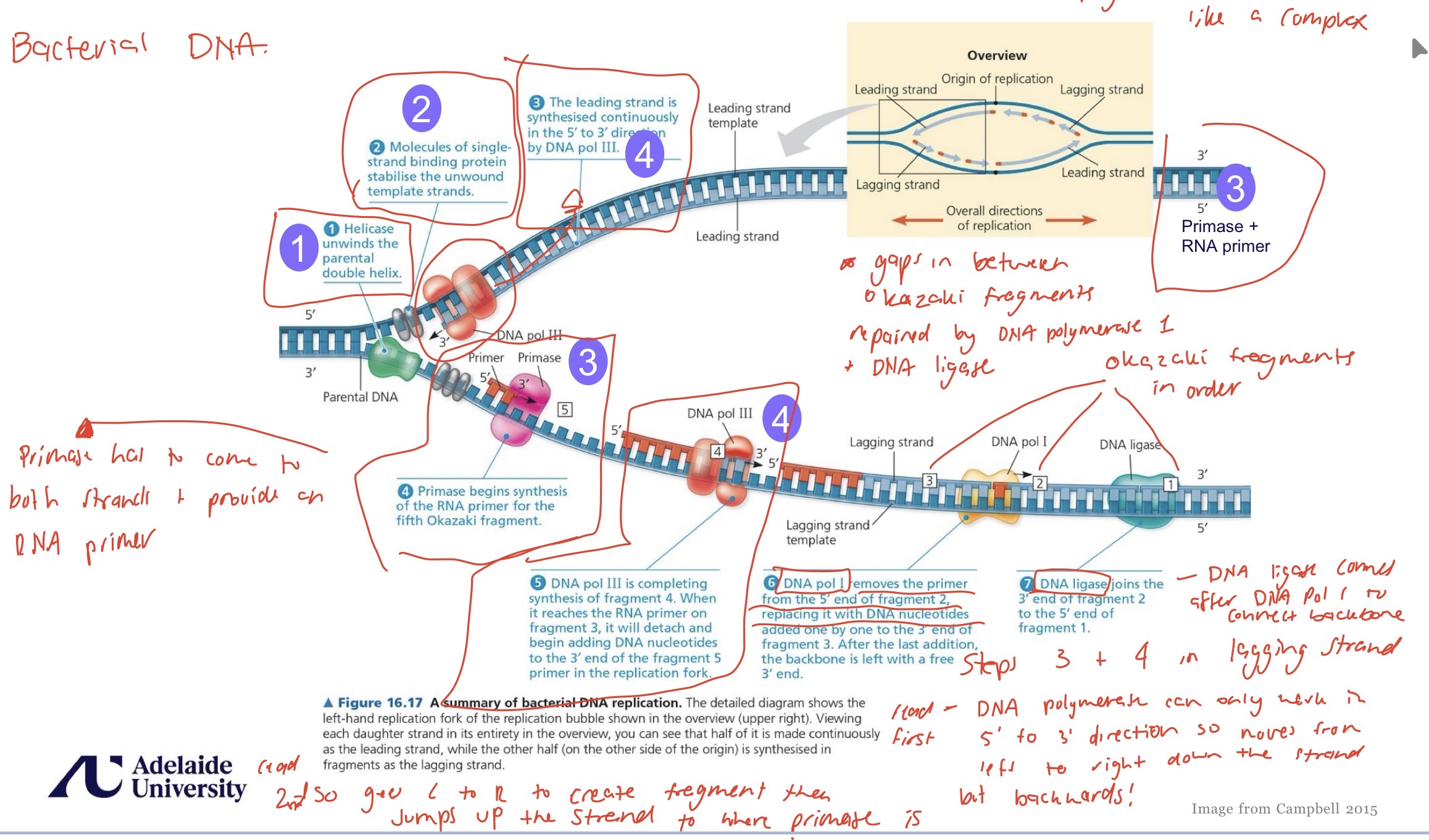
What are the steps for DNA replication (prokaryotes and eukaryotes)?
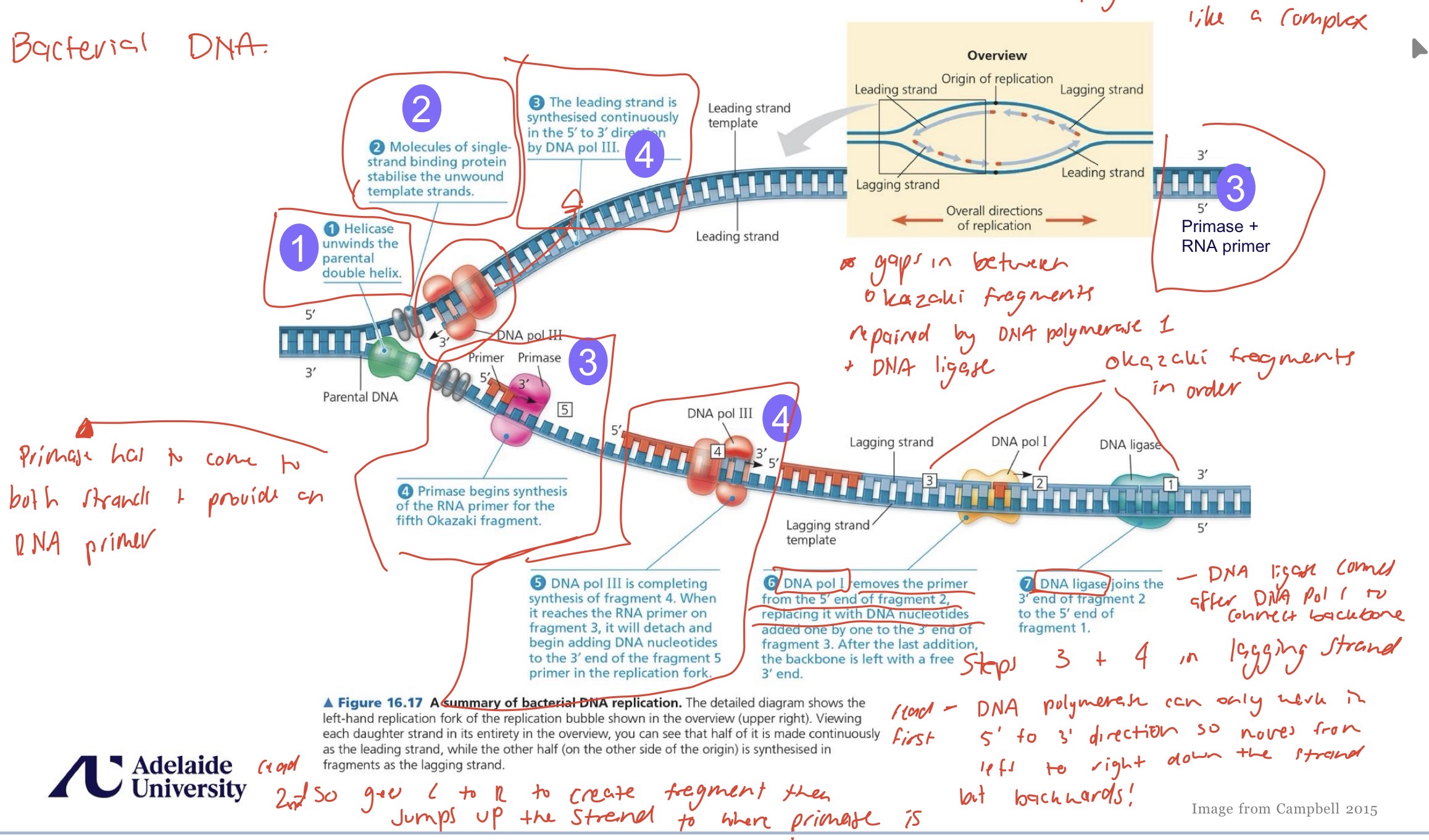
Unwind the helix - helicase breaks the H bonds between nucleotides, which creates intense strain on the region ahead of the replication fork so topoisomerase relieves the strain by cutting each strand to allow them to unwind, then reforms them for helicase to follow
Separate the strands and keep them separate - single stranded binding proteins keeps the parental strands from re-binding
Initiate replication- primase adds RNA primers (short segments of RNA, complementary to the template strand), that show DNA polymerase where to bind (needs an existing chain to know where the 3’ end is to bind)
Build the new strands- DNA polymerase binds to the RNA primers and adds nucleotides to the 3’ end of the new strands, works on both strands at the same time
Fix any mistakes - DNA polymerase also works to proof read and increases the degree of exactness (fidelity) - DNA polymerase III in bacteria = different subunits work to reel in parental DNA, replicate the strands, and detect frayed 3’ end or wrong structure (DNA polymerase then reverses, removes the incorrect nucleotide, corrects it, and continues)
What are Okazaki fragments?
DNA polymerase has to make both strands at the same time, and always from 5’ to 3’ direction (adding to the 3’ end only)
This is tricky as the strands are antiparallel
So the lagging strand is made discontinuously using Okazaki fragments
So DNA polymerase moves in a 5’ to 3’ direction for a segment, then jumps back up the strand the where primase has added the next RNA primer
Then another DNA polymerase (1 in prokaryotes) comes in and removes the primer and replaces it with DNA nucleotides
DNA ligase joins the segments at the last nucleotide
What are the main factors that impact how much a mutation will effect the organism?
When it occurs
The earlier in cell division, the more cells affected (first division of the cell vs 6th division of the cell)
Where is occurs
If it occurs in a gene or not - in a gene impacts protein and phenotype
When that gene is essential for the survival of the cell or individual
Whether the cell will give rise to a gametic cell
Example of a mutation within a gene that affects phenotype
sickle cell disease
Single change of a nucleotide makes a huge difference to the phenotype of the RBC
Template strand has a T replaced by a A
The mRNA has a U instead of an A - changes the amino acid
How do mutations occur?
During DNA replication
External agents:
Chemical mutagens
Extremes in pH
UV light
How is DNA damaged by external agents fixed?
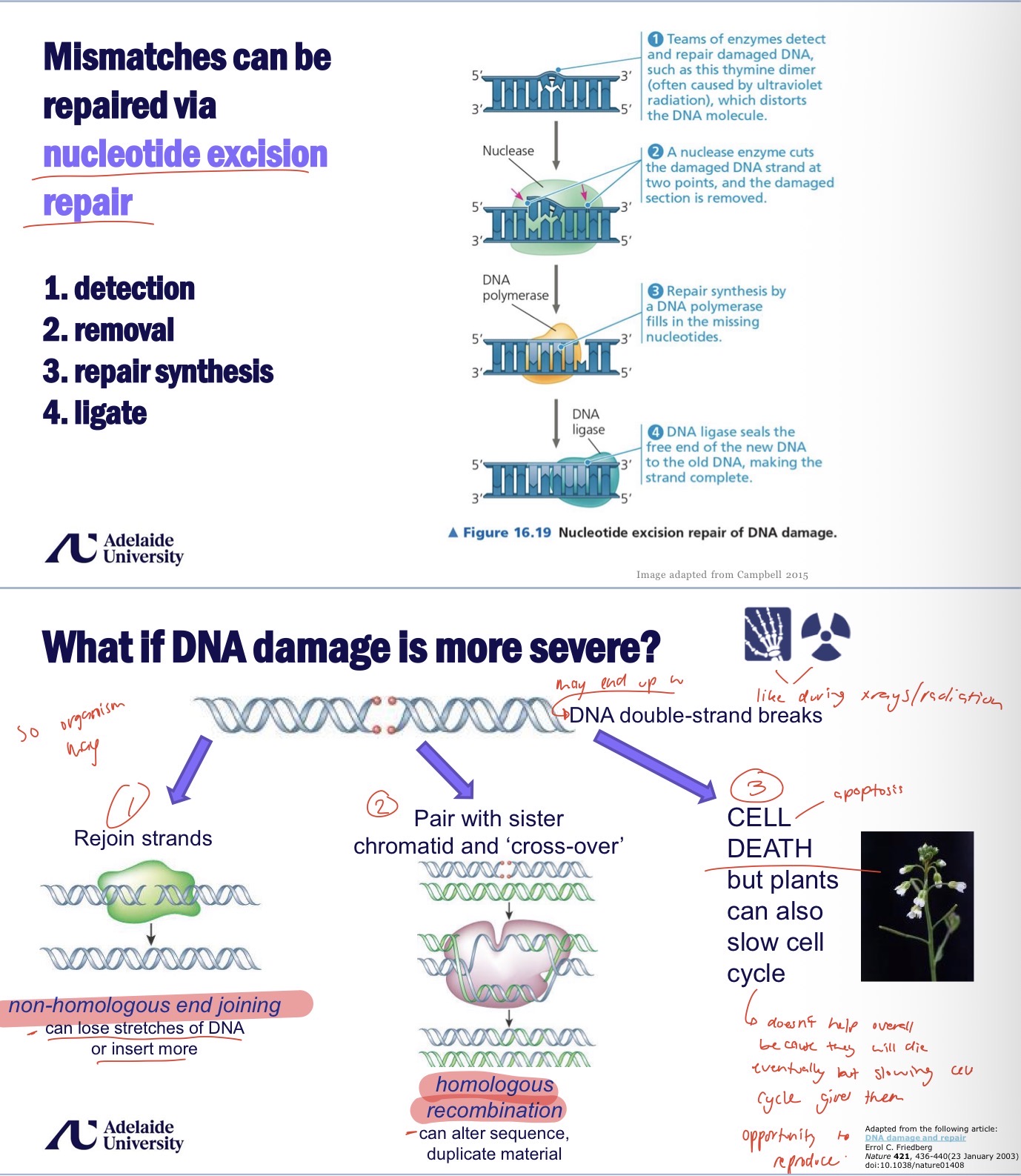
nucleotide excision repair
Detection- enzymes detect distortion (kinks) in the strand - e.g. thymine dimer when UV light causes T and T to bind
Removal- nuclease enzyme cuts the DNA and the damaged section is removed
Repair synthesis- DNA polymerase fills in the missing nucleotides
Ligate- DNA ligase seals the DNA
Non-homologous end joining
Occurs when damage is more severe - X-rays / radiation
DNA double strand breaks
The strands are rejoined
But it can lose stretches of DNA or insert more
Homologous recombination
Occurs when damage is more severe
Broken strand is paired with a sister chromatid
The segments are swapped
But can alter sequence or duplicate the DNA
Apoptosis
Cell suicide when damage is too severe
Plants can also slow their cell cycle which doesn’t help overall because they will still die but it gives them the opportunity to reproduce
What makes linear chromosomes problematic? How do they overcome this issue?
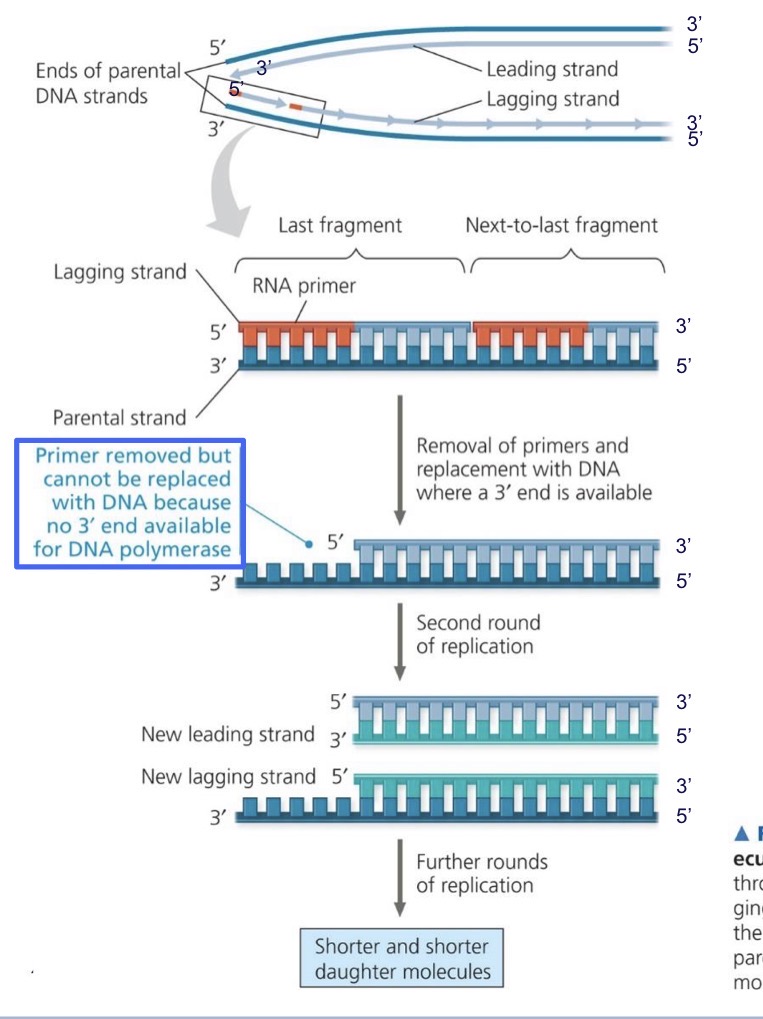
problematic because the DNA strand shorten at each replication because DNA polymerase can only add to the 3’ end but at the very end of the lagging strand there is no 3’ end, the RNA primer is removed and no nucleotides replace them
Telomeres - are a repetitive non coding sequence at the end of linear chromosomes that are shortened instead of genes
What stops the telomeres in reproductive cells from shortening?
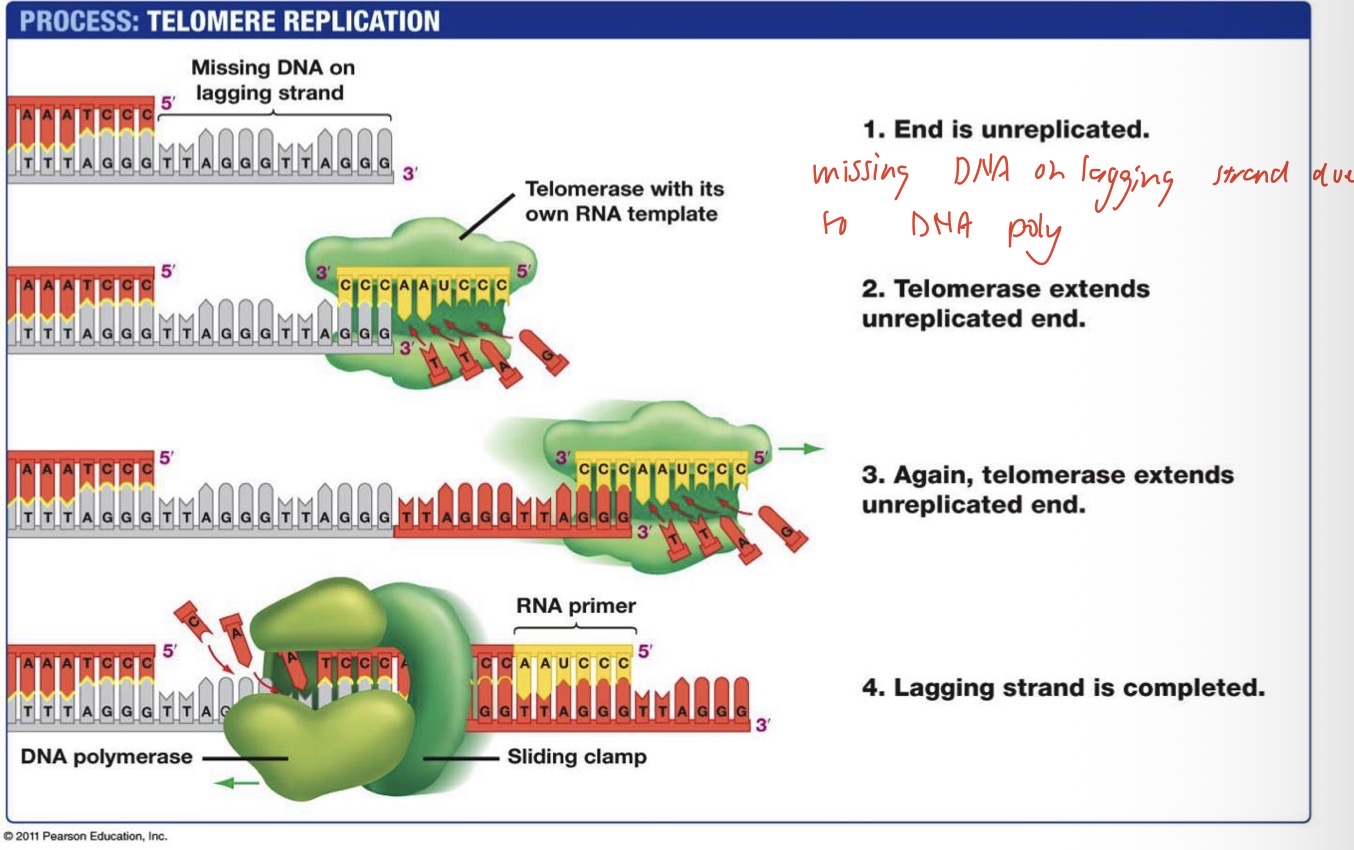
DNA shortening would be a big problem in reproductive cells because the chromosomes of successive generations would continue to shorten until they started to lose gene regions
Gametes have the enzyme telomerase which extends the telomeres
Telomerase brings along its own RNA template which extends the lagging strand as nucleotides join, and it does it again
DNA polymerase then has a 3’ end to work from to finish the new strand
What are the steps of mitosis
Prophase
Chromatin condenses to duplicated chromosomes (two sister chromatids)
Mitotic spindle (microtubules) starts to form from the centrosomes
Prometaphase
Centrosomes reach the pole
Microtubules attach to kinechores of chromosomes
Nuclear envelope begins to disappear
Metaphase
Duplicated chromosomes align at the metaphase plate
Anaphase
Sister chromatids are separated and begin to move to opposite ends of the cell by the microtubules
Telophase and Cytokinesis
Daughter nuclei reform around chromosomes that become less condensed
cytokinesis occurs
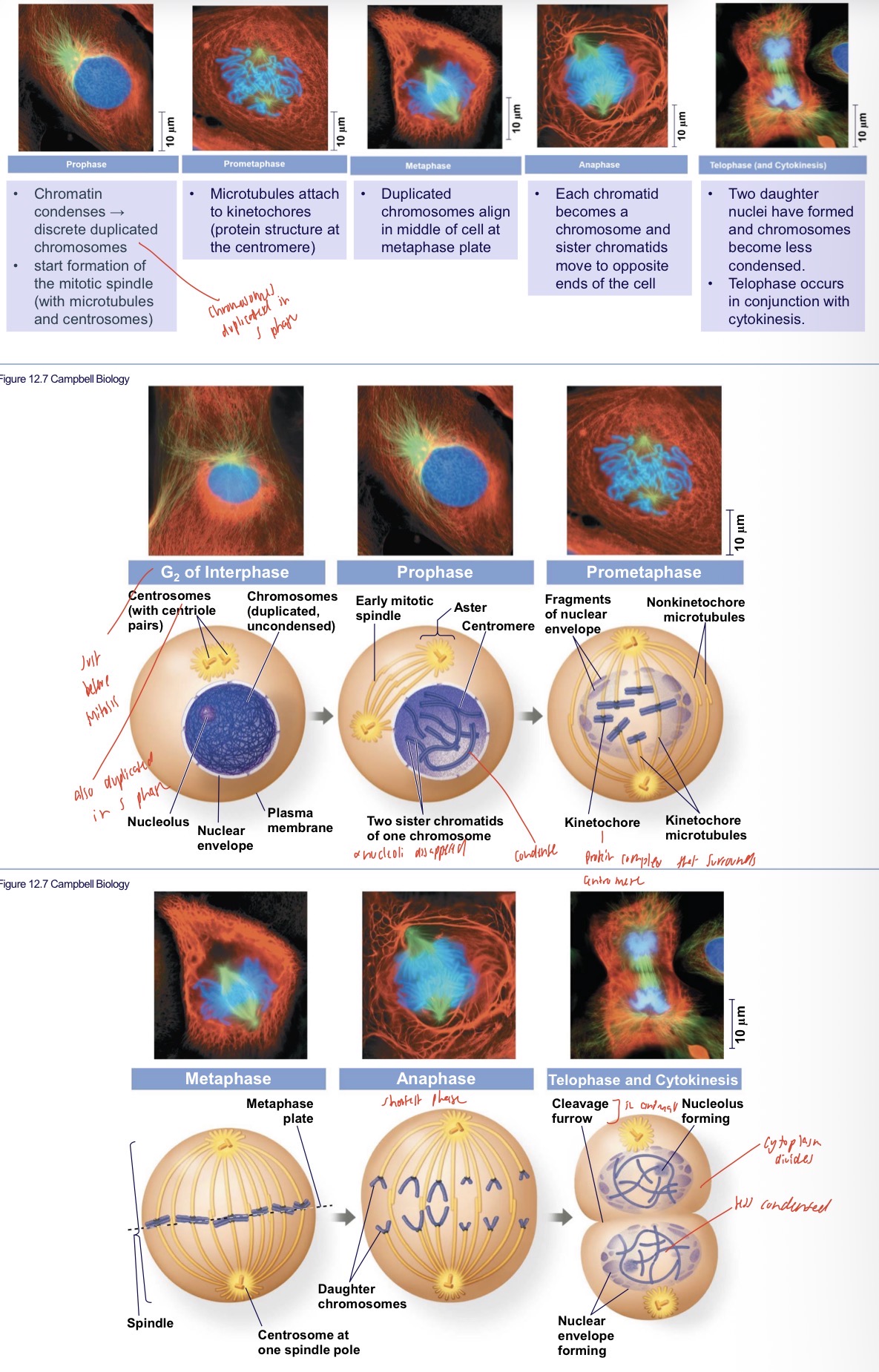
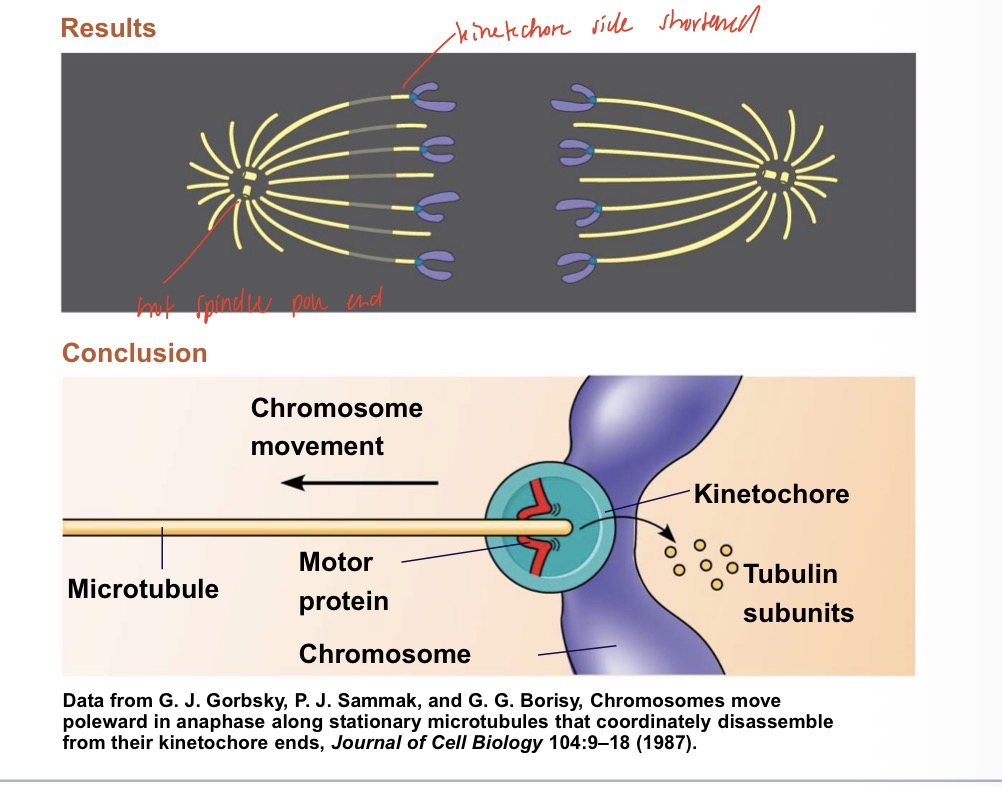
What is the mitotic spindle and how does it separate the sister chromatids?
microtubules of the mitotic spindle are made of protein tubulin subunits that are added or lost to elongate or shorten it
Start at the centrosome in animal cells
The kinetochore microtubules attach at the kinetochore (in the centromere) of each sister chromatid
Non kinetochore microtubules dont attach to the sister chromatids
The microtubules shorten by using ATP - motor proteins at the kinetochore end walk the chromosome along the microtubule and the tubulin subunits are depolymerised
Describe cytokinesis in an animal cell
Process called cleavage
near the metaphase plate in the middle of the cell, a ring of actin microfilaments in the cytoplasm interact with myosin causing a ring to contract (called the cleavage furrow) and pinch the cells apart
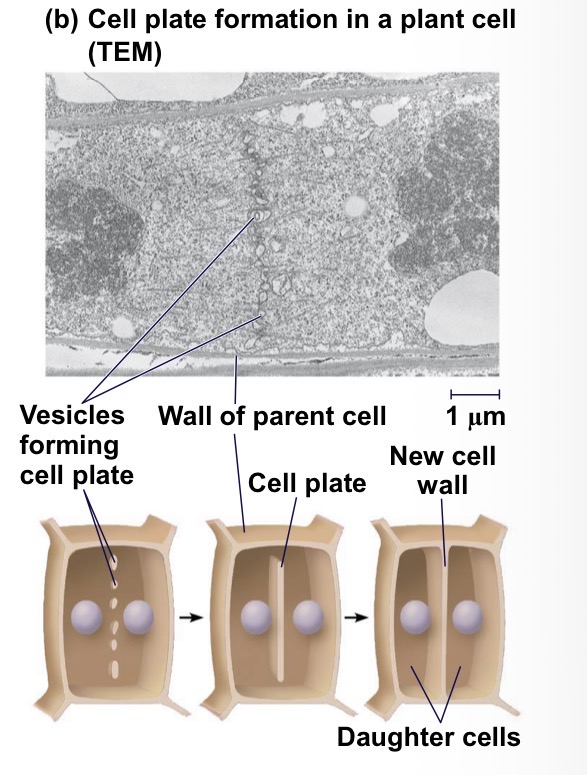
Describe cytokinesis in plant cells
Forms a cell plate curing cytokinesis
Vesicles from the Golgi body move along microtubules to the middle of the cell to form the cell plate
Cell plate enlarges until it fuses with the plasma membrane as a new cell wall develop
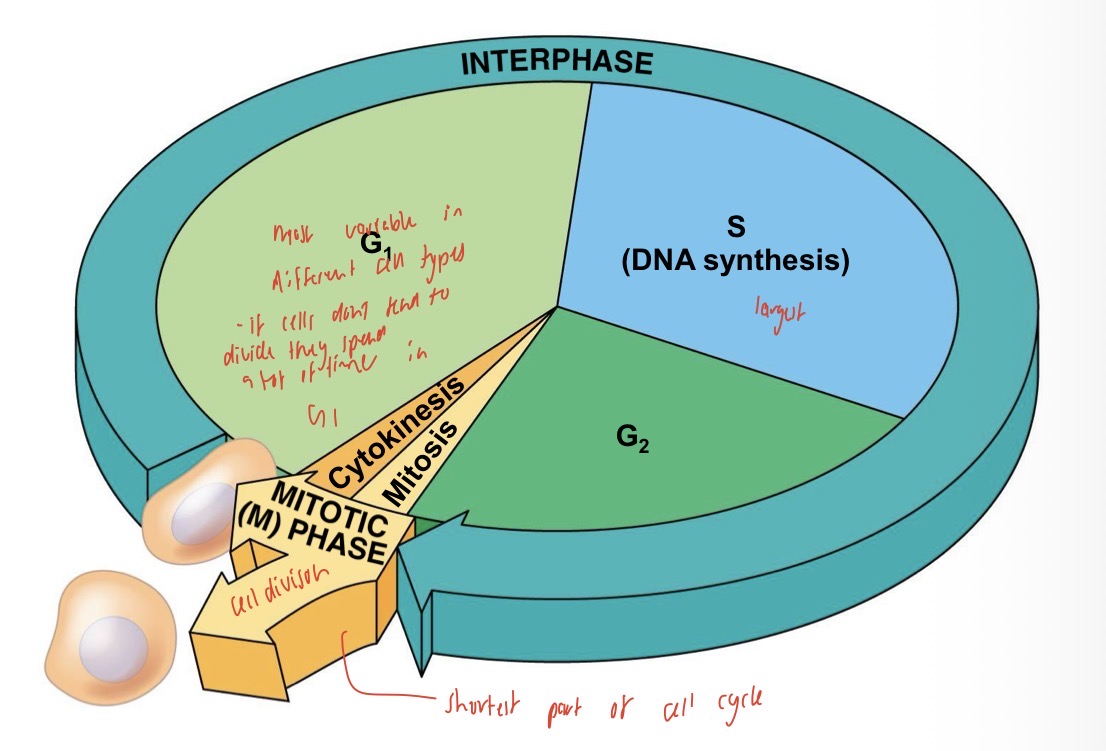
What is the cell cycle?
Interphase - cell growth and DNA synthesis (chromosome duplication)
G1
S
G2
Mitotic phase
Mitosis
Cytokinesis
What are the cell cycle checkpoints in eukaryotes?
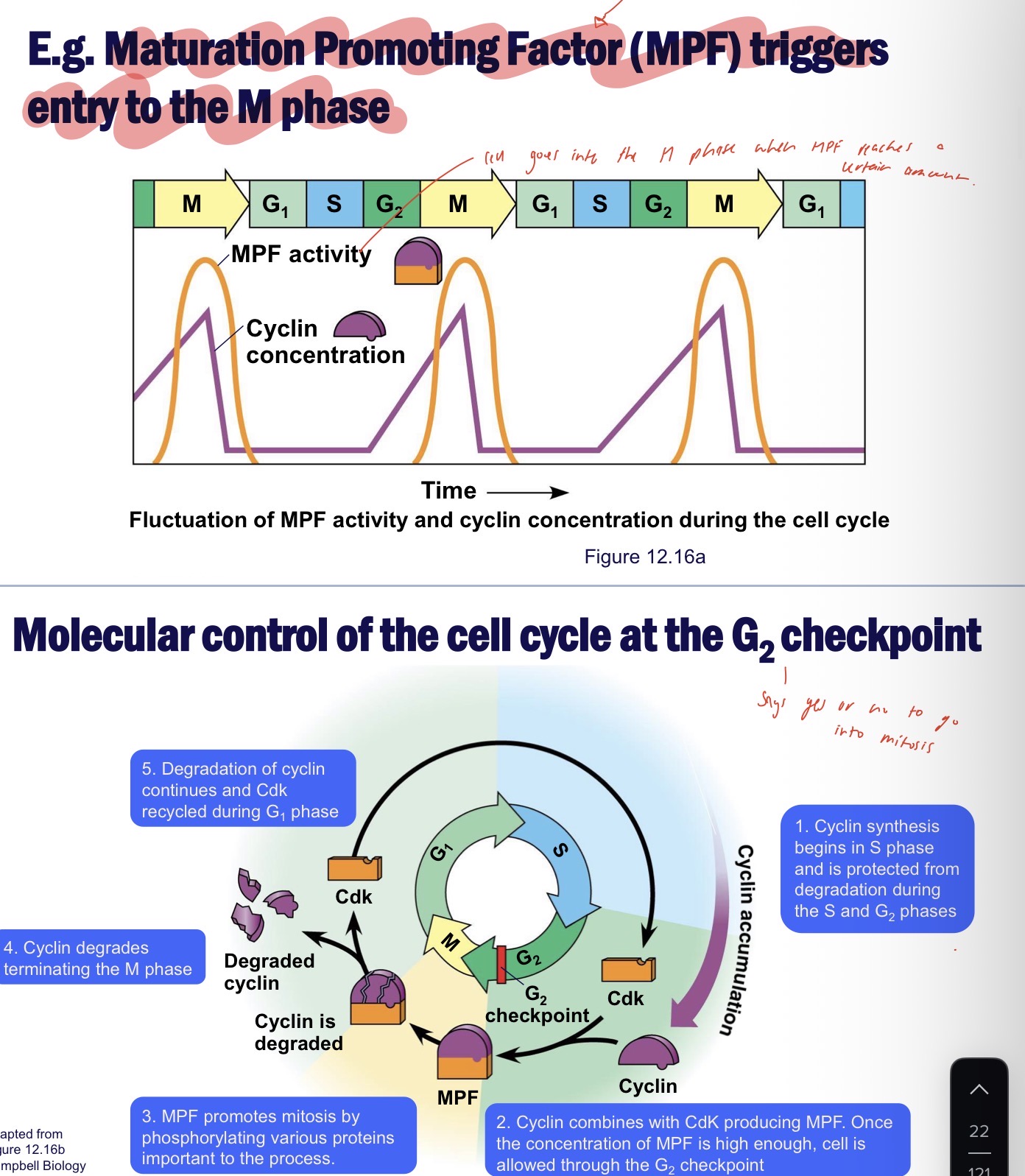
checkpoints stop the cell cycle from going into the next stage until a go ahead signal is received
G1, G2 and M checkpoints
Regulated by internal and external controls
Internal
Rhythmic fluctuations in the abundance and activity of cell cycle control molecules pace the events -Cyclins and protein kinases
E.g. MPF (maturation promoting factor) signals the go ahead at G2 checkpoint when conc increases - is a complex formed from cyclin and a protein kinase
External
Crowded cells will stop dividing - surface proteins binds to its receptor on a different cell to send an inhibition signal - known as density-dependent inhibition
Cells fail to divide without essential nutrients - e.g. growth factors which are released by some cells to stimulate other cells to divide - like platelet derived growth factor which is released when an animal is injured to cause fibroblasts to divide to heal the wound - G1 checkpoint go ahead
What happens in cancer cells?
cancer cells have faulty cell cycle controls due to a mutation in one or more genes of the cell cycle
They don’t need growth factors to grow and divide
By making their own growth factor
Could have another signal that tells the cell to divide
They may have an abnormal cell cycle control system like changes to cyclin or cdk
Examples of faults
Division stops at random times rather than at checkpoints
Avoid apoptosis
Could divide indefinitely with nutrients
Not removed by the immune system form tumors