DMV 2025 California Drivers Knowledge Test
 Call Kai
 Learn
Learn Practice Test
 Spaced Repetition
 Match
Match Flashcards
 Knowt Play
1/87

There's no tags or description
Looks like no tags are added yet.
Name | Mastery | Learn | Test | Matching | Spaced | Call with Kai |
|---|
No analytics yet
Send a link to your students to track their progress
88 Terms
You may drive off the paved roadway to pass another vehicle:
A) If the shoulder is wide enough to accommodate your vehicle
B) If the vehicle ahead of you is turning left
C) Under no circumstances
C
You are approaching a railroad crossing with no warning devices and are unable to see 400 feet down the tracks in one direction. The speed limit is:
A) 15 mph
B) 20 mph
C) 25 mph
A
When parking your vehicle parallel to the curb on a level street:
A) Your front wheels must be turned toward the street
B) Your wheels must be within 18 inches of the curb
C) One of your rear wheels must touch the curb
B
When you are merging onto the freeway, you should be driving:
A) At or near the same speed as the traffic on the freeway
B) 5 to 10 MPH slower than the traffic on the freeway
C) The posted speed limit for traffic on the freeway
A
When driving in fog, you should use your:
A) Fog lights only
B) High beams
C) Low beams
C
A white painted curb means:
A) Loading zone for freight or passengers
B) Loading zone for passengers or mail only
C) Loading zone for freight only
B
A school bus ahead of you in your lane is stopped with red lights flashing. You should:
A) Stop, then proceed when you think all of the children have exited the bus
B) Slow to 25 MPH and pass cautiously
C) Stop as long as the red lights are flashing
C
California's "Basic Speed Law" says:
A) You should never drive faster than posted speed limits
B) You should never drive faster than is safe for current condition conditions
C) The maximum speed limit in California is 70 MPH uncertain freeways
B
You just sold your vehicle. You must notify the DMV, within how many days?
A) 5 days
B) 10 days
C) 15 days
A
To avoid last-minute moves, you should be looking down the road to where your vehicle will be in about ______.
A) 5 to 10 seconds
B) 10 to 15 seconds
C) 15 to 20 seconds
B
It is illegal for a person 21 years of age or older to drive with a blood alcohol concentration (BAC) that is ___ or higher:
A) 0.05%
B) 0.10%
C) 0.15%
D) 0.08%
D
You were about to make a left turn. You must signal continuously for how many feet before making the turn?
A) 50 feet
B) 75 feet
C) 100 feet
C
Which of the following statements about blind spots is true?
A) They are eliminated if you have one outside mirror on each side of the vehicle
B) Large trucks have bigger blind spots than most passenger vehicles
C) Blind spots can be checked by looking in your rearview mirrors
B
You have been involved in a minor traffic collision with a parked vehicle and you can't find the owner. You must:
A) Leave a note on the vehicle
B) Report the accident without delay to the city police or, in unincorporated areas, to the CHP
C) Both of the above
C
Unless otherwise posted the speed limit in a residential area is _____
A) 20 mph
B) 25 mph
C) 30 mph
B
You may legally block an intersection:
A) When you entered the intersection on the green light
B) During rush-hour traffic
C) Under no circumstances
C
When parking uphill on a two-way street with no curb, your front wheels should be:
A) Turned to the left (toward the street)
B) Turned to the right (away from the street)
C) Parallel with the pavement
B
With a class C drivers license a person may drive:
A) A 3-axle vehicle if the Gross Vehicle Weight is less than 6000 pounds
B) Any 3-axle vehicle regardless of the weight
C) A vehicle, pulling into a trailers
A
To turn left from a multi lane one-way street onto a one-way street, you should start your turn from:
A) Any lane (as long as it is safe)
B) The lane closest to the left curb
C) The lane in the center of the road
B
If you were involved in a traffic collision, your are required to complete and submit a written report (SR1) to the DMV:
A) Only if you or the other driver is injured
B) If there is property damage and of $1000 or if there are any injuries
C) Only if you are at fault
B
Roadways are the most slippery:
A) During a heavy downpour
B) After it has been raining for a while
C) The first rain after a dry spell
C
You may not park your vehicle:
A) On the side of the freeway in an emergency
B) Next to a red painted curb
C) Within 100 feet of an elementary school
B
Two sets of solid, double, yellow lines that are two or more feet apart:
A) May be crossed to enter or exit a private driveway
B) May not be crossed for any reason
C) Should be treated as a separate traffic lane
B
You want to make a right turn at an upcoming intersection. You should slow down and:
A) Move toward the left side of your lane
B) Avoid driving in the bicycle lane
C) Signal for 100 feet before turning
C
You're driving on a freeway posted for 65 mph. The traffic is traveling at 70 mph. You may legally drive:
A) 70 miles per hour or faster to keep up with the speed of traffic
B) Between 65 mph and 70 mph
C) No faster than 65 mph
C
It is illegal to park your vehicle:
A) In an unmarked crosswalk
B) Within 3 feet of a private driveway
C) In a bicycle lane
A
The safest precaution that you can take regarding the use of cellular phones and driving is:
A) Use hands-free devices so you can keep both hands on the steering wheel
B) Keep your phone within easy reach so you won't need to take your eyes off the road
C) Review the number before answering a call
A
If you have a green light, but traffic is blocking the intersection, you should:
A) Stay out of the intersection until traffic clears
B) Enter the intersection and wait until traffic clears
C) Merge into another lane, and try to go around the traffic
A
You are getting ready to make a right turn. You should:
A) Signal and turn immediately
B) Stop before entering the right lane and let all other traffic go first
C) Slow down or stop, if necessary, and then make the turn
C
You must obey instructions from school crossing guards:
A) At all times
B) Only during school hours
C) Unless you do not see any children present
A
It is a very windy day. You are driving and a dust storm blows across the freeway reducing your visibility. You should drive slower and turn on you:
A) Interior lights
B) Parking lights
C) Headlights
C
If you plan to pass another vehicle, you should:
A) Not assume the other driver will make space for you to return to your lane
B) Assume the other driver will let you pass if you use your turn signal
C) Assume the other driver will maintain a constant speed
A
If you are in the middle of an intersection when you hear the siren of an emergency vehicle, you should:
A) Move to the right and stop at the intersection
B) Continue through the intersection then move to the right and stop
C) Continue through the intersection then move to the left and stop
B
If you drive faster than other vehicle vehicles on a road with one lane in each direction and continually pass the other cars, you will:
A) Get you to your destination much faster and safer
B) Increase your chances of an accident
C) Help prevent traffic congestion
B
Which of these vehicles must always stop before crossing railroad tracks?
A) Tank trucks marked with hazardous materials placards
B) Motor homes or pick up trucks towing a boat trailer
C) Any vehicle with three or more axles or weighing more than 4000 pounds
A
You are driving on a one-way street. You may turn left onto another one-way street only if:
A) A sign permits the turn
B) Traffic on the street moves to the right
C) Traffic on the street moves to the left
C
A large truck is ahead of you and is turning right onto a street with two lanes in each direction. The truck:
A) May complete its turn in either of the two lanes
B) May have to swing wide to complete the right turn
C) Must stay in the right lane at all times while turning
B
You cross a double yellow line to pass another vehicle, if the yellow line next to:
A) The other side of the road is a solid line
B) Your side of the road is a broken line
C) The other side of the road is a broken line
B
At intersections, crosswalks, and railroad crossings, you should always:
A) Stop, listen, and proceed cautiously
B) Look to the sides of your vehicle to see what is coming
C) Slowly pass vehicles that seem to be stopped for no reason
B
You drive defensively when you:
A) Always put one car length between you and the car ahead
B) Look only at the car in front of you while driving
C) Keep your eyes moving to look for possible hazards
C
You are driving on the freeway. The vehicle in front of you is a large truck. You should drive:
A) Closely behind the truck in bad weather because the driver can see farther ahead
B) Farther behind the truck than you would for a passenger vehicle
C) No more than one car length between the truck so the driver can see you
B
All of the following practices are dangerous to do while driving. Which of these is also illegal?
A) Listening to music through headphones that cover both ears
B) Adjusting your outside mirrors
C) Transporting and unrestrained animal inside the vehicle
A
Always stop before you cross railroad tracks when:
A) You don't have room on the other side to completely cross the tracks
B) The railroad crossing is located in a city or town that has frequent train traffic
C) You transport two or more young children in a passenger vehicle
A
When you tailgate drivers (drive close to their rear bumper):
A) You can frustrate the other drivers and make them angry
B) Your actions cannot result in a traffic citation
C) You help reduce traffic congestion
A
Should you always drive slower than other traffic?
A) No, you can block traffic when you drive too slowly
B) Yes, it is a good defensive driving technique
C) Yes, it is always safer than driving faster than other traffic
A
You see a signal person at a road construction site ahead. You should obey his or her instructions:
A) Only if you see orange cones on the road ahead
B) Unless they conflict with existing signs, signals, or laws
C) At all times
C
When can you drive in a bike lane?
A) During rush-hour traffic if there are no bicyclists in the bike line
B) When you are within 200 feet of a cross street where you plan to turn right
C) When you want to pass a driver ahead of you who is turning right
B
You see flashing yellow traffic signal at an upcoming intersection. The flashing yellow light means:
A) Stop before entering the intersection as long as you can do so safely
B) Stop. Yield to all cross traffic before crossing the intersection
C) Slow down and cross the intersection carefully
C
There is no crosswalk and you see a pedestrian crossing your lane ahead. You should:
A) Make eye contact and then pass him/her
B) Slow down as you pass him/her
C) Stop and let him/her finish crossing the street
C
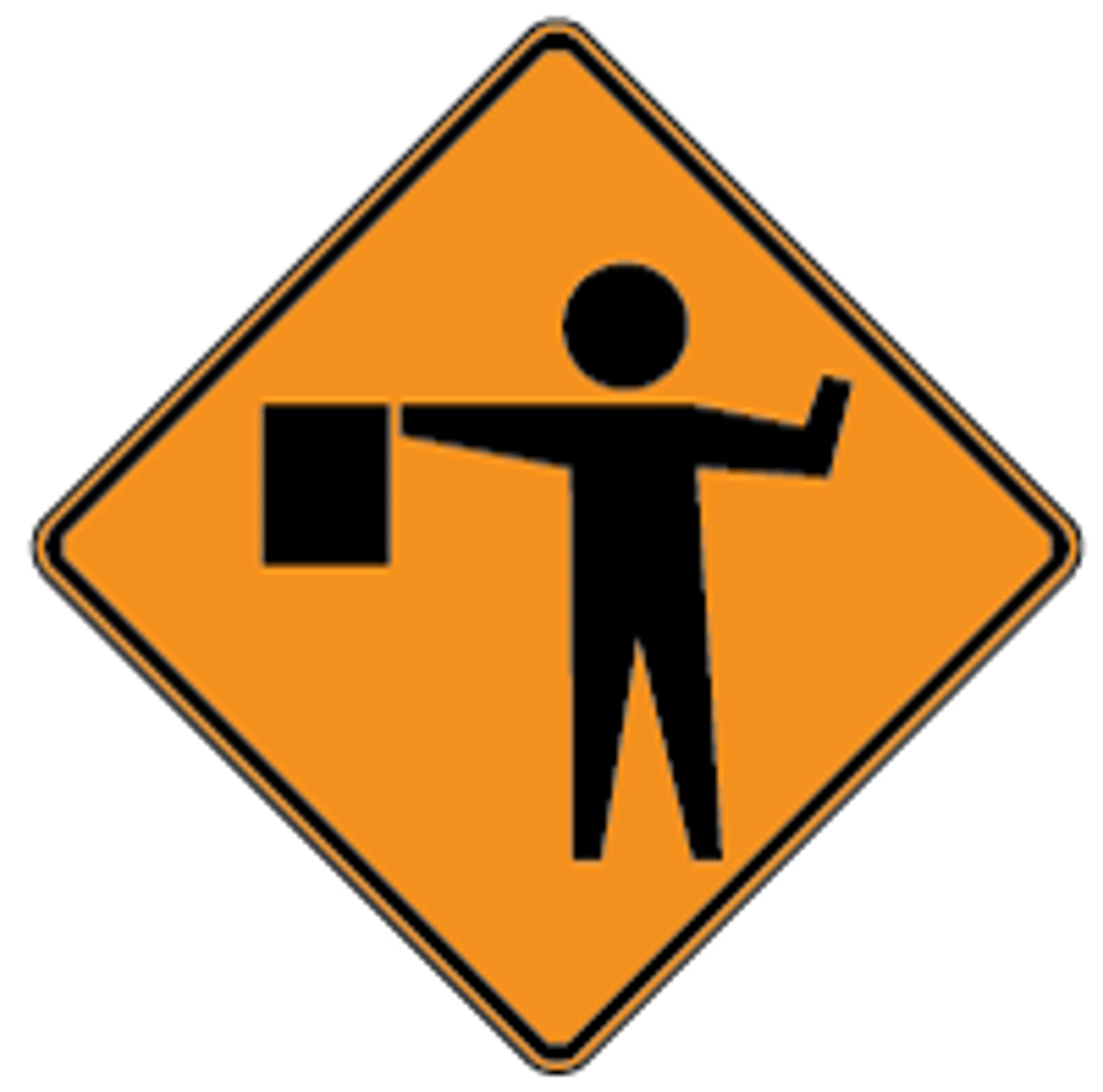
What does the sign indicate?
A) There is a flagger controlling traffic ahead
B) Children crossing ahead
C) School zone crossing ahead
A
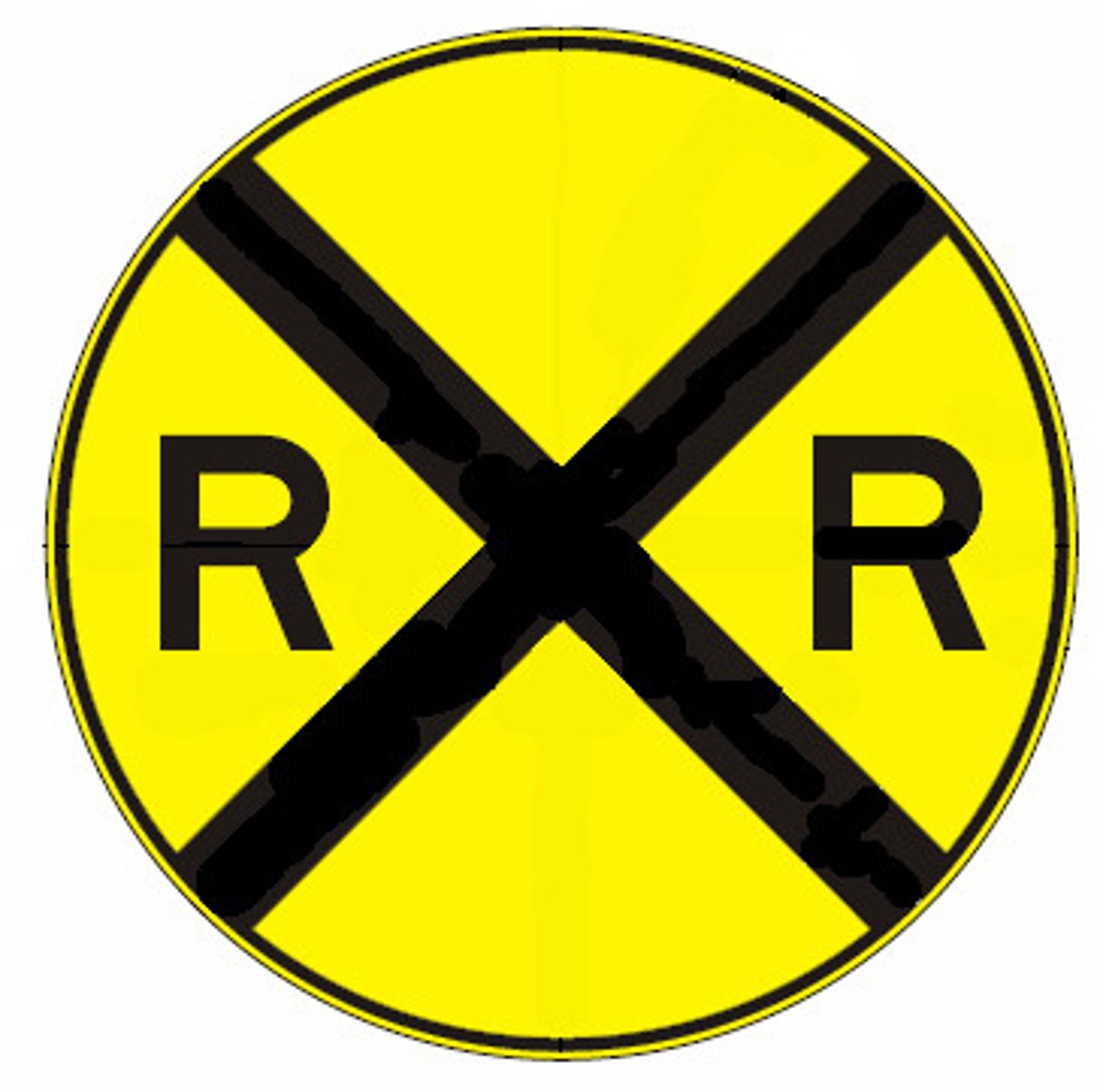
This warning sign means:
A) You are approaching a four way intersection
B) You are approaching a railroad crossing
C) You are approaching a restricted zone
B
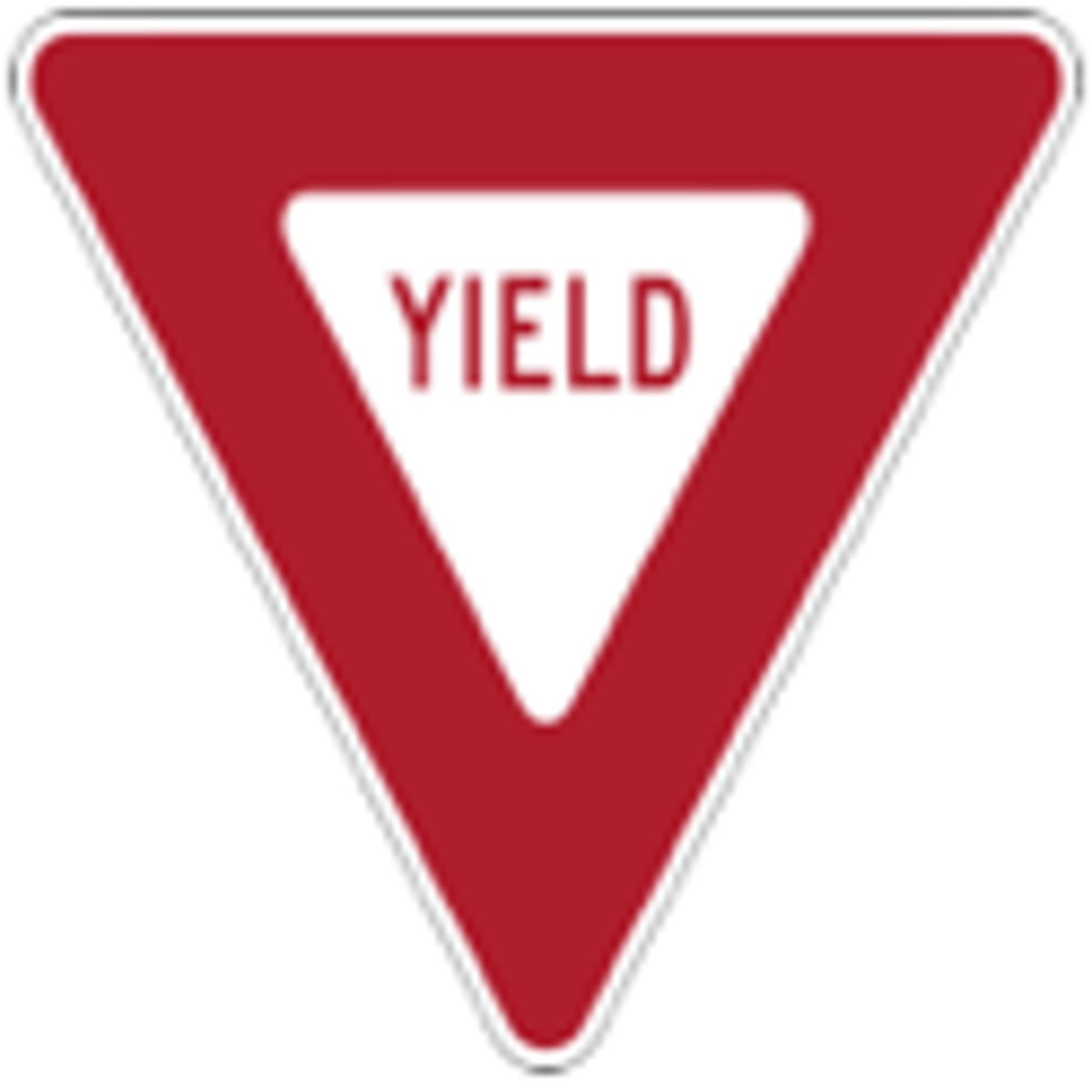
This red and white sign means:
A) You have the right-of-way
B) Let cross traffic pass before proceeding
C) Cars on the right move first
B
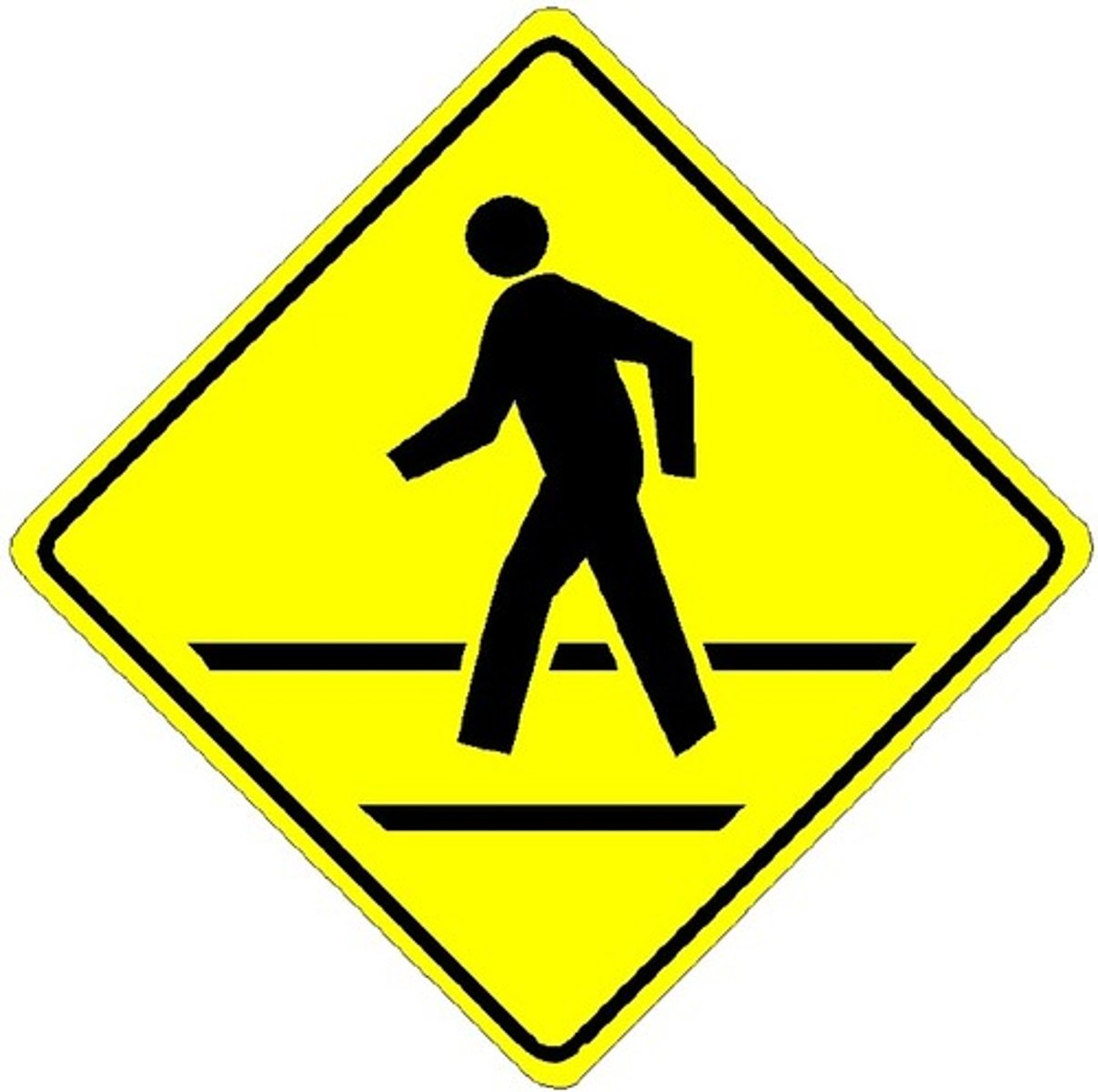
This sign means:
A) Pedestrians walking along the road ahead
B) Pedestrian crossing ahead
C) Pedestrians must not cross here
B
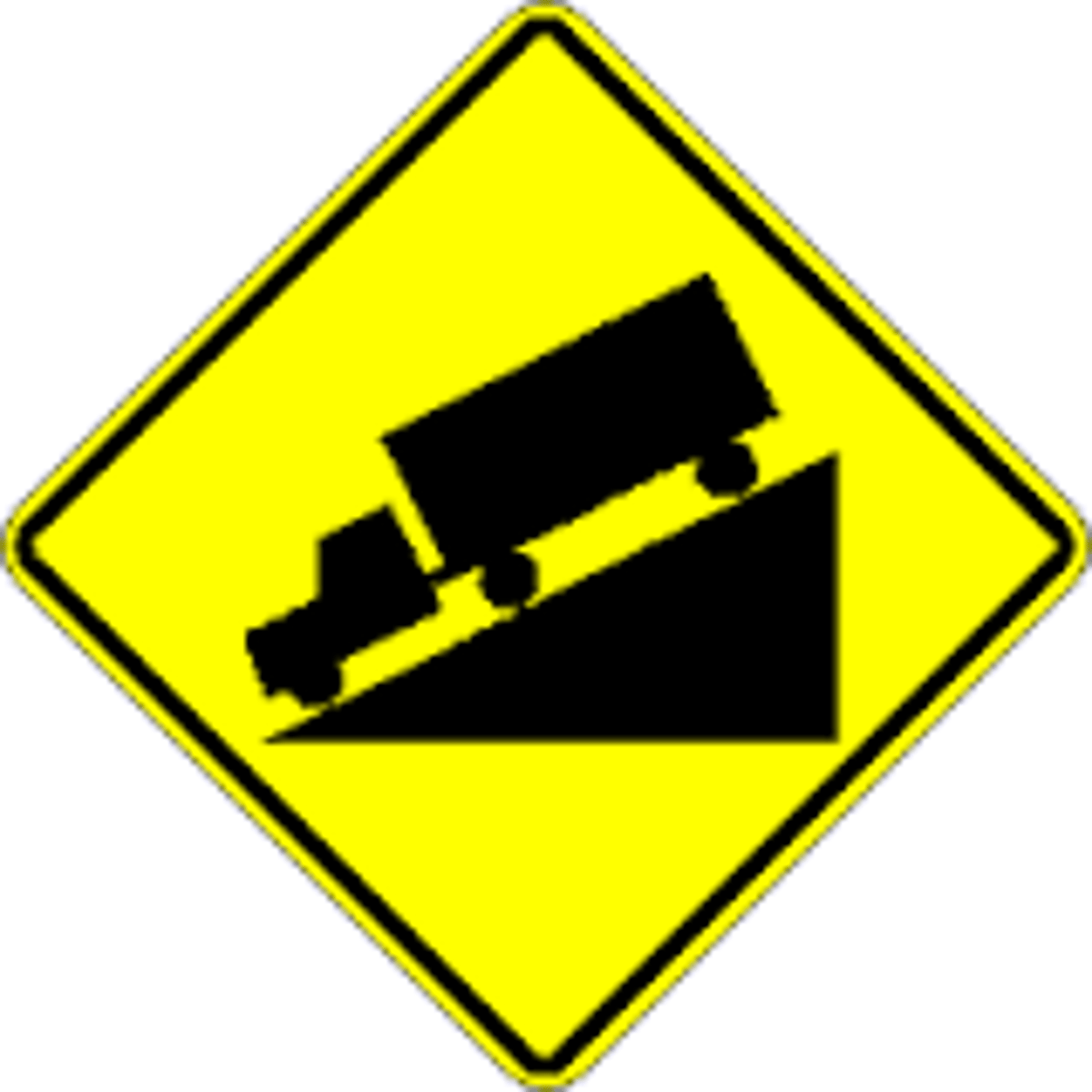
The below sign means:
A) Beware of heavy vehicles ahead
B) Steep hill ahead
C) Warning sign for drawbridge ahead
B
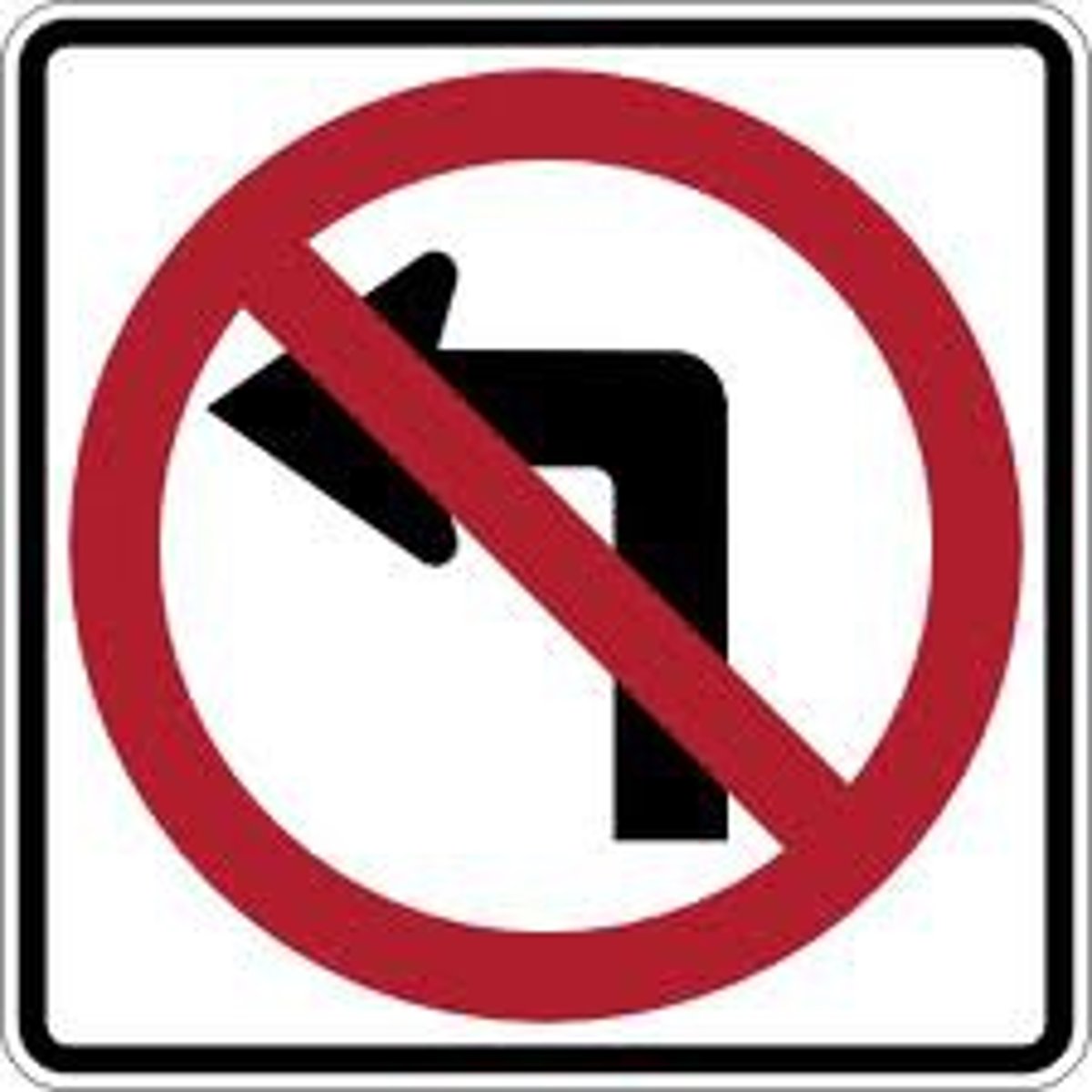
This red and white regulatory sign means:
A) No left turn can be made here
B) A left turn can be made only after stopping
C) All traffic must turn right at the next intersection
A
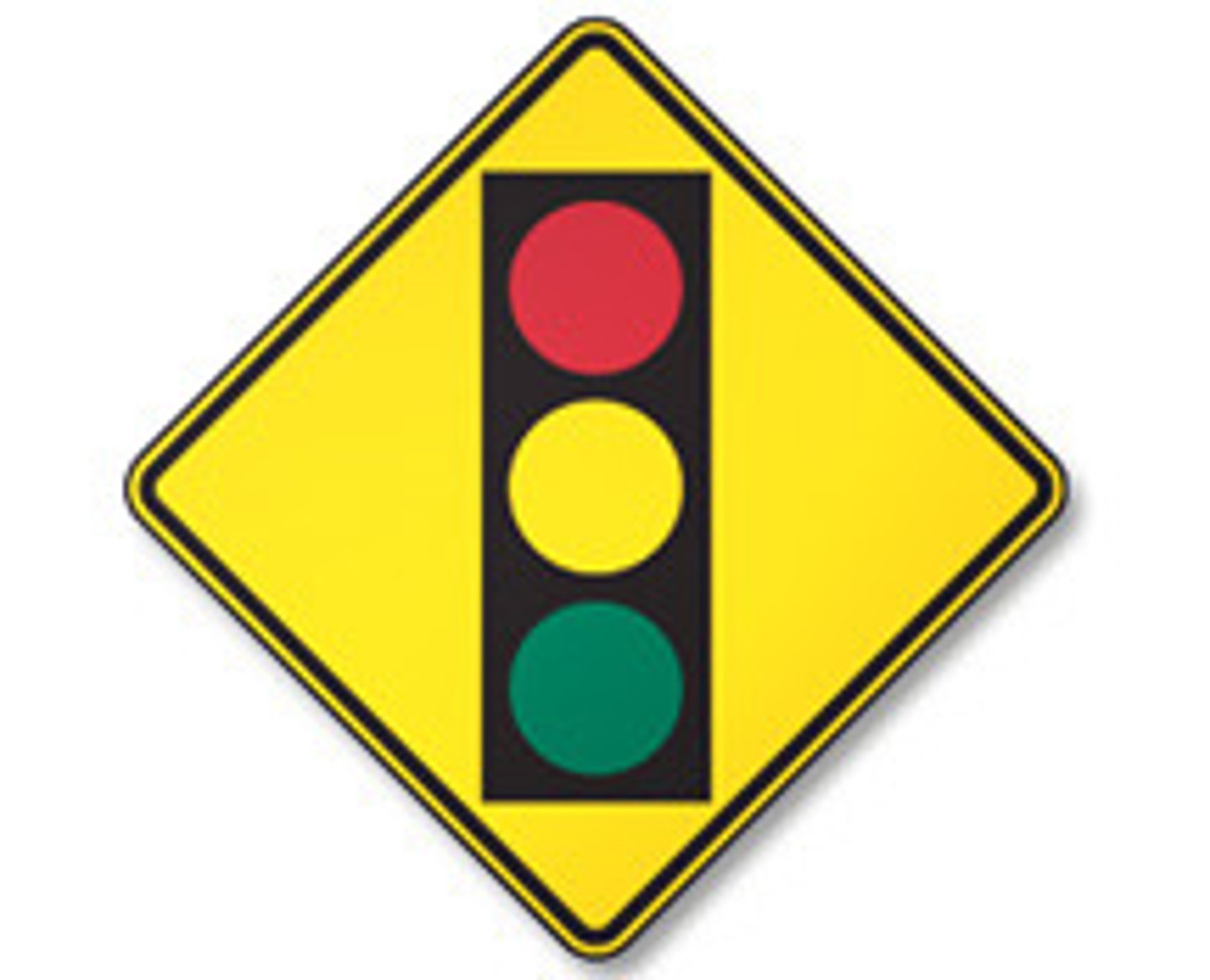
This road sign means:
A) Be prepared to stop if the light is flashing
B) There is a traffic signal ahead
C) Controlled railroad ahead
B
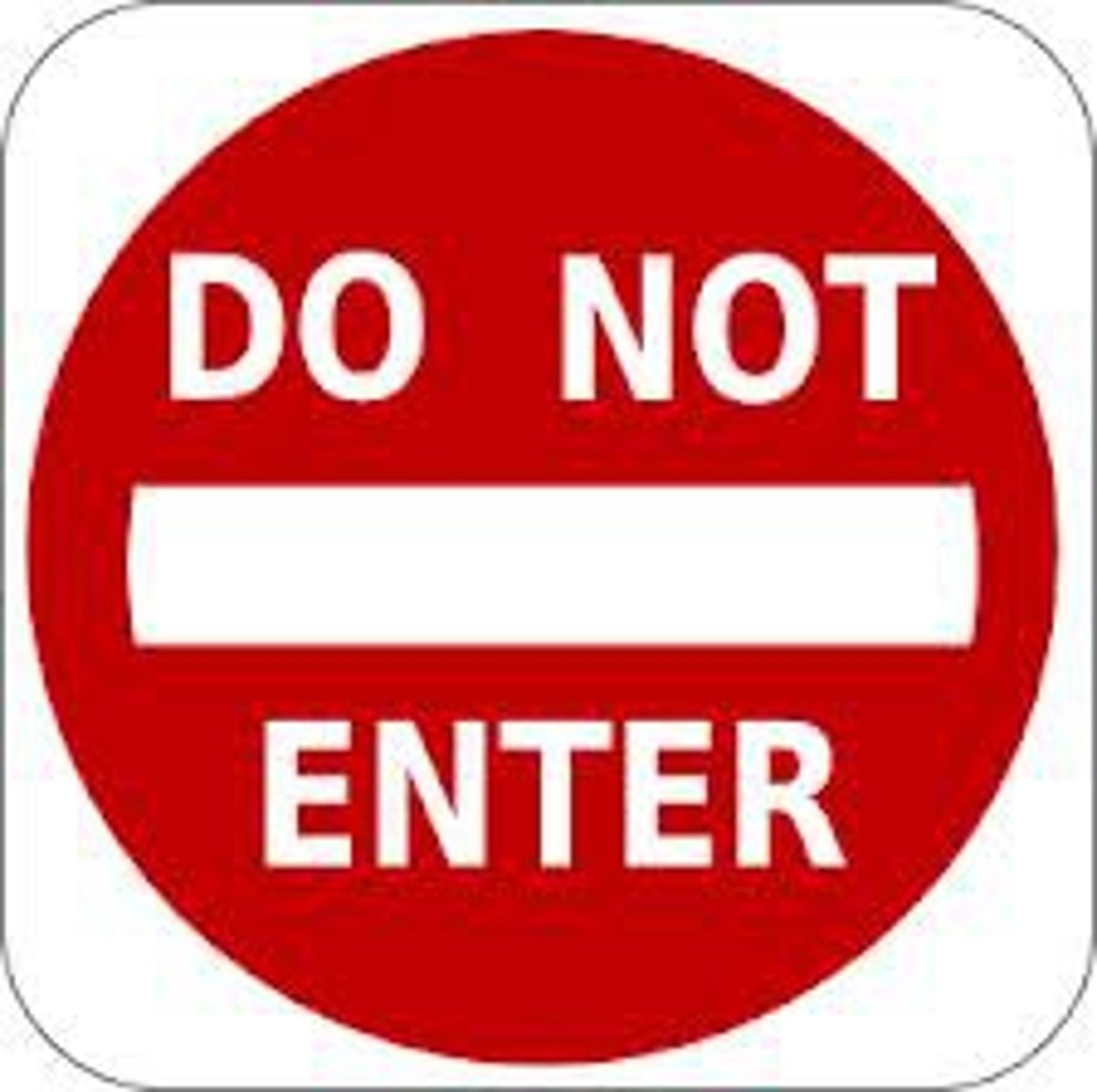
What does the below red and white sign indicate?
A) The road ahead is closed to traffic in all directions
B) Yield the right-of-way
C) The road is closed to traffic in your direction
C
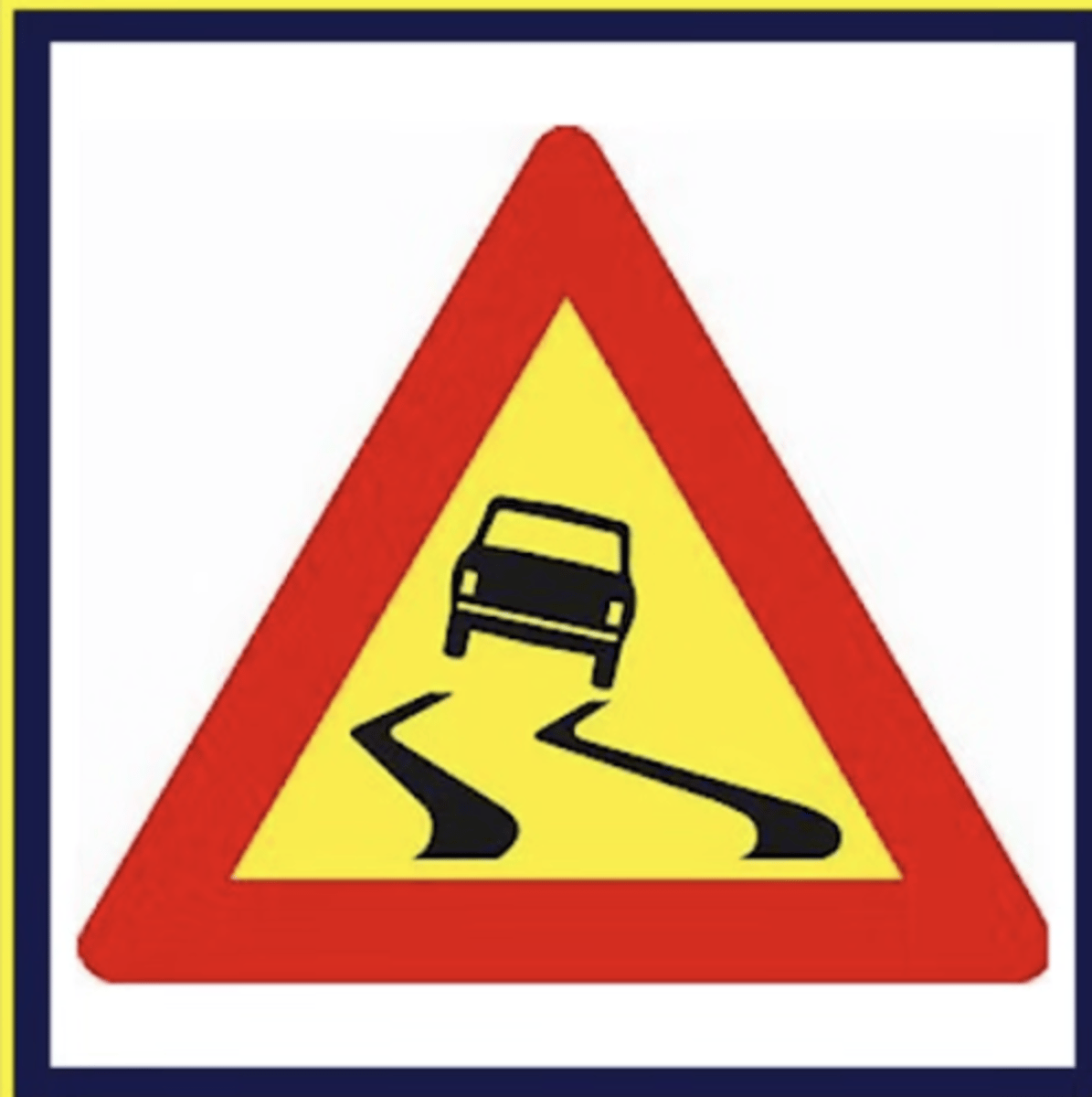
This warning sign means:
A) Road is slippery when wet
B) Winding road ahead
C) Road with sharp turns ahead
A
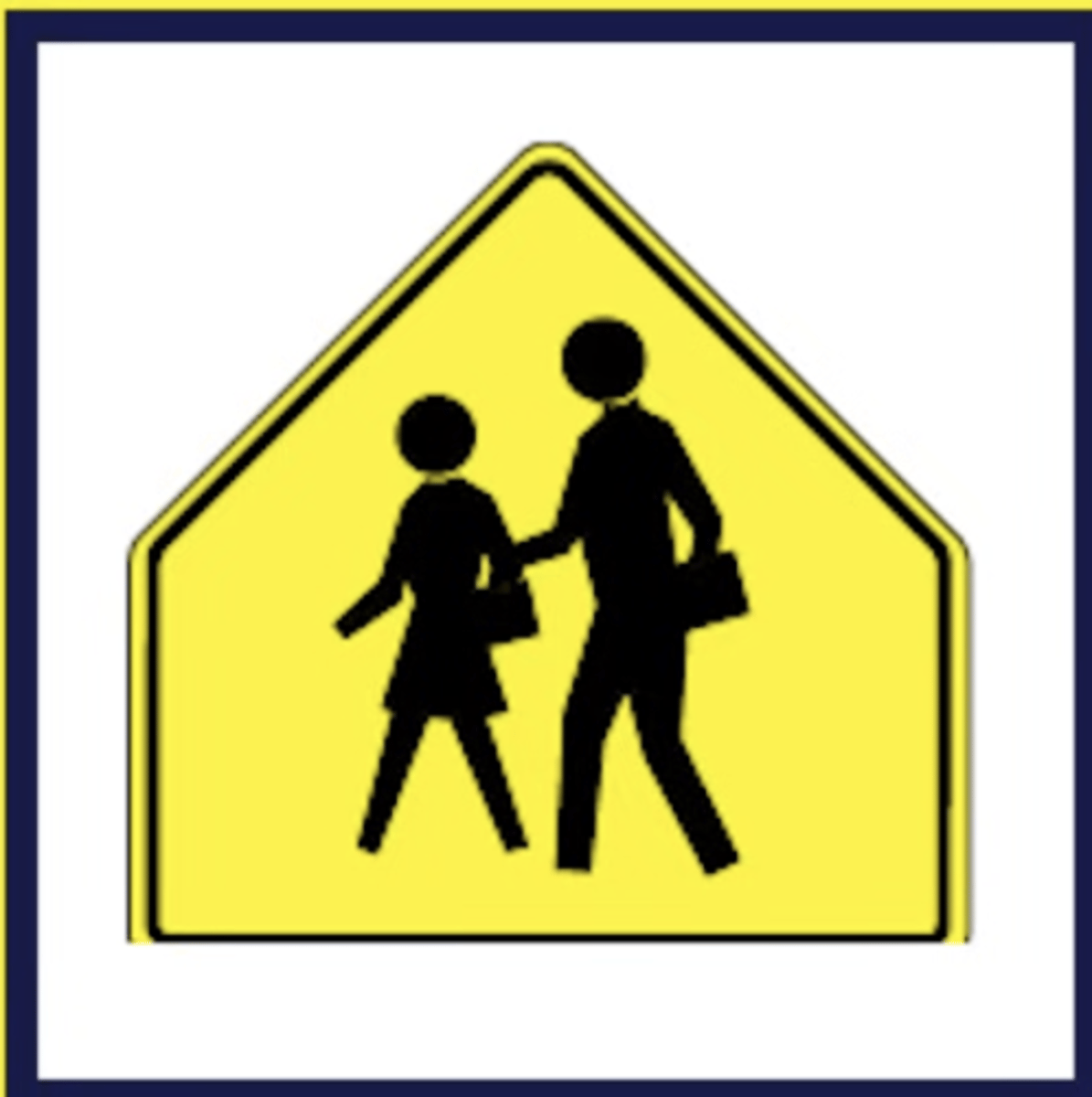
This 5-sided sign indicates:
A) You are approaching pedestrian crossing
B) You are near a school
C) The road ahead is a walking trail
B
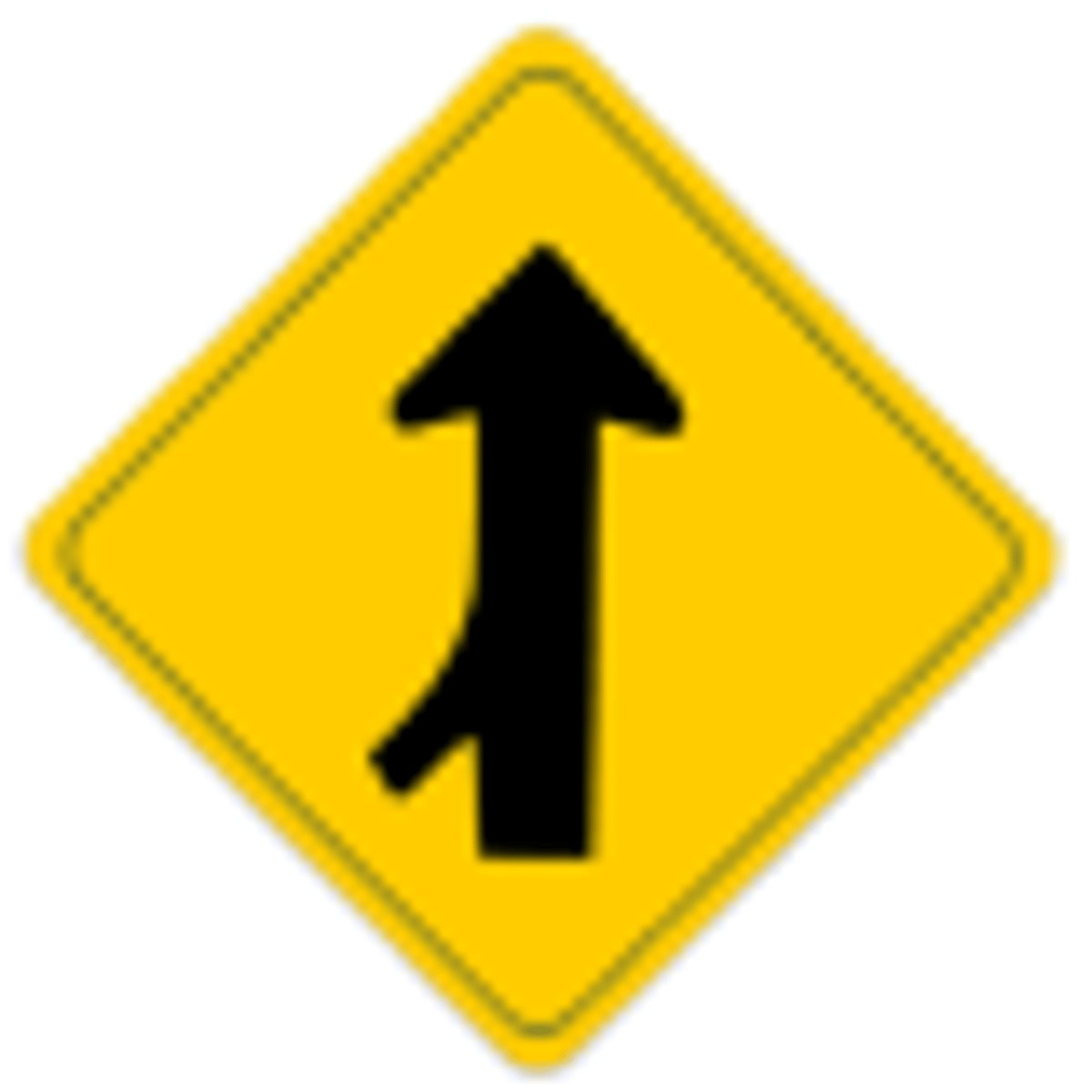
The below sign indicates:
A) Merging traffic entering from left
B) Warning left lane ends early
C) Warning one way road ahead
A
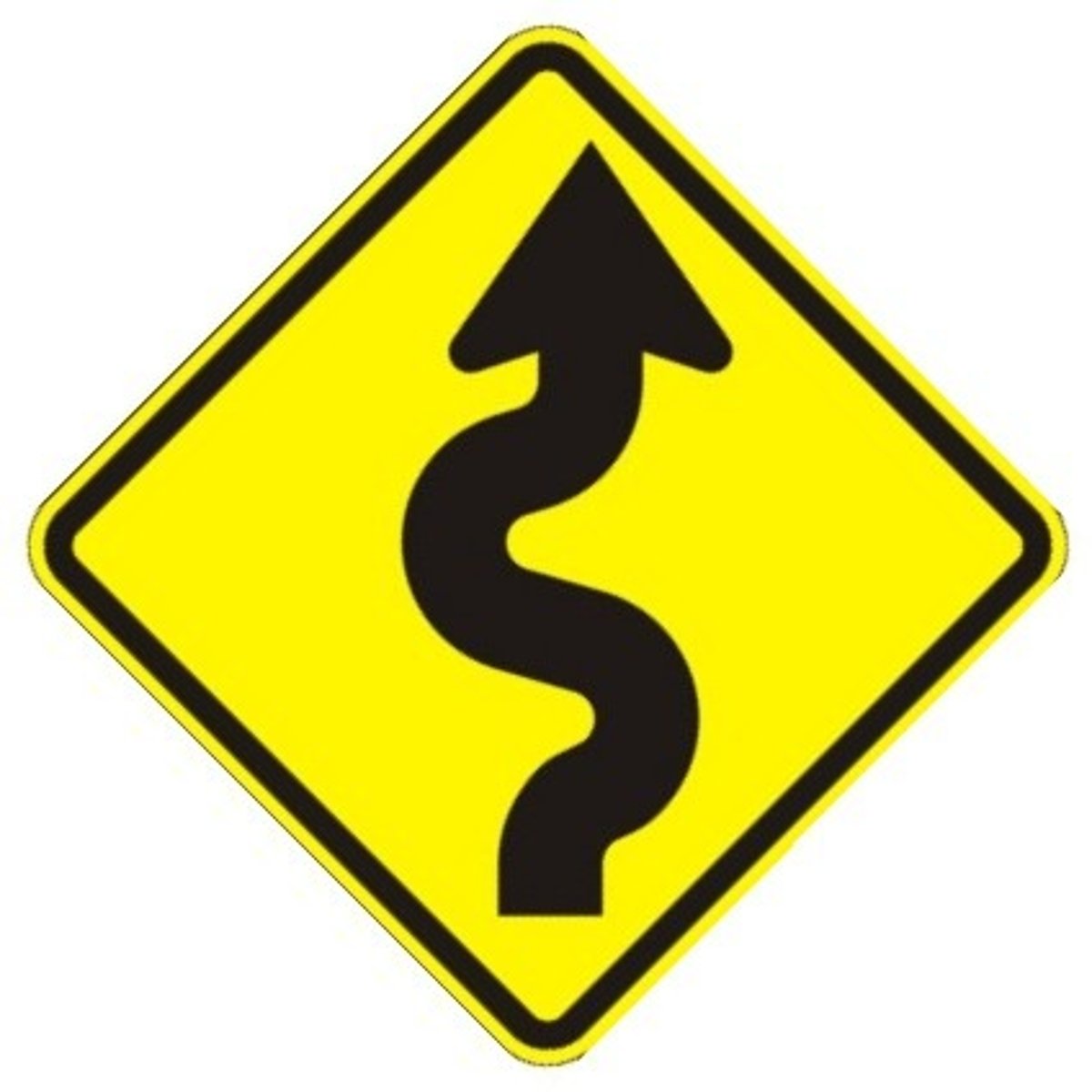
This warning sign means:
A) Winding road ahead, begins with a the curve to the left
B) Passing allowed from left and right
C) Winding road ahead, begins with a curve to the right
C
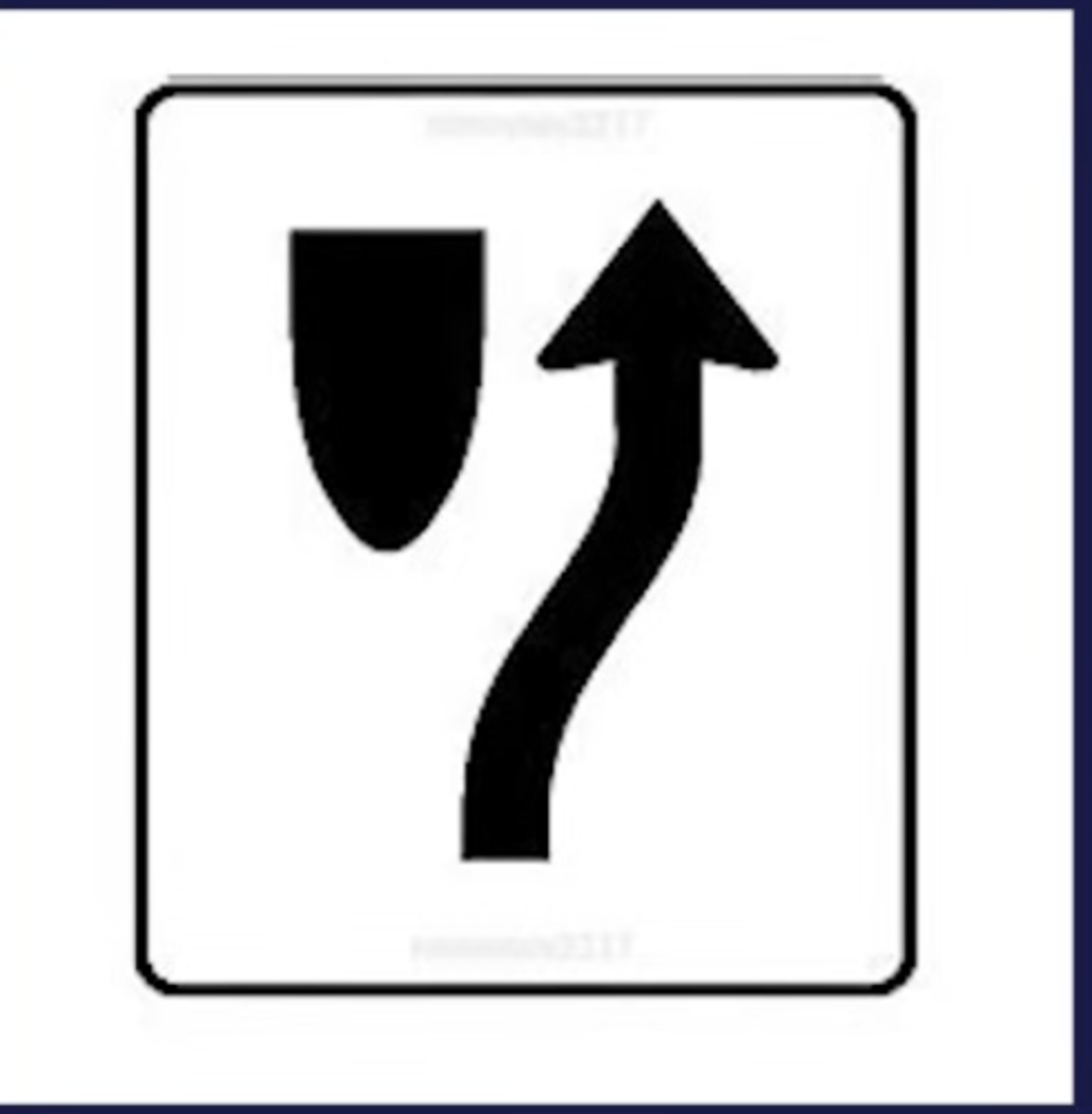
What does the below sign mean?:
A) Divided highway ends
B) Keep to the right of obstruction
C) Left lane ends
B
This sign means:
A) Intersection warning ahead, roadway ends, must turn right or left
B) Side road intersection ahead
C) Y intersection ahead
A
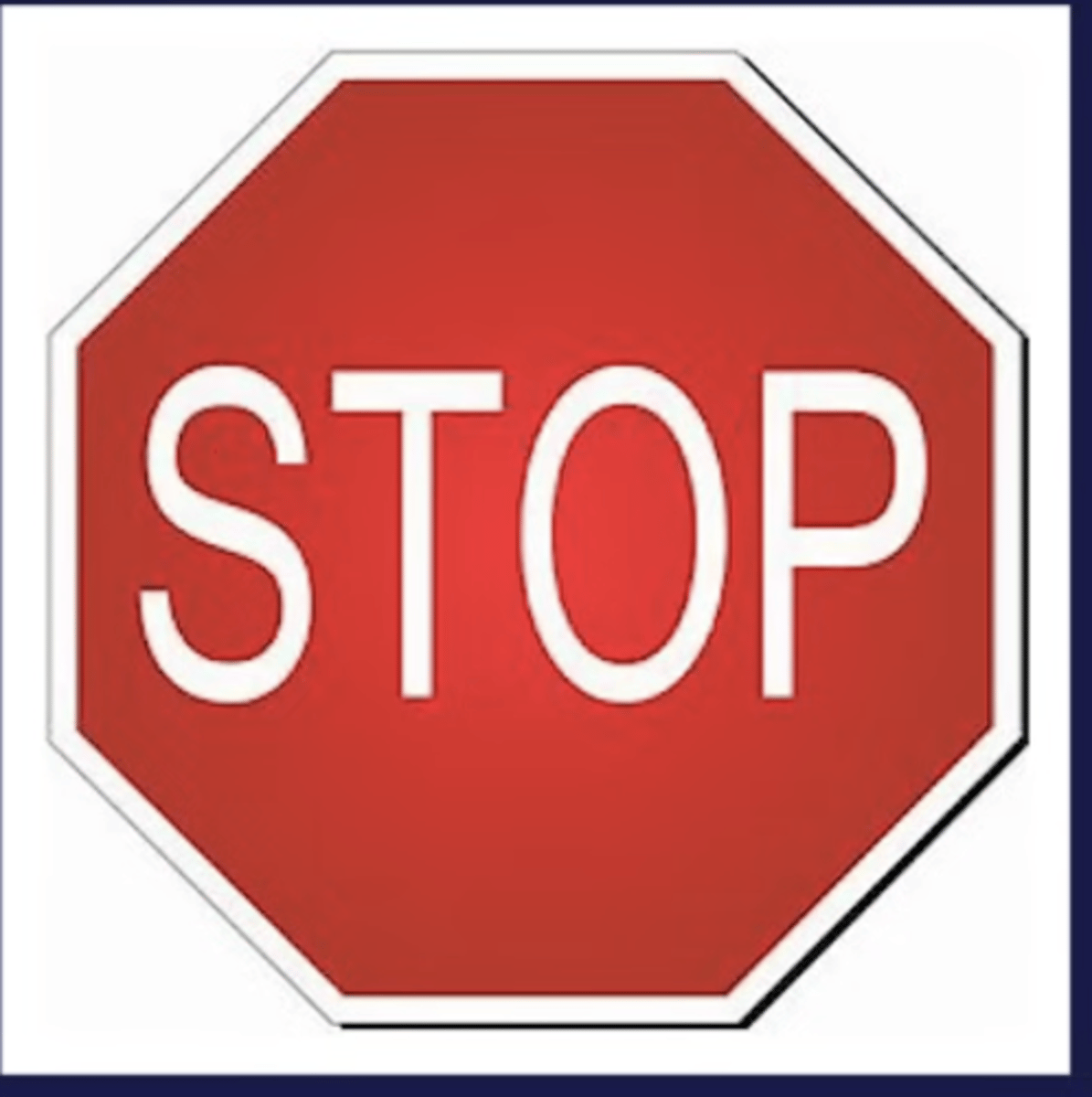
When you see this sign at an intersection, you must:
A) Stop only if you see pedestrians crossing
B) Slow down and yield to oncoming traffic
C) Come to a complete stop, proceed only when safe to do so
C
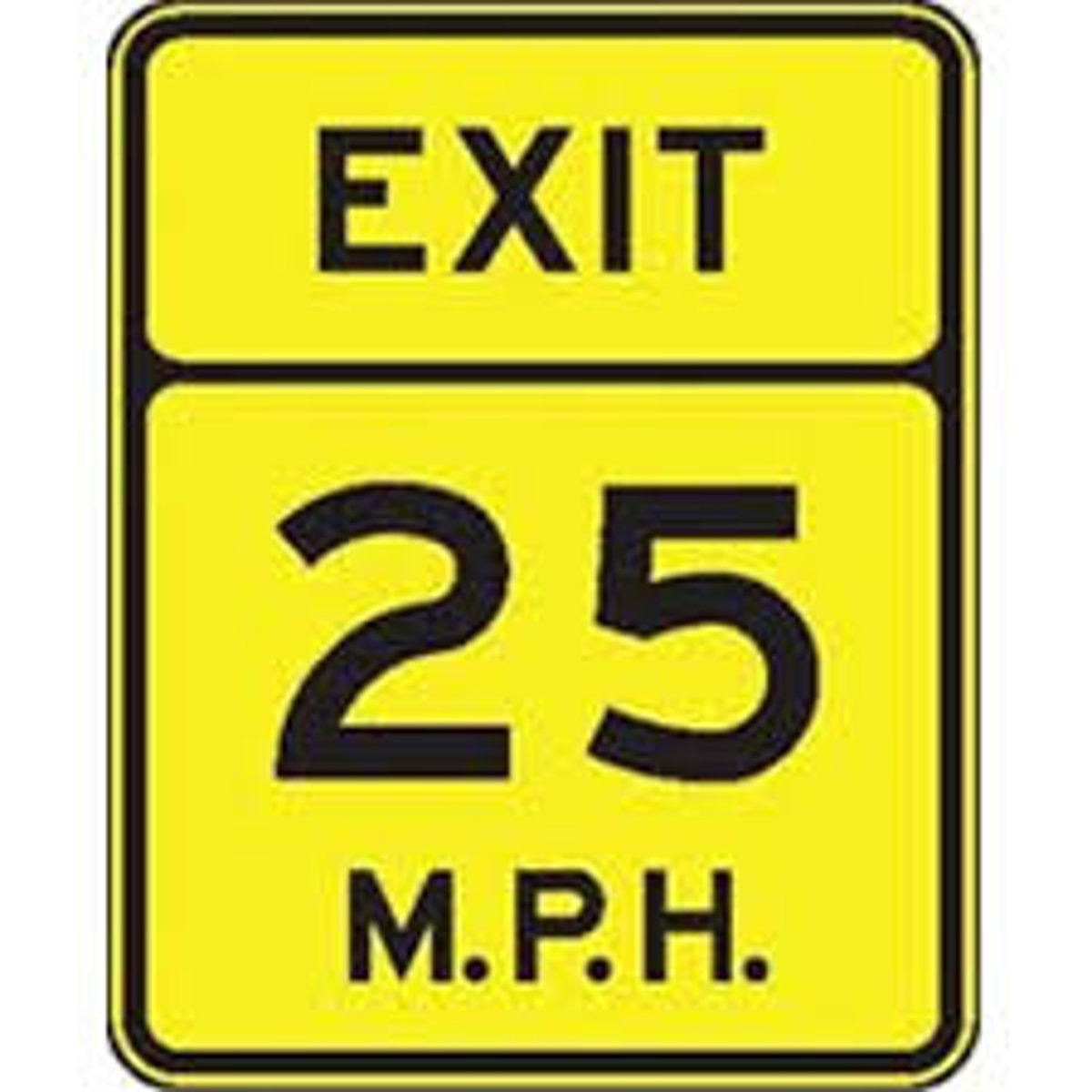
This exit speed advisory sign means:
A) Slow down, maximum advised speed is 25 mph in ideal conditions
B) Slow down, maximum advised speed is 25 mph in all conditions
C) Minimum advised speed is 25 mph in all conditions
A
What does the below sign indicate?
A) Warning divided highway ends ahead
B) Winding road advance notice
C) Two way traffic advance warning
A
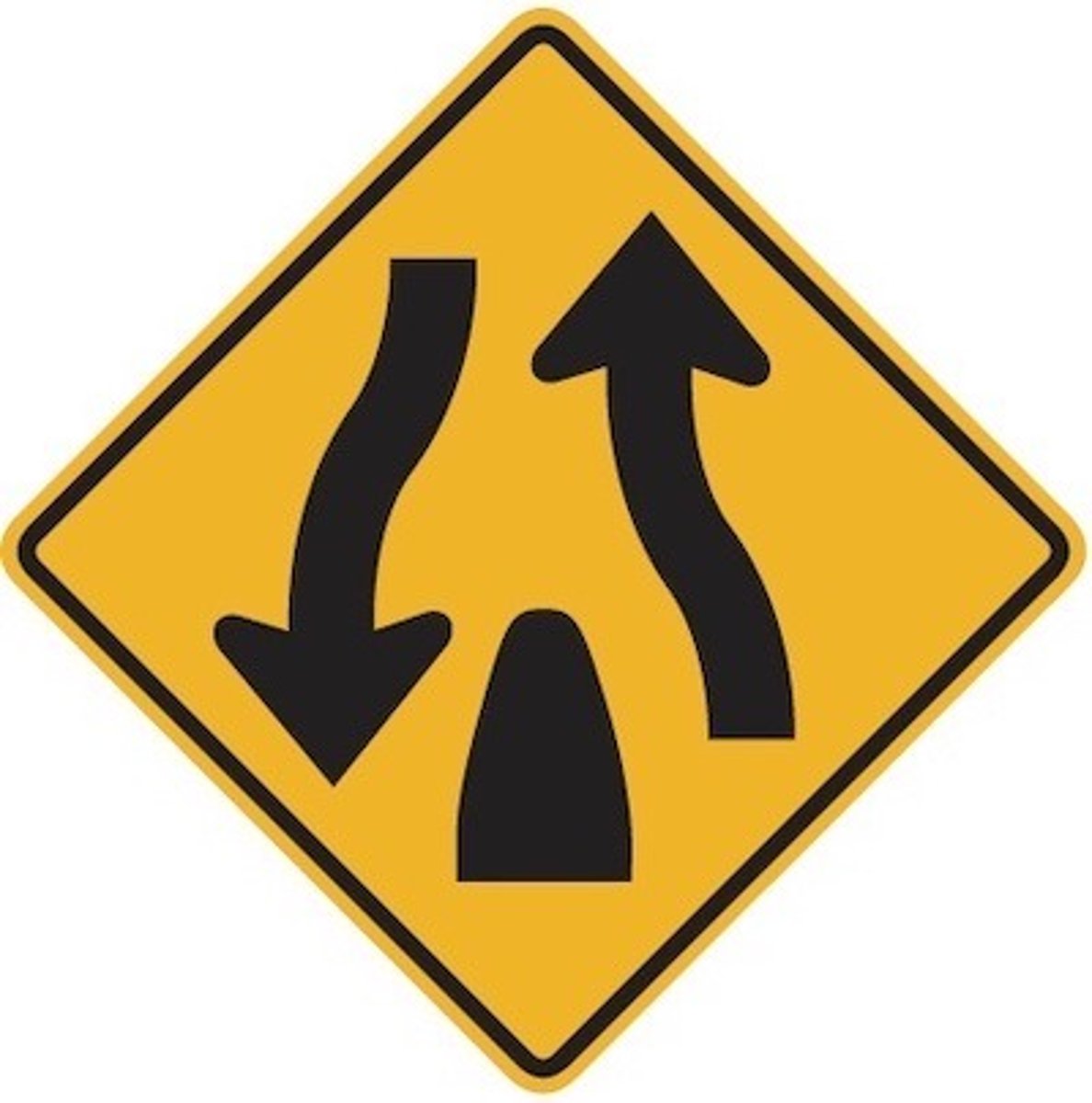
This below sign means:
A) Traffic is permitted to pass on either side of an island or obstruction
B) Right lane stays to the right, left lane stays the left
C) Keep to the left, merging traffic ahead
A
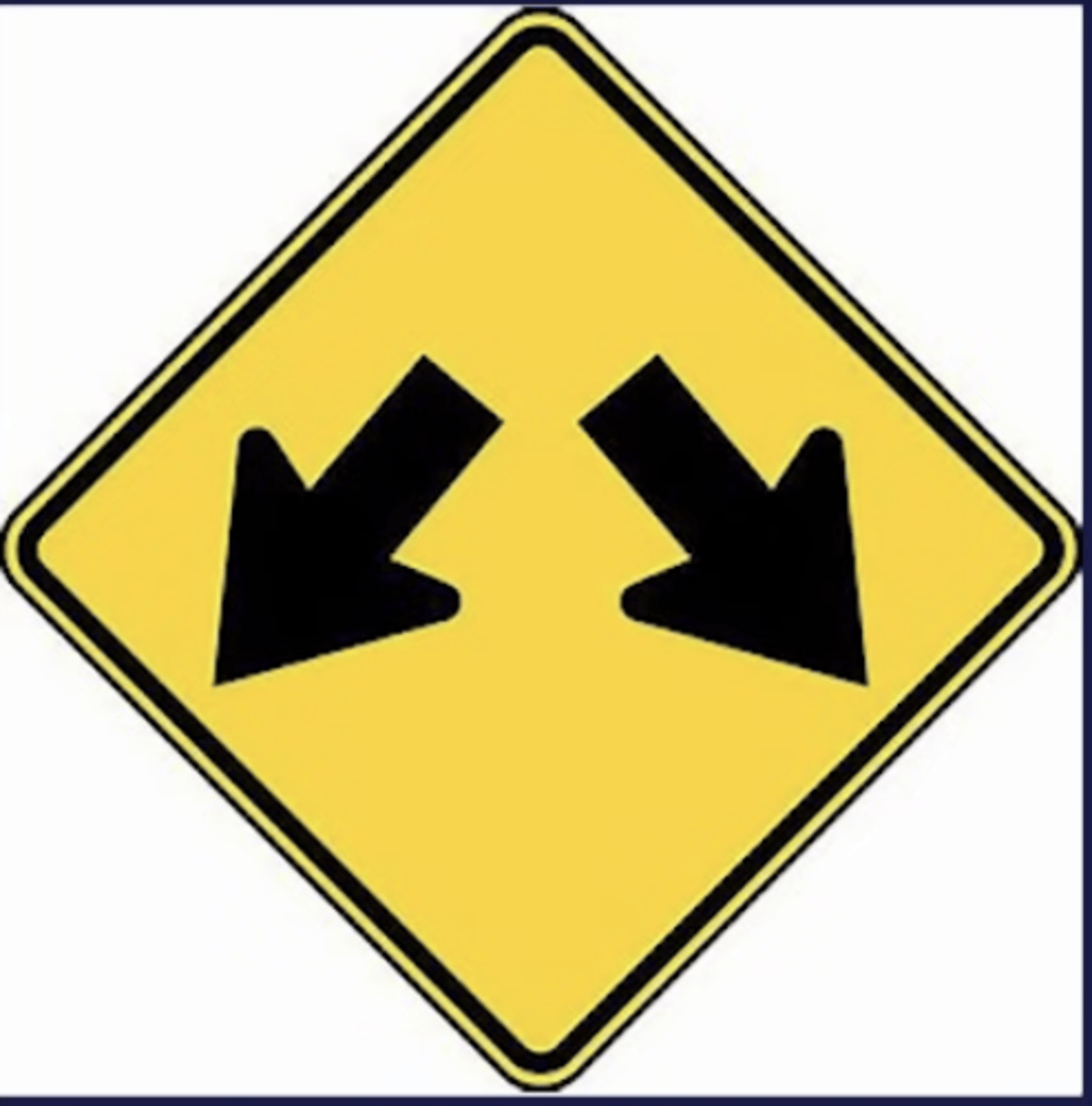
This sign at an intersection means:
A) No right term permitted at this intersection
B) No right turn on red light
C) All traffic must turn left at the next intersection
A
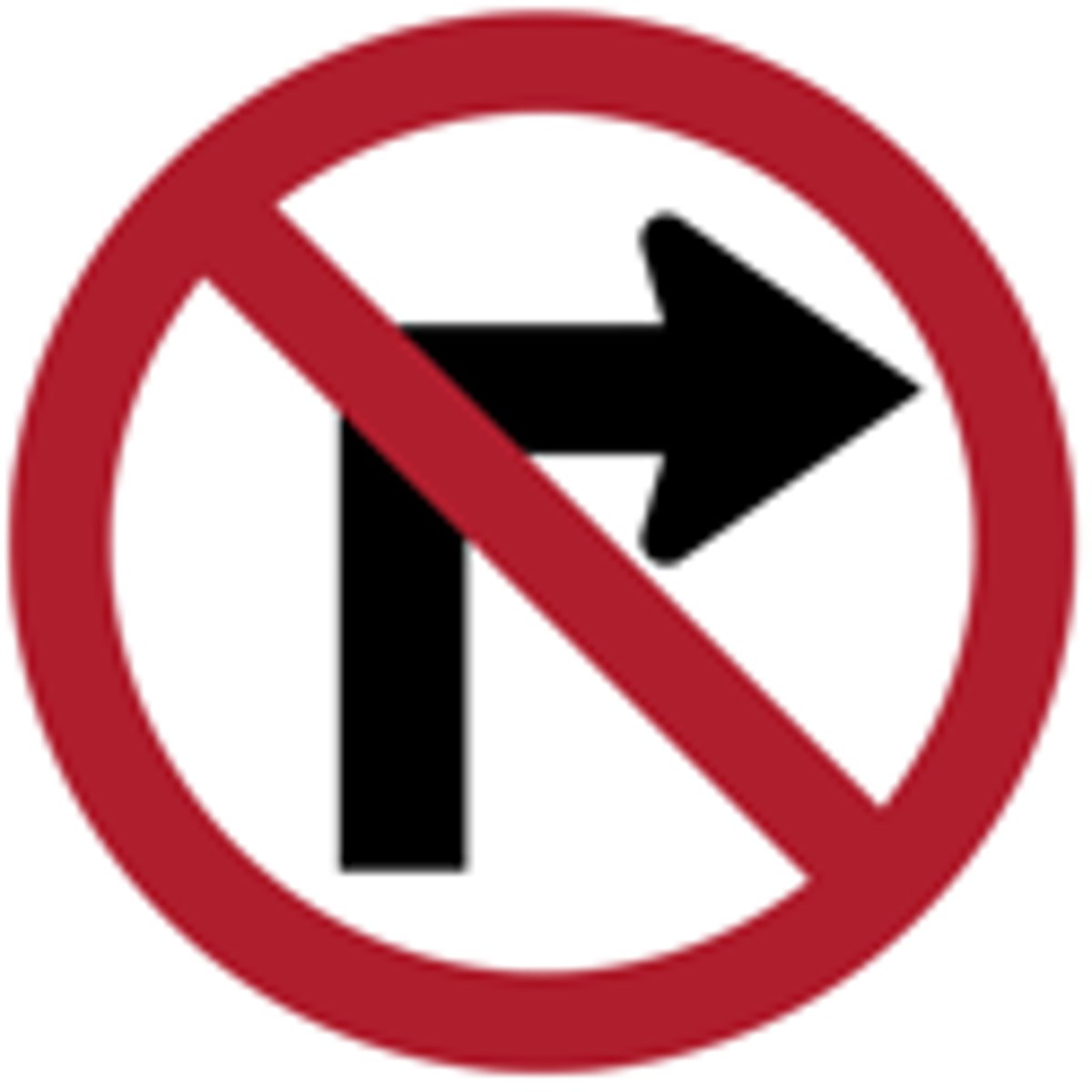
The sign means there is a:
A) Wildlife reserve ahead
B) Deer crossing ahead
C) Zoo nearby
B
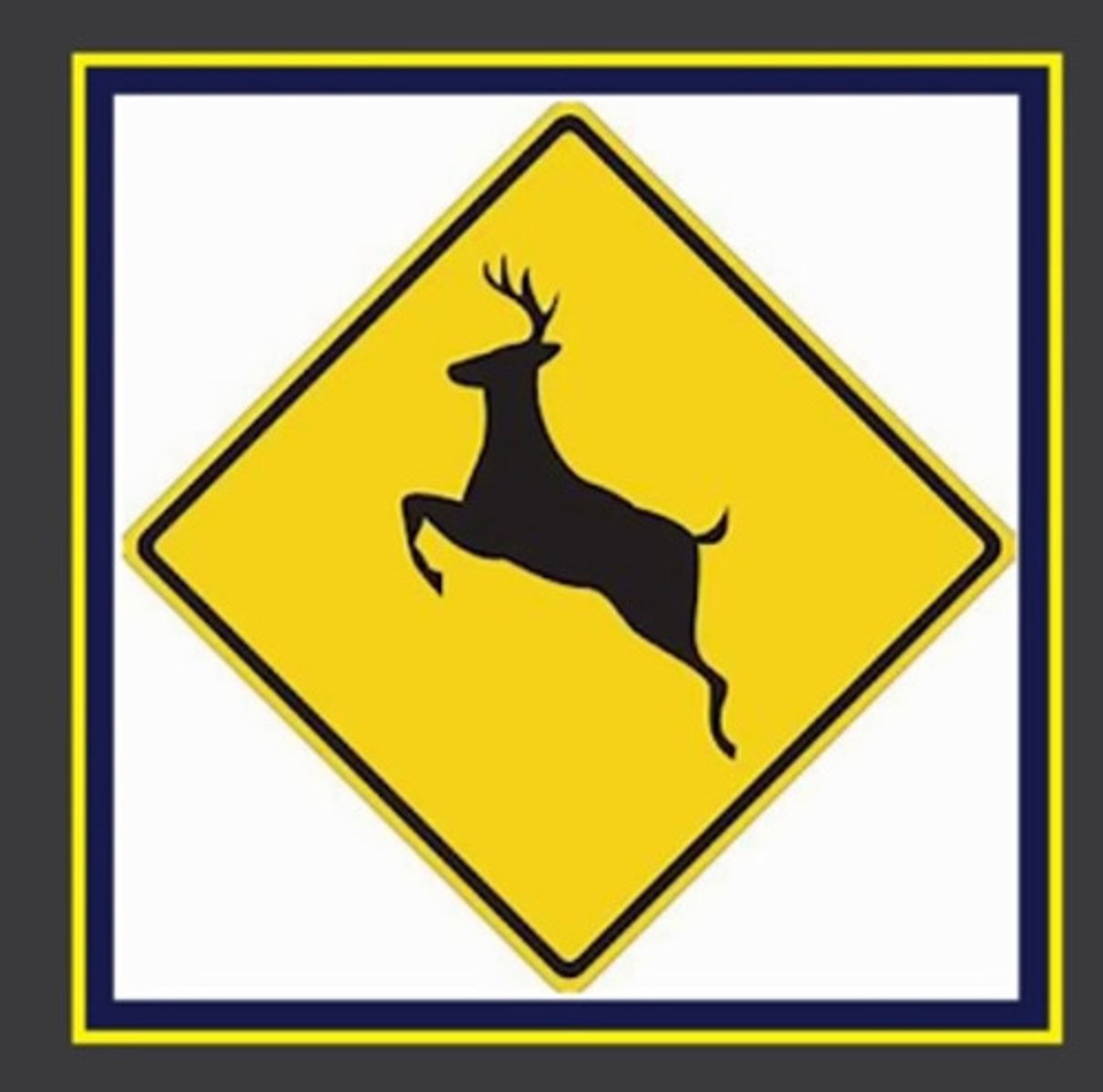
This sign means:
A) Right lane ends, merge left
B) Road narrows ahead
C) Passing is allowed on right lane
A
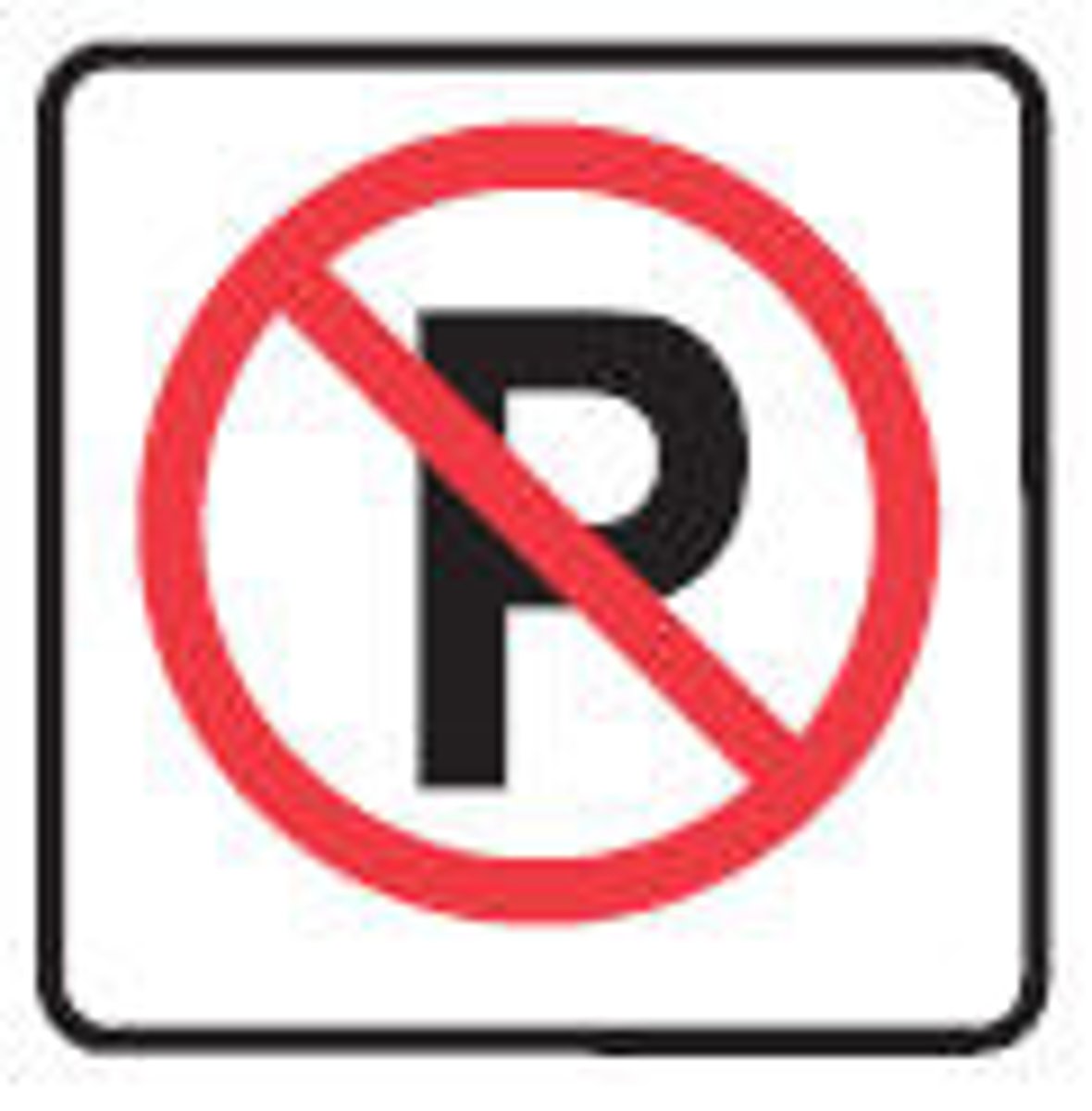
This regulatory sign means:
A) Passing is not permitted in this zone
B) You may not park at locations where the sign is installed
C) Pedestrian crossing is prohibited
B
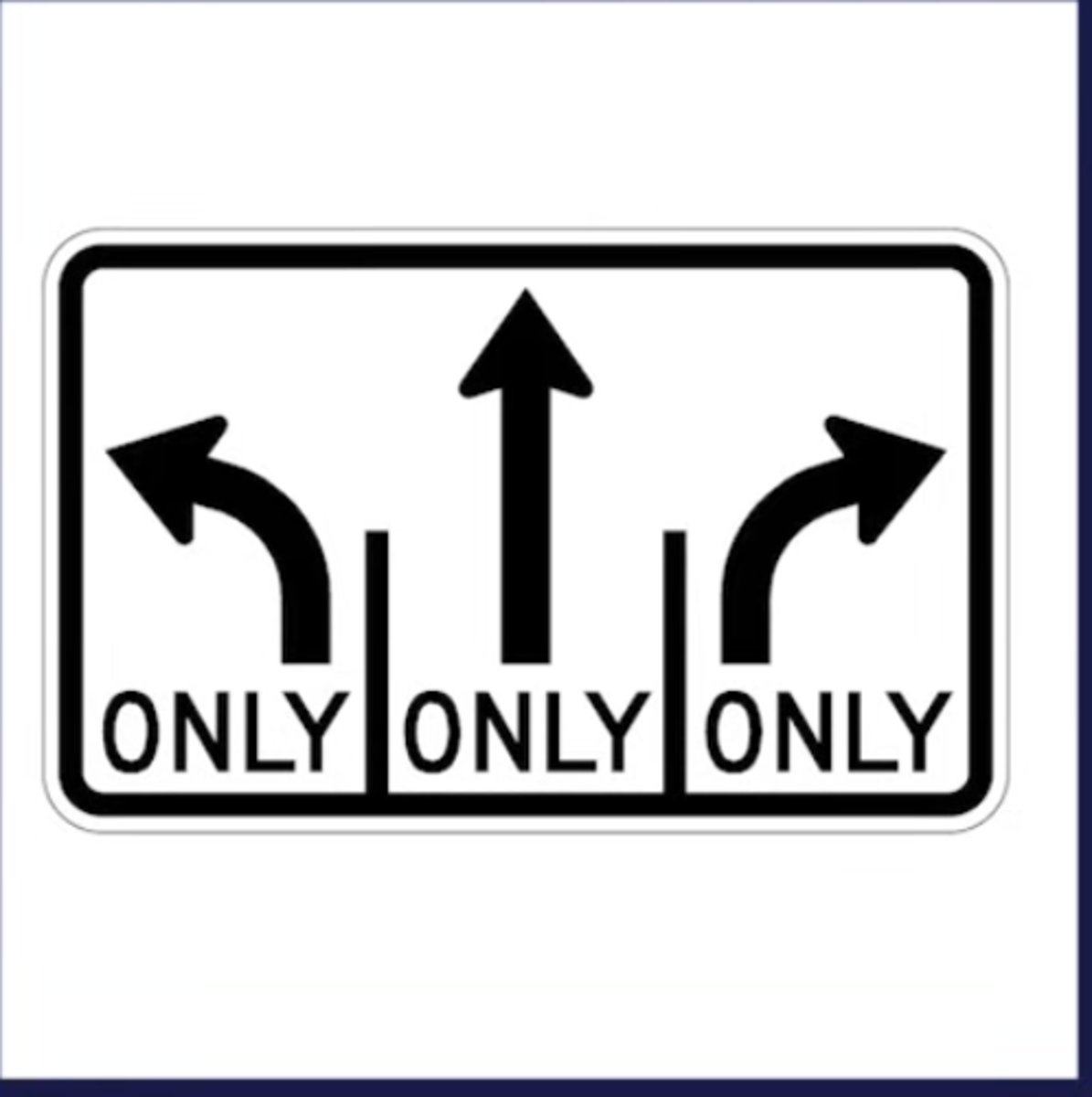
You are on a 3 lane highway, this sign means:
A) All lanes permit left and right turns
B) Left lane must turn left, center lane must go straight, right lane must turn right
C) Center lane permits to you to go straight, left or right
B
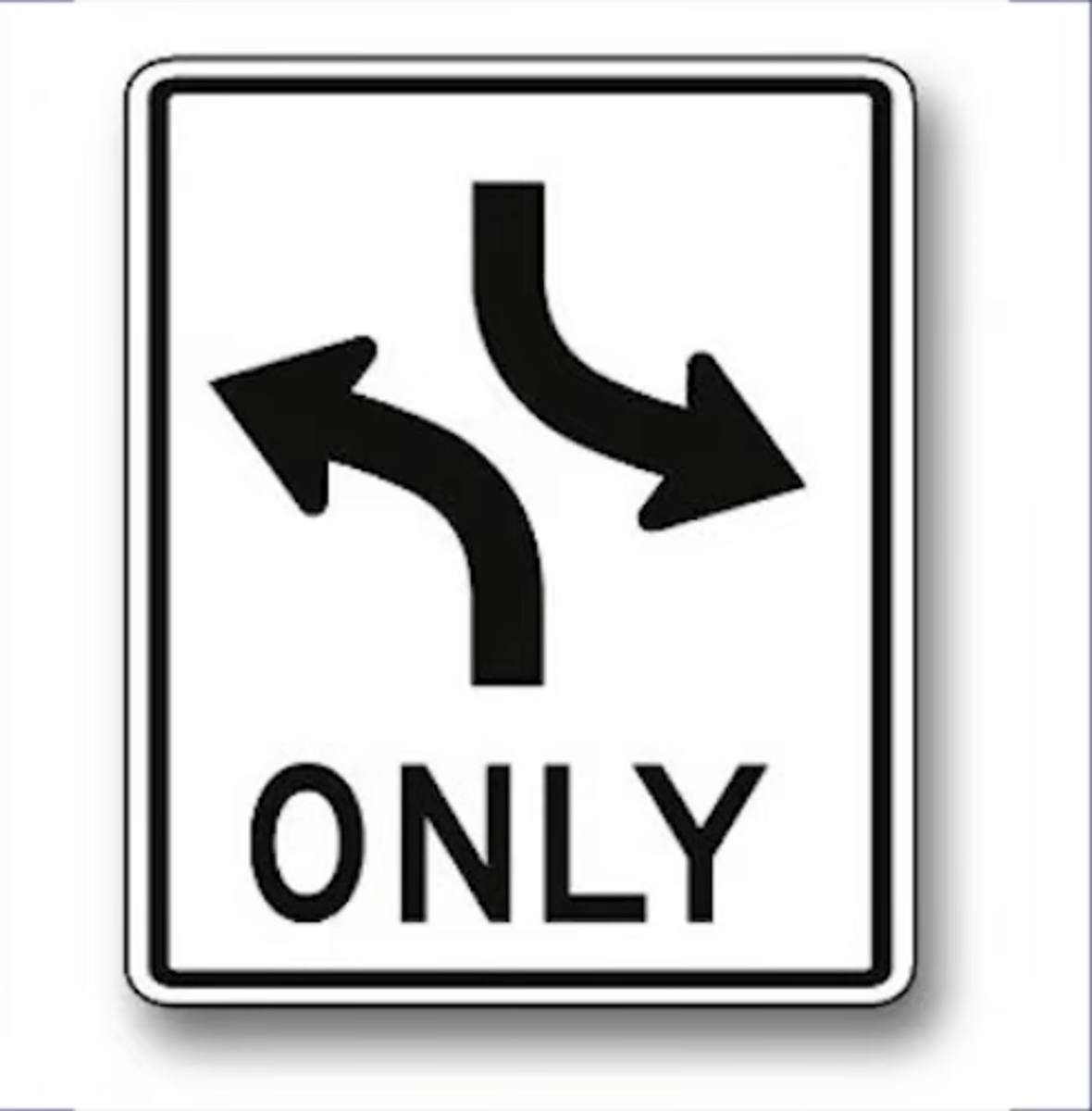
This sign on a center lane means you may use this lane for:
A) Turning left or right only
B) Passing slow moving vehicles only
C) Turning left only
C
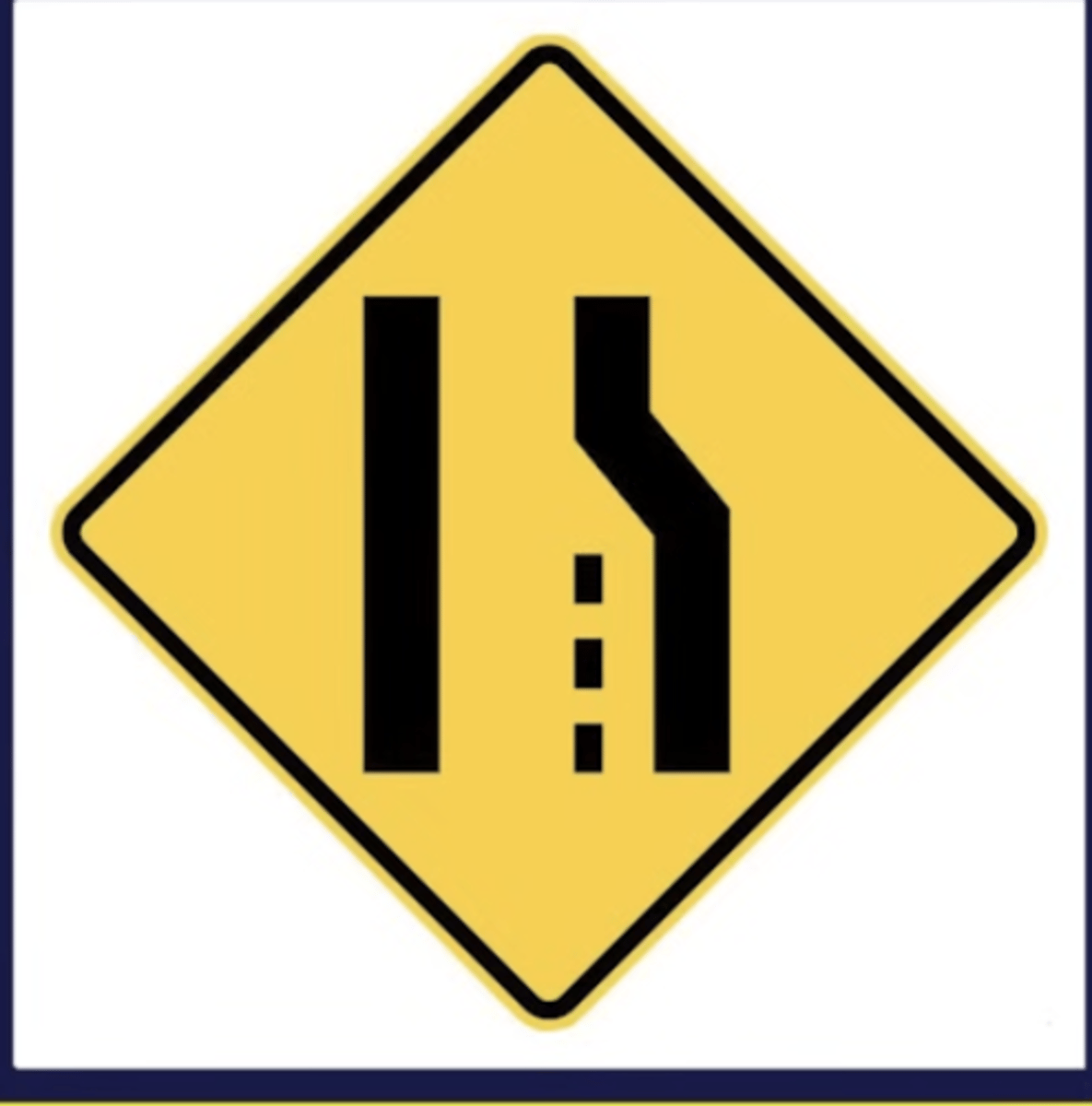
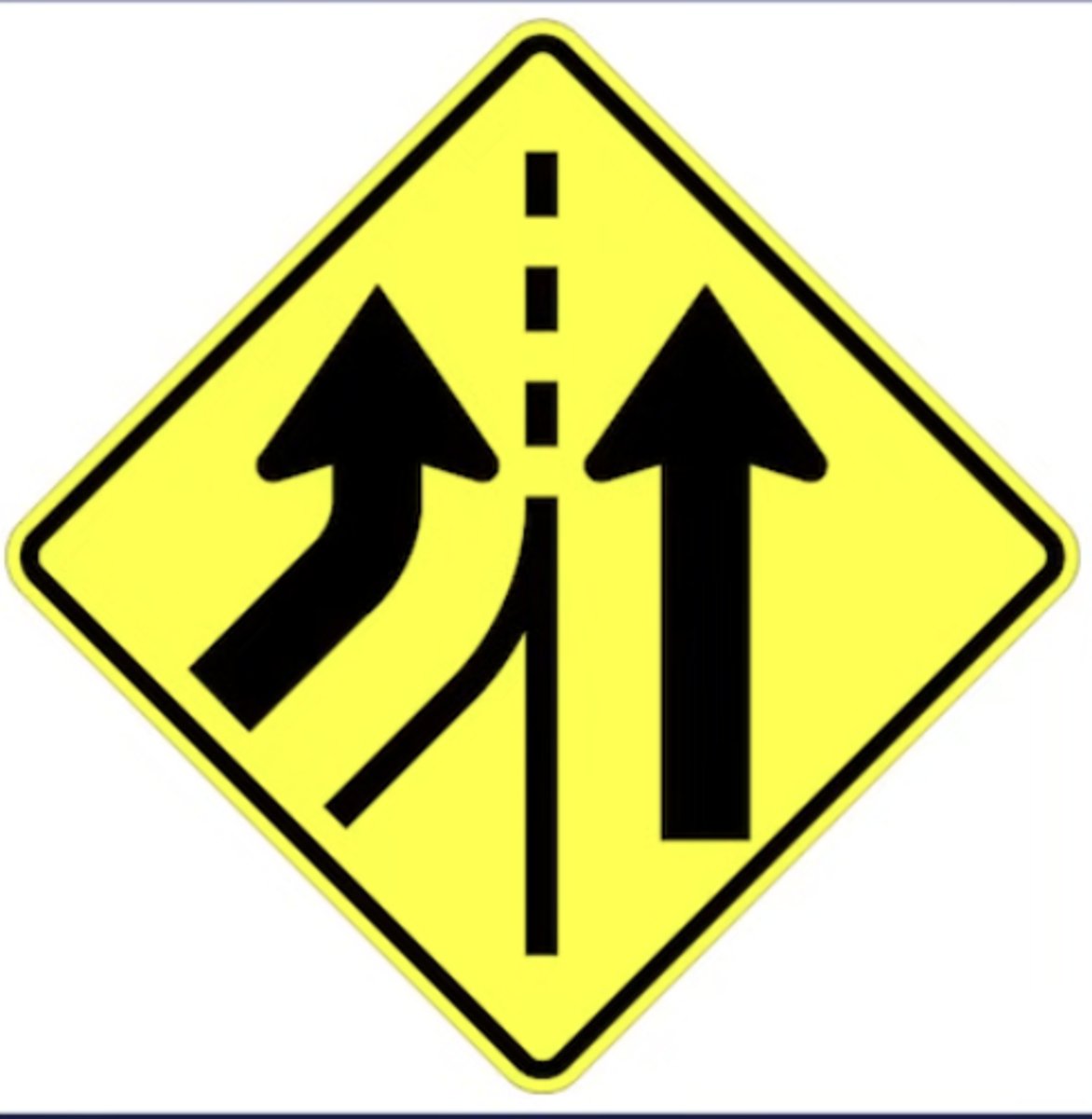
This sign means:
A) New lane will be added to the left in the same direction, merging not required
B) Left lane ends and merges to the right
C) Passing on the left permitted ahead
A
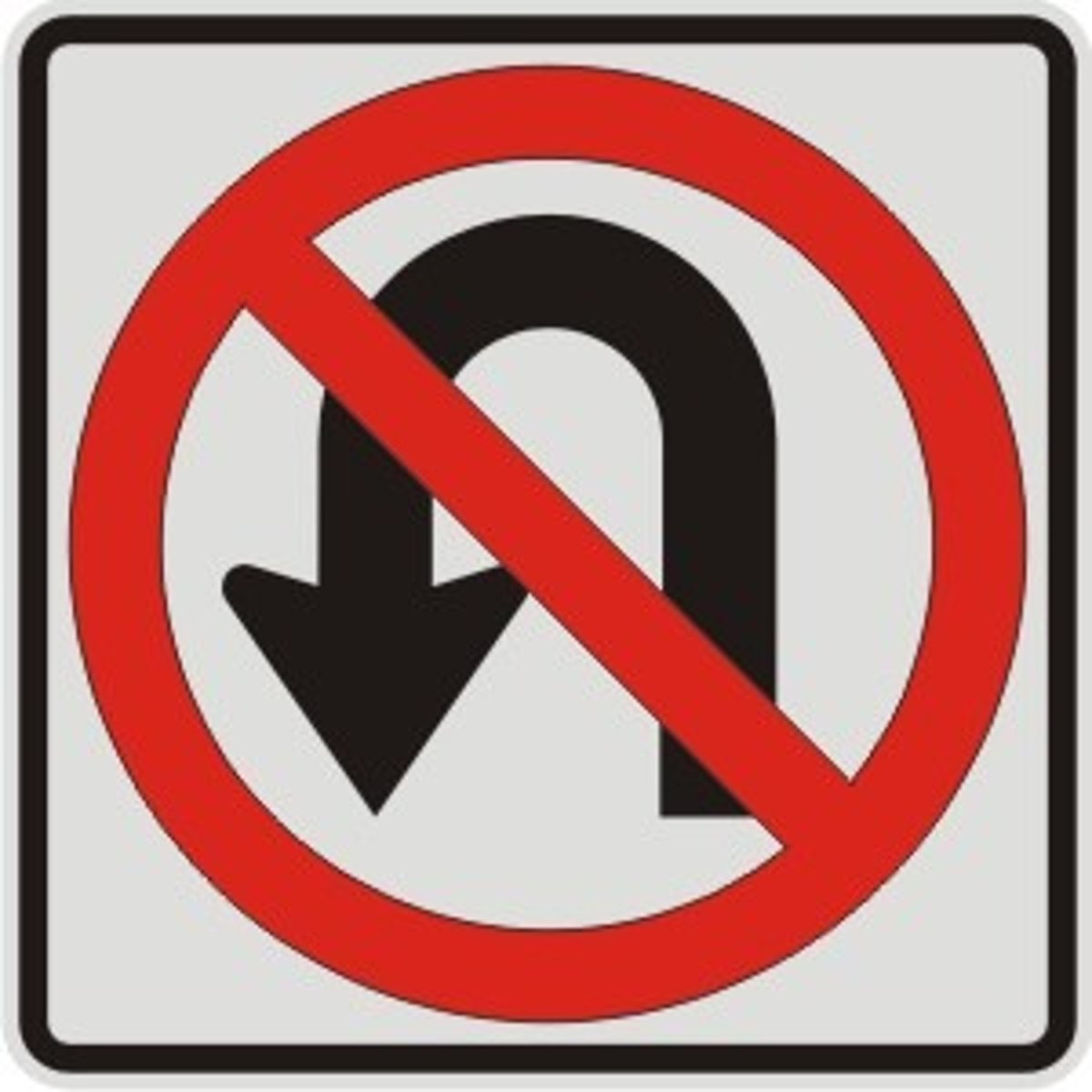
This sign at an intersection means:
A) Before making a U-turn, you must come to a complete stop
B) No U-turns are permitted at this intersection
C) You must yield to all other oncoming traffic before turning
B
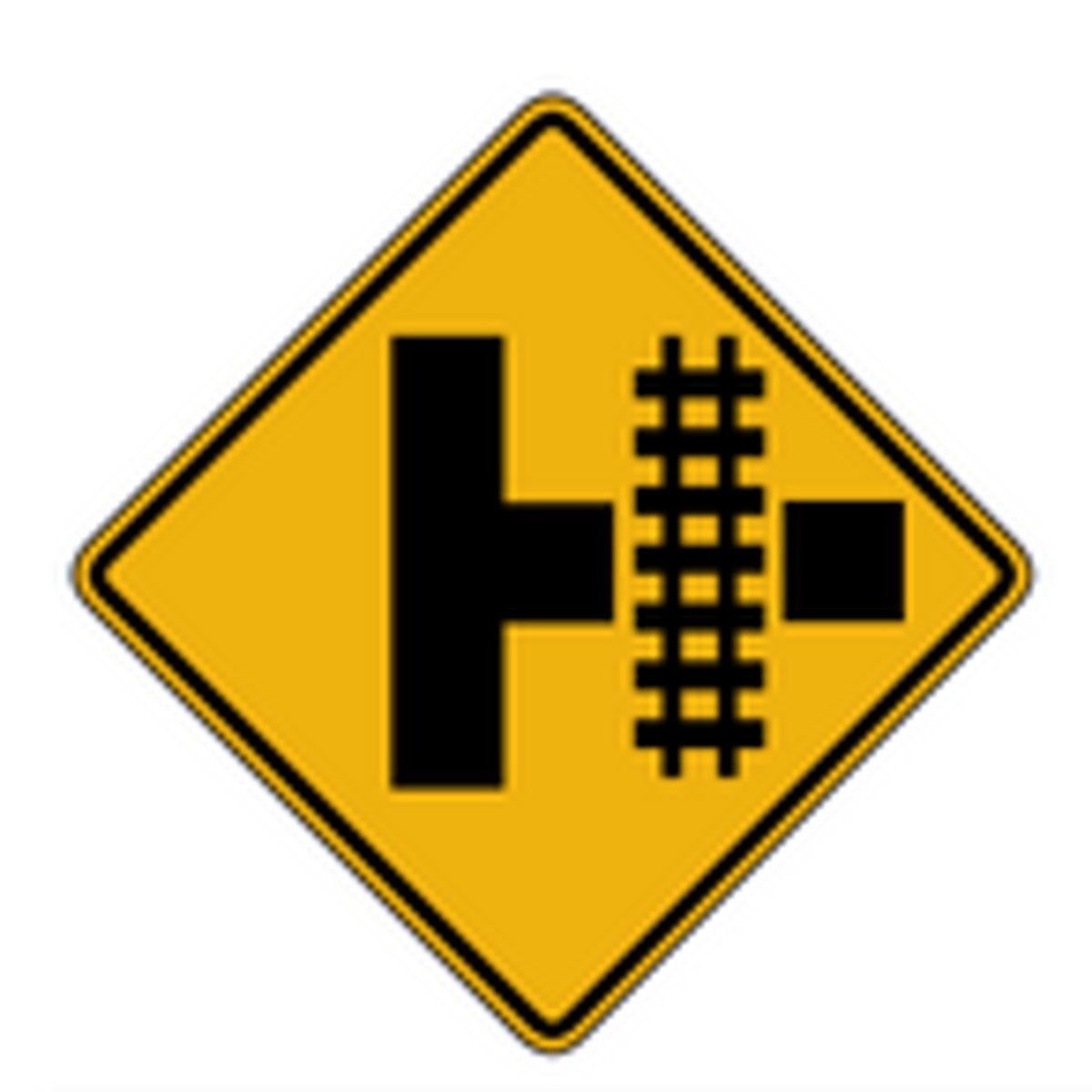
This warning sign indicates:
A) You will encounter a railroad crossing when turning right at the intersection ahead
B) You will encounter a railroad crossing when turning left at the intersection ahead
C) Railroad crossing straight ahead
A
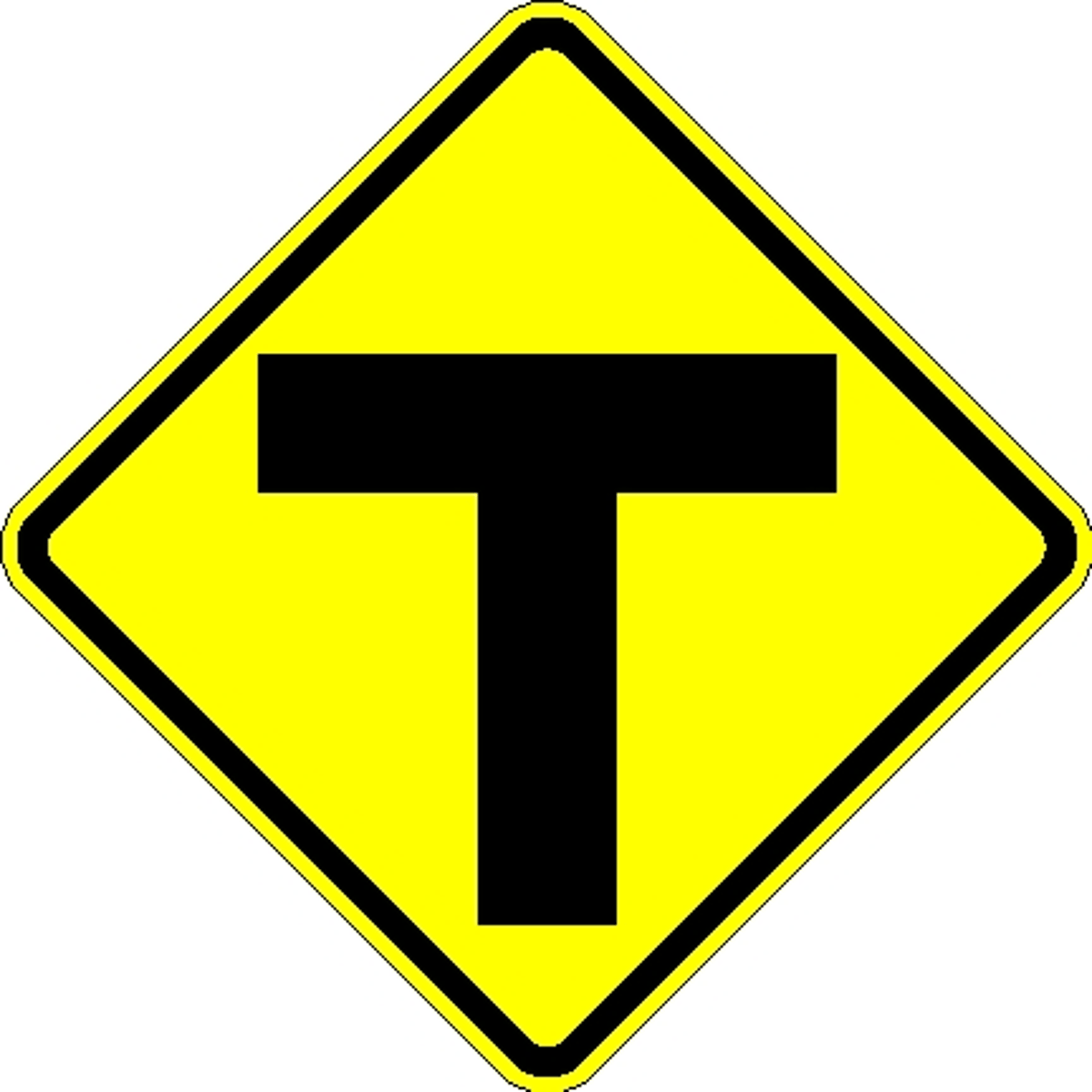
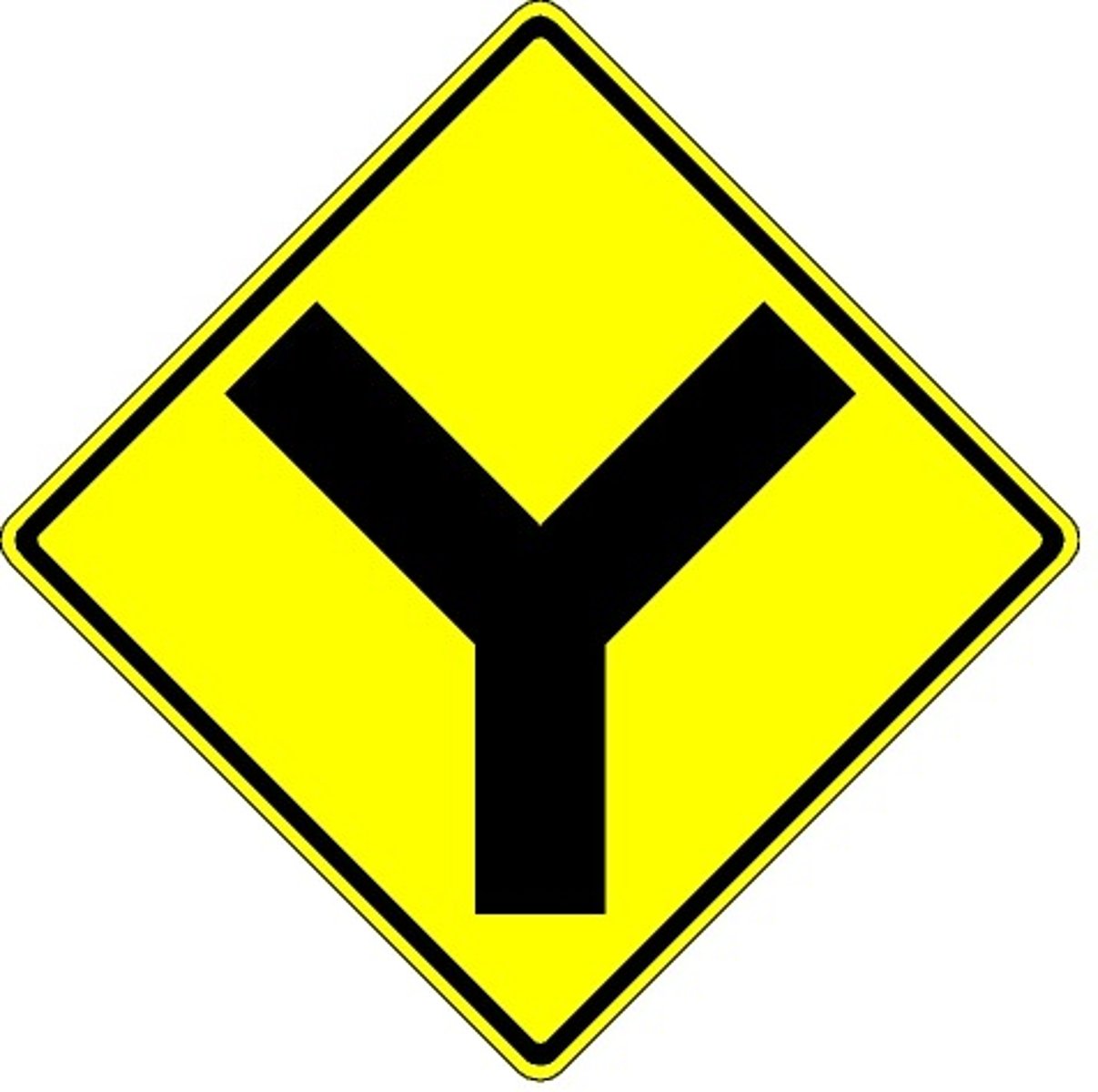
This traffic sign tells you:
A) The road you are traveling on intersect a highway ahead
B) The main road curves to the left with a side road entering from the right
C) There is a three-way intersection up ahead on the road
C
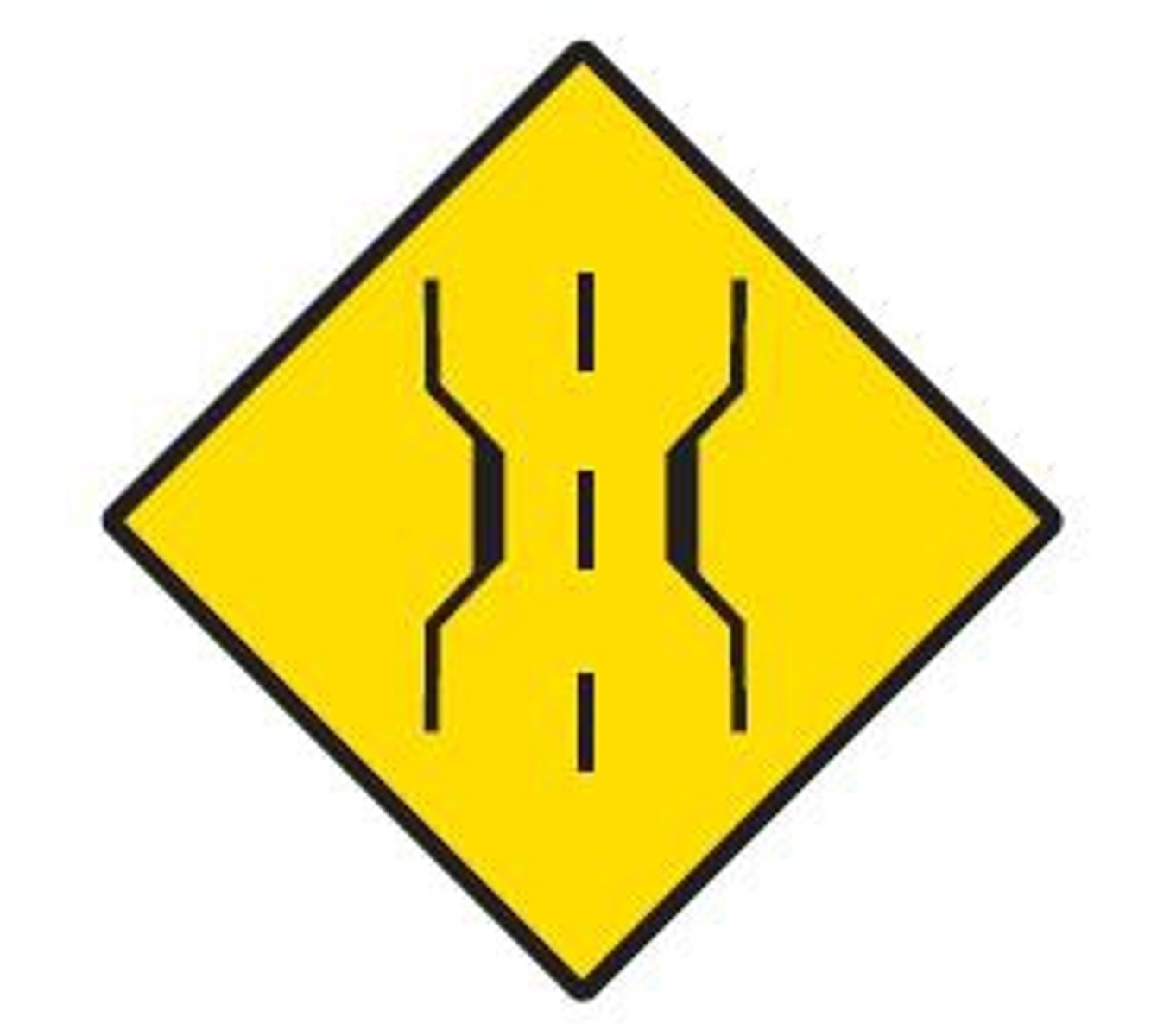
What does the below sign indicate?
A) This road crosses a narrow bridge ahead
B) Soft shoulder warning ahead
C) Railway tracks
A
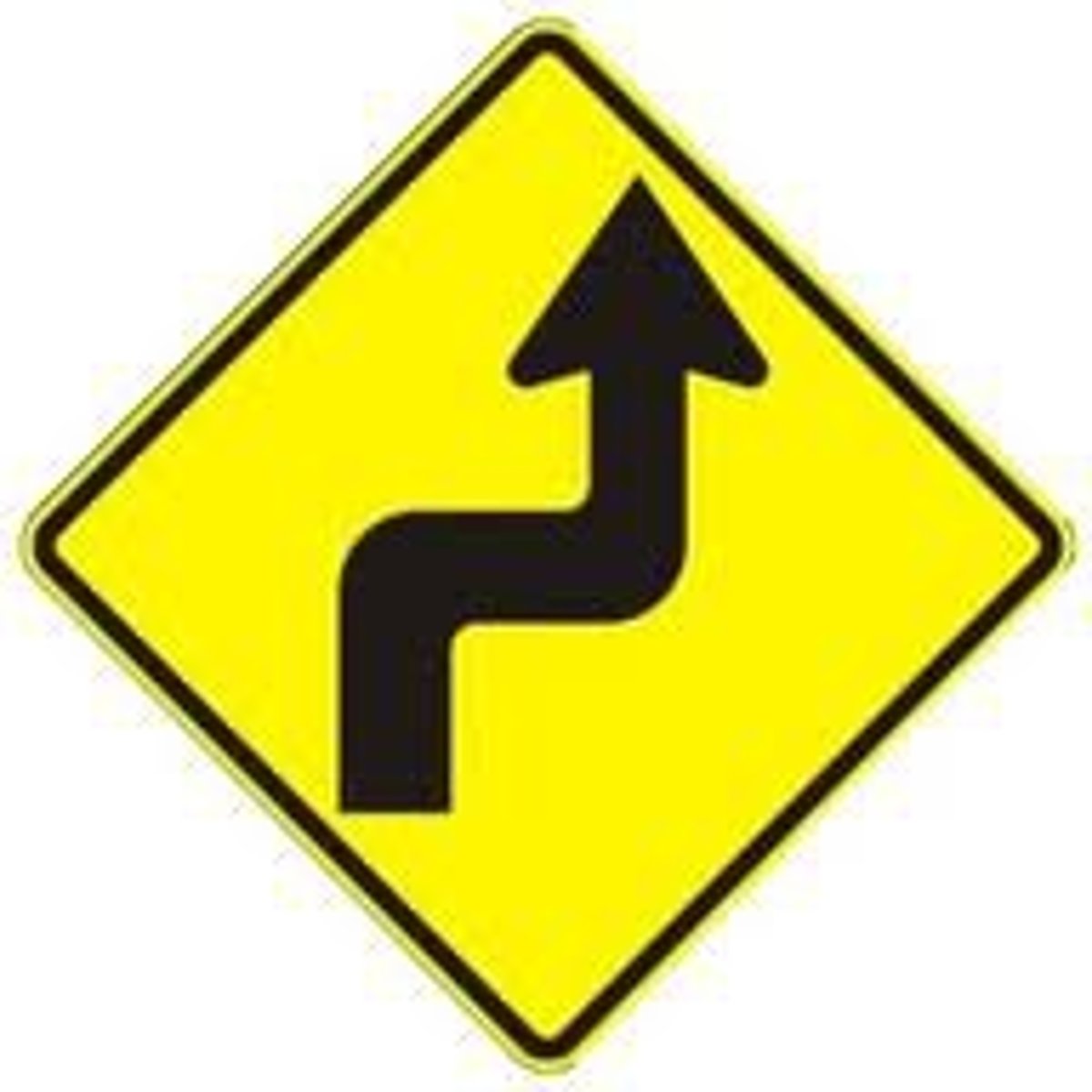
This road sign means:
A) Sharp right turn ahead
B) A road joins from the right
C) The road ahead turns sharply right then sharply left
C
When should you signal before turning?
A) 50 feet before turning
B) 100 feet before turning
C) 200 feet before turning
B
Do you need to signal when you pull away from the curb?
A) No, you only need to signal when you approach the curb
B) Yes, you need to signal when you pull away from the curb
C) Only if there are other vehicles around you
B
How long before changing lanes on a freeway should you signal?
A) two seconds
B) four seconds
C) five seconds
C
Is it legal to use your horn in residential areas?
A) Yes, as long as you use it during the day
B) No, it is not legal to use the horn in residential areas unless it is an emergency
C) It is only legal if you live in the residential area
B
You must turn on your headlights:
A) Only when it is completely dark outside
B) When it is too dark to see from 1000 feet away
C) When is too dark to see from 500 feet away
B
The speed limit in any alley is:
A) 20 mph
B) 15 mph
C) 25 mph
B
Which of these statements is true about child passengers?
A) Children 1 or older and over 20 pounds should ride in the front seat
B) Children under age one should not ride in the front seatbelt in airbag-equipped vehicles
C) The front seat is generally the safest place in the car for children six years of age and older
B
You are driving in the far right lane of a four-lane freeway and notice thick broken white lines on the left side of your lane. You are driving in:
A) The carpool lane and must merge into the next lane
B) A special lane for slow moving vehicles
C) An exit lane
C
The speed limit for a school zone where children are present is ____ unless otherwise posted
A) 15 mph
B) 25 mph
C) 20 mph
B