Clinical Examinations pt. 1-3 (Common Domestic Species, Bovine & Equine)
 Call Kai
 Learn
Learn Practice Test
 Spaced Repetition
 Match
Match Flashcards
 Knowt Play
1/54

Earn XP
Description and Tags
M.7, W.1, L.8-10
Name | Mastery | Learn | Test | Matching | Spaced | Call with Kai |
|---|
No analytics yet
Send a link to your students to track their progress
55 Terms
Clinical Examination of the Common Domestic Species 1 Lecture
Clinical Examination of the Common Domestic Species 1 Lecture
What does SOAP stand for?
Subjective, Objective, Assessment, Plan
What does signalment mean?
Age, sex, breed, physiological status
List the TPR reference values for DOGS
Temp: 37.8 - 39.2 °C (100.04 - 102.56 °F)
Pulse: 70 - 160 bpm
Respiration: 10 - 30 br.pm
List the TPR reference values for CATS
Temp: 37.8 - 39.2 °C (100.04 - 102.56 °F)
Pulse: 120-180 bpm
Respiration: 20-40 br.pm
Which typically has a higher temperature: small or large breeds?
Small breeds
Where do exams begin and end in domestic species?
Nose to tail
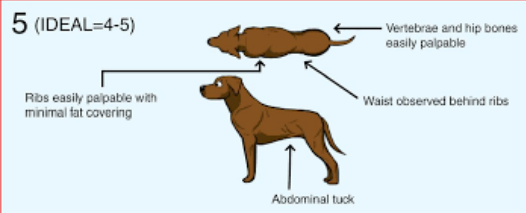
what BCS is ideal for common domestic species and what traits are associated with this score
5/9 or 3/5
ribs easily felt
waist observed behind ribs when viewed from above
abdominal tuck present
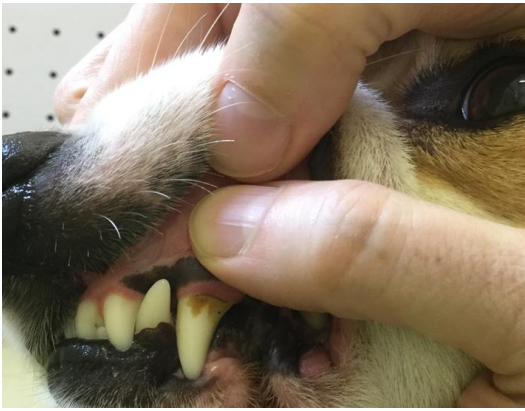
When examining the head of any species, what are you looking at?
facial symmetry
nose/nostrils
eyes (third eyelid, PLR)
ears
oral cavity, teeth/gums + CRT
What should capillary refill time be?
Less than 2 seconds
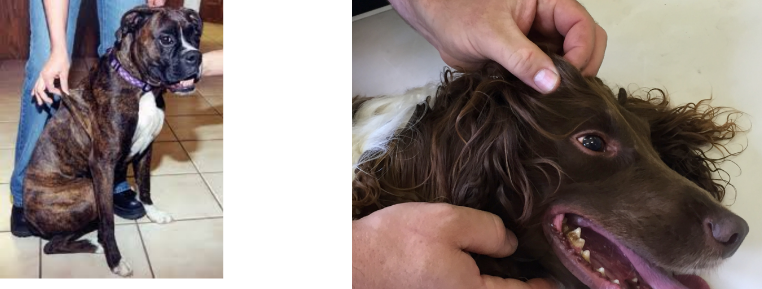
what does a prolonged skin tent suggest?
dehydration
list the places to perform a skin tent
cervical region
over rib cage
top of head
Which lymph nodes are palpable in domestic species?
Mandibular, popliteal, prescapular
Which lymph nodes are not palpable in domestic species?
Axillary, iliac, inguinal
list three things to report about pulses
Rate,
quality (weak or strong)
rhythm
regular
regularly irregular (INcrease with INspiration)
irregularly irregular
What is sinus arrhythmia?
HR increases with inspiration and decreases with expiration
Where do you listen to the HR in domestic species?
Apex of heart
under armpit
left side of chest - cranially/ventrally
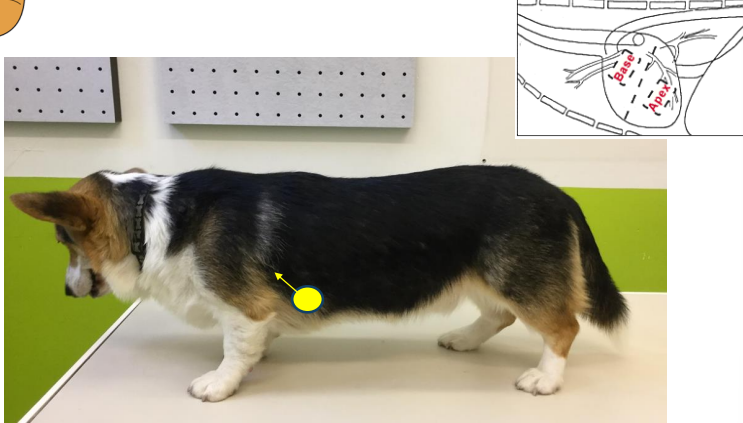
List anatomically where you should be able to hear each valve
Pulmonic - left 3rd intercostal space (@ axilla)
Aortic - left 4th intercostal space
Mitral - left 5th intercostal space
Tricuspid - right 3rd to 4th intercostal space
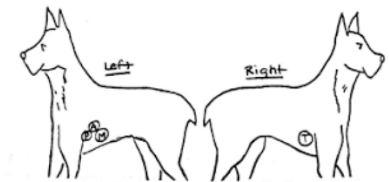
what is the grading scale for a heart murmur?
Grade I - VI
What grade murmur is as loud as the heartbeat?
Grade III
What grade murmur is audible with stethoscope off chest wall?
Grade VI
list what to report when auscultating the lungs
rate
adventitious breath sounds
crackles, wheezes, pleural rub, stridor, stertor
List clinical exam steps after auscultating the lungs
abdominal palpation
check genitals
anus and temp taking
check feet and limbs
coat and skin check
rectal exam
Clinical Exam: EQUINE
Clinical Exam: EQUINE
What can be checked before a physical exam on a horse? (Besides the horse itself)
Bedding, feed, feces, sign of pain, signs of stereotypes
Reference range- horse temperature
37.5-38.5°C
Reference range- horse pulse
28-40 bpm
Reference range- horse respiration
8-16 breaths per minute
Reference range- donkey temperature
36.2-37.8 °C
Reference range- donkey pulse
44-60
Reference range- donkey respiration
20-28
What is the sequence of the equine examination?
-Head (if tolerant)
-neck
-thorax
-abdomen
-limbs
-skin
-temperature
Which arteries is pulse taken on for horses?
Facial artery and transverse facial artery
Which lymph nodes should be palpated in horses?
Submandibular and retropharyngeal
How many fields should be used when auscultating lungs in horses?
3-4
What should be palpated on equine abdomen exams?
Edema, linea alba, umbilicus, prepuce, scrotum
What does borborygmi mean?
rumbling or gurgling noise made by the movement of fluid and gas in the intestines
When auscultating a horse abdomen, how many quadrants will it be divided into?
Four quadrants
What are the borborygmi scores for abdomen auscultation?
- absent
+ reduced
++ normal
+++ increased
How often does cecal flush occur?
Every 90-180 seconds
What quadrant does cecal flush occur?
Upper right quadrant
Clinical Exam: BOVINE
Clinical Exam: BOVINE
Reference range- bovine temperature
38.0-39.1 °C
Reference range- bovine respiration
15-35
Reference range- bovine pulse
60-80
Reference range- rumen turnover
3 cycles per 2 minutes
What is the sequence of the cattle examination?
Tail to Head:
Rear end
Left side
Right side
Head and neck
Rectum and vagina
Where is pulse typically taken in bovine?
Bottom side of tail
Where is membrane color and CRT commonly assessed in bovine?
Vulva
what lymph nodes are palpated on cattle?
prescapular and prefemoral
What is the withers pinch test?
Checking for discomfort
What does a score 1 in AHDB indicate in ruminants?
Not eaten in 24 hours
When palpating the rumen, what layers is one looking for?
Gassy dorsal layer
Doughy fibrous mid-layer
Liquid ventral layer
What does LDA stand for?
left displaced abomasum
When assessing LDA, what would one expect from history of the animal?
Freshly calved, retained placenta, drop in milk yield, ketosis, milk fever, wont eat concentrates