AP Music Theory Vocabulary; Everything You Need To Know Musically
 Call Kai
 Learn
Learn Practice Test
 Spaced Repetition
 Match
Match Flashcards
 Knowt Play
1/109

There's no tags or description
Looks like no tags are added yet.
Name | Mastery | Learn | Test | Matching | Spaced | Call with Kai |
|---|
No analytics yet
Send a link to your students to track their progress
110 Terms
Tonic
‘1’ Harmonic home base, usually the first chord in a scale; can transition to any chord.
Super tonic
‘2’ Above the tonic, resolves down to "do”, commonly transitions to “V or V7”
Mediant
‘3’ a third above the tonic, first clue towards major or minor of the tonality, can be stable or tense, most commonly moves to “vi, IV, I”, and serves as a week predominant
Subdominant
‘4’ Fourth above the tonic, the “lower dominant”, stable and predominant, usually moves to “V” or “I” if a plagal cadence omiD
Dominant
‘5’ A fifth above the tonic, stable on its own but has tension as a root, usually move to “I, vi, or i“
Submediant
‘6’, root of the minor scale, median between subdominant and tonic pitches, commonly moves to “ii (ii°), IV (iv), or V”
Subtonic/ Leading tone
‘7’, resolves upwards to “Do”
Enharmonic equivalent
two notes with the same pitch but different letter names, possible via accidentals (eg. E# and F, G# and Ab)
Half step (semitone)
Smallest possible distance between two pitches in Western music
Interval
Distance between two notes or pitches
Whole step (whole tone)
a distance of two half steps
Adagio
Slow, approx. 60-72bpm
Allegro, allegretto
Fast, approx. 108-156bpm
Andante
moderately slow, approx. 72-84bpm
Andantino
moderately slow, approx. 66-78bpm
Grave
very slow, 40-60bpm
Largo, larghetto
very slow, approx. 40-60bpm
Lento
slow, approx. 40-60bpm
Moderato
moderate, approx. 84-96bpm
Presto, prestissimo
very fast, approx. 140bpm and above
Vivace
very fast, approx. 140 and above
Accelerando
increasing in speed
Ritardando
gradually decreasing in speed
Ritenuto
abruptly decreasing in speed
Rubato
with freedom respect to tempo (intuitively speeding up and slowing down)
Legato
smooth and connected
Marcato
“Marked”, accented, with emphasis
Slur
a curved line over/under two or more notes indicating they are to be connected
Staccato
short and detached, marked with a dot directly over or under notepad
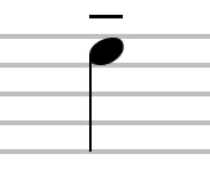
Tenuto
“Held”, hold note for its whole rhythmic value or slightly longer, marked with a dash directly over or under a notehead aka “leaning into a note”
Crescendo
increasing in loudness
Diminuendo
decreasing in loudness
Dynamic accent (an accent)
perform note louder and with emphasis, marked with “>”
Terraced dynamics
abruptly changing in loudness, creating a balcony/terrace between loud and quiet moments
Piannissimo
Very quiet, marked “pp”
Piano
Quiet, marked “p”
Mezzo Piano
Somewhat quiet, marked “mp”
Mezzo forte
Moderate, marked “mf”
Forte
Loud, marked “f”
Fortissimo
Very loud, marked “ff”
Sforzando
Loud attack, quick withdrawal to quiet, crescendo back to loud, marked “sfz”
Accidental
Modifies a note by a half step, # sharp to raise, b flat to lower, natural sign to undo previous accidental
Chromatic
Series of half steps, movement by half step
Chromaticism
Using notes that are outside of the diatonic scale or key
Diatonic
Notes naturally occurring within the key signature (no accidentals)
Enharmonic
Matching in pitch
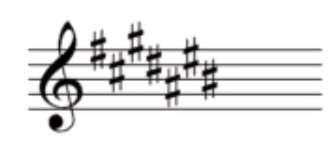
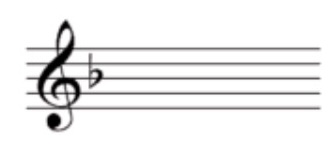
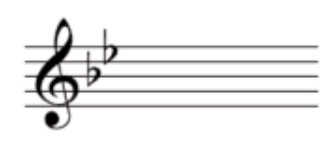
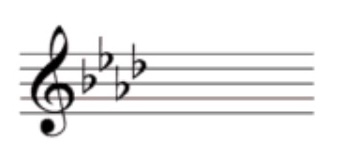
Key signature
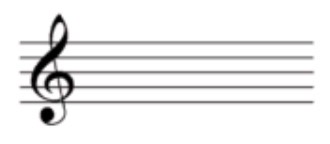
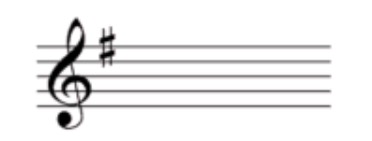
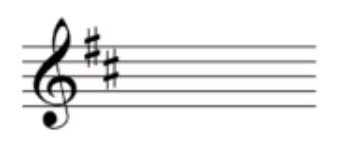
Uses accidentals (or the lack thereof) on the staff to show what series of notes a piece will generally use, informs “do”
C major/a minor
G major/e minor
D major/b minor
A major/f# minor
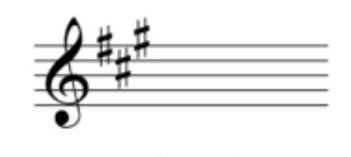
E major/c# minor
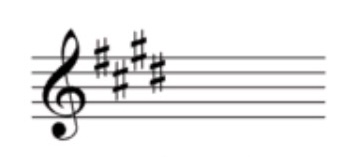
B major/g# minor
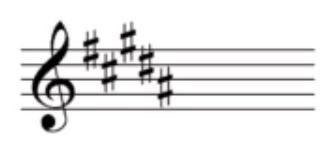
F# major/d# minor
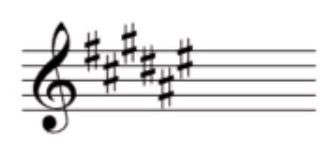
C# major/a# minor
F major/d minor
Bb major/g minor
Eb major/c minor
Ab minor/f minor
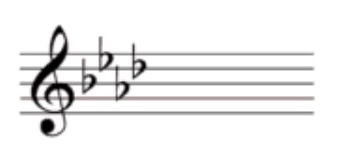
Db major/bb minor
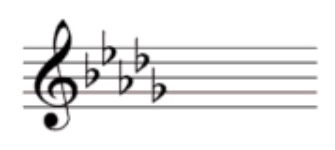
Gb major/eb minor
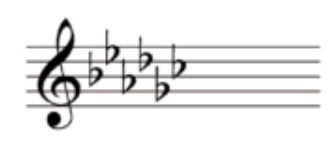
Cb major/ab minor
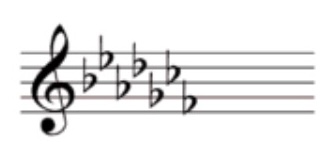
Scale degrees
The names for notes in a scale, tonic, supertonic, mediant, subdominant, dominant, submediant, subtonic/leading tone
Tonal
Using notes from a designated key/scale and functional harmony
Tonality
Informs the harmonic home base of a piece, major or minor
Tonic “do”
The note/chord a piece uses as its harmonic home base
Accent
Indicates loud attack and emphasis, rhythmically strong positions in a bar of music
Anacrusis
pickup; upbeat, one or more unstressed notes before the first full bar
Meter
the recurring, organized pattern of strong and weak beats that structure music, typically grouped into measures
Meter (duple)
two beats per bar
Meter (triple)
three beats per bar
Meter (quadruple)
four beats per bar
Asymmetrical meter
aka irregular meter, containing beats of different lengths (eg. 5/8 or 7/8)
Bar line
the division between measures of music, organizing notes into equal sections
Beat
the steady, underlying pulse that keeps time in a song
Beat unit
the note that gets the beat
Beat division
how the beat is divided ex. compound or simple
Compound
beat subdivides into three
Simple
beat subdivides into two
Dot vs. double dot
A single dot increases a note’s rhythmic value by half, whereas a double dot decreases a note’s rhythmic value by 0.75
Dotted rhythm
a rhythmic pattern where one or more notes are being held for 1.5x their original length
Downbeat
The first beat of a measure, usually rhythmically strong
Duplet
a musical rhythm where two notes are played in the time normally occupied by three notes of the same value. Primarily used in compound time signatures (e.g., 6/8, 9/8, 12/8), it acts as a "two-in-the-time-of-three" pattern, dividing a dotted note into two equal parts instead of the usual
Duration
the length of time a sound or silence occurs
Note value
The length of time that a note is held relative to a piece’s tempo and time signature
Offbeat
a rhythmically weak or unaccented beat
Pulse
the main felt unit of sound or silence in a piece of music, sets tempo and helps organize rhythm
Rhythm
patterns of sounds (notes) and silence (rests) within a pulse
Swing rhythm
rhythmic pattern where the beat unevenly emphasized (LONG-short)
Tempo
the speed of a beat
Tie
A curved line that connects two notes to make one longer note
Time signature (meter signature)
In simple meter, it indicates how many beats per bar (top number) and what kind of note makes a beat (bottom number); in a compound meter, it indicates how many divisions per bar (top number) and what kind of note makes the division of the beat (bottom number)
Triplet
indicates that beat should be subdivided in three, marked with a little 3 over notes beamed or bracketed together
Improvisation
The practice of composing music while performing it based on intuition and common musical patterns/techniques
Tremolo
The process of rapidly changing the loudness or pitch a note performed at to create a wavering effect
Chromatic scale
a scale made up of all half steps, written with sharps when ascending and flats when descending
Major scale
a scale made up of WWHWWWH, Do Re Mi Fa Sol La Ti Do
Minor Scale (natural Minor)
a scale made up of WHWWHWW, Do Re Me Fa Sol Le Te Do
Harmonic Minor Scale
a scale using Do Re Me Fa Sol Le Ti Do
Melodic Minor Scale
Do Re Me Fa Sol La Ti Do ascending and Do Te Le Sol Fa Me Re Do descending