APAH Unit Two Flashcard Summary
0.0(0)
Studied by 2 people Call Kai
 Learn
Learn Practice Test
 Spaced Repetition
 Match
Match Flashcards
 Knowt Play
Card Sorting
1/38

Earn XP
Last updated 3:35 AM on 11/15/22
Name | Mastery | Learn | Test | Matching | Spaced | Call with Kai |
|---|
No analytics yet
Send a link to your students to track their progress
39 Terms
1
New cards
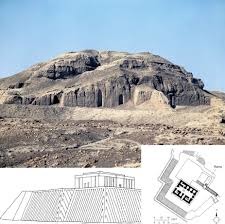
White Temple and Ziggurat
Sumerian
3500-3000 b.c.e
Mud Brick
Built on high ground so Anu (god) could communicate with Royalty and Clergy
Bent Axis approach meant that you had to turn 90 degrees to face the alter after walking in
3500-3000 b.c.e
Mud Brick
Built on high ground so Anu (god) could communicate with Royalty and Clergy
Bent Axis approach meant that you had to turn 90 degrees to face the alter after walking in
2
New cards
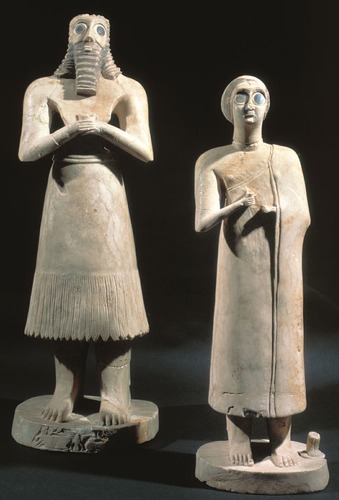
Statues of votive figures
Sumerian
2700 BCE
Gypsum inlaid with shell and brick limestone
Meant to be placed in temples to pray for donors in their absence
Attentive, wide upward gaze
2700 BCE
Gypsum inlaid with shell and brick limestone
Meant to be placed in temples to pray for donors in their absence
Attentive, wide upward gaze
3
New cards
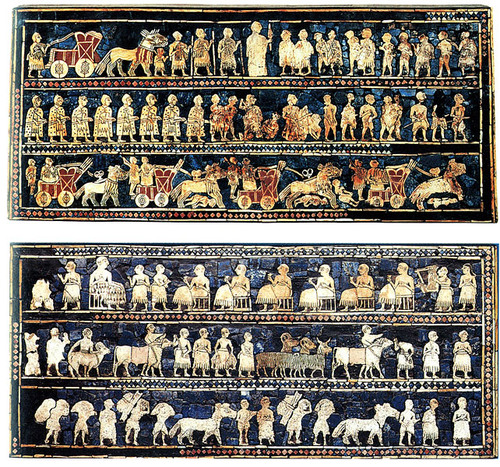
Standard of Ur from the Royal Tombs at Ur
Sumerian
c. 2600-2400 B.C.E. Wood inlaid with shell, lapis lazuli, and red limestone.
Found at a grave next to man's shoulder, used to carry into war?
The scales of the figures in the registers show the hierarchies
c. 2600-2400 B.C.E. Wood inlaid with shell, lapis lazuli, and red limestone.
Found at a grave next to man's shoulder, used to carry into war?
The scales of the figures in the registers show the hierarchies
4
New cards
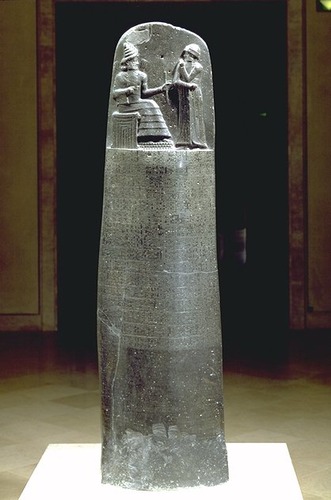
The Code of Hammurabi
Susian/Babylonian
1792-1750 b.c.e
Basalt
Record of legal precedent in cuneiform
Hammurabi and sun god, where Shamash passes down authority
1792-1750 b.c.e
Basalt
Record of legal precedent in cuneiform
Hammurabi and sun god, where Shamash passes down authority
5
New cards
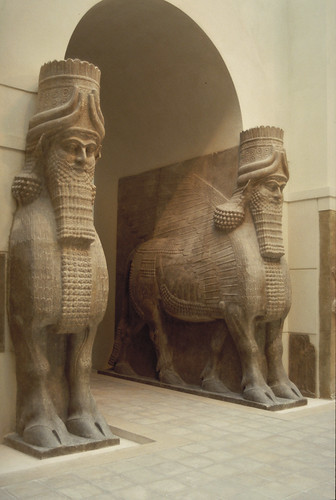
Lamassu from the citadel of Sargon II, Dur Sharrukin
Lamassu/Neo-Assyrian
720-705 b.c.e
Alabaster
Scarce, fertile locations needed protection.
Five legs, meant to be viewed from the front and then in passing on the sides
720-705 b.c.e
Alabaster
Scarce, fertile locations needed protection.
Five legs, meant to be viewed from the front and then in passing on the sides
6
New cards
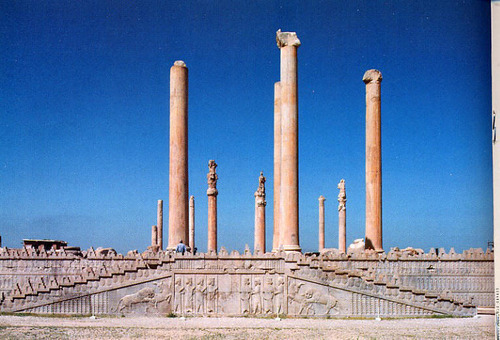
Audience Hall of Darius and Xerxes
Persepolis, Iran
Persian
520-465 BCE
Limestone
Ceremonial center for Persians, no slavery or forced beliefs of conquered peoples
23 kings of conquered subjects offering gifts to Persian king
Persian
520-465 BCE
Limestone
Ceremonial center for Persians, no slavery or forced beliefs of conquered peoples
23 kings of conquered subjects offering gifts to Persian king
7
New cards
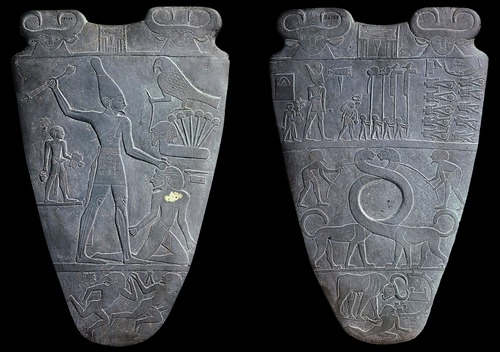
Palette of King Narmer
Predynastic Egypt. c. 3000-2920 B.C.E. Greywacke
First example of both crowns worn by one king to symbolize unification of Egypt
Narmer in smiting pose with Horus above impotent foe
First example of both crowns worn by one king to symbolize unification of Egypt
Narmer in smiting pose with Horus above impotent foe
8
New cards
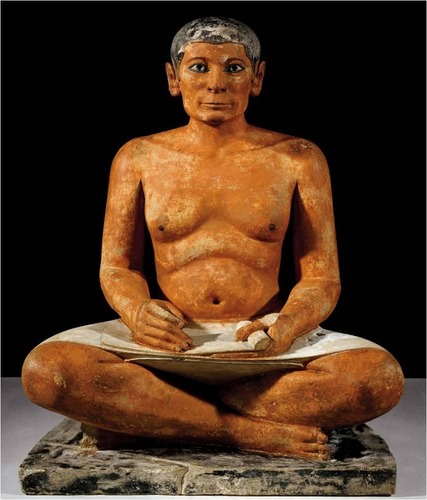
Seated Scribe
Saqqara, Egypt. Old Kingdom, Fourth Dynasty. c. 2620-2500 B.C.E. Painted limestone.
Meant for a tomb
Relaxed yet formal pose, not idealized (fat, lack of decoration and muscle)
Meant for a tomb
Relaxed yet formal pose, not idealized (fat, lack of decoration and muscle)
9
New cards
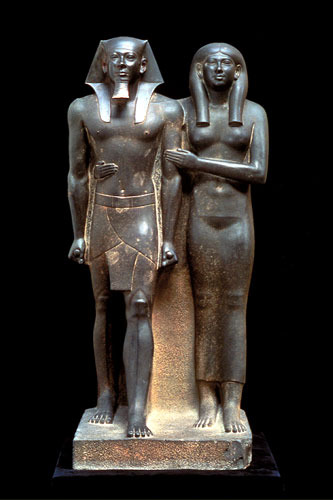
King Menkaura and Queen
Old Kingdom, Fourth Dynasty.
c. 2490-2472 B.C.E. Greywacke
Potential emphasis on women in the slight tilt towards her, mother presenting king in afterlife (second birth)
Black Rock represent eternity
c. 2490-2472 B.C.E. Greywacke
Potential emphasis on women in the slight tilt towards her, mother presenting king in afterlife (second birth)
Black Rock represent eternity
10
New cards
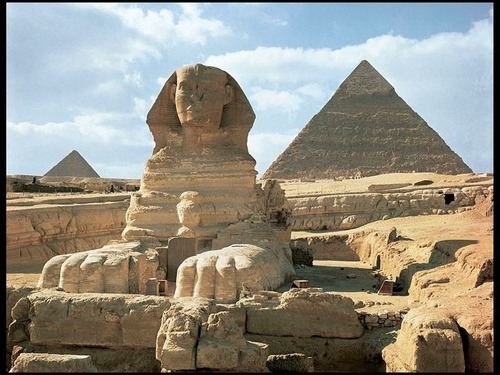
Great Pyramids (Menkaura, Khafre, Khufu) and Great Sphinx
Egypt, old kingdom, fourth dynasty
2550-2490 BCE
Cut Limestone
Believed that inaccuracies had permanent effects on the afterlife
Connected to the sun, shaped like suns ray or a ramp to the sun
2550-2490 BCE
Cut Limestone
Believed that inaccuracies had permanent effects on the afterlife
Connected to the sun, shaped like suns ray or a ramp to the sun
11
New cards
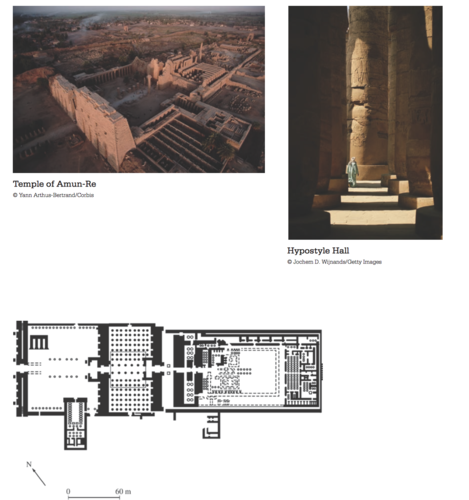
Temple of Amun-Re and Hypostyle Hall
Karnak, near Luxor, Egypt. New Kingdom, 18th and 19th Dynasties.
Temple: c. 1550 B.CE
Hall: c. 1250 B.C.E.
Cut sandstone and mud brick.
The tallest obelisk was dedicated initially by pharaoh Hatshepsut
Temple had two axes, one east-west and the other north-south
Temple: c. 1550 B.CE
Hall: c. 1250 B.C.E.
Cut sandstone and mud brick.
The tallest obelisk was dedicated initially by pharaoh Hatshepsut
Temple had two axes, one east-west and the other north-south
12
New cards
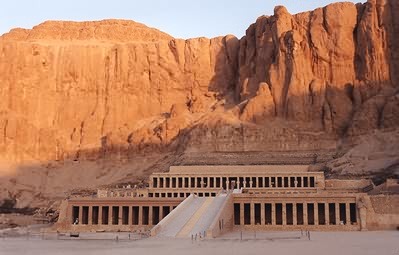
Mortuary Temple of Hatshepsut
Near Luxor, Egypt. New Kingdom, 18th Dynasty
c. 1473-1458 B.C.E. Sandstone, partially carved into a rock cliff, and red granite.
Hatshepsut designed a whole mythology surrounding her rise and right to power. First female pharaoh in 2000 years
Often seen kneeling in headcloth and beard before Amun-Re's statue during ritual
c. 1473-1458 B.C.E. Sandstone, partially carved into a rock cliff, and red granite.
Hatshepsut designed a whole mythology surrounding her rise and right to power. First female pharaoh in 2000 years
Often seen kneeling in headcloth and beard before Amun-Re's statue during ritual
13
New cards
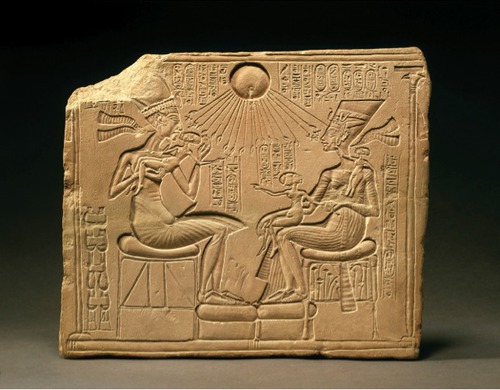
Akhenaton, Nefertiti, and three daughters
New Kingdom (Amarna), 18th Dynasty.
c. 1353-1335 B.C.E. Limestone
Armana period saw more organic art and a short lived burst of monotheism
Disproportioned bodies encouraged curvilinear forms in bas-relief carvings
c. 1353-1335 B.C.E. Limestone
Armana period saw more organic art and a short lived burst of monotheism
Disproportioned bodies encouraged curvilinear forms in bas-relief carvings
14
New cards
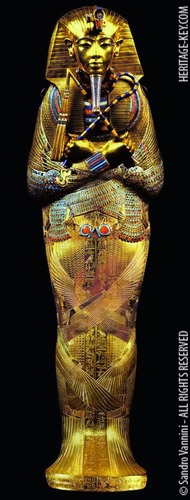
Tutankhamun's tomb, innermost coffin
New Kingdom, 18th Dynasty.
c. 1323 B.C.E.
Gold with inlay of enamel and semiprecious stones.
Tut married half sister, sired no heirs, died at 18, and his mentor became pharaoh after. Discovered 1922.
Goddesses protecting his brow and torso
c. 1323 B.C.E.
Gold with inlay of enamel and semiprecious stones.
Tut married half sister, sired no heirs, died at 18, and his mentor became pharaoh after. Discovered 1922.
Goddesses protecting his brow and torso
15
New cards
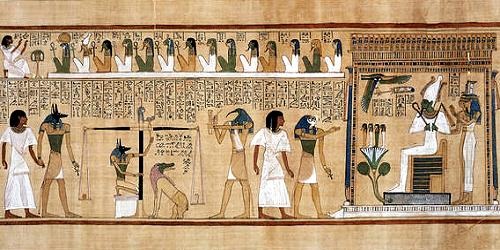
Last Judgement of Hu-Nefer, Book of the Dead
New Kingdom, 19th Dynasty.
c. 1275 B.C.E.
Painted papyrus scroll.
Book of dead had spells and instructions for the afterlife, Hu-Nefer had priestly status and therefore was granted a text for the afterlife
Feather represents righteousness
Heart represents the emotional and intellectual center
c. 1275 B.C.E.
Painted papyrus scroll.
Book of dead had spells and instructions for the afterlife, Hu-Nefer had priestly status and therefore was granted a text for the afterlife
Feather represents righteousness
Heart represents the emotional and intellectual center
16
New cards
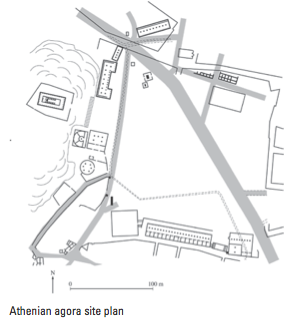
Athenian Agora
Archaic through Hellenistic Greek.
600 B.C.E.-150 C.E.
Plan.
Only Athenian males could be citizens or be voted for
Public city square, fountains alters temples honoring gods (Athena patron goddess of Athens)
600 B.C.E.-150 C.E.
Plan.
Only Athenian males could be citizens or be voted for
Public city square, fountains alters temples honoring gods (Athena patron goddess of Athens)
17
New cards
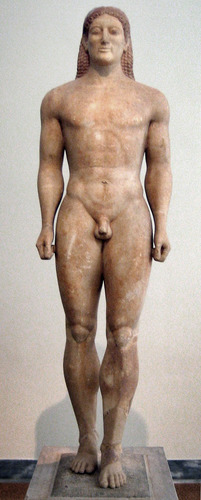
Anavysos Kouros
Archaic Greek.
c. 530 B.C.E.
Marble with remnants of paint.
Grave markers, commissioned by wealthy aristocratic families
Not a portrait, representation. Ideal perfect body but rounder and fleshier.
c. 530 B.C.E.
Marble with remnants of paint.
Grave markers, commissioned by wealthy aristocratic families
Not a portrait, representation. Ideal perfect body but rounder and fleshier.
18
New cards
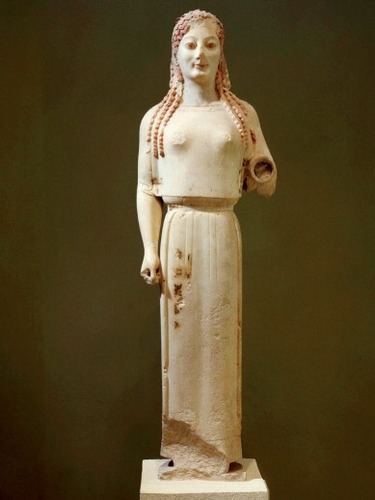
Peplos Kore from the Acropolis
Archaic Greek.
c. 530 B.C.E.
Marble, painted details.
Generally offerings to gods like Athena, idealized Greek youth (humanistic worldview in idealism)
Once showed embroidered animals, most likely a Goddess since no others were clothed like this
c. 530 B.C.E.
Marble, painted details.
Generally offerings to gods like Athena, idealized Greek youth (humanistic worldview in idealism)
Once showed embroidered animals, most likely a Goddess since no others were clothed like this
19
New cards
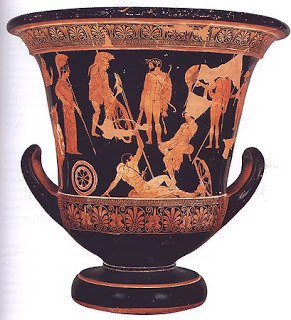
Niobides Krater
Anonymous vase painter of Classical Greece known as the Niobid Painter.
c. 460-450 B.C.E.
Clay, red-figure technique (white highlights).
Niobid thinks her 14 kids are better than Goddess Leto's kids. Athena and Artemis kill kids. Shows downfall of Hubris
multi-stepped firing process to turn the background black against red figures
c. 460-450 B.C.E.
Clay, red-figure technique (white highlights).
Niobid thinks her 14 kids are better than Goddess Leto's kids. Athena and Artemis kill kids. Shows downfall of Hubris
multi-stepped firing process to turn the background black against red figures
20
New cards
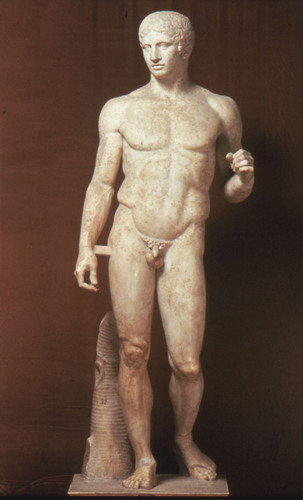
Doryphoros (Spear Bearer)
Polykleitos.
Original 450-440 B.C.E. Roman copy (marble) of Greek original (bronze).
Roman's came back with Art spoils of war in 211, replicated art for Roman elites. Much of Greek art was melted down from bronze into weapons.
Polykleitos believed beauty exists in proportions. The canon refers to measure, the math and ratios in Greek Art. Contrapossto.
Original 450-440 B.C.E. Roman copy (marble) of Greek original (bronze).
Roman's came back with Art spoils of war in 211, replicated art for Roman elites. Much of Greek art was melted down from bronze into weapons.
Polykleitos believed beauty exists in proportions. The canon refers to measure, the math and ratios in Greek Art. Contrapossto.
21
New cards
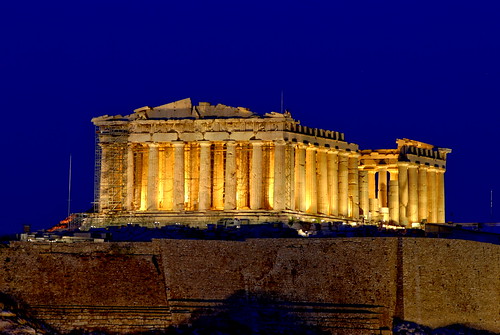
Parthenon
Iktinos and Kallikrates
Athens, Greece
430 BCE
Marble
Housed treasury for civil purposes, second temple to Athena since first was destroyed by Persians.
A frieze is a decorative band wrapped above a series of architecture. Ionic frieze originally painted, isocephalsim.
Athens, Greece
430 BCE
Marble
Housed treasury for civil purposes, second temple to Athena since first was destroyed by Persians.
A frieze is a decorative band wrapped above a series of architecture. Ionic frieze originally painted, isocephalsim.
22
New cards
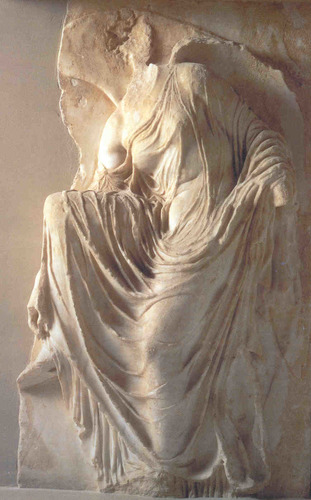
Victory adjusting her sandal
Marble.
Depicts a goddess in a very normal, informal way
Pull of gravity, unclear if putting sandal on or taking it off.
Drapery puts emphasis on balance and female anatomy.
High relief
Depicts a goddess in a very normal, informal way
Pull of gravity, unclear if putting sandal on or taking it off.
Drapery puts emphasis on balance and female anatomy.
High relief
23
New cards
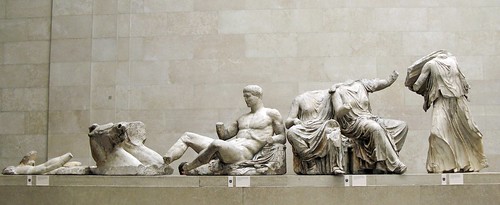
Helios, horses, and Dionysus (Heracles?)
Shows wet/fold drapery style
A pediment (triangular shape at top of building)
Contrapossto
Movement and Naturalism
A pediment (triangular shape at top of building)
Contrapossto
Movement and Naturalism
24
New cards
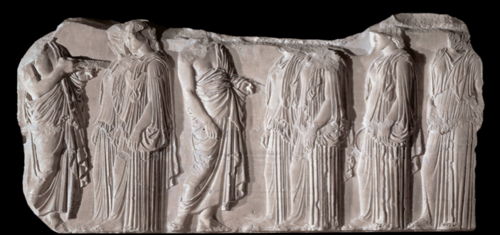
Plaque of the Ergastines
Marble fragment of the frieze on east side of Parthenon.
Ergastimes were young women from noteable families who brought peplos to clothe the statue of Athena
Ergastimes were young women from noteable families who brought peplos to clothe the statue of Athena
25
New cards
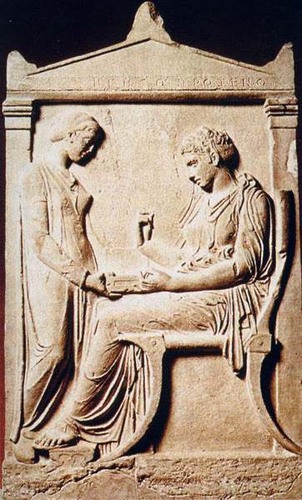
Grave Stele of Hegeso
Attributed to Kallimachos
Greek
c. 410 B.C.E.
Marble and paint.
Shows domesticity of wealthy women in Greece
Servant girl holds jewelry box that may represent a dowry. Solem. Perception of depth in low relief.
Greek
c. 410 B.C.E.
Marble and paint.
Shows domesticity of wealthy women in Greece
Servant girl holds jewelry box that may represent a dowry. Solem. Perception of depth in low relief.
26
New cards
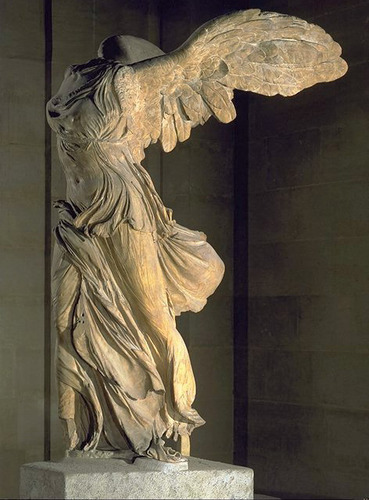
Winged Victory of Samothrace
Hellenistic Greek.
c. 190 B.C.E.
Marble.
Samothrace was one of the principle pan-Hellenistic sanctuaries. Increased emphasis on Nike after death of Alexander
Composition of wings and limbs follows form of right triangle. Violent motion meets abrupt stillness.
c. 190 B.C.E.
Marble.
Samothrace was one of the principle pan-Hellenistic sanctuaries. Increased emphasis on Nike after death of Alexander
Composition of wings and limbs follows form of right triangle. Violent motion meets abrupt stillness.
27
New cards
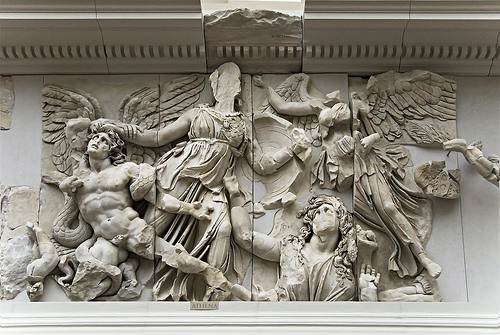
Greek Altar of Zeus and Athena at Pergamon
Hellenistic
175 BCE
Marble
Wouldve been on an acropolis, on par for message of colossal beauty
Hugh relief carvings create deep shadows. Nike crowns Athena in battle between gods and giants.
175 BCE
Marble
Wouldve been on an acropolis, on par for message of colossal beauty
Hugh relief carvings create deep shadows. Nike crowns Athena in battle between gods and giants.
28
New cards
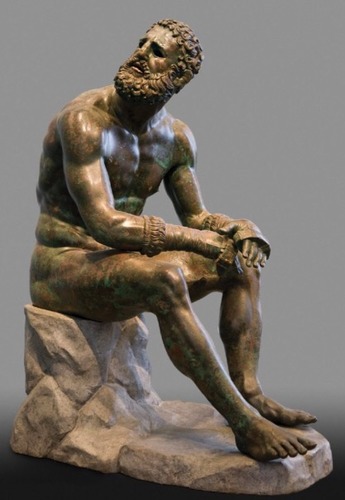
Seated Boxer
Hellenistic Greek.
c. 100 B.C.E.
Bronze
Still see influence of high classical in commitment to reality. Shifts from all sculptures being heroic.
Pathos appeals to emotion, great texture in curls of hair. Defeated, cauliflower ear.
c. 100 B.C.E.
Bronze
Still see influence of high classical in commitment to reality. Shifts from all sculptures being heroic.
Pathos appeals to emotion, great texture in curls of hair. Defeated, cauliflower ear.
29
New cards
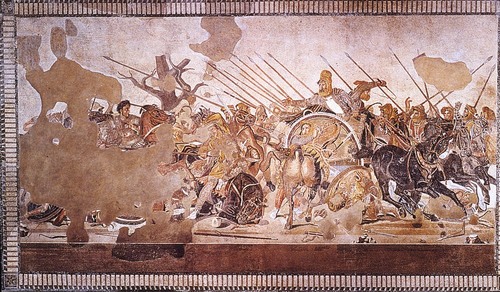
Alexander Mosaic from the House of Faun, Pompeii
Republican Roman.
c. 100 B.C.E.
Mosaic.
Believed to be copy of Greek wall painting, these were on removable panels making them unlikely to survive
Foreshadowing to create depth, negative space. Naturalism seen in form, light, reflection and shadows. 1.5 million tesserae.
c. 100 B.C.E.
Mosaic.
Believed to be copy of Greek wall painting, these were on removable panels making them unlikely to survive
Foreshadowing to create depth, negative space. Naturalism seen in form, light, reflection and shadows. 1.5 million tesserae.
30
New cards
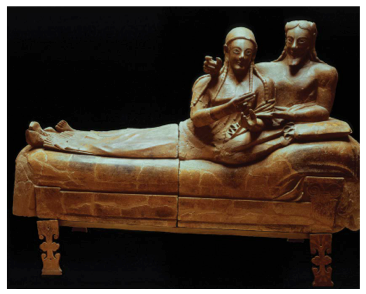
Sarcophagus of the Spouses
Etruscan
c. 520 B.C.E.
Terra cotta
Emergence of master sculptors and painters. High class women could socialize with men, unlike the Greeks where they were separate.
Elongated limbs common to archaic period. Top part is an urn for ashes. Had to be fired in multiple pieces.
c. 520 B.C.E.
Terra cotta
Emergence of master sculptors and painters. High class women could socialize with men, unlike the Greeks where they were separate.
Elongated limbs common to archaic period. Top part is an urn for ashes. Had to be fired in multiple pieces.
31
New cards
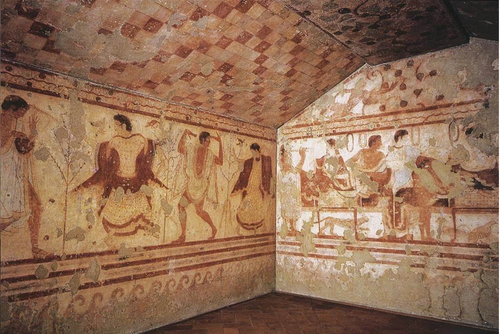
Tomb of the Triclinium
Tarquinia, Italy. Etruscan. c. 480-470 B.C.E.
Tufa and fresco.
Amassed a great deal of wealth with Italy's natural resources and trade access. Reinforces importance of the living families of the dead.
Skin of women lighter than men. Subterranean rock cut tomb, checkered ceiling. Fresco is wet plaster and soluble pigment that fixes as it dries.
Tufa and fresco.
Amassed a great deal of wealth with Italy's natural resources and trade access. Reinforces importance of the living families of the dead.
Skin of women lighter than men. Subterranean rock cut tomb, checkered ceiling. Fresco is wet plaster and soluble pigment that fixes as it dries.
32
New cards
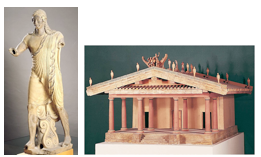
Temple of Minerva and sculpture of Apollo
Etruscan
c. 510-500 B.C.E.
Original temple of wood, mud brick, or tufa (volcanic rock);
terra cotta sculpture.
Shows third labor of Hercules in which he confronts Apollo. 6th century was complicated, Etruscans ruled existing Romans and were in power south of this region.
Etruscan temples were more square than Greek's, weren't made of stone, and had deeper front porches.
c. 510-500 B.C.E.
Original temple of wood, mud brick, or tufa (volcanic rock);
terra cotta sculpture.
Shows third labor of Hercules in which he confronts Apollo. 6th century was complicated, Etruscans ruled existing Romans and were in power south of this region.
Etruscan temples were more square than Greek's, weren't made of stone, and had deeper front porches.
33
New cards
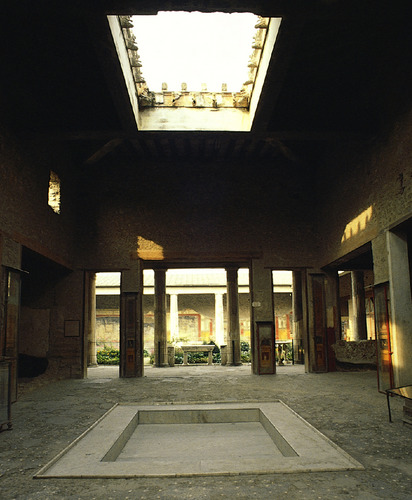
House of the Vettii
Pompeii, Italy. Imperial Roman.
c. second century B.C.E.; rebuilt c. 62-79 C.E.
Cut stone and fresco.
Saw cannon in architecture, patron-client system. Asymmetrical social relations
Brightly colored walls and frescos. Stage for social life and living and working at home
c. second century B.C.E.; rebuilt c. 62-79 C.E.
Cut stone and fresco.
Saw cannon in architecture, patron-client system. Asymmetrical social relations
Brightly colored walls and frescos. Stage for social life and living and working at home
34
New cards
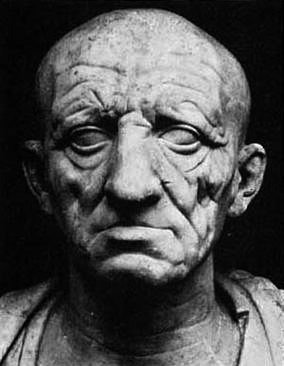
Head of a Roman Patrician
Republican Roman.
c. 75-50 B.C.E.
Marble.
Noblemen "wears the mark of the work he has done", meant to be taken seriously
Verism- hyper realistic approach to sculpture where features are slightly exaggerated
c. 75-50 B.C.E.
Marble.
Noblemen "wears the mark of the work he has done", meant to be taken seriously
Verism- hyper realistic approach to sculpture where features are slightly exaggerated
35
New cards
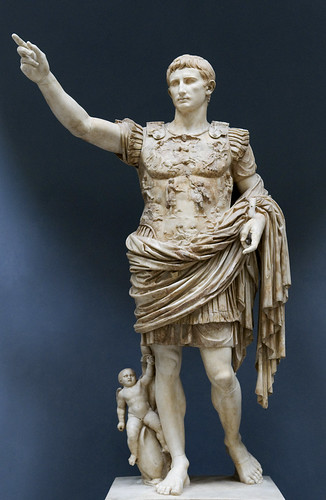
Augustus of Primaporta
Roman
First Century CE
Marble
Augustus was first emperor, defeated Parthians after losing to them many times.
Contrapossto borrowed from Greek art, naturalistic handling of the body
First Century CE
Marble
Augustus was first emperor, defeated Parthians after losing to them many times.
Contrapossto borrowed from Greek art, naturalistic handling of the body
36
New cards
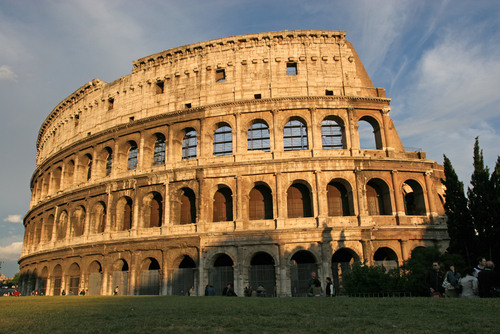
Colosseum (Flavian Amphitheater)
Rome, Italy. Imperial Roman.
70-80 C.E.
Stone and concrete.
Gladiators, Flavian gave the land as a gift to the people.
Each of the 76 entrances were numbered to correspond with seatings. Arches in architecture was a feat mastered by Romans.
70-80 C.E.
Stone and concrete.
Gladiators, Flavian gave the land as a gift to the people.
Each of the 76 entrances were numbered to correspond with seatings. Arches in architecture was a feat mastered by Romans.
37
New cards
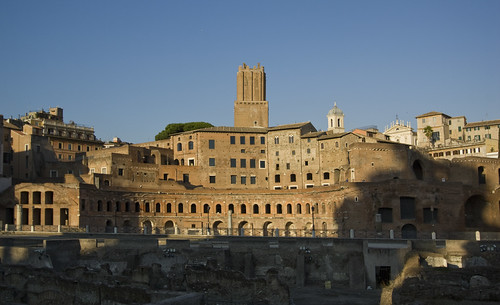
Forum of Trajan
Rome, Italy. Apollodorus of Damascus. Forum and markets: 106-112 C.E.
column completed 113 C.E.
Brick and concrete (architecture)
marble (column).
Celebrate the success of Trajan. Similar to Agora. Height of pillars was the height of the hill removed to build the forum
Basilica- oblong building in a semicircular apse used in Ancient Rome.
column completed 113 C.E.
Brick and concrete (architecture)
marble (column).
Celebrate the success of Trajan. Similar to Agora. Height of pillars was the height of the hill removed to build the forum
Basilica- oblong building in a semicircular apse used in Ancient Rome.
38
New cards
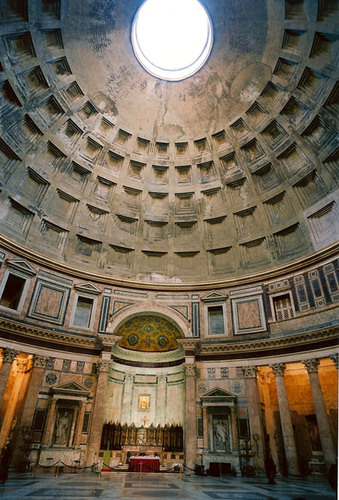
Pantheon
Imperial Roman
118-125 C.E.
Concrete with stone facing
Temple of all the gods. Built by Trajan's successor Hadrian. Shows potential of concrete in architecture
Corinthian columned courtyard approach. Interior space was the orb of the earth
Dome was vault of heavens
Light from oculus
118-125 C.E.
Concrete with stone facing
Temple of all the gods. Built by Trajan's successor Hadrian. Shows potential of concrete in architecture
Corinthian columned courtyard approach. Interior space was the orb of the earth
Dome was vault of heavens
Light from oculus
39
New cards
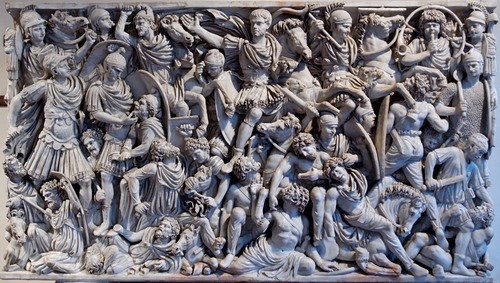
Ludovisi Battle Sarcophagus
Late Imperial Roman.
c. 250 C.E.
Marble.
Shift in handling of the dead, burial to cremation. Empire was more chaotic, battle between Romans and the Goths.
High relief creates full gradients of values. Not a linear perspective, perhaps angled from above.
c. 250 C.E.
Marble.
Shift in handling of the dead, burial to cremation. Empire was more chaotic, battle between Romans and the Goths.
High relief creates full gradients of values. Not a linear perspective, perhaps angled from above.