dpt 1 anatomy - back
 Call Kai
 Learn
Learn Practice Test
 Spaced Repetition
 Match
Match Flashcards
 Knowt Play
1/57

There's no tags or description
Looks like no tags are added yet.
Name | Mastery | Learn | Test | Matching | Spaced | Call with Kai |
|---|
No analytics yet
Send a link to your students to track their progress
58 Terms
what vertebrae are fused and what are movable?
movable - cervical, thoracic, lumbar
fused - sacrum, coccyx
function of vertebral column?
1. posture
2. support body weight
3. locomotion
4. protect spinal cord and roots
primary curvature of vertebral column
kyphosis - thoracic and sacral
secondary curvature of vertebral column
lordosis - cervical and lumbar
Accentuated primary curve =
increased lordosis
Osteoporosis of thoracic vertebral body + increased thoracic kyphosis will lead to
potential for compression fracture
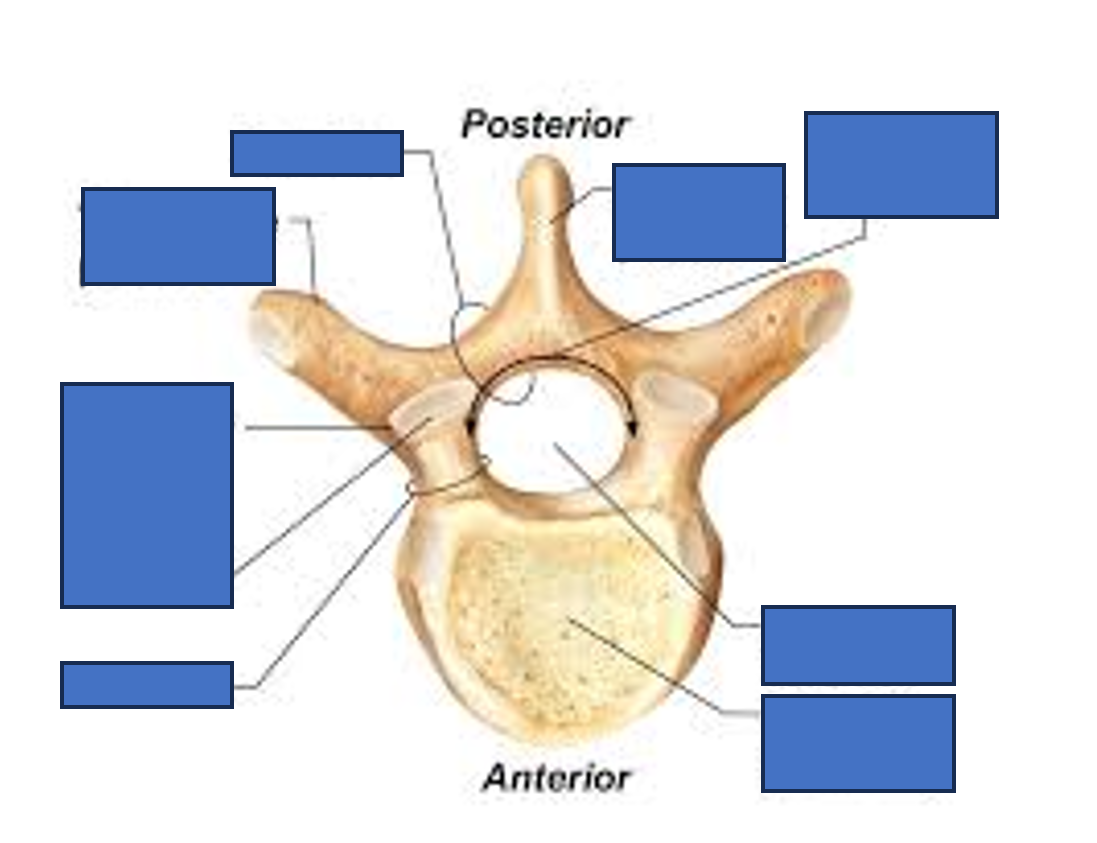
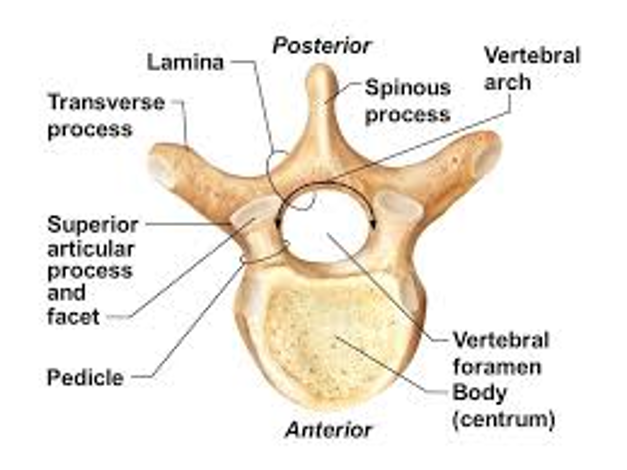
what does the vertebral foramen contain?
spinal cord and meninges
spinal canal
stack all vertebrae together and the vertebral foramina form the spinal canal
intervertebral foramen is formed by
inferior vertebral notch of superior vertebra and superior vertebral notch of inferior vertebra
what does intervertebral foramen contain
dorsal root ganglion
nerve root join at external border to form spinal nerves
spina bifida forms when
lamina doesn’t come together and fuse into the spinal process
what vertebra is this?
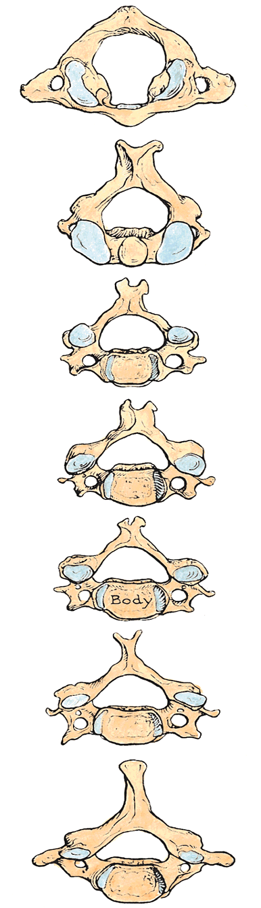
cervical
what is bifid spinal process and what vertebrae have it
C2-6 —> forked spinal process
what’s your vertebra prominens
C7 —> longest
what does the transverse foramen contain
vertebral artery
what part of the vertebra has heart shape body
thoracic
what part of your vertebrae has circular vertebral foramen?
thoracic
what part of the vertebrae has spinous processes pointing sharp inferiorly
thoracic
what part of the vertebrae has short pedicle
lumbar
what is costal facet and what vertebrae have that
the facets on transverse process of the thoracic vertebra that attach to the ribs
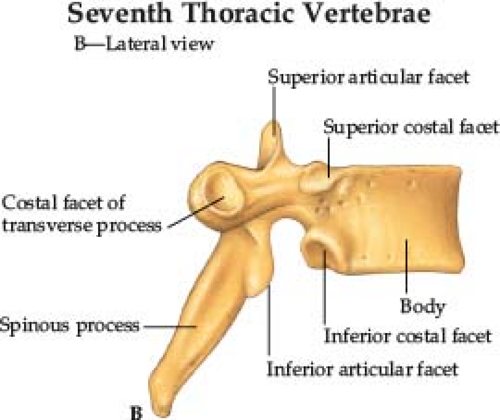
what vertebra has short spinous processes that point directly posteriorly
lumbar
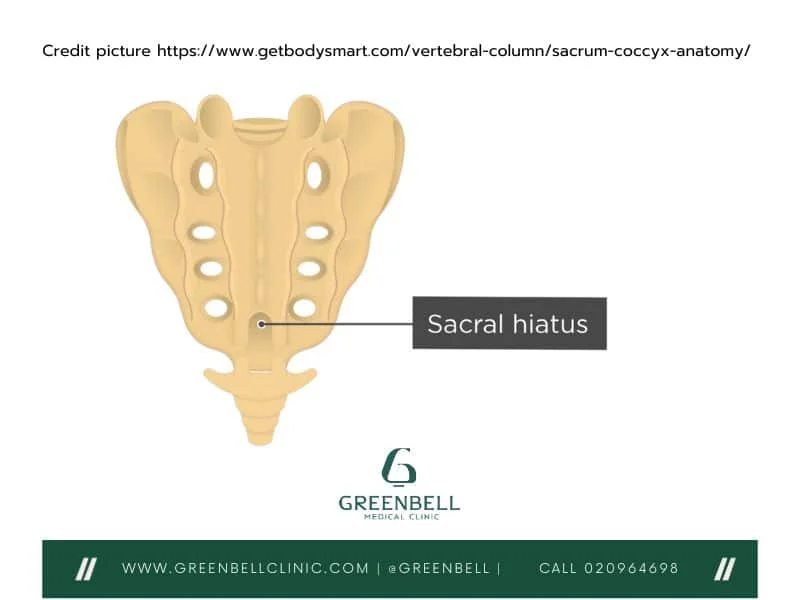
how many foramina does the sacrum have on each side
4
what is sacral hiatus and why do we have it?
sacral hiatus is the opening that leads to sacral/vertebral canal
we have it bc there is no lamina or spinous process at S5
coccyx has no
vertebral arch
what kind of joint is the intervertebral joint
secondary cartilaginous joint/symphyses
the intervertebral disc interface with the vertebral bodies. the vertebral body part of the articulation is covered with what? and what does it do?
hyaline cartilage - allows diffusion of nutrients
there is no intervertebral disc between which two vertebrae
C1 and C2
the last disc inferiorly is at
L5/S1
structure of the intervertebral disc?
annulus fibrosus
nucleus pulposus
why is disc herniation posterior
bc lamellae are thinner and less numerous posteriorly
why is annular tear super painful
bc only the outer 1/3 of the annulus fibrosis is innervated
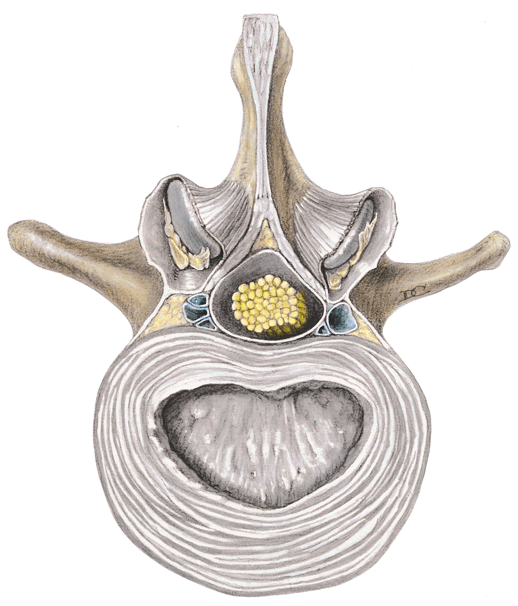
what is nucleus pulposus
the semifluid center part of the disc
more cartilaginous than fibrous
contains 88% water at birth but we lose water content as we age
reabsorbs water at night (discs make up ¼ height of vertebra column)
function as shock absorbers
avascular → get nutrients by diffusion from blood vessels at periphery of the disc
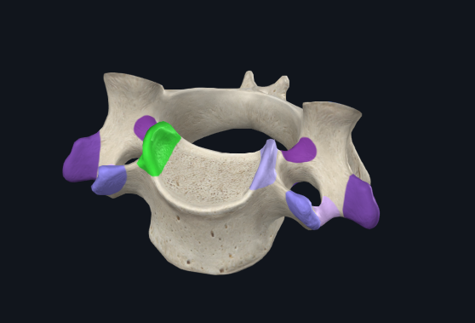
uncoveretebral joint of Luschka
between uncinate process of C3-C6 and vertebral body above
covered with cartilage
has a capsule w fluid
common to have spurs here contributing to neck pain
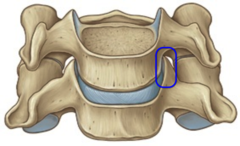
uncinate process
C3-C6
Anterior longitudinal ligament (ALL) function
connects anterior aspects of vertebral bodies and discs
prevent hyperextension of the spine
strong and broad
where does ALL run
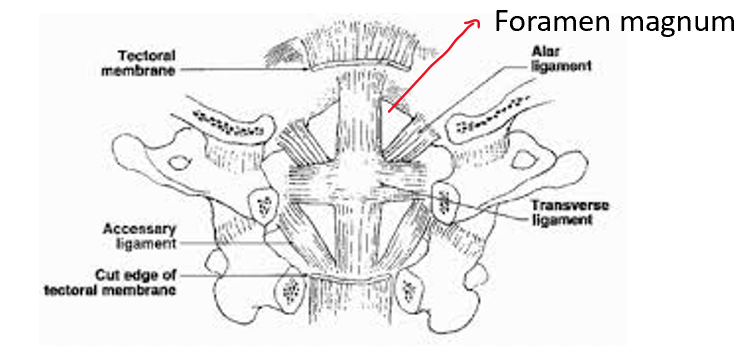
from occiput (posterior aspect of the foramen magnum) down to the sacrum
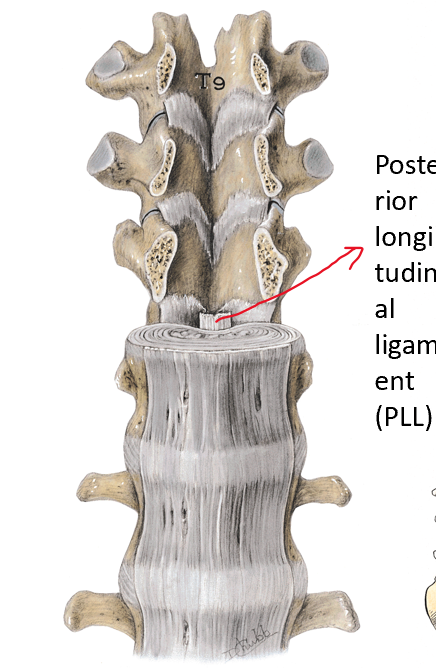
posterior longitudinal ligament (PLL) attaches to?
the intervertebral discs and the posterior aspect of the vertebral bodies from C2 to sacrum
located within the vertebral canal (anterior to the spinal cord)
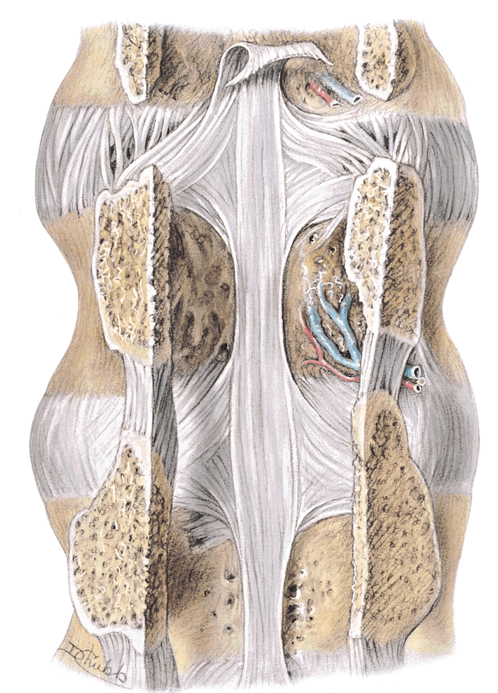
PLL is
weaker and narrower than ALL
no coverage posterolaterally
prevents hyperflexion and posterior disc protrusion
innervated → painful posterior bulging disc
types of joints
cartilaginous
fibrous
synovial (plane, pivot, saddle, hinge, condyloid, ball&socket)
what kind of joint is the facet joint and what motion does it allow
plane joint (a type of synovial joint) - has fibrous capsule with a synovial membrane and covered with hyaline cartilage
gliding movements that allow for flexion, extension, side bending, and rotation in cervical and lumbar region
the facet joint (zygapophyseal joint) is formed by
the inferior articular process of the more superior vertebra and the superior articular process of the more inferior vertebra
the facet joint has some weightbearing in what region of the spine
cervical and lumbar
facet joint is innervated by
medial branch of dorsal primary rami
accessory ligaments
ligamentum flavum
interspinous ligaments
supraspinous ligaments
intertransverse ligaments
ligamentum flavum
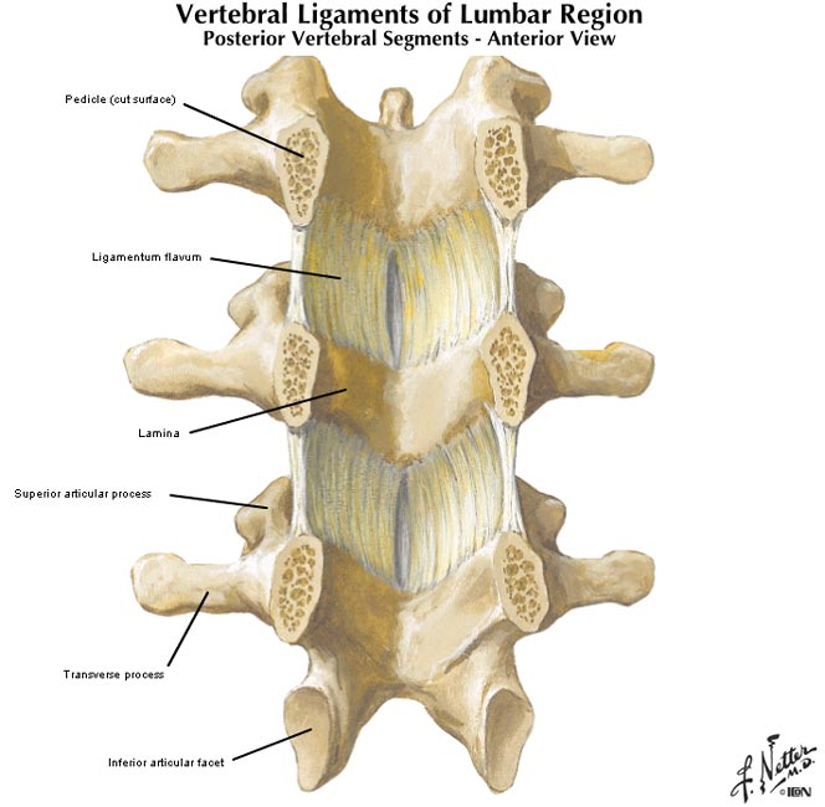
elastic bands joining adjacent vertebra (looking yellowish bc of elastin fibers)
function of ligamentum flavum
helps preserve normal spinal curves
helps us straighten after flexion
not uncommon to see ligamentum flavum hypertrophy on an MRI report → can impinge nerves and narrow space within vertebral canal
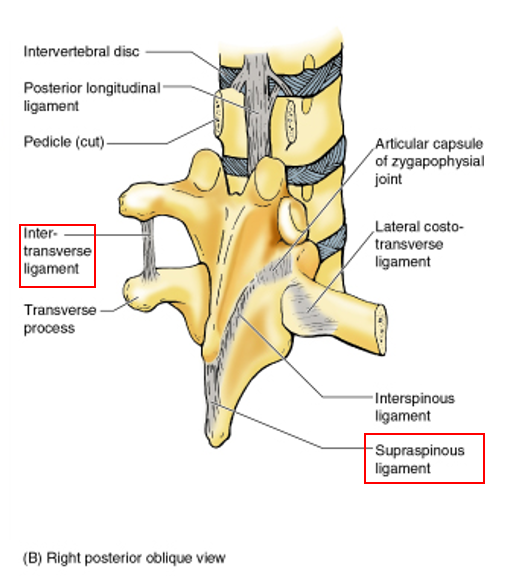
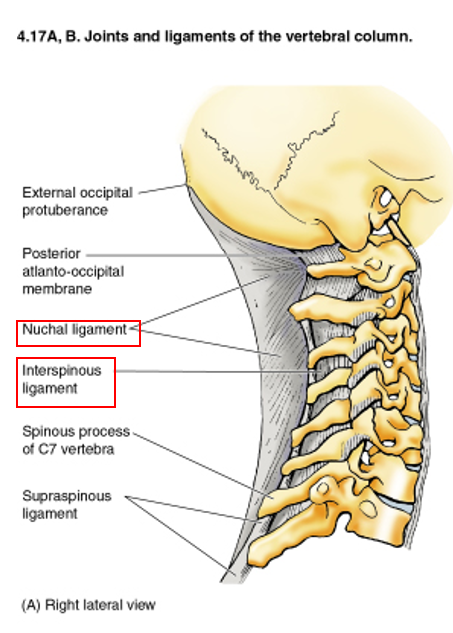
interspinous ligaments
connects root to apex of spinous processes
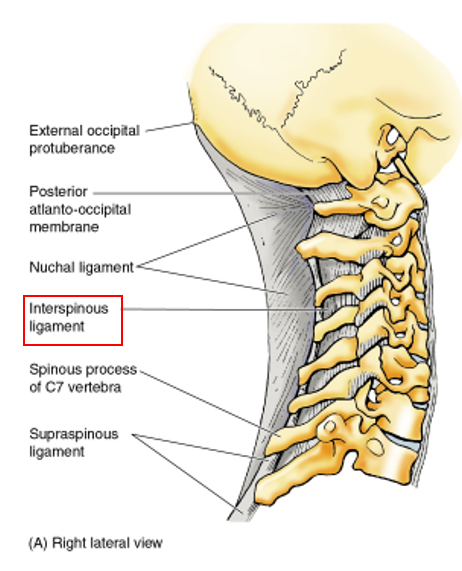
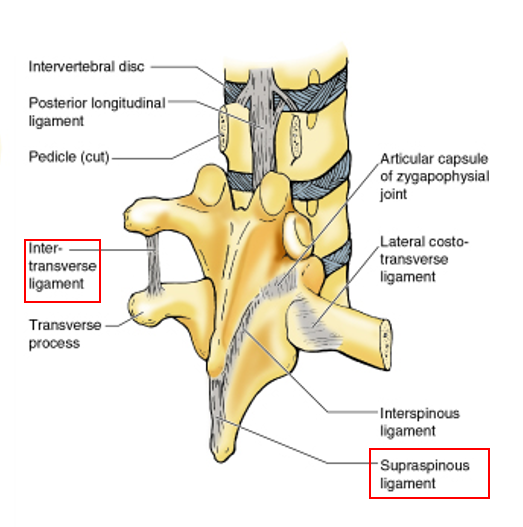
supraspinous ligament
tips of spinous processes from C7 to sacrum
ligamentum nuchae
an extension of the supraspinous ligament in the neck which provides more surface area for attachment of muscles
intertransverse ligaments
connect adjacent transverse processes
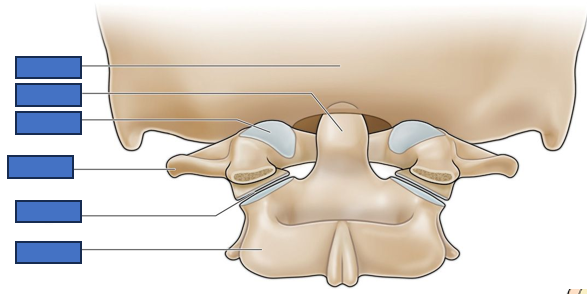
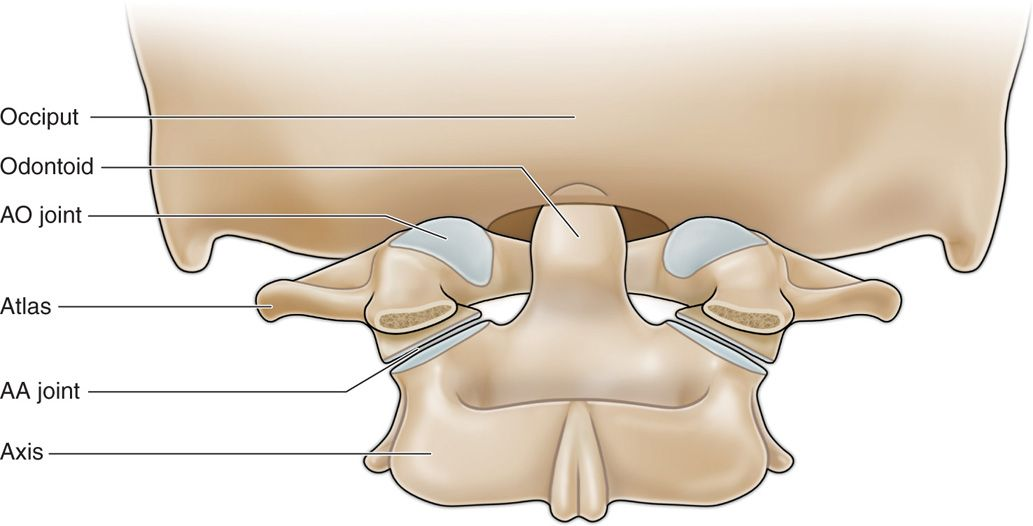
what type of joint is the Atlanto-Occipital (O/A) joint and what motion does it allow
condyloid joint (a type of synovial joint)
allows flexion & extension and a little side bending and rotation
allows nodding → the “yes” joint
articulating surface of the O/A joint
superior facet of the lateral masses of C1 with the occipital condyles of the occipital bone
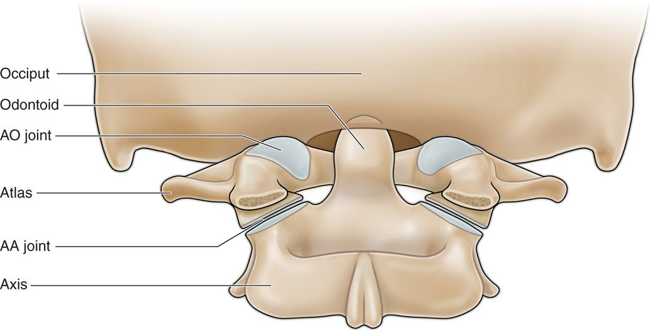
what type of joint is the Atlanto-Axial (A/A) joint & motion allowed?
pivot joint - atlas pivots around dens of axis
aka the “no” joint
cranial and C1 rotate on C2 as a unit
articulating surfaces for A/A joints
inferior facets of the lateral masses of C1 and the superior facets of C2 (gliding joint); and the dens of C2 on the posterior aspect of the anterior notch of atlas (pivot joint)
where is the first intervertebral disc?
between C2 and C3
there is no disc at O/A and A/A joint
anterior and posterior O/A membrane