Lab Exam 2
 Call Kai
 Learn
Learn Practice Test
 Spaced Repetition
 Match
Match Flashcards
 Knowt Play
1/107

Earn XP
Description and Tags
TAMU anieto, lab 6-10
Name | Mastery | Learn | Test | Matching | Spaced | Call with Kai |
|---|
No analytics yet
Send a link to your students to track their progress
108 Terms
What is the function of the cnidocyte, the distinguishing cell type of Cnidarians?
Capturing prey and defense through stinging
Corals are found in _____ which Phylum
Phylum Cnidaria
Which of the following are characteristics of Cnidarians? (Select all that apply)
Presence of mesoglea between tissue layers
Alternation between motile medusa and sessile polyp stages
Specialized stinging cells called cnidocytes
Diploblastic body structure with radial symmetry
Centralized nervous system
Presence of mesoglea between tissue layers
Alternation between motile medusa and sessile polyp stages
Specialized stinging cells called cnidocytes
Diploblastic body structure with radial symmetry
Which of the following are indicative of fungi? More than one answer may be correct.
produce glycogen
produce the pigment chlorophyll
make the pigment melanin
produce starch
produce glycogen
use chitin in the cell wall
produce seeds
make the pigment melanin
produce glycogen
use chitin in the cell wall
Choanocytes are found in _____.
Phylum Porifera
Which of the following attributes are true regarding fungi? More than one answer may be correct.\
Fungi can be pathogens of animals and kill them.
Fungi are important decomposers.
They can form close symbiotic relationships with plants that are required for productive growth of the plant.
They can be vicious plant pathogens and can kill plants.
Fungi are nonessential to life on Earth.
Fungi produce a vast array of metabolic compounds including hallucinogens.
Fungi can be pathogens of animals and kill them.
Fungi can be pathogens of animals and kill them.
Fungi are important decomposers.
They can form close symbiotic relationships with plants that are required for productive growth of the plant.
They can be vicious plant pathogens and can kill plants.
Fungi produce a vast array of metabolic compounds including hallucinogens.
For the last 150 years or so, it was thought that lichens were composed of a symbiotic relationship between two organisms; an alga and a fungus. New data has shown that they are frequently found to contain at least three organisms, that could include (More than one answer may be correct):
Alga
Ascomycote fungus
Cyanobacteria
Basidiomycote yeast
Which of the following is NOT a characteristic or structure found in Porifera?
True tissues, like those found in Eumetazoans.
What are the key characteristics of fungi?
Which of these fungi completely lack sexual reproductive structures?
Which lack asexual reproduction?
Where are zoospores found in? (Which Phylum)
Where are Zygosporangium (where zygospores are produced) found in?
Where are Sporangiophore/Asexual Sporangium found in?
Where are Ascocarp, Ascus, Ascospores, Conidiophore, Conidia found in?
Where are Basidiocarp, Basidium, Basidiospores found in?
Know the difference between Plasmogamy and Karyogamy
What is unique about the fungi in terms of karyogamy?
Are fungi more closely related to plants or animals? Why?
How do fungi obtain food?
What other synapomorphies are shared between animals and fungi? What traits might be convergent evolution instead?
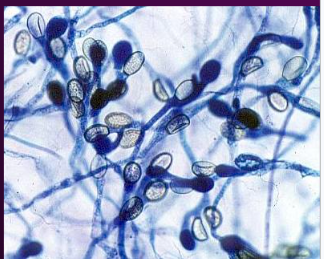
What Domain, Supergroup, Kingdom, and Phylum do these organisms belong to?
Domain: Eukarya
Supergroup: Opisthokonta
Kingdom: Fungi
Phylum: Chytridiomycota
Water molds
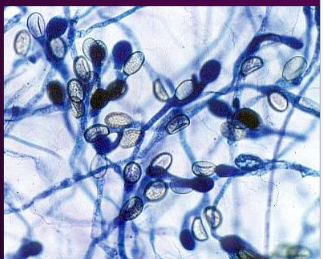
Identify the zoospores.
These are small, flagellated motile cells that are typically released from the sporangia. They are not individually distinguishable in this low-magnification overview as they would be microscopic dots swimming within or exiting the larger sporangia.
Why is it important that the zoospores are flagellated?
Why is it important that the isogametes are flagellated?
Identify the sexual and asexual stages of the lifecycle of the Phylum Chytridiomycota
Is the haploid or diploid life stage dominant in this organism’s life cycle (Phylum Chytridiomycota)? Is this similar or different from other fungi?
When these have hyphae, are they septate or aseptate? (Phylum Chytridiomycota)
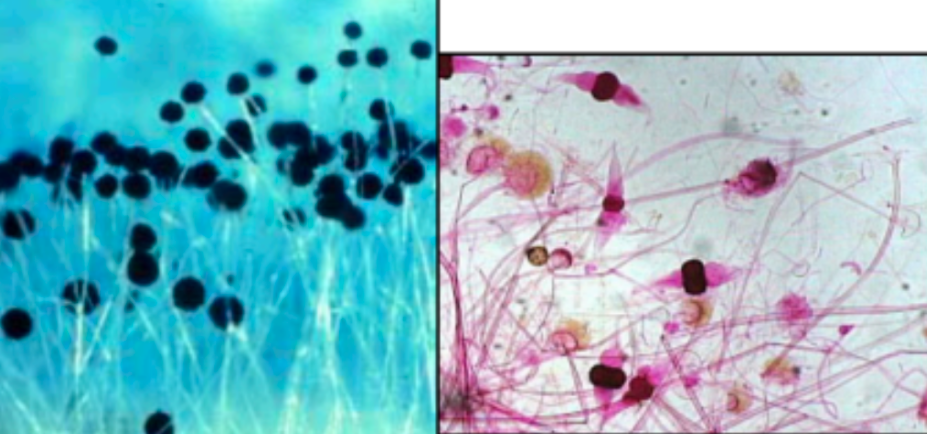
What Domain, Supergroup, Kingdom, and Phylum do these organisms belong to?
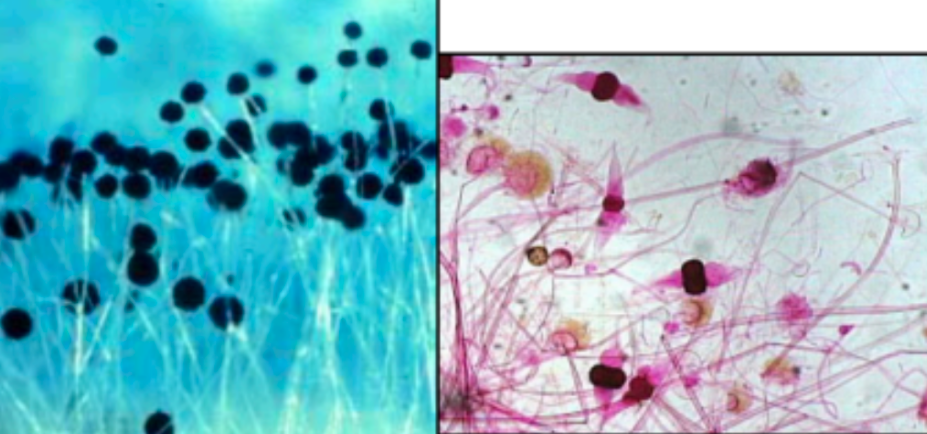
Identify: Sporangiophores, Zygosporangium.
Know which structure is a sexual structure and which is an asexual structure. (Phylum Zygomycota)
Know their life cycles (Phylum Zygomycota). What are their asexual sporangia? What are their sexual spores?
Do these have septate or aseptate hyphae?
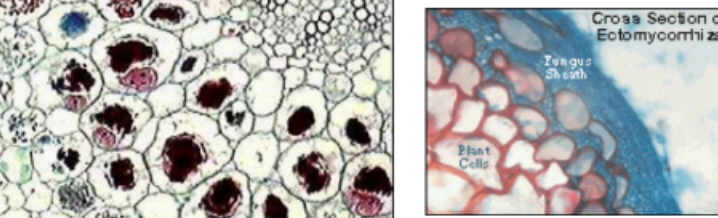
What symbiotic association is shown? (Phylum Glomeromycota)
What organisms participate in this association? How do they help each other?
What are the two types of mycorrhizae? Which type does this organism have?
Identify: Arbuscles, Ectotrophic Mycorrhizae. What is their function? (Phylum Glomeromycota)
Which phylum or phyla of fungi has which type of mycorrhizae? (Phylum Glomeromycota)
Do these have septate or aseptate hyphae?
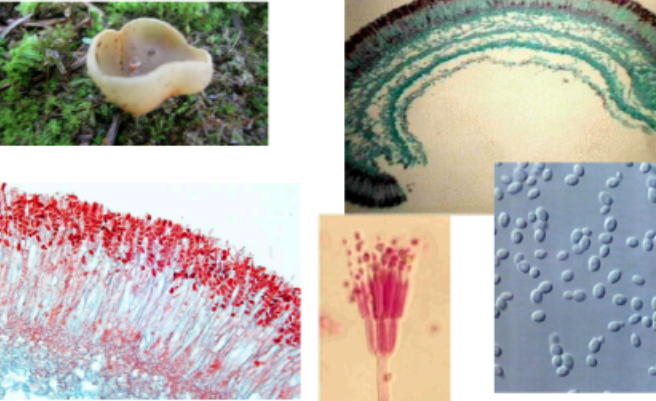
What Domain, Supergroup, Kingdom, and Phylum do these organisms belong to?
Identify: Ascocarp, Ascus, Ascospores, Conidiophore, Conidia (Phylum Ascomycota)
What are yeasts? Which phylum or phyla of fungi do they belong to?
Know the general life cycle of the phylum Ascomycota.
What is their fruiting body called? Is it a sexual or an asexual reproductive structure?
(Phylum Ascomycota)
Know the differences between normal Ascomycota, parasitic sac fungi, and imperfect sac fungi.
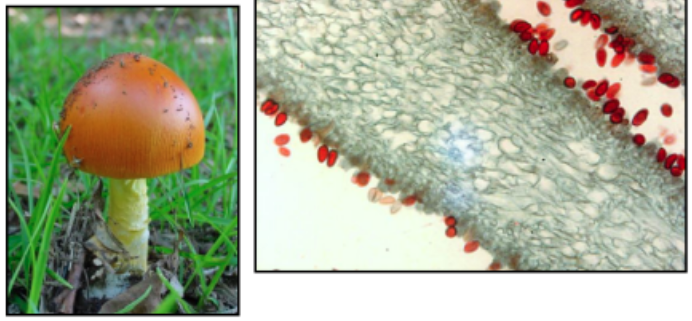
What Domain, Supergroup, Kingdom, and Phylum do these organisms belong to?
Identify: Basidiocarp, Basidium, Basidiospores. (Phylum Basidiomycota)
Know the general life cycle of this phylum Basidiomycota.
Do these have asexual spores? What stage is missing from the lifecycle of these organisms?
What is their fruiting body called?
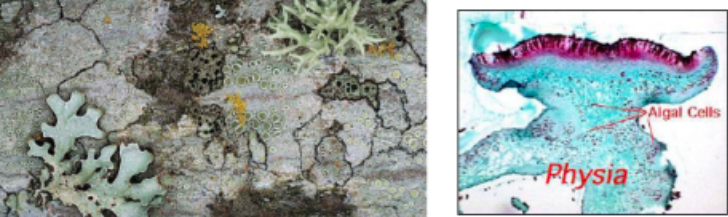
What are these symbiotic associations called?
Why can’t we refer to individual species of lichens?
Why can’t we place Lichens correctly on a cladogram?
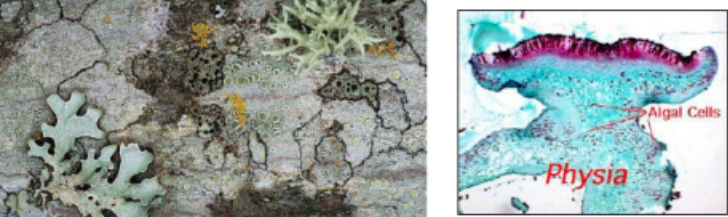
What are the three major growth forms/shapes for this type of association?
Which organisms might participate in this association? What do each of these organisms do for the association?
Can you identify the component organisms in the images above?
Know the key characteristics for Kingdom Animalia
Know the 3 types of body symmetry
Know the tissue layers in both diploblastic and triploblastic embryos. What is the difference between the two types of embryos? What do each of these tissue layers become in the adult organism? Which phylum or phyla of animals do not have tissues at all?
Parazoa: Phylum Porifera (Sponges)
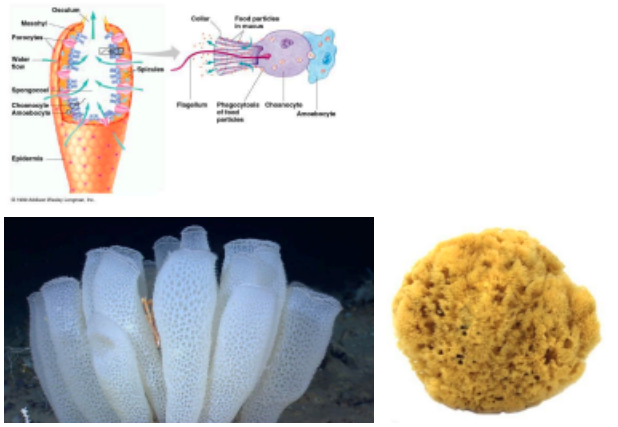
Be able to describe the sponge body form and explain how sponges feed.
Parazoa: Phylum Porifera (Sponges)
Osculum
Parazoa: Phylum Porifera (Sponges)
Spicules
Parazoa: Phylum Porifera (Sponges)
Choanocytes
Parazoa: Phylum Porifera (Sponges)
Amoebocytes
Parazoa: Phylum Porifera (Sponges)
Porocytes
Parazoa: Phylum Porifera (Sponges)
Mesohyl
Parazoa: Phylum Porifera (Sponges)
Ostia
What ability allows sponge cells to change into any other type of sponge cell?
What level of organization is present in sponges (cellular? tissue? system?)
Be able to identify the specimens we observed in class (Domain, Kingdom, Phylum).
What are the three general shapes of sponges?
What are the two subphyla we talked about in the Sponges?
What does each of these use for their skeletons?
What are the two subphyla we talked about in the Sponges?
What does each of these use for their skeletons?
a. To what taxon do these organisms belong?
b. What structures are characteristic for all of these organisms?
c. How is this animal similar to the common ancestor of ALL animals? How is it different?
d. Are there tissues? What type of symmetry do these have?
Radiata: Phylum Cnidaria - Corals, Anemones, Jellyfish, and Hydras
o Know what phylum these organisms belong to.
o What unique features are only found in this phylum?
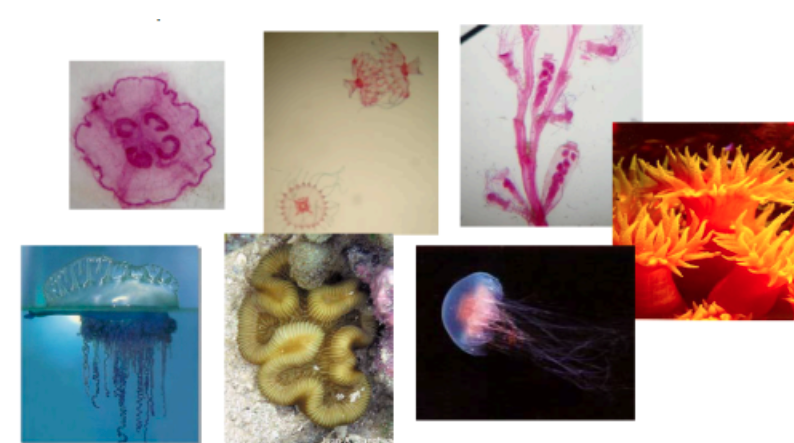
Be able to identify the specimens that we observed in class (Domain, Supergroup, Kingdom, Phylum).
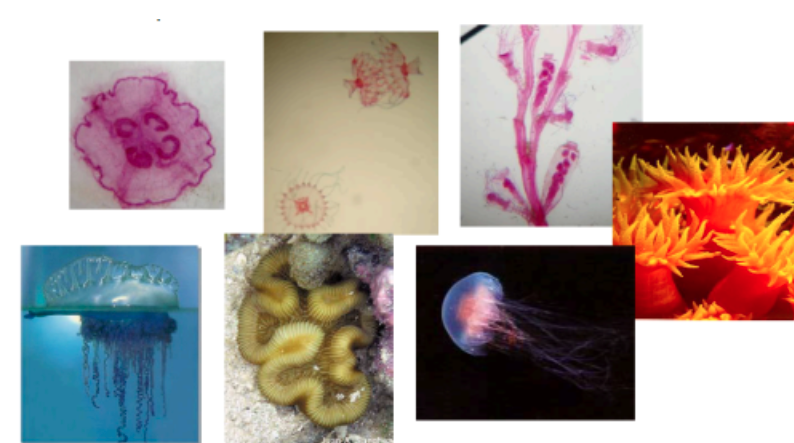
b. What level of organization is present in these organisms (cellular? tissue? system?)
c. How many tissue layers do these organisms have?
d. What type of symmetry do these organisms have?
e. Describe the two body plans/shapes present in this phylum Cnidaria. What is their function?
f. Describe the structure and functions of a gastrovascular cavity?
Mesoglea
Cnidocyte
Incomplete gut
Nerve net
Polyp
Medusa
Know the key characteristics for Kingdom Animalia
Know the 3 types of body symmetry
Know the tissue layers in both diploblastic and triploblastic embryos. What is the difference between the two types of embryos? What do each of these tissue layers become in the adult organism? Which phylum or phyla of animals do not have tissues at all?
What is a coelom? What are the 3 types of body cavity structures that can form in triploblastic organisms?
What are the differences between protostome and deuterostome embryos? How many tissue layers does an organism have to have to be either a protostome or a deuterostome?
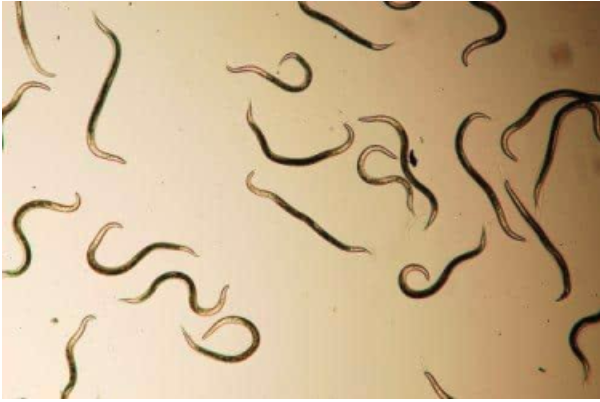
Know the phylum that these organisms belong to
What level of organization is present in these organisms (cellular? tissue? organ? organ system?)
Ecdysozoans
Bilaterally symmetrical triploblastic protostome organisms that MOLT!
Protostomes and Deuterostomes all have
THREE tissue layers!
How many tissue layers do these organisms have?
What type of symmetry do these organisms demonstrate?
Does this group possess a body cavity? If so, what type of body cavity do they have?
(Phylum Nematoda)
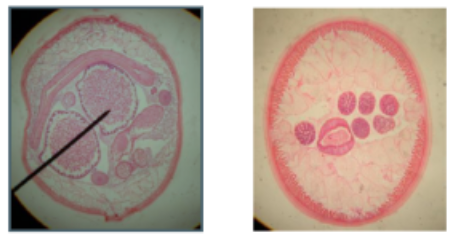
Which of these slides is Male? Female? How can you tell?
What unique features are found in nematodes?
Spiders (Domain, Supergroup, Kingdom, Phylum)
Insects (Domain, Supergroup, Kingdom, Phylum)
Myriapods (Domain, Supergroup, Kingdom, Phylum)
Crustaceans (Domain, Supergroup, Kingdom, Phylum)
Know the characteristics of this phylum Arthropoda
Know which specific organisms belong to the following subphyla:
o Subphylum Chelicerata (Cheliceriformes)
o Subphylum Myriapoda
● Pancrustacea
o Subphylum Hexapoda
o Subphylum Crustacea
Be able to identify all of the external anatomy required from the Grasshopper and Crayfish examinations
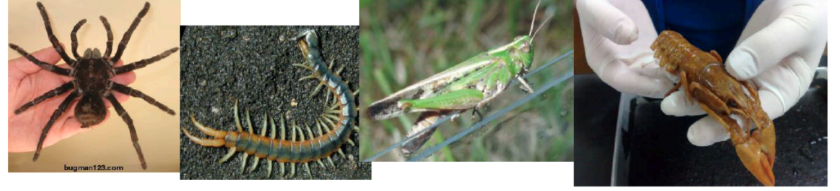
a. To what phylum / subphylum do these organisms or structures belong?
b. What groups of organisms are included in this taxon?
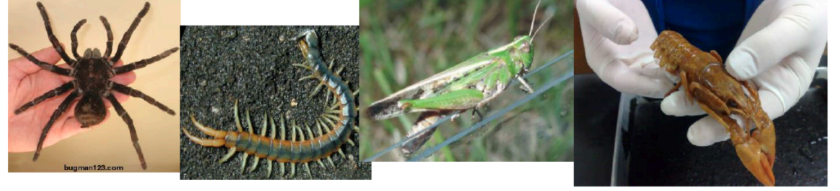
c. What structures are characteristic for the organisms in each group?
d. Make sure you could identify any of the structures we found in dissections
e. Do these organisms have a true coelom, pseudocoelom, or no body cavity at all?
f. What type of body symmetry do these have? How many tissue layers in the embryo?
Lophotrochozoans
Bilaterally symmetrical triploblastic protostome organisms that may have a lophophore feeding structure, a trochophore larval stage, and/or spiral cell division in the embryo
Phylum Platyhelminthes
Flatworms
Planarians
Tapeworms
Does this phylum Platyhelminthes possess a body cavity? If so, what type of body cavity do they have?

Be able to identify and describe the function of the following structures:
▪ Eye spots/ocelli
▪ Auricles
▪ Pharynx
▪ Incomplete gut
What other unique features do these organisms have?
Lophophorates
animals characterized by a lophophore feeding structure and a reversion to radial cell division
Know how to differentiate between Brachiopods and Bivalve Molluscs
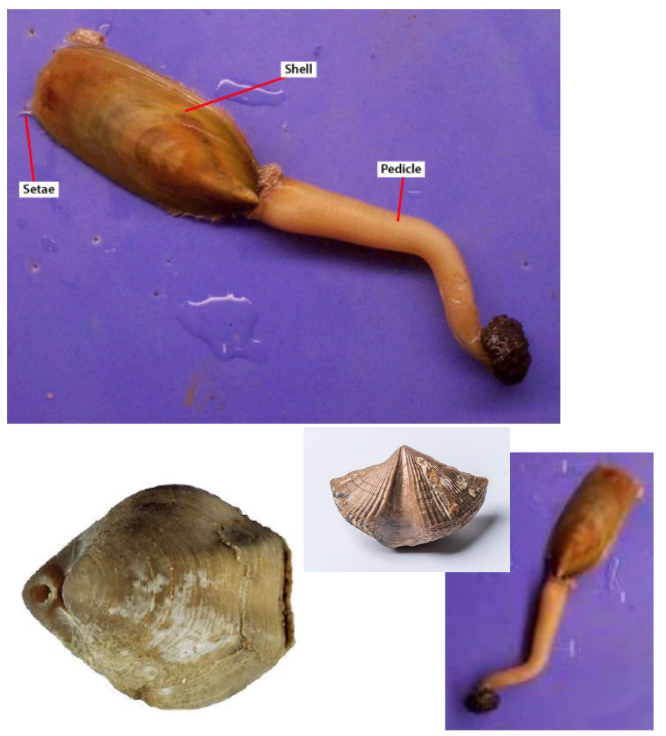
a. To what phylum do these organisms or structures belong?
b. What groups of organisms are included in this taxon?
c. What structures are characteristic for these organisms?
d. Can you identify the pedicle aperture?
Trochozoans
animals characterized by a trochophore larval stage