BV lab 1
 Call Kai
 Learn
Learn Practice Test
 Spaced Repetition
 Match
Match Flashcards
 Knowt Play
1/61

There's no tags or description
Looks like no tags are added yet.
Name | Mastery | Learn | Test | Matching | Spaced | Call with Kai |
|---|
No analytics yet
Send a link to your students to track their progress
62 Terms
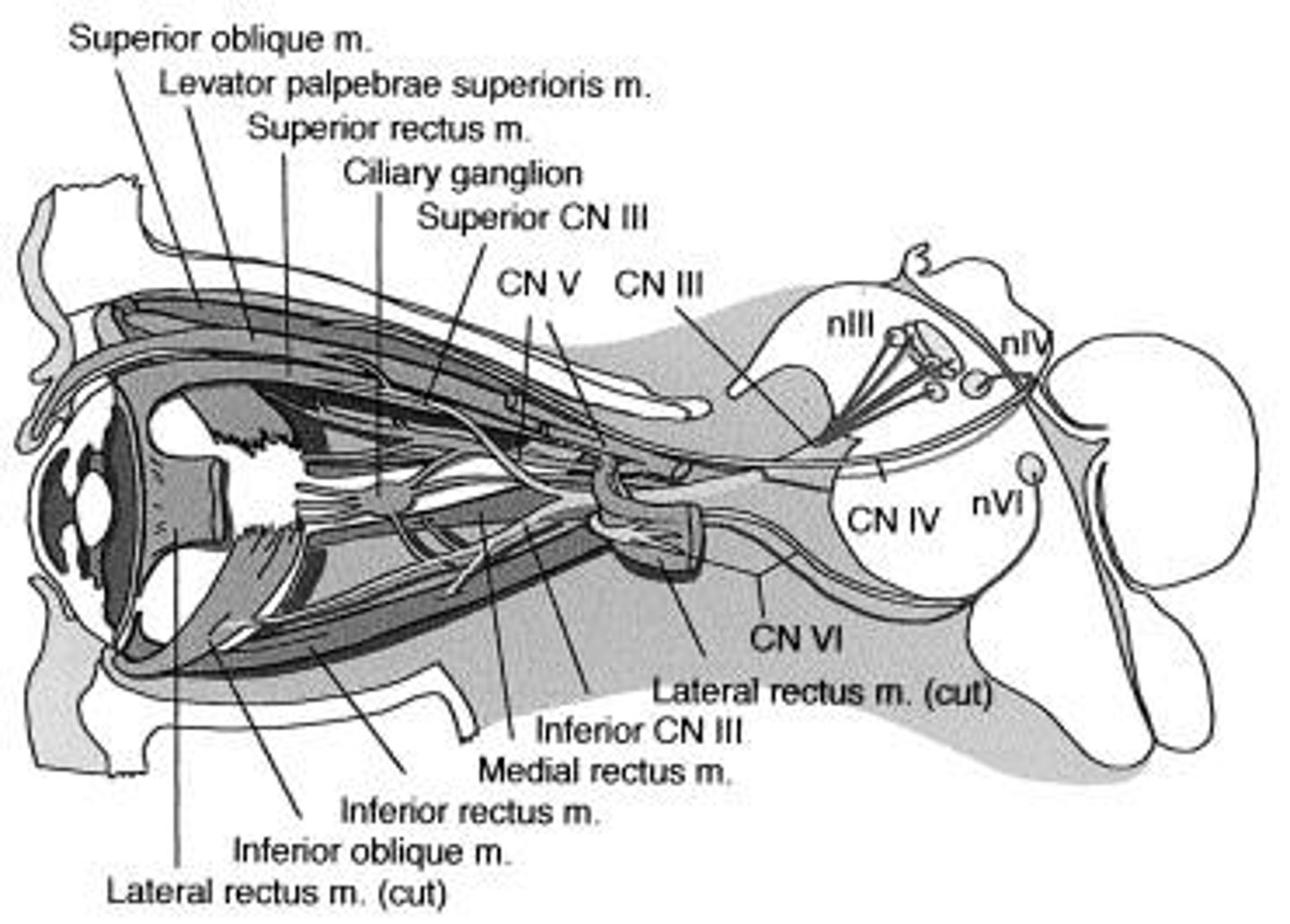
Where is the CN III nucleus located?
mesencephalon at level of superior colliculus
What subnuclei does the nucleus for CN III contain?
1. E-W nucleus (parasympathic)
2. nuclei for IR, IO, MR, SR, LPS
The inferior branch of CN III innervates what?
1. IR
2. IO
3. MR
4. parasympathetic
The superior branch of CN III innervates what?
1. Superior Rectus
2. LPS
When does CN III bifurcate ?
before the superior orbital fissure
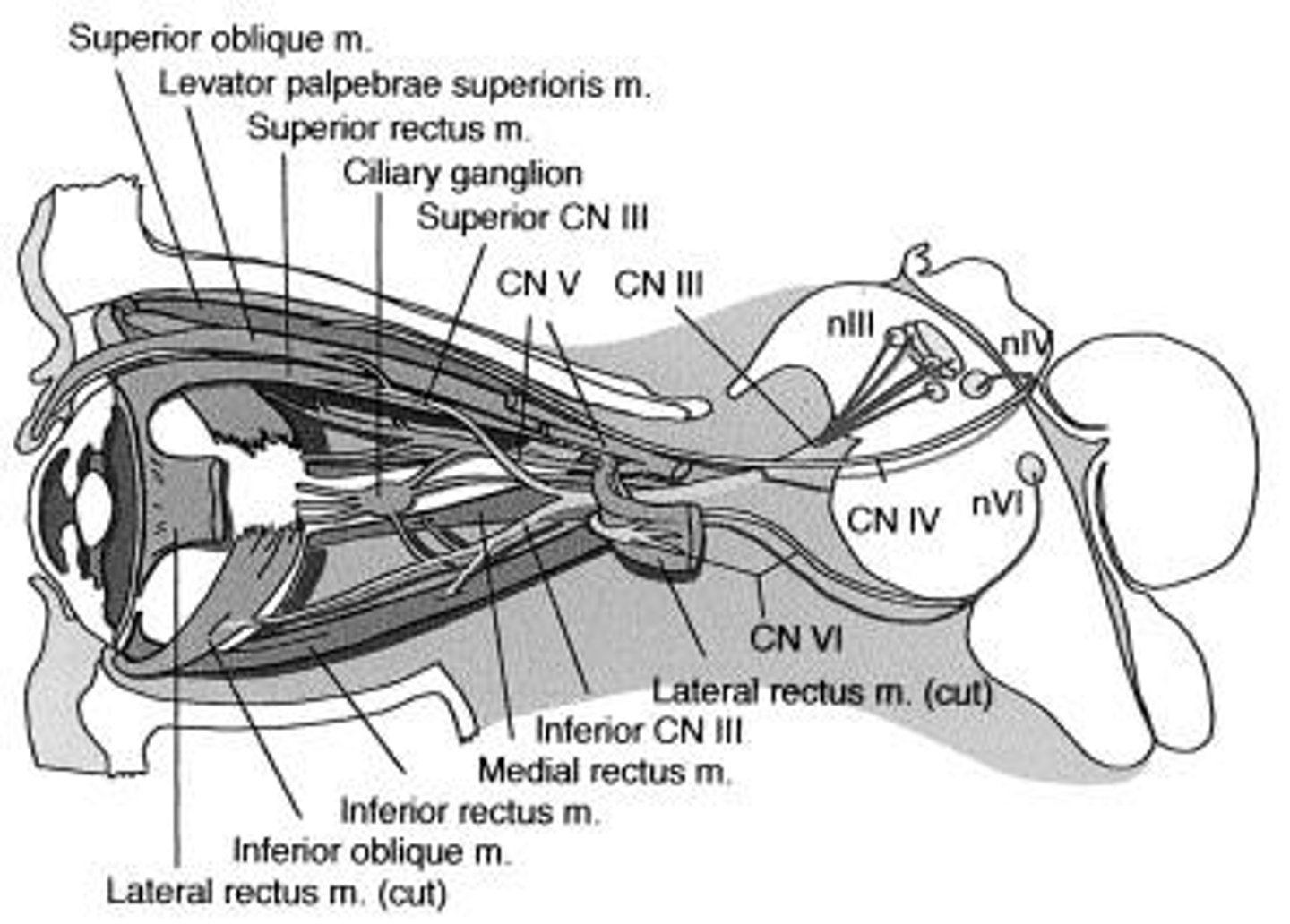
Where is the nucleus for CN IV (trochlear nerve) located?
lower mesencephalon at level of inferior colliculus
Where do the fibers of CN IV exit the nucleus? Why is this important?
dorsally (at back and wraps around) → susceptible to damage from trauma (esp. whiplash injuries)
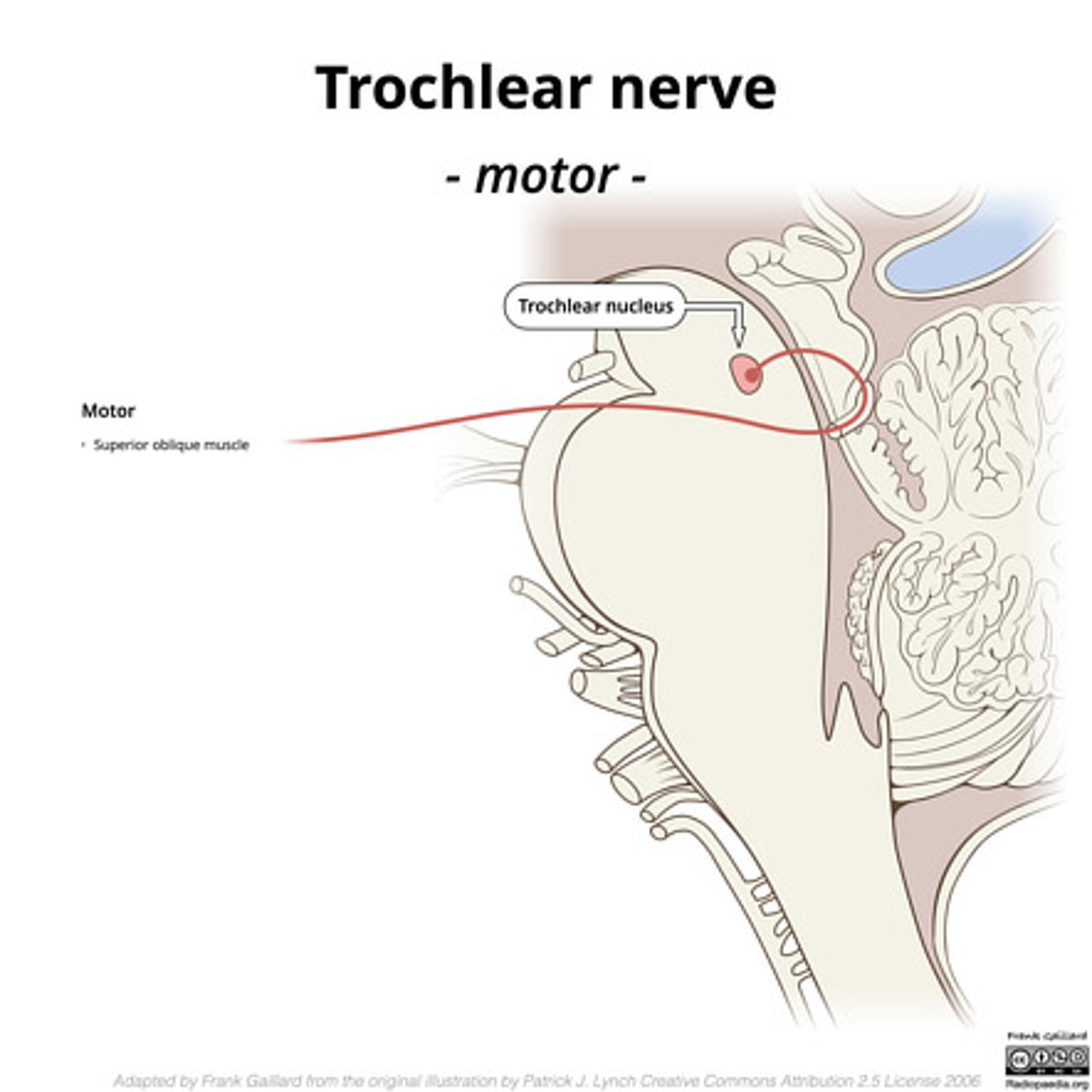
What does CN IV (trochlear nerve) innervate?
contralateral superior oblique
Where is the nucleus of CN VI (abducens) located?
pontomedullary junction - at the junction of the pons and medulla beneath the floor of the 4th ventricle
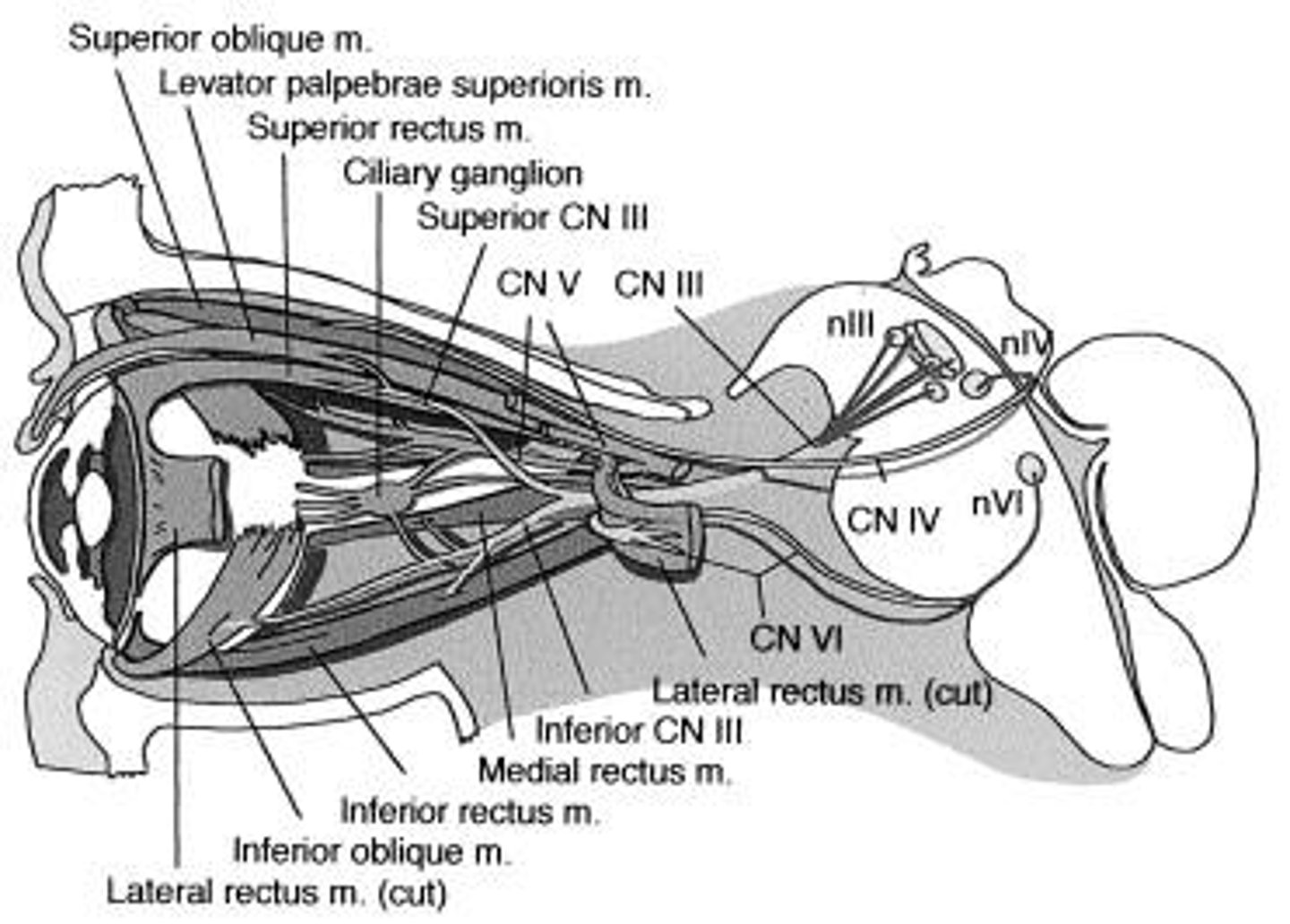
What does CN VI (abducens) innervate?
ipsilateral LR
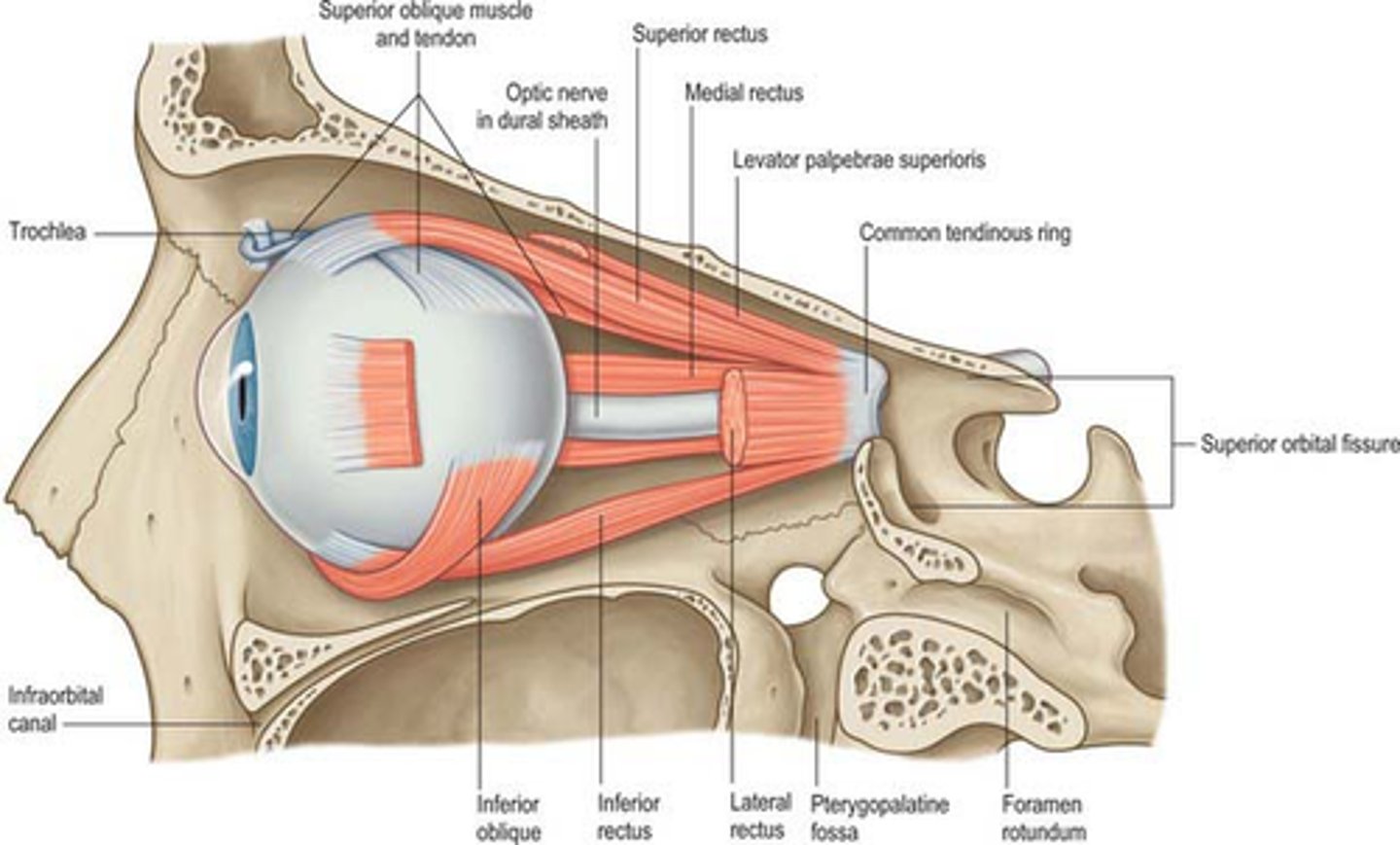
Where is the origin of all the recti muscles?
Annulus of Zinn
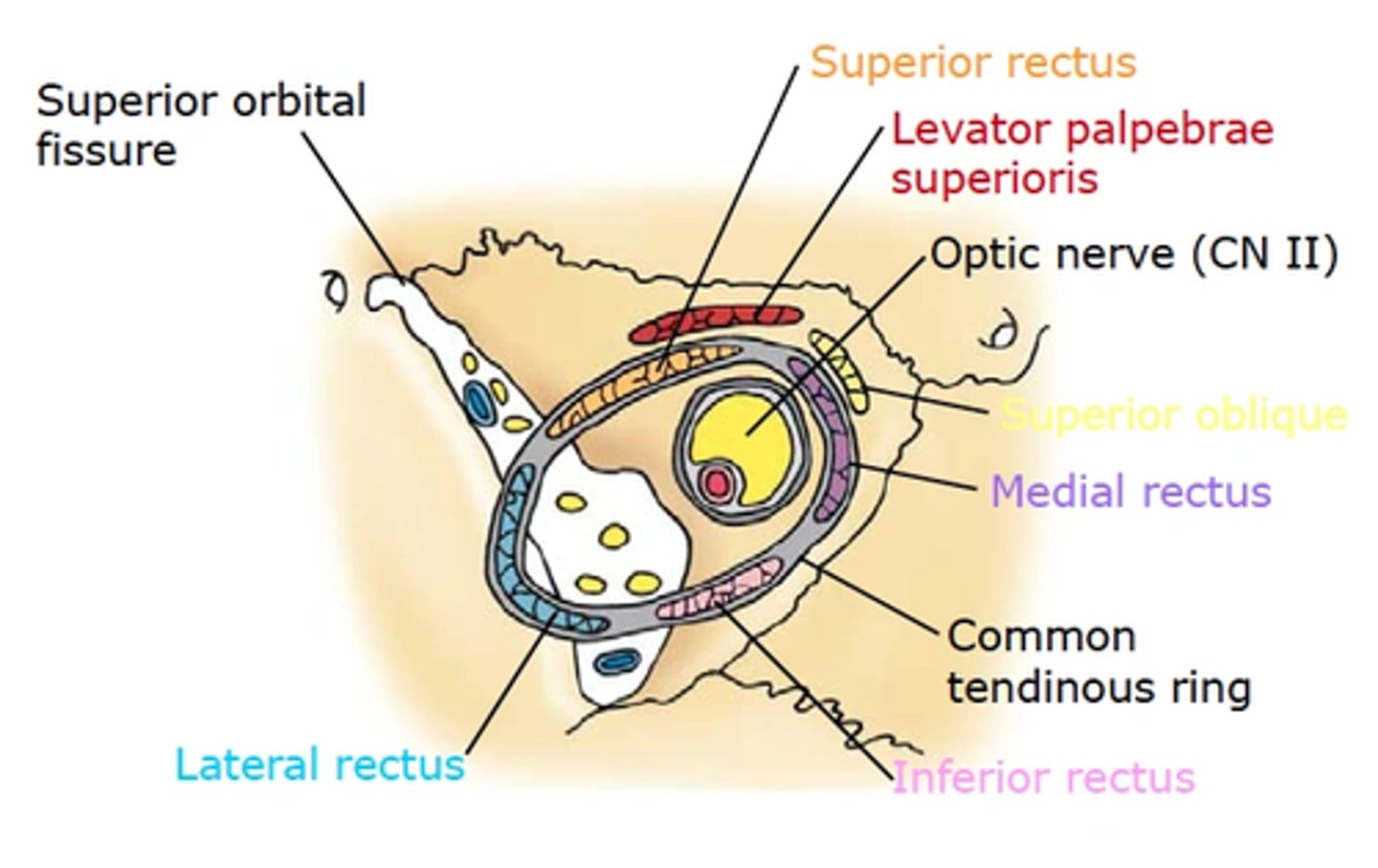
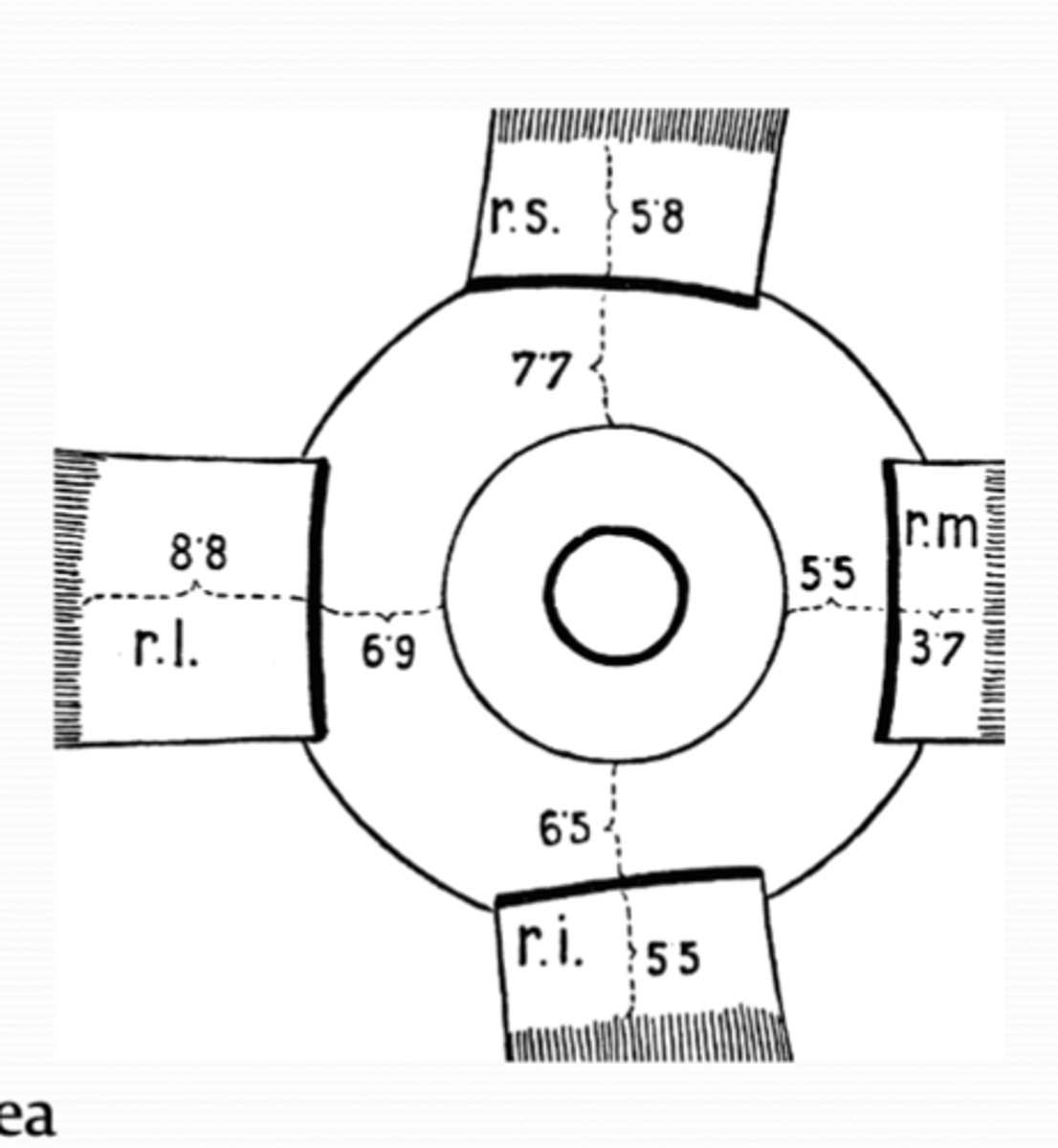
Where do the recti muscles insert?
SLIM:
SR: ~8mm behind cornea
LR: ~7mm behind cornea
IR: ~6.5 mm behind cornea
MR: ~5.5 mm behind cornea
What is the origin of the SO?
trochlea (body of the sphenoid)
Where do the oblique muscles insert?
posterior globe
What is the origin of the IO?
anterior floor of the orbit (near lacrimal fossa)
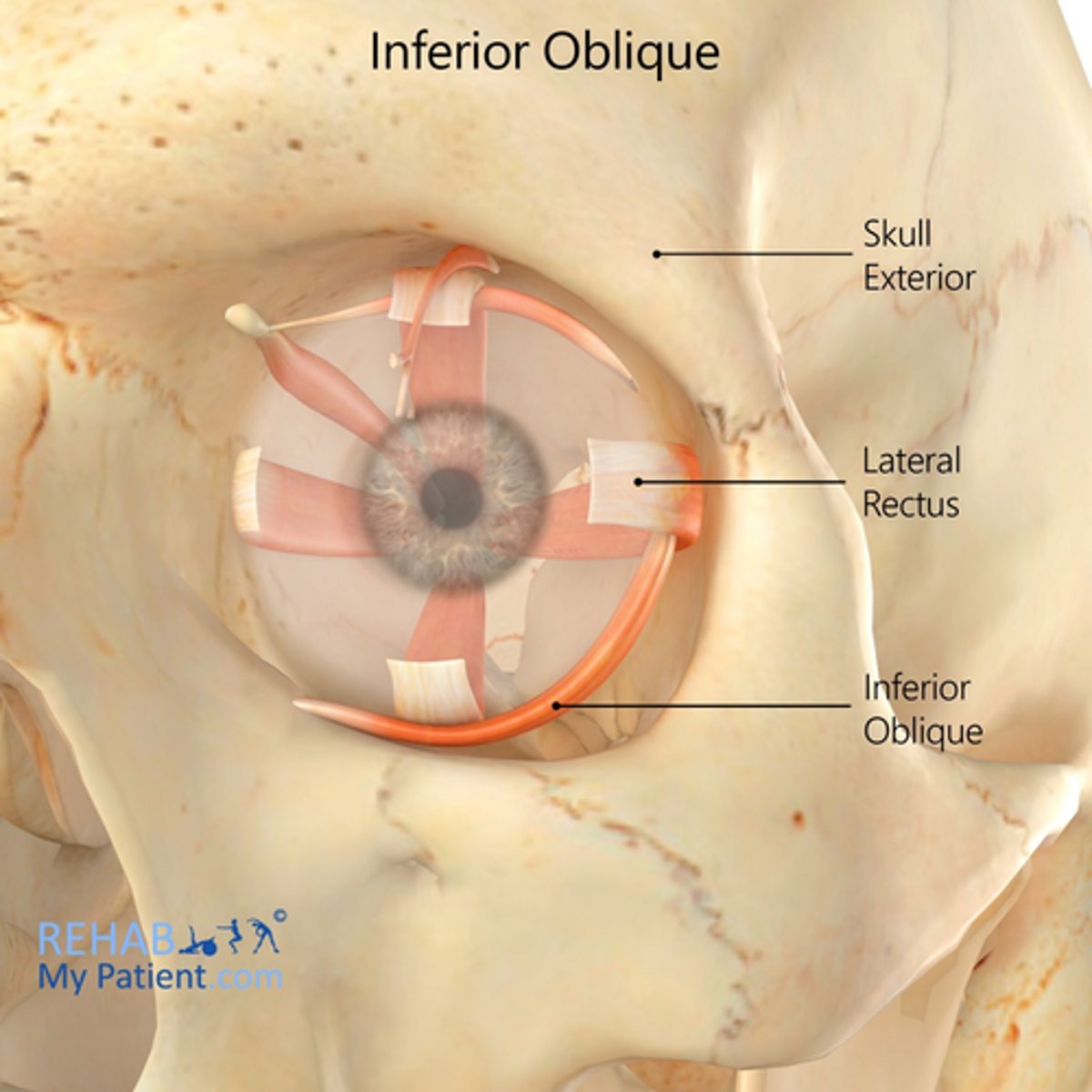
In primary gaze, what is the action of the LR?
abduction
In primary gaze, what is the action of the MR?
adduction
In primary gaze, what are the actions of the SR?
1°: elevation
2°: intorsion
3°: adduction
In primary gaze, what are the actions of the IR?
1°: depression
2°: extorsion
3°: adduction
In primary gaze, what are the actions of the SO?
1°: intorsion
2°: depression
3°: abduction
In primary gaze, what are the actions of the IO?
1°: extorsion
2°: elevation
3°: abduction
Which muscles extort?
INXS → INferiors eXtort
IR
IO
Which muscles intort?
SR
SO
Which muscles abduct?
LR
SO
IO
Which muscles adduct?
MR
SR
IR
When is the horizontal action of the MR or LR isolated?
in primary gaze
When is the vertical action of the SR + IR isolated?
when abducted (looking temporally)
When is the vertical action of the obliques isolated?
when adducted (looking at nose)
If a patient is looking in to their nose and up, which muscle is isolated?
IO
If a patient is looking in to their nose and down, which muscle is isolated?
SO
If a patient is looking in to their ear and up, which muscle is isolated?
SR
If a patient is looking in to their ear and down, which muscle is isolated?
IR
What is Sherrington's law of reciprocal innervation?
contraction of an agonist muscles occurs concurrently with relaxation of the antagonist muscle in the same eye
(ex: looking to the right, right eye LR contracts, while MR equally relaxes)
what is Hering's law of equal innervation?
during any eye movement, ocular innervation is such that the magnitude of rotation of the 2 eyes is equal
____ muscles receive equal innervation for eye movements?
yoke muscles
What is the RMR yoke muscle?
LLR
What is the RLR yoked muscle?
LMR
What is the RSR yolked muscle?
LIO
What is the RIO yolked muscle?
LSR
What is the RSO yolked muscle?
LIR
What is the RIR yolked muscle?
LSO
What is paralysis?
total loss of innervation or muscle function
What is paresis?
partial paralysis
What is palsy?
can be either paresis or paralysis
What is an overshoot on ductions?
When the covered eye (normal eye) moves more than the uncovered/fixating (paretic eye)
What is an undershoot on ductions?
When the covered eye (paretic eye) moves less than the uncovered/fixating eye (normal eye)
How would ductions of a right LR paresis look if the left eye was covered?
left eye will overshoot
Why do overshoots occur during ductions with a paretic eye?
partially paretic eye needs extra innervation to move eye to certain position d/t Herring's law → fellow normal eye receives same amount of extra innervation and does a full non-paresis movement
When the fixating eye is ______________, its yolked muscle with overshoot.
paretic
When the fixating eye is _________, its yolked muscle will undershoot.
normal/healthy
Why is the eye 'down and out' with a CN III palsy?
they only fully working muscles are the LR + SO → the LR pulls the eye out and the SO pulls the eye down
Why is there ptosis in a CN III palsy?
LPS paresis/paralysis → no more innervation by CN III
Why can the pupil be dilated in a CN III palsy?
parasympathetic NS damage → no more innervation by CN III
What are the steps of Park's 3 step test?
1. determine the direction of the vertical deviation in primary gaze
2. determine if the vertical deviation is worse in right or left gaze.
3. determine if the vertical deviation is worse in right or left head tilt
what is the paretic muscle if R hyper eye in primary position, hyper deviation greater on R gaze and R tilt?
LIO
what is the paretic muscle if R hyper eye in primary position, hyper deviation greater on R gaze and L tilt?
RIR
what is the paretic muscle if R hyper eye in primary position, hyper deviation greater on L gaze and R tilt?
RSO
what is the paretic muscle if R hyper eye in primary position, hyper deviation greater on L gaze and L tilt?
LSR
what is the paretic muscle if L hyper eye in primary position, hyper deviation greater on R gaze and R tilt?
RSR
what is the paretic muscle if L hyper eye in primary position, hyper deviation greater on R gaze and L tilt?
LSO
what is the paretic muscle if L hyper eye in primary position, hyper deviation greater on L gaze and R tilt?
LIR
what is the paretic muscle if L hyper eye in primary position, hyper deviation greater on L gaze and L tilt?
RIO