biology infectious disease/different types of disease - year 11
 Call Kai
 Learn
Learn Practice Test
 Spaced Repetition
 Match
Match Flashcards
 Knowt Play
1/18

Earn XP
Description and Tags
be precise
Name | Mastery | Learn | Test | Matching | Spaced | Call with Kai |
|---|
No analytics yet
Send a link to your students to track their progress
19 Terms
what is a disease?
•A disease is a particular abnormal condition, a disorder of a structure or function, that affects part or all of an organism.
whats the difference between infectious and non infectious disease?
1.Infectious
•Caused by pathogens: this means they can be passed from person to person (communicable)
•Contagious diseases are communicable diseases that spread rapidly and easily from person to person
•Examples: influenza, measles
●
2.Non-infectious
•Not caused by pathogens: can’t be passed from person to person (non-communicable)
•Examples: cancer, heart disease
Could be related to lifestyle or hereditary
what are the 6 type of disease?
•Caused by pathogens:
•Bacteria
•Viruses
•Protozoa
•Fungi
•Parasitic worms
•Prions
what are the characteristics a pathogen must perform to cause disease?
portal of entry, must gain access to the host
adhesion (colonisation), must attach itself to the host
invasion, the pathogens must spread deeper into the body
immune system, must avoid or survive the hosts immune system
damage, cause damage to the host
portal of exit, exit the host in order to continue the cycle
what is bacteria?
•Unicellular organisms.
•Contain a single strand of DNA and no nucleus.
•Found everywhere: in the air, on living as well as dead organisms, in the ground and even in hot pools.
•Reproduce by binary fission: divide by simply splitting in two.
Some can formsporeswhen conditions are unsuitable for life: tough outer coat that protects them from the environment and allows them to survive for long periods
bacteria are classified by their what?
shape
how can bacteria cause disease?
•The diseases bacteria cause are partly the result of damage they do to the host's tissues.
•
Partly due to the toxins (poisons) they release into the host's system.. Some bacterial toxins are among the most poisonous substances known
what is a virus?
•Non-cellular, infective particles:
•Nucleic acid (DNA or RNA) packaged in a protein coat designed to insert it into a living cell.
•
•Without a host cell: dormant, inactive.
what does a virus do when given access to the cell?
•Given access to a cell:
•Attaches itself to the cell.
•Injects genetic material into the cell.
•Cell is taken over and used to replicate copies of the virus
•Eventually so many are inside the cell that it bursts, and the flood of newly manufactured viruses repeat the procedure.
•
•Examples: HIV/AIDS, influenza, smallpox, hepatitis.
what are protists?
•Eukaryotic organisms
•Most are unicellular
•Animal-like protists are called protozoa.
•Protozoans can be free-living or parasitic.
•Parasite: lives on or inside another organism to the detriment of the host organism.
•Complex life cycles and diverse
•Examples: Malaria, yellow fever.
how can protists cause disease?
•Infect and destroy the tissues of their hosts.
•
•Through their intensely rapid reproductive ability, they can take over the intestinal tract of their host; and from there go on to other organs and tissues.
•
•Some infect liver and red blood cells.
•
•Some protozoa produce cysts - closed sacs in which they may be safely transported through food and water from one person to another. In the cyst state, protozoans are safe from destruction by human digestive juices.
what is fungi?
•Composed of eukaryotic cells that contain a cell wall.
•While plant cell, bacterial cells and fungi cells all have cell walls, they are all composed of different carbohydrates.
•
•Can be unicellular or multicellular.
•Produce spores.
•
•Heterotrophic and obtain nutrients by secreting enzymes that break down organic matter so the products can be absorbed.
what is pathogenic fungi?
•Four types based on where they grow and reproduce:
•On the surface of the host
•On the superficial layers of the host such as skin and nails
•In subcutaneous tissues, the inner layers of the skin.
•Inside the host by infecting inner tissues and organs
•
•Examples: ringworm, athletes foot.
what are parasitic worms/helminths?
•Live inside the host.
•
•Attaches to the host’s intestine using hooks and suckers.
•
•Flat body absorbs host’s digested food: doesn’t need a mouth or gut of its own.
•
•Disrupt the host’s nutrient absorption, causing weakness and disease.
•
•Multiply by producing eggs.
•
•Examples: tapeworm, hookworm.
what are prions?
•A prion is a misfolded protein that can cause other normal proteins to misfold, leading to celullar death, brain damage and neurodegenerative diseases.
•
•Affect the structure of the brain and neural tissue: brain has a “spongy” appearance.
•
•Untreatable
•
•Always fatal
•
•Examples: mad cow disease, Creutzfeldt-Jakob disease
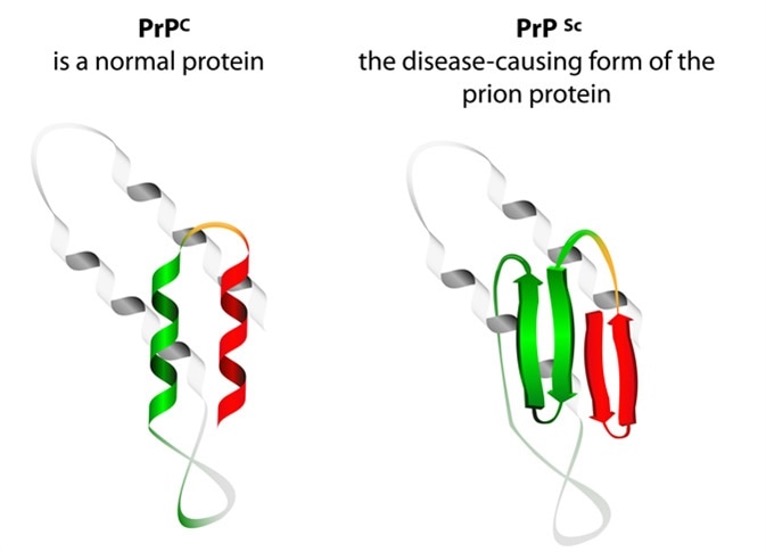
what is this?
prions
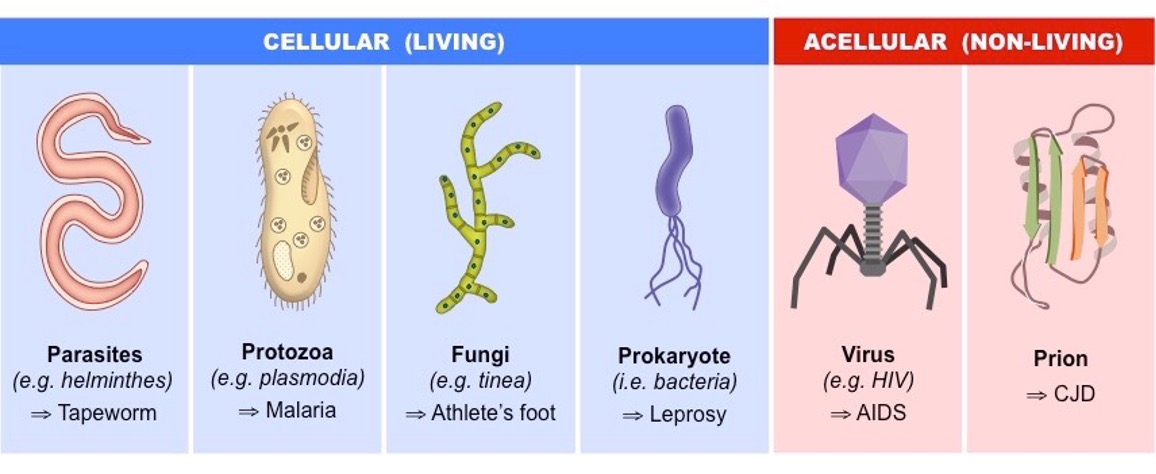
describe the visual look of the 6 types of diseases:
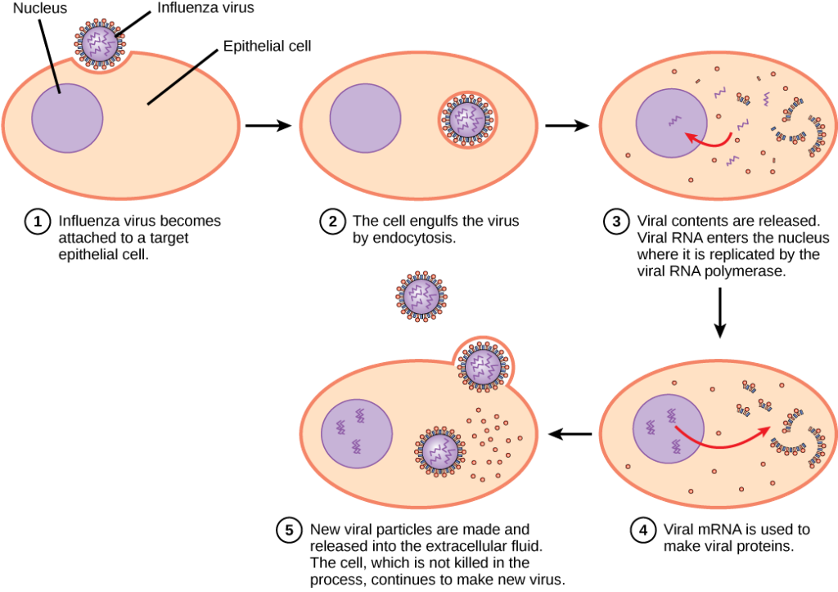
describe the process of a virus in a cell using this picture
1. Attachment – The virus attaches to specific receptors on the host cell.
2. Entry – The virus enters the cell or releases its genetic material inside.
3. Uncoating – The viral DNA or RNA is released from its protein coat.
4. Replication – The virus uses the cell's machinery to make viral DNA/RNA and proteins.
5. Assembly – New virus particles are assembled.
6. Release – New viruses leave the cell and infect other cells.
Quick version:
Attachment → Entry → Uncoating → Replication → Assembly → Release.
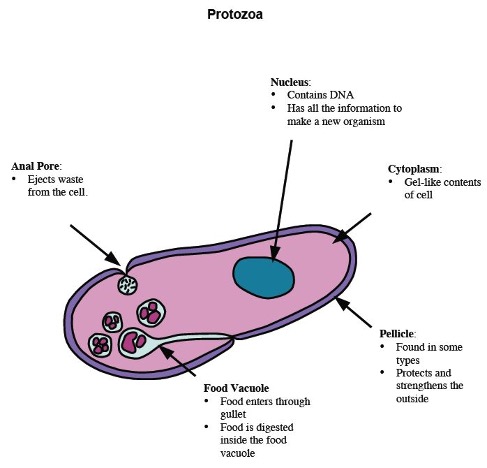
describe the visual look of a protozoa using this:
Protozoa: Single-celled parasites that can infect humans and cause disease.
Or slightly more detailed:
Protozoa: Microscopic single-celled organisms that can live in a host and cause infectious diseases.
Examples: Malaria is caused by protozoa of the genus Plasmodium.