Large Animal FINAL
 Call Kai
 Learn
Learn Practice Test
 Spaced Repetition
 Match
Match Flashcards
 Knowt Play
1/1963

There's no tags or description
Looks like no tags are added yet.
Name | Mastery | Learn | Test | Matching | Spaced | Call with Kai |
|---|
No analytics yet
Send a link to your students to track their progress
1964 Terms
what are causes of chronic wasting in sheep and goats?
competition
dental disease
maedi visna (sheep)
caprine arthritis encephalitis (goats)
paratuberculosis
caseous lymphadenitis
enzootic nasal adenocarcinoma
GI parasites
lameness
dental disease pathogenesis:
primary gingivitis→tooth loss and abnormal wear→secondary osteomyelitis
dental disease signs:
>7 years old
thin, BCS < 2
slow eating
decreased cub chewing
swellings on jaw
loss of incisors
dental disease treatment:
rasp premolars and molars
cull or euthanize
dental disease control:
graze poor quality soil
thistles and awns in hay
maedi visma (ovine progressive pneumonia) signs:
adult sheep
dyspnea/progressive cough
exercise intolerance
hard udders at lambing
lymphocytic mastitis
reduced repro performance
reduced lamb growth and survival
hind end ataxia and paresis/paralysis
circling, head tilt
tremor of lips
arthritis
maedi visma (ovine progressive pneumonia) pathogenesis:
virus targets macrophages, stimulates lymphocyte proliferation in mammary tissue, lungs, CNS, and joints
maedi visma (ovine progressive pneumonia) transmission:
aerosol
colostrum
milk
in utero
blood contaminated needles and instruments
semen
maedi visma (ovine progressive pneumonia) diagnosis:
ELISA
maedi visma (ovine progressive pneumonia) pathology:
large, tanned, highly cellular, firm, heavy lungs
esophageal imprint on lungs
mucous in trachea
maedi visma (ovine progressive pneumonia) treatment:
euthanize
maedi visma (ovine progressive pneumonia) control:
serology on adults
cull
caprine arthritis encephalitis is caused by:
caprine arthritis encephalitis virus
small ruminant lentivirus
caprine arthritis encephalitis transmission:
body secretions
colostrum
milk
milking equipment
in utero
blood contaminated instruments
caprine arthritis encephalitis signs:
arthritis and bursitis in carpus, stifle, scapula, occipital joint
hard udder with little milk
posterior paresis that can progress to tetraparesis
torticollis
progressive pneumonia
caprine arthritis encephalitis diagnosis:
serology
caprine arthritis encephalitis pathology:
synovium inflamed, thickened, scarred
eroded cartilage
lung, CNS, and udder affected with lymphoid follicles and scarring
caprine arthritis encephalitis treatment:
NSAIDs
euthanasia
caprine arthritis encephalitis control:
serology
separate young and old
heat treat colostrum and milk
paratuberculosis is caused by…
mycobacterium avium paratuberculosis
type I: sheep
typer III: sheep and goats
paratuberculosis transmission:
fecal oral
milk and colostrum
in utero
paratuberculosis diagnosis:
fecal culture
serology or milk ELISA
post mortem
paratuberculosis pathology:
thickening of distal ileum, dilated lymphatics, enlarged ileocecal and mesenteric lymph nodes
paratuberculosis control:
test and remove
vaccinate
caseous lymphadenitis is caused by…
corynebacterium pseudotuberculosis
corynebacterium pseudotuberculosis transmission:
direct contact
coughing
fomites
contaminated feed, water, bedding
caseous lymphadenitis pathogenesis:
enter through skin→move to regional lymph node→form abscesses which break and drain (external or pulmonary)→infectious discharge
sheep caseous lymphadenitis abscess appearance:
onion skin (lamellated)
what are the most common lymph nodes where caseous lymphadenitis occurs?
parotid
submandibular
cervical
prescapular
caseous lymphadenitis diagnosis:
location of abscess
culture
abscesses in internal organs on post mortem
caseous lymphadenitis treatment:
lance and drain
iodine or chlorhexadine
caseous lymphadenitis control:
monitor
cull
disinfect shearing injuries
vaccinate lambs prior to exposure (12-16 weeks of age)
enzootic nasal adenocarcinoma signs:
nasal tumor
upper resp noise
increased inhalation effort
facial deformity, neuro signs
100% fatal
enzootic nasal adenocarcinoma transmission:
nasal secretions
enzootic nasal adenocarcinoma diagnosis:
post mortem
PCR of nasal secretions
enzootic nasal adenocarcinoma treatment:
euthanize
periparturient
3 weeks before parturition and 3 weeks after
pregnancy toxemia pathogenesis:
insufficient energy in the diet to meet nutritional requirements of late gestation usually seen with more than one fetus
transient hypocalcemia→encephalopathy
mobilization of lipid stores→elevation in ketone bodies, accumulation of lipids in liver cells, impairment of hepatic function
high levels of corticosteroids
fetal death and maceration
end stage renal and liver failure
pregnancy toxemia risk factors:
thin BCS < 2.5
fat BCS < 4
competition
poor water quality or quantity
held off feed
shearing
inclement weather
pregnancy toxemia signs:
grinding teeth
not aggressive to get grain
depression
head pressing
opisthotonus
± blindness
tremors
ataxia
circling
pregnancy toxemia individual lab abnormalities:
urine or blood ketones
elevated liver enzymes
elevated BHBA (>.8 mmol/L is subclincal threshold)
pregnancy toxemia flock lab abnormalities:
moderate underfeeding: .8-1.6 mmol/L BHBA
severe underfeeding: 1.6-3 mmol/L BHBA
clinical: >3 mmol/L BHBA
pregnancy toxemia pathology:
fatty liver
dead fetuses
mild pregnancy toxemia treatment:
50 mL 50% dextrose IV
isolate and provide grain
60mL glycol orally BID for 3-10 days
moderate-severe pregnancy toxemia treatment:
50-100 mL 50% dextrose IV
fluids
induce birth
give 60mL calcium slowly
antibiotics
euthanize
vaginal prolapse individual risk factors:
previous prolapse
overconditioned
multiple fetuses
genetics
short dock length
vaginal prolapse flock risk factors:
poor quality forage
crowding at feeder
vaginal prolapse treatment:
epidural
replace vagina
vaginal spoon
suture vulvar lips
gangrenous mastitis is caused by:
staph aureus
mannheimia hemolytica
pseudomonas aeruginosa
gangrenous mastitis signs:
febrile
depressed
may be lame or down
udder cold, blue, bloody secretion
affected half of udder will slough off
gangrenous mastitis treatment:
support
gangrenous mastitis control:
reduce stocking density (>2 sq meters per ewe)
control orf
tilmicosin at weaning or 1 month prior to lambing
causes of abortion in small ruminants:
chlamydia abortus
coxiella burnetti
toxoplasma gondii
campylobacter jejuni (mainly sheep)
campylobacter fetus (sheep)
iodine deficiency
all infectious agents are zonotic
chlamydia abortus signs:
fresh abortion
placentitis
stillbirths, weak neonates, open ewes and does
chlamydia abortus transmission:
aborted fluids
chlamydia abortus control:
oxytetracycline every 18-21 days after 80 days gestation
vaccinate
coxiella burnetti (Q fever) signs:
fresh abortions, stillbirths, weak lambs/kids
placentitis
coxiella burnetti (Q fever) transmission:
aerosol
fetal fluids
milk
feces
coxiella burnetti (Q fever) control:
tetracycline
vaccine
toxoplasma gondii signs:
mummies, abortions, stillbirths, weak lambs/kids
coteledonary lesions
toxoplasma gondii control:
cat and rodent control
feed monensin or decoquinate during last 14 weeks of pregnancy
campylobacter transmission:
aborted fetuses, placenta
carrion birds
campylobacter signs:
lesions on liver of fetus
mild placentitis
edematous cotyledons
campylobacter control:
vaccine for C. fetus
iodine deficiency abortion signs:
late term abortions, stillbirth
weak lambs/kids
large thyroids and less hair on aborted fetuses
iodine deficiency abortion control:
place iodine on skin of ewes weekly
polioencephalomalacia in small ruminants is caused by…
thiamine deficiency
polioencephalomalacia risk factors:
high level of grain
molasses
bracken fern, horsetail
high sulfur
polioencephalomalacia signs:
stiff, stilted gait
opisthotonus
cortical blindness
may go down
die within 1-2 days
cerebral/cerebellar edema and brain fluoresces with UV light
polioencephalomalacia treatment:
thiamine
dexamethasone
listeriosis risk factors:
silage/haylage with pH > 5
contamination with dirt/manure
forage fed on ground
listeriosis pathogenesis:
entry via bloodstream or trigeminal nerve→incubation→microabscesses in brainstem
listeriosis signs:
fever
unilateral cranial nerve signs (circling, head tilt, facial paralysis)
abortion
listeriosis treatment:
oxytetracycline, penicillin, or TMS
dexamethasone
NSAIDs
extended nursing care
listeriosis control:
metaphylactic treatment with oxytetracycline
remove from source of infection
feed off ground
what small ruminant diseases are reportable?
rabies
scrapie
scrapie signs:
intense pruritus
increased grooming
high stepping, stumbling, abnormal head carriage
recumbency
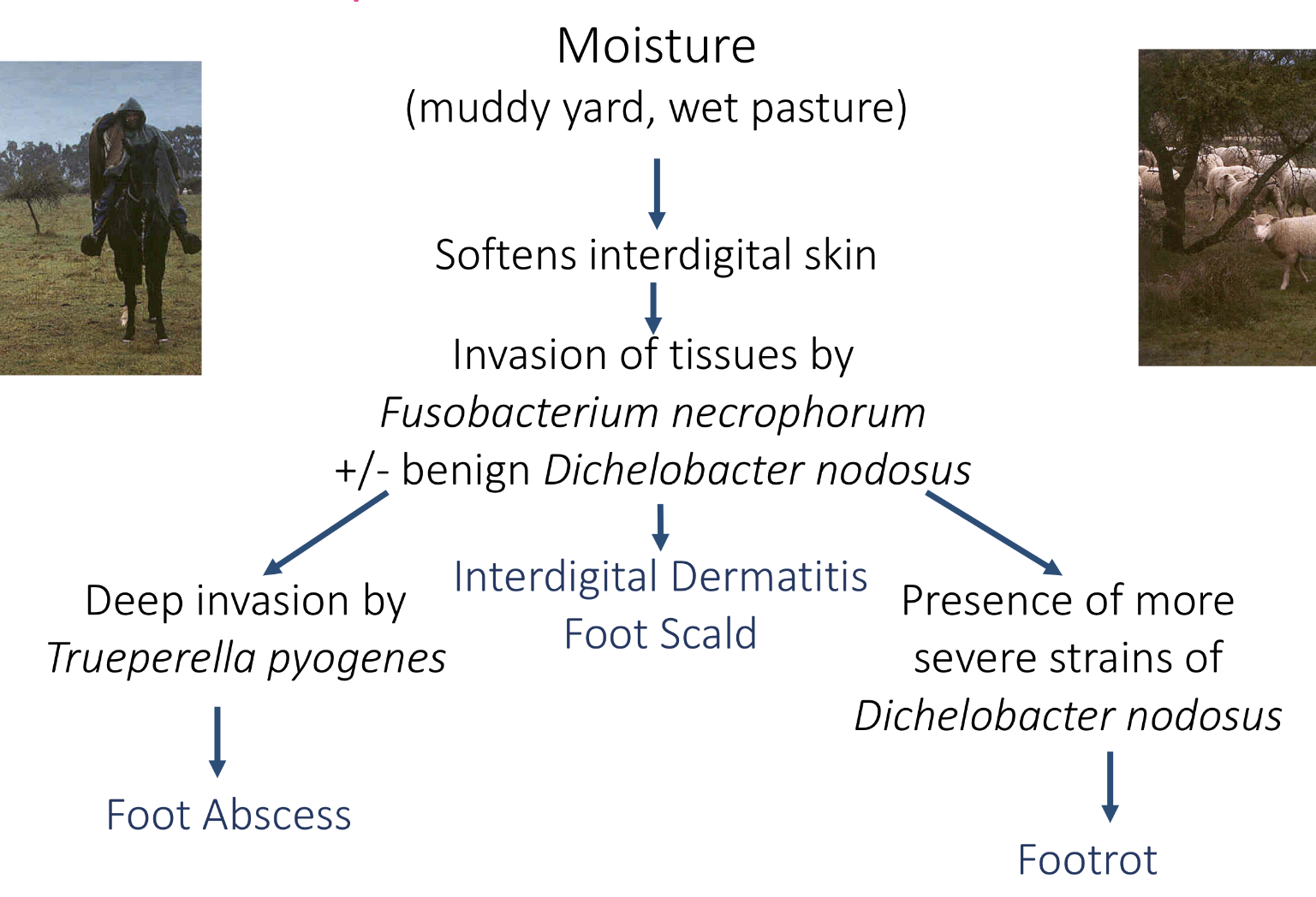
foot disease complex includes:
foot scald
foot abscess
foot rot
foot disease complex signs:
lameness
eat on knees
what pathogens cause foot scald?
fusobacterium necrophorum
± benign strains of dichelobacter noduses
what pathogens cause foot rot?
fusobacterium necrophorum
dichelobacter noduses
what pathogens cause foot abscess?
fusobacterium necrophorum
dichelobacter noduses
trueperella pyogenes
foot disease complex pathogenesis:
foot scald signs:
interdigital skin macerated
inflamed
sole unaffected
foot rot signs:
foot scald
underrunning of sole
foot abscess signs:
foot scald + deep involvement
may include P2/P3 joint
foot disease complex treatment:
10% zinc sulphate foot bath
oxytetracycline or tilmicosin
joint ill
polyarthritis in small ruminants
what pathogens can cause joint ill?
erysipelothrix rhusiopathiae
strep
chlamydia pecorum
entropion treatment:
penicillin injection around eye
clips
surgery
repeated unrolling by hand
pinkeye/infectious keratoconjunctivitis is caused by what pathogens?
mycoplasma conjunctivae
chlamydia pecorum
listeria
pinkeye/infectious keratoconjunctivitis treatment:
oxytetracycline or tulathromycin if severe
causes of sudden death in lambs and kids:
hypothermia/hypoglycemia complex
pulpy kidney
haemonchis
copper toxicity
urolithiasis
pneumonia
hypothermia/hypoglycemia complex signs:
increased mortality within first 72 hrs
tucked up, depressed, empty
down, cold, convulsing
hypothermia/hypoglycemia complex pathogenesis:
lack of energy and cool temps
hypothermia/hypoglycemia complex risk factors:
low birth weight (<3 kg), poor nutrition, abortion diseases
dystocia
mastitis, insufficient milk, poor mothering bond
cold environment
when are brown fat reserves used up in lambs/kids?
5 hours
hypothermia/hypoglycemia complex treatment:
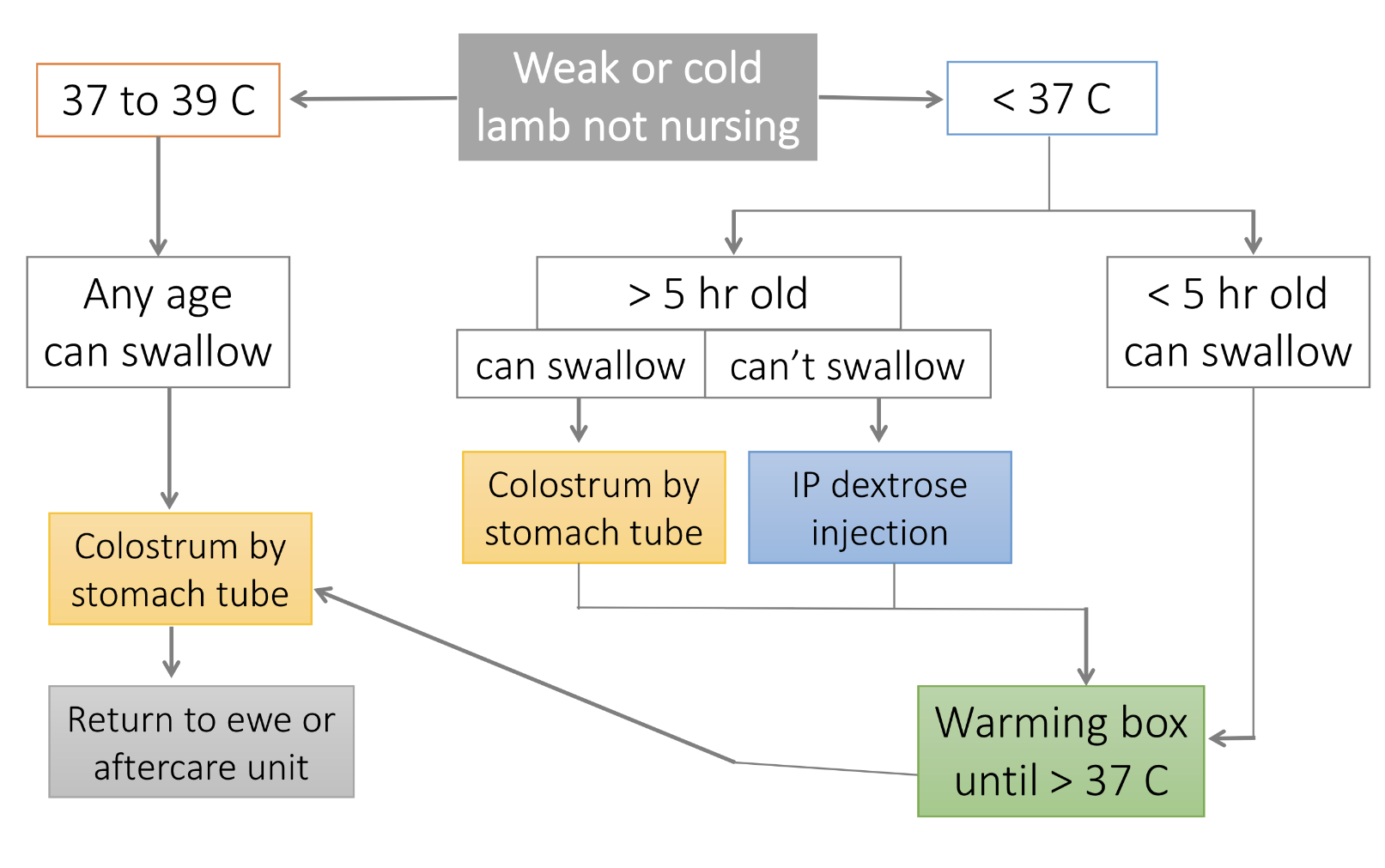
lambs and kids with no energy reserves must be given ____________________ before rewarming
an energy source
tubing a lamb steps:
sit on lap
measure tube to last rib
pass into mouth and encourage to swallow
feel tube in esophagus
slowly give colostrum