Molecular Diagnostics Chapter 1
 Call Kai
 Learn
Learn Practice Test
 Spaced Repetition
 Match
Match Flashcards
 Knowt Play
1/119

There's no tags or description
Looks like no tags are added yet.
Name | Mastery | Learn | Test | Matching | Spaced | Call with Kai |
|---|
No analytics yet
Send a link to your students to track their progress
120 Terms
trait
particular characteristic
Which elements make up the macromolecule of DNA?
carbon, nitrogen, oxygen, phosphorous, and hydrogen
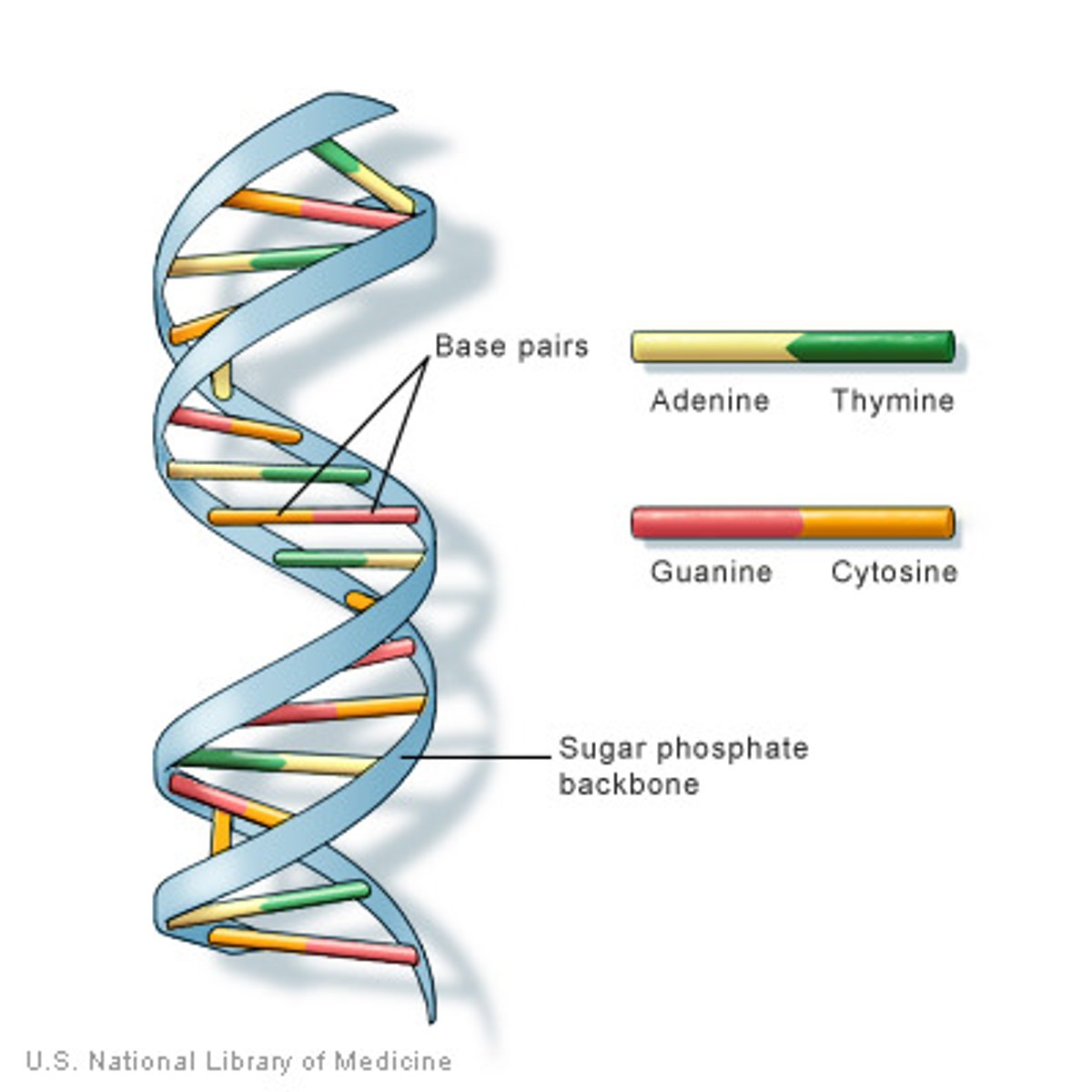
What is the structure of DNA?
phosphorylated ribose sugar (deoxy ribose) backbone with a nitrogenous base (guanine, adenine, cytosine, thymine) two strands joined together through hydrogen bonds form a double helix
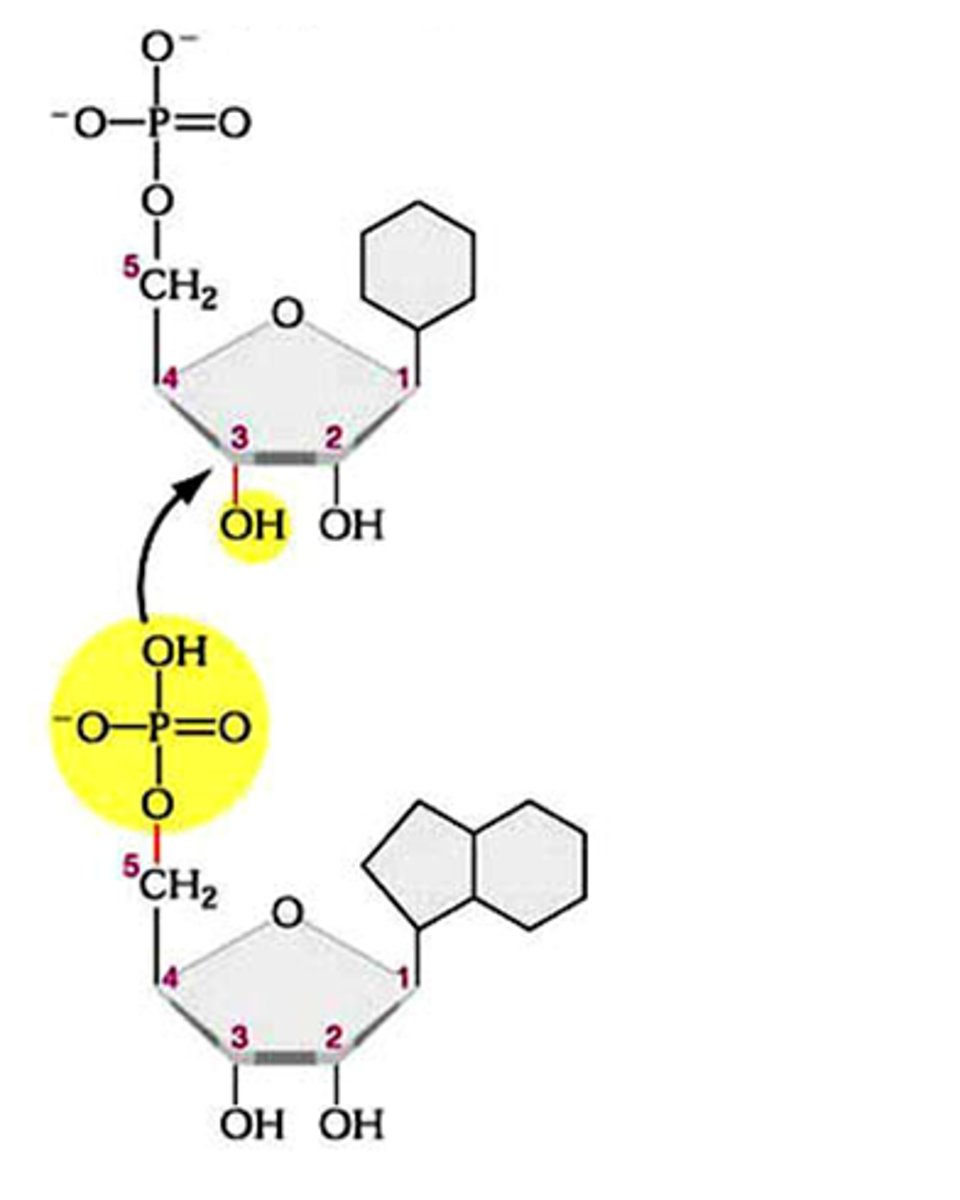
What type of bond joins two nucleotides?
phosphodiester bond
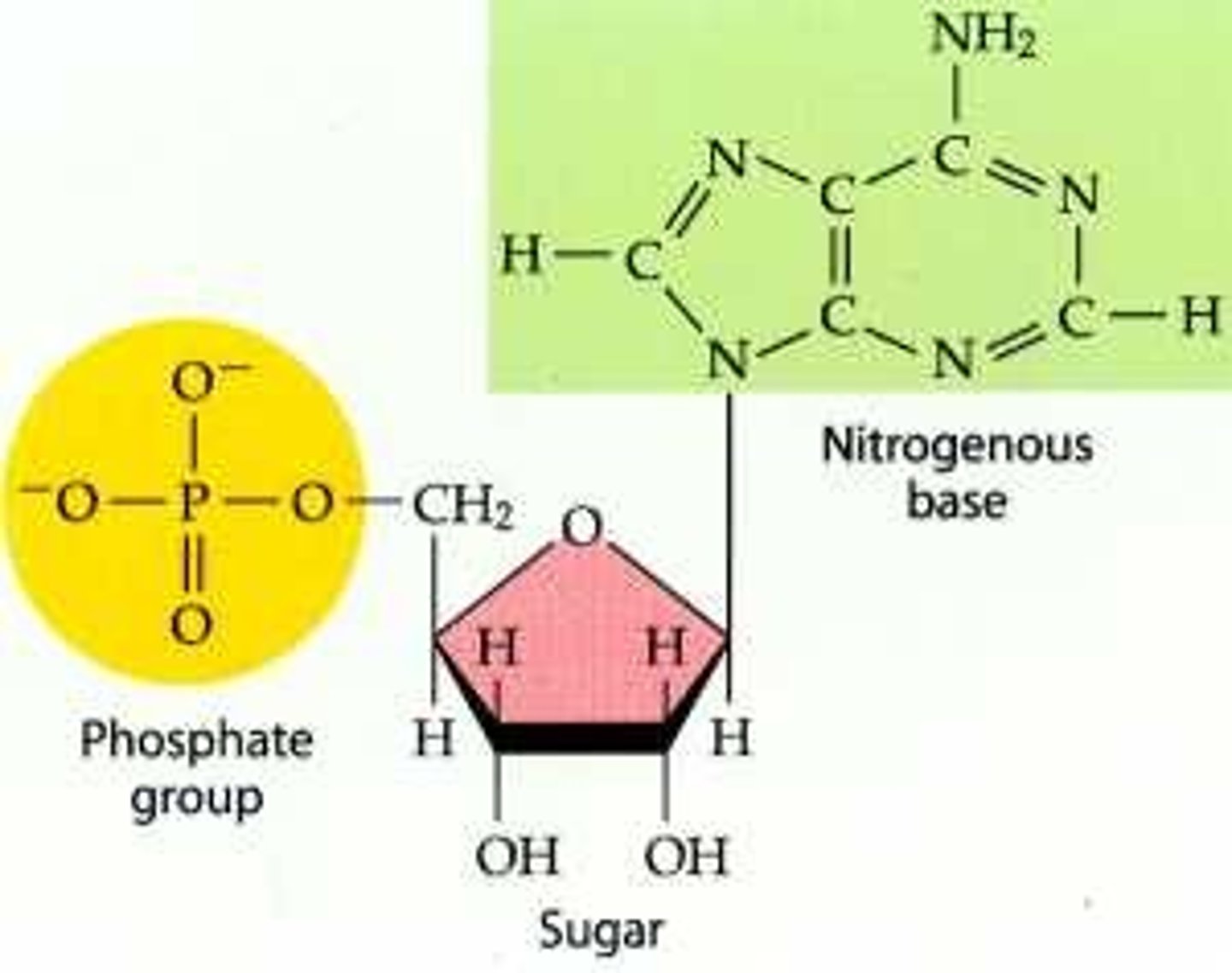
nucleotide
a nucleic acid with a phosphorylated ribose sugar and a nitrogen base, triphosphate
nuclein
viscous substance isolated from nuclei, discovered by Miescher and later found to be DNA
nitrogen base
a carbon-nitrogen ring structure that is part of a nucleoside
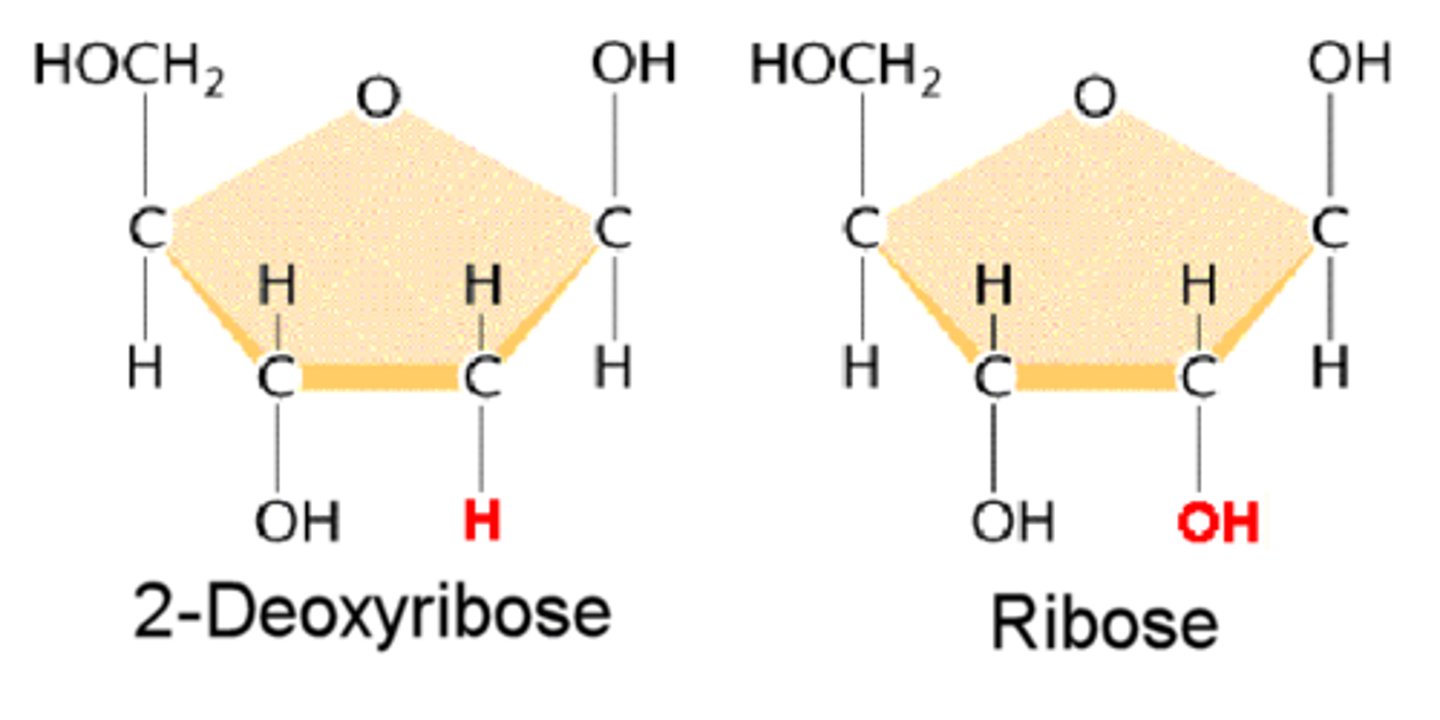
deoxyribose
ribose without a hydroxyl group on the carbon in position 2 on the sugar ring, with a hydroxyl group on the third carbon which is important for phosphodester bond formation
The. sequence is the ________ of nucleotides.
order
nucleoside
ribose sugar (unphosphorylated sugar) + nitrogenous base, adenosine, guanosine, cytidine, thymidine
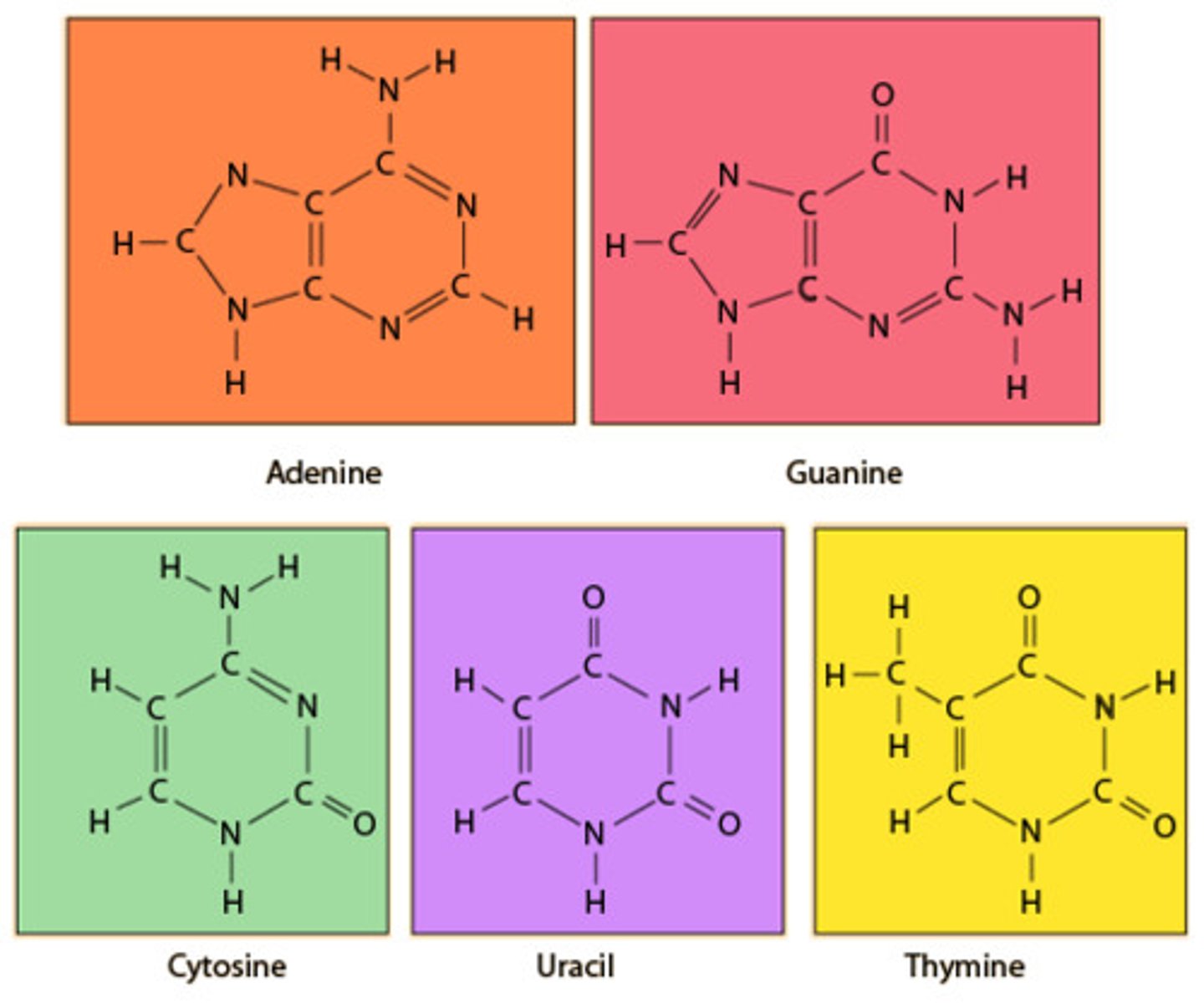
purine
adenine, guanine (think Ag gold is pure, still has ring formation) double ring structure
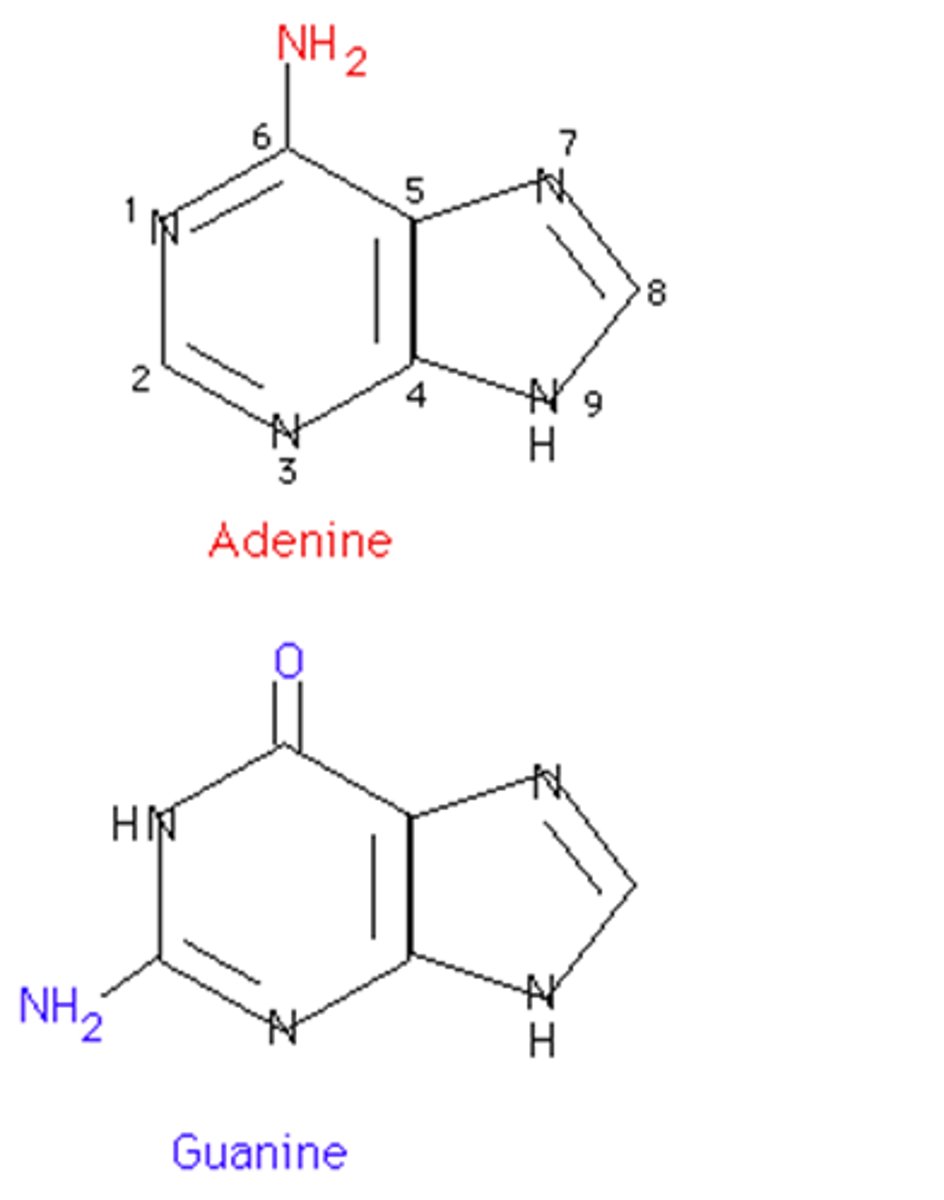
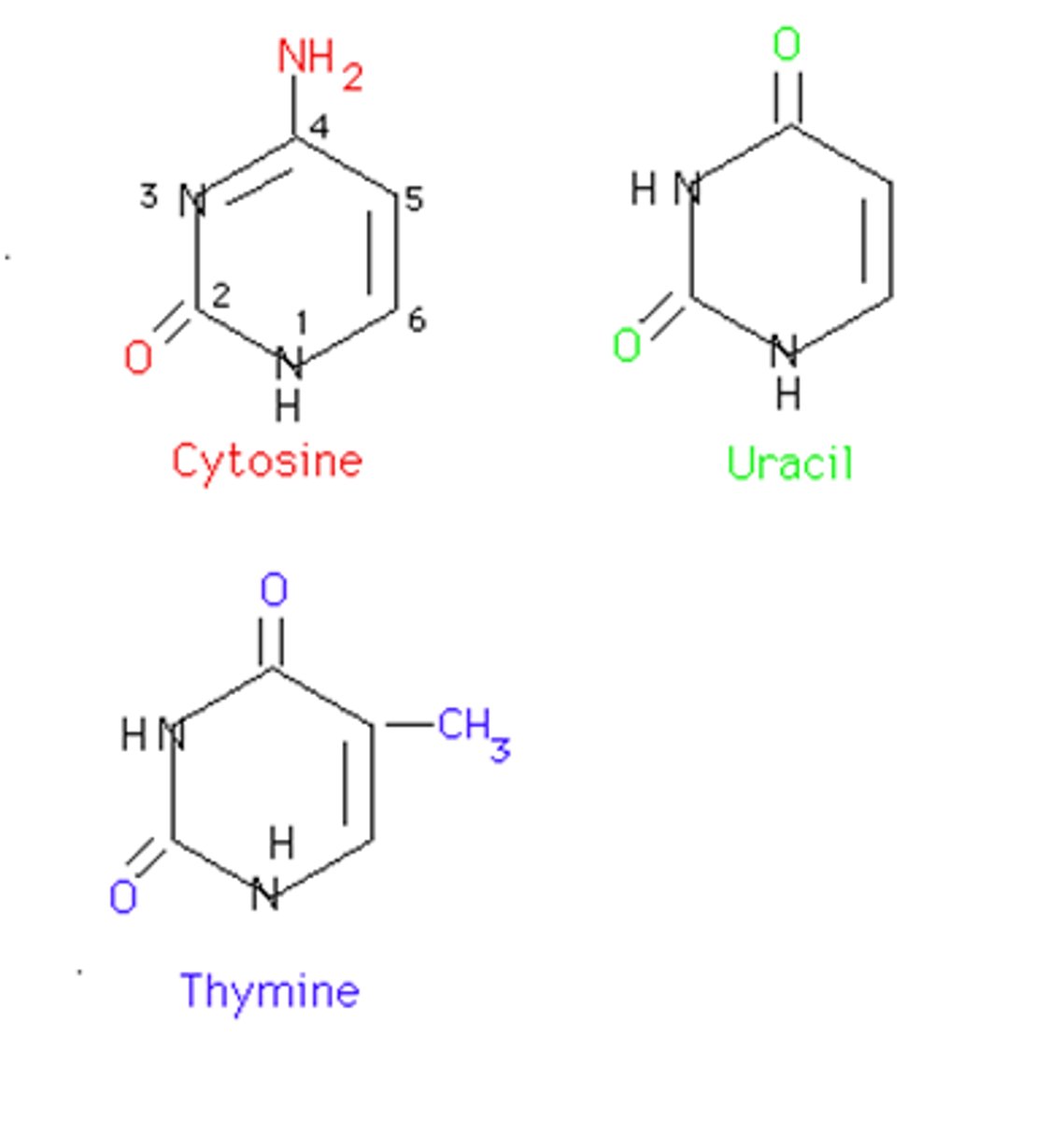
pyrimidine
cytosine, uracil, thymine (think CUT, ring structure has been "cut") single-ring
Does adenine thymine pairing or cytosine guanine pairing have three hydrogen bonds?
cytosine + guanine (think c&g closer in alphabet, closer in space)
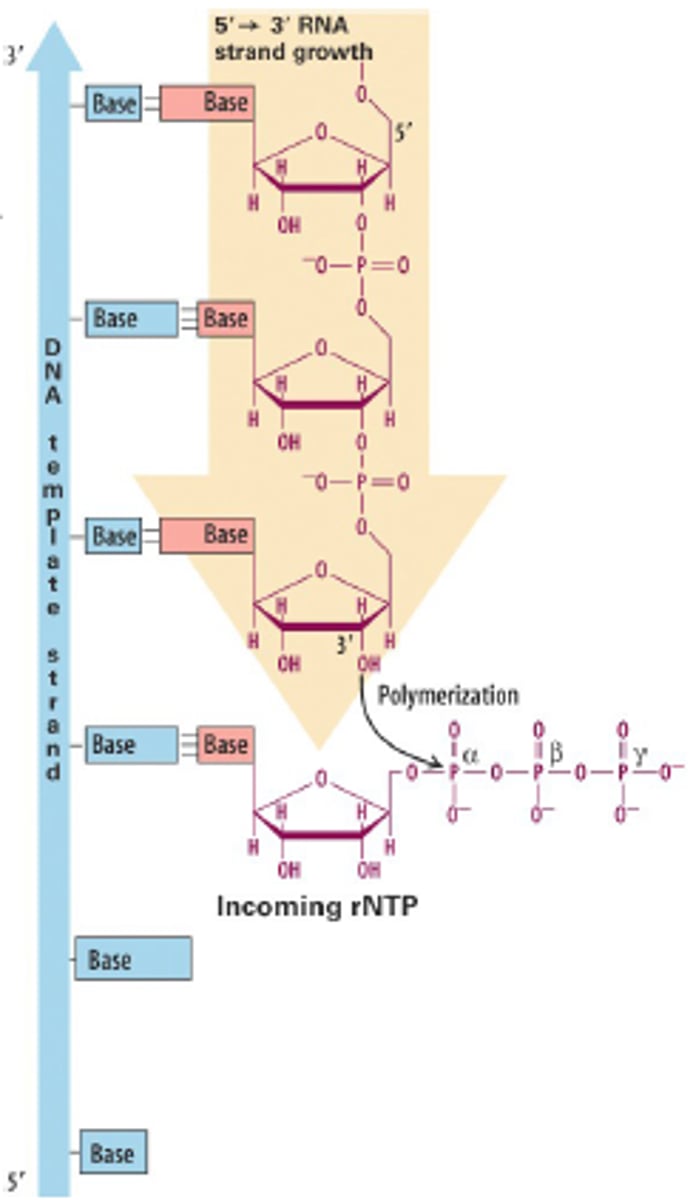
Which carbon on the deoxy ribose sugar forms a phosphodiester bond? Which catbon is the phosphate group attached to? What is this process called?
the third carbon, the fifth carbon, DNA polymerization
What is the difference between B-form, A-form, and Z-form DNA?
B- hydrated, 10.5 steps, right handed
A- dehydrated, 11 steps, right handed
Z- torsional stress, 12 steps, left handed
What is the directionality of DNA? What is the directionality of the complementary strand? What is the orientation of DNA?
5' to 3', 3' to 5', antiparallel
hybridization
formation of hydrogen bonds between two strands of DNA
Will single strands of DNA with identical sequences hybridize?
No, due to antiparallel orientation of DNA
denaturing agents
formamide, urea, mercaptoethanol, displace hydrogen bonds and separate two DNA strands
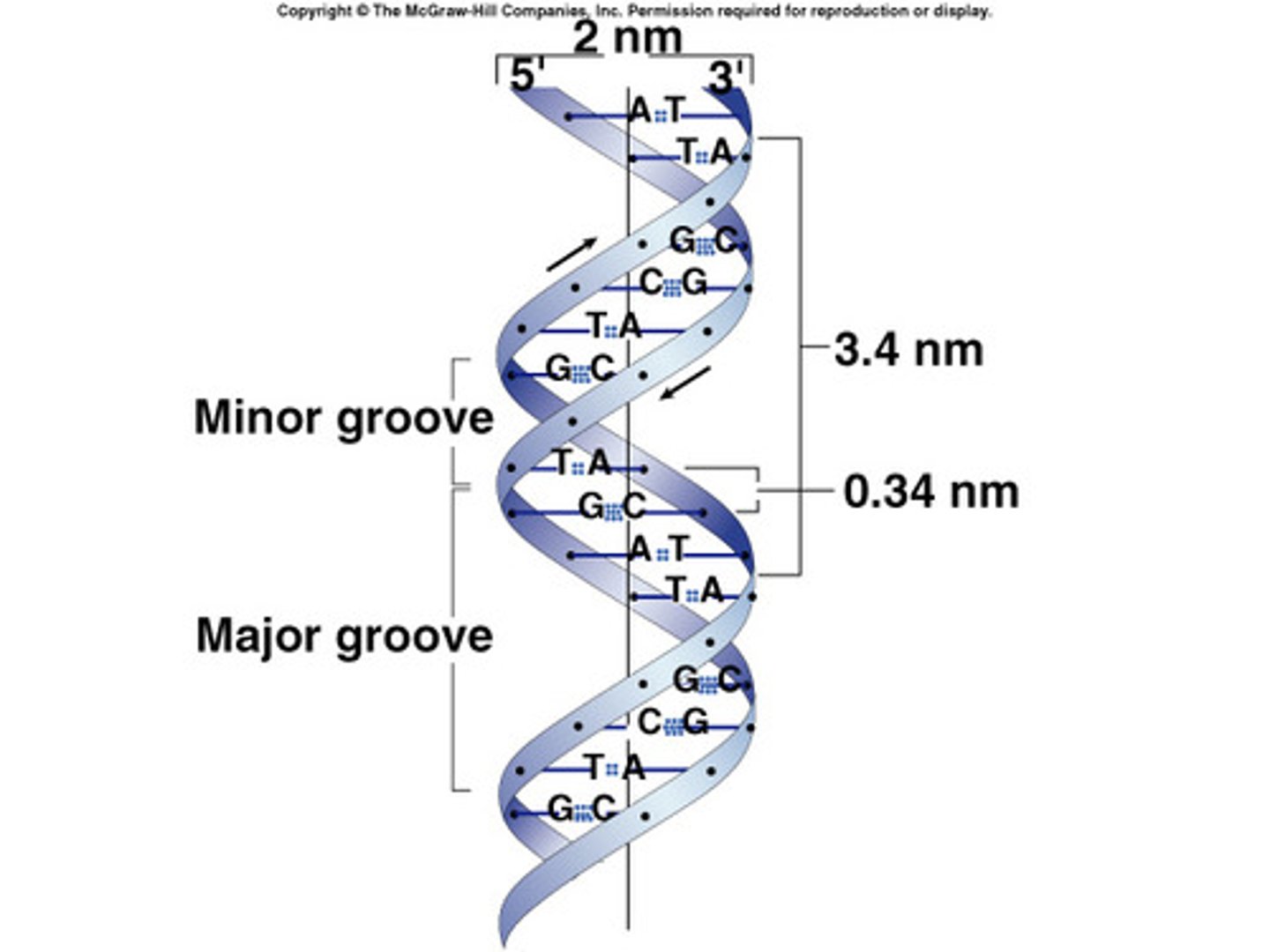
major groove and minor groove
two phosphate sugar backbones arranged as specific distances from each other, site of interaction with proteins or recognition sites
DNA synthesis occurs in which direction?
5'-->3'
DNA polymerase reads the template strand in which direction?
3' to 5'
What replication model describes the key to maintaining the sequence of nucleotides in DNA through new generations?
semi-conservative model of DNA replication
Does the leading strand or lagging strand have Okazaki fragments?
lagging strand because DNA polymerase reads in the 3'-->5' direction and the template strand is in the 5'-->3' orientation leaving jumps between sections of DNA replication
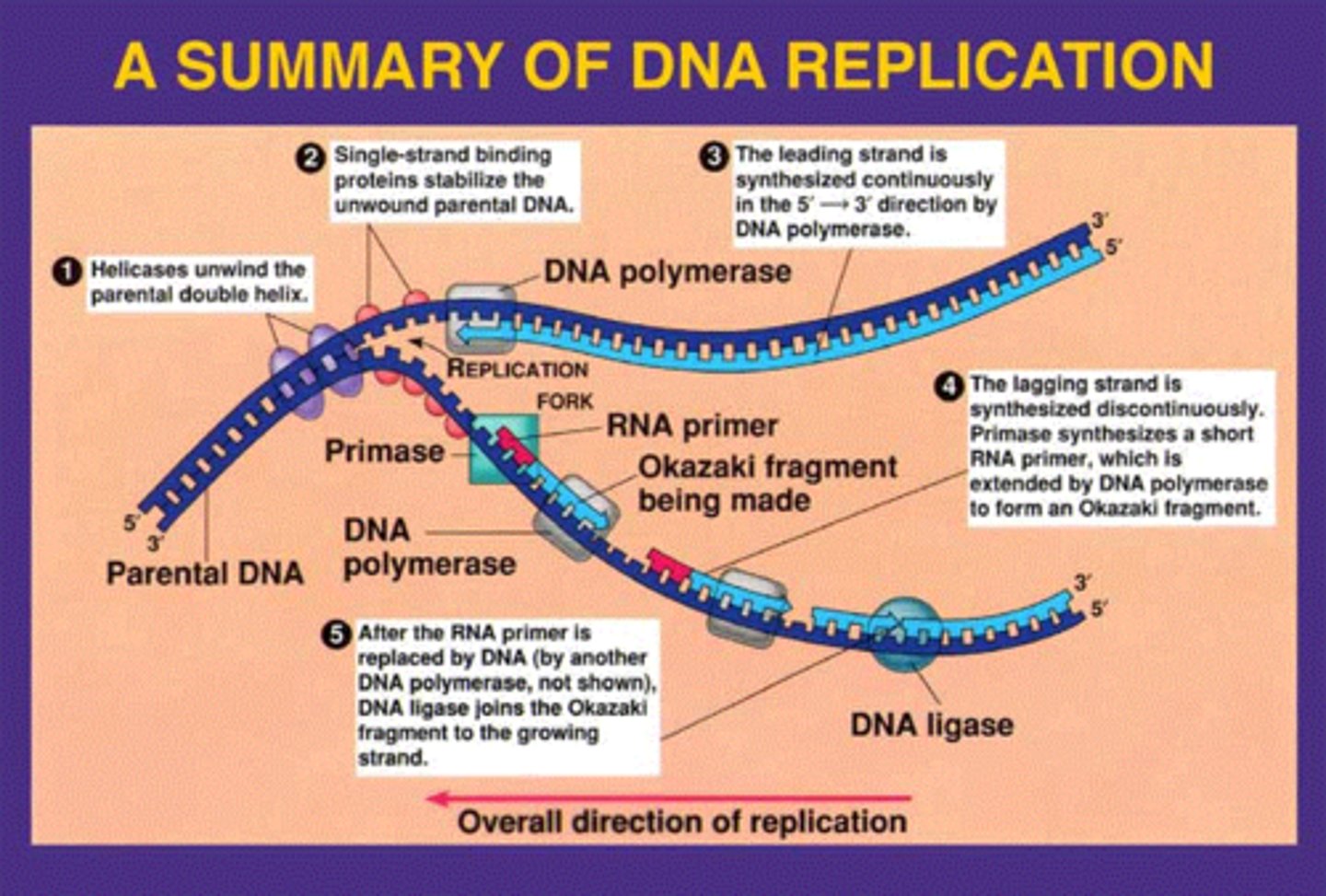
What is the orientation of the leading strand?
3' to 5'
DNA synthesis cannot proceed if a deoxyribose 3'hydroxyl oxygen is not available. Which enzyme provides the preceding base?
primase
What is the function of helicase?
unwinds the DNA double helix for replication
holoenzyme
polymerase II functions with a larger assembly of proteins to perform priming, initiation, regulation, and termination
replisome
complex of multiple proteins involved in replication
RNase H
the enzyme that helps to remove the RNA primer during DNA replication
DNA polymerase III
In charge of synthesizing nucleotides onto the leading end in the classic 5' to 3' direction.
DNA pol I
Removes RNA nucleotides of primer from 5' end and replaces them with DNA nucleotides
pyrophosphorolysis
The reverse of a nucleotide polymerization reaction, in which pyrophosphate reacts with the 3'-nucleotide monophosphate of an oligonucleotide, releasing the corresponding nucleotide triphosphate.
Klenow fragment
large protein fragment of DNA pol I with 5' --> 3' polymerase activity, loses exonuclease activity
mutations
copying error in DNA replication that results in base changes
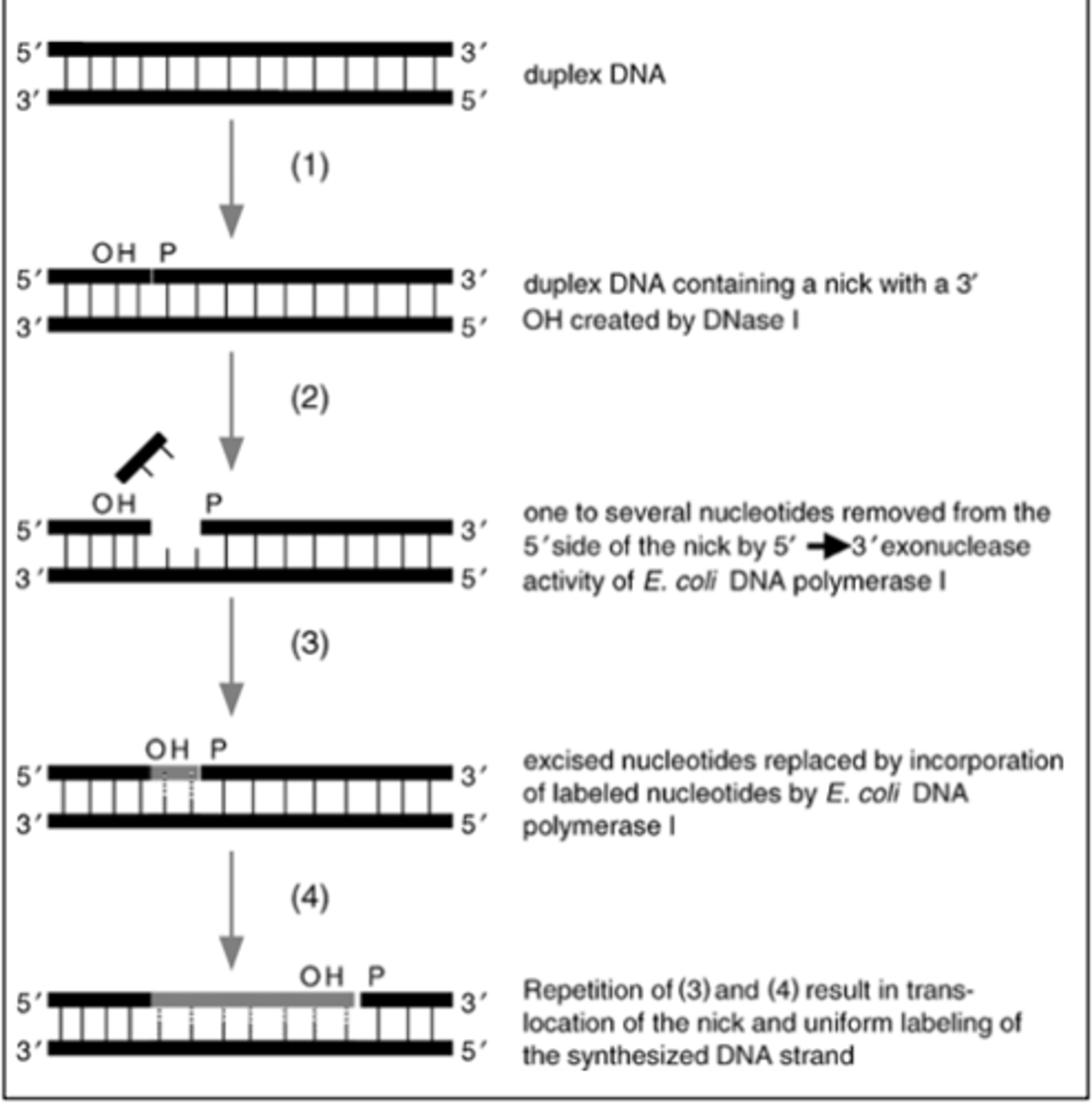
nick translation
the phenomenon in which DNA polymerase uses its 5' to 3' exonuclease activity to remove a region of DNA and at the same time replaces it with new DNA in the 3' to 5' direction. Occurs when there are errors in base pairing or can be used for labeling DNA products in experiments for hybridization analysis
DNA ligase
enzyme that chemically links DNA fragments together in DNA replication, Okazaki fragments, or nick translation
Pyrimidine dimers are caused by
ultraviolet light
Terminal transferase
a template independent polymerase that catalyzes the addition of deoxynucleotides to the 3' hydroxyl terminus of DNA molecules
hybrid vigor
the characteristic of offspring that are stronger than their parents - produced through crossbreeding
Gametes
a mature haploid male or female germ cell that is able to unite with another of the opposite sex in sexual reproduction to form a zygote.
endonuclease vs exonuclease
Endonuclease cleaves Phosphodiester bonds within the polymer, exonuclease cleaves phosphodiester bonds at the ends of the polymer
restriction enzymes
an enzyme produced chiefly by certain bacteria as a basic immune system, having the property of cleaving DNA molecules at or near a specific sequence of bases.
Type II restriction enzymes
used most frequently in the laboratory - do not have inherent methylation activity in the same molecule as the nuclease activity. Can leave sticky ends or blunt ends.
Are type II restriction enzymes found on eukaryotes?
No, prokaryotes only
Which restriction enzymes have methylation activity?
Type I, II, IV, IIG
What is the basis for paternity testing and specimen identity?
restriction enzyme fragment analysis
What is the advantage of blunt ends over sticky ends?
blunt ends can be joined together and do not have to match while sticky ends must match exactly in order to hybridize or converted to blunt ends through exonuclease activity or polymerase activity
CRISPR
an adaptive immune system for bacteria and archaea, clustered interspaced short palindromic repeats and case protein which recognizes foreign DNA and keeps record of previous infections
PAM
Protospacer Adjacent Motif, necessary sequence found adjacent to the protospacer in the target DNA, discriminates target from self
Oligonucleotides
segments of nucleic acid that are 50 nucleotides or less in length
Why is it important in DNA isolation techniques to eliminate or inactivate exonuclease and endonuclease activity?
because these enzymes degrade DNA
DNase I
enzyme that digests DNA
Why is DNA stored in TE buffer?
TE buffer chelates ions which are needed for nuclease activity, to stabilize DNA
topoisomerase
corrects "overwinding" ahead of replication forks by interconverting isomers or relax supertwised DNA
Gyrase
untangles DNA through ds breaks; separates linked rings of DNA (type II topoisomerases)
Methyltransferase
enzyme that methylates newly synthesized DNA strands and are involved in mismatched repair
What is the difference in methylation between prokaryotes and eukaryotes?
prokaryotes use methylation to distinguish between self and non-self, nearly all sites are methylated or hemimethyalted. Eukaryotes use methylation in specific regions to promote or prevent gene transcription
Recombination
the genetic process by which one chromosome breaks off and attaches to another chromosome during reproductive cell division (crossing over)
Conjugation
genetic recombination in bacteria F+ (fertility factor)-->F- bacteria which then becomes F+ through a filamentous bridge
Transduction
bacteriophage serves as a carrier of DNA from a donor cell to a recipient cell by infecting bacterial cells
Transformation
(genetics) modification of a cell or bacterium by the uptake and incorporation of exogenous DNA, Griffith experiment, basis for recombination in labs
Protease
enzyme that digests protein
Ribonuclease
digests RNA
Why are plasmids more efficient at transformation compared to strands of DNA?
less likely to be degraded by physical shearing and chemical degradation during the process due to the circular shape
Episomes
plasmids that can integrate into the genome
acridine dyes
induce the loss of episomes
R plasmid
A bacterial plasmid carrying genes that confer resistance to certain antibiotics.
What is the original genetic material?
RNA
RNA
single-stranded nucleic acid that can fold upon itself or pair with complementary DNA/RNA to form a double helix, ribose sugar, uracil base
gene expression
conversion of the information encoded in a gene first into messenger RNA and then to a protein
Transcrption
The first step of protein synthesis, in which the information on mRNA is "read" and translated into a sequence of amino acids, the building blocks of a protein, occurs during interphase of cell division
RNA polymerase I,II, III
Pol I-rRNA (nucleolus) and III-tRNA (nucleus) synthesis noncoding RNA, Pol II (nucleus) synthesize mRNA
Promoter
specific region of a gene where RNA polymerase can bind and begin transcription
Does RNA synthesis require a primer?
No
Is DNA synthesis in prokaryotes or eukaryotes faster? What about RNA speed?
DNA 1000bp/sec vs. DNA 50 bp/s. DNa 50 vs RNA 50-100 bp/ sec
rRNA
ribosomal RNA; type of RNA that makes up part of the ribosome-the site of protein synthesis, most common type making up 80-90% of cellular RNA
mRNA
messenger RNA; type of RNA that carries instructions from DNA in the nucleus to the ribosome
polycistronic mRNA
molecules of mRNA that code for multiple proteins
Monocistronic mRNA
mRNA that codes forsingle type of protein, such as is found in eukaryotic cells.
constitutive transcription
state in which a gene is continuously transcribed
inducible/regulatory transcription
Transcription that is regulated by proteins and other factors
polyA tail
a sequence of 50-250 adenine nucleotides added onto the 3' end of a pre-mRNA molecule
polyadenylate polymerase
an enzyme that uses ATP to add 200 A's to the end of the polyadenylation sequence in eukaryotes on pre mRNA
mRNA capping
Addition of a 5' cap consisting of a 7-methylguanosine to the 5' end fo the primary transcript.
Does prokaryotic mRNA have introns?
No
alternative splicing
Splicing of introns in a pre-mRNA that occurs in different ways, leading to different mRNAs that code for different proteins or protein isoforms. Increases the diversity of proteins.
snRNA
Found only in the nucleus of eukaryotes and functions to remove introns from mRNA (small nuclear RNA)
tRNA
An RNA molecule that functions as an interpreter between nucleic acid and protein language by picking up specific amino acids and recognizing the appropriate codons in the mRNA (transfer RNA)
RNA polymerase I, II, III locations,. njjnn
I-nucleus, II-nucleolus, III-cytoplasm
cDNA
Complementary DNA. DNA produced synthetically by reverse trascribing mRNA. Because of eukaryotic mRNA splicing, cDNA contains no introns.
What stereochemistry do proteins have?
L
What groups are attached to the central carbon of an amino acid?
hydrogen atom, amino group, carboxyl group, and a side chain
What are the types of amino acids?
polar, non-polar, aromatic, positively charge, negative charge
Zwitterion
A molecule that contains charges, but is neutral overall. Most often used to describe amino acids
What type of bond holds amino acids together?
peptide bonds
What type of reaction takes place during protein synthesis?
dehydration
zinc finger motif
A type of DNA-binding motif in regulatory proteins that incorporates zinc atoms in its structure.
leucine zipper
type of transcription factor in which repeating leucines form an interaction domain
conjugated proteins
Proteins requiring a covalently bonded prosthetic group to function properly. Hemoglobin is an example.