Neo-Functionalist Design
 Call Kai
 Learn
Learn Practice Test
 Spaced Repetition
 Match
Match Flashcards
 Knowt Play
1/21

There's no tags or description
Looks like no tags are added yet.
Name | Mastery | Learn | Test | Matching | Spaced | Call with Kai |
|---|
No analytics yet
Send a link to your students to track their progress
22 Terms
This is _______ Functionalist Design
late
Hochschule Fur Gestaltung in Ulm, Germany was the design ______. The director is Max ______. The _____ ________ is a model for design education based on science and technology and seeks to integrate physical sciences, behavioral sciences, and technology in the design process. It was built ______ WWII. It is a ________ year school: _______ _______ (1st year), 2nd and 3rd year ______, and _________ (4th year).
school; Bill; Ulm model; after; 4; Basic Course; modules; Thesis
The Basic Course (Applied sciences and math) had a furniture design project: apply a ________ concept to designing a table using the _____ ________ Proportion. The ______ classes were math, physics, chemistry, and geometry. The _______ were economics, sociology, psychology, and political science. The 2nd and 3rd Year ________ had cinema, information science, visual communication, _____ ______ (technologies, construction techniques, mathematical analysis of operations, ergonomics: human-machine systems), and architecture. It focused on the concept of _______ _______ (science meets technology meets design). Teams were _____ teams, systems were designs that fit _______ within a system, _________ products, and environmental ensembles
mathematical; Golden Means; core; electives; Modules; product design; scientific operationalism; design; together; homogenous
The Department of Product Design _____ Year had a Van-Scooter project (design a ________ system). The Department of Product Design _____ Year had a corporate identity project (Modules were __________ corporate identity assignment - ticketing, loading, food service, uniforms - prototype _______, marketing, and Otl _______ did the logo for Lufthansa in 1965). This department also had a real life project (______ design team which consisted of Gugelot, Rams, and Muller). It focused on the ______ ______ (appeal to the customer with efficiency and taste), ________ _______ (design the product to explain its operation), and prototype _______.
2nd; human-machine; 3rd; Lufthansa; testing; Aicher; Braun; consumer approach; product semantics; testing
Max _____ designed a clock in 1955 with a ________ focus. Otl ______ created pictograms for the Summer Olympic Games in Munich in 1972. He ______ working on them in 1966. There were ______ pictograms, and they were cohesive. They were _______ (follows vertical or horizontal lines). They were either at 45 or 90 degrees. All linear ends were ______, and had jointedness. Marcello _______ created the Lettera 22/32 typewriter in 1950. It had a ______ button, platen, _______ tape, type _____, basket, ______ face, and type bar _____. Rasmus ___________ created the Writing Ball Typewriter in 1870. It was originally designed to type _______ script. It had a platen, type ______, and type keys that imprinted on ______. The keyboard arrangements were _____ key, the vowels on the ______, and the consonants on the _______. You were _____ able to view the paper while typing.
Bill; minimalist; Aicher; started; 180; gridded; Nizzoli; return; carbon; face; strike; clash; Malling-Hansen; braille; basket; paper; 52; left; right; not
Sholes and Gidden created the Remington Typewriter in 1874. It had a platen _____ treadle, carriage ______ lever, type basket, and a _______ key board. Dieter _______ coined the phrase “_____, _____ _____”. He created the ______ principles to good design (two of them are _______ and as _____design as possible). Buckminster ________ published _____+ books. He invented and popularized terms such as “_____ ______” and “emphemeralization”. He created the geodesic _______ out of aluminum and plastic. He also built the a safer, aerodynamic car: ________ (an abbreviation for dynamic maximum tension, and/or dynamic maximum ion)
foot; return; QWERTY; Rams; less; but better; 10; unobtrusive; little; Fuller; 30; Spaceship Earth; dome; Dymaxion
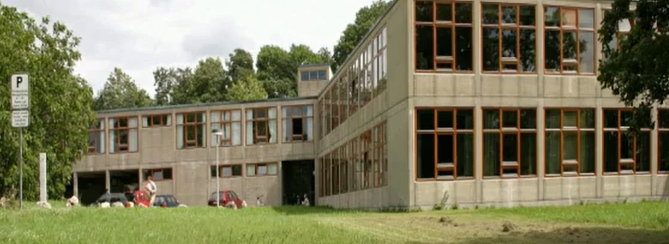
________ ______ _______, _______, _______
Hochschule fur Gestaltung; Ulm; 1953-1968
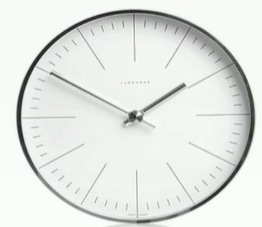
_____ ______, _______, _______
Max Bill; clock; 1955
_____ ______, _____ _____ ______, ______
Otl Aicher; logo for Lufthansa; 1965
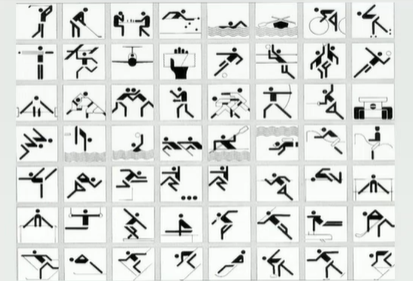
_____ ______, ______ _____ _____ _____ _____, _______
Ottl Aicher; pictograms for Munich Olympic Games; 1972

_____ ______, ________ ______ _______, _______
Ottl Aicher; logo for Olympics; 1972
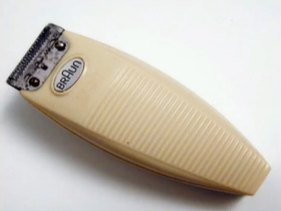
______ _______, Dieter Rams, Gerd Alfred Muller, ______ ______ _______, ________
Hans Gugelot; Braun electric razor; 1950
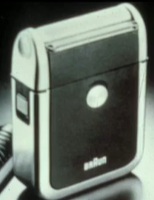
______ _______, _____ _____ ______, _______
Dieter Rams; razor with case; 1973
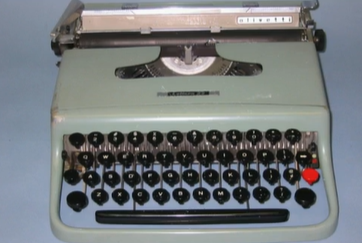
_______ _______, ______ ______ _____ _____, Olivetti, ______
Marcello Nizzoli; Lettera 22/32 manual typewriter; 1950
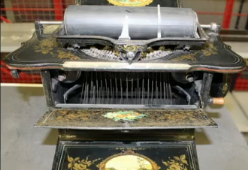
______ and Glidden, ________ _____ ______, ______
Sholes; Remington Type Writer; 1874
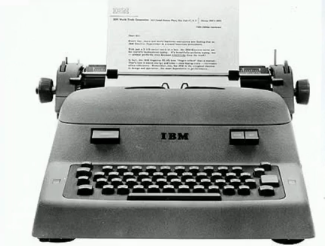
_______ ______, ______ ________, ________
Eliot Noyes; IBM typewriter; 1953
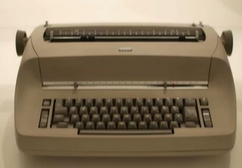
_____ ______, ______ ________ ______, _______
Eliot Noyes; IBM Selectric typewriter; 1961
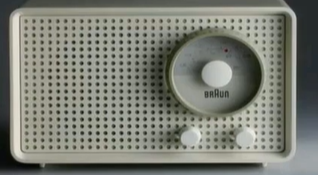
________ _______, _____ _____, _______
Dieter Rams; SK2 Radio; 1955
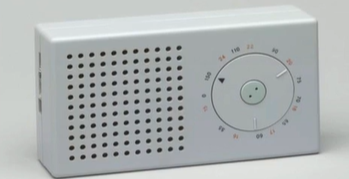
______ ______, _____ ______, ______
Dieter Rams; T3 radio; 1958
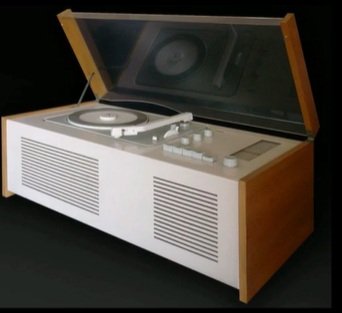
______ ______, Dieter Rams, _____ _____________, ______
Hans Gugelot; SK4 radio/phonograph; 1956
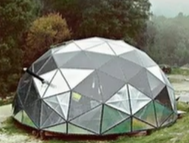
_______ ________, ______ _______, _______
Buckminster Fuller; Geodesic dome; 1949
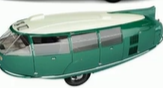
_______ _______, ______ _______, _______
Buckminster Fuller; Dymaxion car; 1930s