MECHANISMS OF EARLY NORMAL GROWTH OF THE CRANIOFACIAL SKELETON
 Call Kai
 Learn
Learn Practice Test
 Spaced Repetition
 Match
Match Flashcards
 Knowt Play
1/51

There's no tags or description
Looks like no tags are added yet.
Name | Mastery | Learn | Test | Matching | Spaced | Call with Kai |
|---|
No analytics yet
Send a link to your students to track their progress
52 Terms
define isometric growth VS allometric growth
isometric growth: implies progressive proportional increase in all organs and systems with time
allometric growth: describes the differences in relative rates of growth between one part of the body and another
clearly demonstrated in changes of body proportion between foetuses, neonates, children and adults
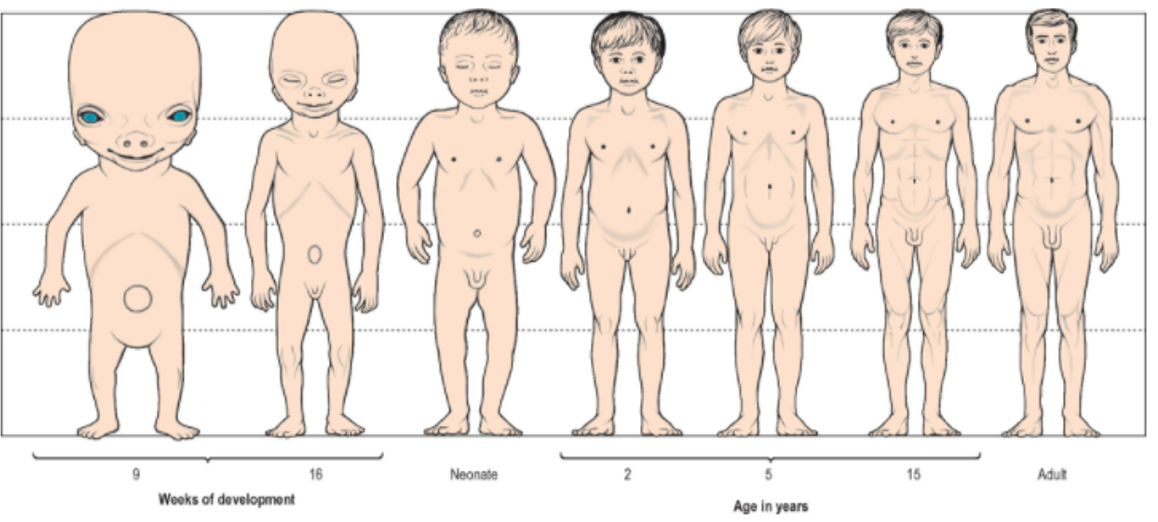
state the change in head proportion from foetus to adult
between 6 and 7 weeks post fertilisation the head is nearly ½ of the total length of the embryo
it then grows proportionally more slowly until the head is 1/8 the length of the body in adults
the skull _________ to the coronal suture is derived from ________
the skull posterior to the coronal suture is derived from mesoderm
where are the bones anterior to the coronal suture derived from
ectomesenchyme from the neural crest
define condensation
condensation: both types of bone formation start with the coalescence of mesodermal or ectomesenchymal cells into dense groups
» mechanisms of craniofacial growth
what happens after condensation
the condensed cells may differentiate into chondroblasts that form a cartilaginous template of the bone
the cartilage is eventually replaced by bone
this process is called endochondral ossification
—
alternatively, bone may be formed directly in the condensation by intramembranous ossification
» mechanisms of craniofacial growth
outline interstitial growth and appositional growth (mechanisms of craniofacial growth)
most organs grow by interstitial growth which results from cell division and matrix proliferation throughout their structure
the mineralised matrix of bones prevents interstitial growth (growth in length from within)
therefore bones grow by addition of new material onto existing surfaces which increases thickness and diameter - this is appositional growth
which bones can grow via interstitial growth
bones developing by endochondral ossification can grow by interstitial growth
because cartilage is growing during this process and cartilage can grow by interstitial growth
how are adult size and proportions of a bone achieved
by a combination of surface deposition and resorption
this is known as remodelling
during growth periods, virtually all internal and external bone surfaces undergo remodelling
growth sites are surfaces/ cartilages where large amounts of growth take place
what are causes of growth of the craniofacial skeleton
generally: hormonal, nutritional, genetic and socioeconomic influences
locally: growth pattern (somatic, neural), capsular matrices (enclosed tissues), periosteal matrices (muscle attachments, teeth)
outline the size of the skull at birth
proportionally large - this reflects early cerebral maturation
the facial skeleton is relatively small (1/8 of cranium) compared with an adult (1/2 of cranium)
ossification is incomplete in many sites to allow future growth
what is the smallness of the face at birth due to
the smallness of the face at birth is due to the rudimentary stage of development of the mandible and maxillae - because teeth are unerupted
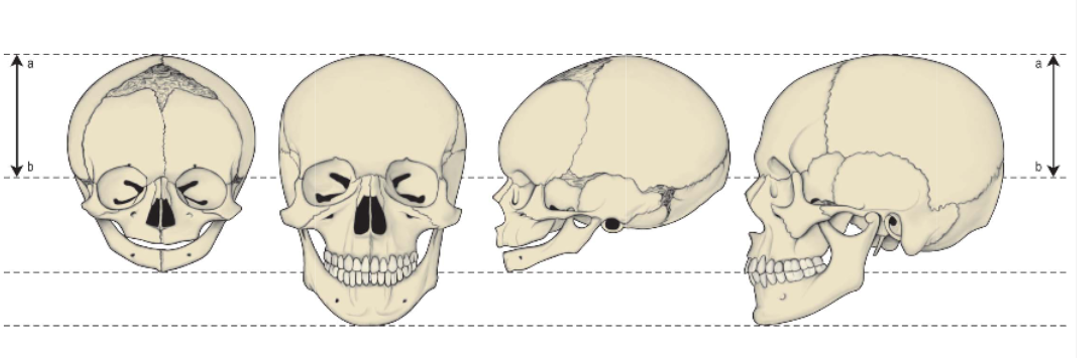
postnatal growth of the skull
most of the postnatal growth of the skull is concerned with the growth of the facial skeleton
what is the first feature to appear on the forming skull
the cartilaginous precursors of the cranial base
which ossification process are the bones of the cranial base formed by
the bones of the cranial base are formed by endochondral ossification
what are in between the bones of the cranial base
cartilaginous joints known as synchondroses
these are remnants of the cartilaginous precursors
growth can occur at synchondroses
in which area does the growth cause most of the cranial lengthening
growth in the cranial base results in most of the cranial lengthening
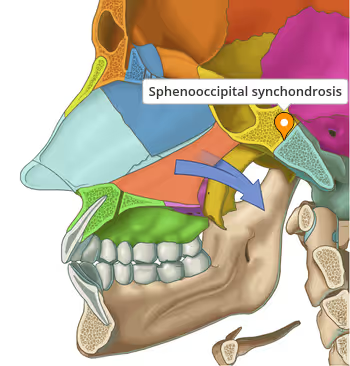
which synchondrosis is the most important site of growth on the skull
the spheno-occipital synchondrosis
growth here continues until approx. 18yo although it can stop earlier around 15yo
what is the importance of cranial base elongation
elongation of the cranial base allows room for the elongation of the maxillae to accommodate the 2nd and 3rd permanent molar teeth
what ossification process are bones of the cranial vault formed by
the bones of the cranial vault are formed by intramembranous ossification
what does the growth of the cranial vault follow
the growth of the cranial vault follows the neural growth pattern of the enclosed brain, which is rapid prenatally
outline the growth of the cranial vault
growth continues rapidly in the first year then at a slower rate until the 7th year
during the first year, growth occurs primarily by appositional growth (growth of bone in thickness and diameter), accompanied by remodelling to adapt to continually altering curvatures
outline the growth of fontanelles
the fontanelles seen at birth are gradually closed by ossification of the bones around them
the bones meet but do not fuse
they remain separated by fibrous joints/ sutures which are essential growth sites in the immature skull
the sutures will fuse in maturity
which ossification process do the facial bones formed by
the facial bones are formed by intramembranous ossification
growth of the facial skeleton occurs…
growth of the facial skeleton occurs over a long time period (well into adulthood)
how is growth of the orbital and upper nasal cavity achieved
orbital and upper nasal cavity growth is achieved by deposition of bone at sutures
where on sutural junctions does the deposition of bone favour
more deposition occurs on the facial aspect of sutural junctions
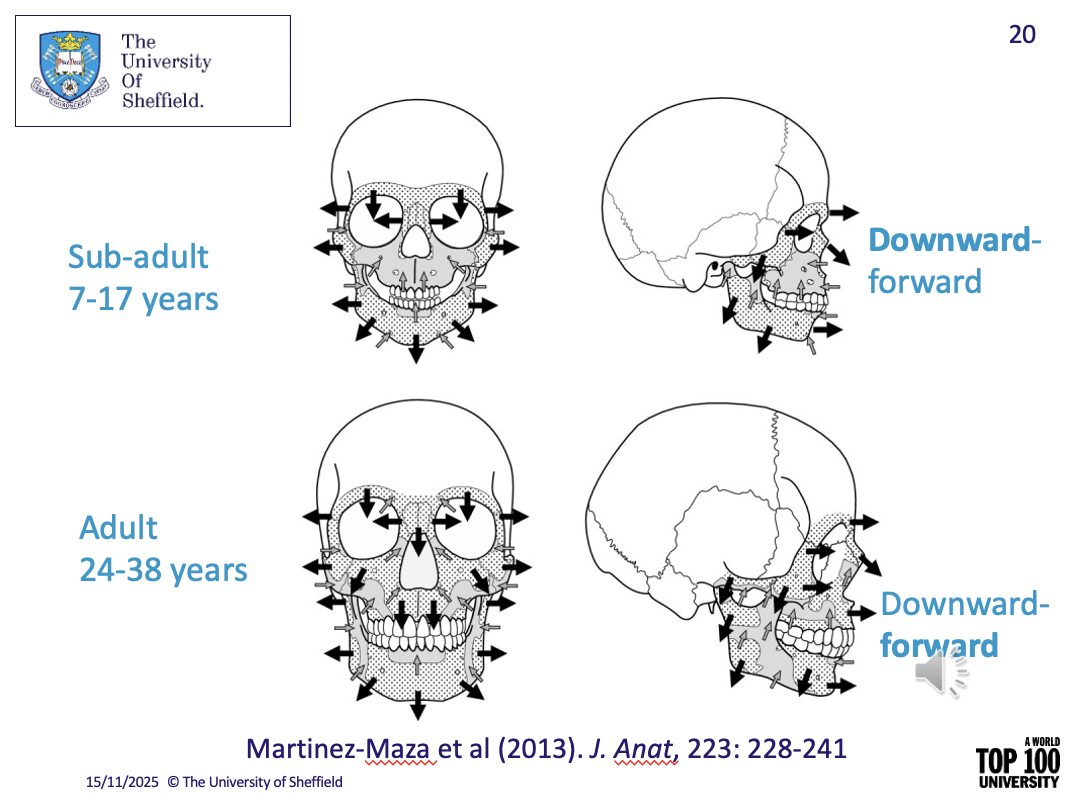
outline the growth of the maxilla
the maxilla is carried downwards and forwards by expansion of the orbits and nasal septum and by sutural growth
there is deposition at the inner aspect and resorption at the outer aspect - suggests posterior growth
rapid deposition at the tuberosities » forwards translocation
is there more deposition posteriorly or anteriorly in the maxilla
deposition posteriorly is greater than resorption anteriorly
therefore there is growth as well as translocation
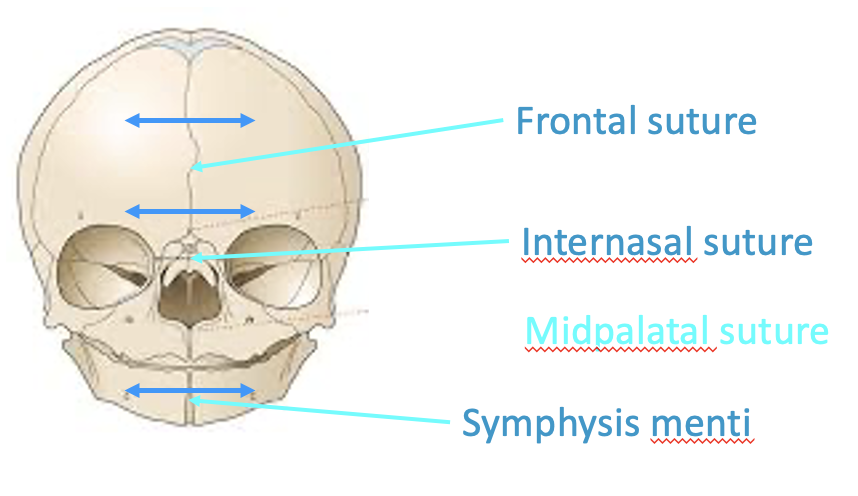
growth at which sites on the skull cause an increase in width
frontal suture = metopic suture
growth of the maxilla at sub-adult and adult ages
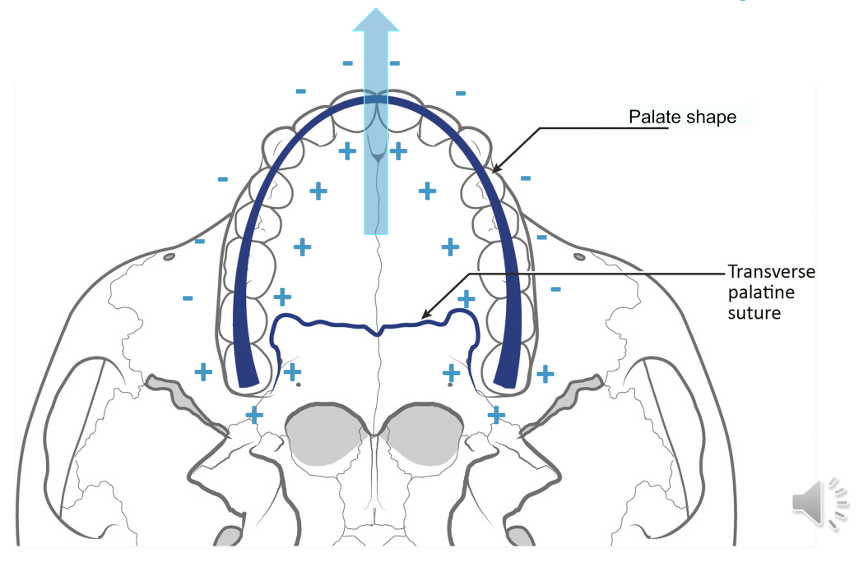
outline growth in the bones of the nasal cavities and the palate
upper aspect of bones in floor of nasal cavities are resorbed
bone is deposited on the oral surface of the palate
direction of growth of maxillary arch is downwards
what ossification process is the mandible formed by
embryologically, the mandible forms by intramembranous ossification
outline the growth of the mandible
ossification occurs around the mental, incisive and inferior alveolar nerves
the ramus is formed by rapid backward spread of ossification
secondary cartilages appear in the mandible
they are not primary cartilages, which are formed in the pharyngeal arches
2° cartilages are growth sites, producing bone by endochondral ossification
outline the growth of the condylar cartilage
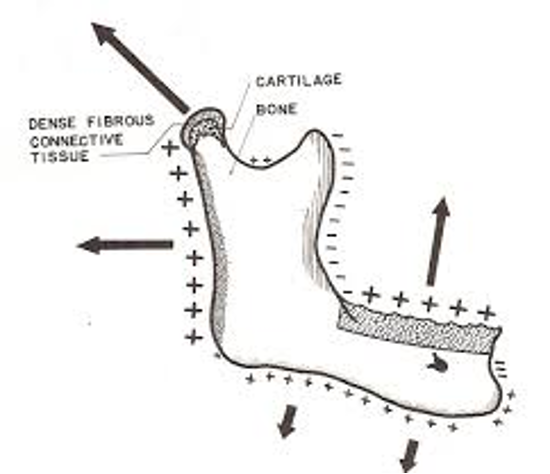
one of the main sites of bone deposition in the mandible
it is active throughout the growth period up to maturity
as the cartilages grows it is replaced inferiorly by bone
a narrow zone of growth cartilage persists beneath the articular surface of the condylar head
what does eruption of the primary dentition stimulate
enables infant to chew food
stimulates development of muscles of mastication
increases size of their attachment sites to mandible
angle of mandible must be altered so that occlusal surfaces of upper and lower teeth are parallel
image showing mandibular age changes
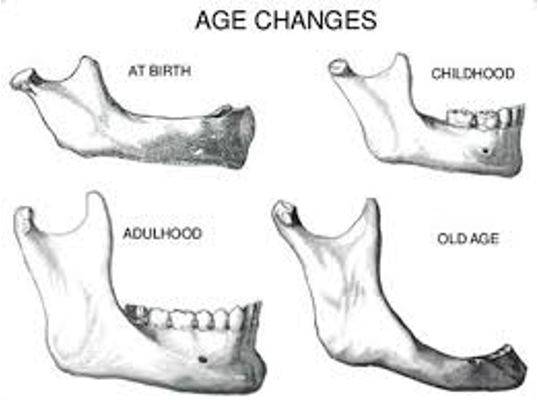
what happens to the mandible in older, edentulous patients
mandibular thinning
how is the position of the TMJ altered
the position of the TMJ is altered by growth in the lateral cranial base (mandibular/ glenoid fossae)
how is the position of the condylar head adjusted
selective resorption and deposition in the ramus adjusts the position of the condylar head
how is the rami of the mandible elongated
growth at the condylar cartilages elongates the rami of the mandible
length of the ramus and the body is also increased by bone deposition along the posterior border of the ramus and resorption along the anterior border
what does an increase in the length of the mandible help accommodate
eruption of the permanent dentition
image showing mandibular growth
the growth of facial soft tissues may mask or enhance…
hard tissue changes
when does most change of facial soft tissue occur
around puberty
outline the growth of the nose
the nose continues to grow in a downward and forward direction at least until early adulthood though it can continue beyond this
does not seem to be an appreciable decrease in rate of nasal growth - typical for skeletal structures
by how much does the nose grow yearly
average yearly increase of 1-1.3mm in overall length of external nose is almost the same for males and females
outline the growth of the lips
the upper and lower lips grow more than the skeletal lower face in children
the lower lip grows more than the upper lip
upper lip shows rapid increase in length from 1-3yrs, slows between 3-6yo and then increases up to 15yrs
the increase in lip length is proportional to what
increase in lip thickness at the vermillion border is proportional to increase in lip length
outline the growth of the chin
increased chin projection in males during growth is due to mandibular growth rather than soft tissue change
» notable when deciding orthodontic treatment as the mandible will start growing after the maxilla
summary 1
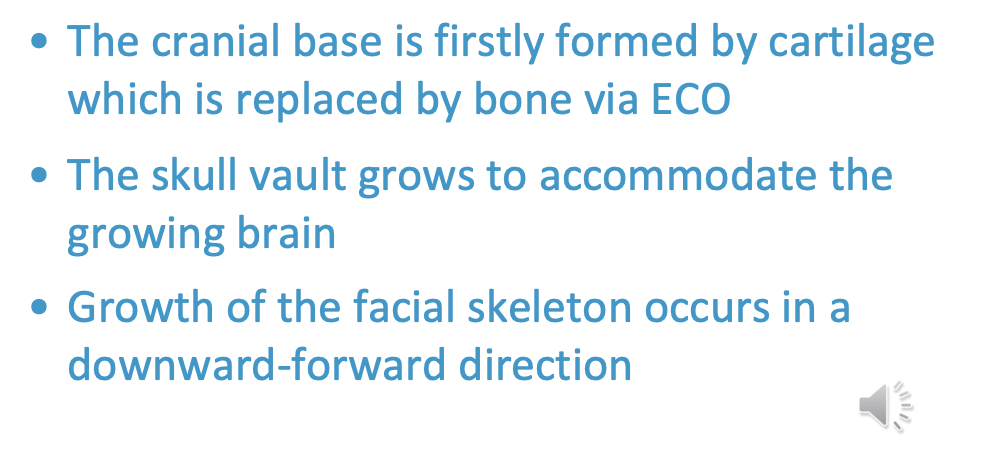
summary 2