ch 8-3 lunar exploration
 Call Kai
 Learn
Learn Practice Test
 Spaced Repetition
 Match
Match Flashcards
 Knowt Play
1/16

There's no tags or description
Looks like no tags are added yet.
Name | Mastery | Learn | Test | Matching | Spaced | Call with Kai |
|---|
No analytics yet
Send a link to your students to track their progress
17 Terms
What was the first spacecraft achievement involving the Moon?
The Soviet Union sent the first spacecraft to fly past the Moon in January 1959.
When did the first spacecraft land on the Moon?
A Soviet spacecraft made the first (crash) landing on the Moon in September 1959.
When were the first photographs of the Moon's far side obtained?
A Soviet spacecraft returned the first images of the Moon's far side in October 1959.
Which country achieved the first spacecraft flyby of the Moon?
The Soviet Union, in January 1959.
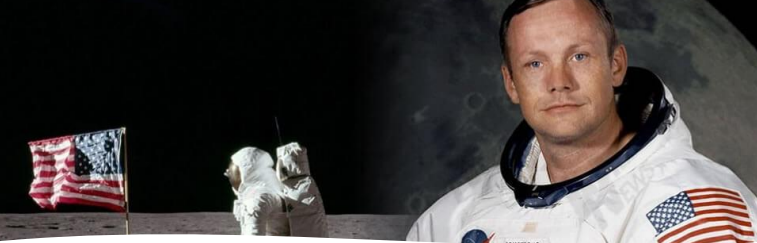
Neil Armstrong
“that’s one small step for man, one giant leap for mankind”
first man on moon and walk on the moon during Apollo 11 in July 1969
how many people have walked the moon?
twelve people
who was the last to walk on the moon?
Eugene Cernan in 1972
50 years since we last been on the moon
Artemis I
uncrewed moon-orbting mission (successfully orbited around the moon)
launched Nov 2022
mission duration 25 days
first in a series of missions
increasing complex to help us with further exploration of the moon and mars
artemis II
successful spaceflight mission April 1-10 2026
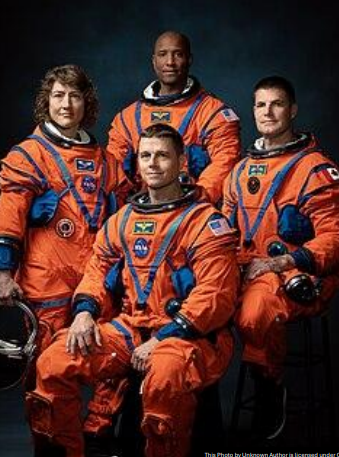
crewed mission included Canadian astronaut Jeremy Hanse, first person of colour Victor Glover, and first woman Christina Koch
Mission duration 10 days
Tested systems that will eventually return humans to the lunar surface
Free-return trajectory around the Moon and back to Earth
what does the free-return trajectory around the moon back to Earth during Artemis II mission mean?
space craft travels away from Earth and gravity of second object (moon) sends it back to Earth without propulsion
What scientific observations will Artemis II perform around the Moon?
it will survey lunar geology, photograph surface features, study volcanic and tectonic regions, observe meteoroid impacts, and monitor the deep-space environment.
Why will Artemis II study features such as the Orientale Basin (3.8 Ga) and lunar craters?
To learn more about the Moon's geological history and impact processes.
What types of lunar activity will Artemis II investigate?
Geological features, volcanic and tectonic processes, meteoroid impacts, and conditions in deep space.
what geological features was observed
3,8 Ga oriental Basin
Pierazzo crater (dark line of melted rock)
Ohm crater (bright rays)
Artemis II volcanic and tectonic analysis
observations of Aristarchus Plateau
during the fly by of Artemis II…
the crew saw 5 distinctive flashes on the lunars far side caused by meteorites on Earth surface
orions capsule
capsule that astronauts were in also monitored radiation levels in deep space and crew tested the impact of the lack of a magnetic field on the human body